Minkyoo Choi is an artist who handles technology well. Here, “handling well” does not imply an outstanding “technologization of aesthetics” in which technology or media are used as mere tools of creation. Although he majored in sculpture, he possesses the ability to work across a range of practices—from restrained abstract installations reminiscent of Russian Constructivism to more recent digital works.
From the perspective of the aesthetic sensibility embodied in architectural imagery that is concise, repetitive, geometric, and meticulously calculated, it is clear that he is an artist proficient in technology. However, this approach does not provide the most effective way of appreciating the genealogy of his body of work. It remains a secondary aesthetic effect emanating from his practice.
Rather, what deserves attention is his unique method of “aestheticizing technology.” In other words, it is necessary to examine how technology is aesthetically arranged within the chronology of his works in order to reveal his distinctive artistic worldview.
Between the Familiar and the Unfamiliar
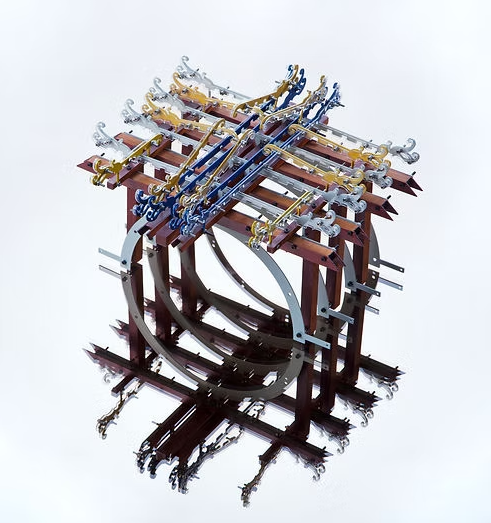
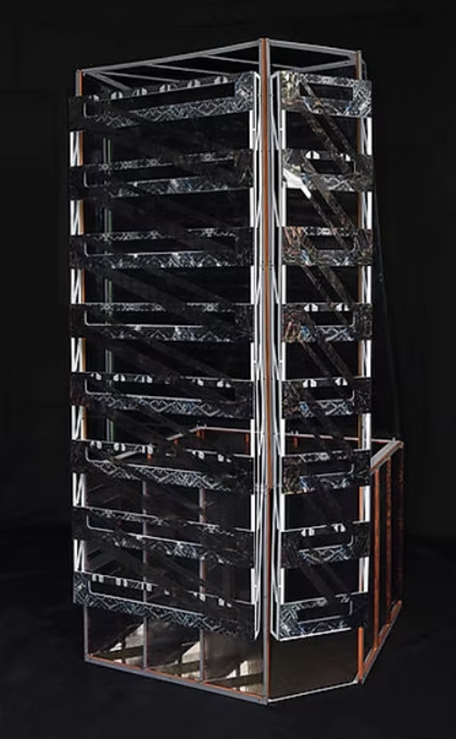
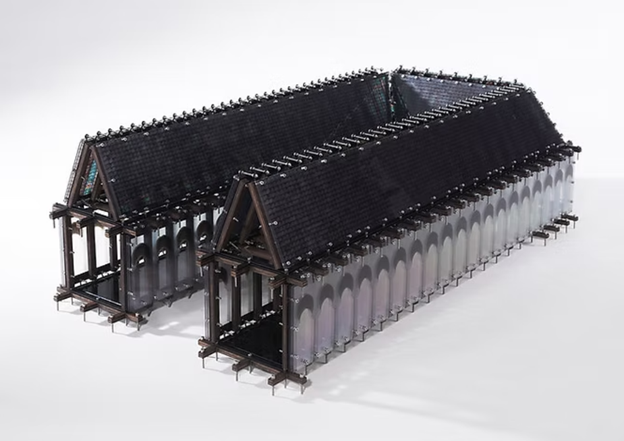
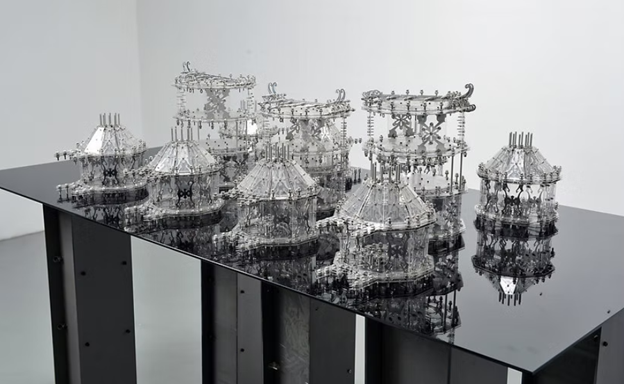
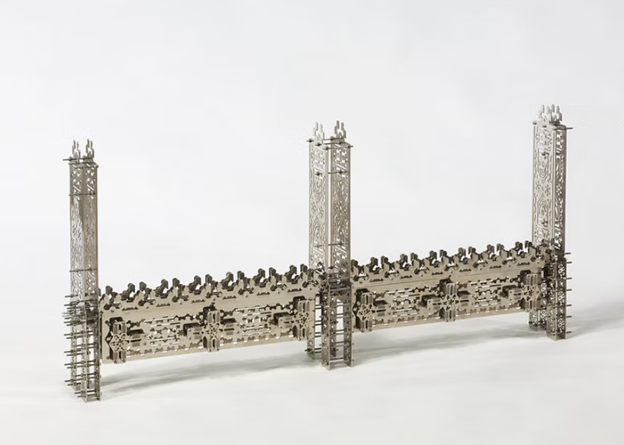
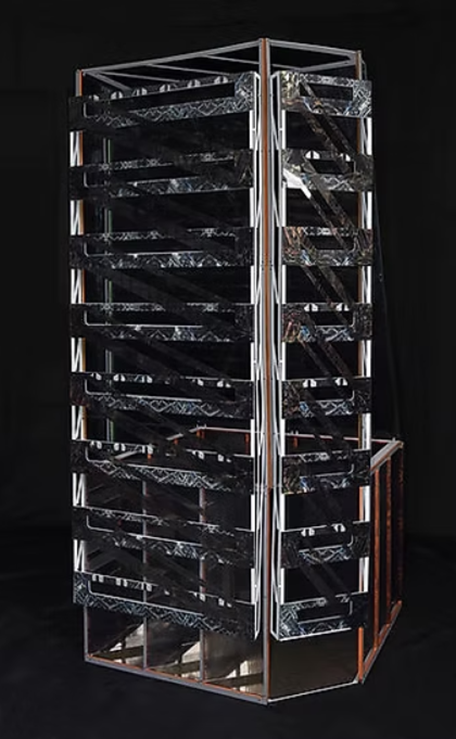
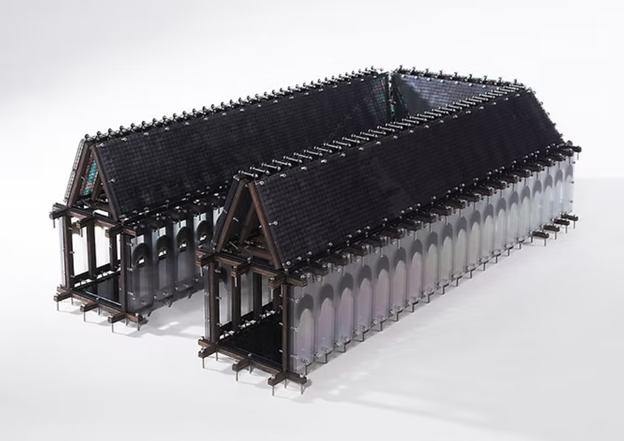
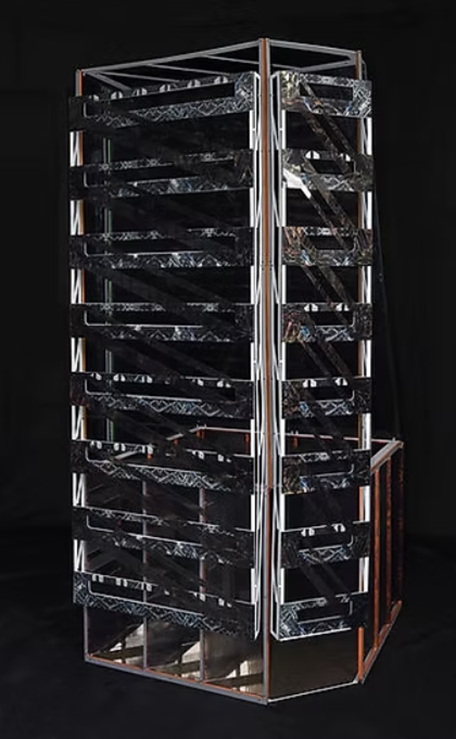
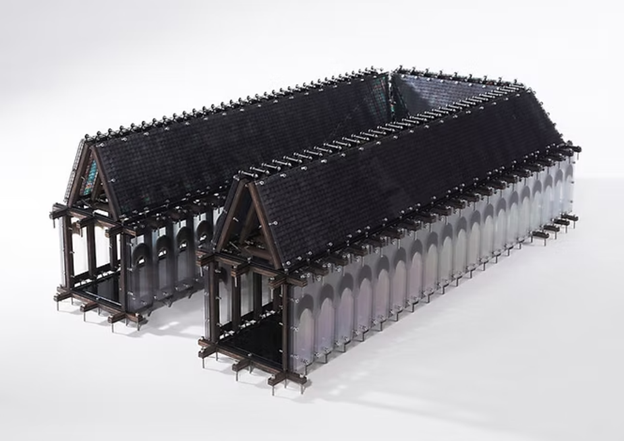
The artist’s distinctive abstract architectural works are rooted in his childhood experience of migration to the Middle East and his particular attachment to Lego during that time. A representative example is Permeate Structure(2015), which combines the architectural patterns of mosques (the unfamiliar) with the tiled patterns of traditional Korean hanok (the familiar).
Recalling the artist’s personal psychological and sensory experience of adapting to an unfamiliar environment, this work can be understood as the result of a spatiotemporal reflection. It aestheticizes the external experience of being an outsider and projects it onto abstract spatial constructions that do not exist in reality. Formally, it brings together the unfamiliar and the familiar—more precisely, it dissolves into his technological aesthetic that “permeates” foreign environments and cultures.
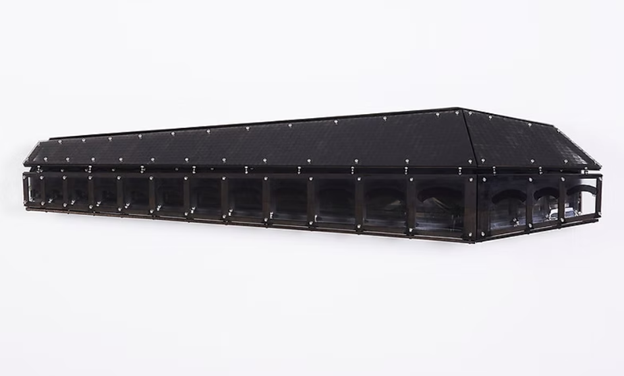
Here, the technology the artist adopts is architectural or constructive technology. Architecture or construction design is particularly suited to embodying the aesthetic of permeation, enabling different cultures to seep into self-awareness and forming a cooperative relationship between unfamiliar environments and the self. Interestingly, his architectural structures are “constructivist” in nature, yet their spatial design is less about habitation or aesthetic pleasure and more about becoming compelling crystallizations of his personal thoughts and ideology.
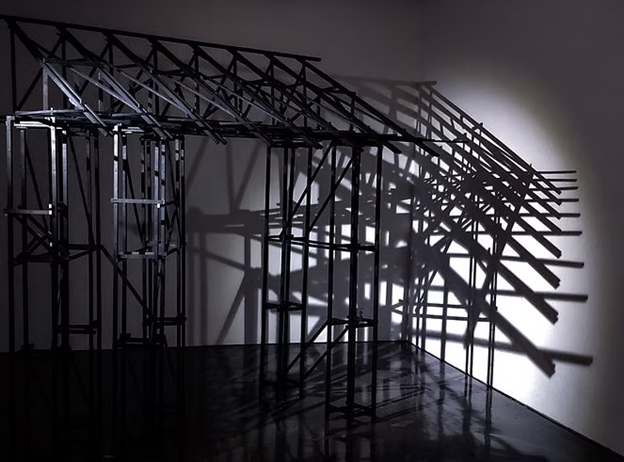
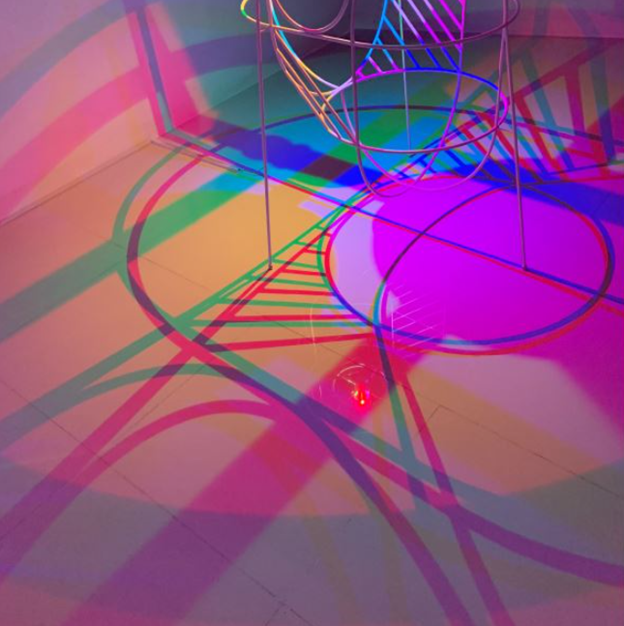
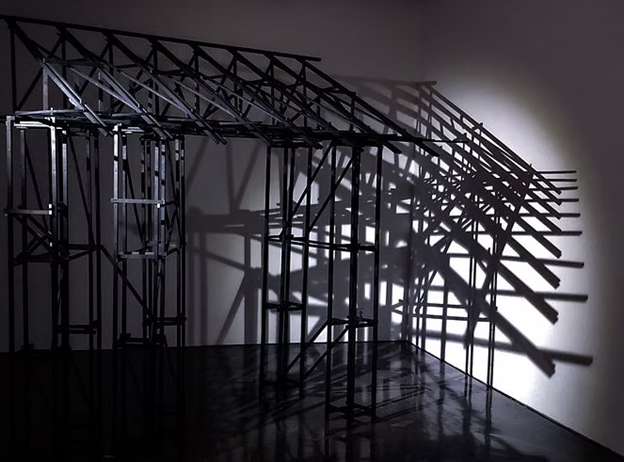
For example, his meticulously calculated and precisely formed architectural sculptures are constructed as modular units, assembled into stable abstract spatial structures. In the ‘Drift grid’(2017) series, the aesthetic collision between the familiar and the unfamiliar continuously emerges. The repetition and variation of abstract units forming these structures contribute to a sense of aesthetic balance, while the openness of the overall structure allows viewers to move beyond the unease generated by unfamiliarity.
Between Sculpture and New Media
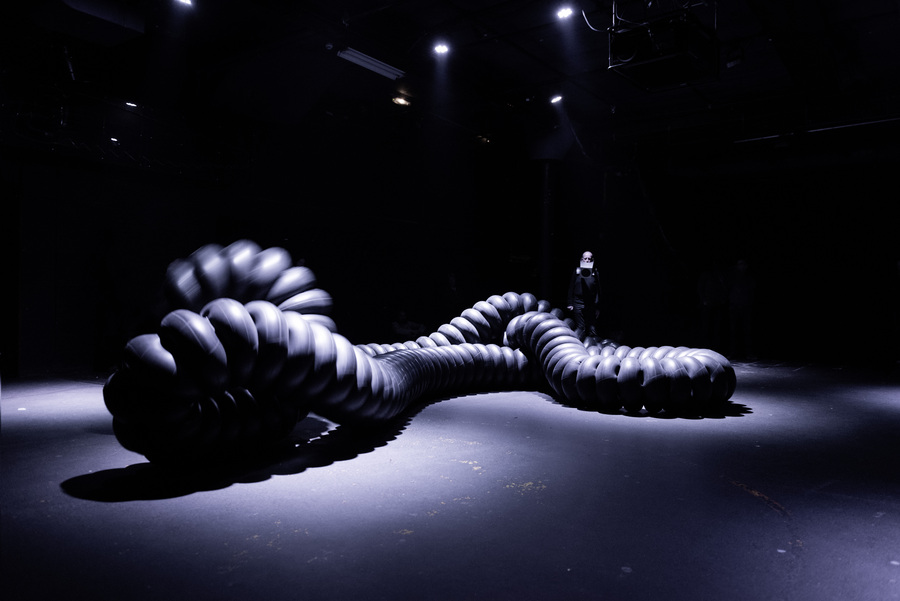
The artist’s sculptural works, characterized by their unique texture, relate to his attitude toward navigating an unfamiliar and unstable sphere of life. In fact, his experience as an outsider resonates with his position as a sculptor. His abstract spatial structures may appear unfamiliar within the conventions of sculpture, while his digital video installations may seem equally unconventional within the domain of new media art.
Since the act of mediating the texture of objects to project his inner sensibility serves as a source of his aesthetics, it matters little to him whether the object is material, immaterial, or a hybrid of both. Rather, the categorical divisions within the art market may have compelled him to embrace the instability of belonging to neither category.
His traversal across the invisible boundaries of artistic disciplines constitutes another challenge. The abstract architectural works he has presented so far were aesthetic solutions that allowed him to “permeate” unfamiliar environments and cultures. However, his more ambitious expansion into digital work is likely to confront the structural barriers of a divided artistic environment.
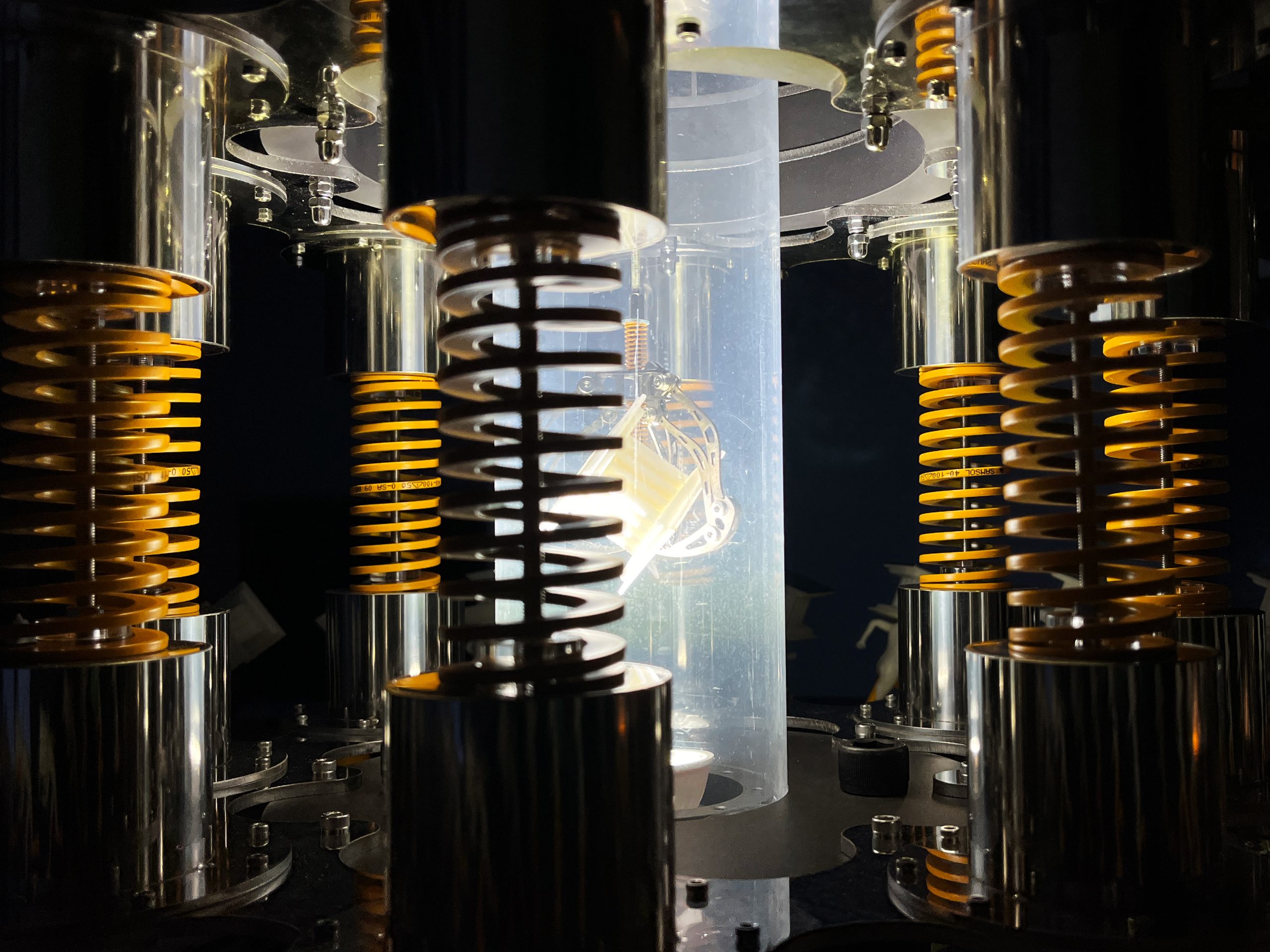
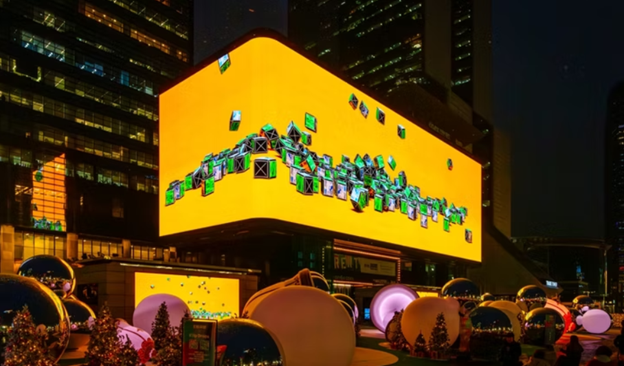
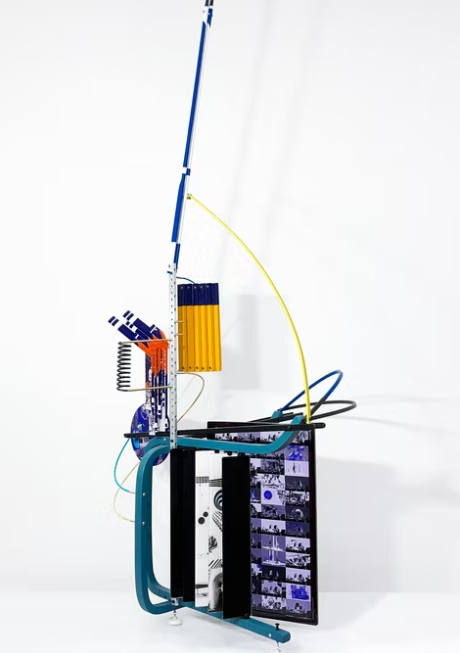
Given the trajectory of his practice, the combination of sculptural elements and new media is likely to remain central to his methodology. The transition or overlap of his architectural technology with new media technology should not simply be seen as a change in practice, but rather as an expansion of the qualitative properties of medium and sensibility. It represents an experiment in crossing the boundary between material and immaterial technologies.
What once began as a sensory journey through material means now extends into immaterial spaces and data technologies. His recent works can thus be understood as reaching a stage of “articulation,” where the material (sculptural) and the immaterial (new media) are appropriately combined and connected.
Between the Replicated and the Artist’s Own Sensibility
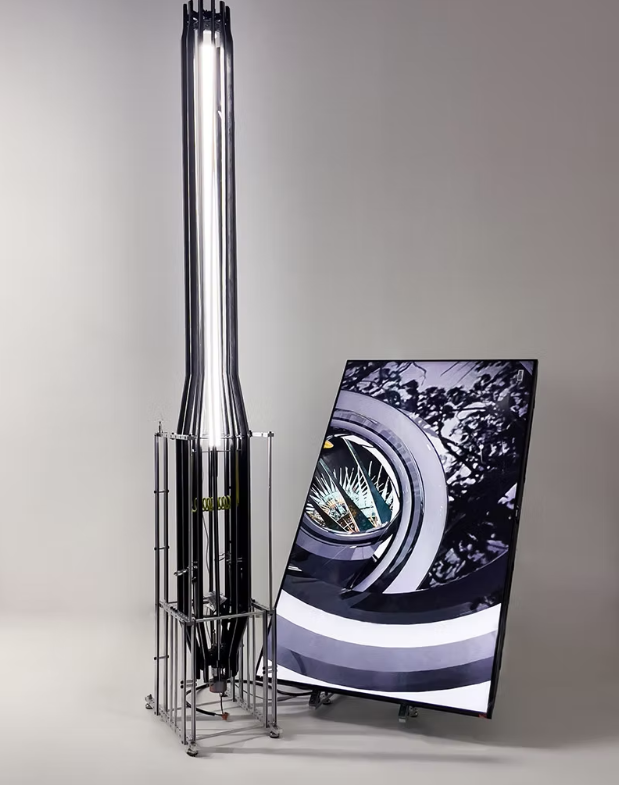
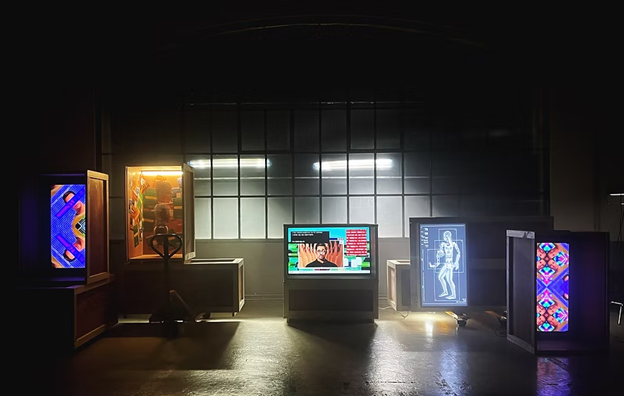
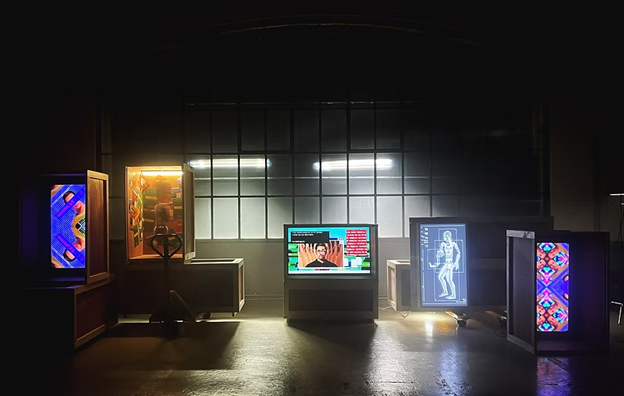
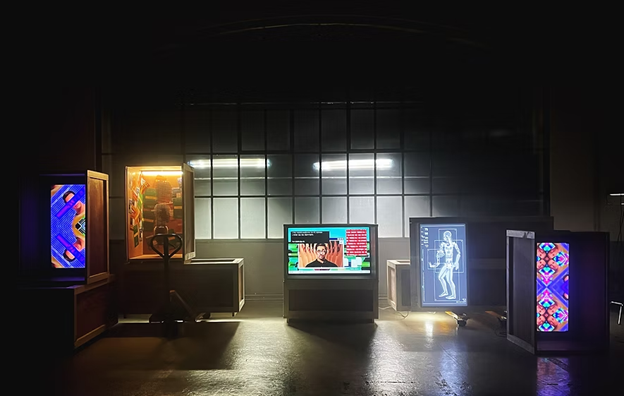
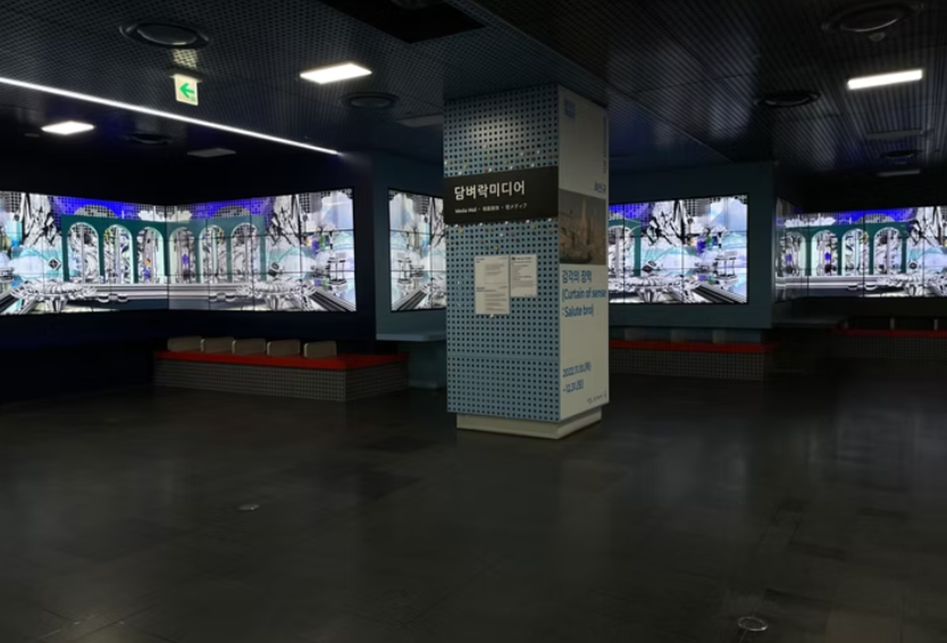
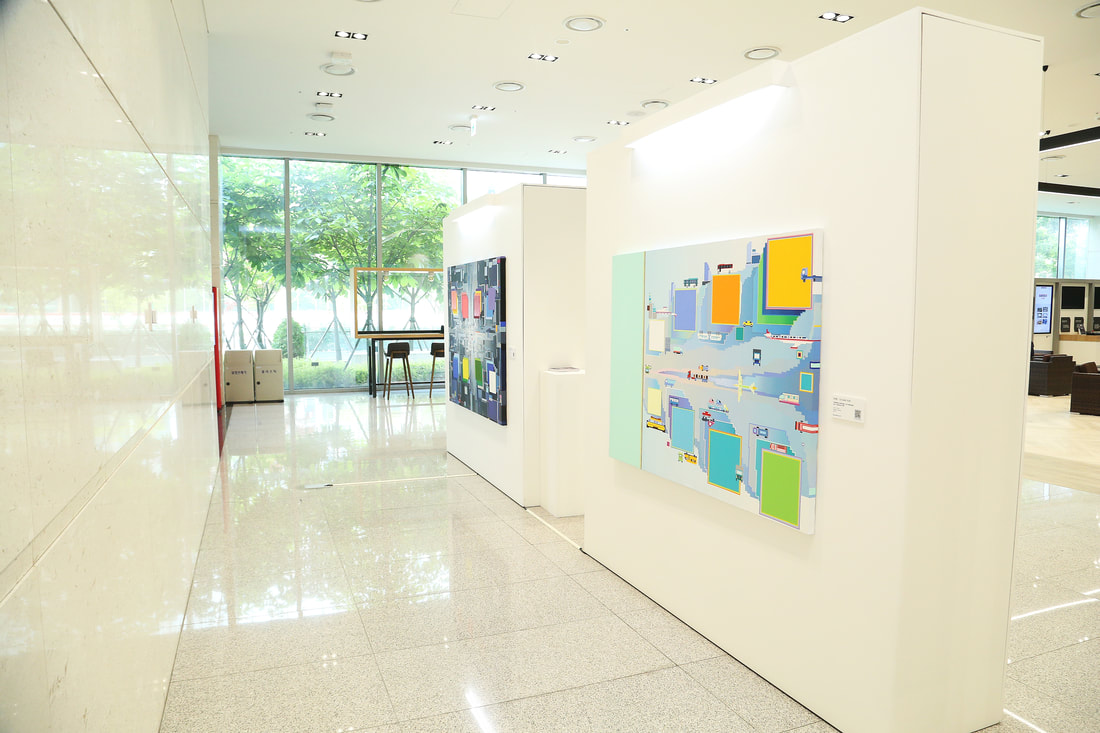
Minkyoo Choi has now entered another boundary as he engages with immaterial space and technologies. The transformation in his sensibility, brought about by the encounter between virtual and real spaces and the new data order they generate, marks a significant shift in his practice. His recent video installation Things You Believe In(2021) appears to be an initial attempt to articulate this sense of confusion through form.
In today’s “post-truth” era, driven by pervasive data technologies, transient issues and discourses render society increasingly opaque, suspending all judgment. Within this confusion, the artist raises crucial questions: “Is my sensibility shaped by the era merely a replica, or is it truly my own?” and “Am I ready to accept the standards of a new domain?” Amid the vast ocean of data, he seeks to construct a firm territory of his own and establish his subjective sensibility as a buoy.
Regardless of whether this endeavor succeeds, the artist has reached a point where he can maintain a tense balance between replication and his own subjectivity. Still, questions remain: how will he conceive his own “in-between” sensibility and new constructions that allow him to permeate yet another unfamiliar matrix-like environment between the virtual and the real? It is precisely this unfolding of his aesthetic technology at the boundary of the material and immaterial that makes his work increasingly compelling.