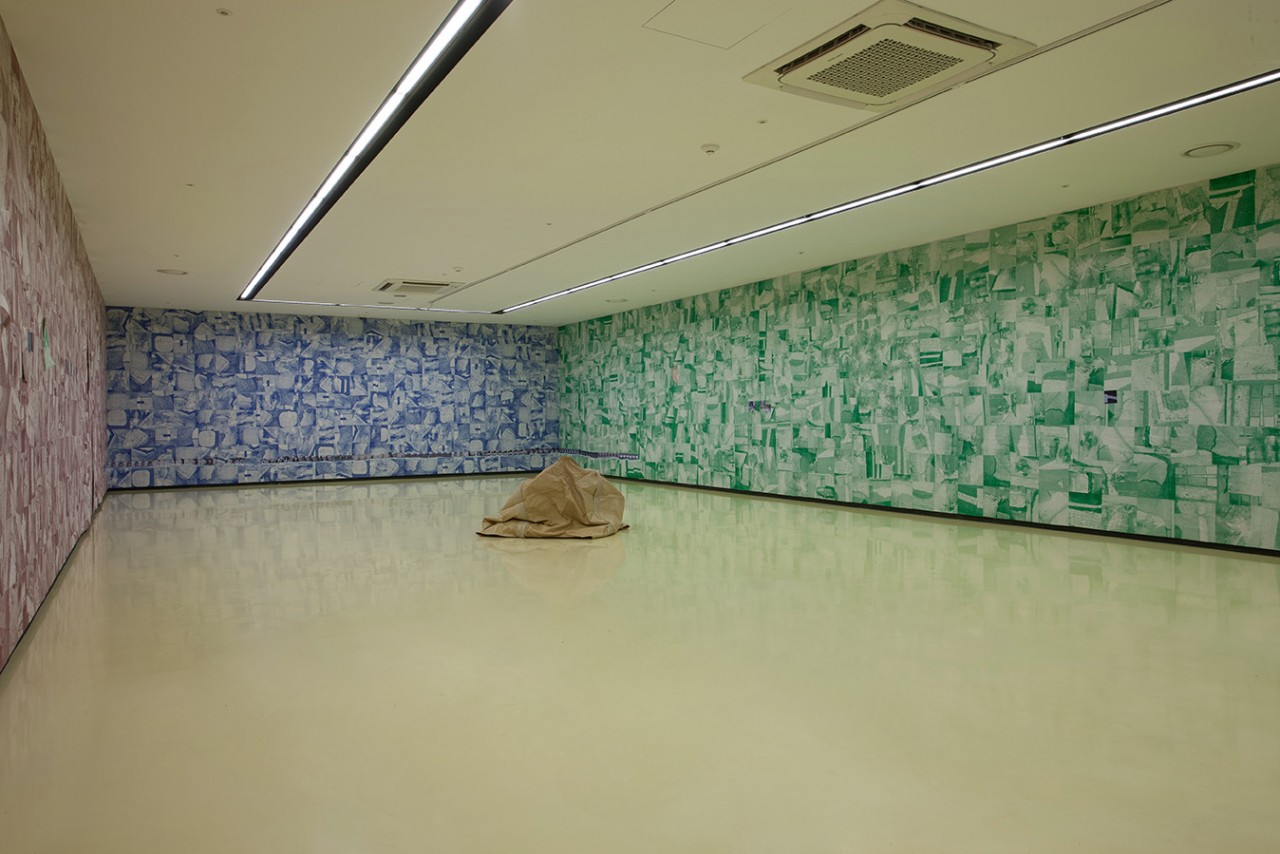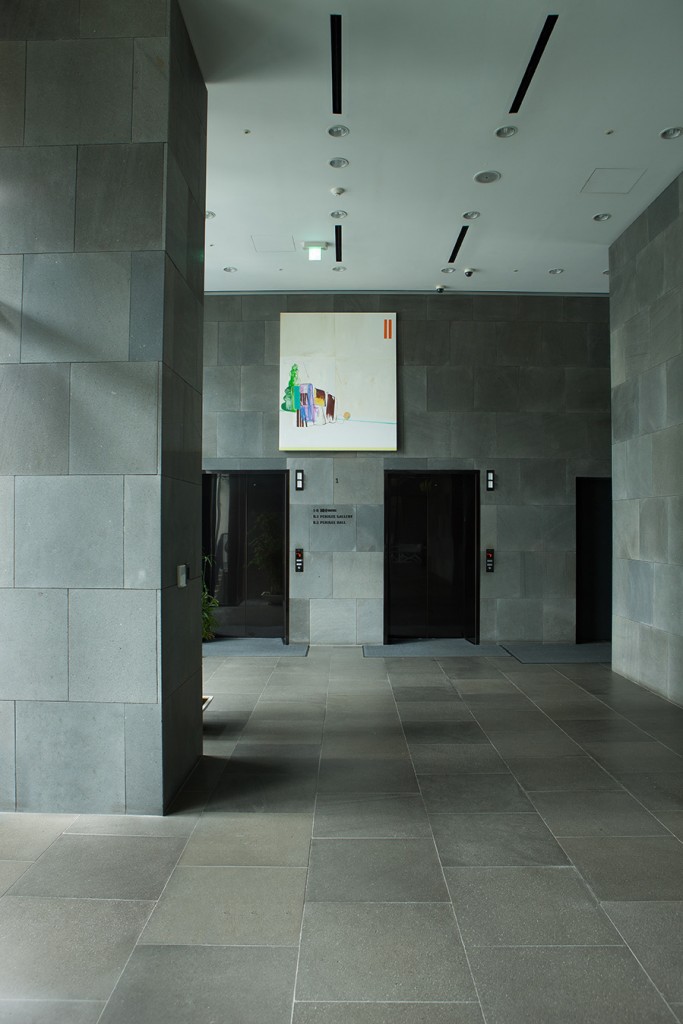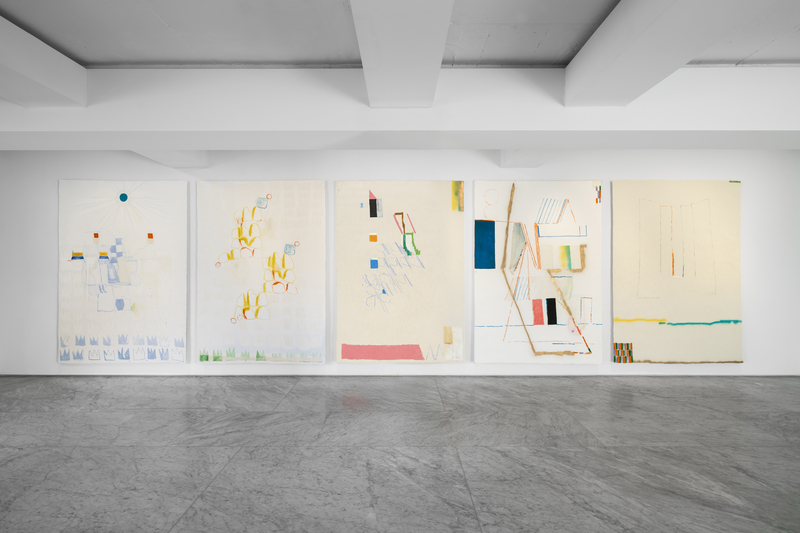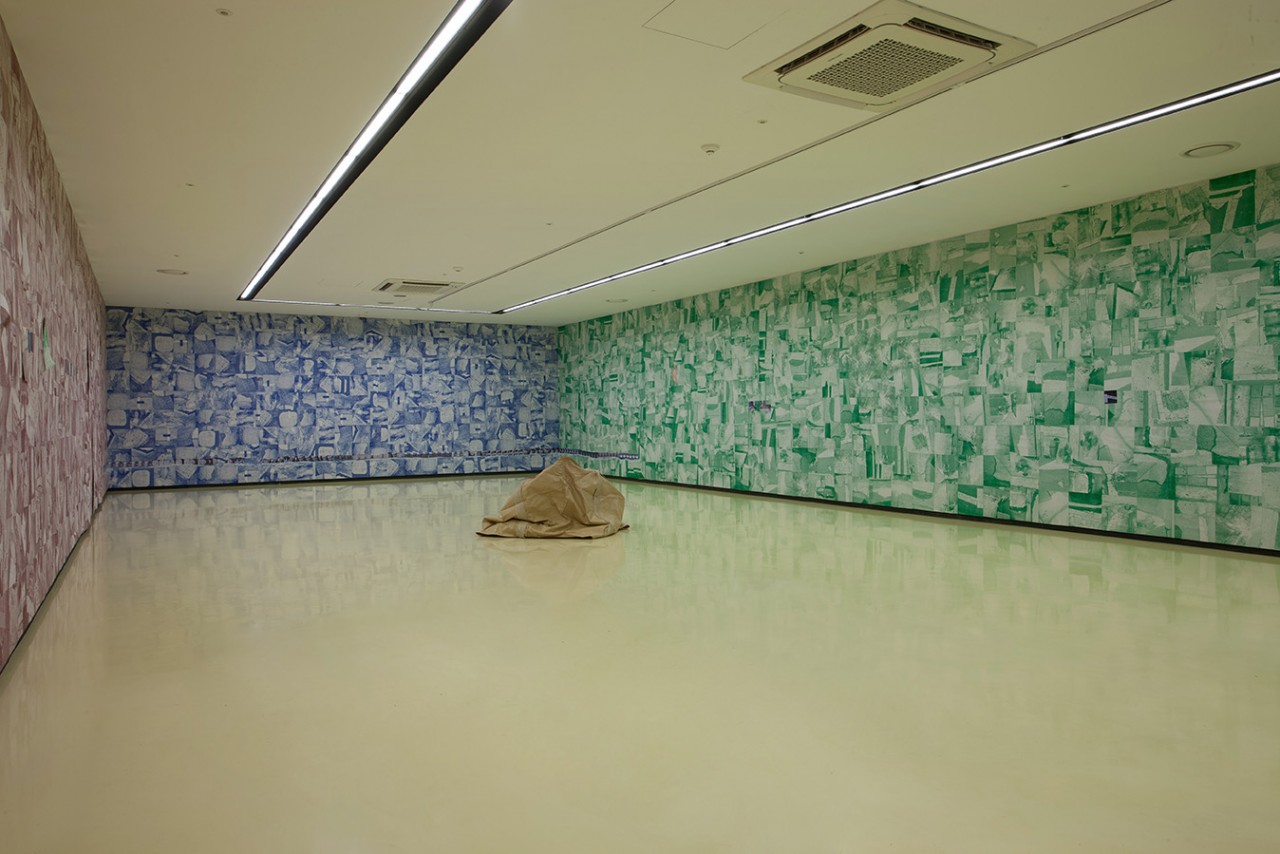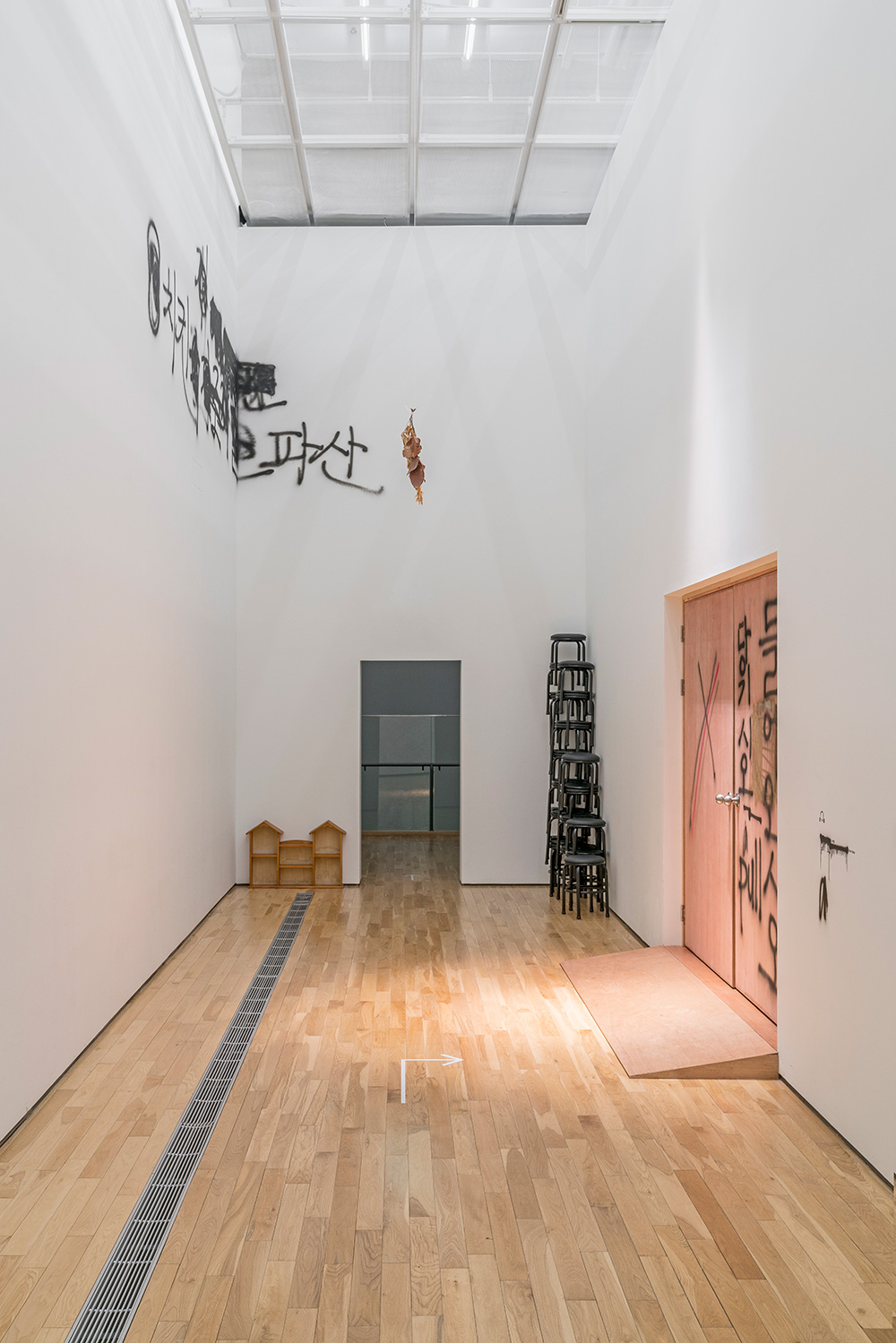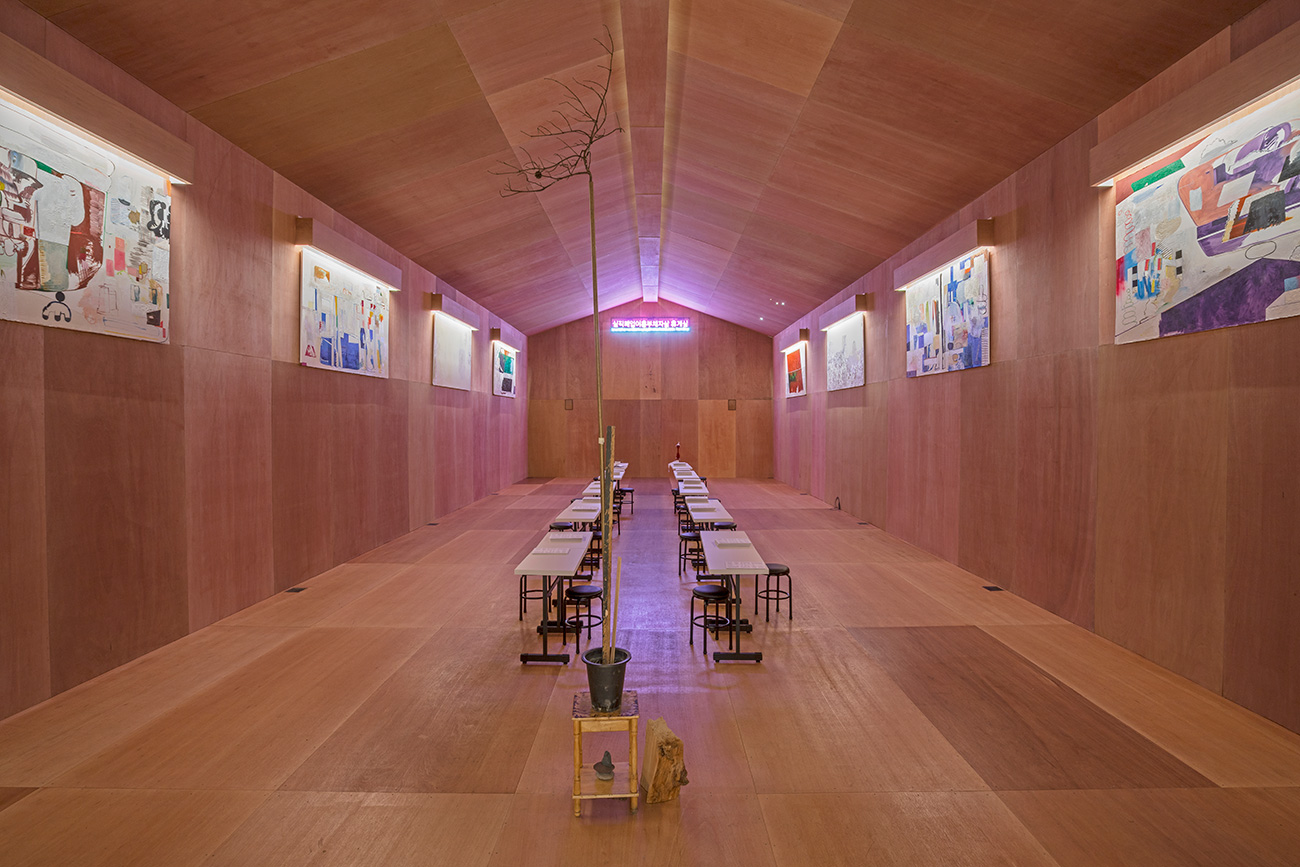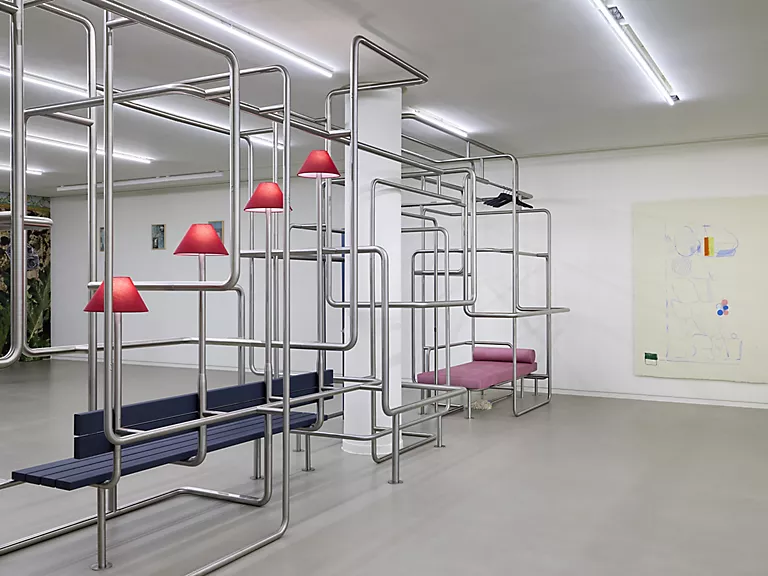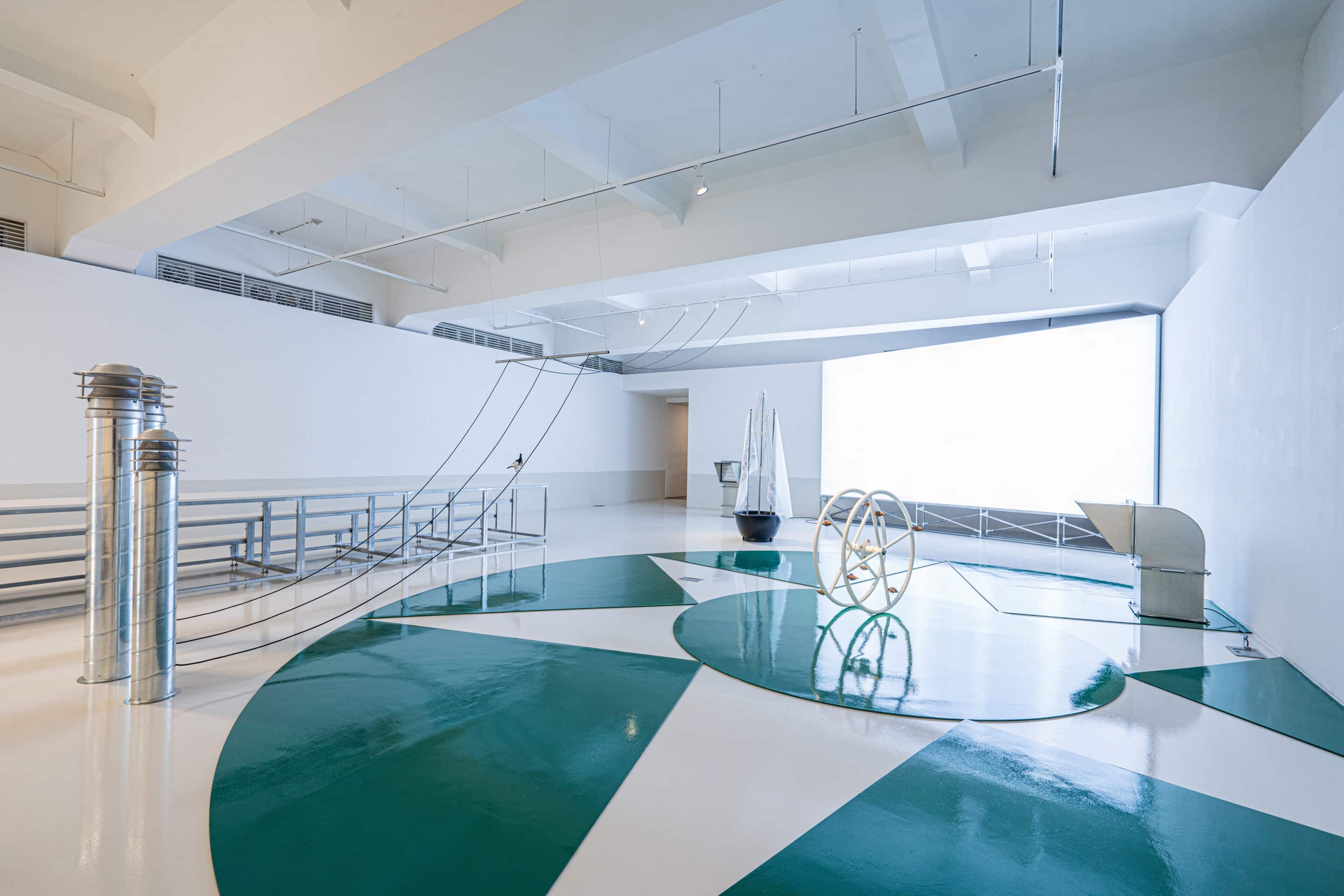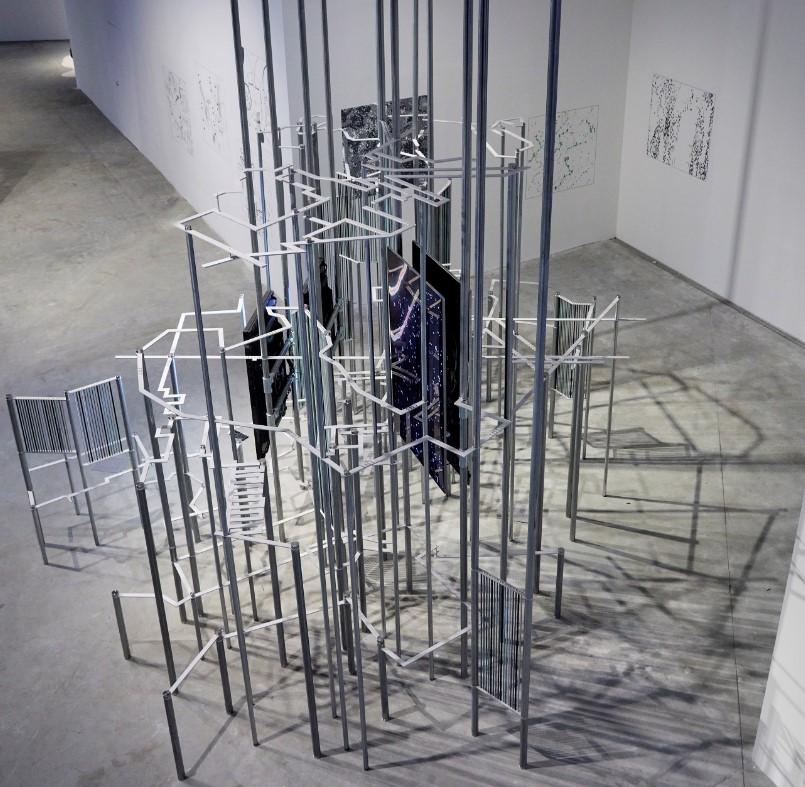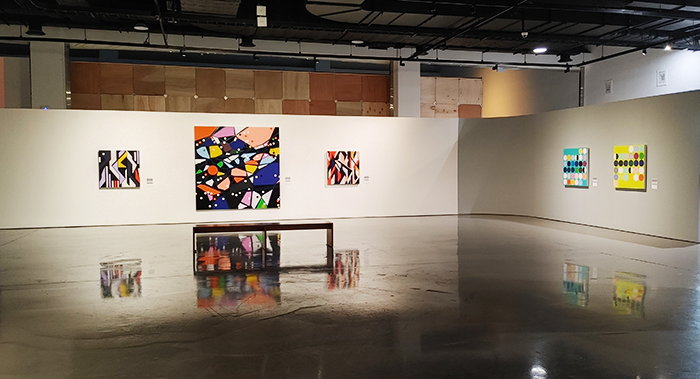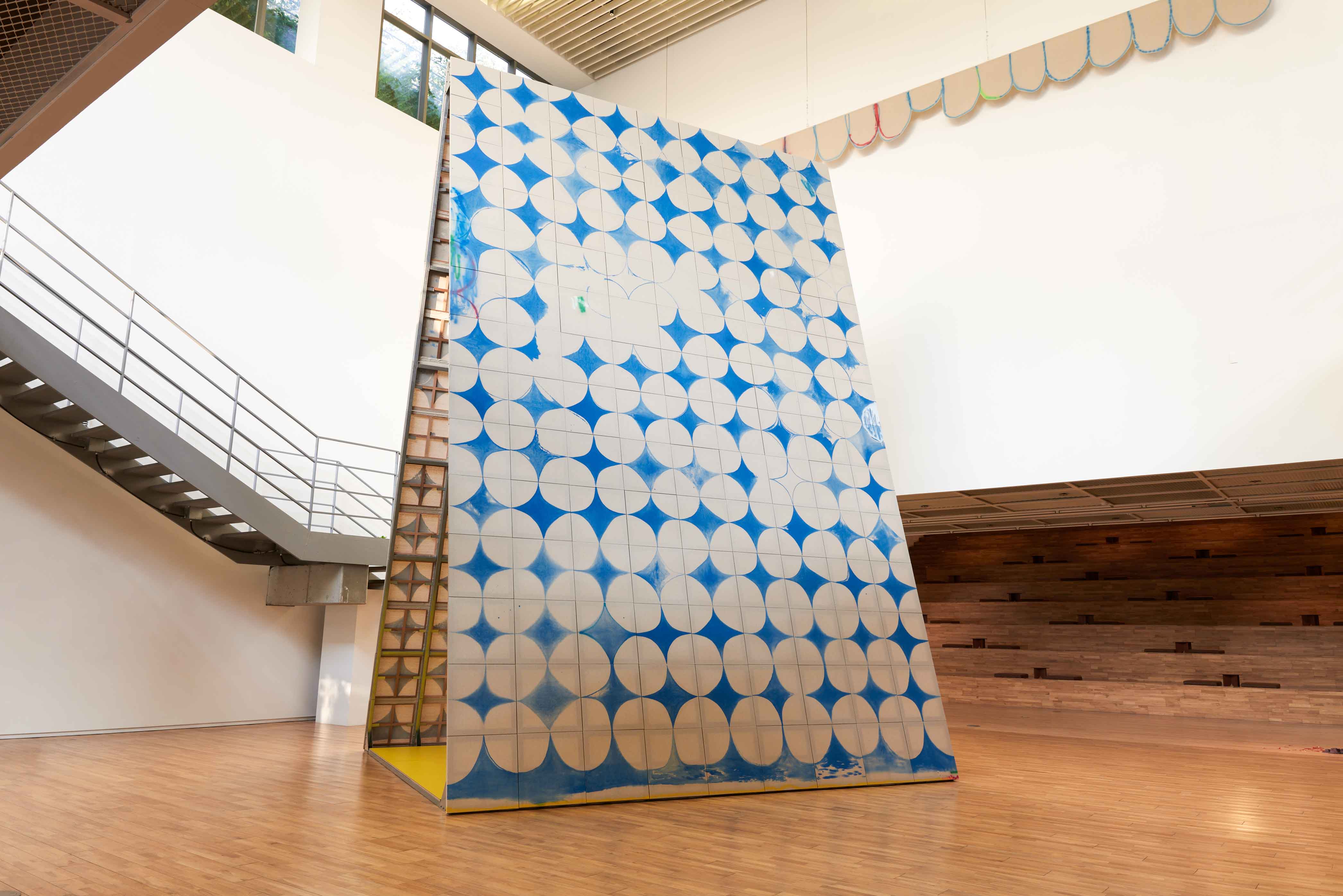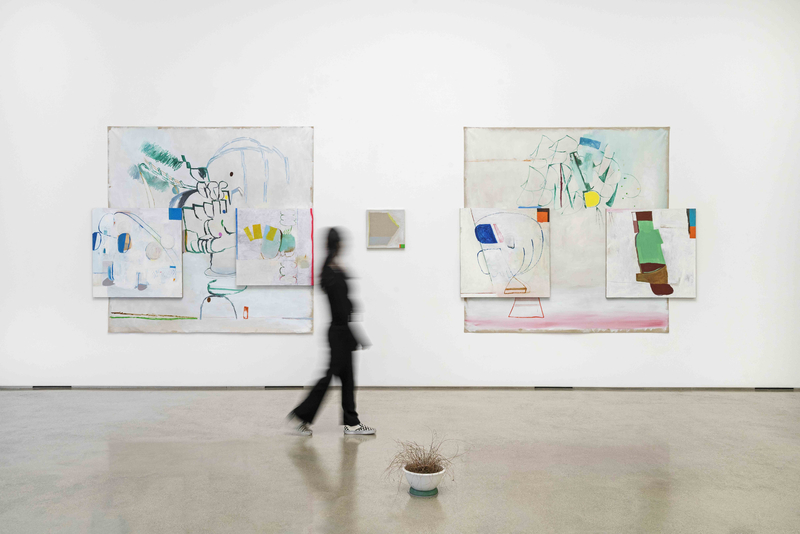

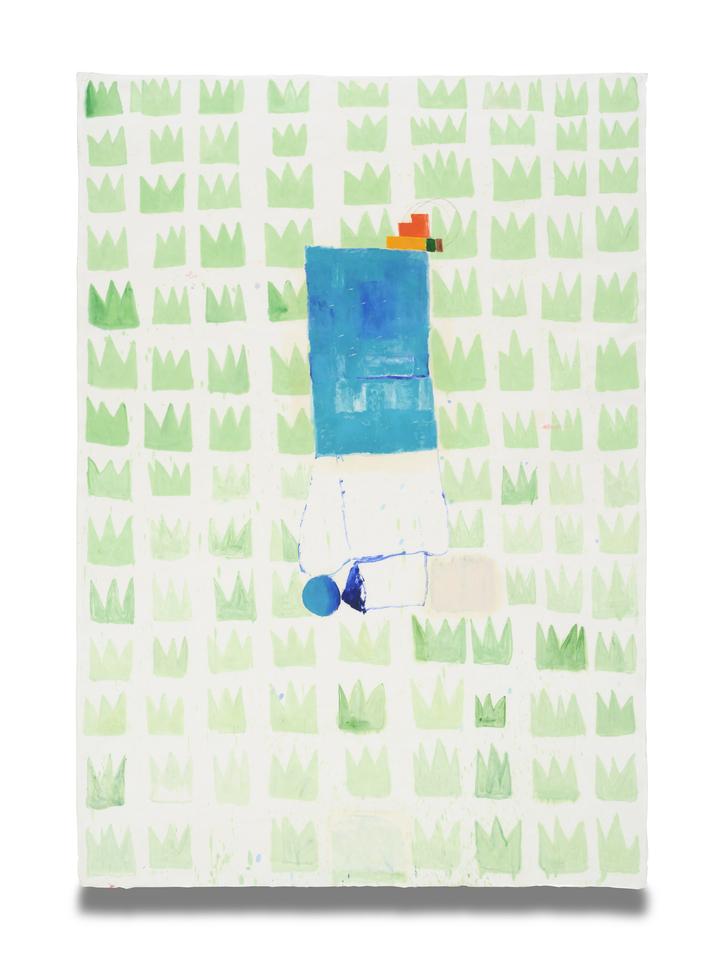
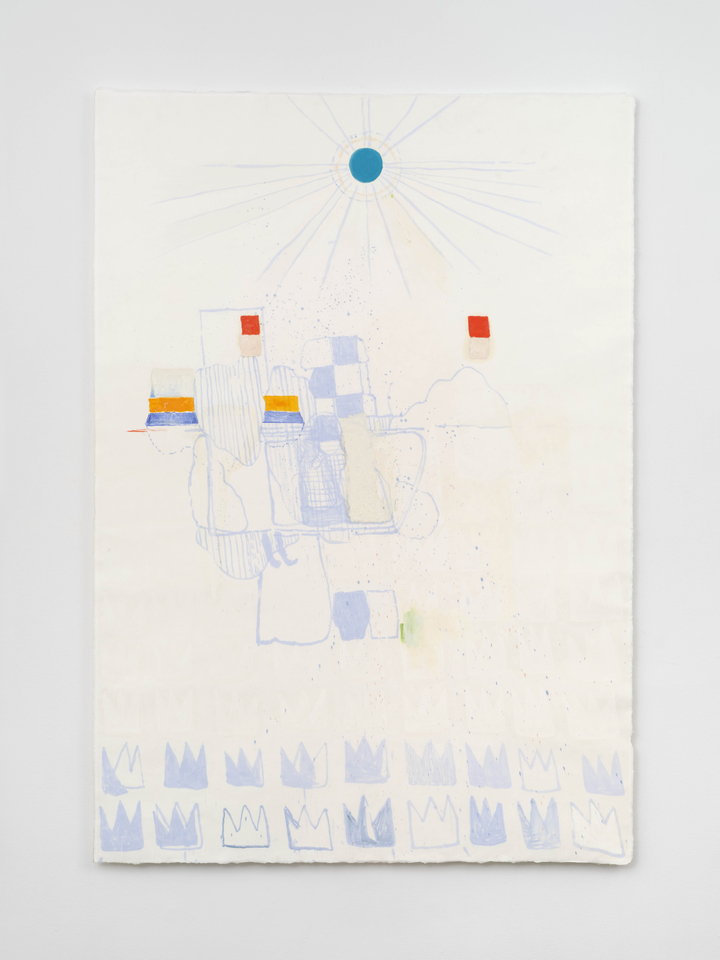
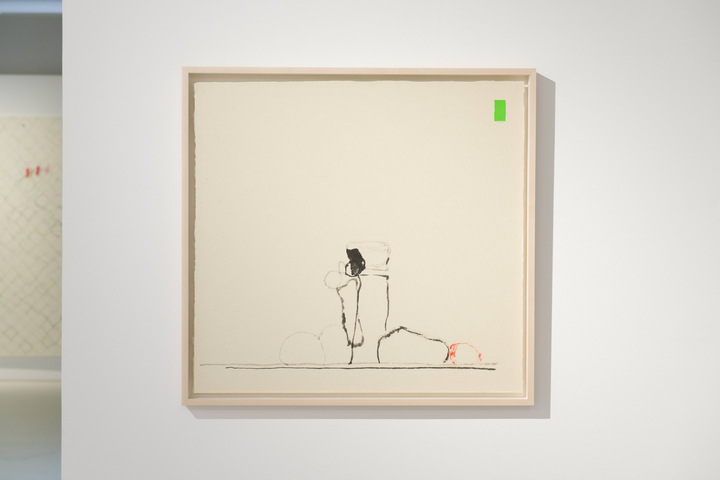
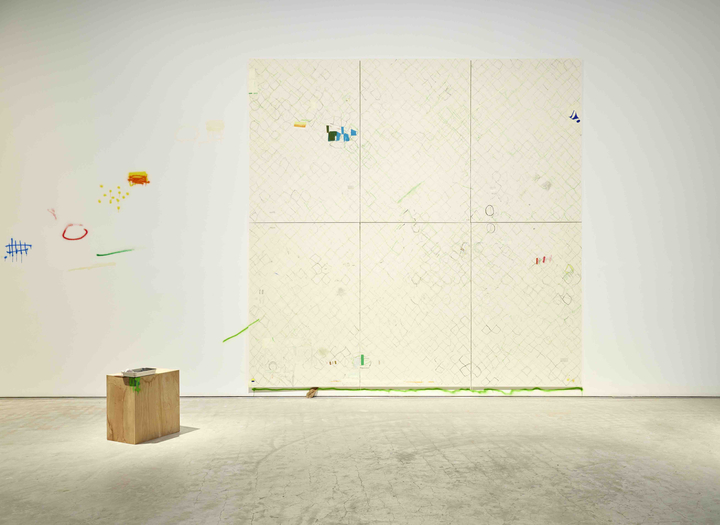
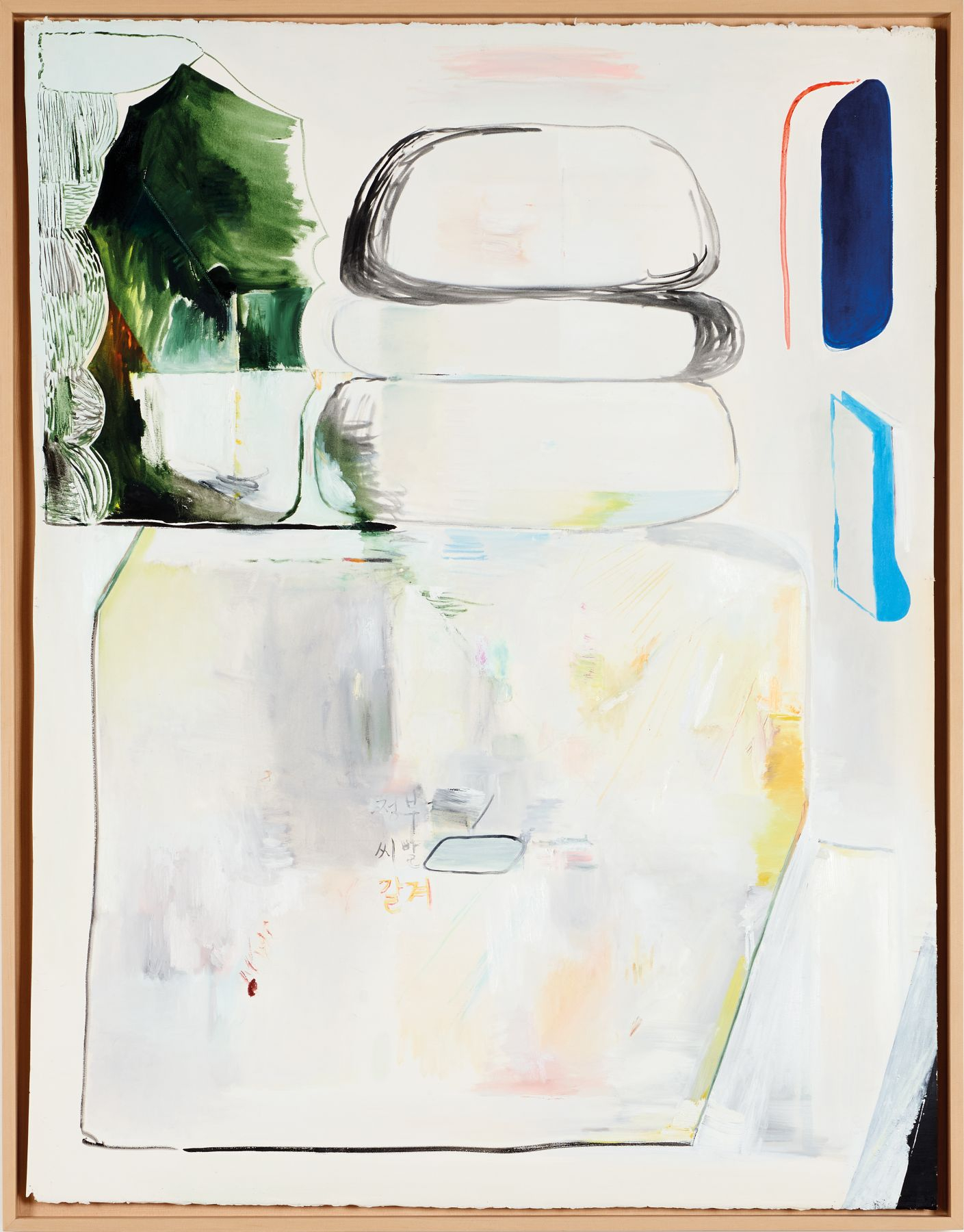
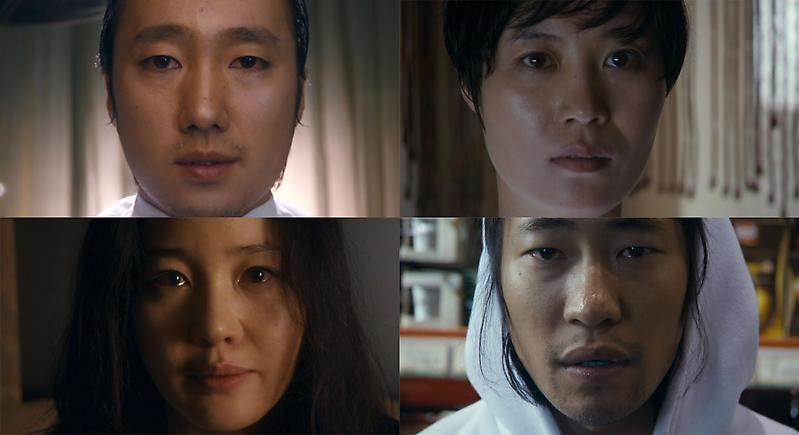
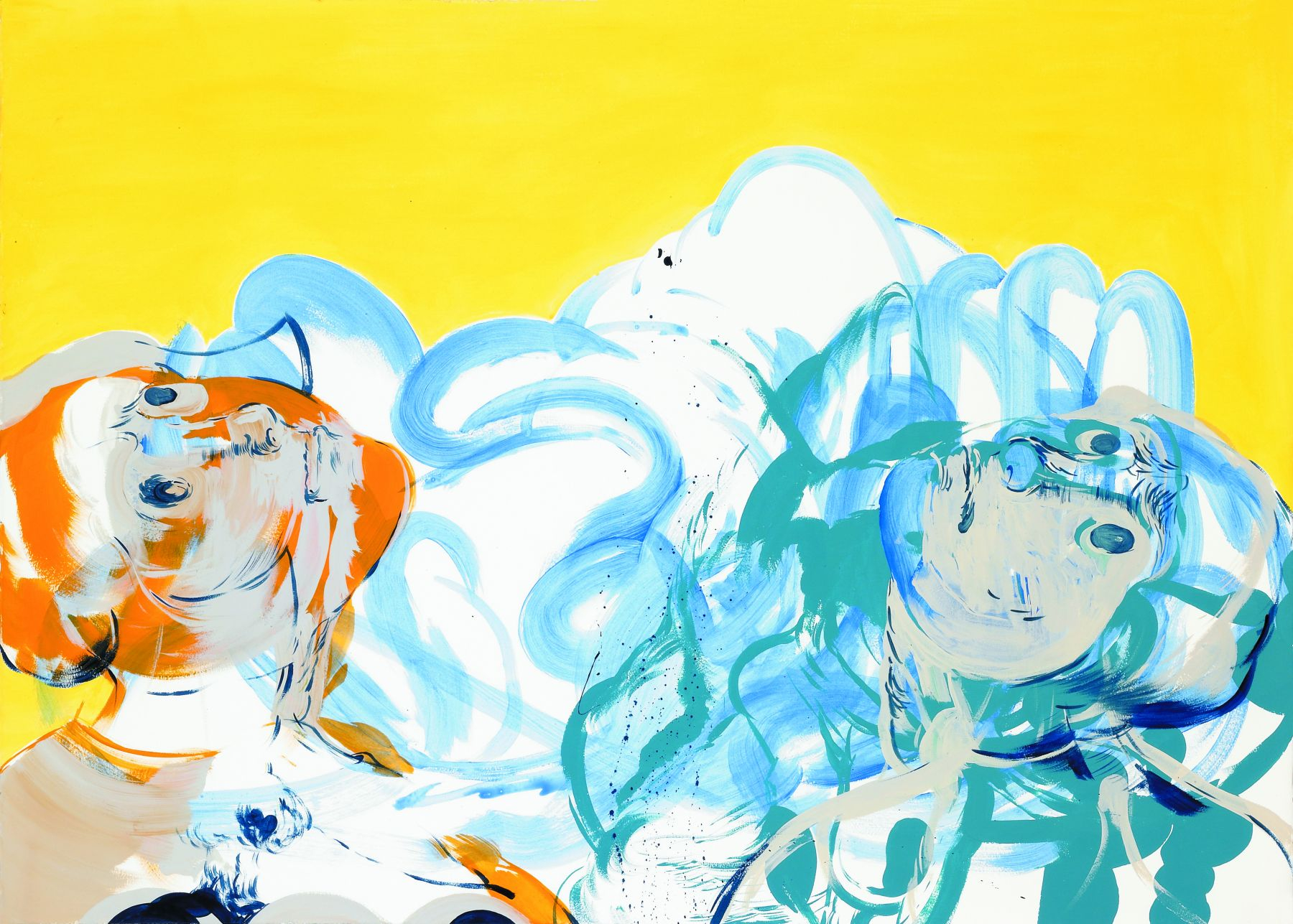
Installation view of 《In the Neighborhood》 © Perigee Gallery

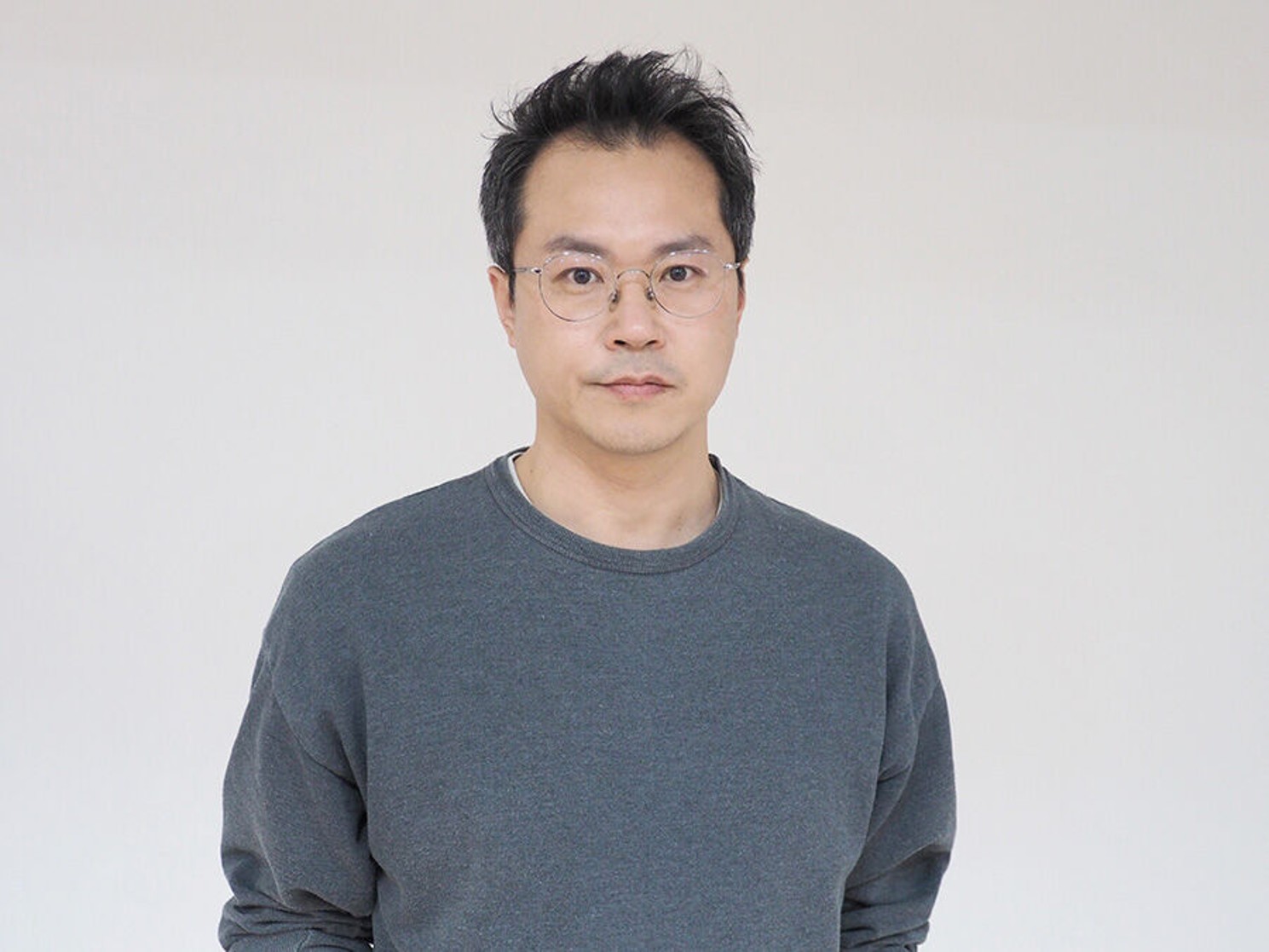
It is difficult to define a person or to describe their personality with one word. Especially it is even more difficult to an artist like Hyunjin Bek who has actively worked in diverse fields like art, music, film, etc. Surely his activities in these diverse fields gather to form Hyunjin Bek but his works and activities are just vaguely felt and do not fall into the minds easily. In a conversation about the work and his plan for this exhibition, he said, “It is difficult to interpret what I represented through this work into words.” In this respect, although this introduction is my best attempt to understand his work, it exists at a point just opposite to his work or makes his work more uncertain.

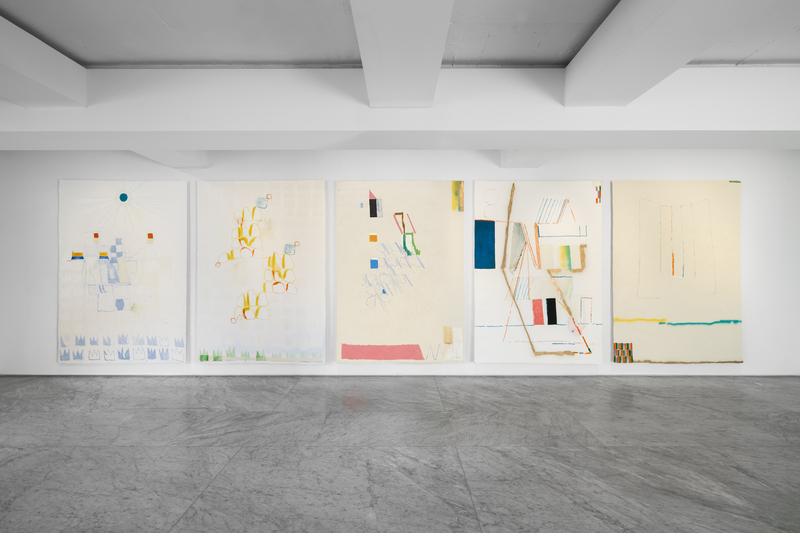
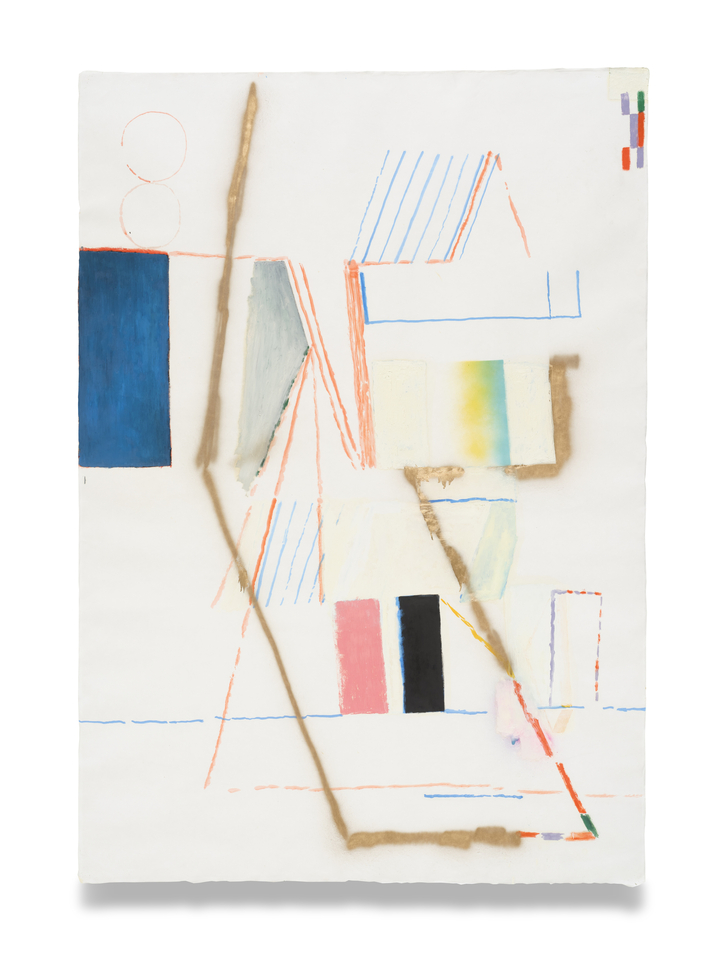
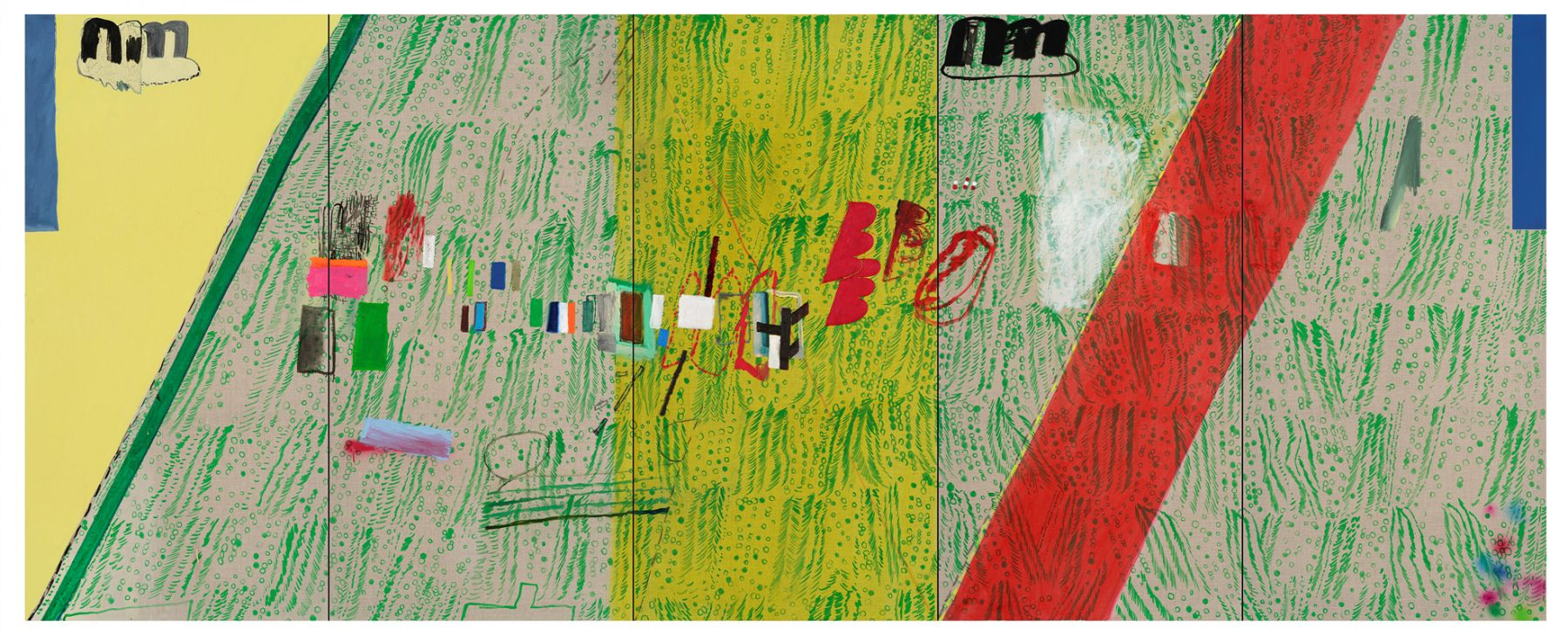
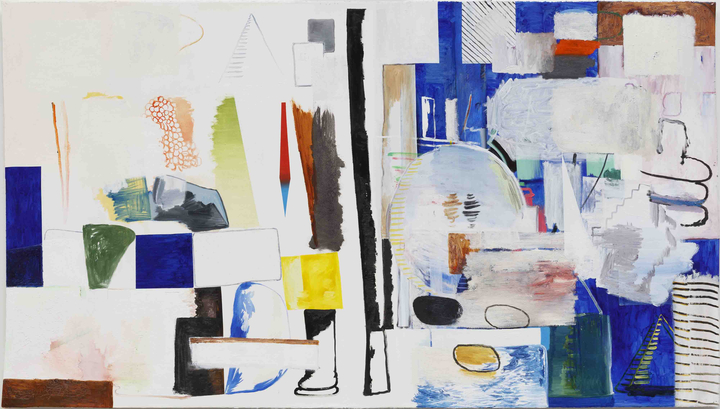
This text focuses on activities of Hyunjin Bek in the field of visual art among activities in many other fields. His work is mainly painting, projecting upon and reflecting the reality that the artist sees and experiences through the touch of his brushes. He certainly does not miss the insignificant and ordinary sense of everyday life in his painting. However, his painting is not about representing certain images but more about painting for painting’s sake. He does not express a negative or sublime viewpoint on reality in his painting but rather some personal and subjective ideas, so that his painting almost looks like a practice for self-realization.

Thus, his way of communication can be seen as not a familiar explanation but as a trigger, thrown by his work. In other words, the medium of painting to Hyunjin Bek is a means of clearly delivering what he has inside him more than any other medium. Yet - to audiences - his work scatters when they try to focus on one thing, and appears again when focus is scattered. His work is literally unclear and vague.

What is his work in this exhibition like? The title of this exhibition is 《In the Neighborhood》. It is related to the work, UnemploymentBankruptcyDivorceDebtSuicide Rest Stop - that will be shown for the 《Korea Artist Prize 2017》, in the National Museum of Modern and Contemporary Art- with two poems like a binocular twin. The title of both exhibitions uses the title of poems that the artist wrote. There is a text about UnemploymentBankruptcyDivorceDebtSuicide Rest Stop by another critic, so that you can refer to it if there is any interest. This text focuses on 《In the Neighborhood》 by starting from the artist’s poems.

The poem describes the life of an adult in sequence - who can easily be found in the general newspapers - and depicts events and activities of a friend of a person who committed suicide while he walks on the street after the funeral. The story may seem to be portrayed as being in the era of neoliberalism, and directly tells about today’s miserable and tired reality. However, the artist says, “The general atmosphere of the poems is formed by the rough and lonesome conditions of life in South Korea. This atmosphere is a general environment in the world, and I try not to embellish it, but look at it with a disinterested attitude.” Let us examine the composition of the exhibition to understand the world he talks about and his work.

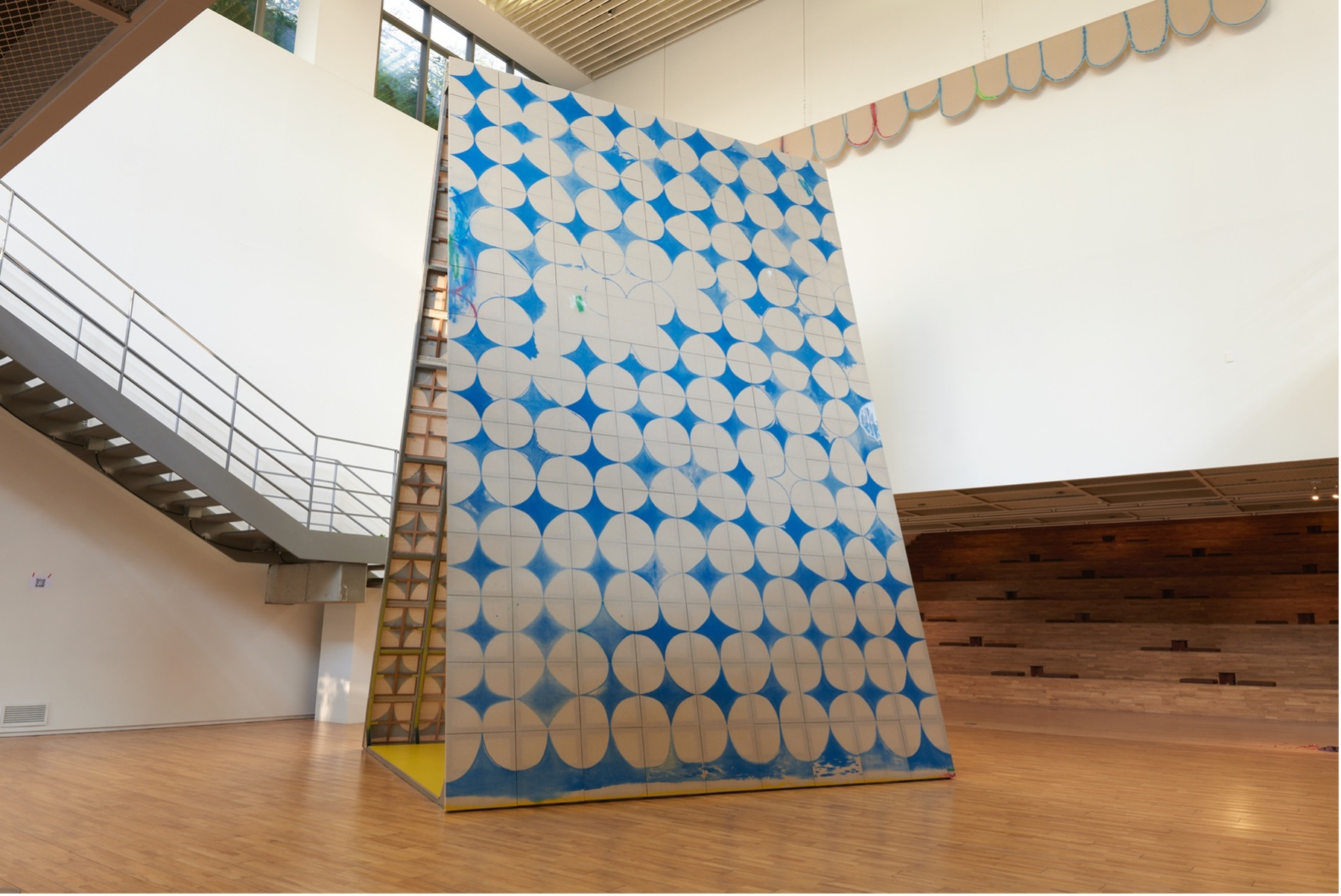
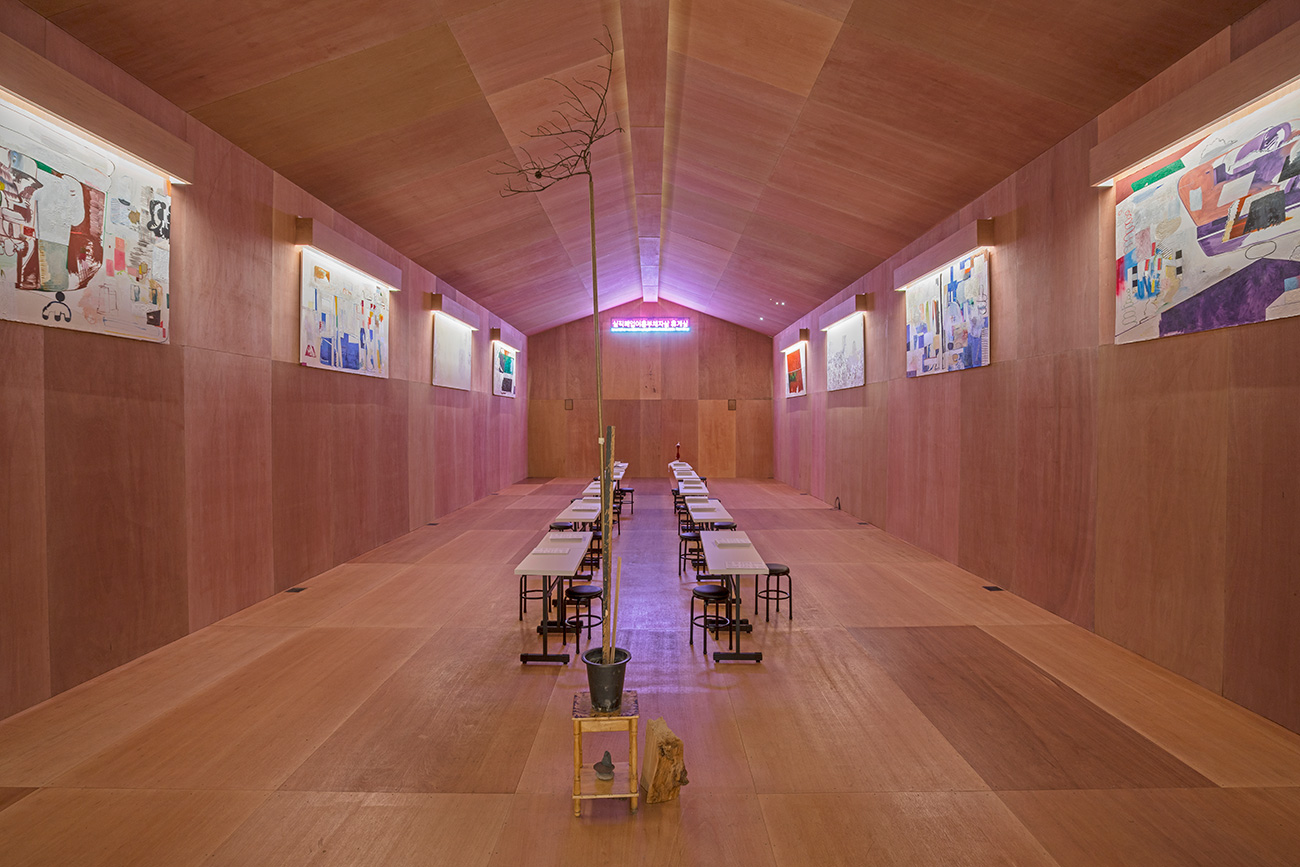
The artist creates a space in the exhibition 《In the Neighborhood》. In this space, a sound by the artist is played like background music. The exhibition space is filled with posters. These are images of streets, taken by the artist with a smartphone and printed in different single colors of lithography. On top of them, images of streets printed as a sticker form are placed in a repetitive but irregular way. Although different colors of the printed images of the streets are distinct from each other, these are similarly assembled images that are not much different from each other. In the images of streets that the artist took over a long period of time, anonymous space and the times of the city are unveiled.

The streets contain layers of traces that do not directly relate to the artist as similar to the artist’s flat painting. We cannot be sure if the images are captured with or without intention but we surely see that there are unprofessional approaches in the process. The artist has shared these images on SNS before this exhibition. It was initiated less as an artist but as a outpouring from an artist. This act – that captures and shares insignificant matters in images through SNS - seems to express a desire for living as who he is rather than showing any special life as an artist. Perhaps the artist has seen a certain power that has been sleeping and waiting for its time in the images of streets, although they seem to give a sigh of resignation by adapting dirty and raunchy reality as it is.


Installation view of 《In the Neighborhood》 © Perigee Gallery

Two video works are installed in one corner of the exhibition space. Both of them show without sound but only images in silence. One captures a tree shaken by the wind. It was filmed by a smartphone like many people do these days, and it is a documentation of a moving tree just as it was without any feeling. However, as you become to watch more and more, the strange thing of the video is that we are unsure whether the artist attempted to capture the wind or the movement of a tree. If I have to guess the reason, nevertheless, perhaps the artist is fascinated by a tree, standing straight even if it is shaken by unseen influences.

Another single channel video from the CCTV is of a bar with the artist in it, showing how his hair was burnt from candlelight when doused with alcohol. The emotionless machine, CCTV, captures this unintentional behavior. I wonder if the artist used this film in order to present the moment that he came to see himself from the outside, like an out-of-body experience. The video in the lobby on the first floor of the gallery captures the feet of his dancing friend in the club without telling him. The movement of the two feet touching the floor is so soft and flexible that they seem like floating in the air in a weightless space. From this light body, the artist may realize that freedom is achieved by not excluding anything: putting one’s thoughts, feelings, and preferences on the same level, even if they are different from the existing system rather than escaping from it.

For the interpretation of those moving images, however, the importance should not be in a complicated text or what he captured, but in how he captured them. It shows that he captured those moments without intention in everyday life, and thus, a starting point is not clear at all. As evidence, the artist mentions that he did not find any satisfaction when he traveled to find a subject to film.

Lastly, the painting in the lobby on the ground floor would be a good example to talk about what kind of the world Hyunjin Bek lives in, and what kind attitudes he has in that world. As mentioned above, he likes to roam in everyday life without any purpose, and follows his path just as a flâneur. Can it be said that the way he tries to maintain the flatness of painting while he keeps making stokes on canvas is refer to his desire to do nothing other than painting for its sake? Then, the reason he has continued his own way - painting on a flat surface - could represent his wish to paint and do nothing else beyond this.

Like in the poem 《In the Neighborhood》, the artist might stop in the middle without realizing a reason, and see something in ordinary everyday life. This attitude might be his way of not missing himself at the time when he has tried to cross over in diverse genres. In other words, “doing nothing,” does not mean the same as a job defined by the society as an artist, musician, or actor, but triggers the artist to be wakened. It shows that nothing can be started from a point exists as an exterior frame without himself. This attitude leads him to stay within pure potentiality and the possibility to be able to become something.

Finally, what we describe in this text is the most recent version of his art practice that captures changing ‘me’ from continuous adaptation and resistance to everyday life as it is. By seeing this, we begin to know that the artist does not see the world with something in it but he believes that the world exists from his action of seeing. I keep thinking that writing about his work in a fixed text is very vain. As I mentioned in the beginning, my text is working as two contrasting roles - standing at the opposite point of his work while making his work vague, but also emphasize Bek’s artistic activities in his daily life- and I still hope it can be seen as an attempt to understand his practice a little more.

References