What would be the answer to the ultimate question of life, the Universe, and everything? In Douglas Adams’ novel ‘The Hitchhiker's Guide to the Galaxy’, a city-sized supercomputer called Deep Thought gives an answer after calculating for seven million and five hundred thousand years. (The Hitchhiker's Guide to the Galaxy was first aired as a radio drama on BBC in 1978. It was then published as a novel in 1979 and translated into Korean in 1996 and 2004, which was then followed by a Hollywood adaptation in 2005.) The answer is: 42.
There are many theories as to why the answer to the profound question is number 42. There is an argument that the symbol *, which represents files with the same extension in (now-defunct) Microsoft’s DOS operating system, is coded as the number 42 in ASCII (American Standard Code for Information Interchange) system. Some people insist that 42 is the sum of the numbers of characters of the author’s name and the title (30+12). There is also an interesting opinion based on Goroawase (語呂合わせ), a Japanese wordplay to change words with other words or numbers with similar pronunciation, through which one can interpret the number 42 as sini (死に, death).
This leads to a possible conclusion that the ultimate answer of the universe is ‘death.’ Above all, we have to listen to what Douglas Adams has said about the number 42. “Binary representations, base 13, Tibetan monks are all complete nonsense. I sat on my desk, stared into the garden and thought 42 will do. I typed it out. End of story.”
Numerology is a kind of divination that employs numbers to comprehend the essence of materials. According to the numerological belief, numbers represent the fundamentals of everything. Through numbers, every material in the universe can be quantified and given an order of things. Taking a further step, it might be possible to represent certain things through numbers.
Following the same logic, certain numbers can be substituted with particular objects and figures. For example, in Judaism, the name of God – which was written as יהוה but could never be pronounced in speech. Thus, the Jewish people substituted the Hebrew alphabet characters with the Roman alphabet characters YHWH, which was then changed once again into the numbers 10, 5, 6, and 5. The sum of the numbers, 26, became the representation of God’s name. In other words, for the ancient Hebrews, the number 26 was the very name of God.
At a glance, numerology seems to be another superstitious belief that overemphasizes the meaning of numbers, which are just numerical symbols. Numerology might be a desperate human attempt to fit the incomprehensible operation of the world, of which the result is present yet the process is unintelligible, into the however understandable frame through which humans can grasp the meaning of this world. However, even in the field of artificial intelligence, which is deemed the most advanced technological field of the twenty-first century, numerological affairs are prevalent on the fundamental level.
In 2016, artificial intelligence researchers at Google ‘discovered’ that the algorithm of Google Translate has developed its own language, which humans cannot comprehend, while learning data of more than a hundred different languages. To explain this ‘middle language’ that is fully functioning within Google’s translation service yet incomprehensible in terms of the existing human language, the scientists had to coin a new term: ‘interlingua.’
Certainly, today’s world is full of uncertainty. In fact, the world has always been uncertain and unstable. However, the good old days when people could conveniently rely upon the so-called ‘grand narrative’ are gone (although it might have been fairly convenient for some people). Yet, it is never an easy task to accept or embrace uncertainty.
Those who are situated in uncertainty yearn for more certainty: complicated events or knowledge are often reproduced as simplified ‘narratives’ and circulated (as in the proliferation of the so-called ‘wide and shallow knowledge’ in Korea); worldviews based on coarse beliefs mobilize people through information distribution platforms such as YouTube, which transcend space and time; and needless to articulate is how the so-called ‘fake news’ is affecting the national politics around the globe, not to mention Korea and other countries.
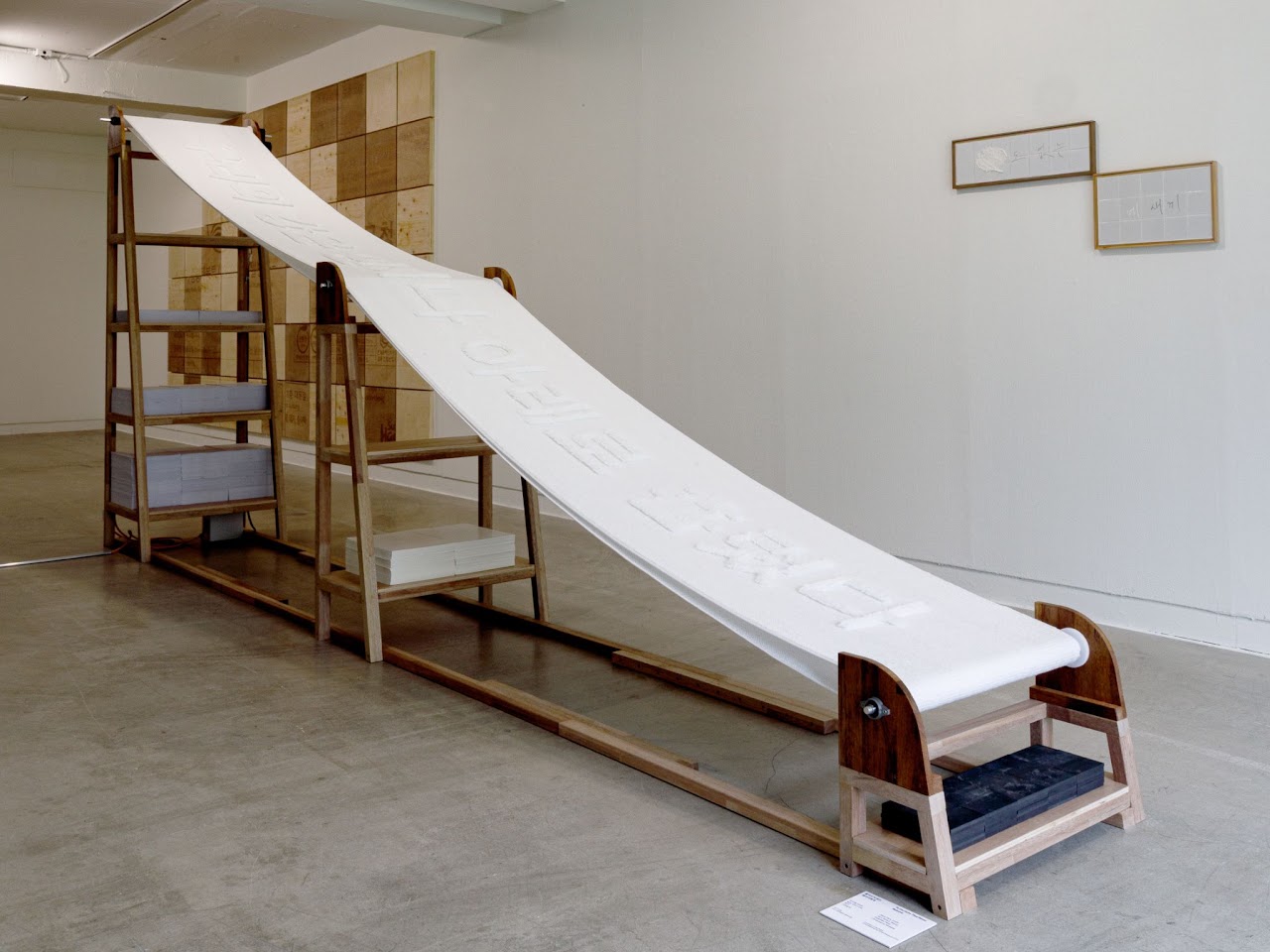
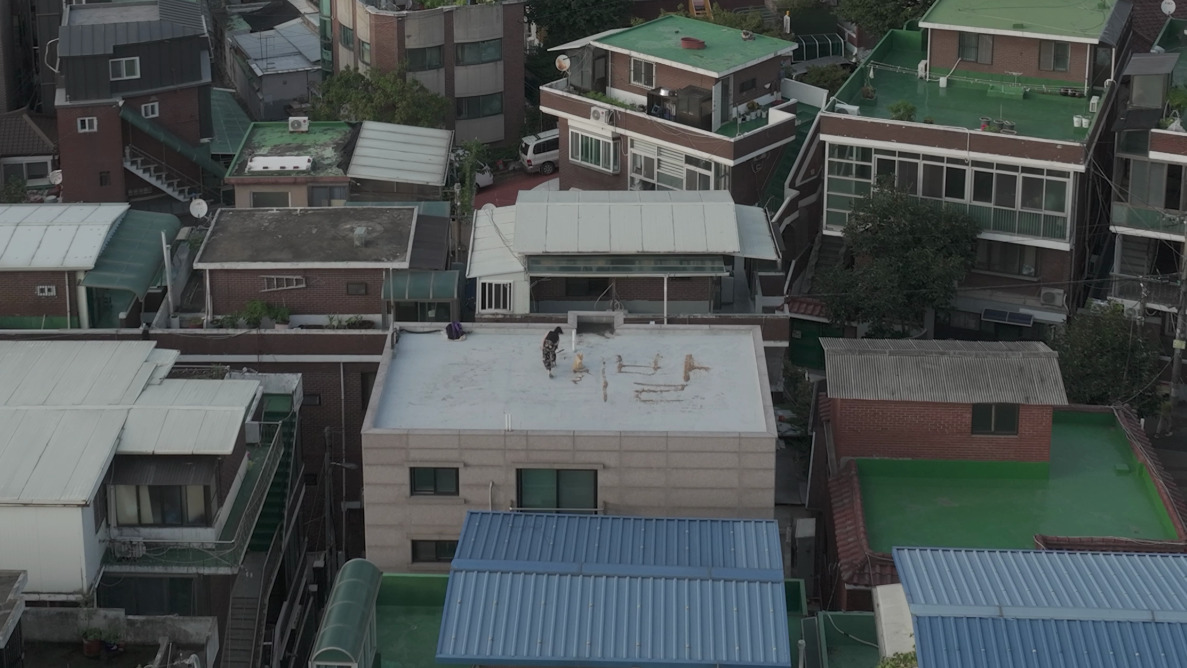
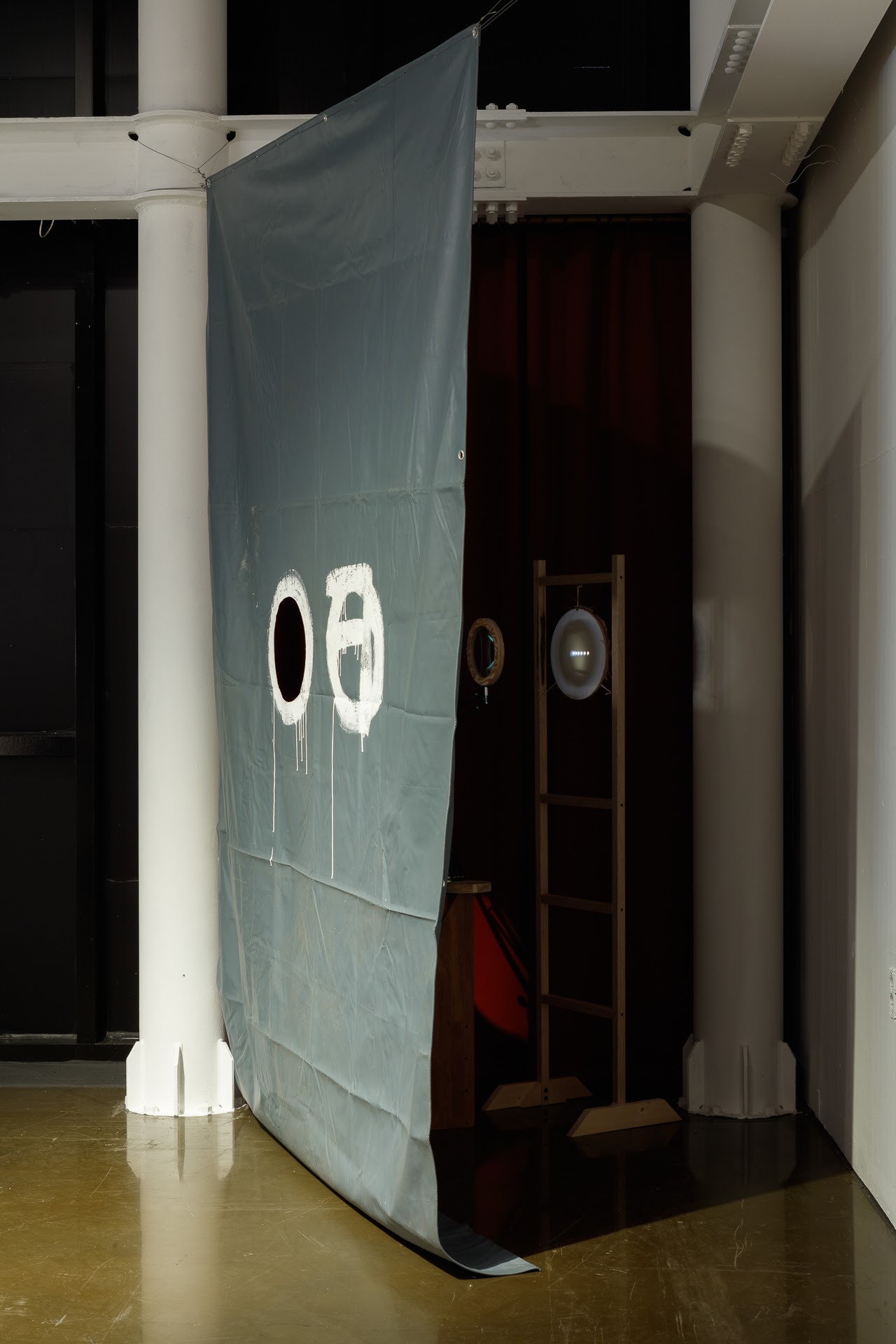
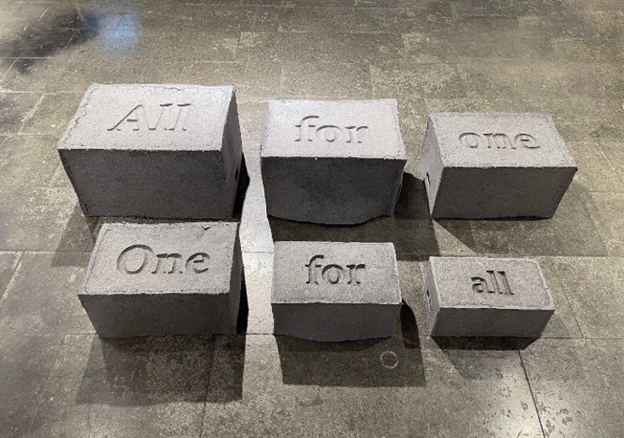
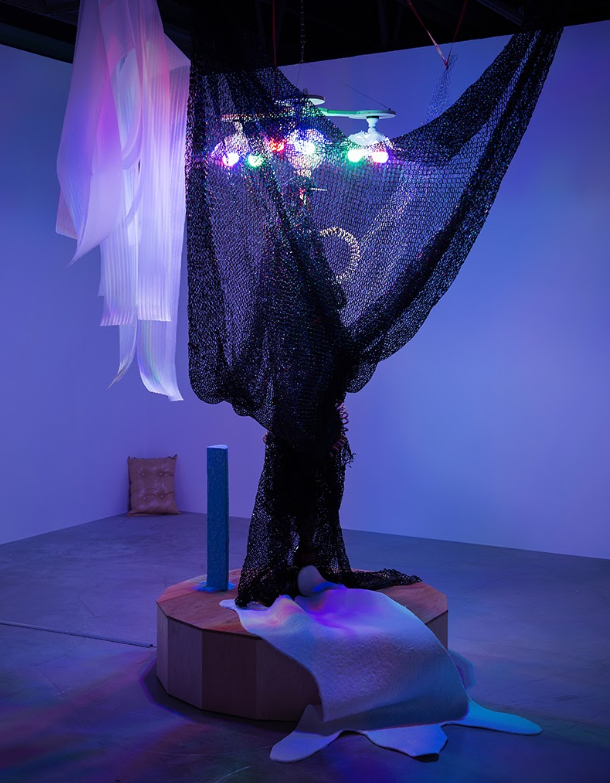
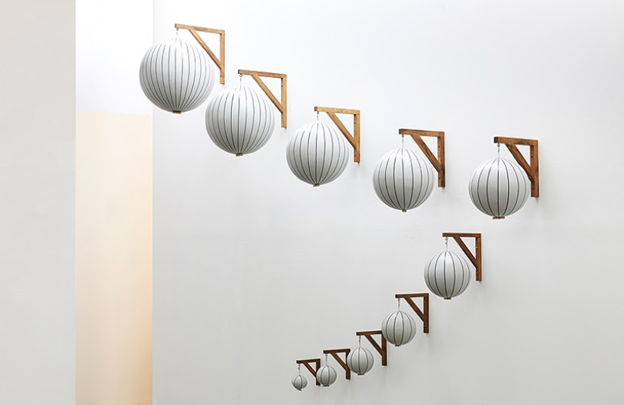
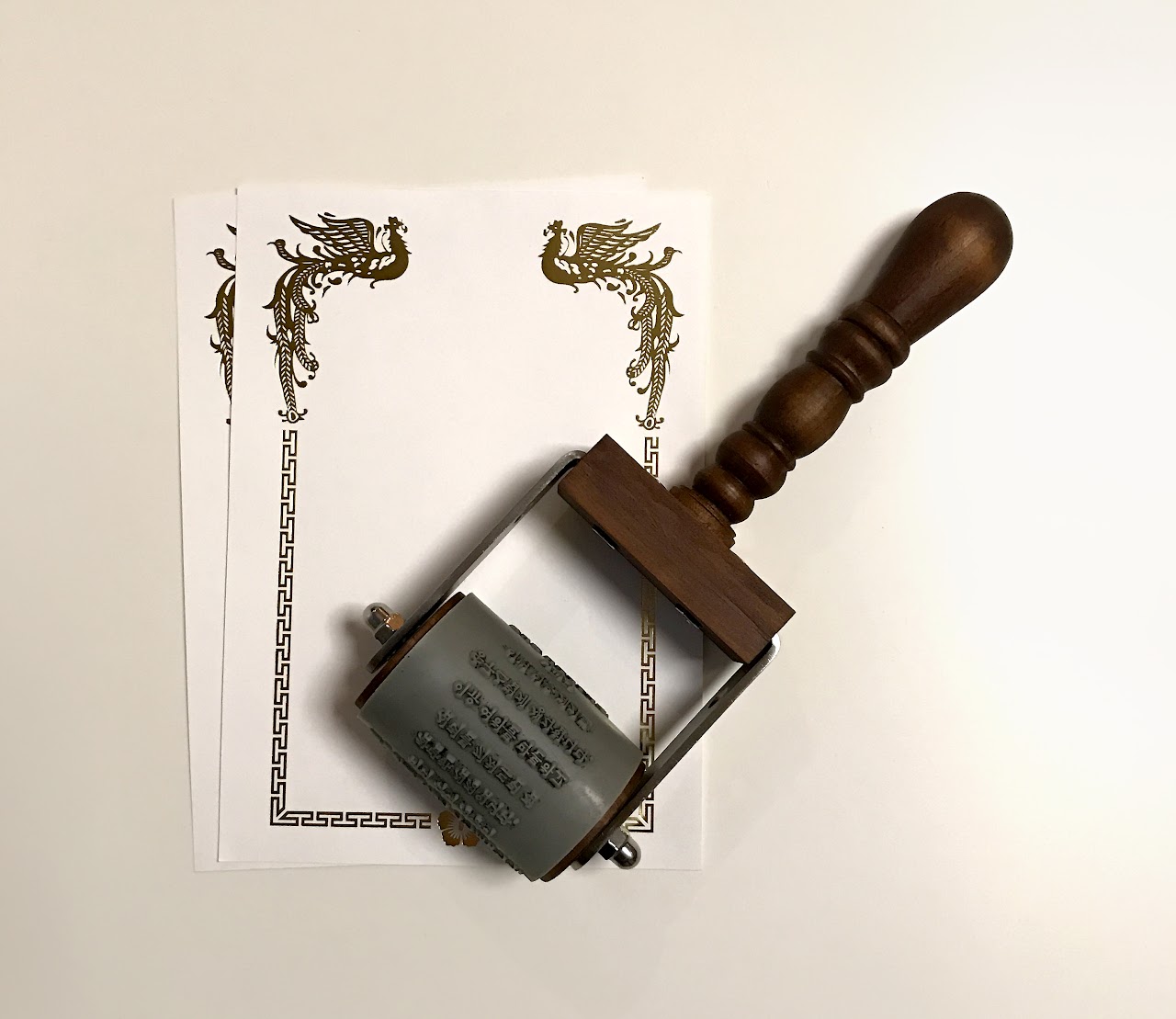
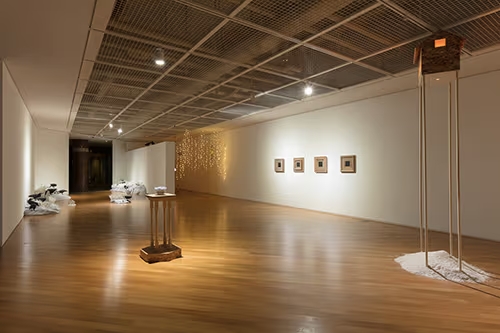
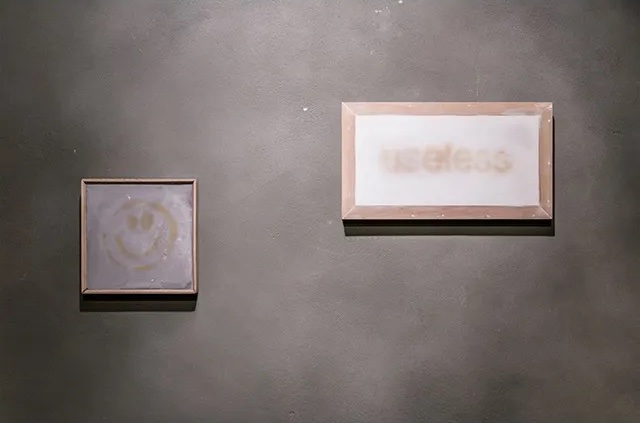
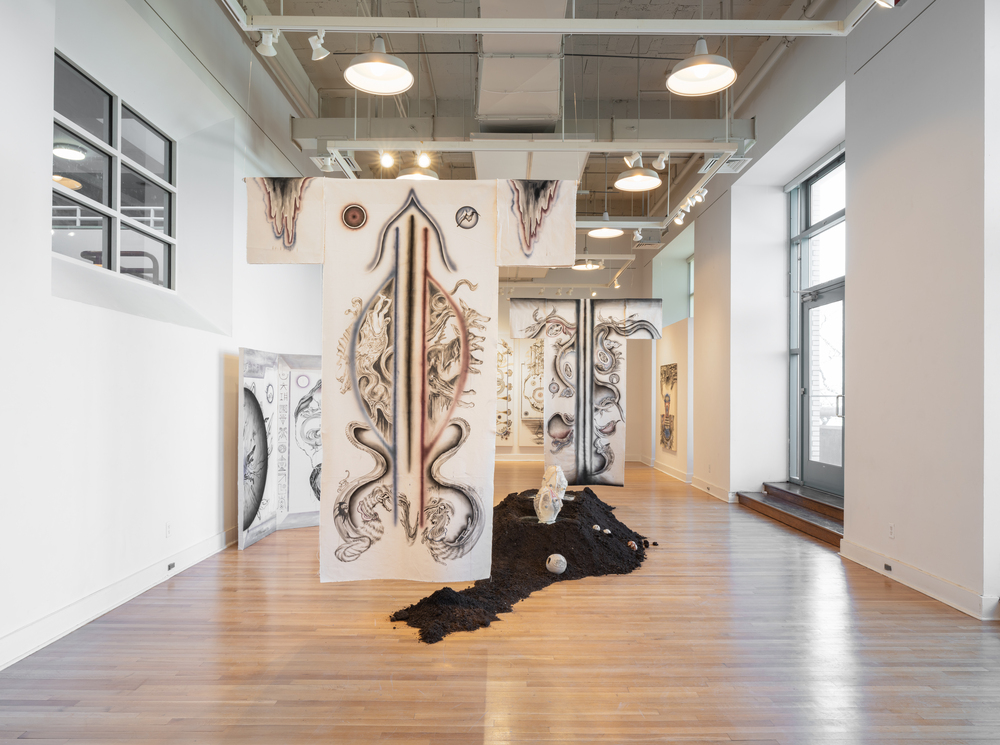
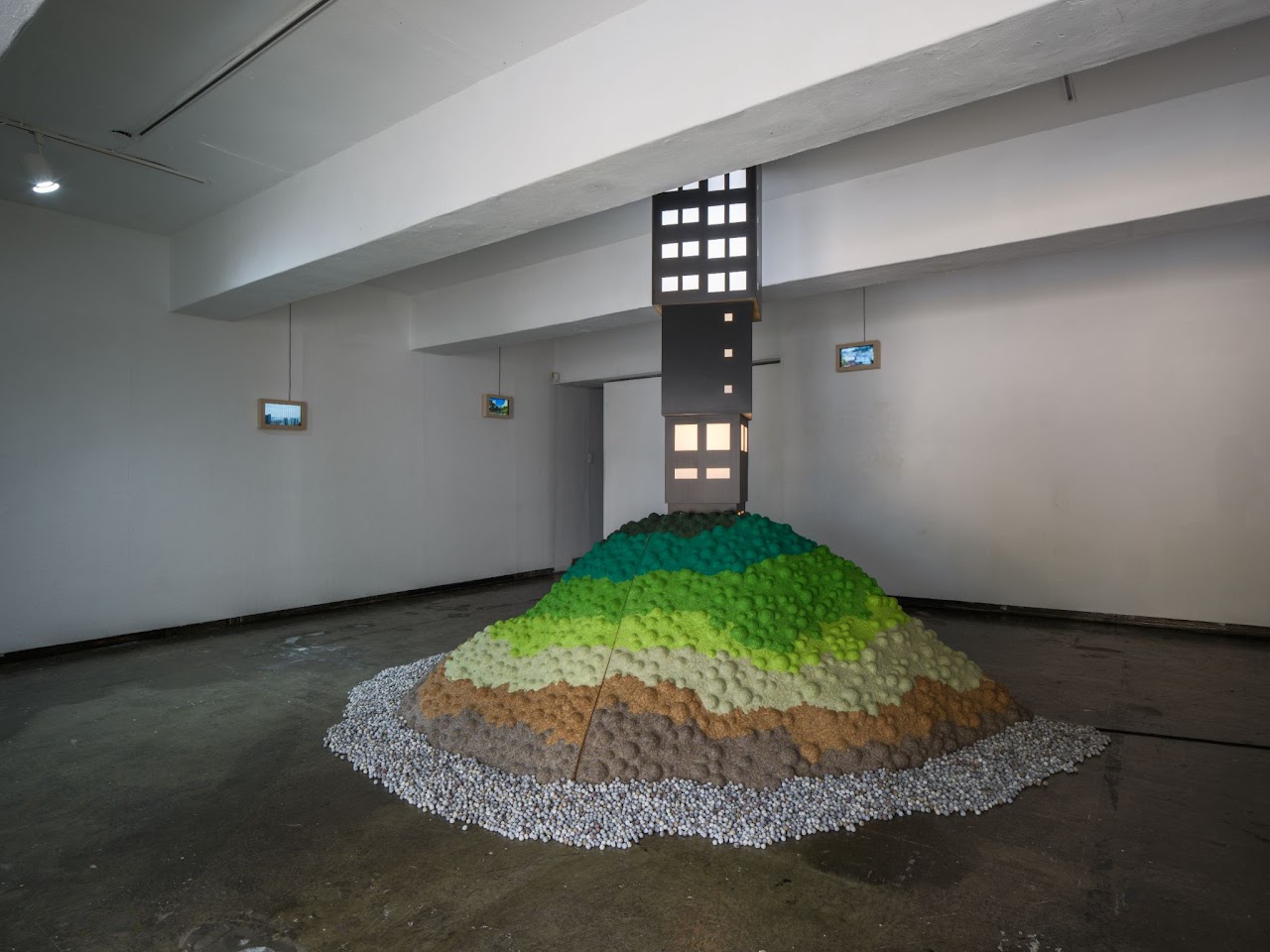
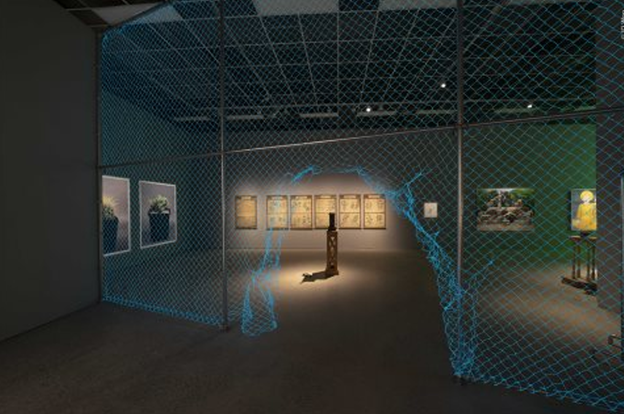
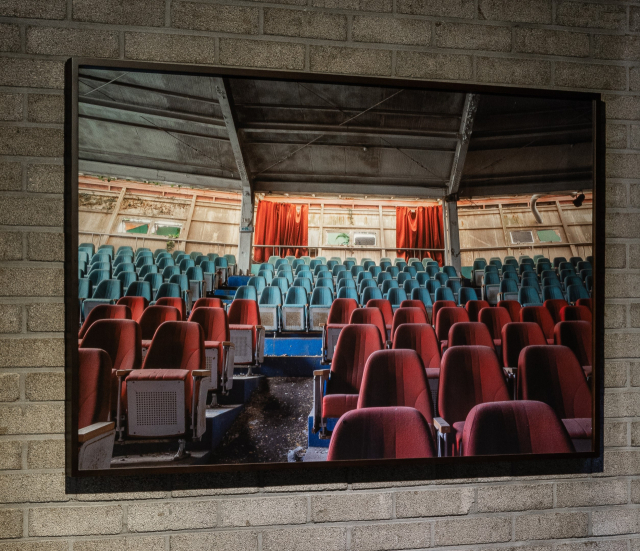
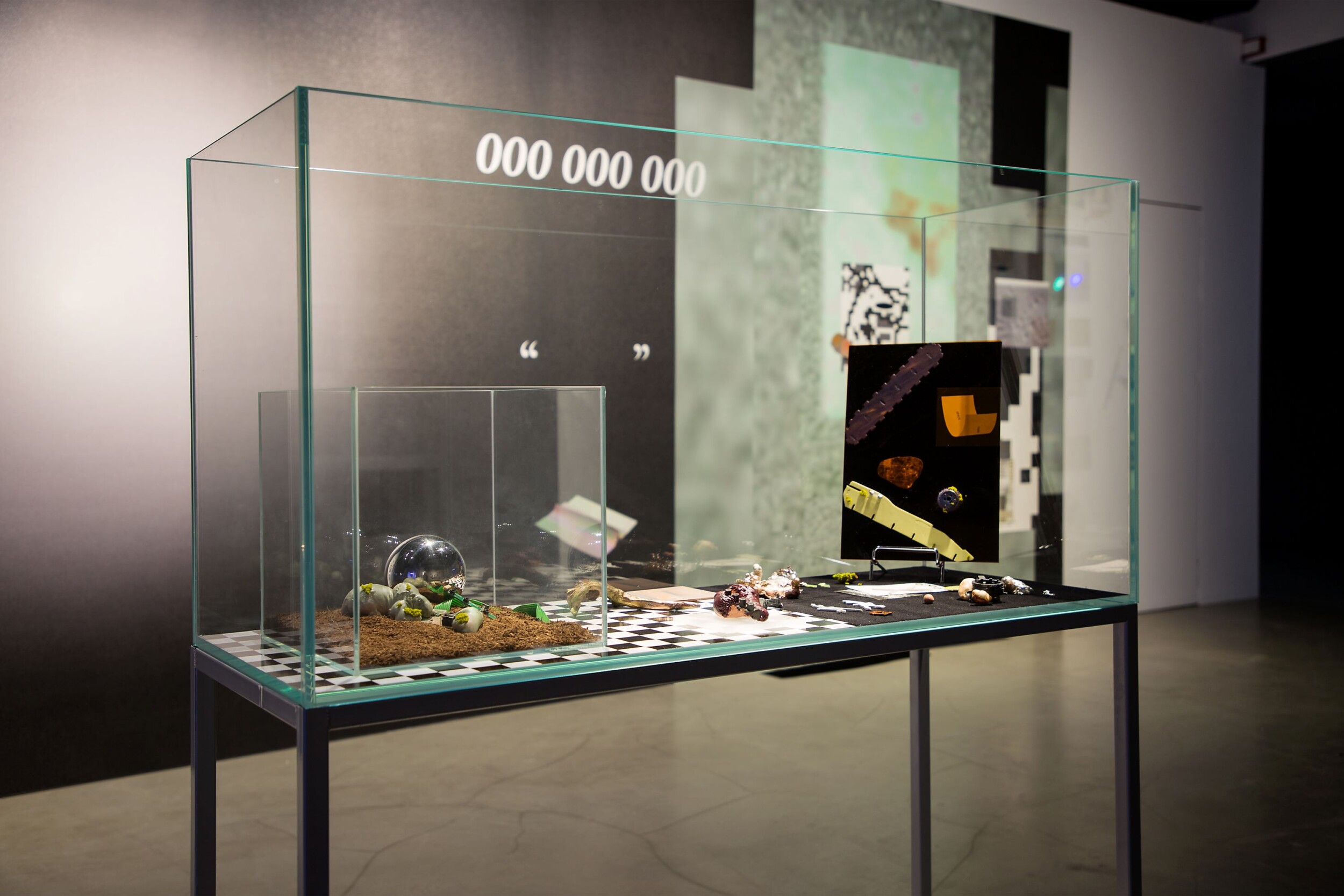
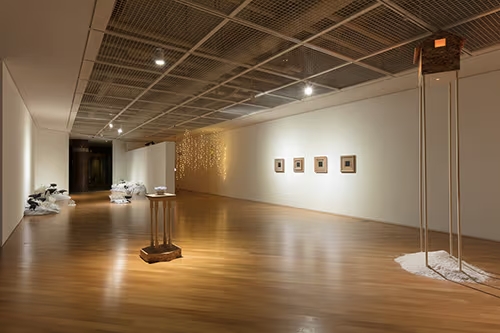
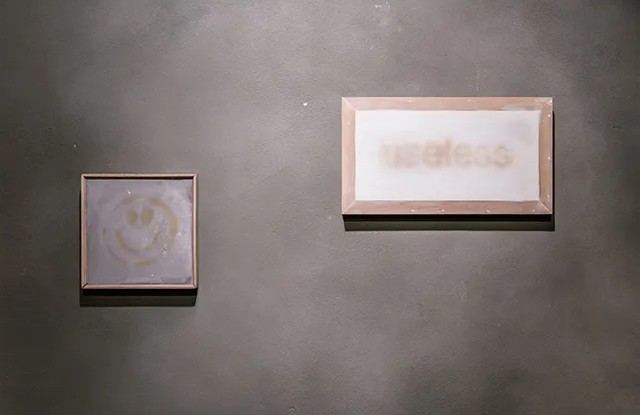
In the exhibition 《To Find the Glory Scars》 (November 13-December 18, 2019) at SongEun ArtCube, Jihye Park presents a series of objects, images in frames, and a video on a monitor, all of which do not seem to help solving the shared uncertainty that we are going through. What are presented as ‘works’ within the frame of the exhibition might not resolve uncertainty. Rather, they might foster confusion about the world. A dog-like figure guarding the entrance of the exhibition is created by layering string mops.
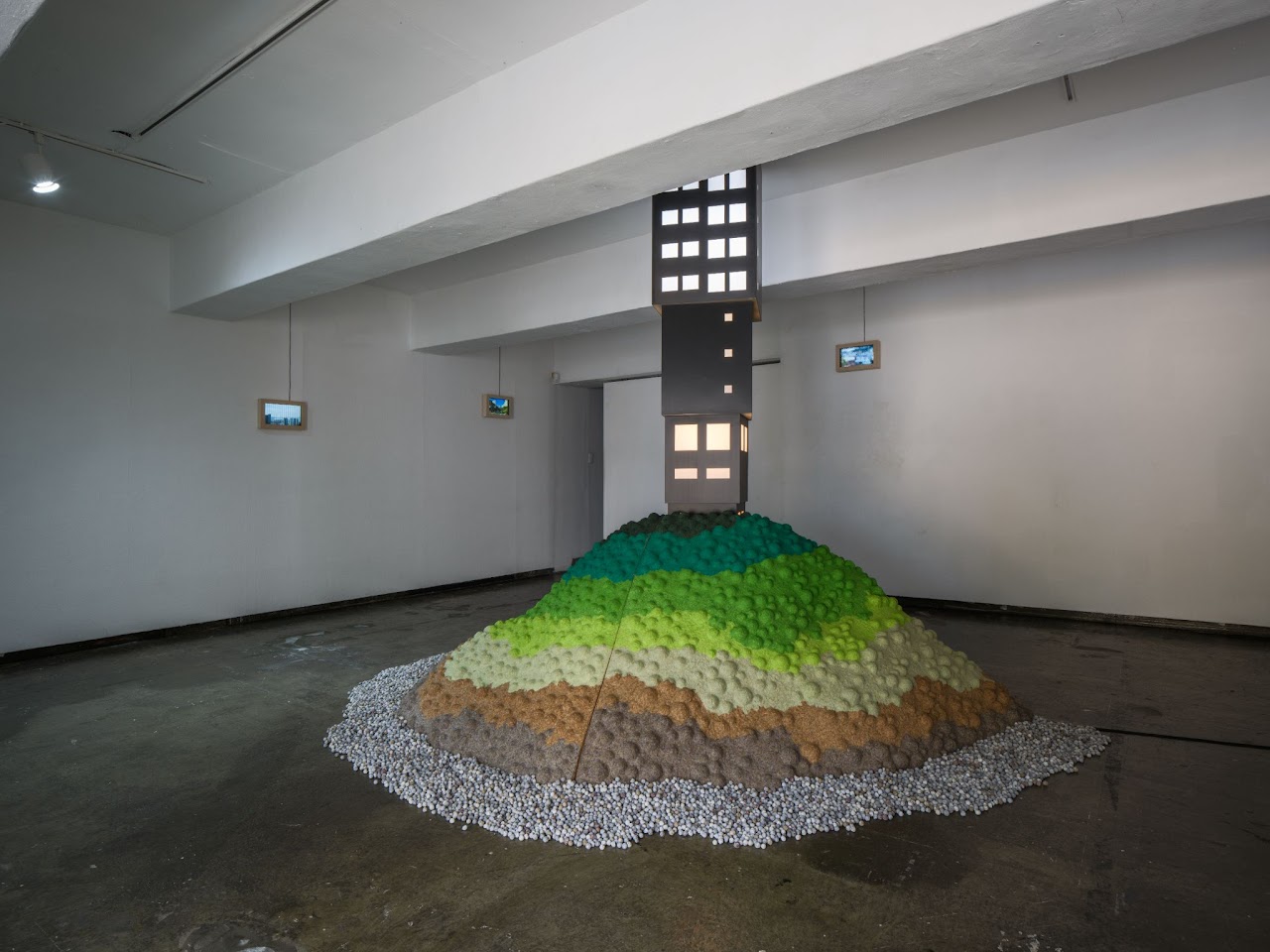
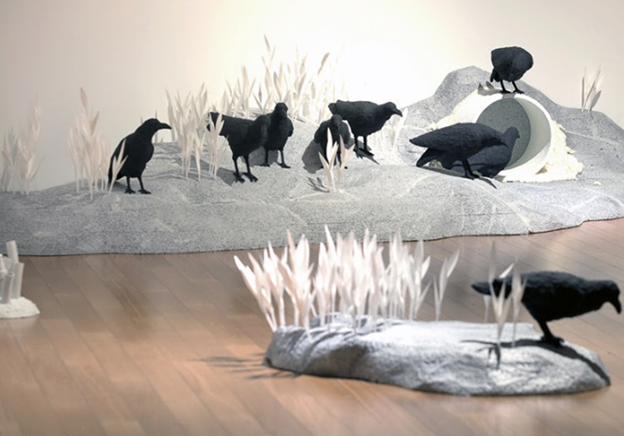
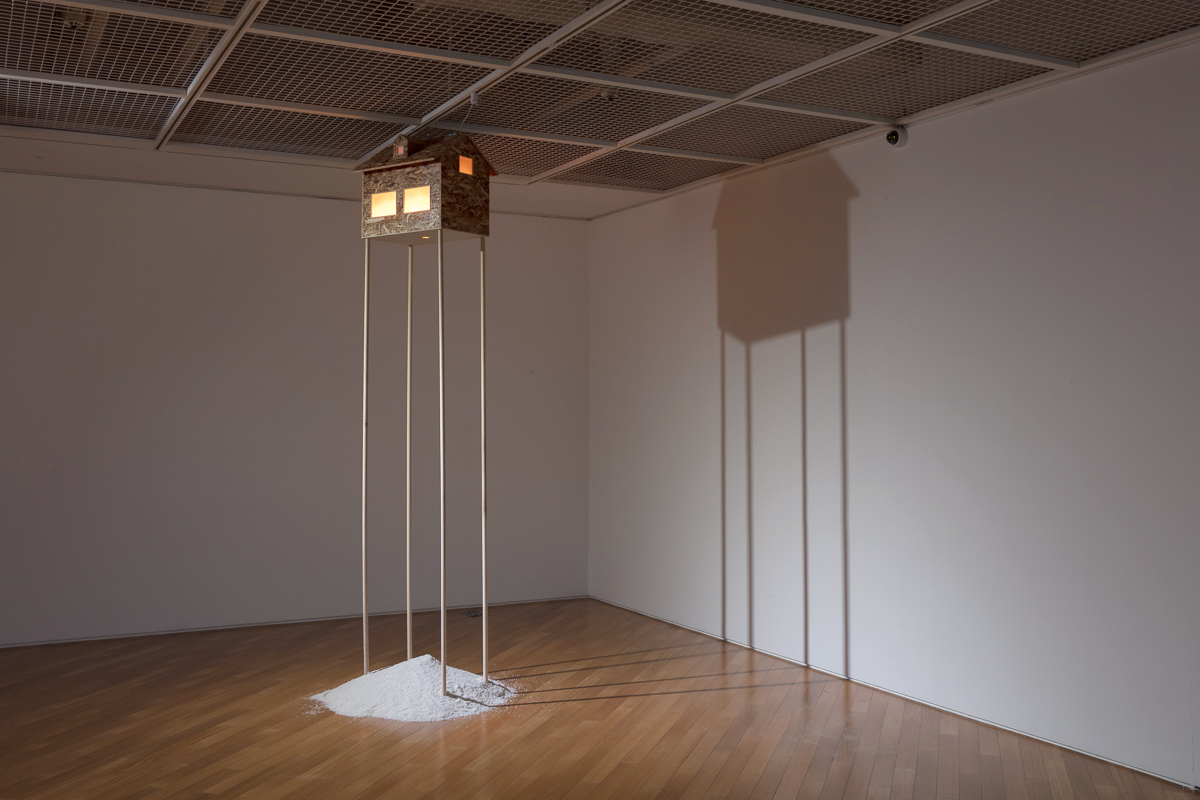
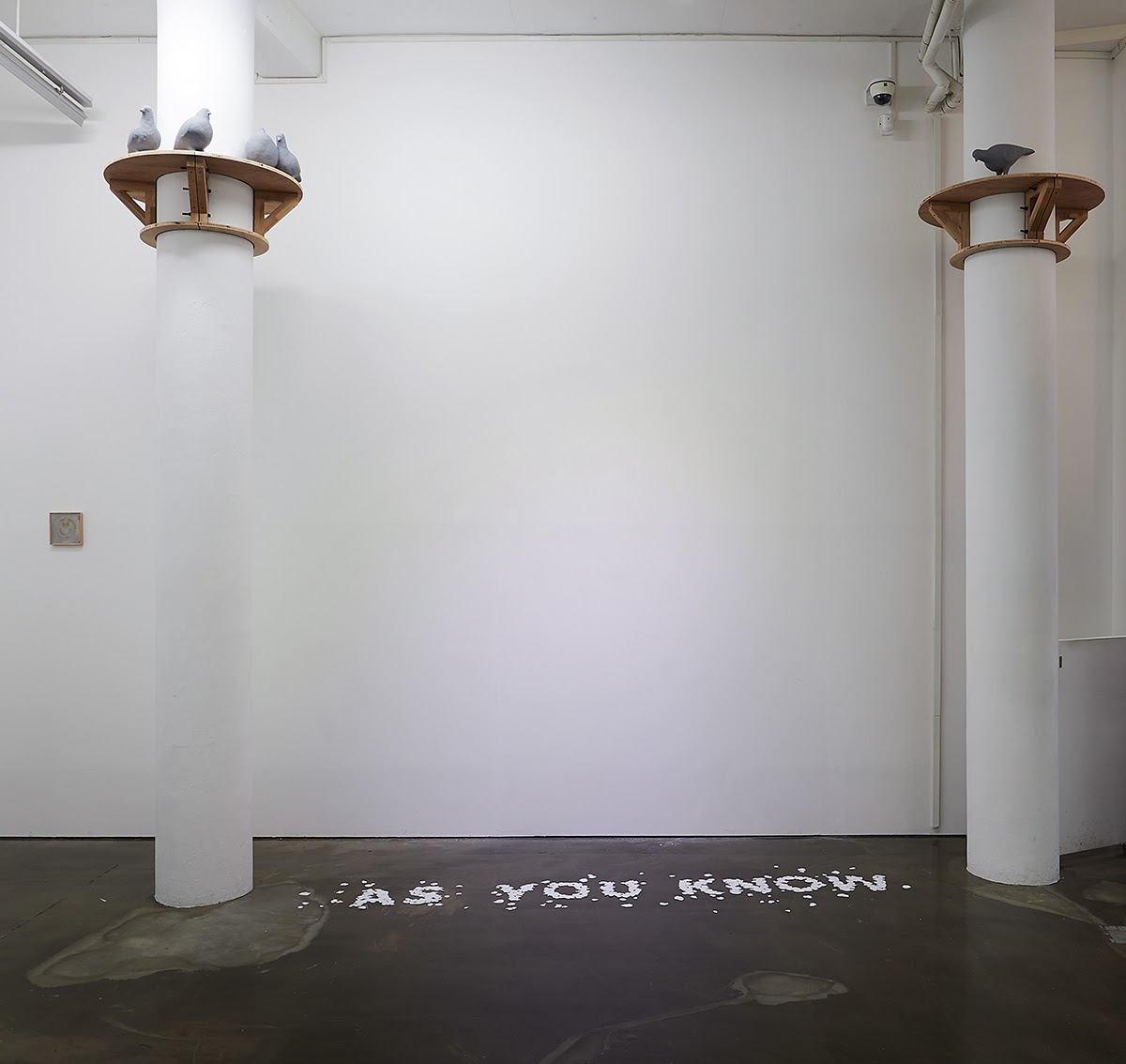
Or it might be a shaggy dog, which is known to fight misfortunes, standing still as if it is a string mop that is somehow taken away from a mop stick. Huge lumps of mass that look like rocks are indeed ‘somethings that look like rocks,’ and there are twenty-some raven figures that welcome the visitors to the exhibition. In the meantime, there is a ‘house on fire’ standing at a corner of the exhibition space. Of course, it is not the kind of house that is literally on fire with smoke.
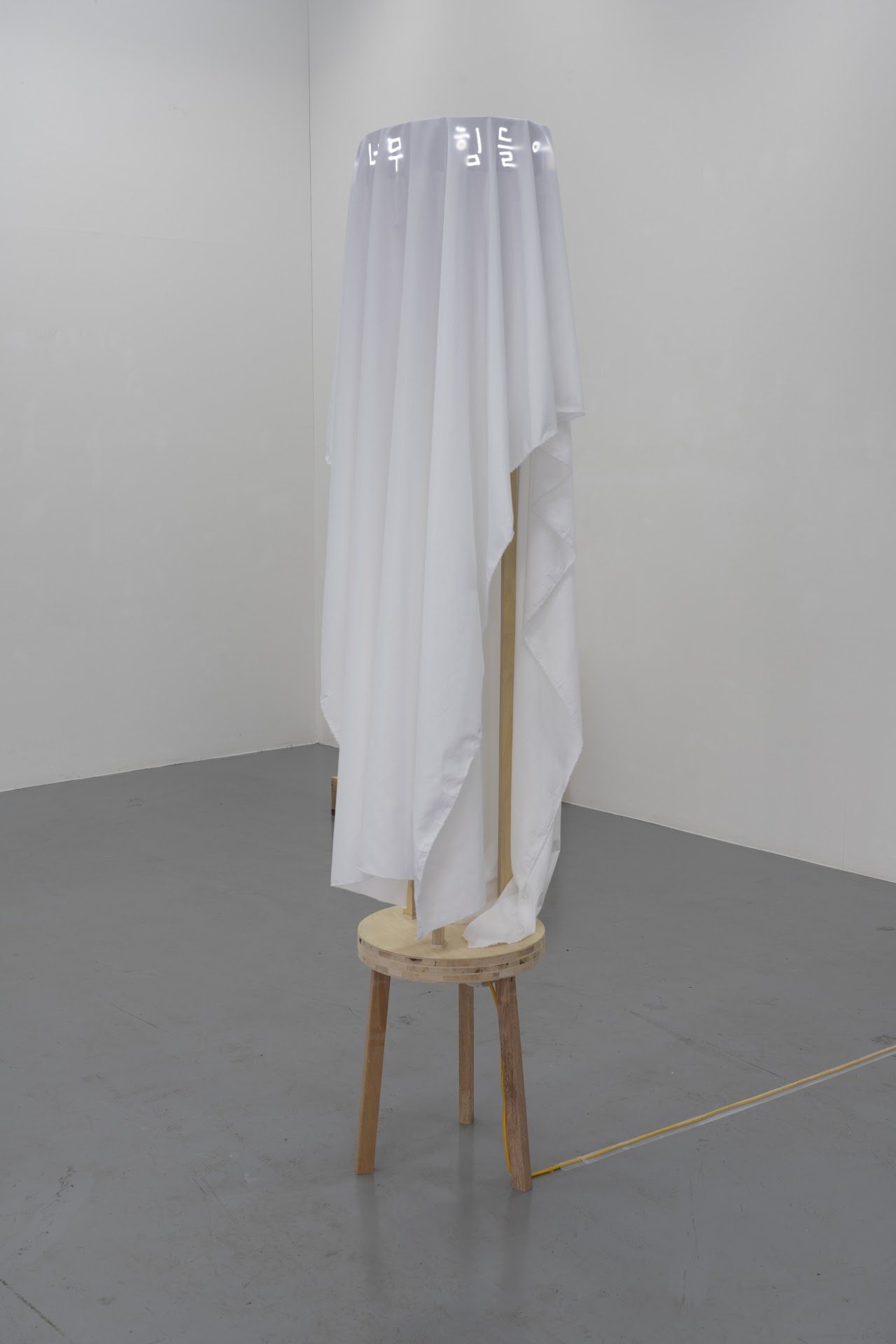
All the objects in the exhibition space are referencing some other things that are given certain meanings or standing in a state that is a step further from such situations. In other words, they exist at least two steps away from what they originally intended to signify. And the artist does not provide detailed explanations about the points of reference nor their meanings.
If someone has an eye for keen observation, he or she might sense at least vaguely that it might be possible to go further by giving meanings to the works in the exhibition as if one interprets the world through a numerological perspective. (Hint: There is a work in the exhibition that references a movie where the actor Jim Carrey appears as a man obsessed with numerology. Can you guess what the film is?)
There is no need to feel any frustration for situations that provide neither clear narrative nor well-fitting explanation. Let us bring our thoughts together at this point: would it be helpful to understand the exhibition if the creator of the works – the artist – explains everything with overcuriosity? Already in the last few years, the artist has had such experienced in a repeated manner.
When she explained with clarity, she was accused of being “too decisive”; when she presented herself with care and caution, she was criticized as being “too indecisive.” Thus, To Find the Glory Scars is not too decisive or indecisive. In our time of no more good old days certainty, works in To Find the Glory Scars present us manuals for dealing with uncertainty. Of course, what the viewers can comprehend from the manuals in the exhibition always remains as their independent task.