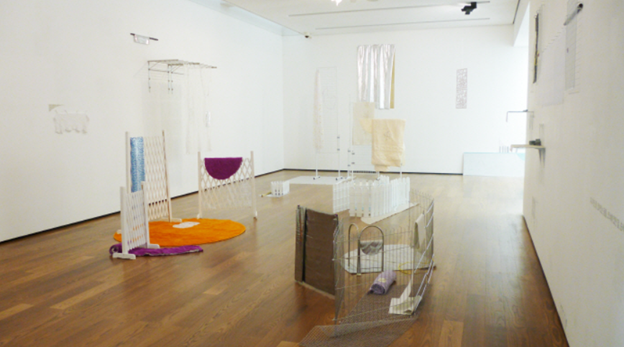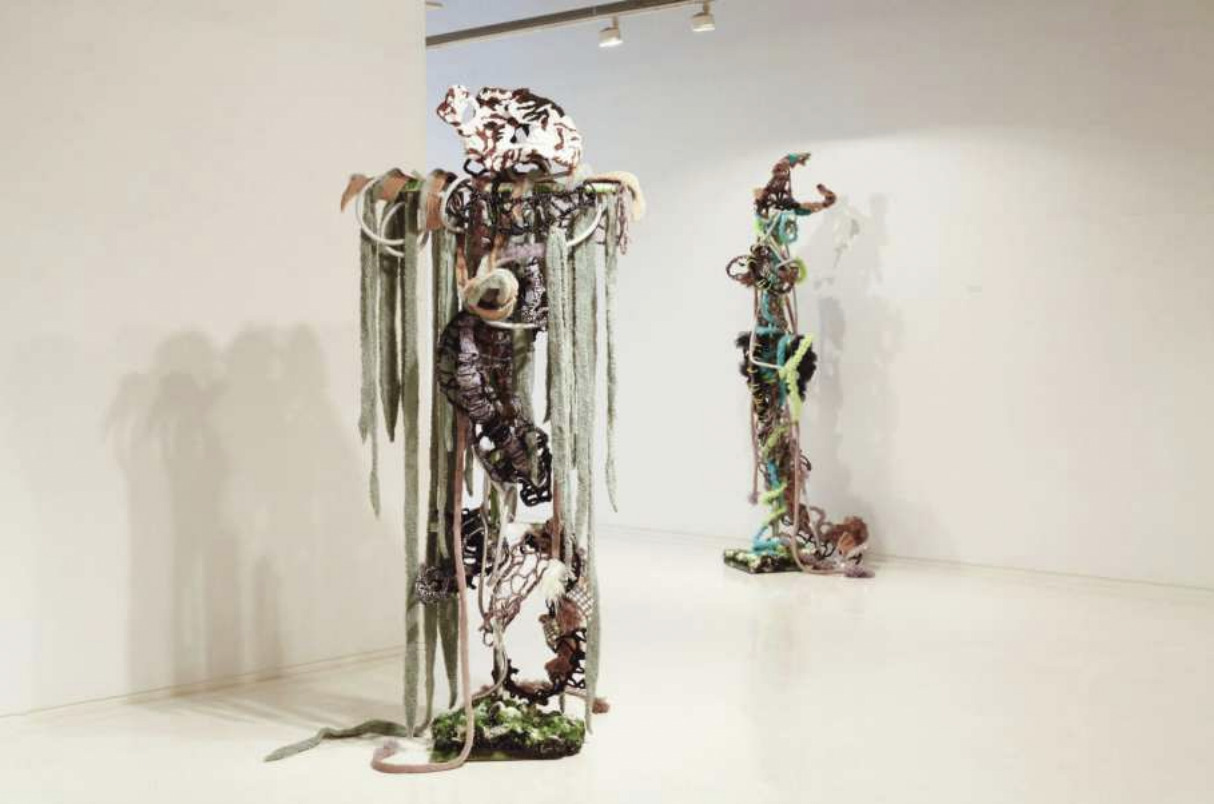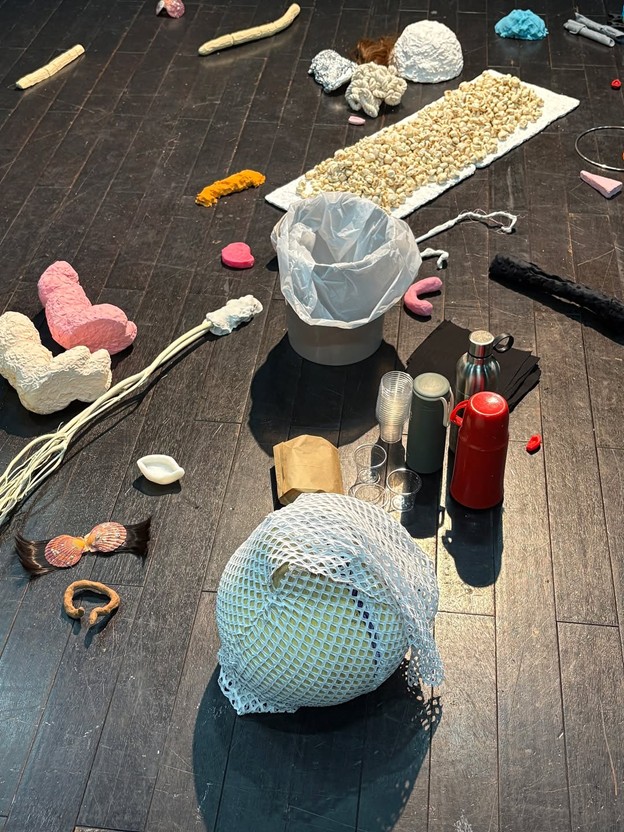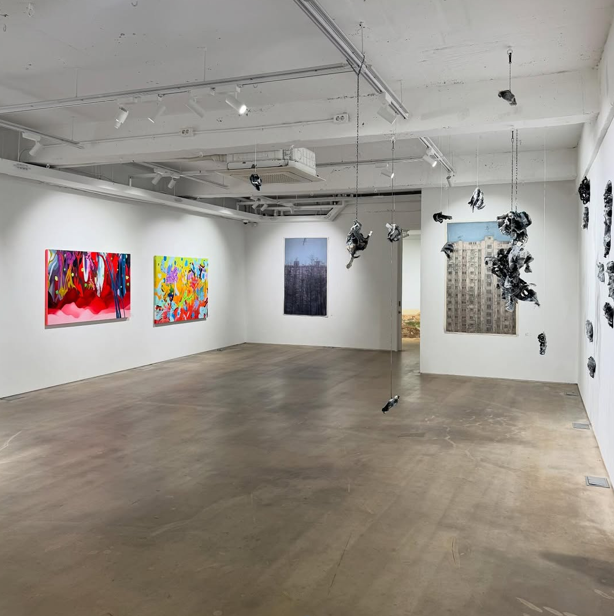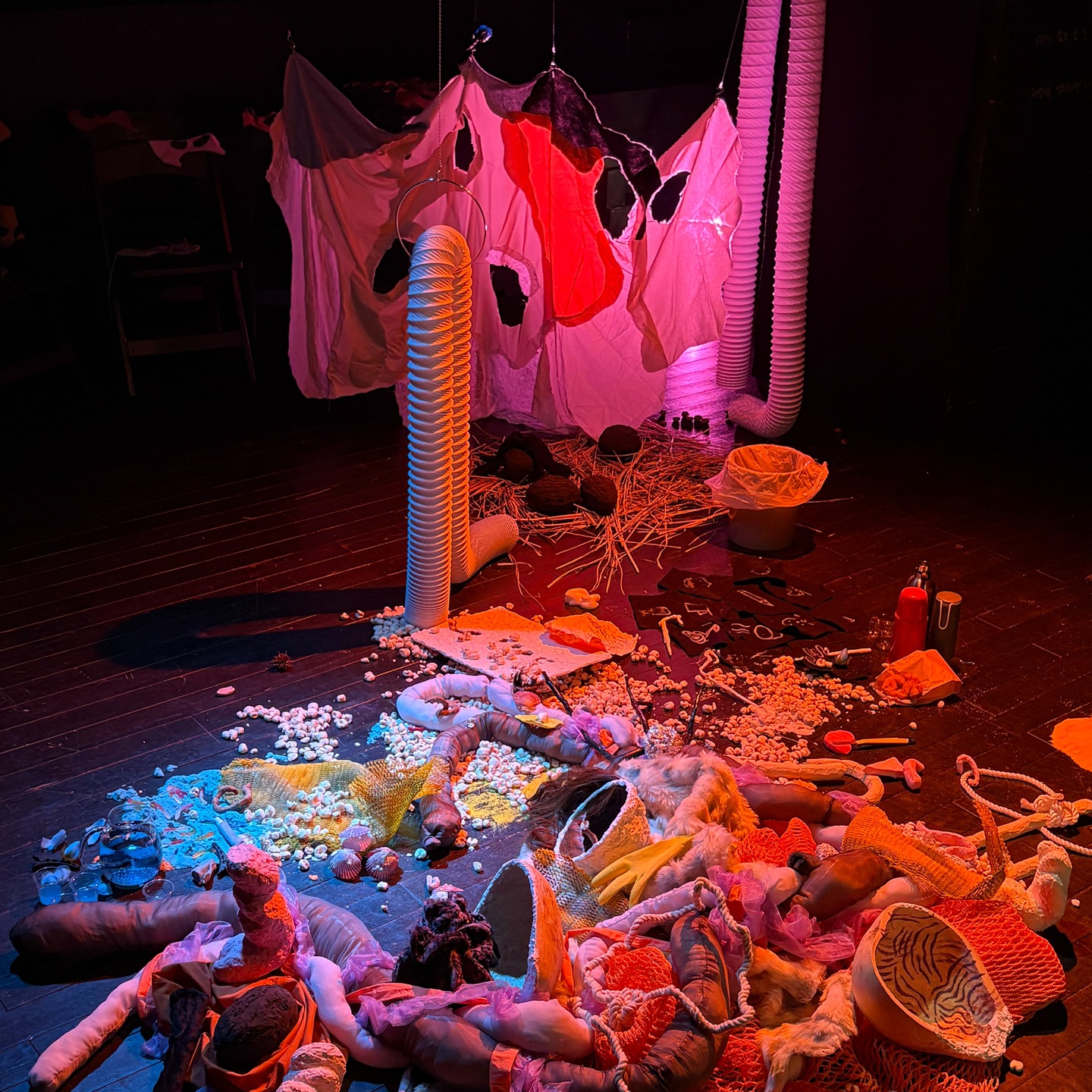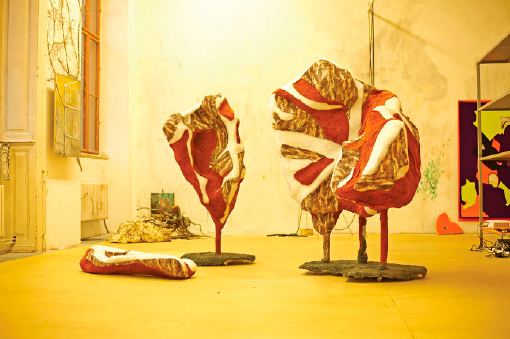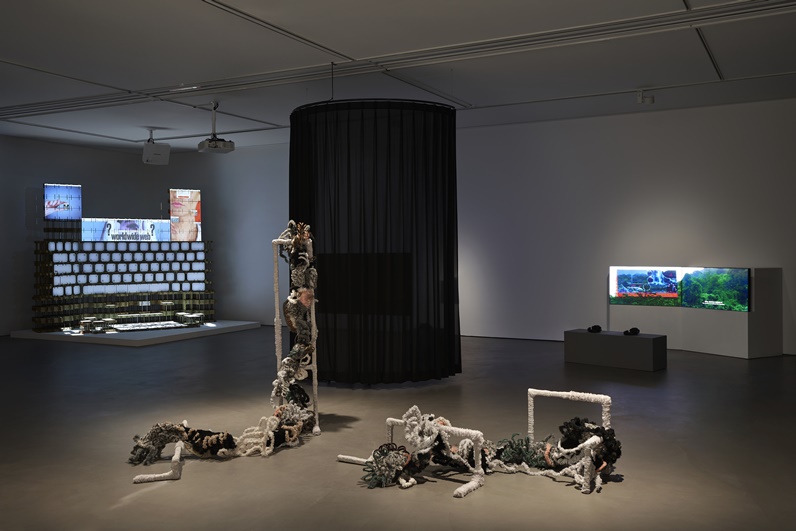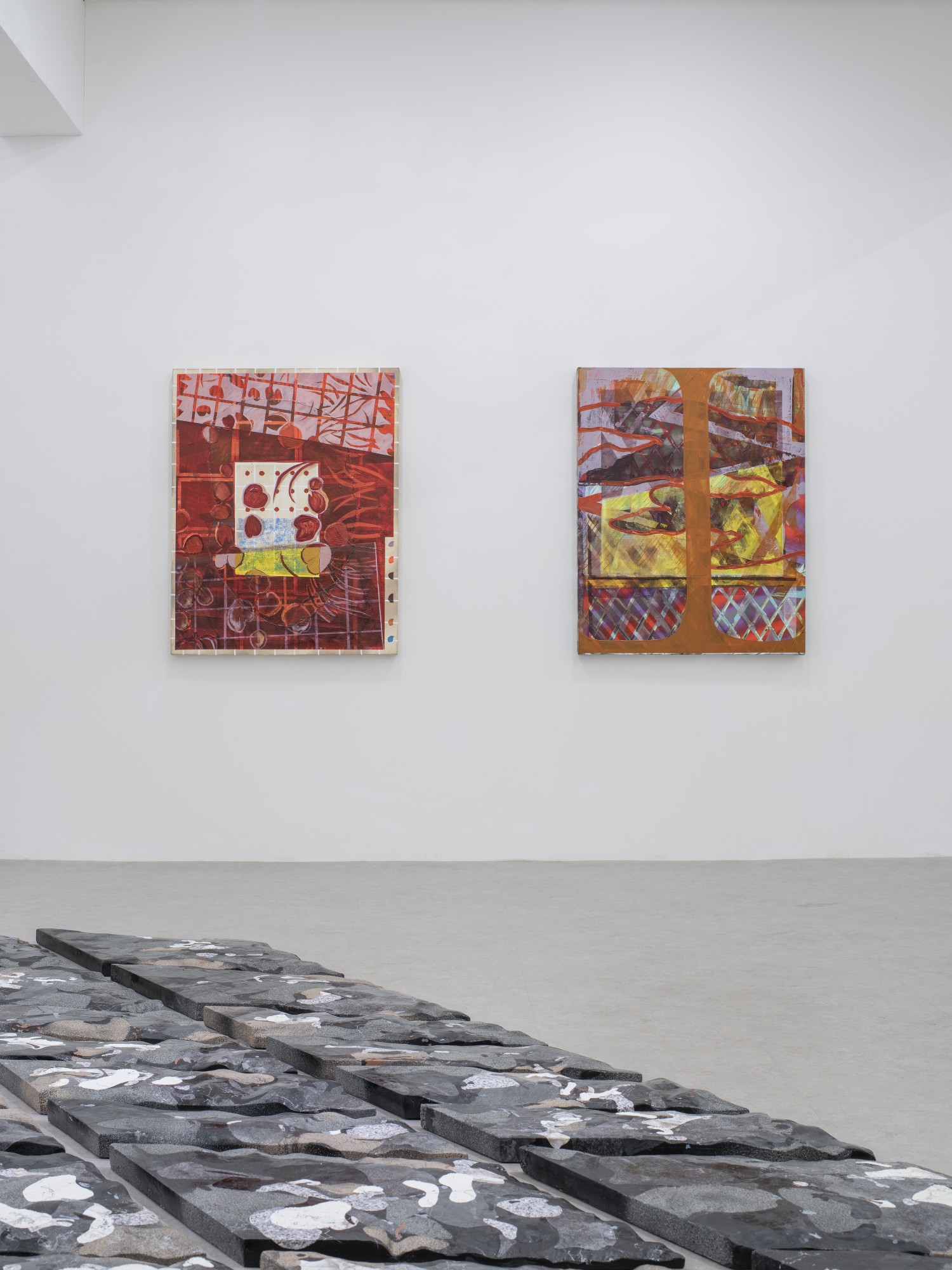
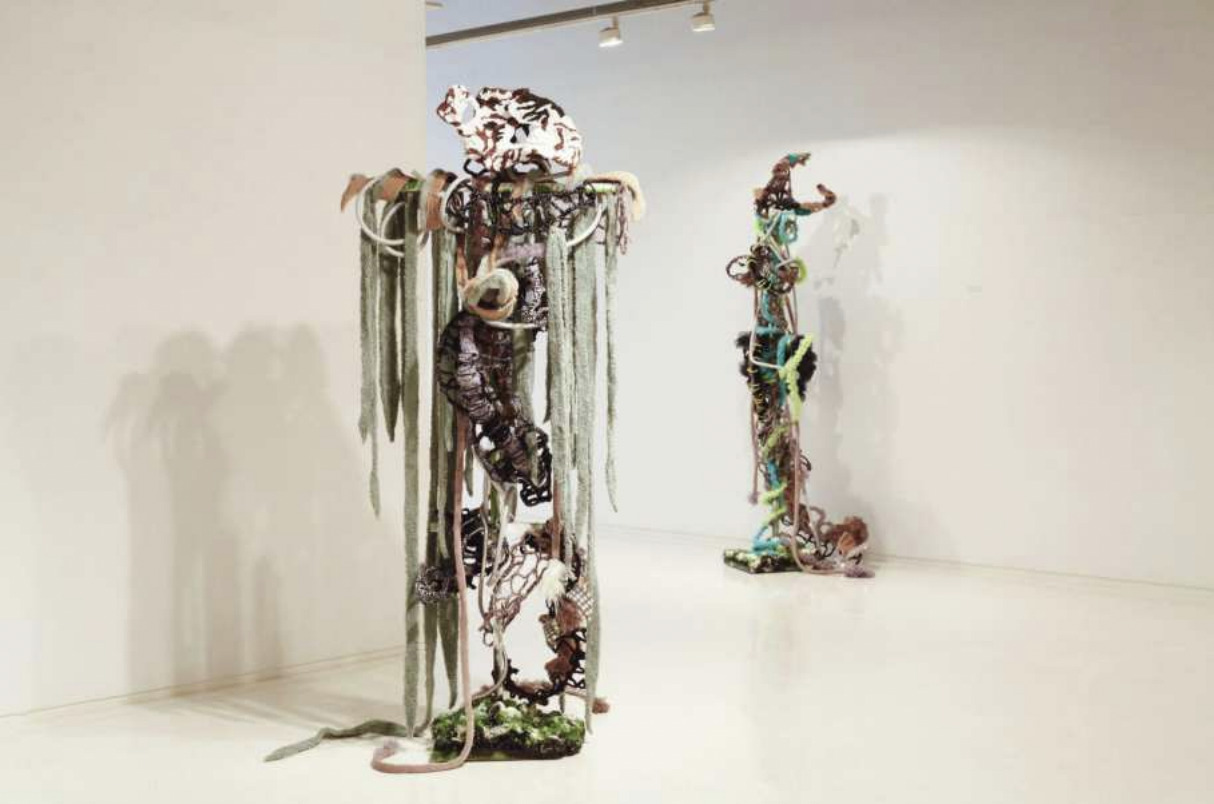
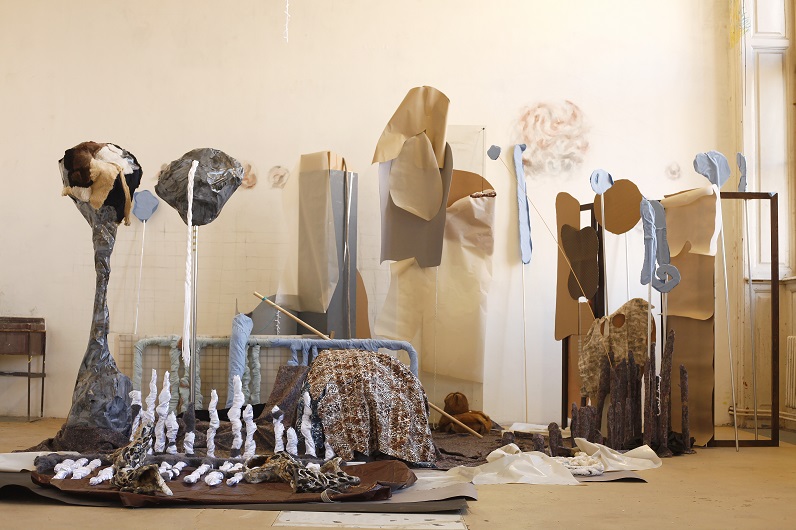
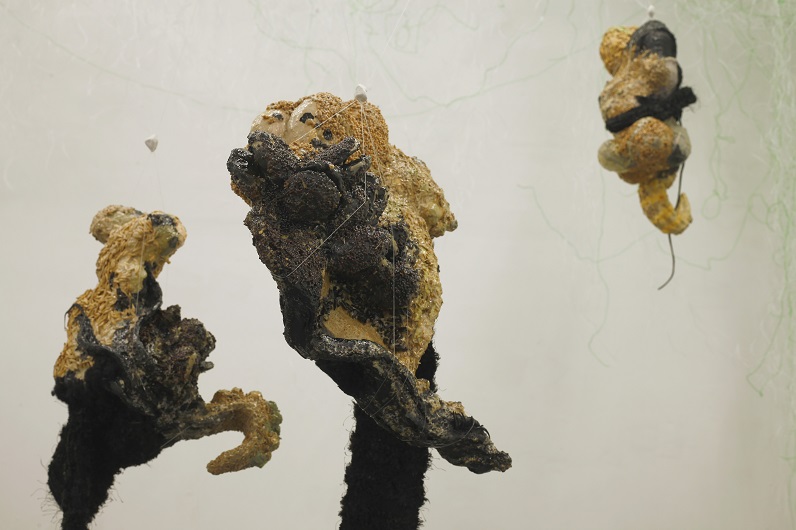
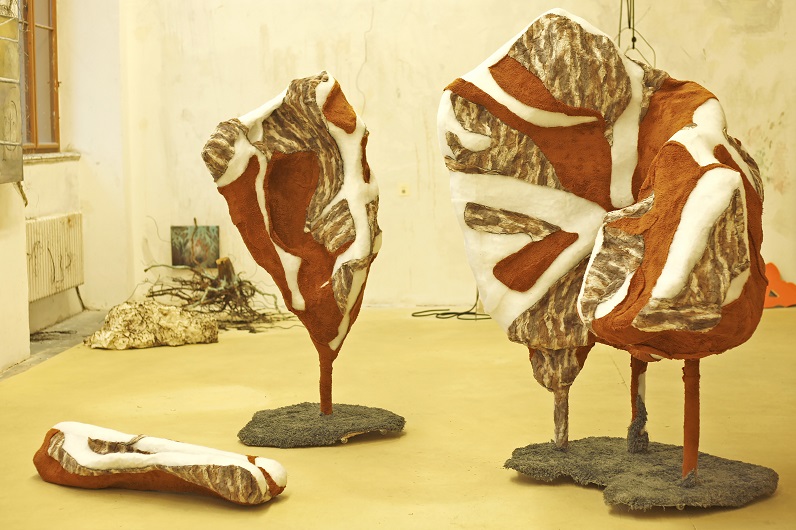
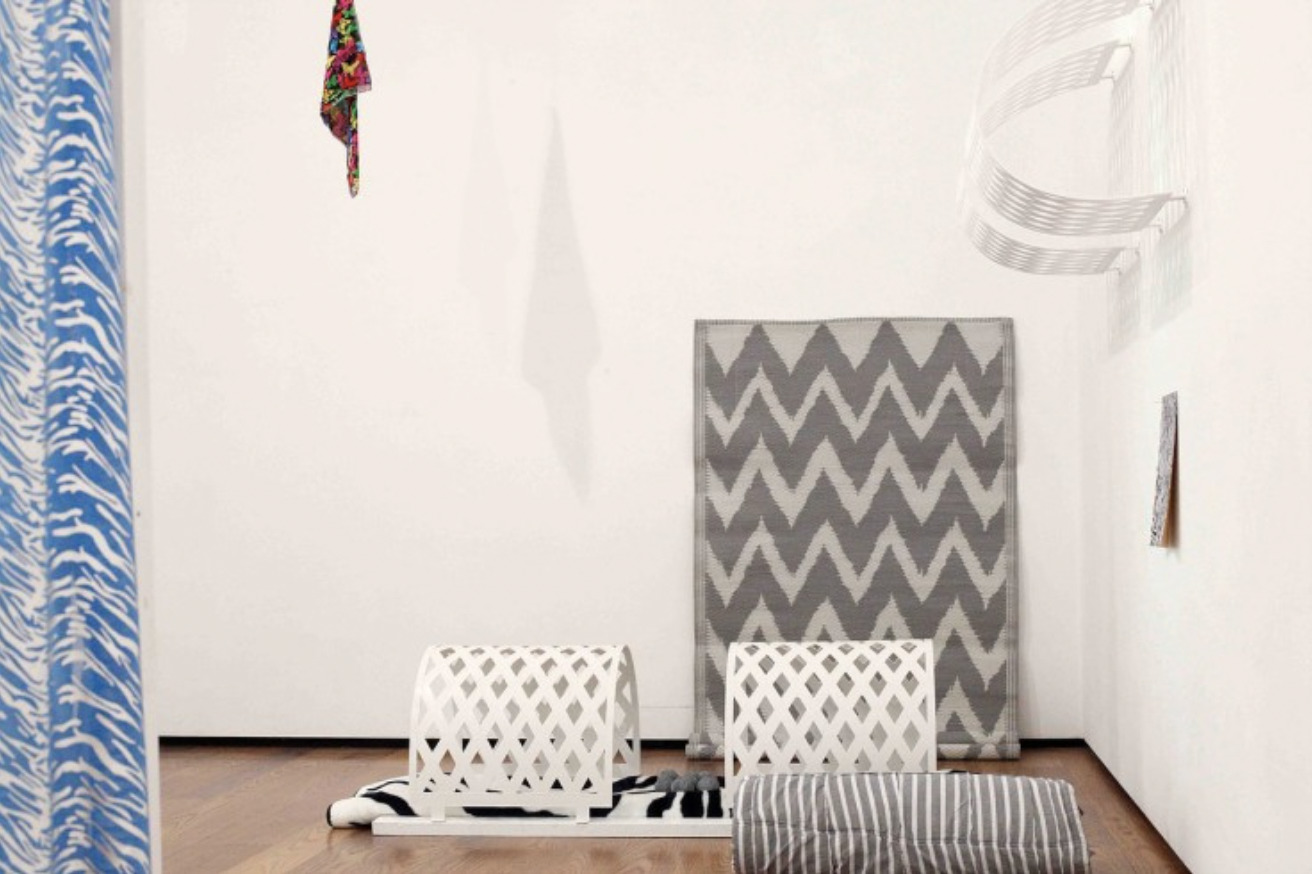
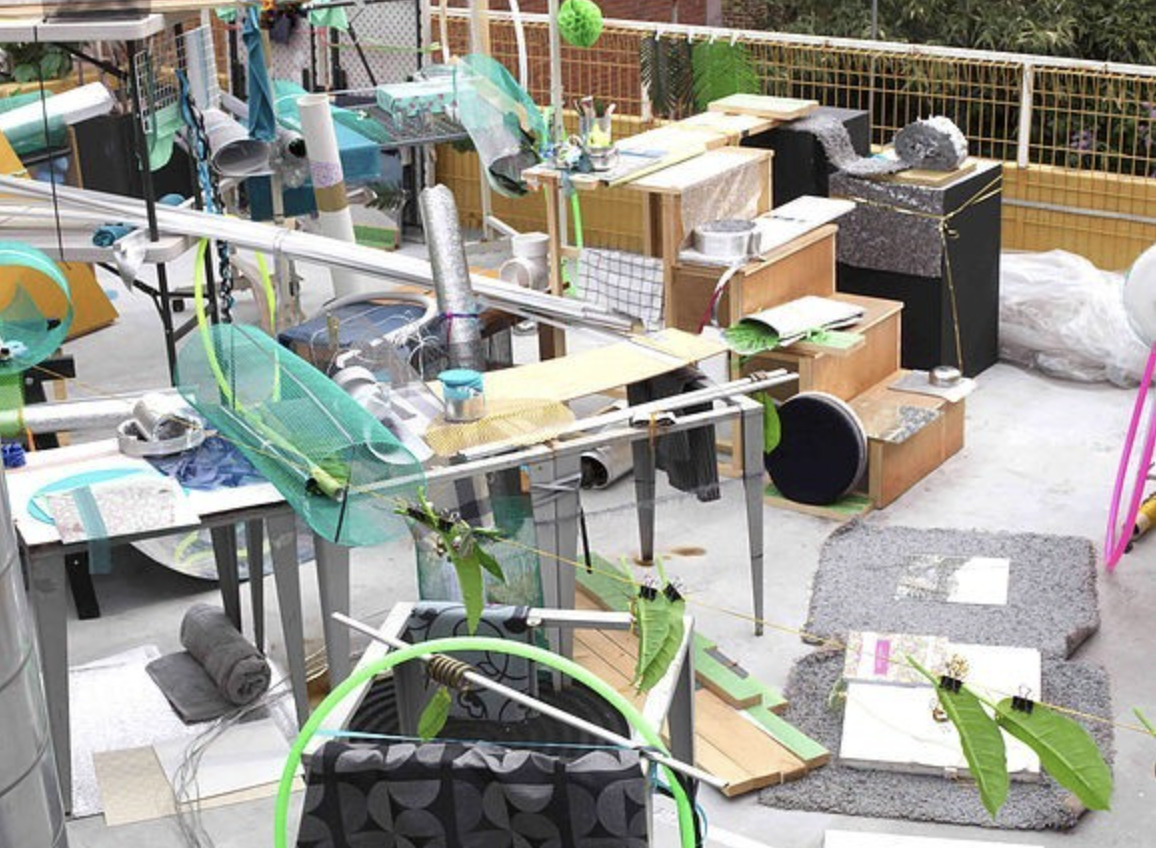
Installation view of 《Finches》 (Gallery DOS, 2024) © Gallery DOS

Redefining Existence
Seo-won Choi | Curator, Gallery DOS

When we directly confront existing objects through socially constructed concepts and reflect on the process by which they come to be officially defined as something, we realize that most of the common knowledge we encounter originates from simply calling, using, and reading what has already been defined by someone else. It is, in reality, extremely difficult to read the direct thoughts or intentions of the object itself by representing its standpoint. Since the information and knowledge held by individuals or groups in a given field are not infinite, it is somewhat unreasonable to assume that definitions established and accepted until now comprehensively cover all possibilities beyond a limited perspective.

Lim Jeong Soo refers to the conclusions about objects derived within the perspective and mode of thinking of the subject as “othering,” and focuses particularly on the inevitable variables of judgment that arise in the process by which the subject defines the object within the relationship between humans and non-human beings. She directs attention to the phenomenon in which the incompletely established other, formed within a finite perspective, is projected and exposed through the desires of the subject, and through her work seeks to depart from generalized conventional concepts. 


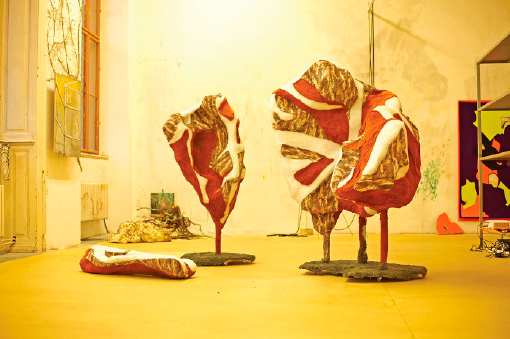
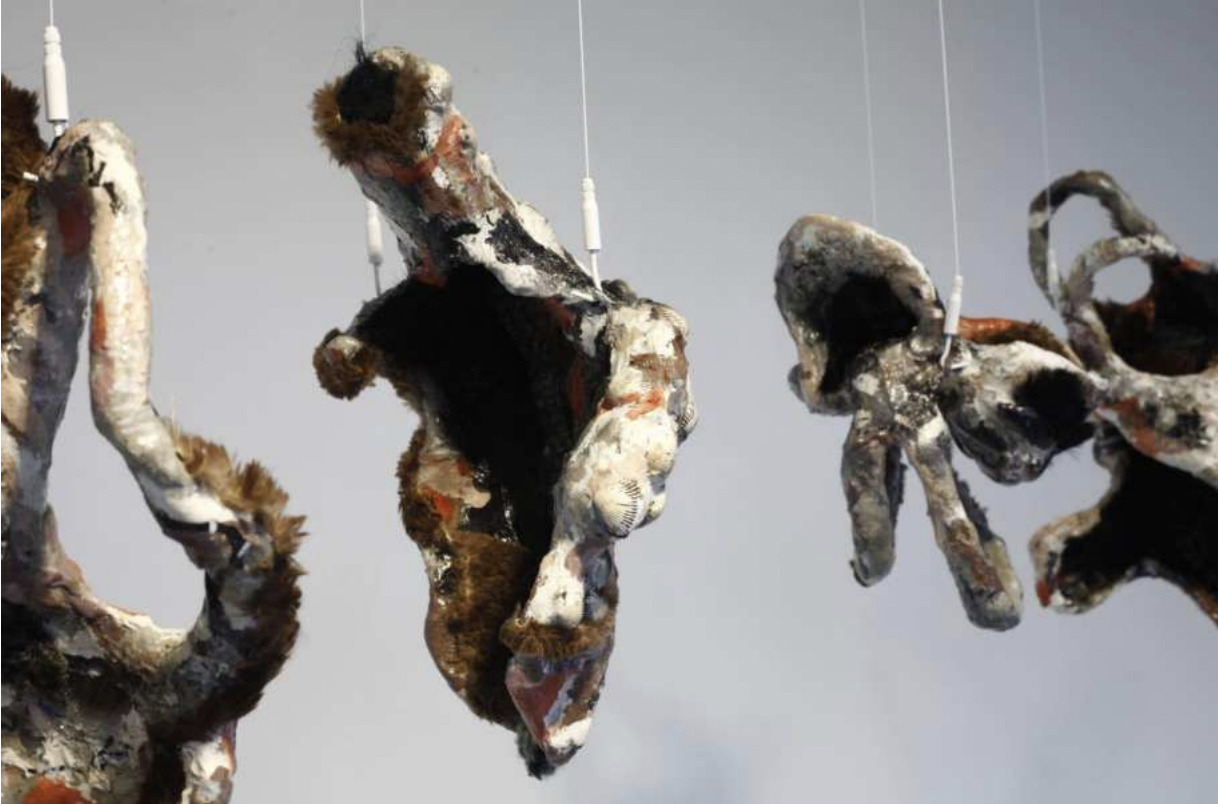
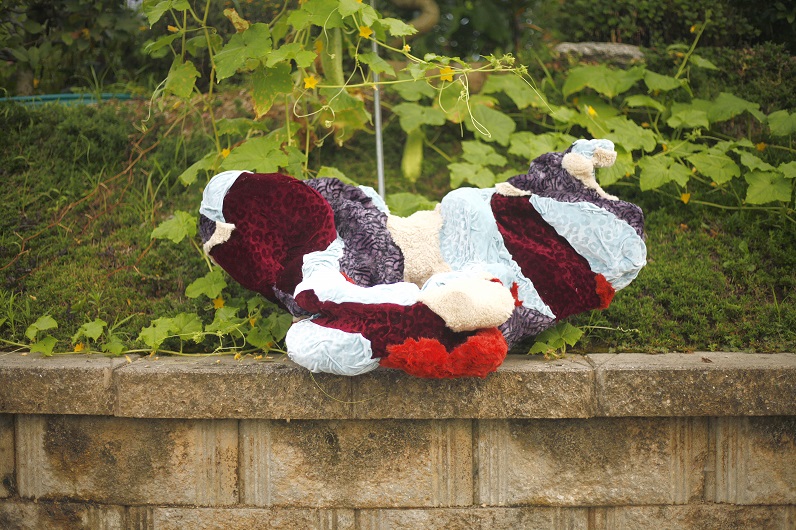
Lim Jeong Soo, Galapagos finches, 2024, Combined technique (fur, wire mesh, wire, acrylic, clay), Dimensions variable © Lim Jeong Soo

Animals are non-human beings and a species in which othering frequently appears, and it is not difficult to find numerous secondary and tertiary derivatives borrowed from their original forms through a human perspective. The organisms that make up animal skin or form have often been referenced in human-made products such as dolls, interior decorations, accessories, and textiles.

In modern society, where civilization has developed, opportunities for direct contact between humans and animals—the primal beings of nature—have become increasingly rare, while fragments of images that can be practically extracted from animals continue to be popularized and attract attention as visual materials produced according to human subjective tastes and values. In this way, when an object that we do not fully understand is processed and presented in various forms, its appearance paradoxically evokes unnatural impressions such as grotesqueness or alienation even to humans themselves, or at times conveys a sense of cuteness and loveliness. 

The artist simultaneously embraces the vague fear arising from unknown categories within newly created images of animals born from the domain of othering, and the desire to possess the other. Furthermore, she sheds light not only on subordinate objects evaluated at a lower level than humans but also on phenomena formed within relationships among humans themselves. The gap between the strong and the weak within a group, and distinctions based on race and social status, are forms of objectification that generally appear centered on vested interests and power.

In a developing era, the differences or discriminations created by humans in securing their own position operate on principles similar to how we treat animals, prompting us at times to reconsider the current state from an ethical standpoint. While consciously attempting to prevent insufficient othering within relationships that resemble parallel lines, she also considers the possibility that another value judgment may arise beyond the latent perspective. At the same time, she implies through her work that such awareness must not be lost even when animals are the subject. 


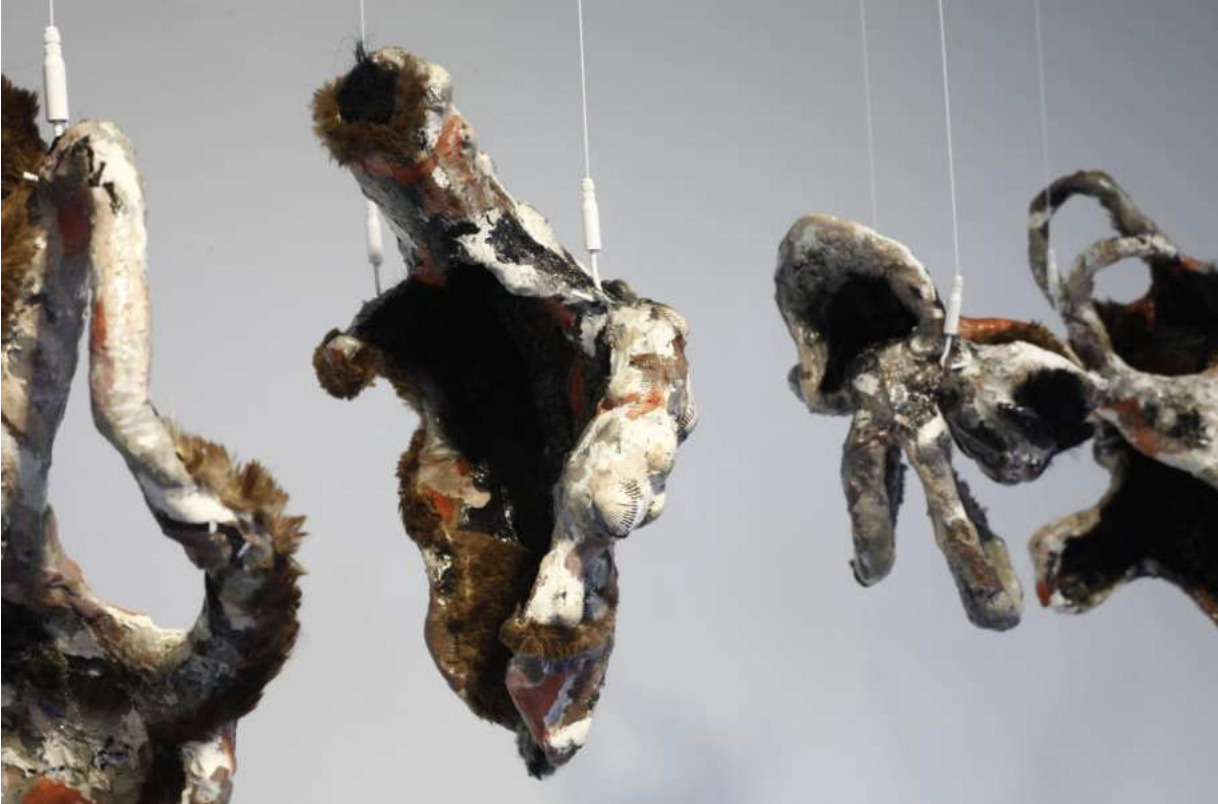
Lim Jeong Soo, Everything is superstition, 2024, Wire, wire mesh, cement, clay, artificial stone, fur, leather, 15x25x30cm (12 pieces) © Lim Jeong Soo

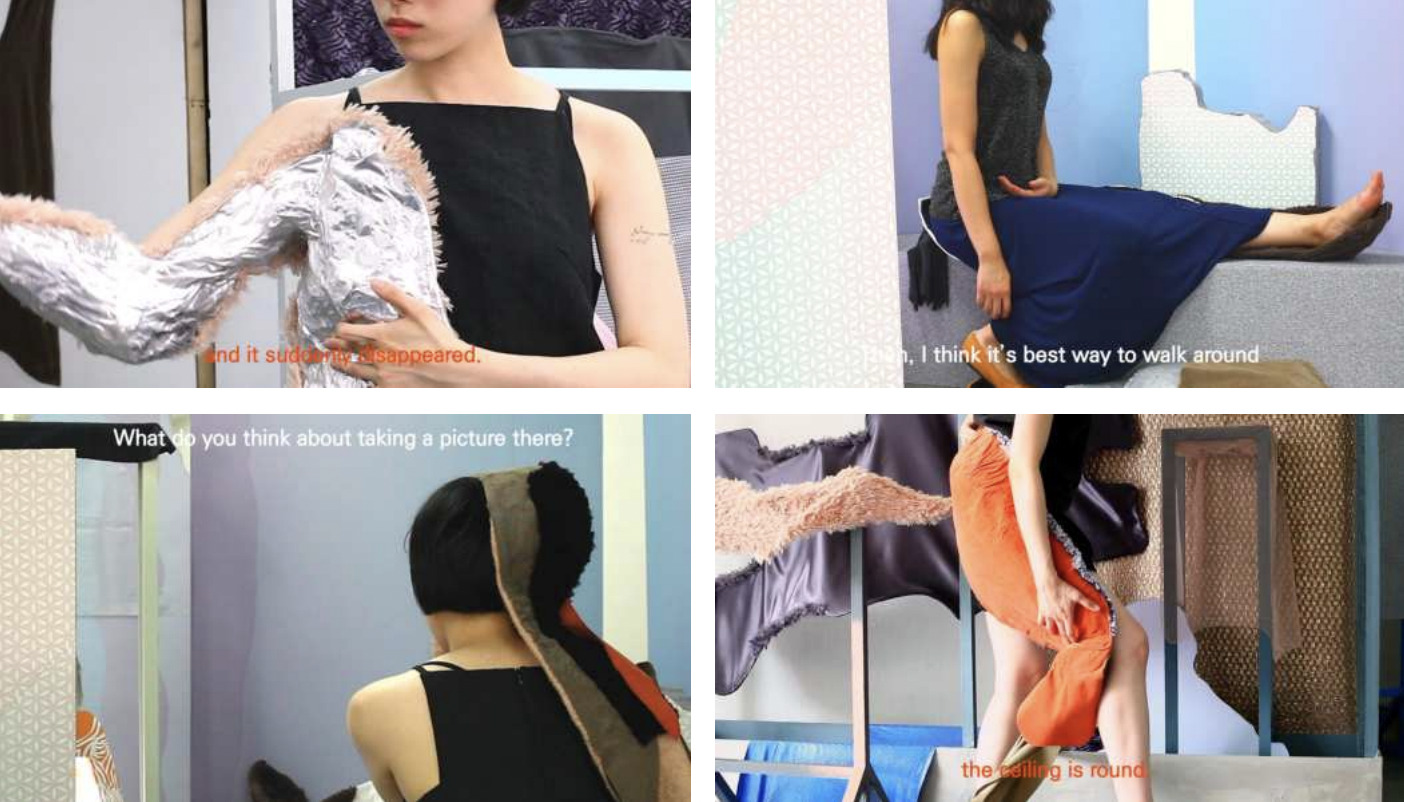
It is not particularly difficult to impose subjective values and thoughts onto a given object. Lim Jeong Soo raises the question of whether humans may have dealt with everything from a limited perspective used only by humans, thus living without fully perceiving the blind spots behind it. She continuously researches concepts related to othering by closely analyzing the phenomena that occur between the human subject and animals or other objects targeted by humans. Materials observable in objects, such as the form or color of the surface covering them, become another subject within the artist’s perspective and move throughout the exhibition space.

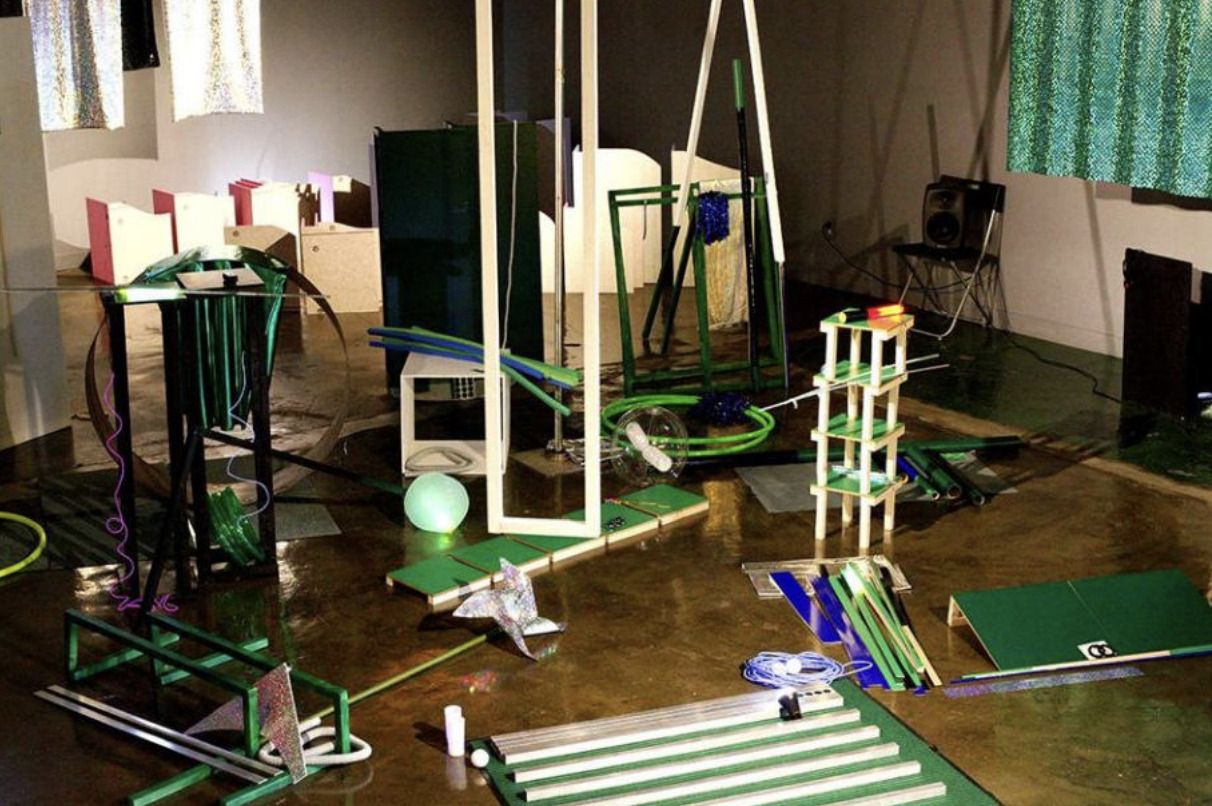
These masses, whose precise origins are unknown and which seem to originate from somewhere, possess value in their very existence and freely traverse socially defined categories. If the works in this exhibition feel similar to or resemble something familiar, one is encouraged to reflect not on their existing form, aspect, or concept, but on the sensation brought about by the complete image of the work. The sculptures within the exhibition space will stimulate our once dormant senses in a three-dimensional way. 

References