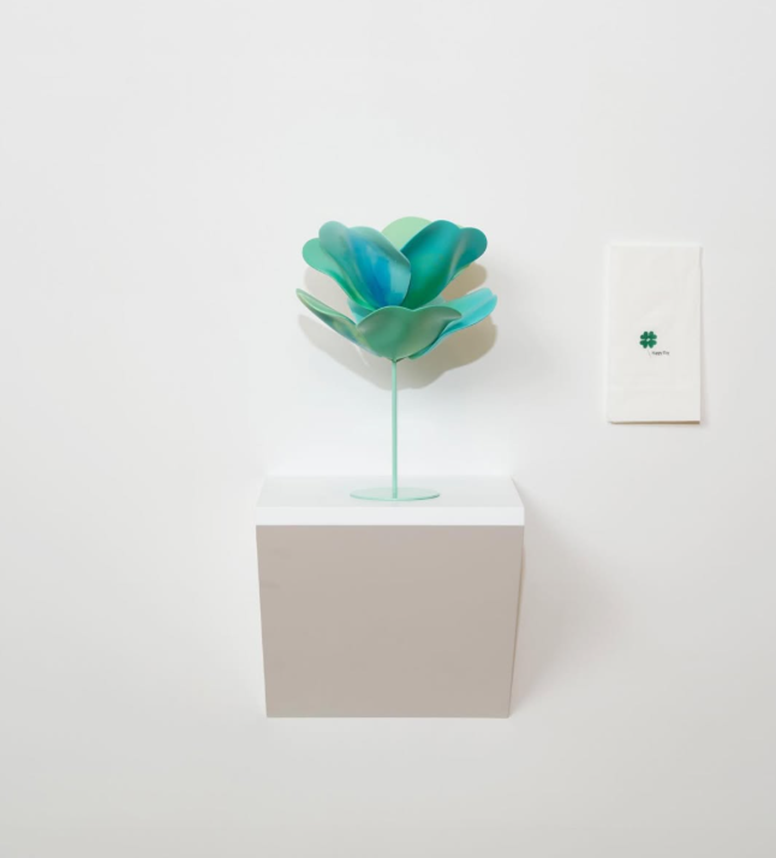
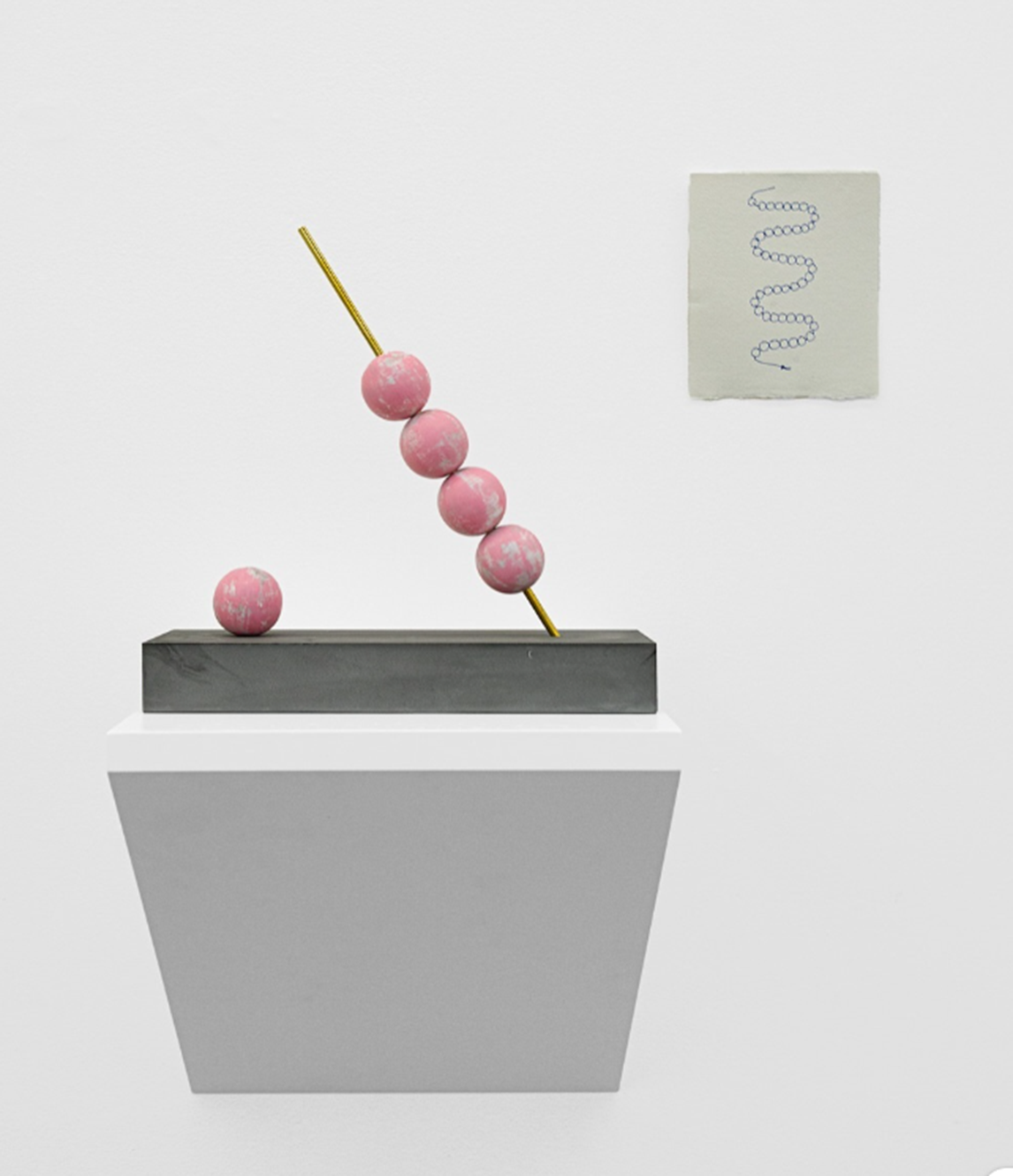
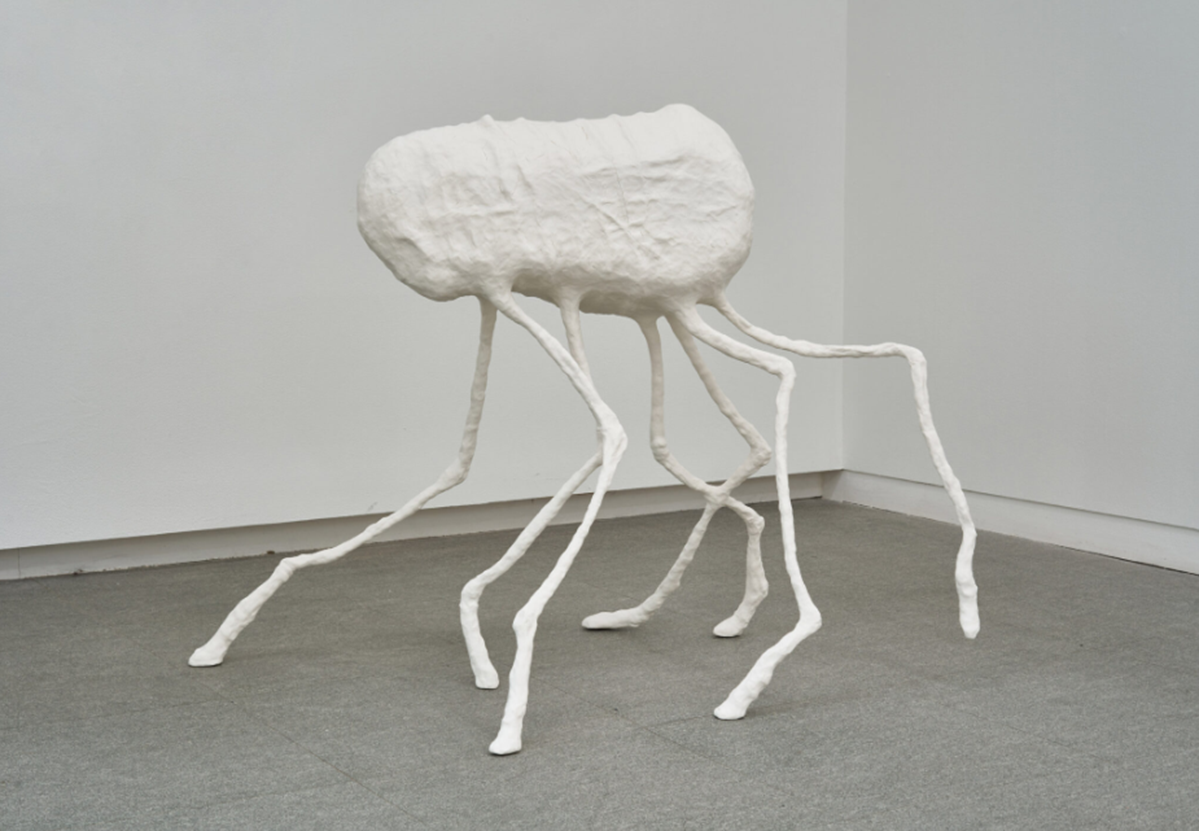
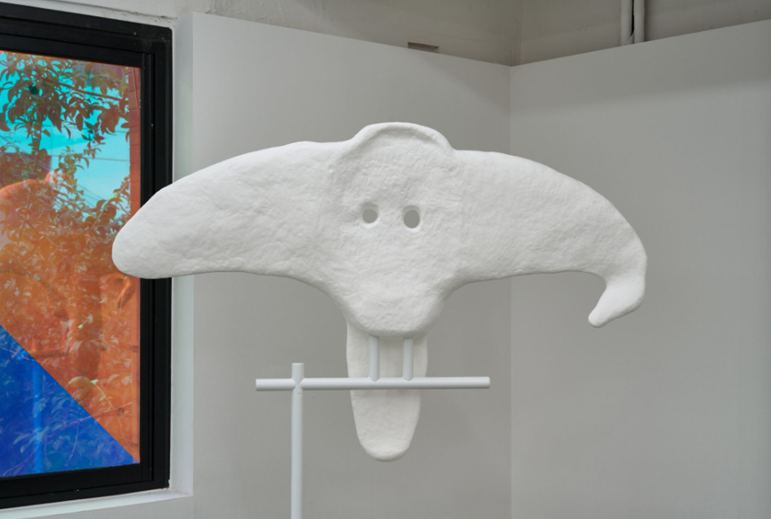
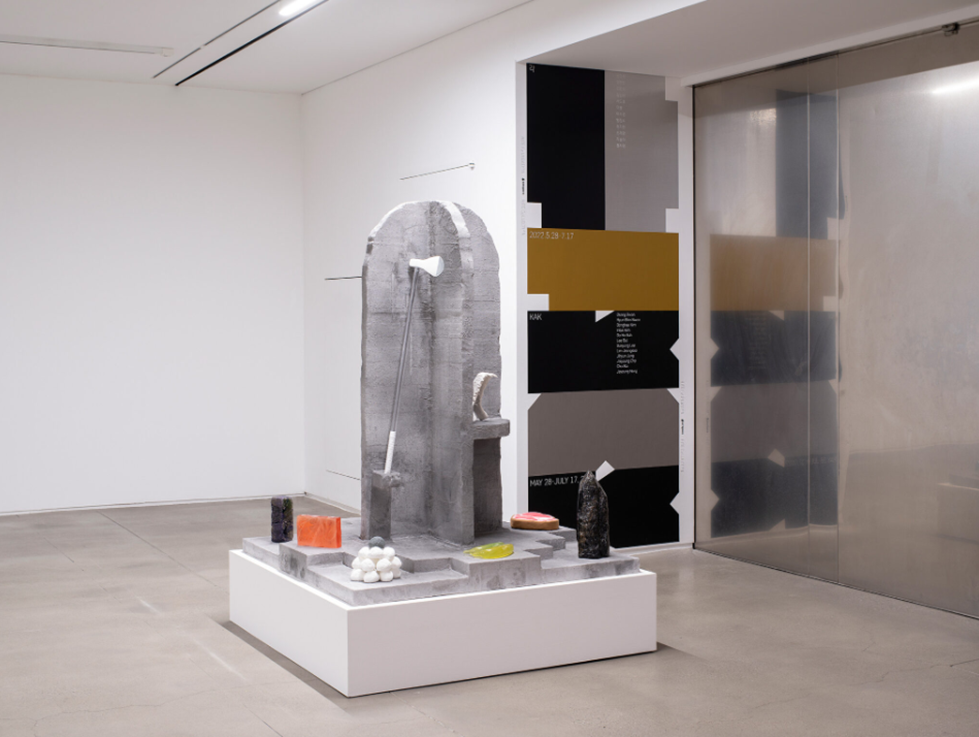
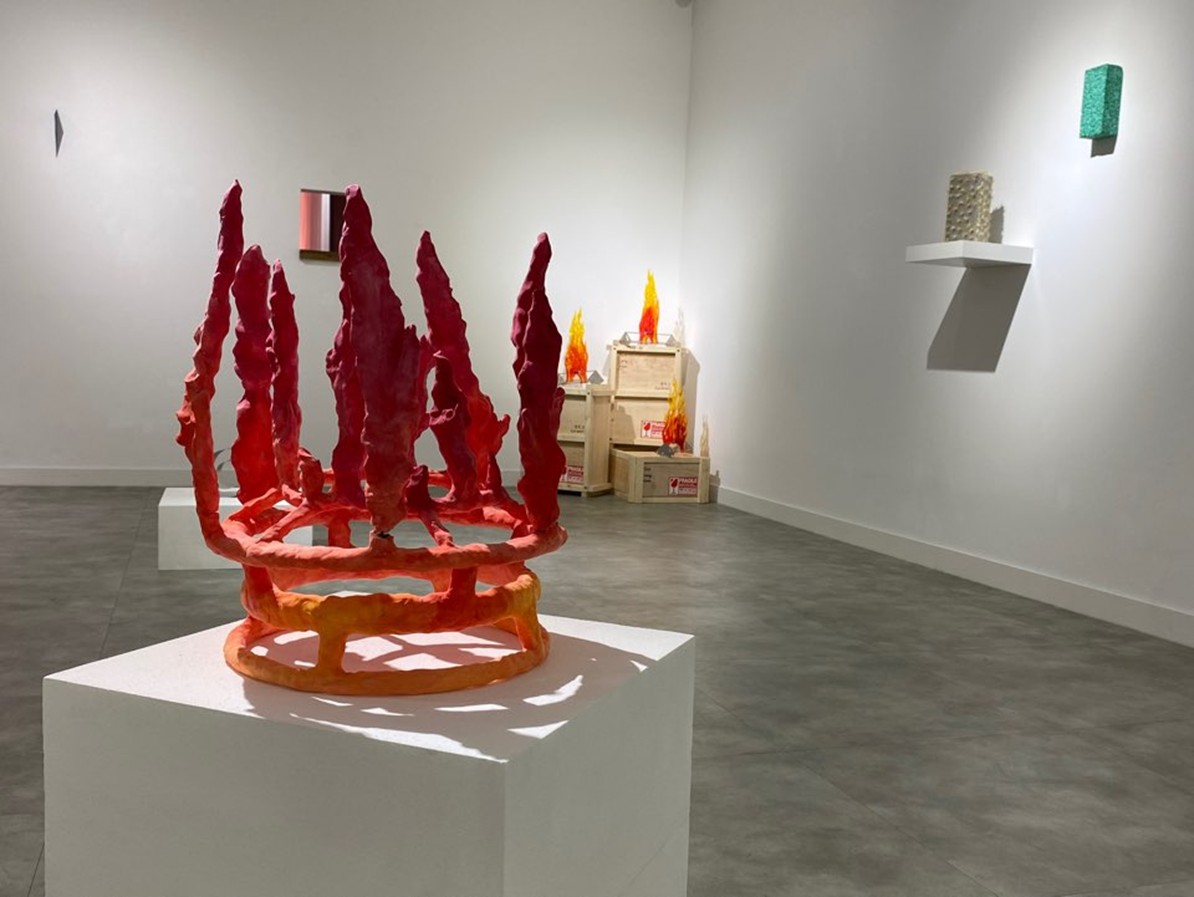
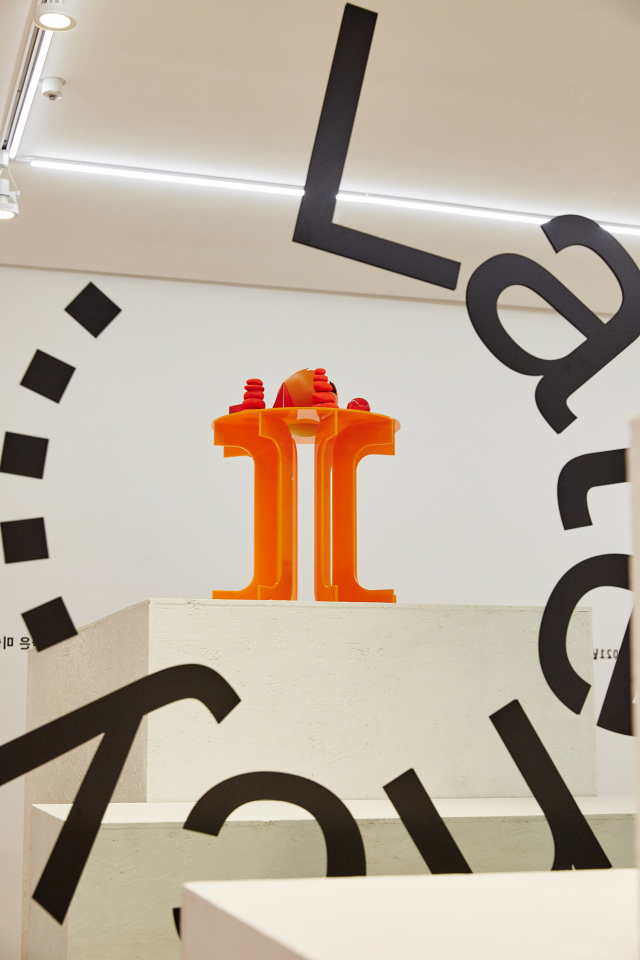
Sla Cha derives her sculptures from the tactile experience of handling and using materials. She is drawn to forms that naturally emerge from the movement of her hands, and from there, she imagines objects associated with these forms and realizes them as individual works. For instance, by rolling a lump of stone clay in her hands and stretching it thin and long without letting it break, she experiments with how far it can extend, eventually creating a walking stick. Her experience of working with various materials—their inherent strength, texture, and physical properties—becomes the foundation for generating form.
Associations also arise from visual similarities between particular materials and naturally existing objects. A transparent form made by hardening resin may evoke gemstones, while the porous cross-section of a sponge may suggest cheese. Although Sla Cha’s works resemble concrete, everyday objects in form, they are made from materials entirely different from the fundamental nature of those objects and thus lack their original functions.
Even when shaped like a knife, they do not function as actual knives. Representation based on visual similarity here is not about replicating objects identically, but rather involves interpretation, technique, and variation that emerge in the process of attempting representation. For example, there are free shifts in scale, such as reducing objects to much smaller sizes or enlarging them significantly, as well as interventions that exaggerate certain formal characteristics.
The meanings that arise from this deviation in representation are revealed not only visually but also through tactile experience when touched, and the artist actively encourages viewers to handle her works. These small objects, modeled after reality, function like foreign substances embedded within transparent stones—like insects trapped in amber—generating narratives and sometimes humor through their collisions.
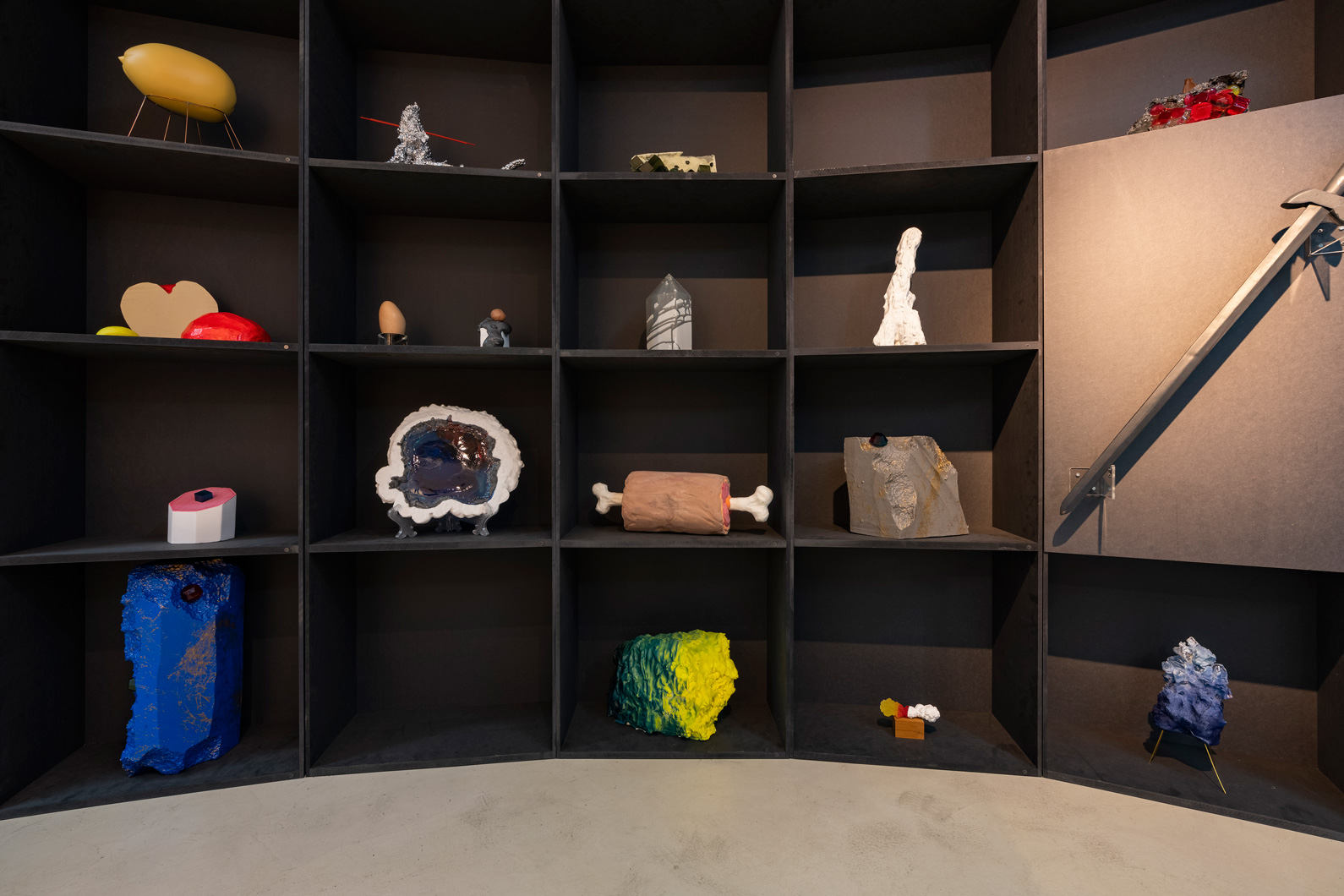
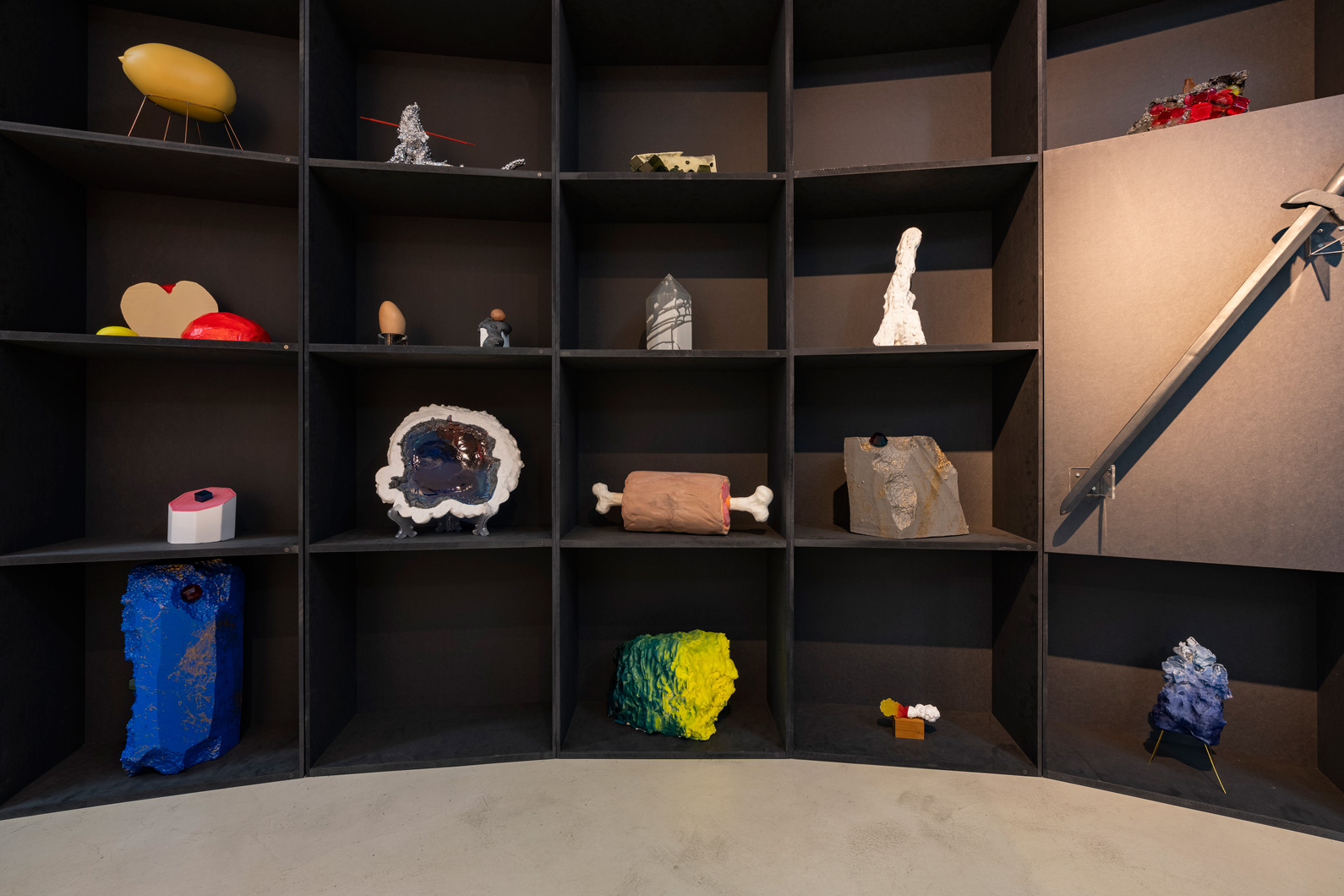
Although her work begins with tactile sensation and visual similarities between disparate materials and objects, this does not mean that forms are created through arbitrary free association. In the exhibition 《Ancient Soul++》 at Taste House, the artist produced and arranged 84 objects based on similarities in material properties.
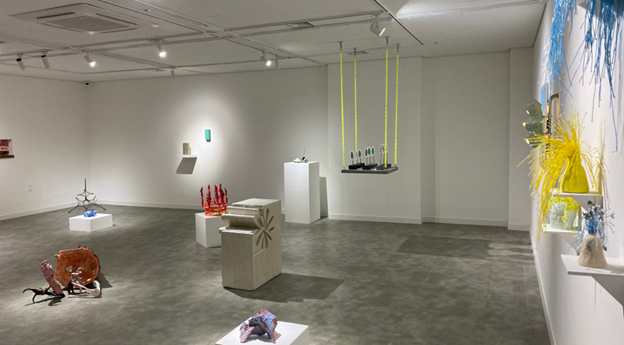
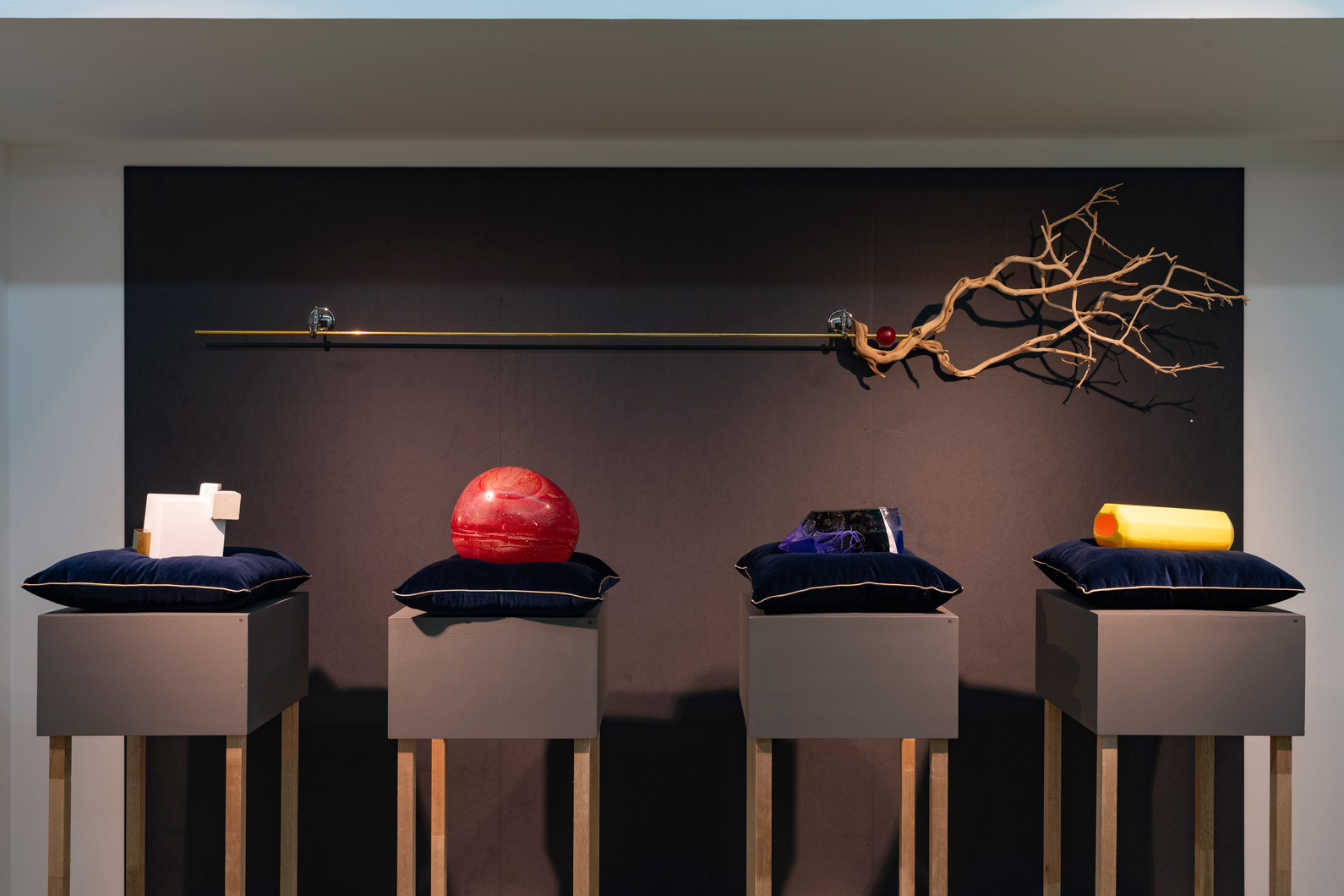
Rather than being random, these objects belong to specific categories such as animal hides, eggs, stones, gemstones, knives, and foods like rice balls and cheese. Each object occupies its own individual space within black display cabinets reaching the ceiling, storefront-style vitrines, and pedestals topped with cushions. Not only the objects themselves but also the exhibition as a whole is constructed based on the principle of similarity.
《Ancient Soul++》 simultaneously recalls the Renaissance-era “Cabinet of Curiosities,” often considered the prototype of art exhibitions, and resembles the inventory window of a video game where collected items are displayed. The categories of objects—such as knives, hides, walking sticks, and portable foods that suggest a fantasy setting—further reinforce the connection between this physical space and a game inventory interface.
In other words, the objects realized here originate from associative relationships with real-world objects, while also re-materializing images of game items that were themselves modeled after real objects. The circulation of object-images—from reality to representation and back again into representations within reality—becomes visible within this exhibition, which operates simultaneously as sculpture, installation, and an inventory system.
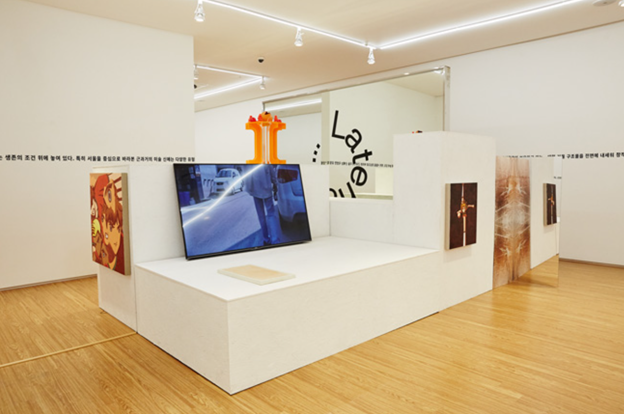
Another notable aspect of the exhibition lies in its use of space. While remaining faithful to the concept of an inventory interface, the 84 objects emphasize individuality while also forming a unified arrangement that allows the entire space to be perceived as a single work. Unlike conventional approaches in sculpture and installation, where works are placed within empty space to establish spatial relationships or construct narratives between objects, here each item occupies its own position and awaits an almost equal distribution of attention.
The exhibition catalog, which introduces the works as an index and categorizes them by size, follows the same principle of spatial organization. It is noteworthy that this method of treating exhibition space like the flat page of a book and organizing works accordingly has begun to appear in other recent exhibitions as well.
Neatly arranged within display cases, Sla Cha’s works and exhibition are candid about desire and directly engage with it. The space, which reproduces the principles and systems of rarity, evokes desires for collection and tactile interaction. The artist has consistently explored material and form within the relational framework of real and fake, reality and representation, and the physical and the virtual. In the conclusion of her master’s thesis, she writes, “I prefer things that can be seen, touched, and heard. I trust such things. Encountering in reality what I once imagined is always disappointing. Narrowing that gap is my personal mission.”
Positioning her work within the accumulated map of art history, she unfolds a perceptual world where reality and virtuality overlap—translating it into forms that can be seen, touched, and heard. In doing so, she develops a mode of art that can be experienced through the acts of viewing and enjoyment.