4. Selection (Decision Making)
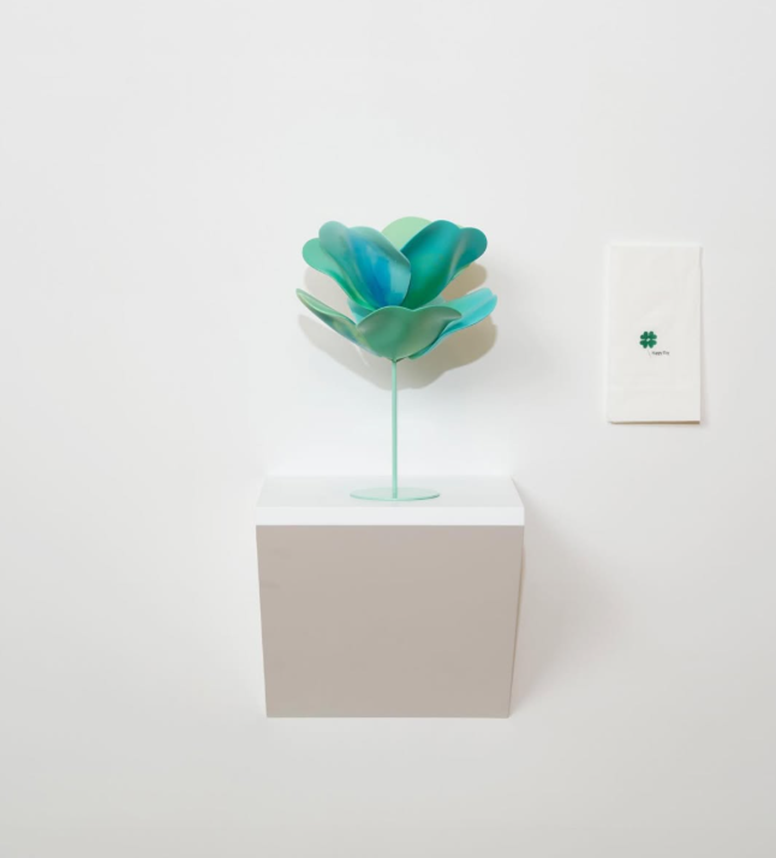
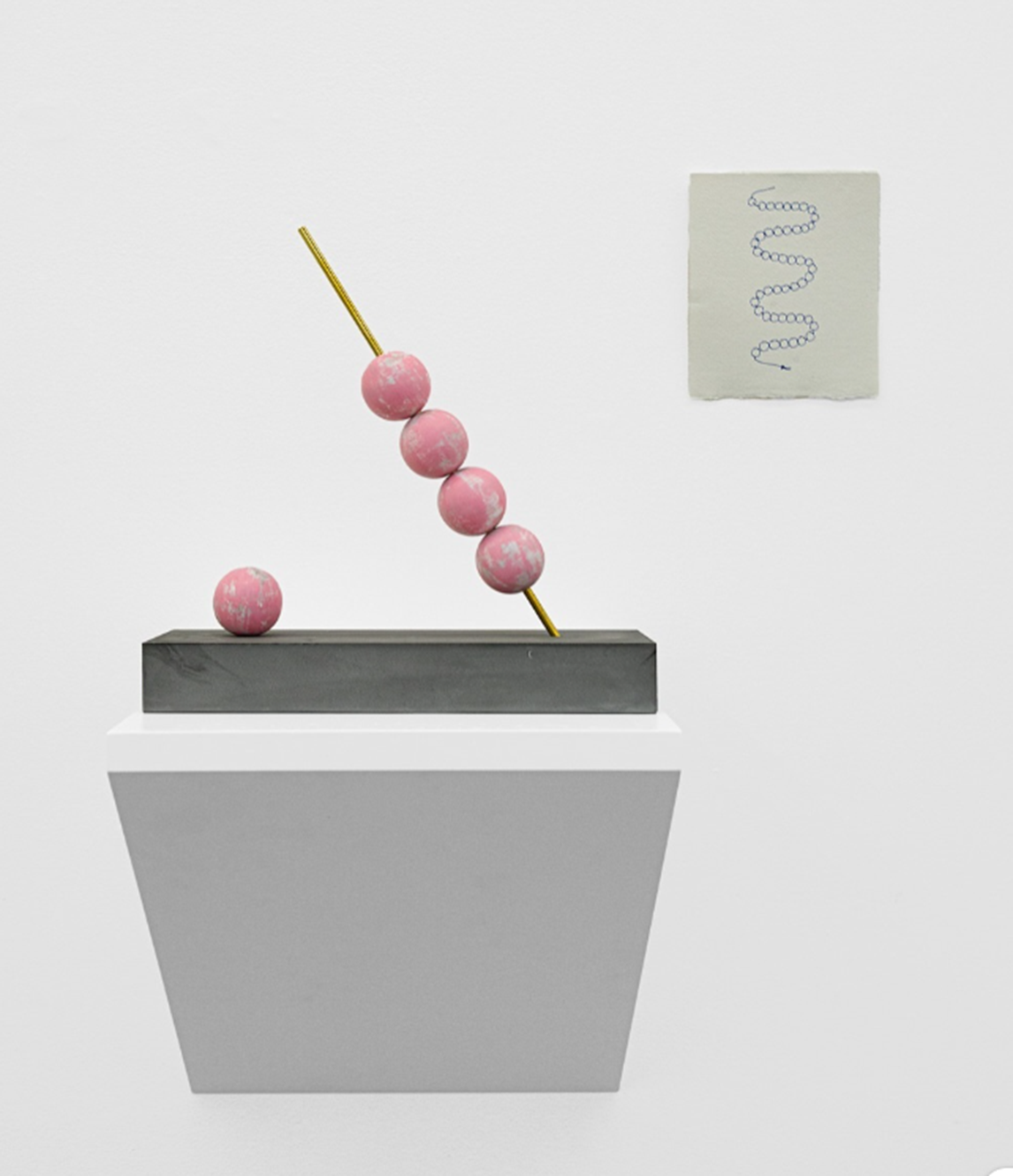
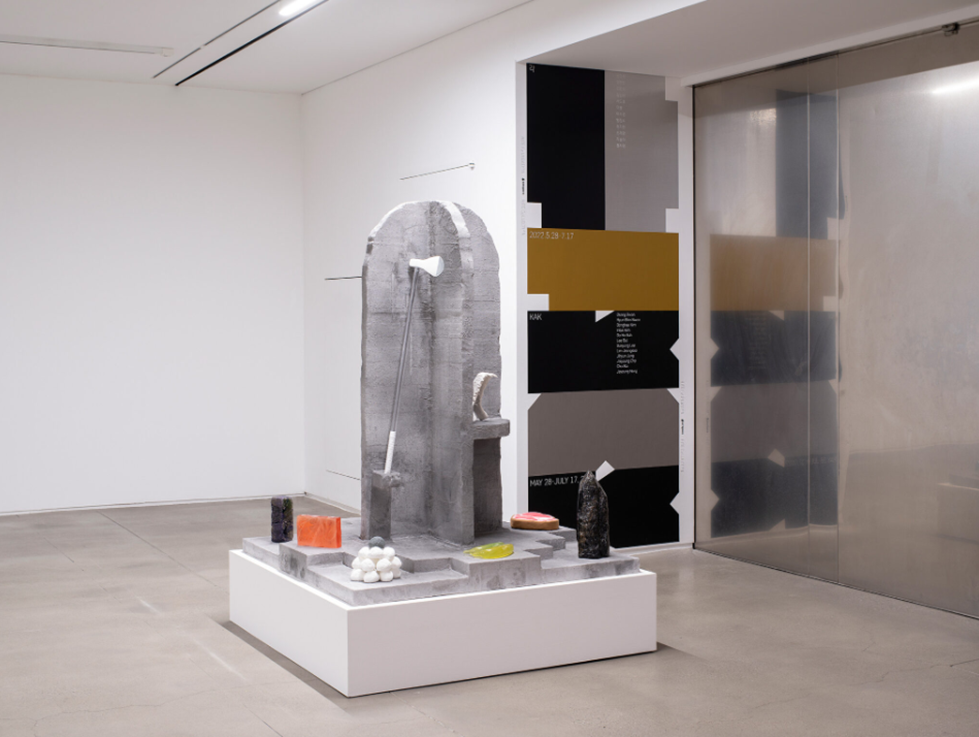
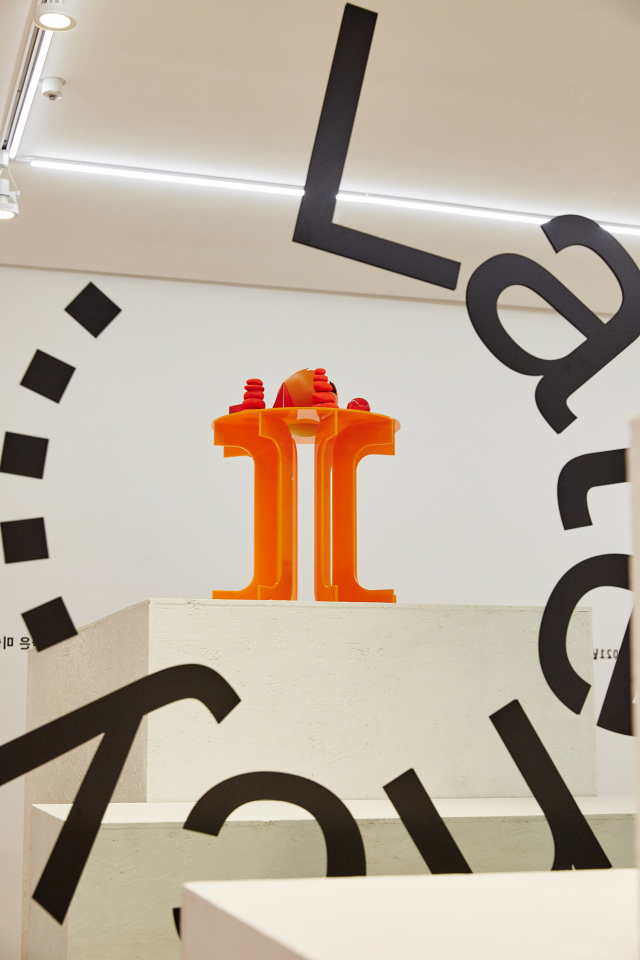
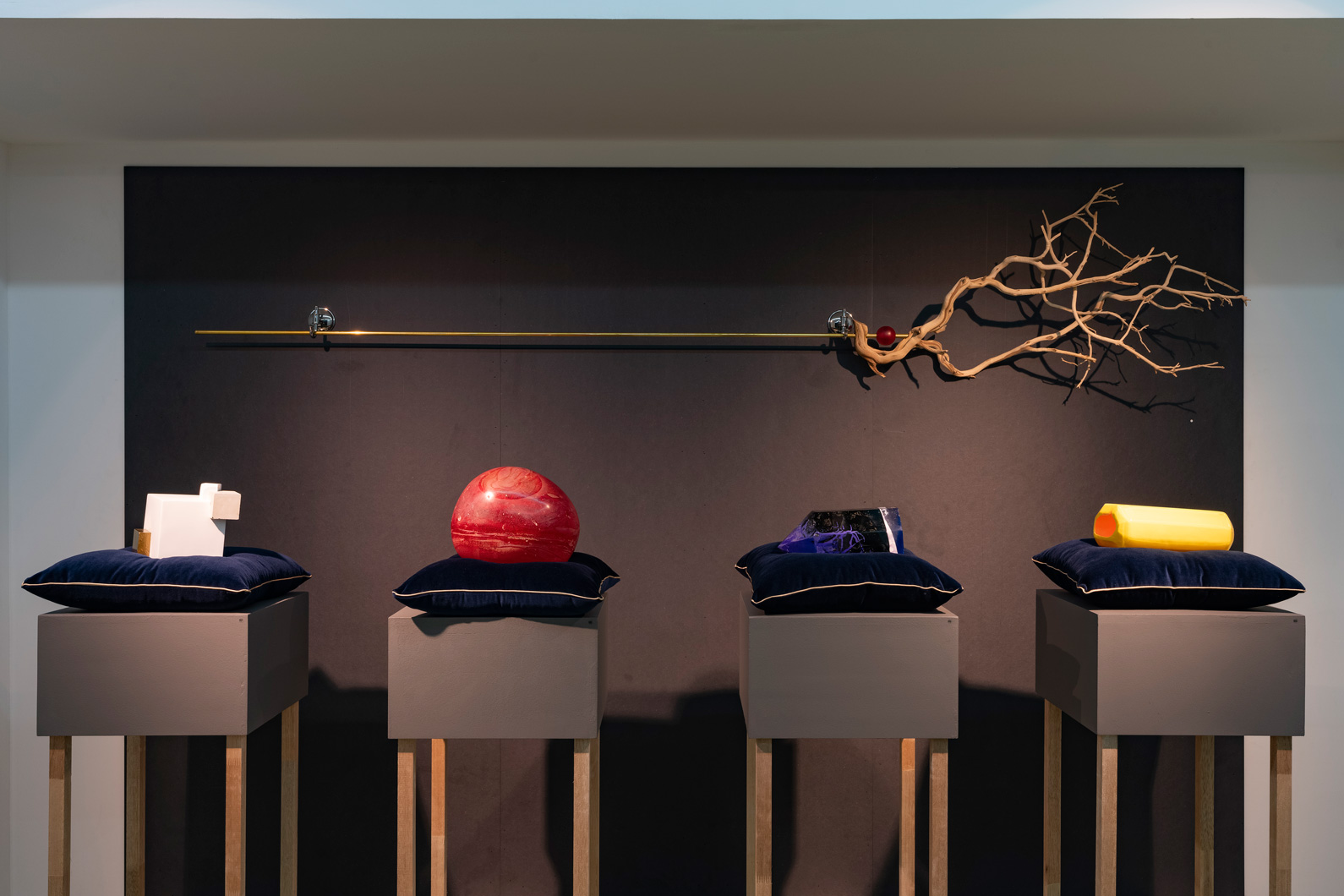
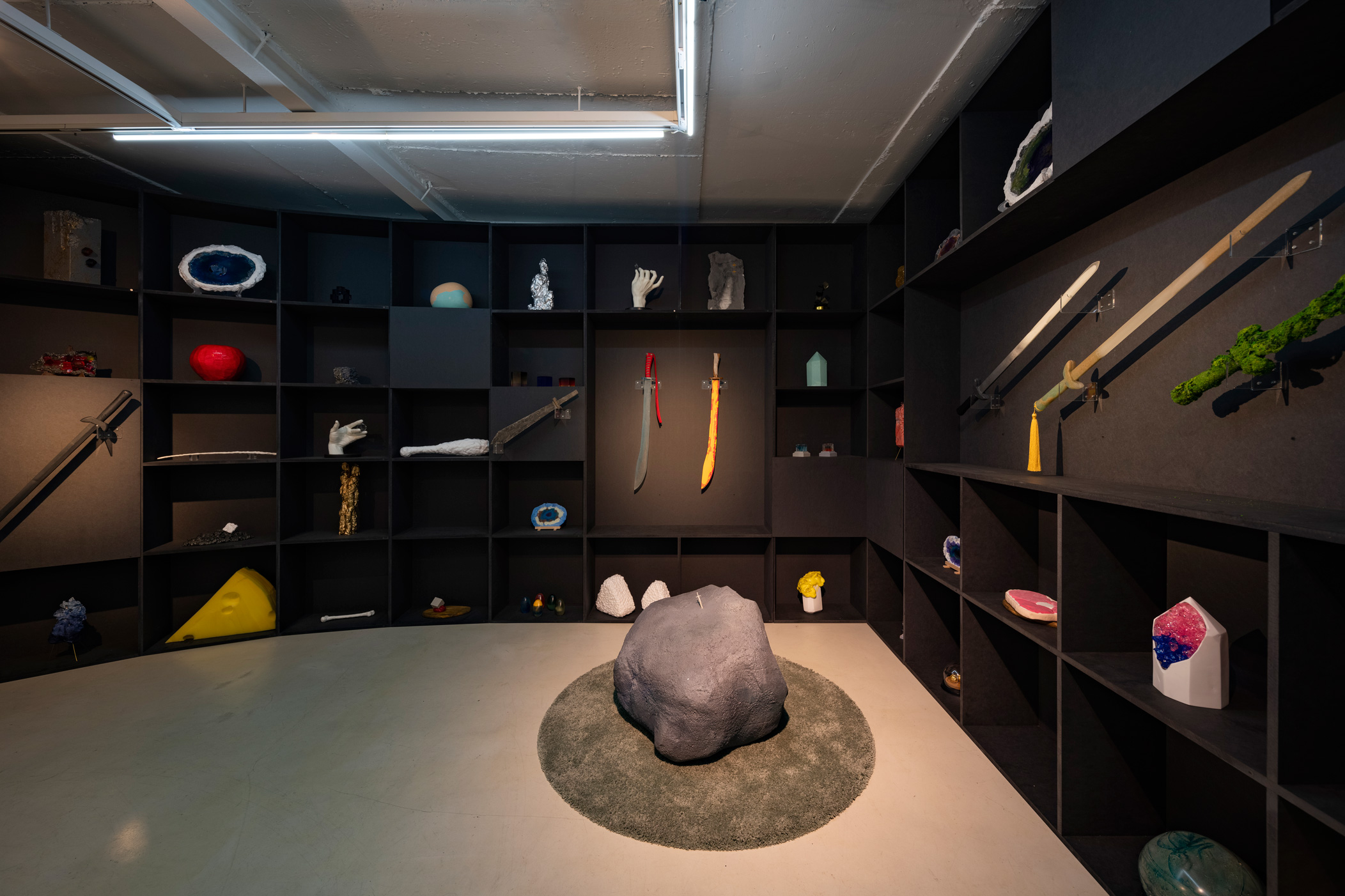
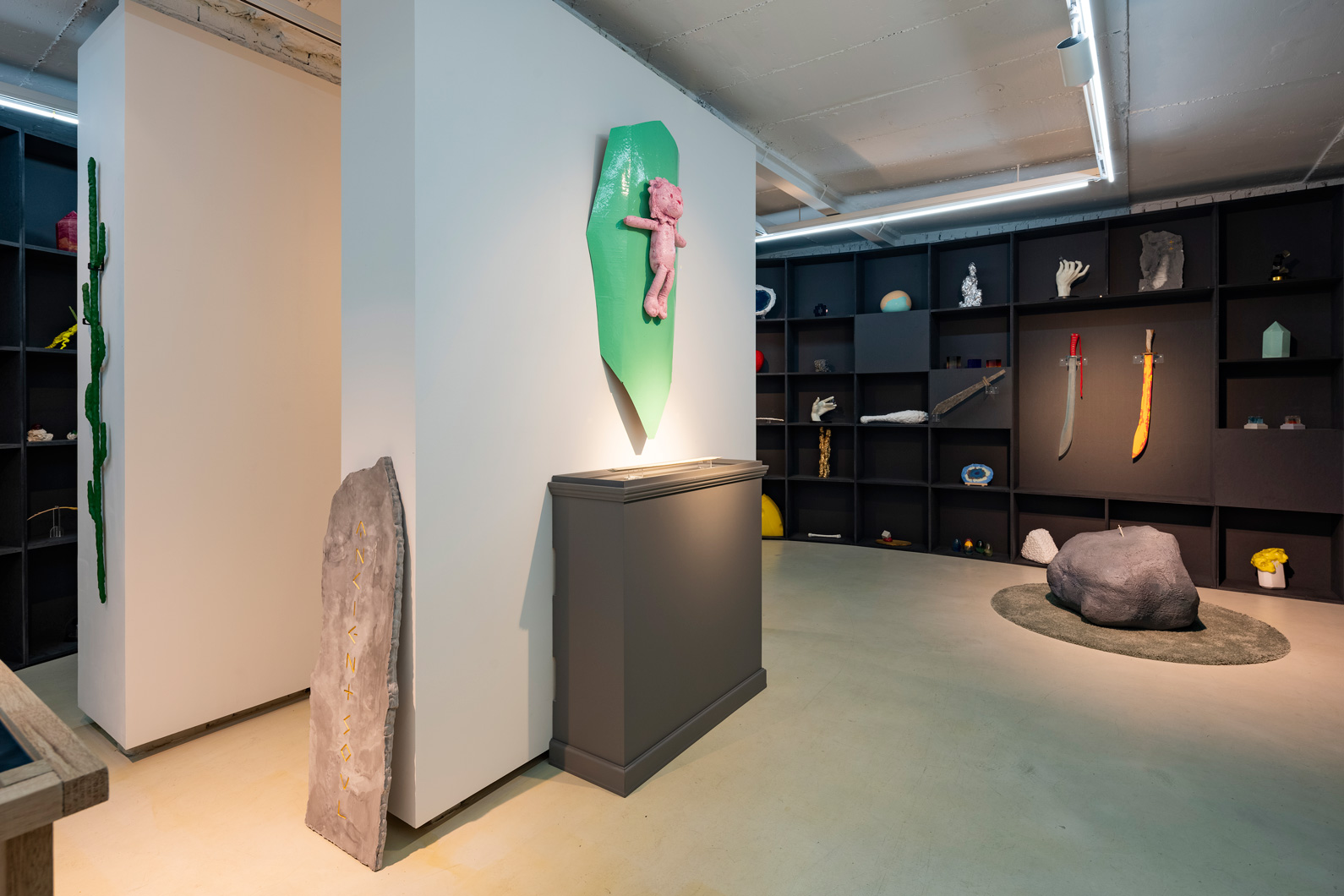
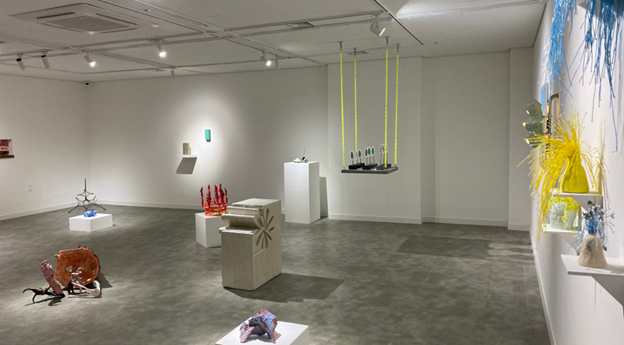
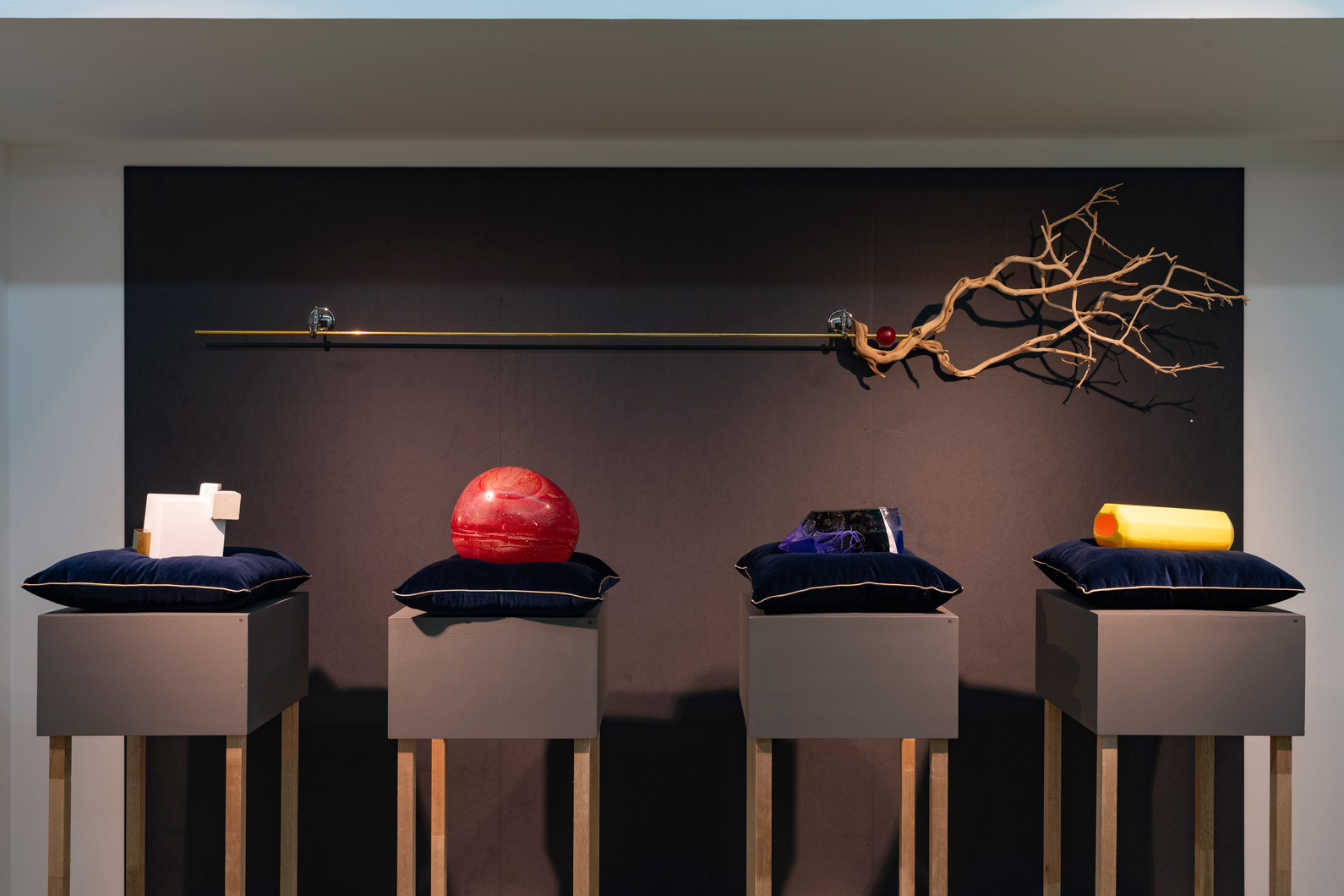
What occurs in the process of making and arranging sculptures? Let us call the time Sla Cha spends coordinating wooden shelves, wall racks, partitions, and altar-like pedestals in 《Ancient Soul++》(Taste House, 2018) a process of “selection and ordering.” Above all, “selection” reflects her position as a craft-based and practical artist who works directly with materials and processes through physical engagement.
In her 2016 thesis, she writes: “The current attitude intervenes by editing fragments of the vast world of work into something I can directly handle, something that can be translated into my own choices and scope.” She adds, “Recognizing the act of translating into something manageable often clarifies many things. The work transforms according to the range within which my arms can extend.”
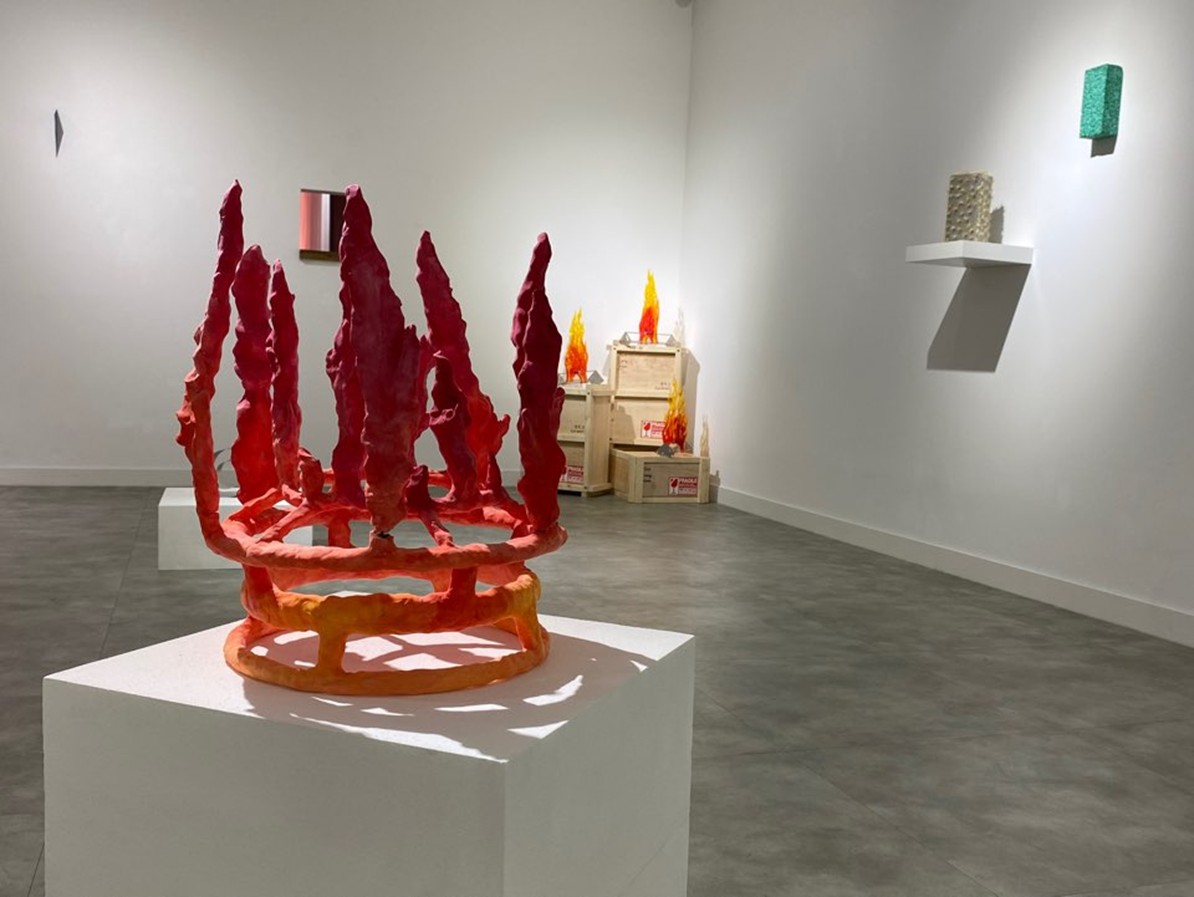
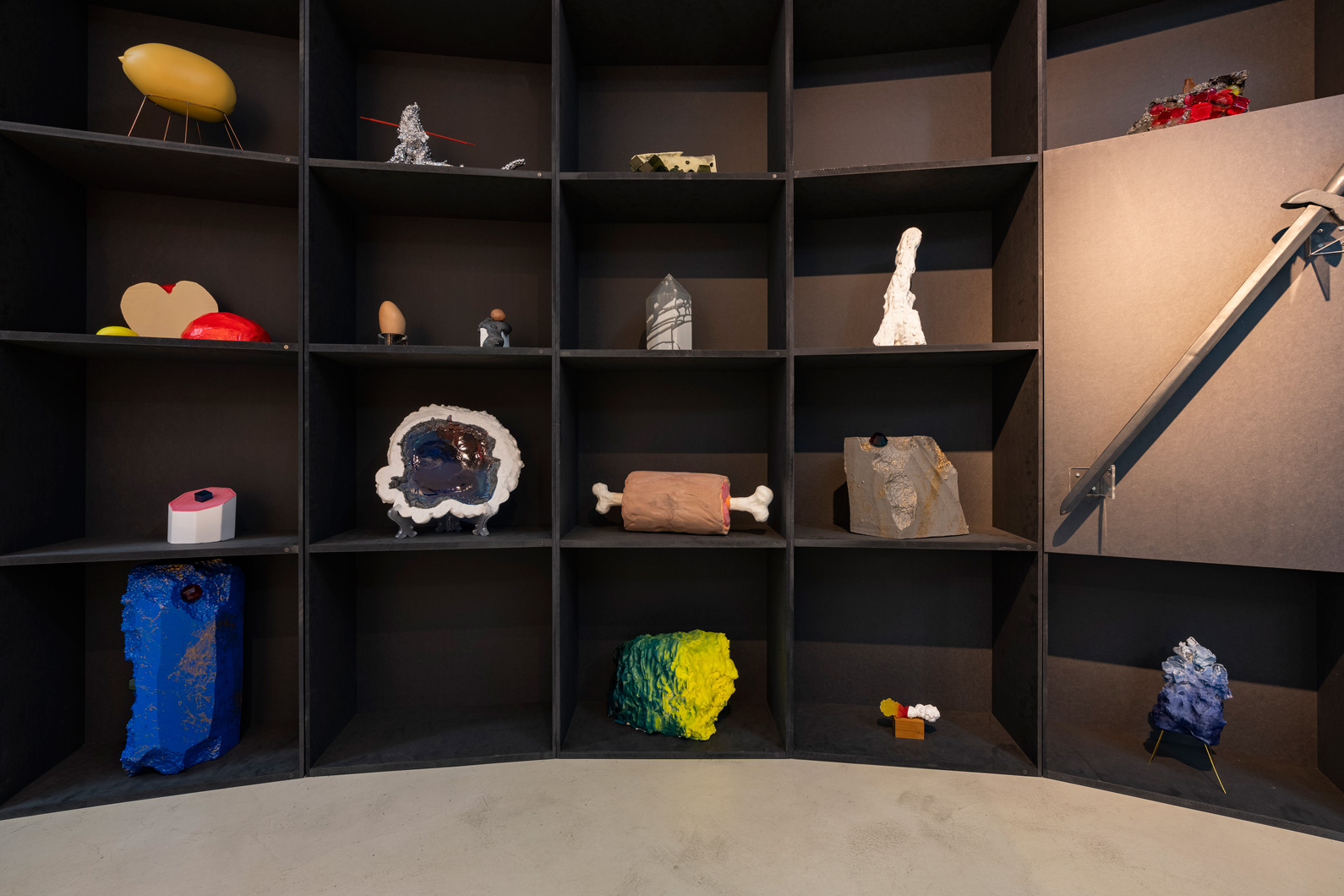
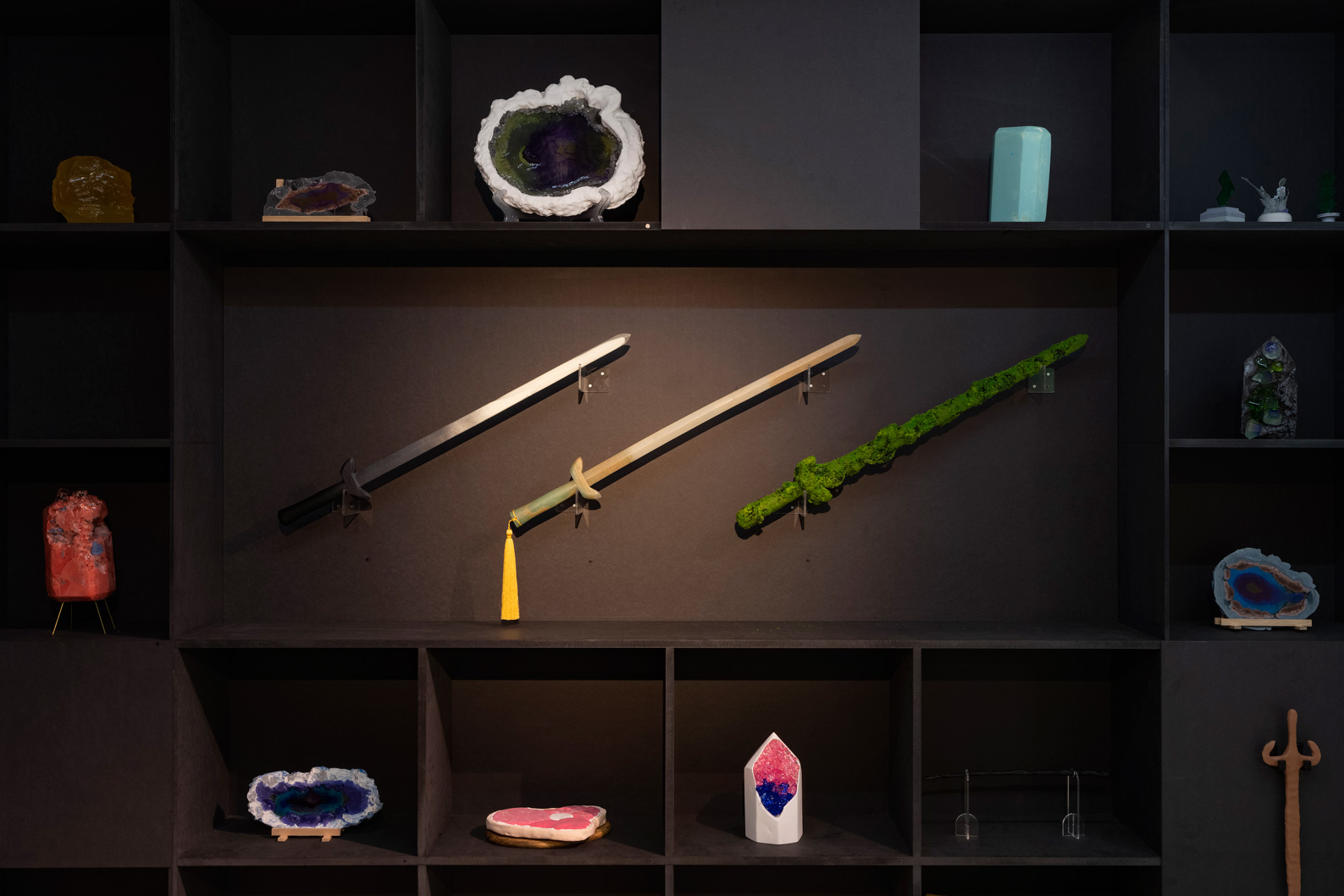
In her thesis, “selection” is translated as “decision making.” Through this process, she builds a hierarchy of work by expanding from the smallest units of detail. Entering the exhibition, one encounters works such as Mixed Stone (2 Types), Mixed Stone (4 Types), Leather Pink, Leather Sky, Leather Brown, Egg Gem Water, Egg Gem Fire, Egg Gem Grass, and Egg Gems. These can be categorized into minerals, weapons, food, and objects imbued with protective energy. Even within minerals, there are poetic mutations such as Dust Stone, born from linguistic play.
This small sculpture—formed by clumped gray dust—resembles a moment of “discovery play” that intervenes within the process of selection and ordering. The vertically and horizontally arranged inventory evokes the equivalence of positions within large-scale information systems. One perceives similarity—of form, material, and naming—before distinctions.
Is this choice not perplexing? When a single object exists as sculpture, it undergoes transformation, but when many sculptures exist together, they become “equivalent.” Like identical names multiplying online into thousands or millions without distinction, or like an online watermelon whose taste cannot be known unless physically broken open, individuality dissolves within multiplicity. Patterns repeat, making it impossible to identify a singular style, like ancient comb-pattern pottery.
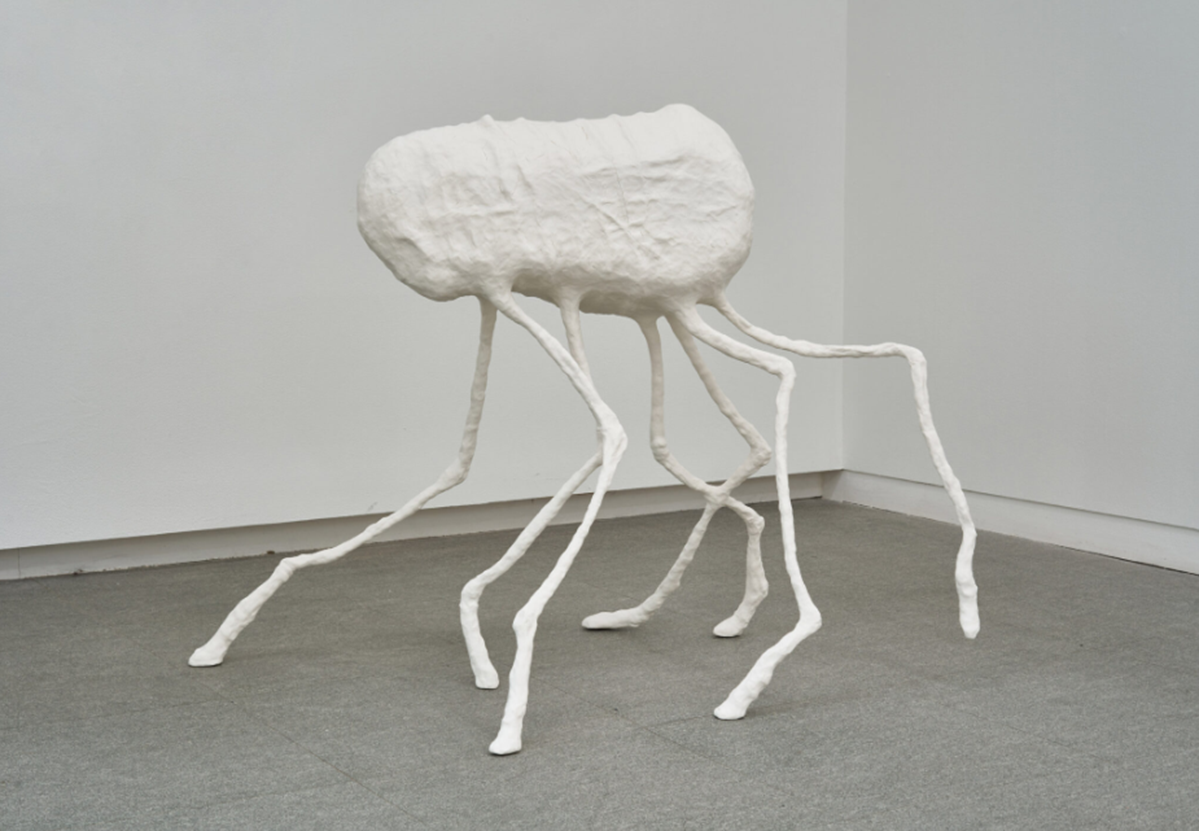
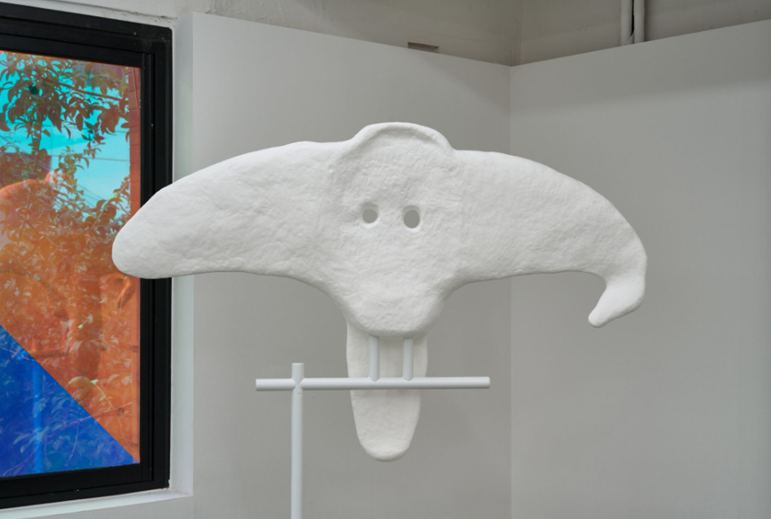
Thus, it becomes meaningless to infer human behavior from individual objects, and it becomes evident that one is exposed to object-images as mass information. As Sla Cha’s sculptures increase, the individual value of each item decreases. Works such as Rough Cut Ruby, Rough Cut Aquamarine, White Pillar, and White Staff generate variations that function as replicable entities rather than singular exhibition pieces. Instead, they reappear as entities that can be used and replicated.
Yet more important than the sensation of purchasing or using them is Sla Cha’s light mathematical thinking. There exists a minimal diagram of extreme simplicity. The artist even created an Excel list categorizing works as Small (S), Medium (M), and Large (L). Does this not demonstrate how basic mathematical thinking can leap into unexpected territories?
5. Collection
In contemporary art, museum and institutional collections are often metaphorically described as “weapons” for interpreting reality. The choice of what to collect and how to display it reflects a society’s perception of time and historical consciousness. It is noteworthy that Sla Cha uses the words “trend and nuance” as a conceptual goal of her abstract thinking.
In her thesis, she states that her aim is “to create trend and nuance.” When individual sculptures move beyond the visible frame or disappear from sight, she becomes both the commissioner and the sole operator of her own production system. With the tools and materials in her hands, she can recreate these item sculptures at any time. Issuing orders to herself, she expands her inventory like filling cells in an Excel spreadsheet, securing the capacity of objects one by one.