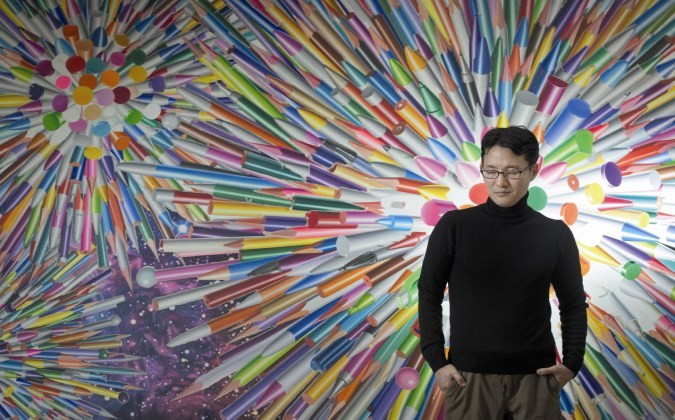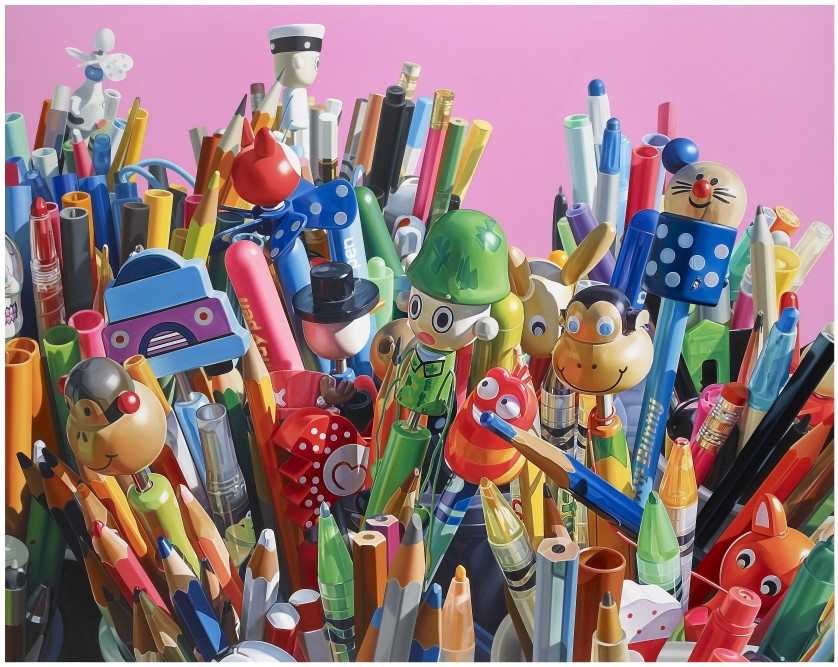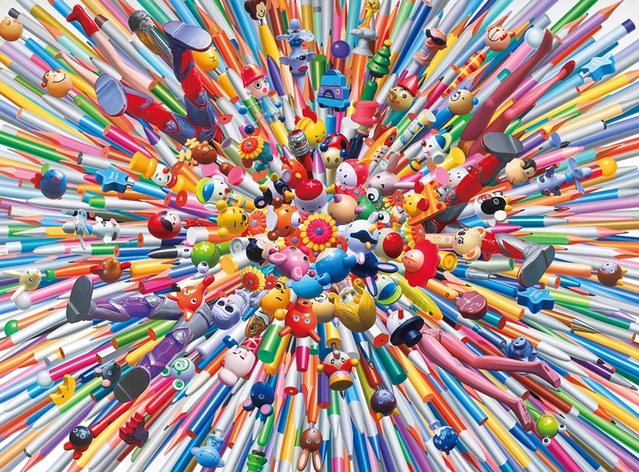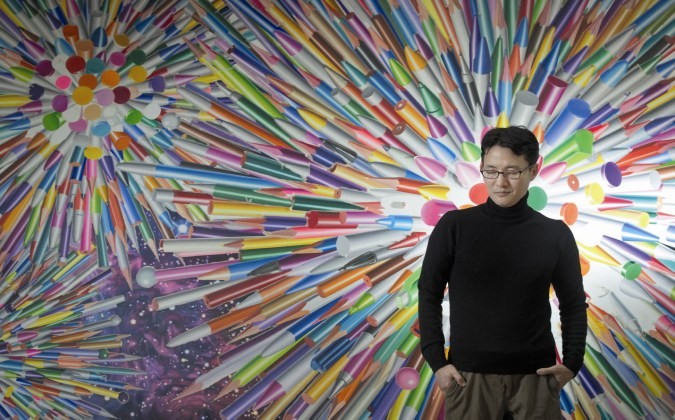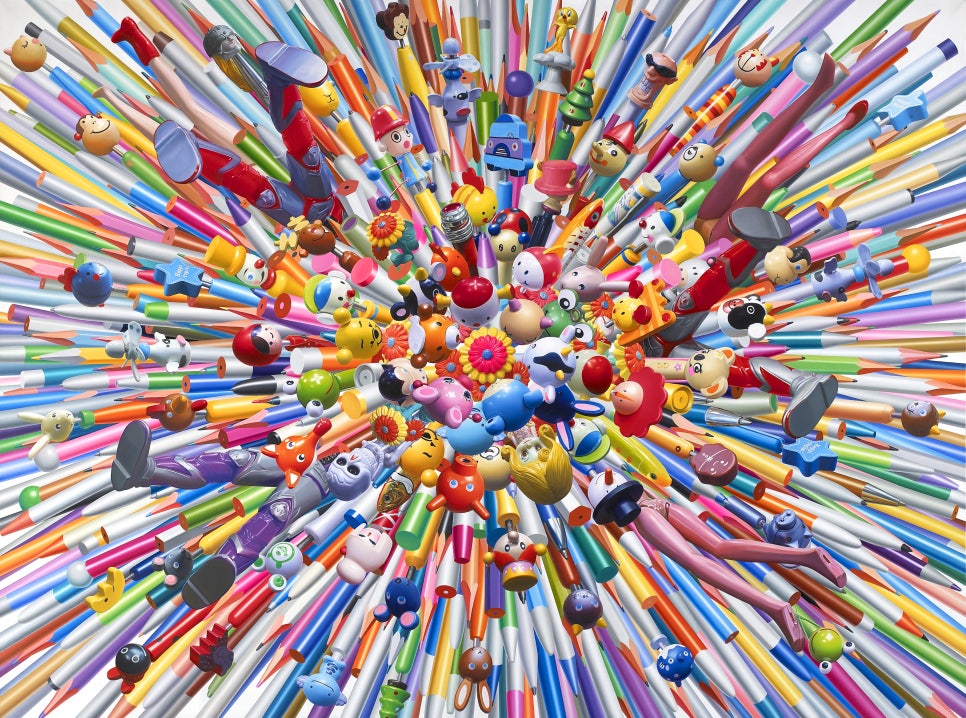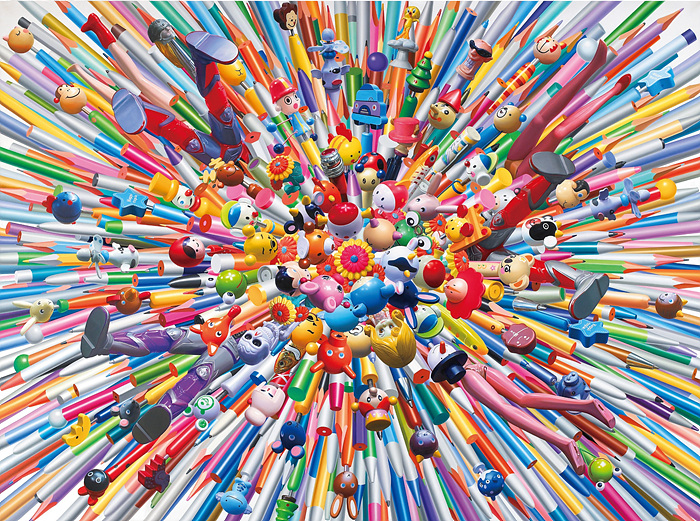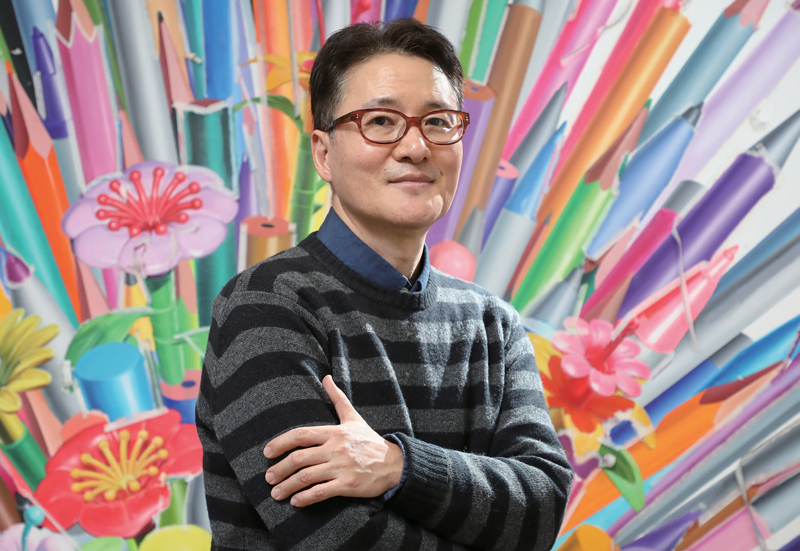

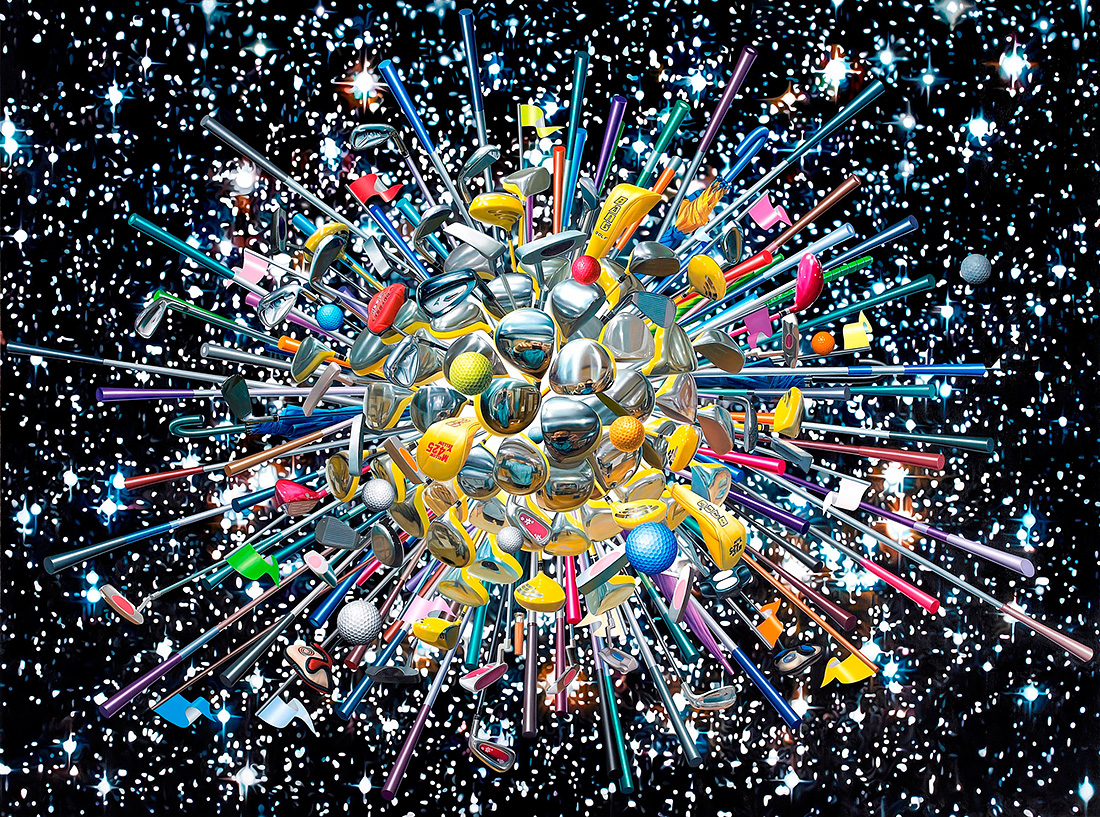
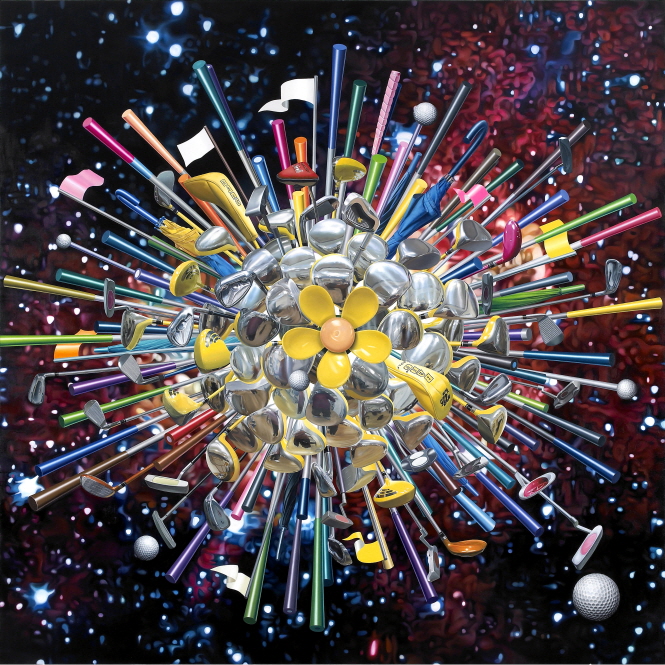
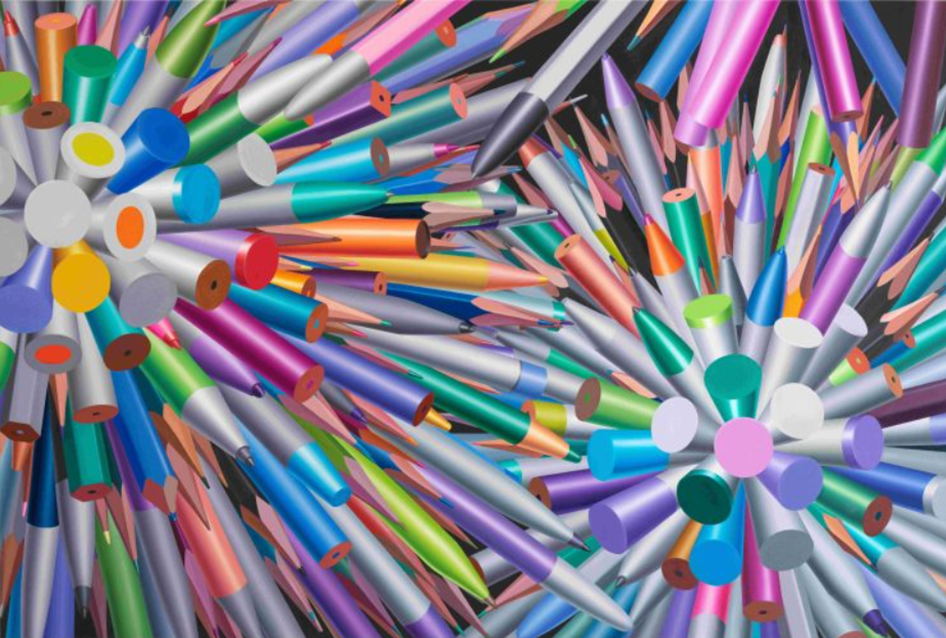
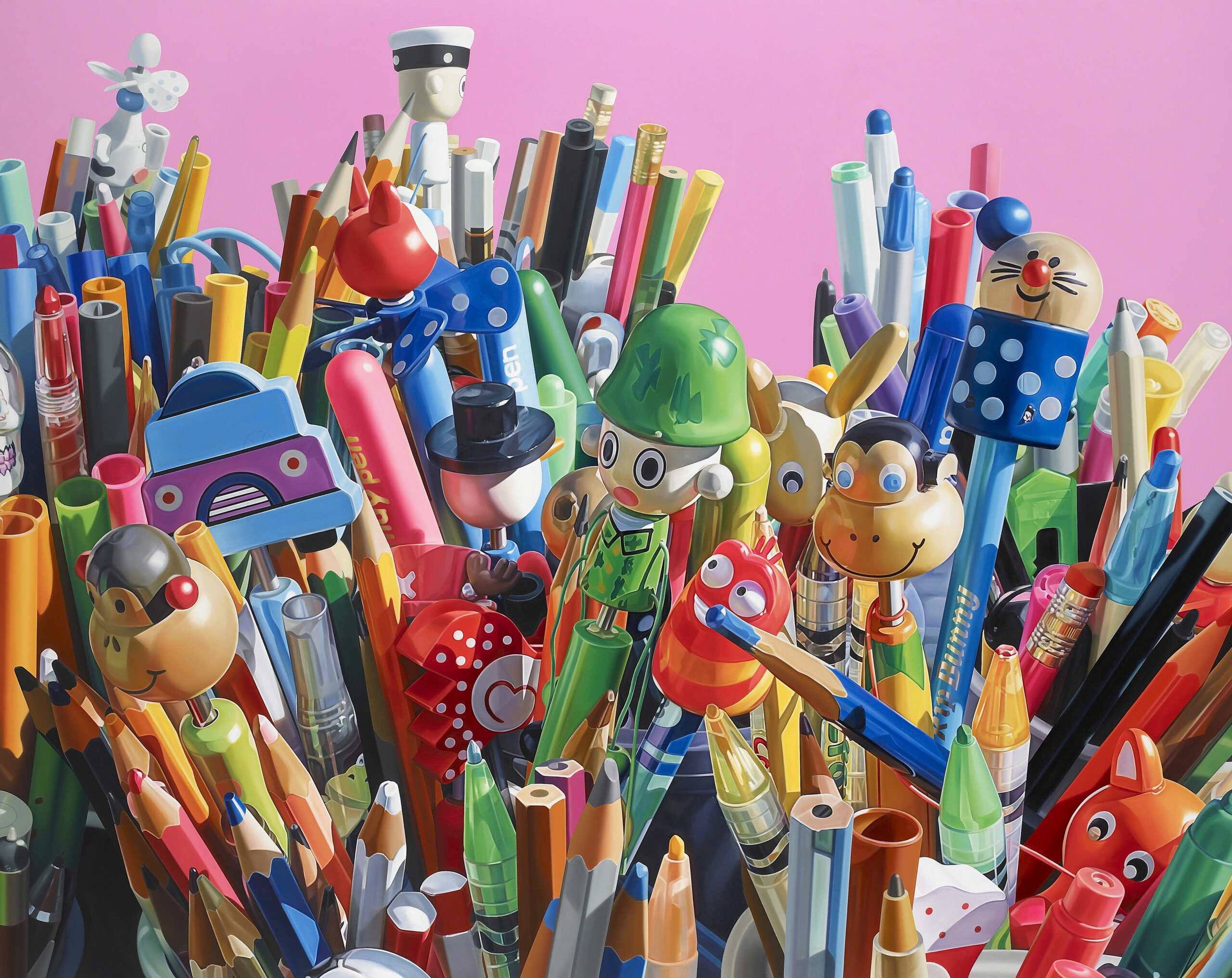
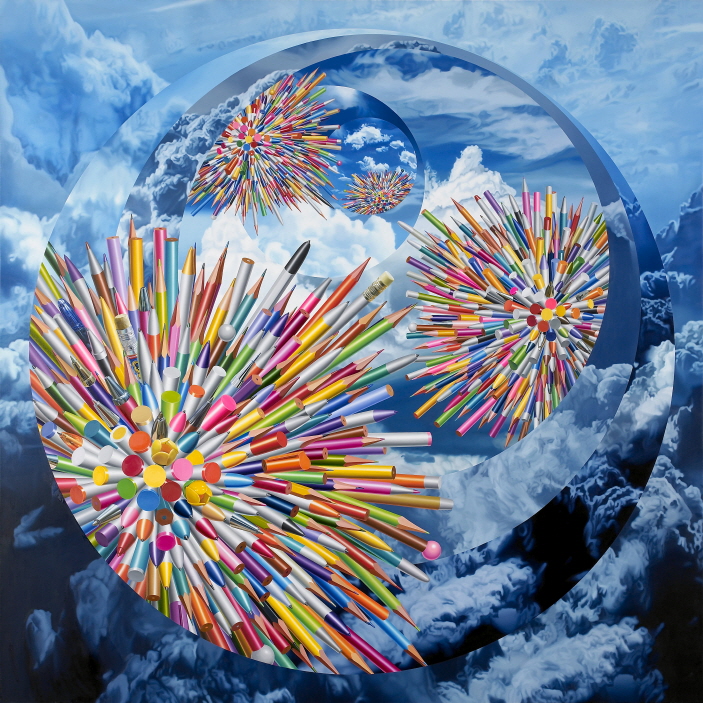
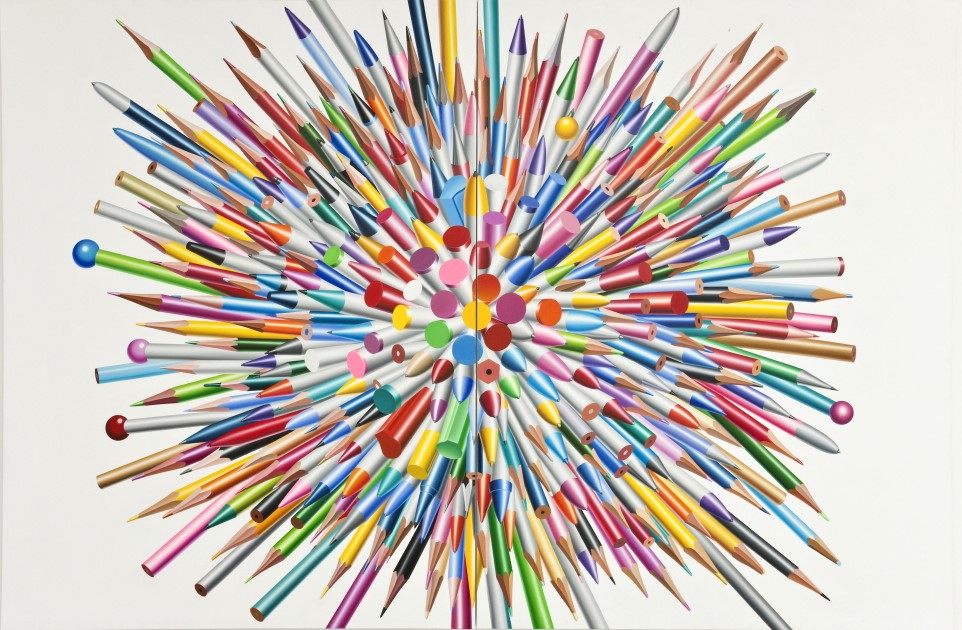

Hong Kyoungtack standing in front of his representative Pen painting. Pens are geometrically arranged across the large canvas, offering visual pleasure. © Jeon Minkyu, Monthly JoongAng Reporter

There are not many artists who are both critically acclaimed and widely popular. This is even more true in the art world. Last year, artist Hong Kyoungtack (46) experienced two significant milestones. His work Pencil 1 was sold at Christie’s Hong Kong for the highest price ever recorded for a Korean artwork (approximately 960 million KRW), bringing him widespread recognition. He was also selected as the youngest recipient of the 14th LEEINSUNG Art Prize. His works have received critical acclaim overseas, including in New York, Hong Kong, and China, and he is scheduled to hold a solo exhibition at the Daegu Art Museum this year. 


Why must one only paint still lifes or landscapes?

Contrary to the preconceived image of a “star artist,” his studio is located in a quiet residential neighborhood in Cheonho-dong, Seoul—his birthplace and home for over forty years. In his studio, alongside works in progress, are displayed LP records he has collected, goldfish swimming in tanks, colorful goldfish figurines, and various miniatures. 

His hobby is raising goldfish. He feeds them several times a day and occasionally watches them, enjoying the activity without letting it interfere with his work. As he explained each type of goldfish, their vivid colors and elaborate fins stood out. One could sense a connection to the vivid colors in his paintings. 

When did he begin dreaming of becoming an artist? “I was praised for drawing well from a young age and received awards, so I naturally entered an arts high school. Although I was often told I had talent in design, I chose painting as my major because I wanted to become a painter.” 

The turning point that led him to pursue art as a full-time career came in 2000 when he was selected for an open call exhibition at Insa Art Space. While he enjoyed painting and felt it was his calling, he endured more than a decade as an unknown artist. 

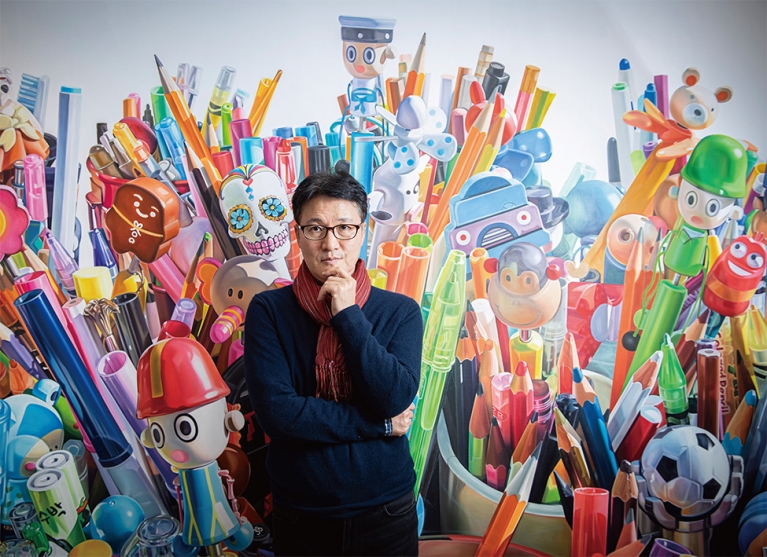
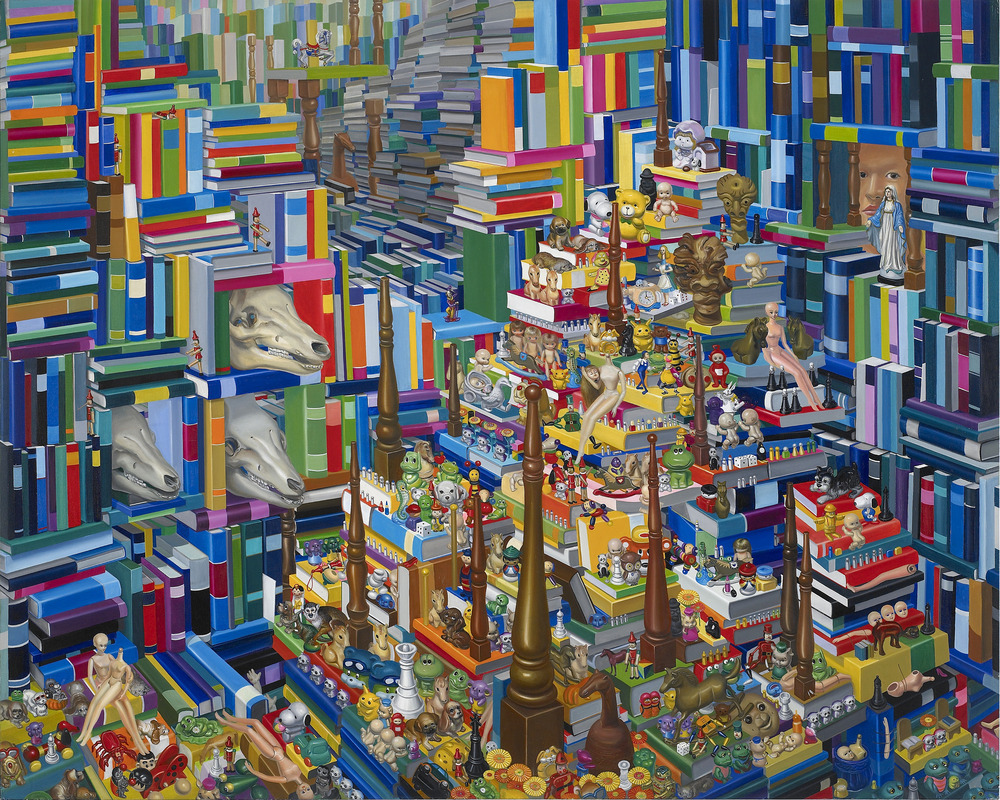
His representative series include the ‘Pen’ series, the ‘Library’ series, and the ‘Funkchestra’ series. Among them, the ‘Pen’ series is the most widely recognized. He has used pencils—common objects found around him—as subjects for over thirty years. When he was in high school, many classmates drew celebrities, and he often saw art teachers scold them, saying such subjects could not be considered art.

At that time, he questioned, “Why must we only paint still lifes or landscapes?” Fortunately, in university, no professor criticized him for drawing everyday objects like pencils and bookshelves as being outdated or lacking substance. 


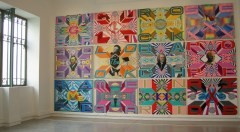
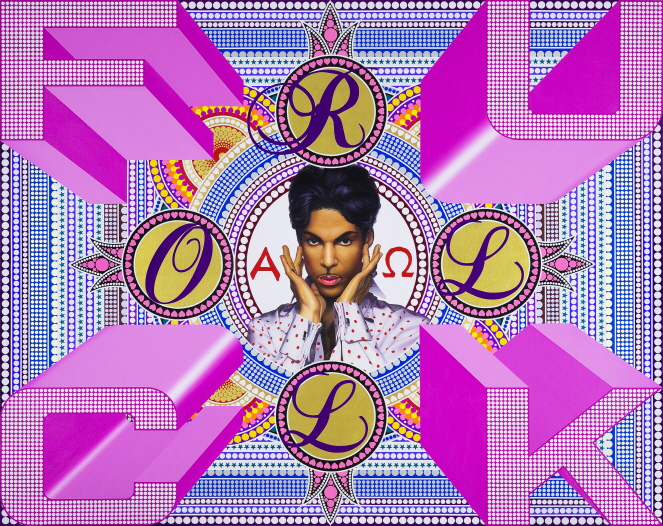
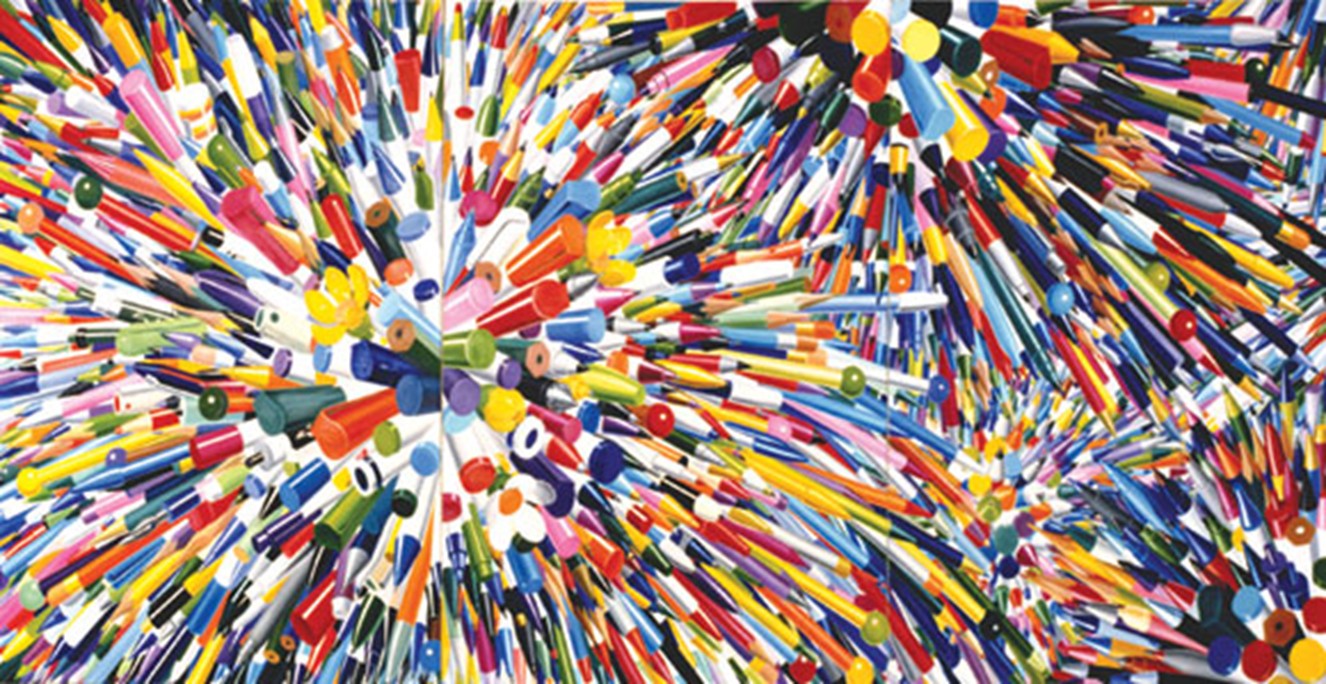
A work from the ‘Funkchestra’ series exhibited at the Santiago Museum in Chile in 2008 © Jeon Minkyu, Monthly JoongAng Reporter

With keen observation and precise expression, he painted clusters of pencils using his own colors and touch. The pencil paintings he began in university have now become highly sought after by museums and private collectors worldwide. His internationally recognized work Pencil 1 spans three canvases measuring 259×581 cm. The geometric arrangement of pencils and pens across its large surface offers intense visual pleasure. 

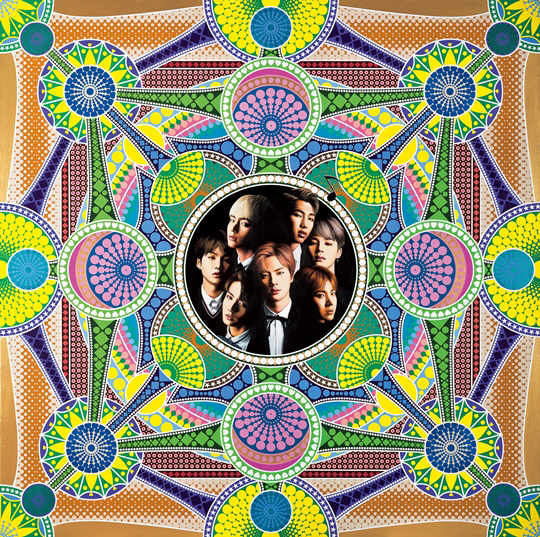
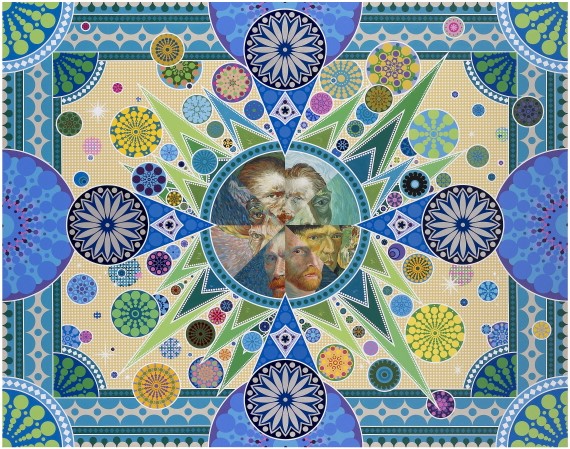
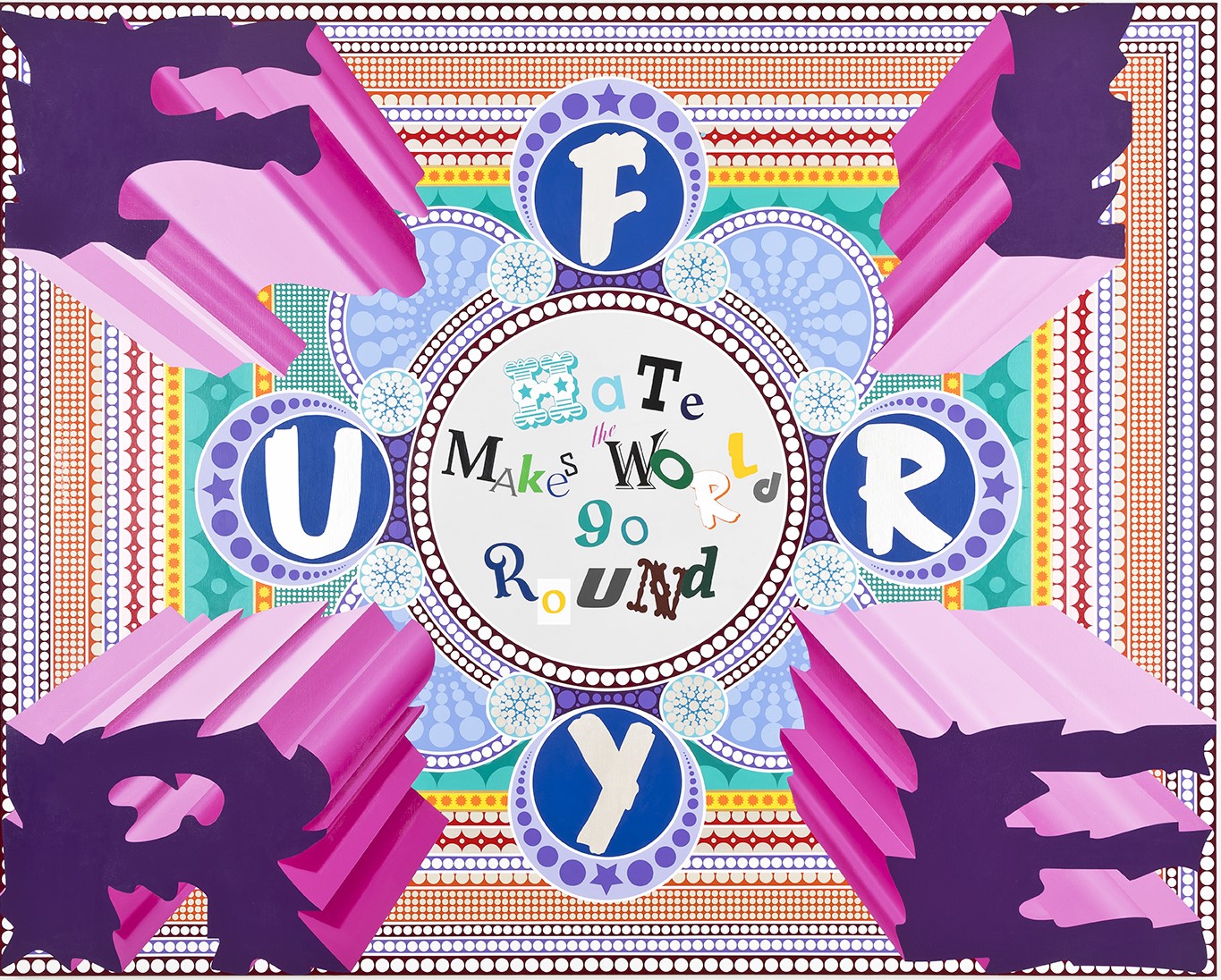
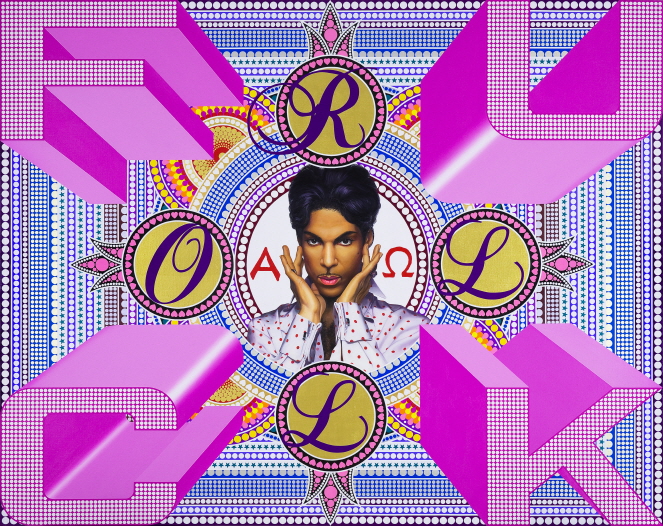
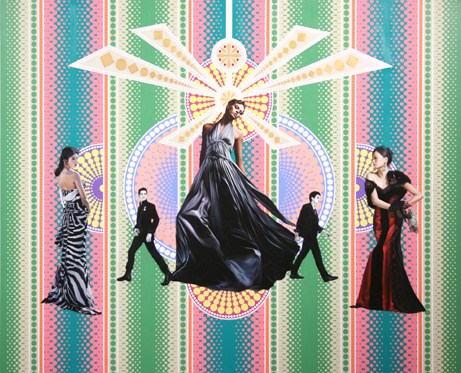
The ‘Funkchestra’ series, presented at ARKO Art Center in 2005, is a form of “rhythmic painting” that powerfully conveys harmony through the continuity and variation of color and form. 

“Funkchestra is a combination of funk and orchestra. I use it as a concept encompassing all music that evokes a groovy feeling,” the artist explains. 

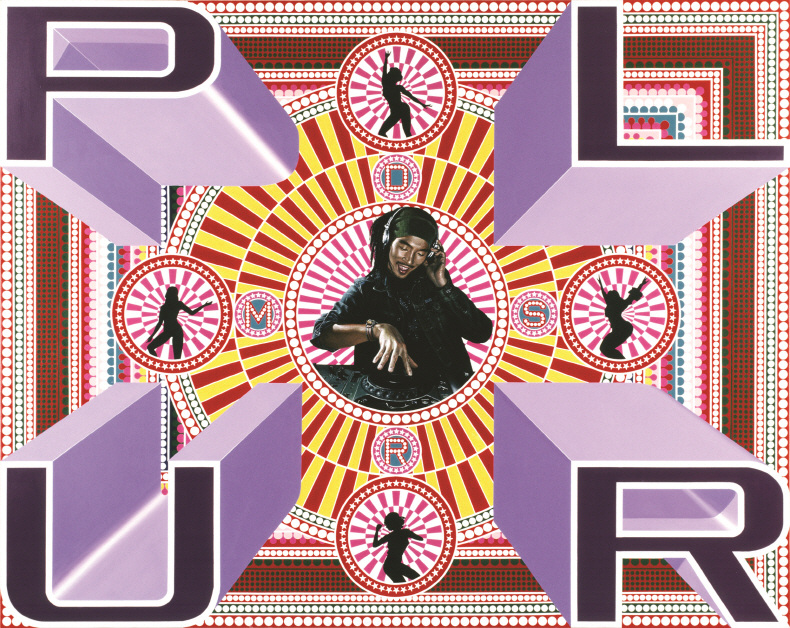
Just as music is composed of lyrics and rhythm, his paintings boldly combine images and text. For example, the acronym PLUR written in the corners of a painting stands for Peace, Love, Unity, Respect. 

The central DJ portrait evokes scenes of rave parties where people enjoy techno music through the night. 

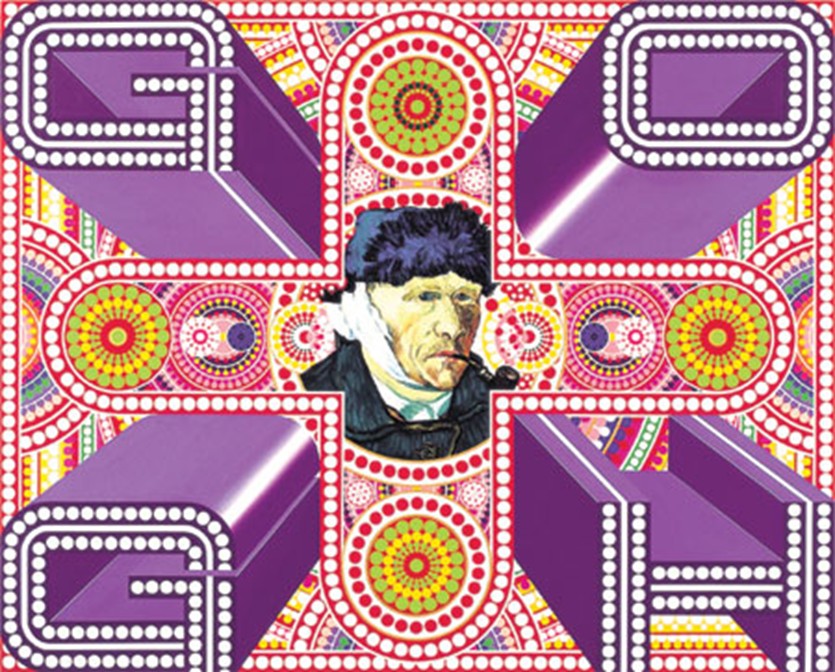
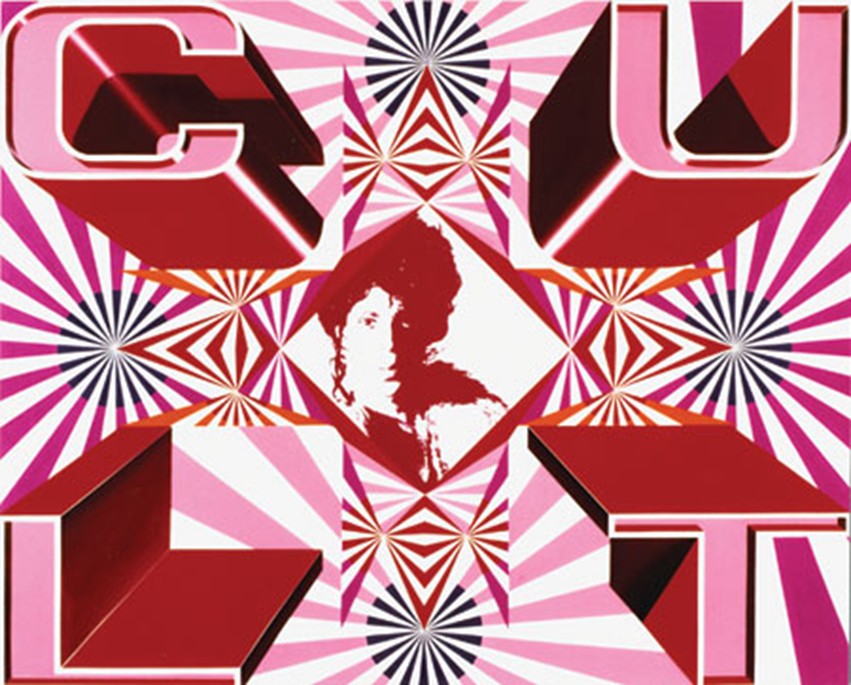
He expresses aspects of popular culture through intense visual elements, much like a stage where funky music is enjoyed. At the center of the ‘Funkchestra’ series are pop culture icons such as Michael Jackson, John Lennon, Madonna, and Audrey Hepburn, surrounded by colorful circular forms. 

These figures are depicted with halo-like forms behind their heads or backs, symbolizing their sacredness and representing the spirit of their era as icons of popular culture. 

“I do not want to divide popular culture and fine art, nor do I distinguish between abstraction and figuration. In my world, everything is equal,” he says—words that ease the confusion one might feel when trying to analytically dissect his works. 

A wall in his studio is lined with countless LP records, and he mentions that even more are stored away. His daily routine of listening to music from start to finish makes his studio feel like a stage. Like a conductor orchestrating fifty instruments, he conducts his work every day. 

The white canvas is his stage, visual images and text are instruments, and colors are rhythm. His dynamic, energetic direction captivates viewers with intense visual force—that is his intention. To draw viewers into complete immersion, his vigorous conducting continues. He dreams of becoming a maestro within the temple he has defined for himself. He describes this “temple” as follows. 


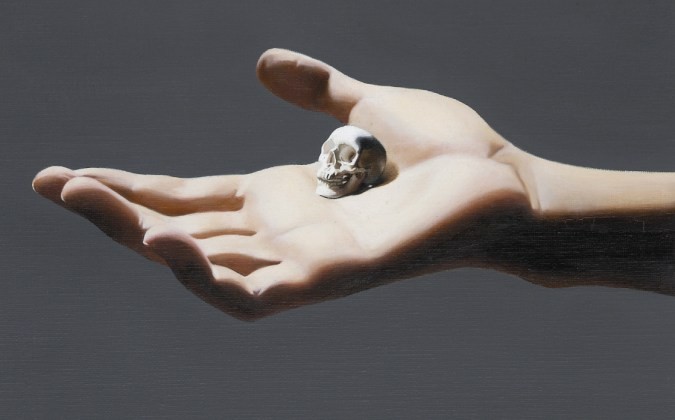
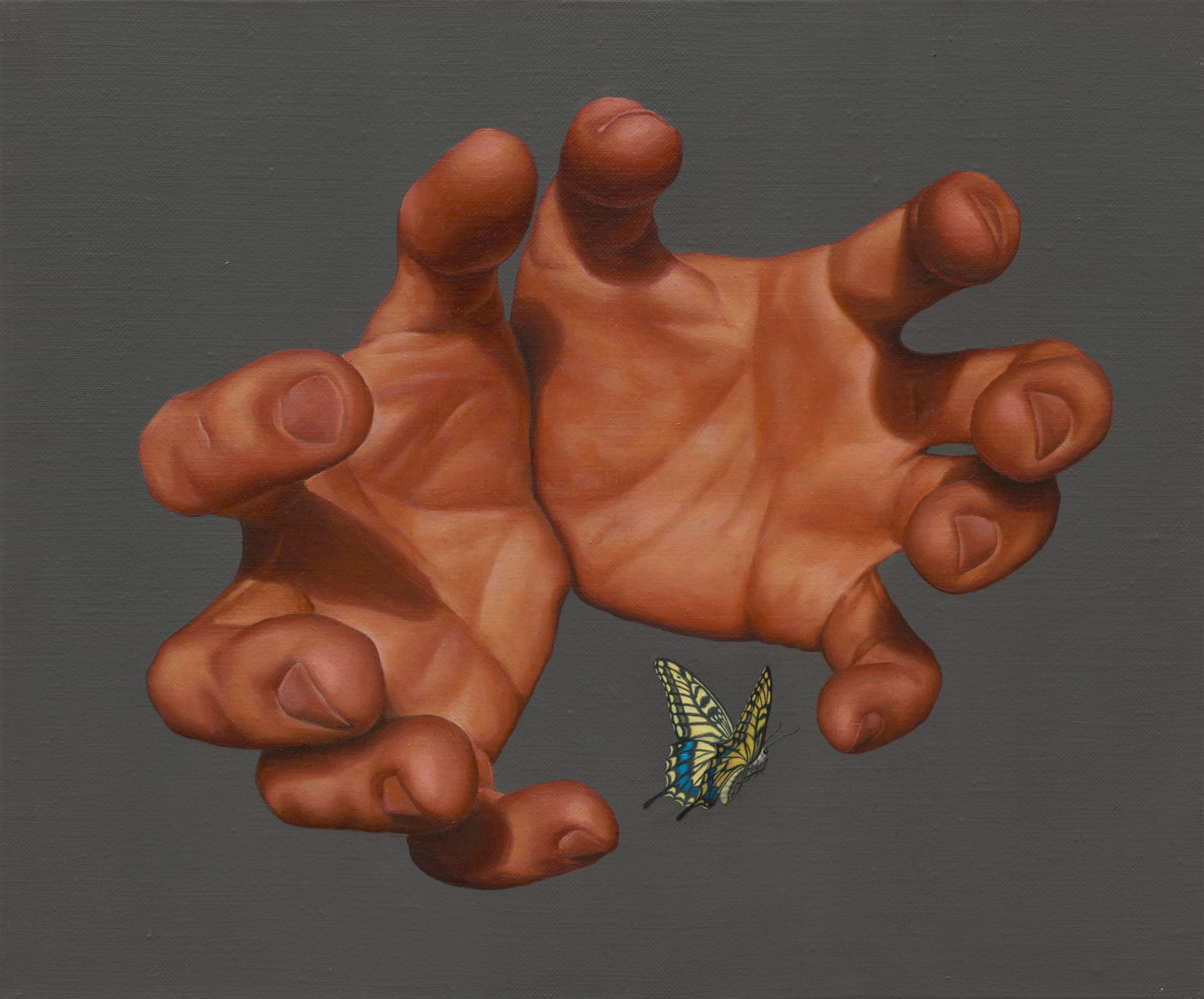
Hong Kyoungtack, Gift, 2010, oil on linen, 24.3×33.4cm © Hong Kyoungtack

There is no boundary between popular culture and fine art

“Painting is the act of building one’s own temple, and viewing a painting is like being invited into that temple. I use the term ‘temple’ because I hope that viewers may, to some extent, be influenced by my world. Another reason is that it is a place where I enshrine the objects (images) I am particularly attached to.” 

Returning to his works, one sees various objects, figures, and texts from both Eastern and Western cultures colliding, creating movement among circular forms like a spinning record. Curious whether he works in other media such as video, I asked him. As soon as the question ended, he led me to his computer and showed me a work created in collaboration with a video specialist. 

This work, edited from the ‘Funkchestra’ series, translates the sense of movement felt in his paintings into video accompanied by fast-paced music. While he appreciates having his works collected by major institutions, he ultimately wishes for them to be widely communicated to the public. 

He also noted achieving strong collaborative results in translating painting into video, capturing the dynamism of sports. Last year, he participated in Hyundai Motor’s Art Car Project. On his desk sat beautifully designed cases from an art collaboration series with Donghwa Pharmaceutical’s product “Hwalmyungsoo.” Emphasizing that “art is also part of entertainment,” he added that he plans to continue projects that engage the public this year. 


Primary colors excite me, but achromatic colors make me uncomfortable

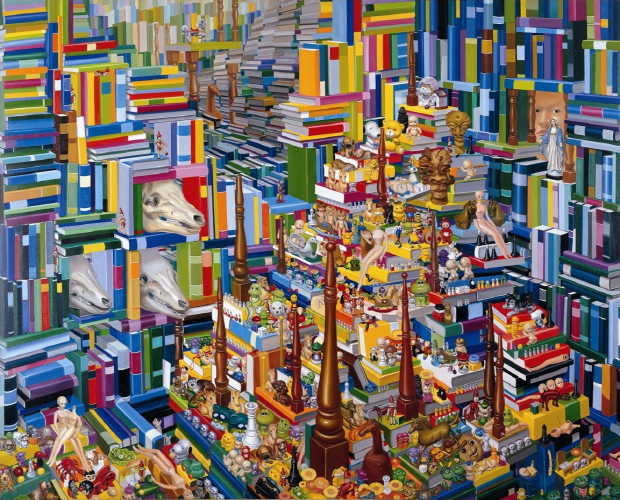
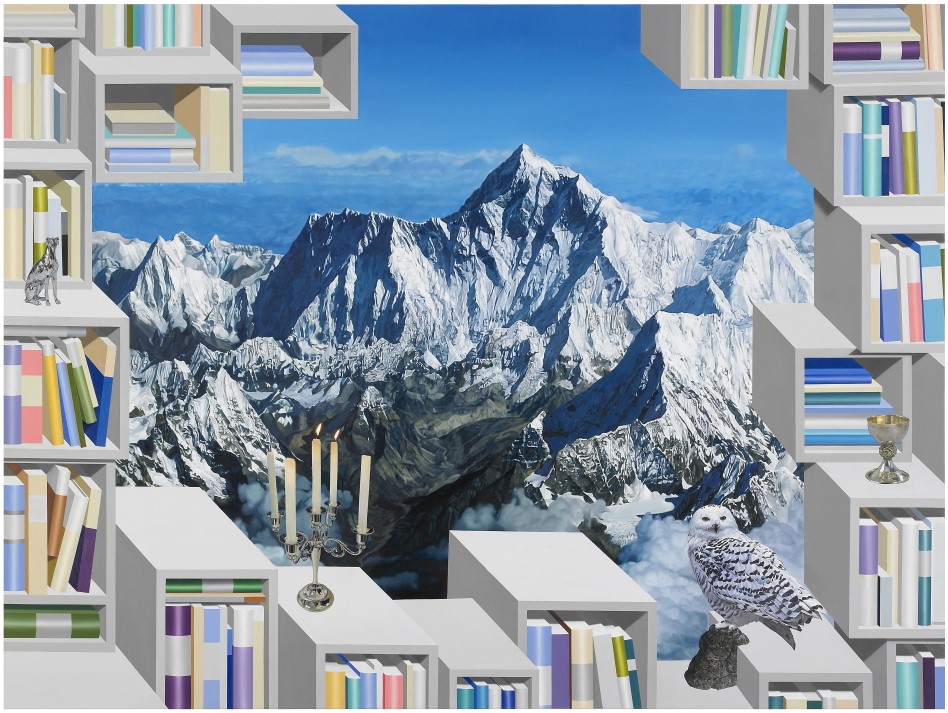
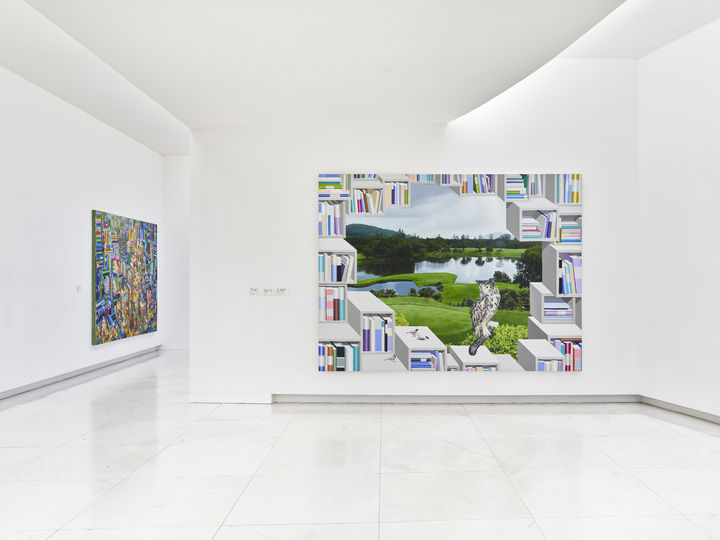
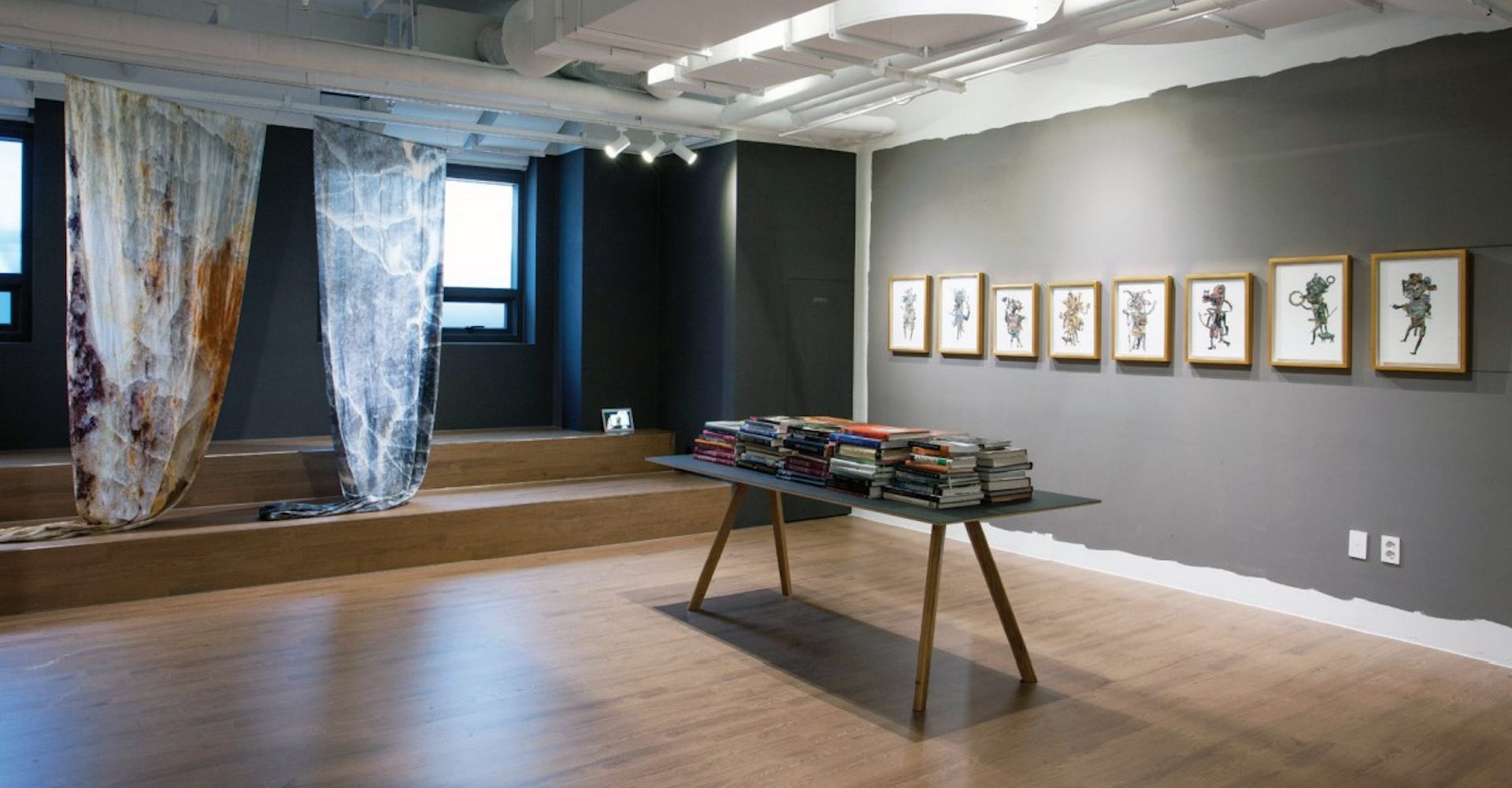
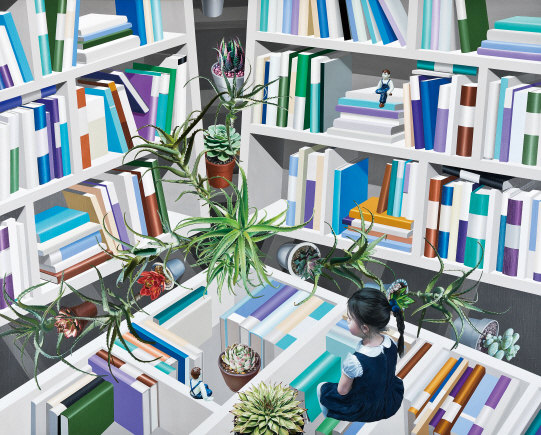
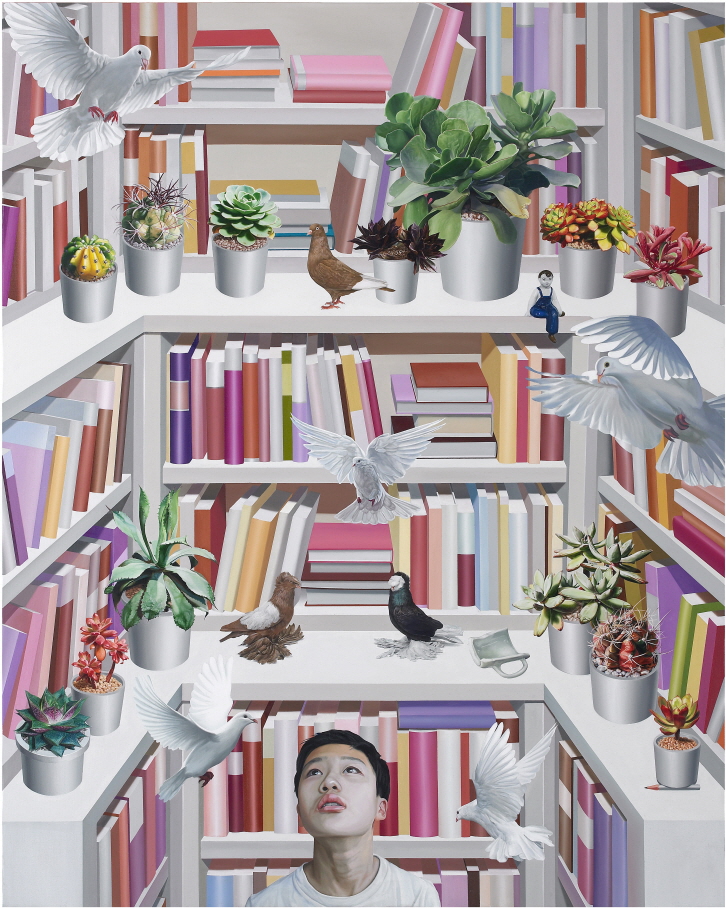
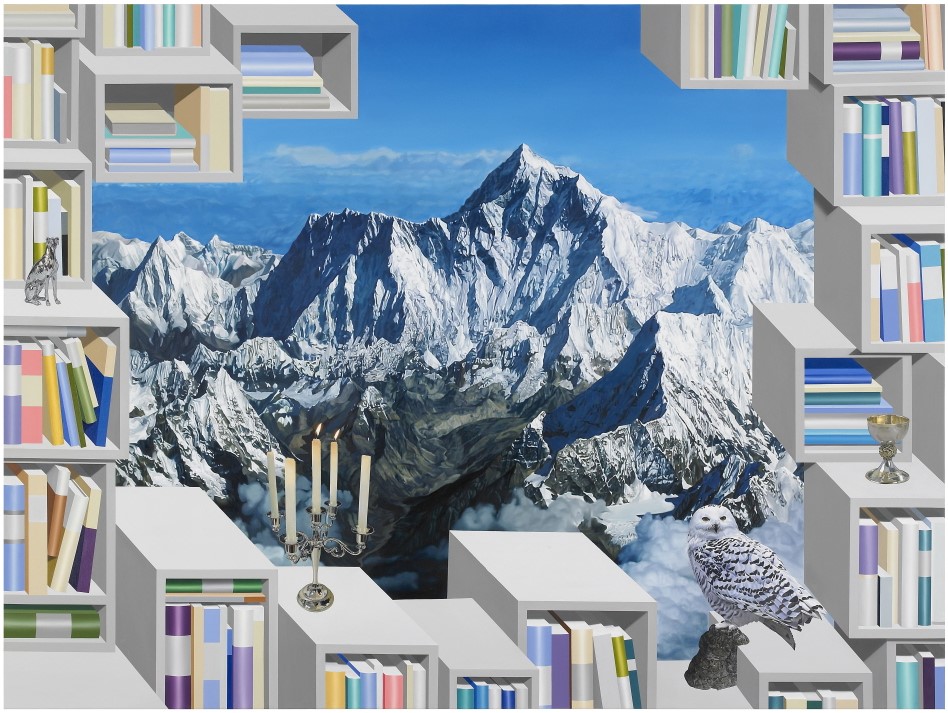
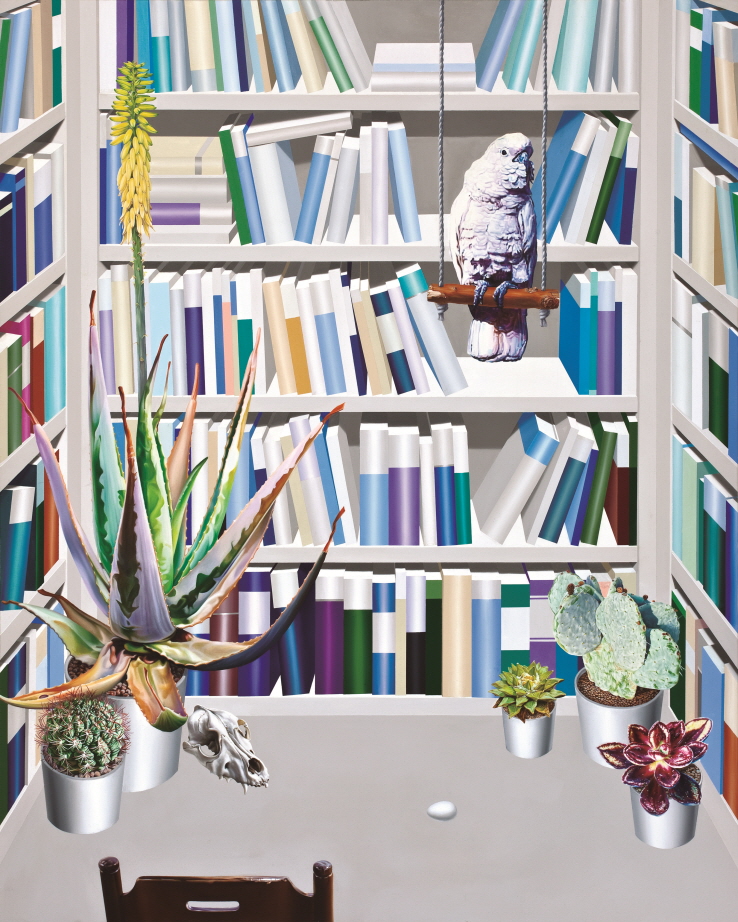
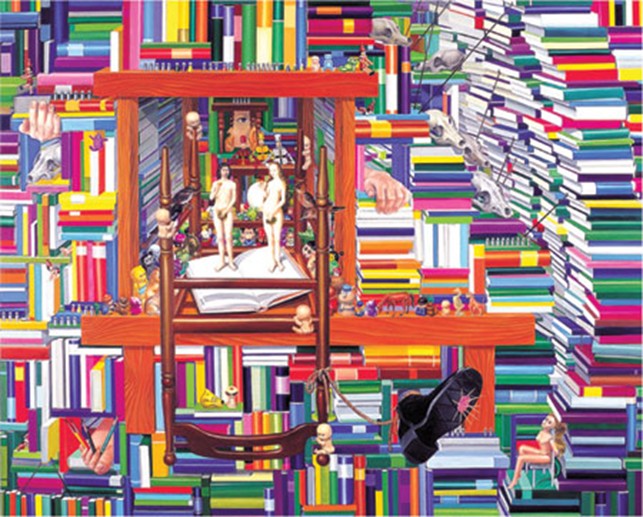
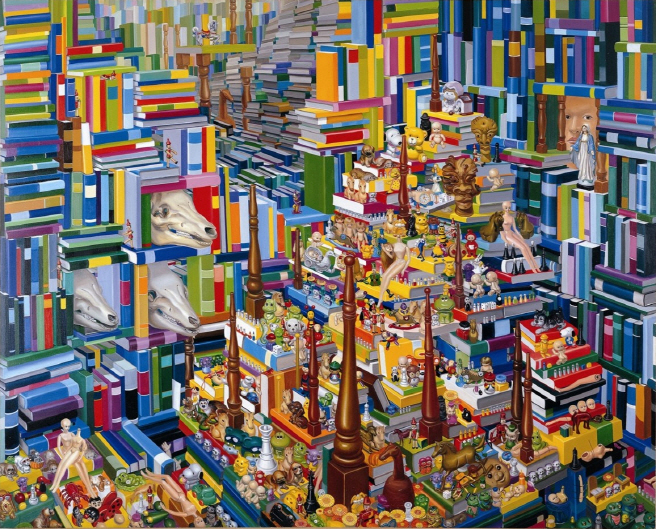
The first gallery in history dates back to 285 BC, when King Ptolemy displayed paintings and sculptures in the palace of Alexandria in Egypt. Before galleries, cabinets displayed rare objects, curiosities, and botanical specimens. In this sense, the artist’s ‘Library’ series resembles an early cabinet or gallery—a compulsive collection of objects surrounding him. 

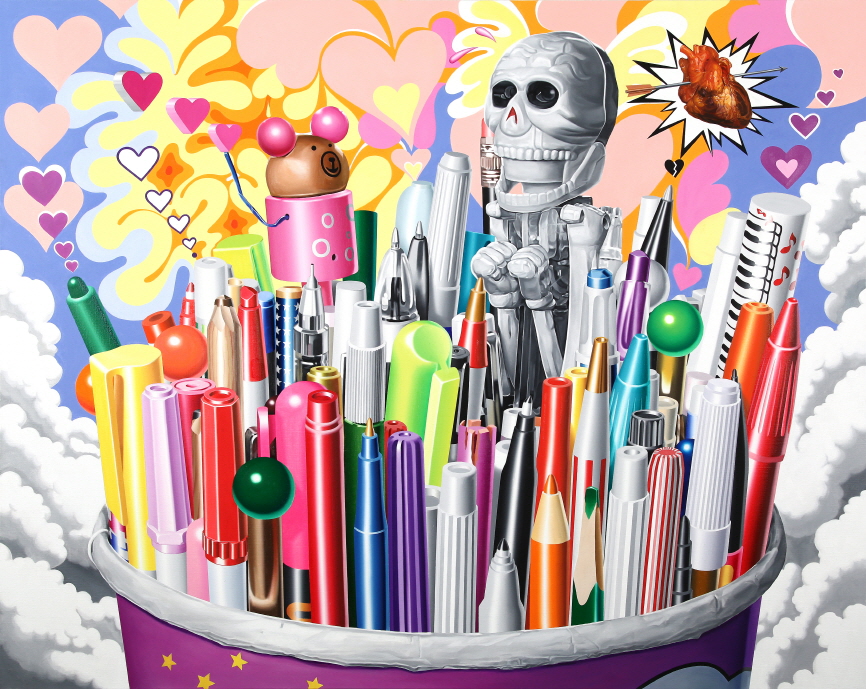
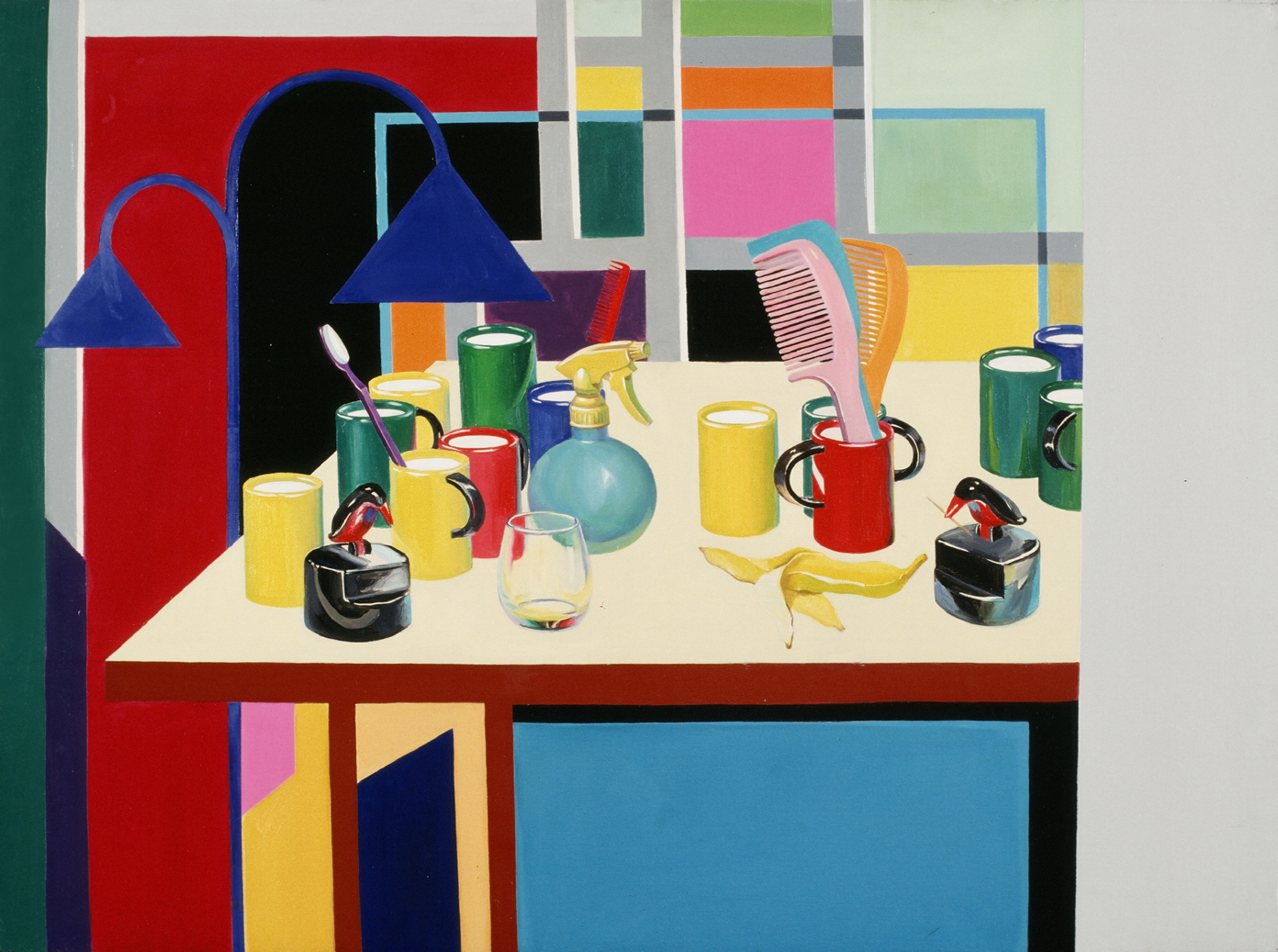
If the layered books forming spatial depth create an architectural framework, various objects—skulls, shoes, dolls, toys, food, and human forms—fill the interior. The spatial composition of books and objects generates unfamiliar imagery and a surreal atmosphere through their collision. 

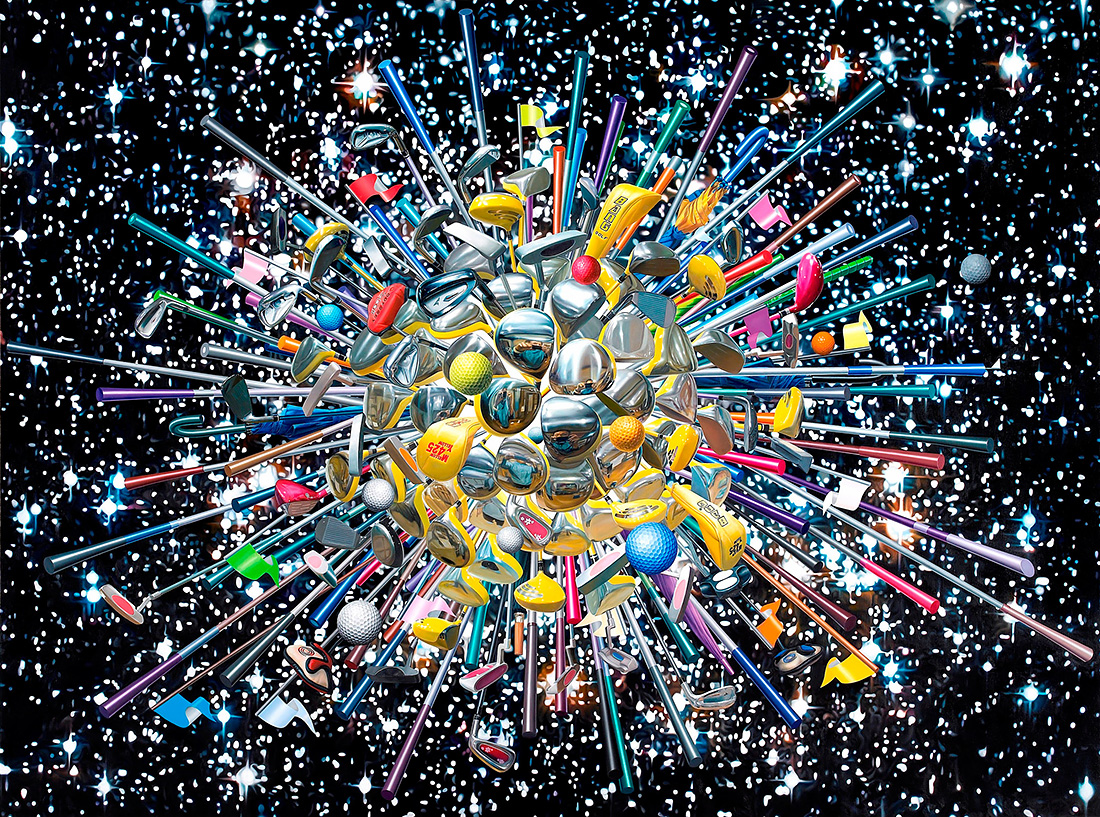
Plastic is both a useful and harmful material in modern life—present in smartphones, cards, plastic bags, and PET bottles. The artist translates not only plastic objects but also other objects into plastic. Combined with vivid colors, this evokes a plastic society where material excess and desire are entangled. 

“As Cézanne said, ‘When color is rich, form is complete,’ Hong Kyoungtack’s colors highlight form with explosive intensity. One can glimpse his instinctive fascination with color. His parents made fashion gloves during his childhood, and the vibrant patterns of that environment likely shaped his sensitivity to color.” 

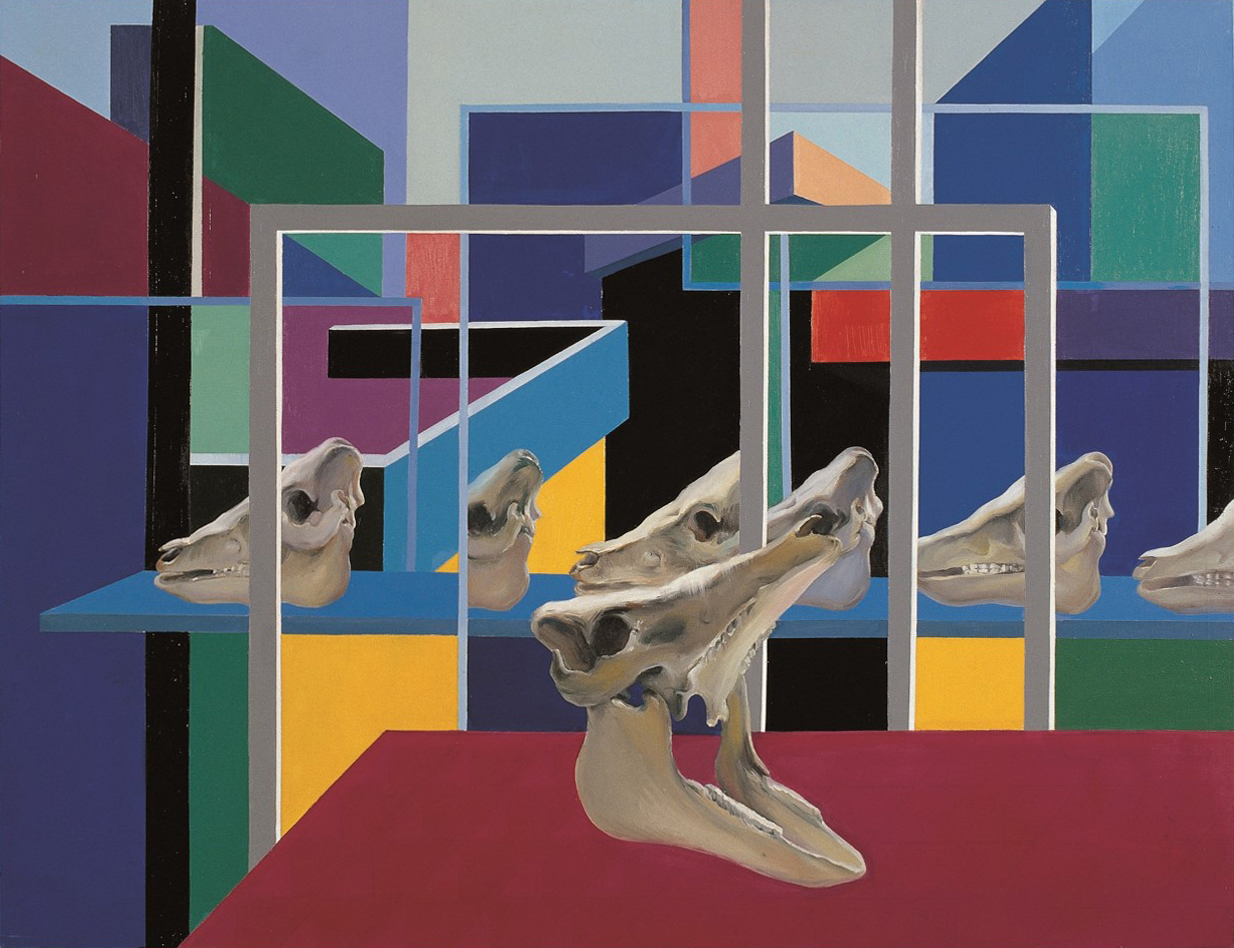
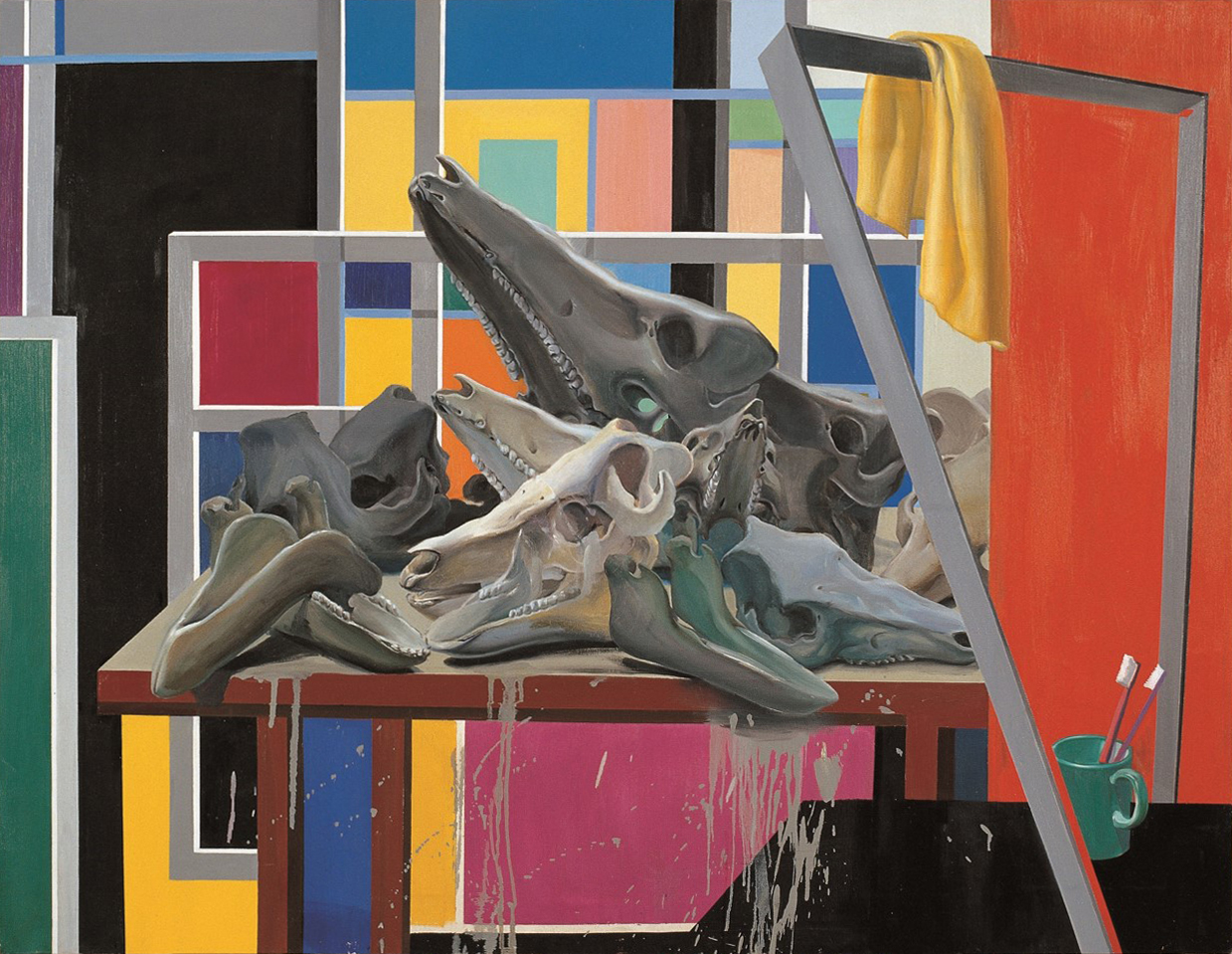
However, his series such as ‘War Requiem,’ ‘Insect Collecting,’ and ‘Monologue’ are dominated by grayscale tones. While many of his well-known works feature vivid colors, he also produces simplified, hyper-realistic works emphasizing achromatic palettes. He is not bound to any single form, continuously contemplating new directions while working vigorously every day. 

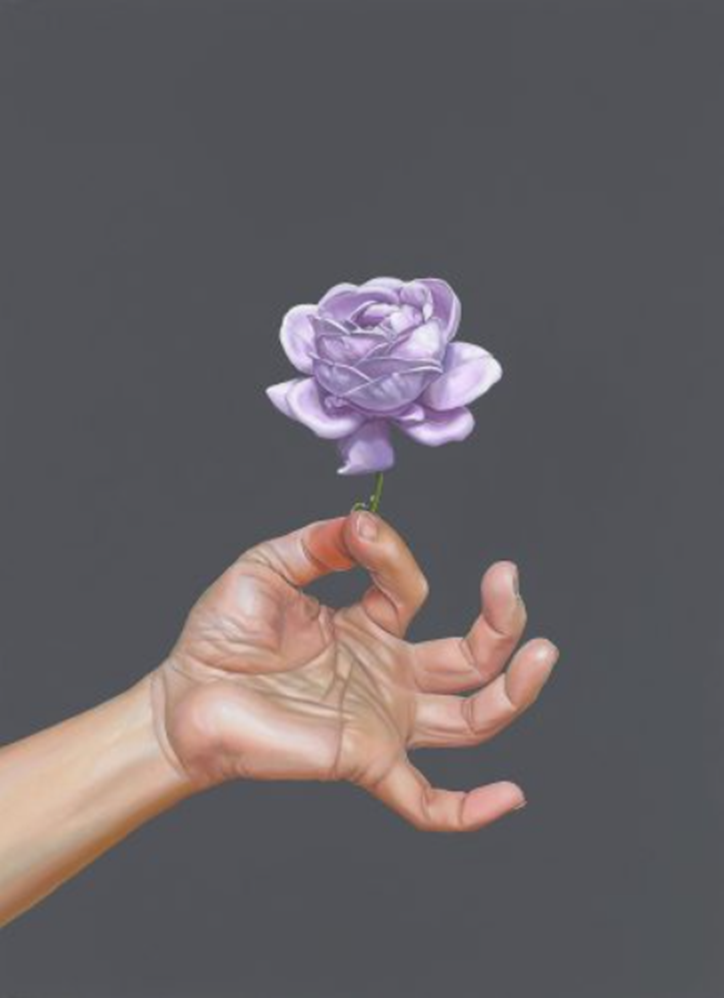
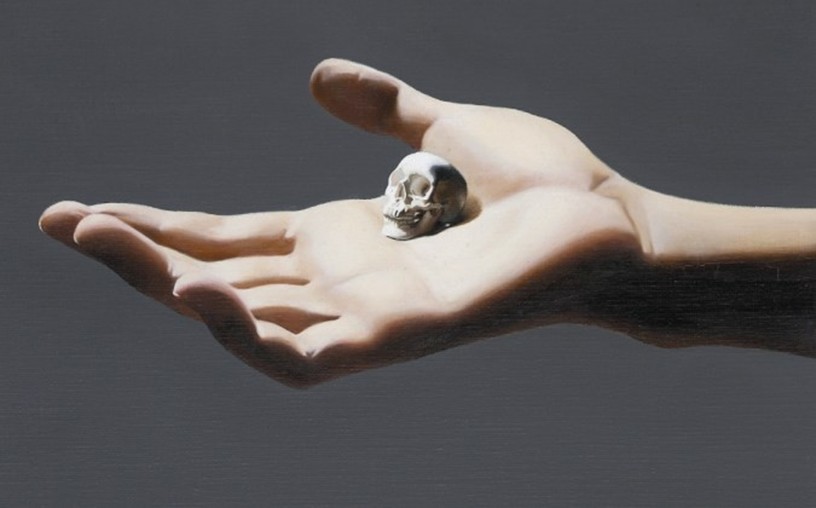
His most recent ‘Monologue’ series differs from earlier large-scale works, consisting of small paintings where hands and objects are arranged in varied positions. Unlike the all-over painting style of the ‘Pen’ and ‘Funkchestra’ series, these works emphasize empty space, suggesting a return to a more traditional painting style. He explains, “I wanted to depict the hand of an absolute being. The absolute exists at the boundary between good and evil.” 

The speed of change in his work surpasses that of the art market. Rather than resting on his fame, he continues to experiment ahead of it, demonstrating a relentless artistic attitude. One cannot help but be curious about the ever-expanding trajectory of his practice. 

References