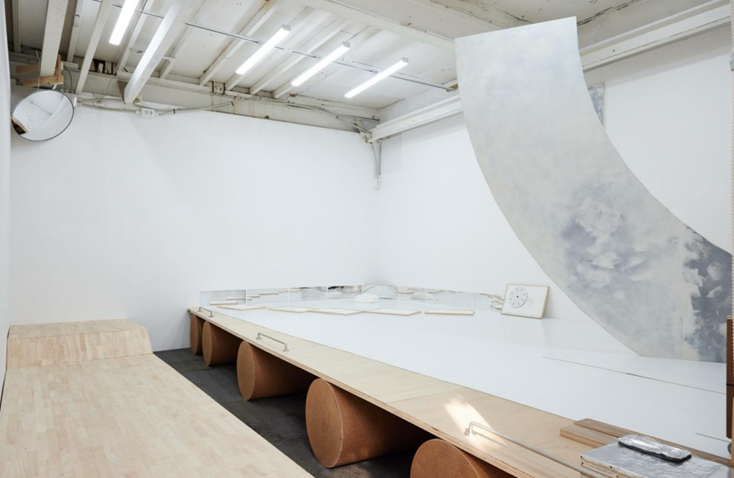
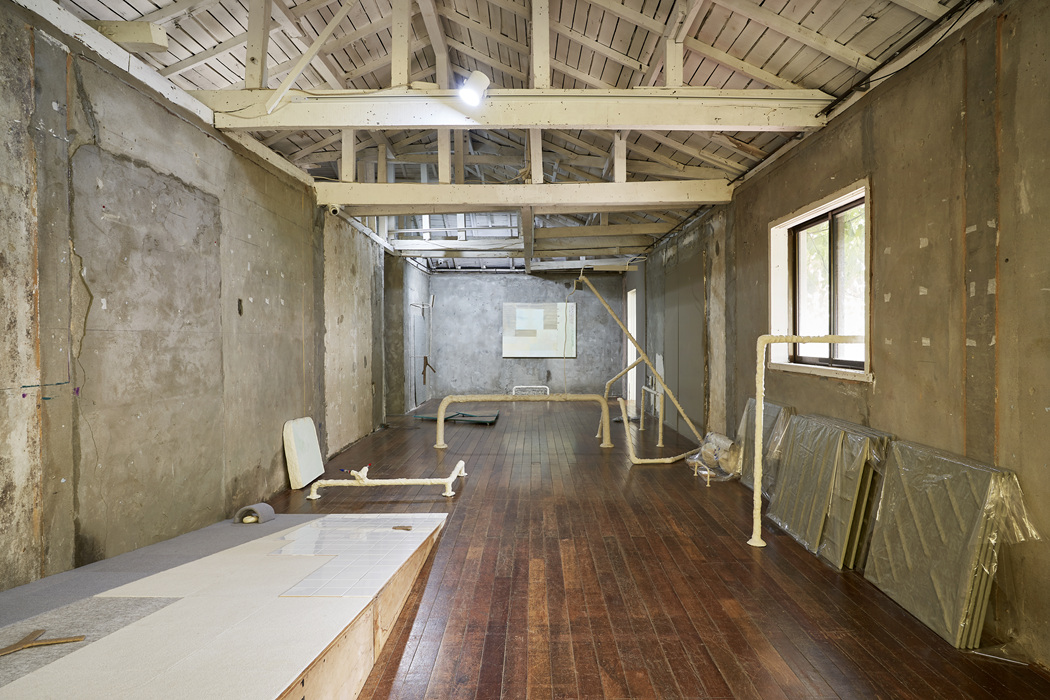
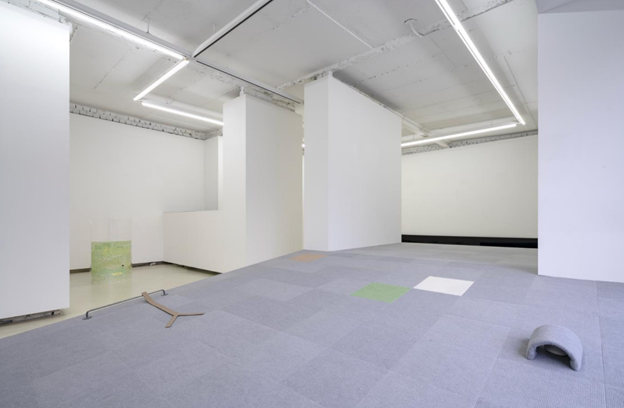
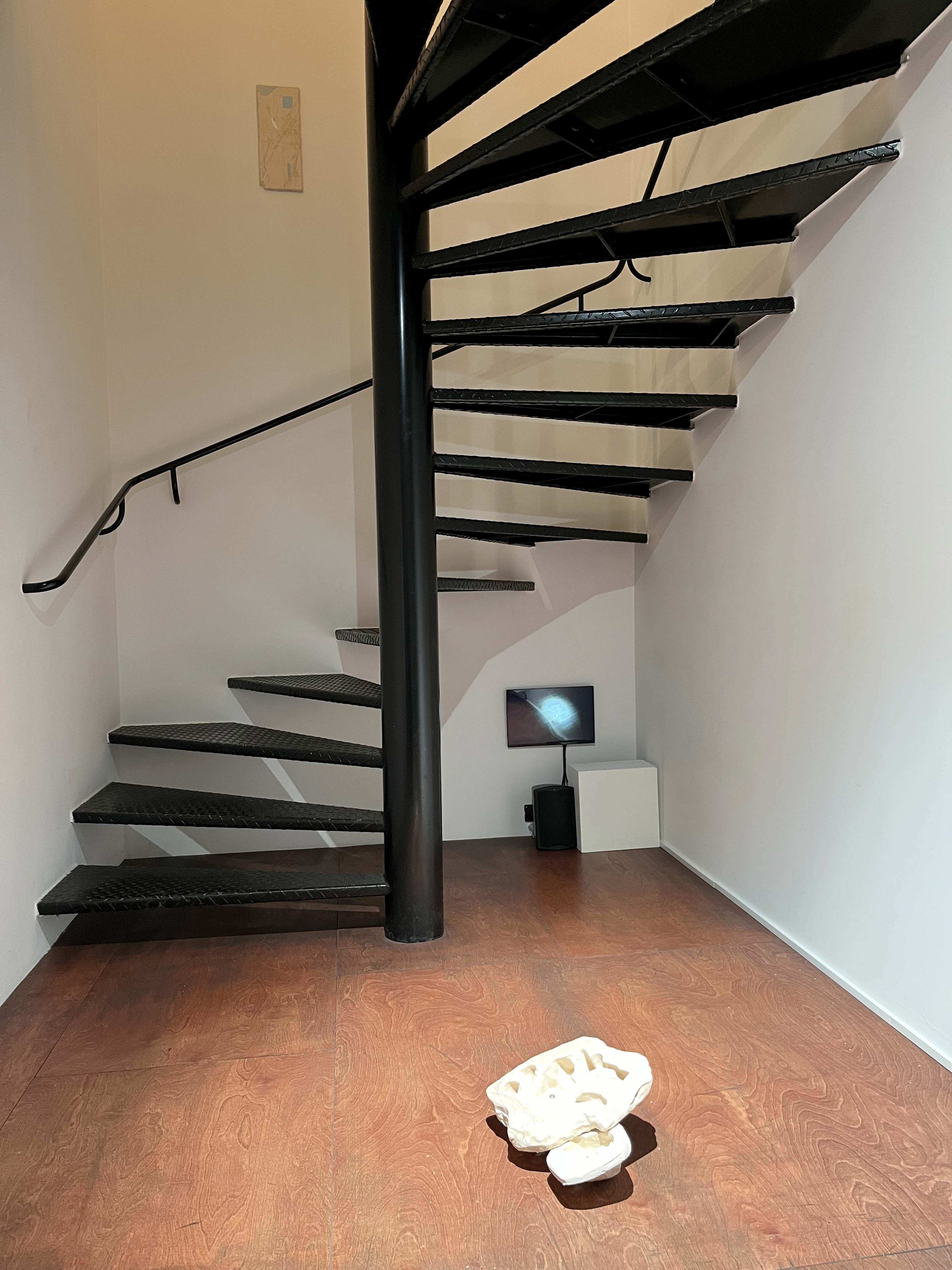
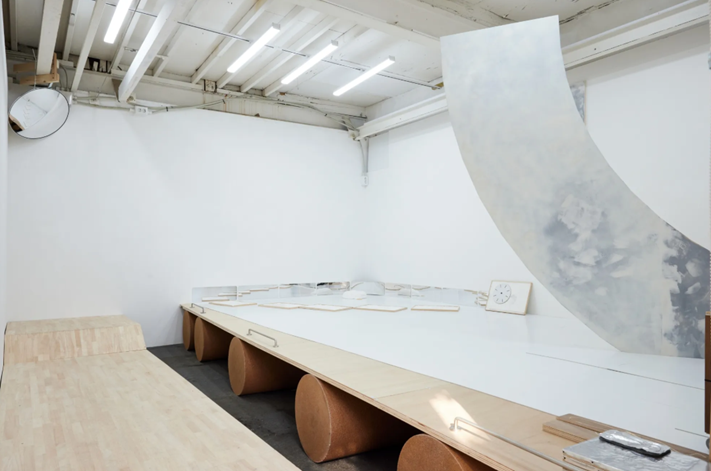
The exhibition space was, as always, on a hill. Still, there were many welcoming sights, so I arrived without noticing the climb. When I opened the door, my head was between the floors. There was some complex drawing near the shoulders, but I do not remember its content well. I only recall that as I went down the stairs, the shoulders became distant from the head, and the head from the upper floor. Then there were several white floors.
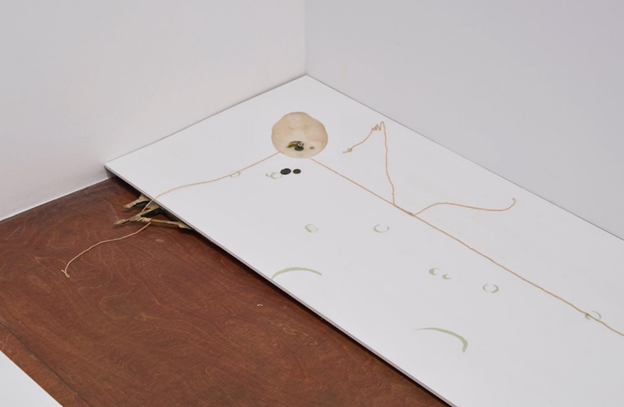
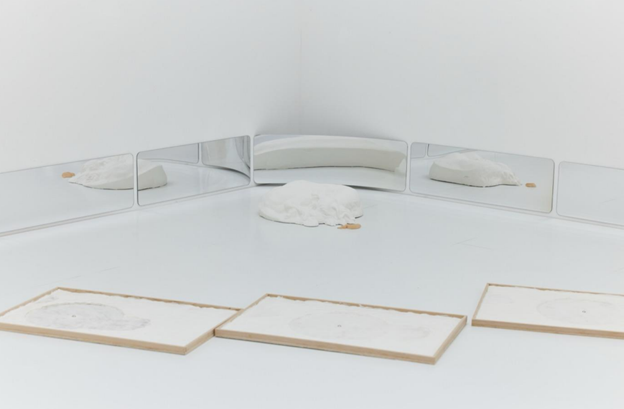
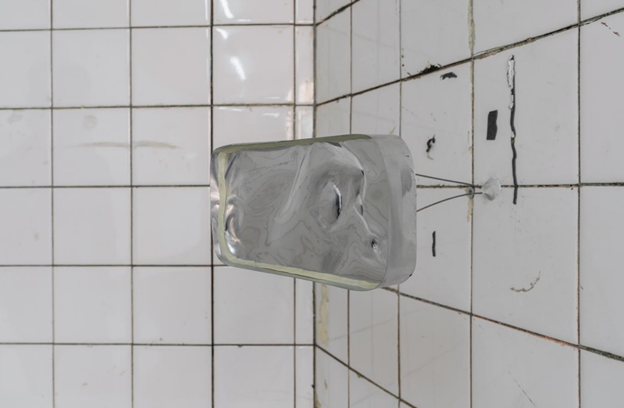
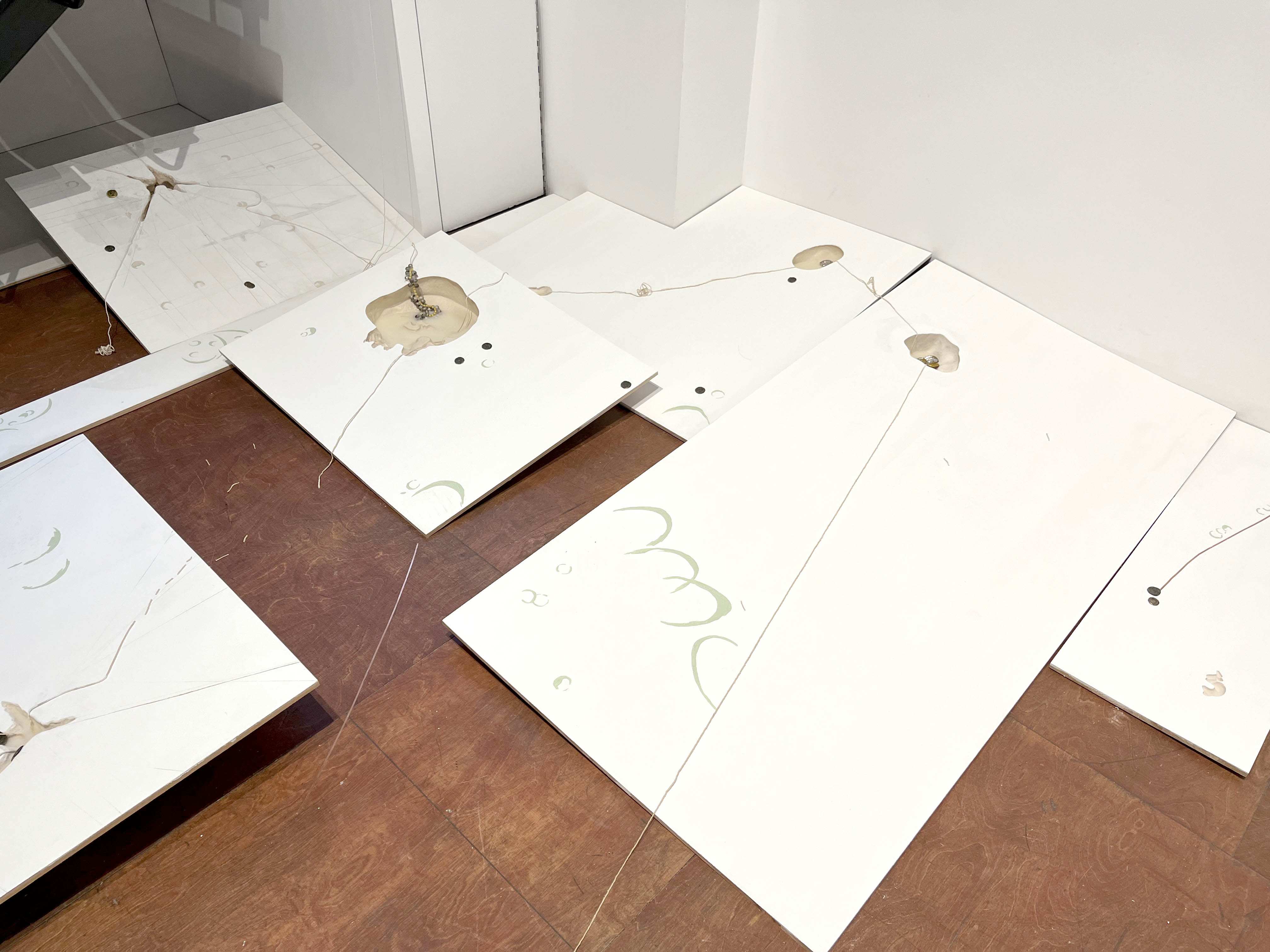
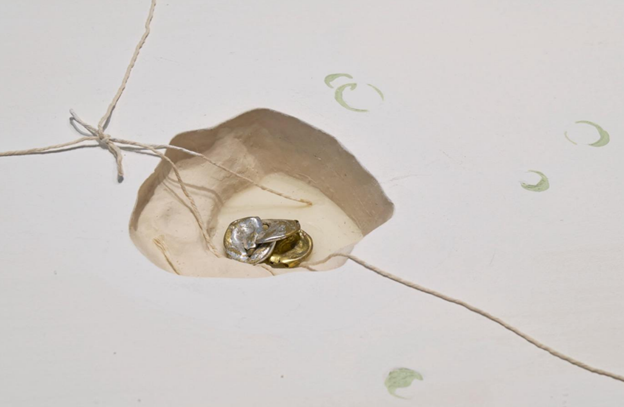
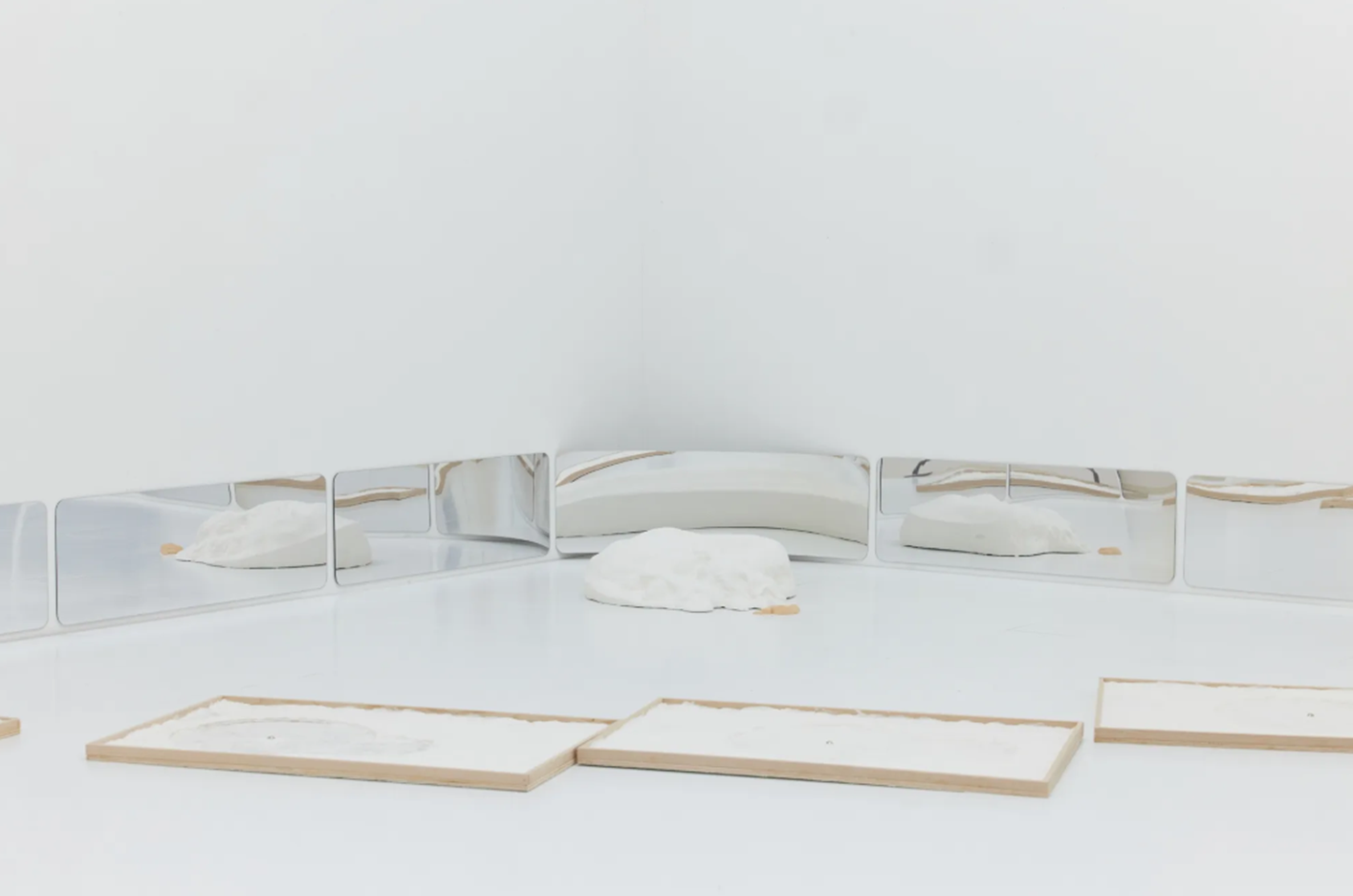
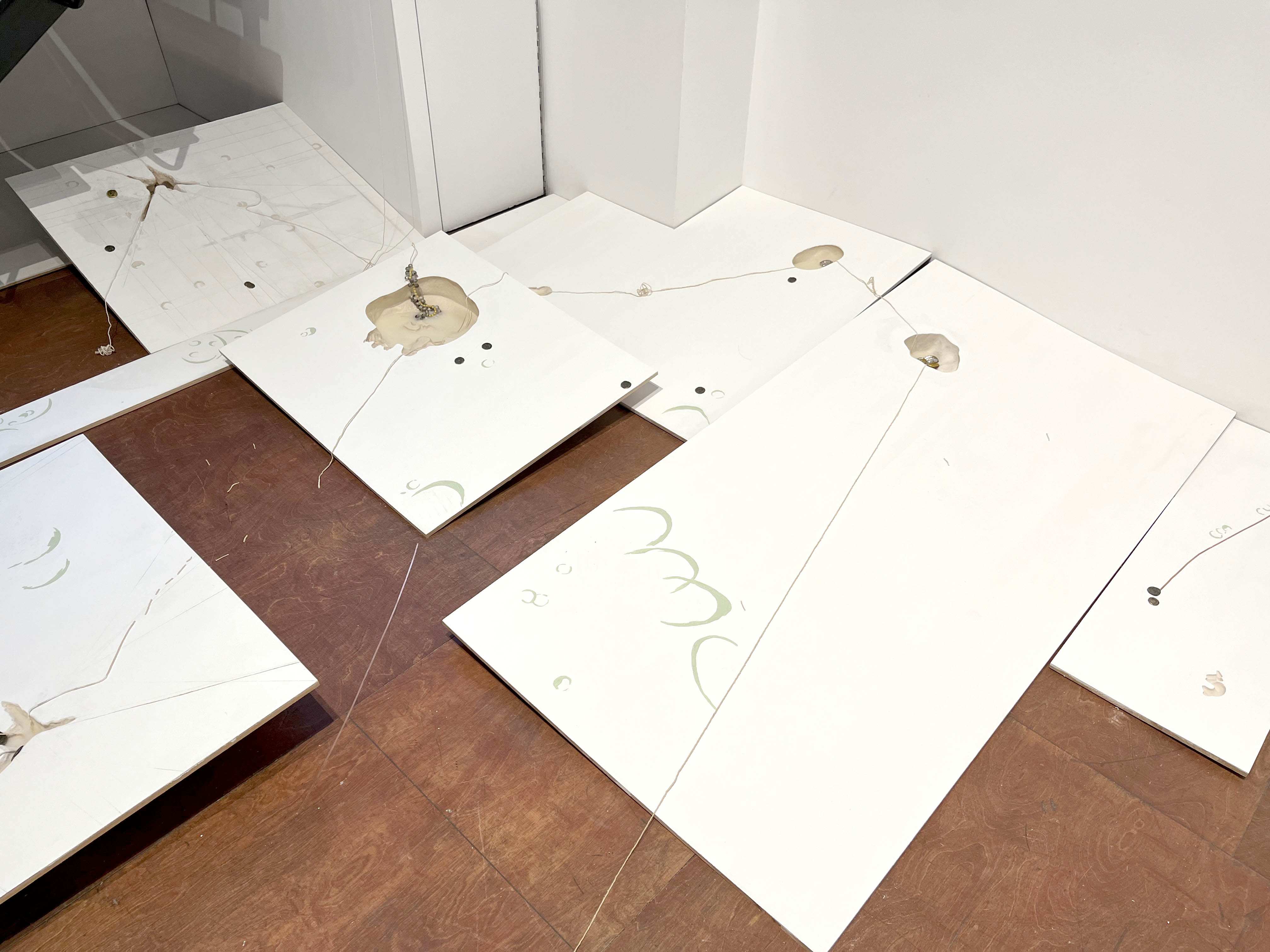
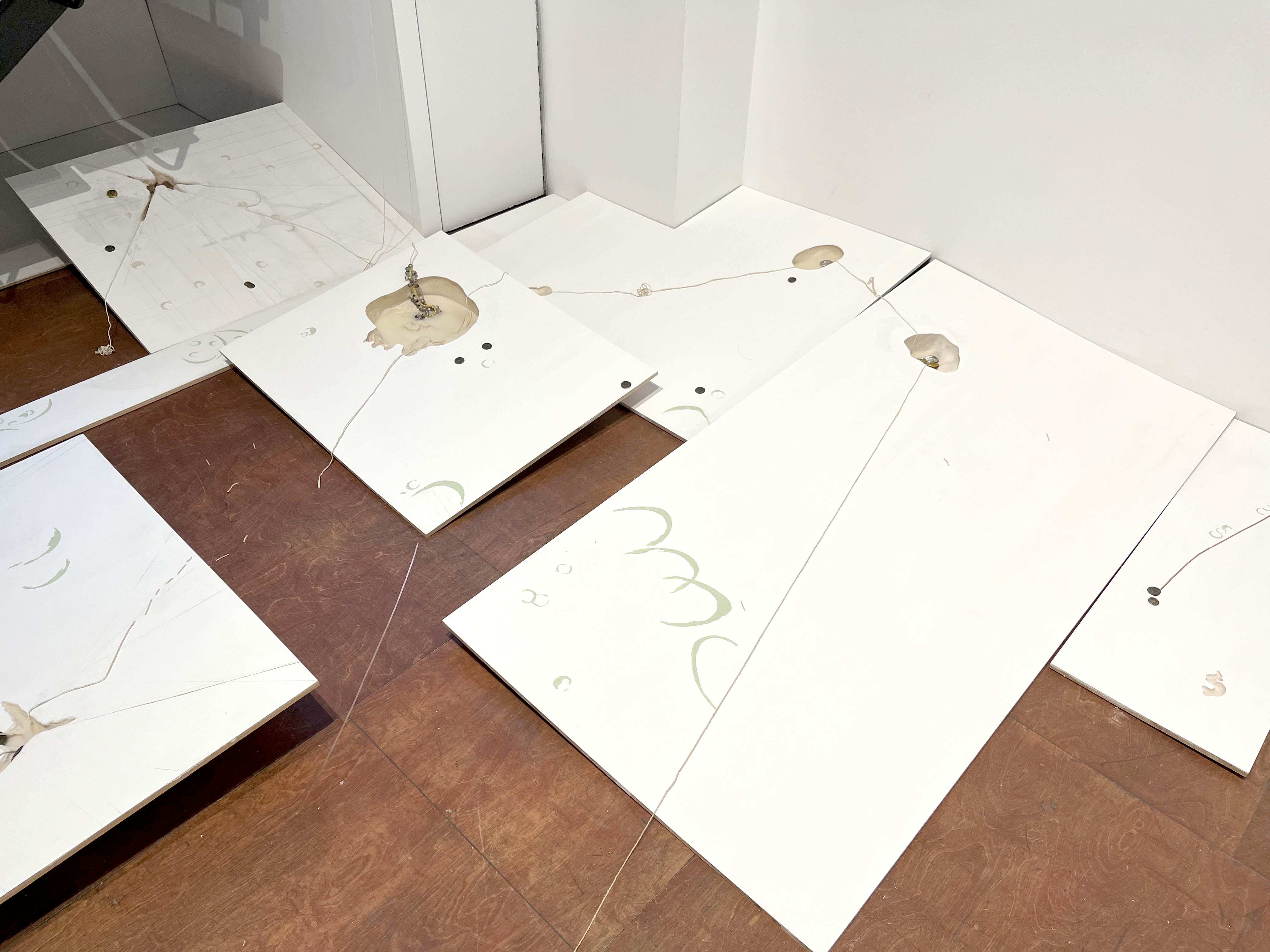
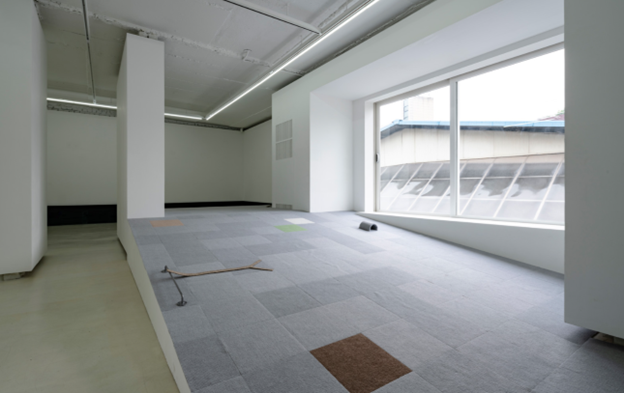
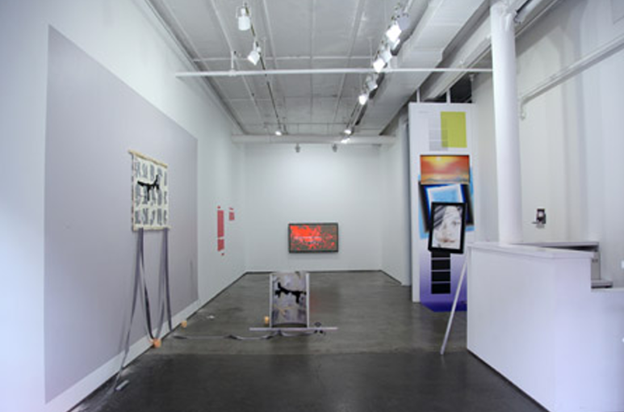
They stood out even more because of the reddish wooden floors and walls that left a strong impression. Some walls were, as usual, white, which seemed a reasonable choice, and I thought perhaps they were not meant to be stepped on. There were puddles throughout, half-filled with something like opaque wax. The wicks were very long, and some connected to other puddles. To the side, there was something like pale green eraser shavings. Or was it a fingernail? It looked like a dent, but not an actual trace—more like a blunt drawing. Somewhere, I heard something striking down. There was also the sound of rolling metal.
I picked up a couple of sheets of paper and wrote my name. It began as a text called a prophecy, like the exhibition title, but it seemed like a recollection. There was also a section referred to as the artist’s statement. Recalling it, it goes as follows:
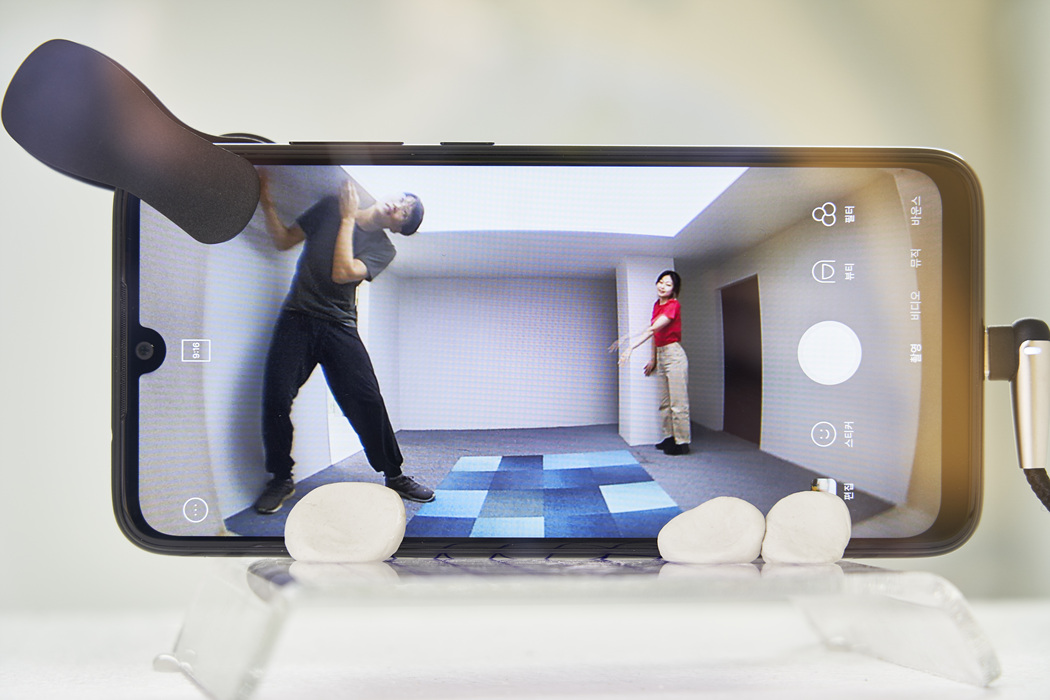
When I was in school, there was a class called object study, and I carried a few bells with me throughout the semester. I made various efforts to become familiar with these shiny, sounding objects, and Groundeugururur(video,329,2012) is one of them. Once, I installed various things in a corner of the classroom for a presentation, but while waiting for my turn, a cleaner removed everything. When it was my turn, there was nothing left to show but an empty floor, so I had no choice but to produce hollow sounds without friction in its place. … Yes, that’s right. I wanted to create a floor that could be called a bell. I found it interesting how the elasticity of form is revealed when the floor is struck through borrowed steps. …
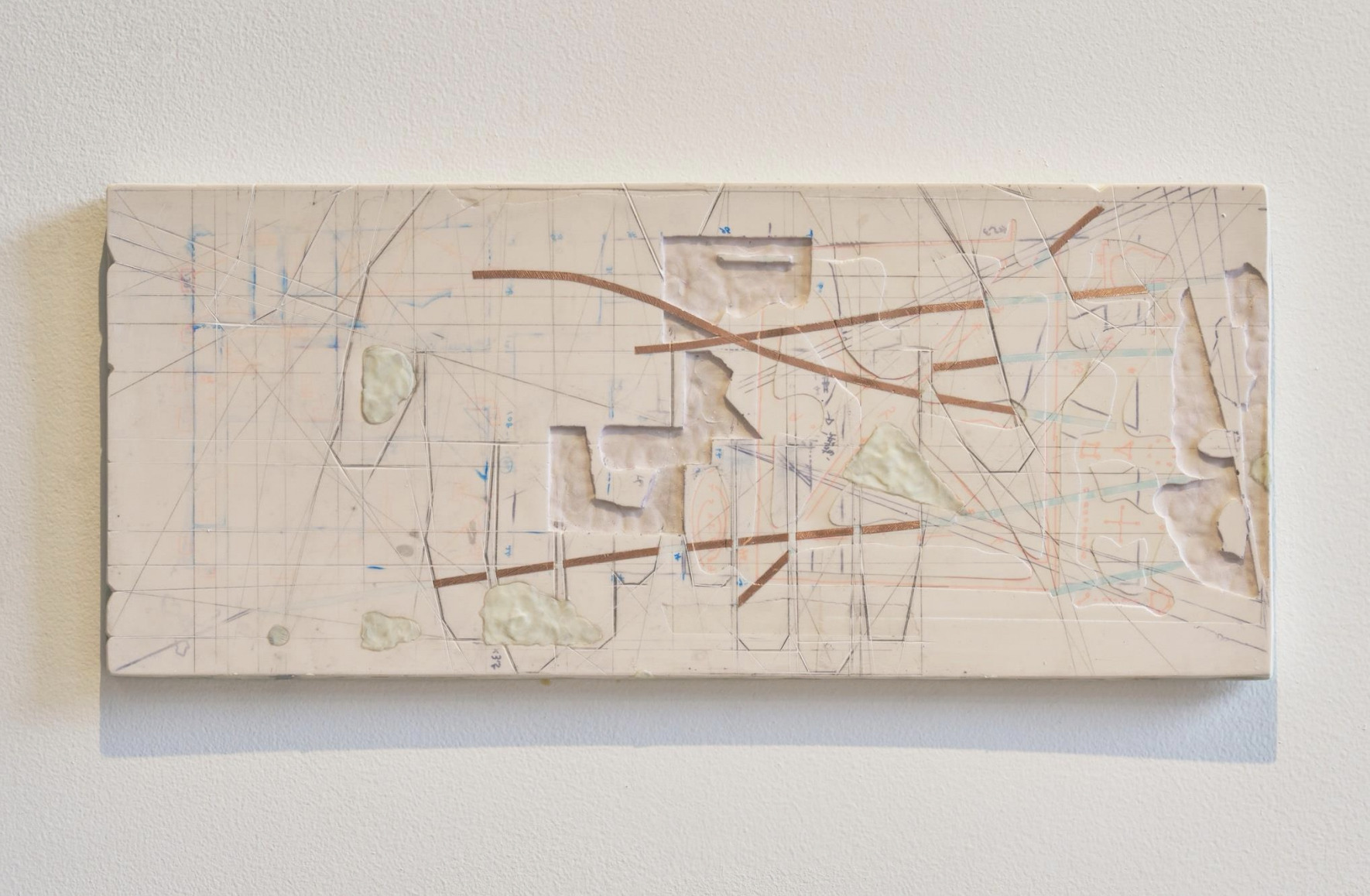
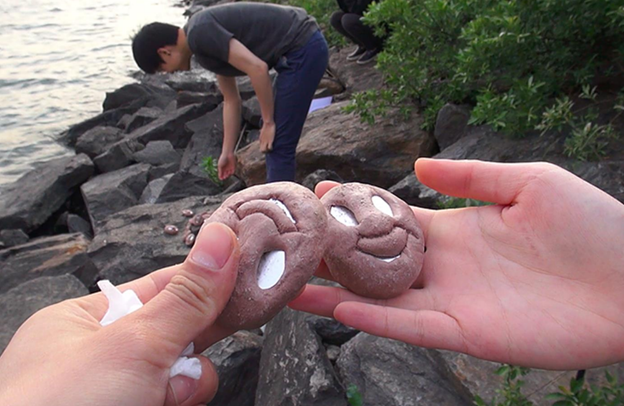
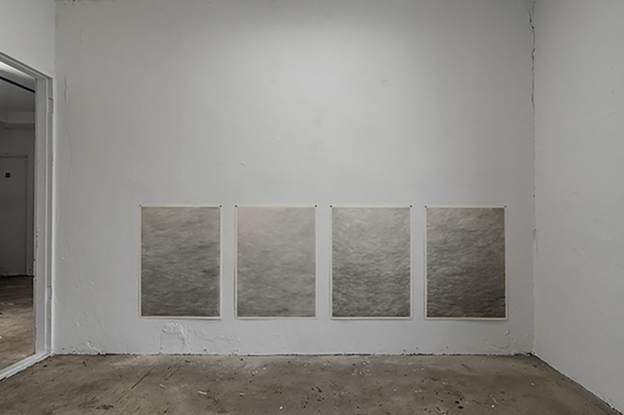
No, it does not necessarily require direct experience. Since it is a place of viewing, I considered a visually prioritized relationship. There are many ways to recall the sensation of impact from an image. For that reason, when expressing traces of movement, I pursued clumsy drawings rather than clear clues, and finishes that allow for imagined breakage rather than solid elasticity. In exhibitions like this, I am aware of the generosity that allows somewhat rough finishes. … I have always been deeply interested in rituals. I have experiences of spitting to find a path, connecting things that match, skipping the most precious object across water, sticking coins or spoons to rocks, or betting life and death on creatures like water beetles or hamsters treated as objects. (a bell rings) … The drawings are friends I have high expectations for, enough to call them the main element of this exhibition. I believe they embody this working method well.
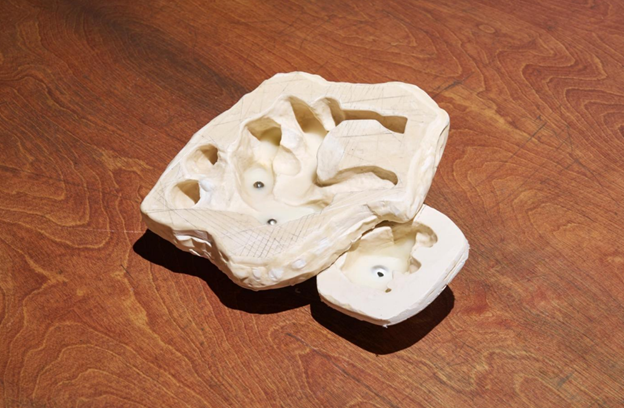
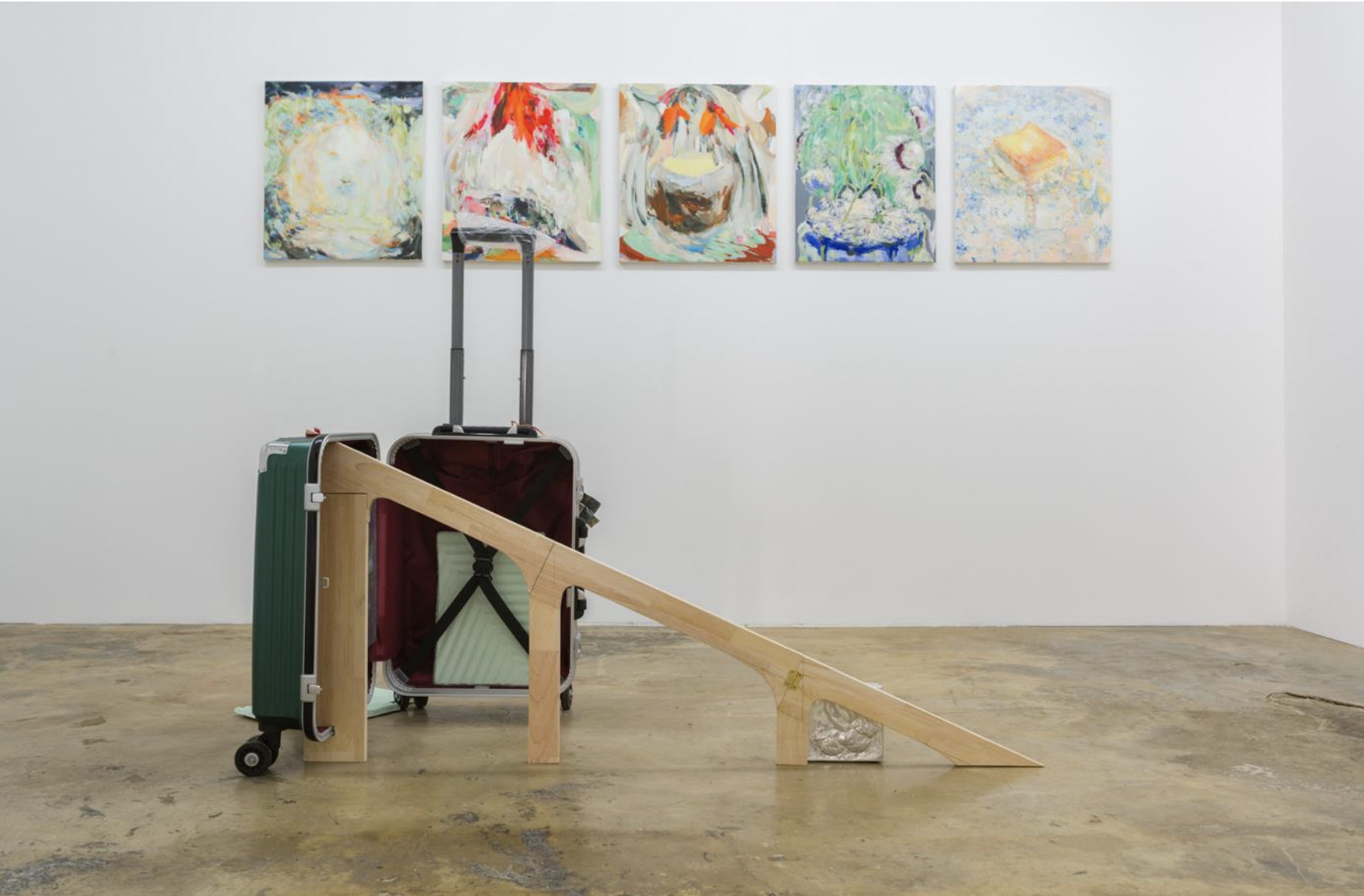
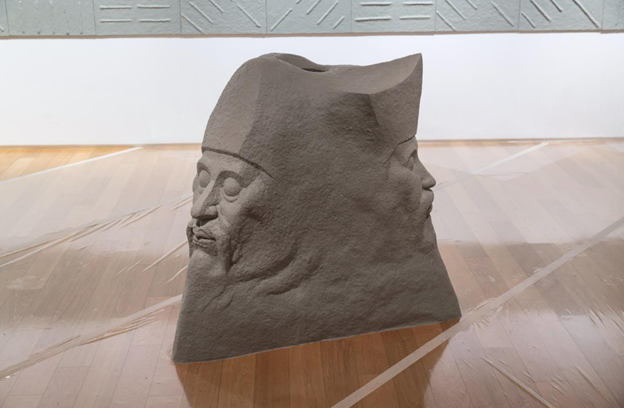
To explain the process, I first create drawings based on forms derived through leaps that are difficult to trace. At this stage, I often use the limits of what the body can handle—such as forgetting, misunderstanding, or mistakes—as a standard. Adjusting the value of style is important. Then I cast these drawings, obtaining plates that resemble very low high-relief and low-relief, build a base of similar thickness (from the wall), and combine them. For finishing, I adjust gloss, error, and emphasis where needed. … Actually, most of what I said today is false, or the opposite, or the order does not matter.
As above.
Avoiding the slanted floor toward the pit, I climbed about one and a half floors and looked down. There was nothing much beyond a faint sense of accomplishment. Perhaps being able to see the relief plate near my head a bit closer. Perhaps a clue that the white floor might have been slightly larger to begin with. I wondered whether it could have been a floor, wall, ceiling, nail, or something to be worn somewhere else. While criticizing the tendency to choose what seems plausible, I cut things apart here and there, only to recall a familiar memory in which excessive responsibility clings to leaving marks. So I attach and detach emotions that do not fit this scene. Next.