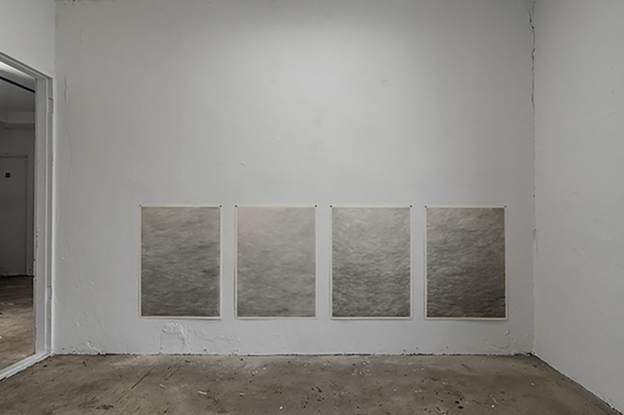

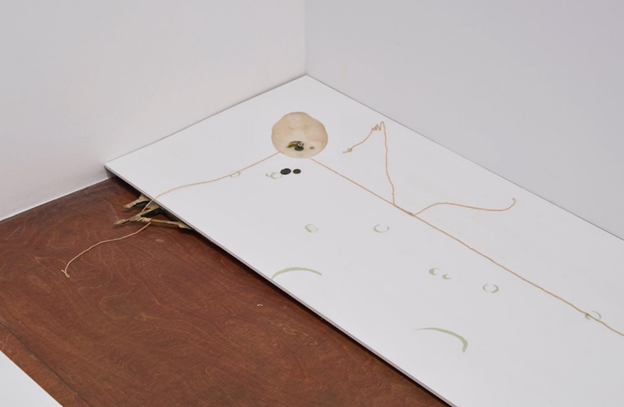
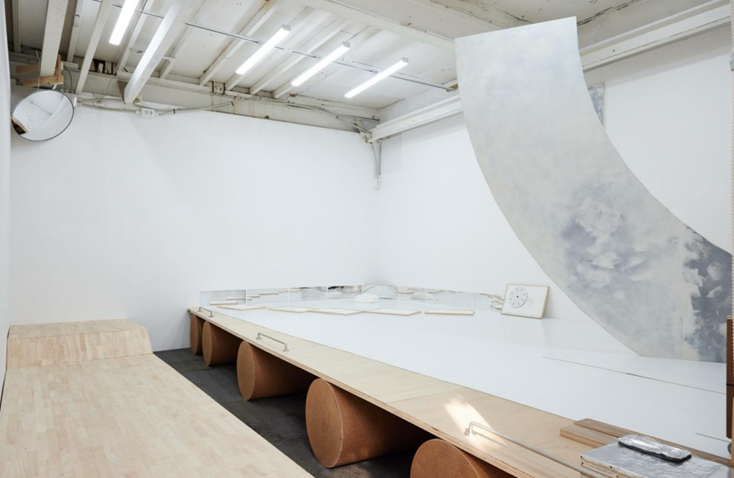
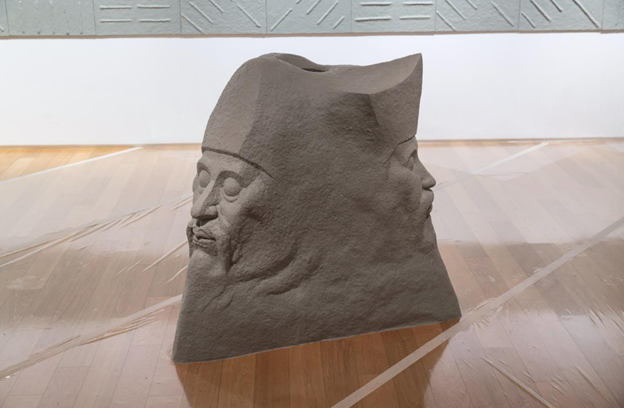
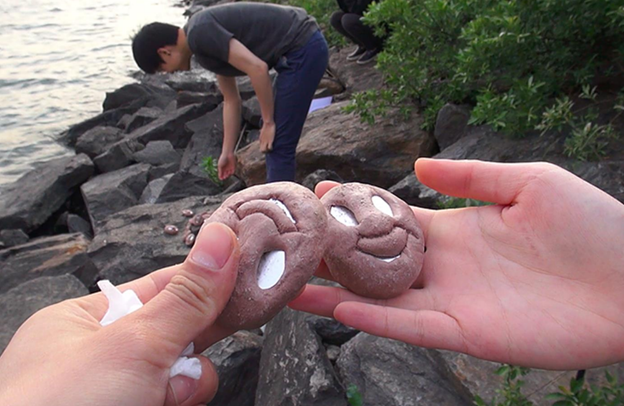
Dahwan Ghim (b. 1987) reflects on relationships that share memories of time and space and become pathways for one another. Reflecting this, his work invites viewers to acquire the latent values embedded within such spatiotemporal contexts—where unfamiliar and fluid meanings are produced—through their own experiences.


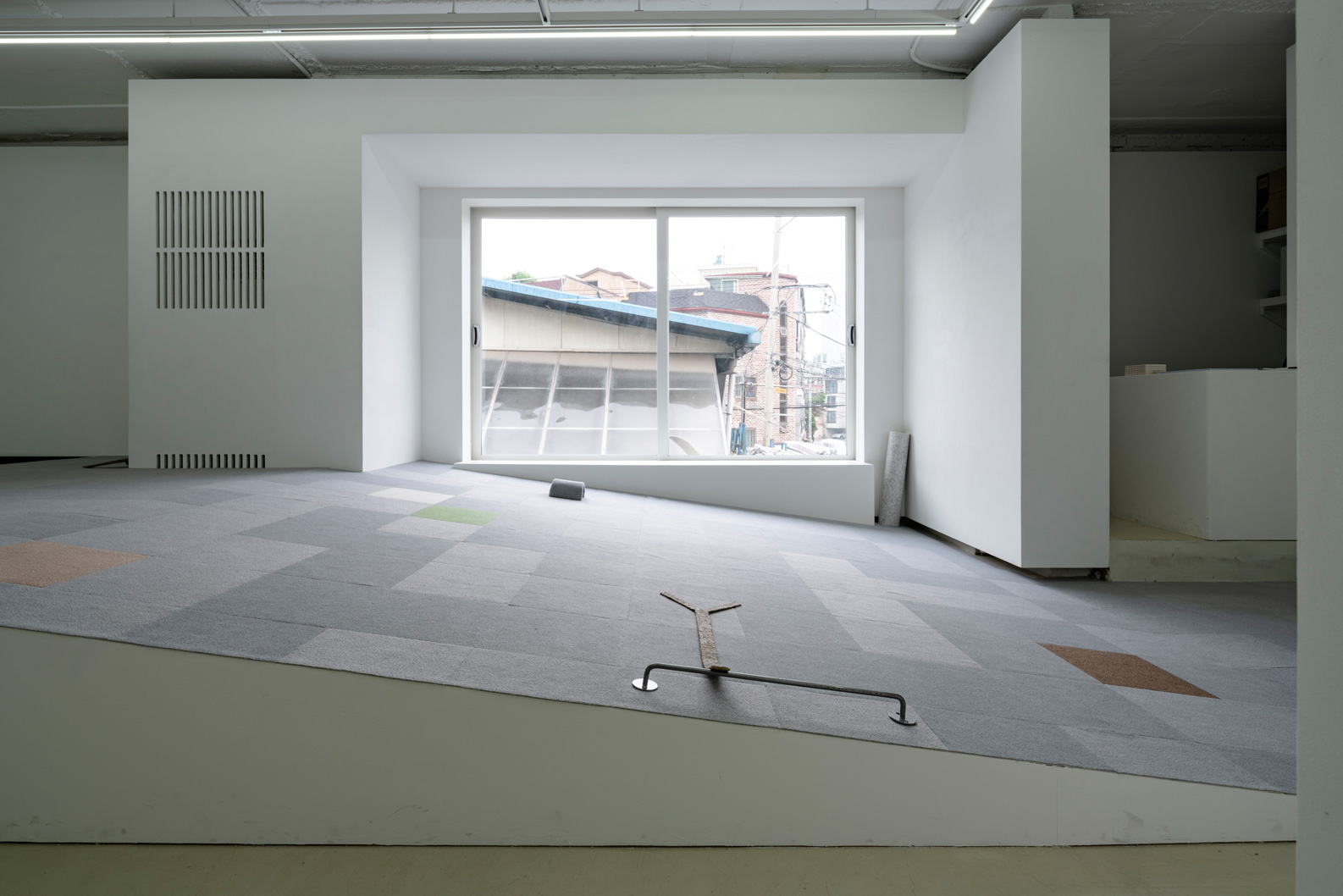
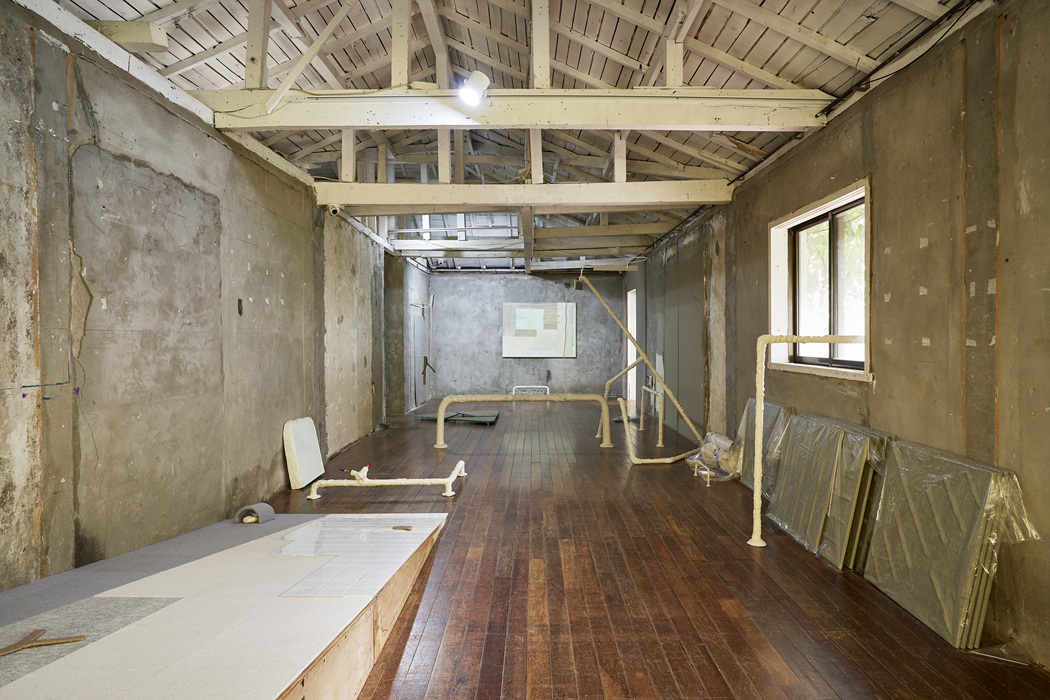
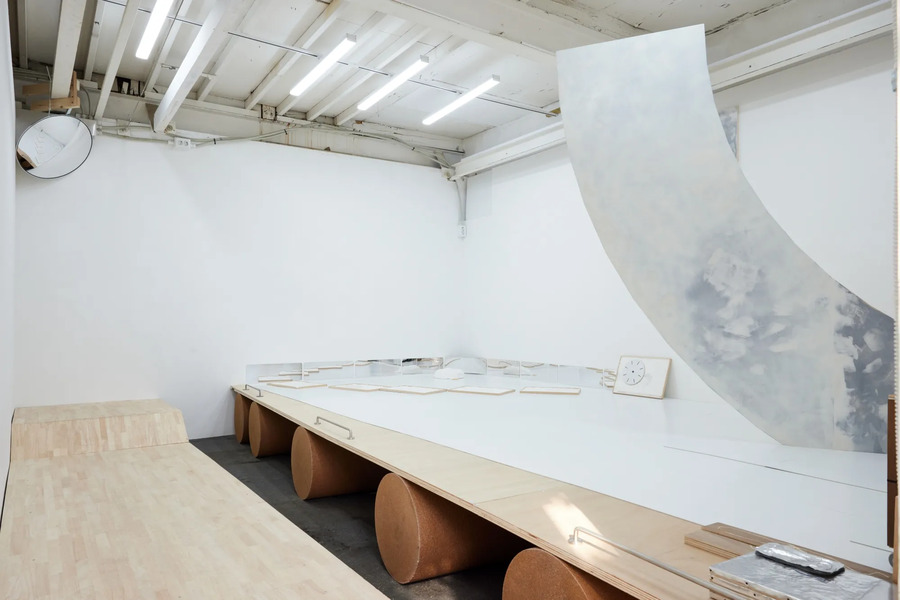
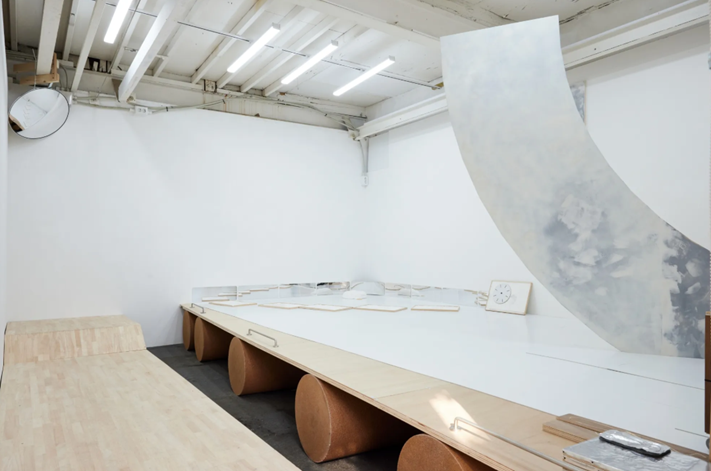
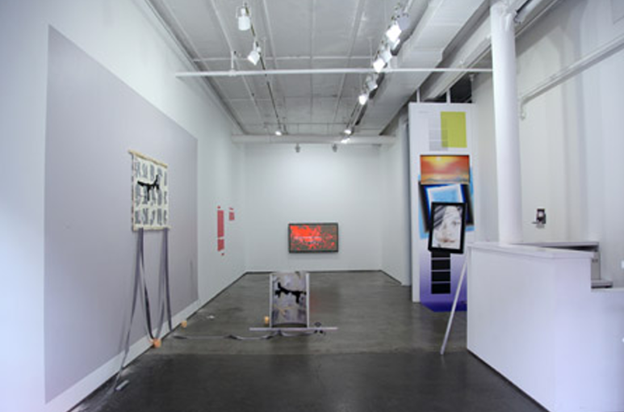
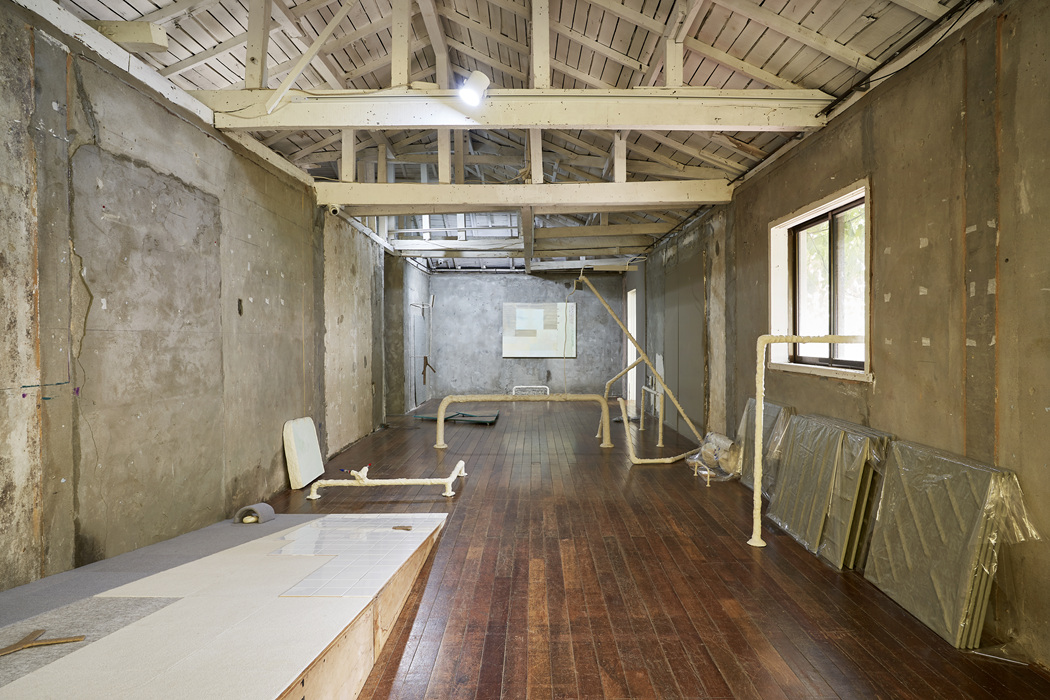
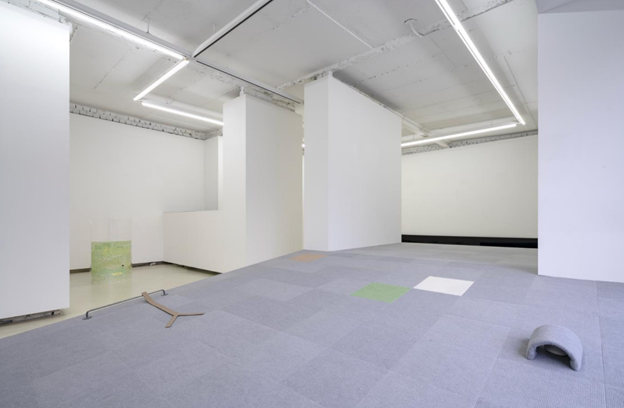
Installation view of 《Yang-Mal-E-P-T》 (Taste House, 2018). ©Taste House

Ghim’s work does not reach completion as a single, self-contained piece; rather, it generates meaning through the specific structure of the exhibition and the experiences that unfold within it. Through this kind of formative spatial practice, he activates relationships, sensations, and modes of perception that often go unnoticed in everyday life, prompting a careful reflection on the very making of the “human.”
 
The way Ghim unfolds his narratives is akin to metonymy. The language he employs continually expands and connects in different ways, and in order to prevent the meanings that arise from being fixed into a single definition, he adopts an indirect, “detouring” approach.


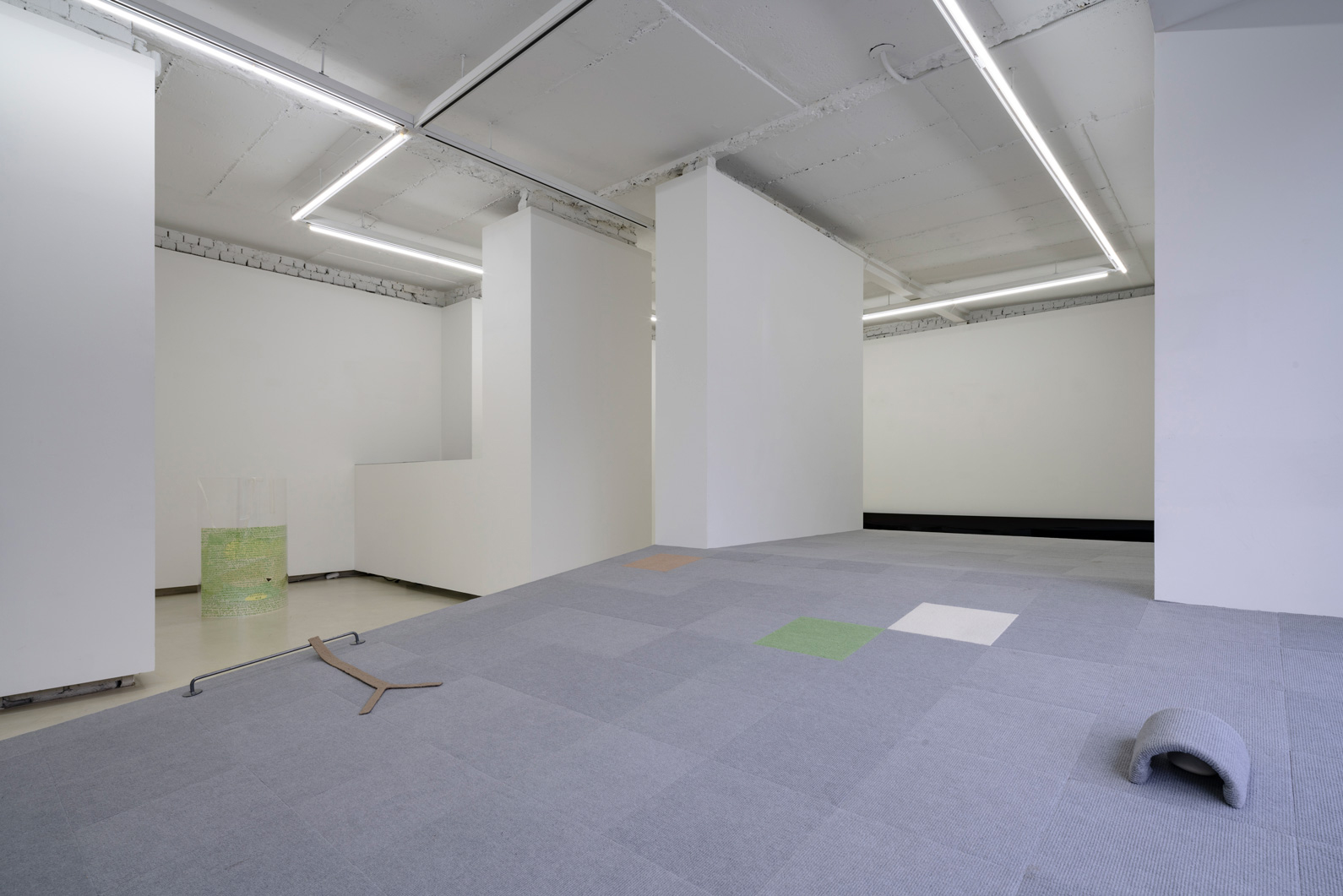
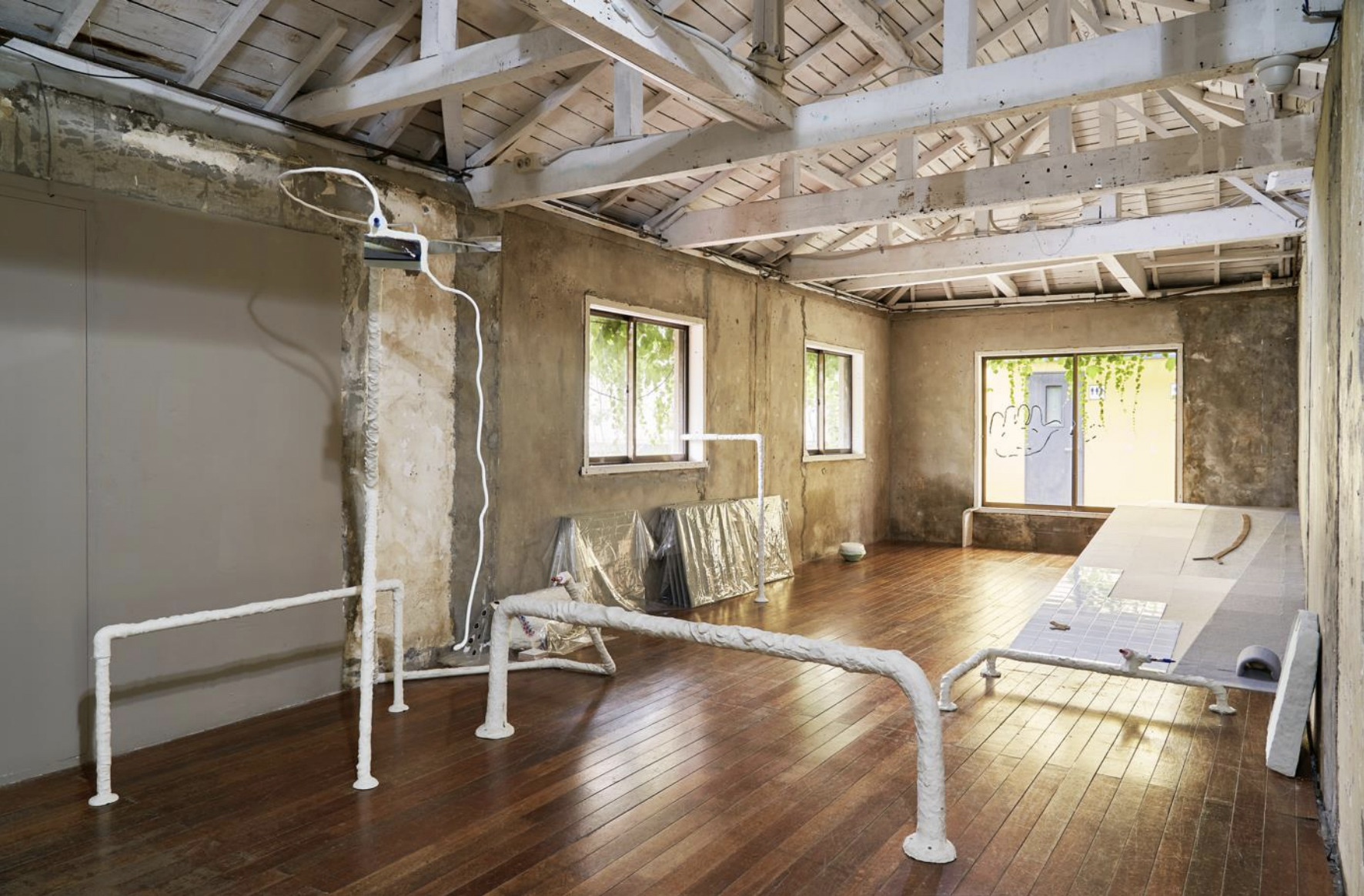
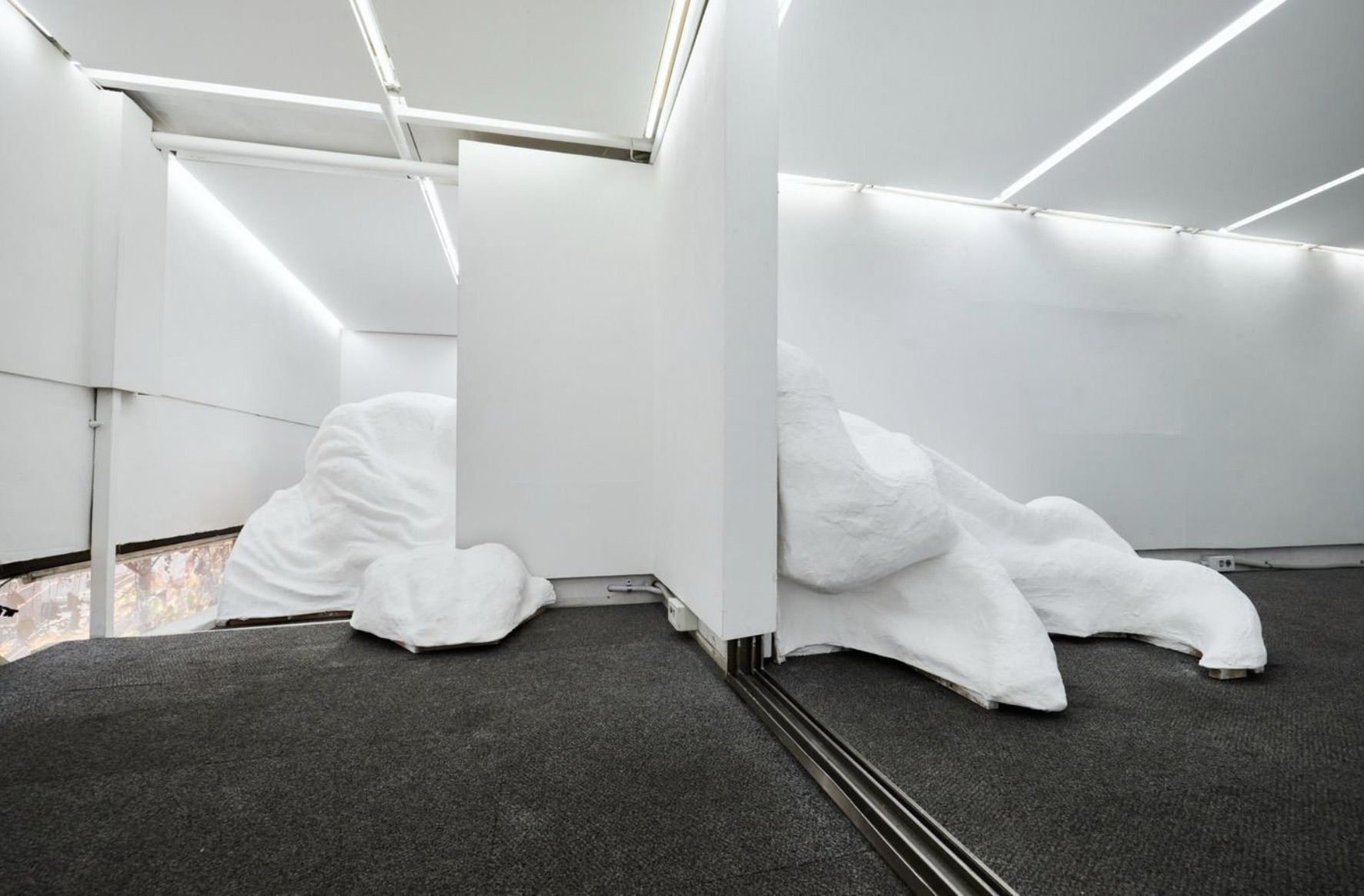
Installation view of 《Yang-Mal-E-P-T》 (Taste House, 2018). ©Taste House

His first public solo exhibition, which also took the form of a duet, 《Yang-Mal-E-P-T》 (Taste House, 2018), was structured in a unique way: the artist formed a team (Yang-mal2pt) with his companion dog “Yang-mal,” and the exhibition was created collaboratively by both “Dahwan Ghim” and the team “Yang-mal2pt.”
 
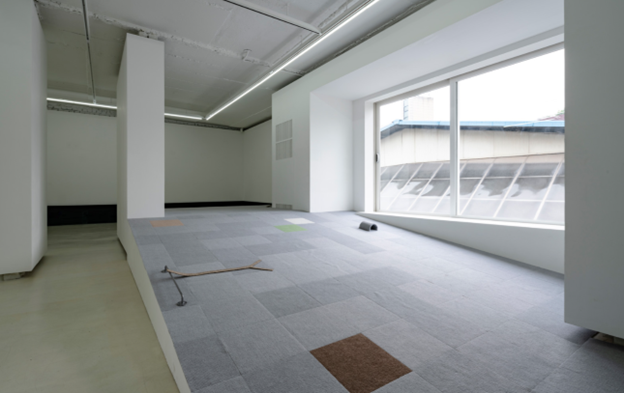
The exhibition explored the structure of exhibitions that can be constructed and deconstructed through the differentiation and reassembly of the individual. It was articulated through elements such as inclines within the space, stride length, floor textures, gaze and field of vision, the calibration of movement paths, and a tactile, “hand-crafted” mode of formation. Each sculptural configuration functioned as a performative act of adjusting the artist’s position across multiple scales, within a particular relational framework that fragments and amplifies the individual.


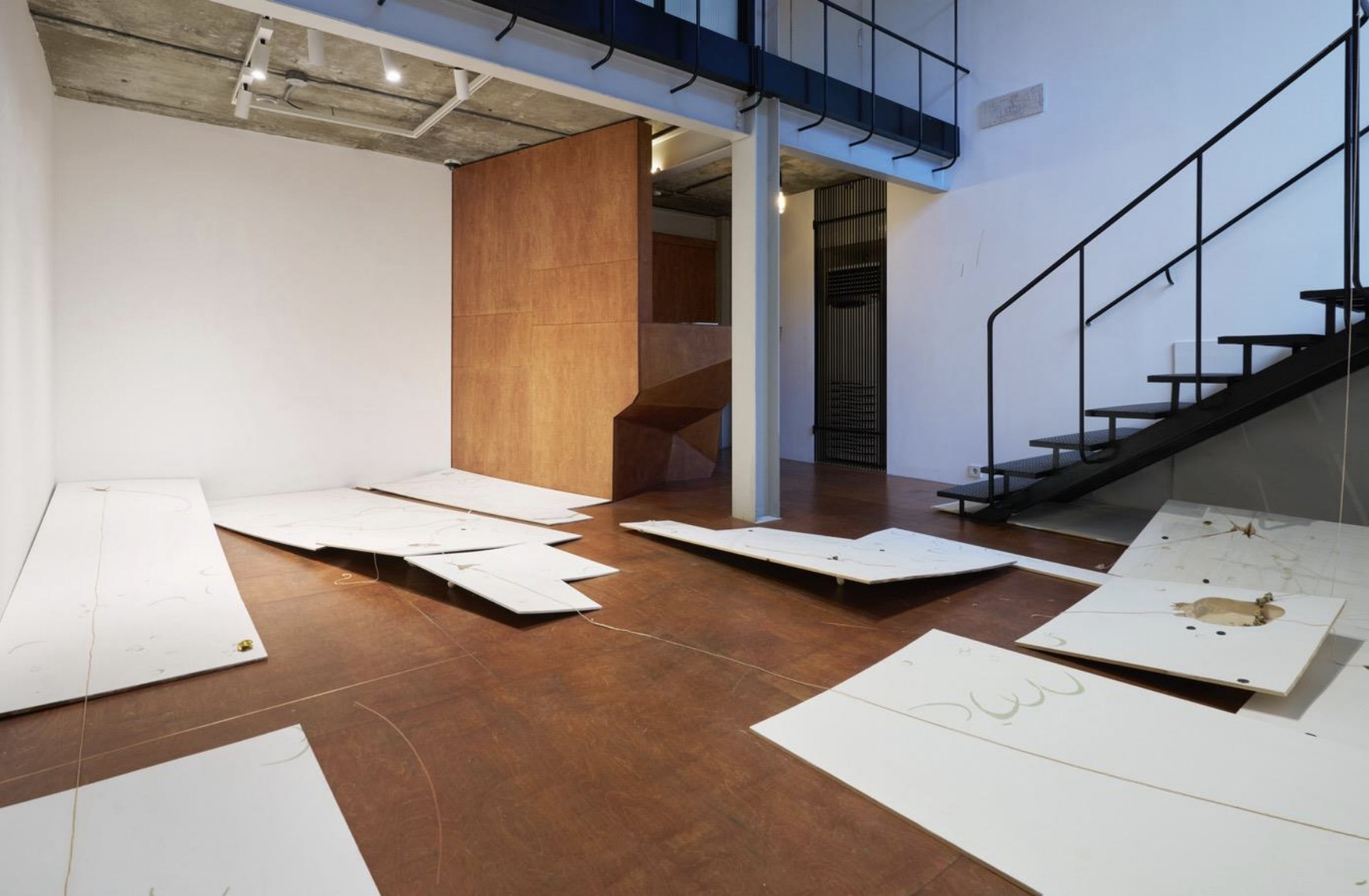
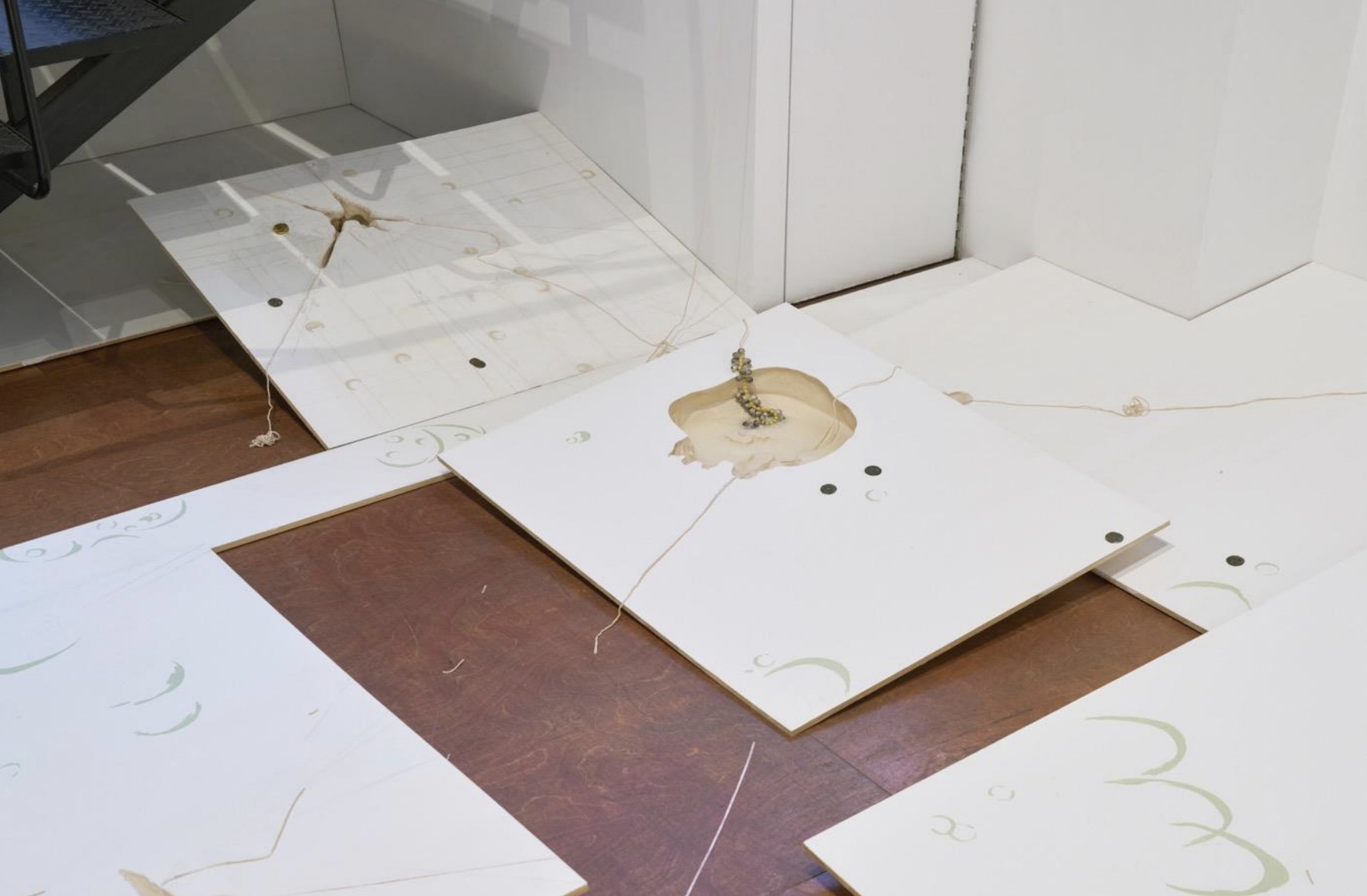
Installation view of 《Yang-Mal-E-P-T》 (Taste House, 2018). ©Taste House

This emerged as a result of listing and sharing the points at which the human “Dahwan Ghim” and his companion dog “Yang-mal” each made contact with the world. Within this context, Yang-mal2pt sought to create a space for exchanging ways of handling one’s own senses and time, and for mutually examining each other’s modes of being.
 
The relational sculptural practice attempted in 《Yang-Mal-E-P-T》 went on to play a significant role in shaping a distinctive formative methodology—one that selectively follows highly generative interpretations of the act of “making” across diverse narrative layers.


Installation view of 《Hello Human?》 (Art Space Pool, 2019). Photo: Euirock Lee. ©Art Space Pool

In his 2019 solo exhibition 《Hello Human?》 at Art Space Pool, Dahwan Ghim conducted an experiment that induced perceptual slippages within the viewing experience—where layered cognition and judgment intersect—causing the immediacy of perception and the residue of memory to become entangled. Objects within the exhibition space remained unfixed, suspended in a state of flux, repeatedly generating unstable meanings as they followed and folded into one another.
 
Within this environment, viewers encounter a curious sensation—much like Alice in Alice’s Adventures in Wonderland—of seeming to grow larger and smaller at the same time. The exhibition leads its audience into a riddle-like journey, where rather than arriving at a single, definitive answer, one undergoes the prolonged and laborious process of working through a series of shifting questions and partial answers.


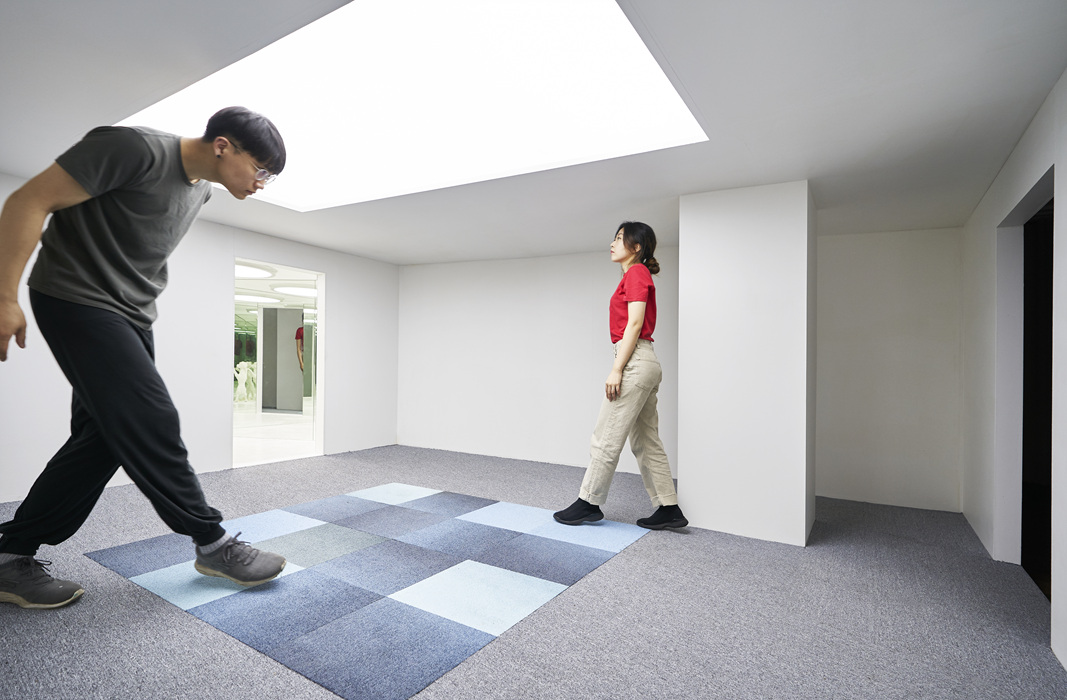
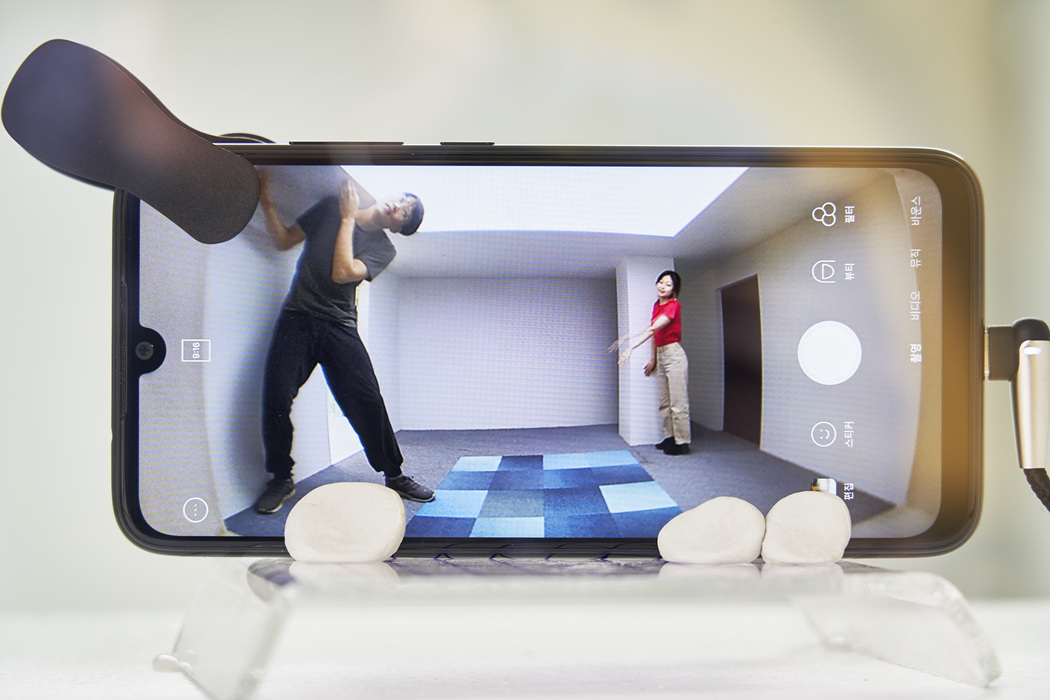
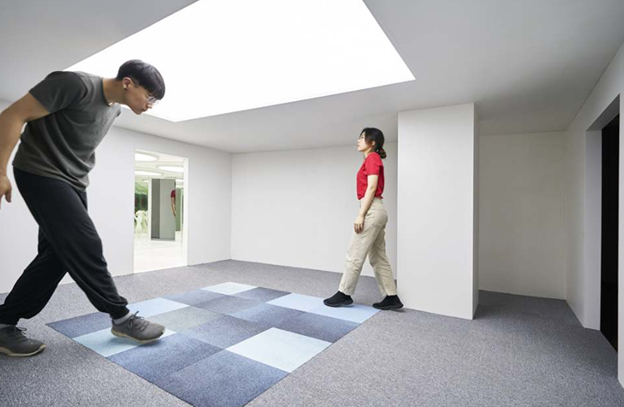
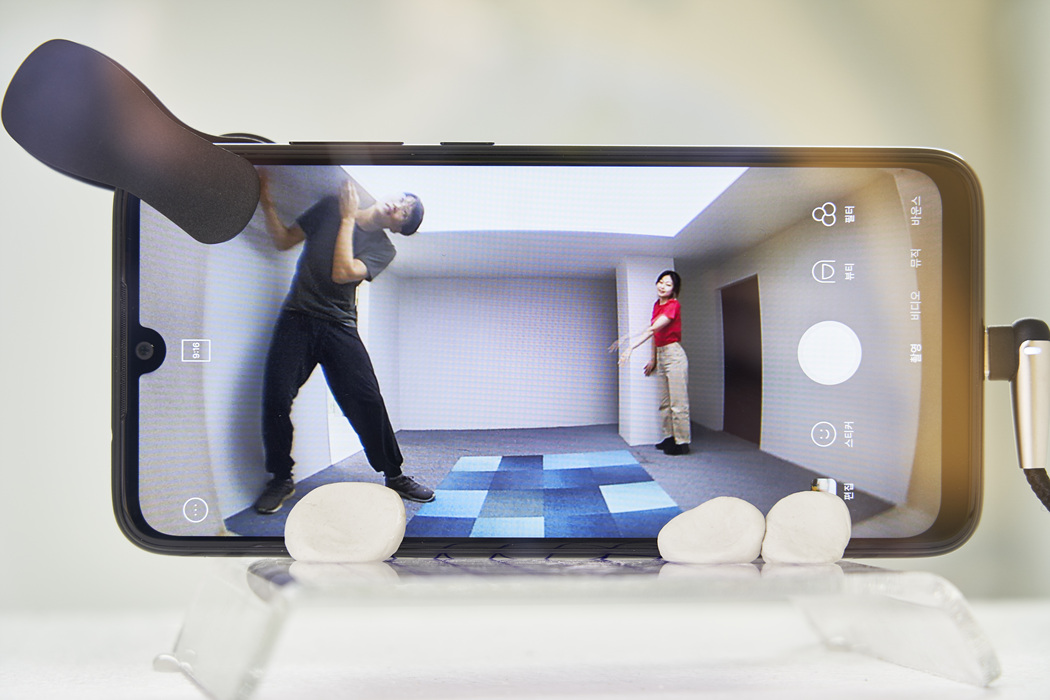
Dahwan Ghim, A Friend Who’s Got It, 2019, Ames room, Cho-Long-Eee, smartphone, Dimensions variable. Photo: Euirock Lee. ©Art Space Pool

The exhibition consisted of two parts: A Friend Who’s Got It, which employed illusion devices (such as the Ames Room, mirror tricks, camera delay, and deep running images) to disrupt the viewing experience; and A Friend of a Friend Who’s Got It, which reconfigured the context of existing works and repurposed them as an “incline” within the exhibition.
 
First, A Friend Who’s Got It, which transformed the exhibition space itself into a room of illusions, induced perceptual distortions in which a person’s size appeared to grow or shrink depending on the viewer’s position. In this setup, viewers found it difficult to directly perceive these optical effects with their own eyes; instead, they could only witness them through the gaze of others or via smartphone screens installed on the outer walls of the space.


Installation view of 《Hello Human?》 (Art Space Pool, 2019). Photo: Euirock Lee. ©Art Space Pool

Thus, while outside the exhibition the viewer assumes the position of a subject who reduces the world to an object of vision, the moment they enter the space, this relationship is inverted: they themselves become the object of sight, prompting them to question the very landscape they had just perceived.
 
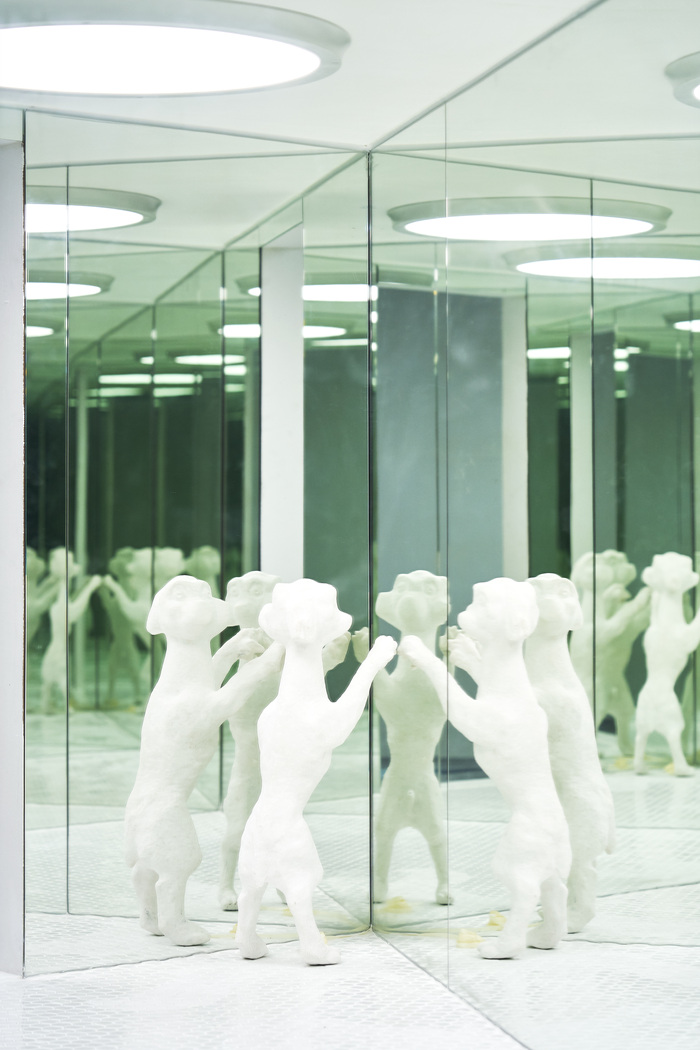
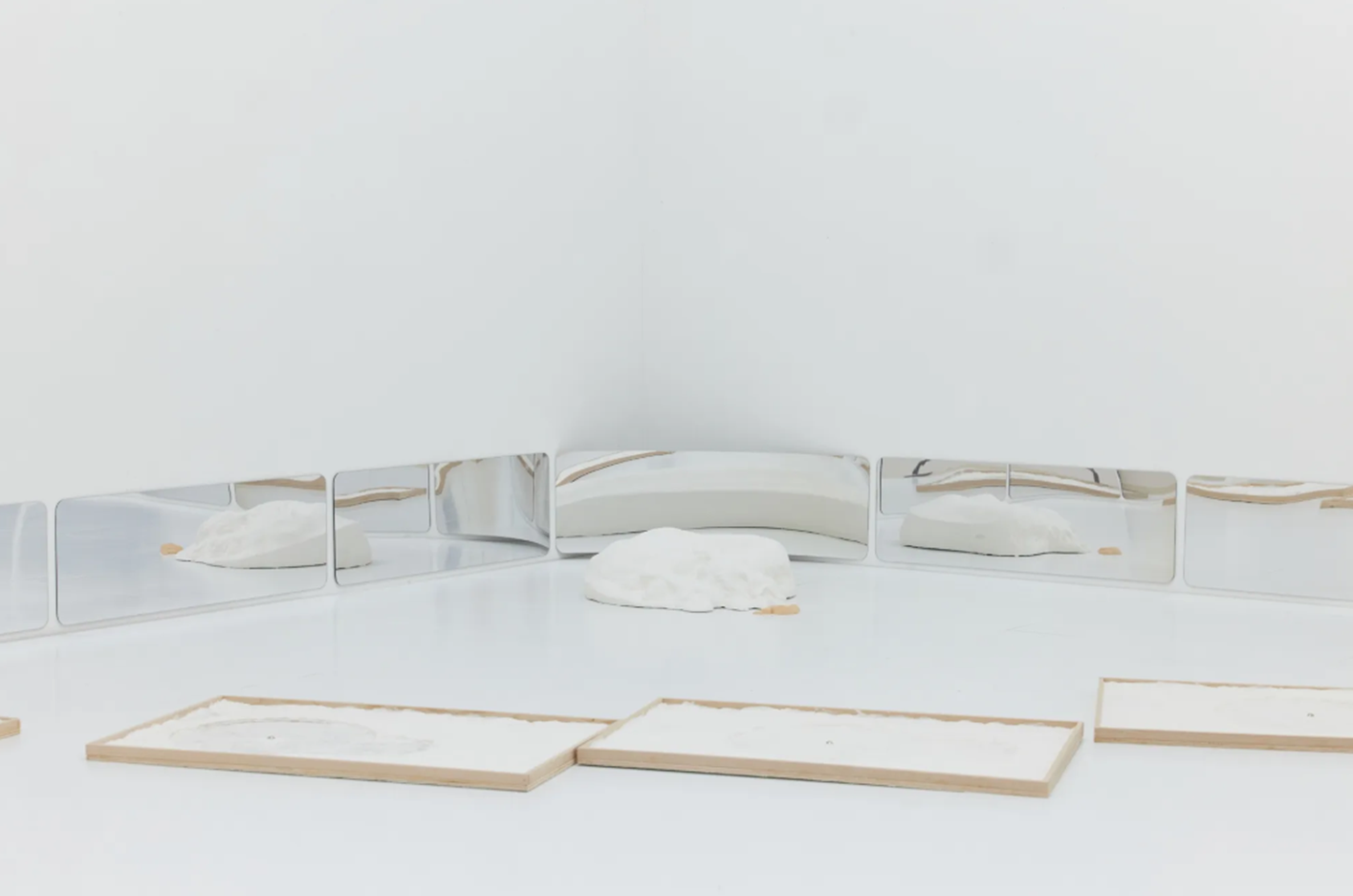
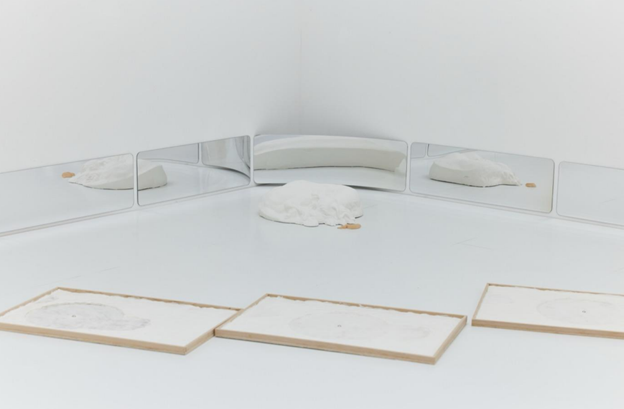
Meanwhile, across from it stood a space enclosed on three sides by mirrors. Inside, a small white clay dog greeted viewers through its reflections. Within this low-ceilinged environment, viewers found themselves bending their bodies as they gazed at their mirrored images. In doing so, they underwent a perceptual experience akin to Alice stepping through the looking glass—an adventure in which one’s own body seems to expand within the mirrored world.


Dahwan Ghim, A Friend of a Friend Who’s Got It, 2019, Hello Human, Yang-Mal-E-P-T, Wash3's Face vs Scaling, Legendary Faces, Mandoo, Painting of Friend, Dimensions variable. Installation view of 《Hello Human?》 (Art Space Pool, 2019). Photo: Euirock Lee. ©Art Space Pool

Afterward, anticipating yet another optical illusion, viewers stepped into the adjacent room. However, “strangely,” they arrived at a space that, rather than presenting further illusions, followed the conventional grammar of exhibition-making—where flatness and three-dimensionality were intermingled. Beginning with works that were “oddly” arranged from the very entrance, the space disrupted perception with objects that seemed to exist as though their functions had been suspended.
 
The mass of sculpture had been dismantled and now sat inert upon pedestals, no longer functioning as such, while materials existed without revealing their inherent properties, indistinguishable from form itself. Within this space—where no discernible rules or order could be found—any attempt to interpret the works ultimately led only to an accumulation of “misreadings.”


Dahwan Ghim, A Friend of a Friend Who’s Got It, 2019, Hello Human, Yang-Mal-E-P-T, Wash3's Face vs Scaling, Legendary Faces, Mandoo, Painting of Friend, Dimensions variable. Installation view of 《Hello Human?》 (Art Space Pool, 2019). ©Dahwan Ghim

This stems from a critical question regarding the condition in which contemporary art has become passive, conforming to “absolute” and “rational” standards. Dahwan Ghim responds to a situation in which exhibitions, rather than serving as sites for generating meaning through artworks, have turned into flawless spectacles designed merely to be “seen,” and where viewing an exhibition has become a conventional gesture driven not by perception or understanding, but by a sense of obligation to look.
 
Accordingly, his exhibition 《Hello Human?》 poses fundamental questions to its viewers, who are constantly confronted with visual productions: “Where should our gaze ultimately arrive?” and “Is it possible for exhibitions to give form to the world?”


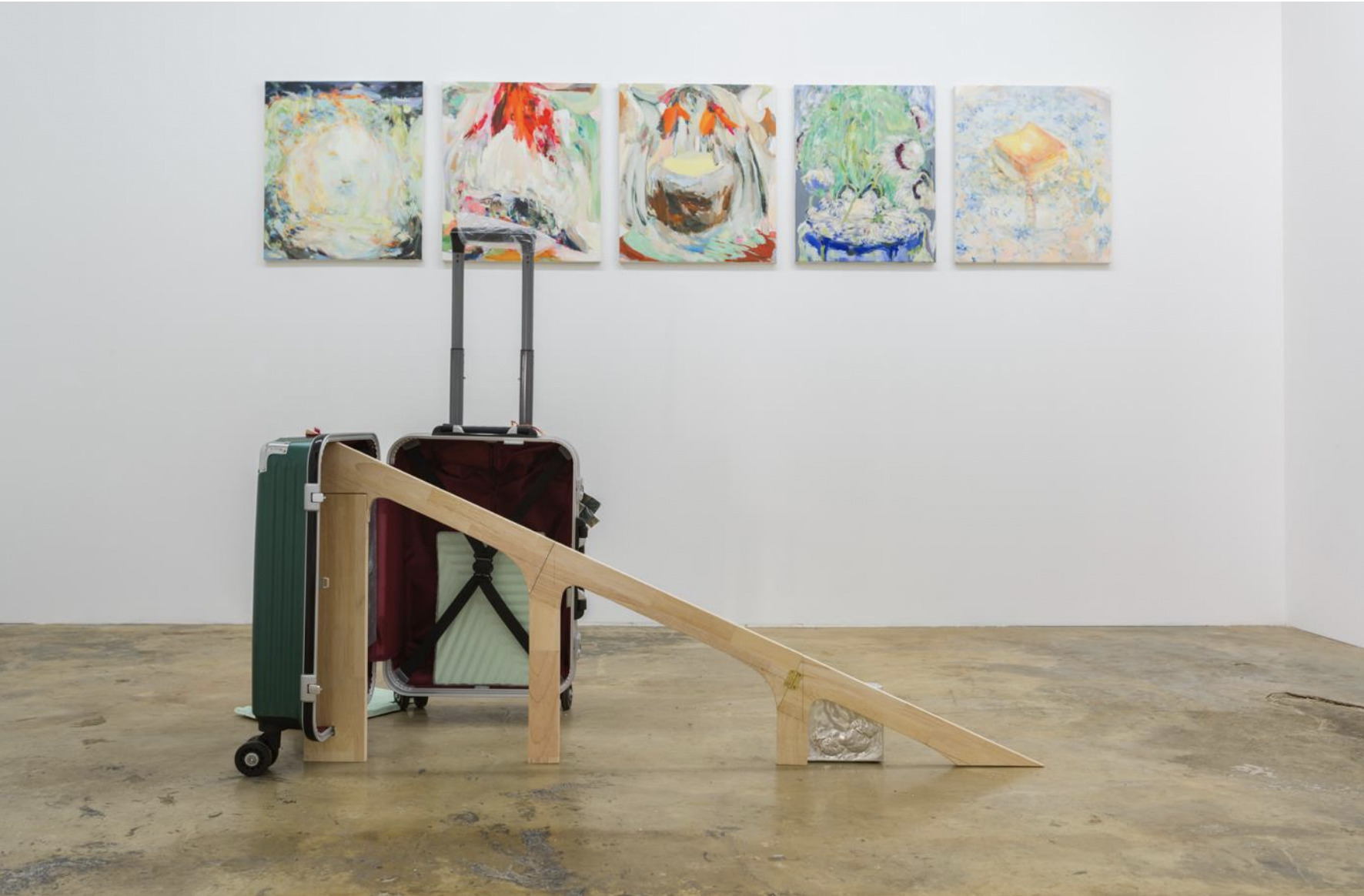
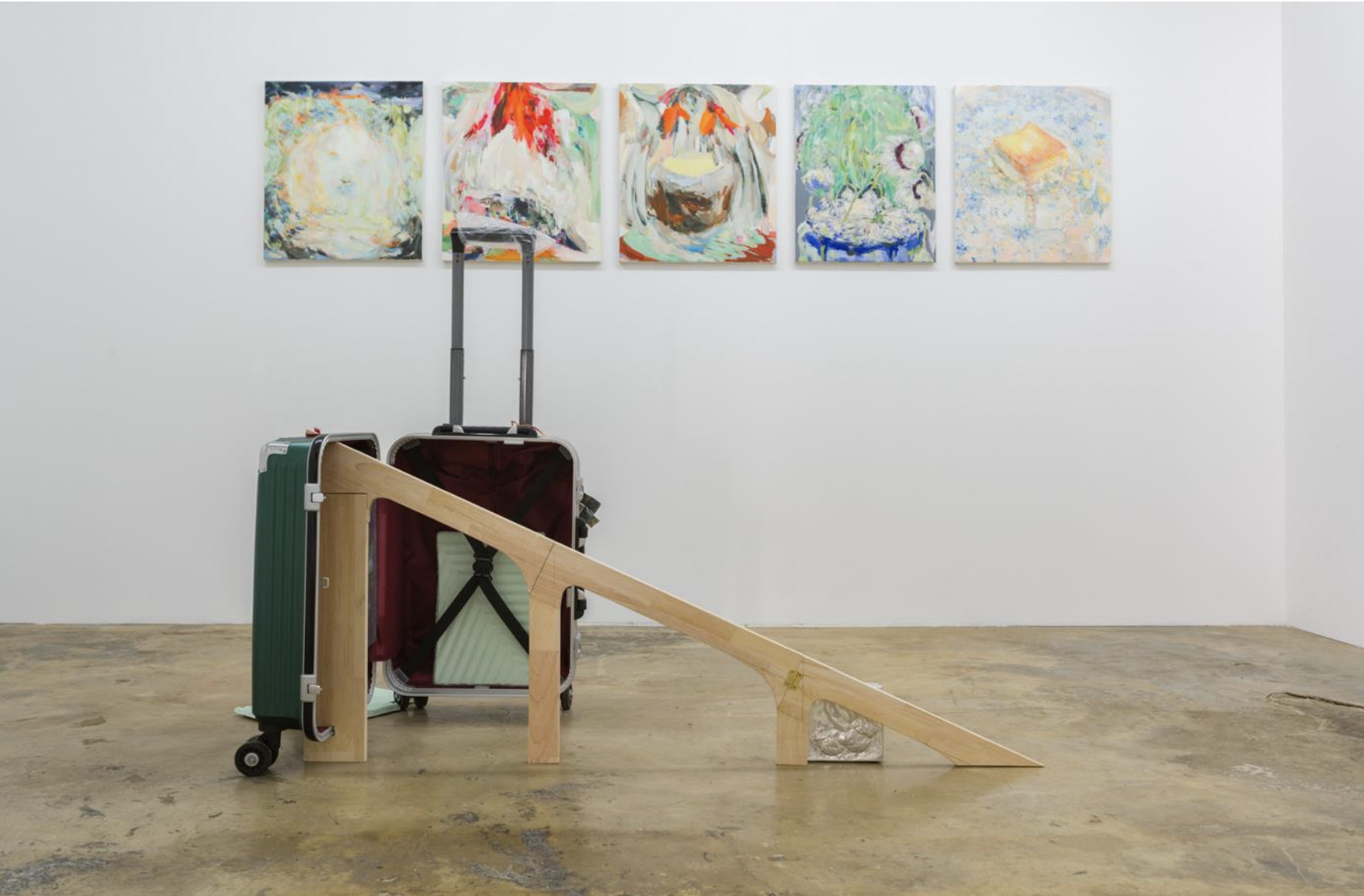
Dahwan Ghim, Shhh, I’m Perspective, 2019, Carrier, wood, gypsum, aluminum, 140x45x100cm. Installation view of 《tart》 (Audio Visual Pavilion, 2019) ©Dahwan Ghim

In subsequent works such as An Exhibition of a Friend Who Doesn’t Exhibit of a Friend Who Exhibits (2019) and Shhh, I’m Perspective (2019), Dahwan Ghim compressed the scale of the exhibition experience, attempting to realize sculptural forms that themselves assume the role of an exhibition space, while reflecting on the acts of moving with them or pausing alongside them.
 
Extending these inquiries, in his solo exhibition 《Easy Way》 (413BETA, 2023), the artist presented an experiment in which he exposed, on the surface of the work, the decisions and compromises that inevitably arise along the paths of constructing and unfolding exhibition relations and forms, thereby modulating the value of “style.”


Installation view of 《Easy Way》 (413BETA, 2023) ©413BETA

The exhibition unfolded around the metaphors of “making” and “wayfinding.” For the artist, making signifies not only the formation of material objects but also the exploration of existence and pathways. This process connects to the act of navigating everyday life, culminating in sculptural forms that reveal the various choices one encounters and the compromises that lie alongside them.
 
On the first floor, centered around a wheel that rolled in accordance with the scale of the building, the work embodied the compromises embedded along the trajectory of making, inscribed onto its distinctive surface. The wheel was produced following the formula for calculating circumference, CNC (Computer Numerical Control) machining processes, and automotive painting techniques, and during the exhibition it functioned as a component of the space itself, taking on the role of an active participant.


Installation view of 《Easy Way》 (413BETA, 2023) ©Dahwan Ghim

On the second floor, the exhibition presented acts of making that positioned themselves as sculpture, inviting viewers to overlay what they had encountered on their way to the exhibition with the preceding scenes from the first floor, and to compare the scales of the sculptures, themselves, and others beyond.
 
In this way, the exhibition, following its distinctive circulation path, emphasized the parallels between wayfinding in everyday life and the act of making. By closely examining the human act of making, Dahwan Ghim addresses the paths we habitually select in daily life—the so-called “easy way”—and, through this process, underscores the importance of finding and walking one’s own path.


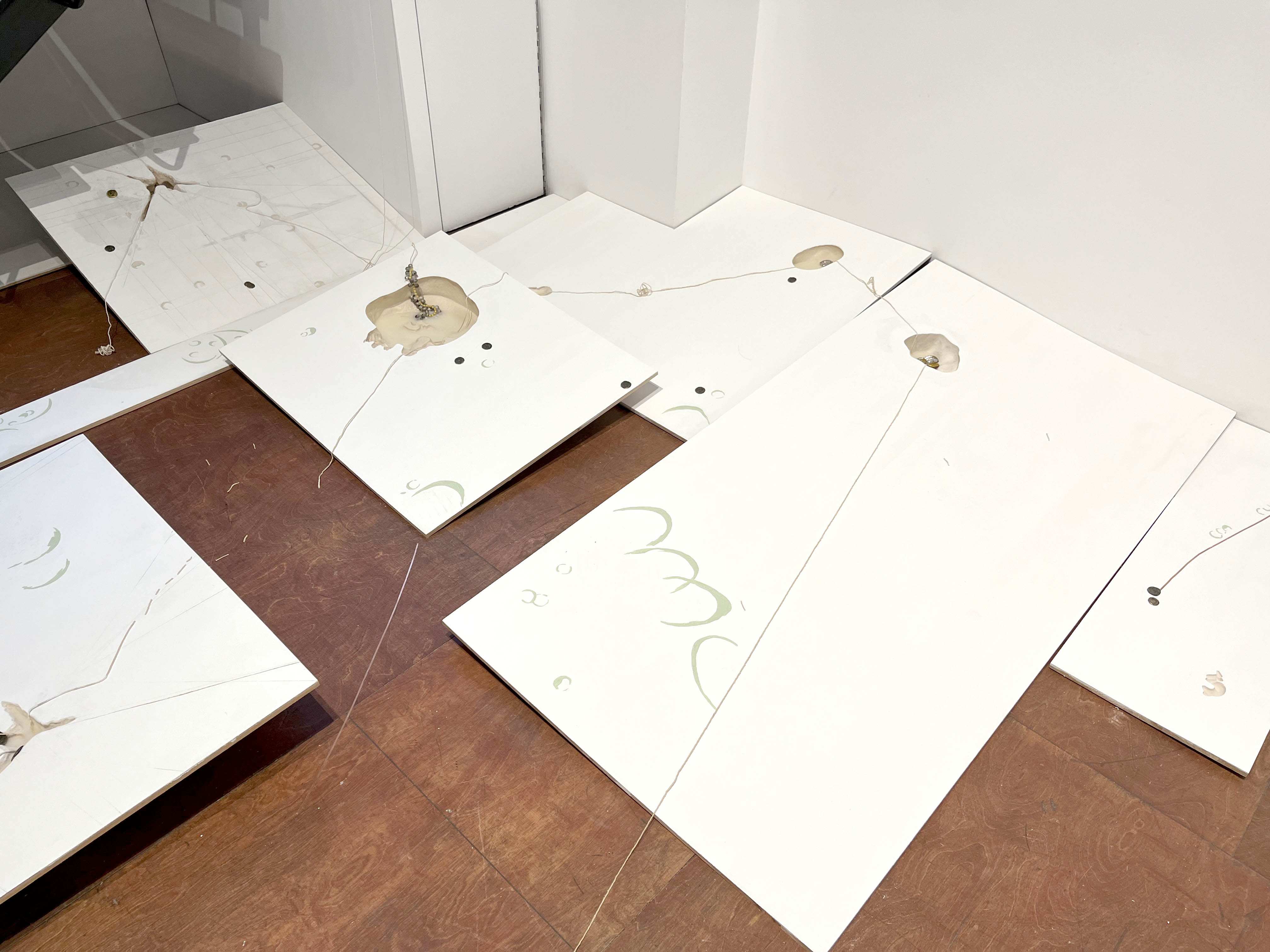
Installation view of 《Prediction vs Recollection》 ((together)(together), 2024) ©Dahwan Ghim

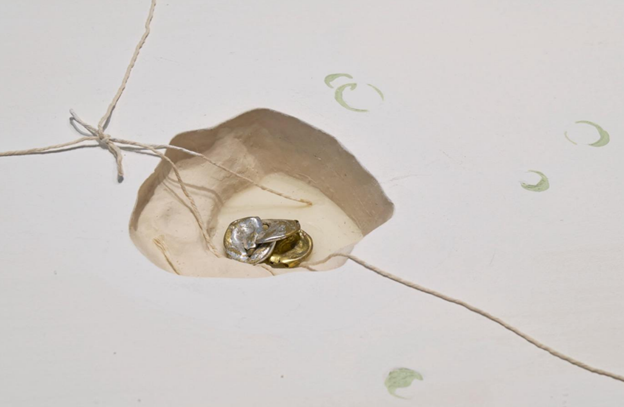
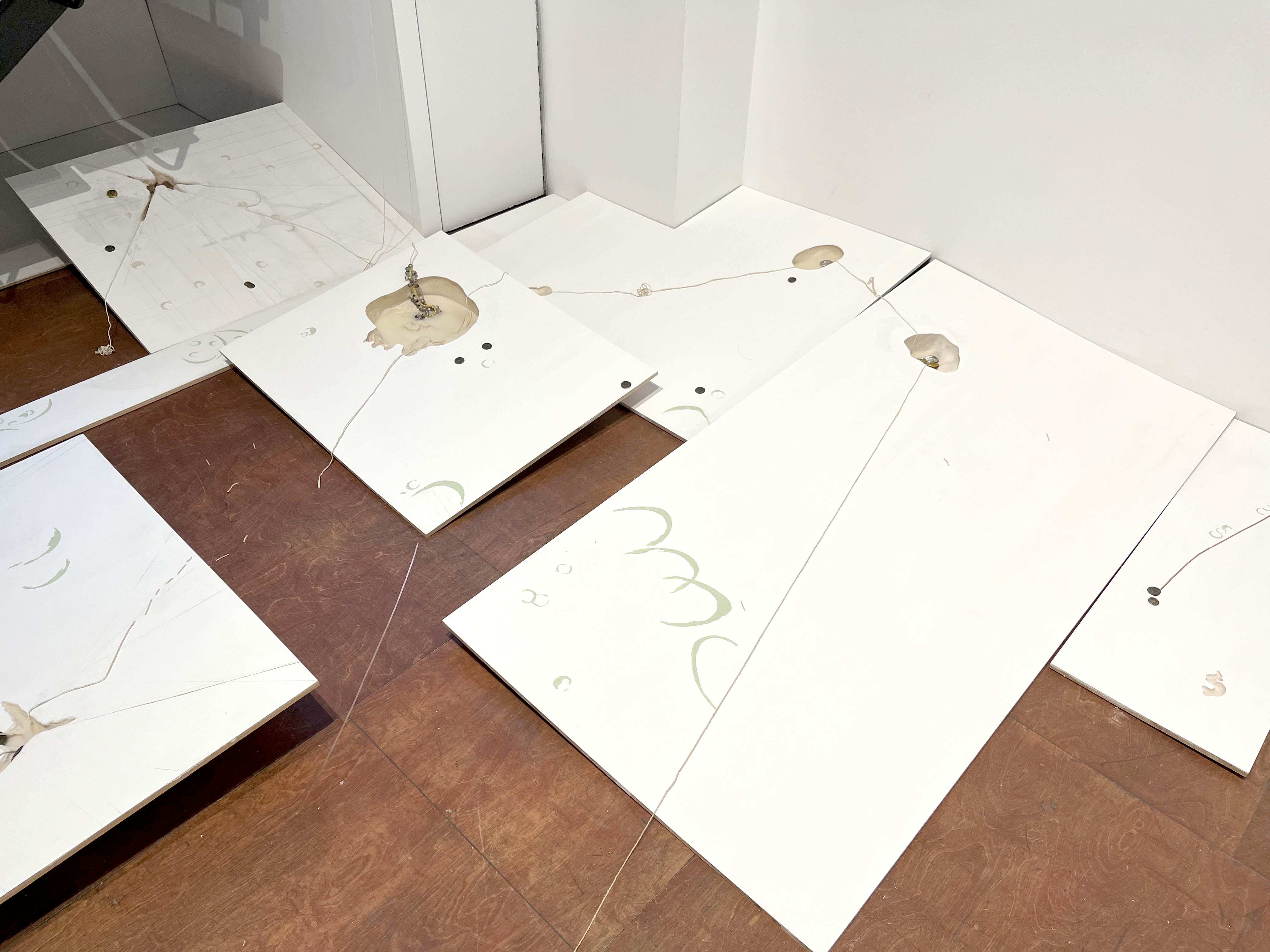
In the following year, in his solo exhibition 《Prediction vs. Recollection》 ((together)(together), 2024), Dahwan Ghim sought to illuminate the cognitive boundaries of the individual—discovered within planning and fate, memory and misperception—by activating the floor, walls, ceiling, and levels of the exhibition space. Each work was produced in correspondence with both the artist’s studio and the exhibition site, with the methods and processes of making visibly inscribed on their surfaces.
 
The exhibition was structured as a pathway between the artist’s past (recollection) and others’ futures (prediction). The words (language) and images (imagination) that constituted the space moved fluidly across one another, making it difficult for viewers to clearly discern what belonged to prediction and what to recollection.


Installation view of 《Prediction vs Recollection》 ((together)(together), 2024) ©Dahwan Ghim

Moreover, each work in the exhibition incorporated a number of falsehoods and errors, functioning as cognitive devices intended to delay and complicate both anticipated and retrospective modes of viewing. The text containing the artist’s note moves from recollections of his school days to reflections on the exhibition and its making, concluding with the statement: “In fact, what I have told you today is largely untrue, or its opposite, and the order does not matter.”
 
The works, which construct time and space through a non-linear structure, repeatedly enact inversions of scale alongside the dual contradictions of resemblance and difference. In doing so, they situate the viewer’s body within a complex and uncertain network where falsehood, error, and memory continuously intersect. Along this passage, viewers encounter forms that have appeared—or are about to appear—and are prompted to think speculatively about their falsehoods and inaccuracies.


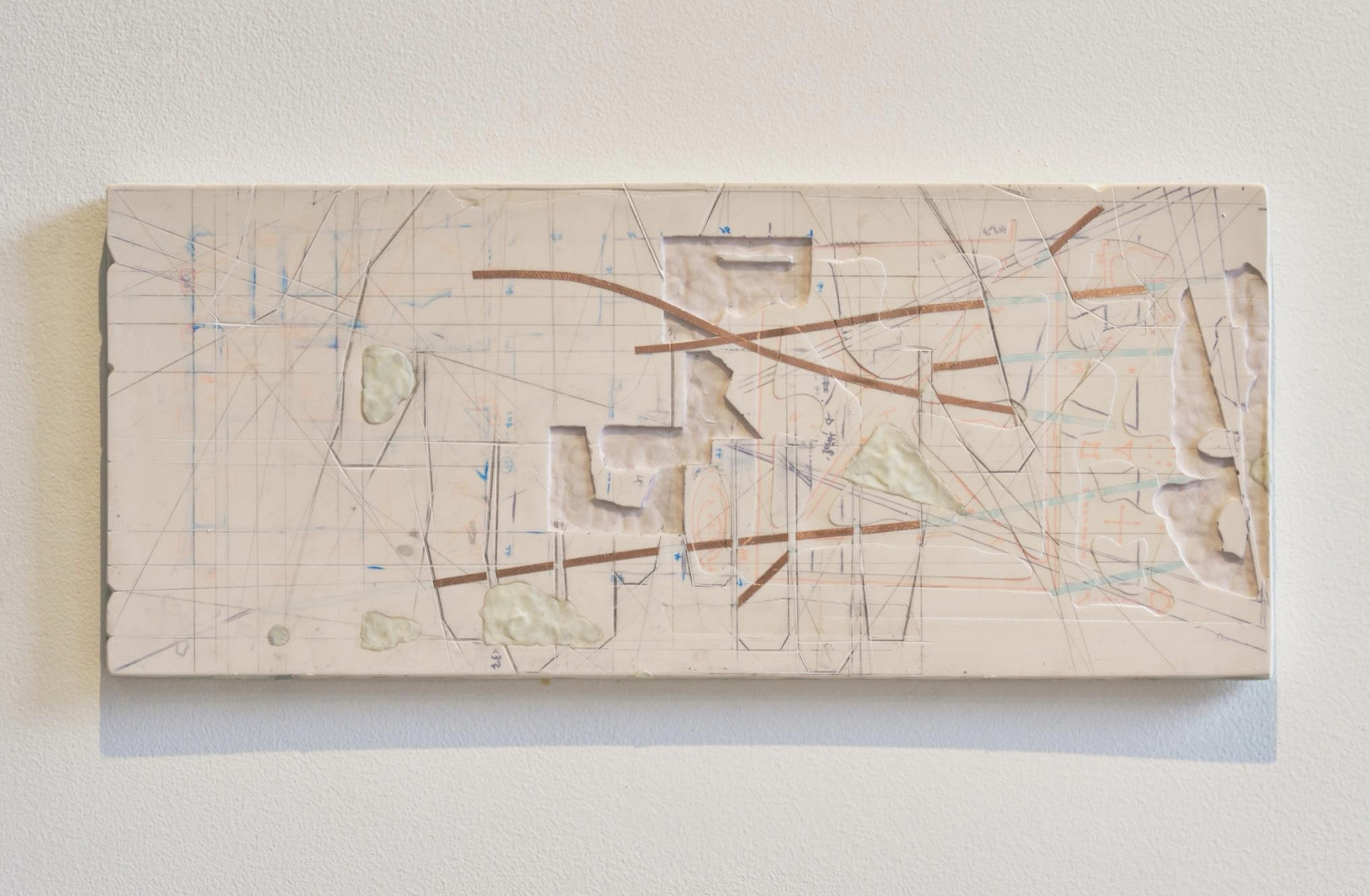
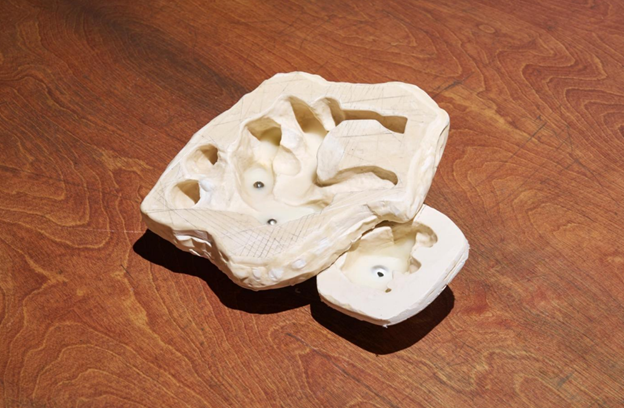
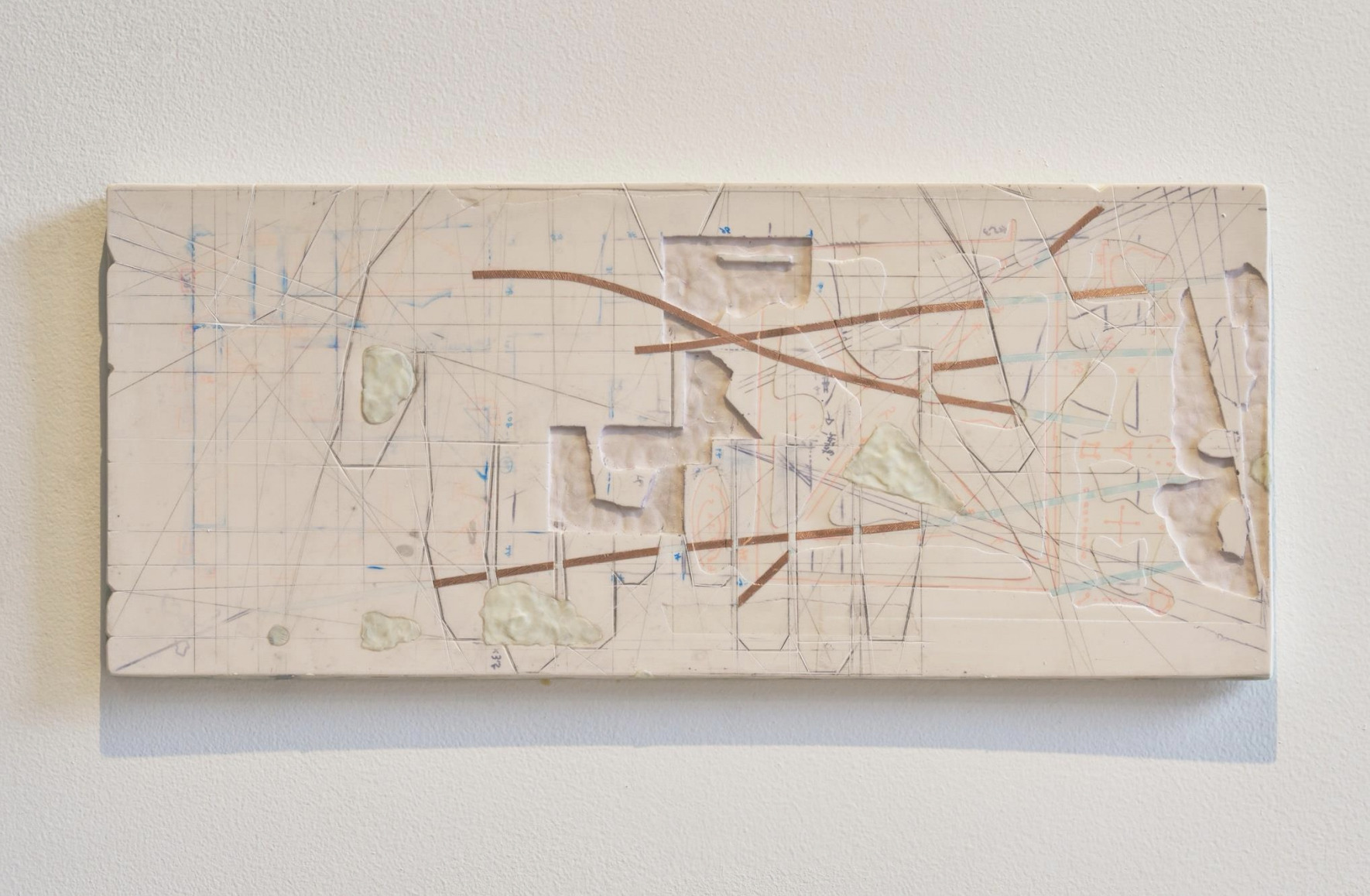
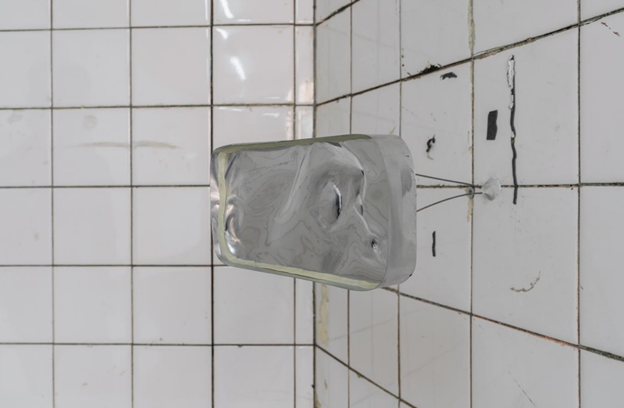
Dahwan Ghim, Prediction vs Recollection – Four Hands, 2024, Jesmonite, Clay, Ink, Charcoal, Gypsum, Copper, Size to put four hands on it, Installation view of 《Prediction vs Recollection》 ((together)(together), 2024) ©Dahwan Ghim

In this way, Dahwan Ghim explores the relationships between form, space, and the body, while experimenting with the modes of “showing” and “seeing” through the exhibition. Within his riddle-like, non-ordinary sculptural spaces and situations, the works function as a kind of guide, opening a passage through which viewers, when faced with “difficult questions,” can share time and space and reflect on relationships that become pathways for one another.

“Closely observing the making of the human, I think about what might be good for you and me. As a member of humanity living upon the shoulders of giants, I imagine crafting a table suited to the individual and their companions, along with conversations to share, delightful refreshments, and engaging jokes.
 
Together with formative techniques that help sustain an individual life successfully, I remain faithful to a regular daily routine, and reflect on relationships that share time, space, and memory, becoming paths for one another.” (Dahwan Ghim, Artist’s Note)


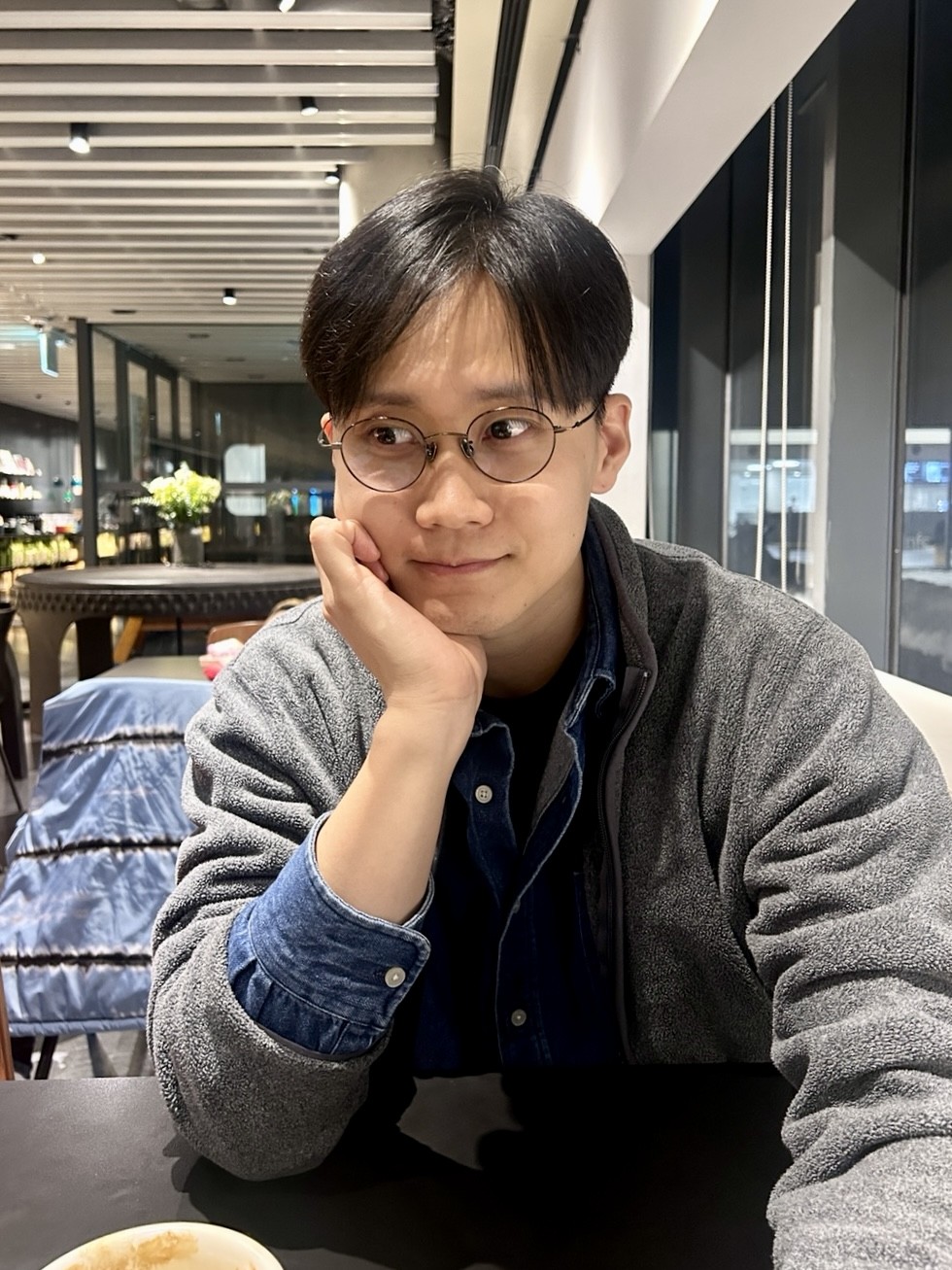
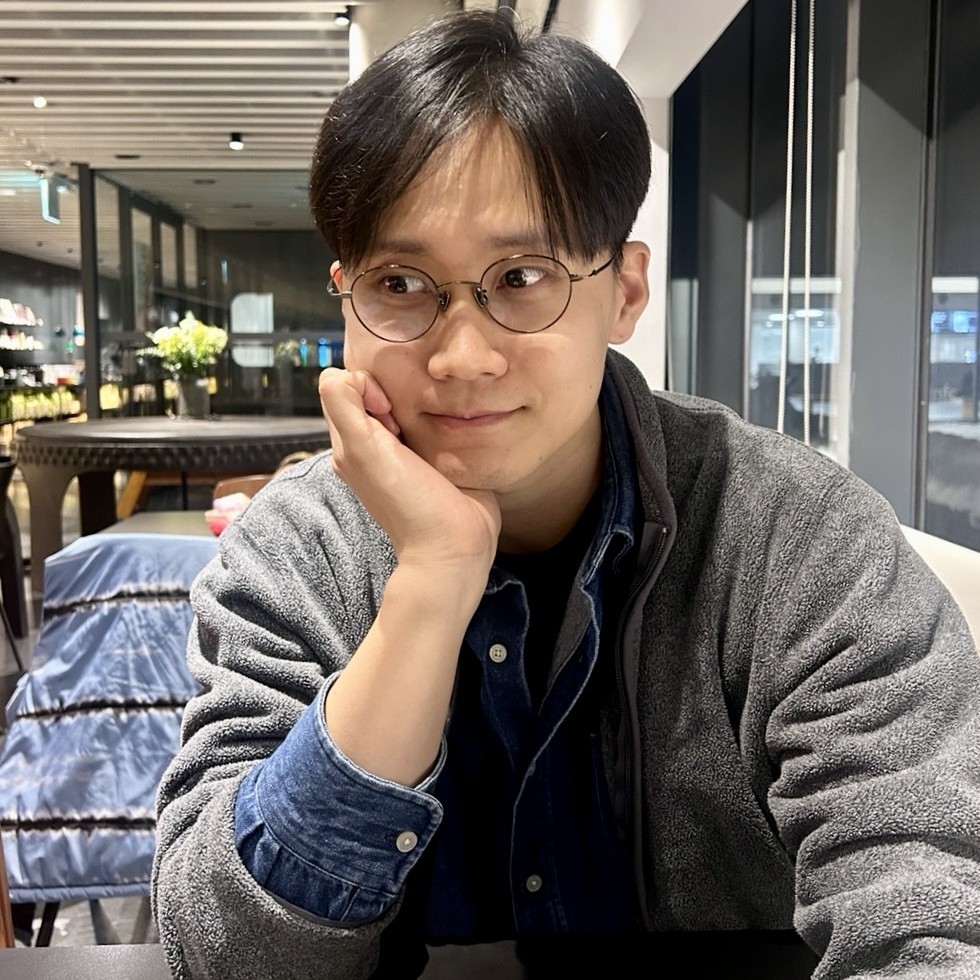
Artist Dahwan Ghim ©PIE

Dahwan Ghim graduated from the School of Visual Arts at Korea National University of Arts and received his MFA in Sculpture from the same institution. His solo exhibitions include 《Prediction vs. Recollection》 ((together)(together), Seoul, 2024), 《Easy Way》 (413BETA, Seoul, 2023), 《Hello Human?》 (Art Space Pool, Seoul, 2019), and 《Yang-Mal-E-P-T》 (Taste House, Seoul, 2018).
 
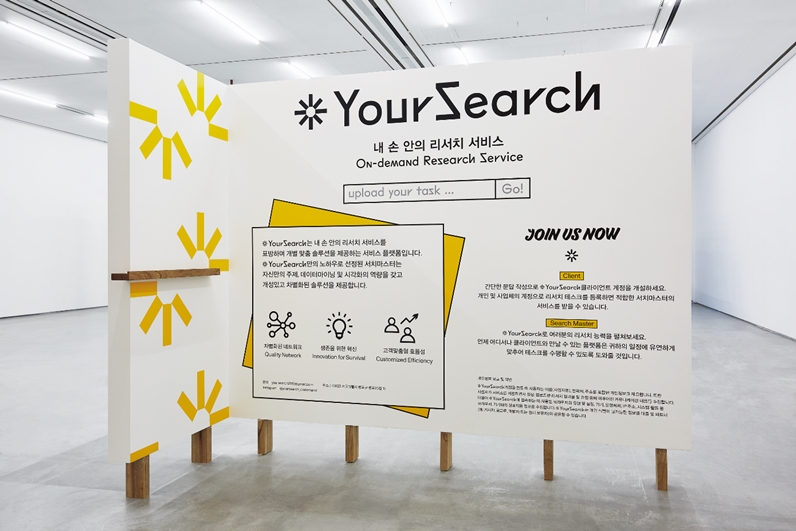
He has also participated in numerous group exhibitions, including 《Art Spectrum 2024: Dream Screen》 (Leeum Museum of Art, Seoul, 2024), 《Framer》 (Shower, Seoul, 2023), 《Shadowland》 (Amado Art Space, Seoul, 2021), 《No Space, Just a Place: Heterotopia》 (Daelim Museum, Seoul, 2020), 《Your Search, On-Demand Research Service》 (DOOSAN Gallery, Seoul, 2019), 《Genre Allegory - The Sculptural》 (Total Museum of Contemporary Art, Seoul, 2018), and 《Seoul Babel》 (Seoul Museum of Art, Seoul, 2016).
 
Ghim has also been an artist-in-residence at MMCA Residency Goyang (2025) and the Seoul Museum of Art Nanji Artist Residency (2020).
References