xx yy zz xy xyz
Sooji Park (Independent Curator / AGECY RARY)
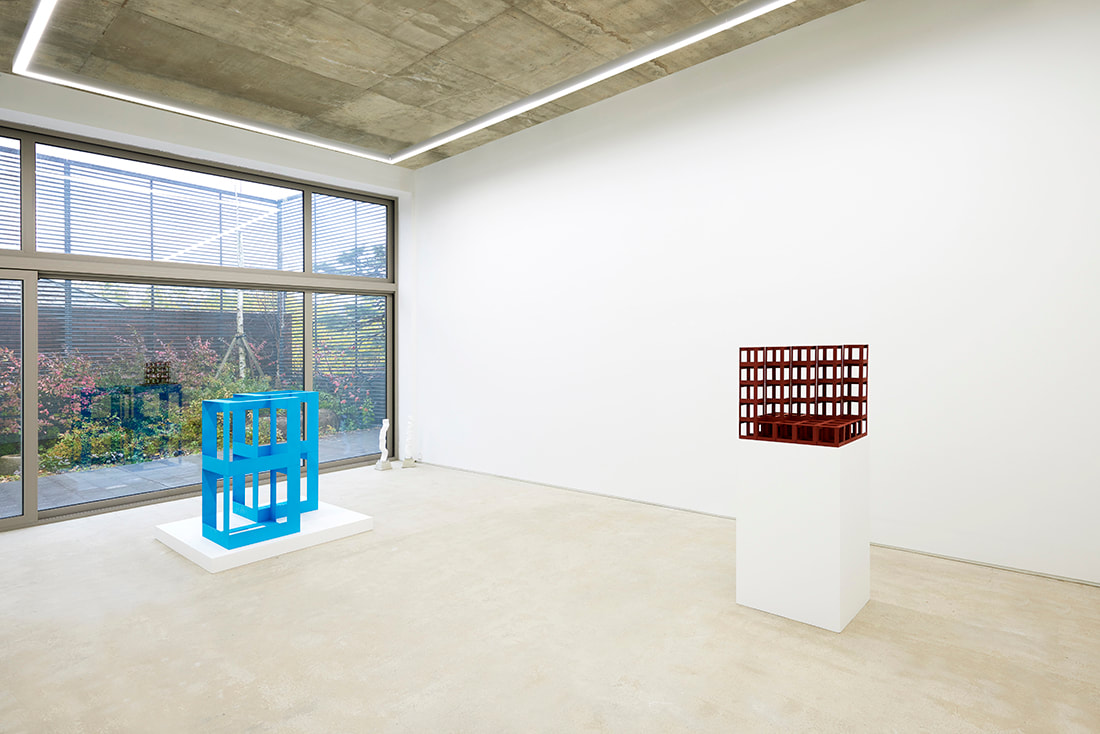
In the beginning, there was a cell. Is that really true? Living organisms are composed of one or more cells. That is true. Then how much difference is there in the size of the cells between an elephant and a mouse? In fact, their cells are the same size. What differs is the content that constitutes the cells. What we call genetic factors is one such difference. Cells, the structural and functional units of all living things, originate from pre-existing cells. Looking at Taeyeon Kim’s cubes, I imagined cells. What is the origin of this cube? Where are its coordinates?
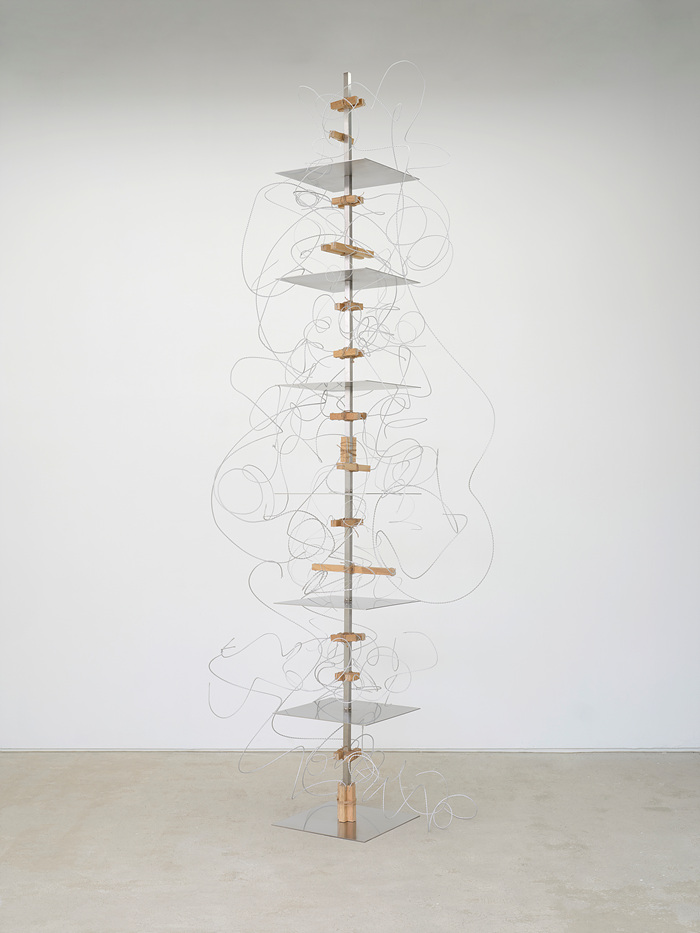
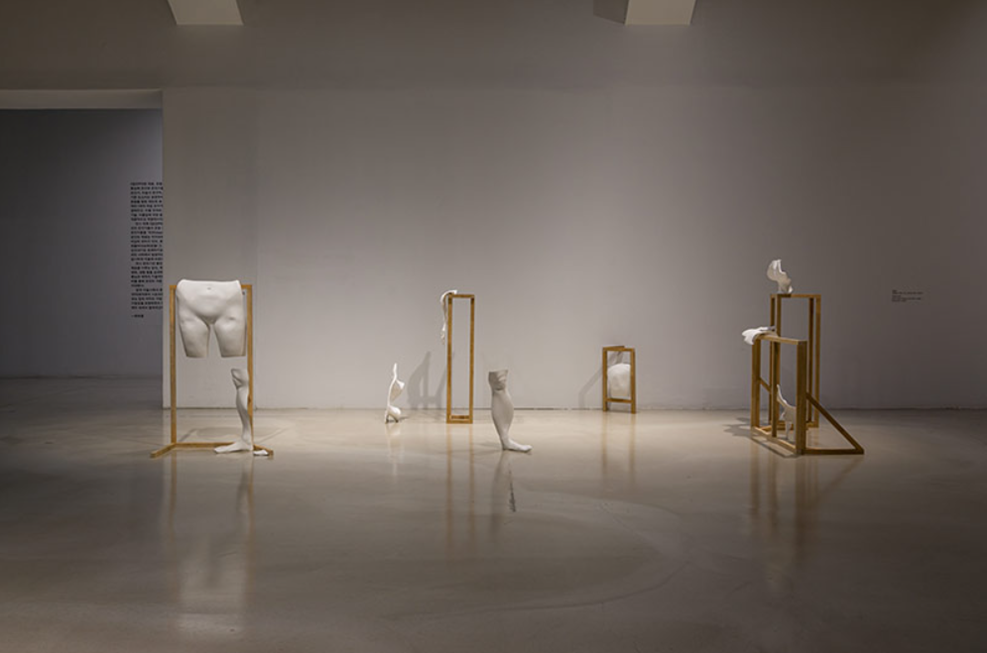
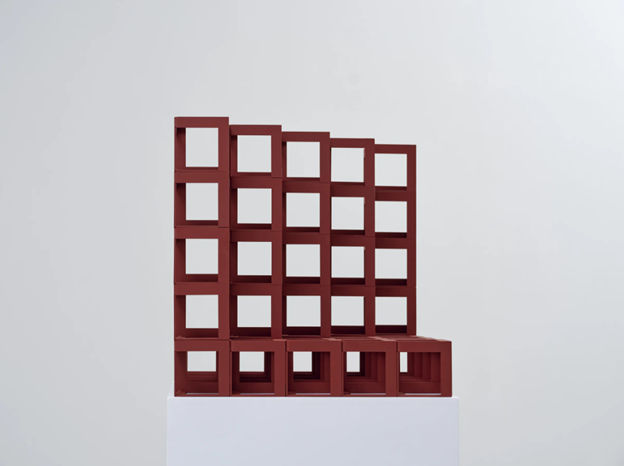
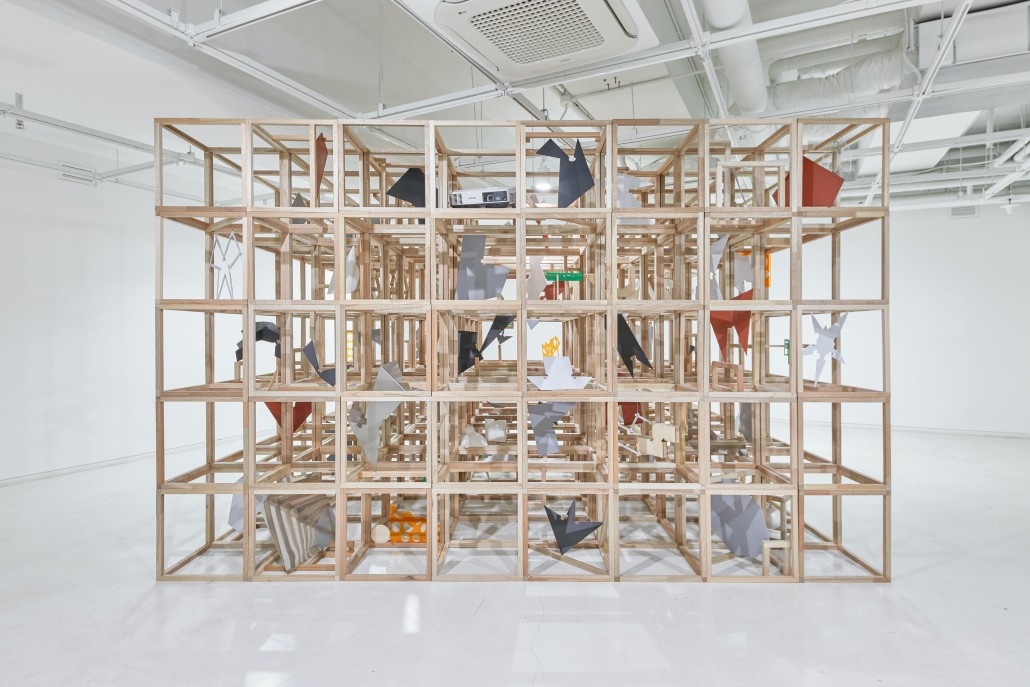
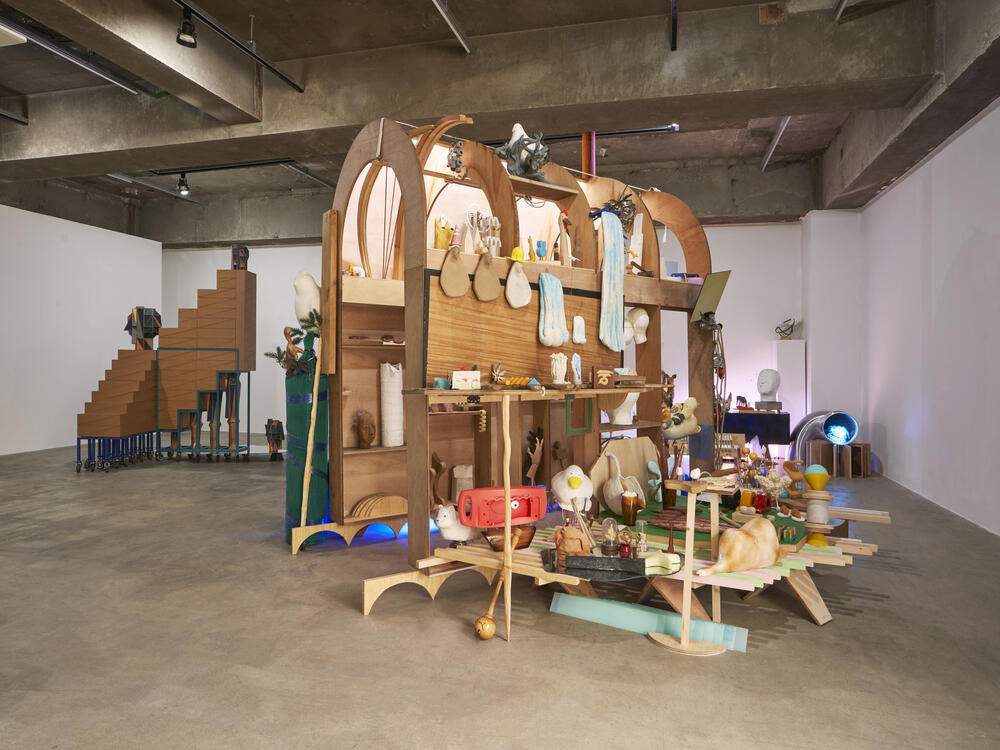
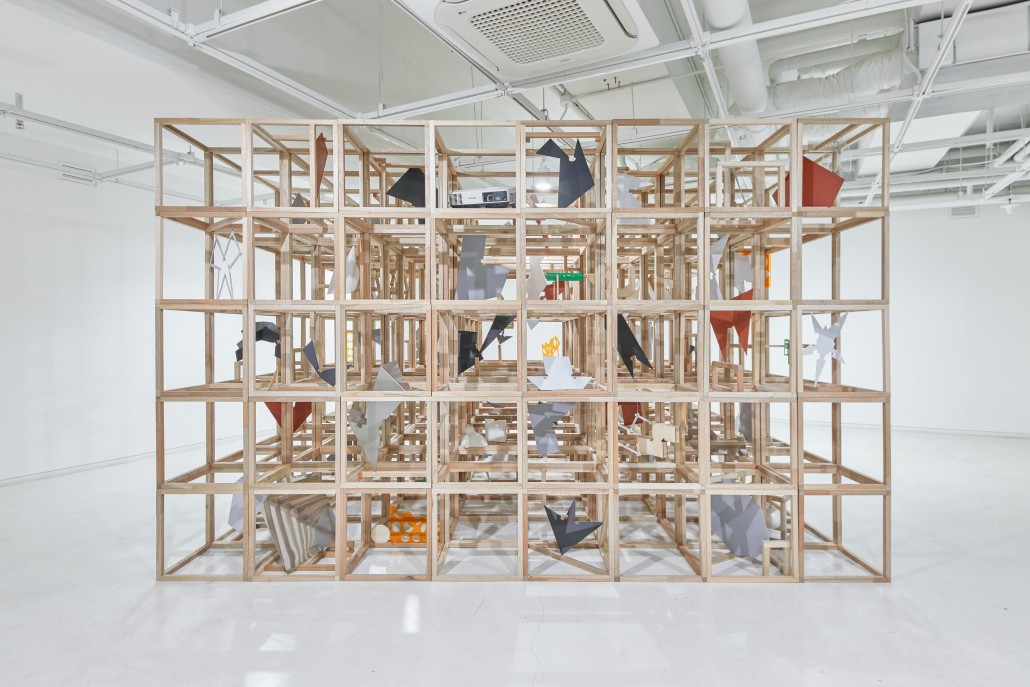
What kind of (non-)living being might these cubes gather to produce? A cube, whose width (x), depth (y), and height (z) are equal, is in itself a complete form. At a single vertex, three faces meet, and composed of six square faces, this cube is the only polyhedron that can fill three-dimensional space without gaps by itself. Taeyeon Kim inserted irregular objects into identically standardized cubes without a predetermined score. Just as every cell has its origin, the objects inside the cubes pass through Kim’s previous works. Rather than enumerating his works one by one, how about tracing the histories of the cubes and the objects through Kim’s questions?
Kim’s questions arise from a willingness to confront situations as they are, before making any judgment. For instance, the following questions: “My studio is on the fourth floor, but the staircase is narrow and inconvenient. How can I move things by myself?”, “Working based on given material properties and forms feels passive. How can I gain agency in my work?” Kim continues his practice as a process of resolving these questions. For example, he installs wooden pieces precisely fitted between each uneven step of an old building staircase, turning the entire staircase into a slate. The staircase, which might have remained merely an inconvenient given condition, acquires a smooth incline through Kim’s intervention.
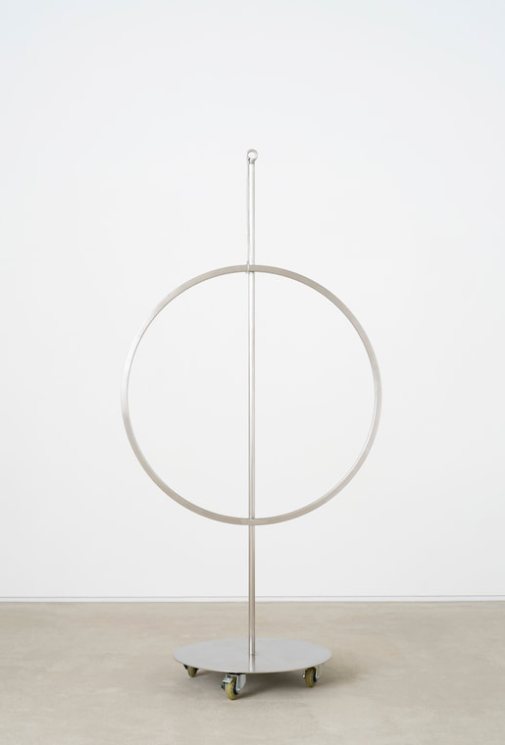
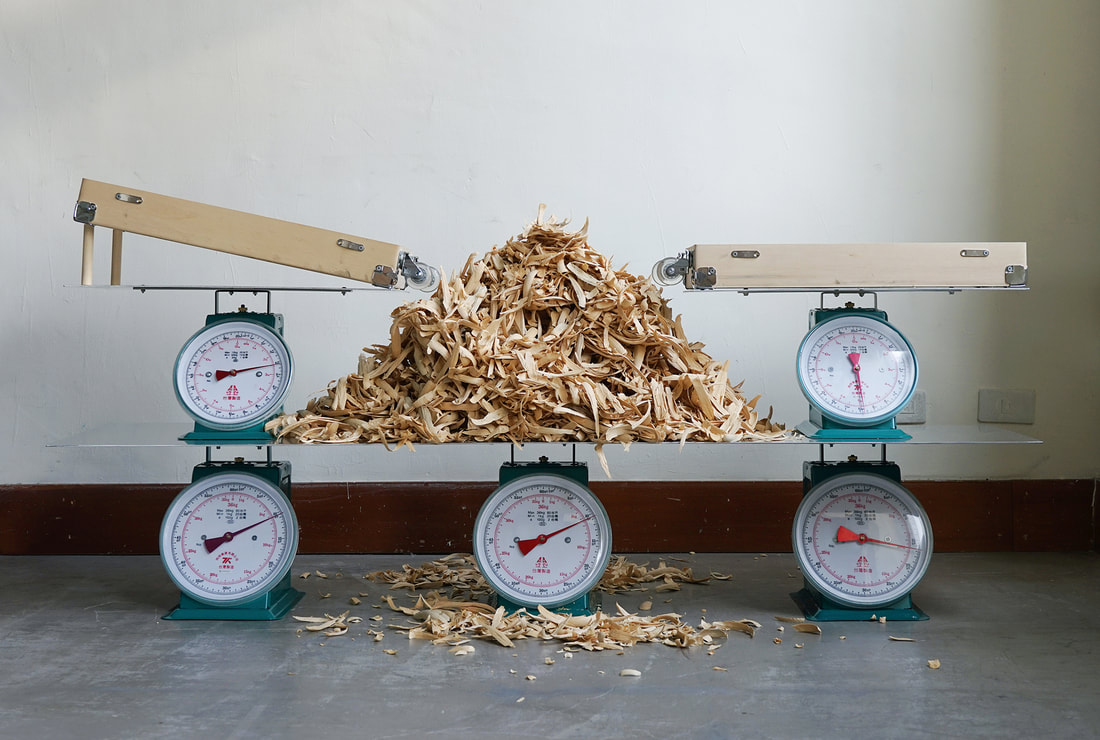
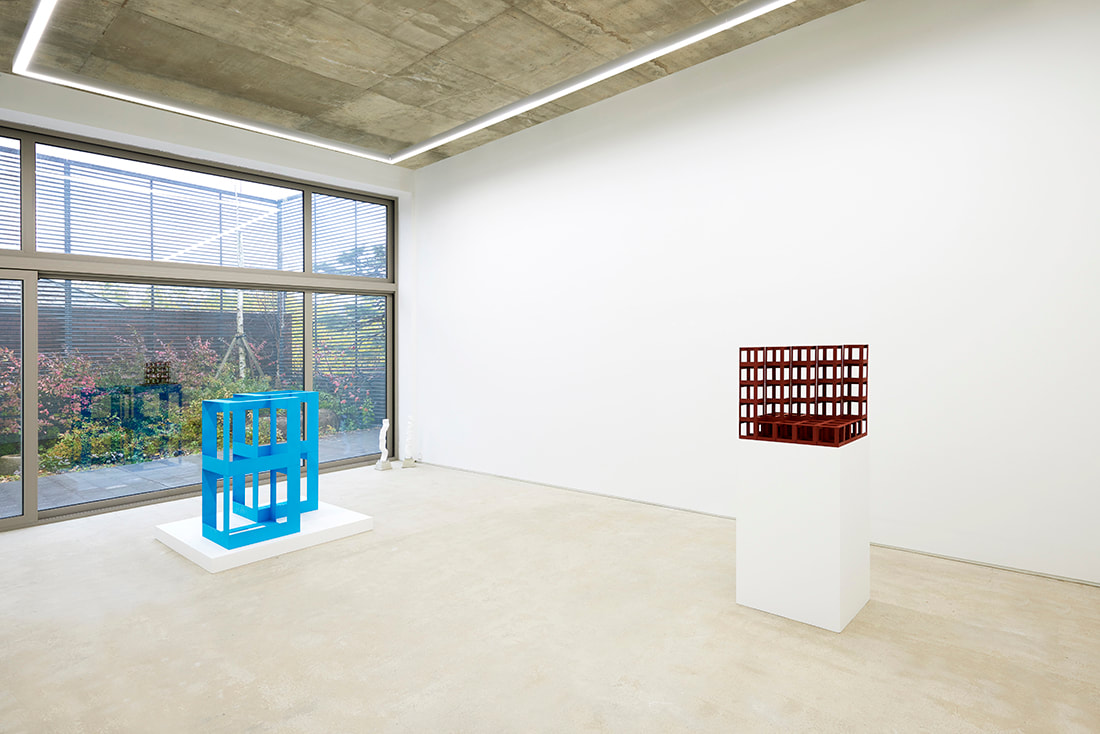
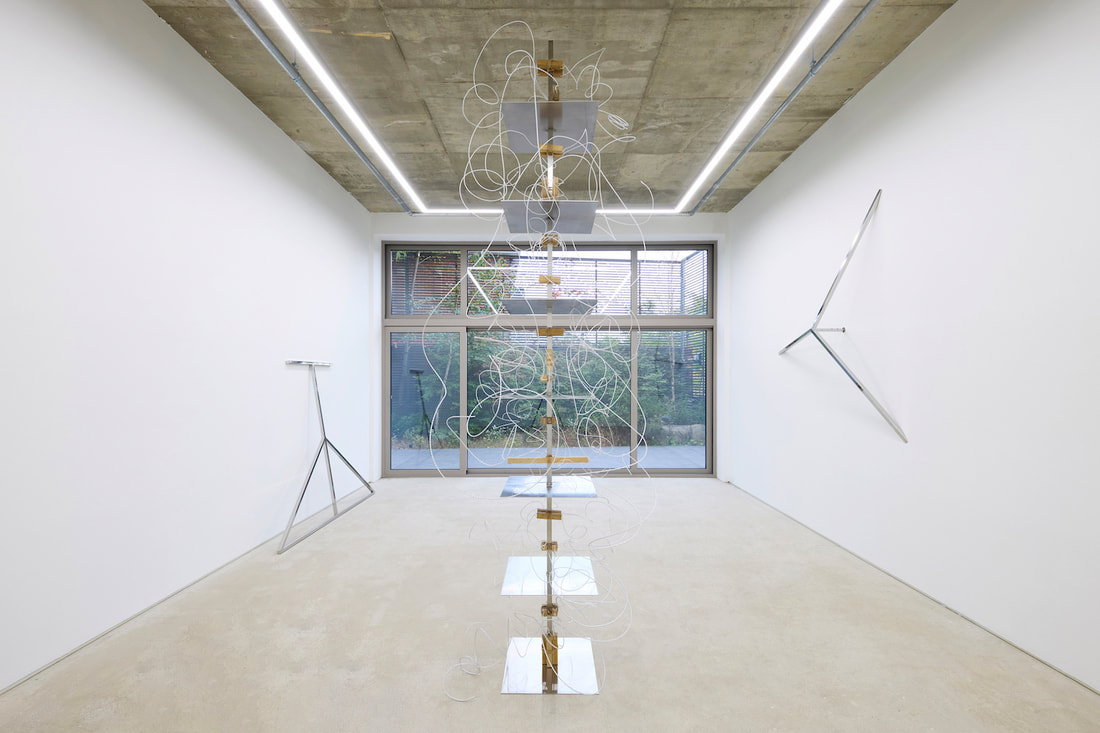
At this moment, the situation is overturned from something given into something devised. The sculpture shown in 《The Ruler of Shape》(2019, Eojjeoda Gallery 2), which also serves as a prototype for this exhibition, originates from folding rulers. Folding rulers are used to measure length or to create precise straight lines and forms. In other words, the inevitable sequence in which the tool governs the form precedes. Kim experiments with agency here. By overlapping rulers, he creates shapes that did not exist before and devises structures that allow those shapes to stand on their own. This experiment was not so much an attempt to replace passivity with agency, but rather an opportunity to reveal once again that forms divided into passivity/agency cannot exist in the first place.
Meanwhile, neither prolonged sorrow, intense joy, nor any particular pathos resides in the cubes and the objects. Forms that do not presuppose a specific narrative simply find their precise positions within the cube. If there is a commonality among these forms, it is that they are not soft. Solid materials are not confined by the cube. In other words, the frame does not suppress the content. The frame overlaps with the object. They gently rely on one another. There is no desire to rearrange the power relationship between tool and form.
Rather, through a process in which they simultaneously reveal each other’s presence, they define themselves. Some objects within the frame clearly indicate where the bottom plane of the cube lies under the influence of gravity, while others settle within the cube regardless of gravity. Interestingly, the completeness of this settlement is proportional to the fluidity between the frame and the object. For instance, it is much easier to fix something by reinforcing the frame while maintaining a state of imbalance within the cube.
In other words, what appears to be a completed and fixed state is not a static condition itself, but a form that contains instability and movement. Introducing this body of work, Kim described it as a “refreshing” sculpture. It was one of the first adjectives he employed. “Refreshing” can be read as meaning that the coordinates are clear. Coordinates require no adjectives. The x, y, z axes simply exist as a world in themselves and do not require judgment. The axes extend infinitely. What shape one takes and what one does within those axes, however, belongs solely to choice. And perhaps that choice is both the beginning and the end of agency.