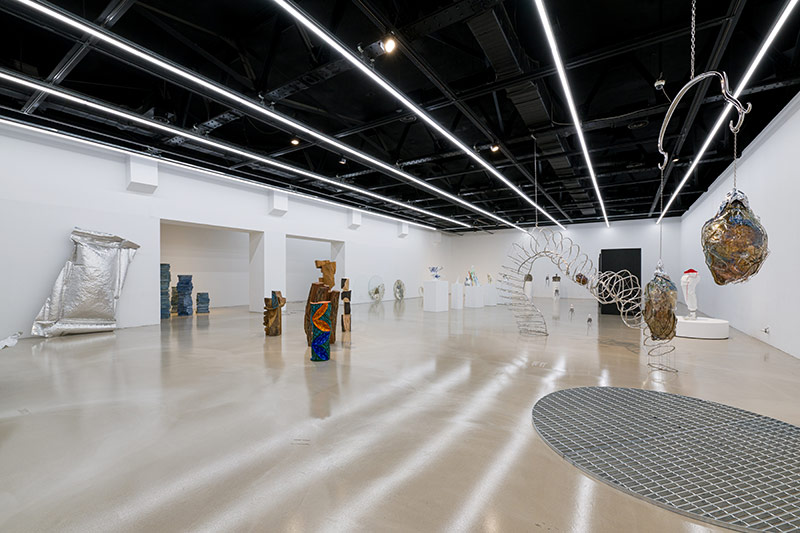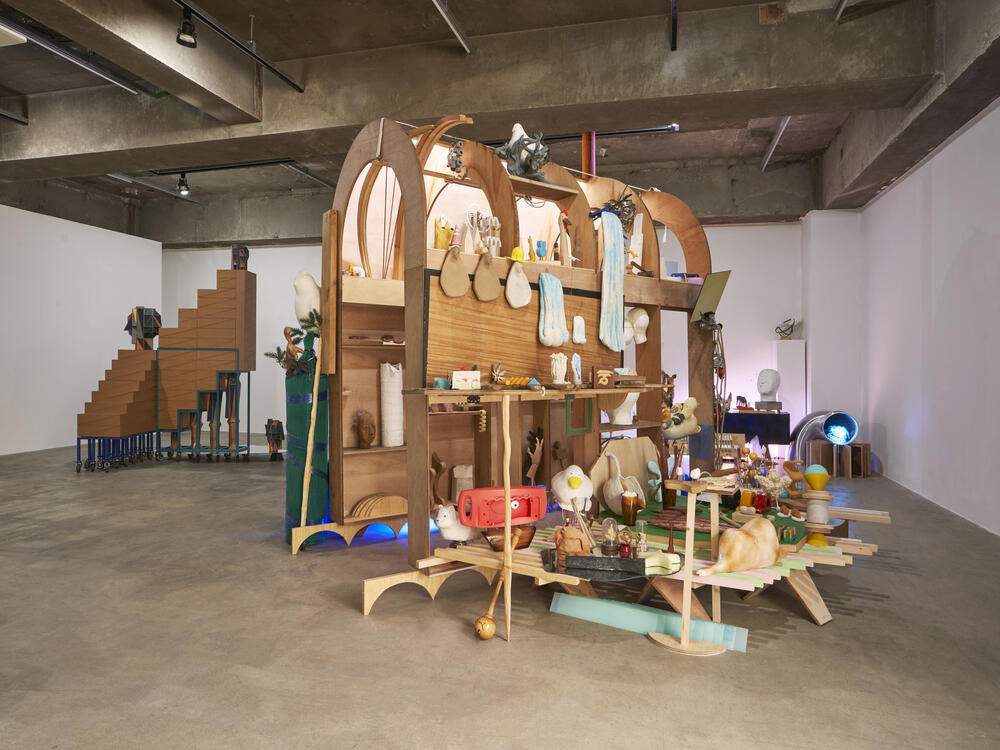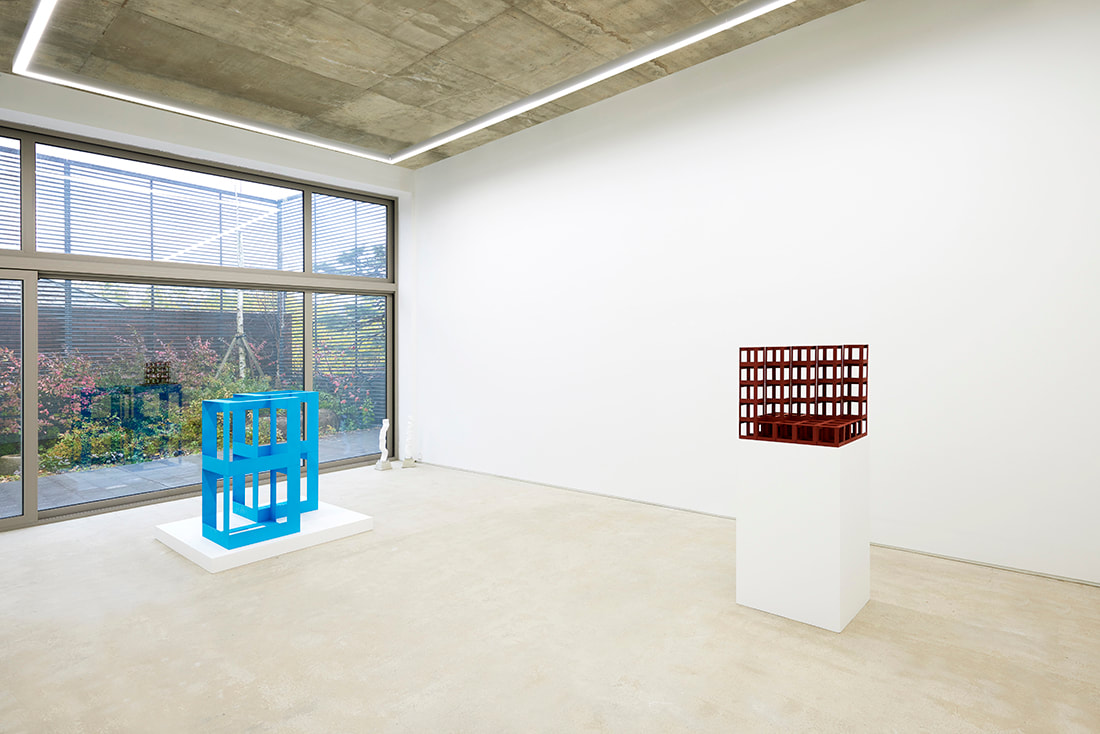


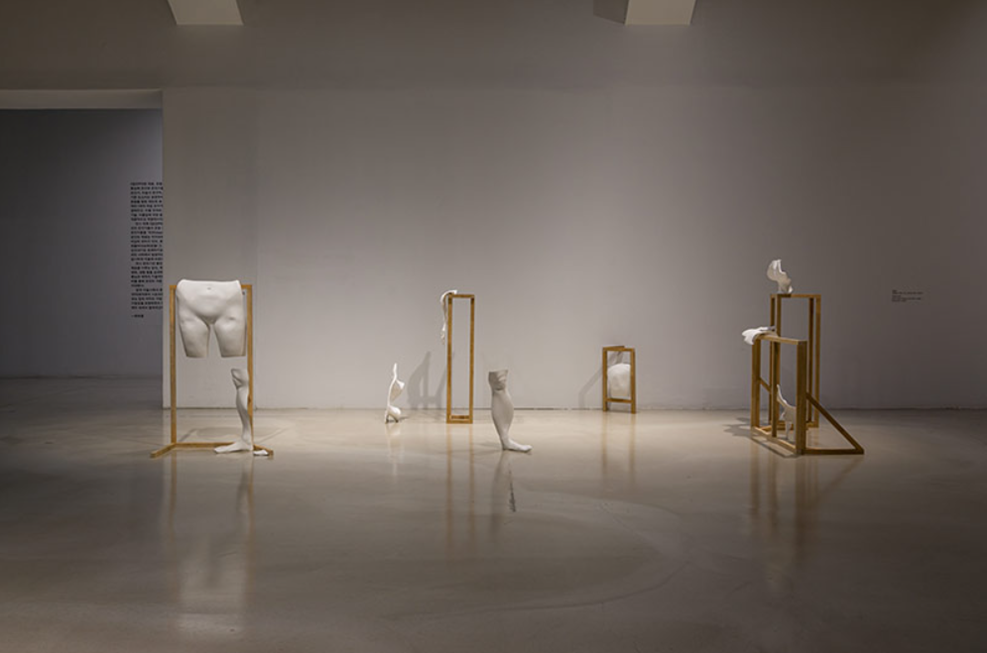
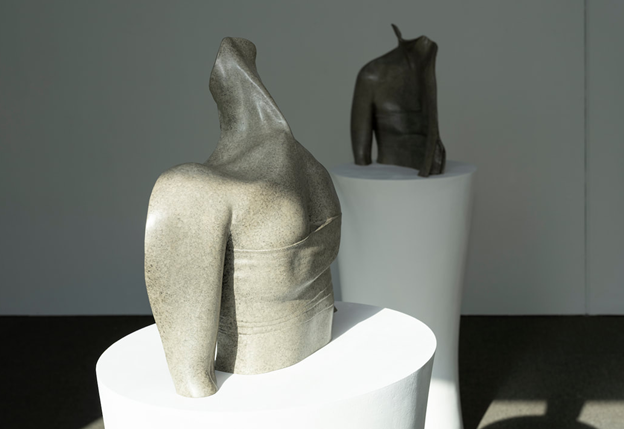
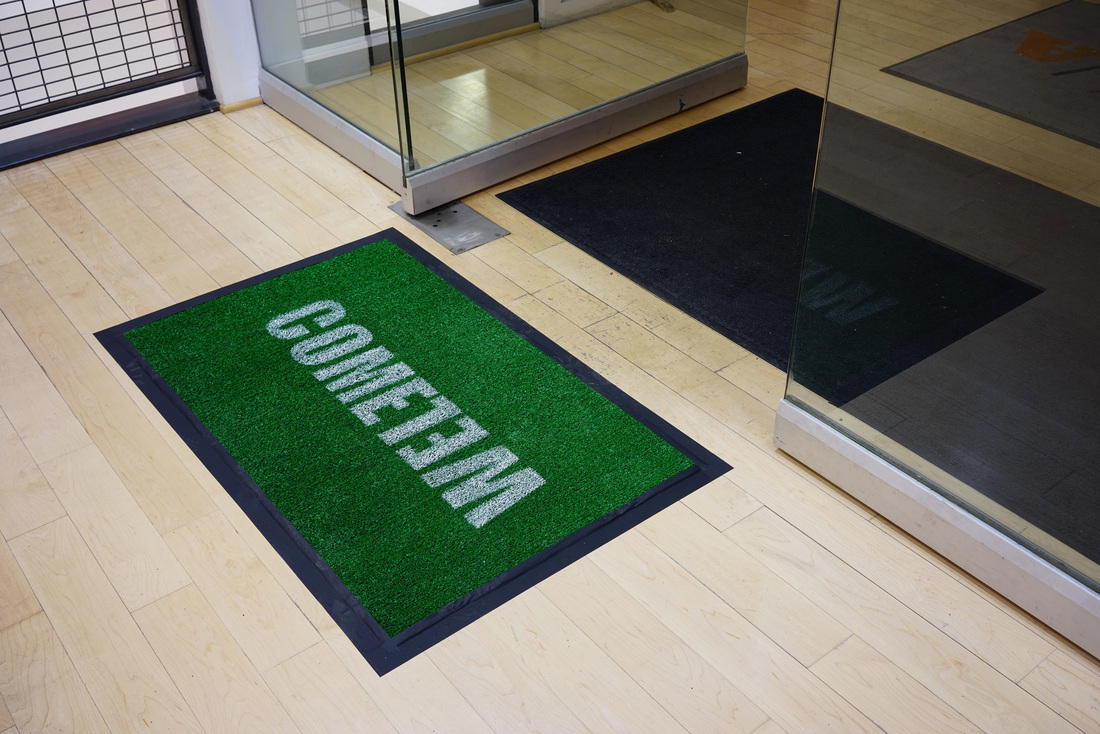
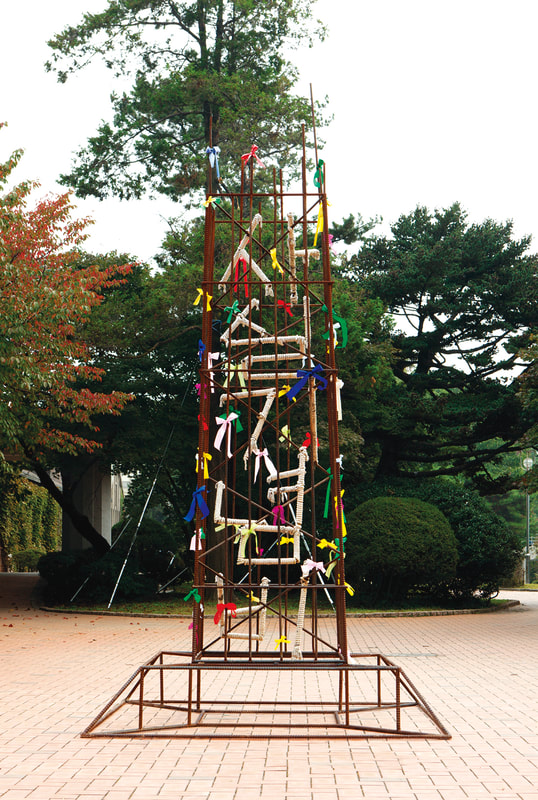
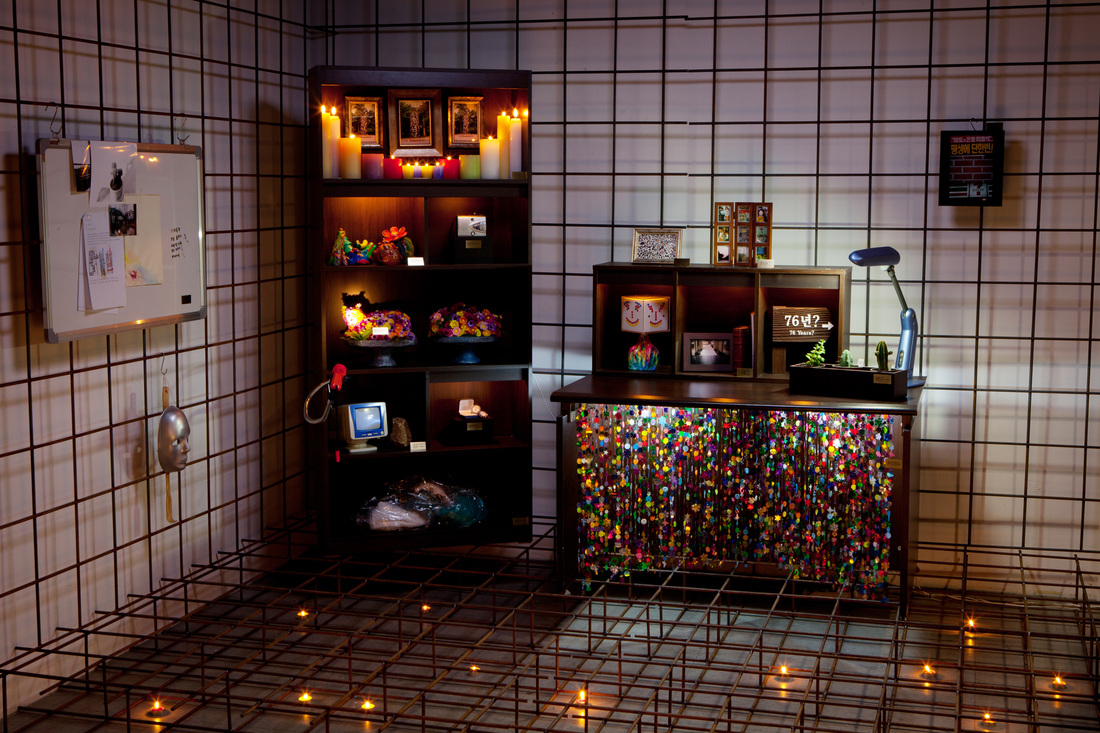
Taeyeon Kim (b. 1987) recognizes the various “frameworks” of reality—such as standards, restrictions, systems, conditions, and limits—and takes them as the starting point of her practice. Her work seeks out the blind spots within fixed structures, including the physical constraints of space, and from these points discovers alternative possibilities or new meanings, proposing responses that engage with and counter these conditions.


Installation view of 《When Troubles Become Works》 (Eljiro 145-1 #401, 2018). Photo: Euirock Lee. ©Taeyeon Kim

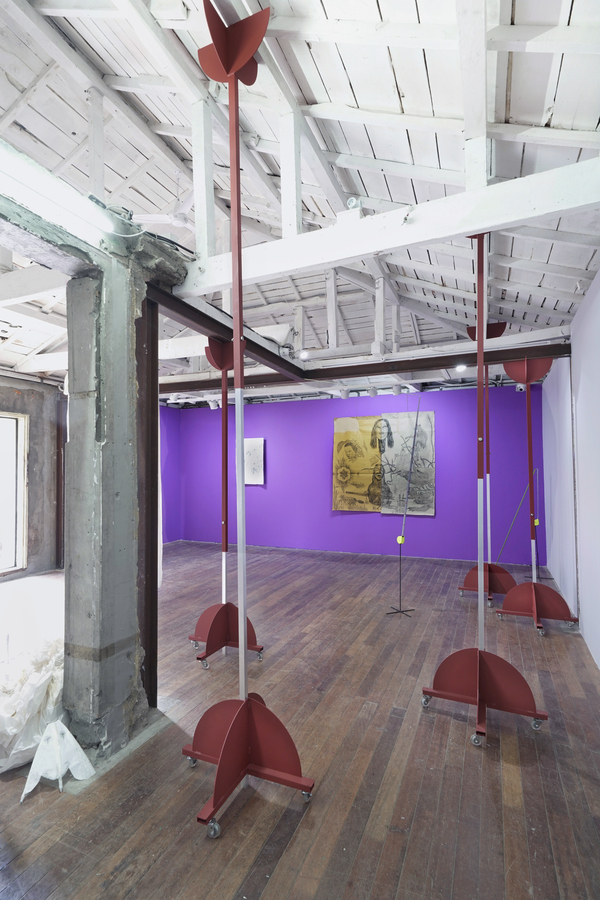
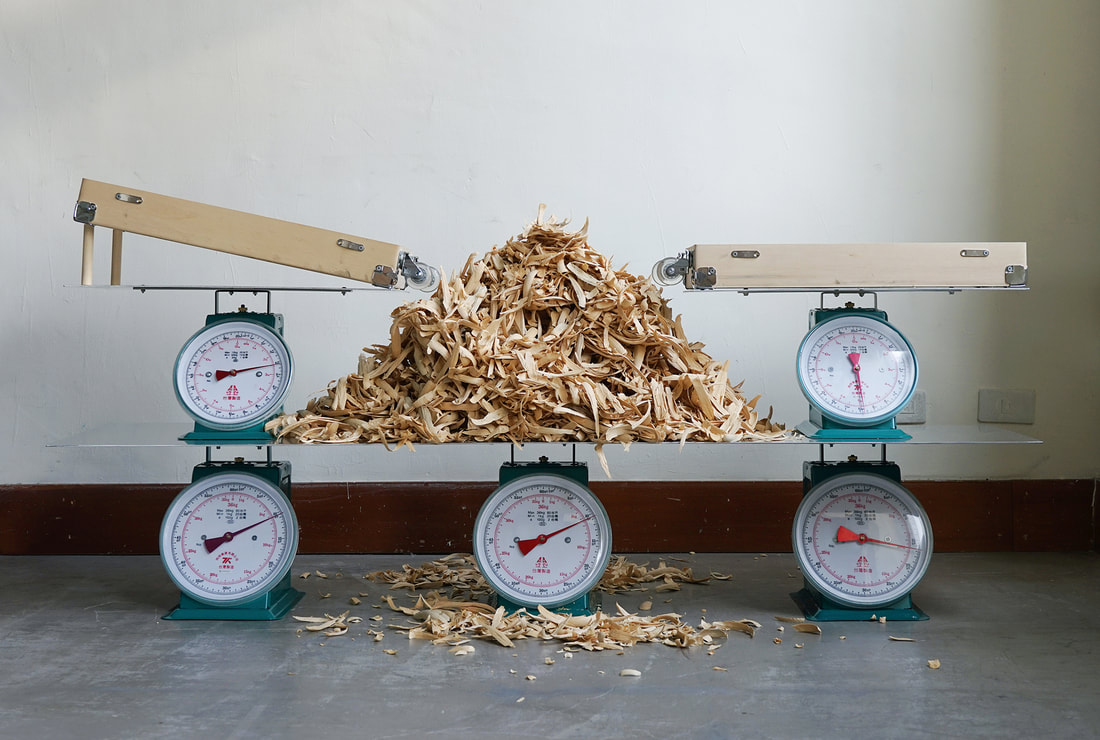
For Taeyeon Kim, a “framework” serves as a metaphor for the dissatisfaction or problems that people encounter in reality. Her practice has developed as a process of working through questions that arise when confronting such frameworks—for instance: “My studio is on the fourth floor of a building with narrow and inconvenient stairs. How can I move heavy objects by myself?” or “Working with given material properties and forms feels passive. How can I gain agency within the process of making?”
 
Responding to the limitations experienced within predetermined frameworks, her work unfolds by taking various conditions—such as regulations, standards, and institutional systems—as its underlying context, while exploring the potential of sculpture to reveal what lies beyond those frameworks.


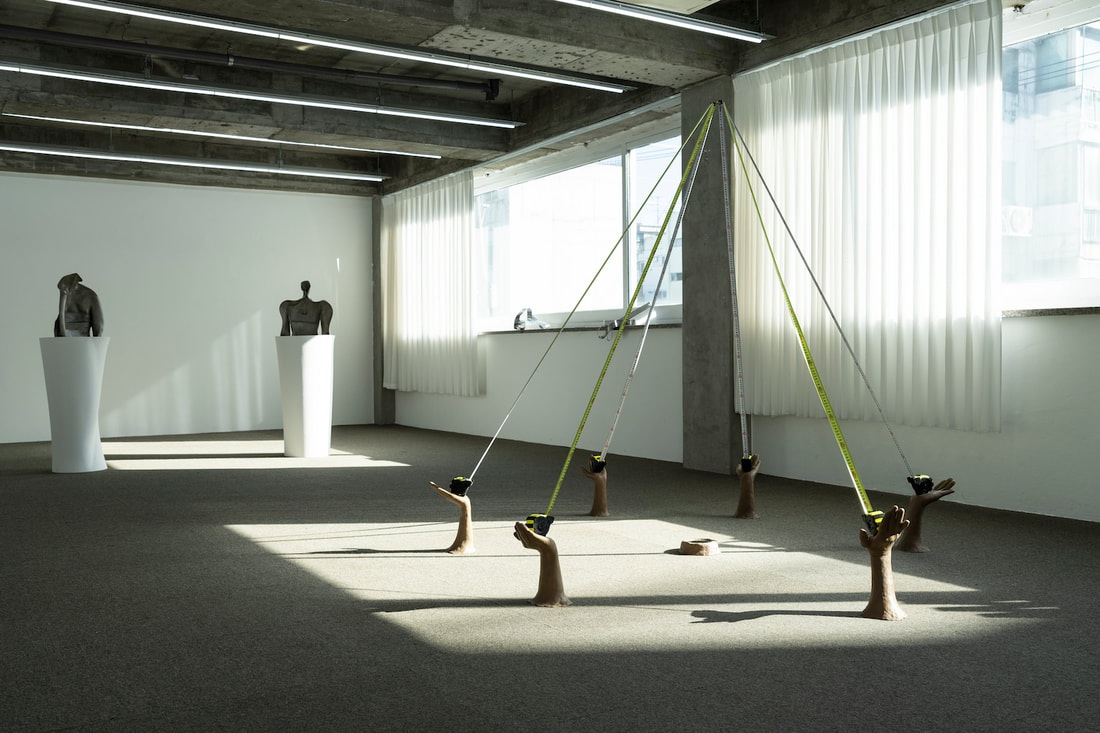
Installation view of 《The Ruler of The Shape》 (UhjjudahGallery2, 2019) ©Taeyeon Kim

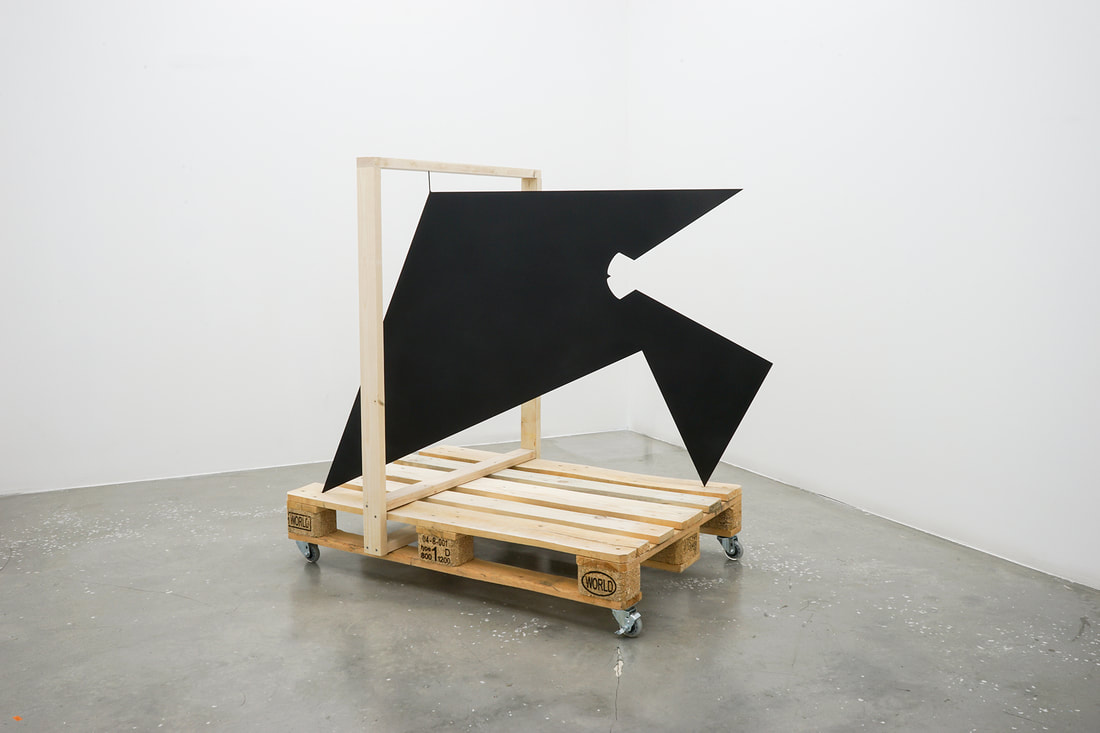
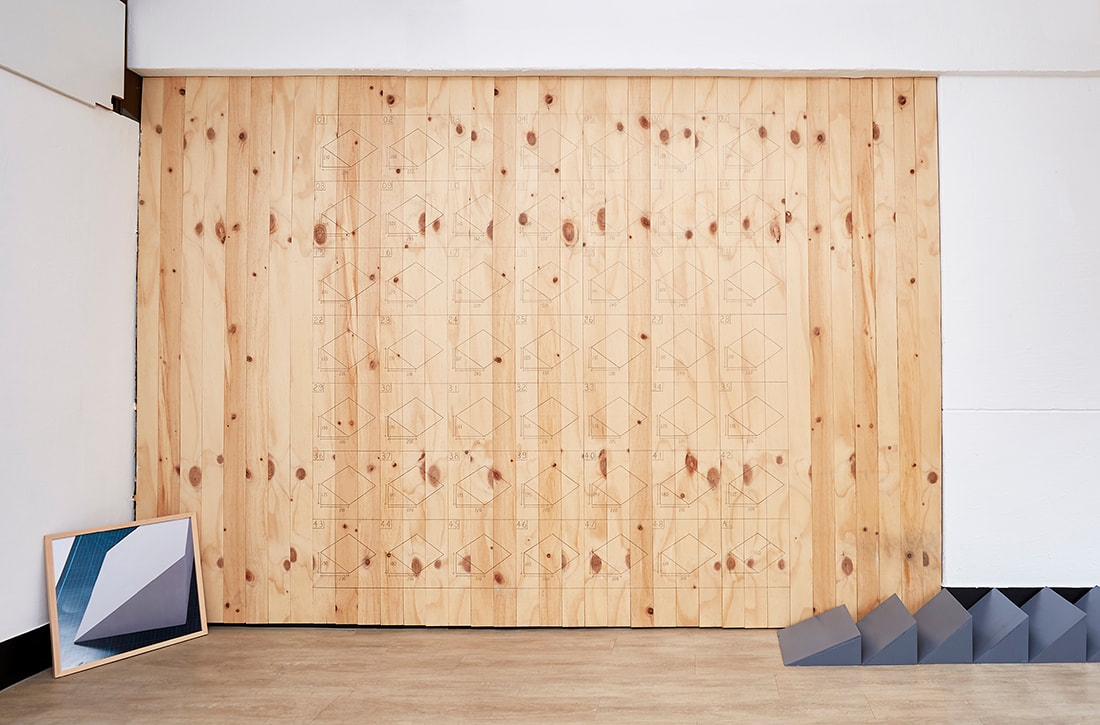
In her first solo exhibition, 《The Ruler of The Shape》 (UhjjudahGallery2, 2019), Taeyeon Kim experimented with the relationship between the instrumental nature of the ruler—used to measure length or produce precise straight lines and forms—and the forms it generates.
 
The works in the exhibition were derived from the structure of a folding ruler. The artworks created from the folding ruler, in turn, generate yet another set of forms.
 
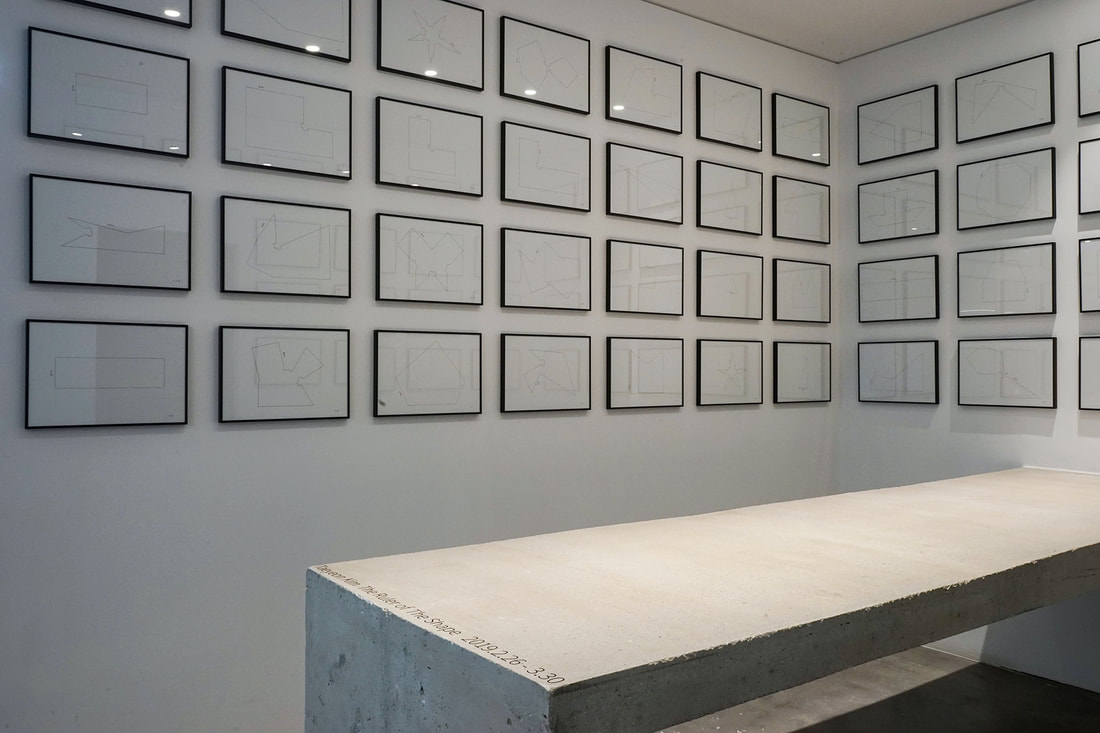
Kim folded and unfolded a one-meter ruler in various directions to produce different configurations. From more than sixty resulting forms, she selected four and produced large-scale three-dimensional sculptures enlarged to 5.5 times their original size. Up to this point, the sculptures appear as passive entities produced by the ruler itself.


Installation view of 《The Ruler of The Shape》 (UhjjudahGallery2, 2019) ©Taeyeon Kim

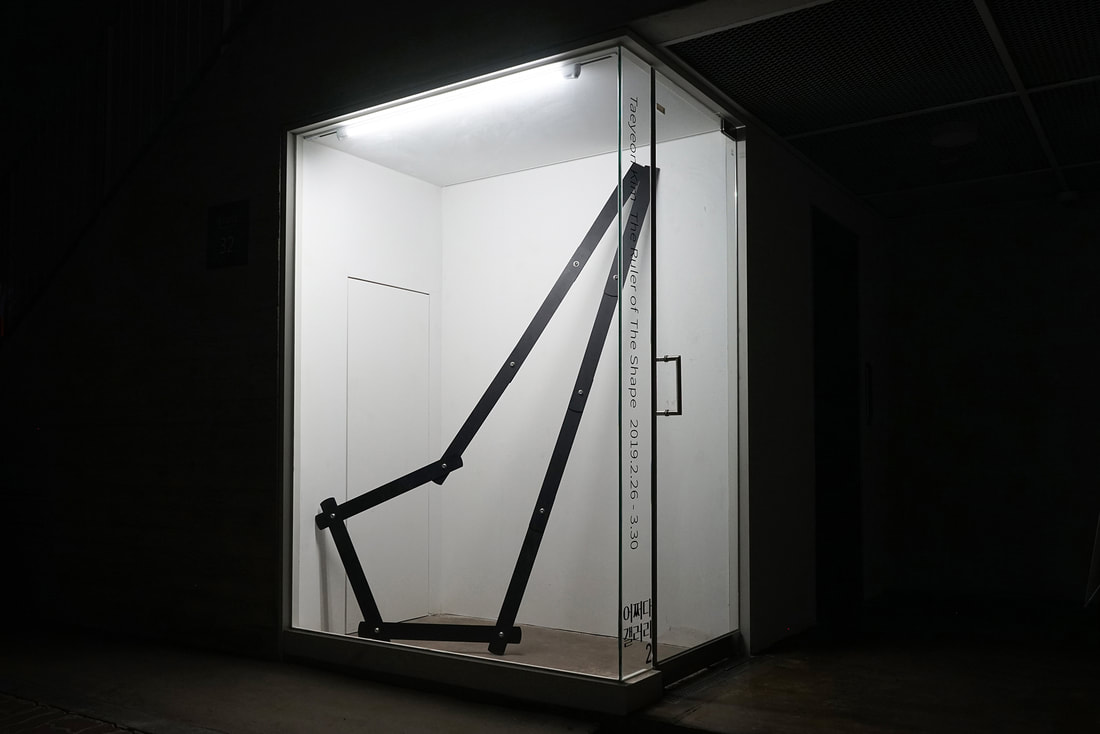
Meanwhile, in the first-floor window gallery space, a work composed of interlocking rods of equal length was installed, forming a geometric structure. This piece was a greatly enlarged version of the folding ruler used to produce the works in the exhibition. Here, the scale of the work was determined so that it could encircle the large three-dimensional sculptures mentioned earlier.
 
In this way, the large sculptures—which initially appeared as passive entities generated by the folding ruler—are transformed through the first-floor installation into active, determining agents. As the exhibition title suggests, these works simultaneously function as forms derived from the ruler (“The Shape”) and as rulers that generate new forms (“The Ruler”).

Installation view of 《The Ruler of The Shape》 (UhjjudahGallery2, 2019) ©Taeyeon Kim

Through this process, Kim’s work uncovers new possibilities within the ruler, an object whose functionality is typically prioritized over its formal or aesthetic qualities. She has explained that her intention was to reconsider the relationship between tool and form.
 
While the question—“Which comes first, the tool or the form?”—cannot be definitively answered, her work reveals that what takes precedence can shift depending on one’s perspective. In doing so, it suggests that the binary division between agency and passivity cannot truly exist in fixed form.


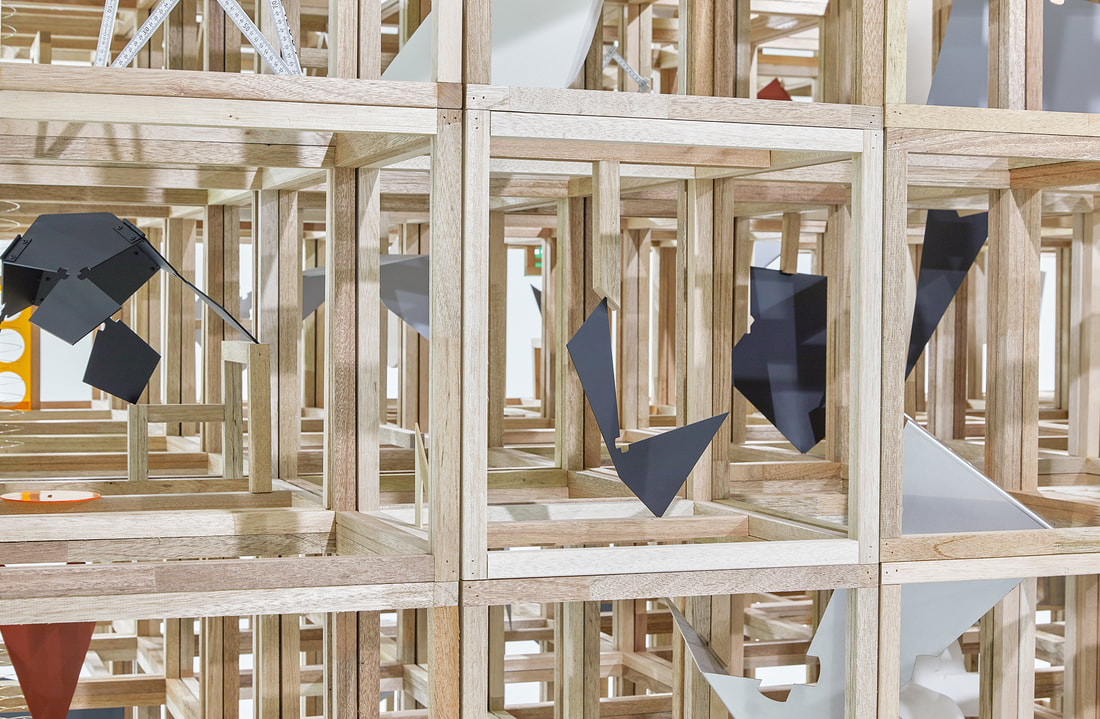
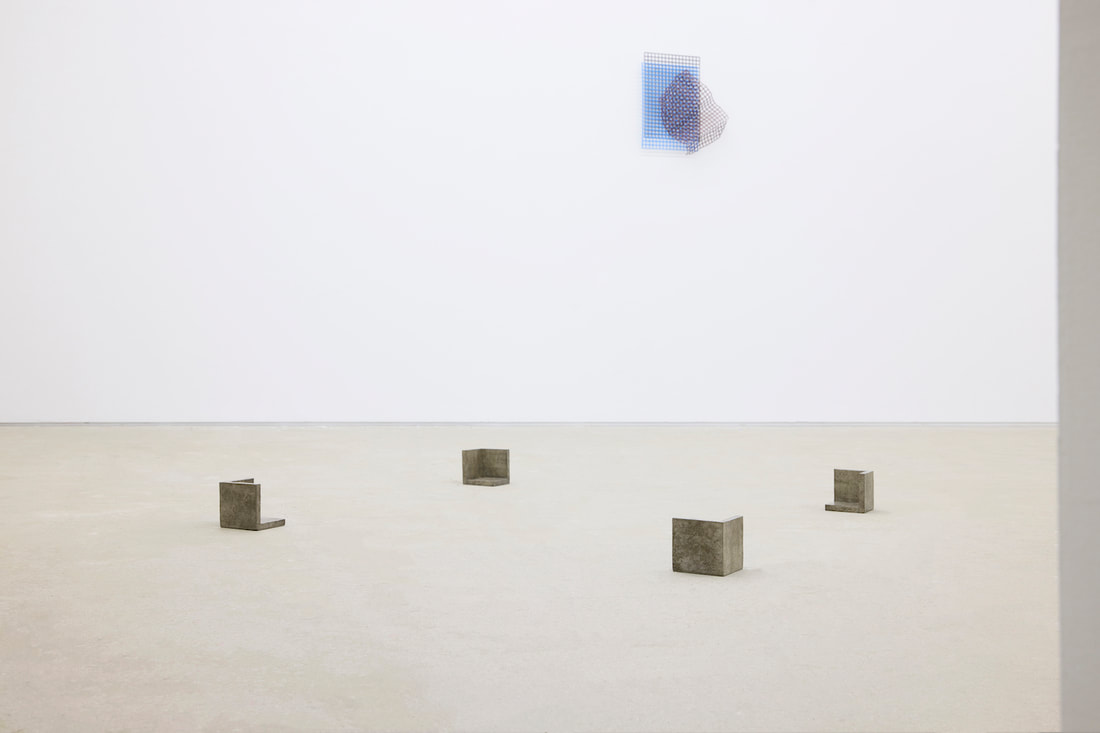
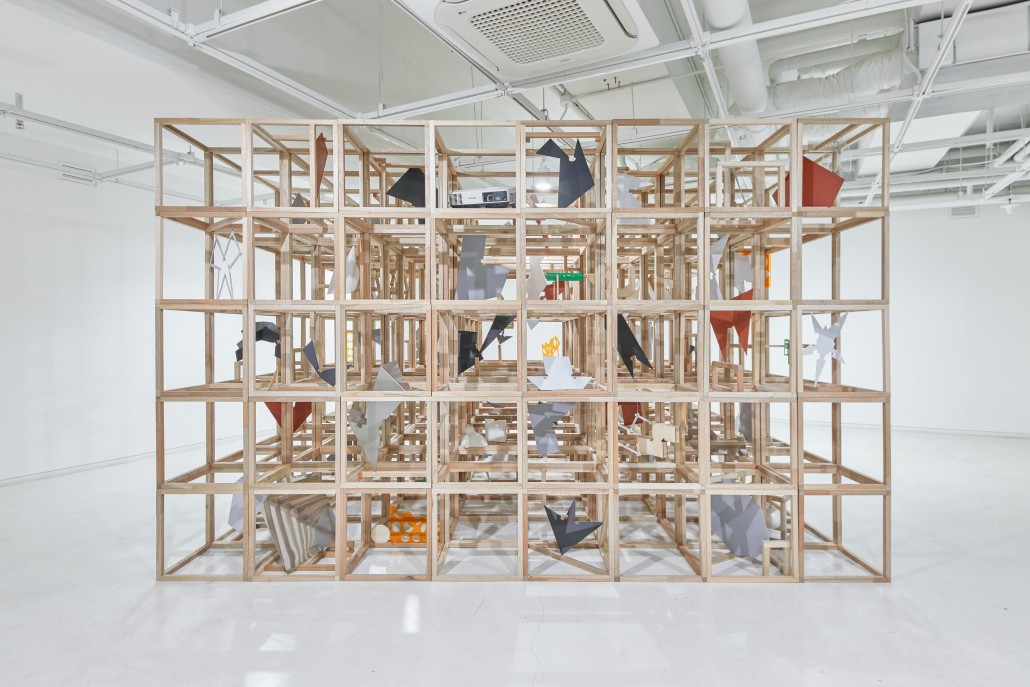
Installation view of 《Out of Line》 (Artspace Boan 2, 2020). Photo: Studio18(Kangjoon Lee) ©Taeyeon Kim

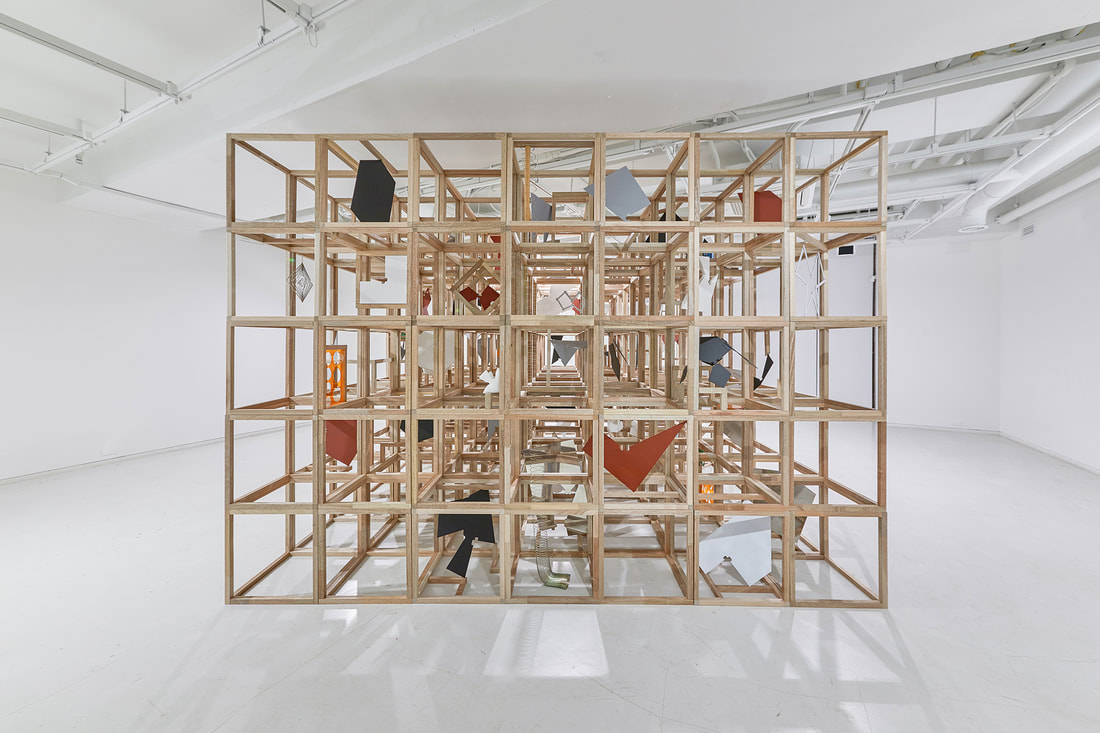
Meanwhile, in her solo exhibition 《Out of Line》 (2020) at Artspace Boan 2, Taeyeon Kim blurred the hierarchical relationship between tool and form through the interaction between wooden cubic structures and the objects placed within them.
 
In this exhibition, Kim inserted irregular objects into cubes of identical dimensions without any predetermined score or system. The forms did not presuppose a specific narrative; rather, they simply occupied positions within the cubes, each finding its own precise place.
 
In this context, the cube does not dominate or restrain the forms it contains. Instead, the framework and the objects overlap and become entangled, appearing to rely on one another.


Installation view of 《Out of Line》 (Artspace Boan 2, 2020). Photo: Studio18(Kangjoon Lee) ©Taeyeon Kim

Within the framework, some objects—affected by gravity—clearly indicate which side of the cube functions as the bottom surface, while others appear to settle inside the cube regardless of gravitational orientation. The completeness of this “settling” is proportional to the fluid relationship between the framework and the objects. For instance, when an object is slightly tilted or wavering within the cube, reinforcing the frame while maintaining that unstable state can make it much easier to secure.
 
In other words, what appears to be a fixed and completed state is not pure stillness; rather, it is a form that inherently contains movement and instability.


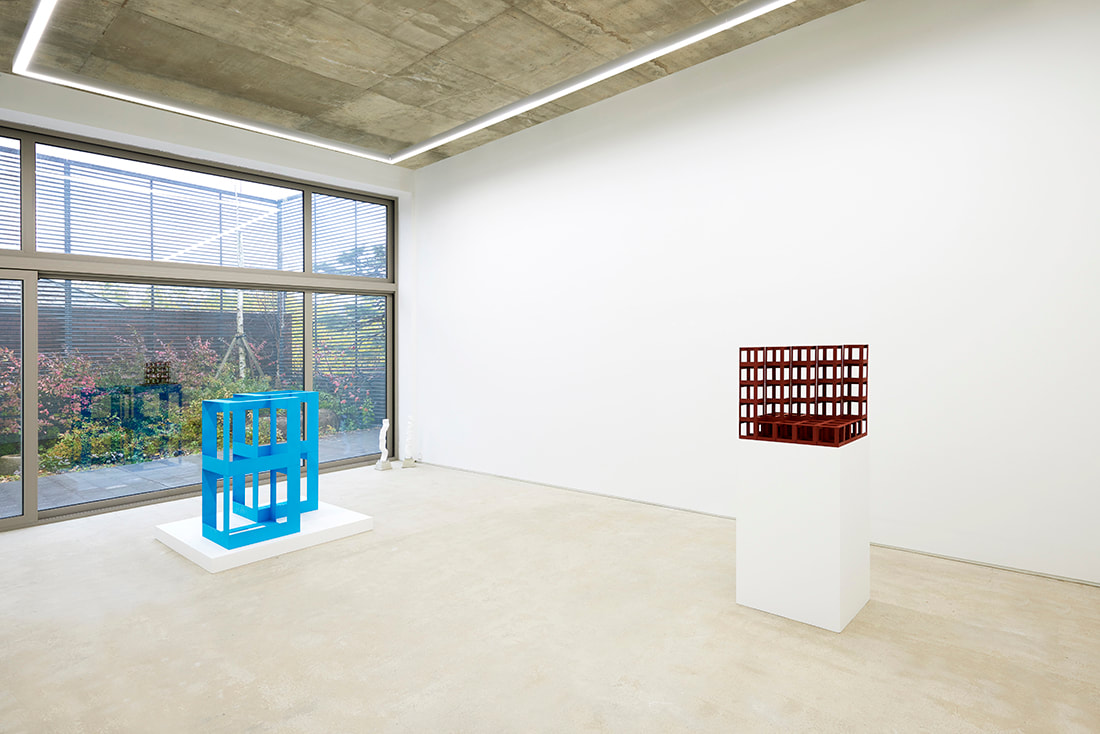
Installation view of 《Convergence and Divergence: Form and Variation》 (Gallery2, 2021) ©Taeyeon Kim

Meanwhile, in her solo exhibition 《Convergence and Divergence: Form and Variation》 (2021) at Gallery2, Taeyeon Kim acknowledged the presence of the very frameworks she had previously attempted to escape, proposing through her work that not only “divergent” diversity but also “convergent” structures coexist.
 
In this exhibition, the artist sought not simply to conform to fixed frameworks but to reveal both the infinite possibilities of form and the fact that frameworks themselves exist. By sensing, imagining, and twisting points of convergence—and by producing various prototypes—she attempted to establish a new relationship between convergence and divergence. This process, in turn, allowed the artist to focus more closely on the formal qualities and aesthetic sensibilities of her sculptures.


Installation view of 《Convergence and Divergence: Form and Variation》 (Gallery2, 2021) ©Taeyeon Kim

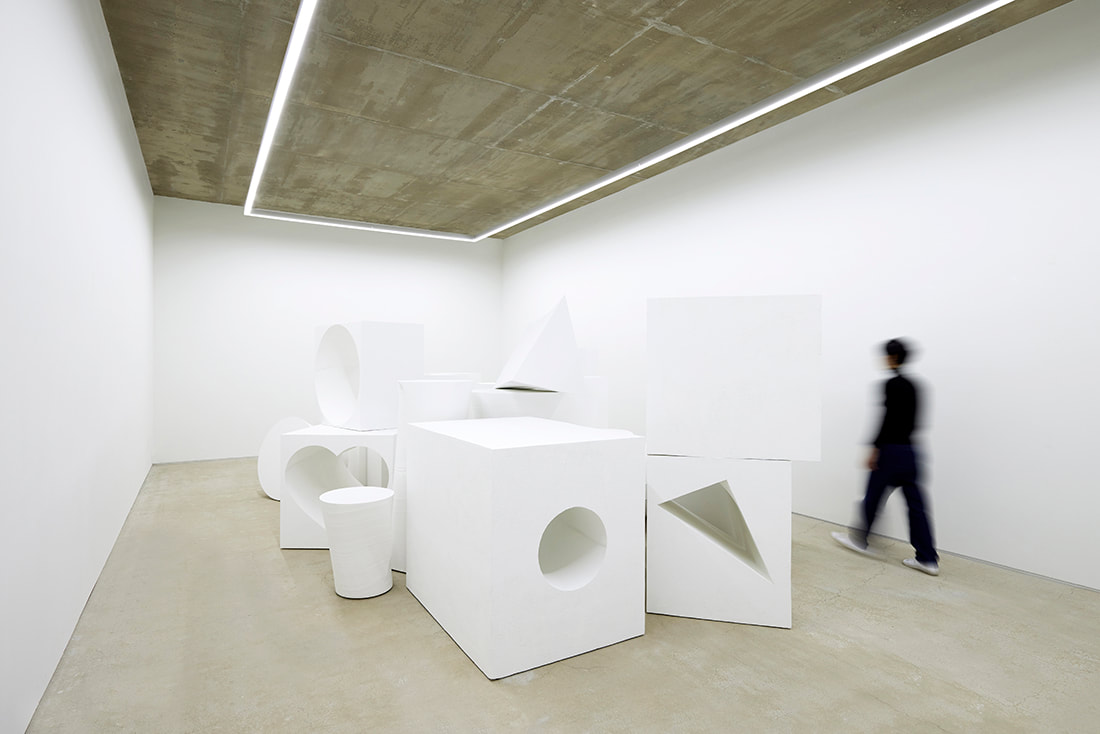
The deepest roots of ‘Foam’ series are soap bubbles, blown out of a circular frame in all sizes and shapes, given the surface tension of the soap solution. What expanded here were the polystyrene foam hexahedrons (boxes) and the other geometric shapes protruding from it. First, draw identical shapes on opposing sides of the box. Two people, one on each of those opposing sides hold two ends of one hot wire cutter and follow the drawn shapes and start carving.
 
However, this is done completely by hand and the two are not perfectly in sync. Such a cutting wire leaves behind a stratigraphic cross section, and a variation on the shape drawn on each side of the box. Despite carving along a set shape, variables cannot be entirely controlled, and form finds a way to be different.
 
The artist discovered freedom and hope in this variation across every iteration. Polystyrene foam shapes and hexahedrons were installed together in this exhibition. The counter relief-like boxes contain the stratified texture of the hot wire and the form as a mold. These two things simultaneously reveal the all-possible-outcomes of divergence and the point of convergence.


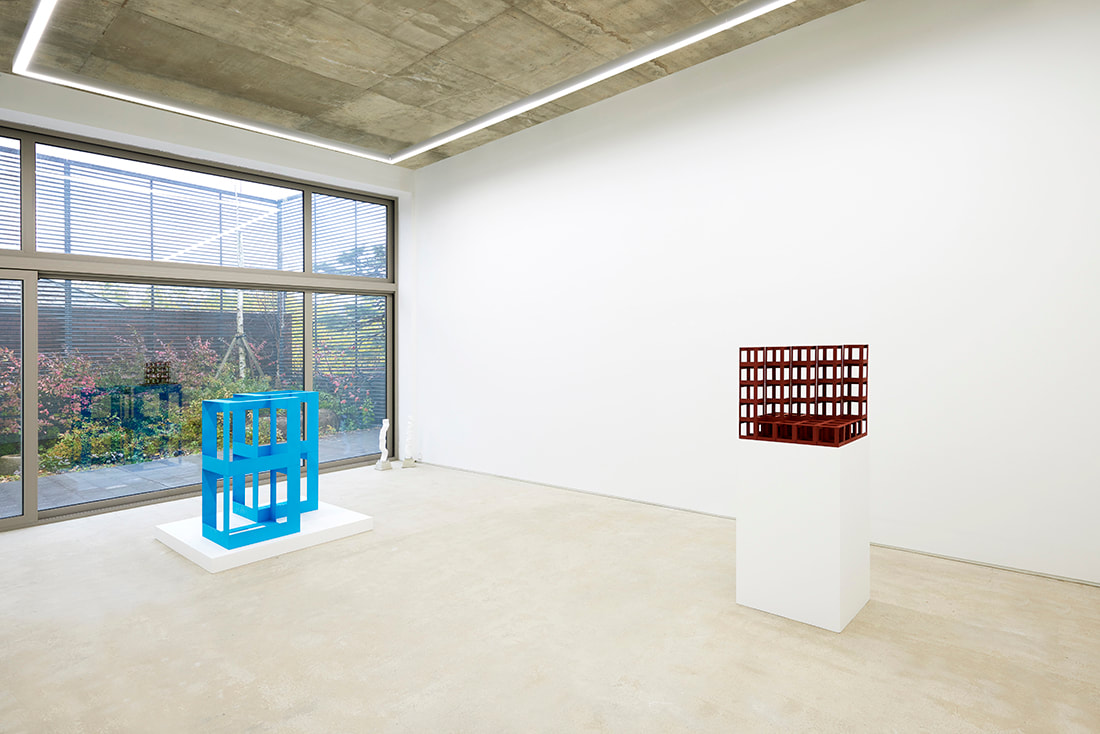
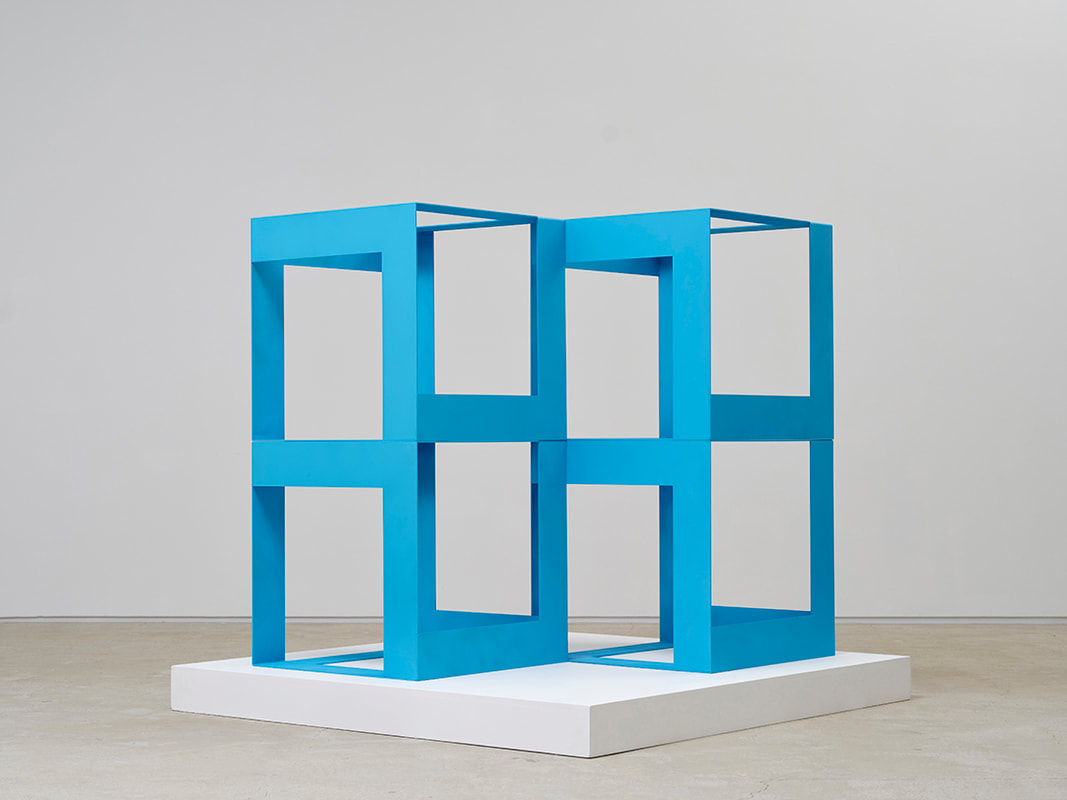
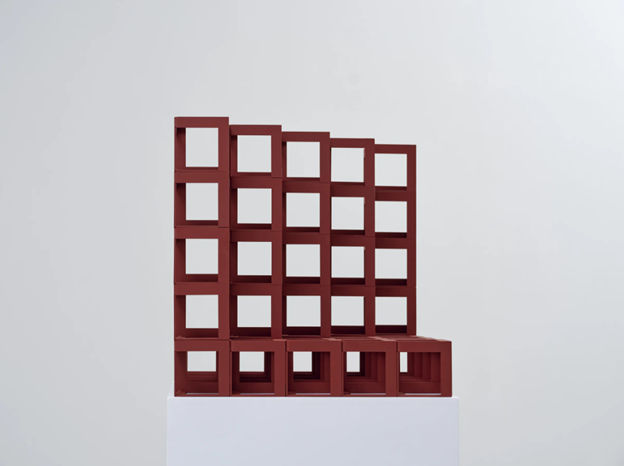
Taeyeon Kim, 2 by 2 Grid, 2021, Steel plate, acrylic paint, 100x100x100cm ©Taeyeon Kim

2 by 2 Grid and  5 by 5 Grid are a three-dimensional representation of the two-dimensional graphing paper; a frame that the artist has been deeply curious of for quite some time.
 
The artwork was made by assembling L-shaped sheet metal. Based on the point of view, the assembly can look completely full of gaps, or something else entirely. The three-dimensional grid space is an expression of the two-dimensional blind-spot on the graphing paper.


Installation view of 《Convergence and Divergence: Form and Variation》 (Gallery2, 2021) ©Taeyeon Kim

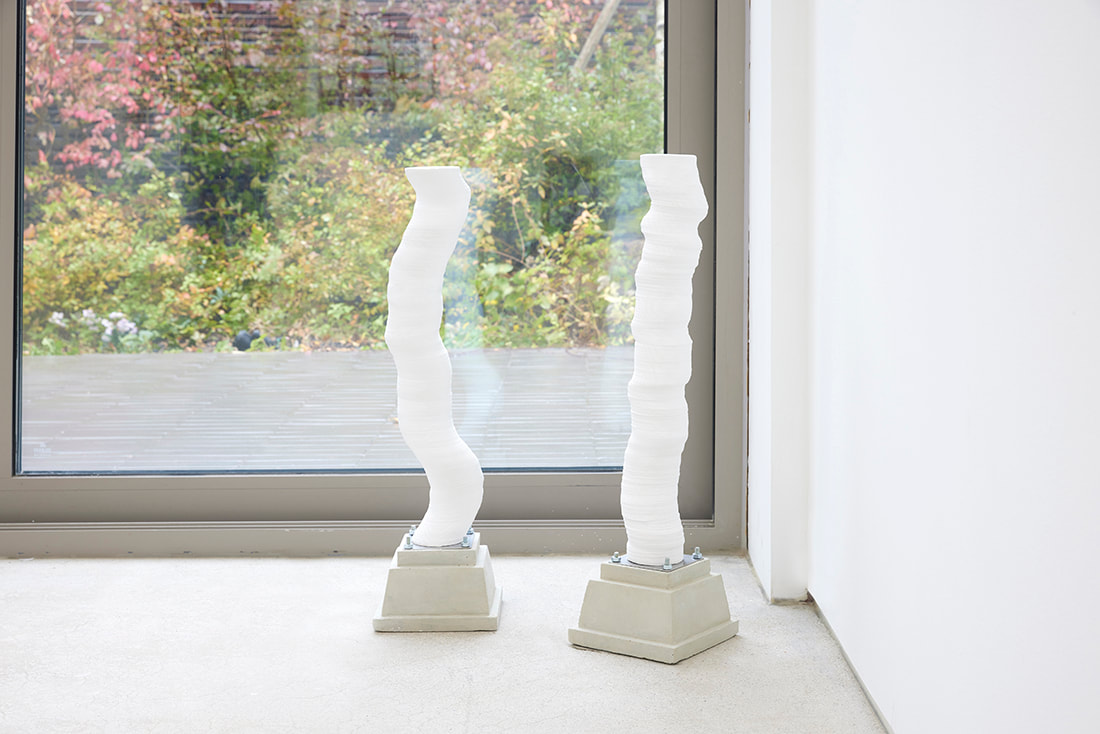
‘Perpendicular Wave’ series is a wave spring die-cast and replicated in plaster. Every time the spring is stood upright on the ground, it stands upright with an odd form as if to resist falling over. This too, is a metaphor. Something that is prefabricated to standardized specifications may still hold indeterminate form.


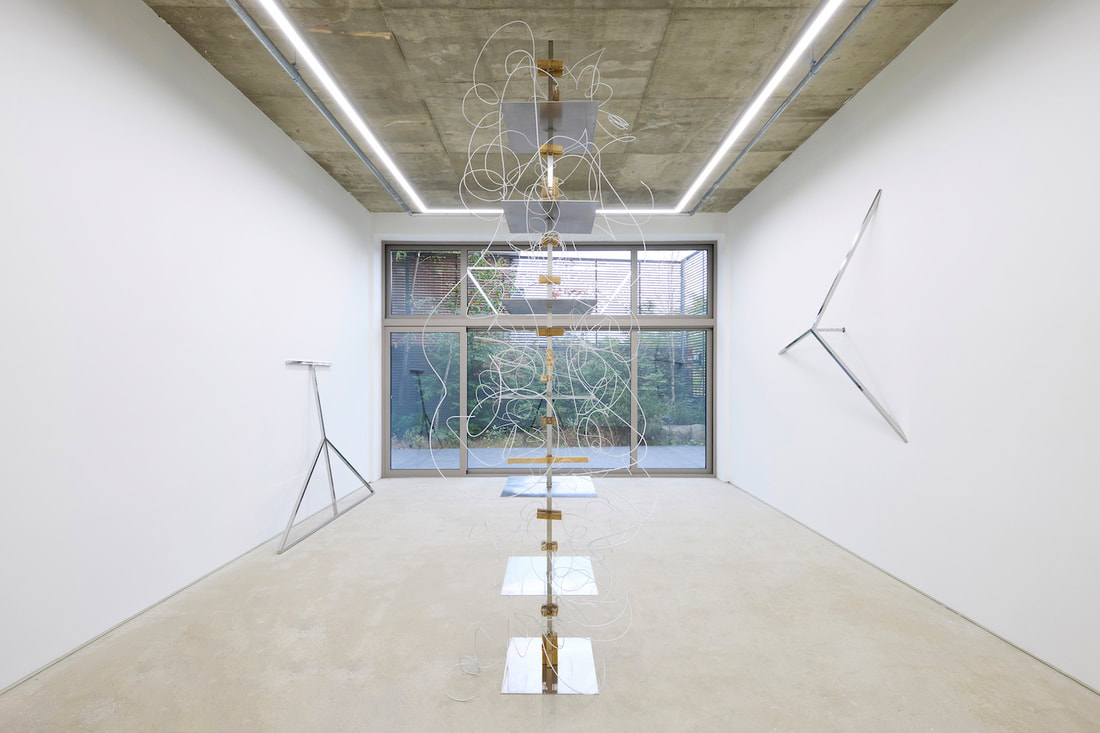
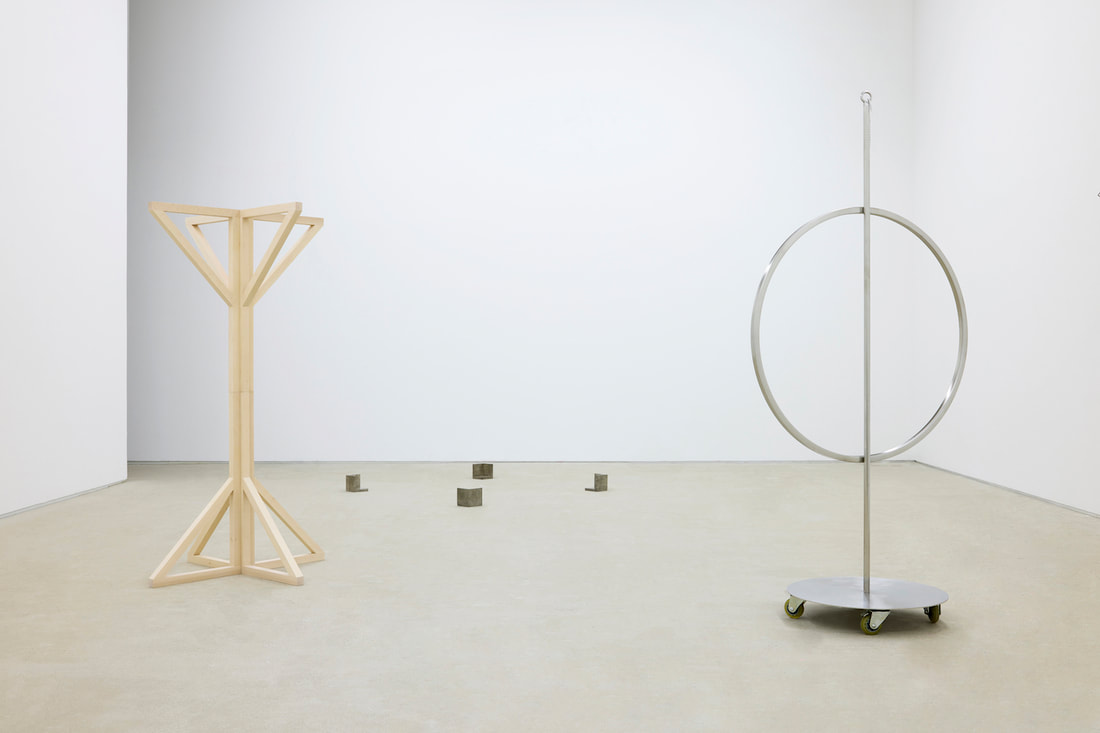
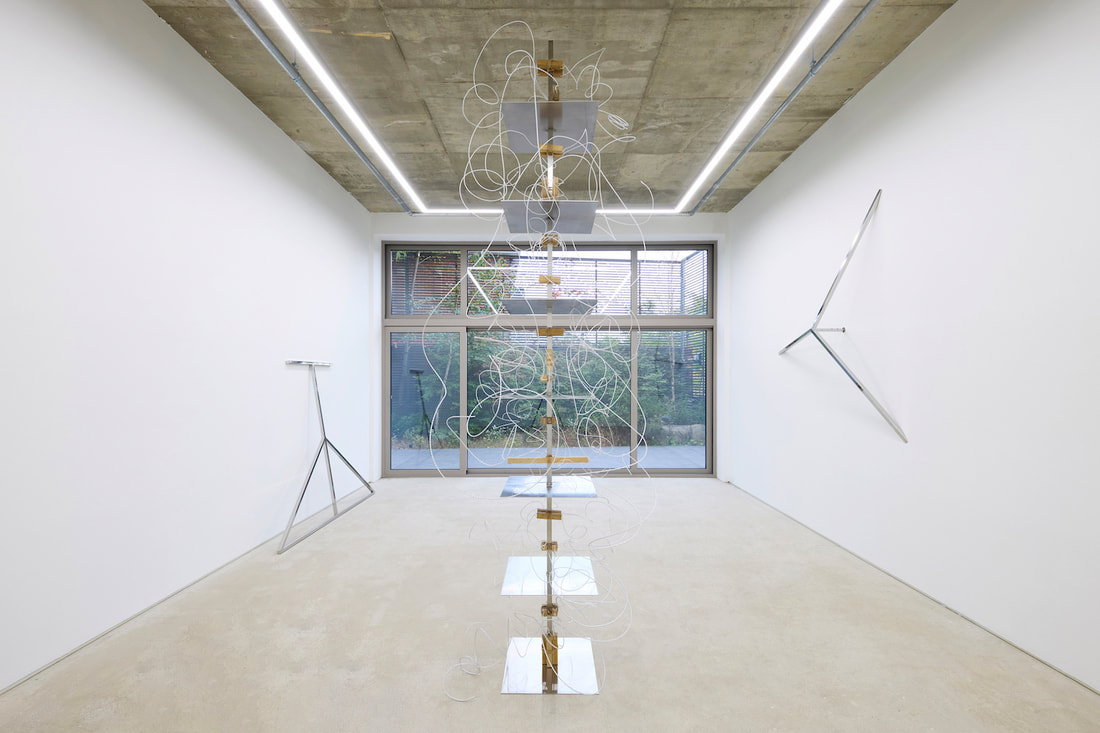
Installation view of 《Nameless Background》 (Gallery2, 2024) ©Taeyeon Kim

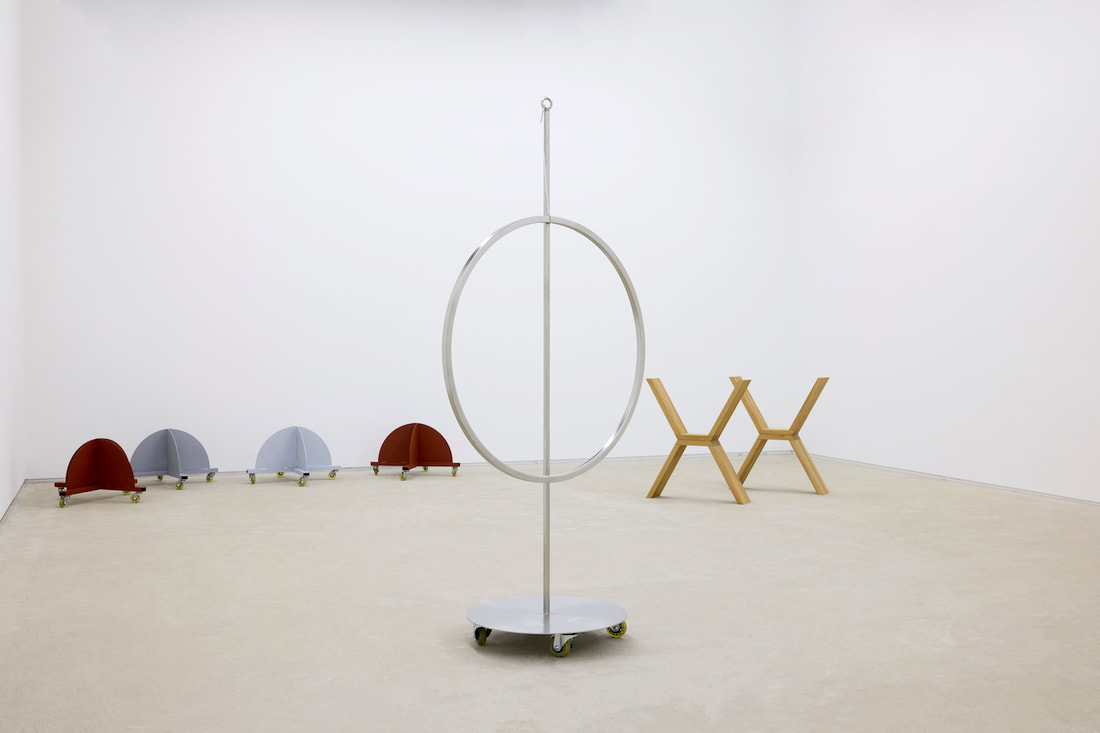
In her 2024 solo exhibition 《Nameless Background》, Taeyeon Kim attempted to “summon the background without any explicit instruction or designation.” The very act of naming establishes a hierarchical distinction between the naming subject and the named object, where the unidirectional nature of this relationship serves to reinforce their boundaries. In Kim’s exhibition, auxiliary objects—often regarded as background elements encompassing both the life of sculpture and everyday life—were placed within the space.
 
These included objects such as pedestals that support sculptures, armatures that hold sculptural clay, tripods that stabilize cameras, and stands used to erect partitions. Rather than pitying their subordinate status or elevating them to a central position, Kim simply relocated them in the manner in which they were originally used, allowing their roles to be recalled.
 
Through this gesture, the artist seeks to blur distinctions and dissolve boundaries, drawing out a neutral way of looking at objects and exploring how that which has no name might come to be called.


Installation view of 《Nameless Background》 (Gallery2, 2024) ©Taeyeon Kim

In this exhibition, rather than attempting to draw attention to objects that had long gone unnoticed as auxiliary devices, Taeyeon Kim sought to visualize how their very lack of attention functions as a valid outcome of fulfilling their roles as subsidiary elements.
 
According to the artist, these objects are characterized by “performing their roles almost silently” and by “not possessing any conspicuously distinctive features.” Recognizing such qualities, she suggests, is precisely the way we can properly acknowledge their value.


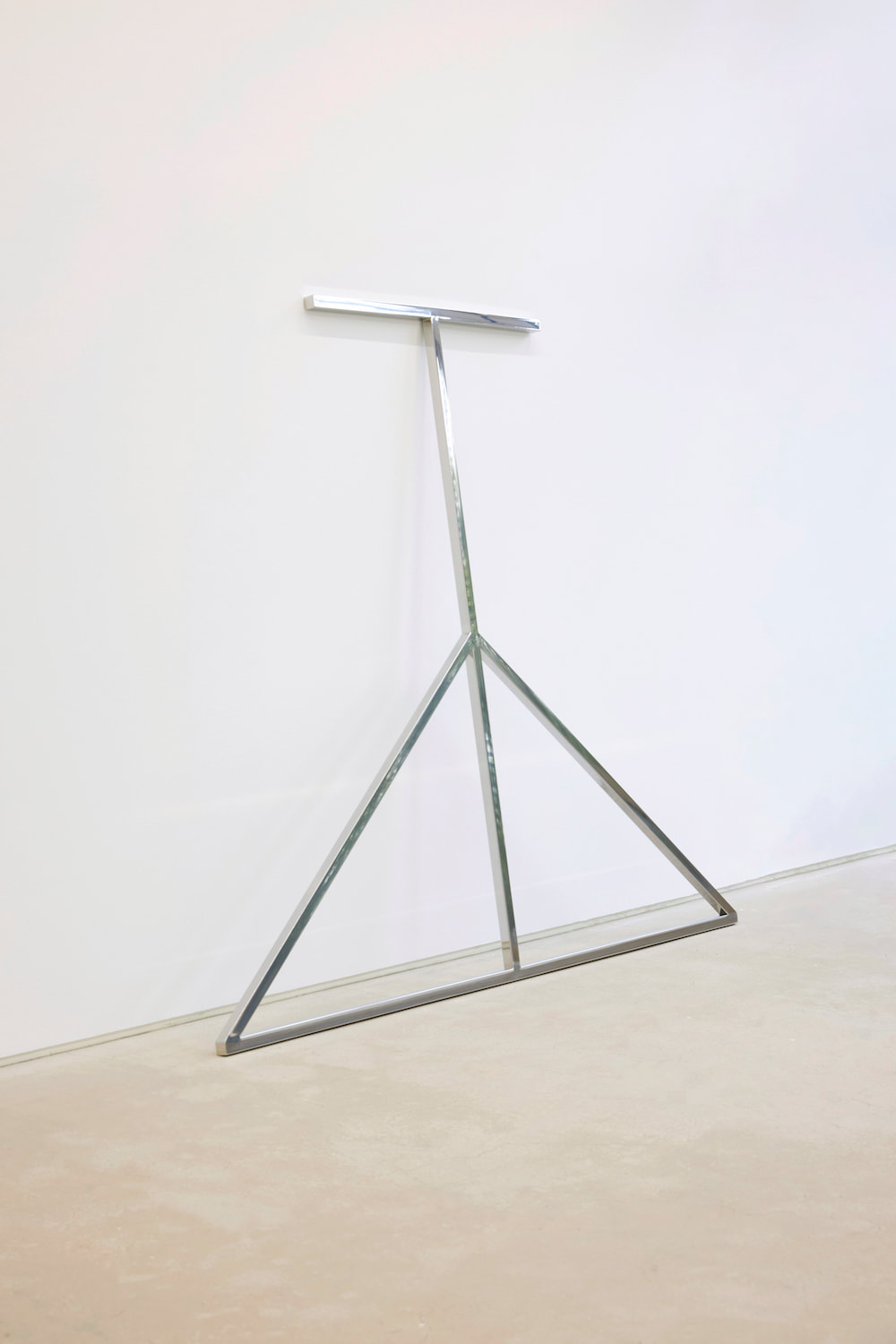
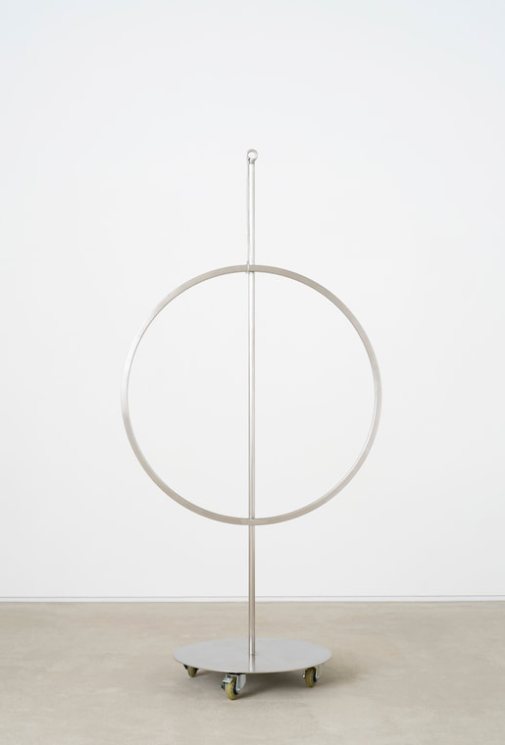
Taeyeon Kim, Stand, 2024, Stainless steel tube, 166x300x3cm ©Taeyeon Kim

These objects took on the form of sculptures and occupied the exhibition space. For instance, Stand and Tri-Leg reference a bar-shaped stand used for exercises such as handstands or gymnastics, and a three-legged support that stabilizes a camera by combining three rods to prevent shaking. Both sculptures imitate their original forms, yet their overall appearance—such as scale, material, and surface—has been transformed.
 
The enlarged scale emphasizes the details of the original objects, while materials such as wood and aluminum are translated into silver stainless steel, shifting the objects’ position from the everyday reality they once occupied into the unfamiliar realm of sculpture. The surfaces are finished to reflect the exterior of the sculptures, suggesting that the act of “looking,” carried in the viewer’s gaze near the objects, is also embedded within them.


Installation view of 《Nameless Background》 (Gallery2, 2024) ©Taeyeon Kim

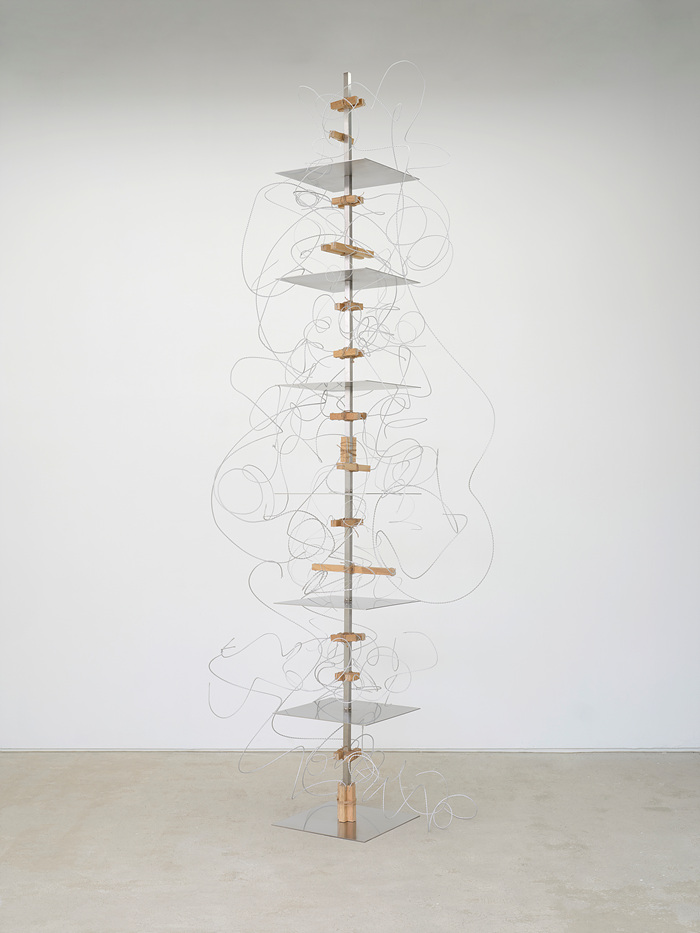
Partition Stand, Pipe Stand, and Outrigger reveal, as their titles suggest, the ways these objects were originally used. At the same time, by repeatedly attaching or arranging identical forms, the works present shapes as configurations of connection and assembly.
 
In contrast, Armature Tower and Bell incorporate a more arbitrary composition introduced by the artist. While the sculptures discussed earlier largely follow the forms of existing objects, these two works move beyond their original function and shape. Building upon their initial references, they advance toward newly reconstructed objects—and sculptures—in the form of a “tower” or a “bell.”
 
Meanwhile, GIVE is cast from a three-sided piece of Styrofoam typically used as a corner protector, drawing attention to the very act of labor performed by such subsidiary roles. The work recalls the role of “giving” and its counterpart “taking,” extending the question of objects and sculpture into a task of relational engagement assigned to the user or viewer—ultimately prompting reflection on the attitudes formed within that relationship.


Installation view of 《Nameless Background》 (Gallery2, 2024) ©Taeyeon Kim

In this way, Taeyeon Kim examines the structures of the frameworks encountered in everyday life and searches for “holes” within them—points from which something can diverge in a new direction. Rather than providing definitive answers, her work encourages viewers to reconsider given situations and objects from multiple perspectives.
 
Through this process, the artist reminds us that relationships often assumed to be fixed or self-evident are in fact mutually dependent and constantly shifting. By doing so, she proposes the possibility of interpreting the world anew from outside these seemingly rigid frameworks.

“I want to show that the many situations or problems that exist in the world cannot simply be divided into binaries such as good/bad or right/wrong, but that there are multiple perspectives.” (Taeyeon Kim, from an interview with UhjjudahGallery2)


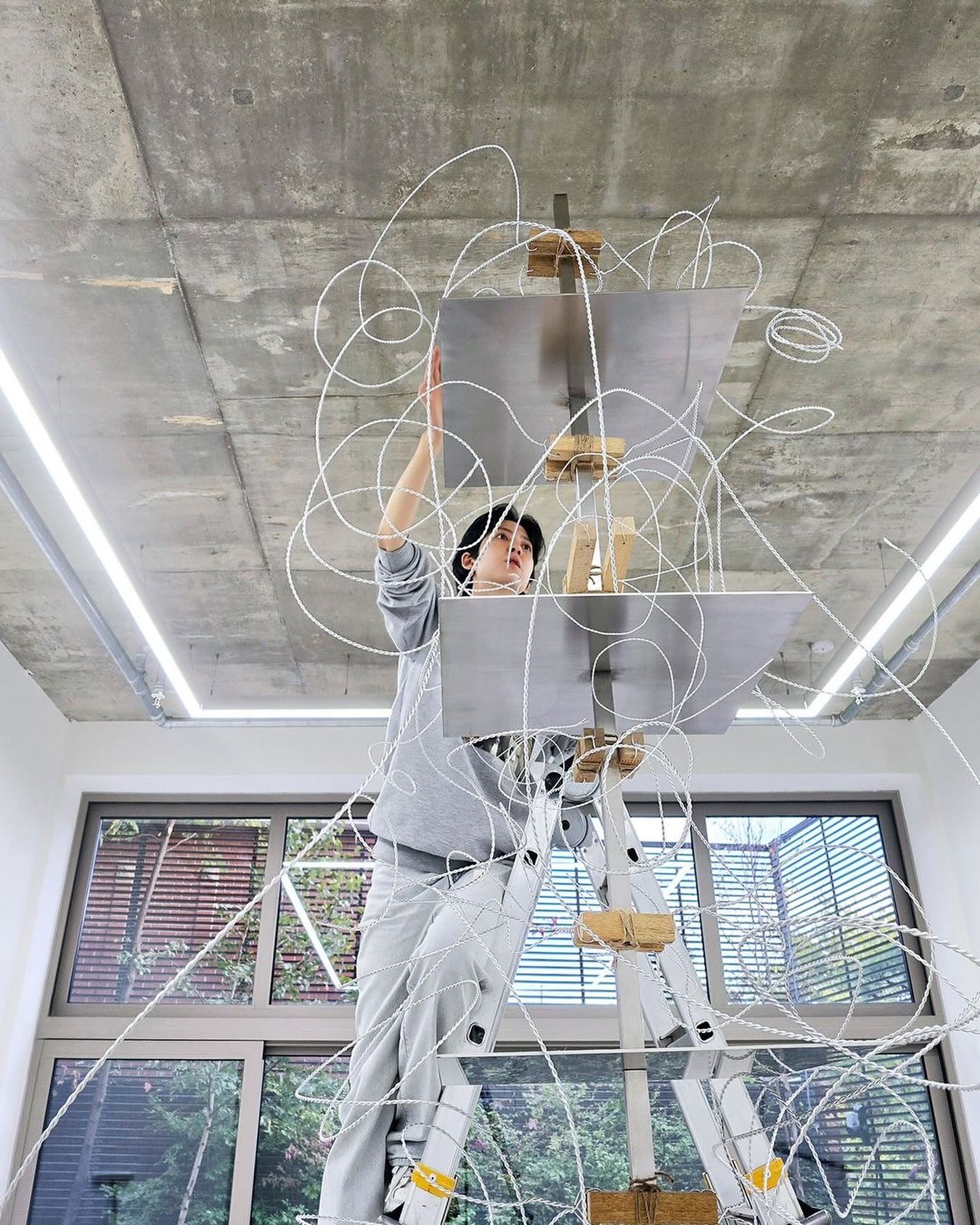
Artist Taeyeon Kim ©Gallery2

Taeyeon Kim graduated from the Department of Environmental Sculpture at the University of Seoul and received her MFA from the Maryland Institute College of Art in the United States. Her solo exhibitions include 《Nameless Background》 (Gallery2, Seoul, 2024), 《Way Out》 (AlterSide, Seoul, 2023), 《Convergence and Divergence: Form and Variation》 (Gallery2, Seoul, 2021), and 《Out of Line》 (Artspace Boan 2, Seoul, 2020).
 
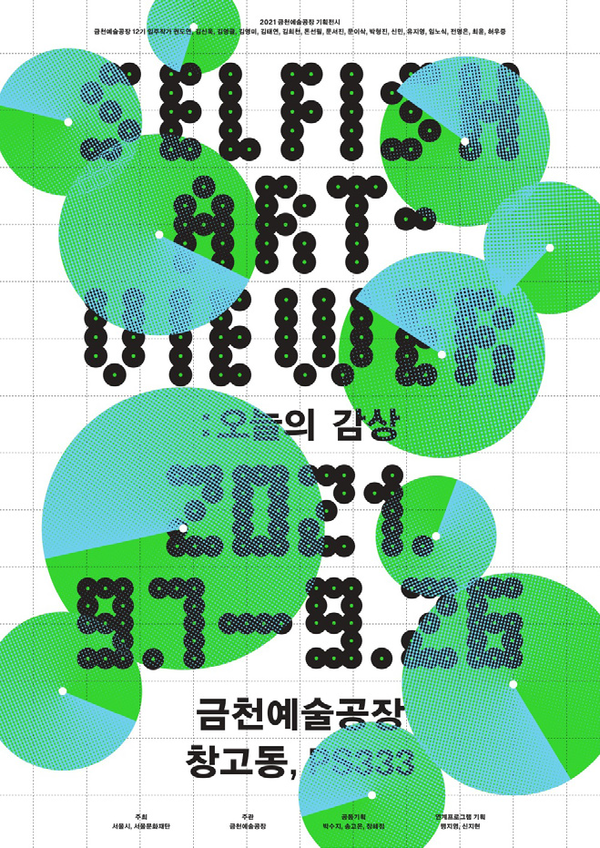
She has also participated in numerous group exhibitions, including 《Attachment and Territorial Battles》 (Shinchon Art Space, Seoul, 2024), 《ZIP》 (ARKO Art Center, Seoul, 2024), 《After the Unsustainable》 (CR Collective, Seoul, 2023), 《Selfish Art-Viewer》 (Seoul Art Space Geumcheon, Seoul, 2021), 《Cut off the Bed》 (Art Space Pool, Seoul, 2019), and 《Metropolis of Desire, Visible and Invisible》 (Busan Museum of Art, Busan, 2016).
 
Kim has been selected for several residency programs, including the MMCA Goyang Residency (Seoul, 2024), K’ARTS Creative Studio (Seoul, 2022), Seoul Art Space Geumcheon (Seoul, 2021), ZK/U (Berlin, 2018), and Taipei Artist Village (Taipei, 2017). Her works are included in the collections of the Seoul Metropolitan Government and the Museum of Contemporary Art Busan.
References