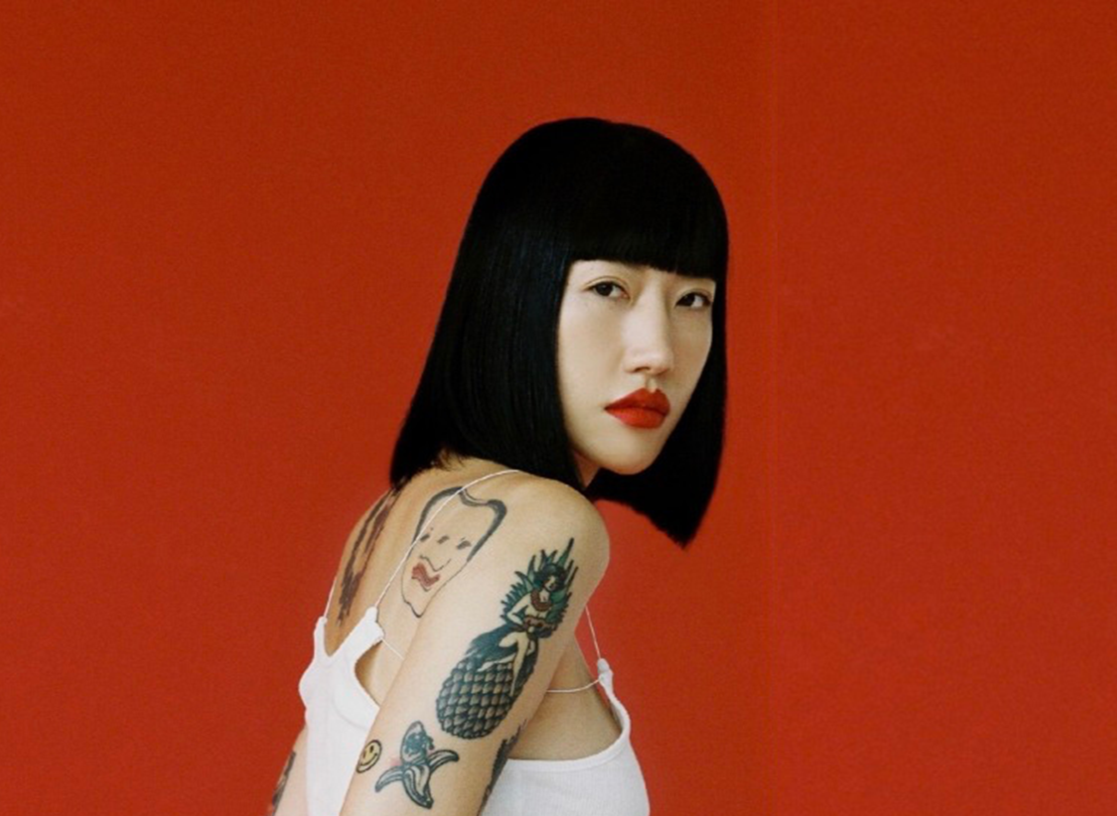
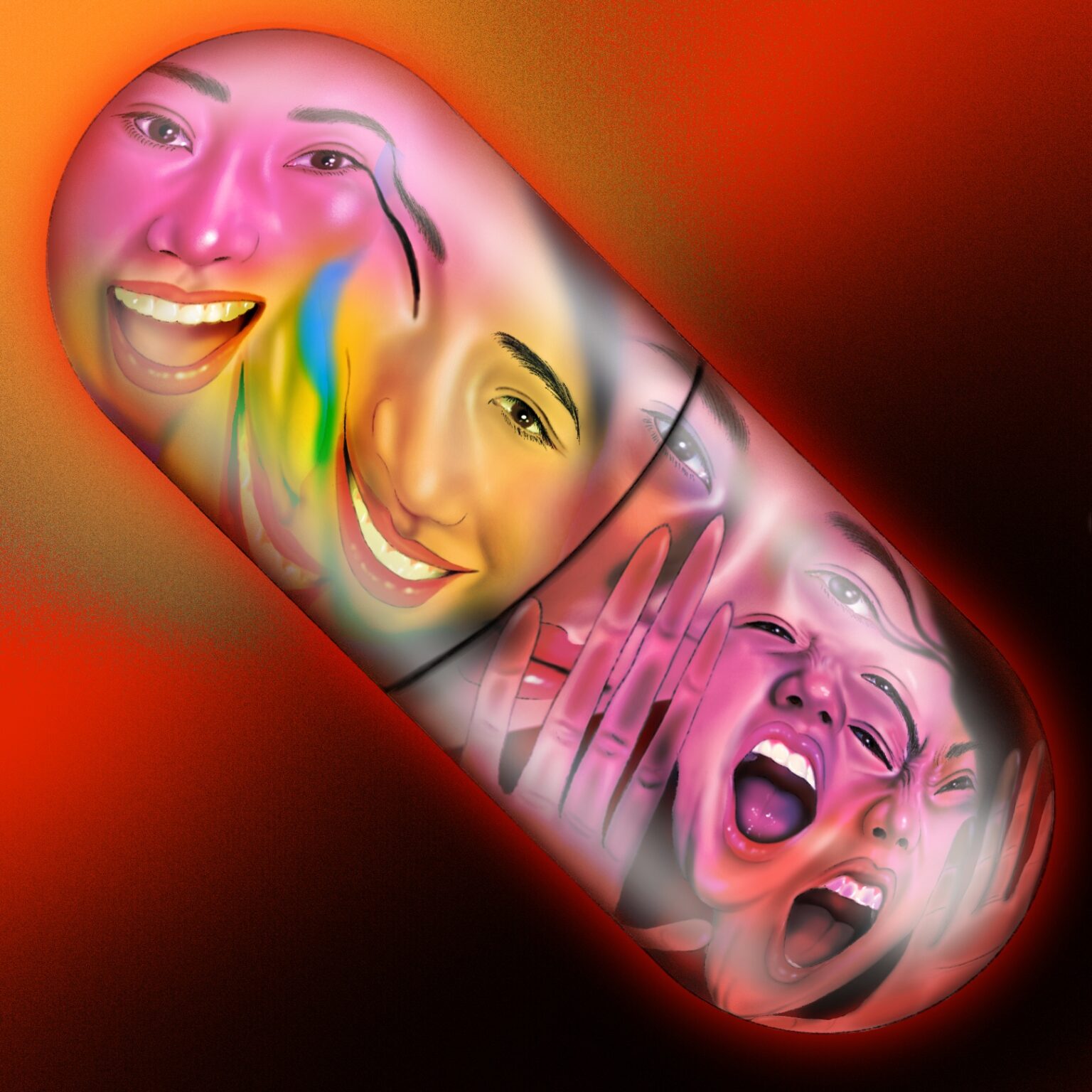
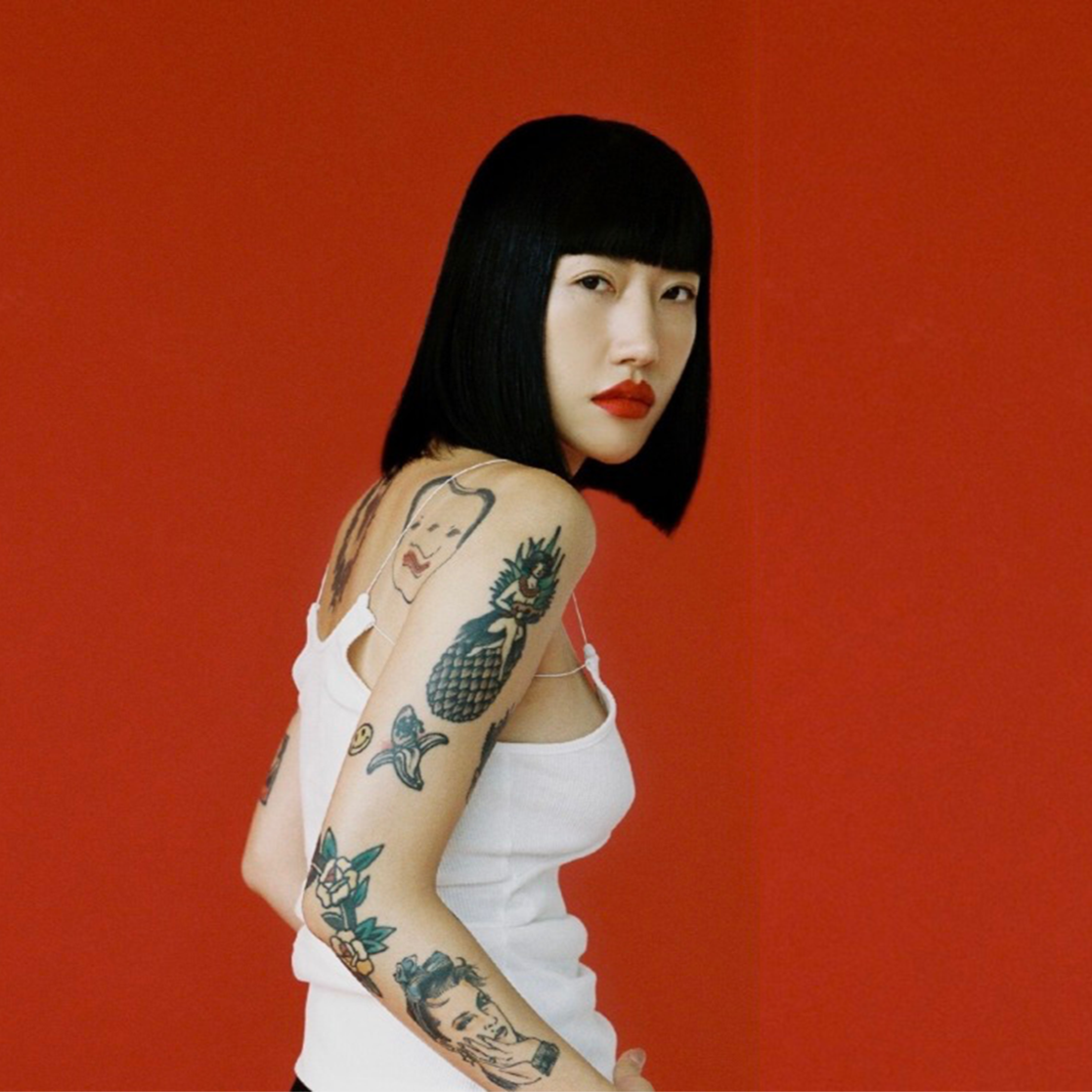
Miki Kim (b. 1987) explores the point where the body, emotion, and image intersect through delicate lines and evocative spaces of emptiness. Spanning tattooing—inscribing images onto the skin—digital drawing, as well as sculptural and installation works, her practice unfolds freely across various forms without being confined to a single framework.

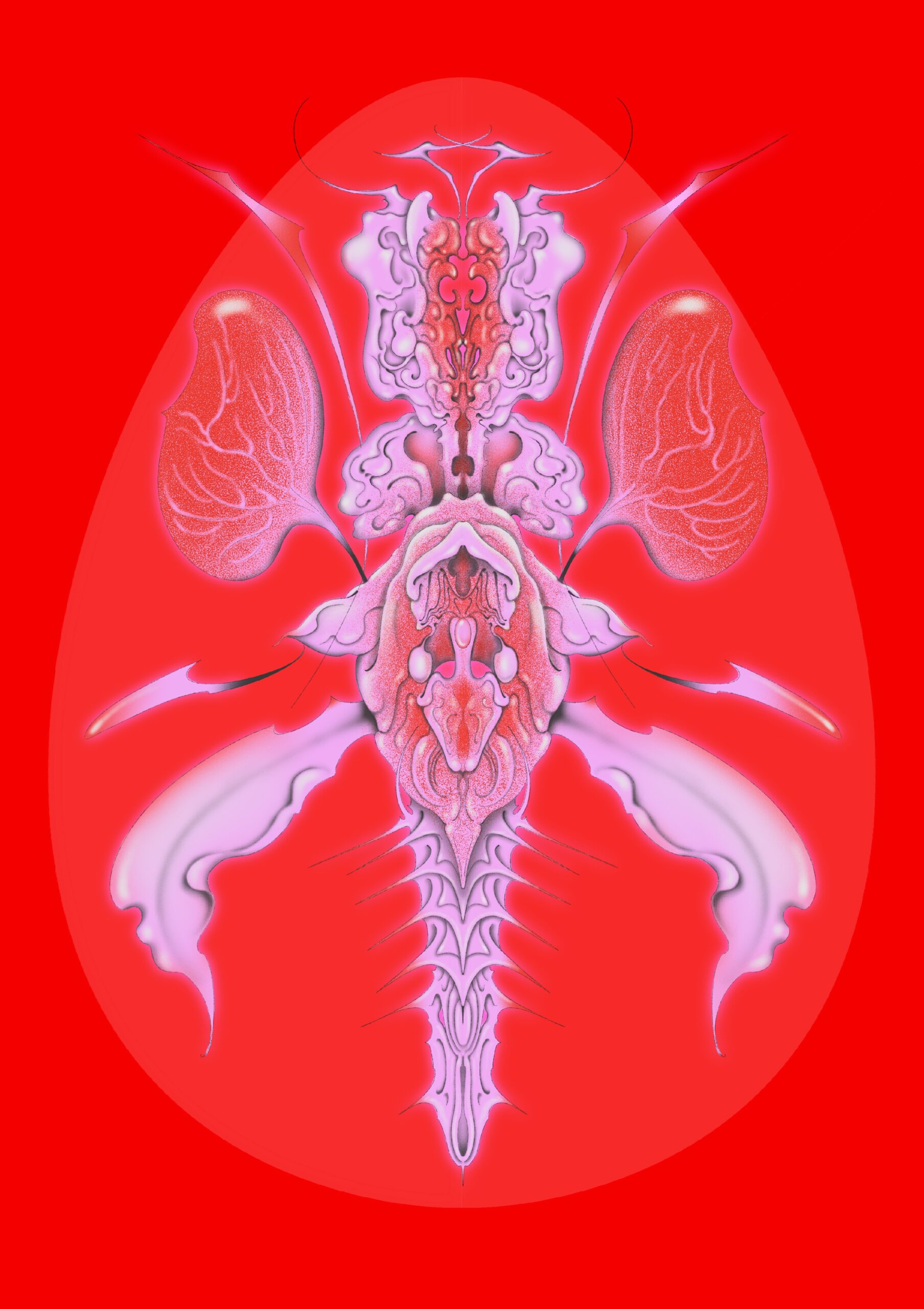
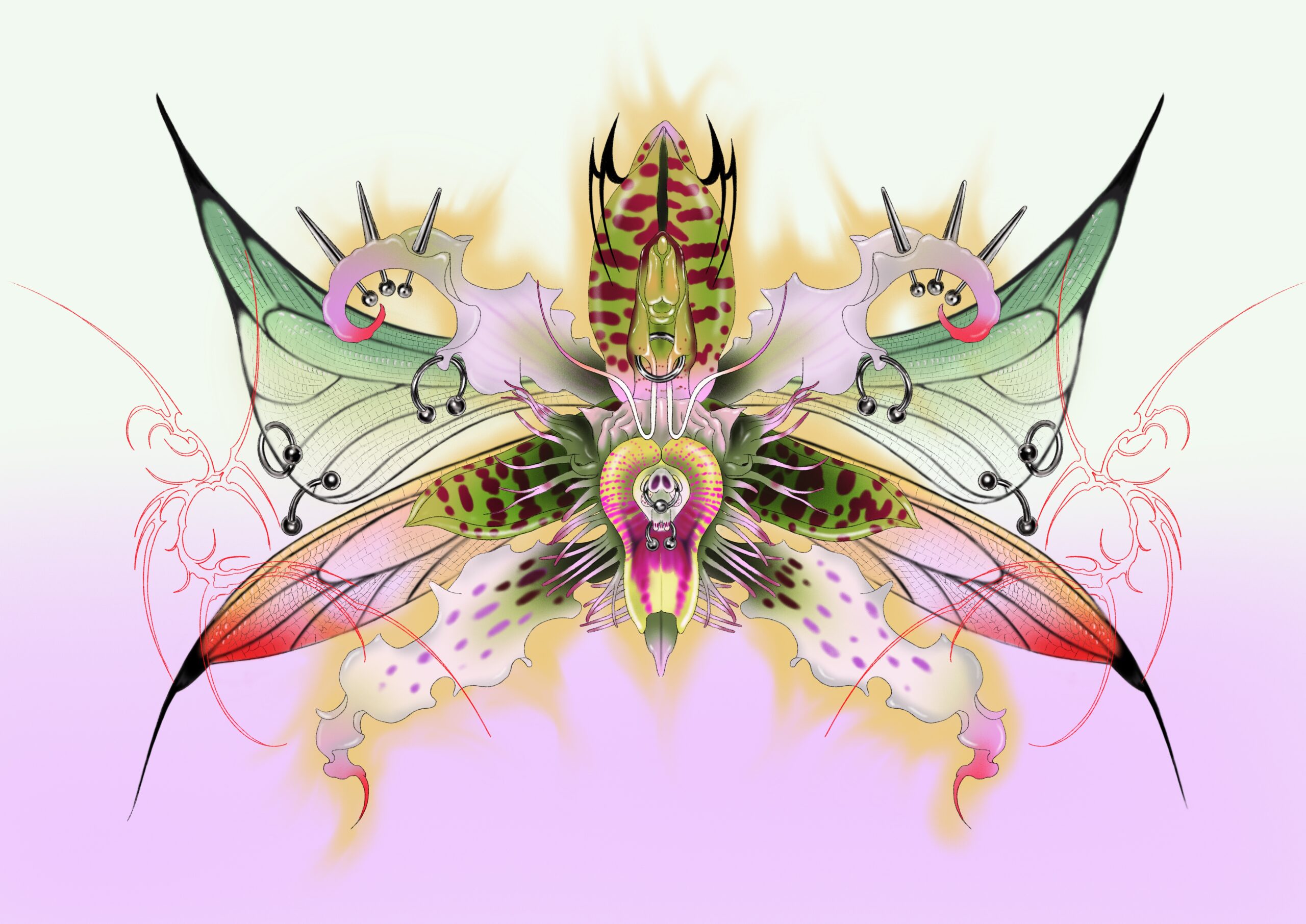
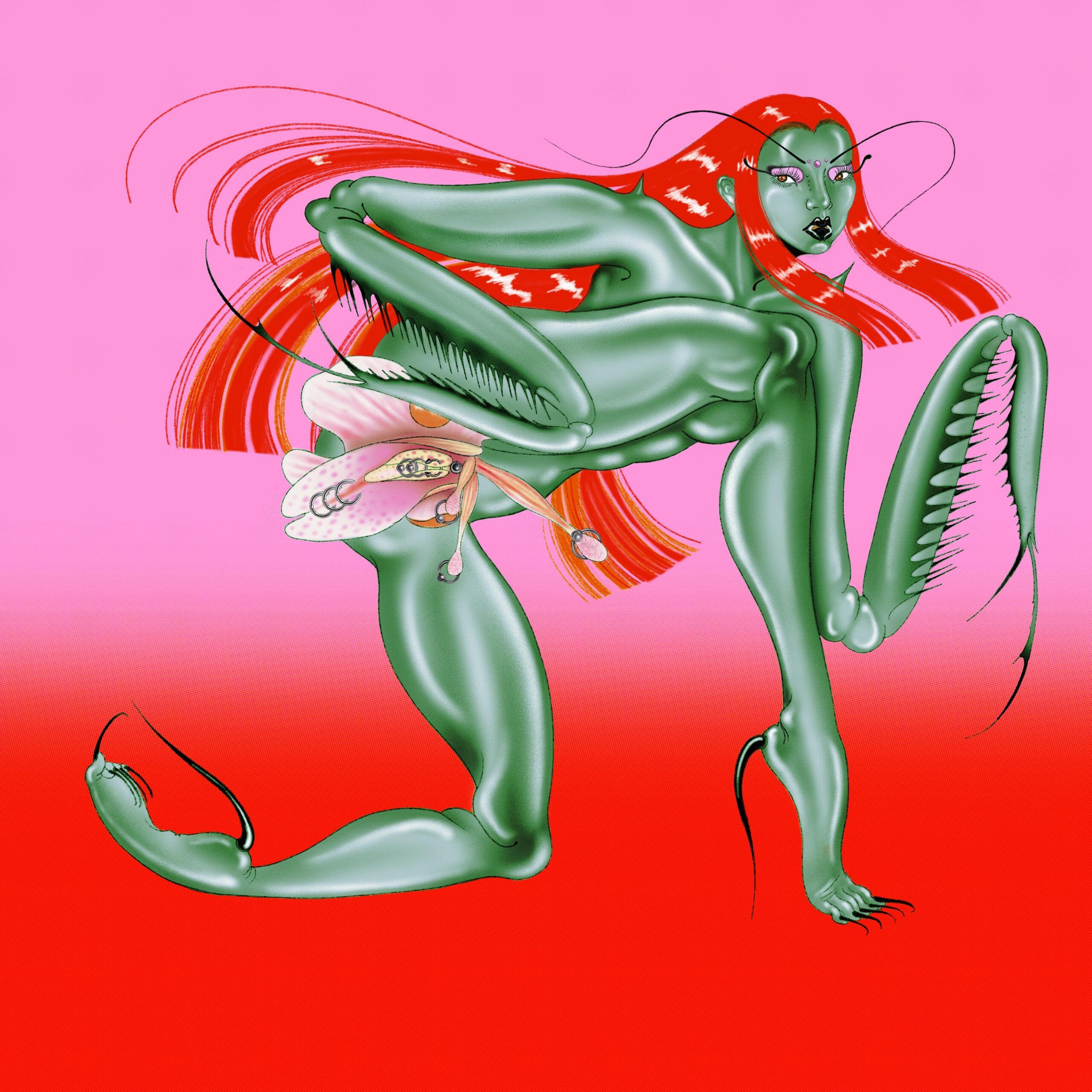
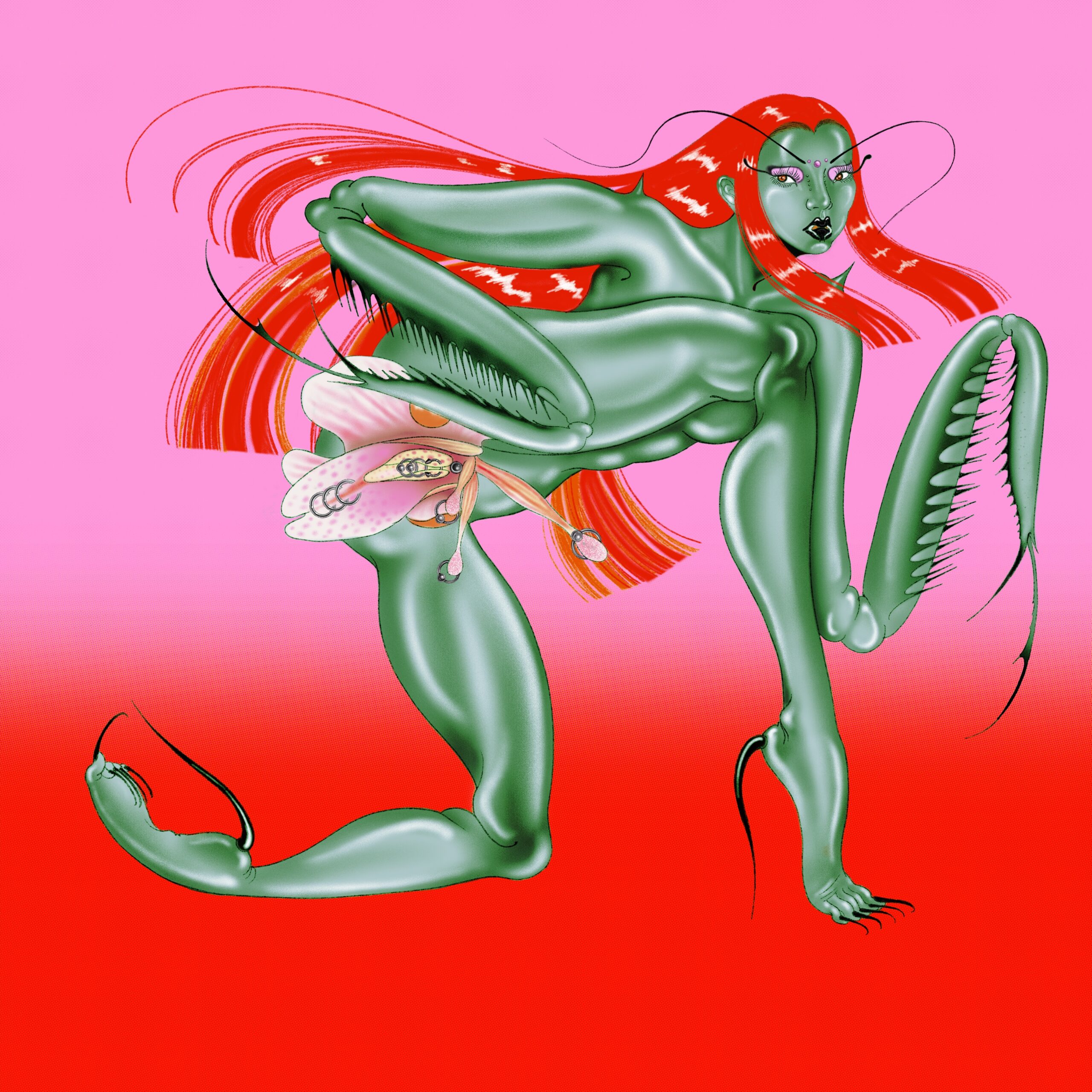
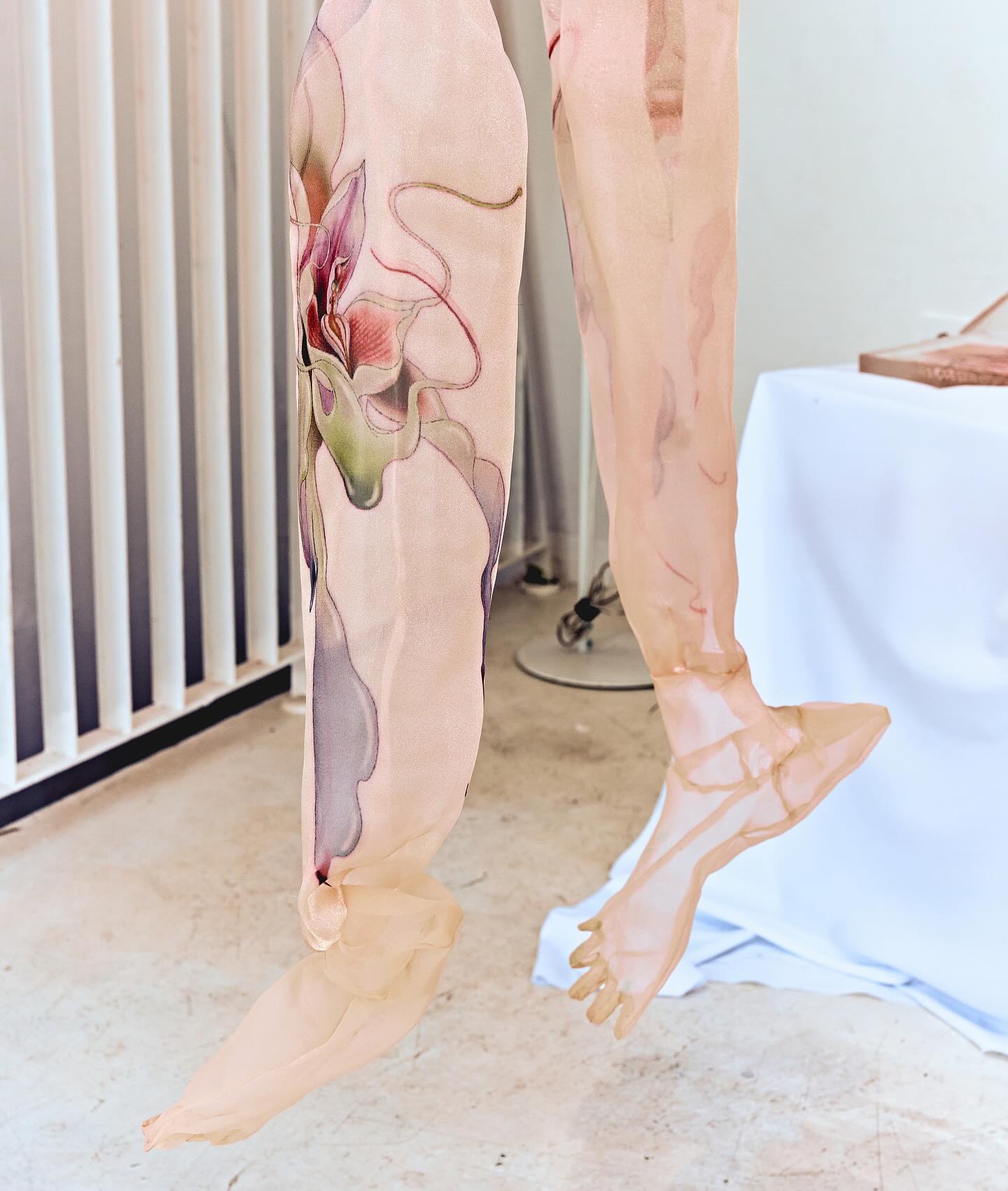
Miki Kim, Orchid Flower Mantis Human, 2023 ©Miki Kim

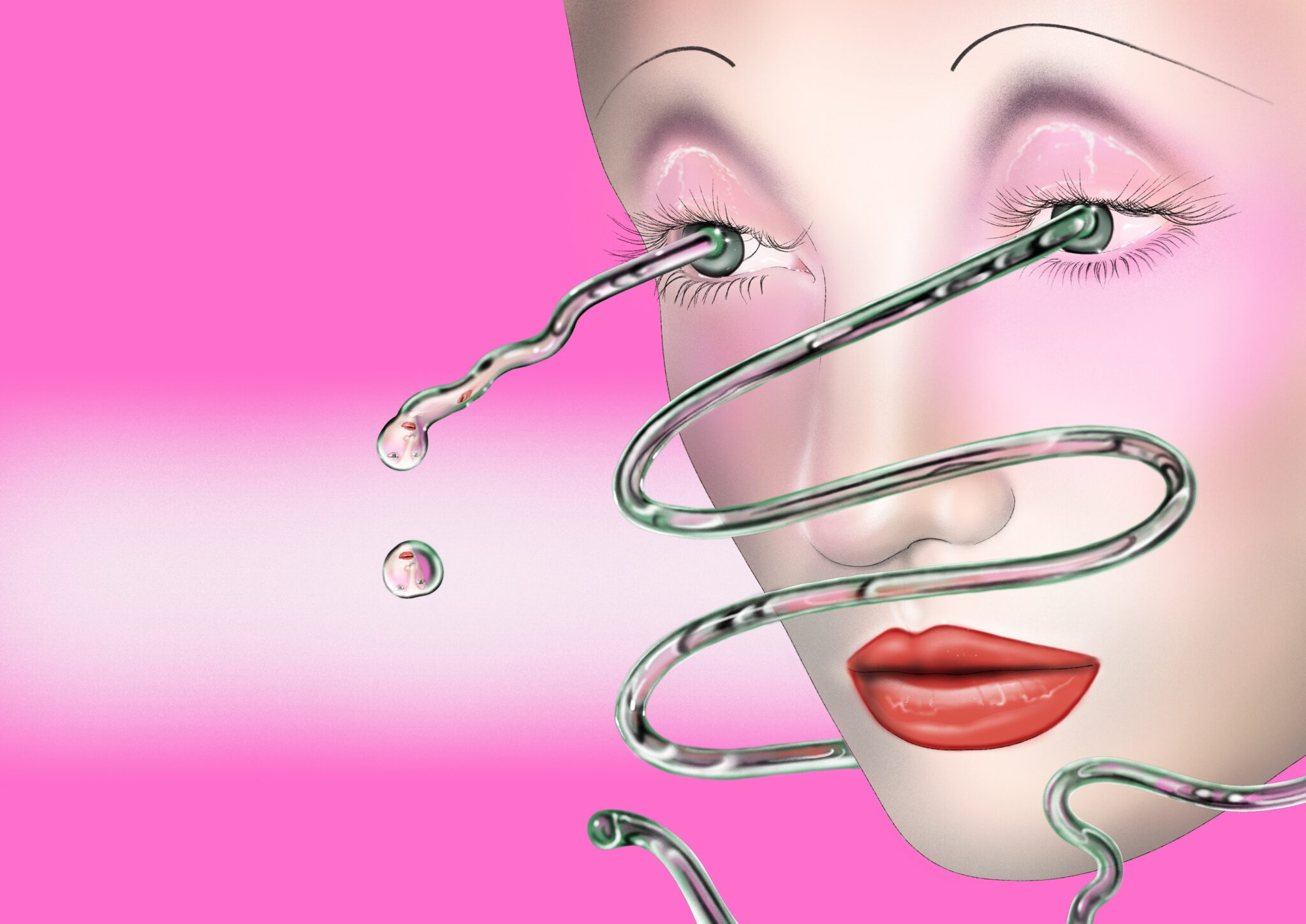
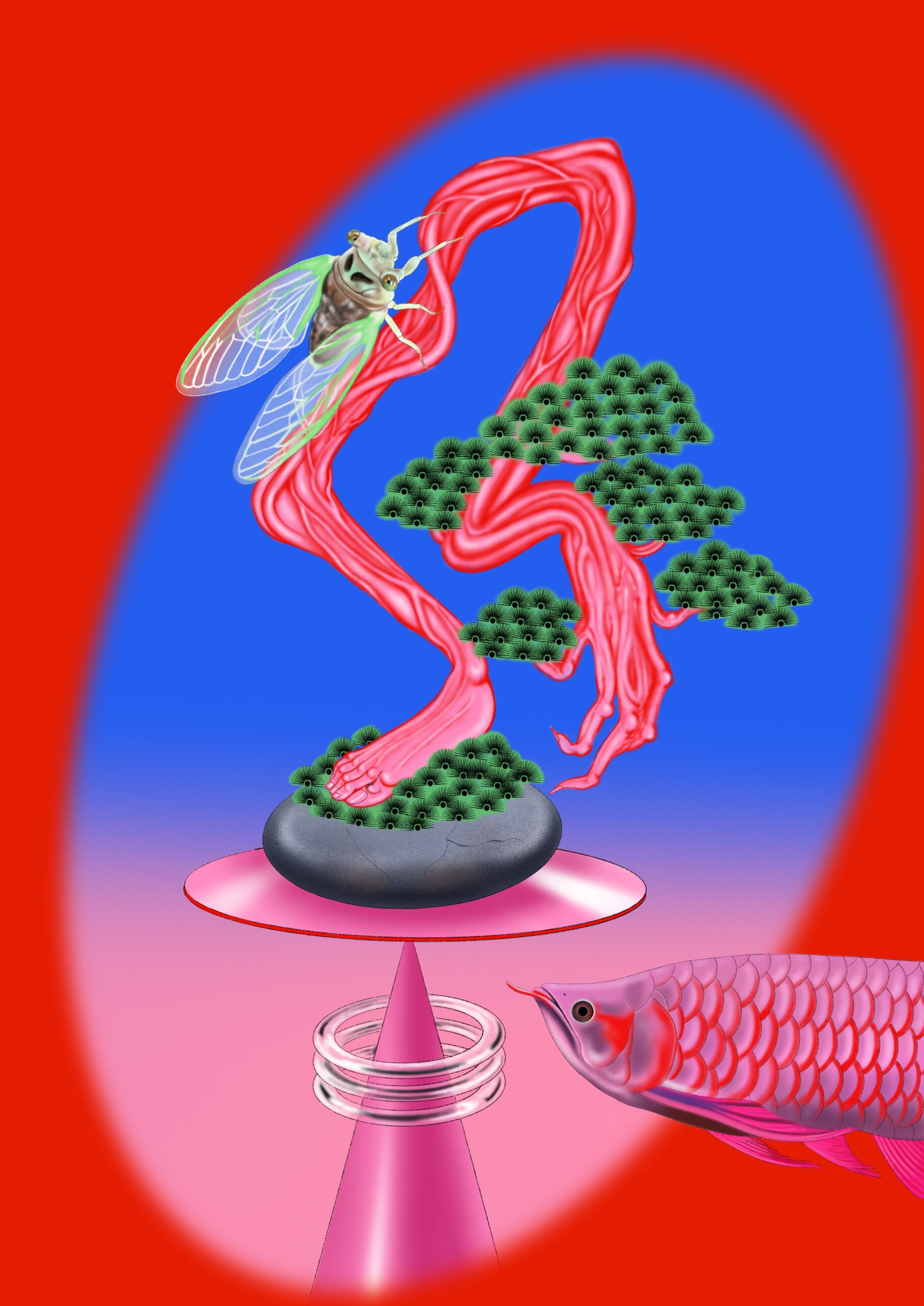
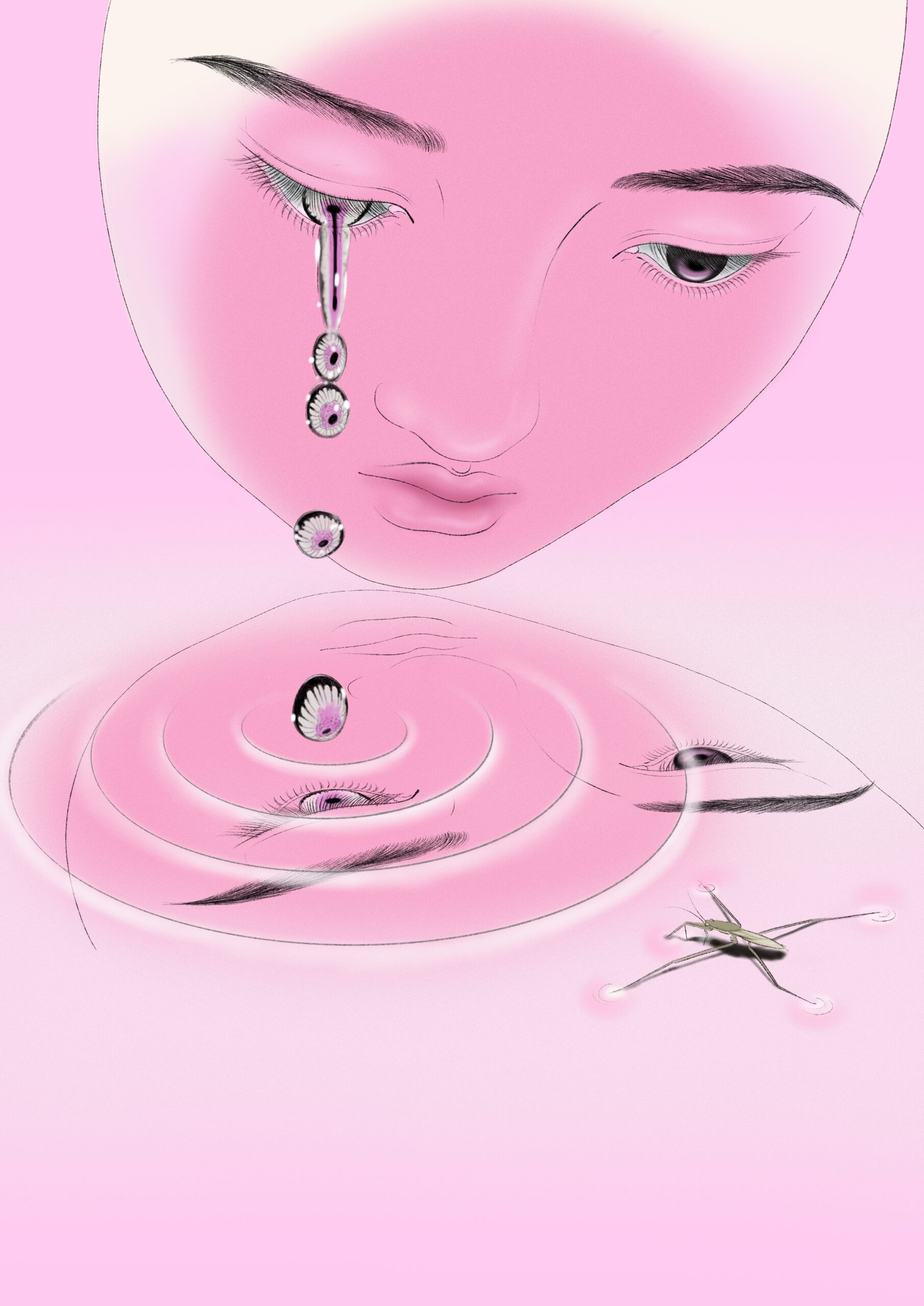
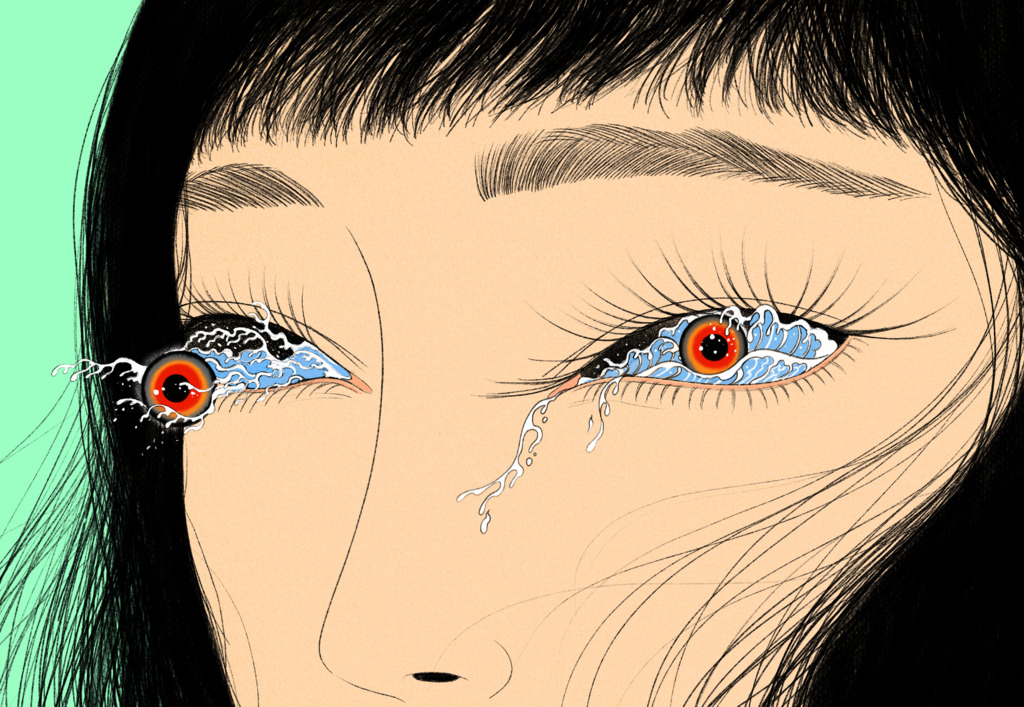
Moving fluidly across the boundaries between genres, Miki Kim’s artistic practice unfolds through dreamlike and surreal imagery. She creates imagined worlds that would be impossible in reality—twisting the human body into the form of a tree, personifying objects or living beings, or merging different species into a single body to form new hybrid entities.


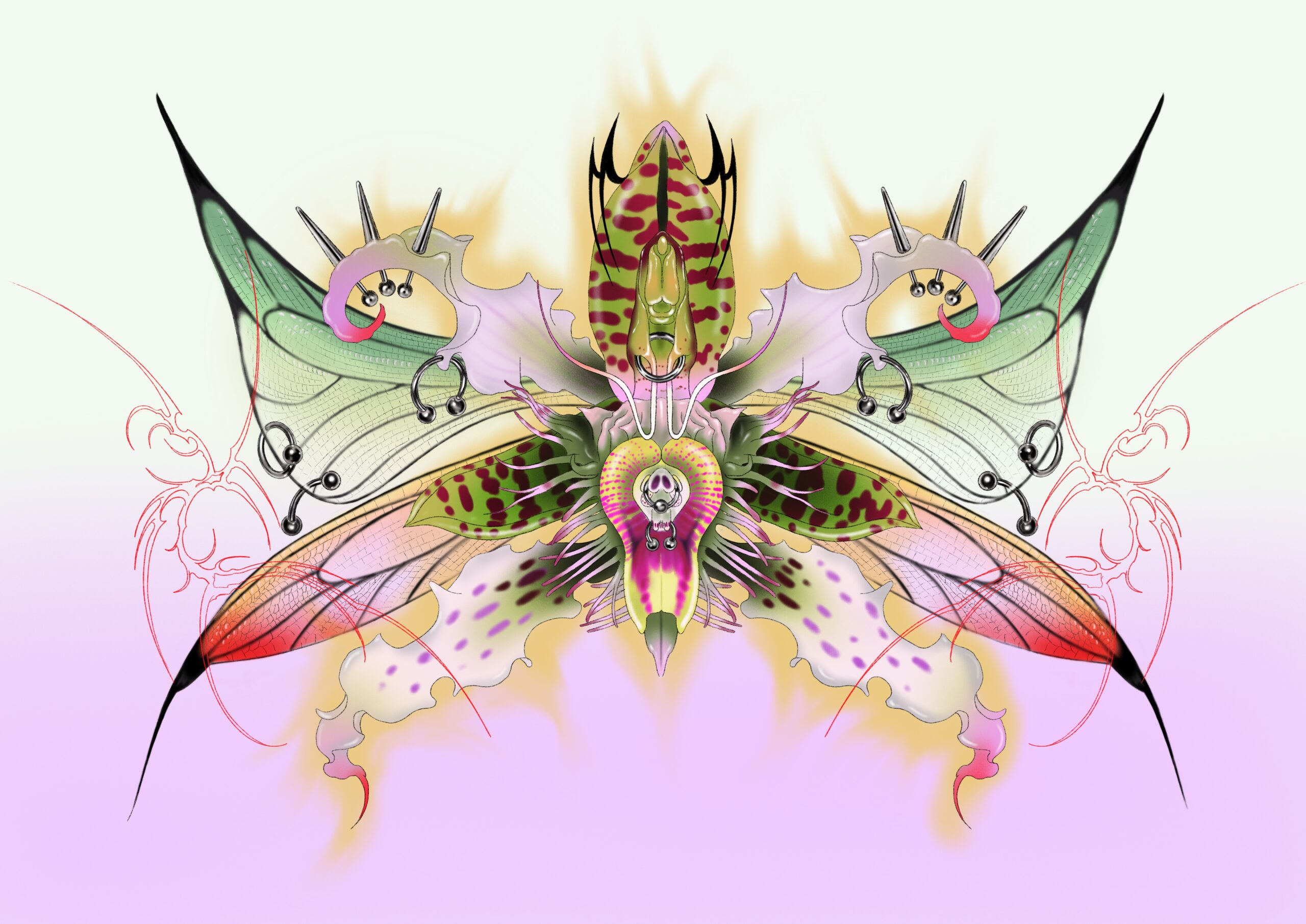
Miki Kim, Orchid Flower Mantis Human, 2024 ©Miki Kim

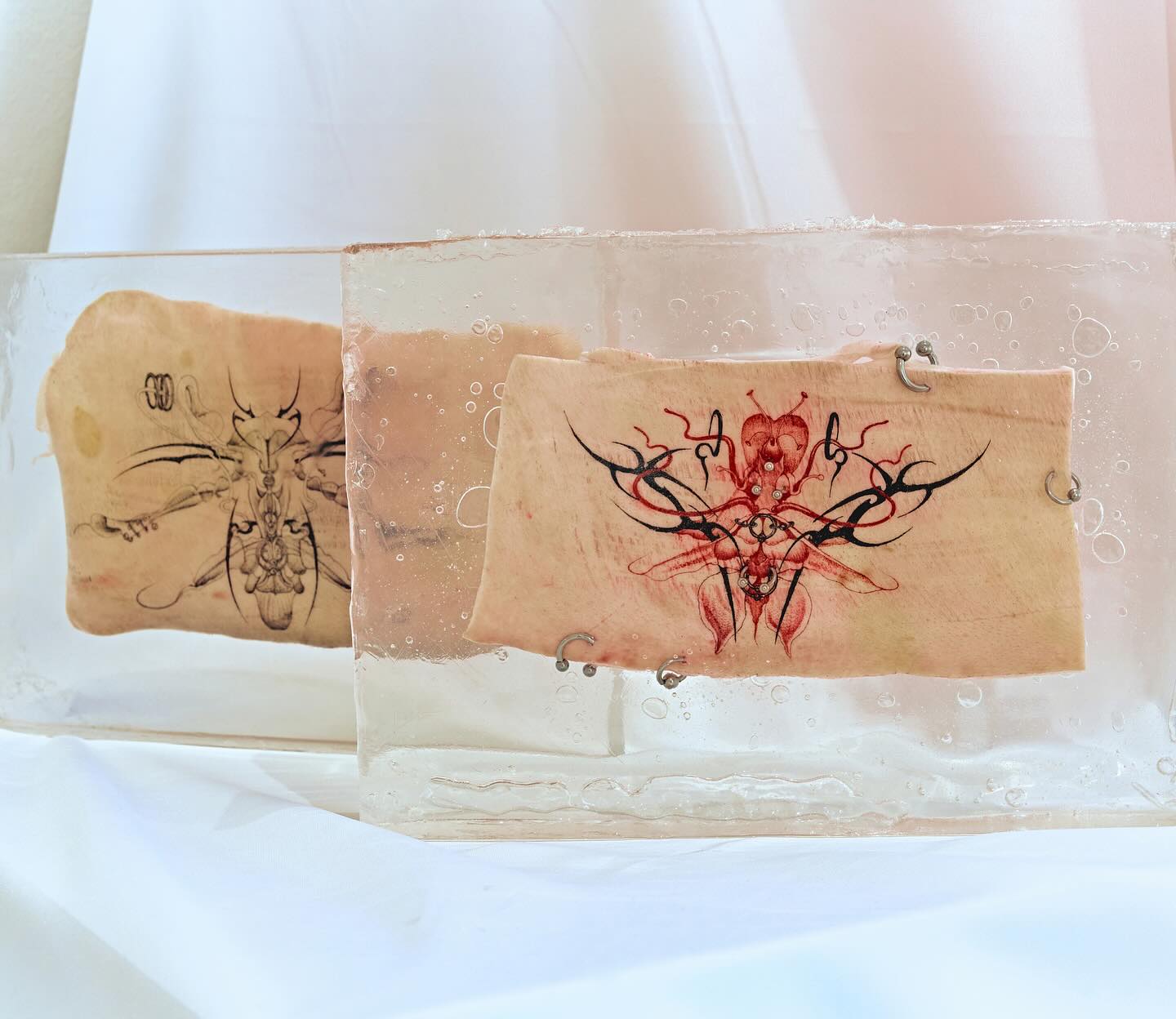
For example, Miki Kim has created symmetrical drawings that combine motifs such as orchid flowers, the bones of animals or humans, and elements drawn from neo-tribal or steel forms—recalling the flower paintings of Georgia O'Keeffe. Alongside this, the artist has been continuously expanding the series ‘Orchid Flower Mantis Human,’ in which the forms of orchids and praying mantises are merged to depict queer figures.


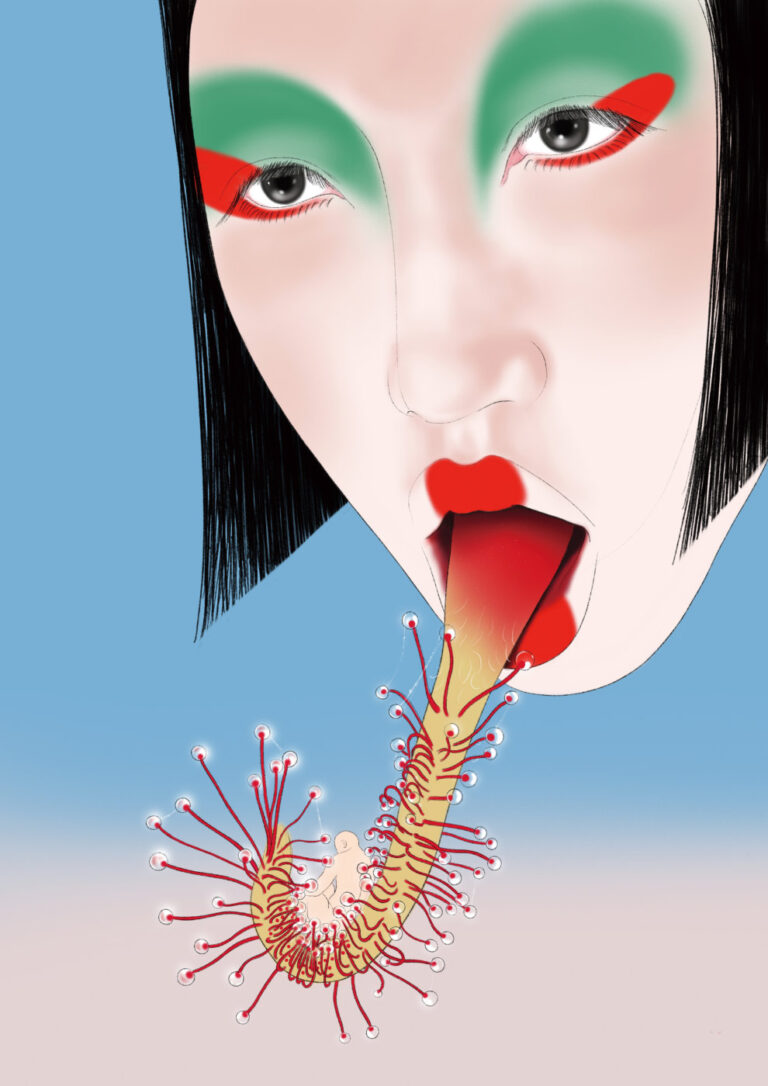
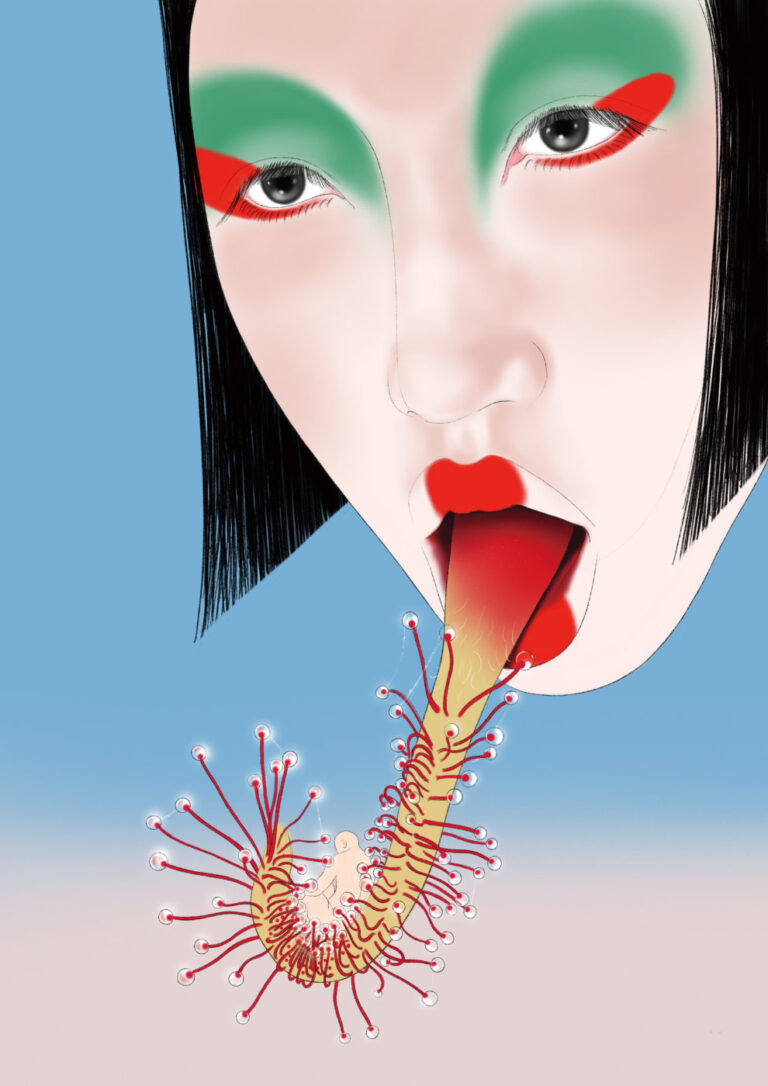
Miki Kim, Drosera Rotundifolia, 2022 ©Miki Kim

In addition, Miki Kim incorporates fantastical elements into Eastern visual motifs inspired by Korean folk painting, Japanese woodblock prints, and Chinese ceramic art, creating scenes that feel both familiar and strange, imbued with a sense of mystery.
 
In this way, elements that might initially seem unrelated come together within her work through delicate lines, intense colors, and the artist’s distinctive imagination. The result is a peculiar harmony—images that are at once uncanny yet charming, sarcastic yet witty.


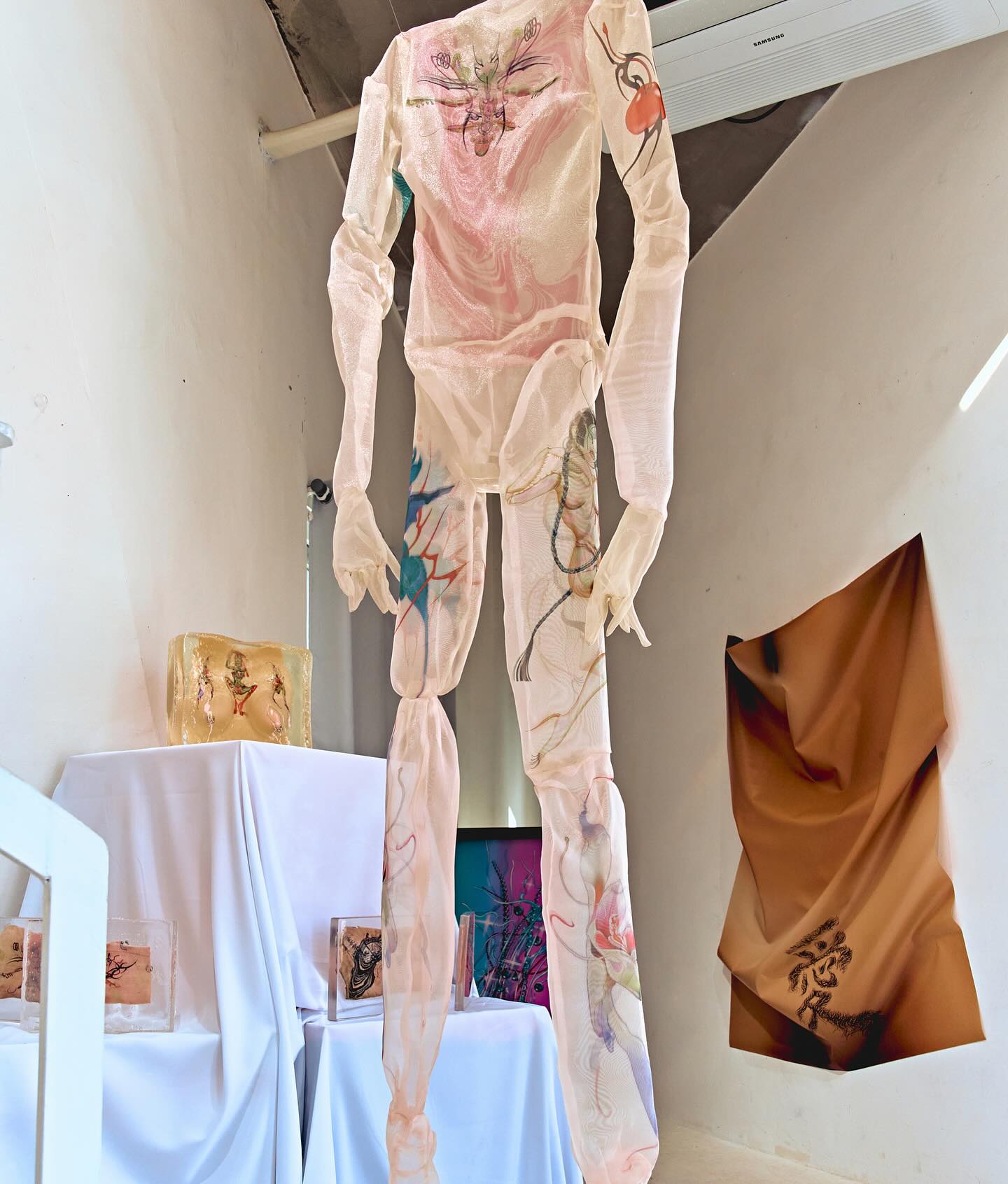
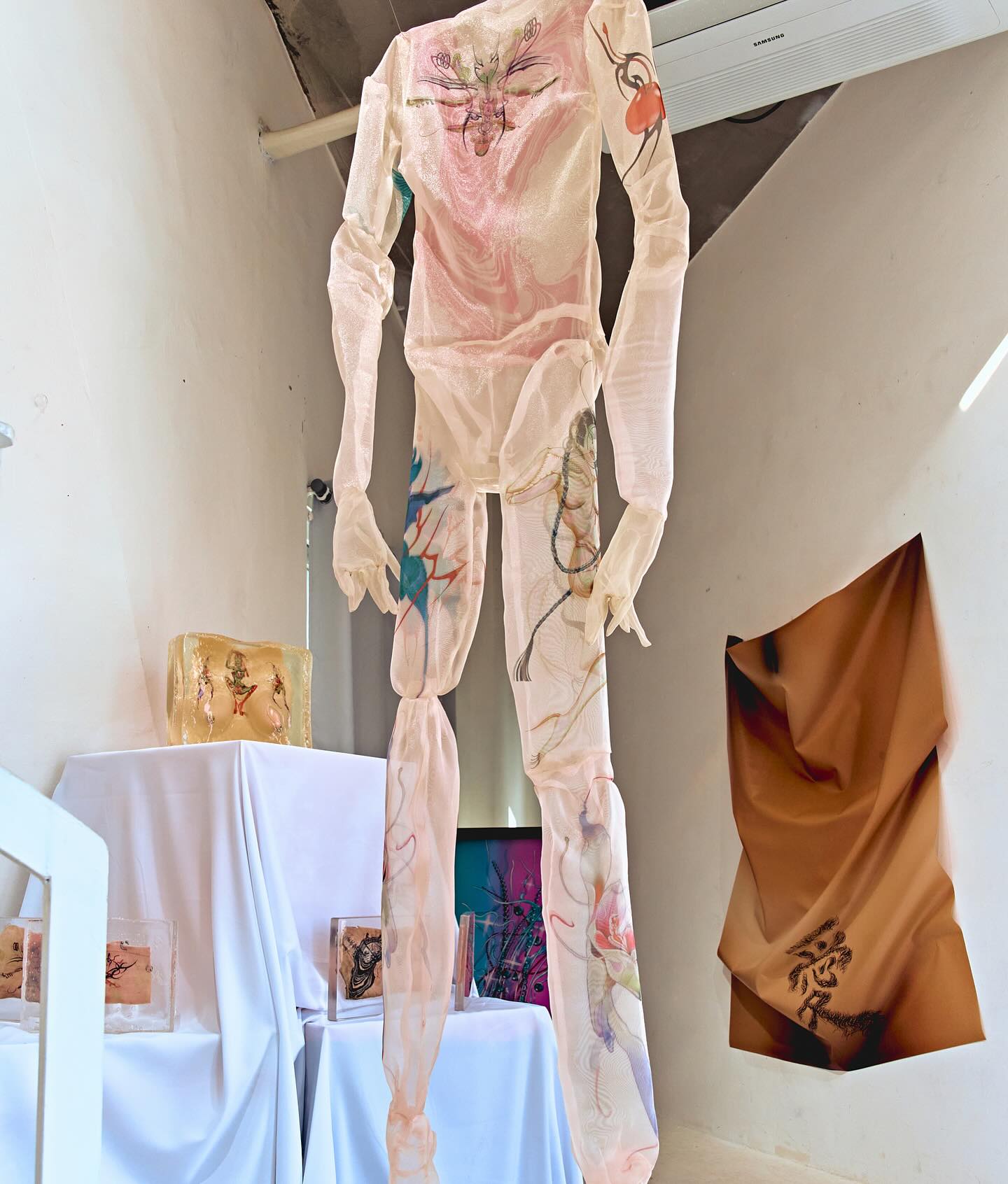
Installation view of 《SKIN+INKS》 (Watermark Gallery, 2024) ©Miki Kim

The first solo exhibition of Miki Kim, 《SKIN+INKS》, held in 2024 at Watermark Gallery, offered a glimpse into the artist’s reflections on drawing and inscribing—as well as on time—stemming from her beginnings as a tattooist.
 
As the artist has remarked, “For me, the canvas is a person’s skin.” In this sense, the exhibition explored the artistic possibilities and meanings of inscribing images onto a living surface, rather than onto a conventional white canvas bound by standardized dimensions.


Installation view of 《SKIN+INKS》 (Watermark Gallery, 2024) ©Miki Kim

For Miki Kim, the skin that forms the ground of her drawings is the body’s outermost boundary—a site where each individual’s time and experiences leave traces in the form of wrinkles, scars, and other marks.
 
Regarding her tattoos—images inscribed onto the skin—Kim explains that they are “placed onto someone’s skin, becoming embedded in their life, and encountering new environments within their time, where they form their own independent stories.”


Installation view of 《SKIN+INKS》 (Watermark Gallery, 2024) ©Miki Kim

A painting created on a white canvas carries the elevated value of traditional painting, yet a tattoo imbued into someone’s skin breathes alongside them, naturally blending into the rhythms of their life. In this sense, for Miki Kim, tattooing as a “living image” is also a process of drawing a life.
 
By moving beyond the conventional framework of traditional media and freely permeating the lives of individuals, Kim’s practice blurs the boundaries between everyday life and art, as well as between art and non-art. Her images are not only drawn onto the skin—the boundary of the body—but are also sometimes created on clothing that covers the skin, using garments themselves as a canvas.


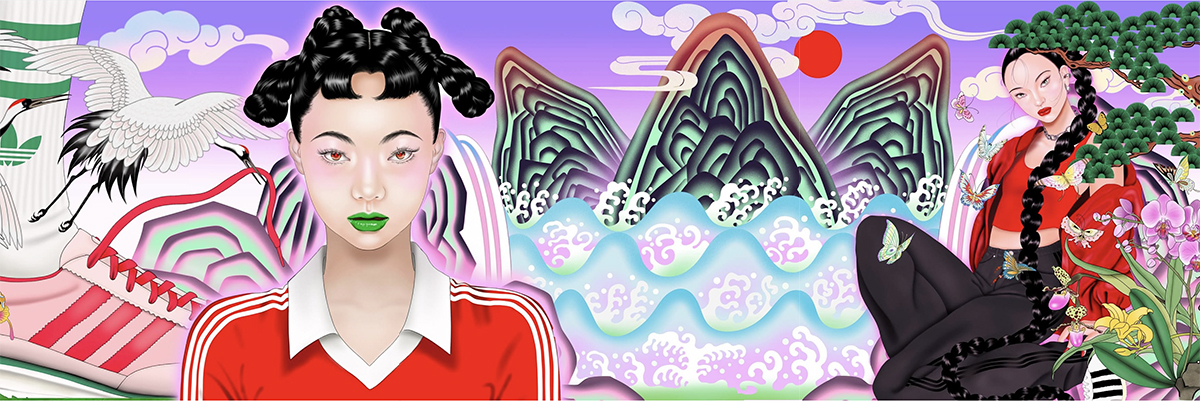
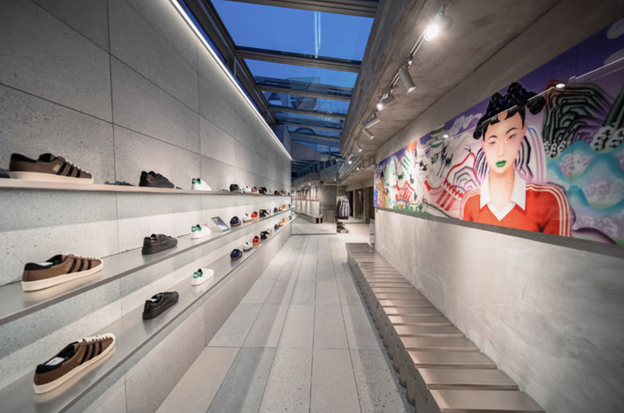
Part of the illustration by Miki Kim created in collaboration with Adidas Originals. ©Miki Kim

These artistic explorations have also led Miki Kim to collaborate with global brands such as Gucci, Marine Serre, and Adidas. For instance, last year Kim partnered with Adidas Originals to present a large-scale illustrative drawing project that blurred the boundary between fashion and art.
 
Displayed on a large screen in the store, Kim’s work features figures wearing signature Adidas items set against a background depicting the Ten Symbols of Longevity—an emblem of eternal life in East Asian folk beliefs and Daoist traditions. Within the artist’s imaginative and fantastical sensibility, elements of traditional East Asian painting intermingle with contemporary motifs, creating an atmosphere that feels both mysterious and familiar.


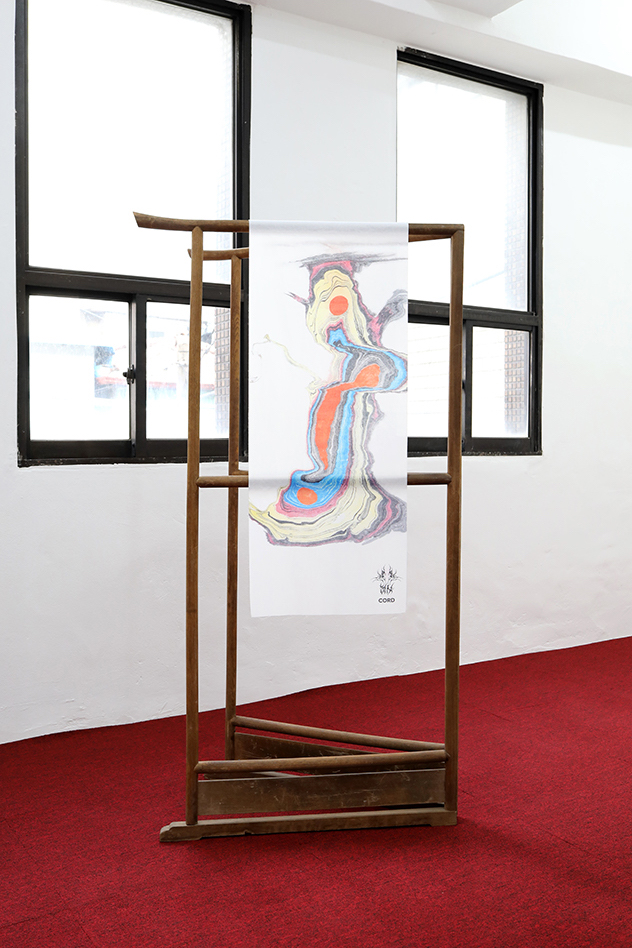
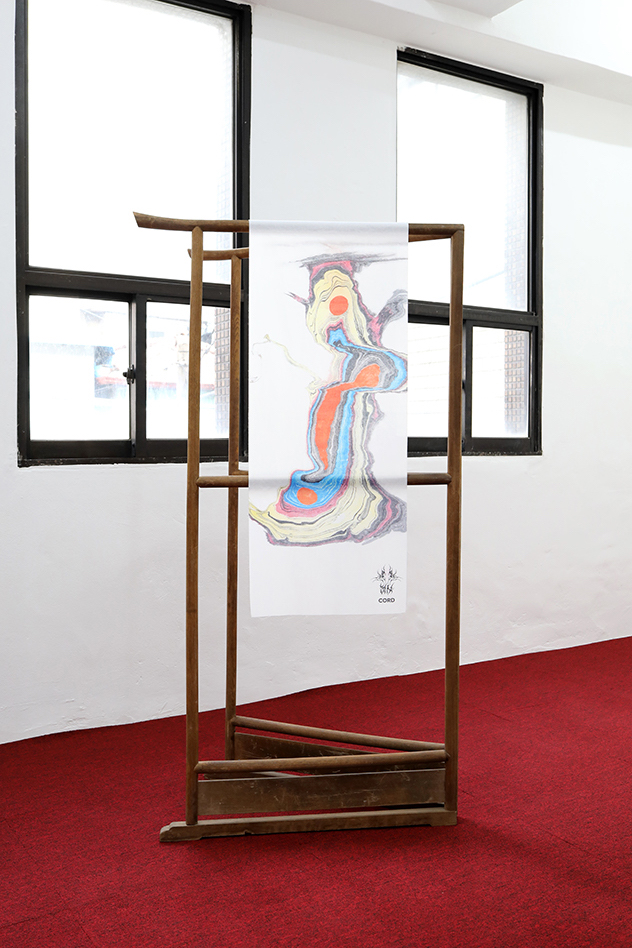
Installation view of 《Body Echo: Spreading from Emptiness》 (CORD, 2025) ©CORD

Recently, Miki Kim began developing the ‘Suminagashi’ series after encountering the traditional Japanese marbling technique known as suminagashi (墨流し). The works capture the traces of ink spreading across the surface of water in ways that unfold independently of the artist’s intention.
 
In this process, the artist gently places paper or fabric onto the drifting ink on the water’s surface, carefully receiving the fleeting traces left behind. The resulting patterns are unpredictable and impossible to reproduce.
 
Kim explains that the beauty found within such uncertainty—and the unpredictable movement residing within a seemingly still surface—draws her into a meditative state, allowing her mind to settle and focus.


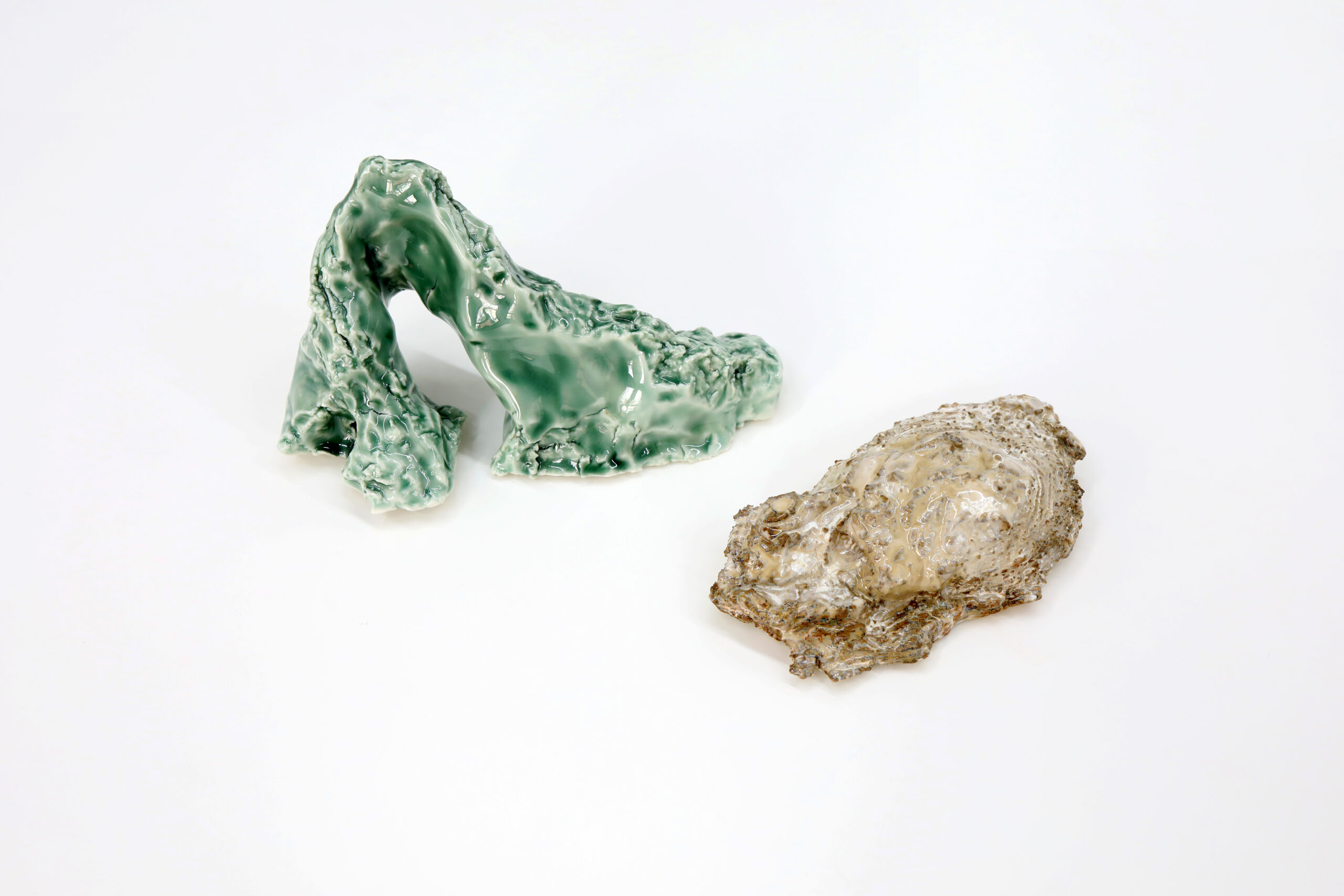
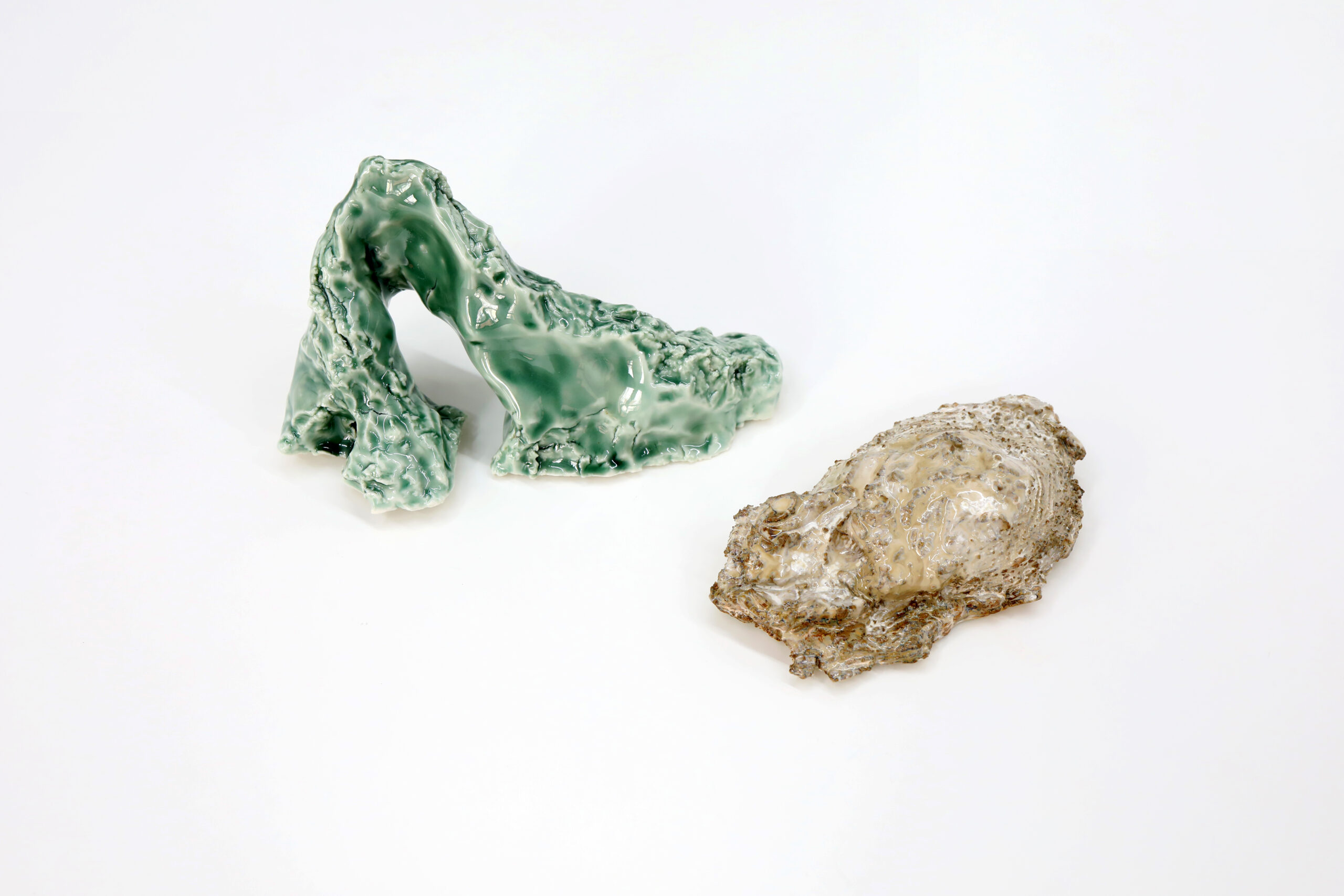
Miki Kim, Ceramic Ornament, 2025, sea rock, ceramic, each 17.5×7.5×9.5cm, 14×7.8×4cm  ©Miki Kim

The artist’s more recent encounter with ceramics has further expanded her practice, connecting closely with the experiences of contemplation and meditative discipline she discovered through the ‘Suminagashi’ series.
 
Like ‘Suminagashi’, ceramics are completed within a span of time that lies on the boundary between control and non-control. In the process of shaping forms by hand, applying glaze, and placing the work into the kiln, what the artist can ultimately do is simply wait quietly for the result entrusted to time and temperature.


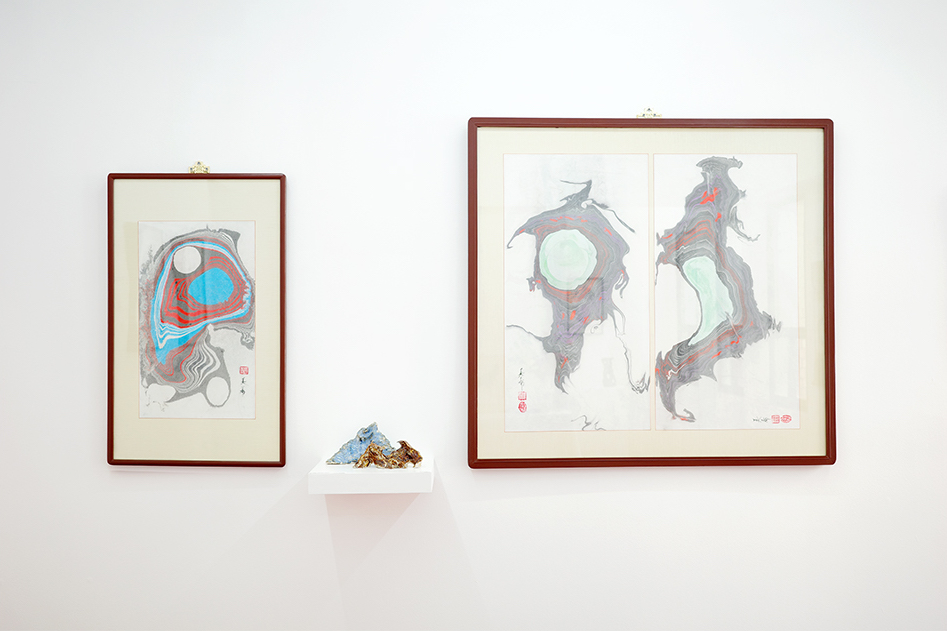
Installation view of 《Body Echo: Spreading from Emptiness》 (CORD, 2025) ©CORD

Developing these two bodies of work, Miki Kim presented the solo exhibition 《Body Echo: Spreading from Emptiness》 (CORD, 2025), centered on the theme of “beauty born from chance.”
 
Based on this idea, the artist produced ceramic works that resemble natural forms. Her ceramics evoke weathered rocks found in nature, porous stones that might be discovered along a shoreline, or fragments of seashells.
 
Alongside them, the ‘Suminagashi’ series installed in the space resonates with the traces of chance visible on the surfaces and forms of the ceramics, guiding viewers into a quiet, meditative experience.


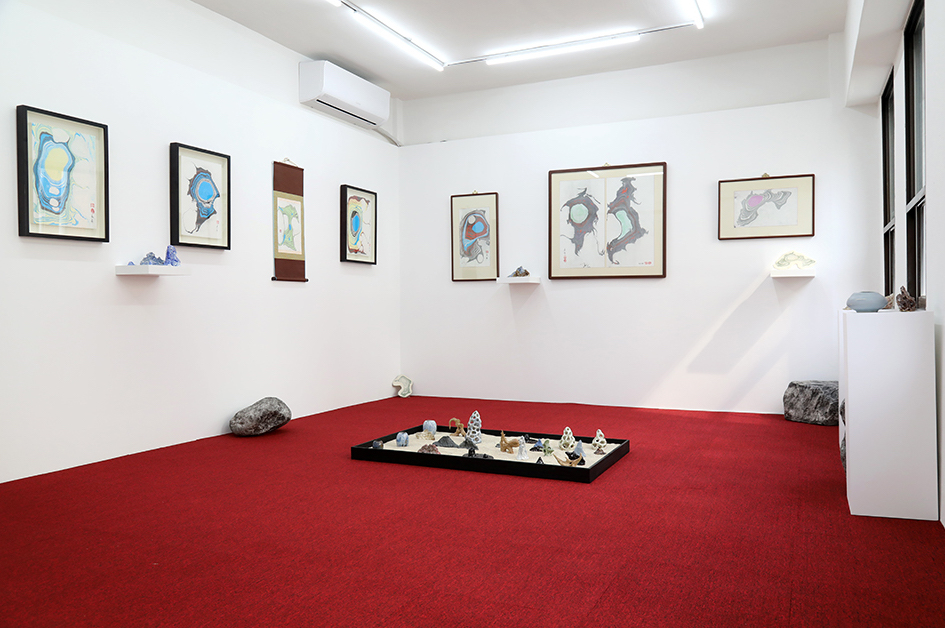
Installation view of 《Body Echo: Spreading from Emptiness》 (CORD, 2025) ©CORD

In the exhibition 《Body Echo: Spreading from Emptiness》, Miki Kim also presented her ceramic works in the center of the gallery within a setting inspired by the Japanese karesansui (dry landscape) garden. Karesansui is a traditional Japanese garden style that reinterprets the Zen Buddhist idea that all things ultimately return to the earth; rather than using water, it is composed primarily of rocks, gravel, and sand.
 
Kim describes the space as feeling like a pause—a moment of empty breathing within the exhibition. The ceramics, born from moments of stillness, create pockets of quiet within the artist’s own garden-like setting, evoking a landscape of silent rest.


Installation view of 《괴塊》 (Damn Good Seoul, 2025) ©Miki Kim

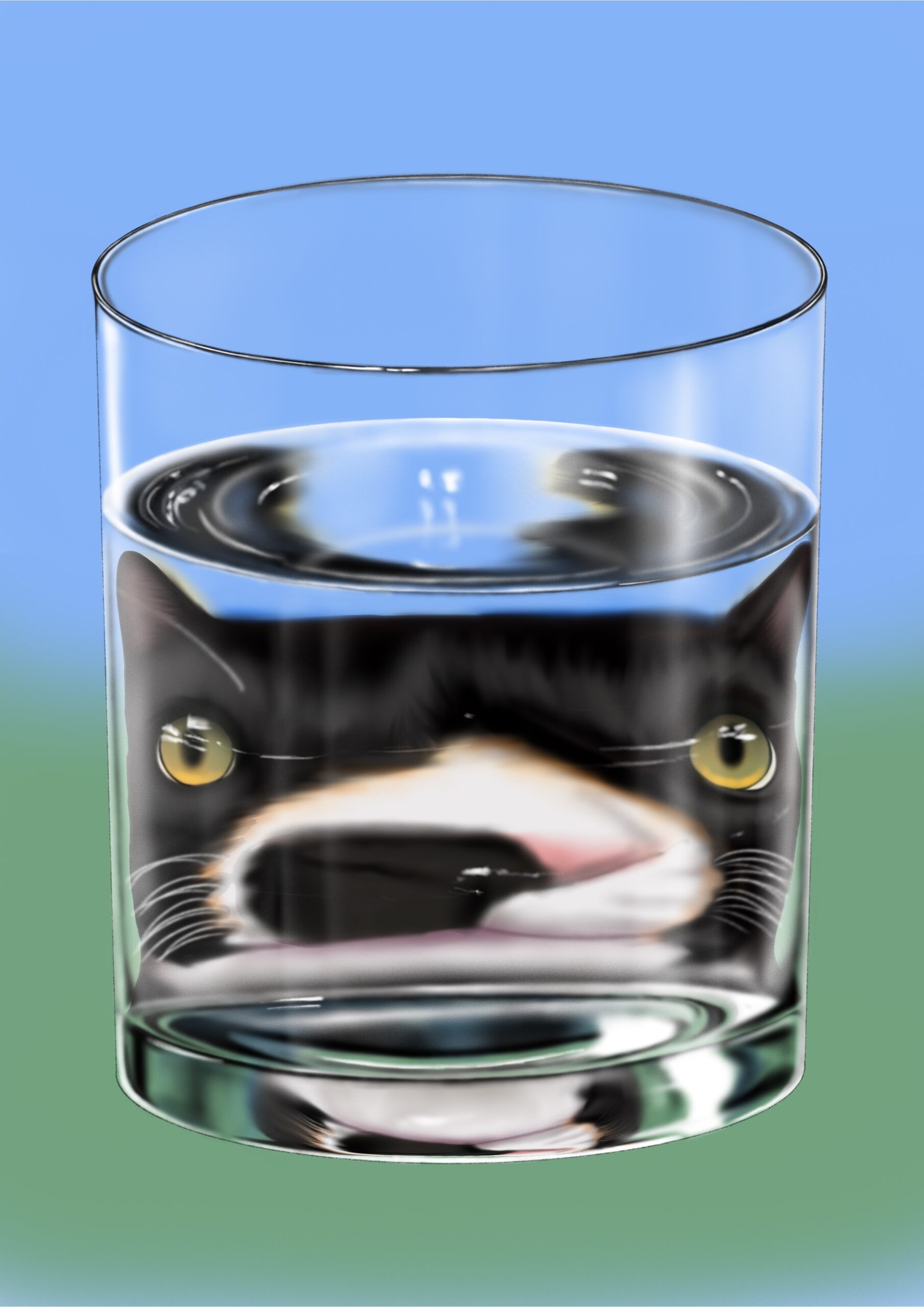
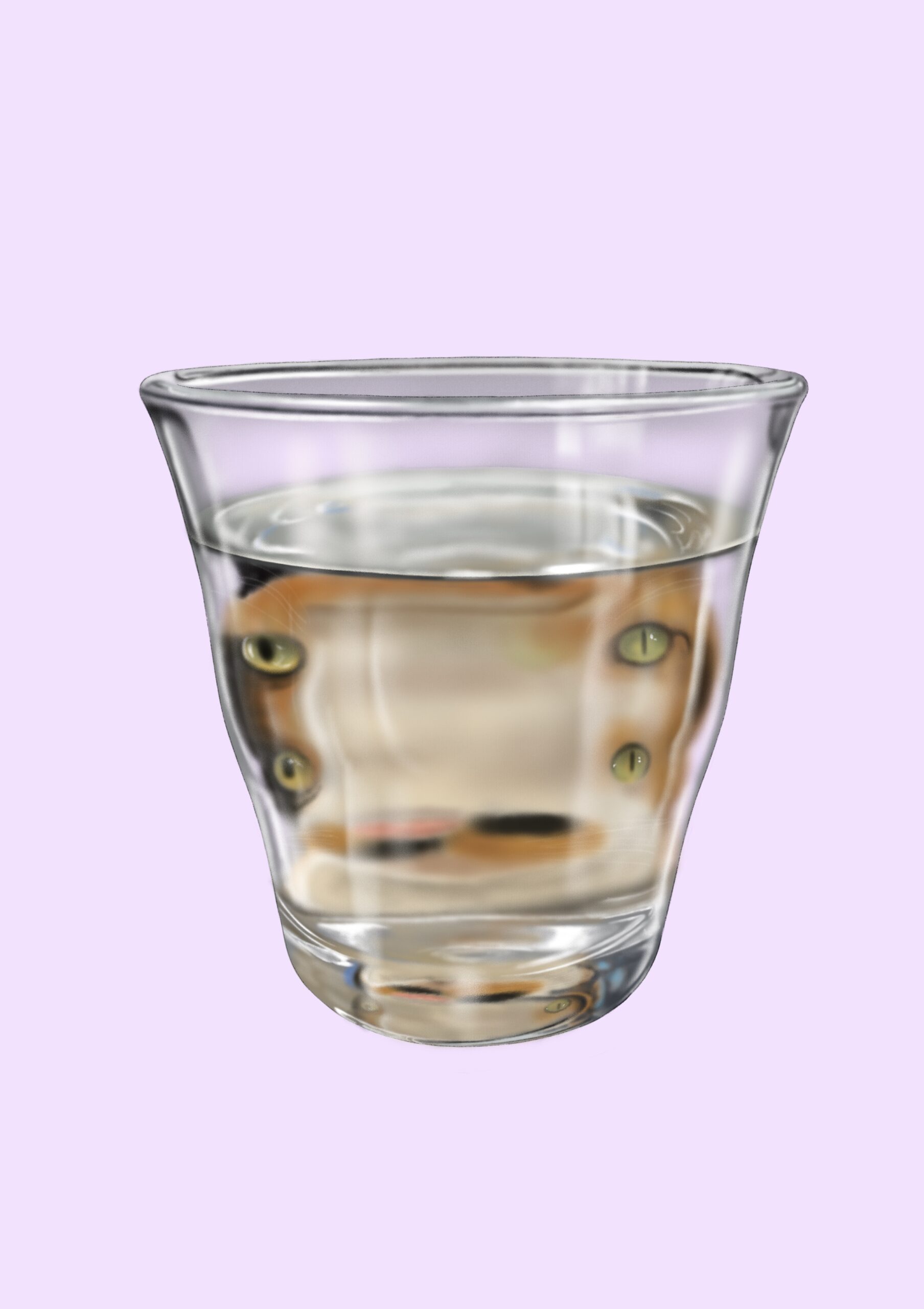
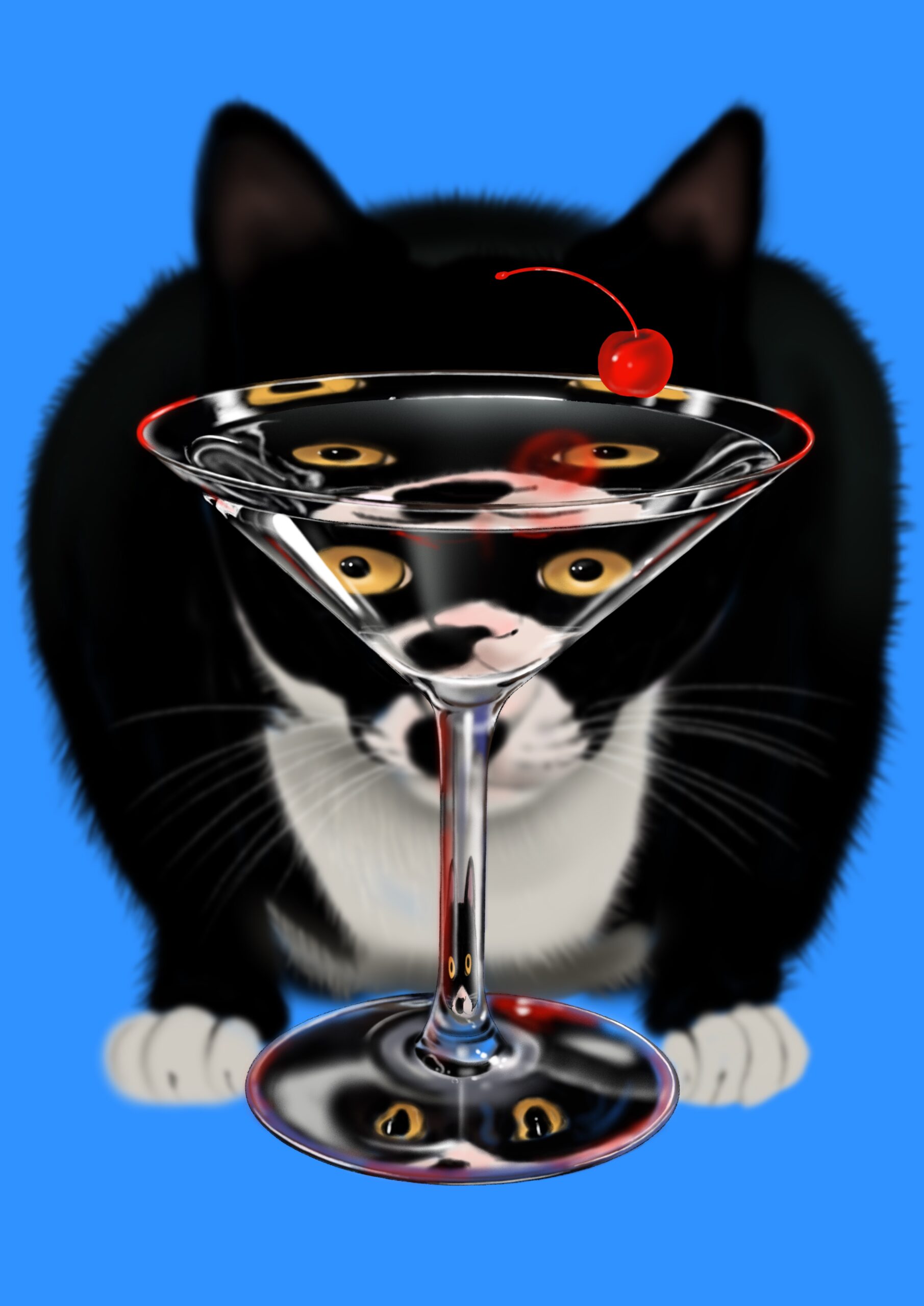
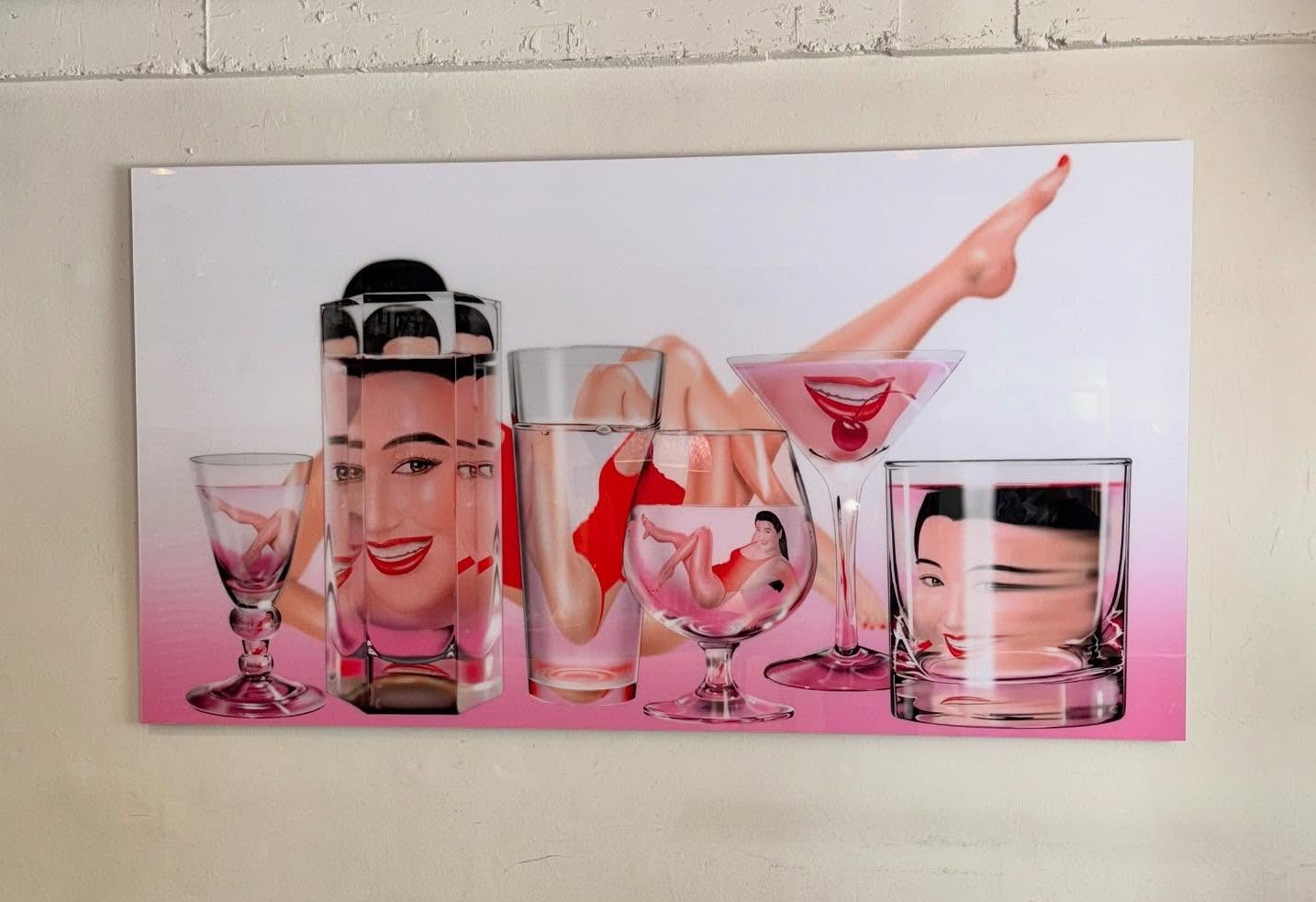
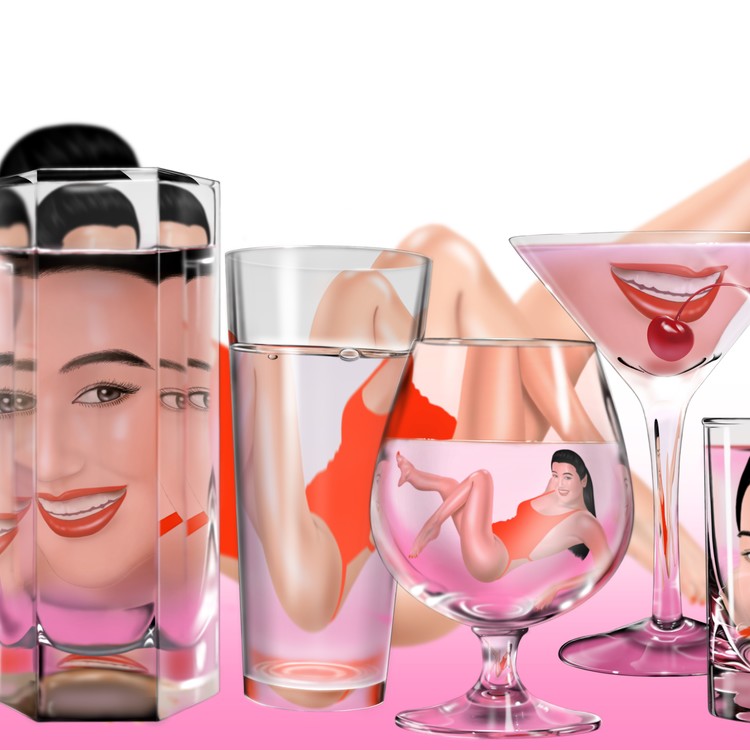
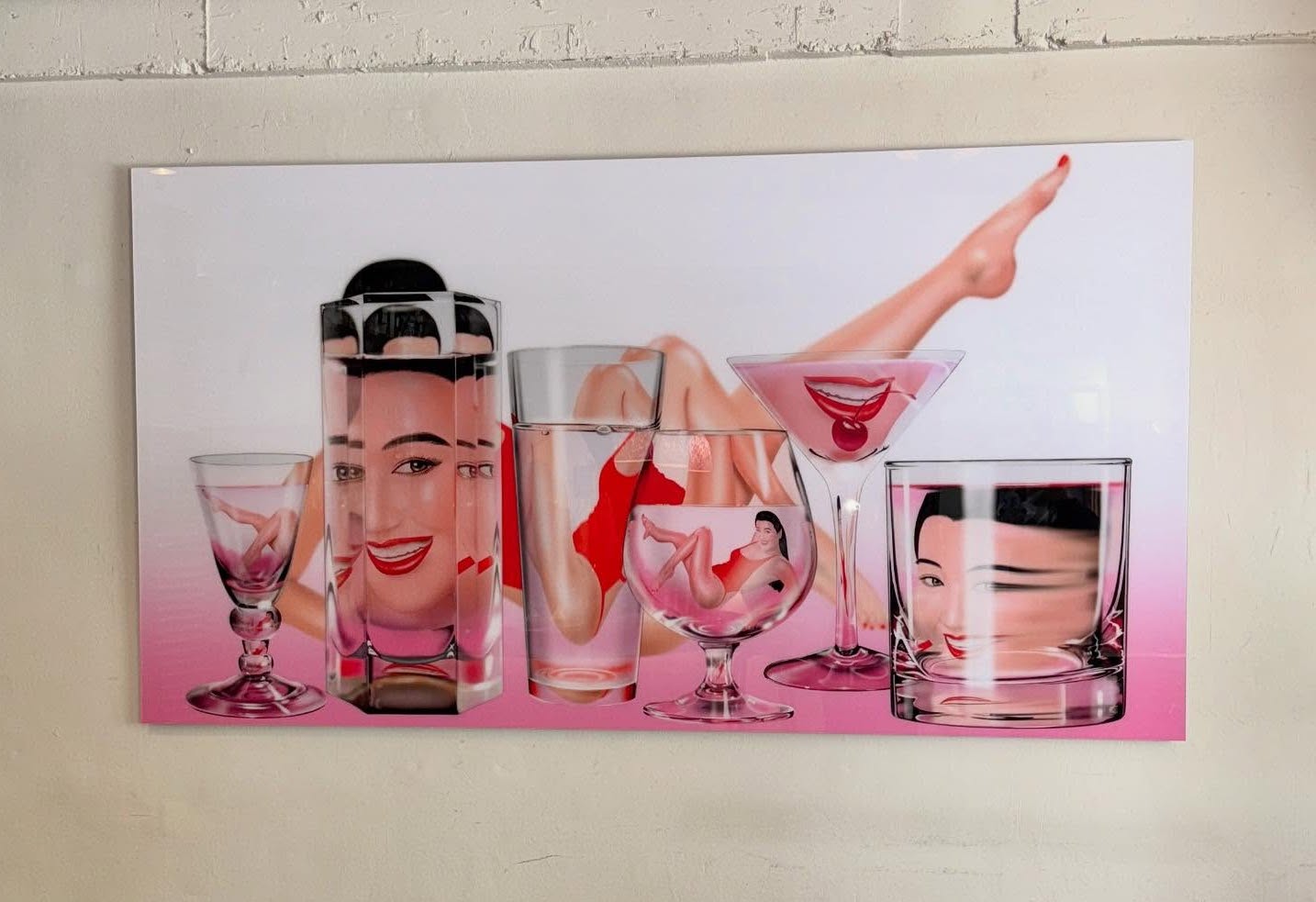
Meanwhile, another solo exhibition held in the same year, 《괴(塊)》, presented paintings set against the backdrop of Japan’s bubble economy era. In these works, which borrow the imagery of idols from that era, the female figure appears distorted and fragmented as it is reflected through multiple drinking glasses.
 
This imagery functions as both a metaphor for the culture of consumption and the tendency to value images and appearances over essence. Cocktail and whiskey glasses evoke the nightlife of the bubble years, while the refracted faces and bodies serve as mirrors of artificial glamour excessive, dazzling, yet haunted by fragility and emptiness.


Miki Kim, Glass Woman (detail), 2025 ©Miki Kim

However, the artist sees this consumption of images not as something confined to the past, but as a phenomenon that continues into the present. Even today, we continue to consume images relentlessly through endless feeds on the small screens in our hands, through advertisements and curated expressions, through gazes reduced to the currency of “likes.” Within this fleeting radiance lingers the same undercurrent of uncertainty and hollowness.
 
Thus, Kim explains that this work “aims to become another vessel reflecting not only a vanished age, but also the very landscape of the present we inhabit.”


illustration by Miki Kim created in collaboration with Heights Store ©Miki Kim

In this way, Miki Kim’s work has unfolded freely while blurring the boundaries between tradition and contemporaneity, as well as between art and the non-art. Her dreamlike images, which seem detached from reality, combine with vivid colors to lead viewers into a surreal world of imagination while also prompting them to look more closely at the society that surrounds us and at their own inner selves.

“Because I believe that making work is ultimately about revealing oneself, honestly facing my inner self and looking at the world and others with an open mind seem to be both the beginning and the core of my creative process.” (Miki Kim, from an interview with BE(ATTITUDE))


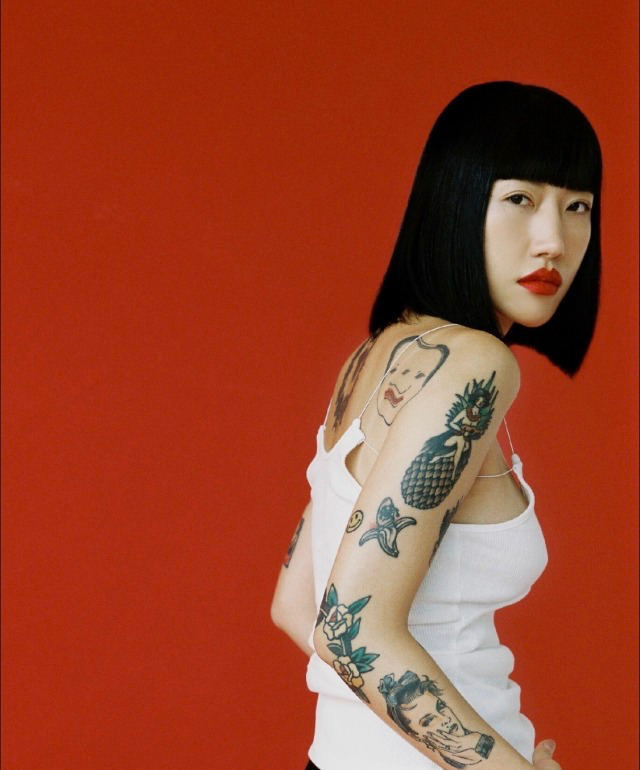
Artist Miki Kim ©Miki Kim

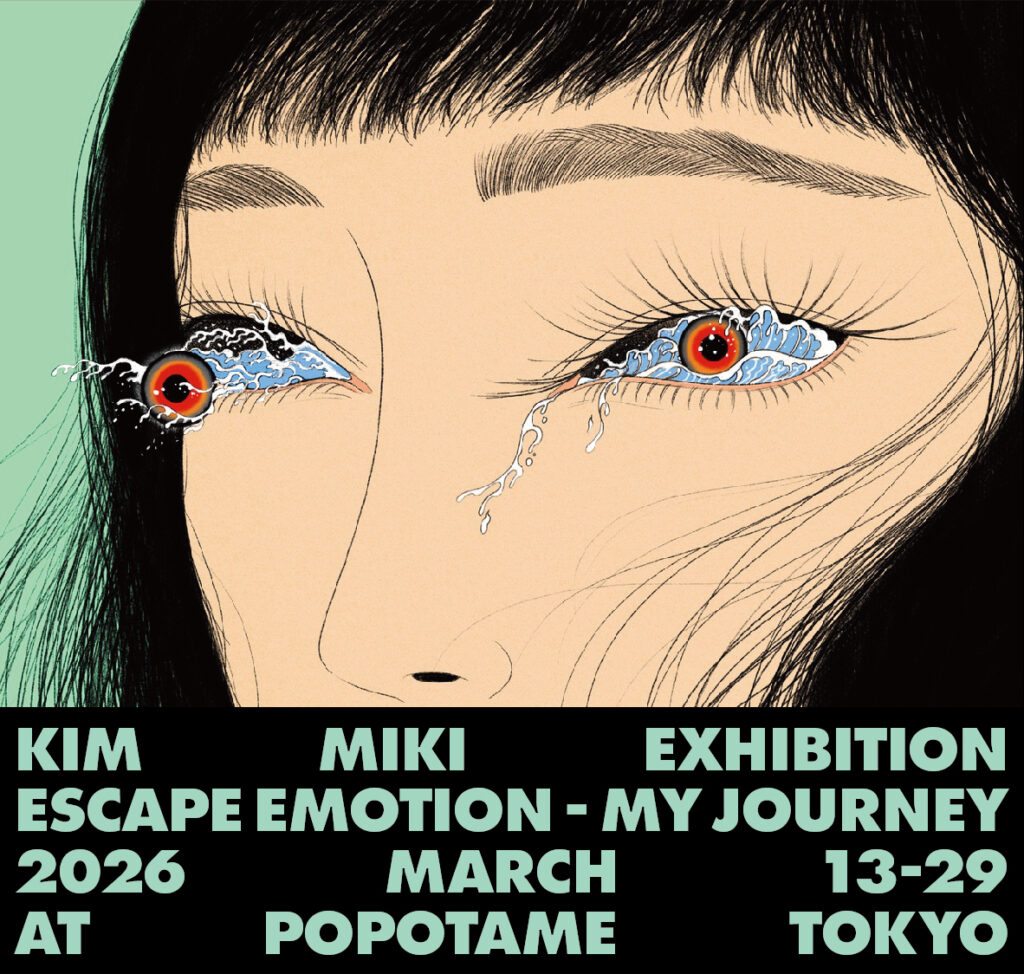
Miki Kim is a tattooist and illustrator based in Seoul. Her solo exhibitions include 《Body Echo: Spreading from Emptiness》 (CORD, Seoul, 2025), 《MIKI KIM EXHIBITION》 (Waiting Room, Taipei, 2024), and 《SKIN+INKS》 (Watermark Gallery, Seoul, 2024). She is currently presenting the solo exhibition 《Escape Emotion – My Journey》 at POPOTAME Books & Art in Tokyo.
 
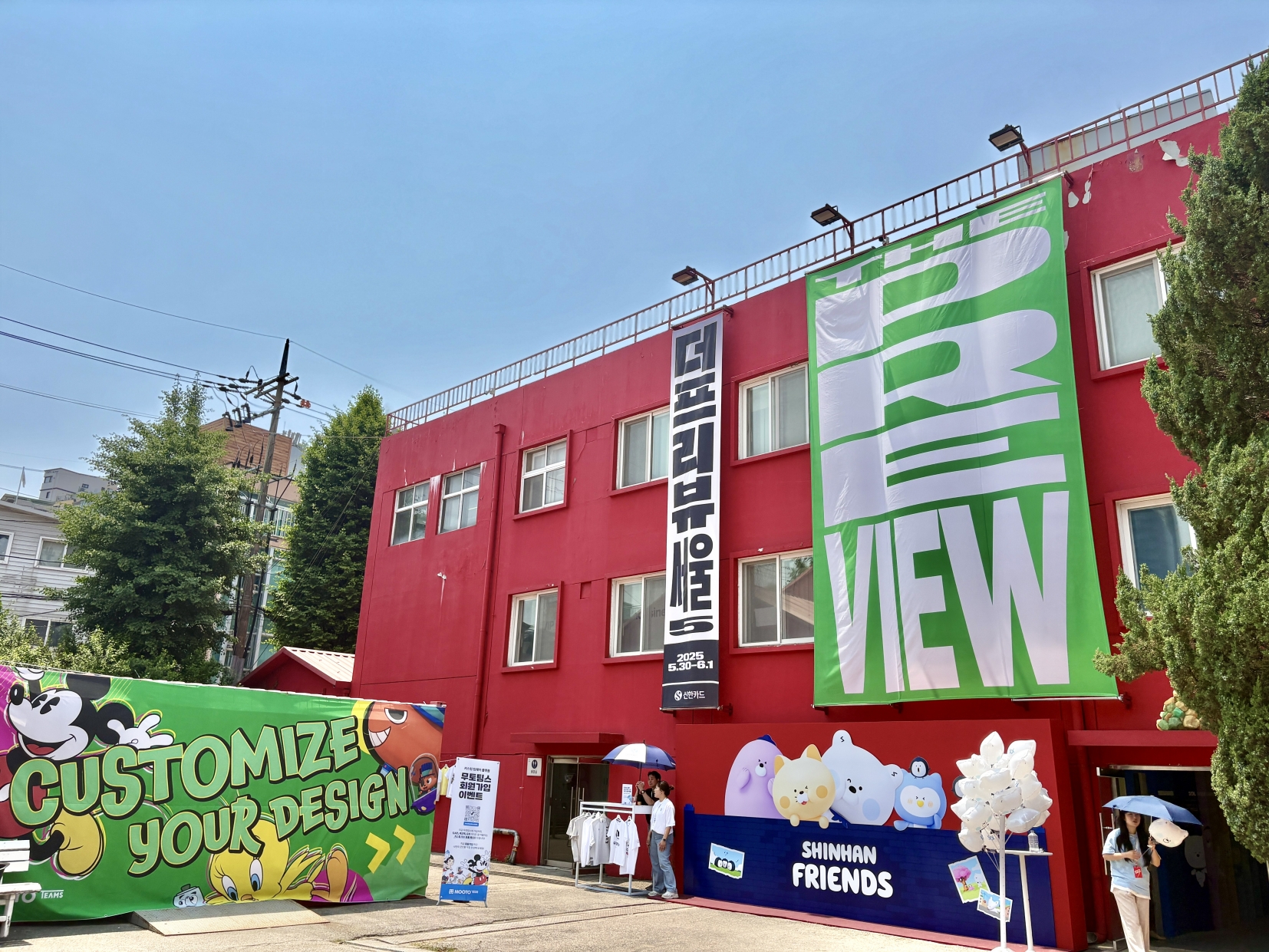
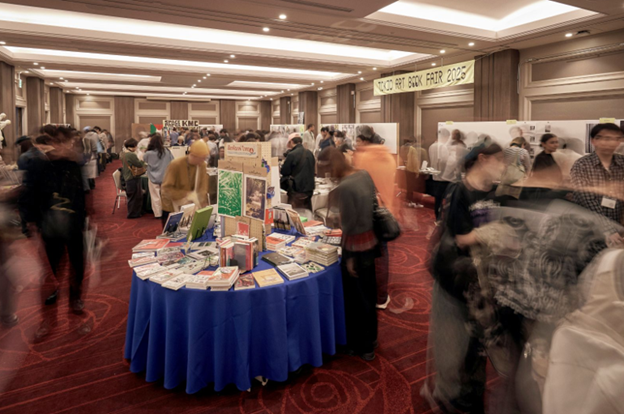
She has also participated in exhibitions and fairs such as 《Tokio Art Book Fair 2025》 (Shiba Park Hotel, Tokyo, 2025), 《The Preview Seongsu 2025》 (S Factory, Seoul, 2025), and 《Time in the Middle》 (Eulji Arts Center, Seoul, 2021). In addition, Kim has collaborated on artwork with numerous global brands—including Gucci, Marine Serre, sueUNDERCOVER, and adidas—as well as international media outlets such as The New York Times and Los Angeles Times, and K-pop musicians including CL and MEOVV.

References