The
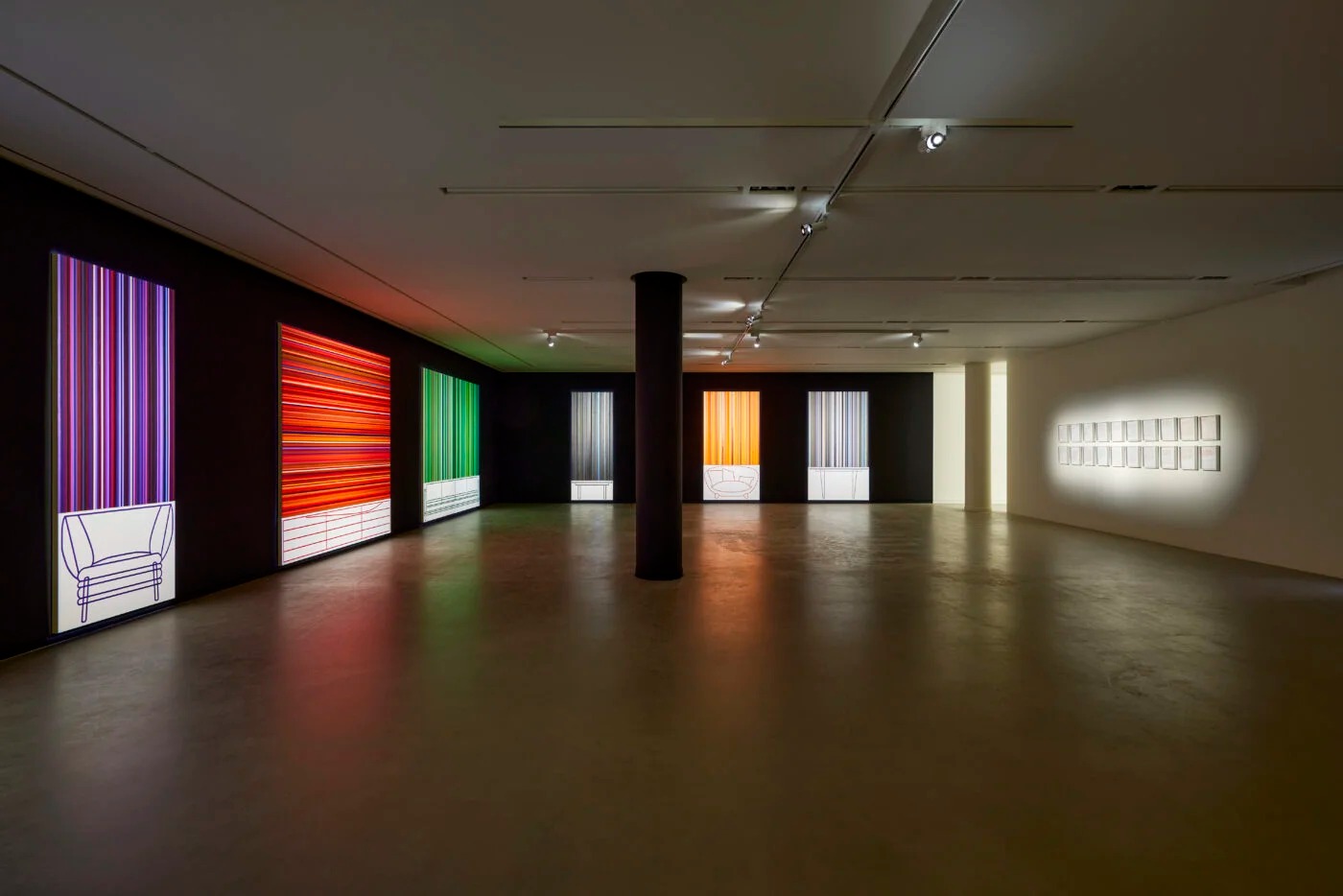
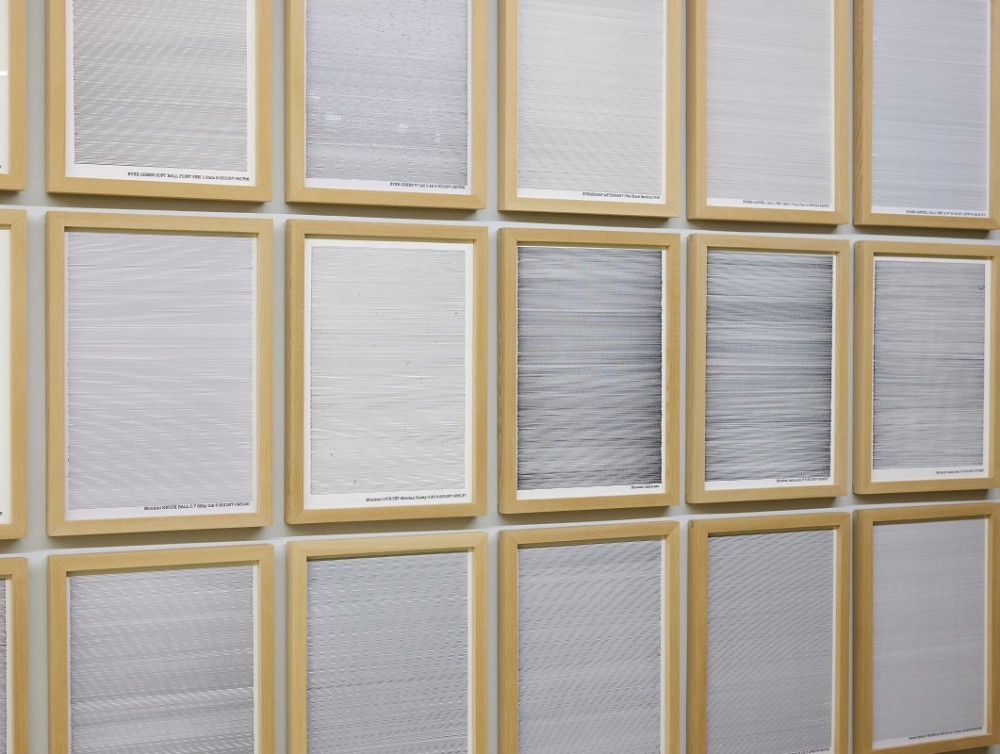
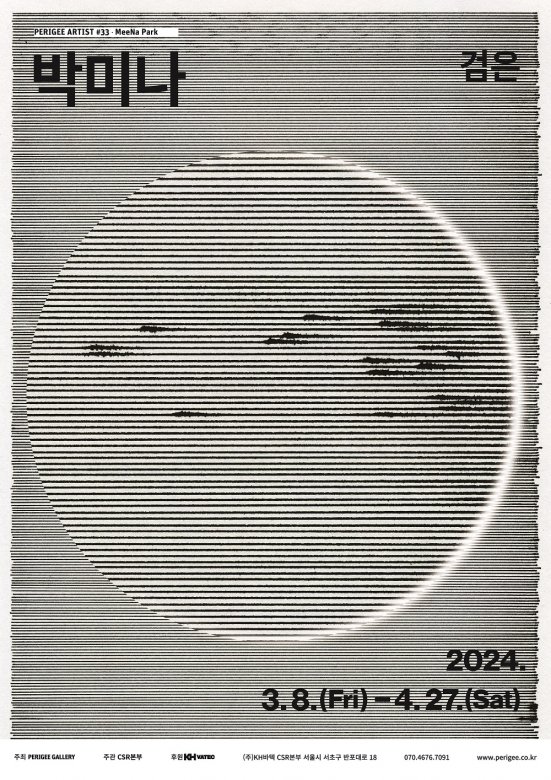
series of works titled ‘Black Pens’ which fill the gallery wall, immerse the
viewer in Park's profound obsession and create an overwhelming atmosphere. I
found myself intrigued by the process of coloring and drawing lines in her
work. Executed repeatedly from 2006 to 2024, these works must encapsulate the
process and remnants of the line-drawing activity. When standing in front of
these pieces, one can envision the meticulous process and time invested by Park
as she places a copy paper and employs a pen and ruler to repeat the same
action.
Amidst the mechanical repetition accompanied by a sense of effort, a
deeper narrative emerges. The question arises whether her subjective expression
can truly be excluded from the work, given the rules she has imposed.
Replicating the same act numerous times, especially under conscious control, is
challenging. With increasing repetitions, it approaches unconscious behavior,
making it impossible to achieve an exact machine-like precision.
Thus, while
Park's action appears as mechanically repeated, her drawings reveal no truly
identical lines. The installation of 498 drawings, brought together by these
lines, introduces an intriguing element – the unpredictability of how the
audience will perceive the myriad lines. Although the series ‘Black Pens’ is
meticulously executed through clear standards, range settings, and Park's
mechanical behavior, the resulting scene unfolds as a product of randomness. Throughout the production process, her actions expose a subtle interplay between
conscious control and unconscious repetition, illustrating the boundary of a
range that defies perfect categorization as rational, emotional, conscious,
unconscious, subjective, or objective.
What
does the concept of a boundary mean to Park? To explore this, let's trace back
to the initial step of collecting pens and paints. The black amassed on this
occasion doesn't encompass everything collectible, but it would be accurate to
say it includes as much as possible. These are items that could potentially
debut in the market in the future, and there might be discoveries yet to unfold
even for Park.
Viewing it from this perspective, the world is not boundlessly
infinite, but rather finite. Yet, we resonate with Park's assertion that we
assume an infinite realm beyond because our understanding is limited by human
perception. The repetitive act she undertakes after such a collection becomes a
crucial method for probing the boundaries of what is achievable. Now, let's
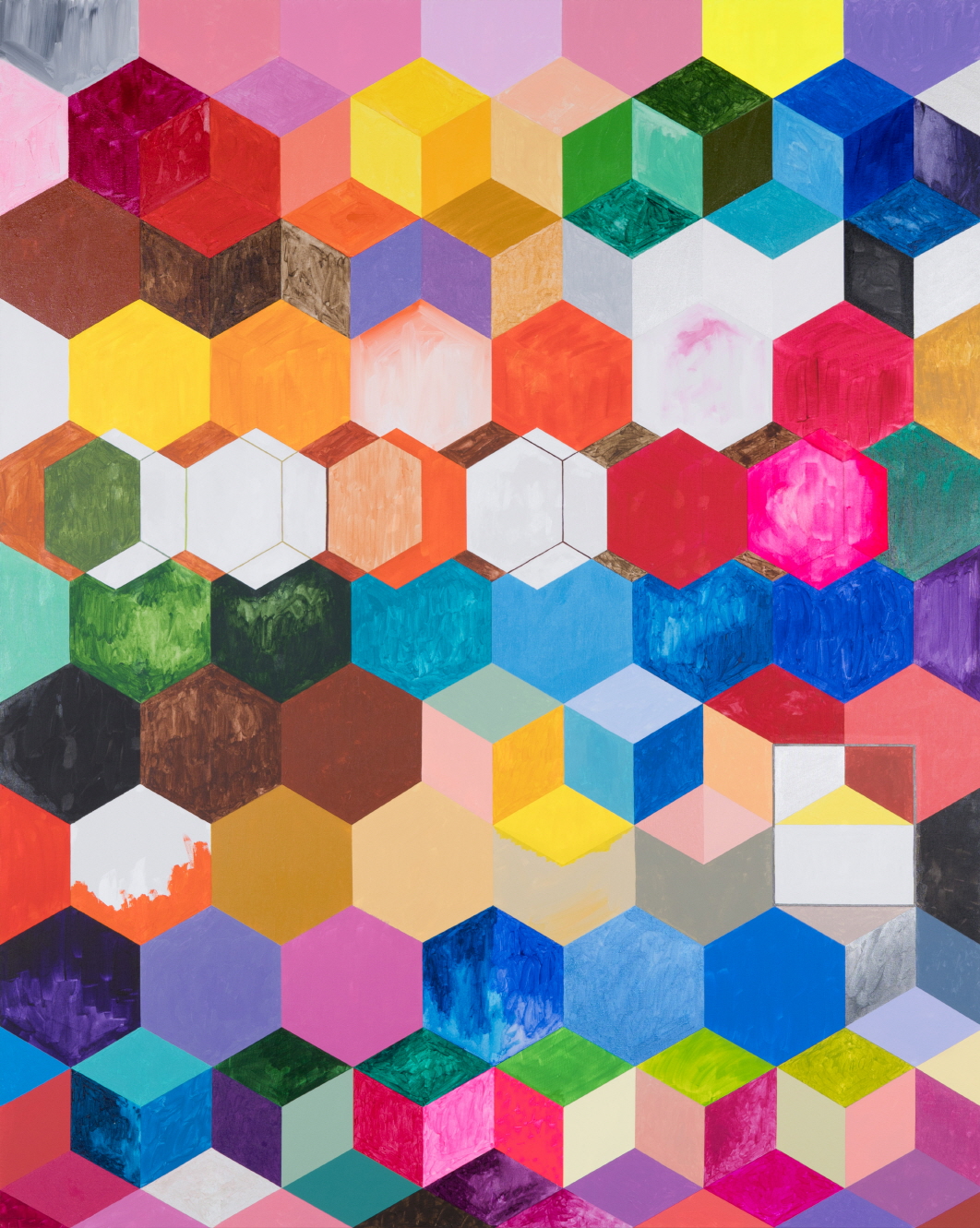
delve into the artwork and closely examine the pixels distinguished by color.
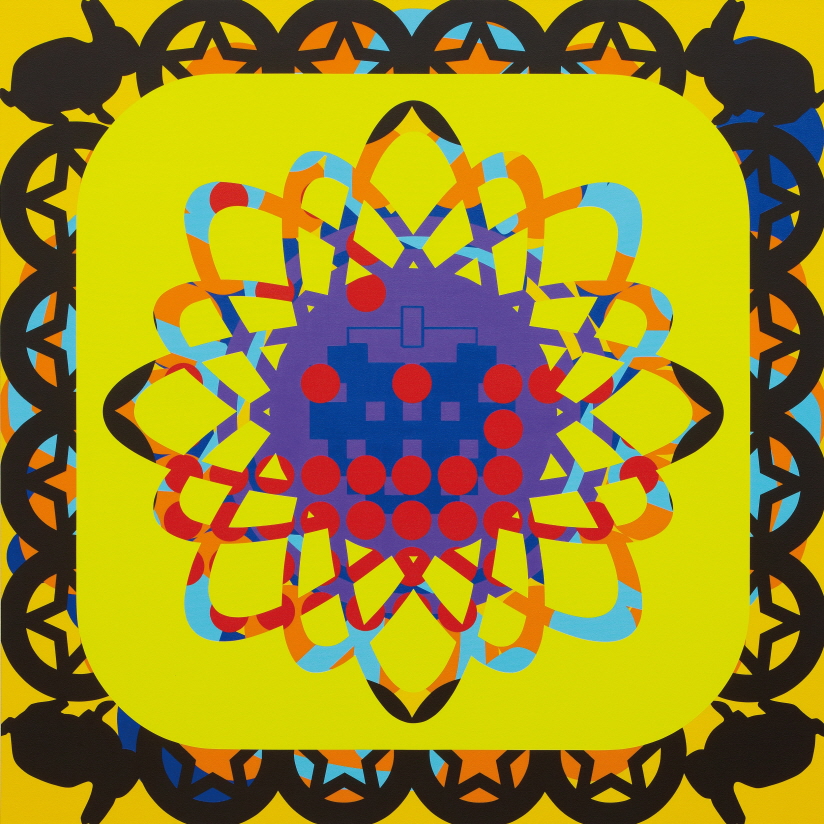
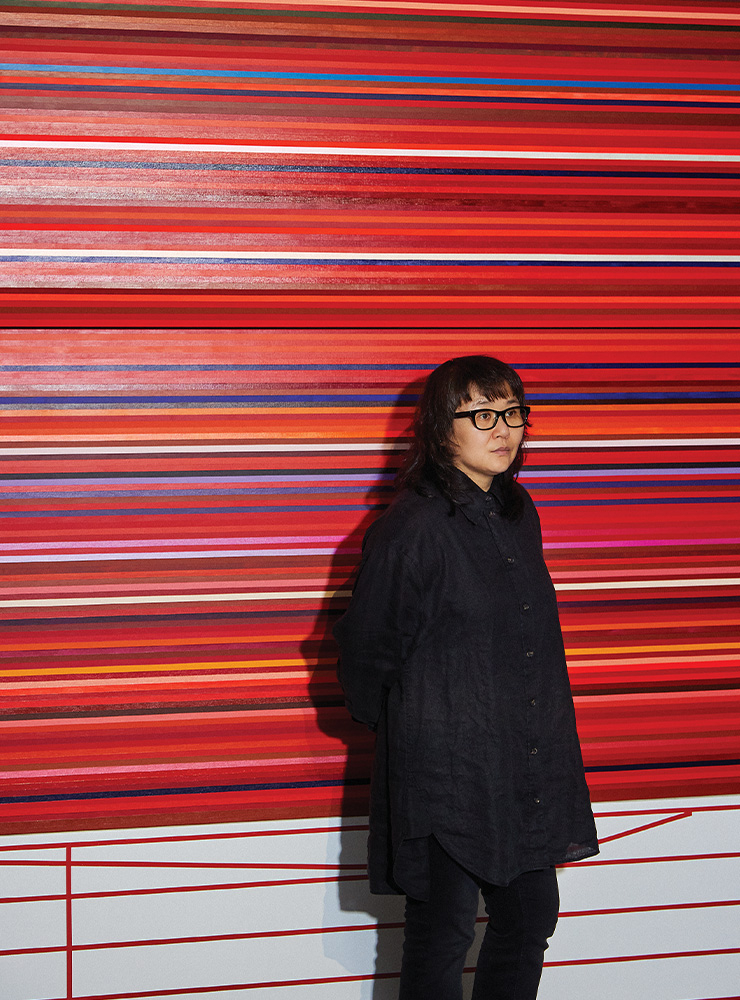
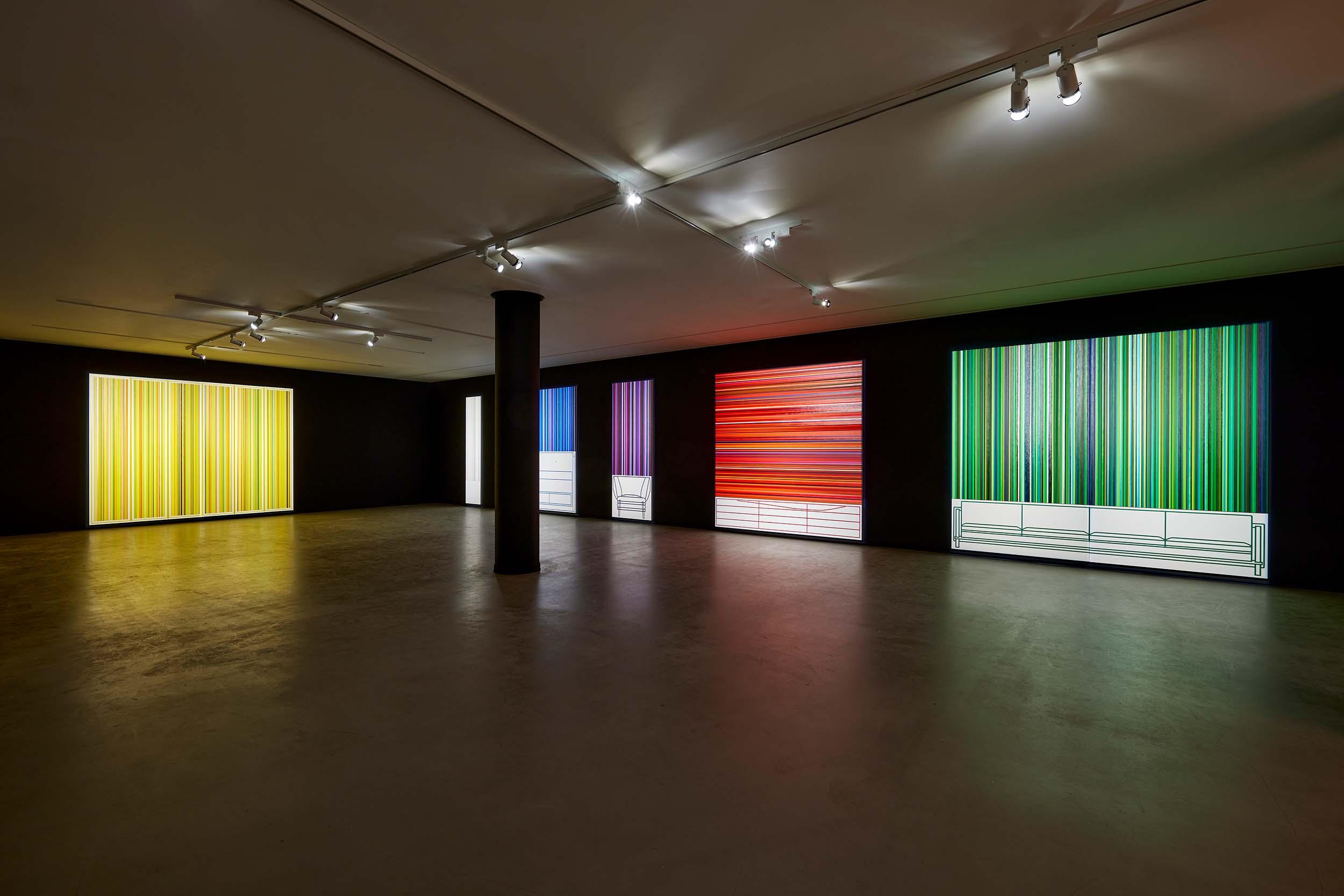
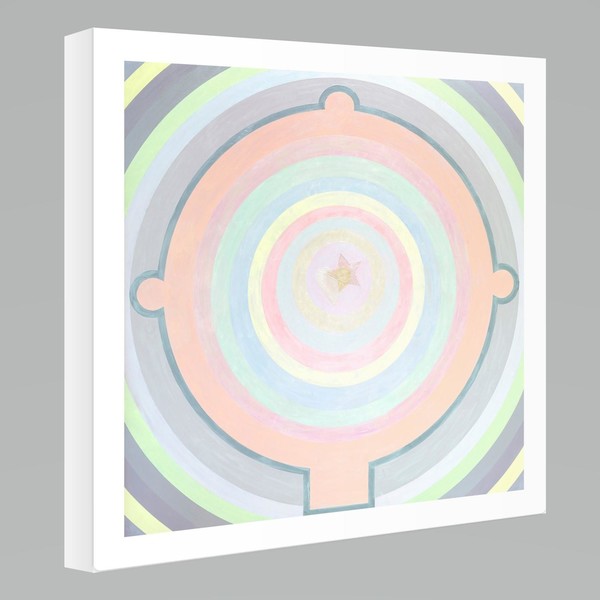
In 2024-BGORRY, each pixel employs the same brushstroke, yet
the texture of a distinct surface is evident.
Additionally, meticulously painted
boundaries between the colored surfaces are observable. Notably, she
concentrates on expressing the boundary that connects and separates each
element. These boundaries assert their own space while infusing vibrancy into
the adjacent colors. Park suggests that when viewing these color boundaries
from a distance, a moment of ambiguity may emerge, creating a cohesive
presentation rather than separate entities.
Therefore, the focus in her work
should be on the clear distinction observed up close and the subtle interplay
of differences seen from a step back, a dynamic of pull and push. These
boundaries not only convey something distinct but also draw attention to the
surroundings they exclude. Consequently, our gaze remains fixed on the boundary
line while surveying the painted surface. The peculiar sensation experienced
here naturally infiltrates our perception and its gaps, akin to the revelation
of the boundary's identity when diverging from the established path or slightly
deviating from it.
Finally,
I contemplate the significance of the black color that permeated 'my' vision.
Examining the linguistic and symbolic implications of the black hue that
traditionally surrounds us, black attire often symbolizes simplicity,
solemnity, the authority of priests, and mourning for the departed.
Additionally, as one of the "five colors," it represents the north,
while black crows and cats are associated with ominousness. When applied to
people, black has been employed in a discriminatory manner, belittling black
individuals, and metaphorically characterizing a malevolent heart.
Furthermore,
black symbolizes darkness, as seen in expressions like pitch-black night,
representing a state where color cannot exist due to the absence of light. This
absence of light, akin to death for us, instills fear and anxiety. It also
signifies a return to a state of nothingness, resembling the black hole in the
universe, where distinctions cease to exist. These diverse symbolic systems
prompt reflection on the language and symbols written in black on white paper.
This encapsulates the fundamental nature of a system where the act of filling
something new coexists with the complex notion that something may have been
erased. However, similar to gazing into deep waters or contemplating the vast
universe, the inherent darkness of black inspires thoughts of undiscovered
realms latent in our abyss. Black, in this context, becomes a space-time with
infinite potential, free from boundaries. It represents a perfectly unstable
state, wherein the quiet surface simultaneously reveals filling and emptying,
lack and excess.
This intrinsic quality exposes the incompleteness that
underlies our pursuit of essence and completion. Therefore, this exhibition,
exploring various approaches to black, serves as a platform to organically
expand our perceptual framework while examining and deciphering the imprints
within us. In her artistic endeavors, Park eliminates subjective judgment and
taste by obsessively repeating the use of black. Paradoxically, this approach
quietly dismantles our futile objective support, highlighting the ephemeral and
subjective nature of such constructs.
As
observed thus far, Park creates multiple series utilizing the black material.
However, following this, these series branch out into various interpretations,
straying from the fixed framework of completion within the exhibition.
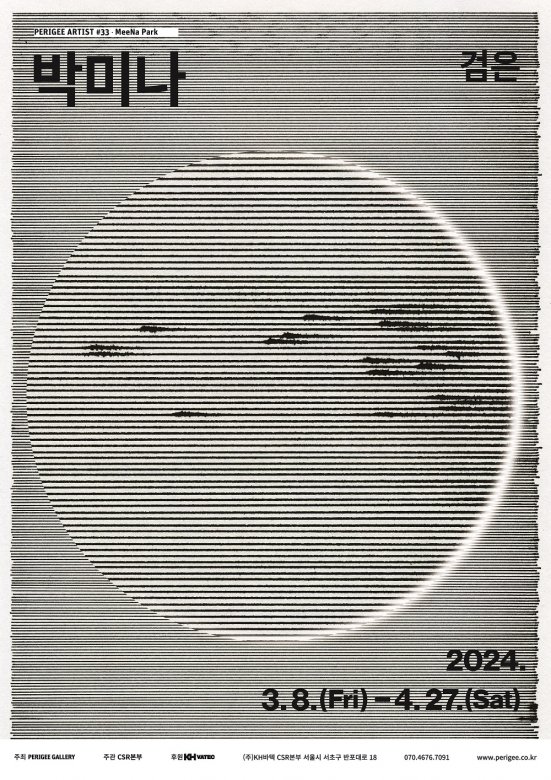
Consequently, 《Black》
transforms into an exhibition brimming with potential to be interpreted
differently depending on the observer and the path they choose. Park may even
welcome a narrative resembling a mistranslation, where the audience reads her
work in a way different from her original intention.
In essence, she desires
that viewers in front of her work remain open-minded, not constrained by
rigidity, and that the audience themselves traverse the boundaries of her work,
unleashing their maximum imagination—much like Park embracing fixed and limited
elements in another dimension. This interaction unfolds as a natural interplay
between the formal device and the intuition observing it, without rejecting
each other. It appears to transcend limits through the mutual exploration of each
other's boundaries.
Therefore, our task is to open our eyes wide, attempting to
see everything and allowing our hearts to embrace each element that comes into
our view one by one. Achieving this requires thorough examination of Park's
laid-out works, looking at them directly with our eyes. While certainly not an
effortless endeavor, practicing the persistent observation demonstrated by Park
enables us to uncover a peculiar narrative that remains untold within the
already contained story. Ultimately, Park Meena’s work is not a terminal point
where we settle for a particular result; rather, it serves as a springboard and
starting point for what comes next. This underscores the need for a concerted
effort to actively engage with and decipher her work.