Tradition is undoubtedly a precious asset
that must be carefully preserved and cultivated, but it should not become an
obsession that confines imagination and creativity in the present. Yet it is
not uncommon today to encounter people asking whether Korean television dramas
are truly “Korean,” or whether the songs of the boy band BTS can be considered
Korean.
This fixation on a past-oriented notion of Korean identity is the
result of a historical inertia in which, while blindly learning from and
pursuing more advanced nations, we soothed the sorrow of being behind and our
damaged sense of self-esteem with the glory of the past—that is, with
tradition. If we accurately recognize our transformed status in the present,
such questions would hardly need to be asked. In the case of contemporary
Korean art, however, the situation is somewhat different.
The power of advanced Western civilization
was so overwhelming that it deprived the country of its sovereignty, led people
of the same nation into war with one another, and ultimately turned them into
enemies. For us, therefore, learning from and catching up with advanced nations
has not been a naïve wish but a deeply rooted aspiration. In such
circumstances, studying and introducing advanced Western artistic trends was
regarded as a way of modernizing Korean art.
Placing our own colors upon these
advanced styles and asserting a distinct Korean identity became both the
developmental strategy and the process through which our art sought to reach
the level of advanced nations. This applies not only to the period following
liberation but also to the monochrome painting (Dansaekhwa) and experimental
art of the 1970s that the West has recently begun to recognize.
Inclusion of Minority Identities
in the West
When working in this way, “Koreanness”
becomes an essential condition for a work to be recognized as art rather than
merely an imitation of the West. Since the stylistic forms themselves were
borrowed from advanced countries, what determines the originality—namely the
artistic quality—of a work becomes Koreanness, the difference from the West.
However, through the tireless efforts of earlier generations, Korea joined the
Organisation for Economic Co-operation and Development (OECD), often called the
“club of advanced nations,” in 1996, thereby entering the ranks of developed
countries. Along with this, the sense of inferiority toward advanced nations
and the drive to catch up with them naturally subsided. Conditions were finally
in place for us to compete on equal footing with advanced nations without
relying on the glory of the past.
Coincidentally, around that same time
postmodernism became influential, and the collapse of the Eastern Bloc
integrated the global community into a single system. The West began to show
interest in various forms of minority identity—non-Western, people of color,
women—groups that had previously received little attention or significance. In
order to visibly demonstrate this new inclusiveness within the Western
mainstream art world, works that revealed the minority identity to which the
artist belonged were preferentially selected.
During this period, artists whose works
highlighted Korean, Asian, or female identities were among the first to be
invited onto the global art stage. These included Lee Bul, whose work
foregrounded female—particularly Asian female—identity; Do Ho Suh, who
addressed Korea’s long period of military dictatorship; and Kimsooja, who
worked with materials such as the traditional bojagi. Just as we were finally
ready to move beyond regional characteristics and compete on equal terms, the
condition for entering the arena in which such competition could take place was
once again a regional identity.
At the same time, overseas travel was
liberalized, and many young artists went to the West to study. The progressive
professors they encountered there embraced them but simultaneously emphasized
minority identities such as Asian, Korean, and female identities. Although we
had prepared ourselves to compete with them on equal terms in both form and
content, the so-called “politically correct” Western embrace of these artists
was not as equal subjects but as minorities. In this way, multicultural
inclusiveness expressed through the phrase “we respect your cultural identity”
inadvertently functioned as another form of discrimination.
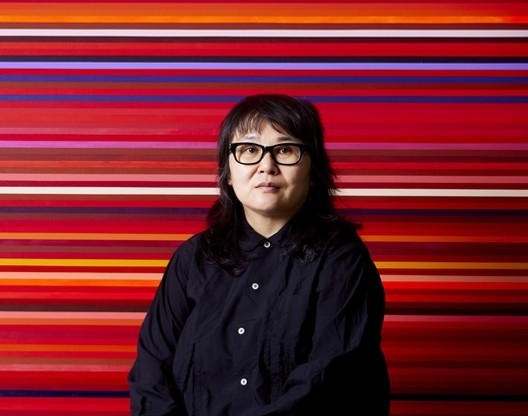
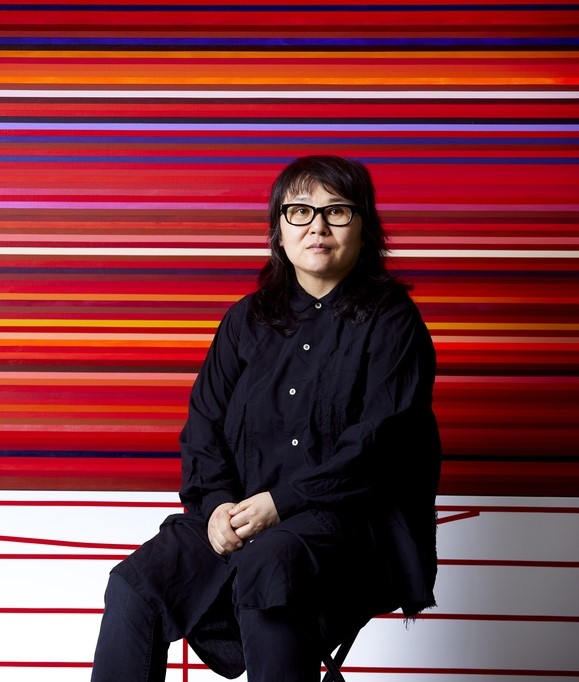
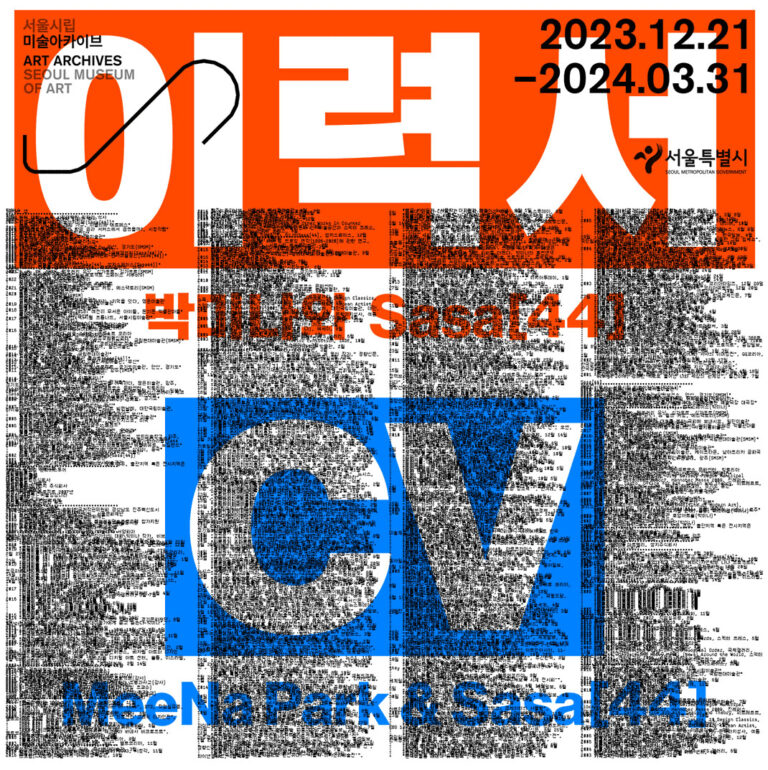
In fact, Park Meena, who was studying in
the United States at the time, found herself compelled to respond to such
perspectives from the surrounding white community by insisting: “I am an
asphalt kid born into a Westernized nuclear family system, someone who grew up
in an apartment eating Spam and watching ‘Sesame Street’ and ‘Superman’.”
Refusing to accept the demands placed on her identity and instead attempting to
compete on equal terms while redefining painting, Park Meena ultimately found
herself excluded from their arena. Without recognition from the Western
mainstream art world, her new experiments have also failed to receive proper
understanding and evaluation at home, continuing to be met with the suspicious
question: “But where, exactly, is the Korean element?”
In fact, Park Meena belongs to a group of
artists who emerged in Korean art history after the 1990s from an entirely
different background. If Dansaekhwa represented a form of modernism localized
in Korea through what has been called “hybrid imitation,” developed without a
precise understanding of Western modernism, then Park Meena and her generation
studied the history of Western art through art history courses at Western
universities and graduate schools.
Moreover, having also become familiar with
contemporary critical discourse, they were required to discover for themselves
forms and contents suited to their own time—in other words, to create new
artistic tendencies. Yet attempts to illuminate and evaluate the art-historical
significance of this break from the past remain insufficient.
Park Meena’s Original Theory of
Painting
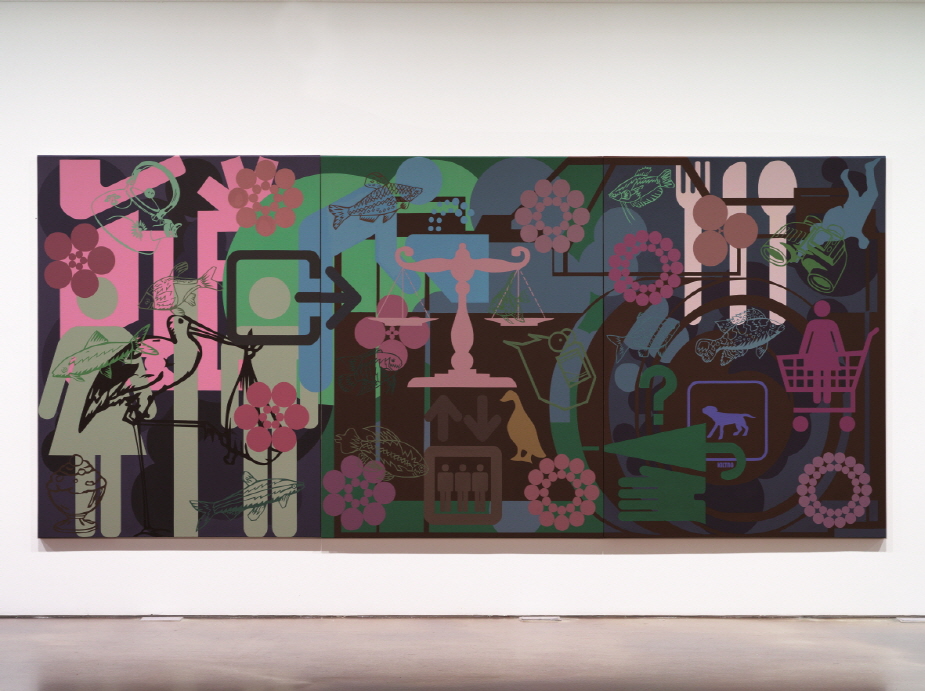
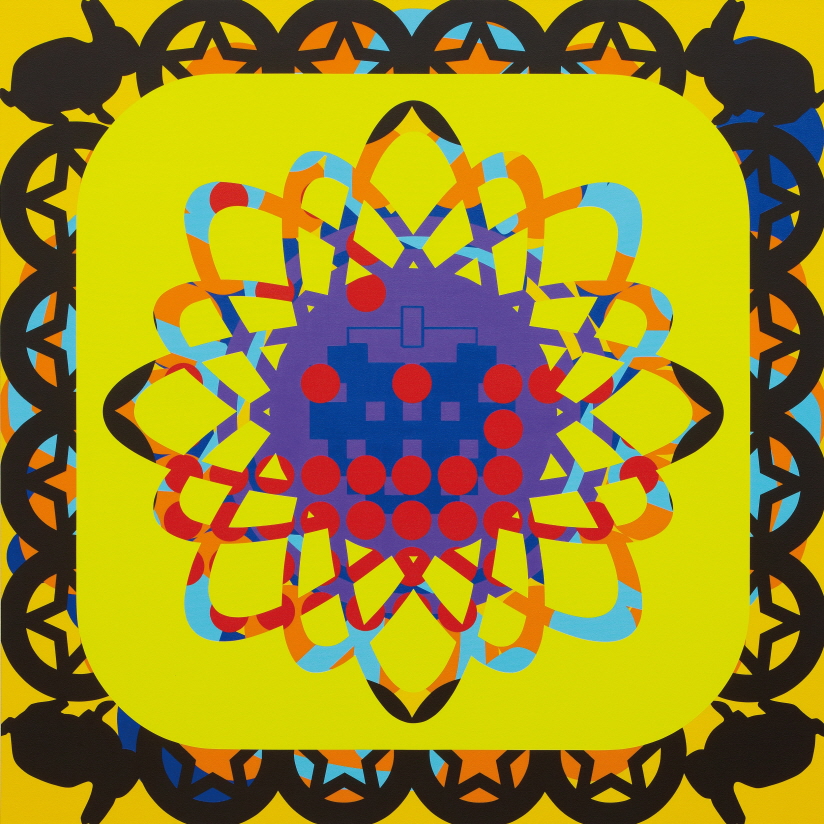
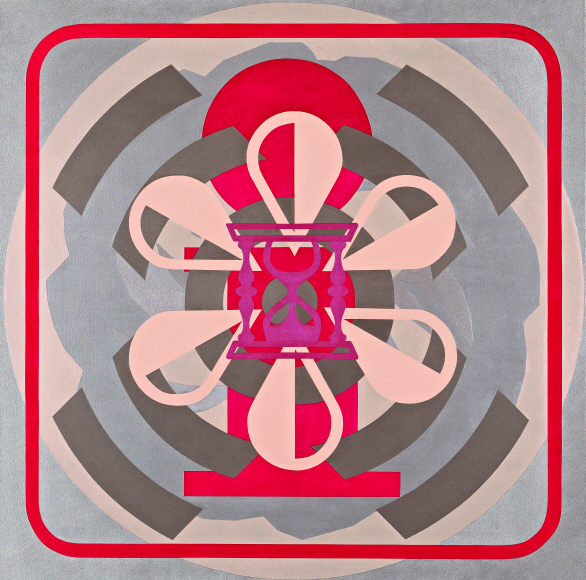
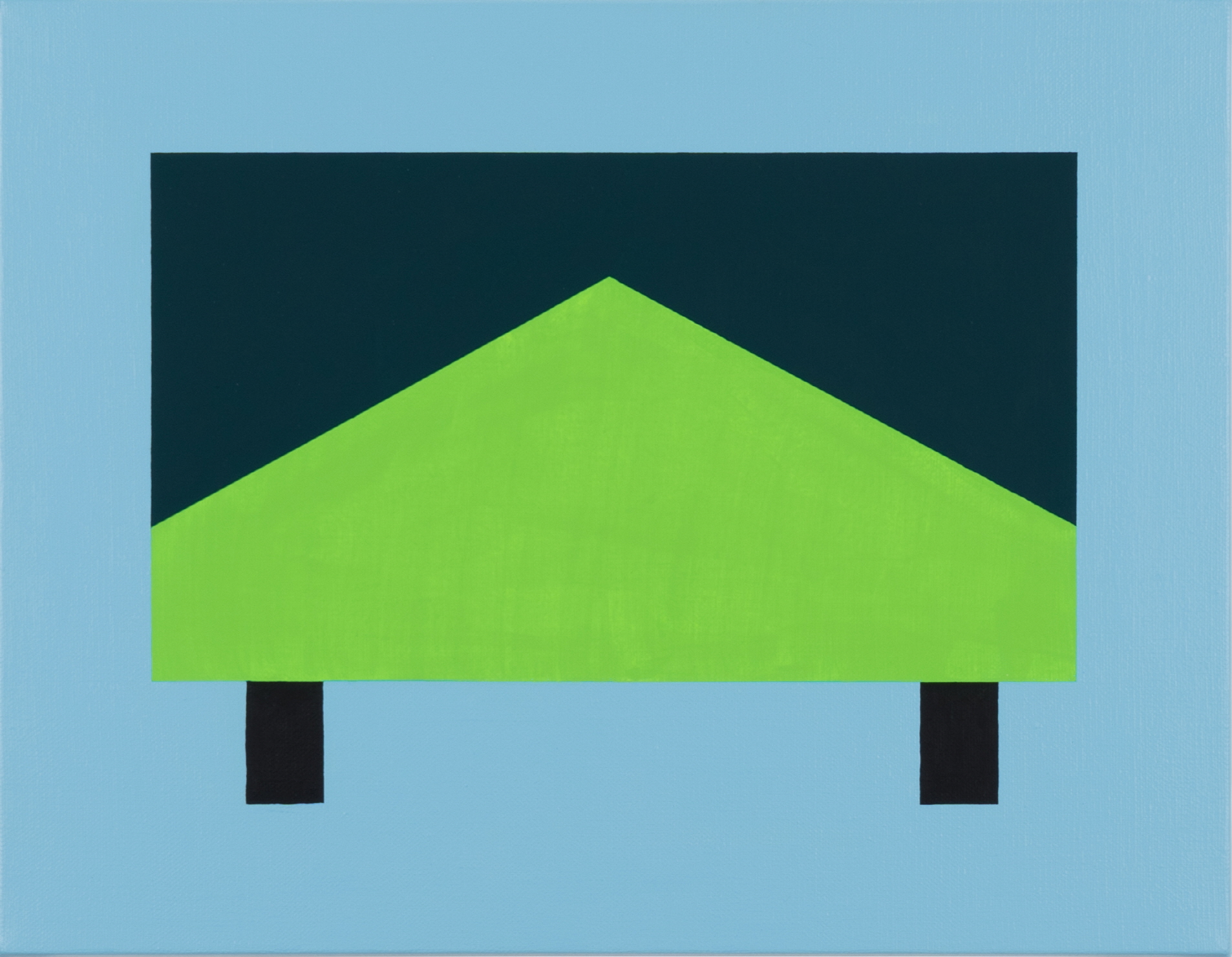
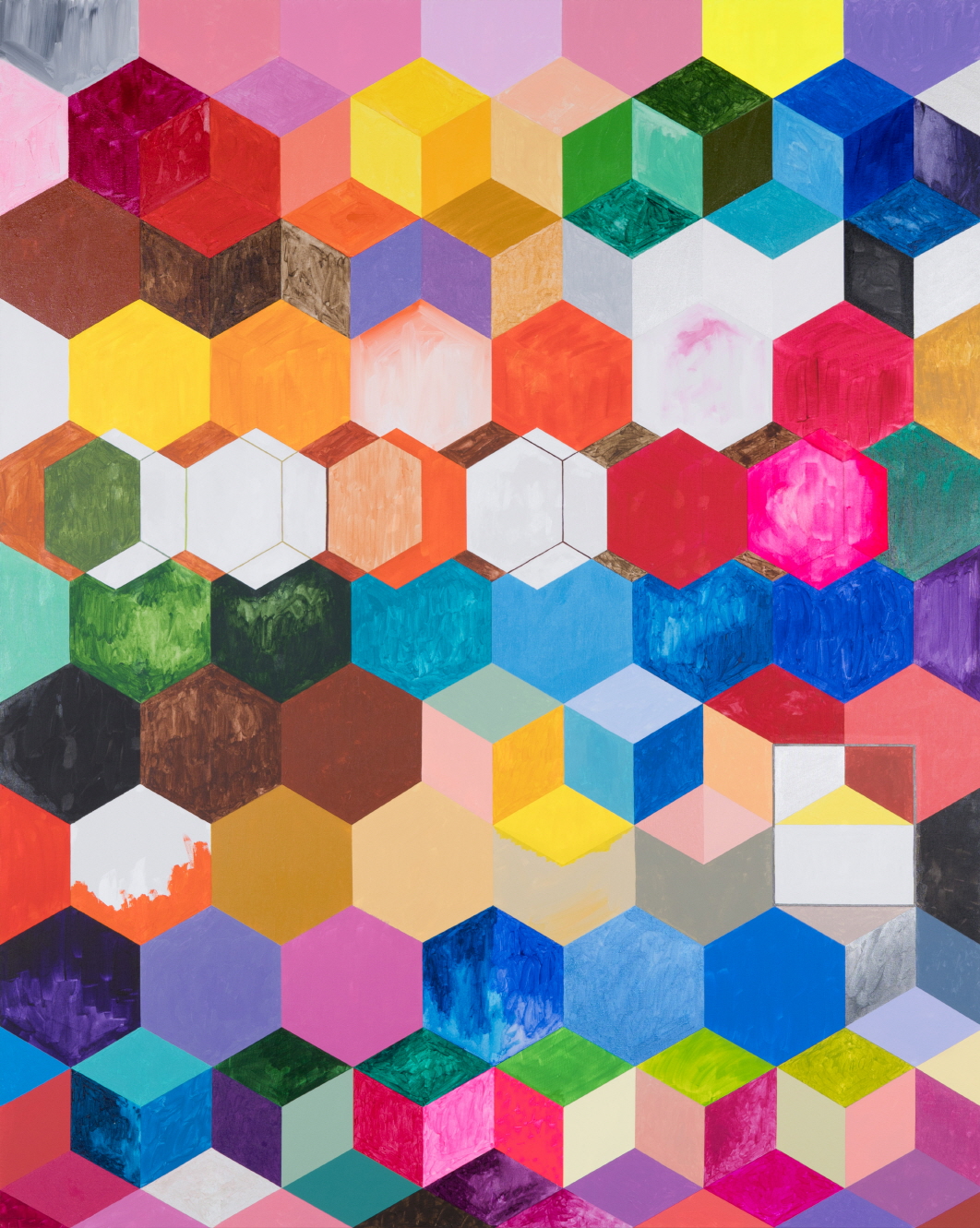
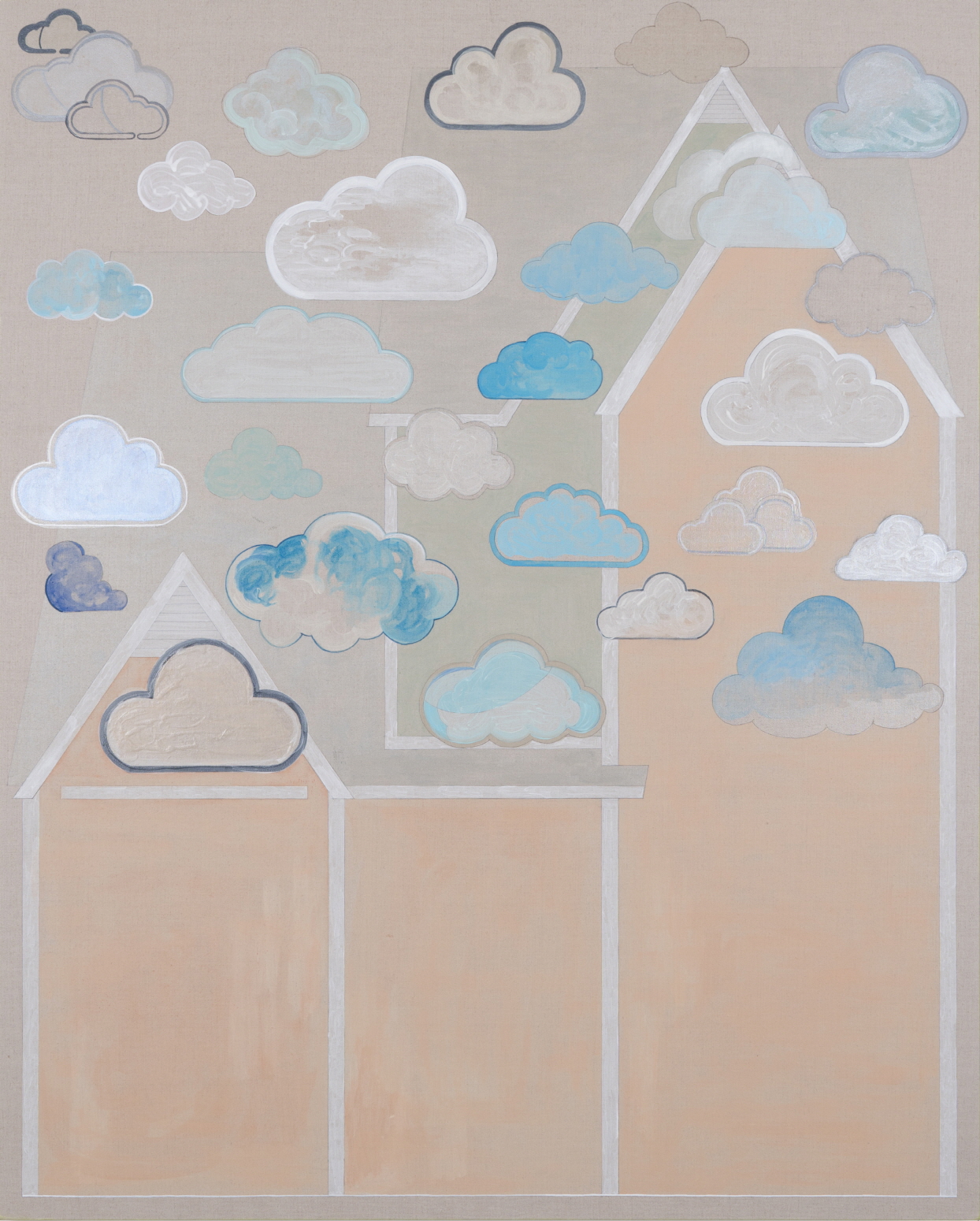
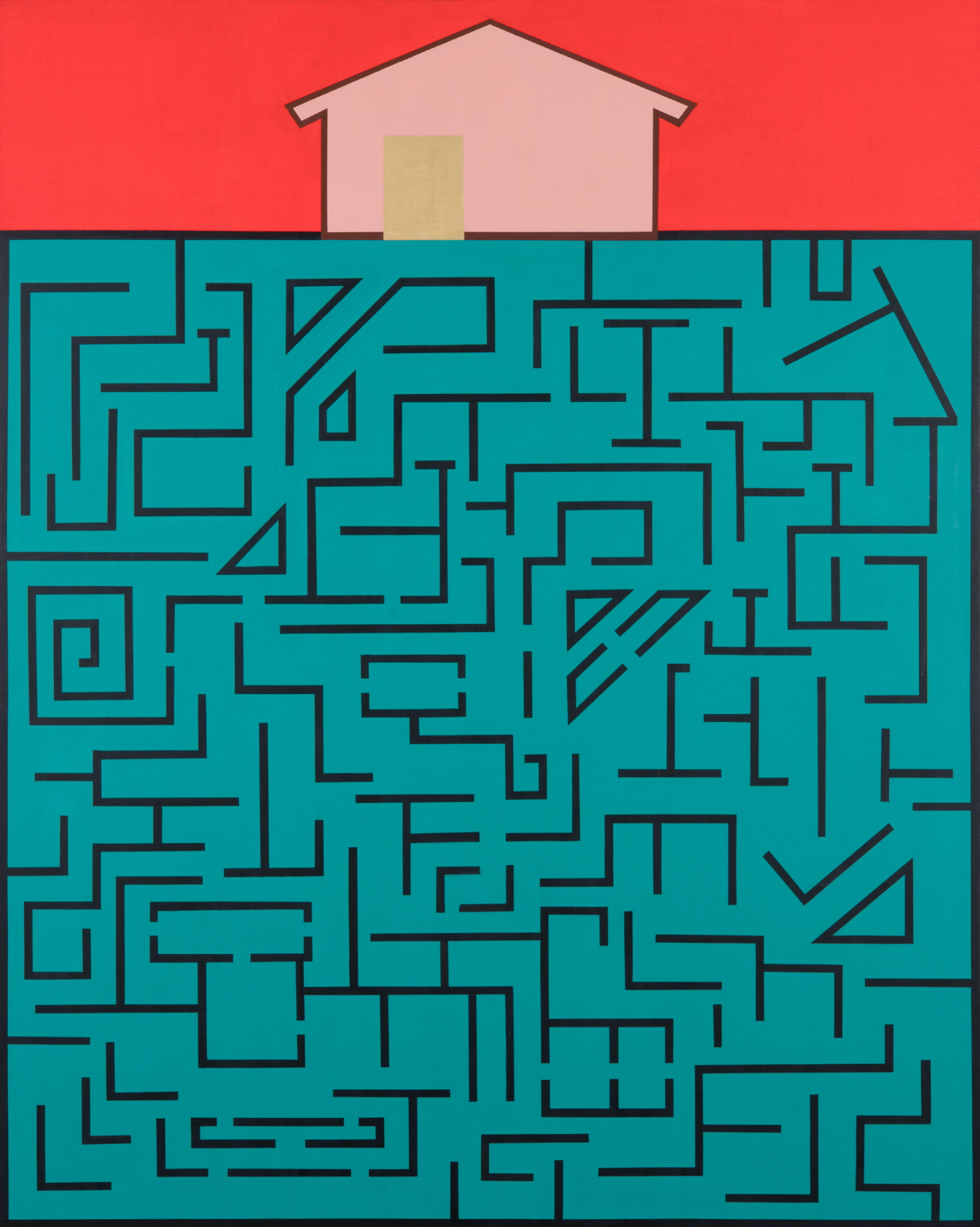
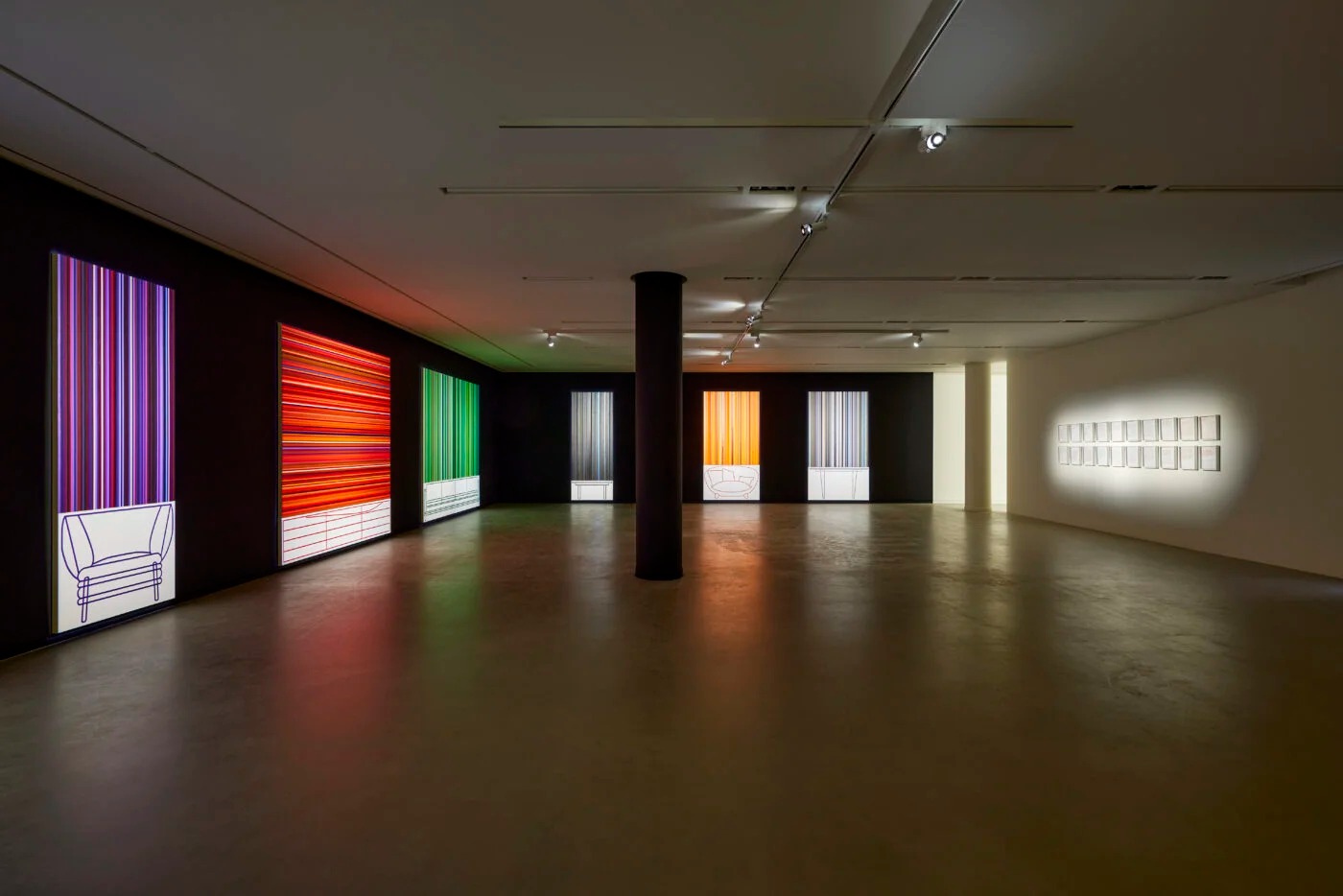
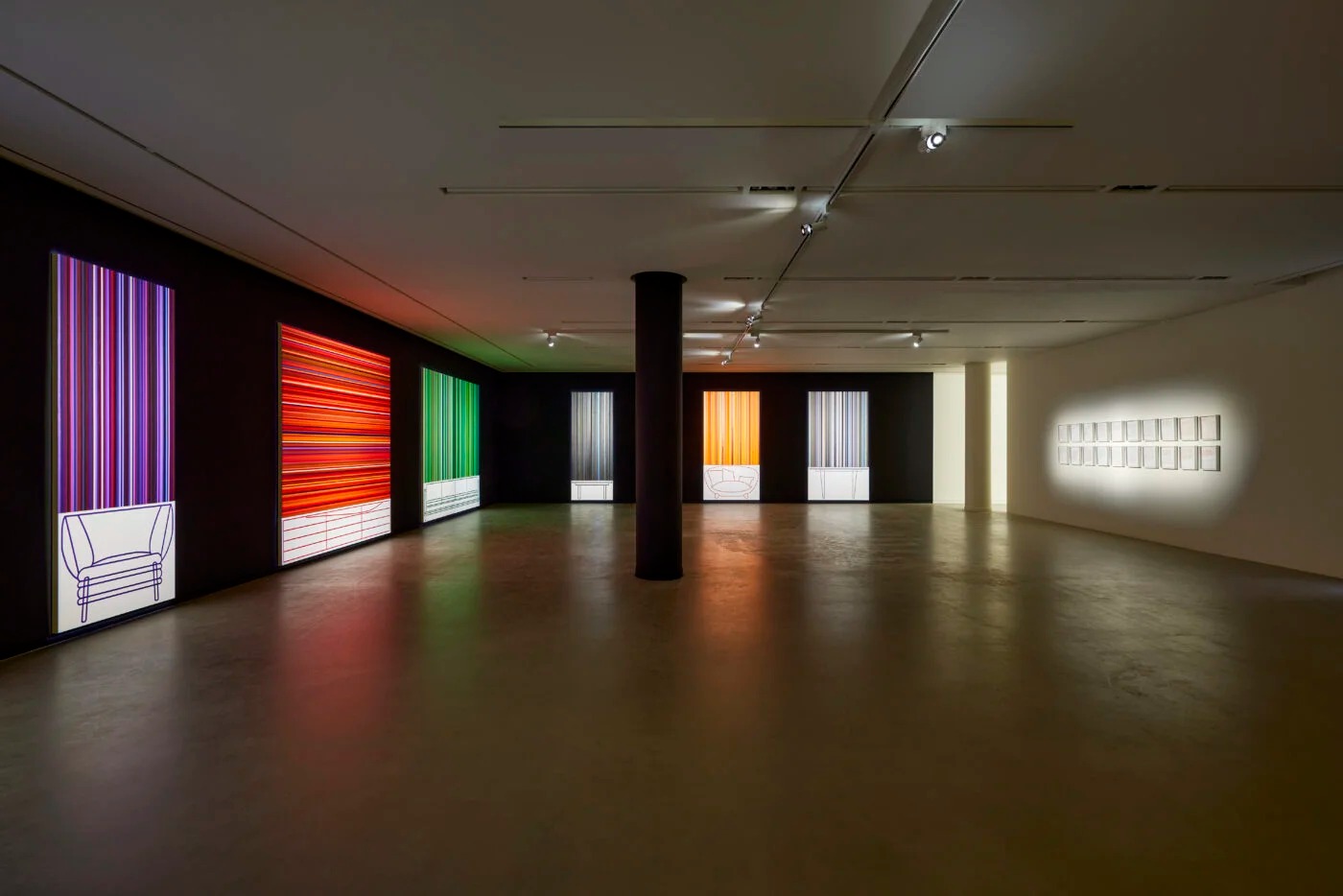
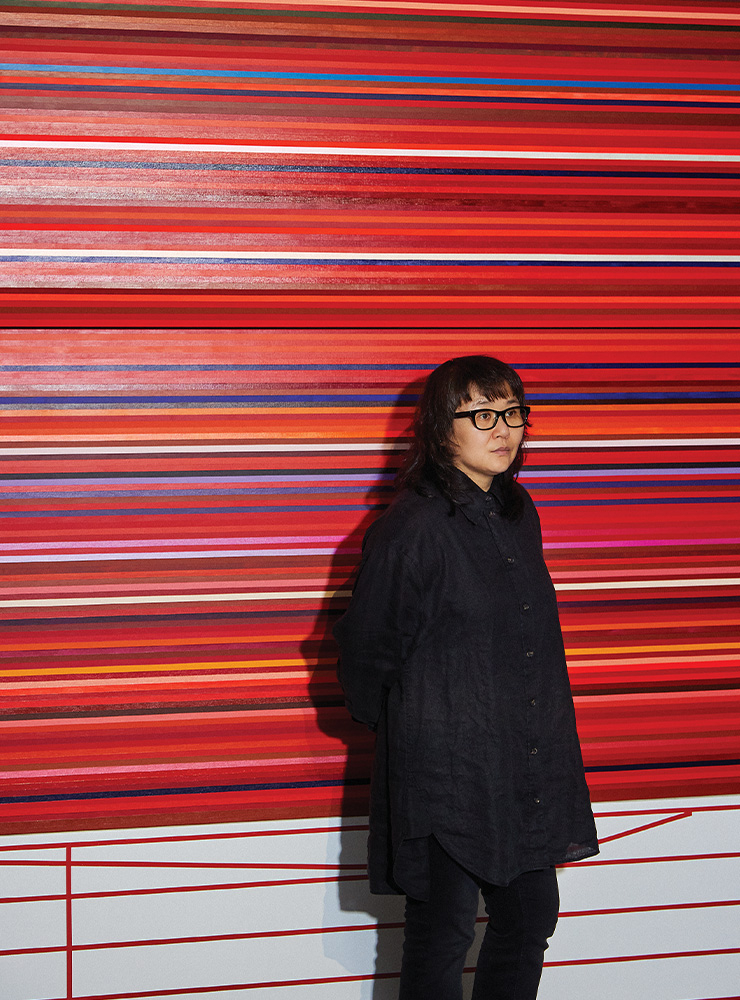
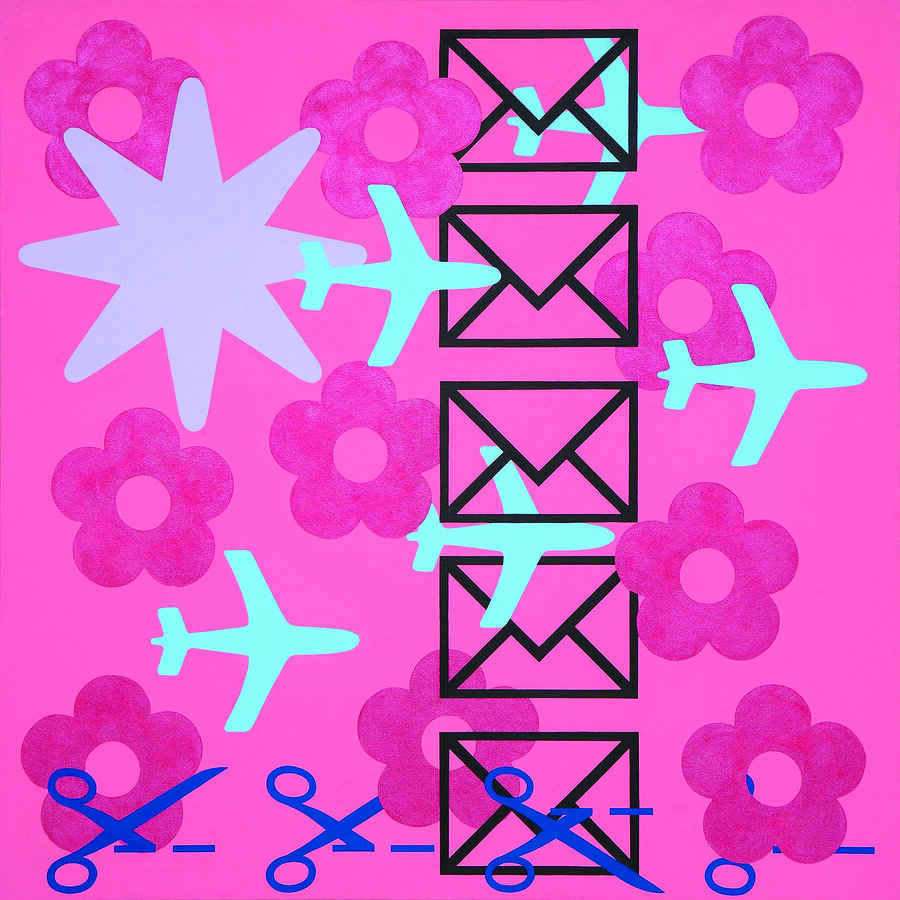
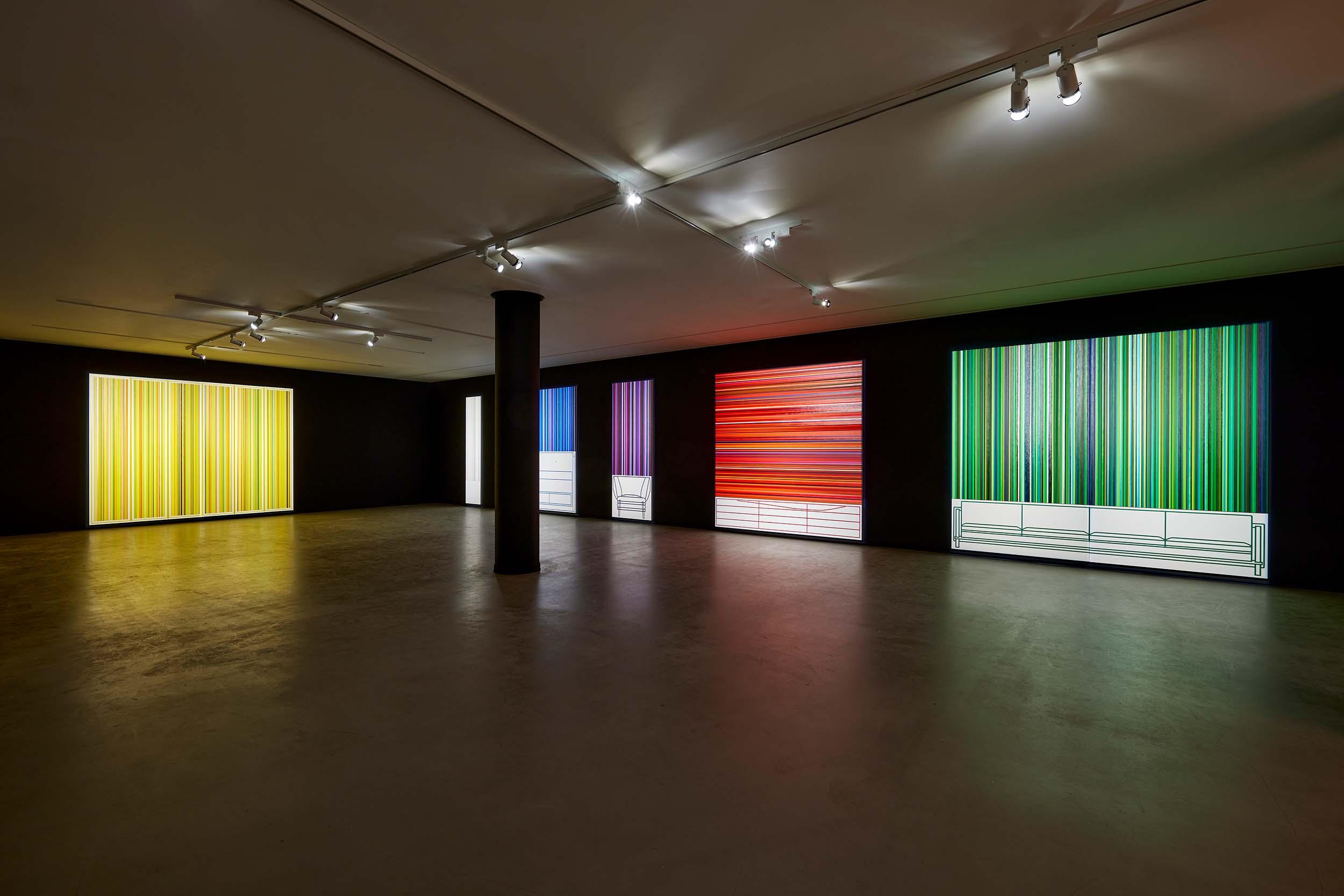
Park Meena’s painting remains faithful to
the modernist principle that emphasizes flatness, yet it adopts a postmodern
methodology that appropriates readymade colors and imagery. Although it is
abstract painting that excludes narrative and meaning, figurative images appear
within it.
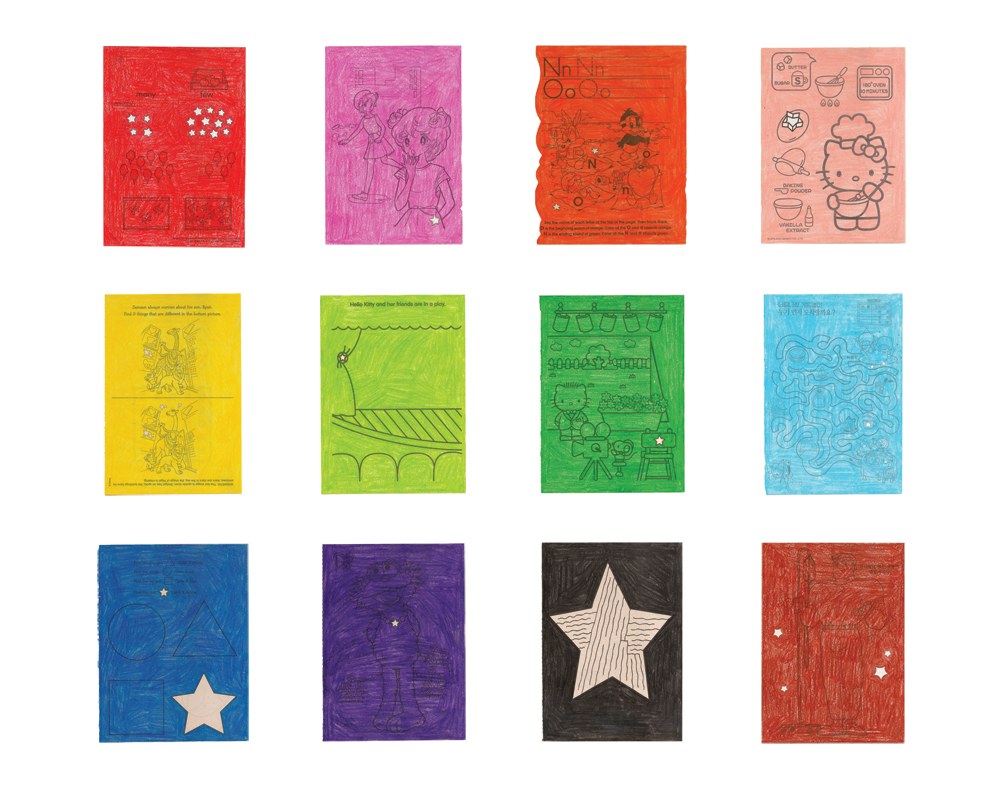
While it pursues the beauty of the pictorial surface and asserts the
purity of art, it is also a form of realism that documents the colors and
images available in a particular place and time by collecting them. The
selection of imagery and color follows a mechanical logic, yet their placement
and composition are ultimately determined by the artist.
In this way, Park Meena’s work constitutes
an entirely new invention that traverses and violates existing artistic
movements, making it difficult to locate within the framework of Western art
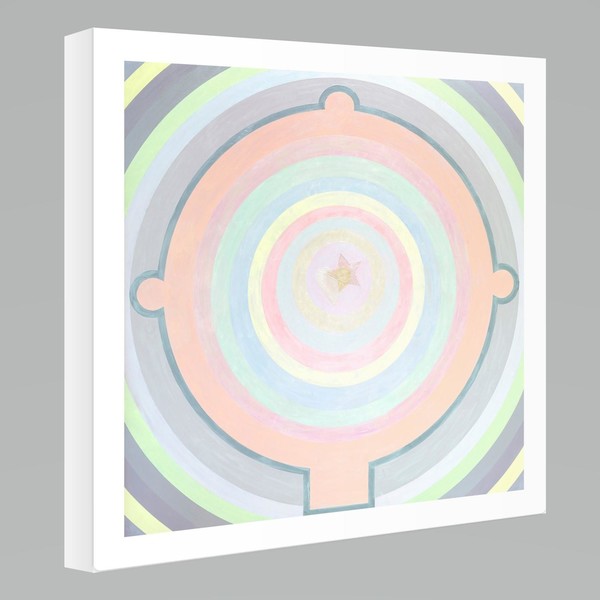
history. Jung Soojin, who studied in the United States around the same time,
understands painting as a language system centered on forms and continues her
practice while developing an original theory of painting called the “Budo
Theory,” which has no precedent in existing art history. Therefore, the task of
historicizing the renewed questions about painting raised by artists of this
generation must ultimately be undertaken by us ourselves.
Korean semiconductors and automobiles are
not global simply because they are “Korean,” nor have contemporary Korean
dramas and K-pop become global by relying on regional characteristics or
traditions. Just as Korea has become a global powerhouse in semiconductors and
information technology (IT), and as K-pop has spread worldwide, what becomes
global from Korea redefines Koreanness and, over time, comes to be established
as a new Korean tradition.
In this sense, their Koreanness may be understood as
a future tradition that is assigned retrospectively. Unlike technology, which
is evaluated through performance comparisons, or dramas and popular music,
which are judged by public preference, art is evaluated by a relatively small
group of experts. For this reason, the task of attributing Koreanness to these
works and establishing them as future traditions remains an unresolved
challenge for Korean art historians and theorists.