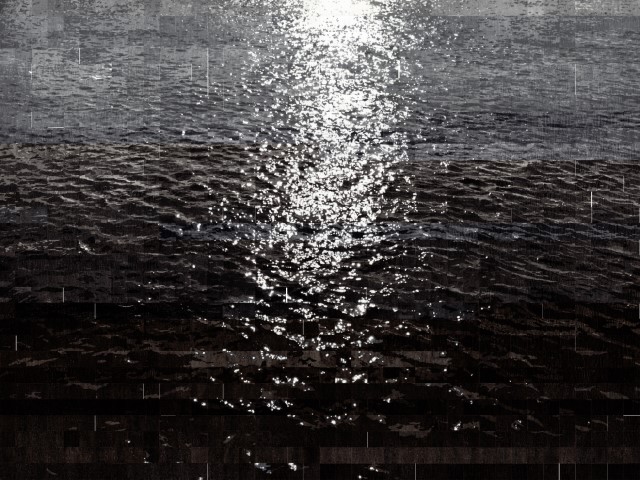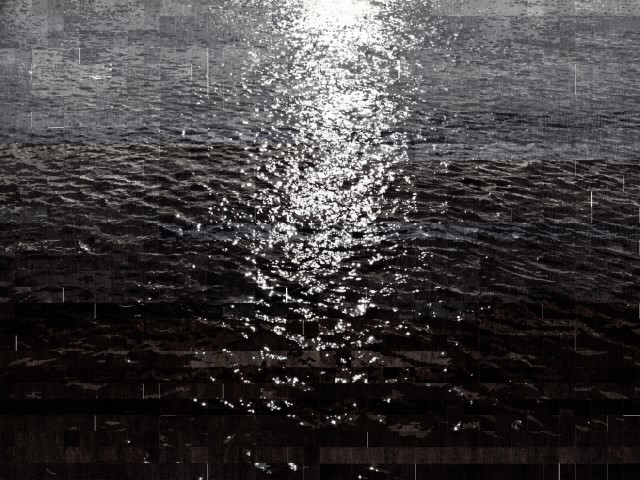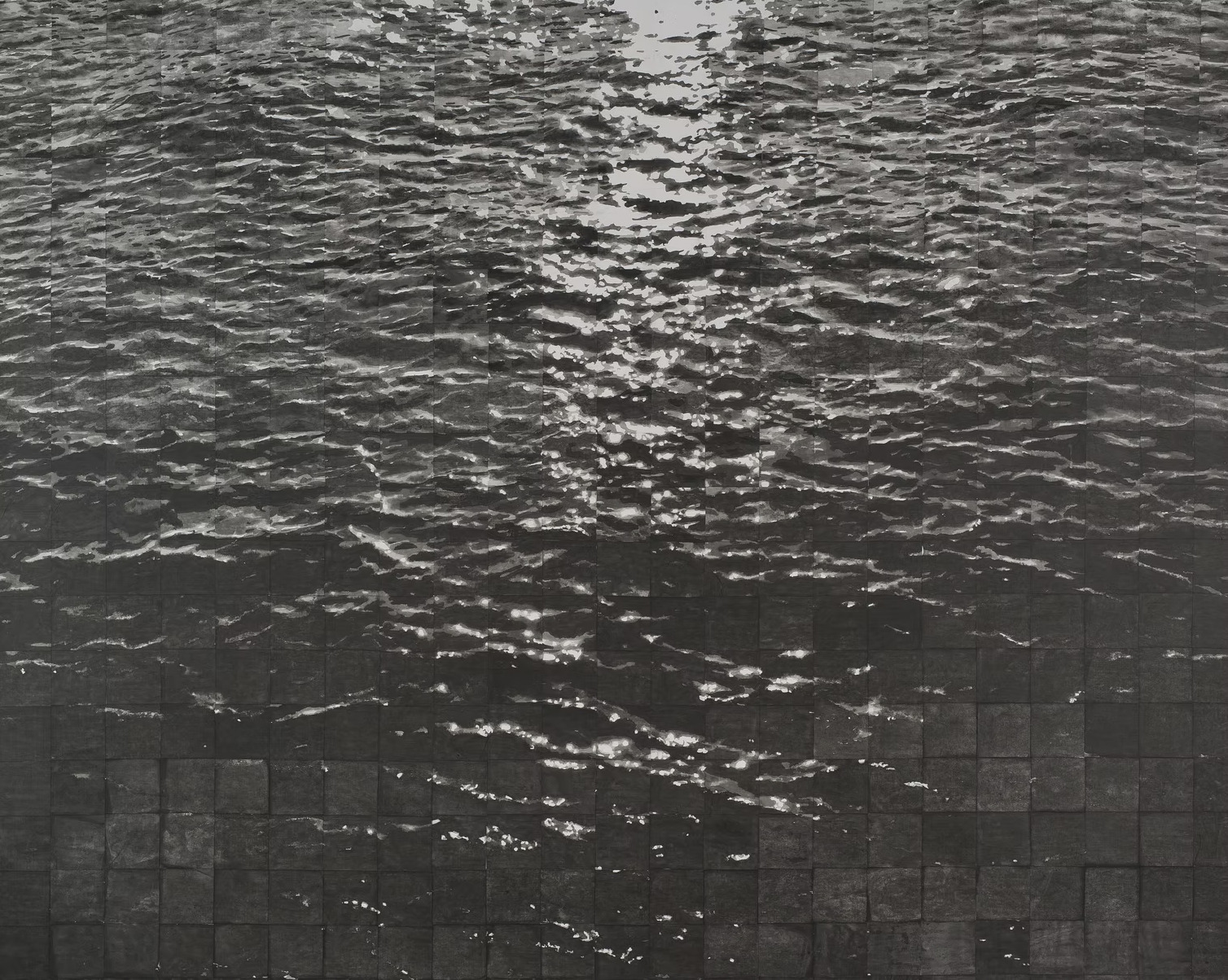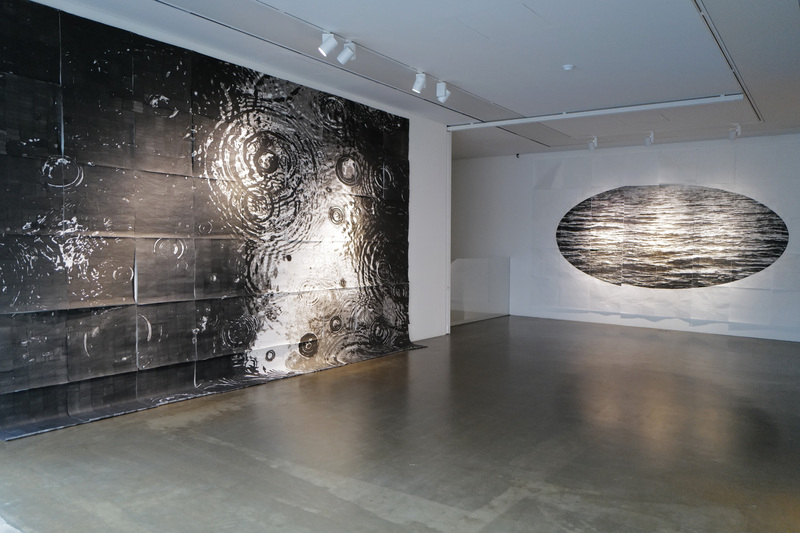


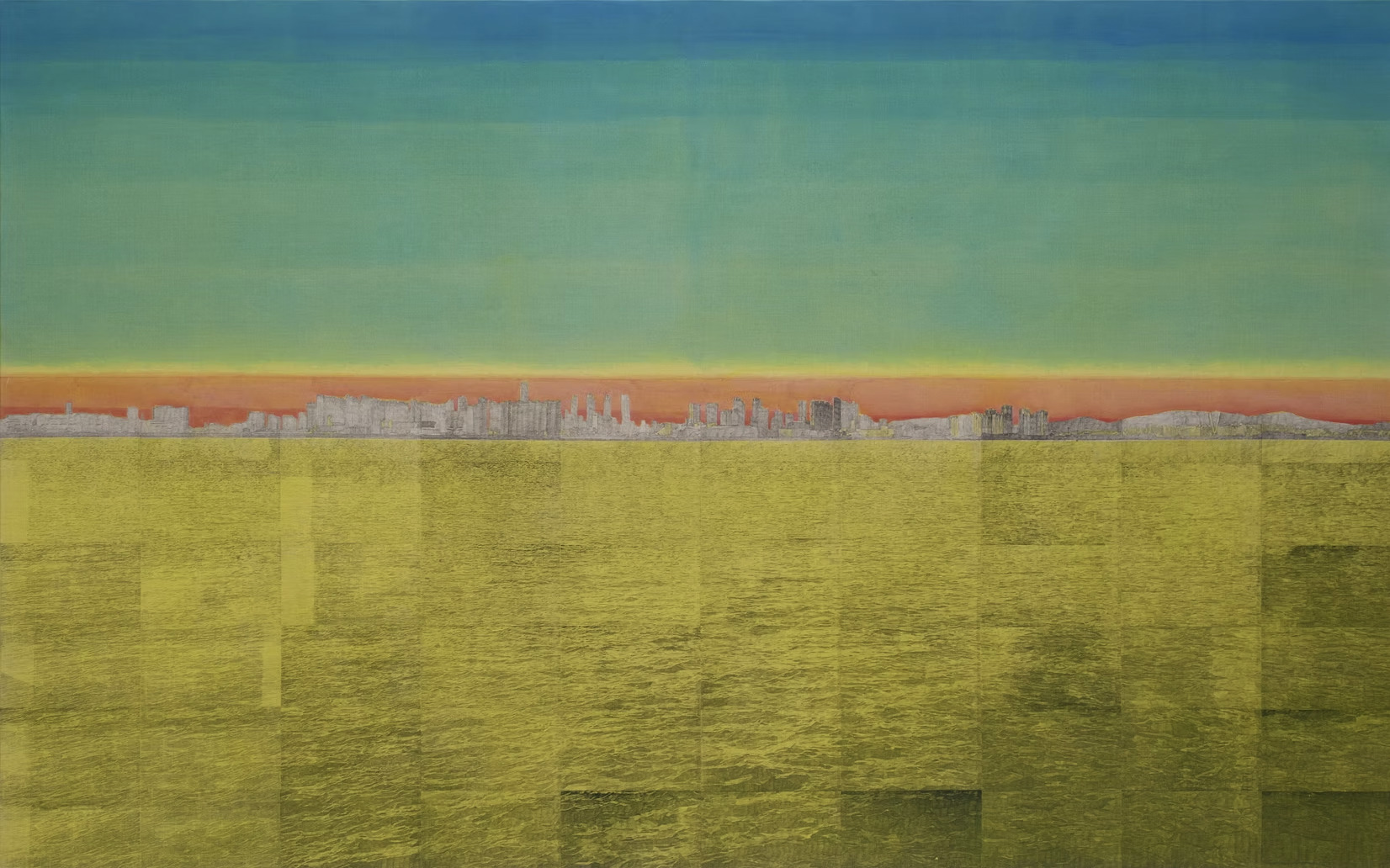
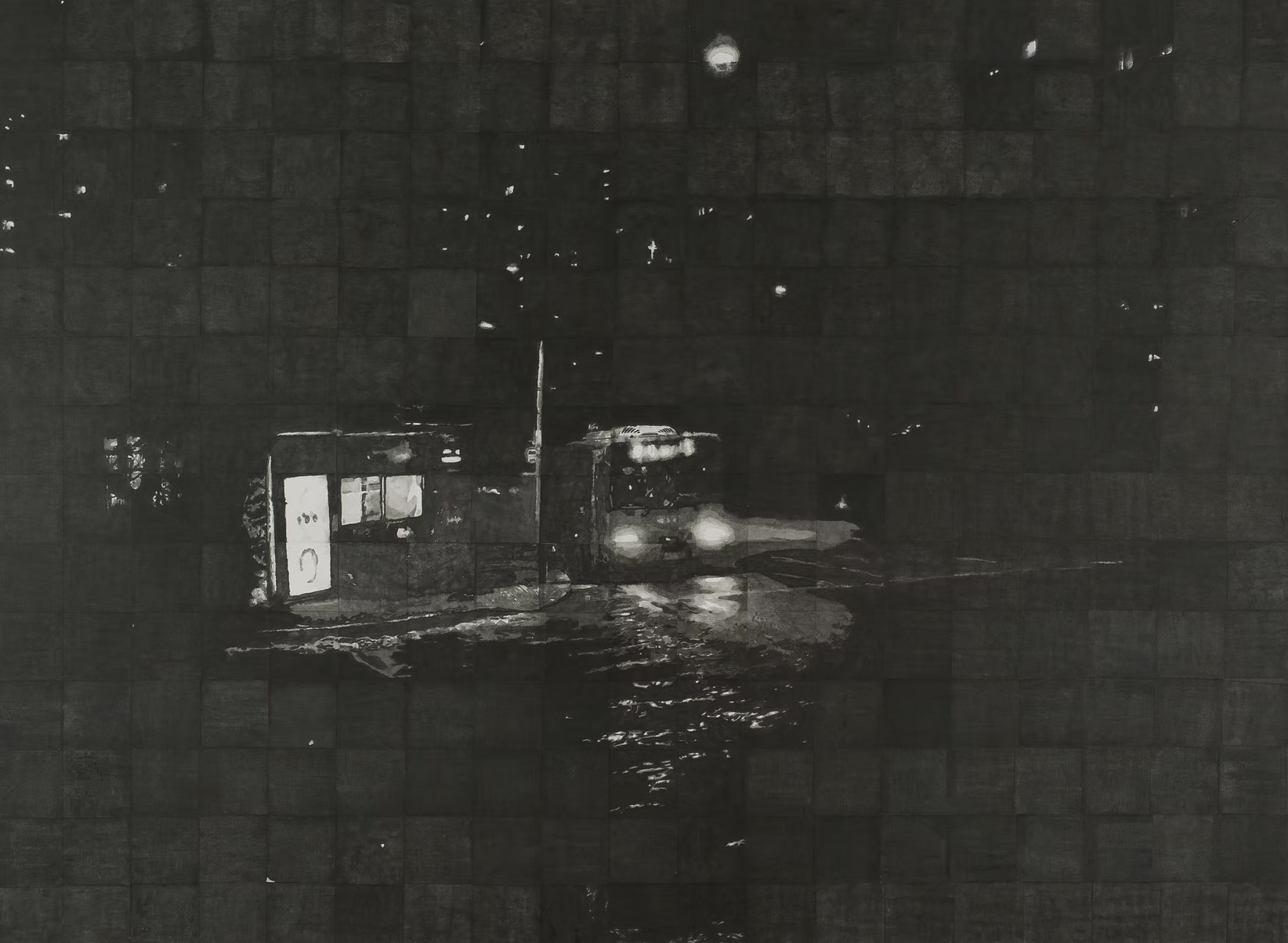
Sejin Kwon, Surface of the water, 2019, Ink on hanji, 400 x 300 cm (50 x 50cm, 48pcs) © Sejin Kwon

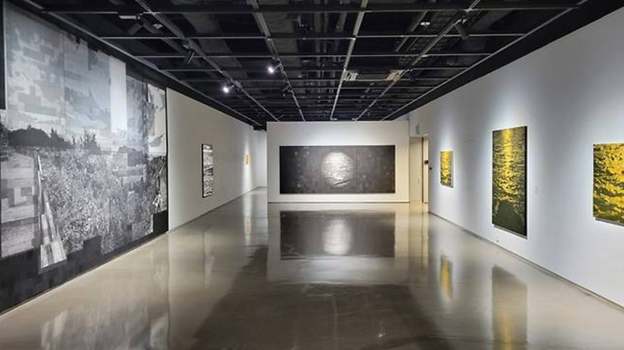
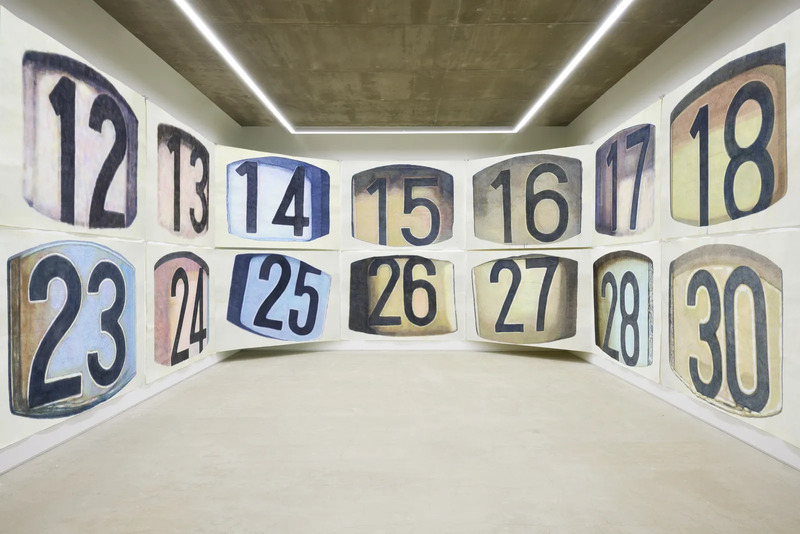
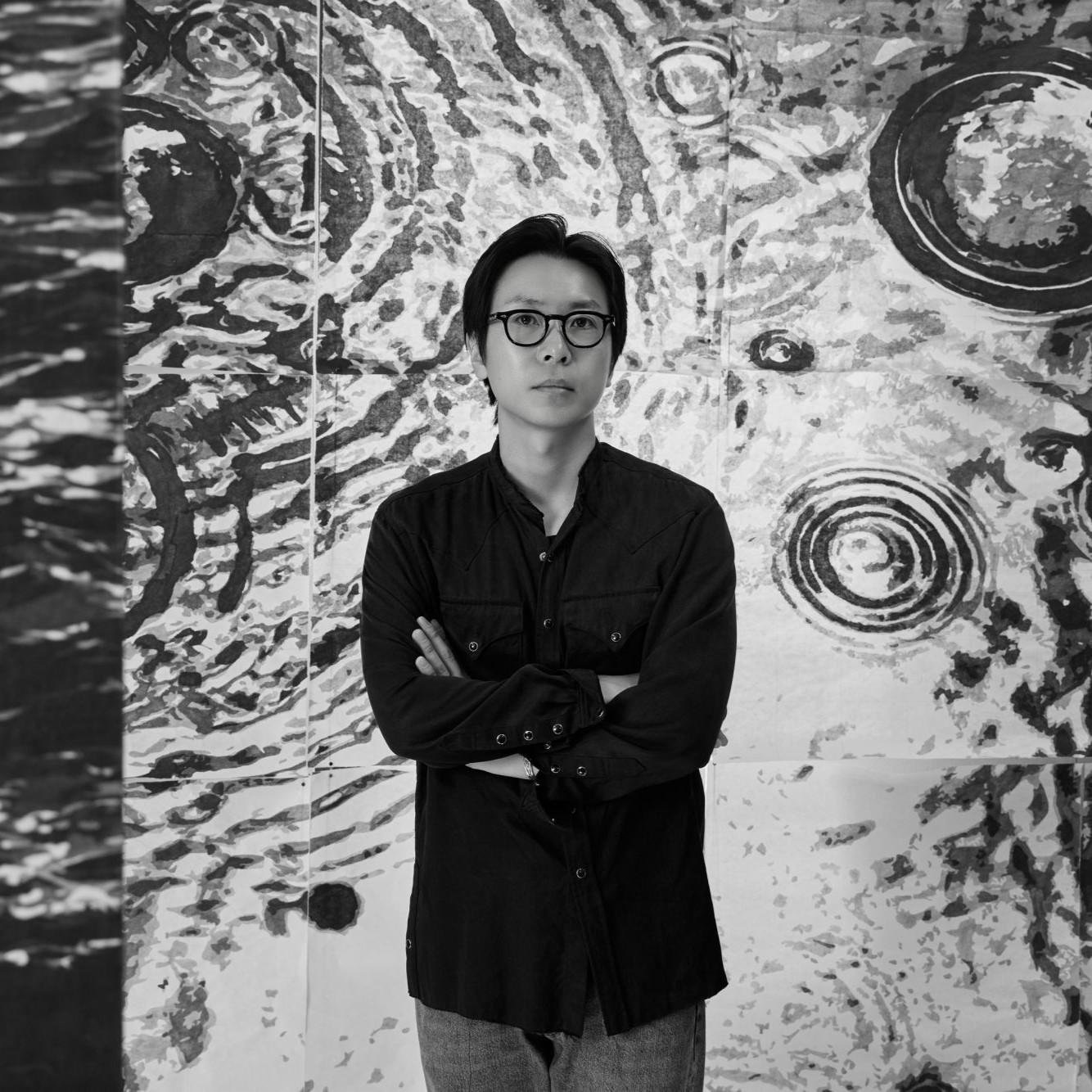
Sejin Kwon presented Surface of the Water and Section of the Sea in his solo exhibition 《1248》. Both works are based on a single photograph capturing the scene of sunlight breaking upon the waves of the sea. This photographic image was painted with ink on segmented sheets of paper measuring 10 cm by 10 cm, dimensions arbitrarily determined by the artist while considering both the properties of ink and the efficiency of the working process. The exhibition consists of Surface of the Water, measuring 300 × 400 cm and composed of 1,200 fragments, and forty-eight works of Section of the Sea, each measuring 50 × 50 cm and composed of twenty-five fragments.
 
The “surface of the water” constantly shifts with the wind, the waves rising and falling moment by moment. As a result, countless points of reflected light and shadow continuously intersect across the surface. The artist captures these movements of water through photography and then processes the image using digital imaging software to suit the production process. At the center of this process is what he calls the “fragment painting.”
 
Fragment paintings are filled with tonal gradations of ink (濃淡). The contrast between darker ink (濃) and lighter ink (淡) forms the landscape. Yet the landscape here is not fixed but closer to a “state.” It is difficult to definitively state that the darker areas represent waves or shadows and the lighter areas represent reflected light. Just as the light falling upon the waves changes from moment to moment, each element appears as wave, shadow, or light through the relational contrast between dark and light ink.
 
The artist consistently employs fragment painting as a method of production in terms of disciplined practice and uniformity. However, this uniformity does not simply mean that all 1,200 fragments maintain the same tone of ink.
 
As one scans across Surface of the Water as if reading a text, one begins to notice a bluish tone emerging in certain areas, forming a band of ink different from the surrounding fragments. It may be assumed that the artist regulates tonal gradations by operating several kinds of ink within a fixed size. In this sense, uniformity appears as the sum of segmented periods of time bound together within consistent units, much like the subtle variations in ink density that reveal how long the ink has been used. This indicates that fragment painting, which the artist adopts as the language of his practice, maintains formal uniformity while simultaneously revealing the material differences inherent in the medium.
 
While Surface of the Water was displayed so that the viewer could grasp the entire image at once, Section of the Sea consists of 50 × 50 cm canvases arranged in a row across the exhibition space, forming a band of ink. The viewer walks along the wall of the gallery and experiences the surface of the water in a parallel sequence. By fragmenting the single-point perspective of the original image into a grid and rearranging it at eye level, the singular viewpoint of the source image becomes dispersed.

The viewer synchronizes their moving body and shifting viewpoint with each painting as they read the works. It can appear as though the logic of the “three distances” (三遠法) that structure traditional landscape painting is realized through the physical route of exhibition viewing. Through this, forty-eight viewpoints come closer to touching the cross-section of the sea.
 
Kwon’s work constructs images by attaching fragment paintings of self-determined size onto the canvas. The scale of each fragment painting controls the amount of time required to complete a single painting and reflects the artist’s intention to handle ink in its optimal condition.
 
Just as forms emerge from the contrast of dark and light ink on paper, fragment paintings combine with other fragments without exhausting themselves, and sometimes exist independently. At the center of this process of derivation and expansion lies the fragment painting itself.
 
Fragment painting enables movement between water and sea, surface and cross-section, and further between photography and ink painting. In this sense, it can be understood as the artist’s response to the question of how “Korean painting,” “Eastern painting,” or “ink painting,” often confined within the conceptual frameworks of brush, ink, and paper or trapped in inherited notions, can exist within the contemporary moment.

References