1. If the world is viewed from a macroscopic perspective, it
appears to be one single entity; yet from a microscopic perspective, countless
worlds exist. If stated this way, the macroscopic view may seem to refer to a
monistic worldview, while the microscopic view may appear to suggest a
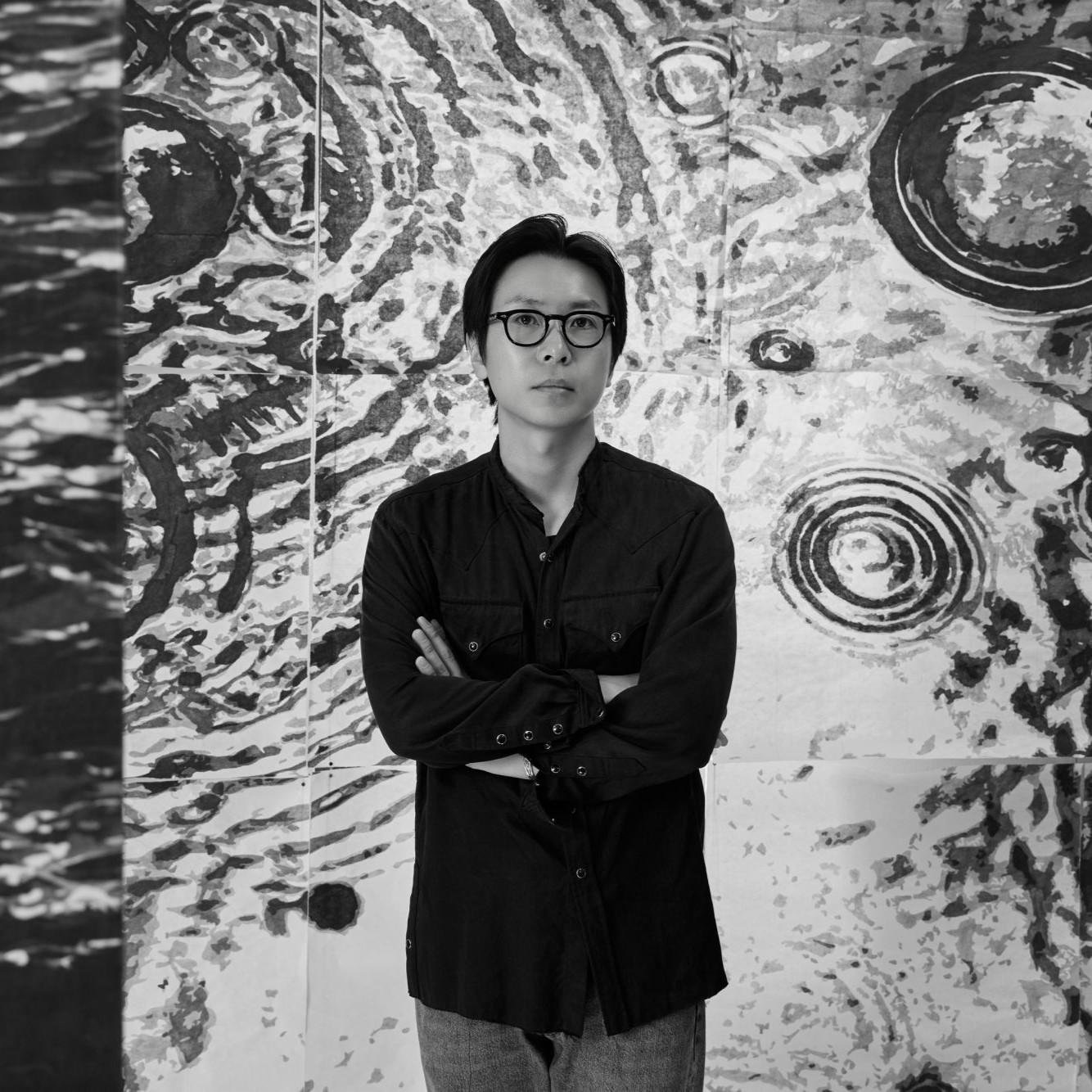
pluralistic worldview. However, the world that artist Sejin Kwon observes does
not separate these two perspectives.
Rather, he allows the two worldviews to
coexist within a single perspective. More precisely, it is a process of
bringing these two worldviews into proximity with one another. Perhaps such a
perspective might be considered natural for an artist born and working in
Korea, yet what Kwon inevitably had to confront in observing the world may have
been something ambiguously intertwined and mixed together.
2. As can be confirmed through experiments and statistics in other
academic fields, we commonly perceive the world by dividing it into East and
West. This distinction may be understood as originating from cultural
differences. In the West, theories have often developed through continuous
overturning and replacement of previous ideas, while in the East, a single
theory has tended to be inherited and gradually modified in response to the
needs of the time.
These differences are also clearly visible in artistic
styles such as painting and architecture. However, as is well known,
contemporary South Korea contains a mixture of many aspects of both East and
West. Since the beginning of modernization, Korea adopted and imitated Western
systems (introduced through Japan) in various aspects. As a result, there was
also a strong consciousness of preserving traditional heritage, one
representative example being Korean painting.
However, the term “Korean painting” itself only emerged relatively
recently, in the 1950s, and therefore carried inherent ambiguity. It was used
at times to refer broadly to East Asian painting practiced in Korea, and at
other times, particularly in the 1970s, to designate the ink abstraction
movement led by artists such as Seo Se-ok. Most importantly, it may be said
that the term lacked clearly defined characteristics unique to Korea. By the
2000s, the distinction between Western painting and Eastern painting, or Korean
painting, had largely lost its significance.
It was during this ambiguous
period that Sejin Kwon studied Korean painting. Influenced both directly and
indirectly by various senior artists active at the time, he entered the path of
becoming an artist while paying attention to the intersections where East and
West overlap and where tradition and contemporaneity cross paths. His attempt
was therefore not a return to classical traditions but rather a neighboring
coexistence between tradition and the contemporary.
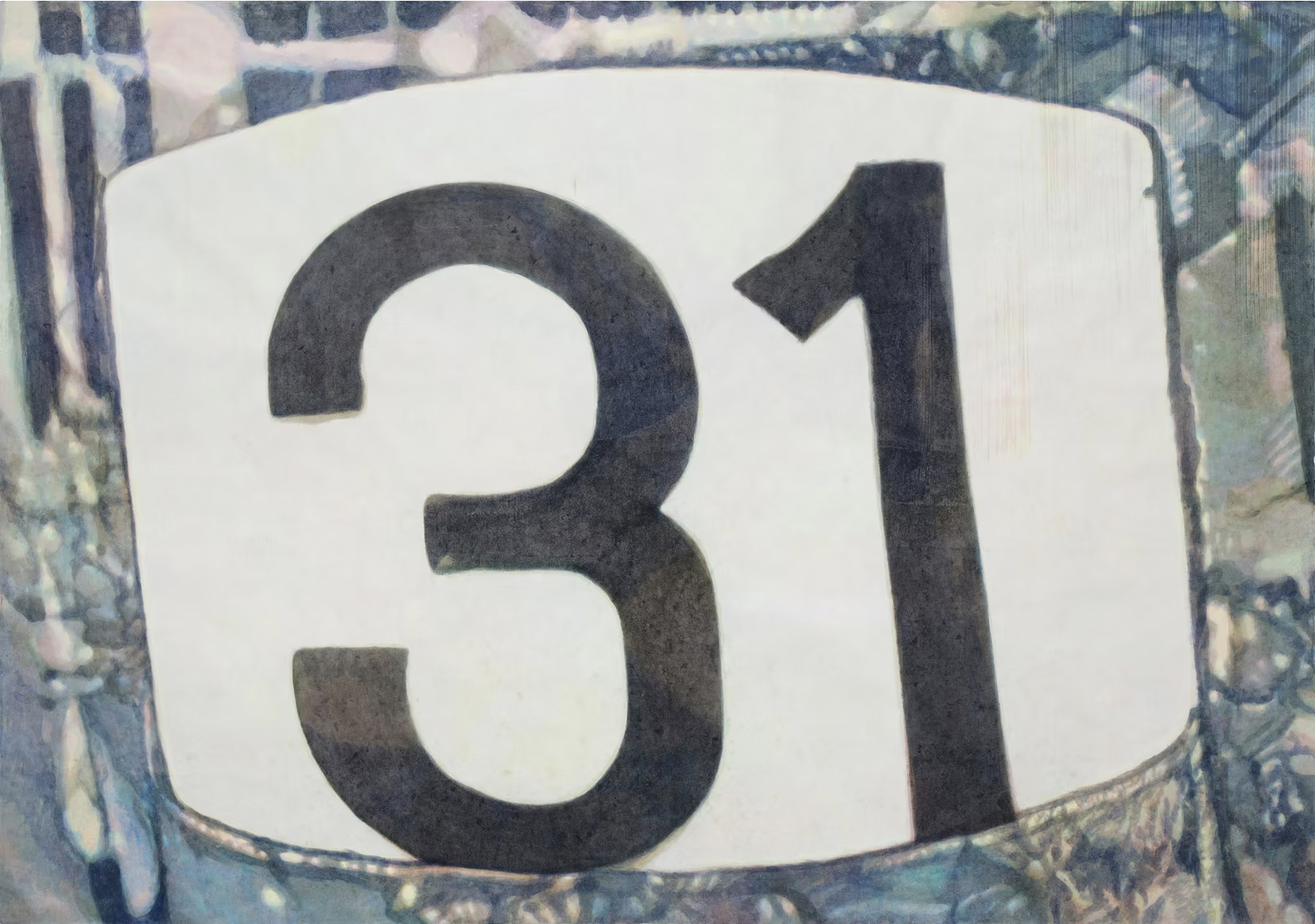
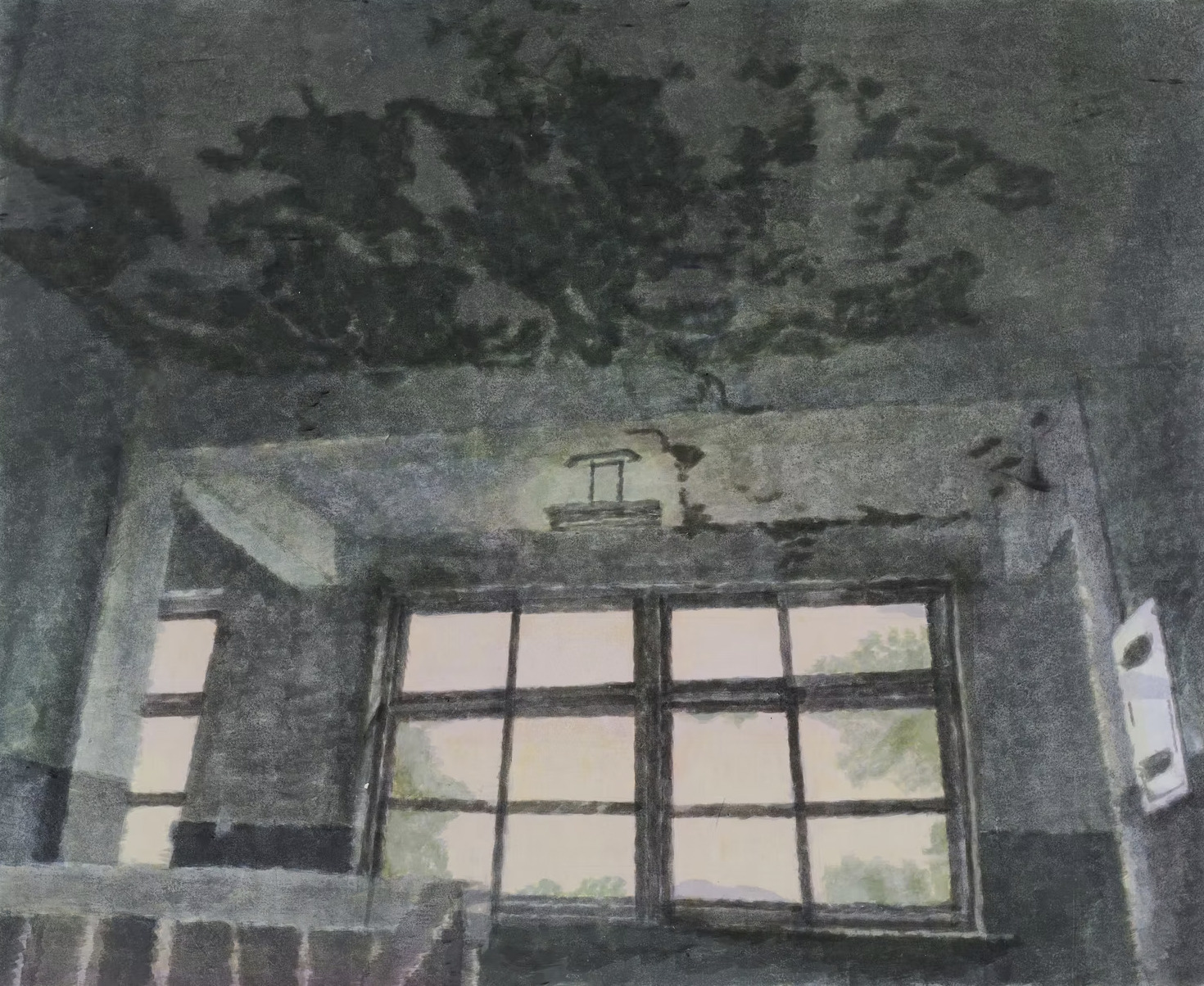
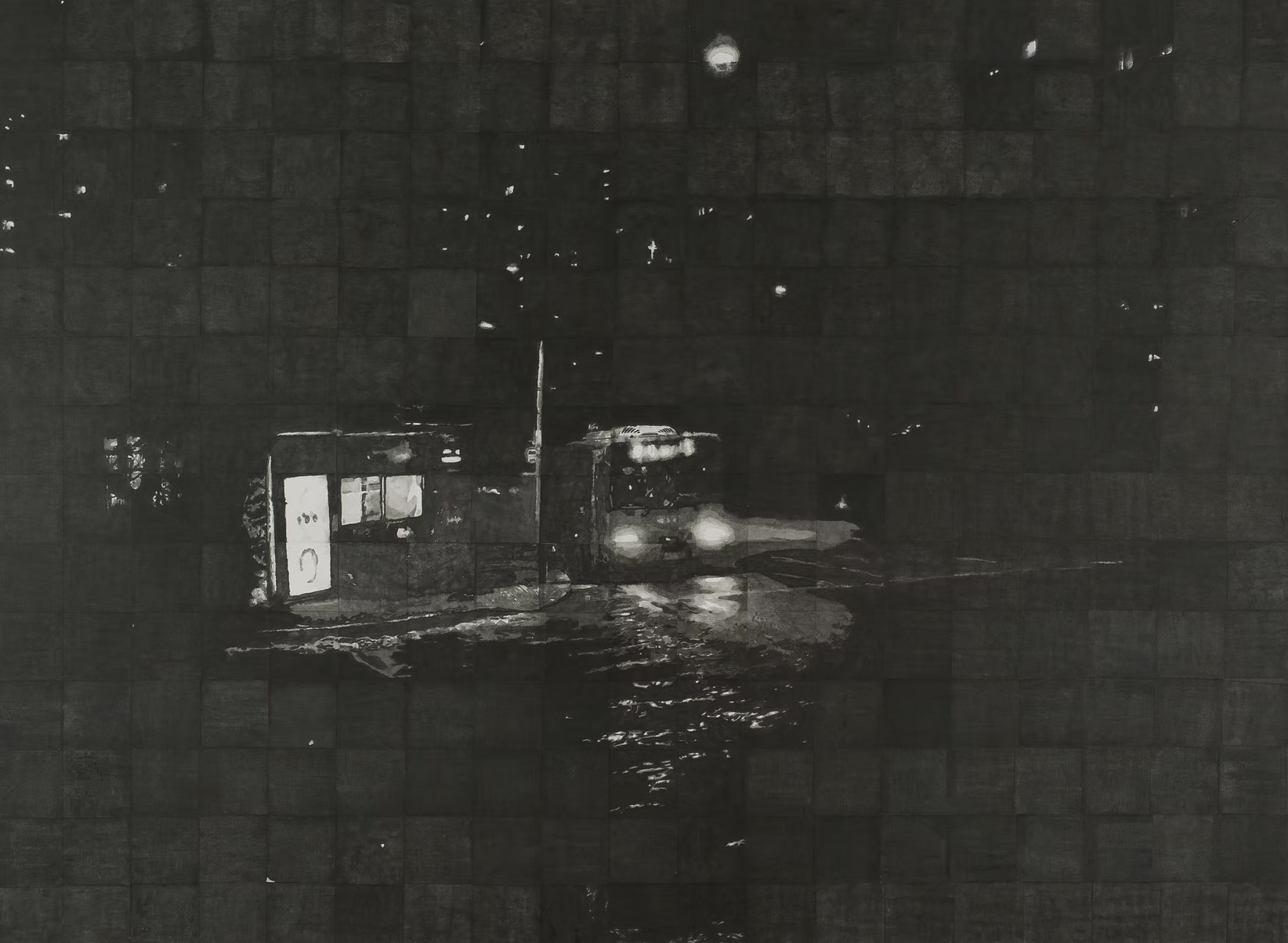
3. Shortly after graduating from university, Sejin Kwon sought to
depart from the landscape tradition that embodied the spiritual context of East
Asia and instead look toward ordinary daily life. Setting aside the pursuit of
the sublime, he turned his attention to artificial and commonplace subjects.
This approach adopted the developmental logic of Western culture, bringing in
elements that stand in opposition to traditional methods in order to
investigate the direction of contemporary Korean painting.
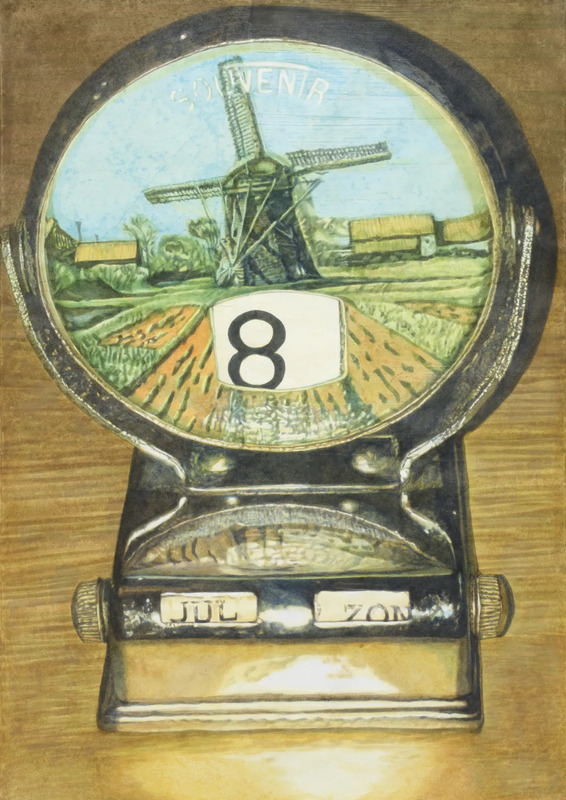
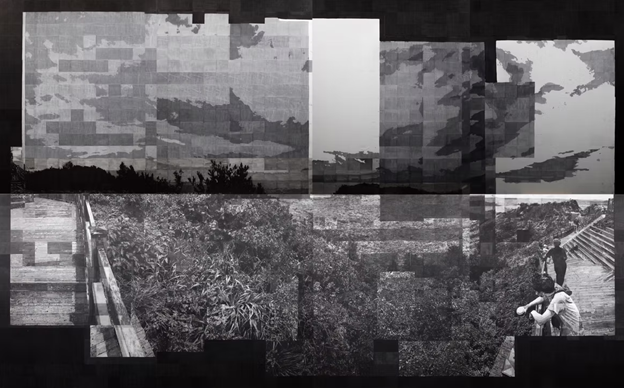
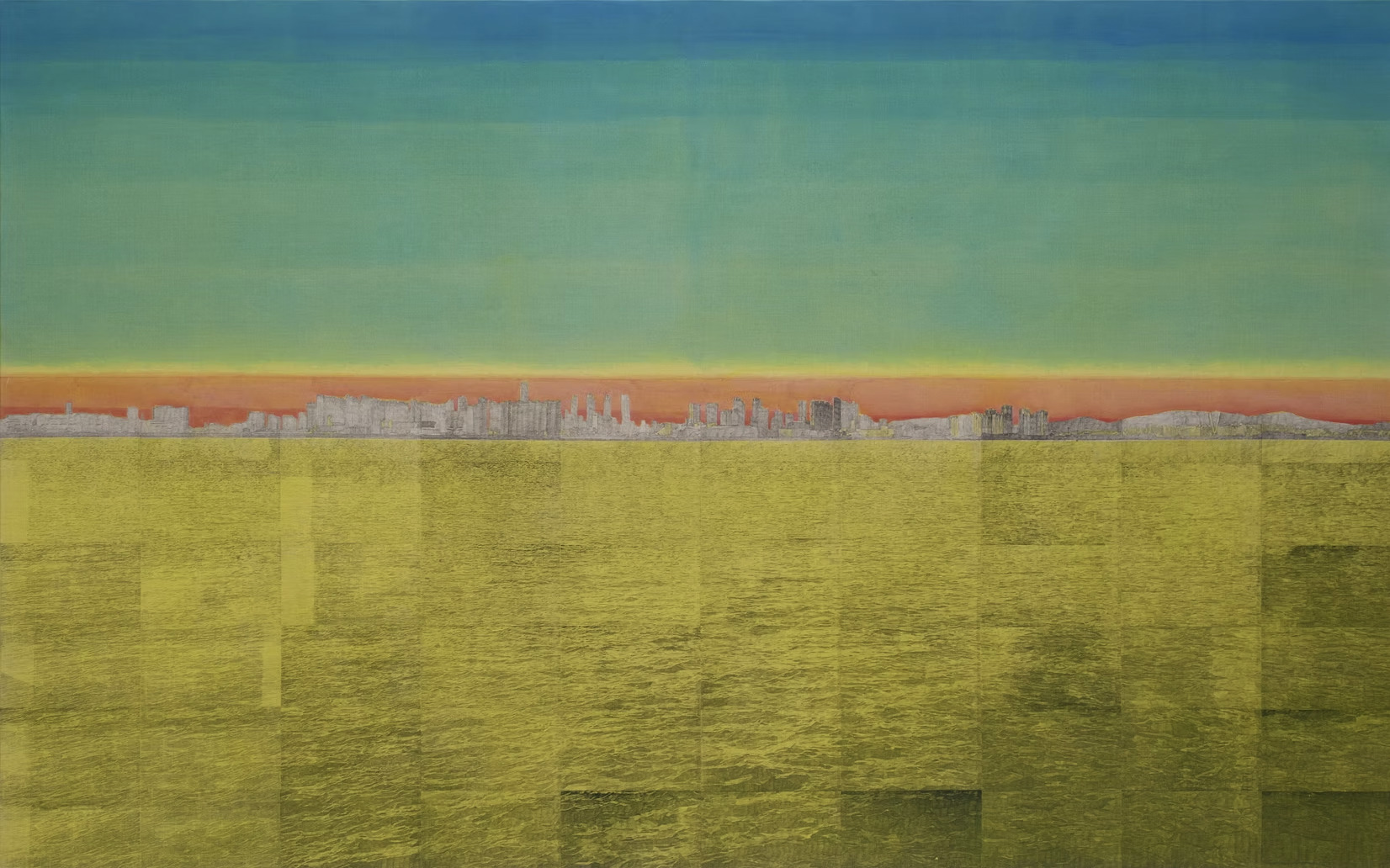
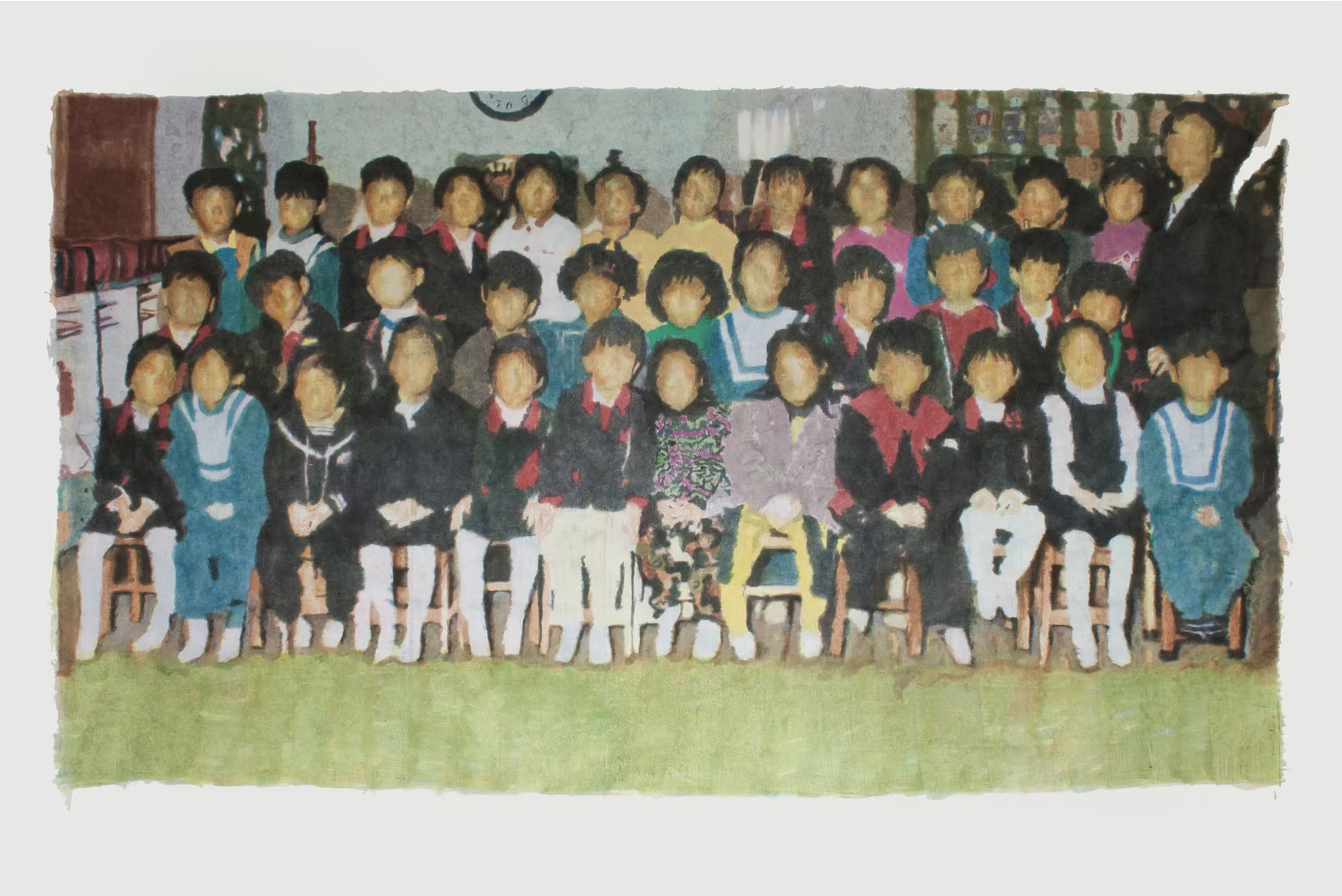
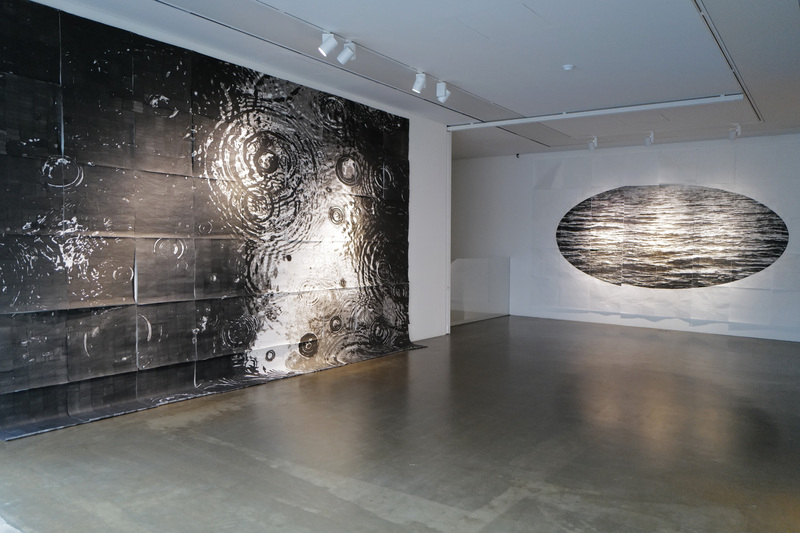
Kwon’s research subsequently evolved into a process of
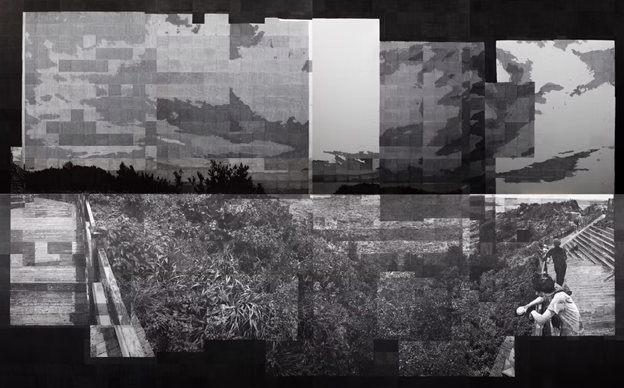
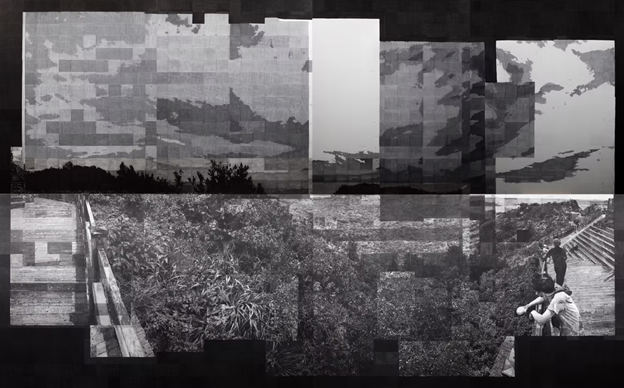
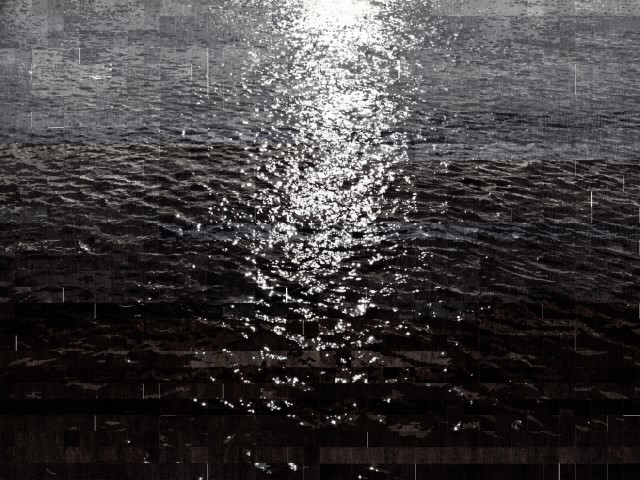
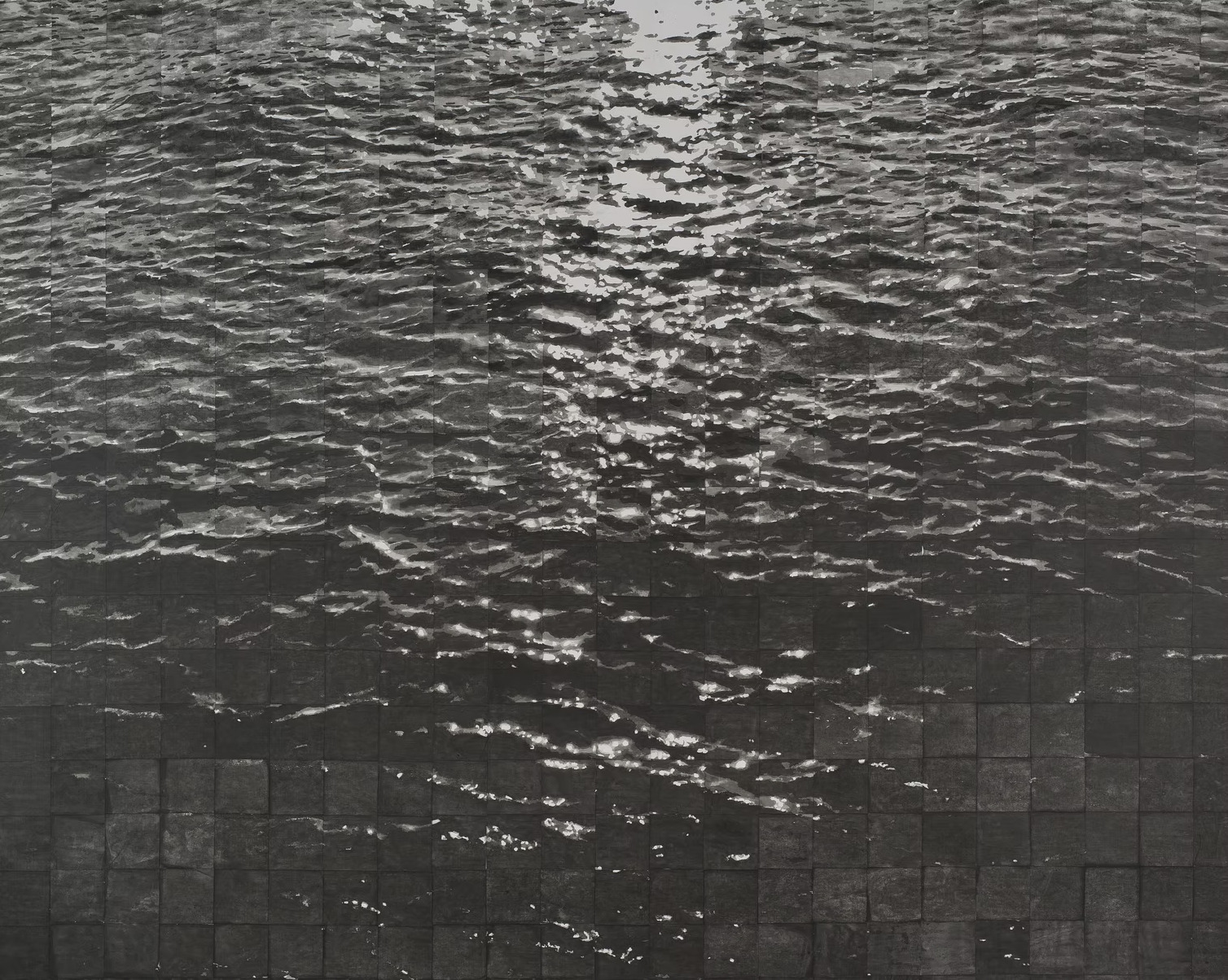
deconstruction and reassembly. In simple terms, he photographs a scene,
disassembles it into fragments measuring 10 × 10 cm, and then reconstructs them
as paintings to reveal once again a single image. This structure borrows from
contemporary postmodern strategies. It stems from an awareness of the
pluralistic worldview mentioned at the beginning, representing a focus on the
self within a plural world, and posing a question about where our consciousness
originates.
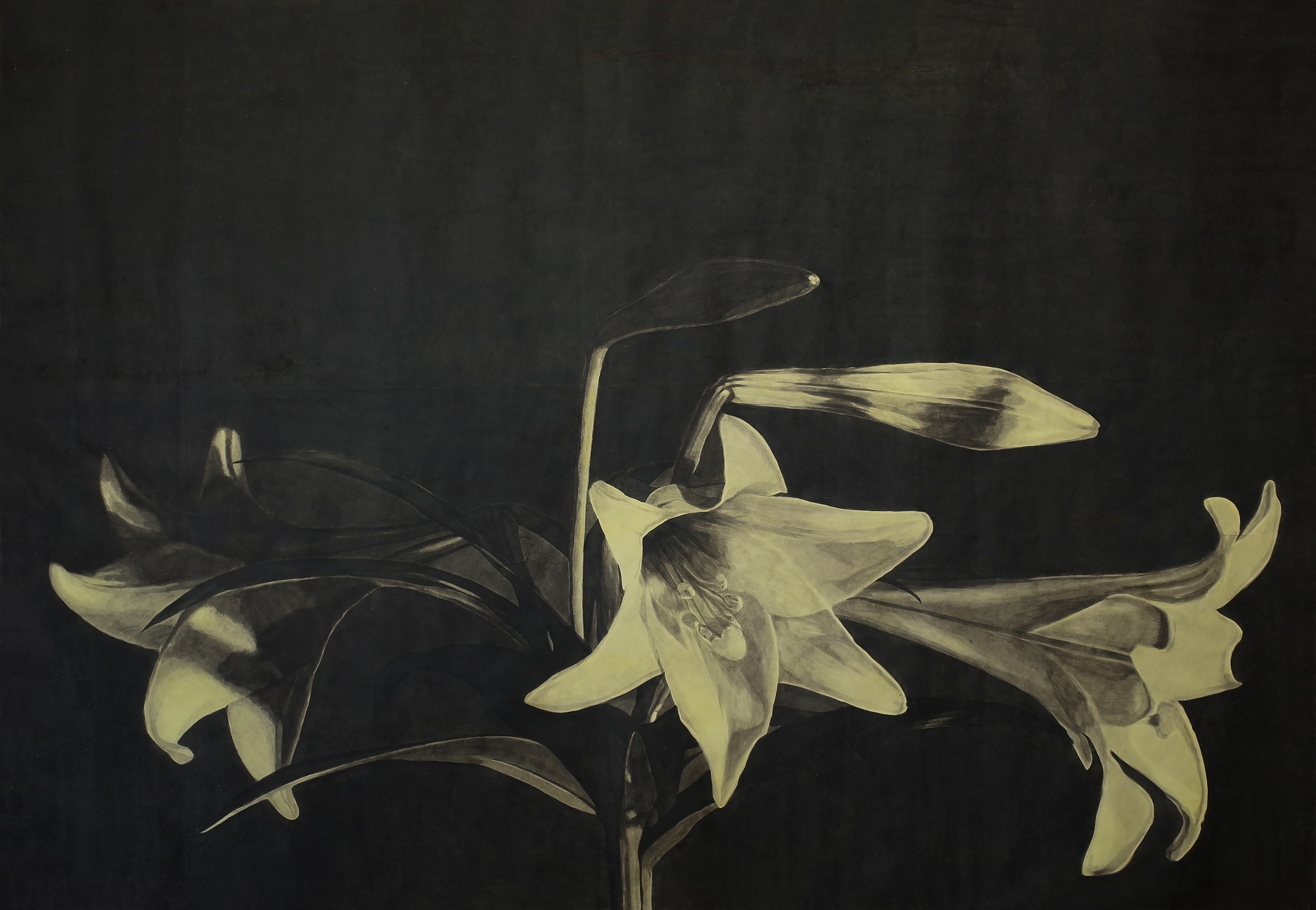
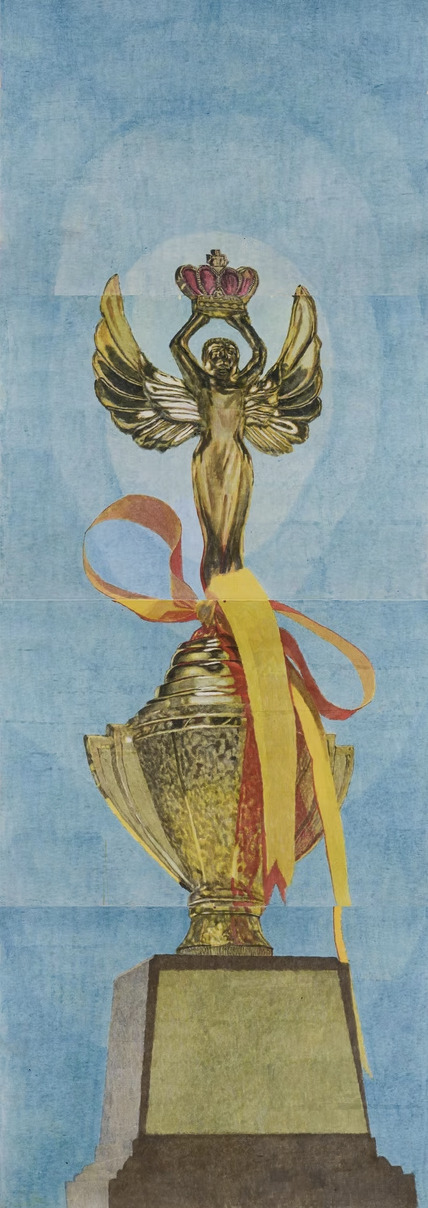
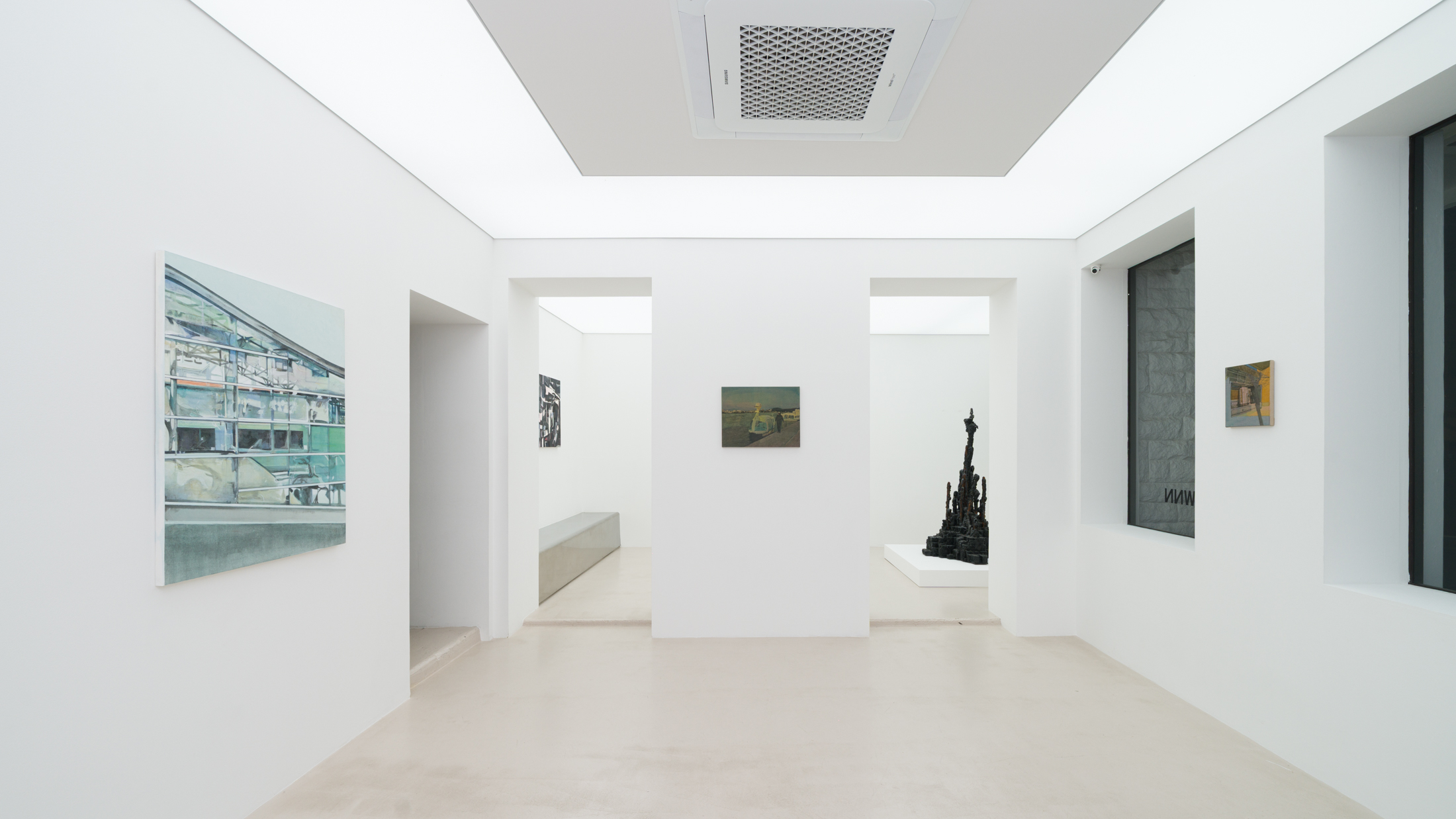
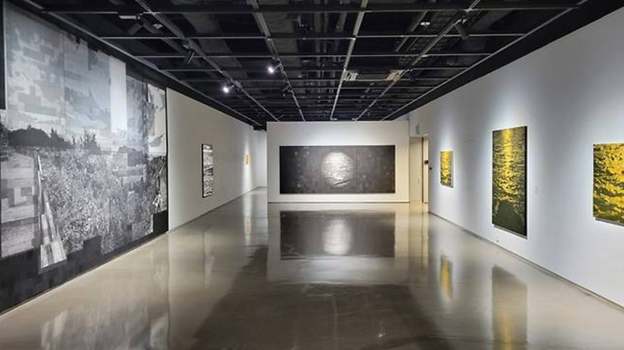
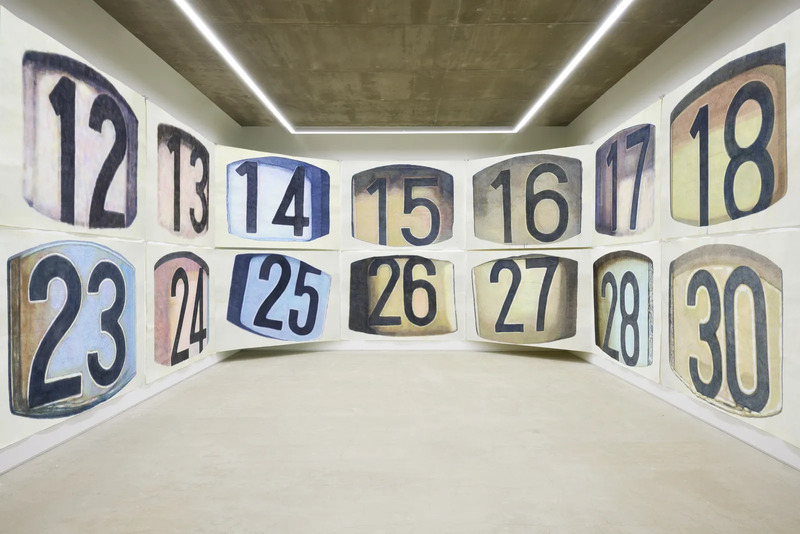
In the present exhibition, Kwon introduces a new stage of
research. While his earlier works either excluded tradition or reconstructed
images through “reassembly” after deconstruction, this exhibition can be
understood as assembling a subject that has already been fragmented. In other
words, the artist photographs a subject from multiple viewpoints and constructs
a single image on the canvas.
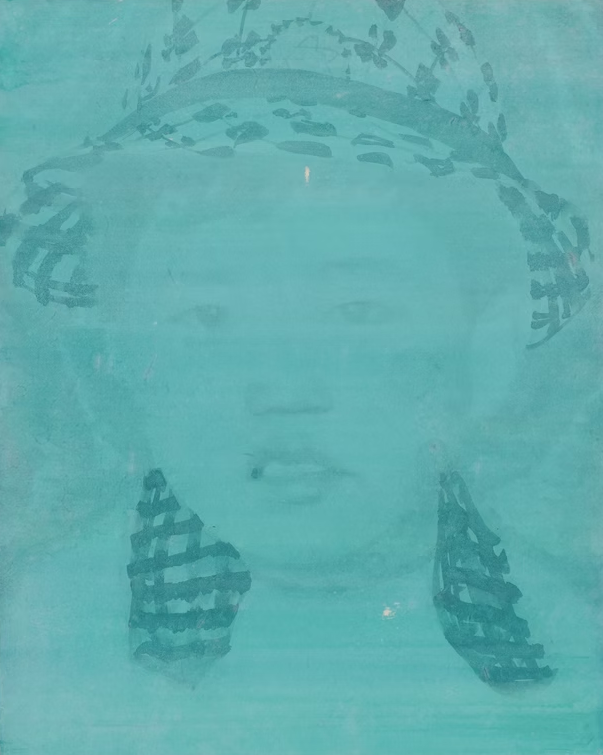
This may seem similar to the previous research, yet in fact it
adopts a more traditional and Eastern approach. Specifically, the artist
interprets the traditional perspective method of East Asian landscape painting
known as the “three distances” (high distance, level distance, and deep
distance). The geometric blank spaces that remain also function narratively,
much like the empty spaces in traditional landscape painting.
The subtle sense
of incongruity produced by the multiple viewpoints and geometric emptiness
originates from the ambiguous and mixed condition of the world as perceived by
Kwon. The many seams through which Kwon assembles these elements function as
viewpoints that allow us to observe the disjointed aspects of the contemporary
world.