Socrates explained that memories remaining in our senses and
passions connected to sensation inscribe writing upon the soul. When written
truthfully, true speech and opinion arise within us; when written falsely, they
produce results contrary to truth. He further described the act of imprinting
images upon the soul—through sight or other senses—as an internal reappearance
of objects after understanding or interaction through narrative or opinion.
Plato argued that the artist who paints images within the soul
originates from imagination itself, defining such images—or “icons”—as ghosts.
His discussion of memory and imagination sought to demonstrate that without
such “images within the soul,” desire and pleasure would not be possible, and
that purely physical desire does not exist.
Aristotle described vision as a mechanism in which a passion
inscribed in the air by color is transmitted through the air into the eye, then
reflected like a mirror within the eye’s moist substance. The motion and
passion generated by sensation are conveyed to imagination, which in turn
produces ghosts independent of the presence of the perceived object. Such
ghosts, residing within the soul, can appear even in the absence of concrete
sensation—such as when we close our eyes—and may even be false, unverifiable by
science or intellect.
Taken together, these perspectives suggest that art begins when
images encountered through vision are revived by imagination and newly
inscribed into our senses as “ghosts,” ultimately shaping our thought.
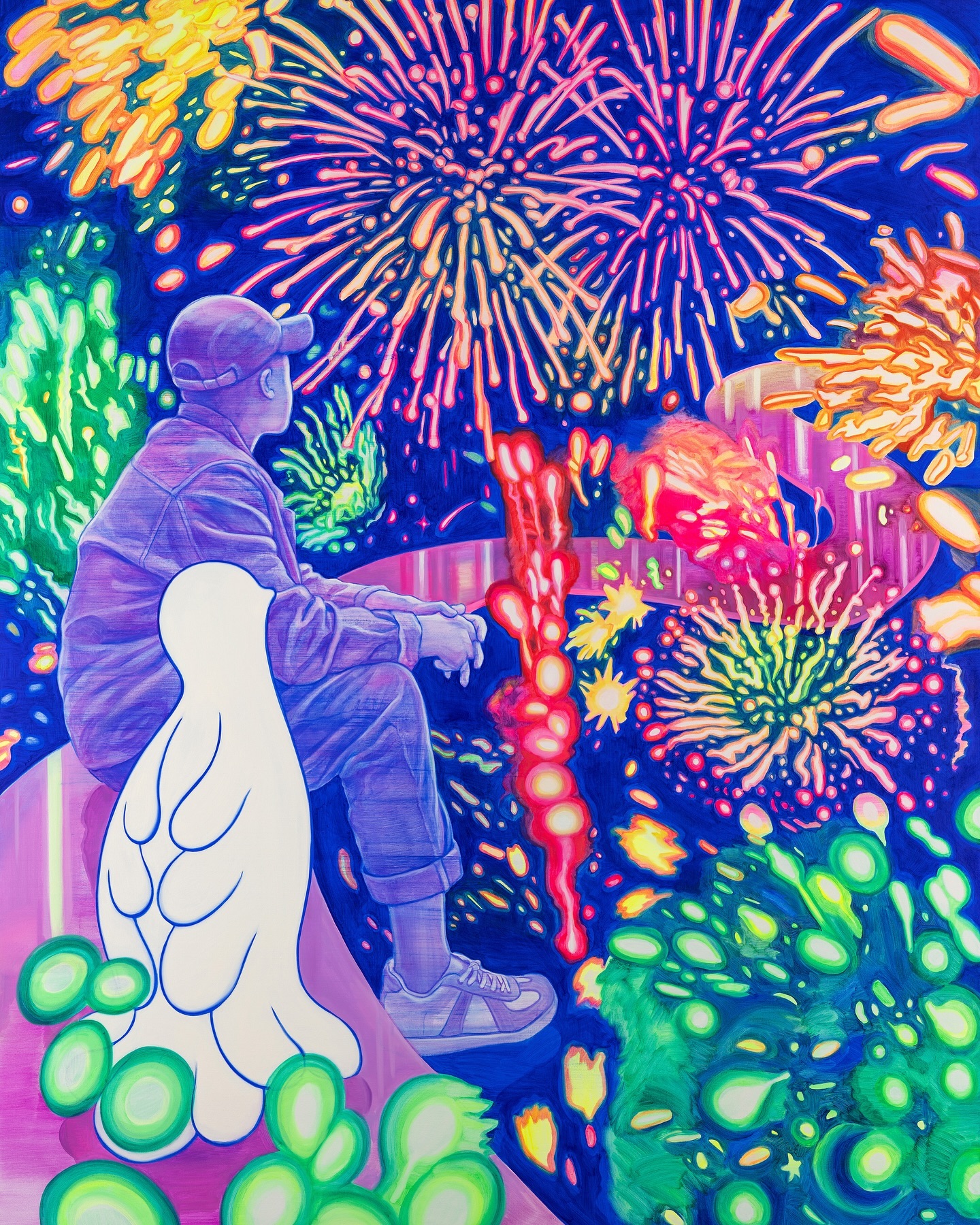
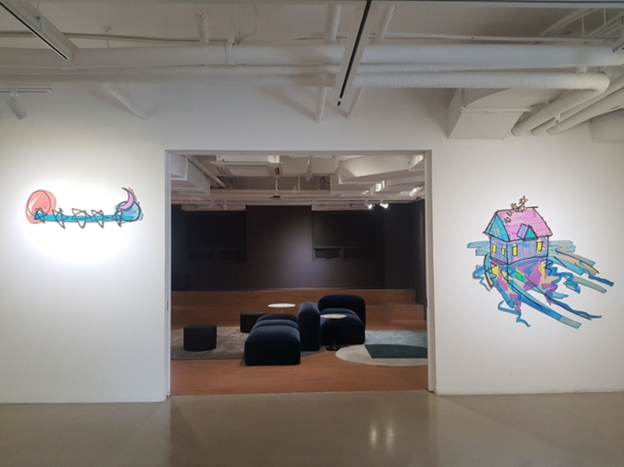
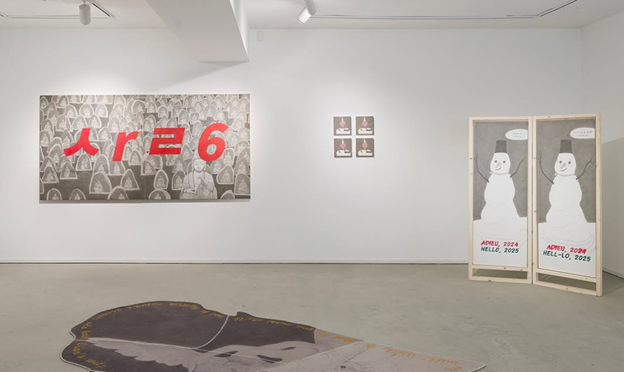
Lee Haegang, who previously worked primarily with spray techniques
in graffiti and animation, began oil painting on canvas and became intrigued by
the medium’s slower pace, material density, and viscous texture. He now
combines spray and oil painting. The tension between these media positions him
as a mediator at the boundary between street culture and contemporary art. His
protagonists are villains from animation—figures typically overshadowed by
heroes. By granting them stronger abilities and central roles, he transforms
them into protagonists. Sometimes grotesque or strange, these figures appear
dazzling and chaotic.
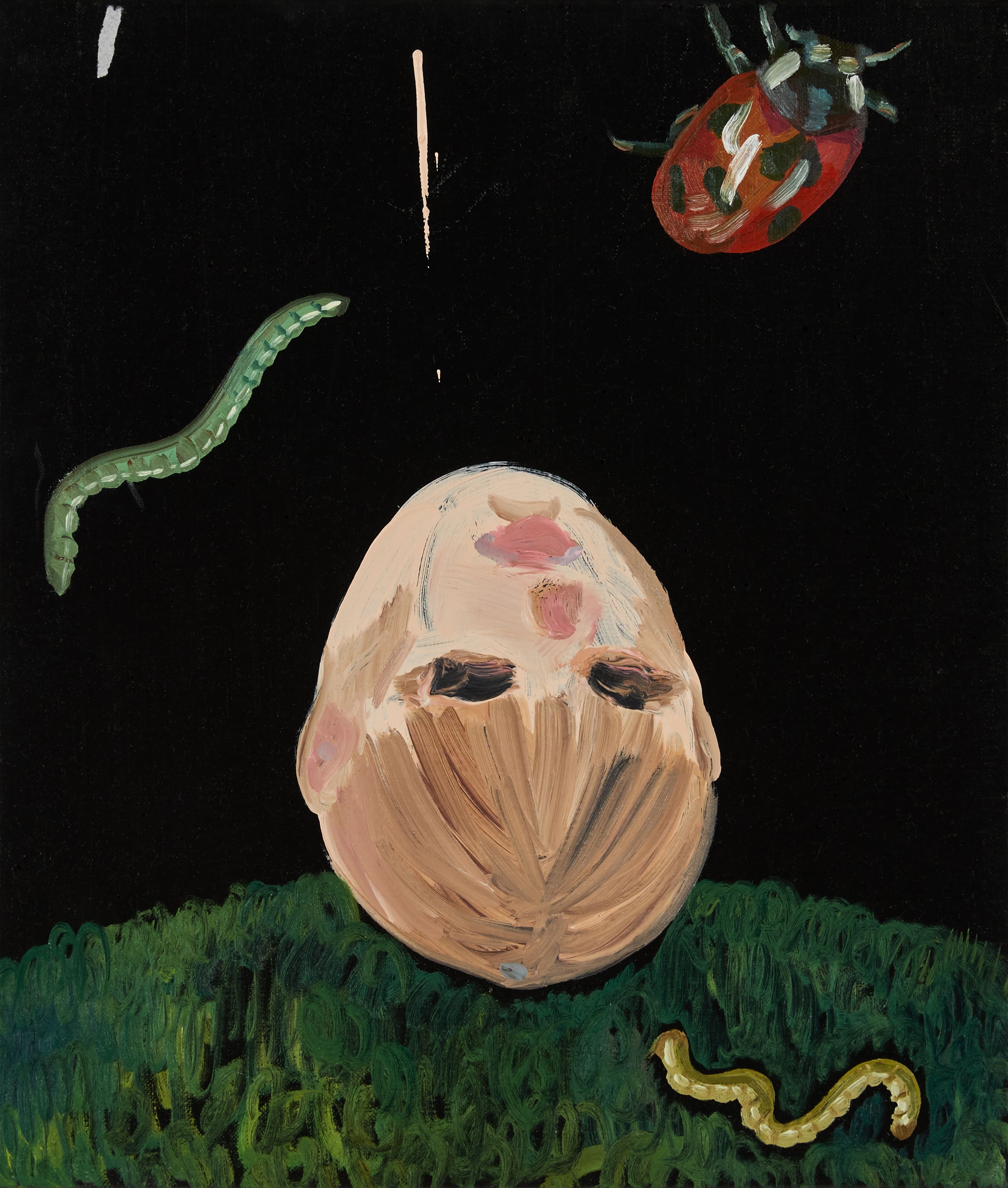
Soo-in Choi explores emotional relationships shaped by the
artist’s interactions with others, focusing on concealed feelings and resulting
confusion or conflict. Her work begins by visualizing a disguised subject—her
psychological model—situated under an external gaze, surrounded by a harsh
environment.
As noted in her artist statement: “There is a gaze directed toward
an object from the external world. Psychological subjects may gently receive
this gaze and harmonize with it, or collide in intense conflict, pushing one
another away. Images symbolizing the external world often appear as towering
natural forms like guardian statues protecting villages, or as monsters or
ghosts. Although these images may have their own narratives, I create them
spontaneously to emphasize their seemingly objective presence. Yet even these
are not entirely trustworthy.”
She portrays subjects who wish to disguise themselves yet fail
awkwardly as hairy creatures. Within the landscape, the subject becomes a scene
imbued with place-specificity. The false subjects within that scene remain
fluid, impulsive, and continuously transforming.
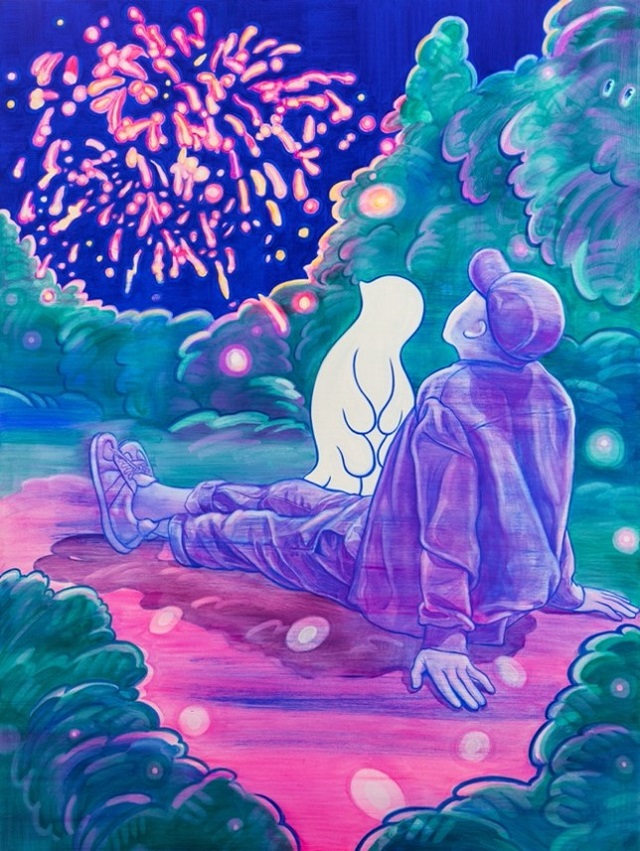
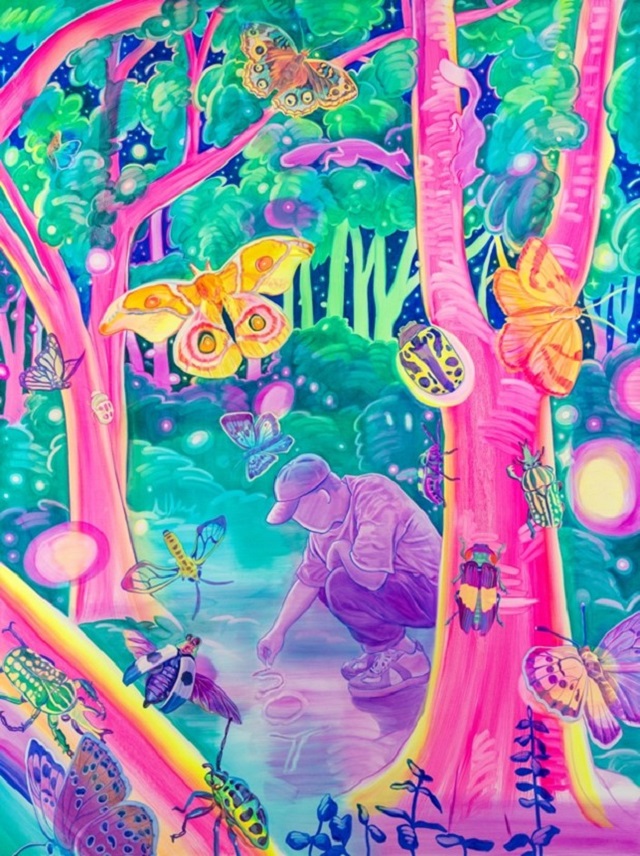
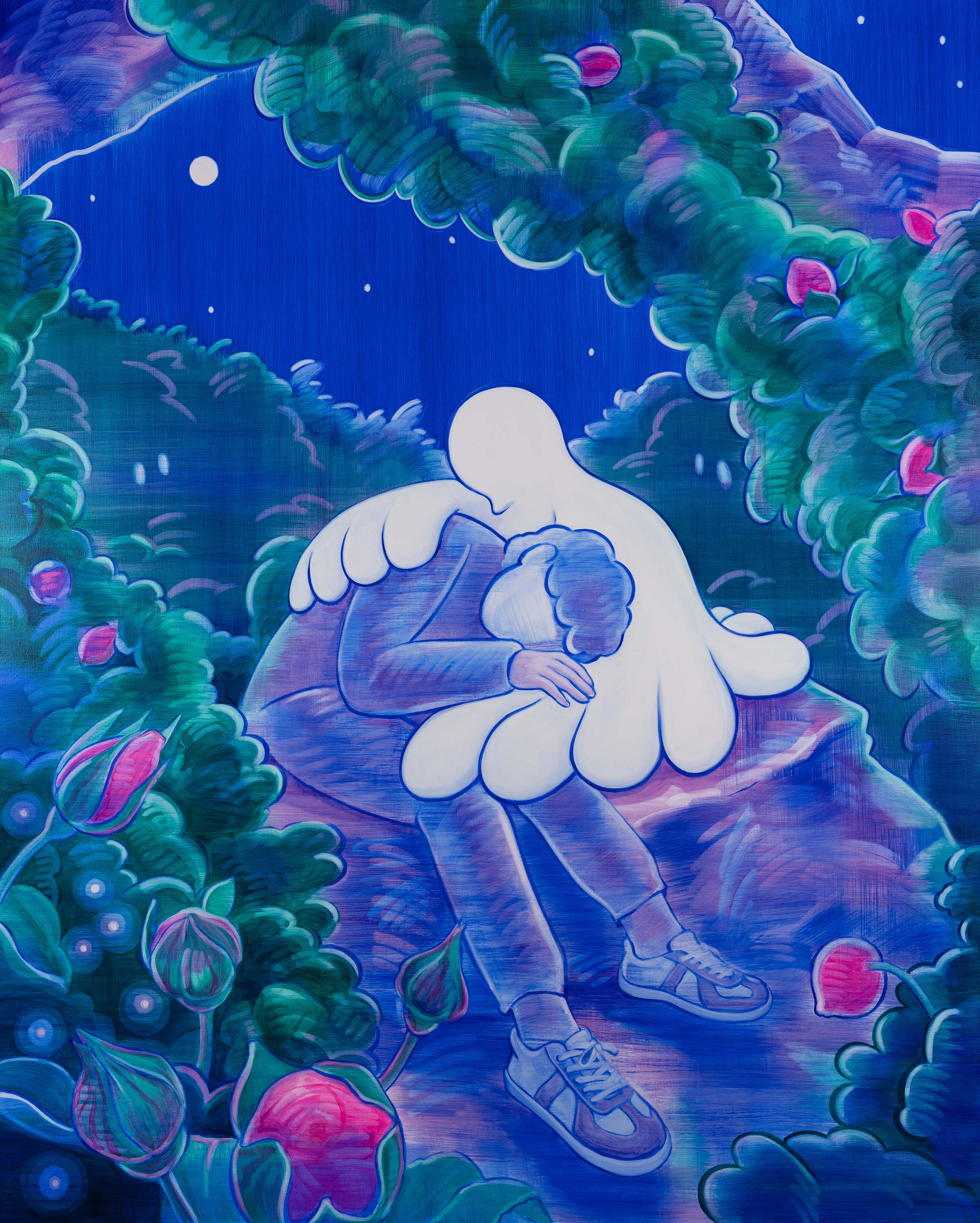
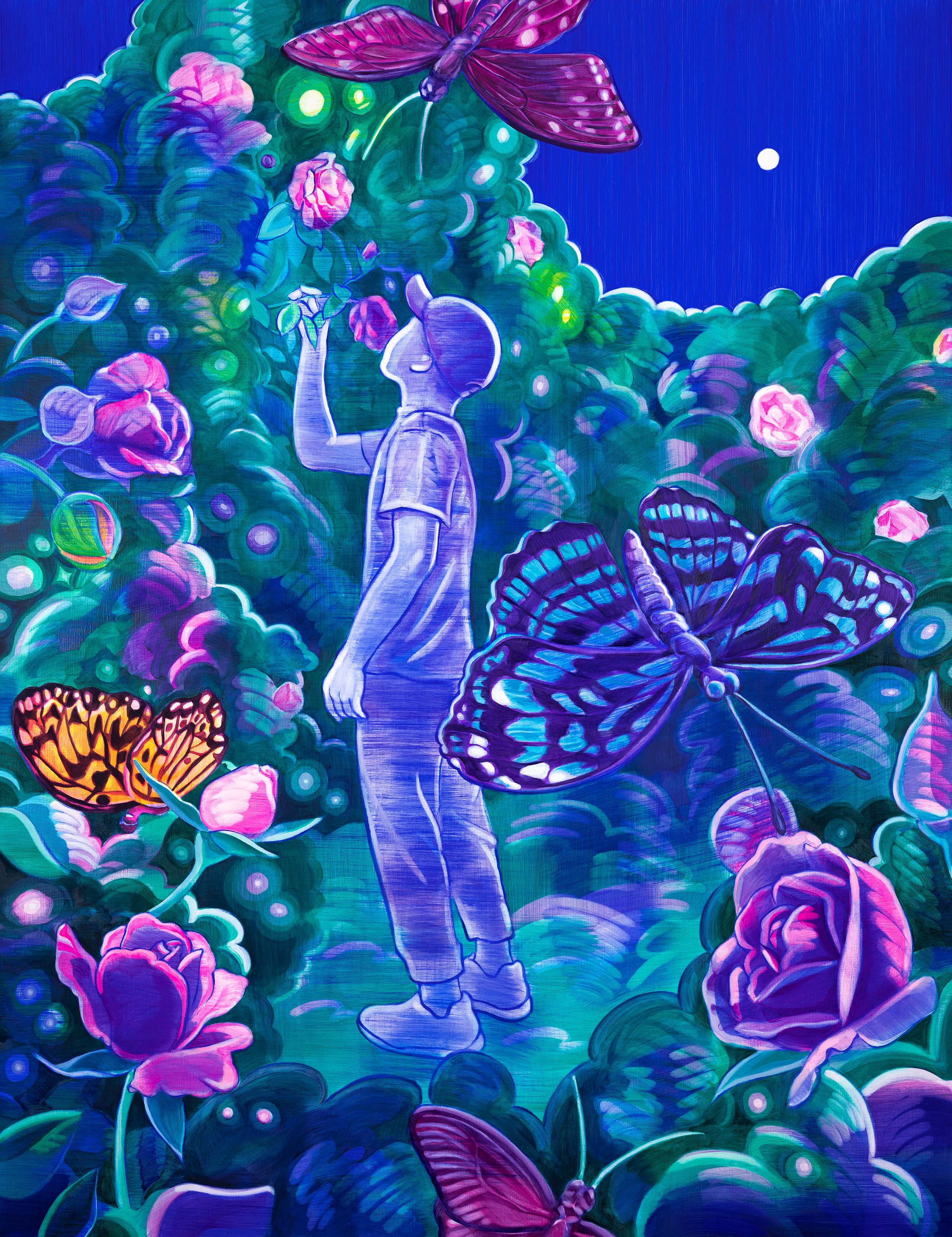
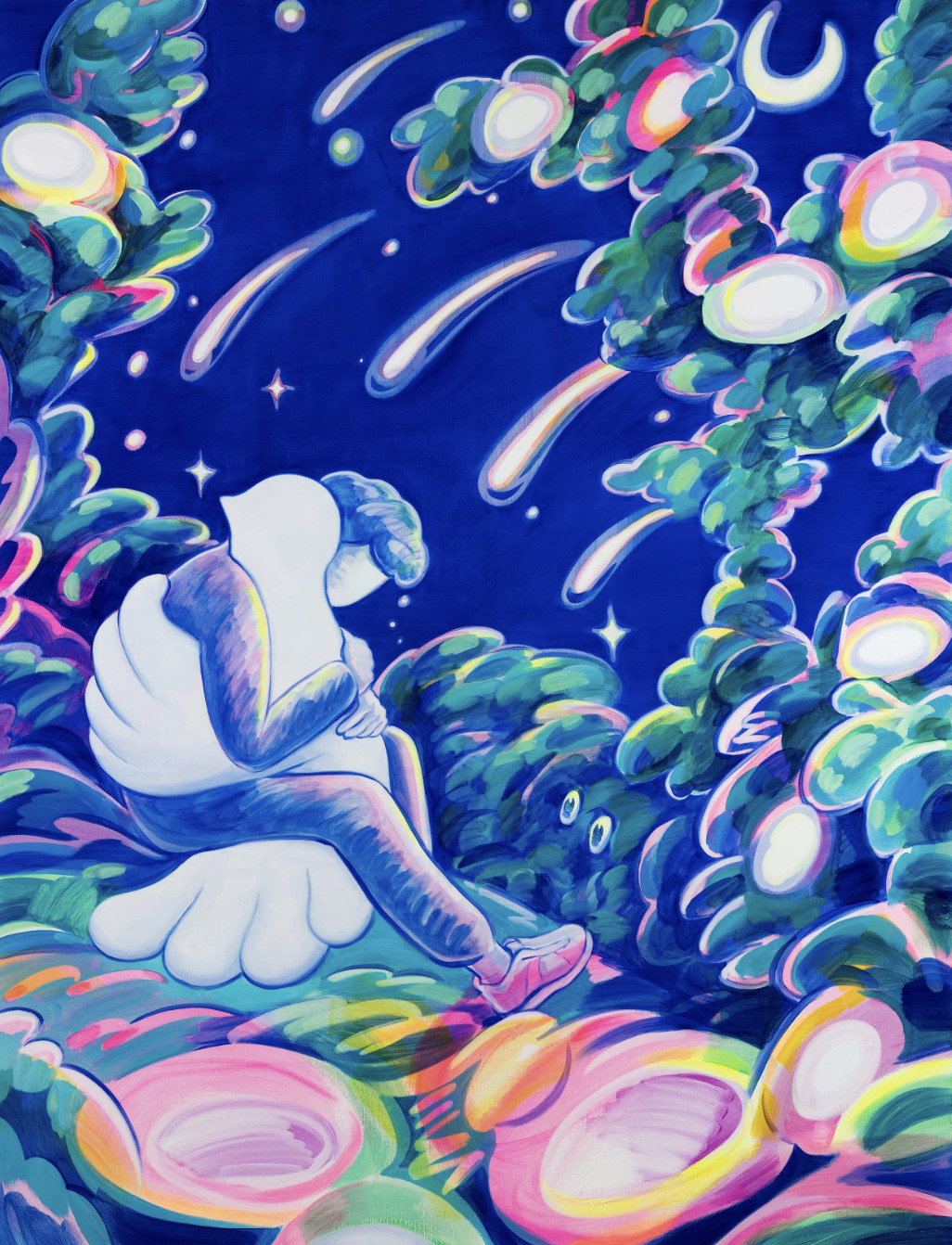
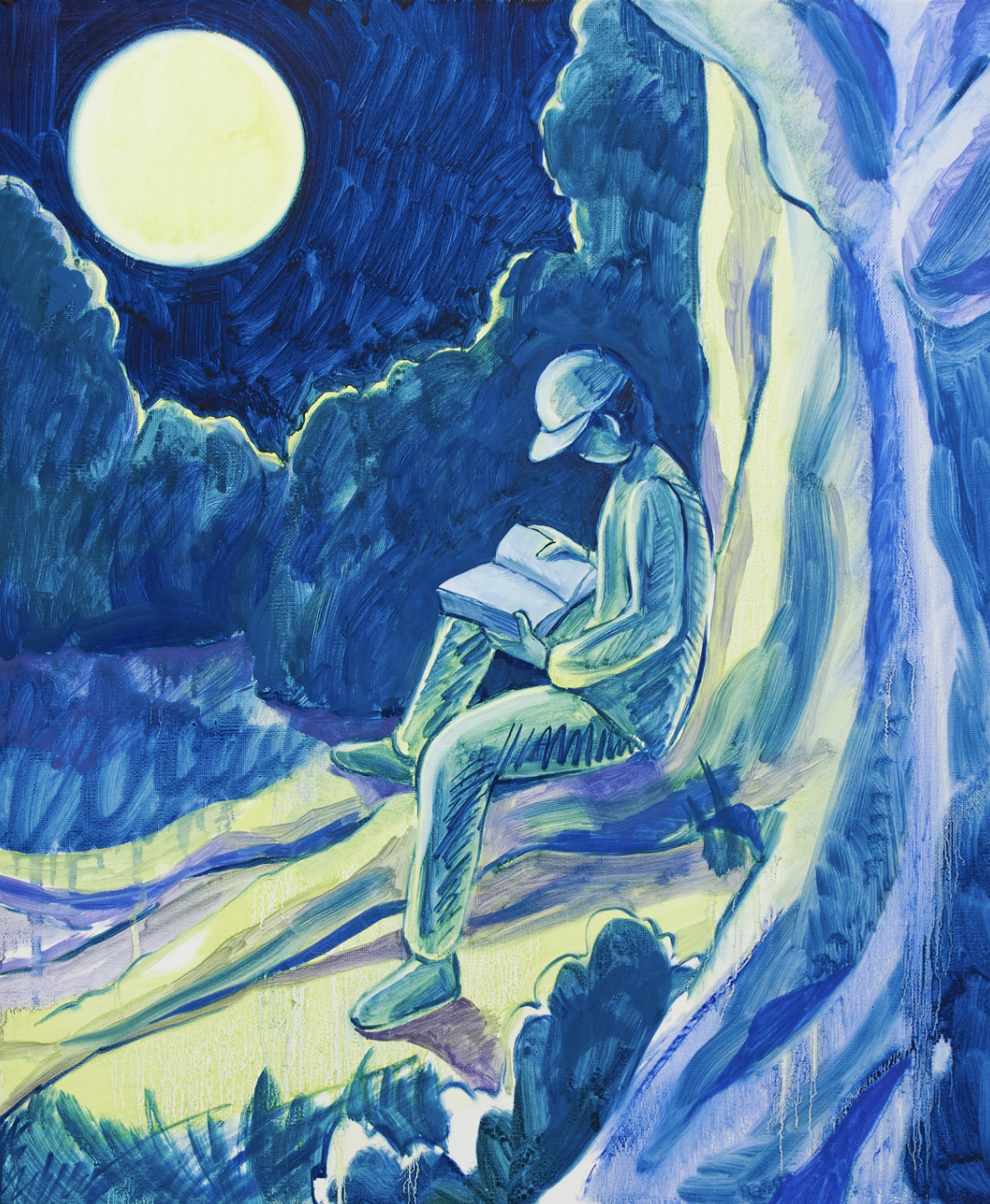
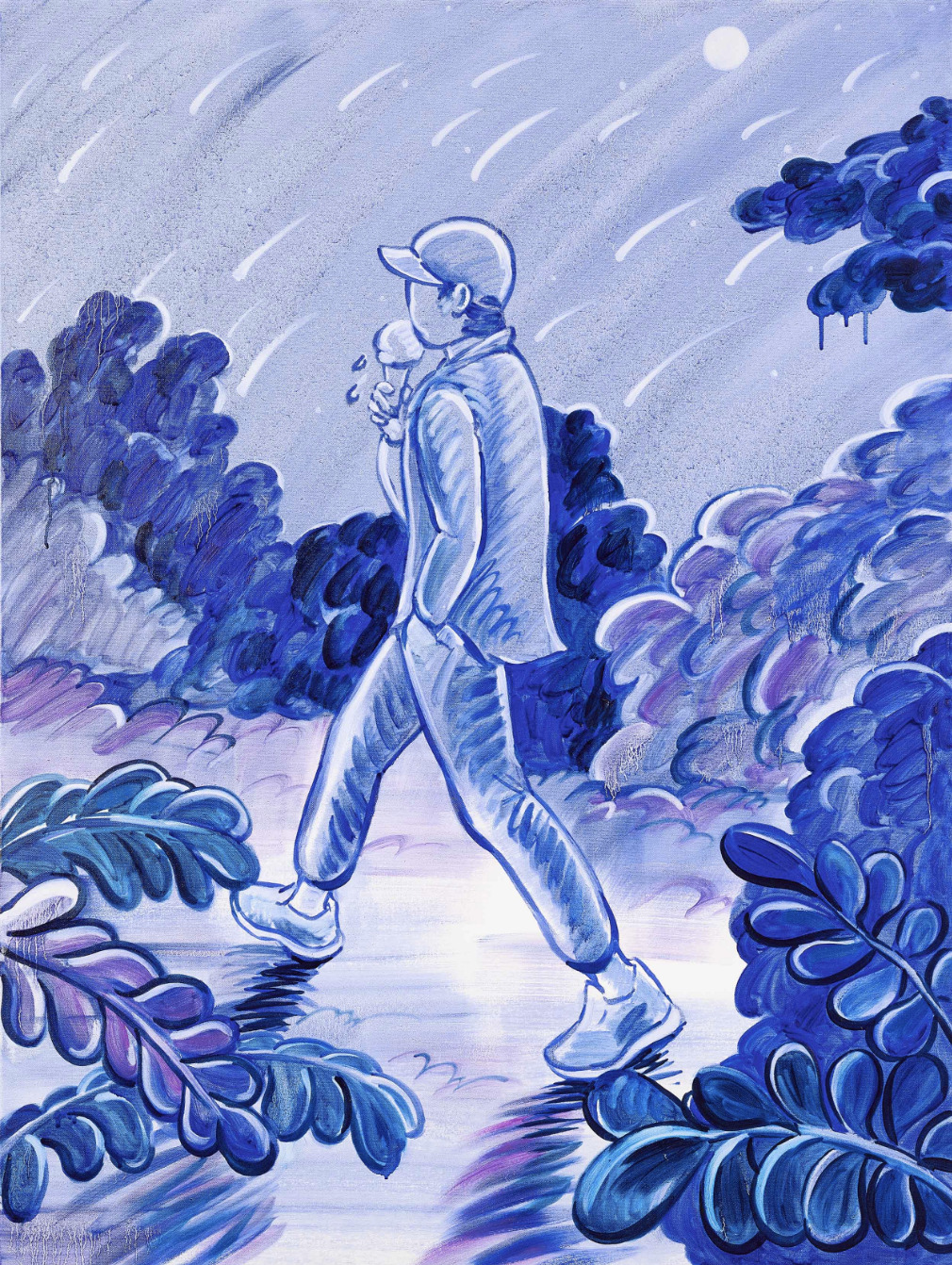
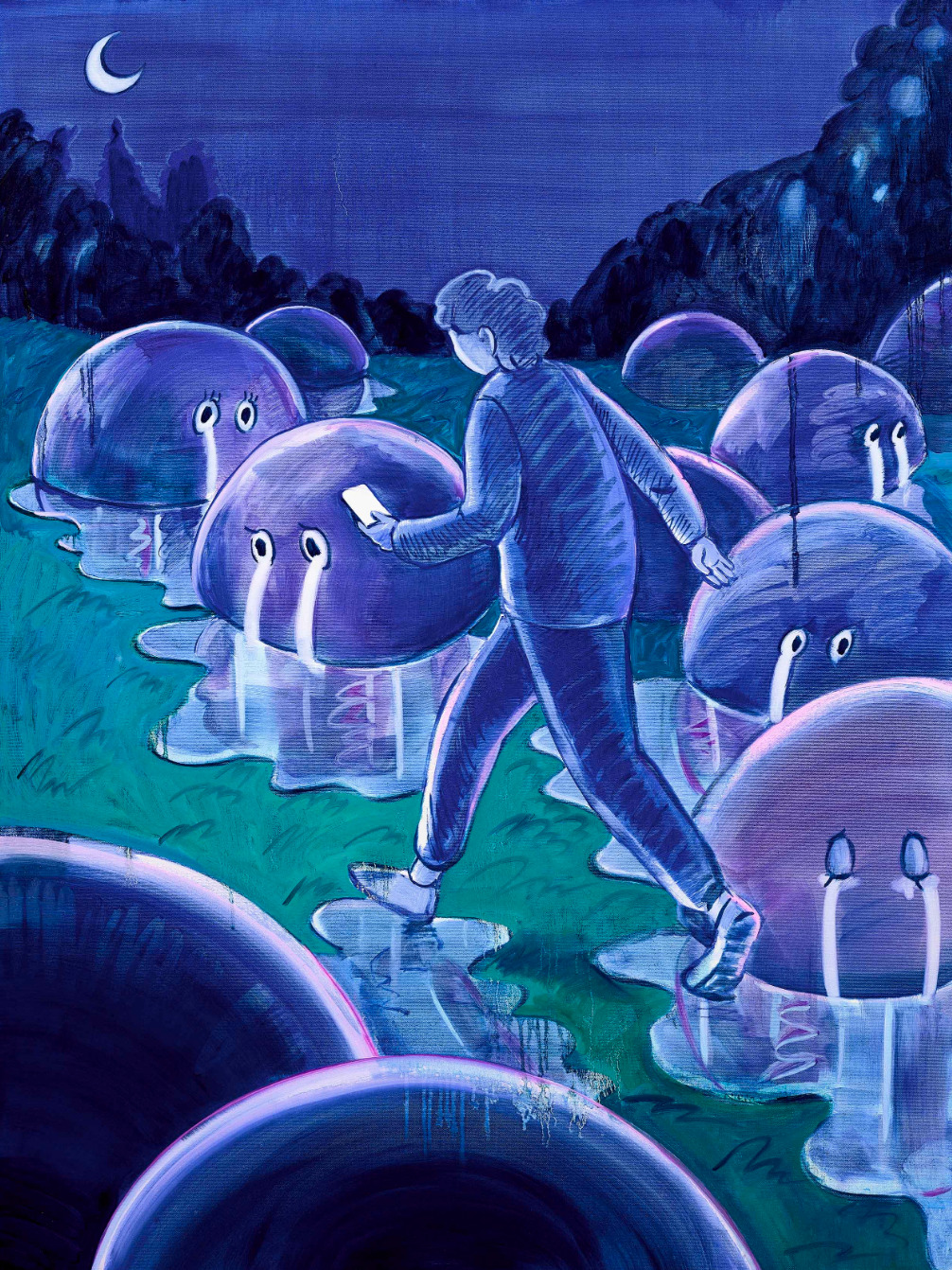
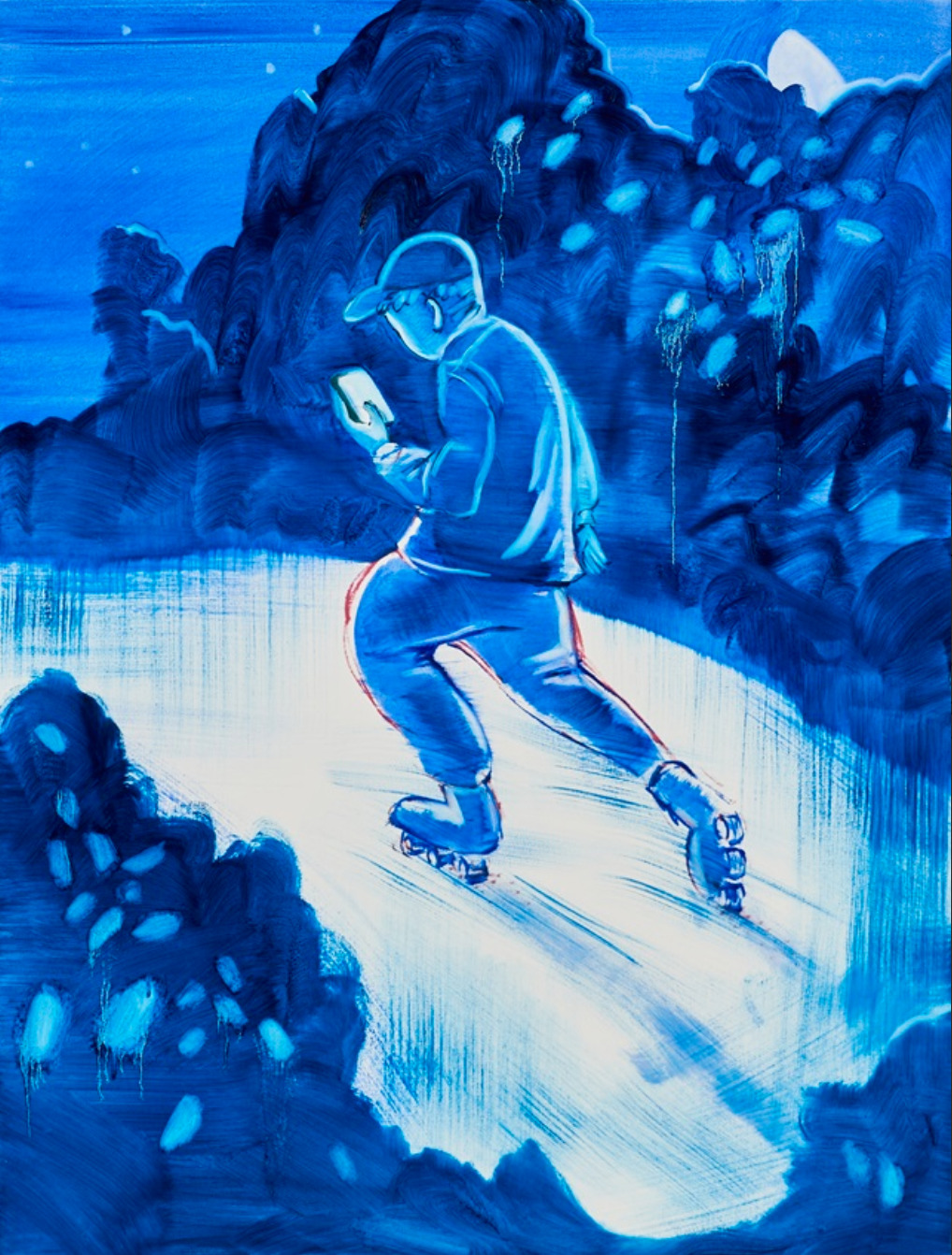
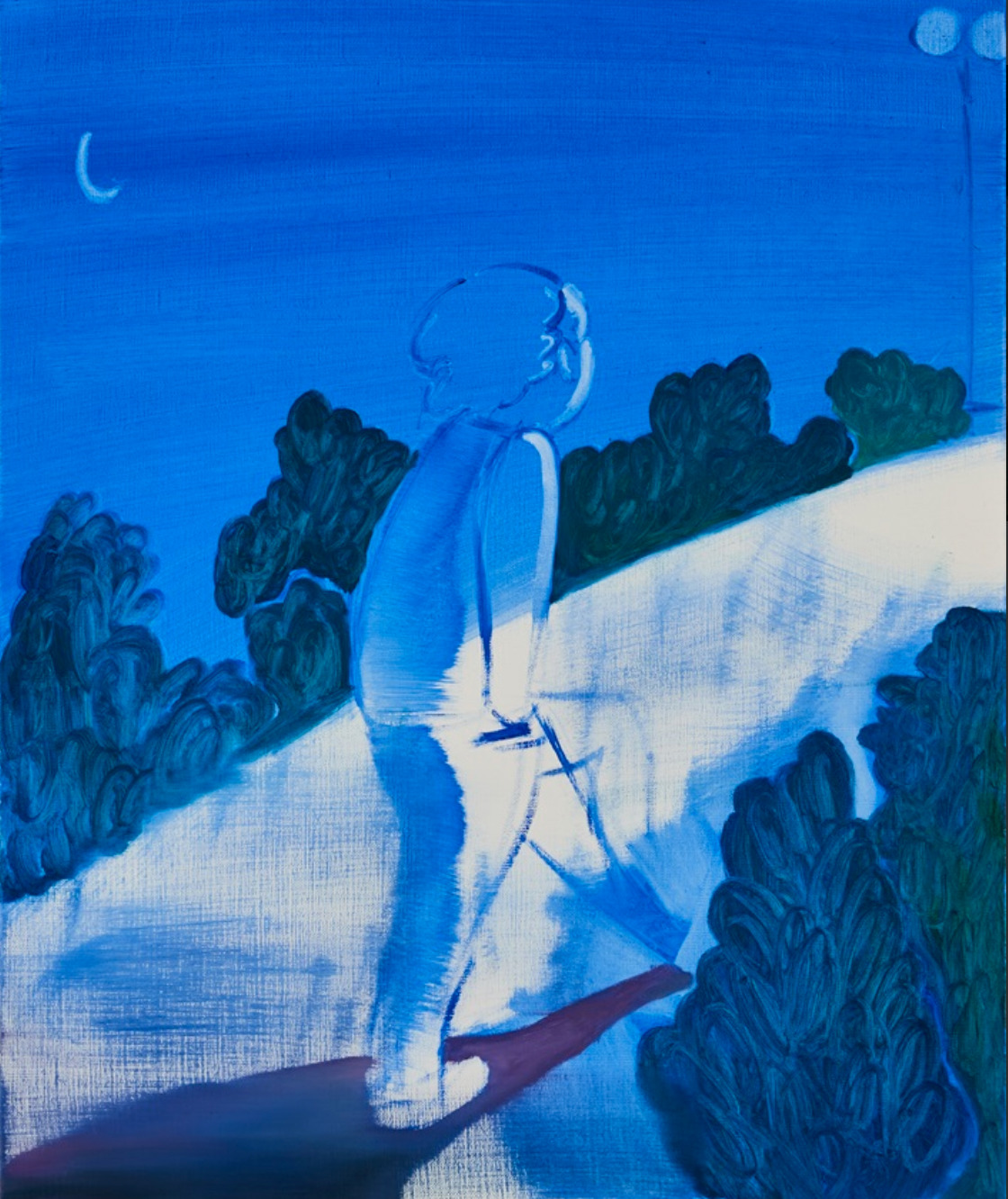
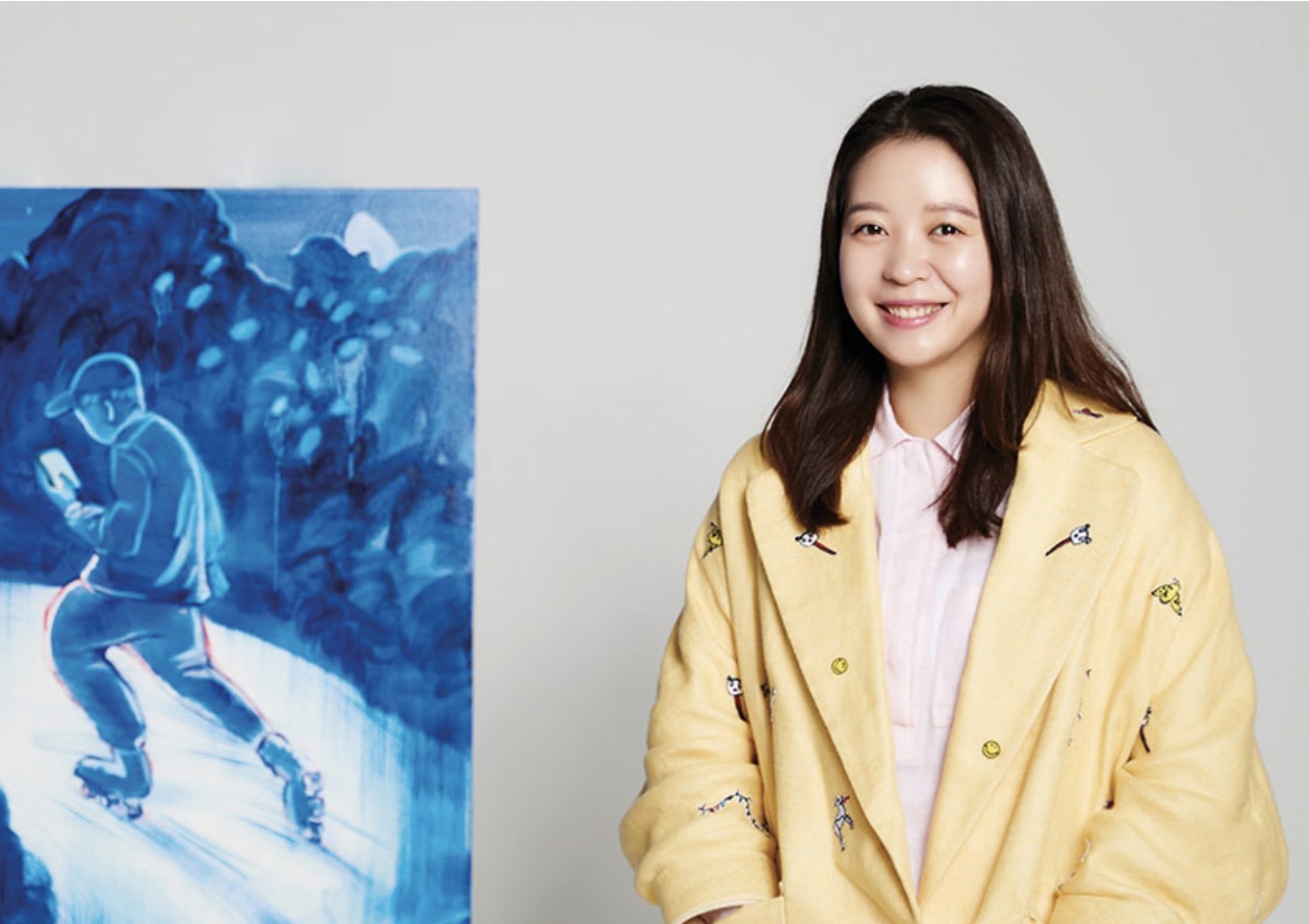
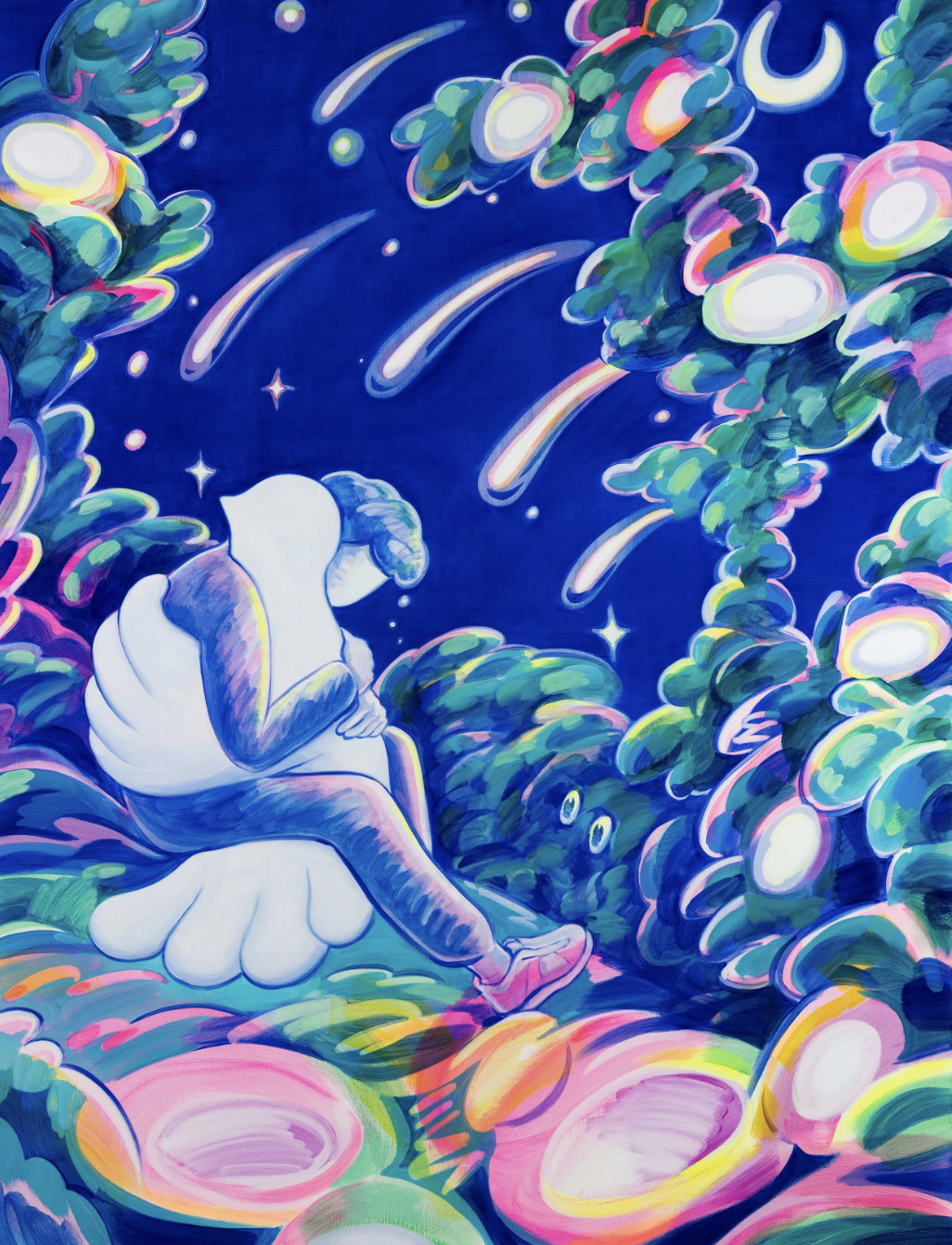
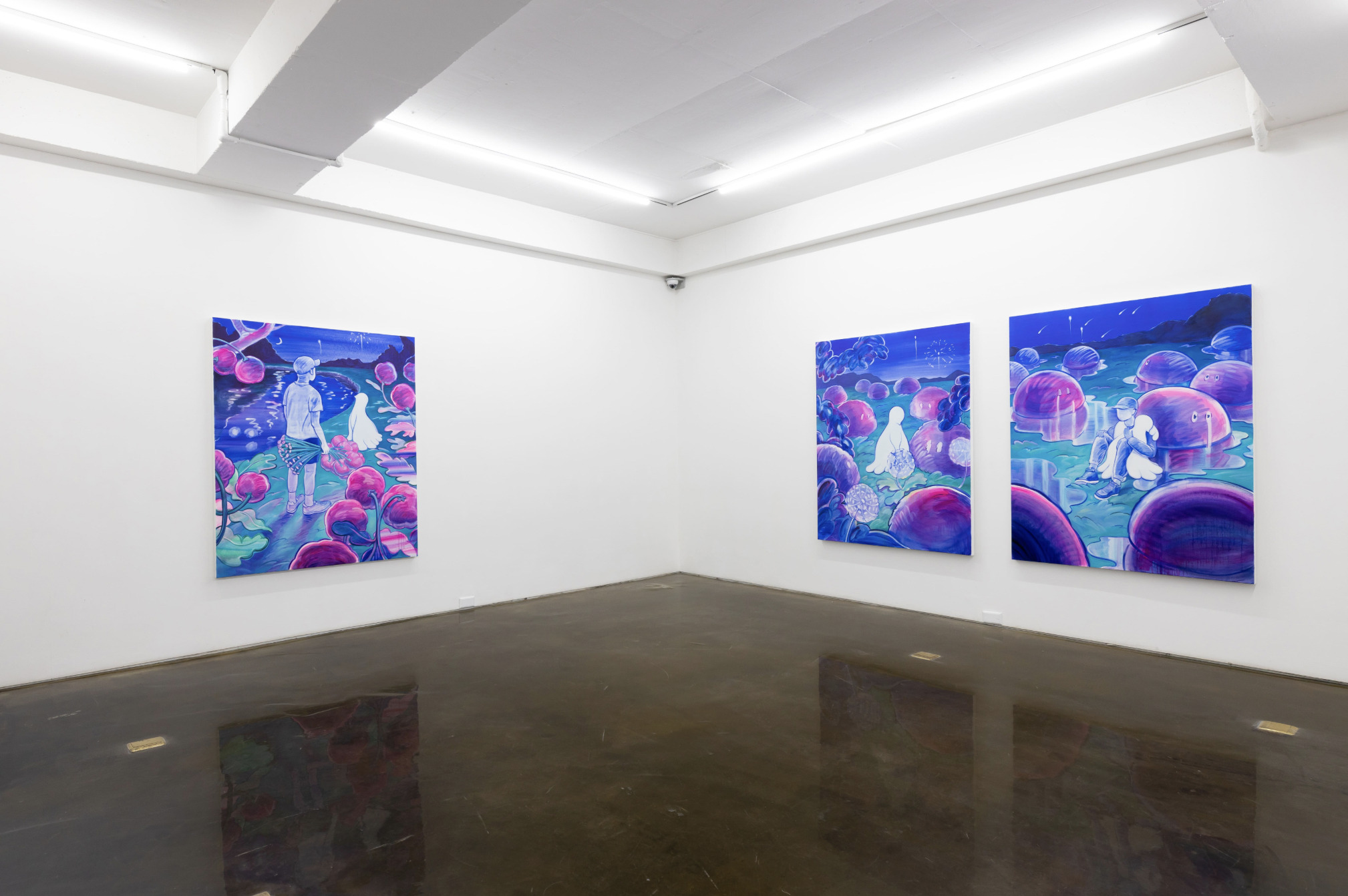
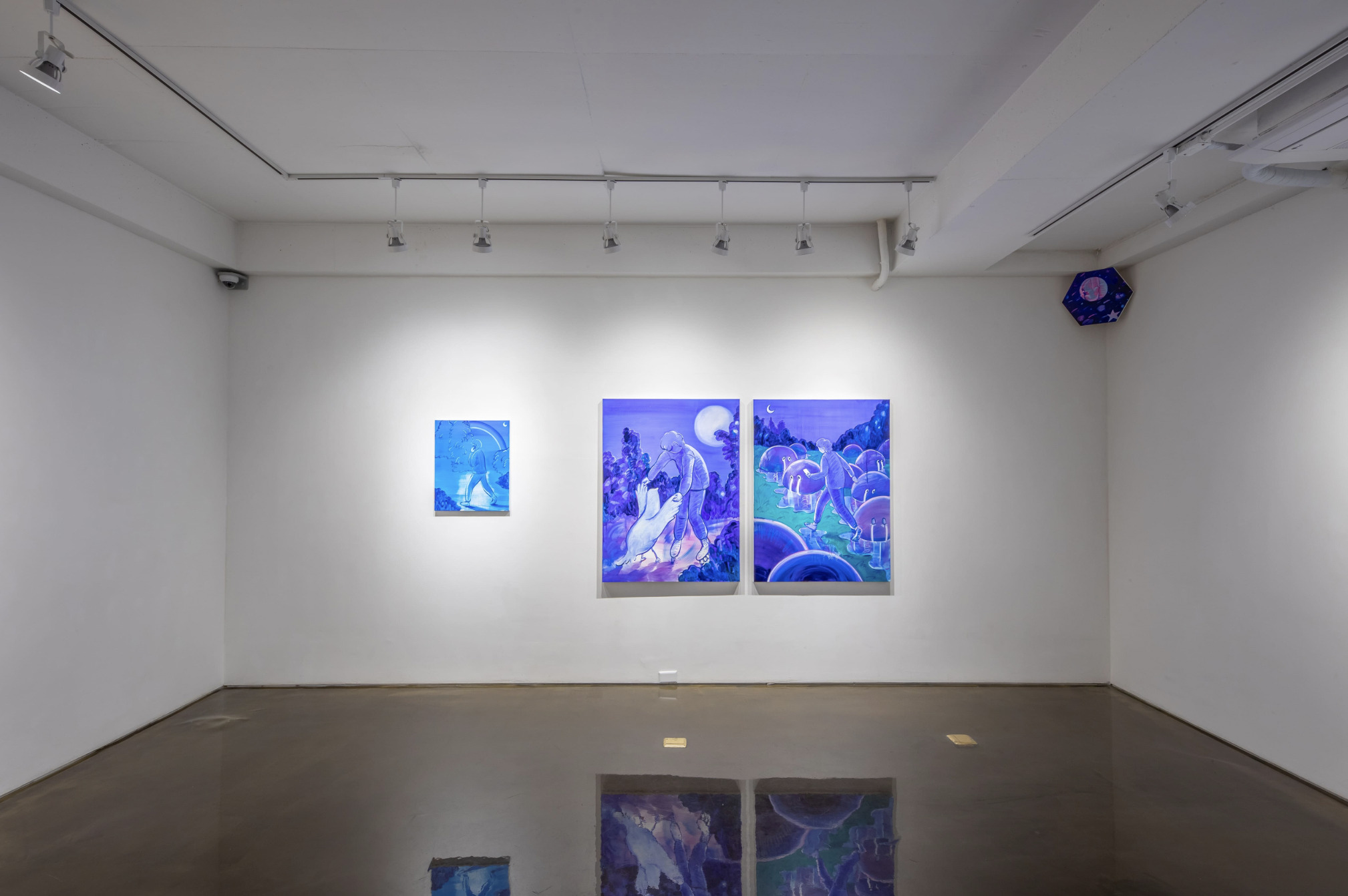
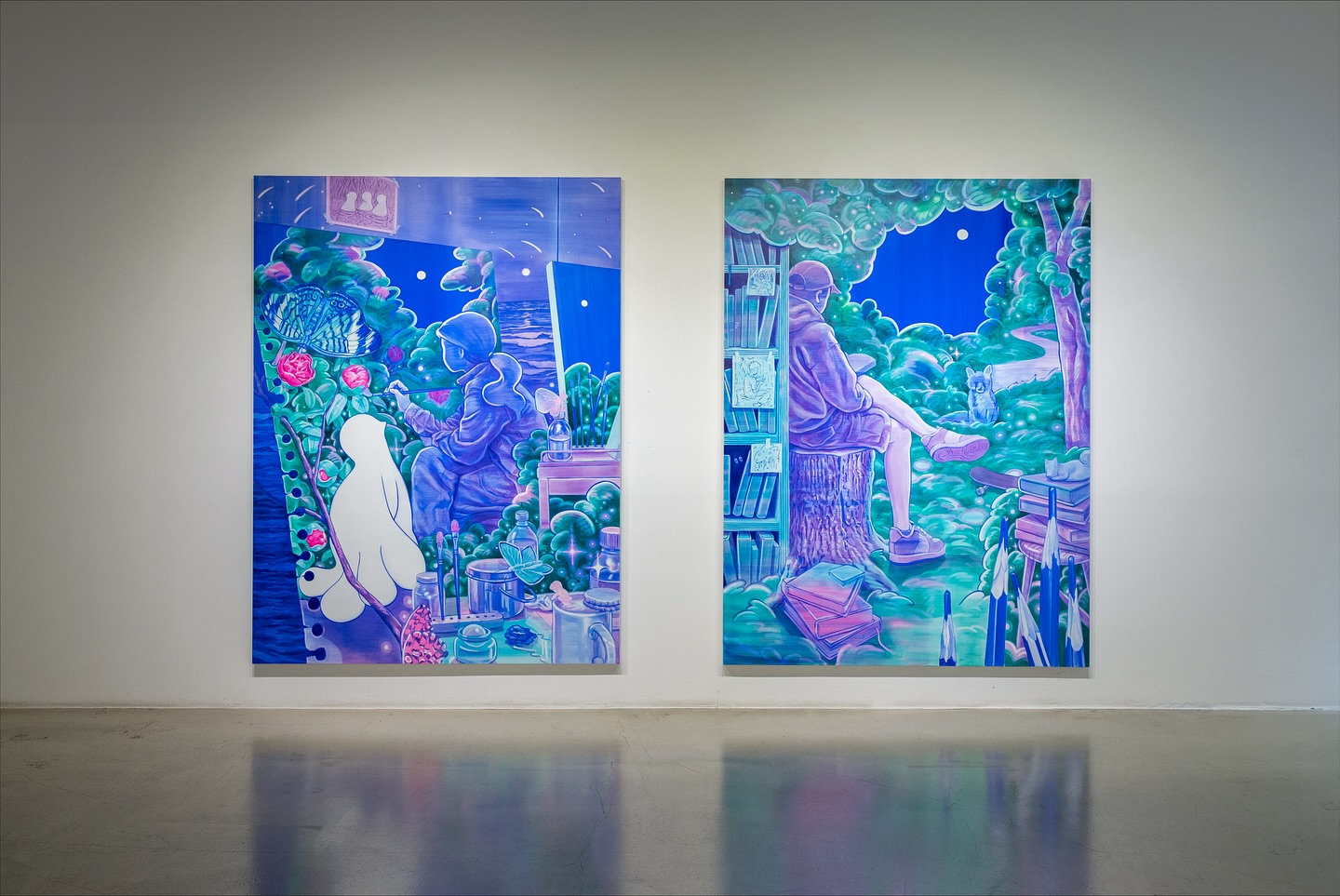
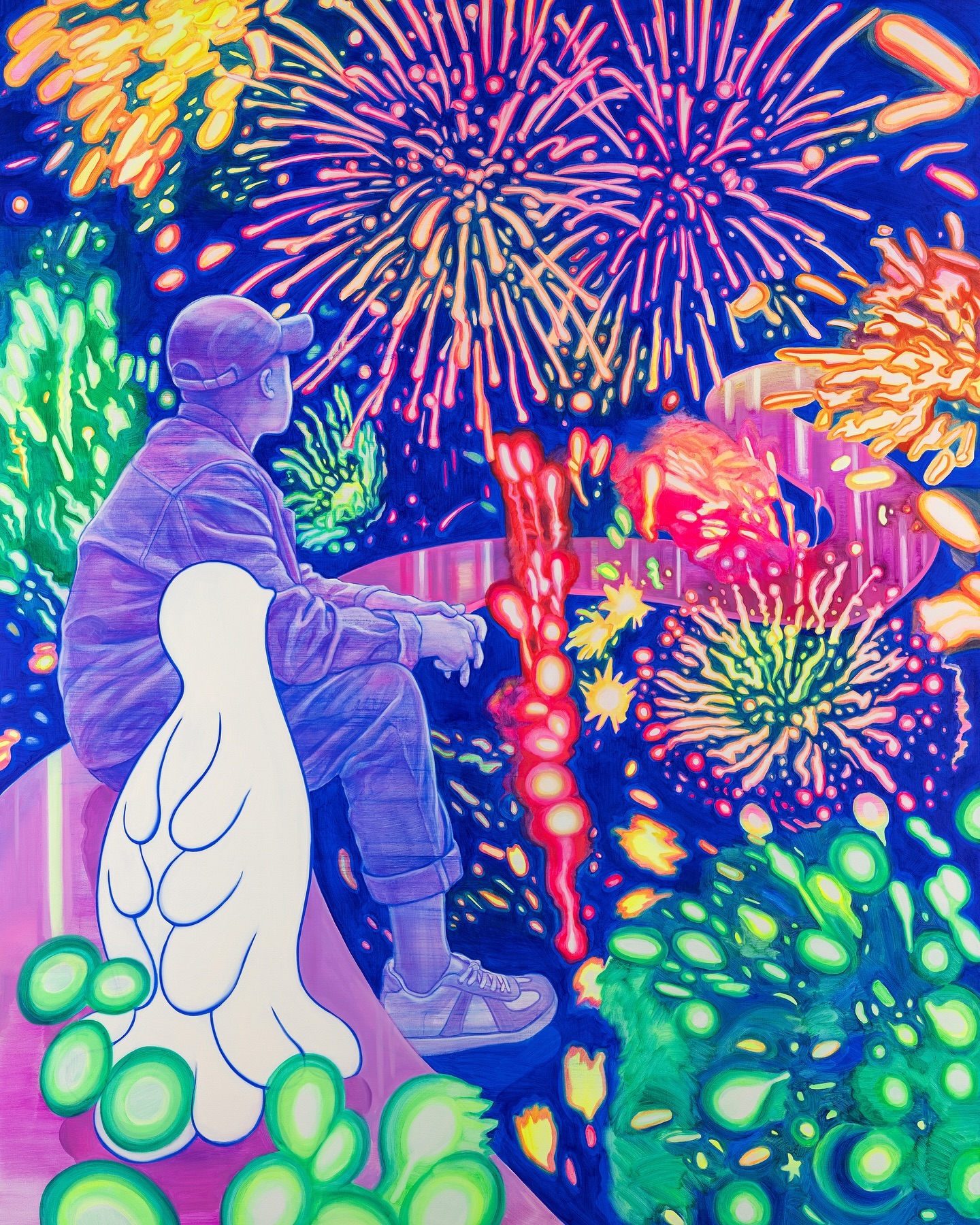
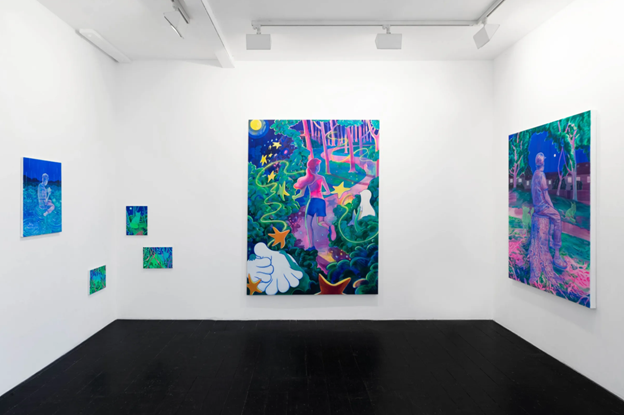
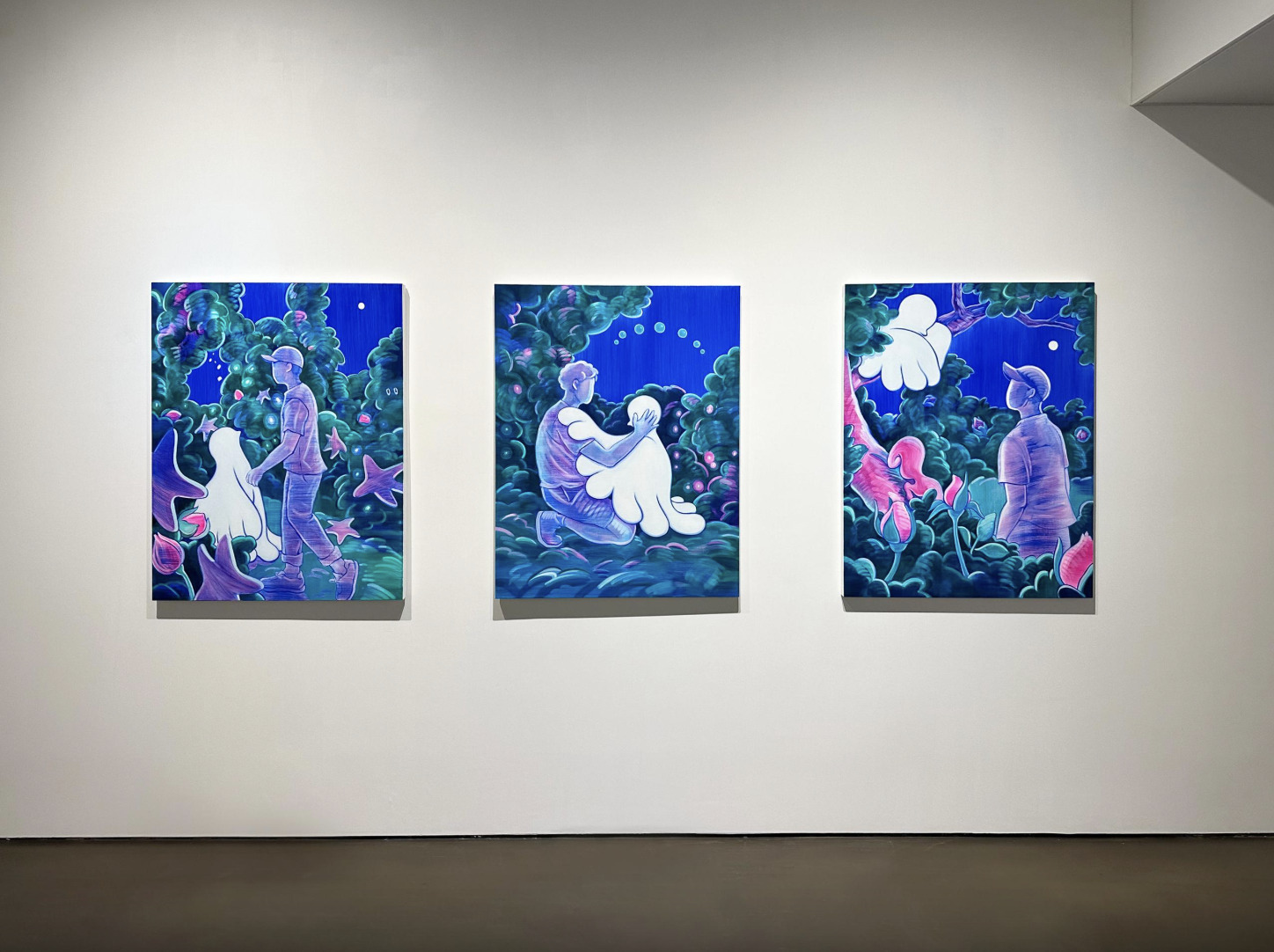
Jaeyeon Yoo works across painting, relief, installation, and
video, engaging unrestricted imaginative subjects. Through imagination, she
constructs entirely new worlds by exploring the relationships between image and
object, image and image, and image as autonomous presence. Her blue-toned works
blend reality and fantasy through collected narratives from personal
experience, unfolding image-telling without hesitation and guiding viewers into
a surreal realm.
The order and rules that once manifested the lives, identities,
and relationships of subjects and others dissolve into surreal imagination.
Past and present, ideal and reality, here and elsewhere become unconscious
fantasies, filling the canvas with a multi-layered, narrative spectrum of
images.
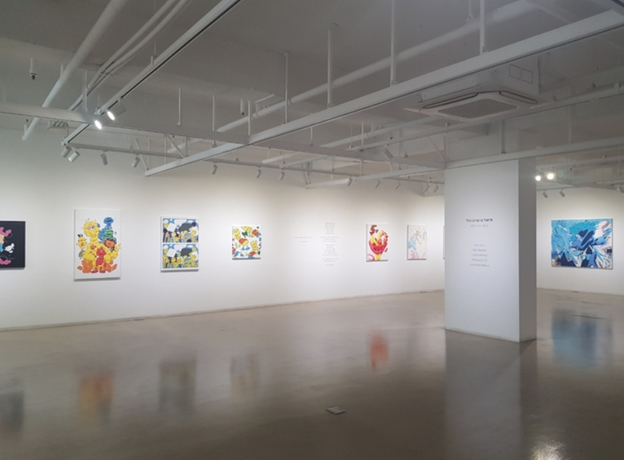
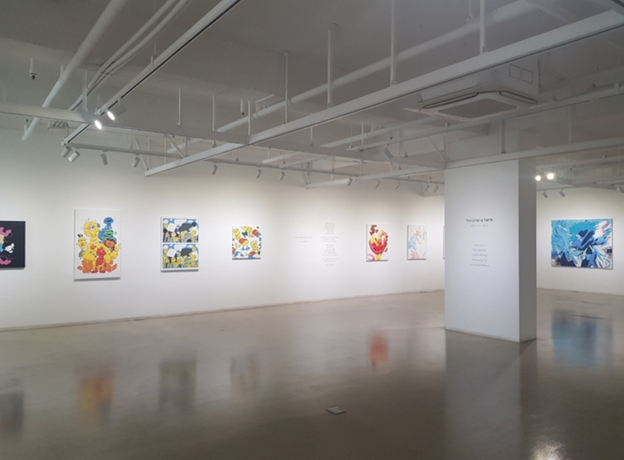
Namgoong Ho and Jang Seungkeun actively embrace and develop
“subculture” through animation-based pop art. By analyzing and transforming
familiar animated imagery, they create vibrant compositions. Jang Seungkeun,
working from the theme of “cognitive dissonance,” combines two familiar yet
contradictory images to portray contemporary popular culture. His newly
presented 'Assemble' series examines the viral spread and self-exhausting
performativity of the Ice Bucket Challenge on social media. Replicated images
proliferate across the canvas, representing data multiplication and appearing
to transcend virtual space into material presence.
All five artists focus on the unreal and persistently investigate
the ghosts formed within their imagination. What are these fictional ghosts
they confront? What truth do they seek to reveal through them? And through what
formal strategies do they unfold these narratives?
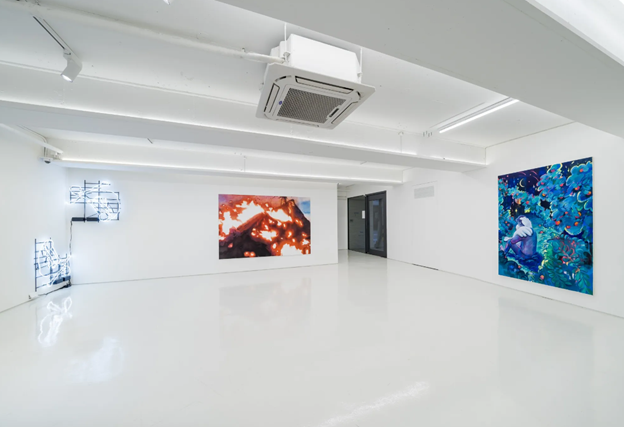
Dohing Art invites viewers to encounter the “ghosts” inhabiting
the artists’ works—entities possessing distinct identities—and to experience
how imaginary worlds become memory, and how memory transmits itself throughout
the body. The gallery encourages audiences to enjoy the playful counterattack
of these ghosts.