Exhibitions
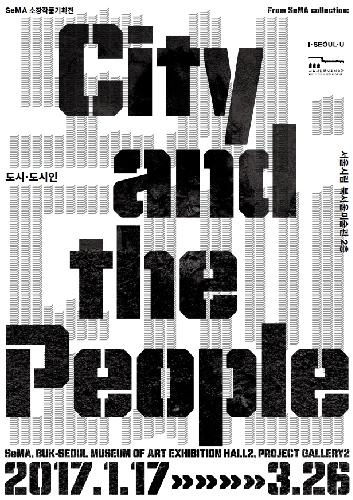
《City and the People》, 2017.01.17 - 2017.03.26, Buk-Seoul Museum of Art
January 15, 2017
Buk-Seoul Museum of Art
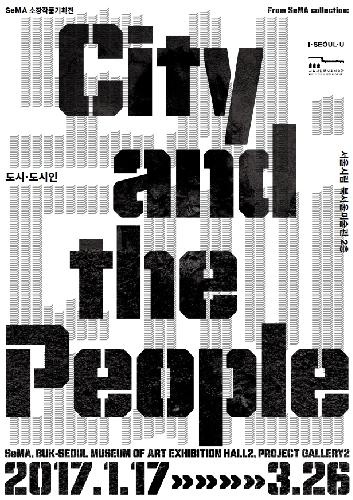
Poster
image of 《City and the People》 © SeMA
《City and the People》 is an exhibition examining the distinctive aspects of the people
living here and now, and the social backgrounds they are based on. Focusing on
our society’s collective experiences, such as “estranged labor” and increasing
“social instability” which in turn create “excluded and marginalized
existences,” the works in this exhibition demonstrate critical awareness of the
social situation.
Selected primarily from SeMA’s permanent collection, the
artworks have been interwoven together based on the socio-cultural codes we
presently share instead of being categorized by time period, genre, and form.
From these social codes that are familiar to us through film and literature,
the viewers will be able to access the multilayered textures and substances of
the works.
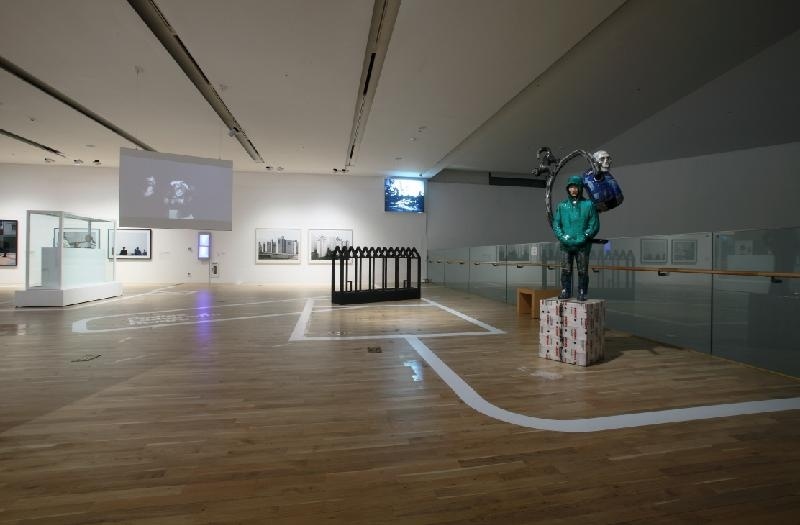
Installation
view of 《City and the People》 © SeMA
The
exhibition is organized into three sections. The first section examines the
marginal beings on the boundaries of society that lead meaningless lives only
to gratify their desires. Standing at the edge of globalized neoliberalism
where anything can be done for the sake of profit, we voluntarily lend
ourselves to slavery of capitalism for our own consumption (Eternal Slaves) and
pursue our private desires over social introspection or critical awareness
(Bodies Laden with Desire).
These collective experiences are reflected into
codes of repetitive labor and selfish attitudes that have been vividly
portrayed in a wide array of films and television dramas. The works included in
this section visualize these issues by making a parody of meaningless
repetitive actions, or revealing the invisible structures of consumer
capitalism and those who are dominated by the objects of desire. In addition,
this section of the exhibition also juxtaposes works that investigate the
boundary objects that are structuralized as much as the humans under social
conditions.
The
second section of the exhibition explores marginal groups as sites where social
instability and desire are unveiled. Minorities (Invisible People), who were
often excluded and hidden from history, have been suppressed by the authority
and the mainstream in order to consolidate the system. Nevertheless, minorities
have never been forgotten and are constantly revived in our memories.
Young
people (Convenience Store Human), with their livelihood showing no signs of
improvement despite the struggles, project themselves onto the excluded
characters in webtoons and novels, taking them on as their alter ego, while
reconstructing the narrative as a way of breaking the ties. These works delve
into moments when the familiar turns into the unfamiliar and react to their
conditions by raising questions on social perceptions and standards.
Lastly,
the works on display at the Project Gallery2 focus more on hopeful destruction.
These works assert that we must acknowledge and overcome our own foolishness in
order to break away from this state where we cannot be ourselves, that we
should not label and restrict the underprivileged, and that it is essential for
us to recover our sense of humanity.
The
economic crisis, various calamities (such as nuclear disasters, earthquakes,
and the nationwide spread of MERS), and terror incidents are increasingly
becoming a part of our everyday anxieties and horrors. It may also be true that
the Korean society has been trapped in stagnation and guilt for quite some time
but it is clear that even in the present moment, the Korean people continue to
search for hope by joining forces together. The works in this exhibition are
those that have tried to catch these signs early on and interpret them. The
exhibition and the artworks hope to provide an opportunity to recover our lost
sense of direction and find ways to move forward.