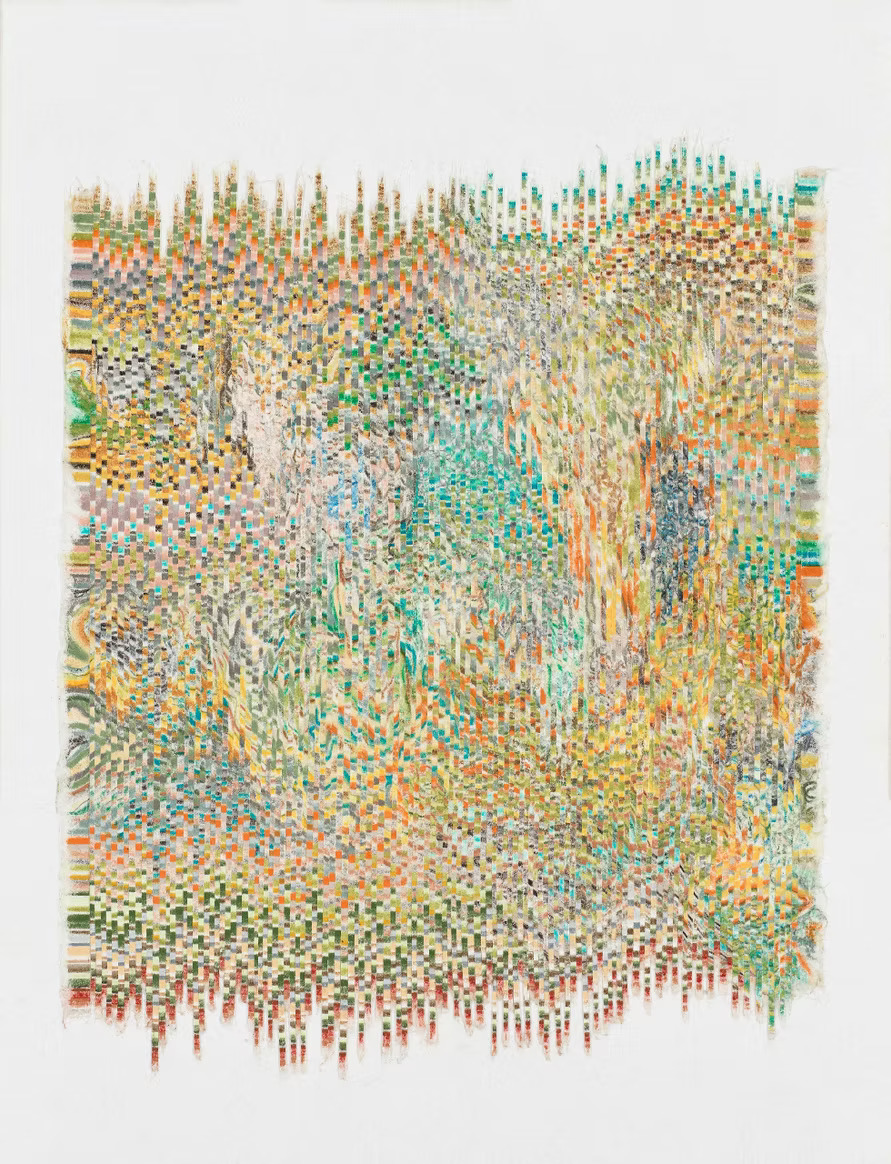
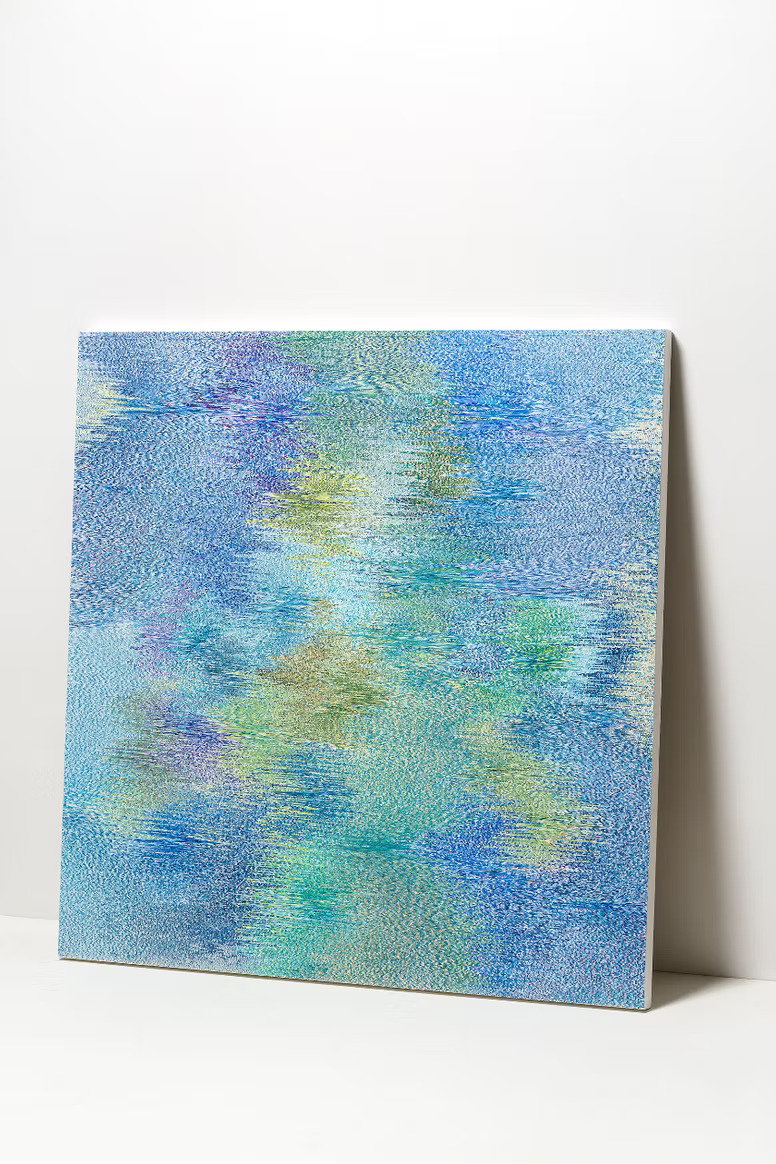
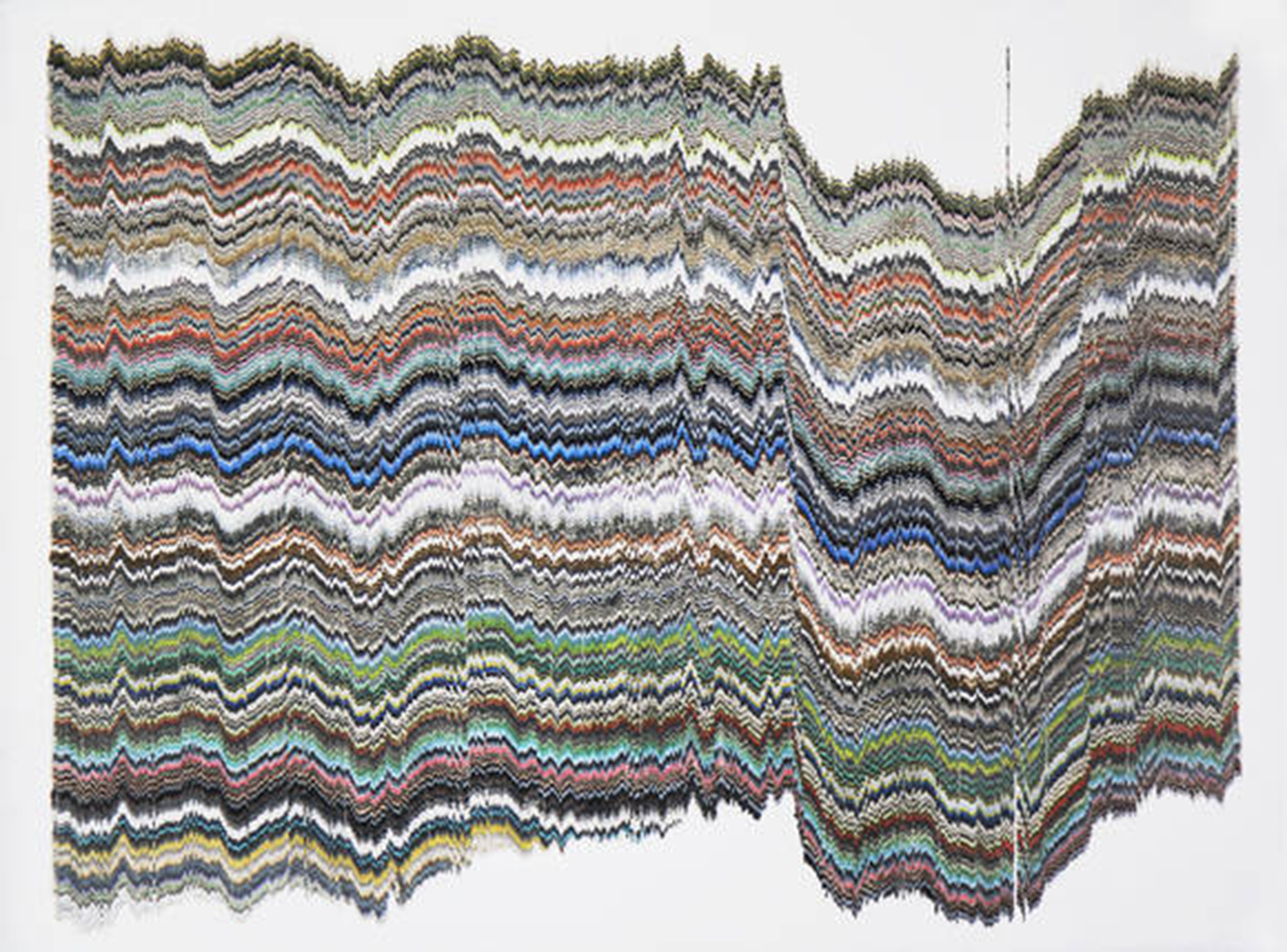
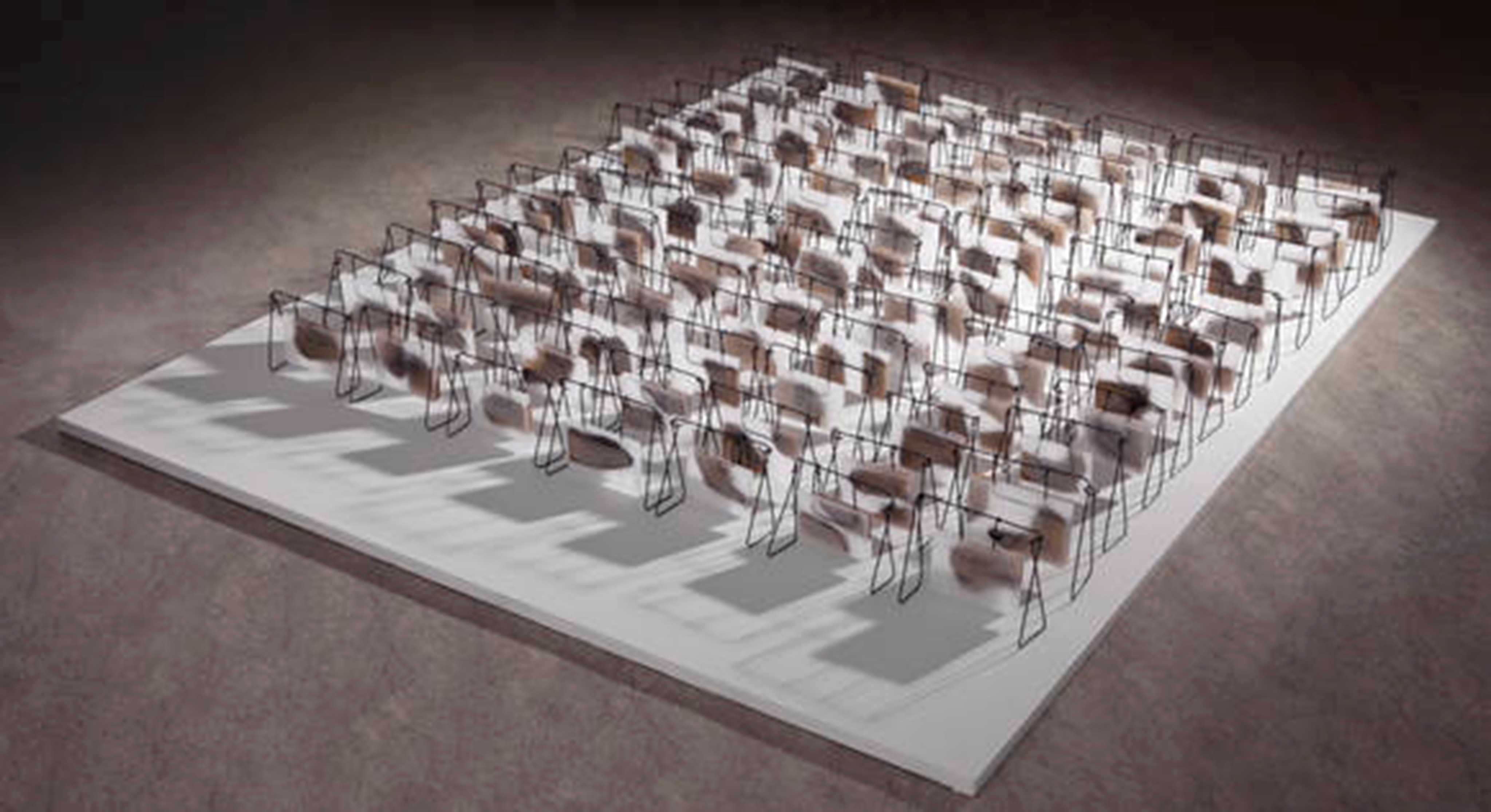
From her early works, Wonjin Kim has enacted visualizations of
temporal “layers.” The hypothesis that time as a particular environment or
condition possesses an absolute direction and speed has long been dismantled.
In her practice, time continually transforms, misaligns, opens gaps, and fills
them as it passes through personal memory; it remains moving and alive. Even in
the act of visualizing it at this very moment, it becomes a record as new time.
Although such phenomena begin from singular experiences, the artist recognizes
them as already generalized sensations and attempts to present them in expanded
forms. To realize this aim of universality, she has long used her own time as
material—collecting personal diaries and experiential records, only to erase
their individuality through acts of destruction.
In the 2019 exhibition program 《Scattered Thoughts, Combined Experiences》 by
the Gyeonggi Cultural Foundation, her flat works were completed through
distortion of original images. The process of production—cutting the original
and attaching it to the surface—reminds viewers of the absolute time the artist
has wholly consumed. The time spent cutting and pasting toward a new image is
both past and present. The relationship between the already-made original and
the transformed image produced by her actions creates another flow of time,
rearranging past memories and continually recalling both original and altered
images. Her childhood method of leaving private memories and erasing them so as
not to share with others appears reflected in her current methodology.
If “memory” and “forgetting” constitute elements forming the
substance of time, she employs these two elements as crucial methodologies for
dealing with temporal layers throughout her work. The old hypothesis that time
proceeds at the same speed and direction from past to present to future becomes
powerless within her formal engagement with memory. Time in her memory is
neither orderly nor precisely factual. Just as multiple accounts of the same
event often differ, perception varies according to mood, position, and
environment; the sequence of events may become scrambled. The ‘Stratal
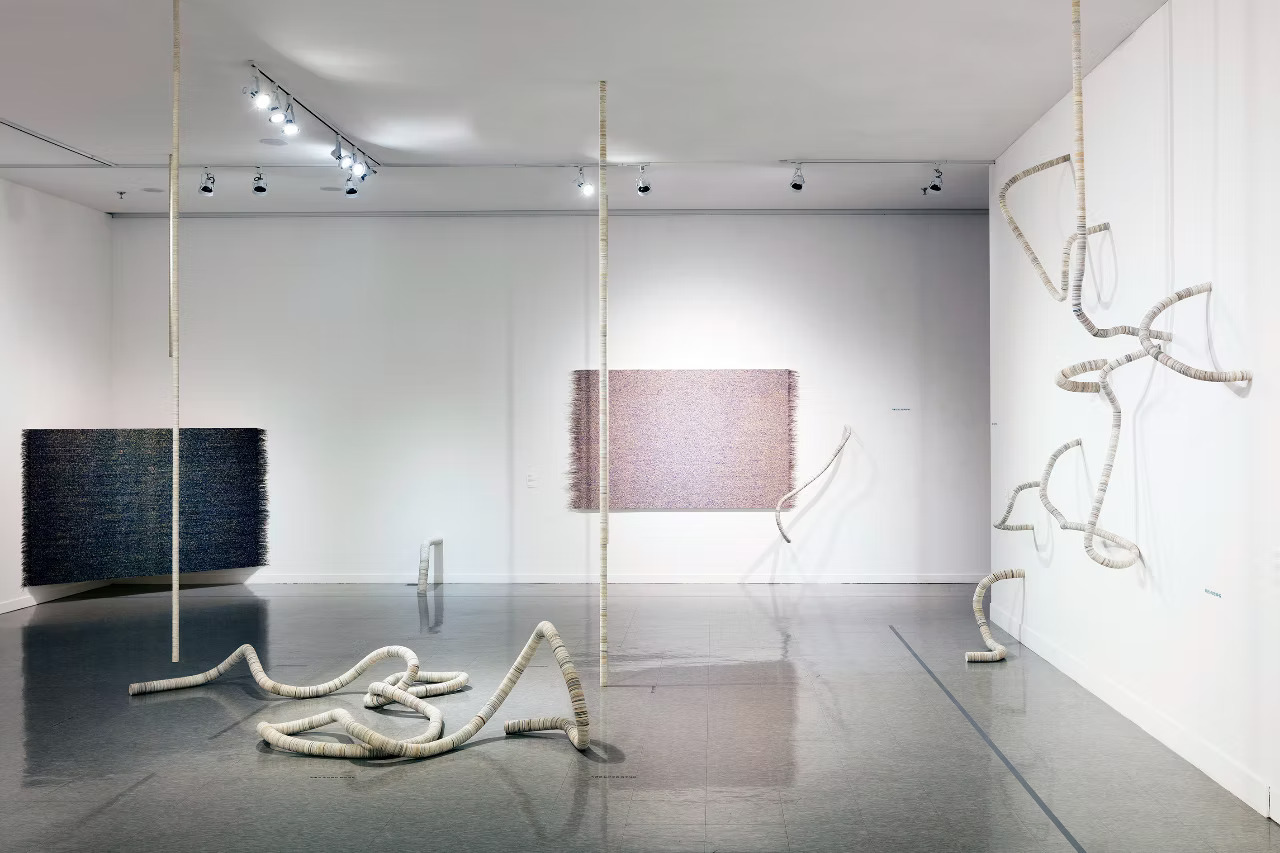
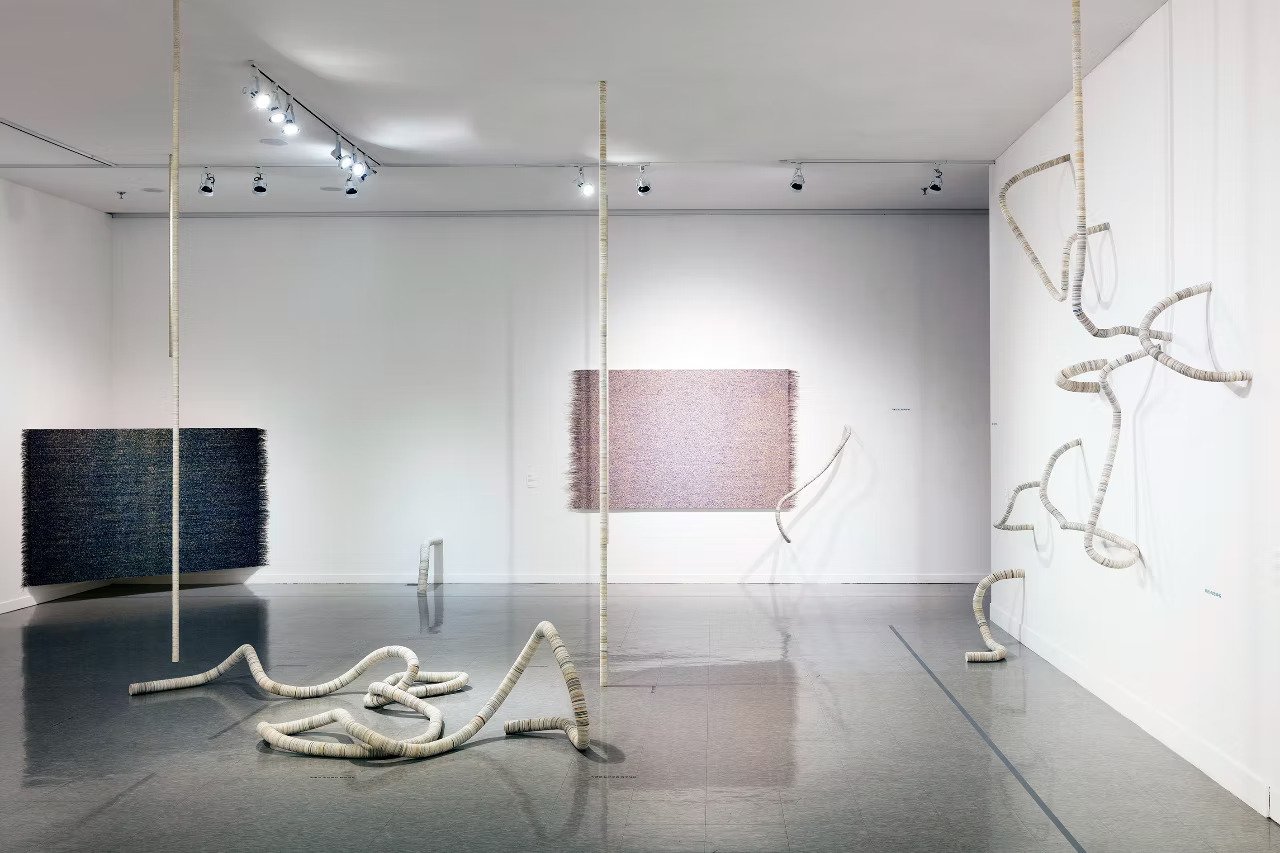
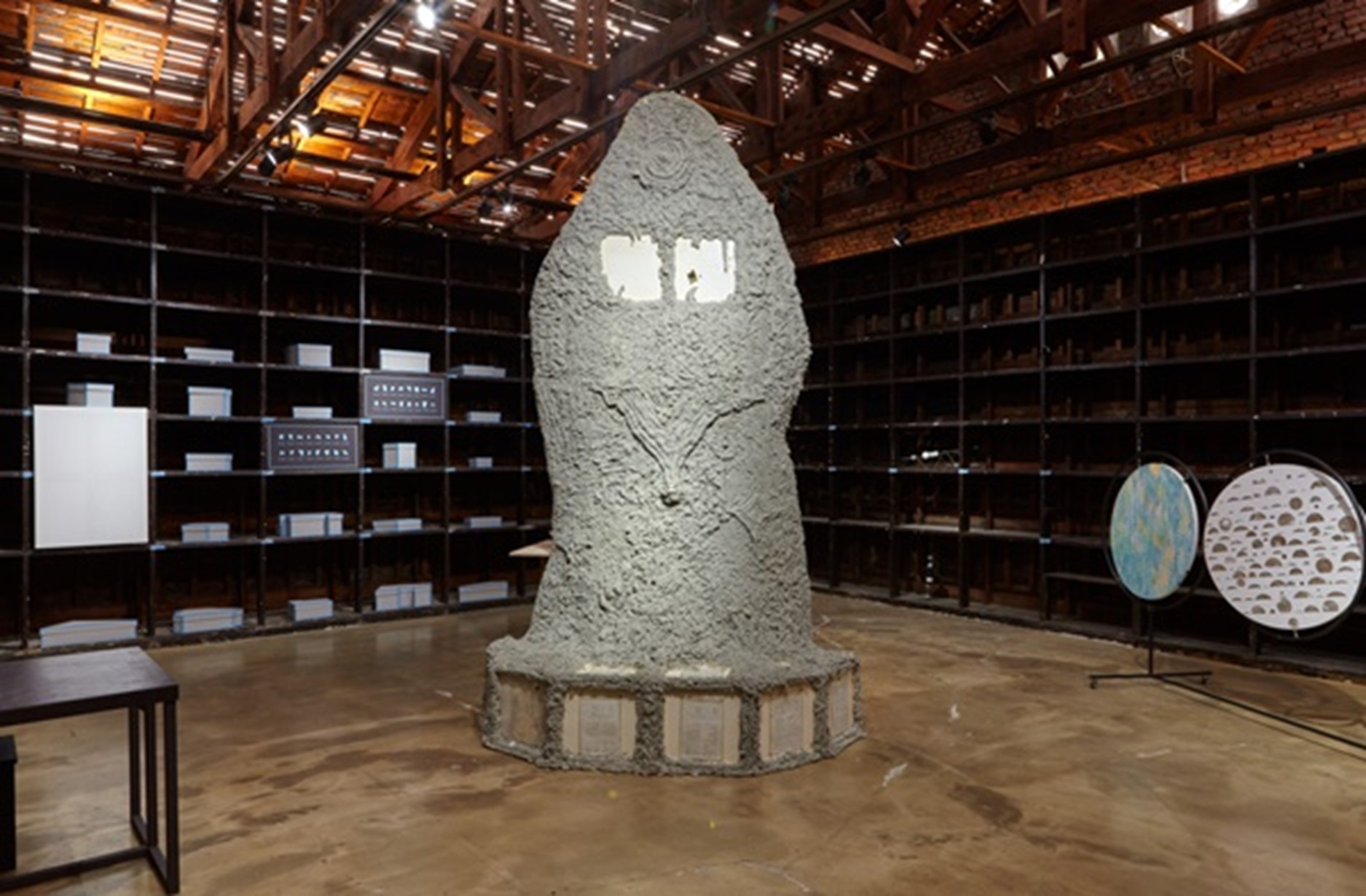
Landscape’ series visually evokes this plural concept of time. The sculptural
works presented in this exhibition, occupying space in winding rather than
linear directions and ultimately forming a shape with no beginning or end, seem
to arise from this same reasoning.
The artist has persistently explored ways of archiving childhood
memories. Her method involves simultaneously preserving and deleting memory.
She burns or cuts books she has read, overlays her own writing with other
images, slices them apart, dismantles and recombines them into new forms and
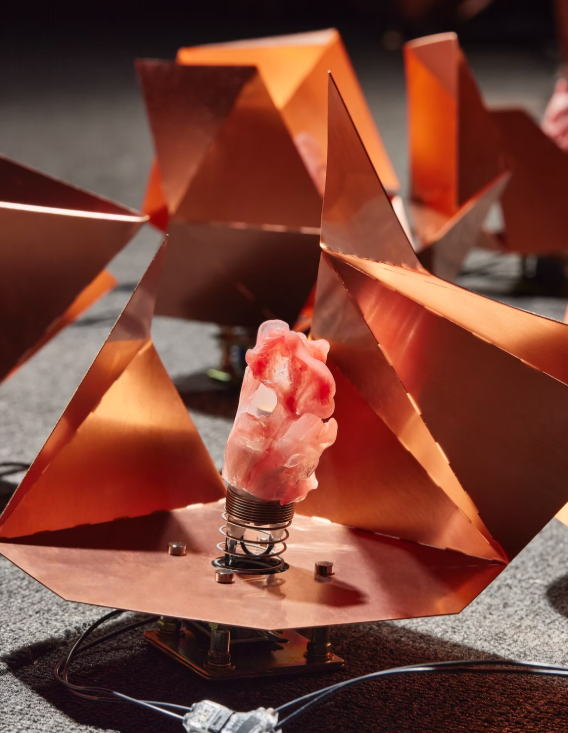
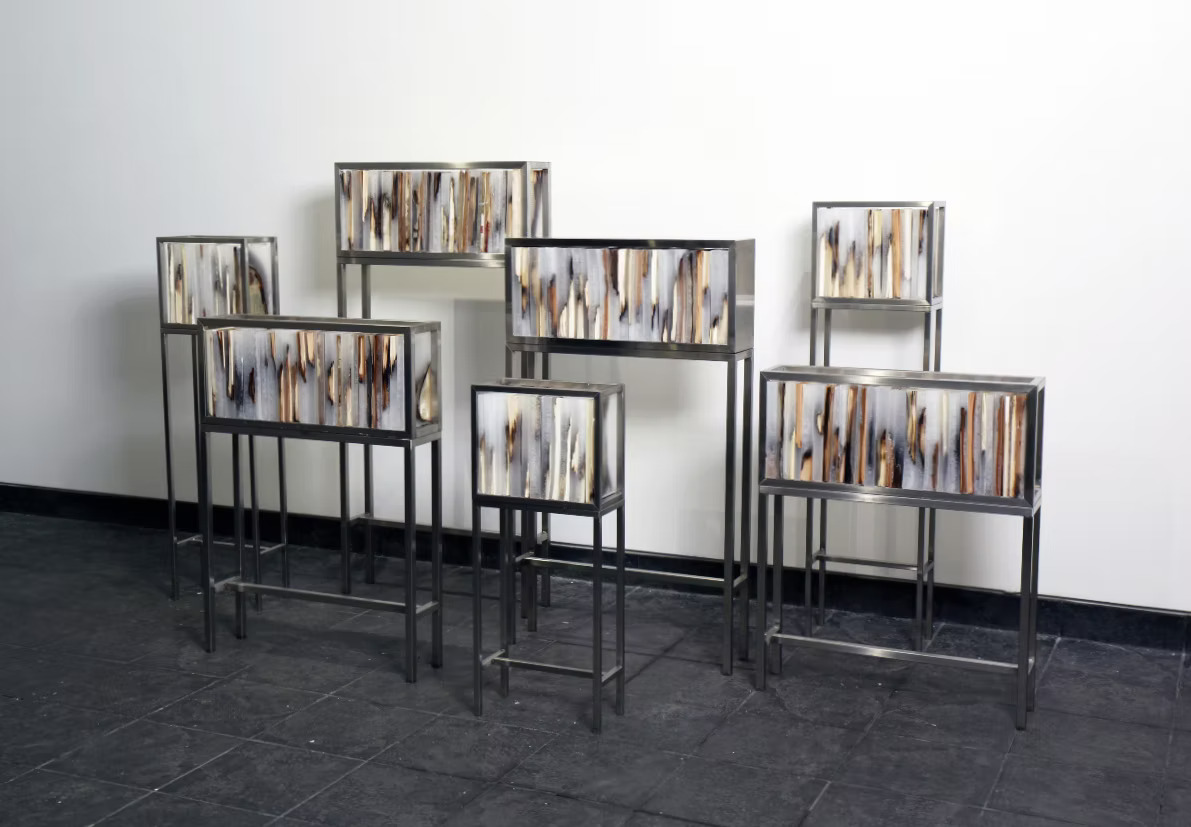
materials—mixing ash from burned books with beeswax to form masses, cutting
pages into circular shapes and stacking them like towers. In the resulting
works, the original disappears, leaving only traces of memory. Her memories or
narratives are thus formally embalmed.
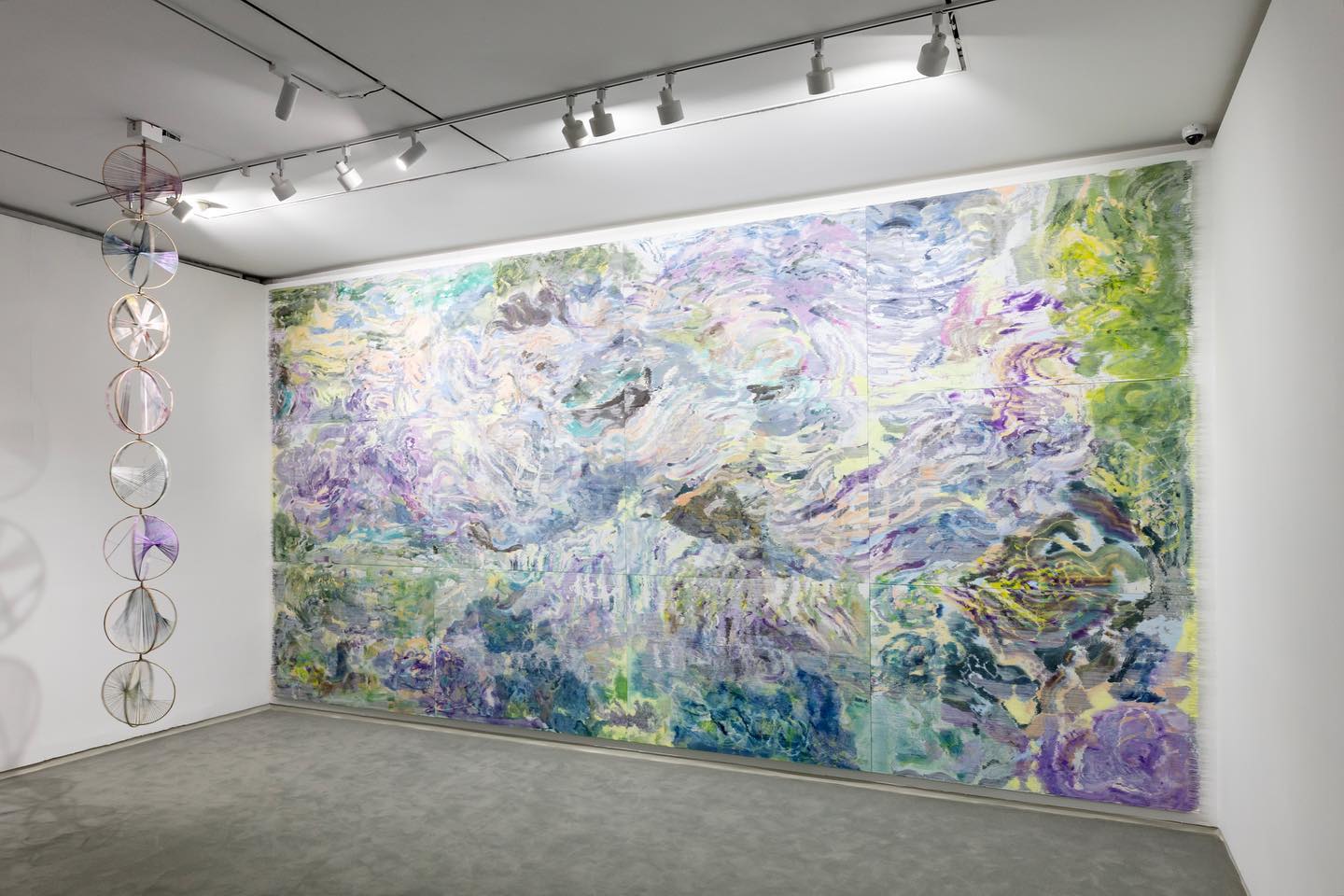
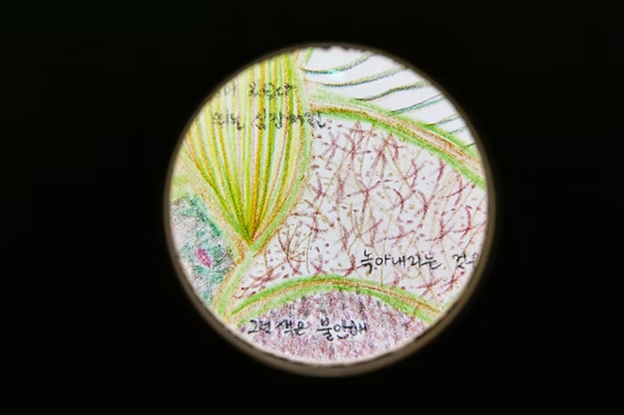
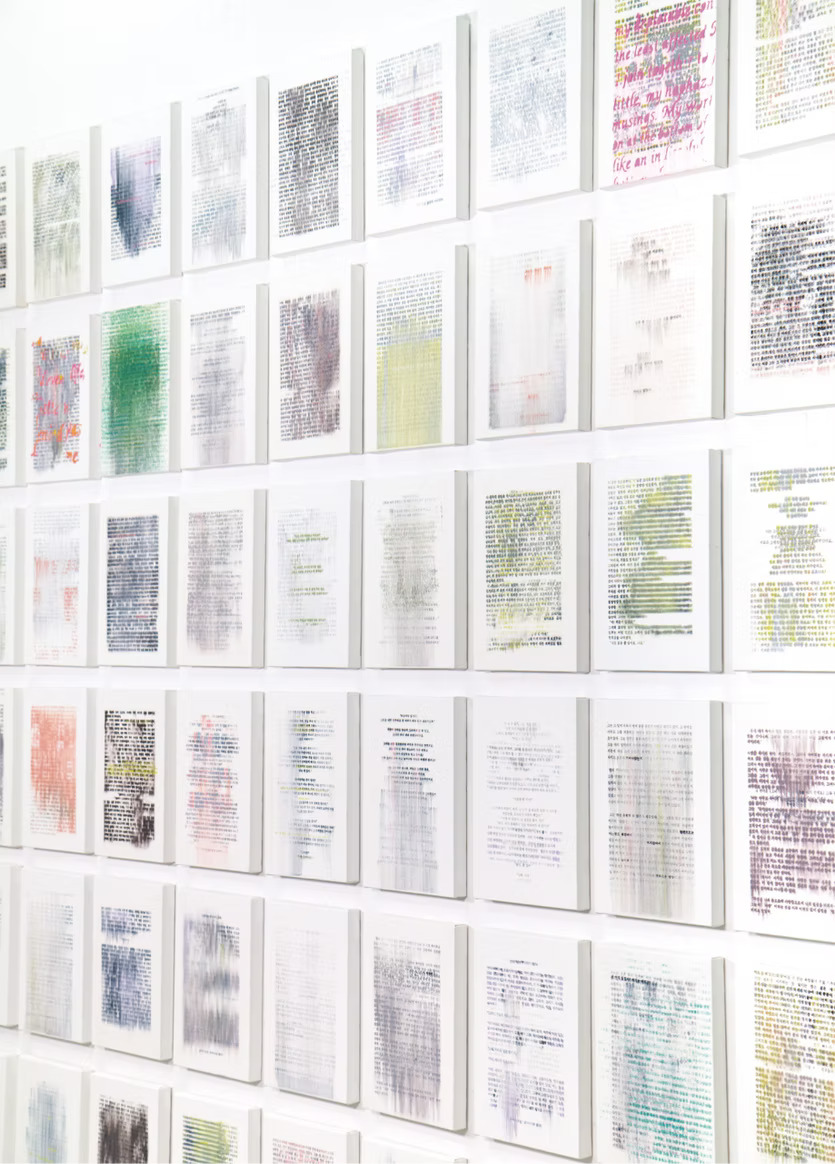
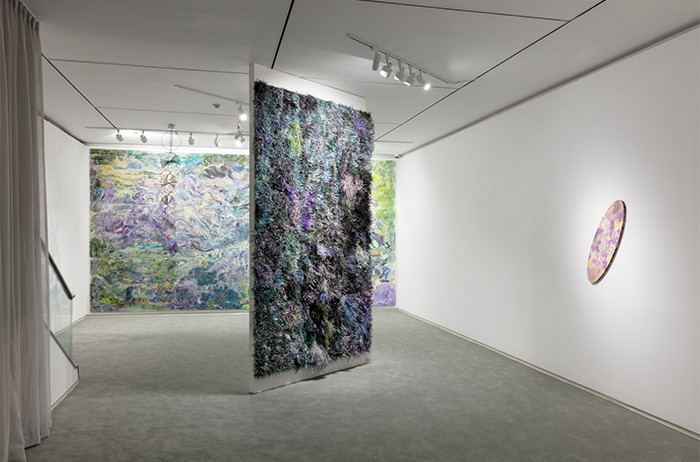
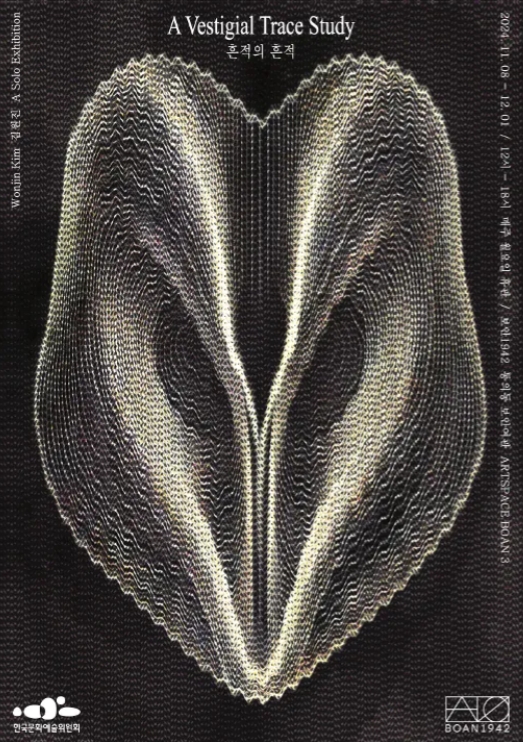
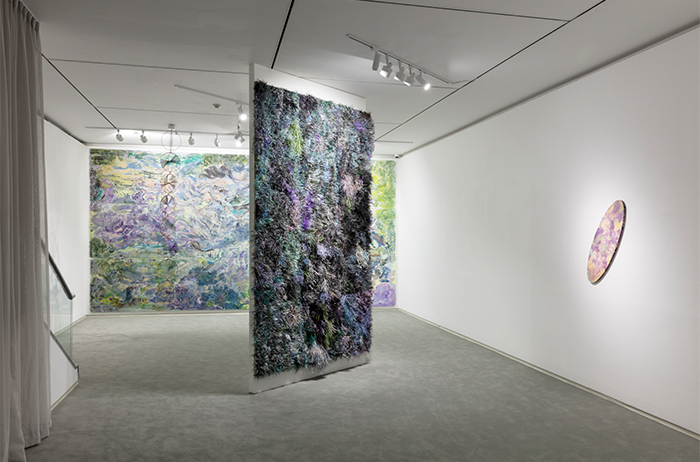
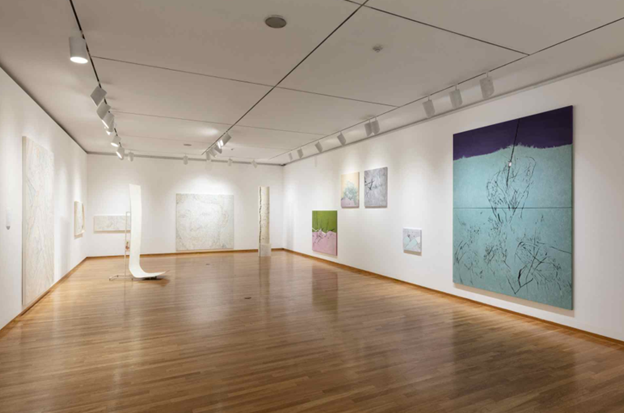
Examining her flat works more closely, the first step in evoking
the past involves coloring paper or filling it with specific text. These
surfaces contain daily experiences she sought to record, along with colors and
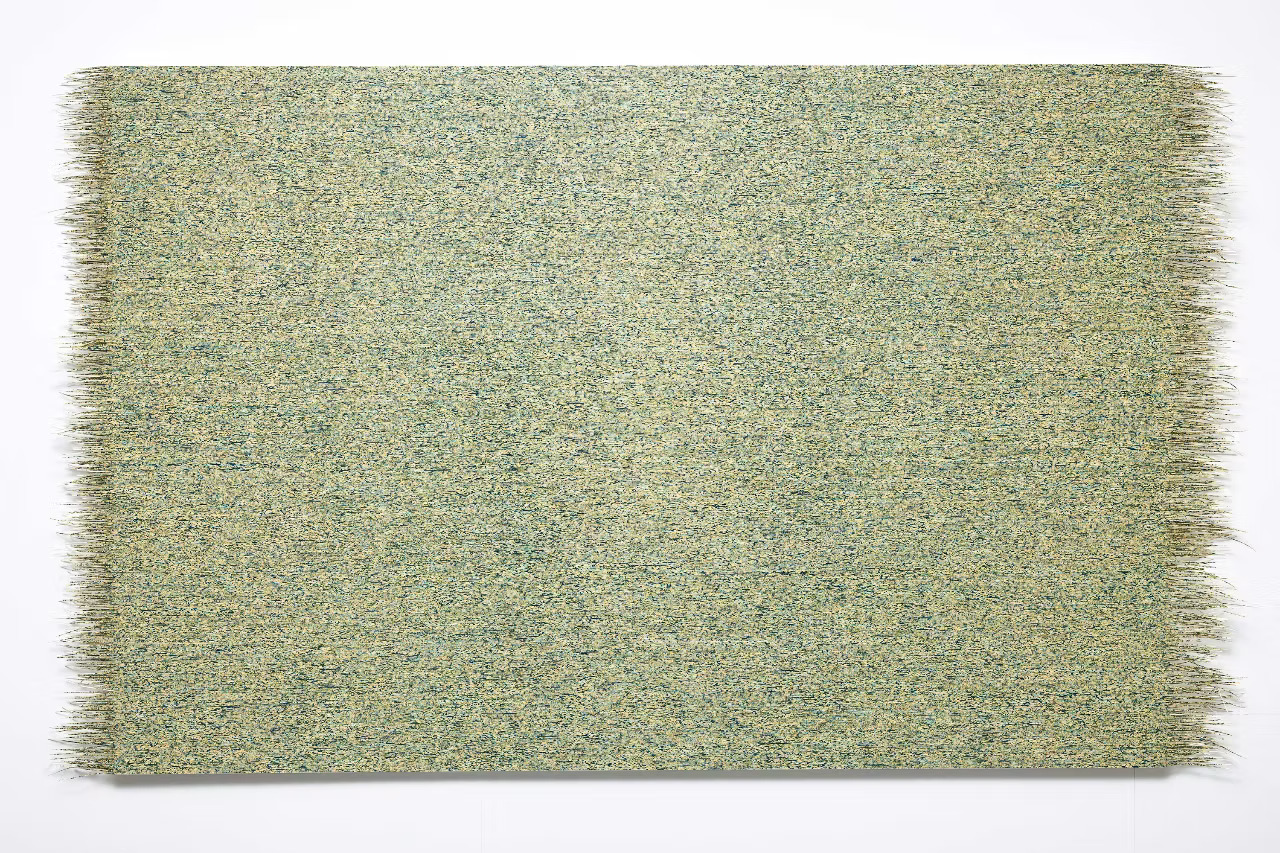
forms reflecting personal taste. Next, the completed surface is sliced
vertically into thin strips. The fragments are slightly shifted and reattached,
transforming the image into patterns in which the original cannot be recognized
or only faintly sensed, producing perceptual shifts into other sensorial
realms. This phenomenon arises from intentional errors generated through
physical fissures and connections created in the cutting and reassembling
process. This method has solidified as her distinctive flat-work style,
employing diverse color fields and patterns.
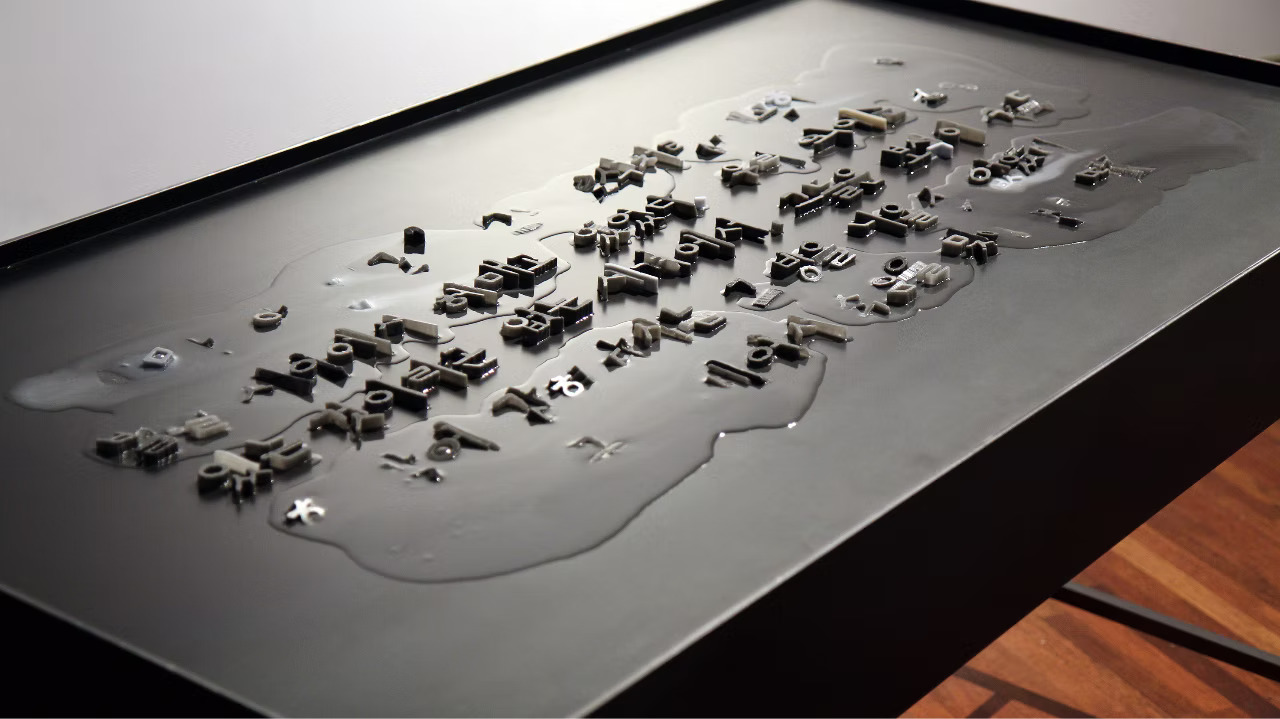
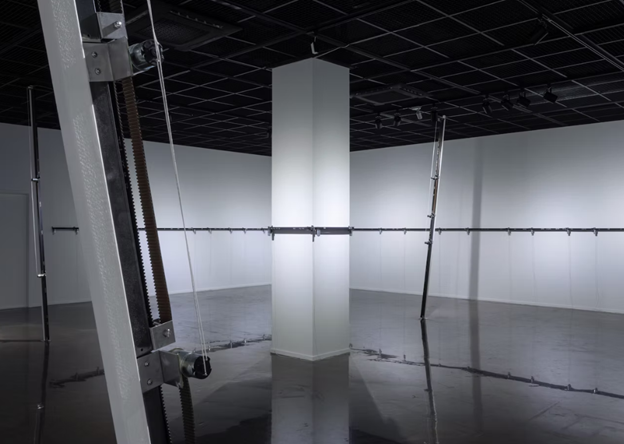
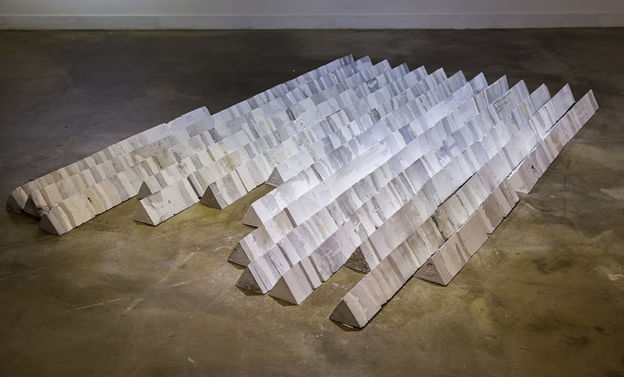
To create sculptural works, she hollows out books and stacks them
into tower-like or band-like forms. At this stage, the physical structure
occupying space embodies accumulated time. In some exhibitions, these
structures appear as temporary phenomena that collapse; in others, their
embalmed sculptural quality is emphasized. In every case, each sheet forming
them is imbued with temporality. Whether once personal or publicly accessible
printed matter, after passing through Wonjin Kim’s hands and time, the original
content is erased and replaced with another temporality and content, becoming a
large constructed form at another stage.
The methodologies realized across her flat, sculptural, and
installation works have become her formal language. She appears to expand
beyond her own subjective, individual memory and concept of time, extending
toward others’ time and a more generalized language. This shift is evident in
her gathering of information from unspecified others. In her 2019 exhibition,
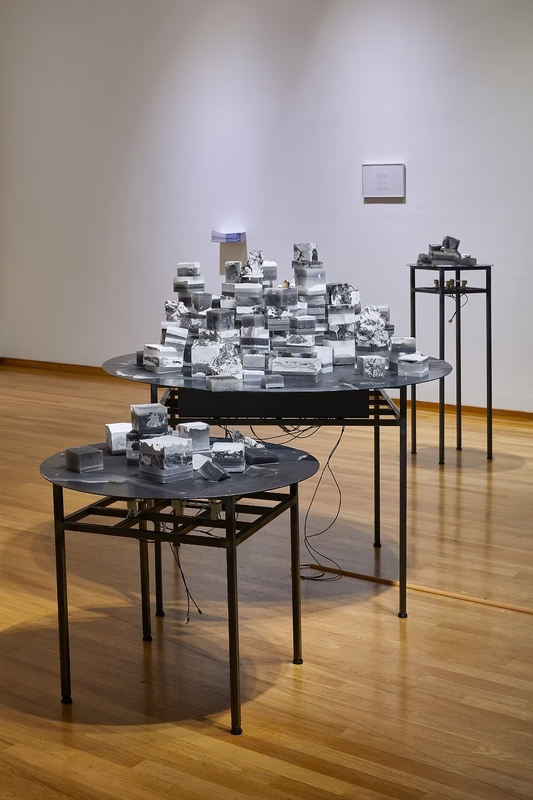
sculptural works were created from randomly collected magazines. Images and
textual information bearing specific meanings were cut into circular shapes,
forming an aggregation of fragments as formal elements.
Stacked and assembled
into a structure encircling space, they recorded traces of absolute time
consumed. With the original narratives gone, the accumulated layers of time
leave behind “strata”—traces of death of what once existed, as reflected in the
title. The surface of these masses or images, retaining only the trace of
existence, holds multiple possibilities. Rather than seeking what the image
intends to say, viewers are invited to project their own stories. For this
bidirectional response to function, the physical environment surrounding the
work, the traces suggesting temporal flow, and the autonomy of thought
generated by concealed or transformed text all circulate around these works, along
with narratives created by slight errors.