Omitted and bleached time gradually recovers through rhythmic
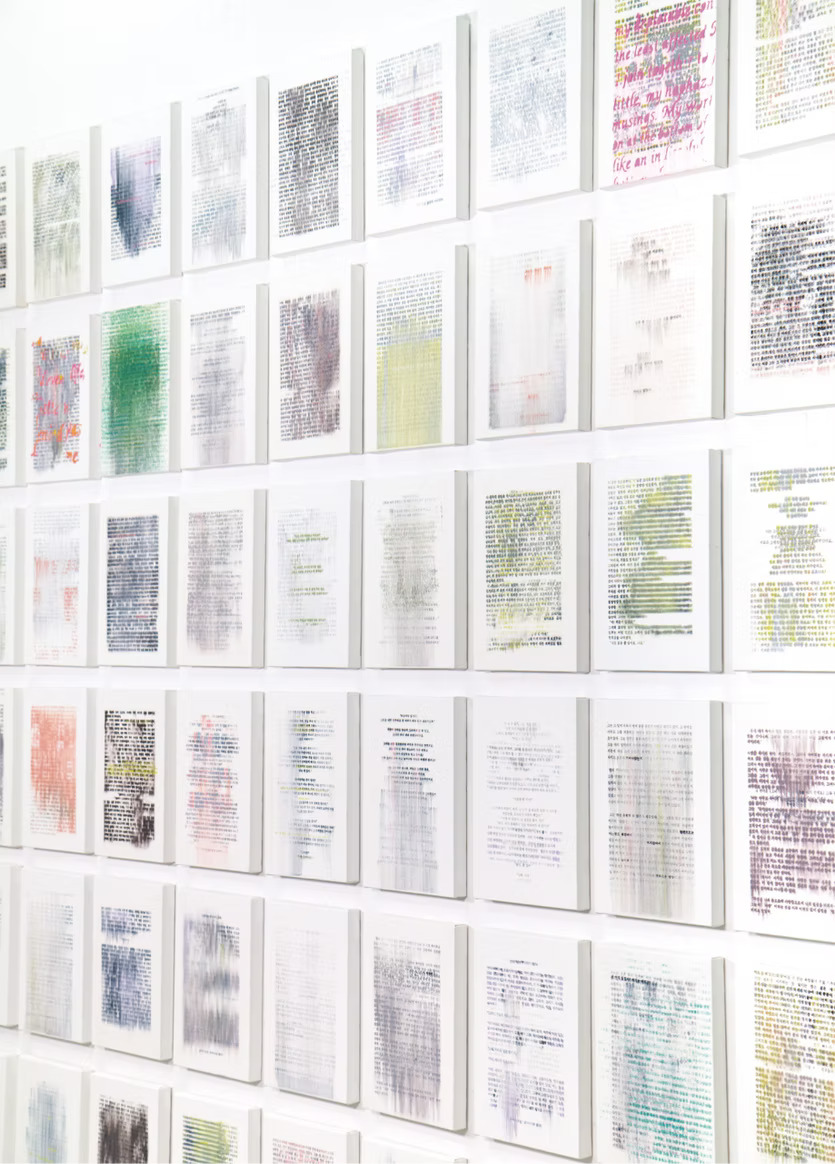
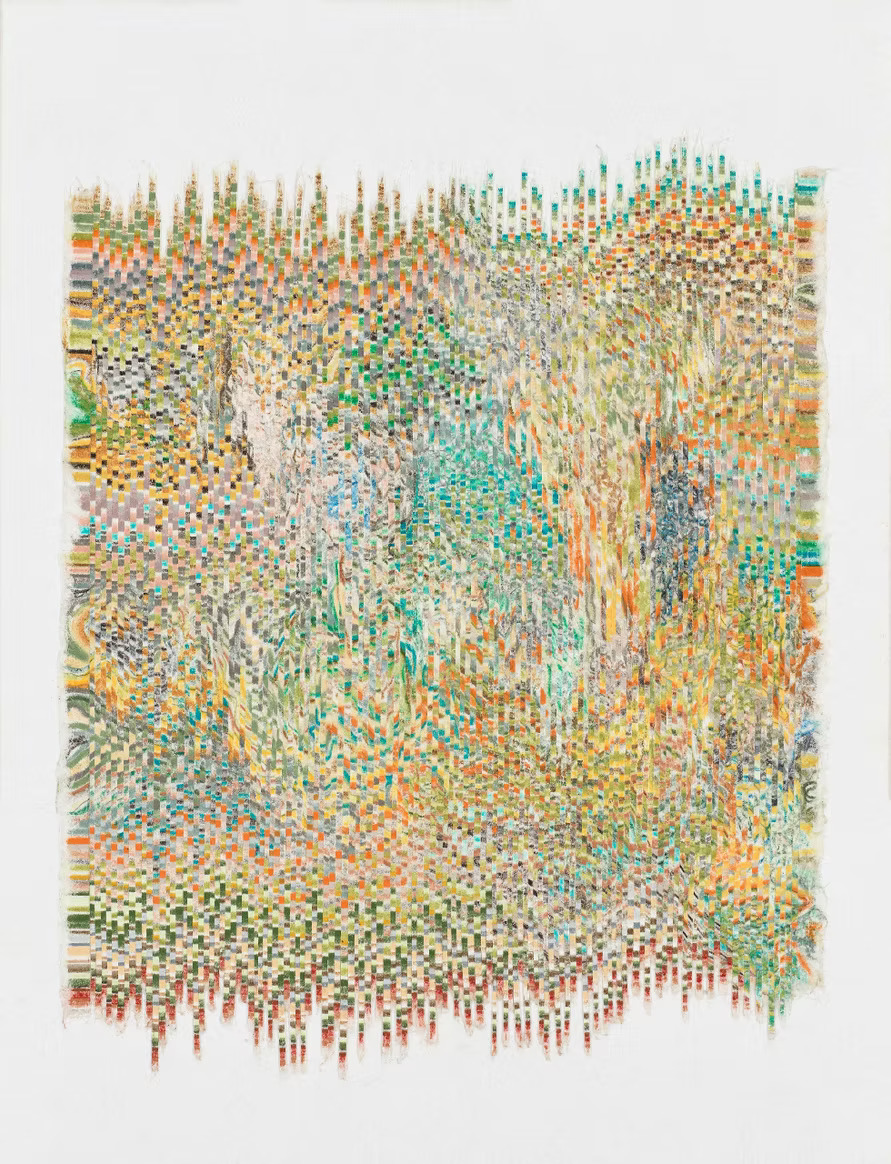
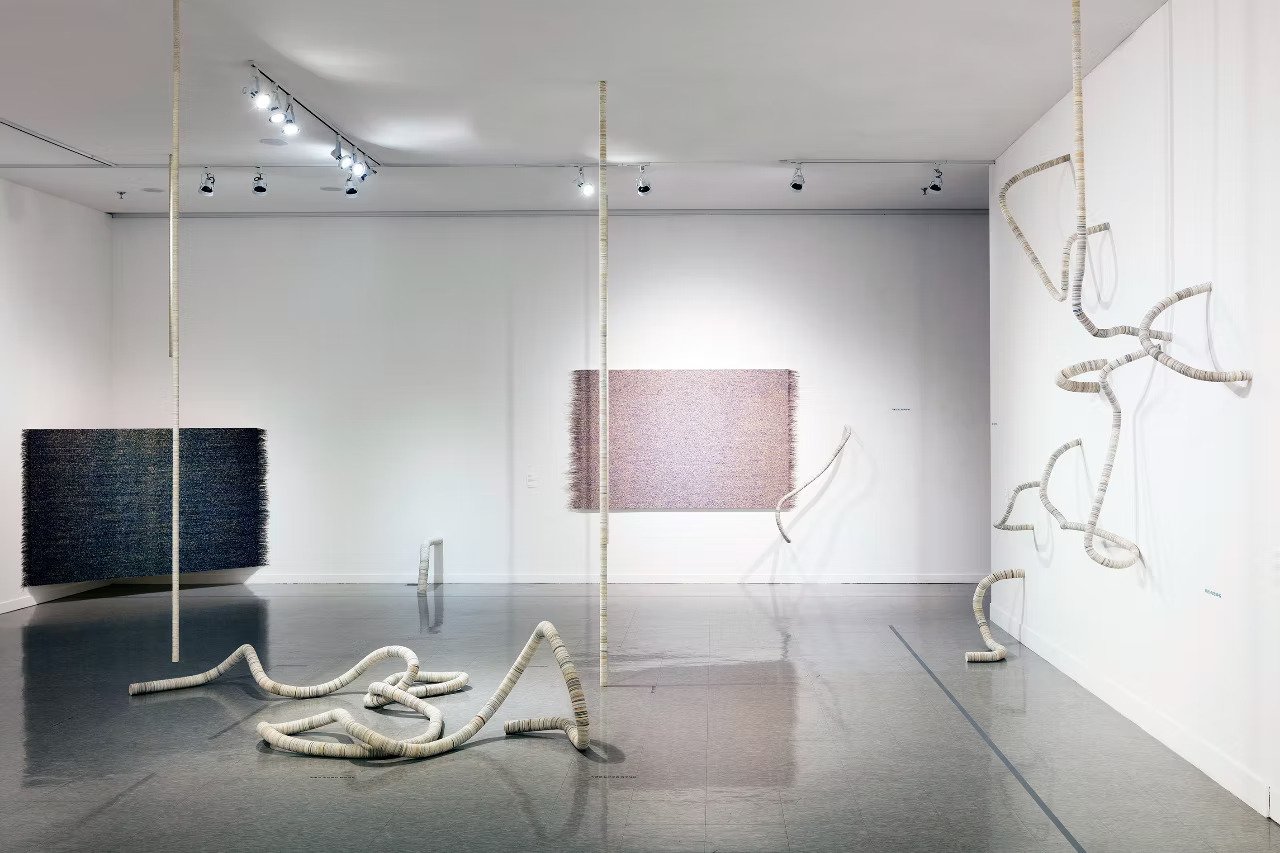
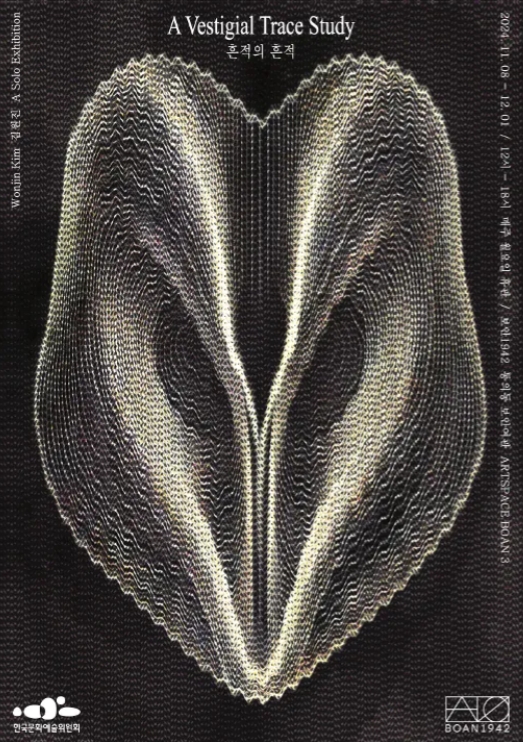
repetition. Since 2017, Wonjin Kim’s ‘Chronicle of the Moment’ series has
unfolded linear memory into nonlinear forms. Hidden backstage, endlessly
cutting and pasting colored paper, the artist’s body has (re)produced time as
something that unquestionably exists, even when unseen. Yet just now, an event
has occurred here.
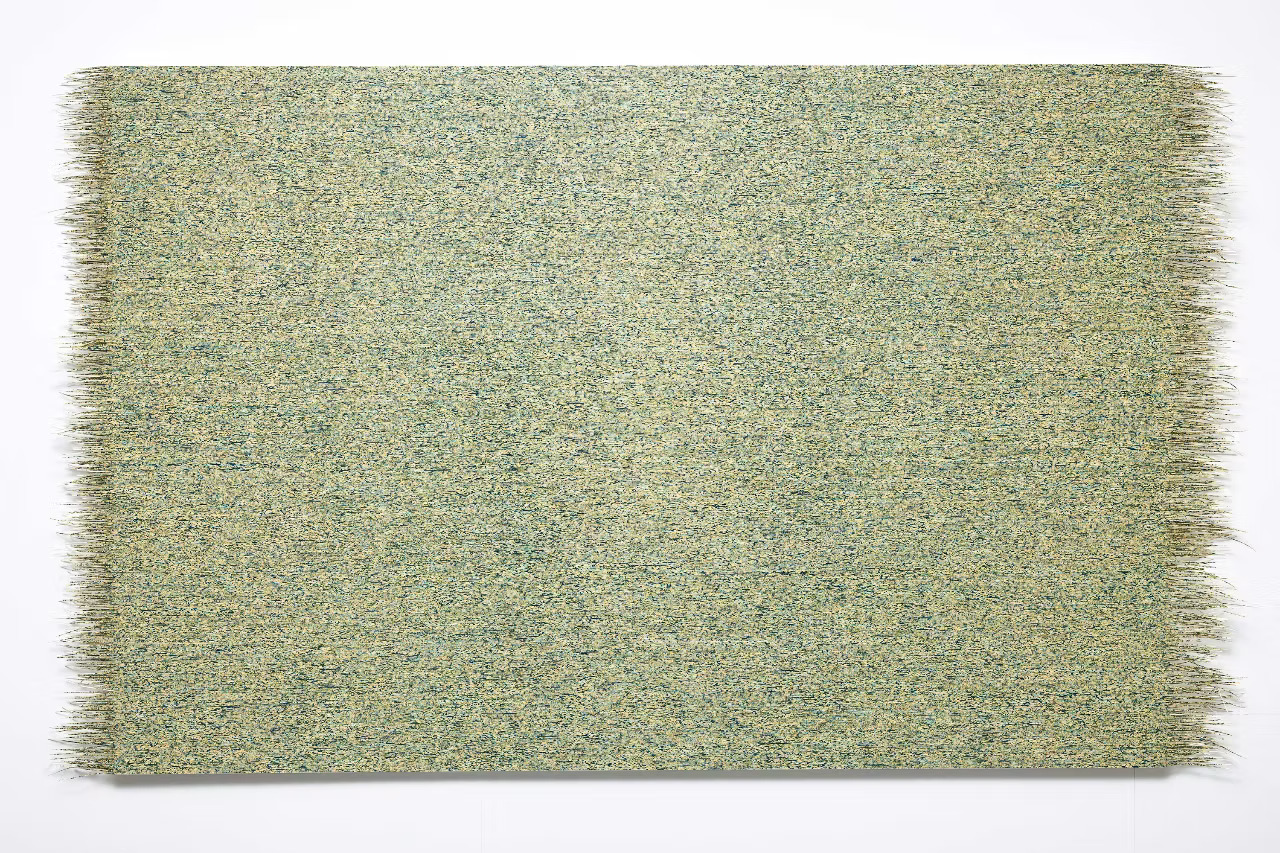
Countless cut lines have passed by, and in accordance with a
permeated rhythm, they have become planes. At the same time, their trembling
has also been witnessed. Color fragments scattered at a constant width rush from
the wall without pause, aligning side by side. At this point, what gesture
can—or must—the viewer perform? As an answer to this question, several verbs
are proposed.
Looking back, turning around
Despite infinite possibilities, one certainty remains: after
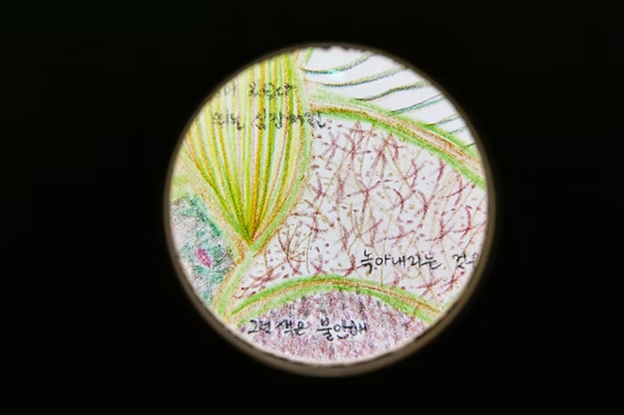
passing through the small Holes and descending the
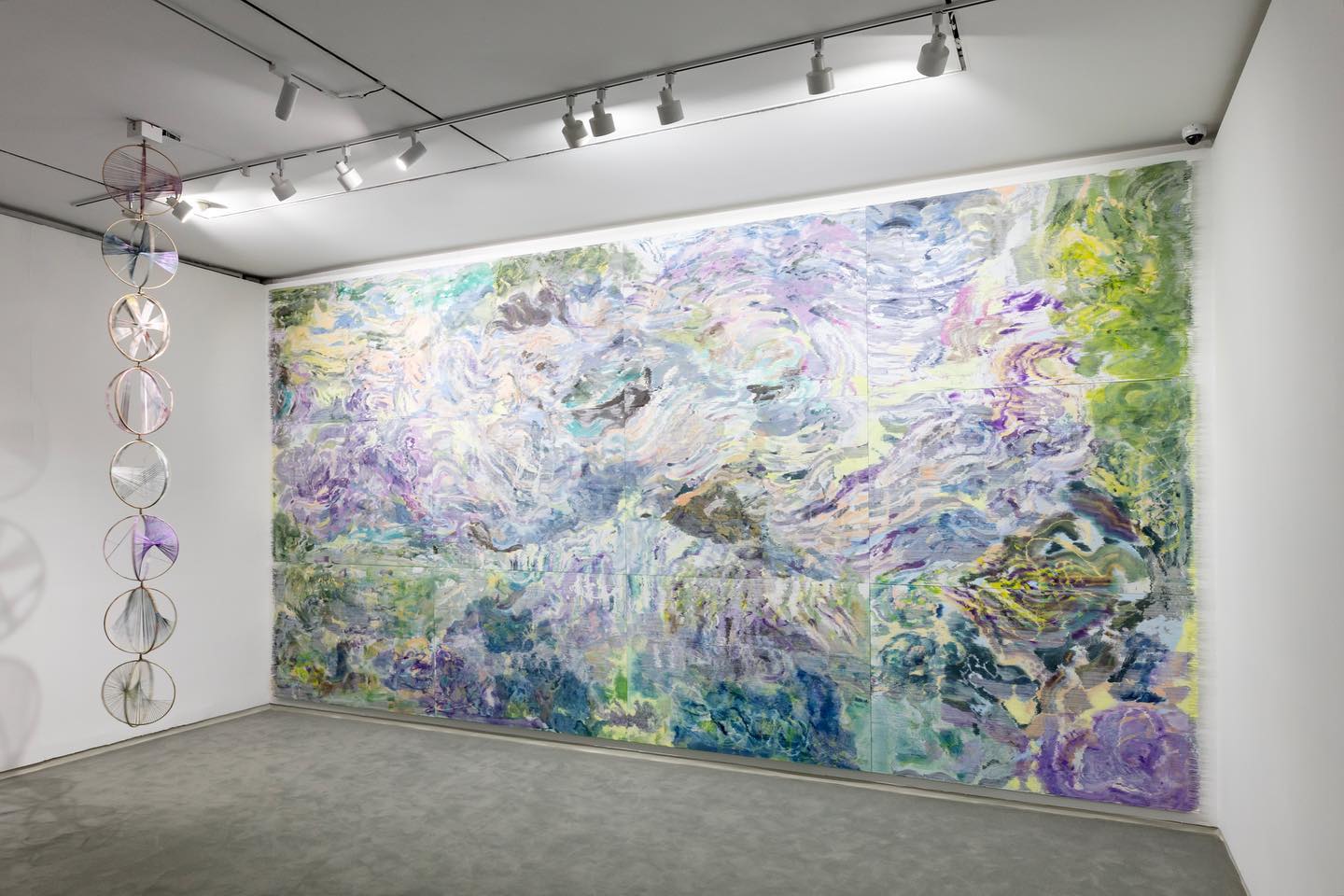
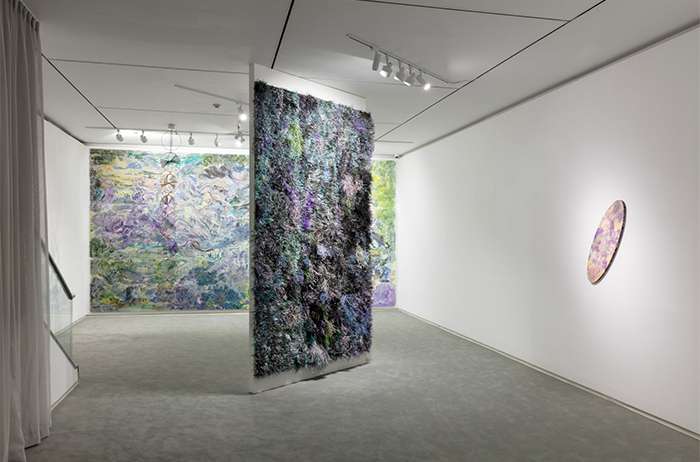
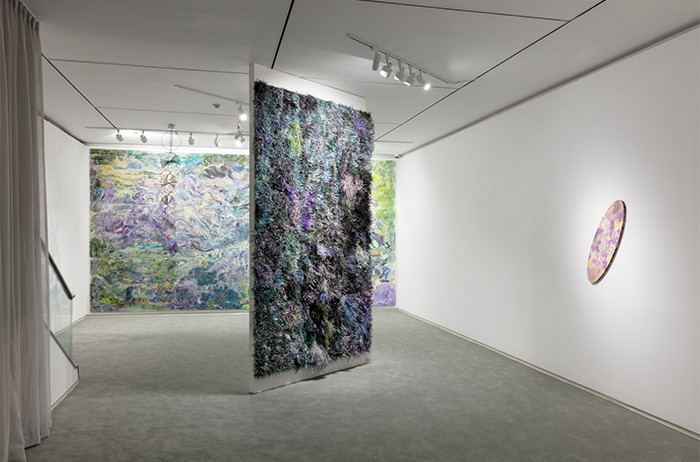
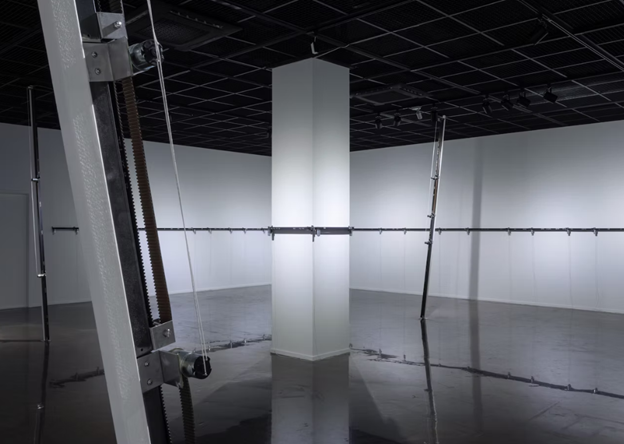
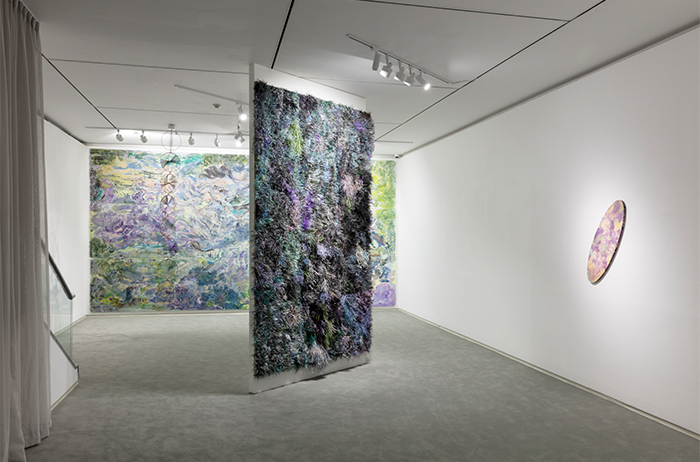
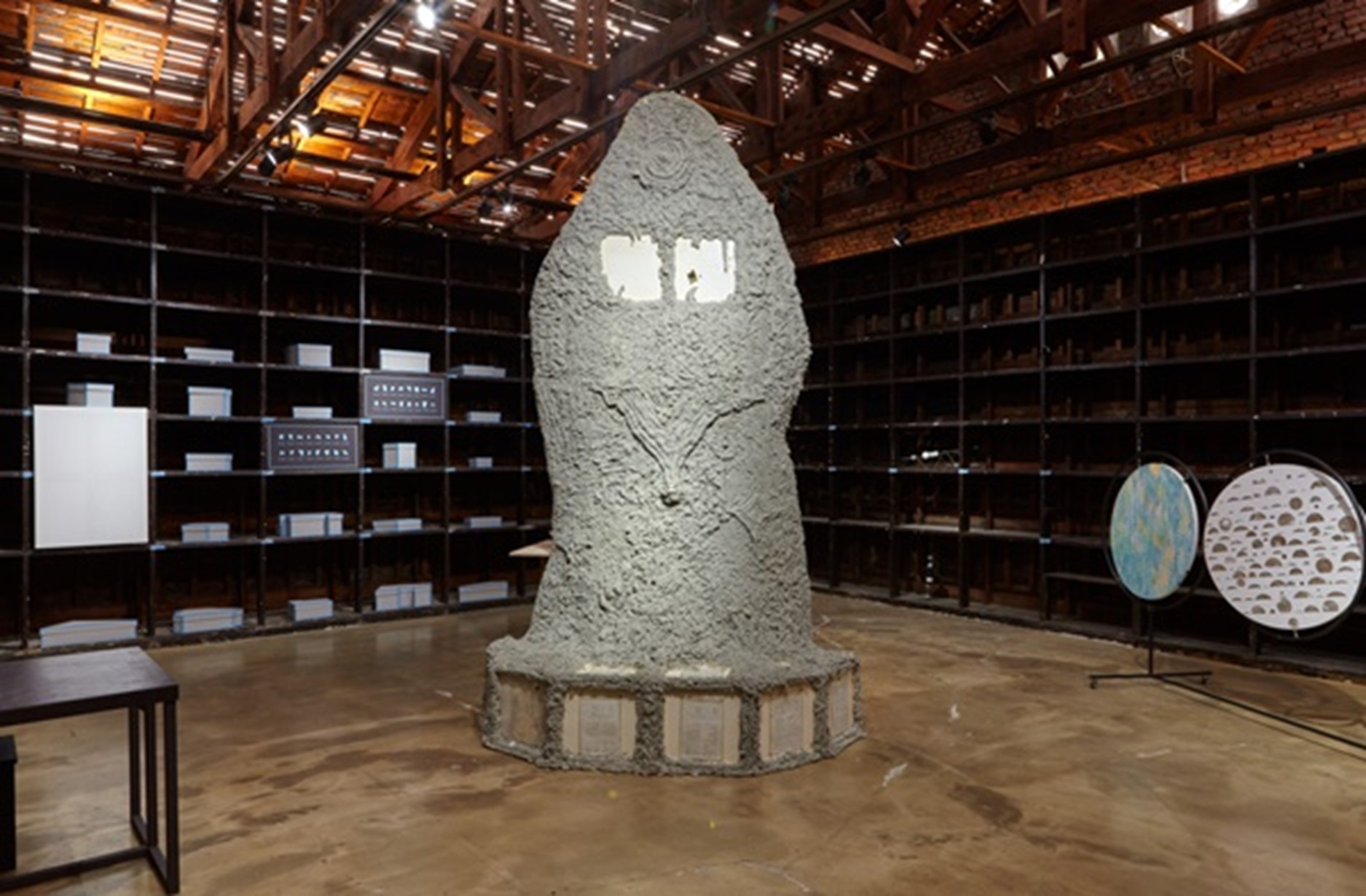
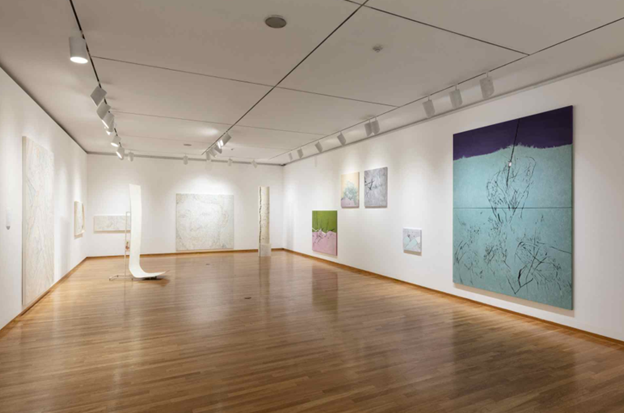
stairs, one must repeatedly look back at the exhibition hall. In 《Dancing in the Thin Air》(Kumho
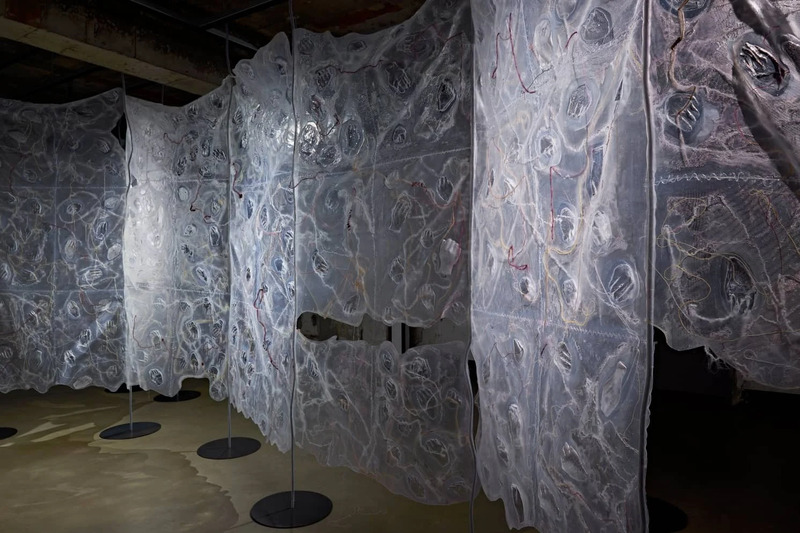
Museum of Art, 2023), multiple faces of temporality coexist. Surfaces in which
the distinction between front and back dissolves; the front and rear of walls
in La Boîte Noire and The Fog Bow;
a rotating circle in The Hole; and a drawing spinning
rapidly around a ballerina’s foot in 0 o’ clock – my night, your
day. Fragmented yet igniting throughout the space, these surfaces
cannot be fully encountered without turning back.
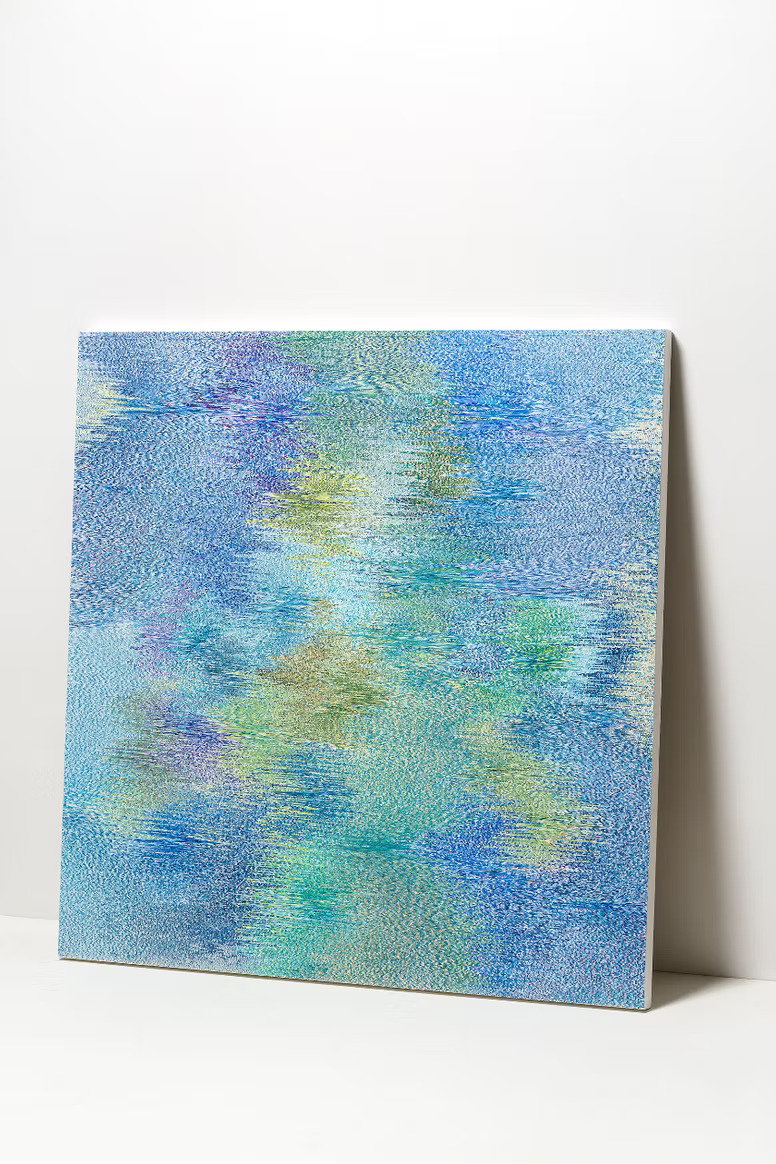
In this exhibition, newly introduced pigments such as gouache
recall the presence of the paper’s reverse side, which had not been apparent in
earlier works primarily using colored pencils. Unlike previous works, the
seeped traces remain clearly visible on the back, merging with the front to
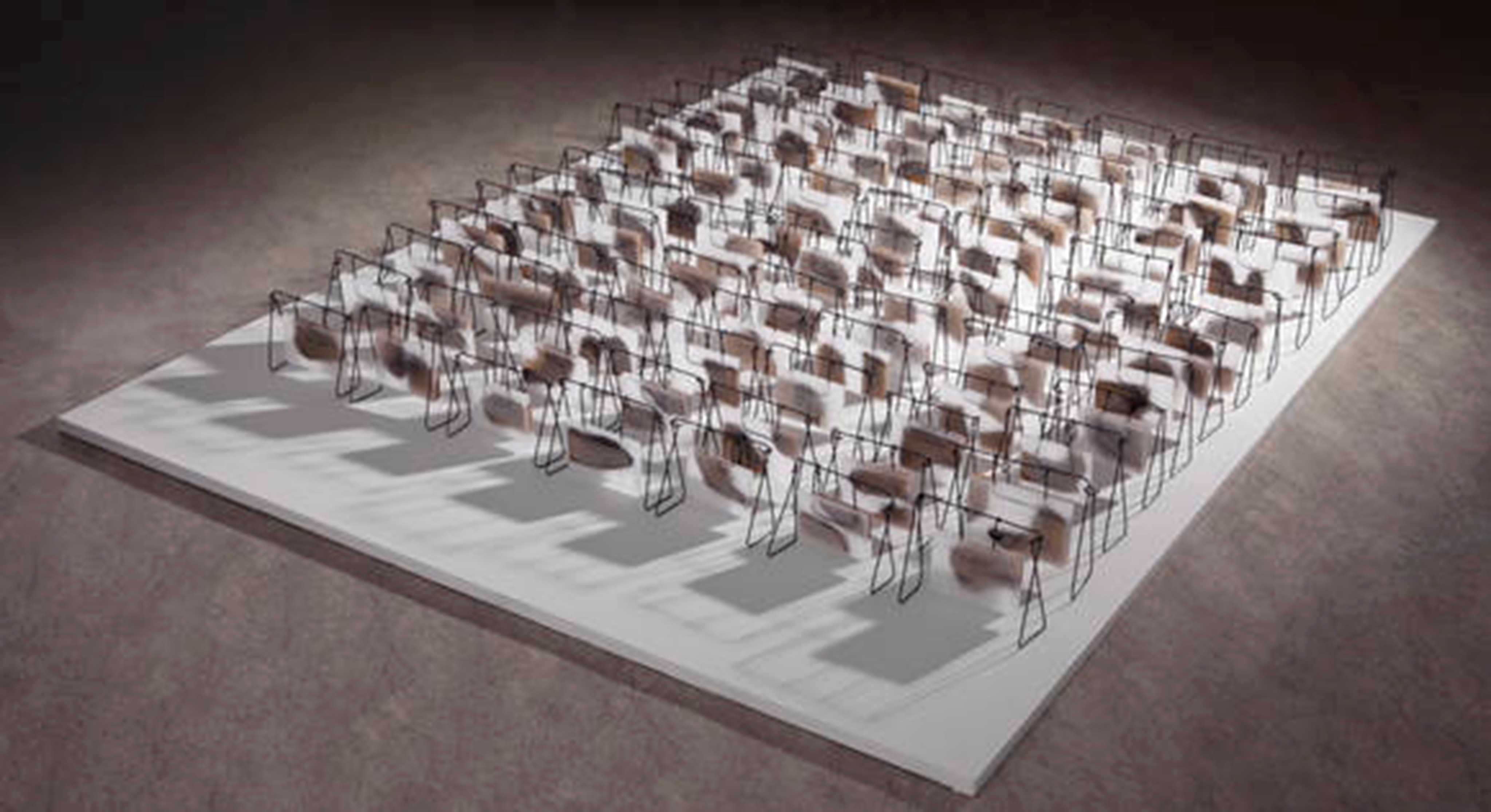
form a single scene. Meanwhile, the physical structure Eye to Eye,
previously attempted in 《Tu m’》(SeMA Storage, 2022), reappears to construct a controlled microcosm.
When sight and time intersect through a moving device, the front and back of
the drawing cross as well, projecting frames that cannot be grasped in a single
glance. Thus, the pirouette whose rotation escaped notice while your gaze
briefly shifted continues to accumulate like dust. This is why one must
constantly look behind and turn back.
Crossing, overtaking
Borrowing Erika Fischer-Lichte’s words, the artist integrates
performativity into space by both referring to herself and constructing a
specific reality within the exhibition. As in previous works, Kim’s
repetition—positioned somewhere between manual labor and intentional
act—becomes a dramatic dance that cannot be interpreted without passing through
the concept of “performance.” Her work relies deeply on a labor-intensive
attitude that only reveals its afterimage upon close proximity. Therefore, one
must cross the spectrum of reality she constructs and overtake the situation
filling our field of vision.
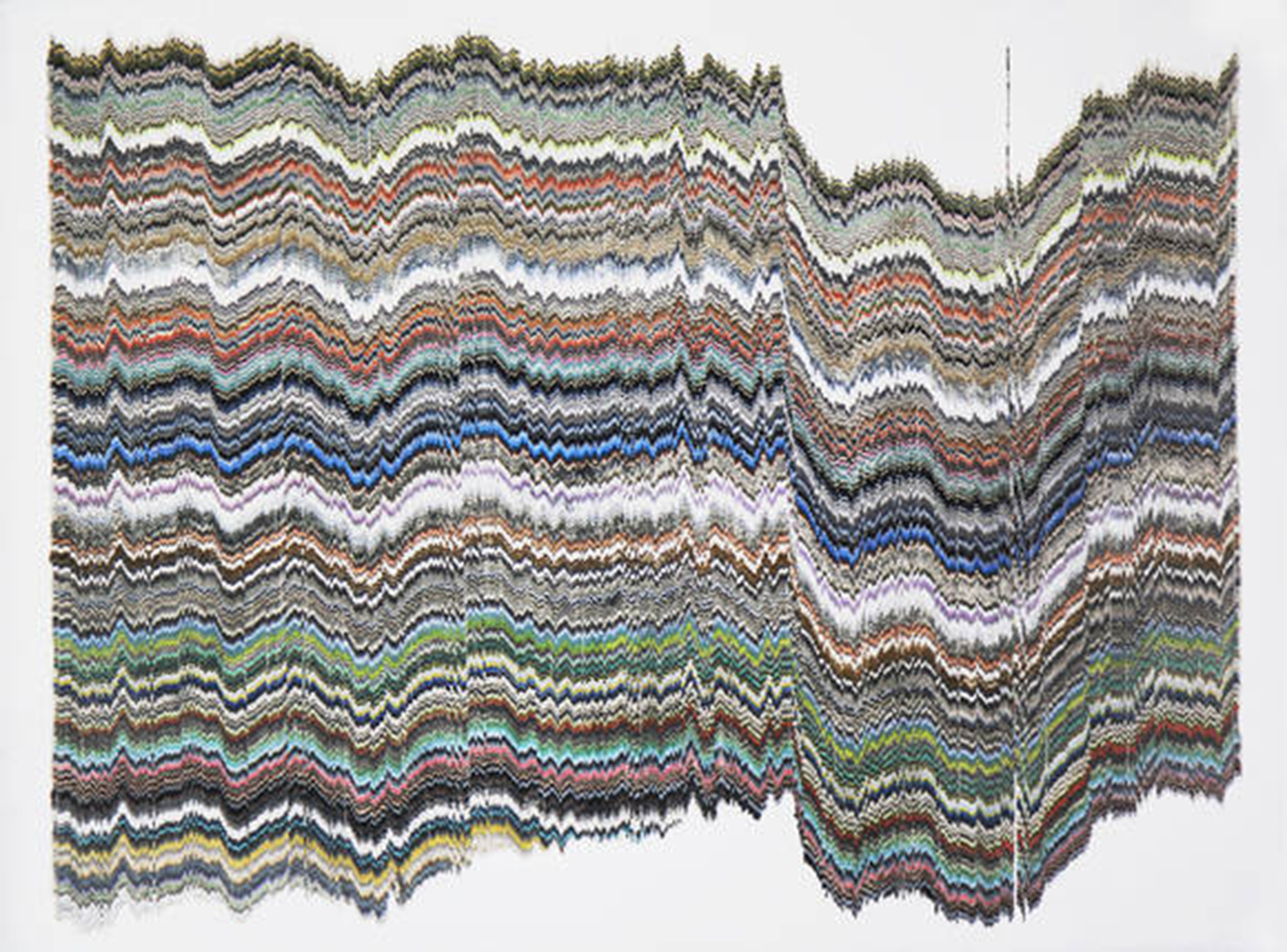
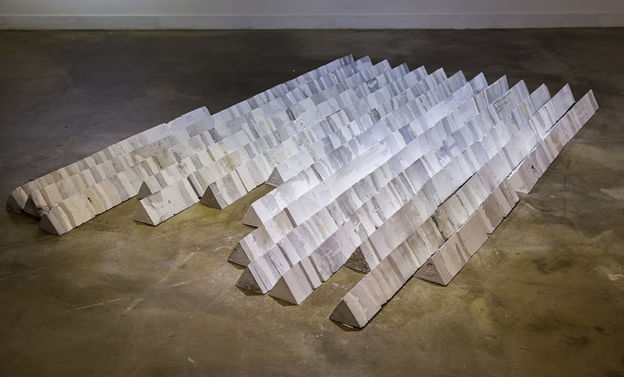
There is no prescribed order of arrangement or viewing. Only
accumulated time forms thick strata. The beginning and end of the narrative
remain unknown; yet at the moment when 1 millimeter reduces to 6 meters
in Dancing in the Thin Air, a new spatial sensibility
emerges. Fragments that once appeared useless in Dancing in the
Thin Air no longer leave merely fragile traces, but become
unavoidable edges that carve into the volume of space.
Drawing the map of time
The geographer Gerardus Mercator once described a map as something
that encompasses all things. Traditionally defined as a system of agreed
symbols conveying spatial information on a flat surface, a map can, from his
perspective, also contain time, which harbors infinite narrative structures.
Detached from its conventional function, the time reinterpreted by Wonjin Kim
projects multiple facets of the world in three-dimensional and personal forms.
The viewer experiences the presence that lingers in the “here and
now” and its rhythm, completing the map devised by the artist by looking back,
crossing, and overtaking. Thus emerges an irreplaceable map that embraces both
the hidden and the revealed, unbound to any singular place or moment.
Ultimately, Kim’s exhibition space transforms into a site accompanied by
repeatedly woven gazes, rather than being confined to the frame of a single
instant.
Footnotes
1) Here, the term “gesture” follows the discussion of Vilem
Flusser. “A gesture is a movement of the body or of a tool connected to the
body, for which no satisfactory causal explanation exists.” Vilem Flusser,
translated by Kyuchul Ahn, Gestures: An Essay in Phenomenology, Workroom
Press, 2018, p. 8.
2) Pirouette refers to a ballet movement in which a dancer stands
on one foot and spins rapidly.
3) Erika Fischer-Lichte, translated by Jeongsuk Kim, The
Aesthetics of Performativity, Munhakdongne Publishing Group, 2017, p. 479.
4) “Presence suddenly appears, granting rhythm (time) and
revealing a sense of existence … Presence is ‘here’ (not up there or far
away).” At this moment, the rhythmanalyst “focuses on temporality and the
relationships each moment forms within the whole.” Henri Lefebvre, translated
by Gihun Jung, Rhythmanalysis, Galmuri, 2013, pp. 96–149.