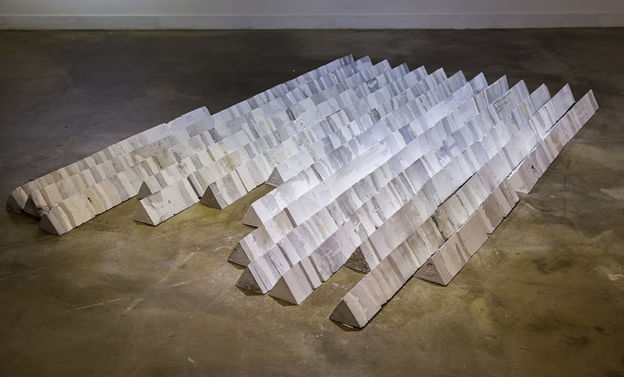
She gathers discarded books and collects texts requested from
colleagues and citizens. Yet this act of collection is merely a preparatory
stage for erasure. Sentences are removed, and the support becomes ash and
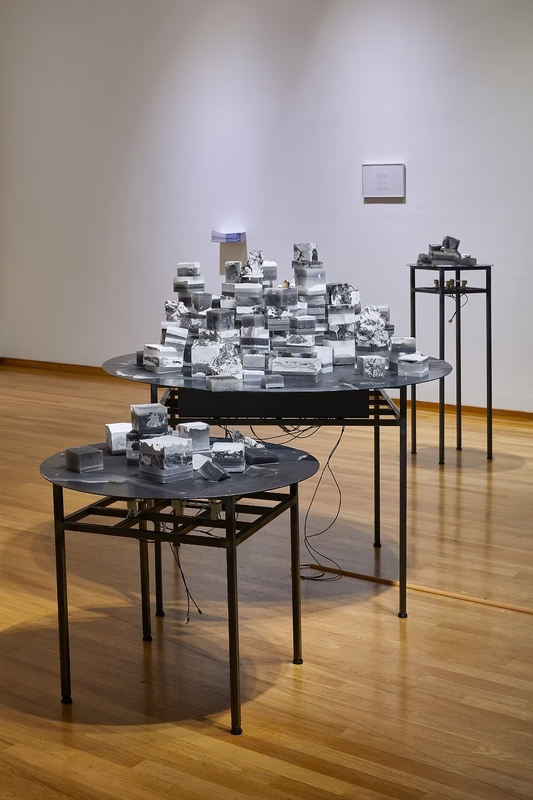
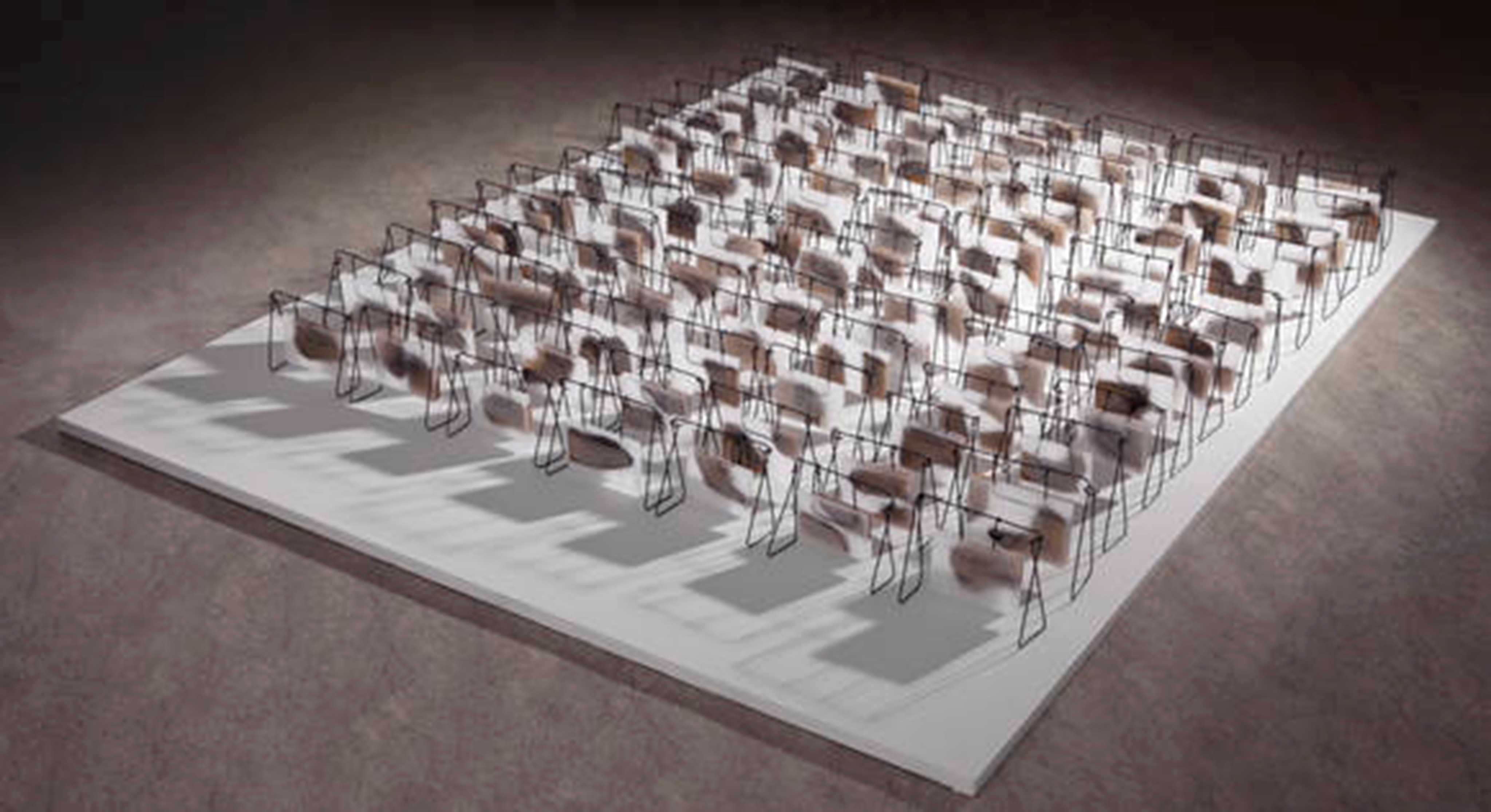
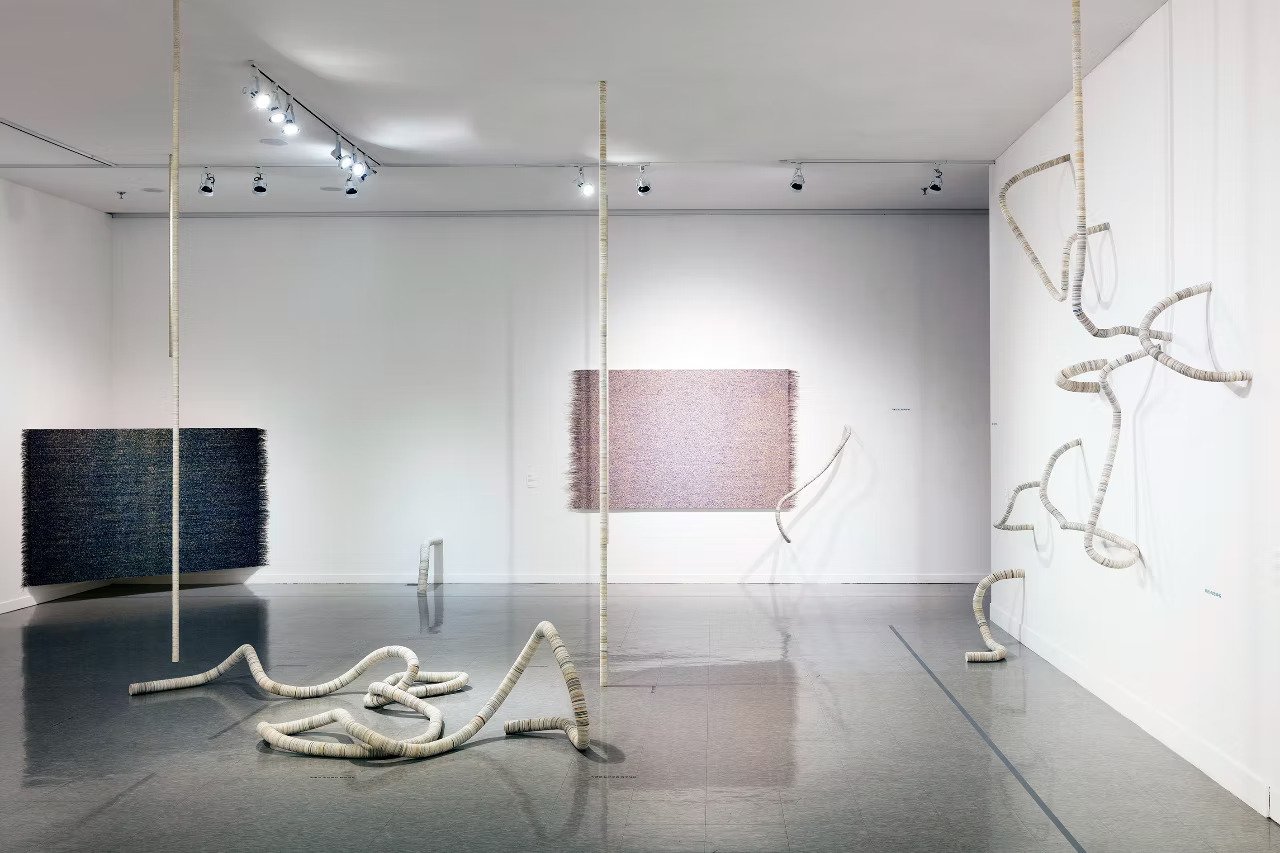
dough. Wonjin Kim burns books and pours paraffin into the emptied spaces to
cast them back into their pre-damaged forms in works such as Swings-drawing
project(2014) and Librarian-TIME MITE(2015),
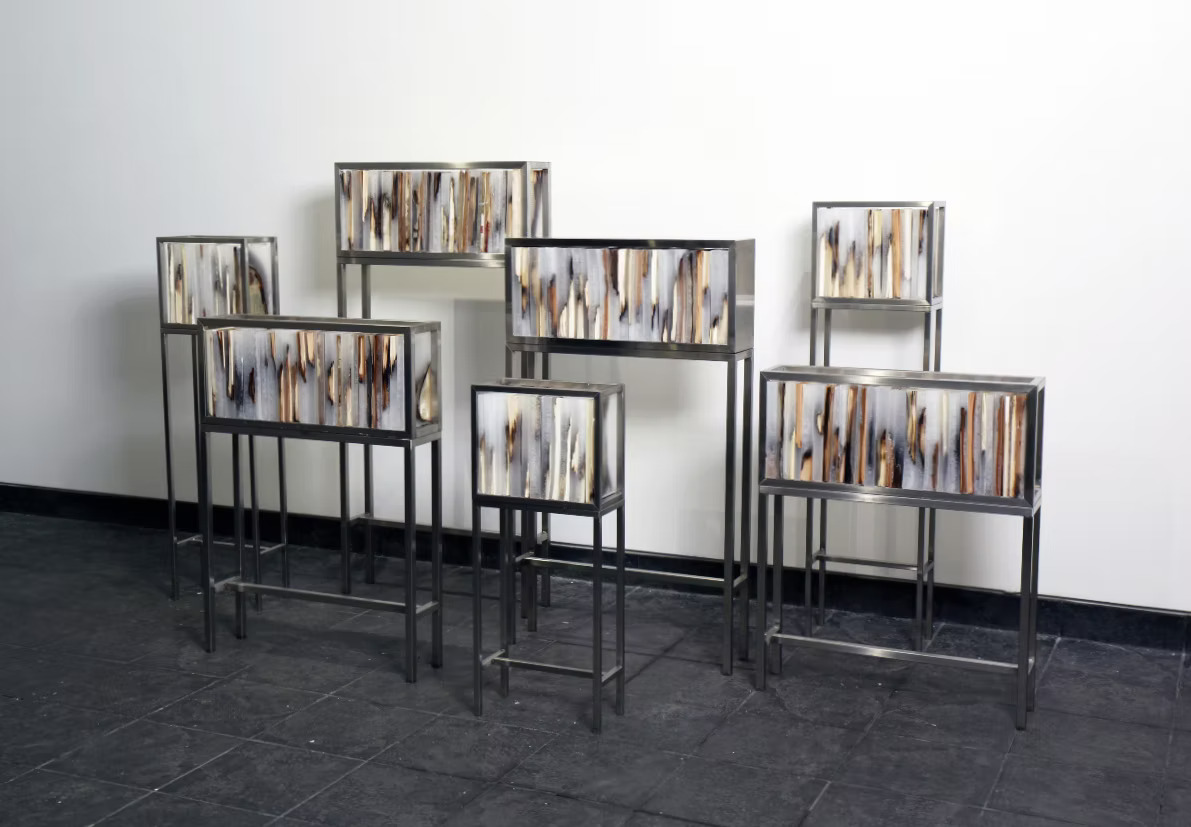
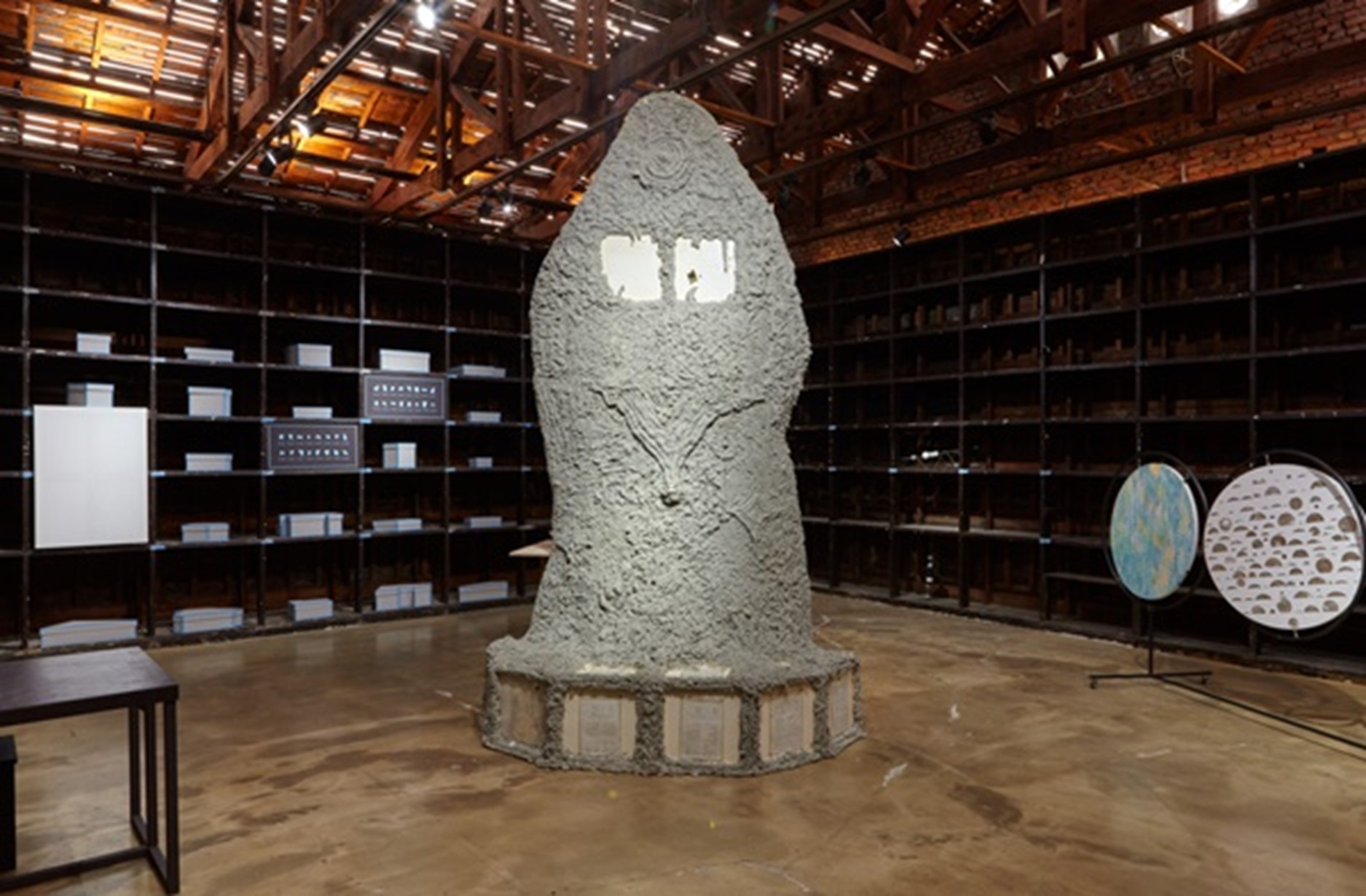
or completely incinerates them and mixes plaster and beeswax into the remaining
ash to produce objects in Squre for you(2018) and the
depth of distance(2017–2019). She has also pierced books and poured
plaster into them to create cylindrical objects in The Chronicles
of Today(2016–2018). The burned, melted, and cast results become
geological layers of hollowness. At times, she even melts down the objects she
has painstakingly produced.
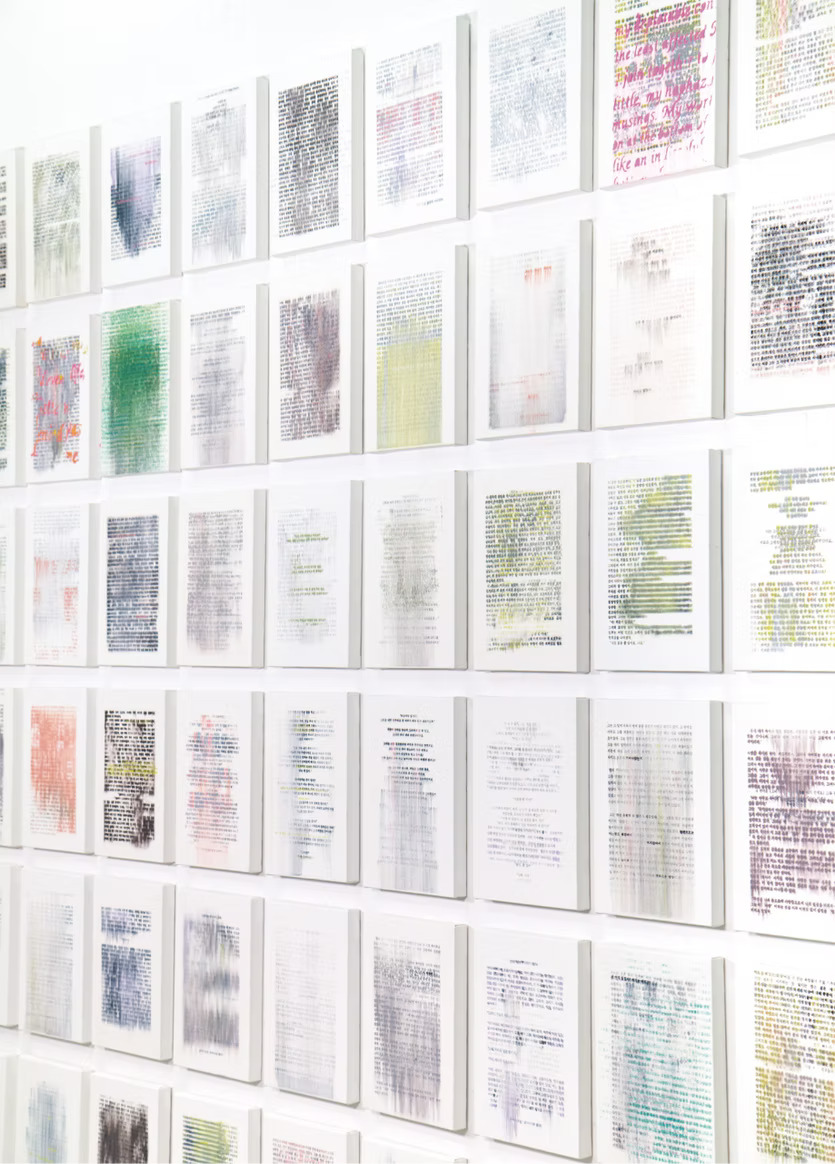
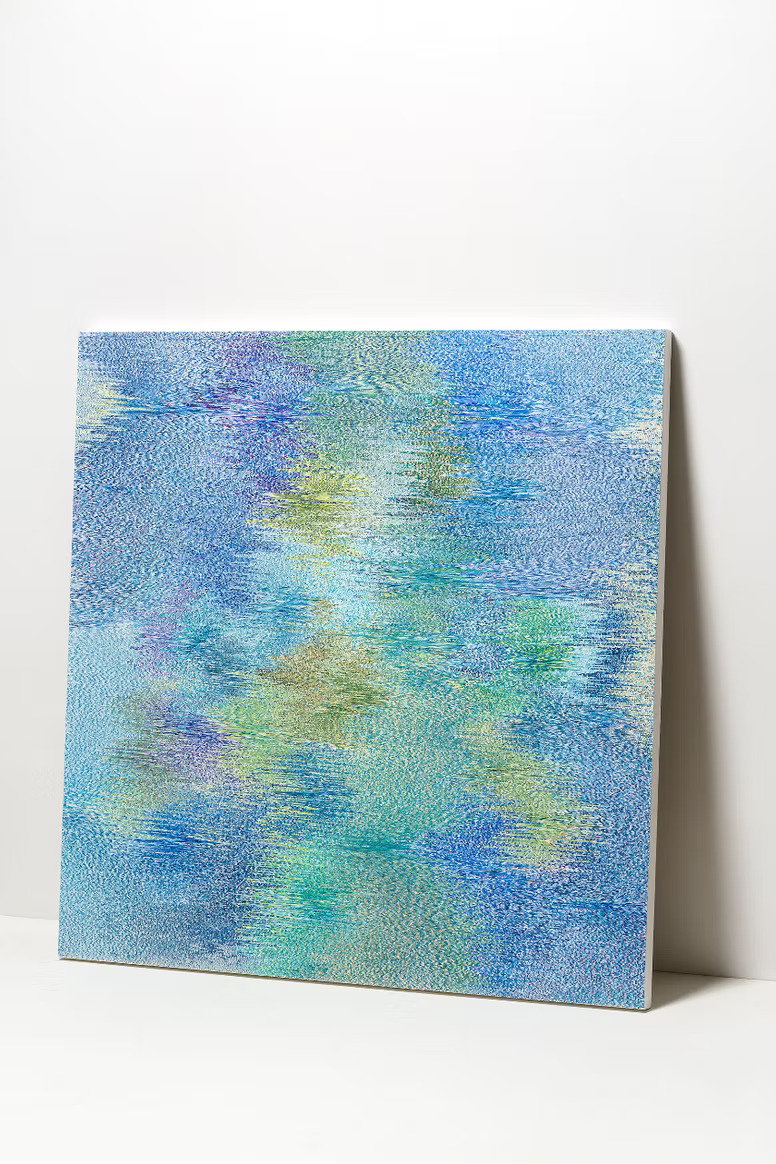
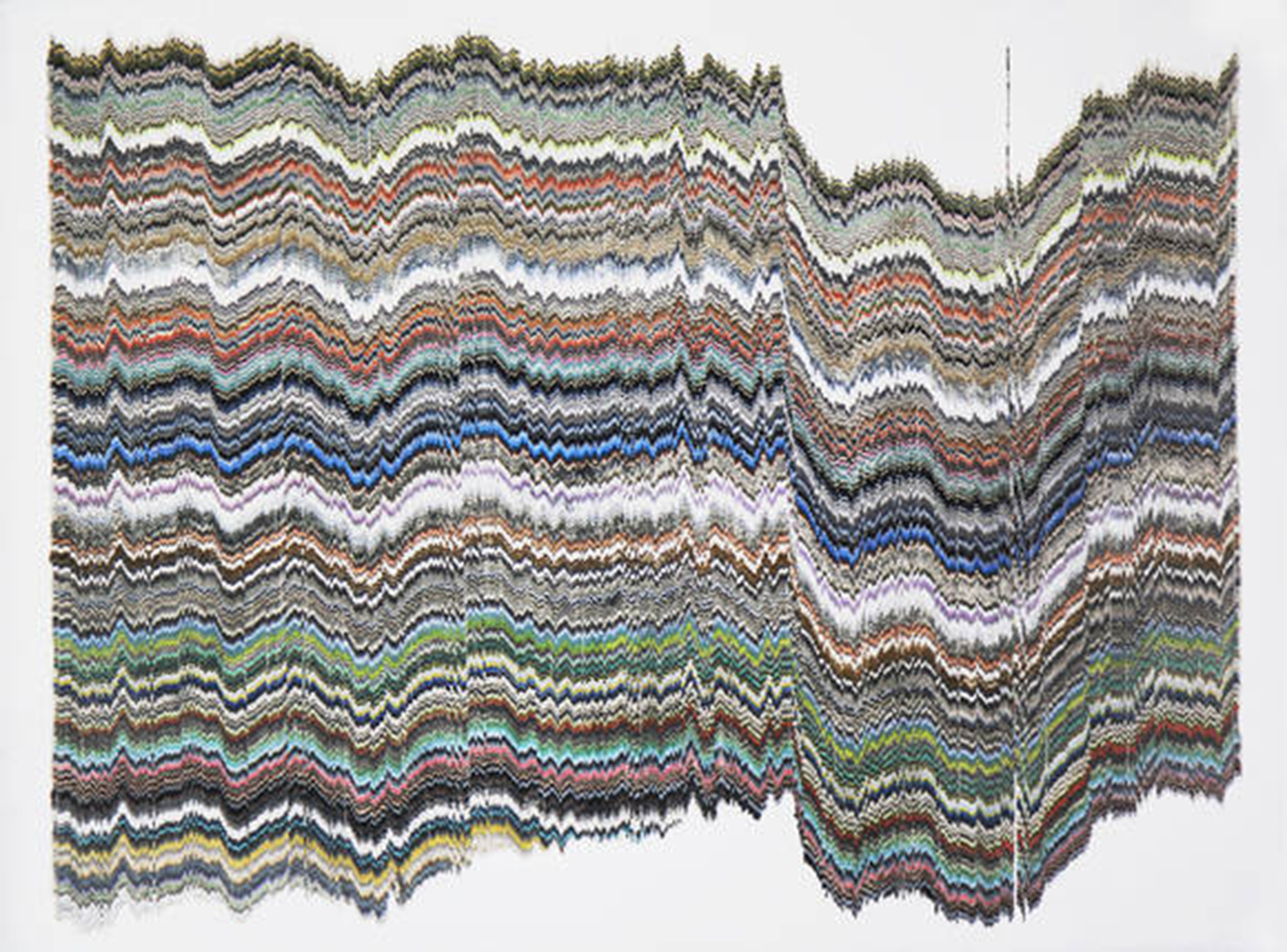
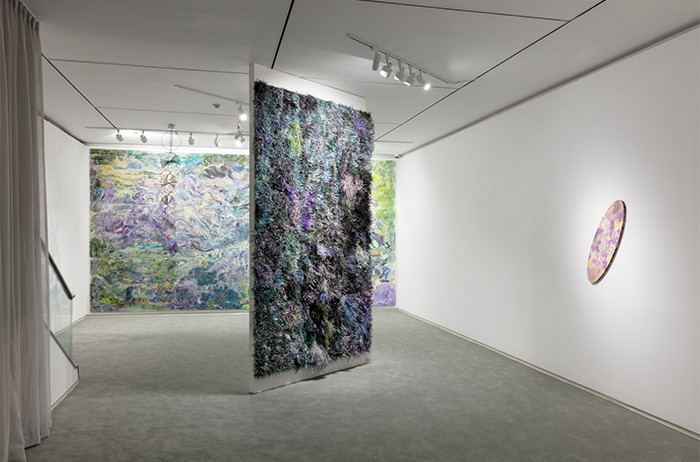
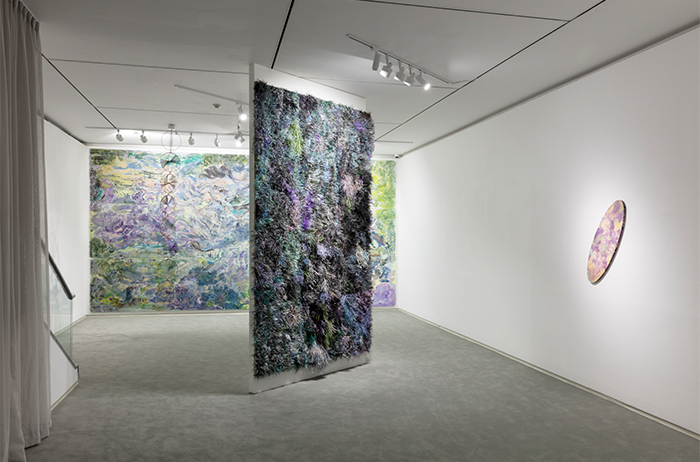
Her two-dimensional works, like her objects, intensify the
dismantling and fragmentation of records, yet they introduce subjective and
sensorial expressions through color and pattern. Unlike the objects that leave
behind only erased materiality after burning pages bearing sentences, the flat
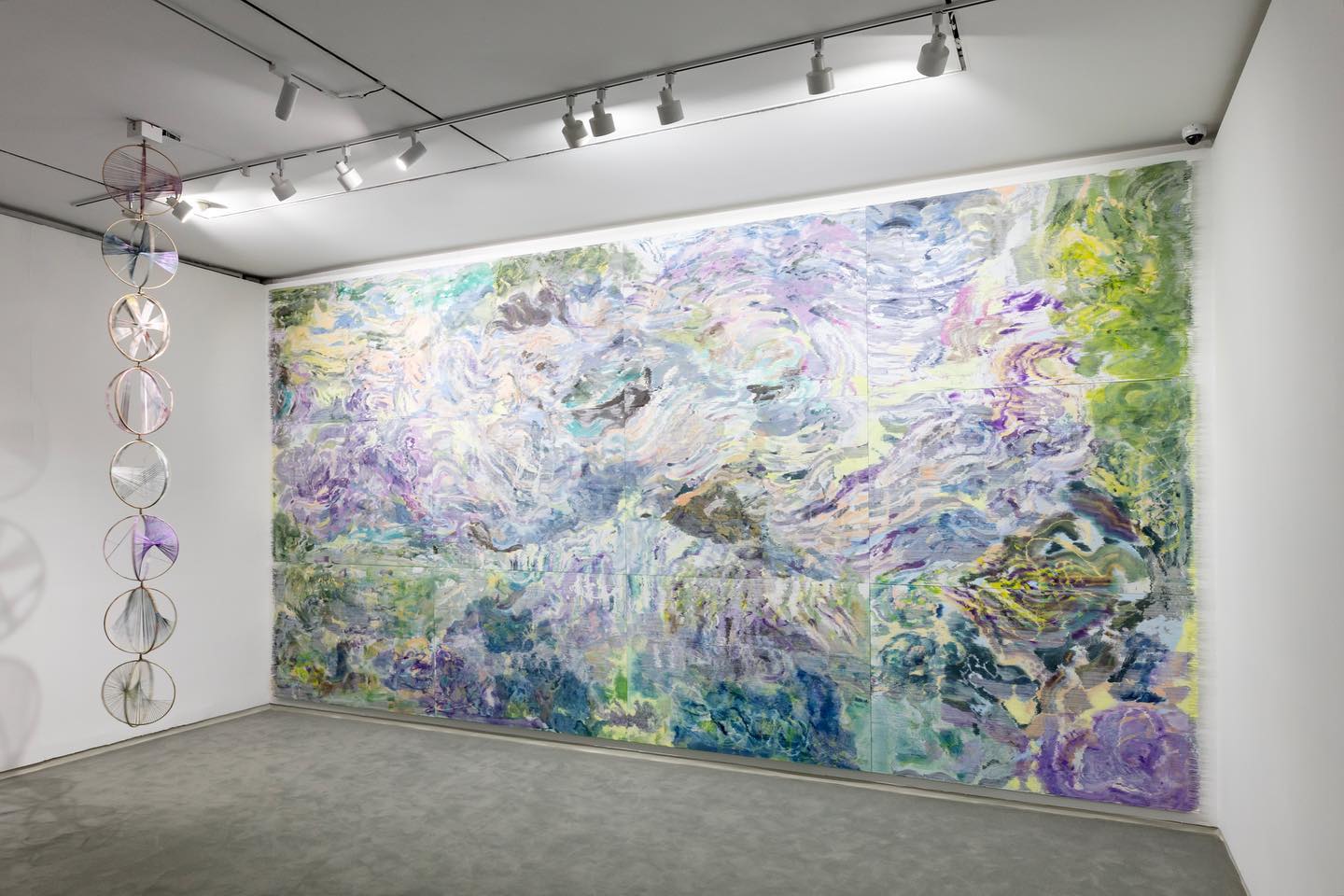
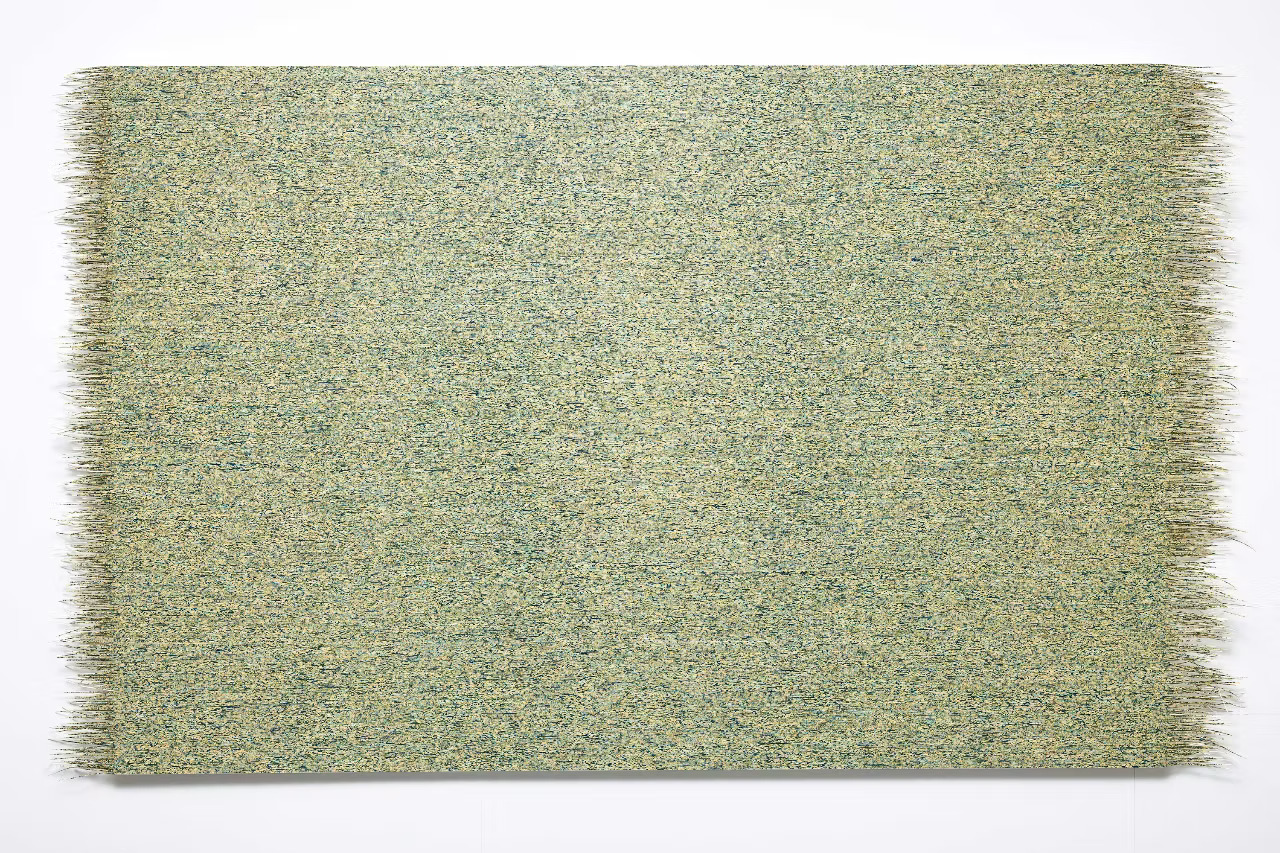
works do not necessarily annihilate the record itself. Instead, she applies
color to create patterns, slices them thinly, and recombines them to unfold
landscapes distinct from the original source. Former lines transform into
accumulations of fragmented dots, dispersing across the surface like faint
smoke reminiscent of Neo-Impressionism. The refracted rhythms formed by color
dots—like scattered crushed letters—evoke muddled strata or graphs recording
waves.
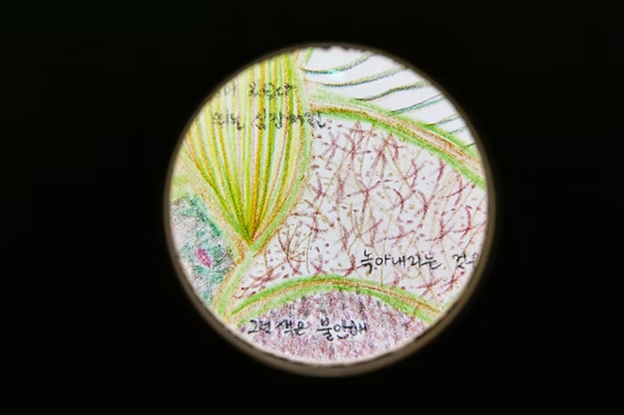
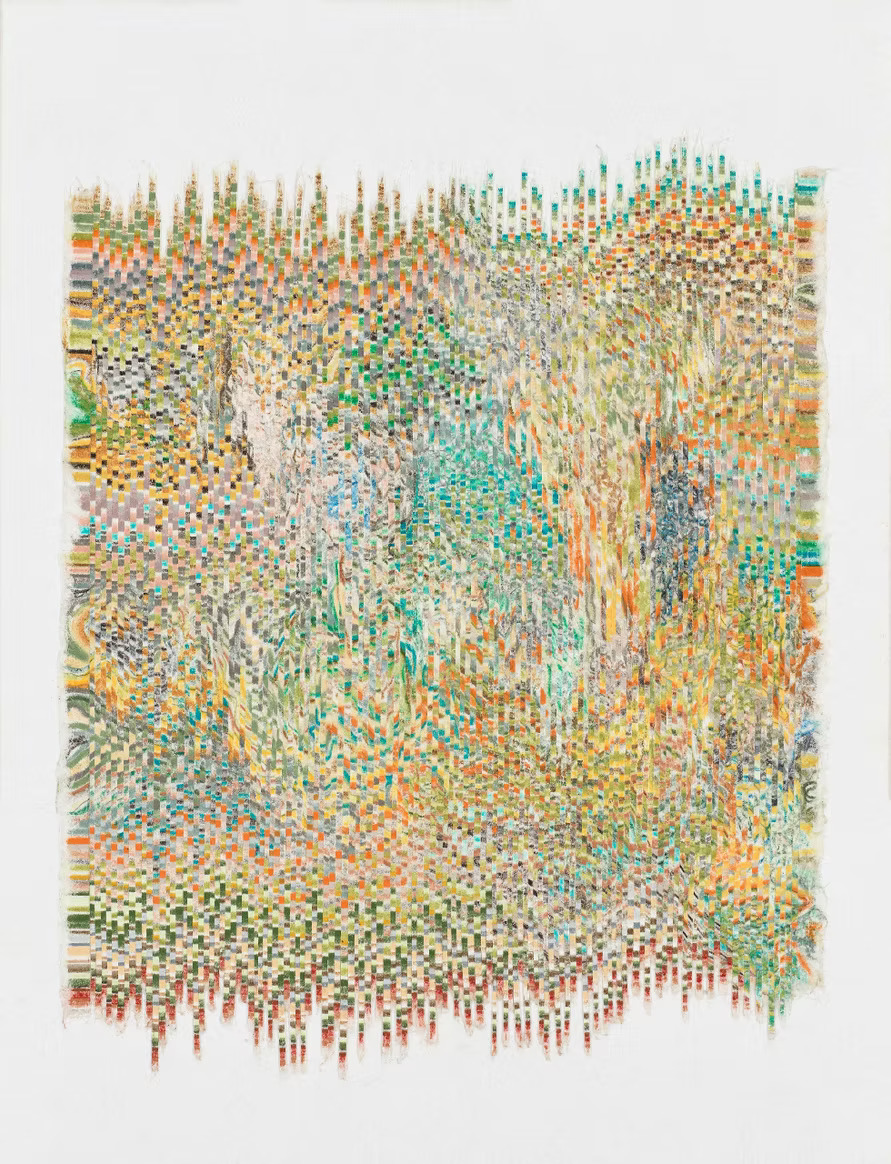
The artist also transfers imagery from her own notes and sentences
onto the surface. Drawings traced along sentences appear like geological
layers, yet even these are sliced into one-millimeter thicknesses and
reassembled, obstructing full perception of their content. At times, her work
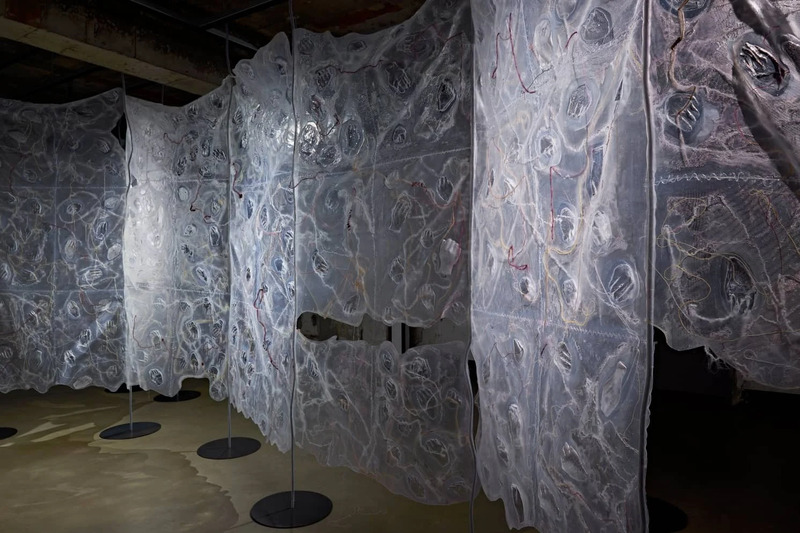
translates anthropological environments into visual images. The ‘A
Chronicle of the Moment Letter (書信)’(2018) series transforms interviews with Taiwanese Indigenous
minorities into visual variations of the intonations and meanings embedded in
their language. In Citizen Participation Project Emotional Line(2021),
she expanded this same process by applying color to records received in letters
from 200 citizens. Yet even in translation, deletion cannot be avoided.
Where content disappears, materiality remains, evoking the void
left by text. Writings that have lost their function and been discarded by
their authors are consciously extinguished once more by the artist, thereby
acquiring renewed meaning in their emptiness. In place of content, useless
material accumulates like broken words, leaving only the void that once held
the original. For this reason, she calls herself a “librarian of oblivion.” To
collect forgotten records requires inventing and exhibiting the very form that
produces oblivion. Achromatic objects molded from ash dough and surfaces
created by painting over text and slicing and reassembling it into fragments
become markers and tapestries for memory. They mourn abandoned texts, yet the
empty site of mourning follows a ritual in which the artist annihilates the
already discarded text once again. Gathering forgotten memories thus propels
remembrance of oblivion itself by discarding the object of oblivion.
She collected discarded encyclopedias and classic novels,
selecting them because libraries transitioning to digital systems and updated
translations had designated them as priority waste. Although conventional
narratives are often dismissed as stale repertoires, she notes that classic
novels hold universal value, feeling kinship with the intensity of farewell
scenes at their climaxes. Thus she burns pages printed with scenes of
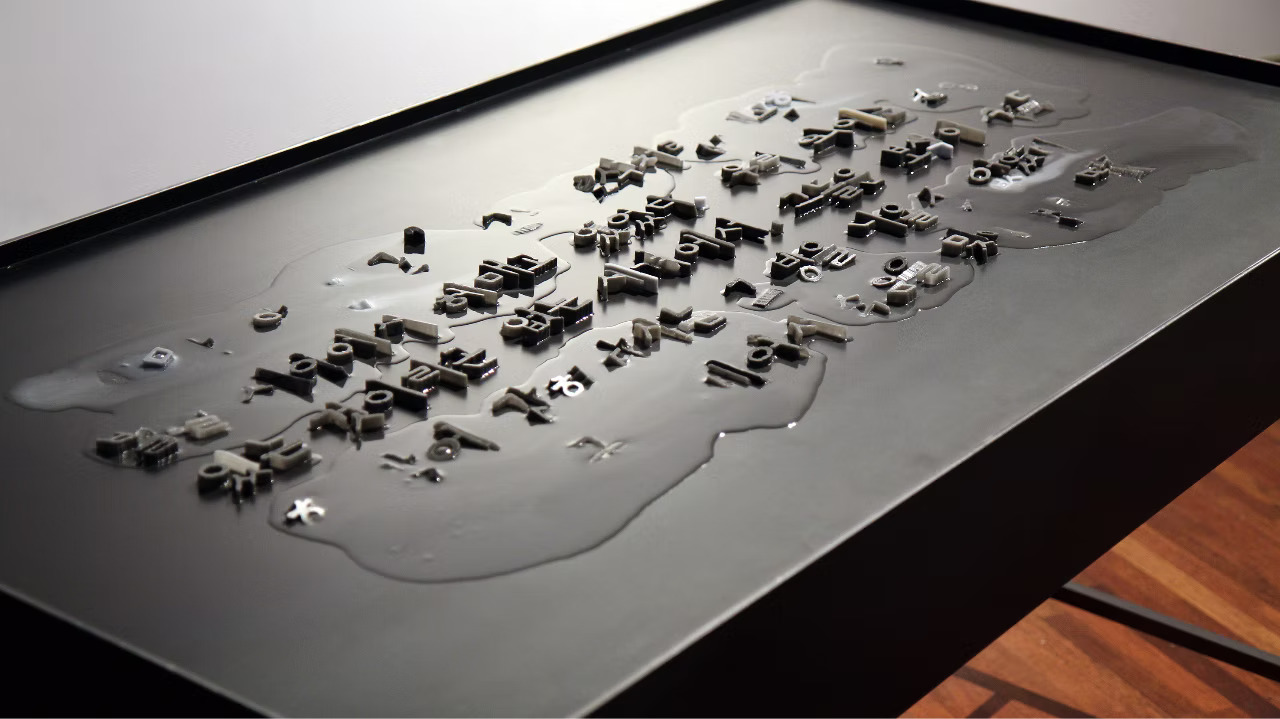
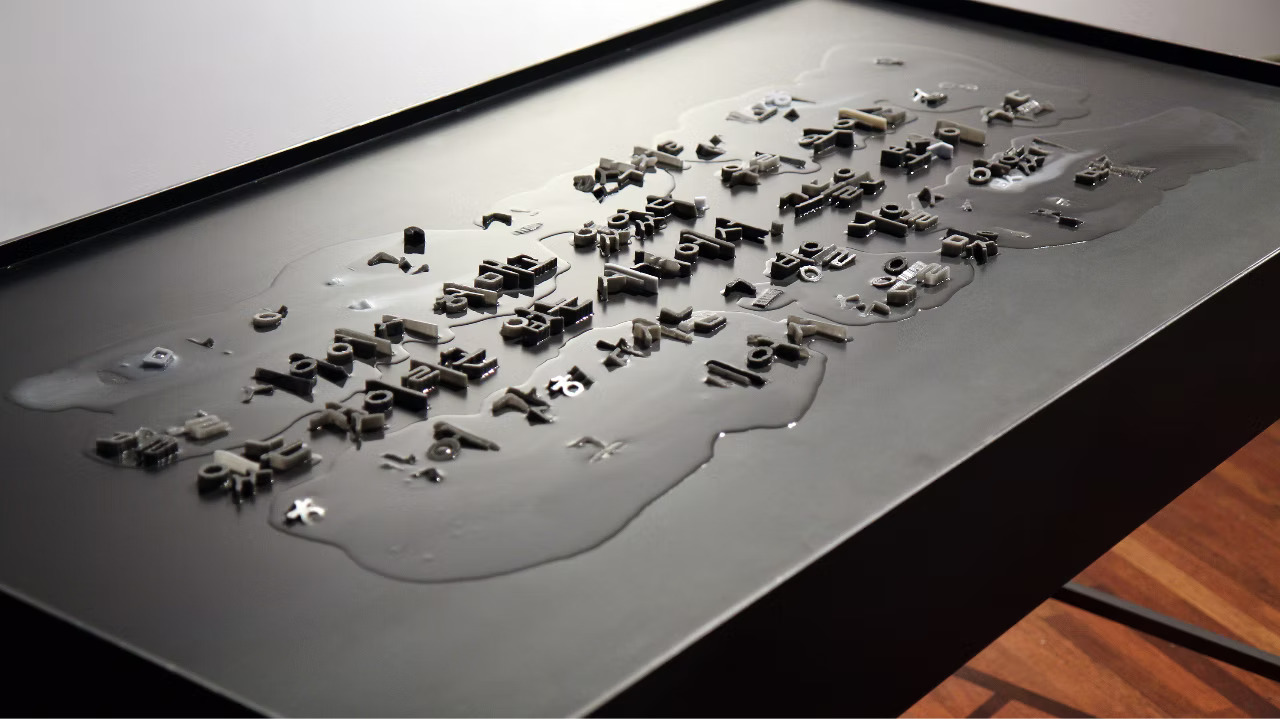
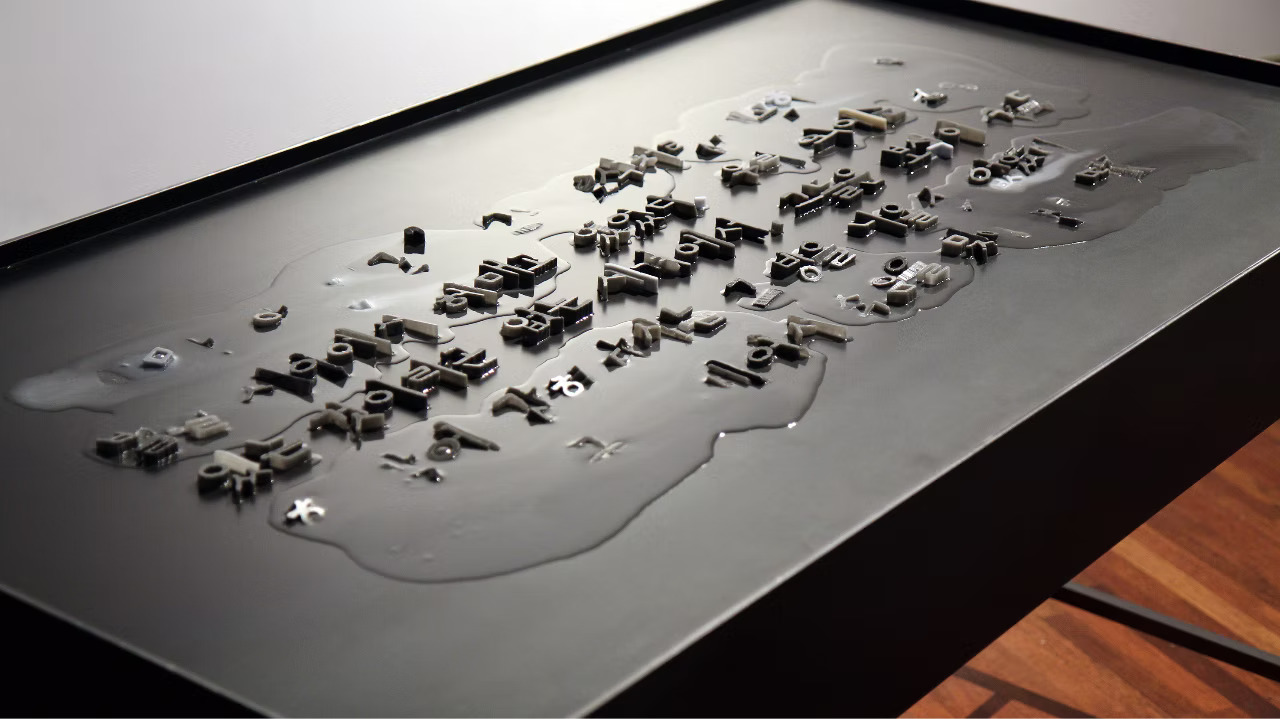
separation and kneads the resulting ash with beeswax and paraffin. Using this
dough as material, she combines sentences from classic novels with texts
recording similar emotions of her own, casts them letter by letter, and melts
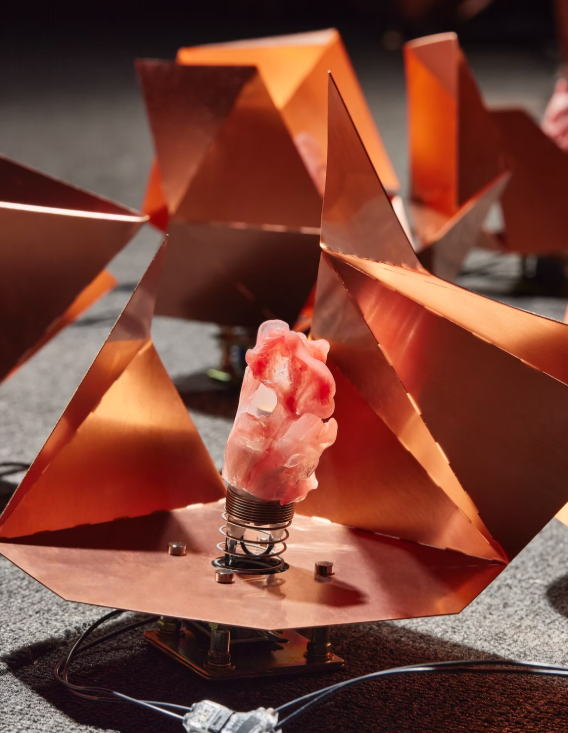
them away on iron plates in the Melting Strata project(2020).
During the exhibition period, she reportedly continued each day to place
sentence-objects where previous letters had melted, only to melt them again.
The temperature-control device intended for hatching eggs becomes a crematorium
and furnace for dead letters.
Objects molded from ash of burned texts and records made by
reassembling paper thinly sliced and coated in color undergo a paradoxical
process of translation that gains form through destruction. Can a story regain
poetic value through double disposal? Might the work be accused of forcibly
mobilizing and objectifying the records of others? Using abandoned stories as
material and leaving only traces may be granted meaning as poetic salvation and
translation, yet an extreme act of mourning cannot remain free from suspicion
of colonizing records—mobilizing stories for the sake of disposal. Even if the
author consents to the erasure of their sentence, conceptual vandalism
performed in the name of rescue raises the question of what it means to show
respect toward the text itself.
Recently, the artist has shifted her attention toward personal
records. In the 2021 citizen participation project she received emotional
records from citizens; in the same year’s The Chronicle between
You and Me(2021), she requested diary entries in letter form from
colleagues and burned the texts she received, mixing them into beeswax and
plaster to create layered objects. Even if the process remains the same, is the
attitude toward discarded publications and toward others’ intimate stories
truly equal? Yet discomfort at damage may also reflect the weight of guilt
produced by indifference and powerlessness toward discarded texts. The holes
and wounds that pierce the support after text is deleted, the intense traces of
erasure, emerge like a negative of Roland Barthes’ punctum, like the aura of
ruins.
Through eliminating discarded texts, Wonjin Kim crafts
annihilation as mourning, and conversely a paradoxical form of mourning that
passes through annihilation. If in earlier works the original text retreats as
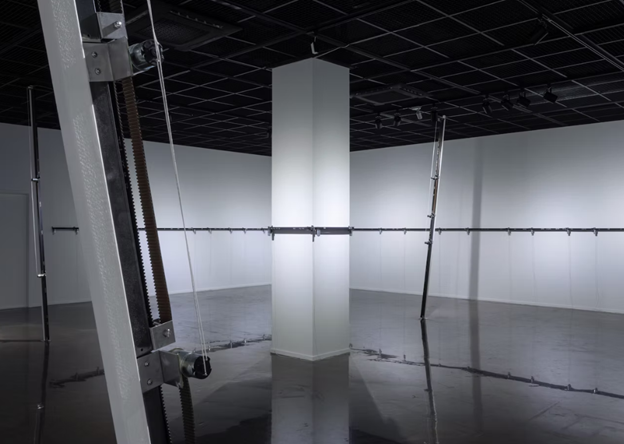
a shadowy background, her recent Blank on Timing(2021)
approaches double annihilation on another level. Fragmented sentences ride on a
car timing belt, idling by the force of a motor. Letters flash past on the
rotating belt, avoiding burning or repainting. Rather than deleting discarded
text, she visualizes the motion of disposal itself, reviving the impossibility
of revival. The pulsation of the timing belt overlays the running text with the
movement of disposal. It is the moment when letters stripped of material assume
a ghostly face through mechanical mediation.