“I don't know. We have everything we need to be happy, but we
aren't happy. Something's missing. I looked around. The only thing I positively
knew was gone, was the books I’d burned in ten or twelve years. So, I thought
books might help.”- Ray Bradbury (1920-2012), Fahrenheit 451, Ballantine Books, 1953
Prologue
Fahrenheit 451 is a dystopian novel describing the year 2049 when
possession and reading of books are banned. The main character, Guy Montag, is
a fireman whose job is to burn books. After realizing the values of books by
chance one day, he decides to take risks to recover a world where thinking by
way of reading is allowed, and shoots down other firemen. Eventually, this
unknown city is destroyed by bombs and remaining survivors pledge not to repeat
the past mistakes of using books in wrong ways.
In the book, Montag’s boss
Beatty is a contradictory character who has a huge library in the basement of
his house. He says that the problem is not owning books but reading them. Where
do the values of a book lie? Is a book just a vessel carrying texts? Do ownership
of books and reading them get separated into different values? The novel
suggests the effects of reading as well as the possibility of rewriting, based
on the act of reading through the discrepancy between ownership of books and
the practice of reading and on the resultant act of subversion. This
ambivalence in value judgment has a thread of connection with Wonjin Kim’s
work.
Mobility of books
To Kim, a book works similarly as a symbol. She has liked written
records particularly since her childhood, and she confesses that one day she
was shocked to find out some discrepancy between her memory and certain texts.
There can be no human being whose thinking and actions perfectly match his or
her memories, but somehow it seems that Kim as a child believed that they had
to. To conceal the discrepancy between the records and her memories, she seems
to have reproved herself dispassionately and developed a kind of obsession to
discard the past quickly. “For this reason, I took out my past from the
drawers, oxidized the pages to make it age quickly, and mounted it on the
values of time advancing towards death.” 1)
This experience is
assumed to have provided the motivation for the current work. If we consider
this psychological conflict from an aesthetic perspective, the attempt to
reduce the discrepancy between actions and their outcomes recalls (a priori)
hierarchy between intelligence and senses. That is, perception needs to be
connected to a certain common sensation based on direct and indirect
experiences so as to produce the belief that rational and reasonable thinking
has been made.
Then, this leads to the question if, on the contrary, we need to
turn away from these uneasily wavering sensations to be able to have a human
character deemed desirable by the society. If intelligence tends to try to
follow the given rules, senses can be considered to be more similar to
endlessly moving feelings or emotions. Maybe the artist imagined precise
description of her own experience would help revive her past vividly when it is
read later.
However, despite her anxiousness, it is one of the highly desirable
ways of reading. As we are beings that live incessantly repeating creation and
destruction, our past and present cannot be continued without any rift. Her
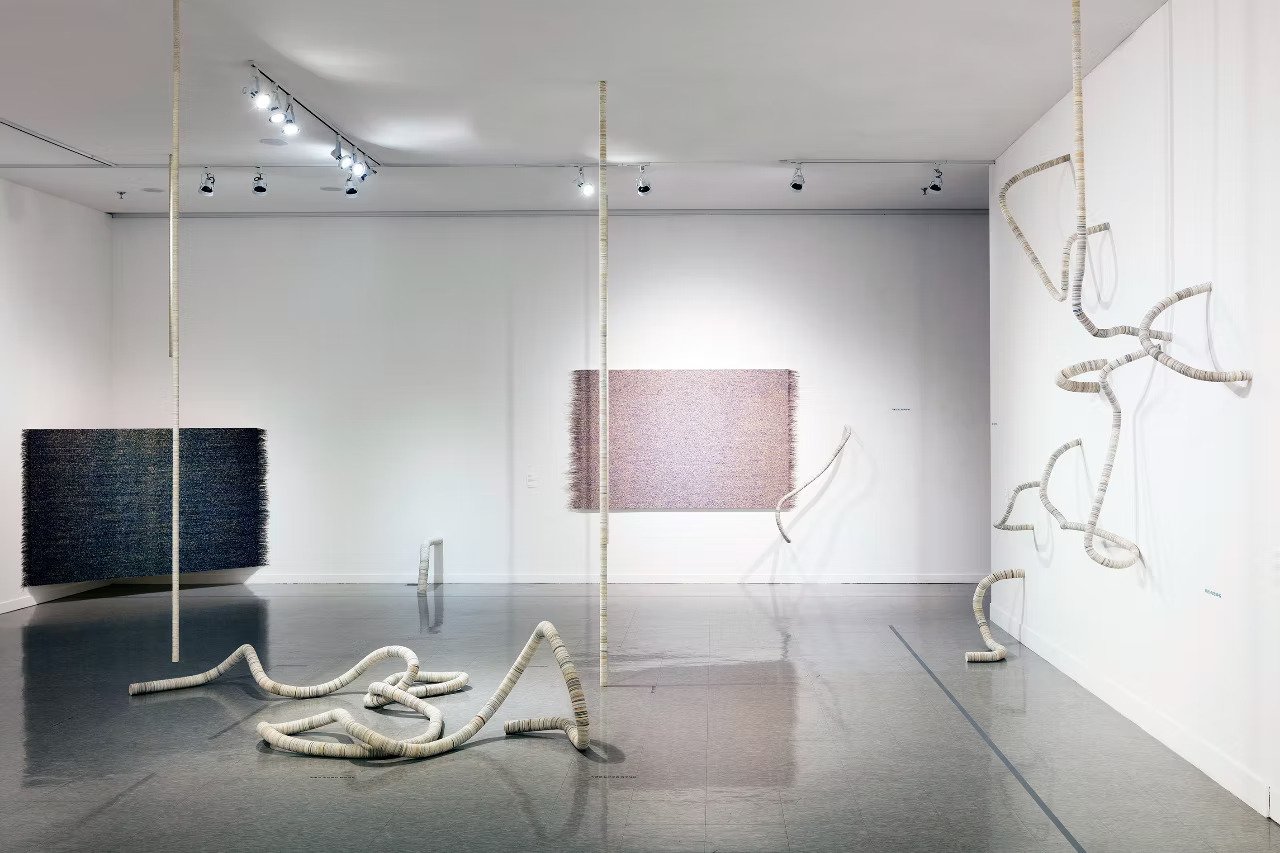
early works on the theme of ‘dismantling of books’ are seen to represent a
process of experiment to overthrow the conventional sociocultural attitude
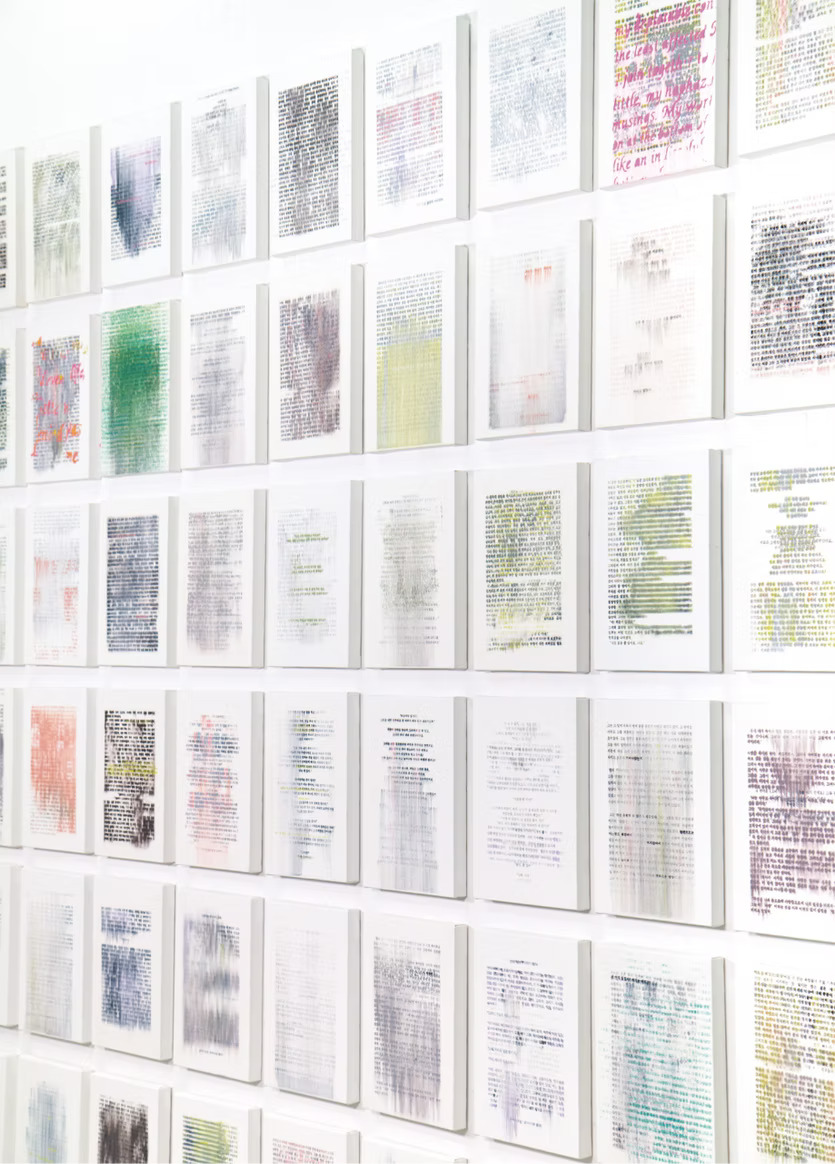
toward books. By taking off pages of books she has read, cutting them away one
by one and piling them up again, the artist turned the books into materials of
silence.
The values of books filled with numerous thoughts and texts vanish as
they transform into sensuous beings due to the material property and volume of
paper (Twisted Moment #0, 2011). To Kim, reading does not
mean book reading in general. The actions involved in burning a book, putting
on the scent, collecting scattered remains and inserting them between the
leaves of another book she’s been reading represent her own way of reading.
Here, the book is not the material that proves her reading as much as it is the
material that gets somewhat distant and recalls the time of a day (Flow_Collected
Books0, 2014).
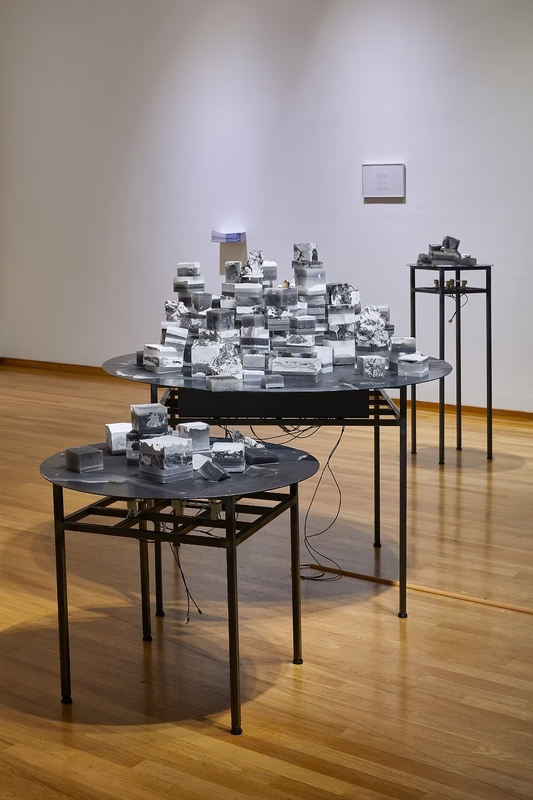
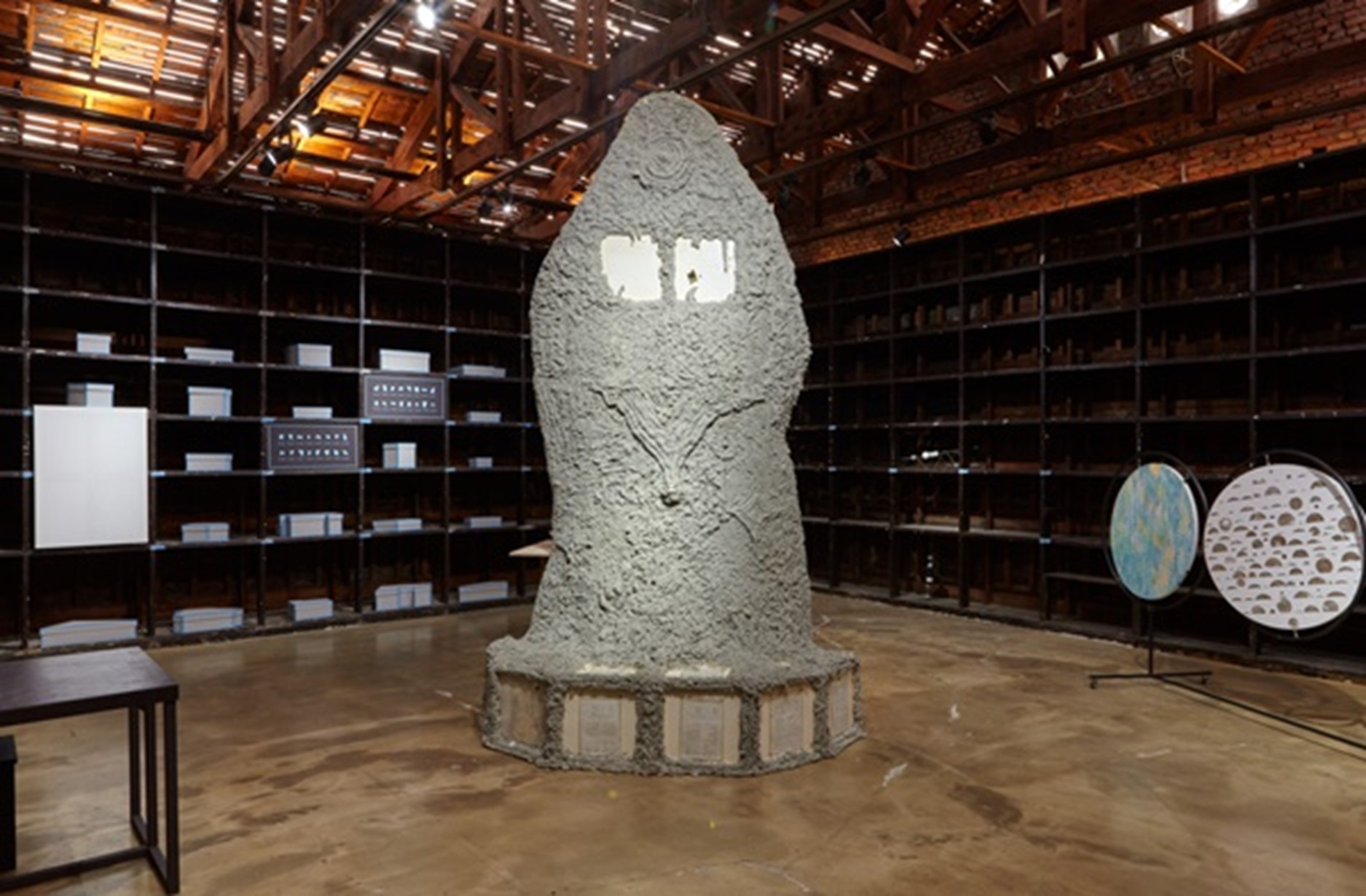
The Chronicles of Today (2016-2018)
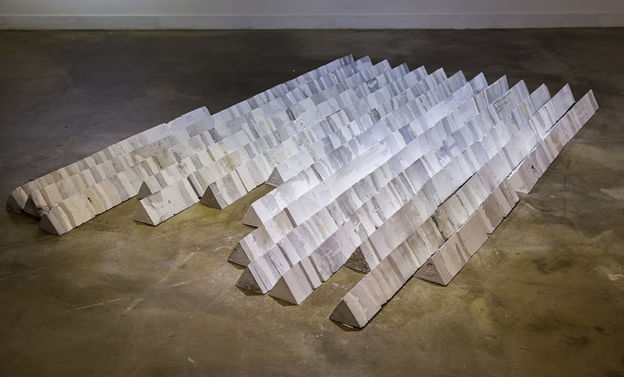
was created by piling up discarded books, cutting holes and pouring plaster in
them, to commemorate the doomed fate of books by building abstract towers with
them. The anonymous book-monuments no longer useful (in public/administrative
views) enough to be booties or monuments look exactly like countless
‘impersonals’ generated due to the lack of a shared community.
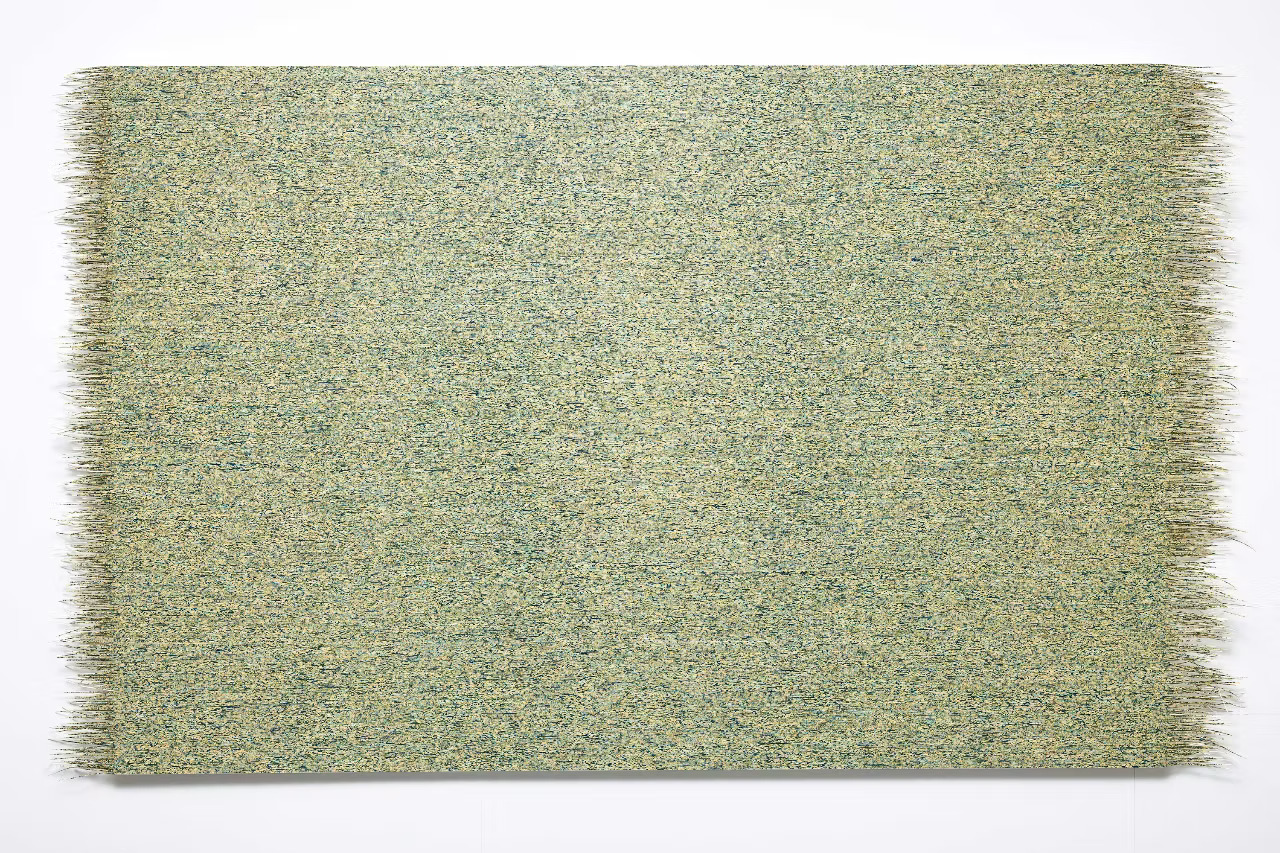
Reading does not only mean reading. The actions and processes of
touching, overturning, burning, emptying out, and filling up the books, as well
as burning and reducing them to powder, then mixing it with plaster to
replenish the weight and volume, are far from reading aimed at appreciation of
texts and literature or acquisition of knowledge and information. To the
artist, the act of reading is closer to the process of phenomenological
experience related to the size, weight, texture and smell of a book.
Do the
goals of reading indeed have to be to read texts, develop literacy and discover
the answers that the world want? Pierre Bayard (1954~ ), a professor of
literature and psychoanalyst, recommends not to follow the common sense about
reading. He advises that one needs to figure out the situations created around
a book to be able to talk about it. It means that the book should be treated as
a ‘mobile object.’ Values are subjected to undergo changes through various
mechanisms.
As both books as objects and their contents are changeable, anyone
can become “creators of books that they have not read” 2) by using
this mobility. Here, ‘not reading’ may be a different way of reading. A
different way of reading again allows a different way of writing. This way,
reading and writing become equivalent conditions. It was during the process of
burning books and blackening them that reading and writing synchronously
occurred.
Overlapping of reading and writing
To the artist, books are as good as a medium for relationships.
Books being discarded can be likened to the loss of one’s hometown due to urban
redevelopment. Intervention of alchemy by taking home books that have lost
their own homes and transforming their shapes may be called a process of
appropriation where grammars are violated and a new order fit for a new
relationship, place, and environment is sought. The exhibition titled Blank
on Timing (2022) is Kim’s solo exhibition taking place after a long
gap due to the pandemic. Without exception, the COVID-19 had a significant
impact on the artist.
Probably it was possible for her to leave her boundaries
and encounter her fellow neighbors, residents, and citizens living the reality,
because she had experienced the limitations of contactless society. Her early
works indicate a period when the artist built a wall around herself, regarding
herself as an other and abandoned books as its home. It was inevitable that she
constantly went on consuming herself.
From the art historical viewpoint, it can
be considered a self-referencing modernist attitude. Meanwhile, it was
difficult to present beings that were erased or could not reveal themselves due
to various reasons as abstract poetic existences, but her switch to socially
engaged attitude seems to help her leave the reason-oriented approach and see
all figures existing in the world more clearly.
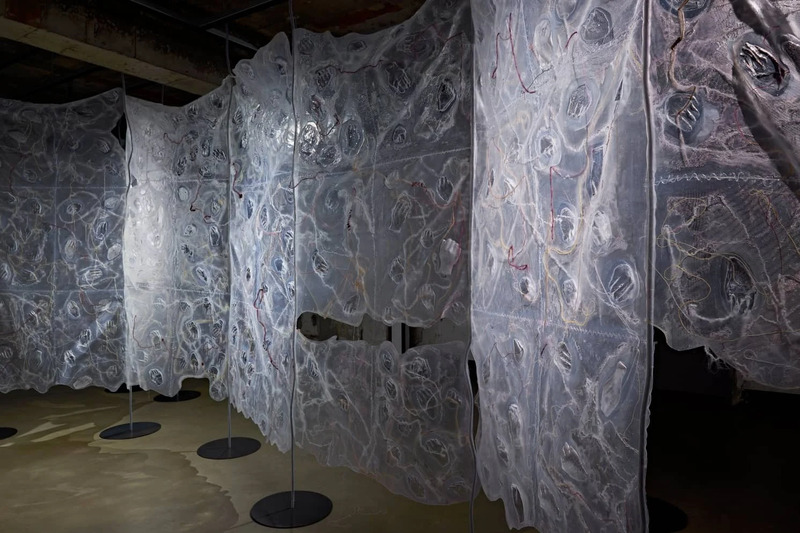
Her work on Blank on Timing (2022) began by
documenting the area around Mokcheok Market and Mokcheok-gil in the middle of
the old downtown redevelopment project in Daejeon, where she is working as a
local resident artist, and capturing the lives of people still living there in
the ruins. A village that has been torn down for redevelopment is in ruins,
regardless of where it is. This is because a village shows its vitality only
when it coexists with humans, nature, civilization, culture, things, and memories.
When the ecosystem of coexistence breaks down, things, too, lose their
expressions and change into impersonals. There, Kim captured expressionless
fragments using photography and recorded the traces of people who were unable
to leave the abandoned district. We ask, then, what we can record there. Is it
the sublime landscape that has turned into ruins? How can we archive the
compassion for humans maintaining arduous life, the attachment to the land, and
the rage against urbanization?
Actually, if there is no major resistance
or disturbance, local archive is likely to be confined to formal documentation.
Walter Benjamin (1892~1940) archived daily objects, not monuments, through his
Passage Project. The project is still reviewed as “an example of historical
analysis and writing aimed at exploring the relationship among urban
environment, personal memories and collective histories.”3)
At the same time, Kim pays attention to the chairs placed in front
of the gates of the houses in the alleys near Mokcheokgyo Bridge. Residents
remaining there can be seen sitting on the chairs each morning and sharing
their stories even amid the ruins. Wondering around the district, the artist
started to document their words and thoughts. Unspoken words slowly sink under
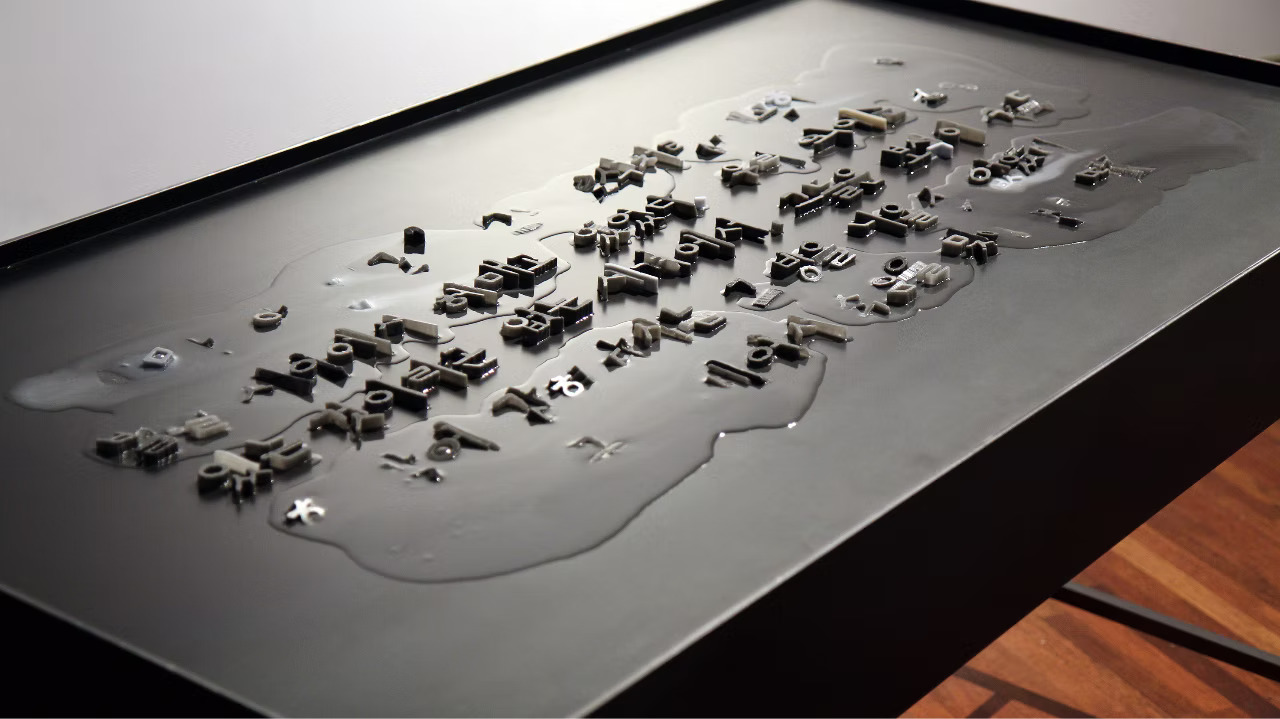
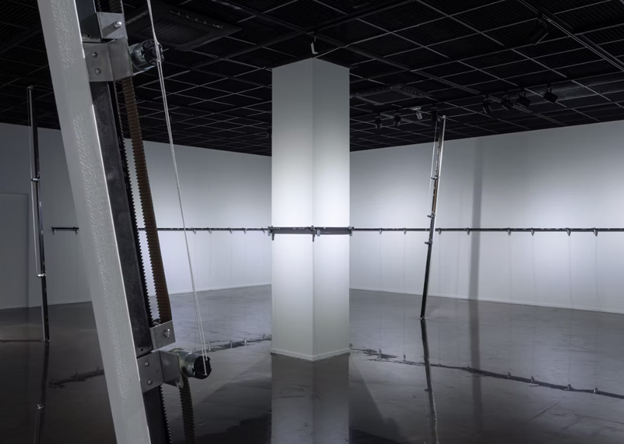
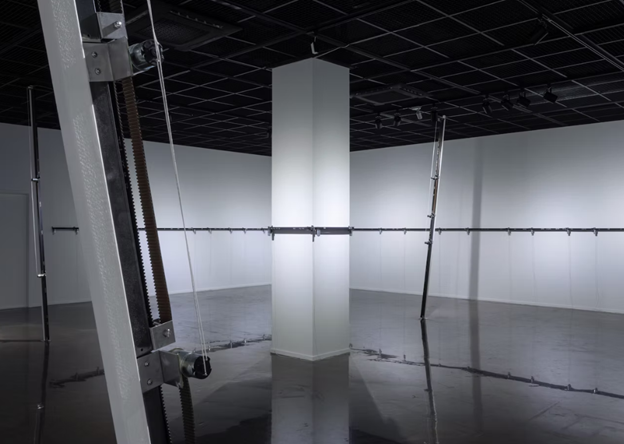
the lower layers of consciousness, but they never vanish. For the work Blank on
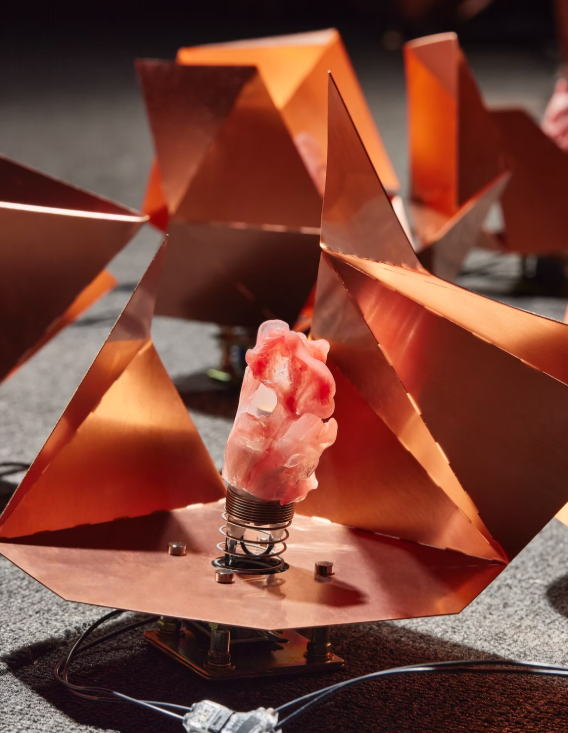
Timing, timing belt, an automobile part, was installed along three walls
of the exhibition hall, with some of the sentences from the excerpt of the
interviews by the people remaining around Mokcheokgyo Bridge stencil imprinted
on it.
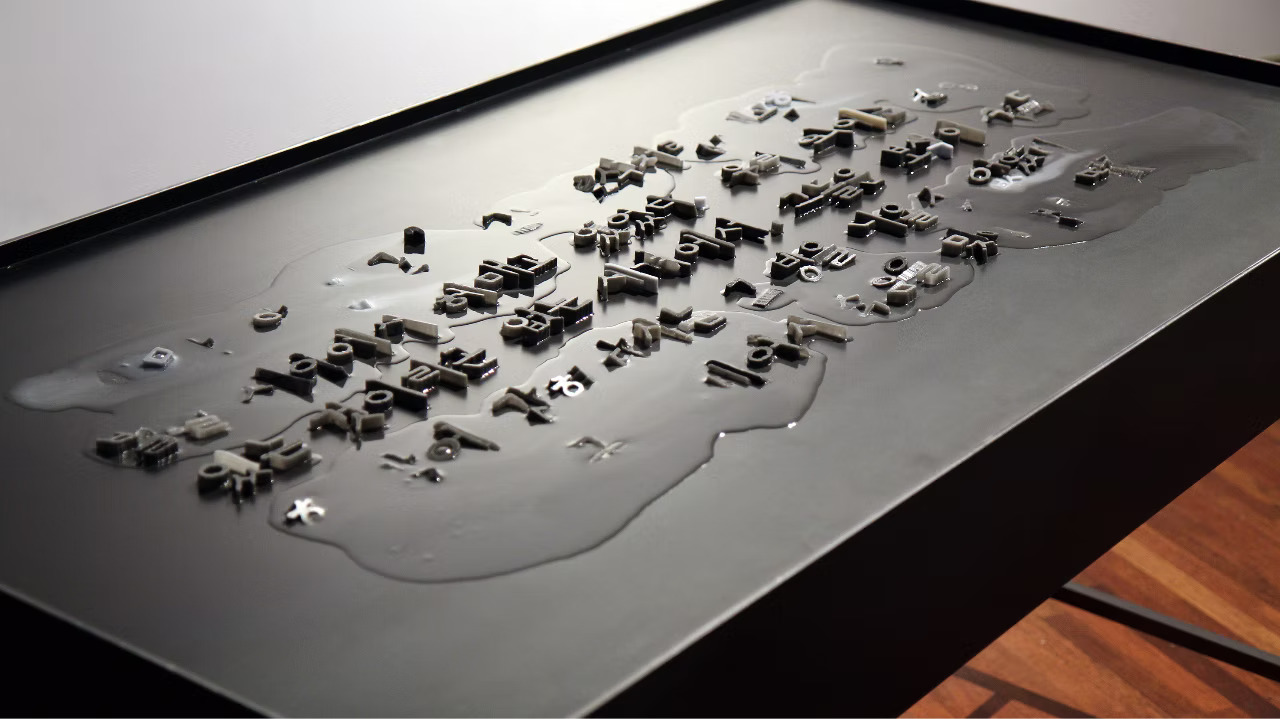
The texts rotate forward or backward depending on the direction the belt
moves in. As the rotation goes on, texts on the black belt quietly fall off and
get eliminated. Only the mechanic sound of the timing belt replaces the voice
of silence in the village. The artist dares not represent what they want, or
tell her own opinion. In her work, texts are always revealed in abstract
conditions. They are not seen nor heard, but they always float. For example,
photographs taken near Mokcheokgyo Bridge delivers the mood of the scene, but
the voices of the residents cannot be heard. If visiting the bridge is reading,
we can call the process of moving the direct and indirect experiences she had
in the area to written words as ‘writing.’
Kim’s reading and writing are not
separated from each other. The genuine value of reading is not dialectical interaction.
Novels by Marcel Proust (1871~1922) are good examples. Reading his novels, one
often encounters broken contexts or get stuck on one page wondering through
disorderly memories; this doubles the pleasure of reading. It’s because reading
a text unavoidably accompanies connection to a different space-time. However,
no one can definitely say how we can connect to another dimension.
This is up
to the reader’s will. In the case of participatory work in the public realm,
local residents will need to be the facilitators for becoming authors before
the artists do. Maurice Blanchot (1907~2003) even points out that poet Stéphane
Mallarmé (1842~1898) called readers manipulators, saying that this is because
“reading is ‘manipulation’ as in poetry” and furthermore,
“elimination.”. 4) In other words, it seems to mean that the act of
reading is to erase the original author and to bring poetry to oneself.
Epilogue
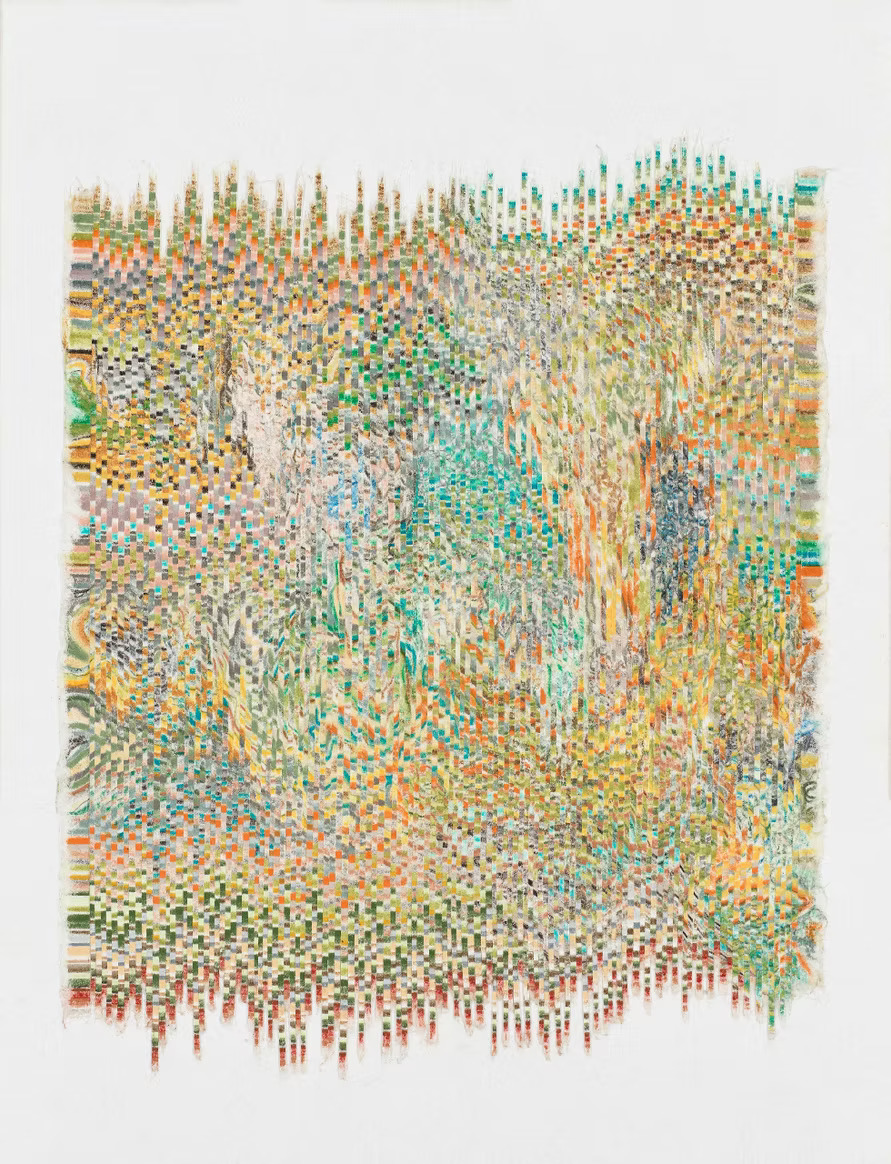
Wonjin Kim has been building her own unique world for more than
ten years. She tries to discover her true self between thoughts and their
traces, and then starts to erase her own thoughts intentionally after finding
their gap. By crushing and destroying sentences within books that have been
abandoned or read through, or otherwise reached the end of their life cycles,
she breaks up the reason and knowledge that they represent. Here, books do not
constitute literature but are instead insignificant or useless things.
The
artist identifies herself with abandoned books and summons ‘impersonal’ beings.
These abandoned books that have been read through forms anonymous solidarity.
However, sometimes the methodology overwhelms actual works. I guess it may be
due to the solidity of the methodology that rarely allows diversion. It is
highly welcome, above all, that the artist’s voice/texture is starting to
be heard/felt in between the gaps in crushed sentences.
Footnotes
1) Excerpted from the artist’s essay
2) Pierre Bayard, How to Talk About Books You Haven’t Read,
translated, Yeoreumeondeok, 2008, p.98, retranslated into English
3) Graeme Gilloch, Myth and Metropolis: Walter Benjamin and the
City, translated, Hyohyung Books, 2005, p.122, retranslated into English
4) Maurice Blanchot, Le Livre à Venir, translated, Greenbee
Publishing Co., 2011, p.458, retranslated into English