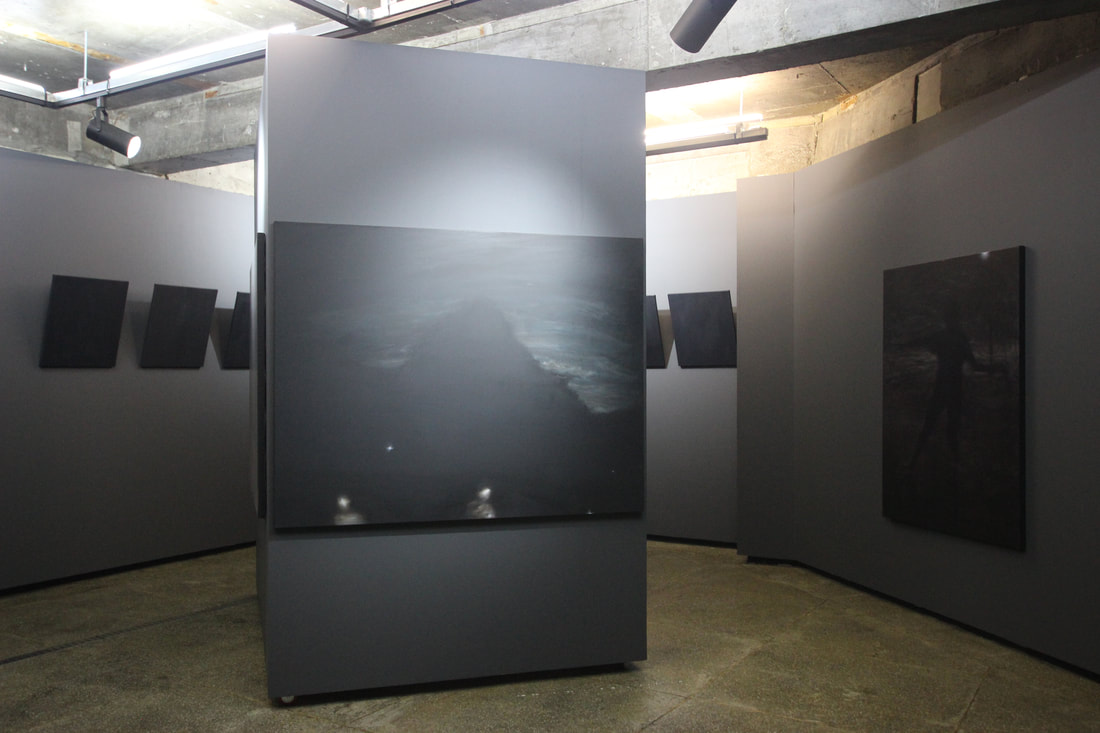
[Black Coloured Light: Looking at Darkness]
The nights of Seoul are filled with light. This light stages a
spectacle woven from capital and desire. Street shops adorn themselves with
colorful illumination; brighter billboards proclaim higher value; the more one
is exposed to the light of media, the more we recognize that person as worthy
of attention. Everyone struggles to stand beneath the spotlight. In a city that
appears to have forgotten darkness, Hyunmo Yang strives to create “a fixed
darkness that does not disappear in light.” [1] What exists within the dark
landscape beyond the light?
Invisible Darkness
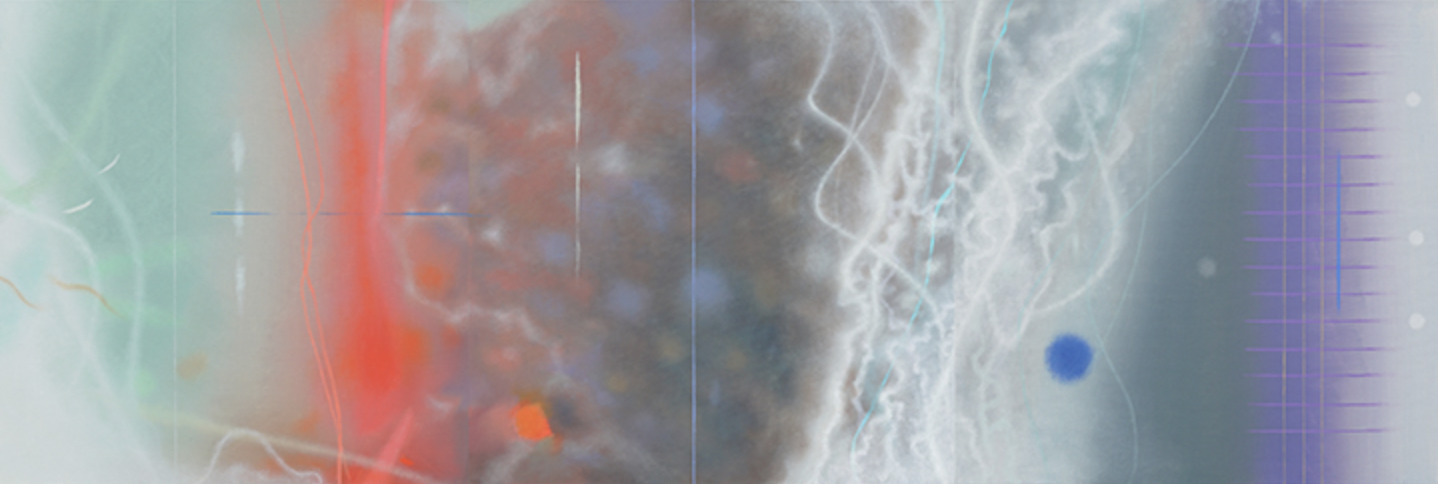
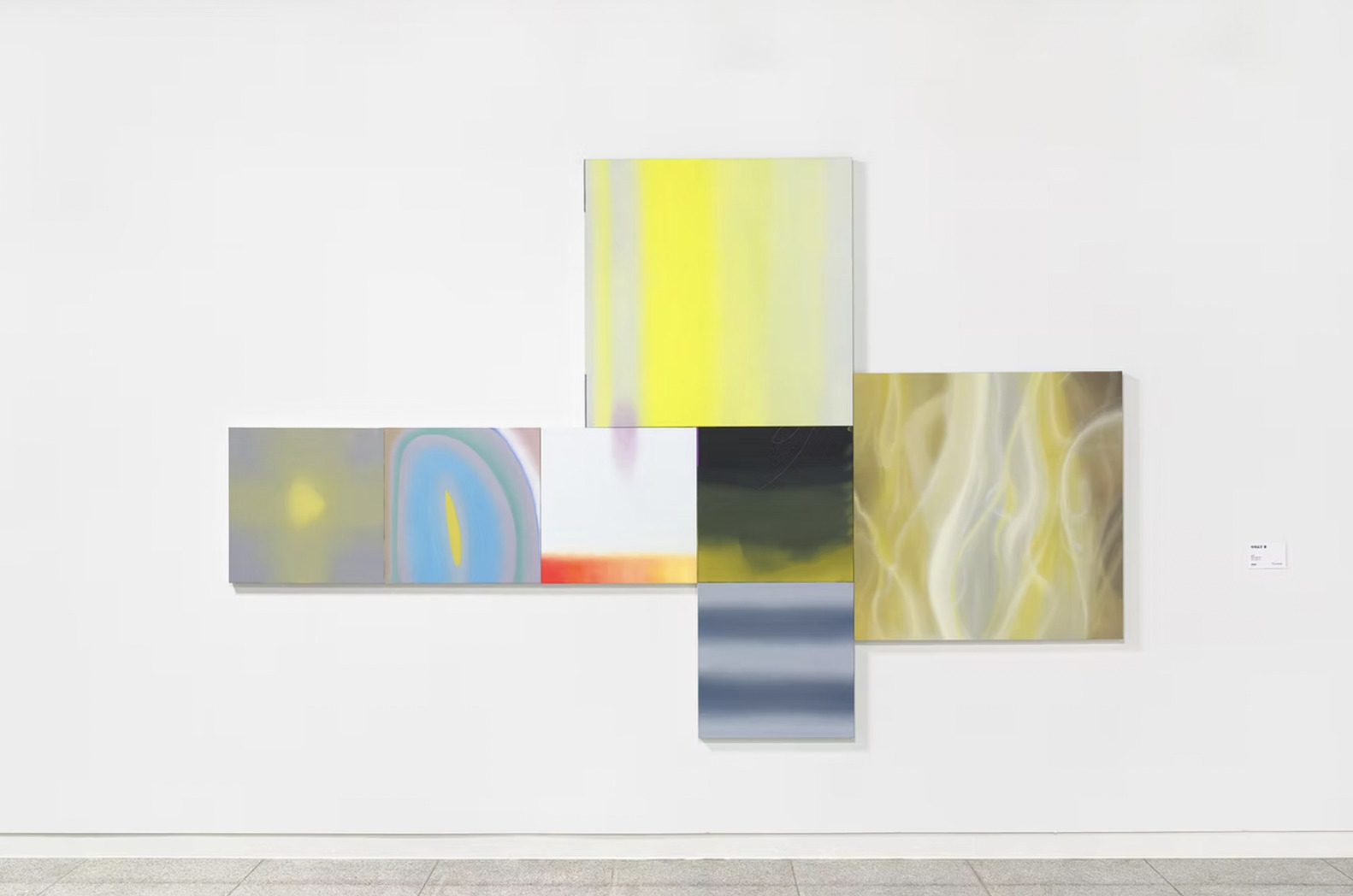
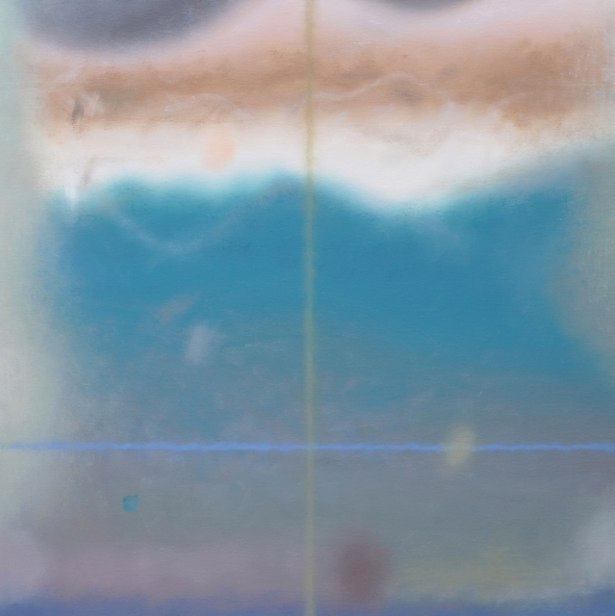
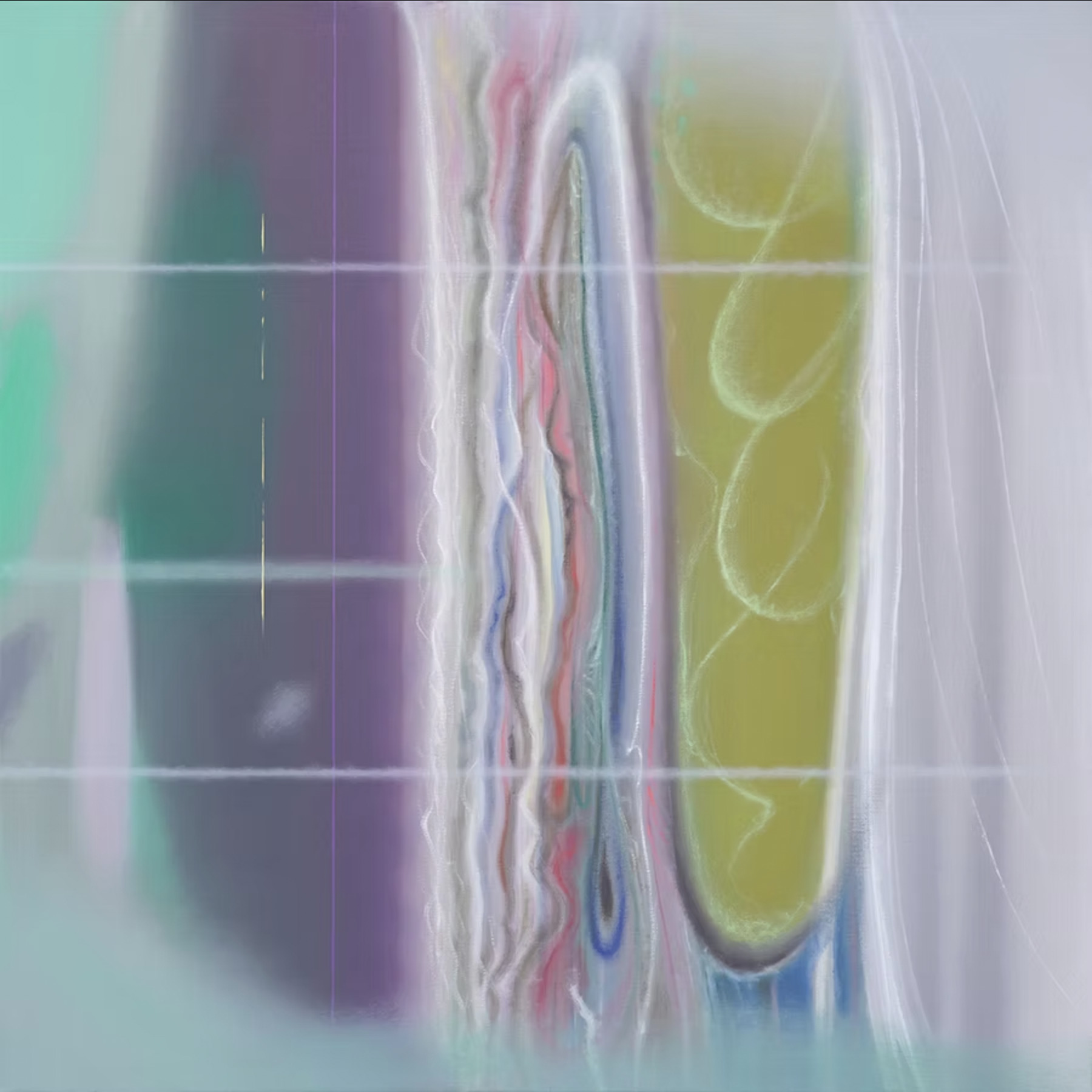
The artist paints scenes collected while walking through the
darkness of night. Sudden glimmers of light, faint forms difficult to discern,
and shadows that appear even darker within darkness become his focus.
As the impetus for his attention to night landscapes, Yang
mentions the dual emotions of “agitation” and “calm” experienced when
confronting darkness. This may not be difficult to understand from experience.
When one walks into complete darkness, not only surrounding objects but even
one’s own familiar body becomes unfamiliar. This strange sensation, declaring
that nothing can be controlled, evokes fear. Yet darkness also conceals the
subject from the gaze of others or oneself, granting temporary freedom from the
complexities of life. In darkness, one is not represented as anything, and
therefore may be free from being anything.
The unique capacity of darkness discovered through such
experiences seems to arise from pushing both object and subject into
unrecognizable chaos. Yet it remains questionable whether Yang’s painting seeks
to embody this power of darkness rooted in unrecognizability. The night scenes
neatly placed upon the canvas appear distinct from the overwhelming sensation
of uncontrollable darkness.
Here, this fixed darkness does not provoke
agitation; though not easy to see, it exists as a clear object of perception, maintaining
distance and restraint. To understand what these works actually perform, one
might begin not by examining the meaning of lived darkness, but by considering
the difference between that experience and the experience offered by this
painted object.
Gray Space: Darkness for Seeing
At times, museums darken the exhibition environment itself—this is
called a black box. Such settings are typically created for video works,
luminous objects that require a dark background to focus viewers’ attention. In
contrast, painting exhibitions take place against white walls and depend
closely on lighting. Why white rather than black? Why does painting require
illumination? The reason is clear: painting does not emit light on its own.
Light has long been a subject of painting, and many painters have
labored to fix light upon the canvas. Yet the physical condition of paint
limits painting’s attempt to approach light; in seeking to represent light,
painting exists within contradiction. Even if painting speaks of light, it
cannot shine by itself. Painting that speaks of darkness likewise cannot escape
this paradox. It depends upon the other of what it seeks to address—light—and
only through that dependence can it articulate what it intends to say.
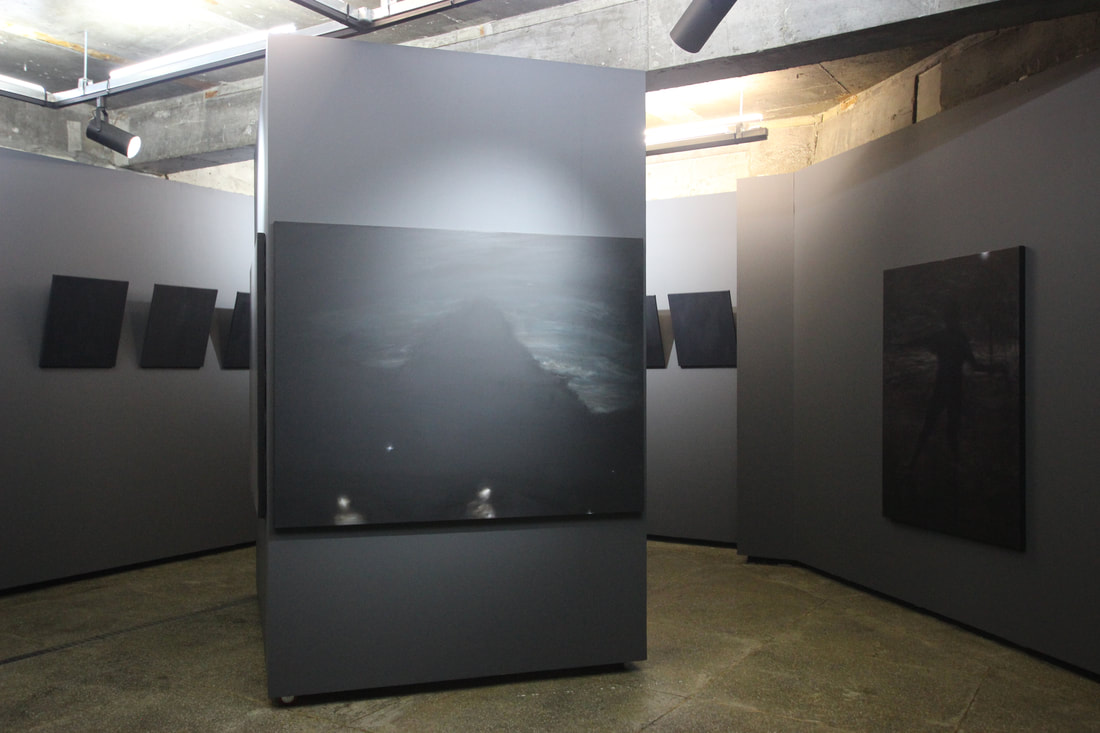
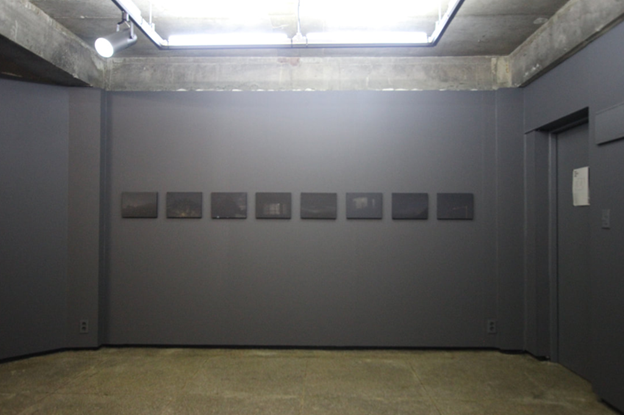
The gray space emerges from within this paradox. The artist chose
a deep gray sheet to cover the walls in order to present his works. As a
darkened environment selected for painting, this gray space acquires distinct
meaning between the white cube and the black box. Though they appear entirely
different, these three spaces share one trait: they declare what is placed
within them as an object “to be seen.”
Like the white cube designed to
highlight diverse formal elements, and the black box created to draw attention
to the light of video, the gray space signals that the darkness realized in
these works is not one that prevents vision, but one that must be seen—even if
not easily.