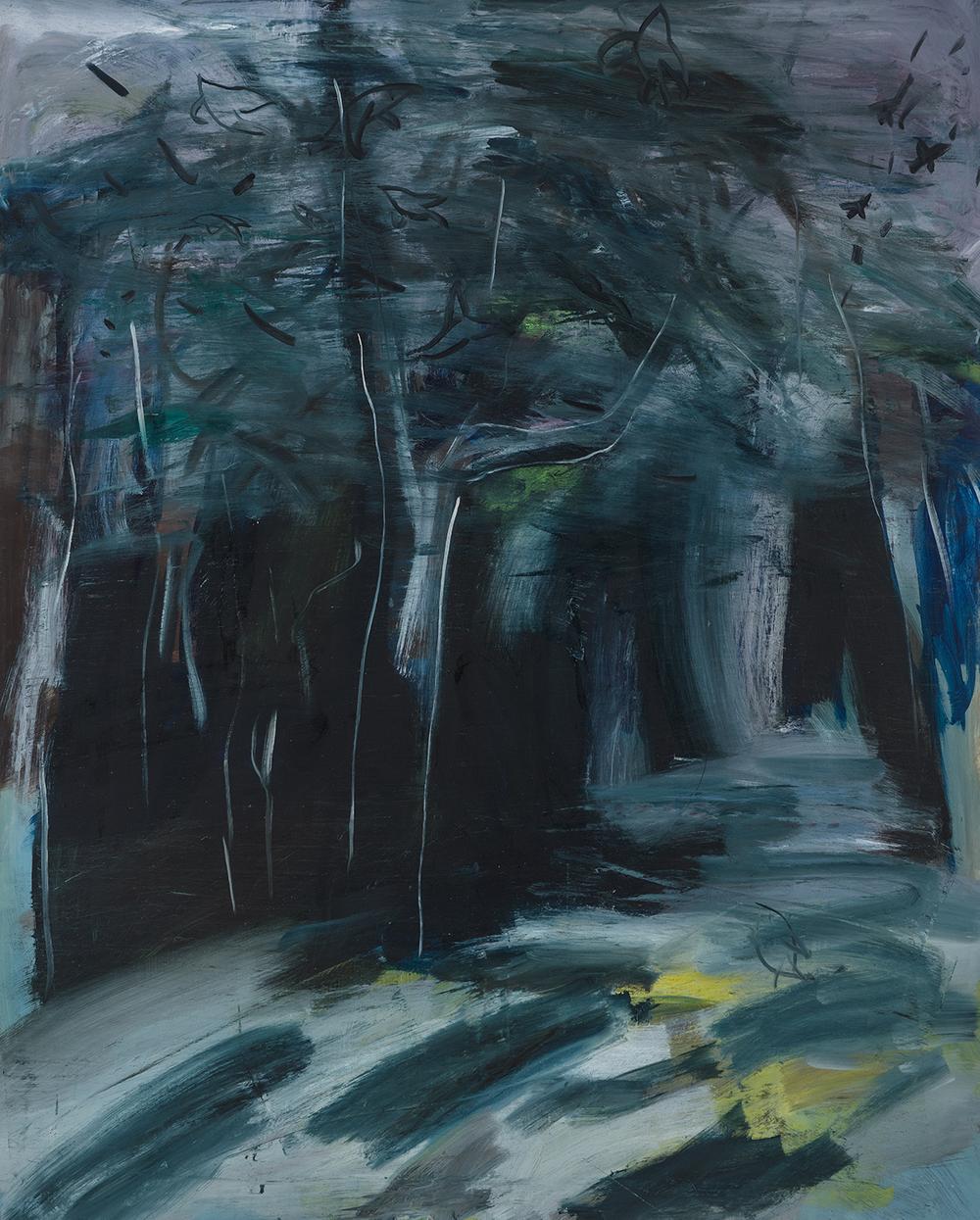
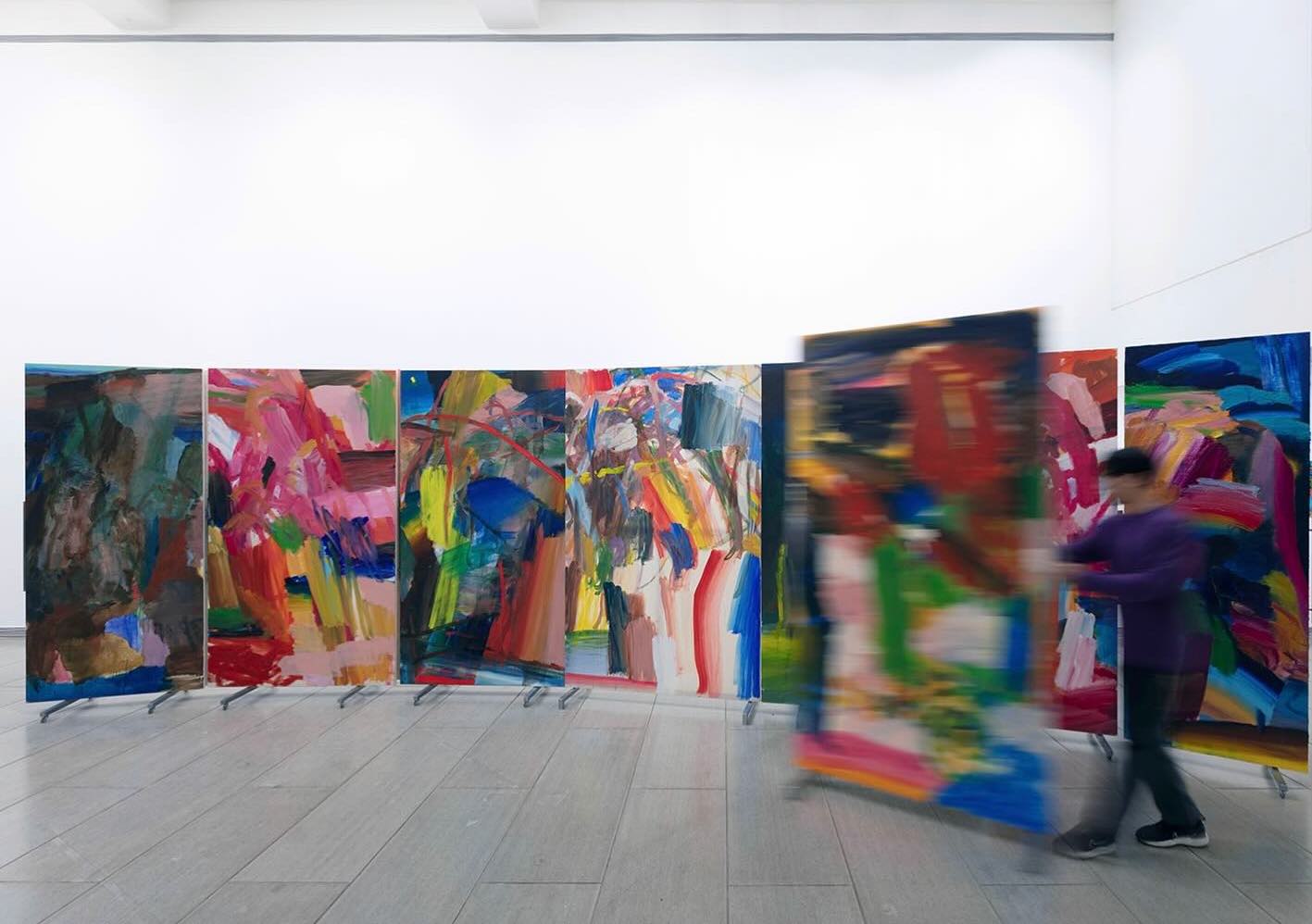
As a result, in the landscapes of 2016, when he still maintained a
certain visual distance from the forest, forms such as birds, deer, and trees
were depicted with relatively clear outlines. However, after he began painting
through the language of the body, elements that explicitly indicated or
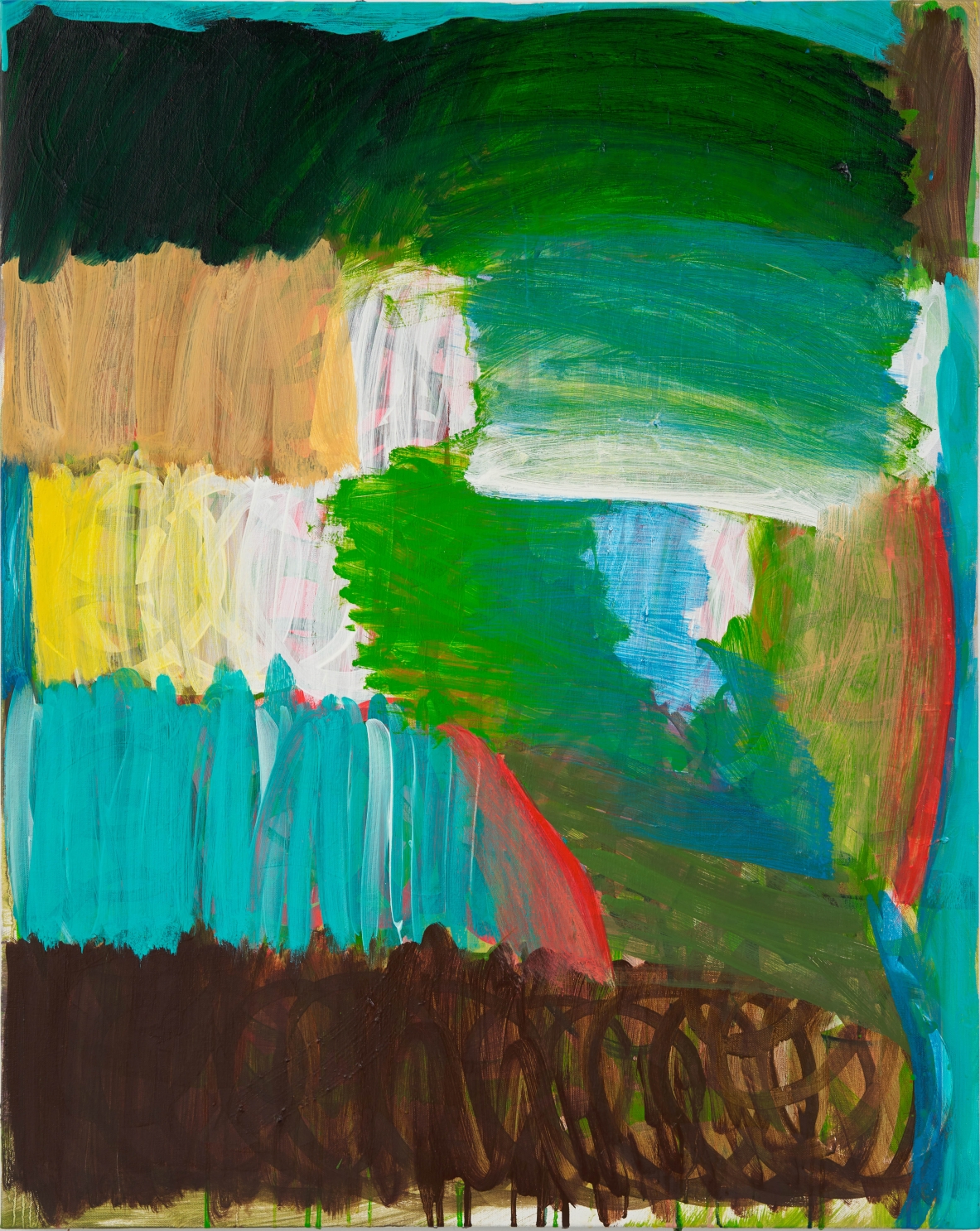
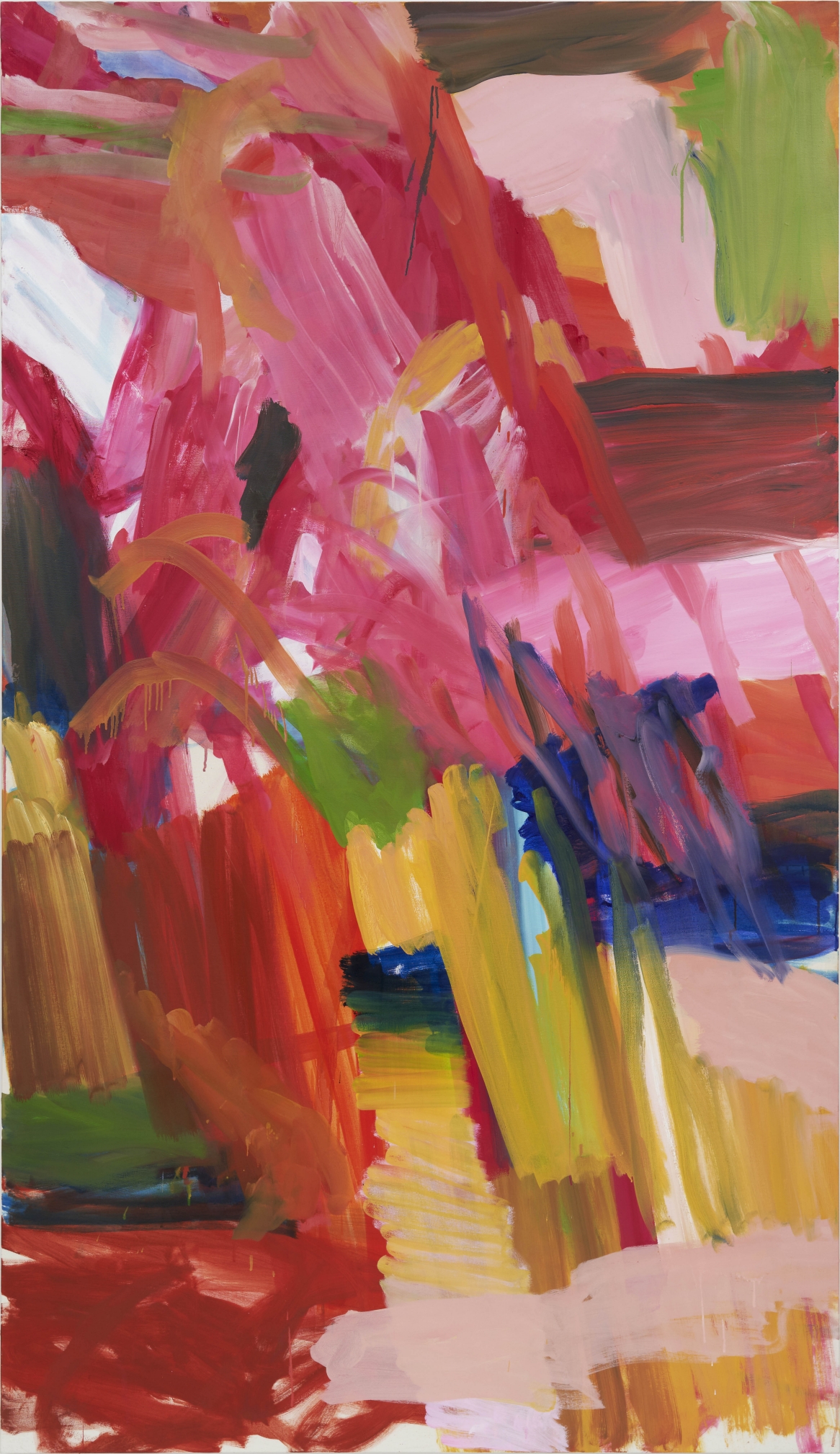
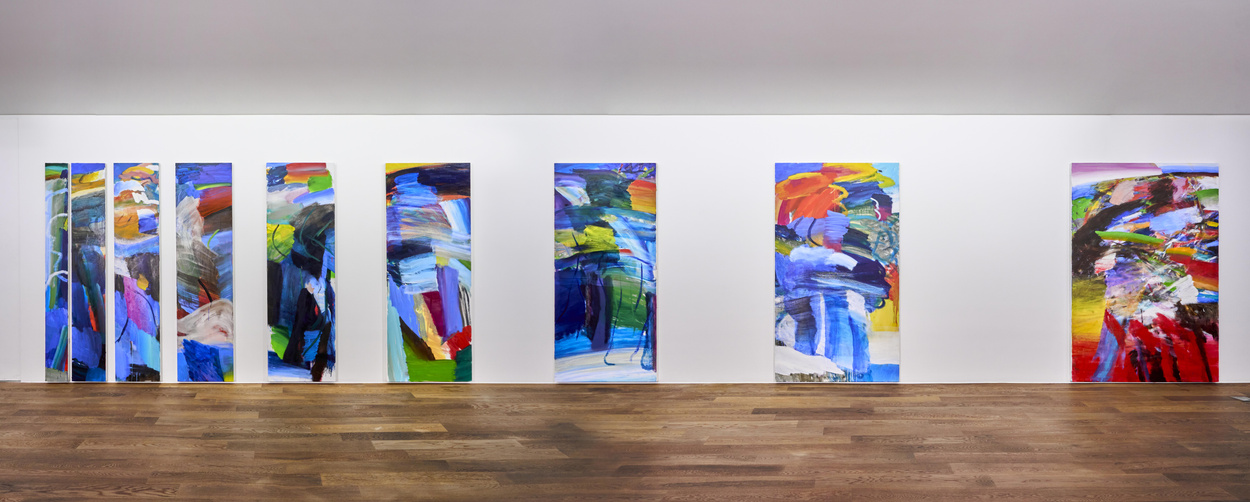
described objects within the forest markedly decreased. Brushstrokes that moved
immediately in response to sensations arising prior to conscious composition
were freed from the function of expressing distance or form. They became
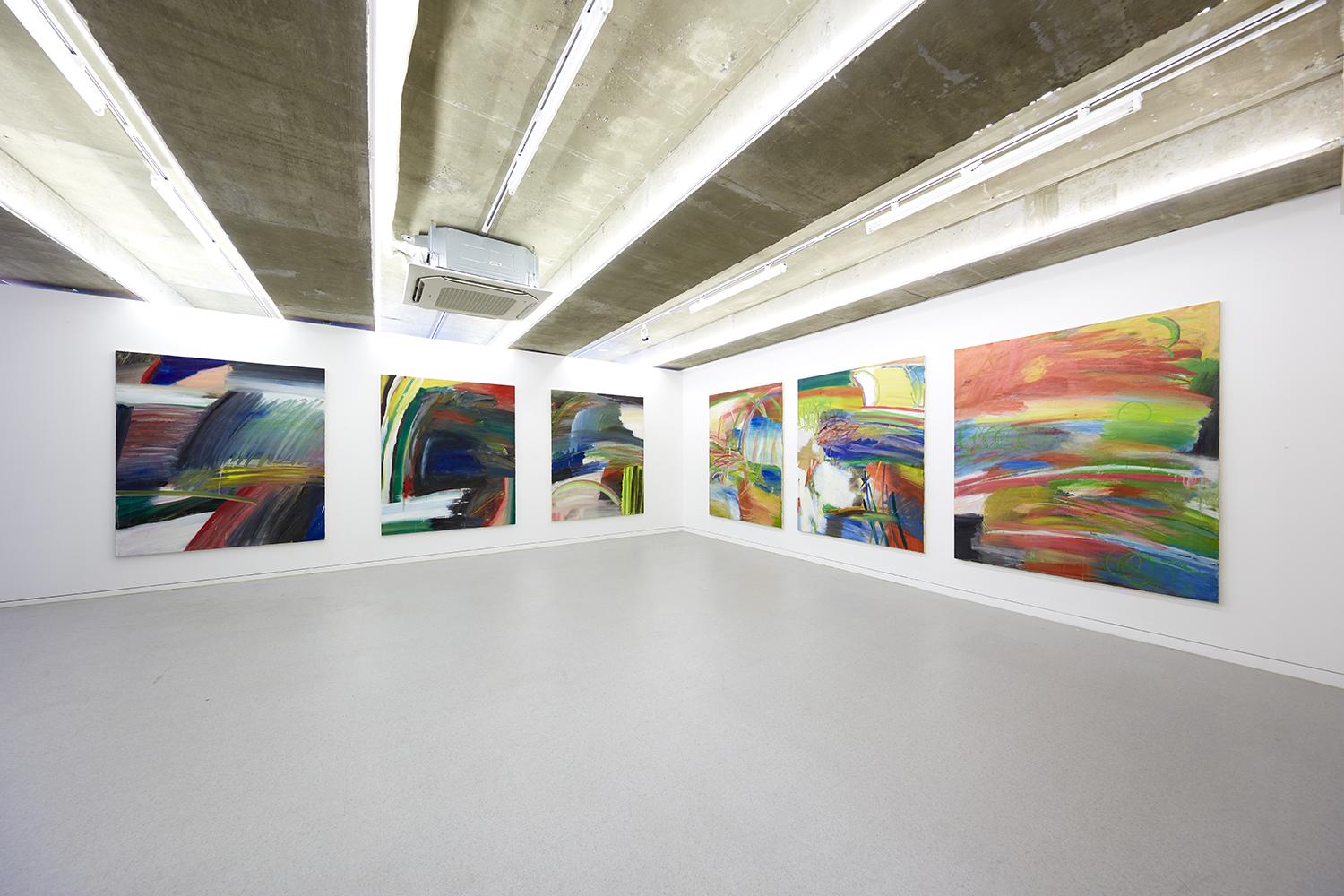
faster, more repetitive, and simpler, eventually forming multiple planes,
bands, and masses of color that structured the canvas.
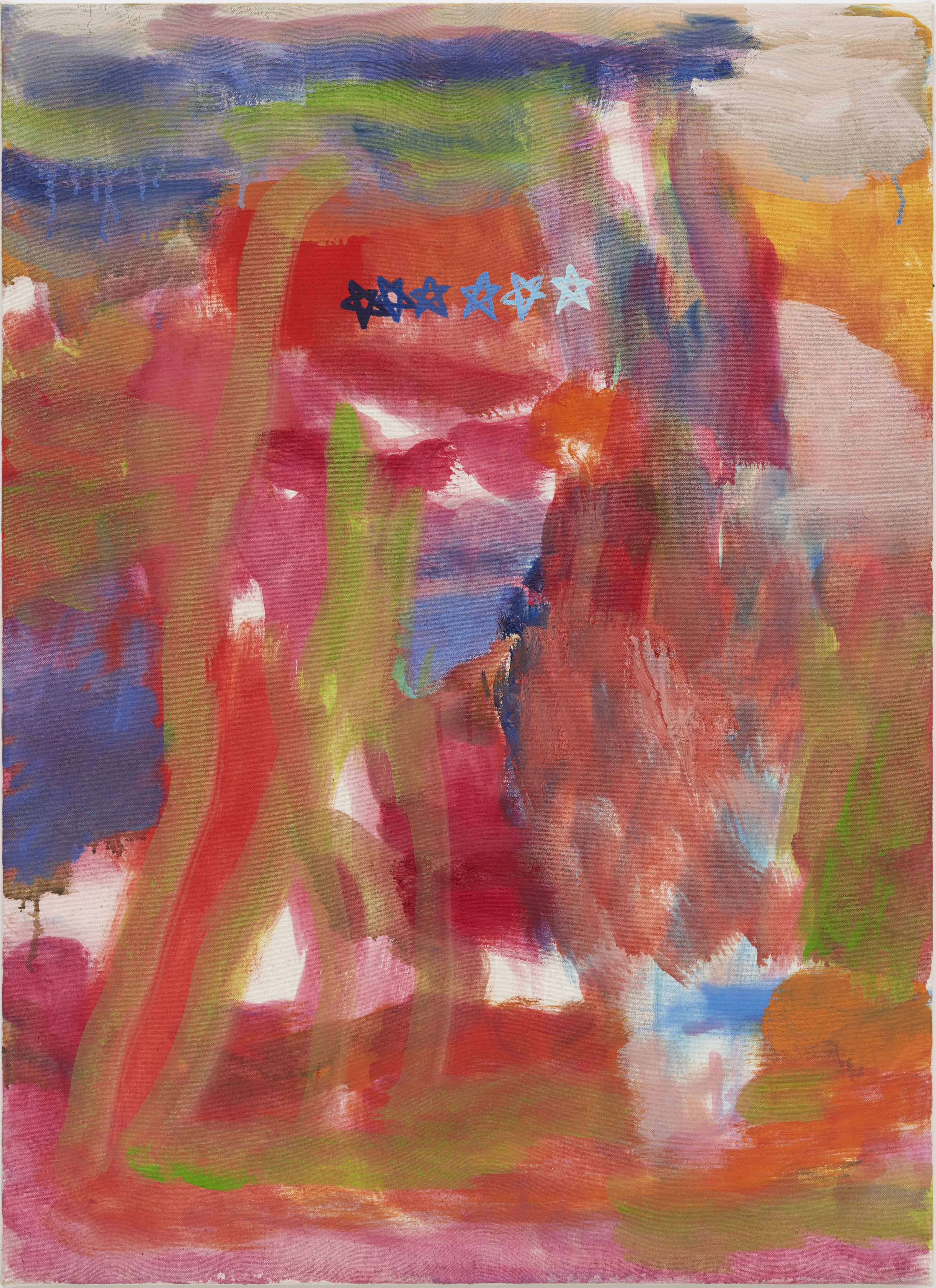
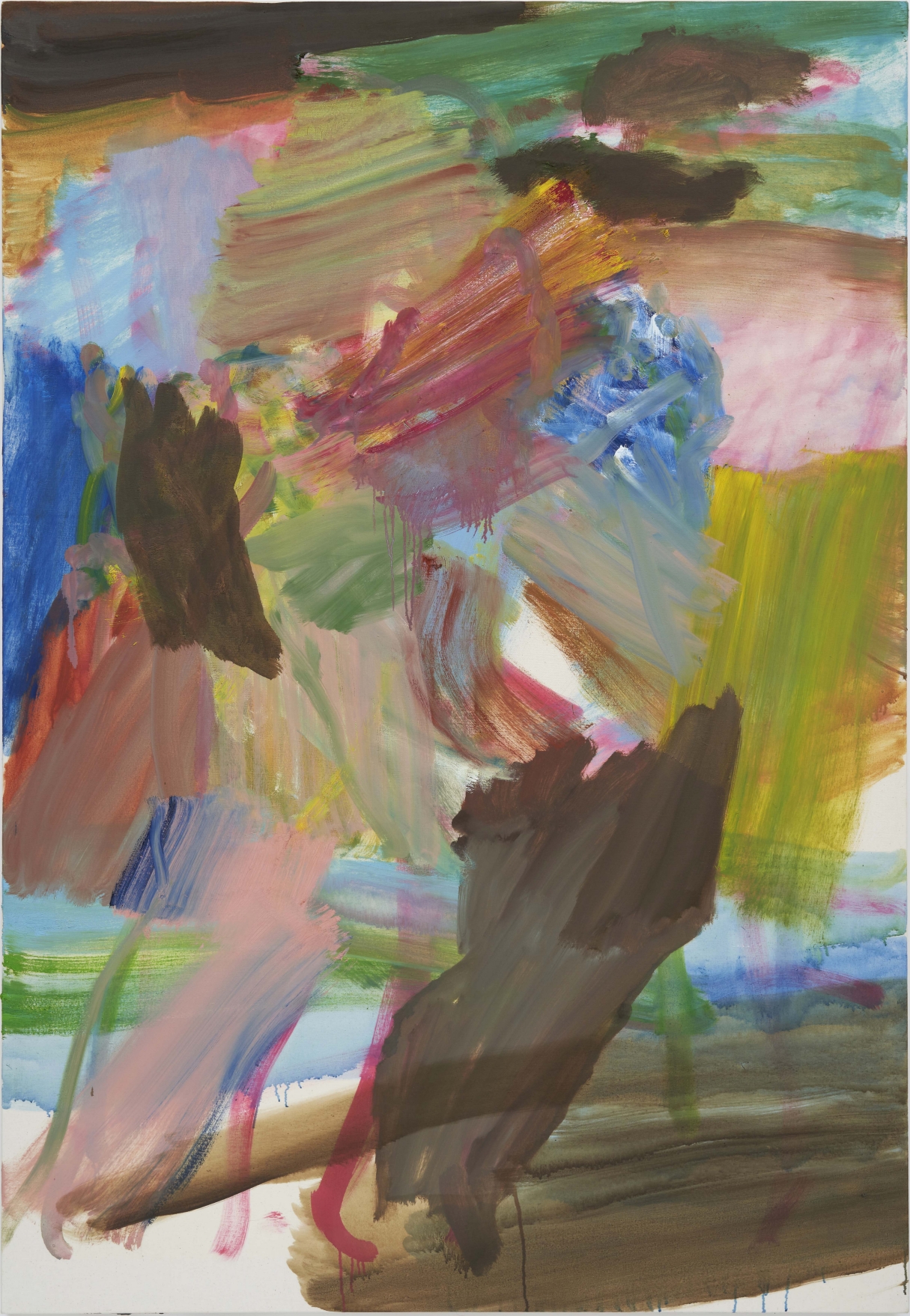
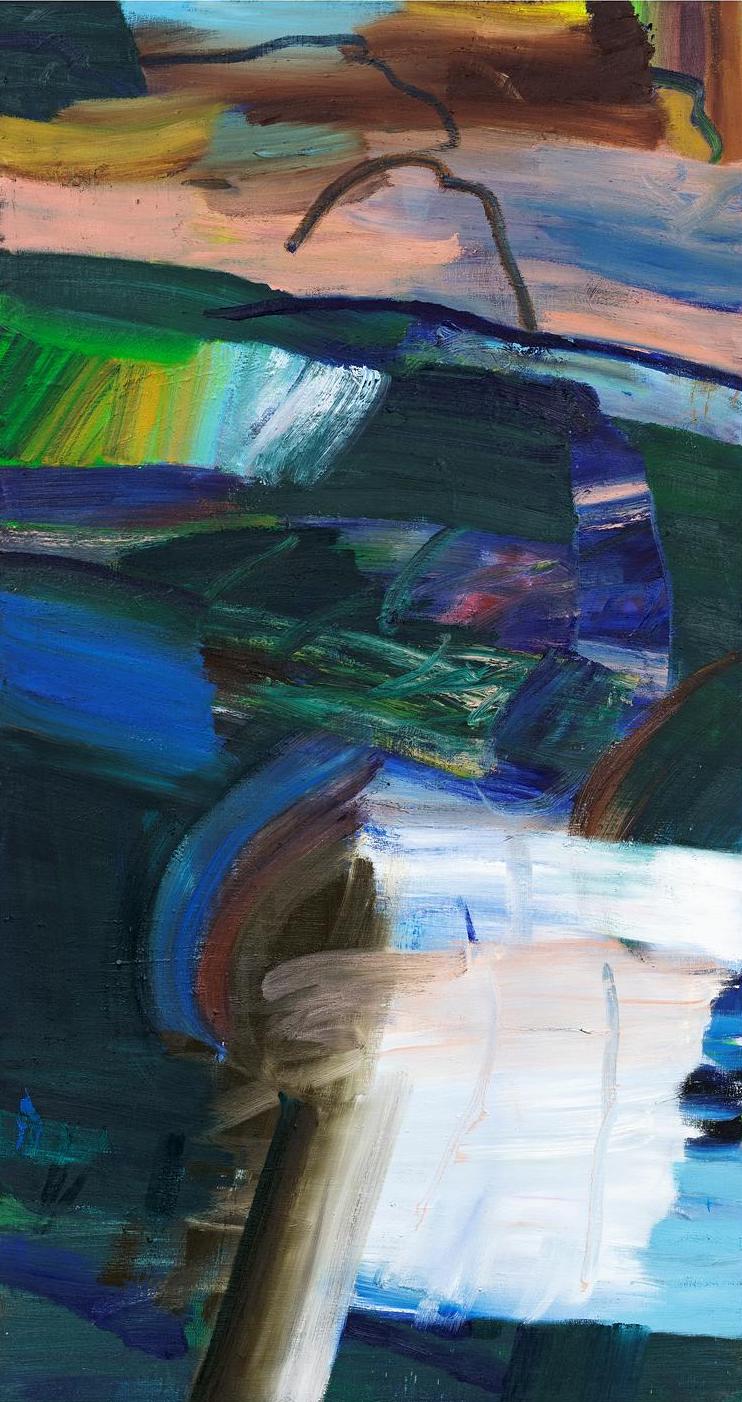
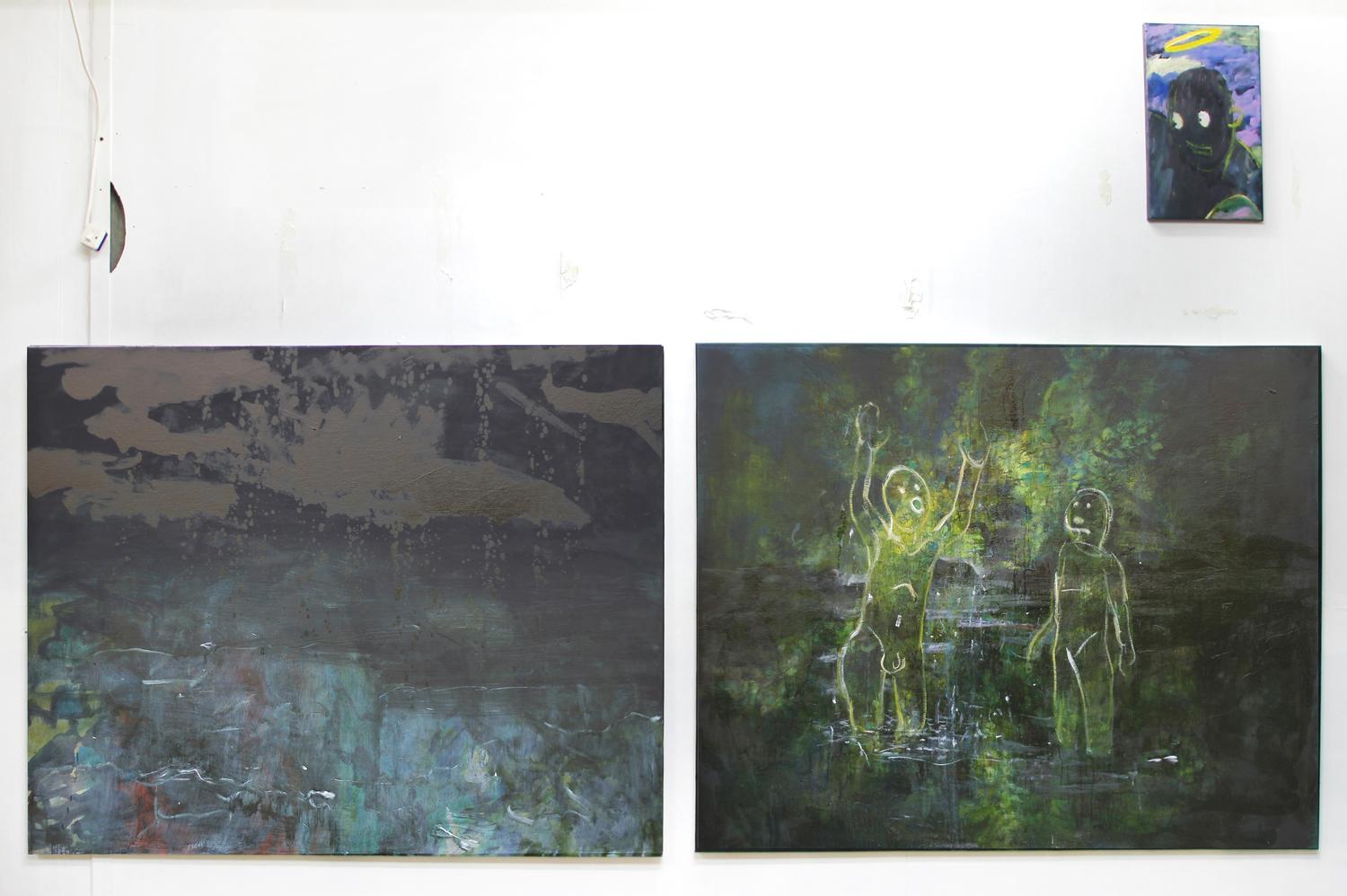
His focus on bodily sensation also led the body itself to appear
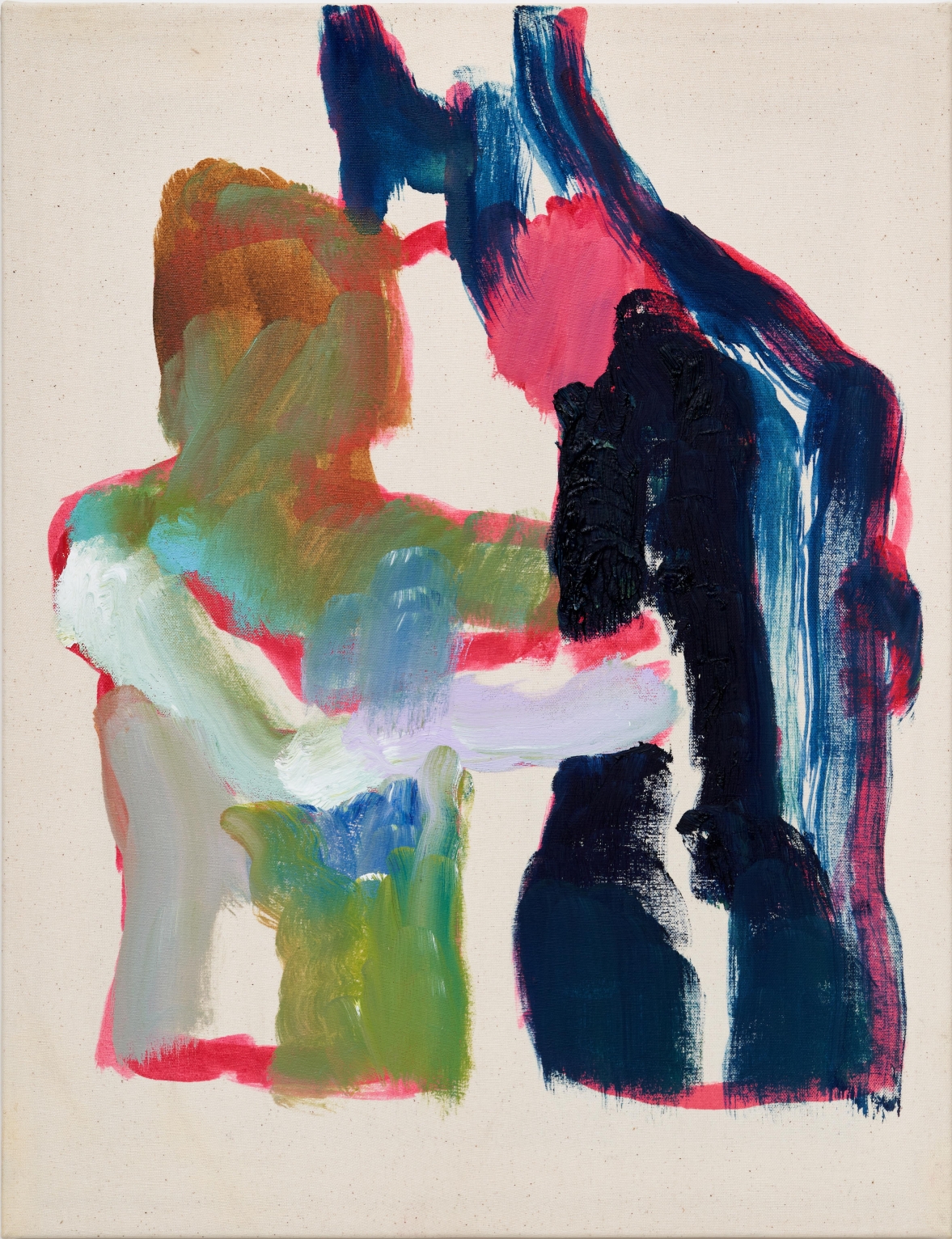
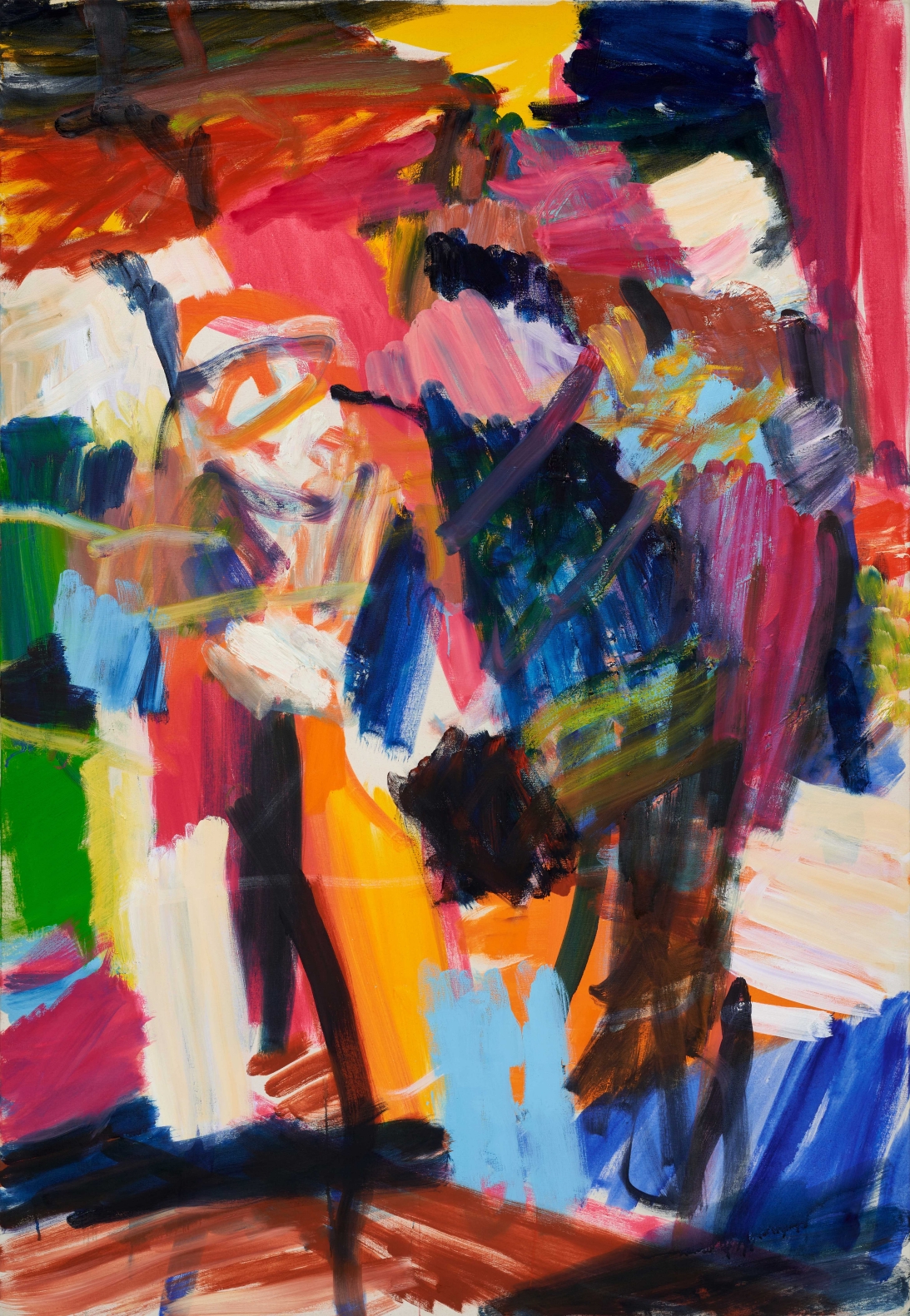
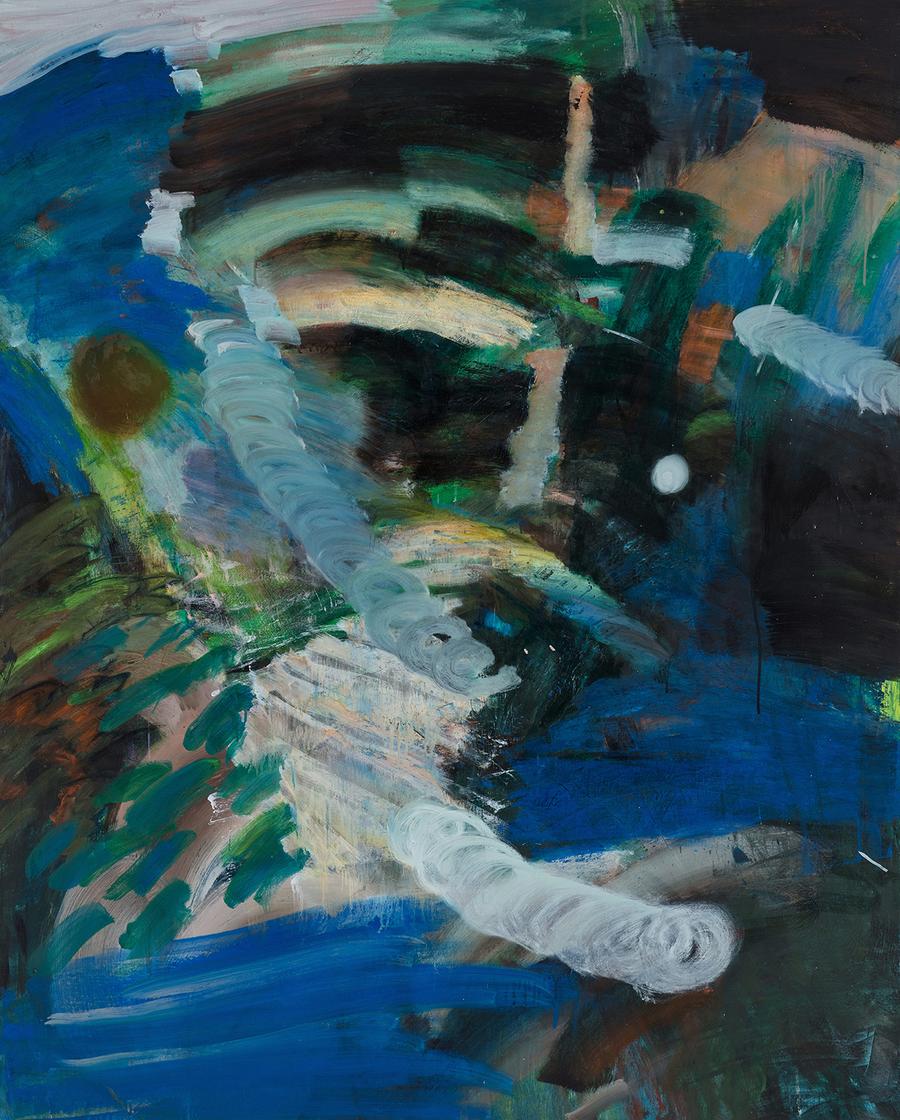
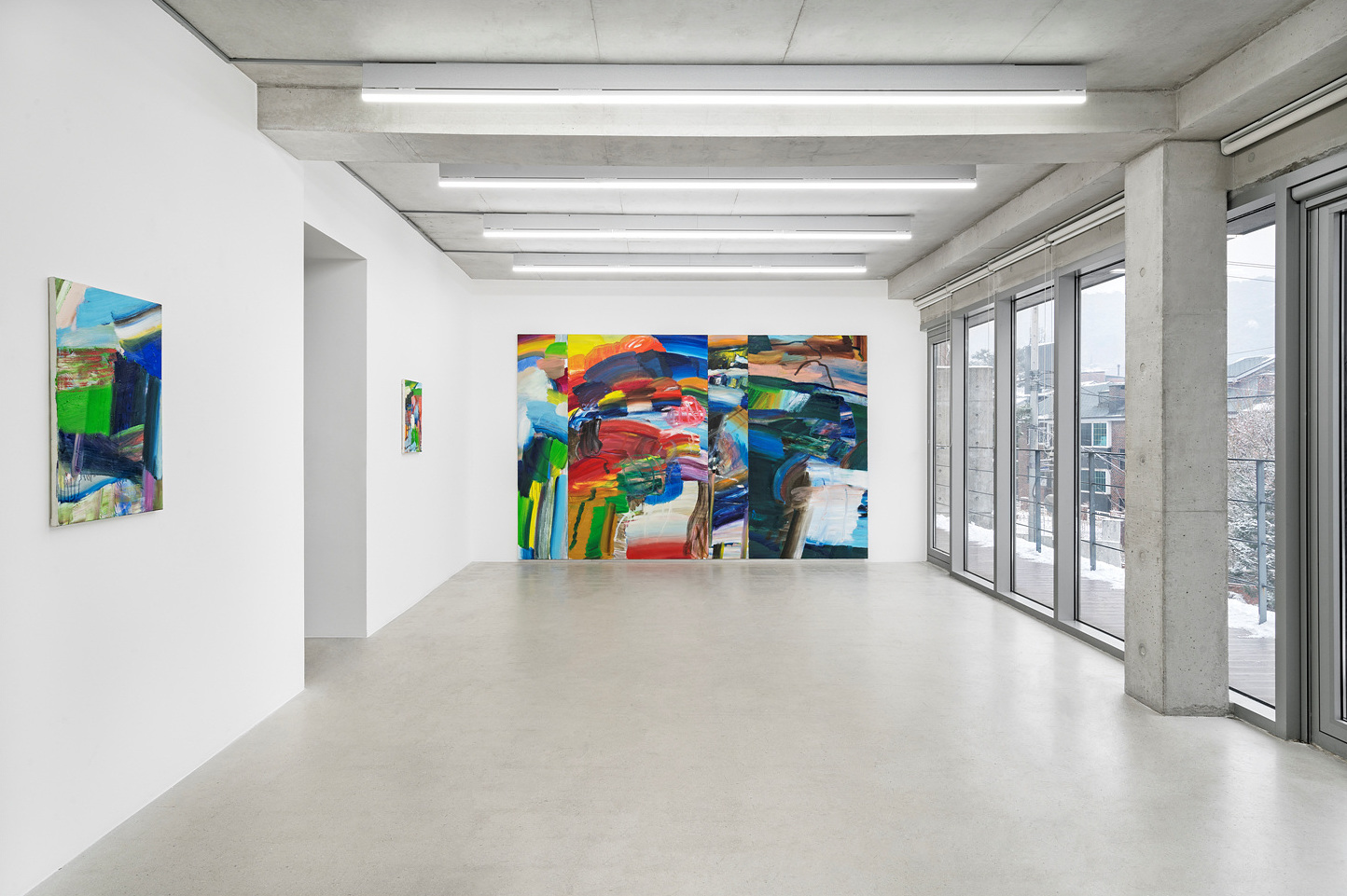
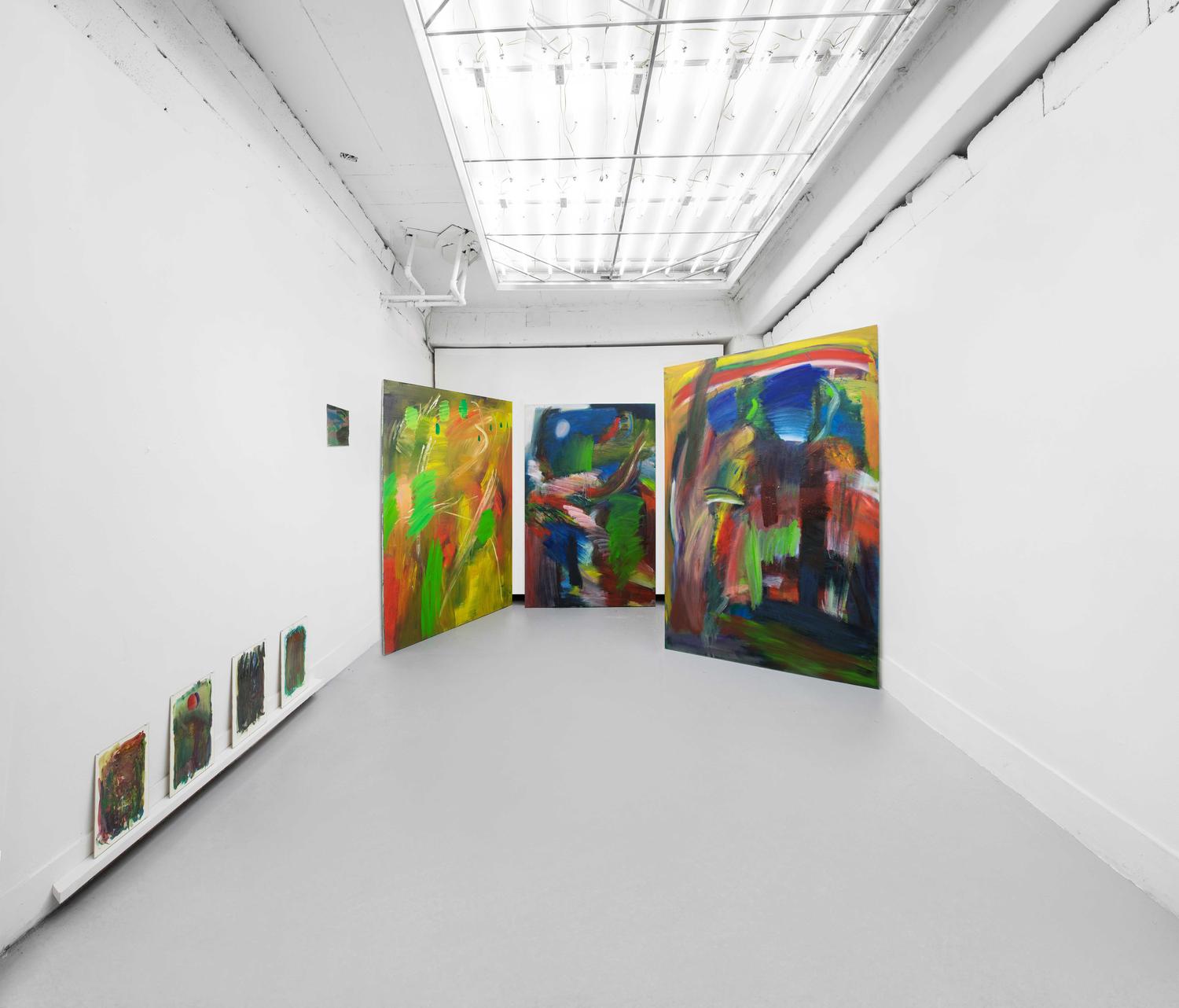
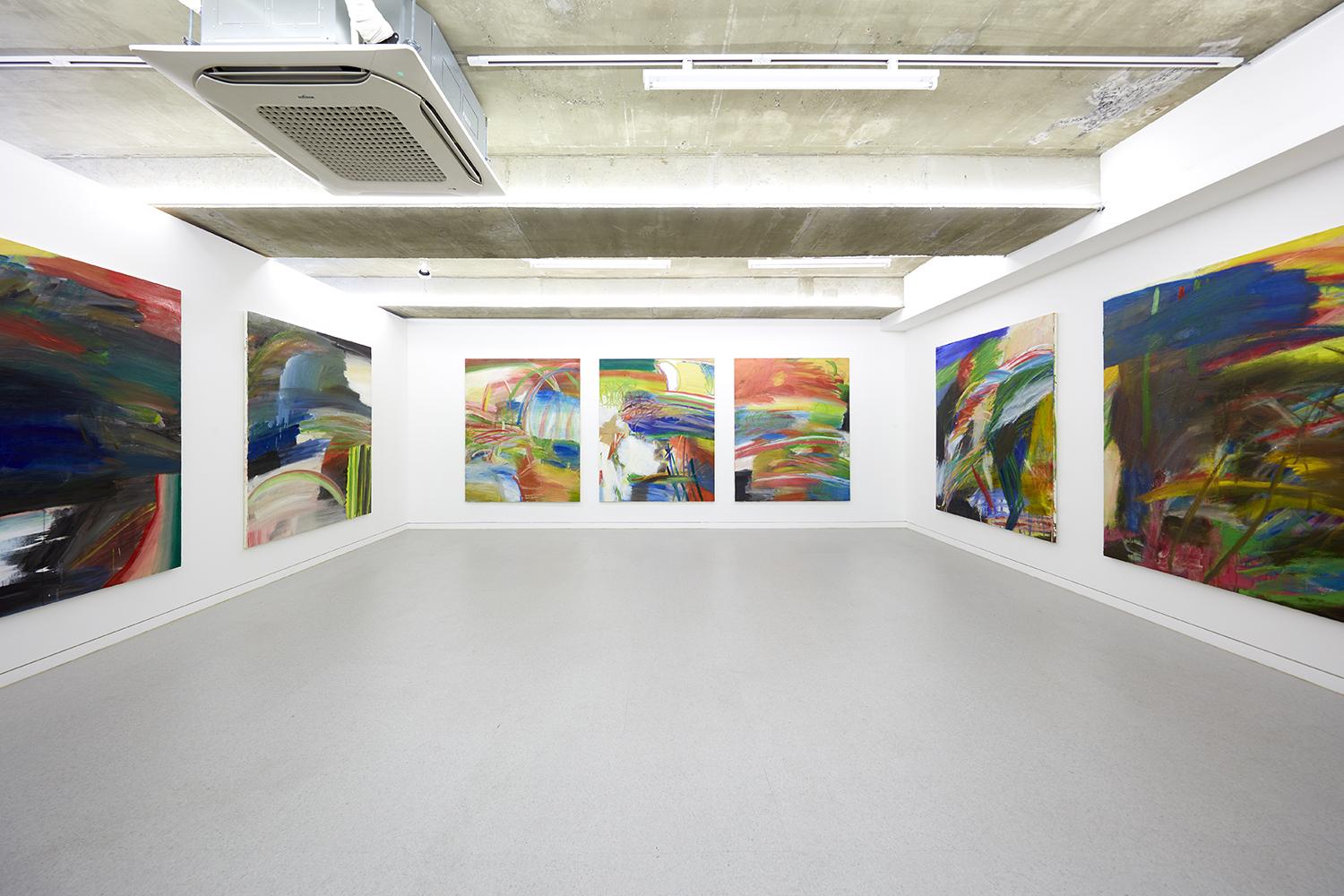
as a subject within the painting. In the three works of Forest
and Body_Mass presented in this exhibition, abstracted human
forms emerge. The various physical particles emitted by the forest seem to
penetrate the body, altering its state and extending it beyond its own
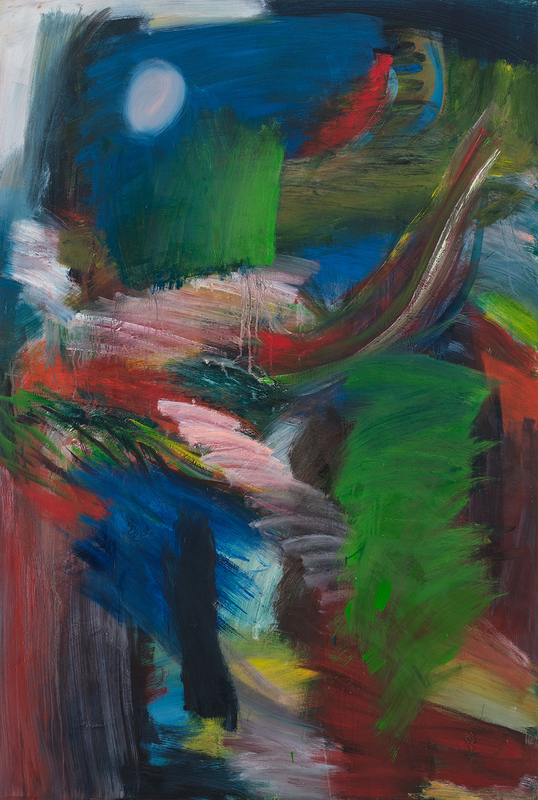
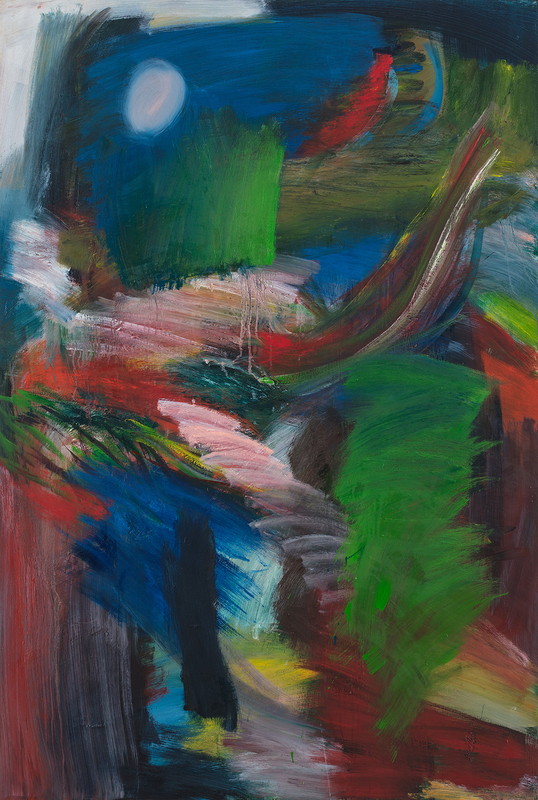
boundaries. Thus, the faces and heads of figures in the paintings sometimes
overlap with the sky or mountains, touch rainbows, and become landscapes
themselves; the sun and moon at times become the eyes of the figure.
Moreover,
the bodies he paints do not possess independent flesh distinct from other parts
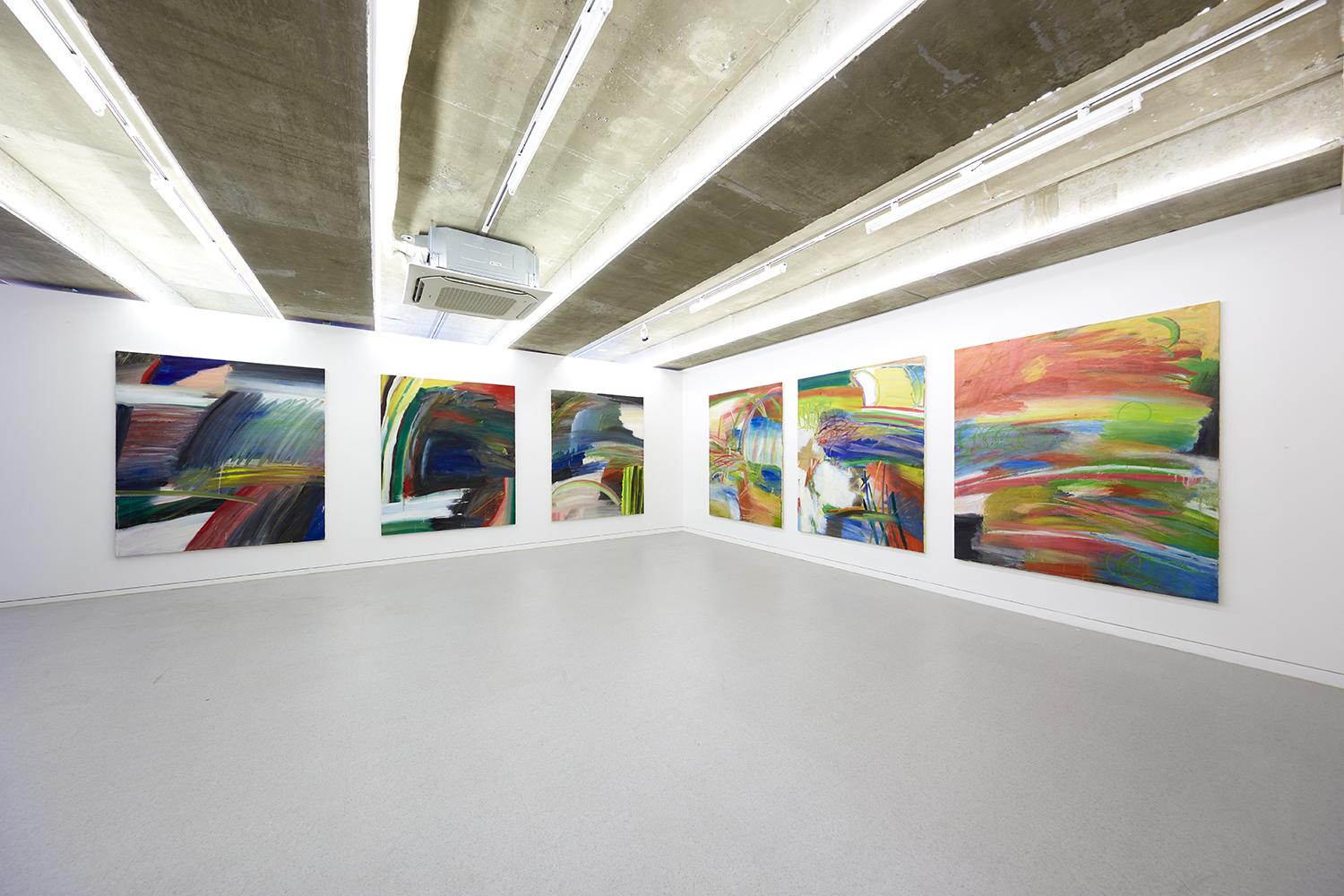
of the canvas. His brushstrokes blur and disrupt the boundaries between body
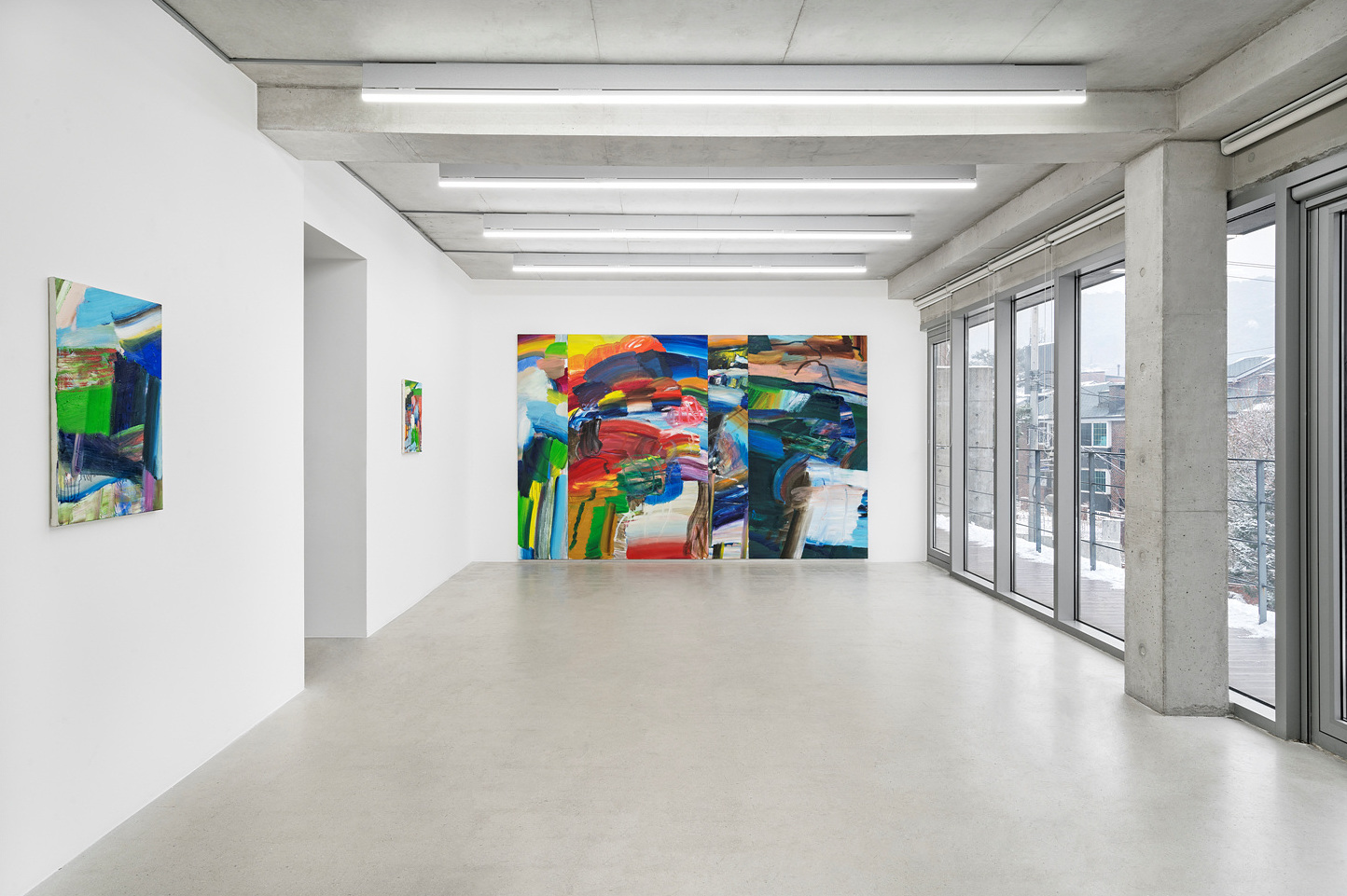
and landscape. Color planes and bands of varying widths, lengths, and
directions simultaneously construct the canvas and the figure’s body, so that
the entire surface becomes a single body—a large mass without a clear boundary
between landscape and figure. Rather than a figure existing within the
painting, the canvas itself becomes the figure.
In this way, landscapes and figures painted in the language of a
body in communion with the forest overlap, mix, and exchange their forms and
flesh, reborn as a new body—a “forest-body” composed of portraitized landscapes
and landscape-ized portraits. His paintings trace a journey that reaches
sensation of the body through the forest, and in turn reaches sensation of the
forest through the body.