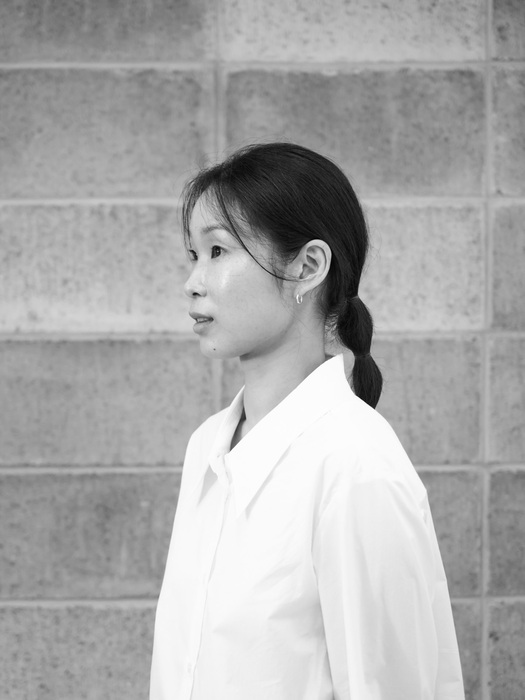
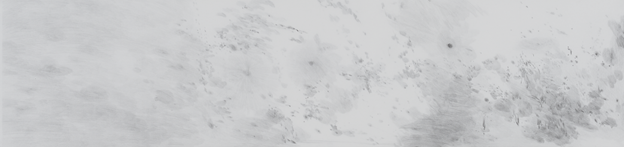
Dongju Kang received her B.F.A. and M.F.A. in Fine Arts from Seoul National University of Science and Technology. She currently lives and works in Seoul.
Installation
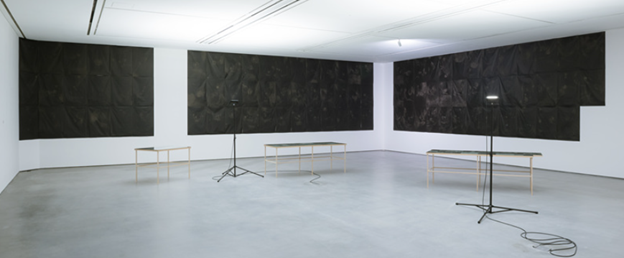
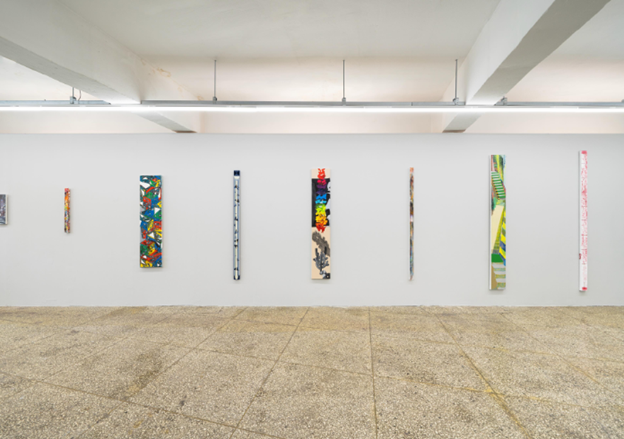
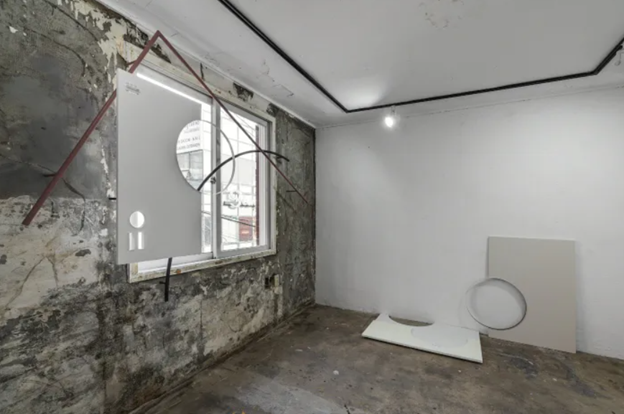
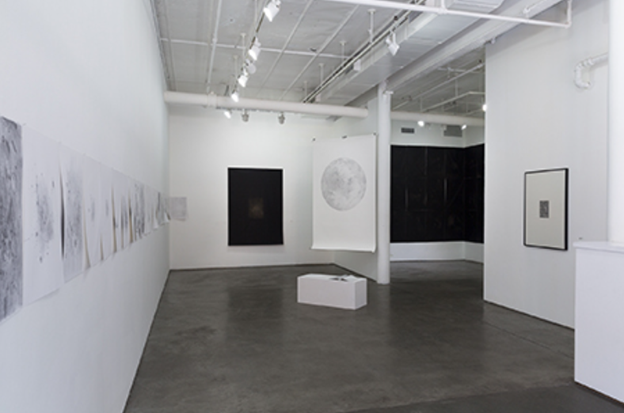
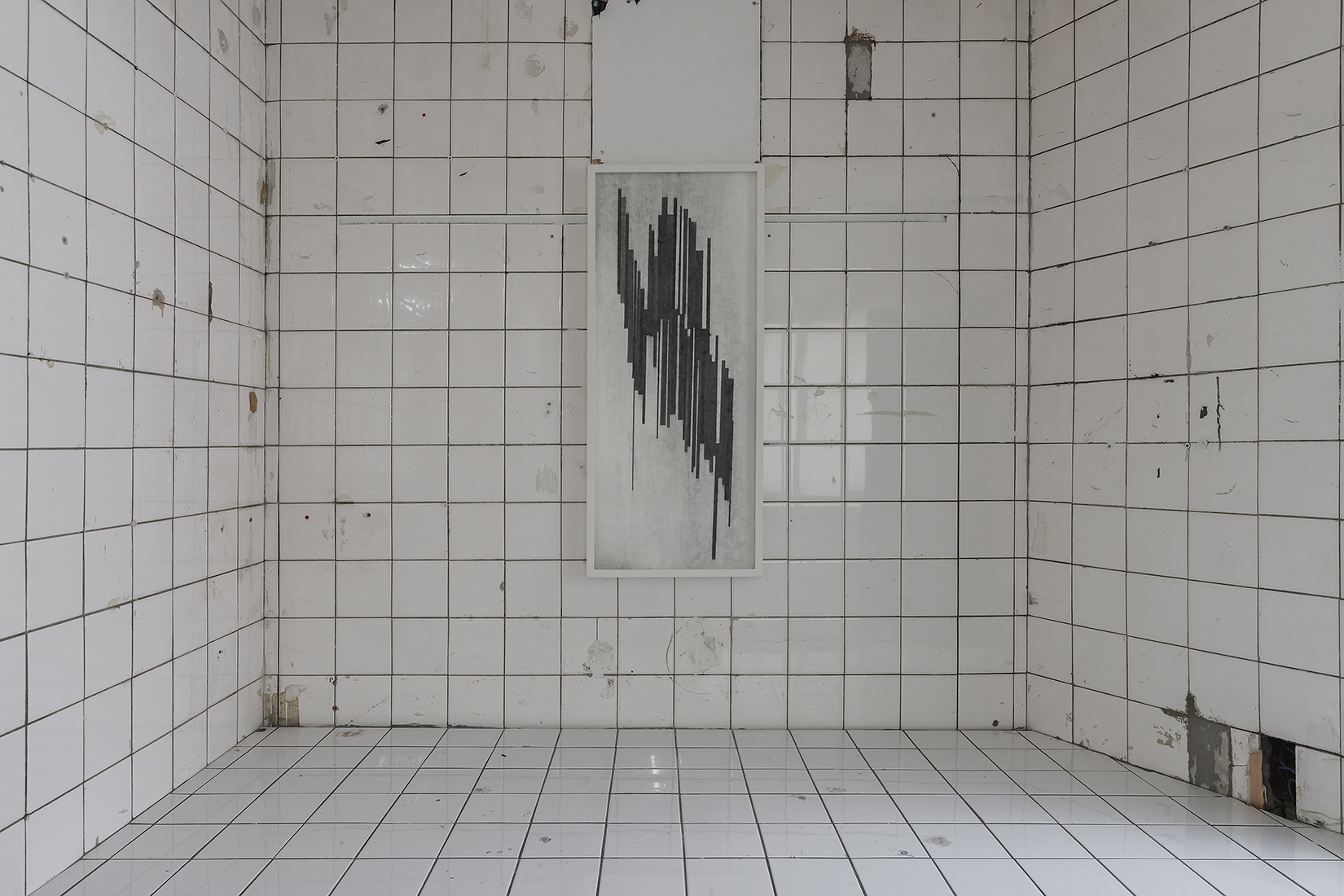
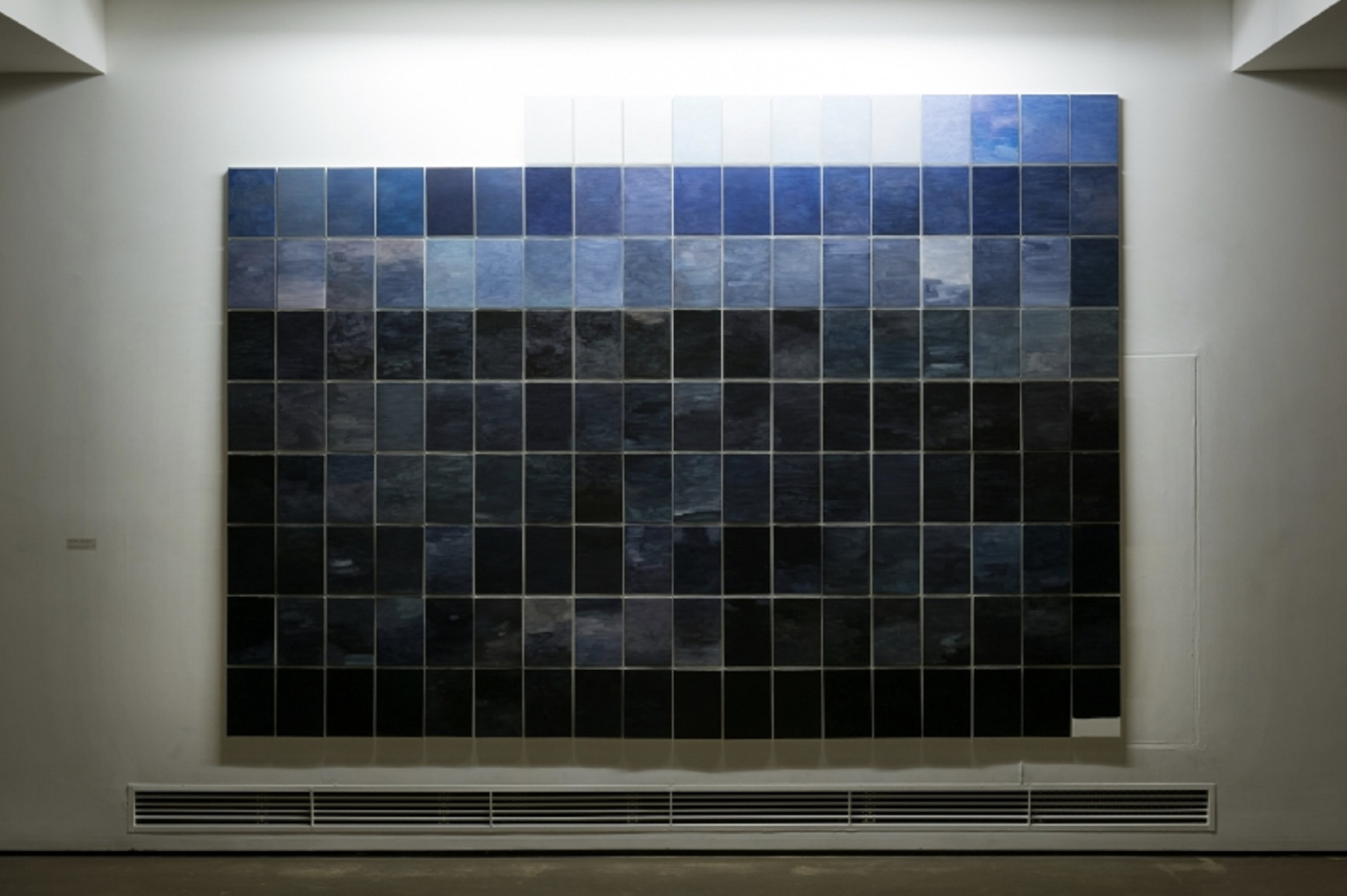
view of 《The Night Before》 © DOOSAN
Gallery
DOOSAN
Gallery Seoul is pleased to present 《The Night Before》, a solo exhibition by
Dongju Kang, from September 2nd to October 3rd, 2015, in Seoul. Kang won the
5th DOOSAN Artist Award in 2014, and her work documents urban landscapes with
paper and carbon paper.
Kang
wanders through different parts of the city, capturing the subtle changes in
the urban landscape at night. Instead of working during the day when everything
is in sharp focus, Kang chooses to work at night in order to reserve the visual
elements and manifest the senses that are not easily expressed. On paper on top
of carbon paper, Kang documents how the dim lights of the night change with
time and space.
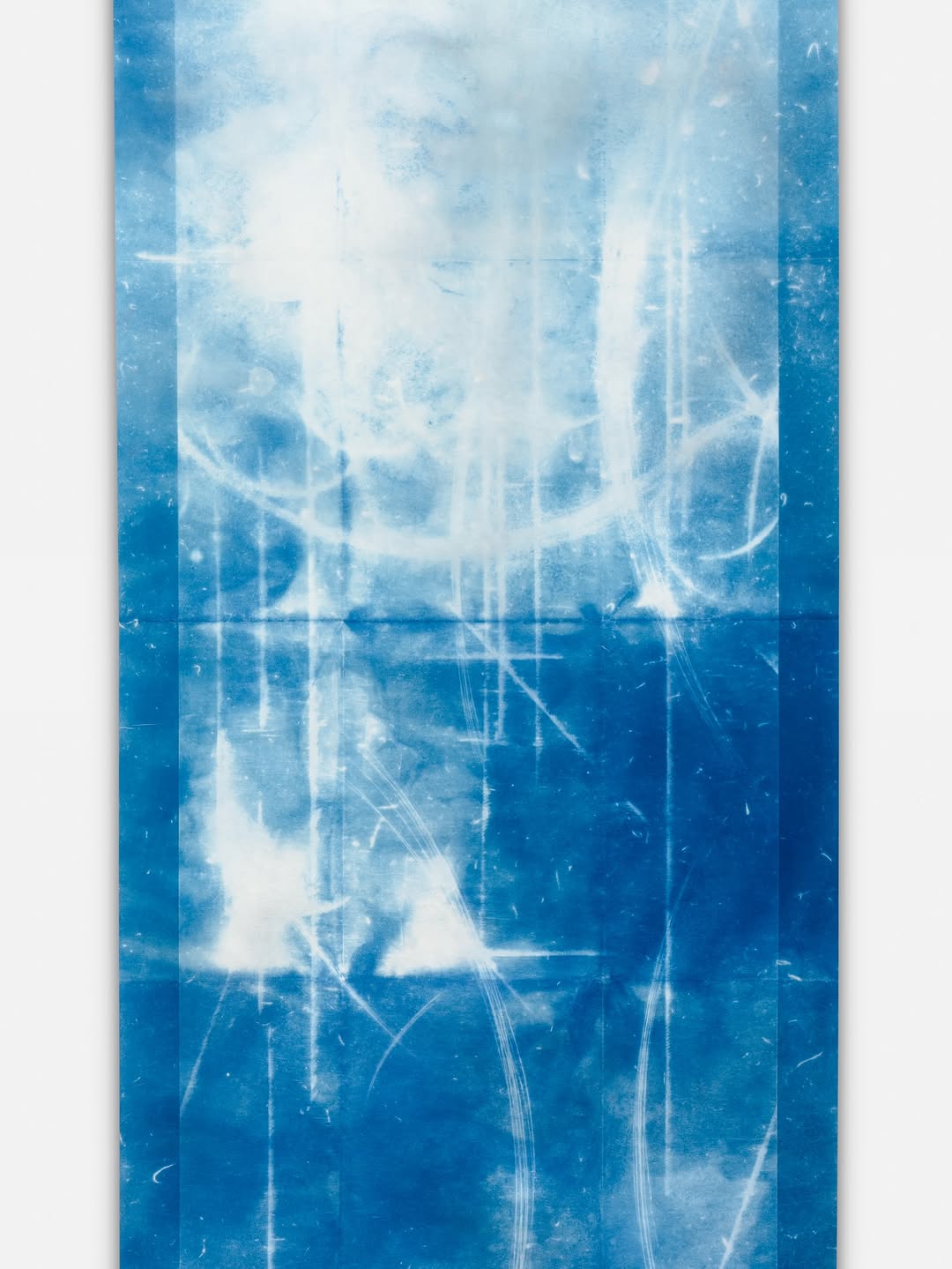
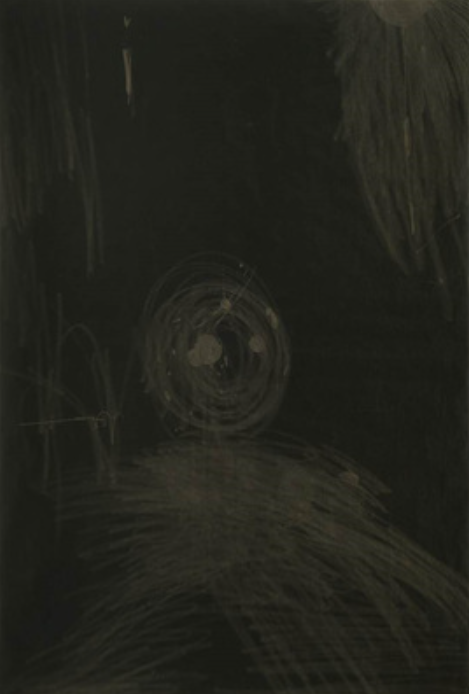
Carbon paper is an excellent material through which to transfer
the image and sensibility of the night onto the paper. While drawing on paper
portrays light with black pencil lines, drawing on paper with carbon paper
beneath it captures light through the absence of lines. Just as only a small
amount of light is required to illuminate the surrounding in the darkness of
the night, Kang’s carbon paper drawings are left with dim traces that are
indecipherable at first.
Installation
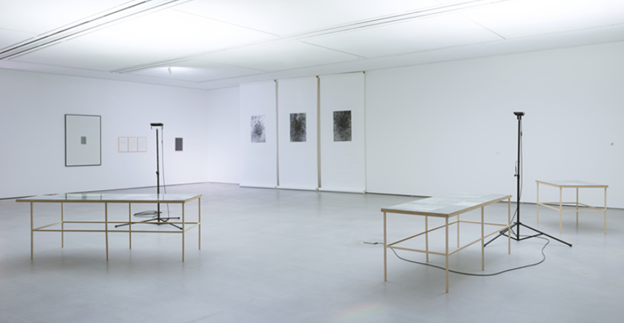
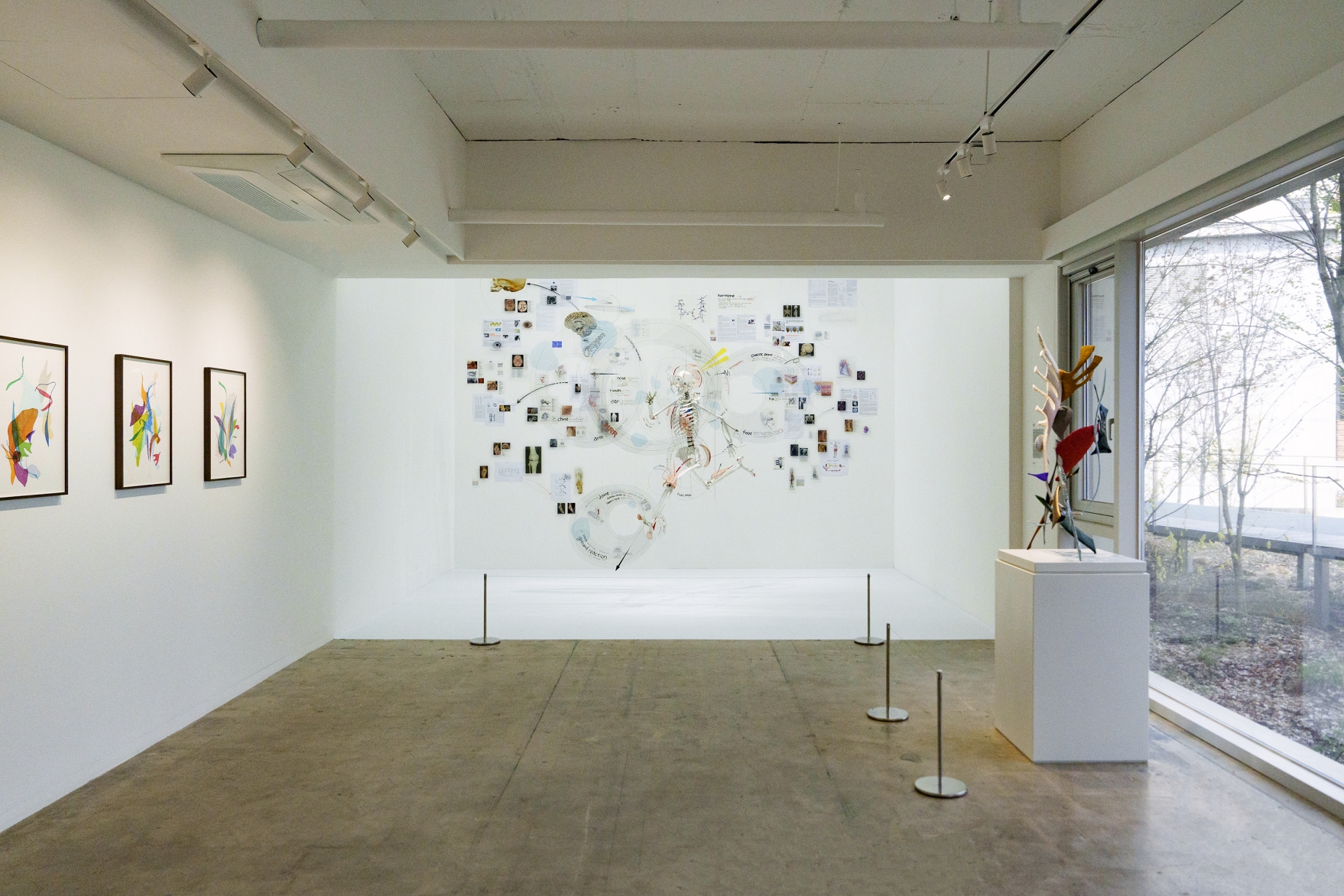
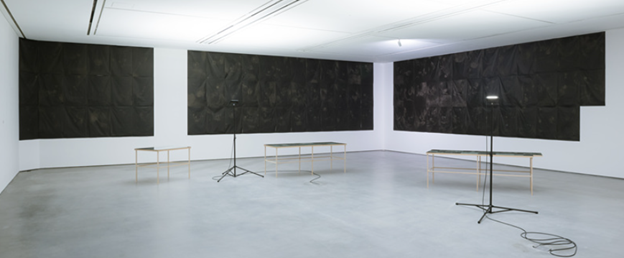
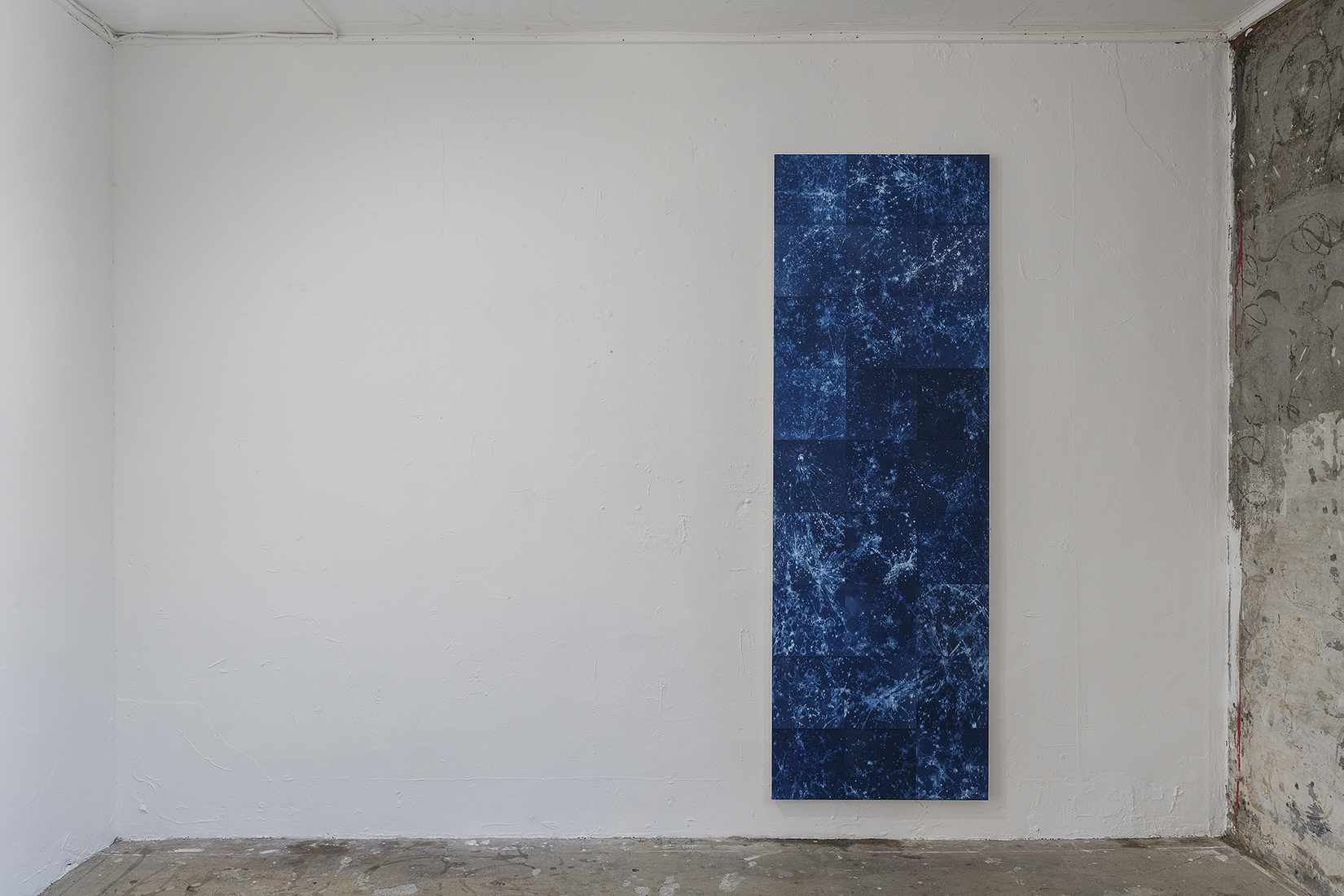
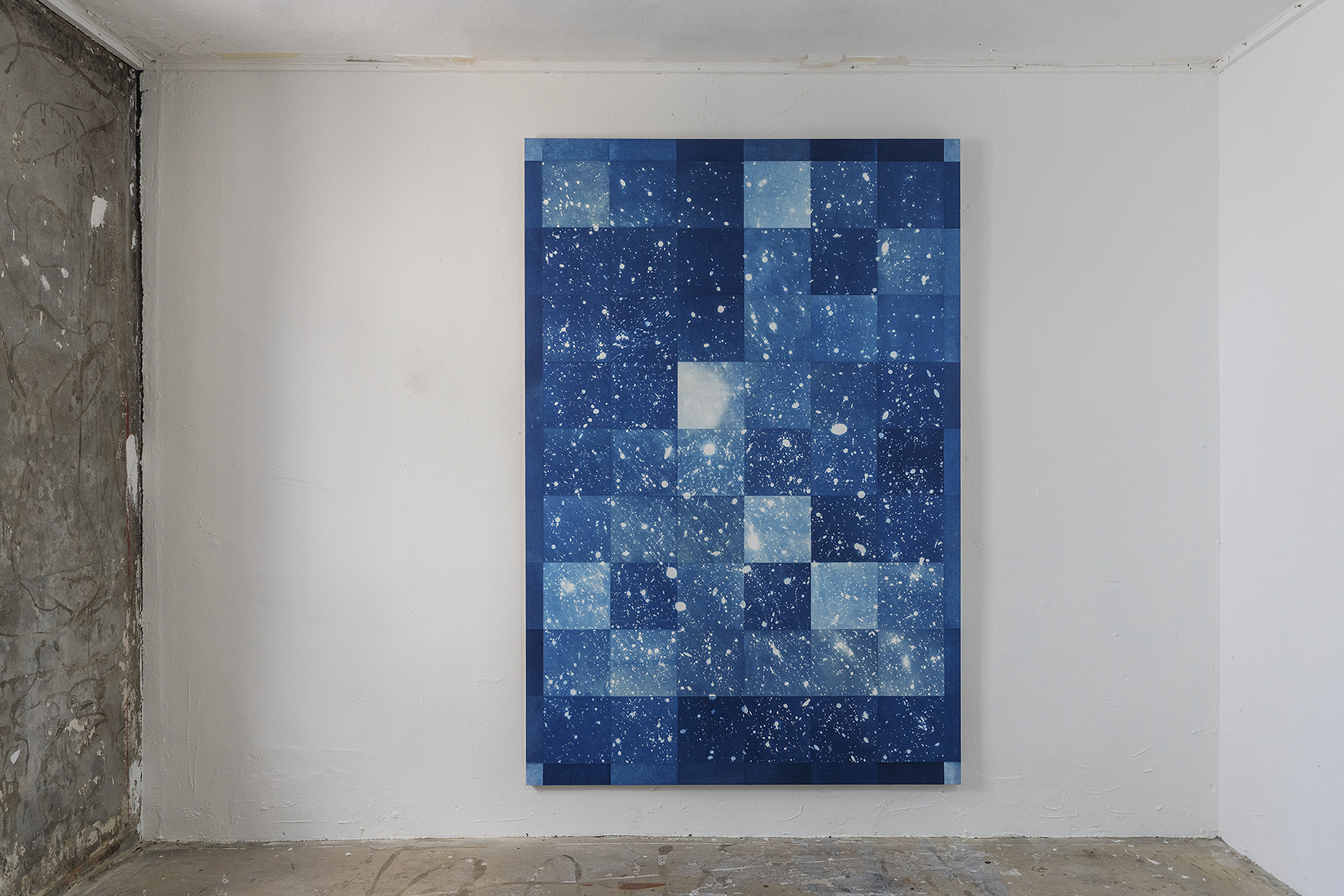
view of 《The Night Before》 © DOOSAN
Gallery
For
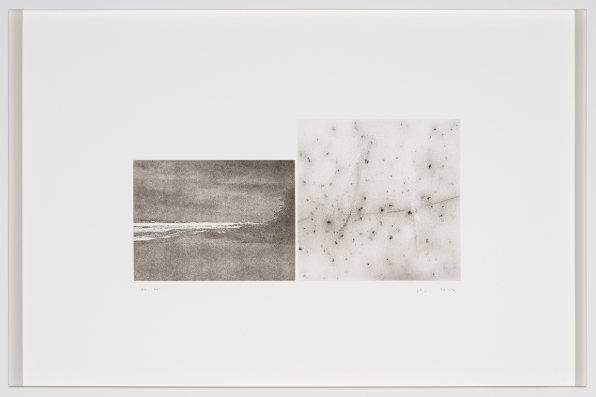
the exhibition The Night Before, Kang presents drawings that capture her
movement, from leaving her home, roaming around in spontaneous routes, and
returning home. She photographed what she saw during her journeys, stopping
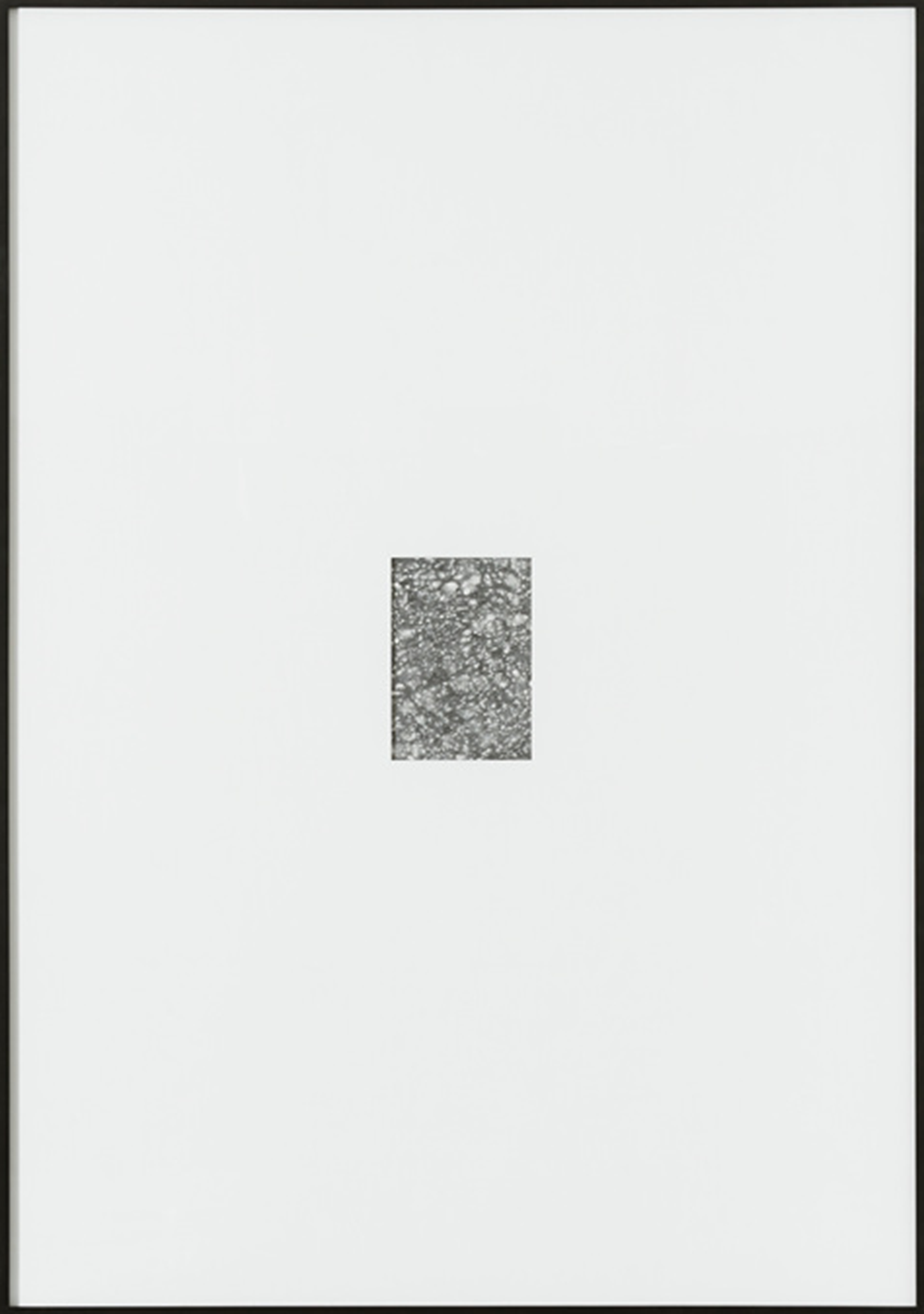
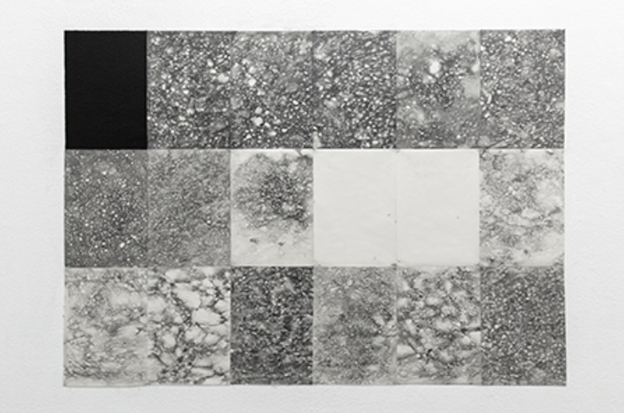
every 100 steps and capturing the surface of the ground on the paper. In the
works Light Drawing and Ground
Drawing, three different journeys with same point of departure
and arrival document the landscape of light and the city.
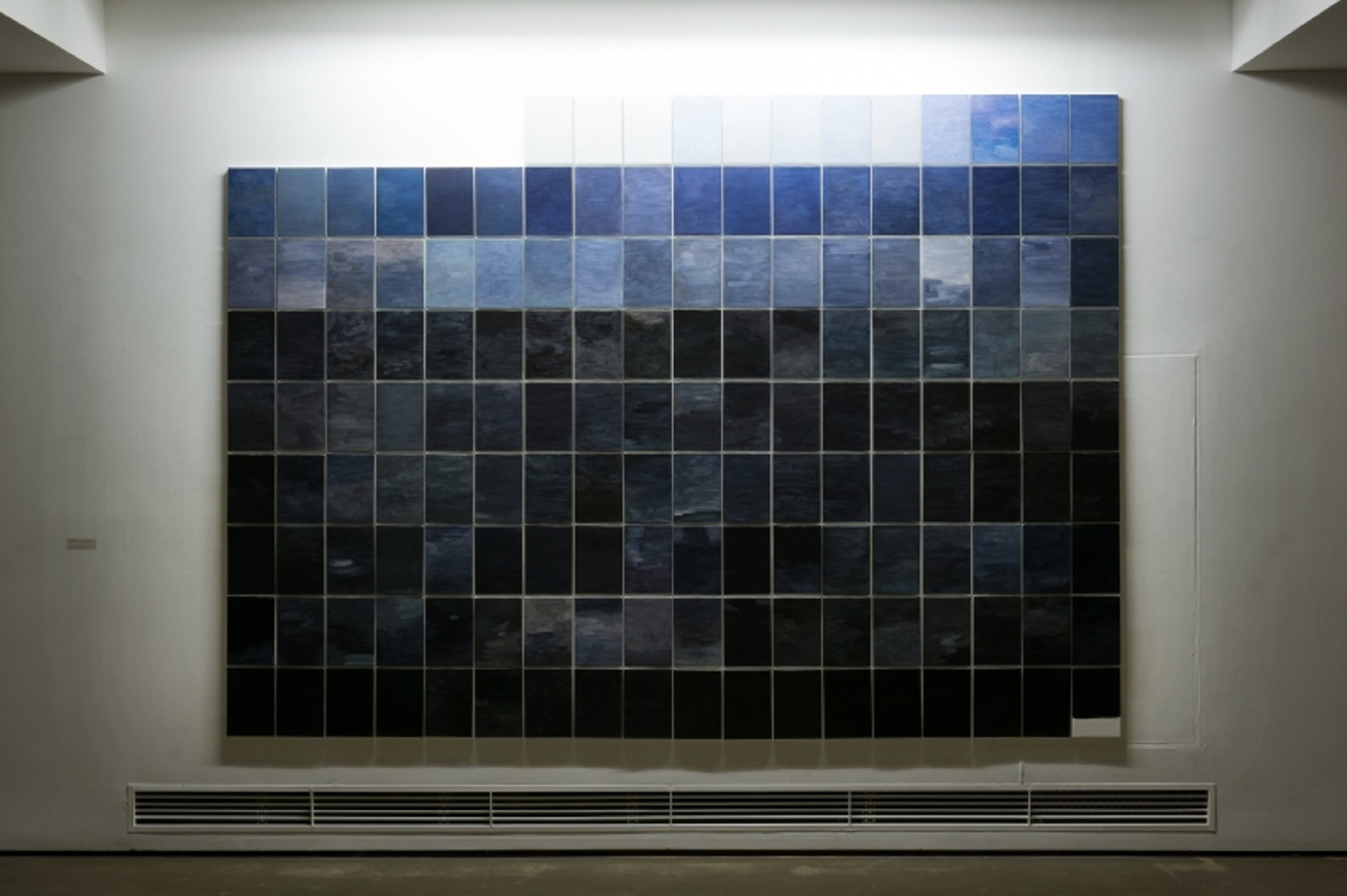
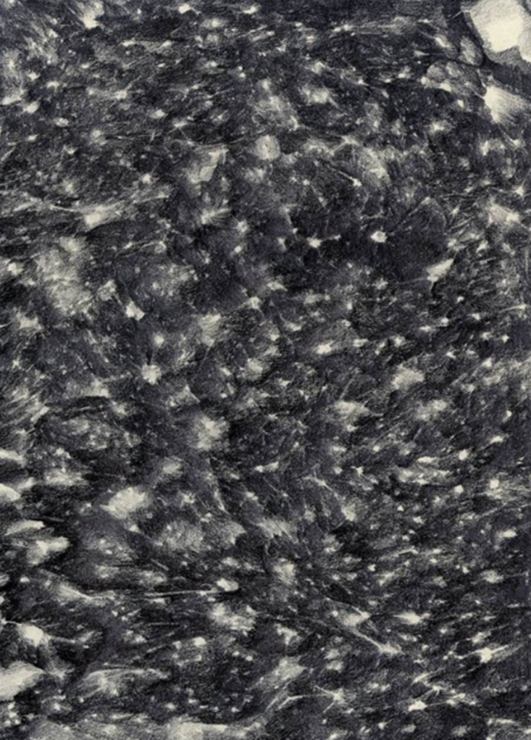
The accumulation of
time is evident in Light Drawing, in which the artist
drew images of her stopped moment on paper using different carbon paper each
time her stopped. The three drawings made with 18, 36 and 38 sheets of carbon
paper capture three different journeys and times, and portray the night landscape
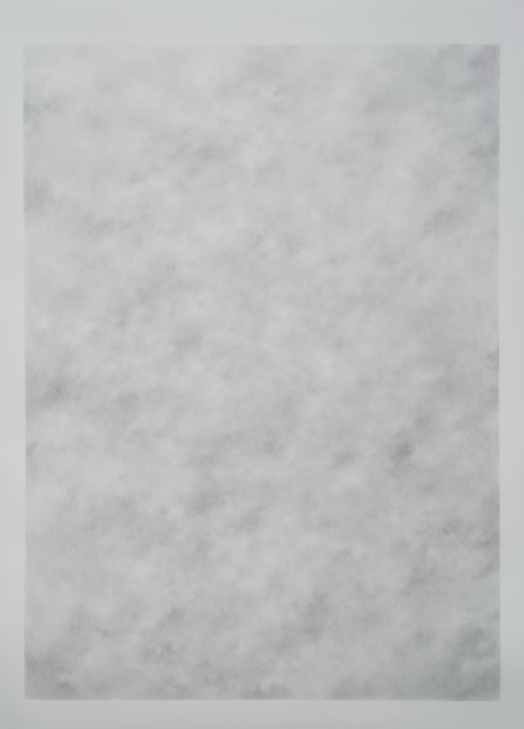
in different concentrations In Ground Drawing, in the same manner, the texture
of the ground is transferred onto paper with gaps filled in with pencil every
18, 36 and 38 times the artist stops her movement, and documents time that’s
paused but not stopped.
Kang’s drawings continue
on for a long time according to the changes in time and space, and demand from
the viewer the time to experience her work. Just as a certain period of time is
needed in order to recognize subjects in the dark, Kang’s drawings gradually
expose the changes of time in spaces that are at first indecipherable.