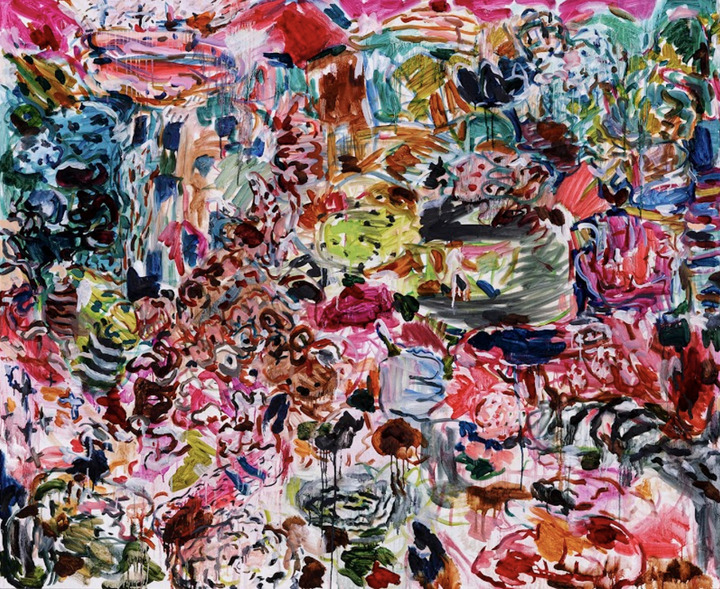
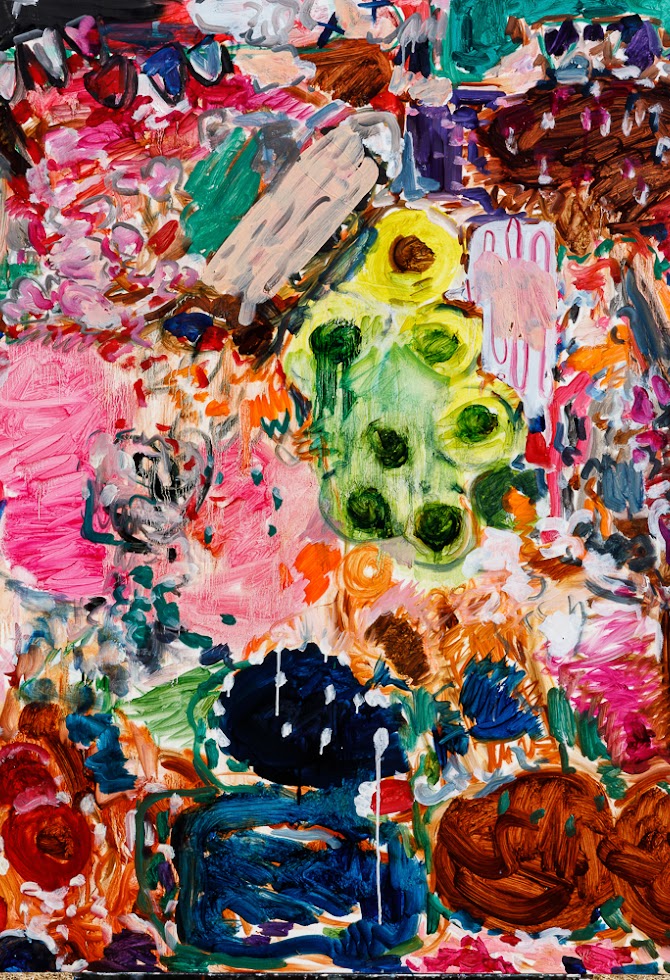
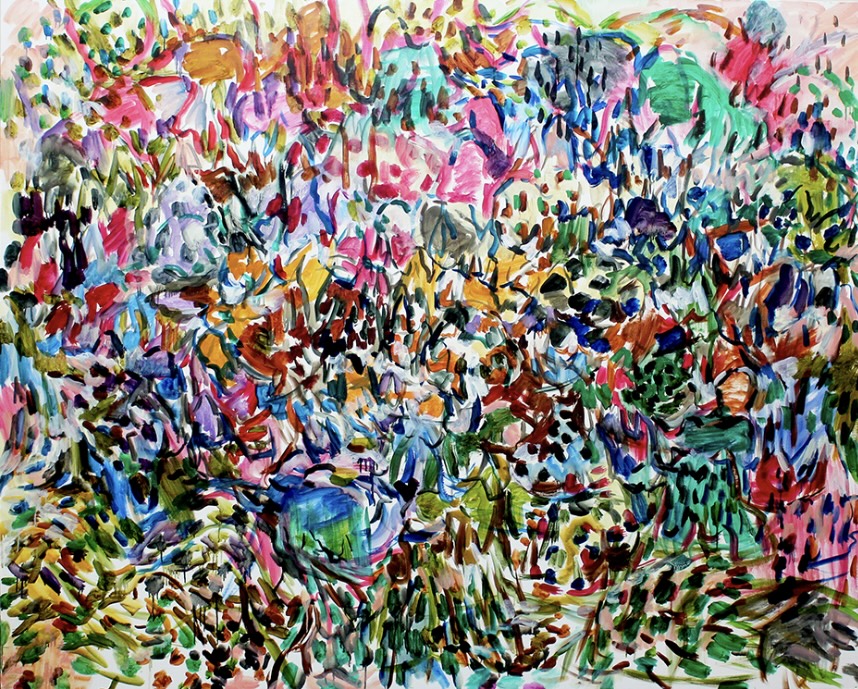
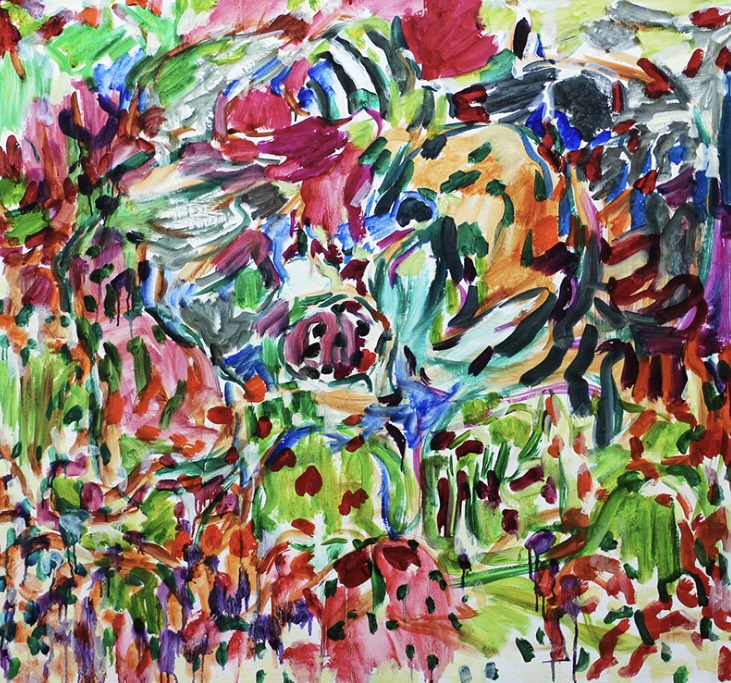
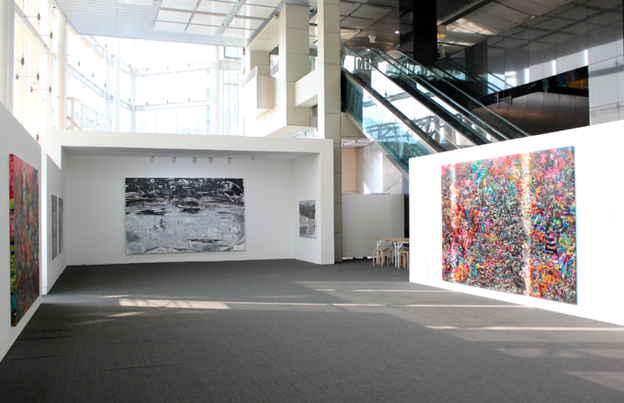
Based on
the artist’s notes and dissertation, the key terms for explaining the painting
of Woohyun Shim (b. 1987) can be summarized as eros (sexual love), romantic
(Romanticism), painterliness, painting, and gesture. At the foundation of her
work lies a thorough and expansive reflection of Romanticism, which emphasizes
an intensely subjective worldview, and at the core of this worldview is the
presupposition of eros as a fluid state of energy. Not only for Shim, but
increasingly for contemporary art as a whole, the correlation between art and
Romanticism continues to grow.
Research and writings applying various media
theories to digital storytelling, digital poetry, and media art are
reestablishing a new media sensibility among creators—rediscovering Romanticism
as the most progressive and postmodern driving force, characterized by vivid
expression, delicate emotional transmission, free imagination, and originality.
This text
analyzes the formal structures and materials of her works that faithfully align
with her core concepts—myths and totems shaping conscious worlds, the handling
of shamanistic imagery, use of color, stroke, and composition. It further
examines how her ongoing appropriation and symbolic transformation of landscape
painting construct a psychological imaginary grounded in reality—not through
imitation of natural elements or objects, but through reference. Ultimately,
from the perspective of contemporary media culture, this essay seeks to clarify
the significance of these attempts to mechanically reanimate Romantic concepts
that have long been considered obsolete or clichéd.
Shim has
articulated her conceptual stance on eros and Romanticism in her artist’s notes
as follows:
“My work
centers on eros, the origin of the birth of all things. Raw erosic energy lies
latent in primitive nature, and this organic eros begins from dialectical
thought, transforming biological impulse into cultural impulse, and into other
phases.”
The power
of eros here is ambivalent. In Greek mythology, Eros—the god of love born of
Ares, god of war, and Aphrodite, goddess of beauty—governs opposing forces of
attraction and repulsion. His playful acts of vengeance, capable of inflaming
desire like fire with golden arrows or provoking hatred with lead arrows,
culminated tragically in the one-sided love between Daphne and the arrogant
Apollo. For Freud, eros denotes the life instincts of sexuality and
self-preservation.
In Plato’s ‘Symposium’, voiced through Socrates, eros
is described as the will to overcome incompleteness—the desire to pursue truth
in order to become whole. Georges Bataille (1897–1962), in ‘Erotism’ (1957),
interprets eros in relation to death as the existential limit of humanity,
tracing the cultural roots of sexual taboo violations. Ultimately, eros refers
to all acts of resistance against imposed taboos—transgressions that exceed
social conventions.
Viewing
eros through this lens, Shim focuses on its simple dialectical function that
moves toward production and creation as a means of overcoming the death and
desolation already foreseen for us. She proposes eros as a positive force—a
dense principle encompassing attraction, world formation, chance encounters,
and the fundamental placement and arrangement of things. This evokes a
Romanticized concept combining Newton’s law of universal gravitation with the
hypothetical ether that fills even the vacuum of space to transmit light and
energy.
Thus, eros
suppresses fear of the unknown and resistance toward realms beyond our
understanding—shadows untouched by Promethean light—propelling the artist
forward. This magical force capable of transforming the world originates from
eros, translated as love drawn from the ontological flesh and blood of
existence. Yet the violent cruelty often accompanying revolutionary change is
replaced or deliberately excluded through metaphorical symbolism.
Plato
argued that expression arises from imagination rather than reason. Romantic
artists of the late 18th century believed art belonged to imagination,
manifested through subjective freedom. Walter Benjamin observed that the
Romantic spirit takes satisfaction in its own fantasies. Conversely,
Enlightenment rationalism regarded Romantic expression as a
deviation—reactionary rather than progressive. Shim’s unwavering principle of
painting originating from herself is distinctly Romantic. As she articulated in
her dissertation, she recognizes the limits of the subject–object dichotomy and
asserts absolute subjectivity at the center of the world.
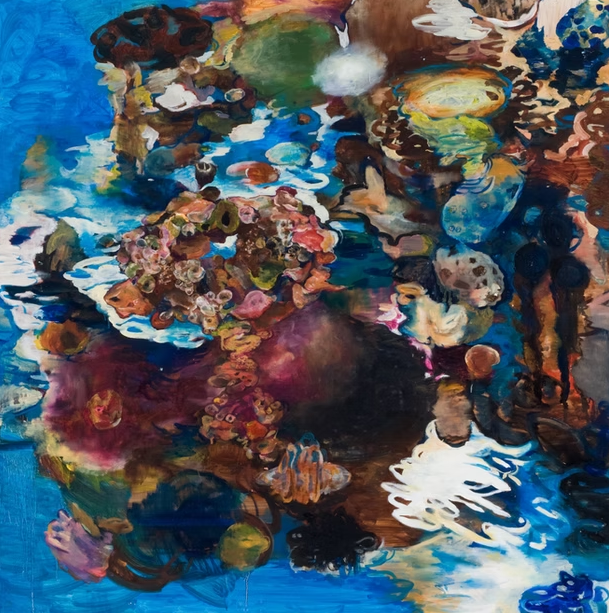
Romanticism
emphasizes mystical communion between artist and nature, individualism,
passion, sensitivity, imagination, and often favors the eerie and exotic. While
earlier Romantic artists distanced themselves from rational persuasion and
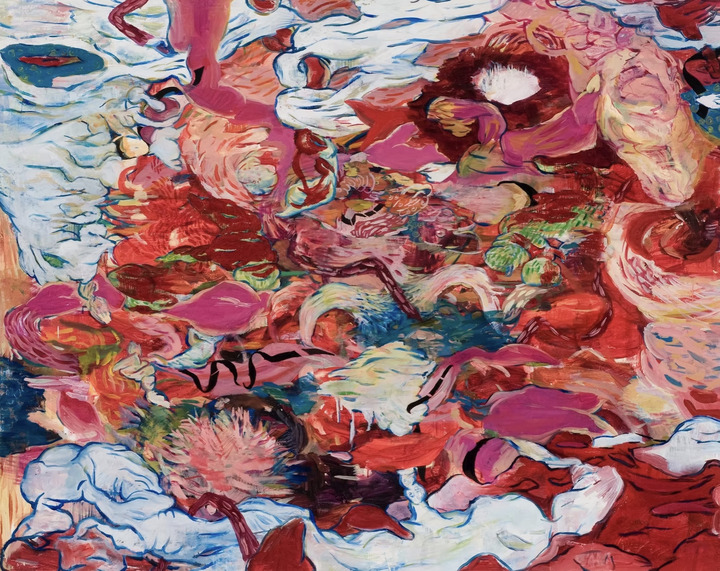
mechanized culture, they nonetheless retained classical representation. Shim,
however, more overtly addresses the supernatural and fear, allowing submerged
events, memories, images, and symbols to surge dynamically across the canvas
through stains, associations, and partial revelations. Like mythic dramas of
gods and humans unfolding beneath Mount Olympus, the colliding image elements
on her canvases erupt through chance encounters, radiating powerful erosic
energy.
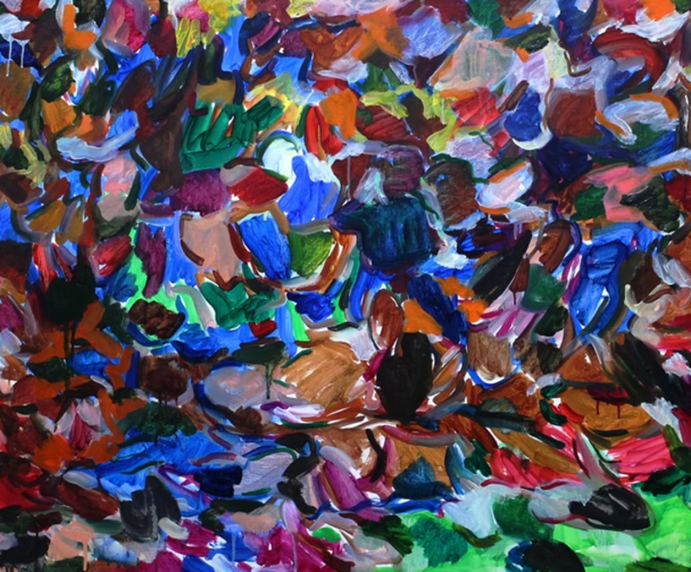
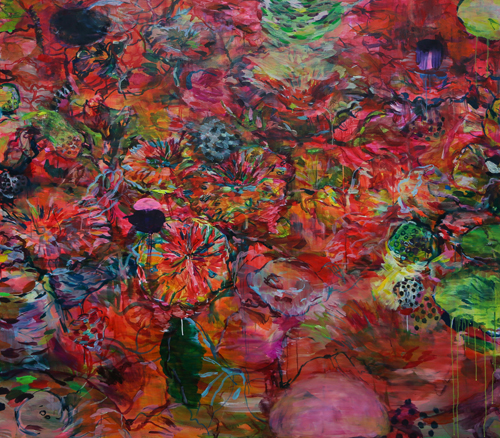
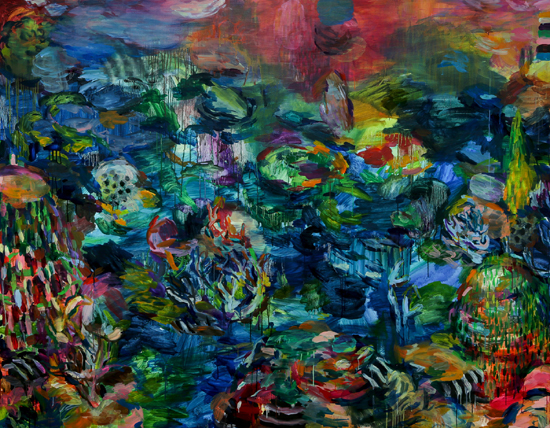
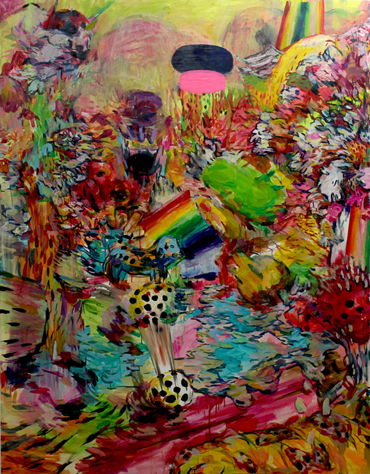
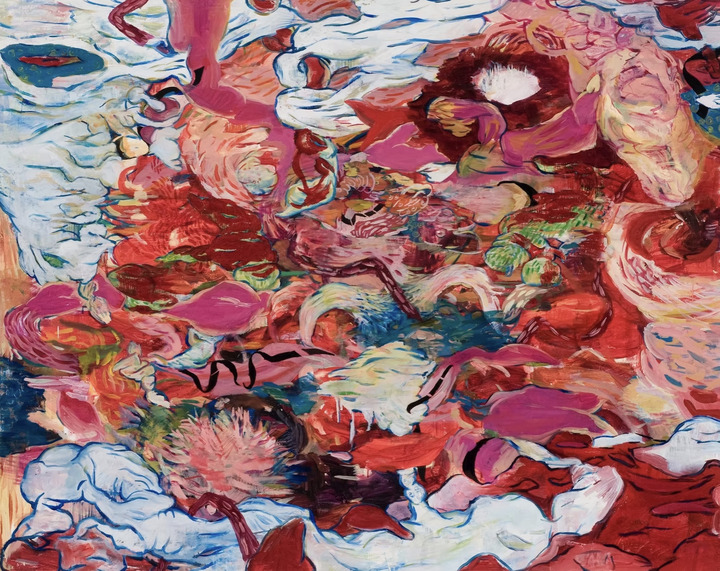
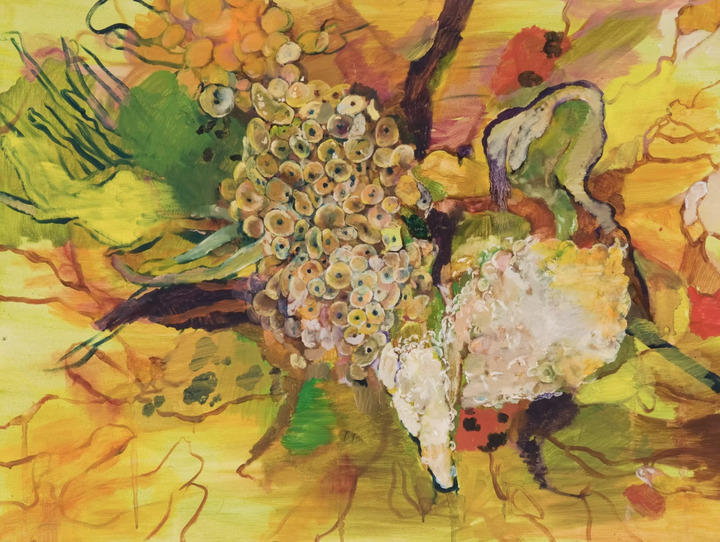
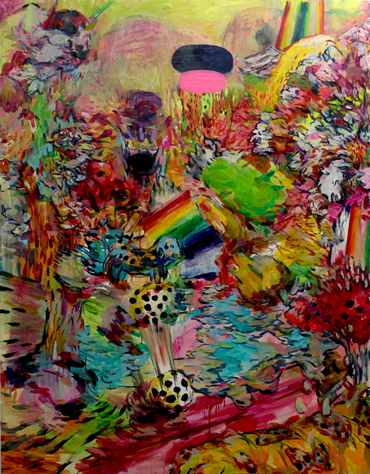
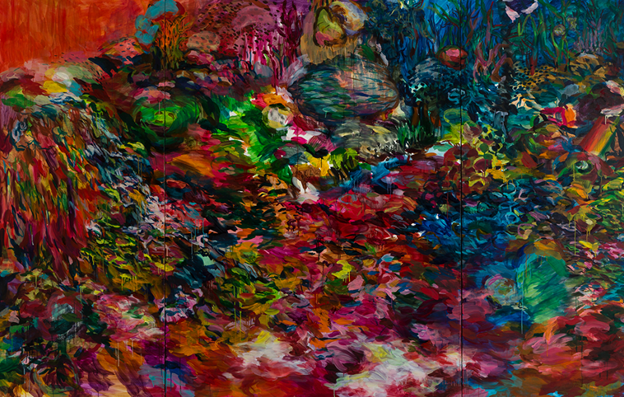
In her
paintings, mythic elements intermingle with transformed disasters, beasts, and
foreign motifs, repeatedly disrupting erosic relations through layering and
erasure. Hierarchies collapse; suppressed animality emerges. Even when tinged
with Thanatos, the artist’s fear manifests through instinctual tension. This
new metaphor destabilizes rational order and becomes a powerful tool of
subversion.
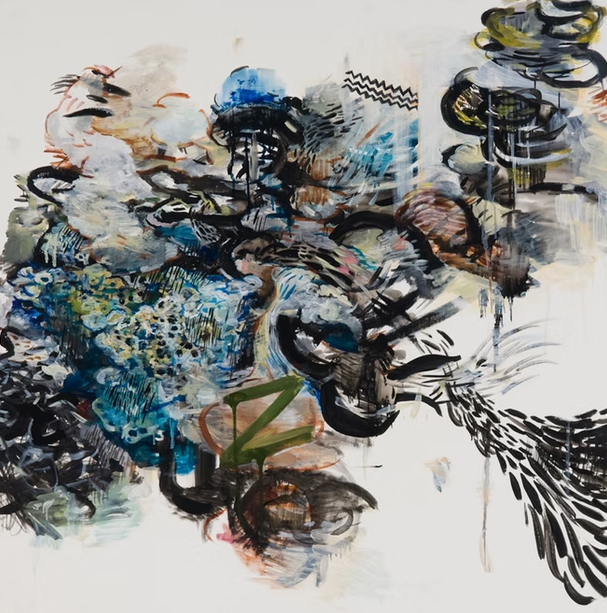
Bolter and
Grusin’s ‘Remediation’ (1996) proposed the principle of immediacy to
trace media history. Since Alberti’s invention of perspective, painting became
a transparent window converging toward a vanishing point. Artists sought
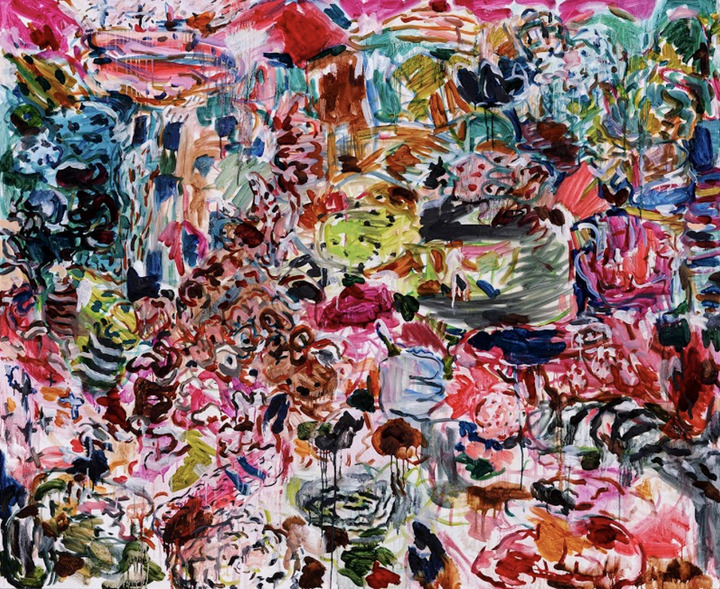
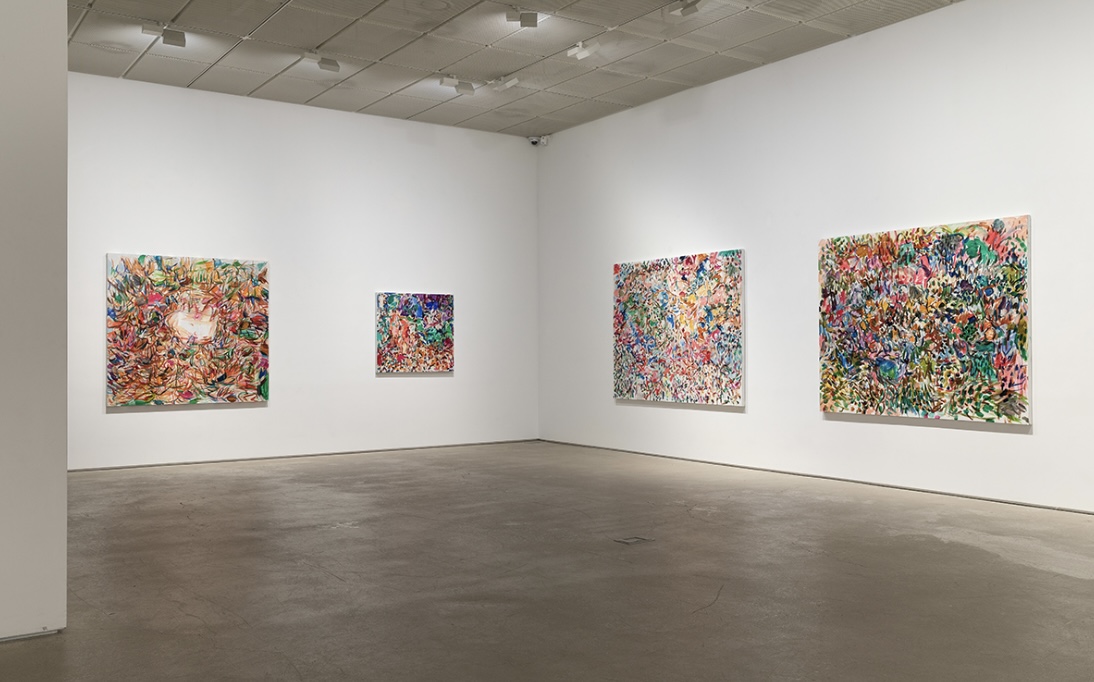
realism by erasing traces of mediation. Shim’s method of covering, however,
eliminates transparency and intensifies painterliness. The brush becomes an
extension of the body; painting engages the entire body, generating organic
energy spirals across the canvas. As Johann Gottfried Herder suggested, the painting
projects a newly created ecological organism.