Dear
Eunjoo,
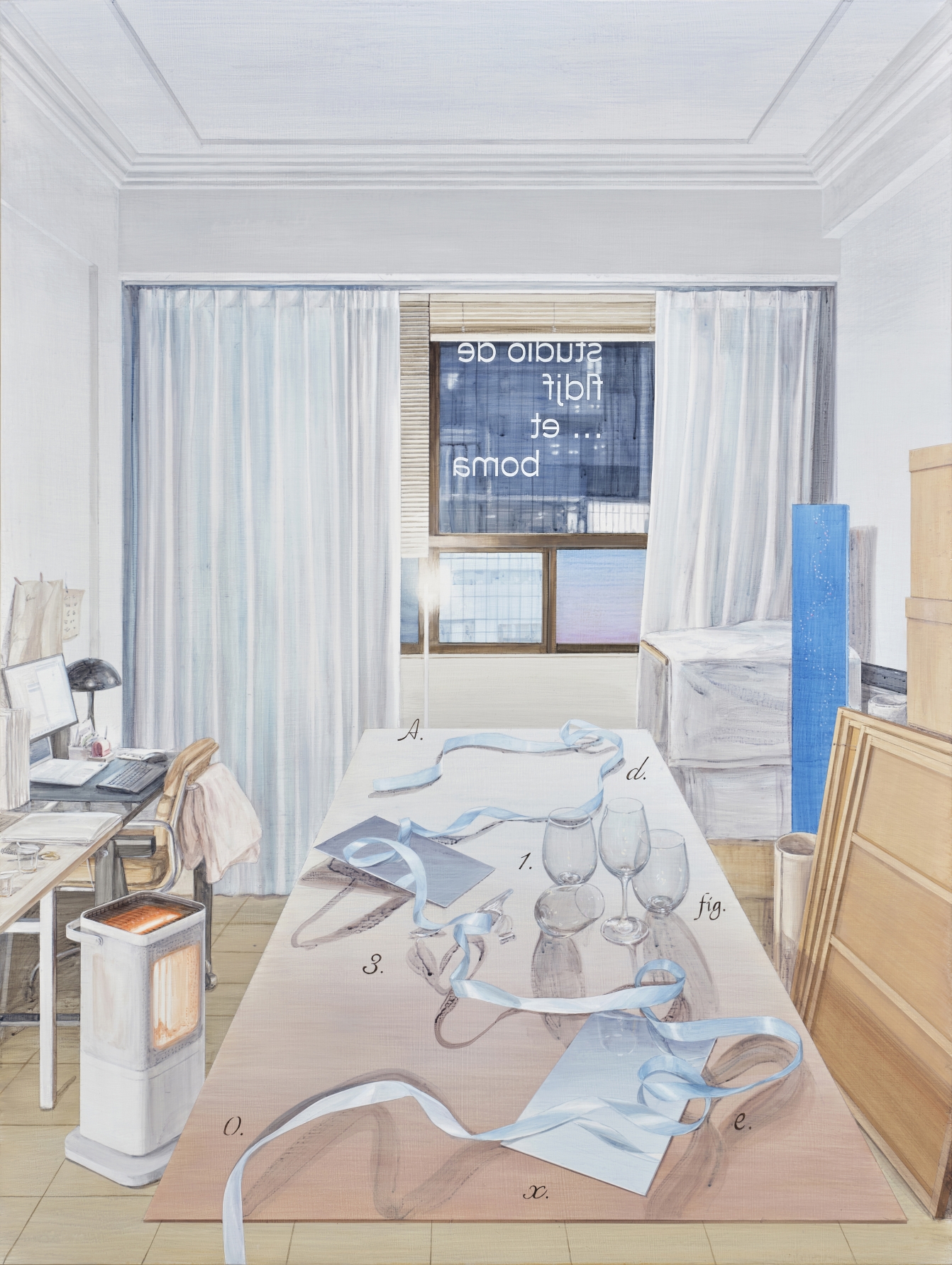
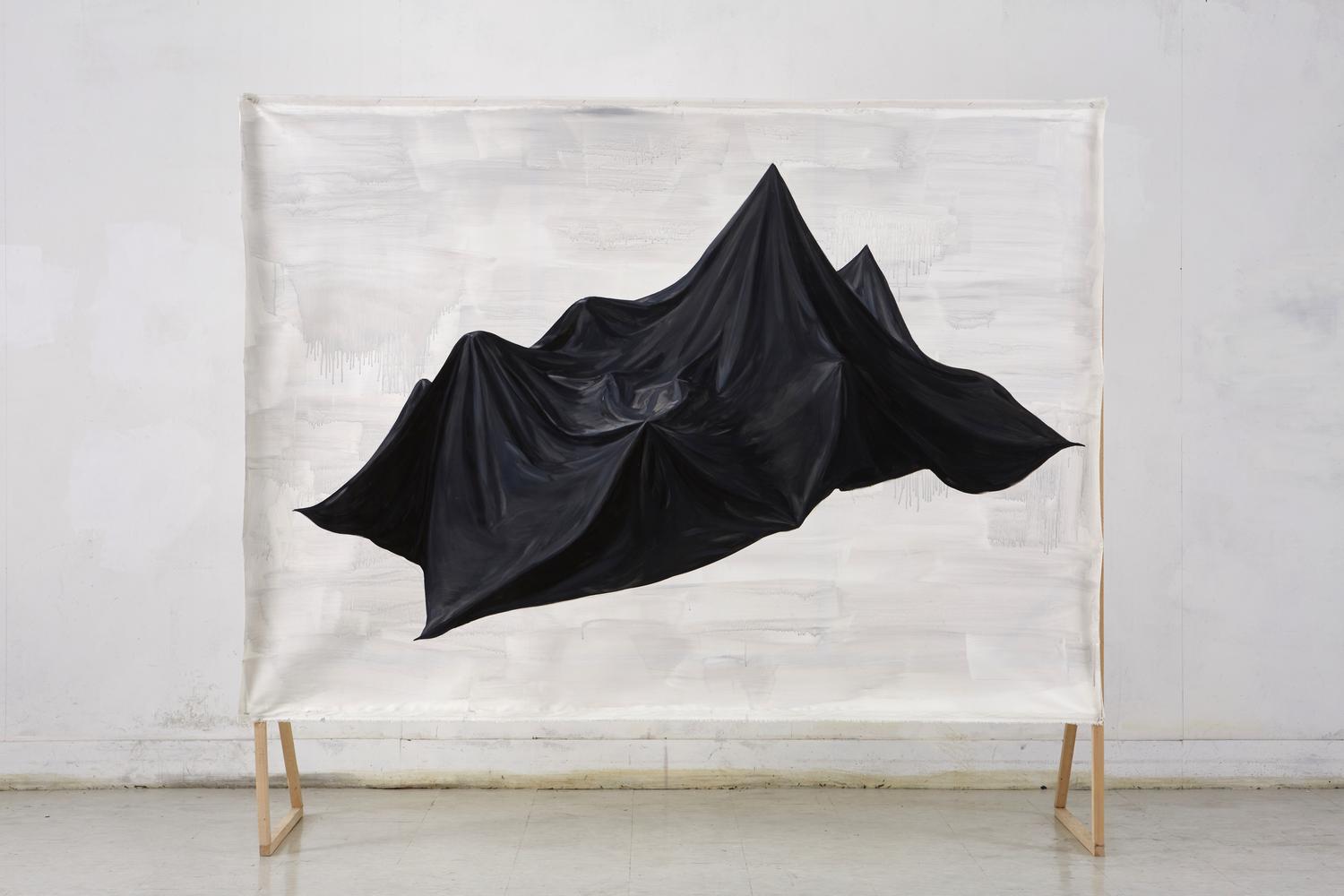
Upon coming down the long flight of stairs under the high and deep ceiling, a
dark gray door remains half open. Behind the door is a black cloth that’s even
more grayish, spread out crammed. In opening the door and entering the space
feeling uninvited, there’s a sense of chilliness in the light in the corridor
that cuts across here where I stand, and there where the black cloth is spread
out. It was raining that day. The commotion that uproariously welcomed everyone
reminded me of an empty public roundtable where the speakers are already gone.
Rho
and I had spent a year together in 2017, with this high and deep ceiling in
between us. It’s not that I’m imbuing a certain meaning to time, but I’m
mustering up thoughts that would not have been visible, had it not been for
that time together. I don’t know if this makes sense, but the strange sights
that unfolded behind the dark gray door that I had to face down at the end of
the long flight of stairs continued in series on the other side of the white
wall at Space Willing N Dealing in 2019.
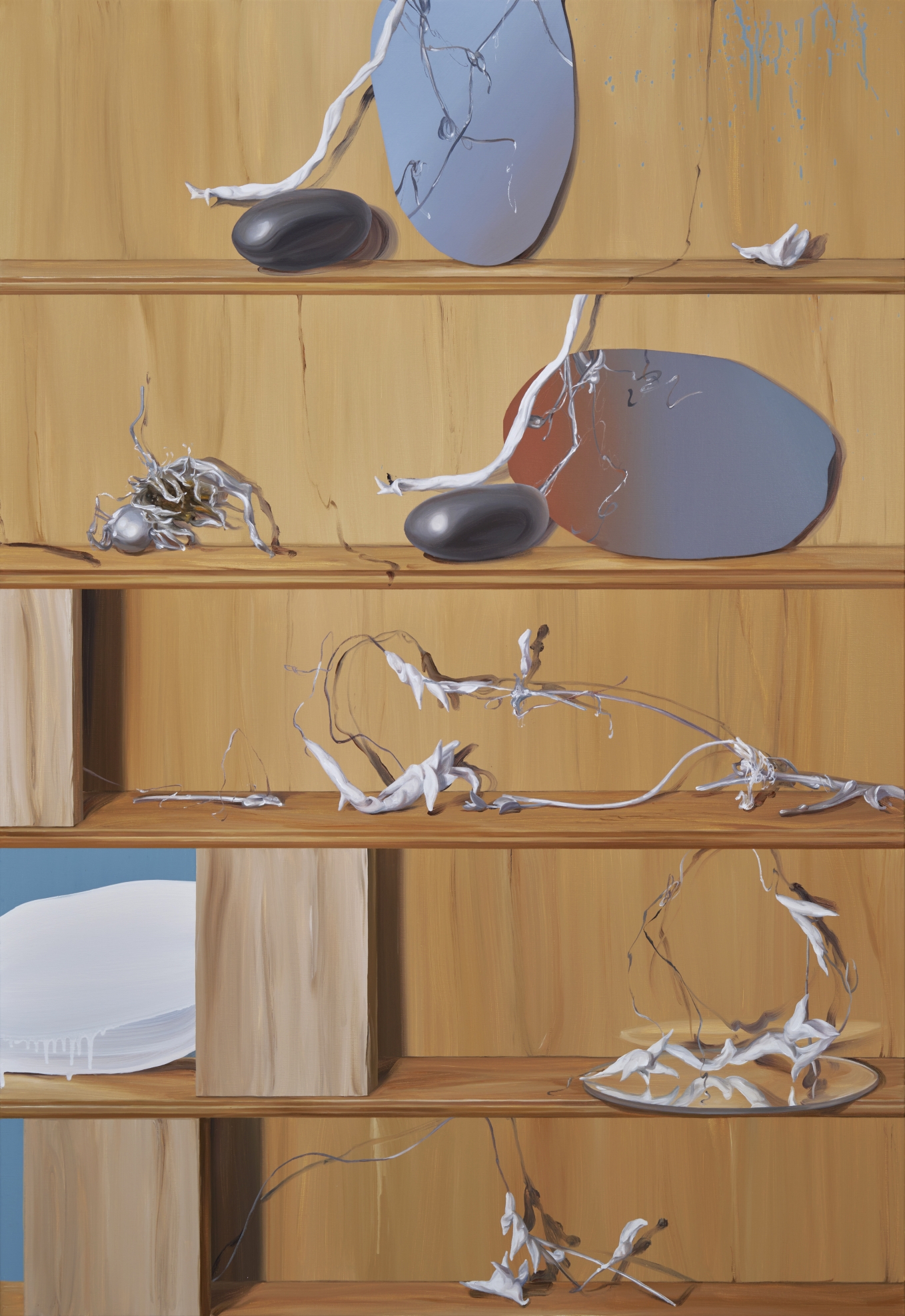
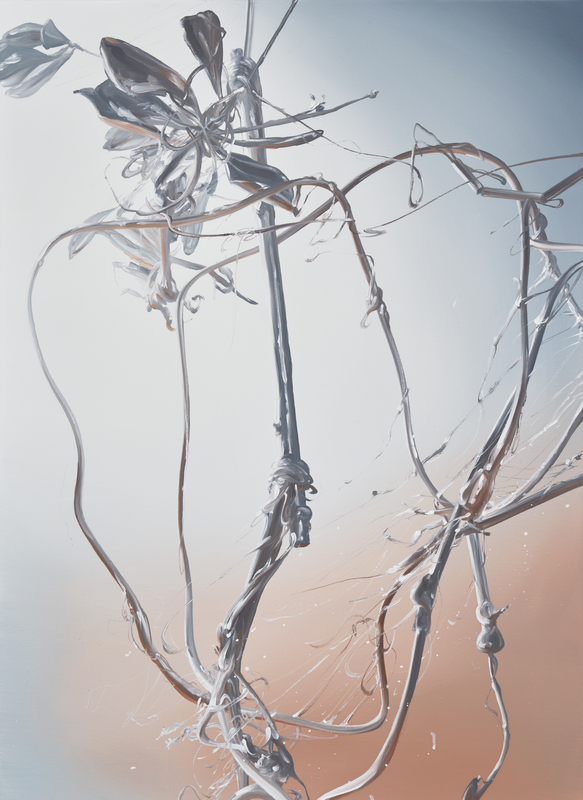
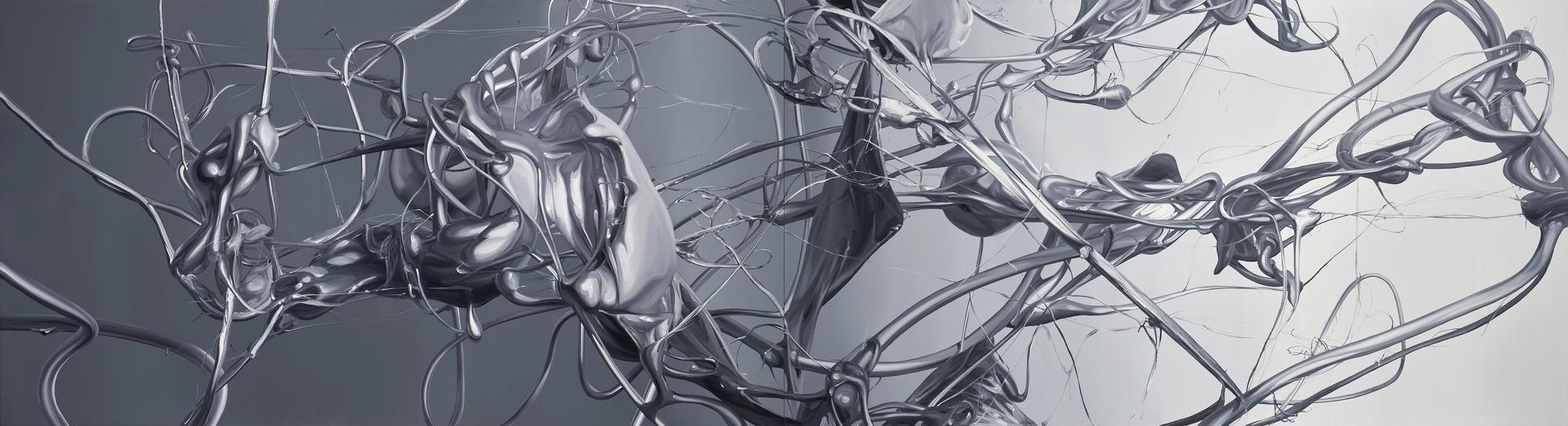
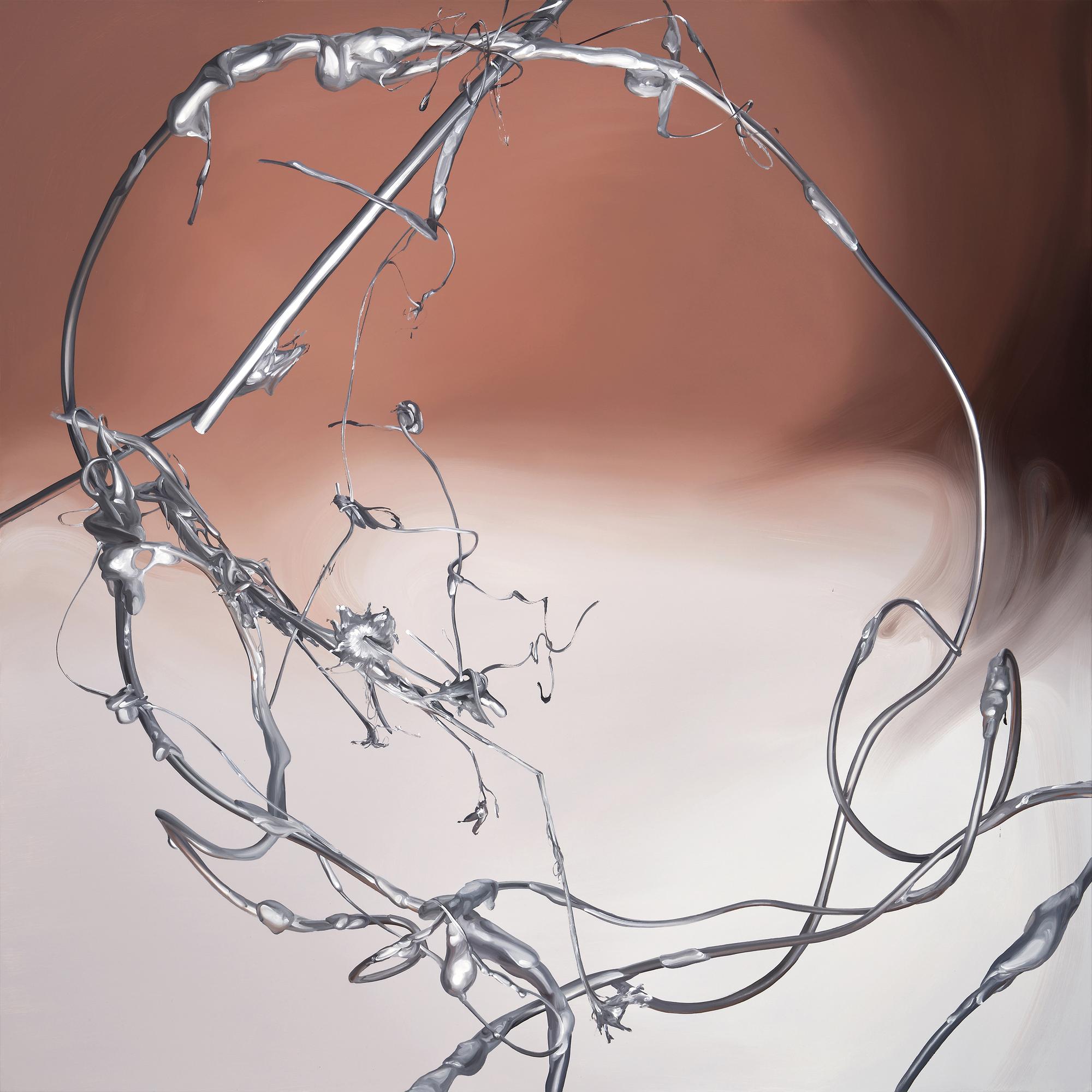
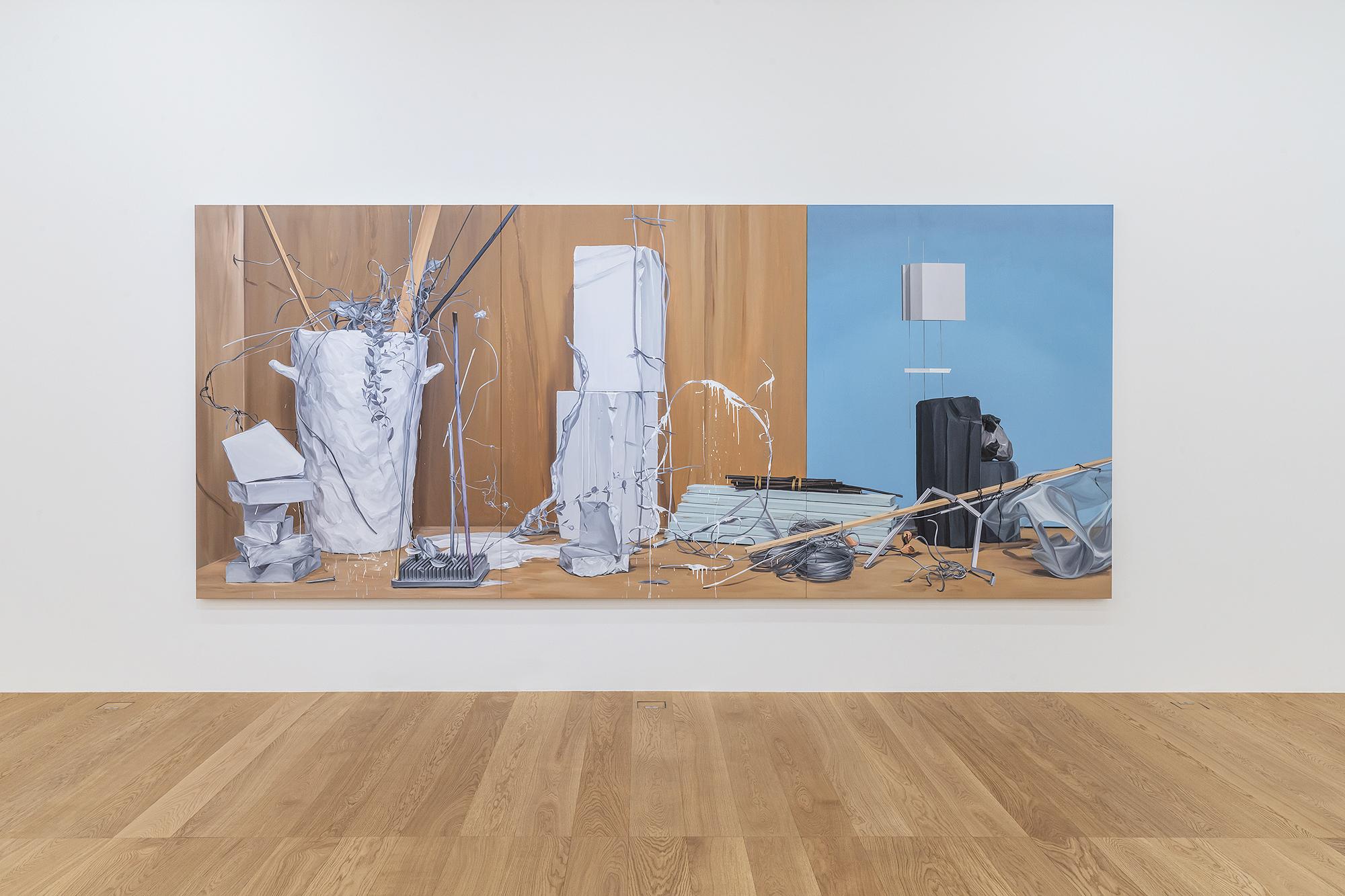
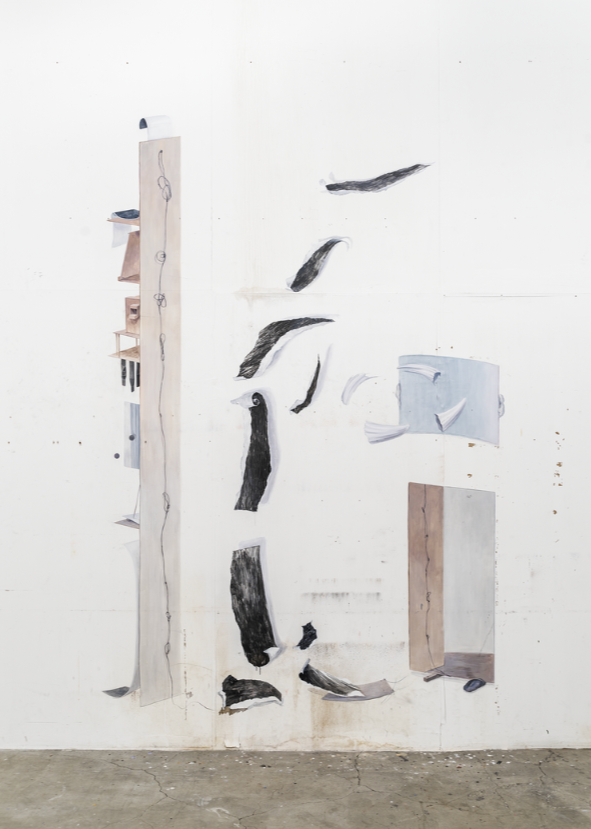
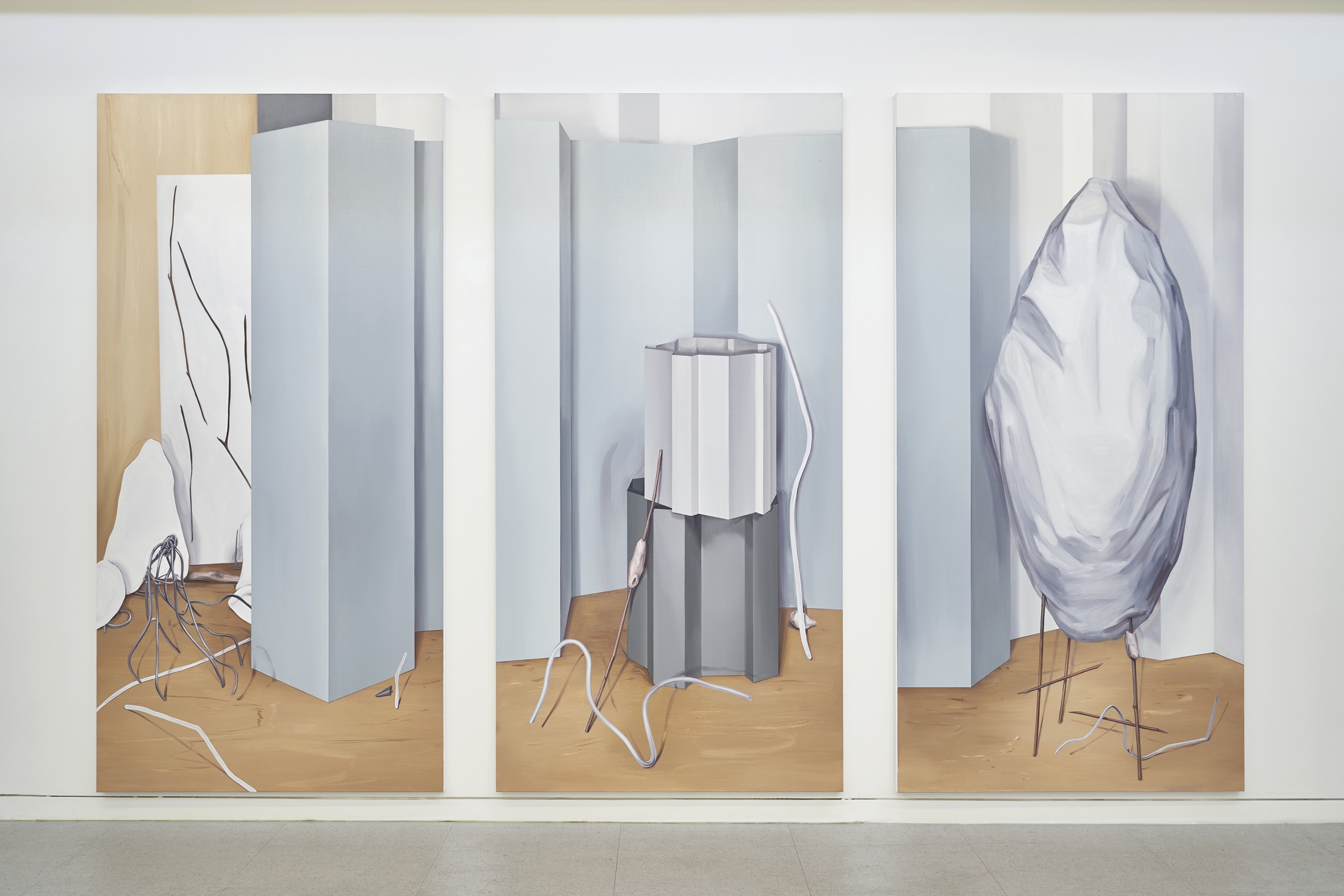
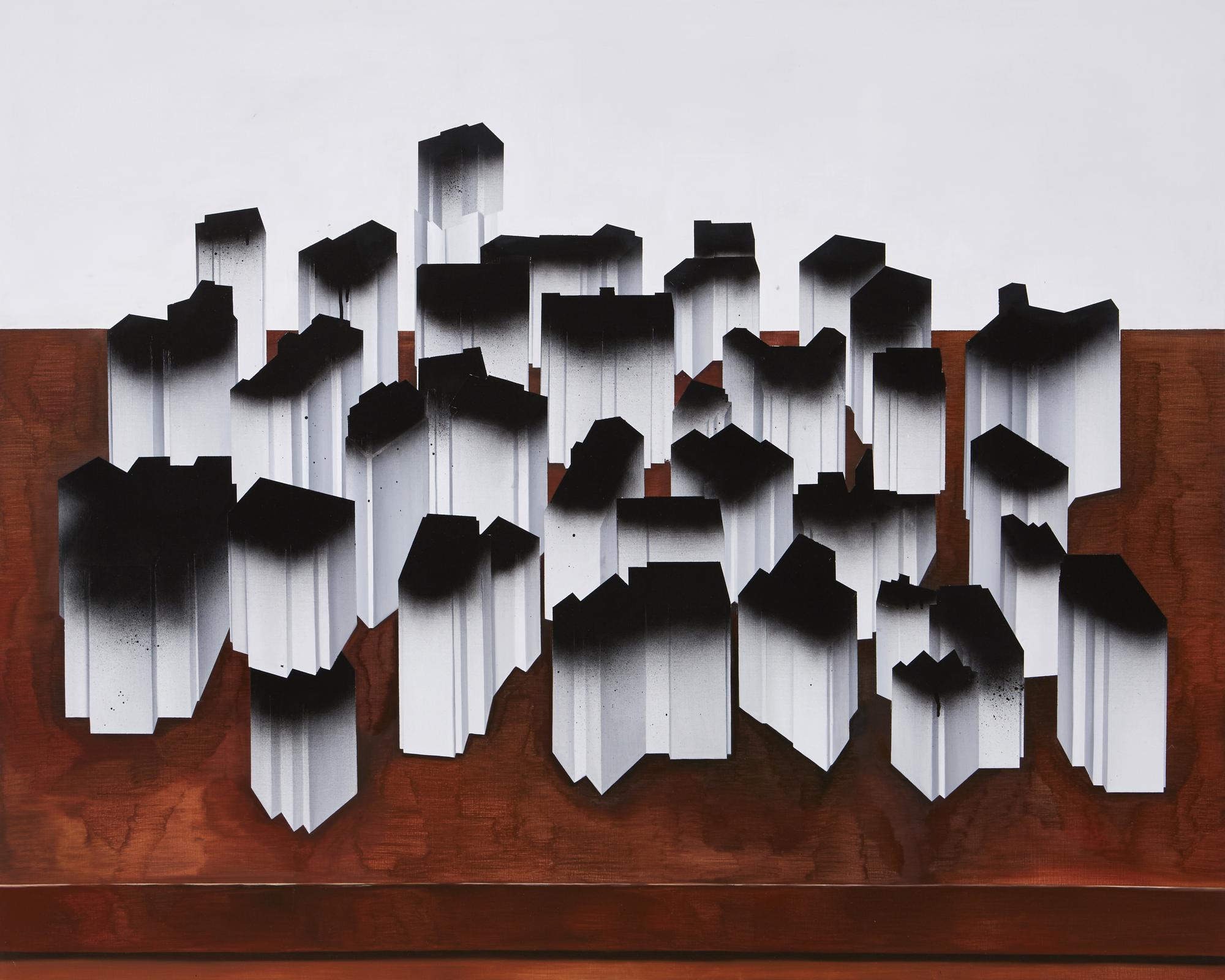
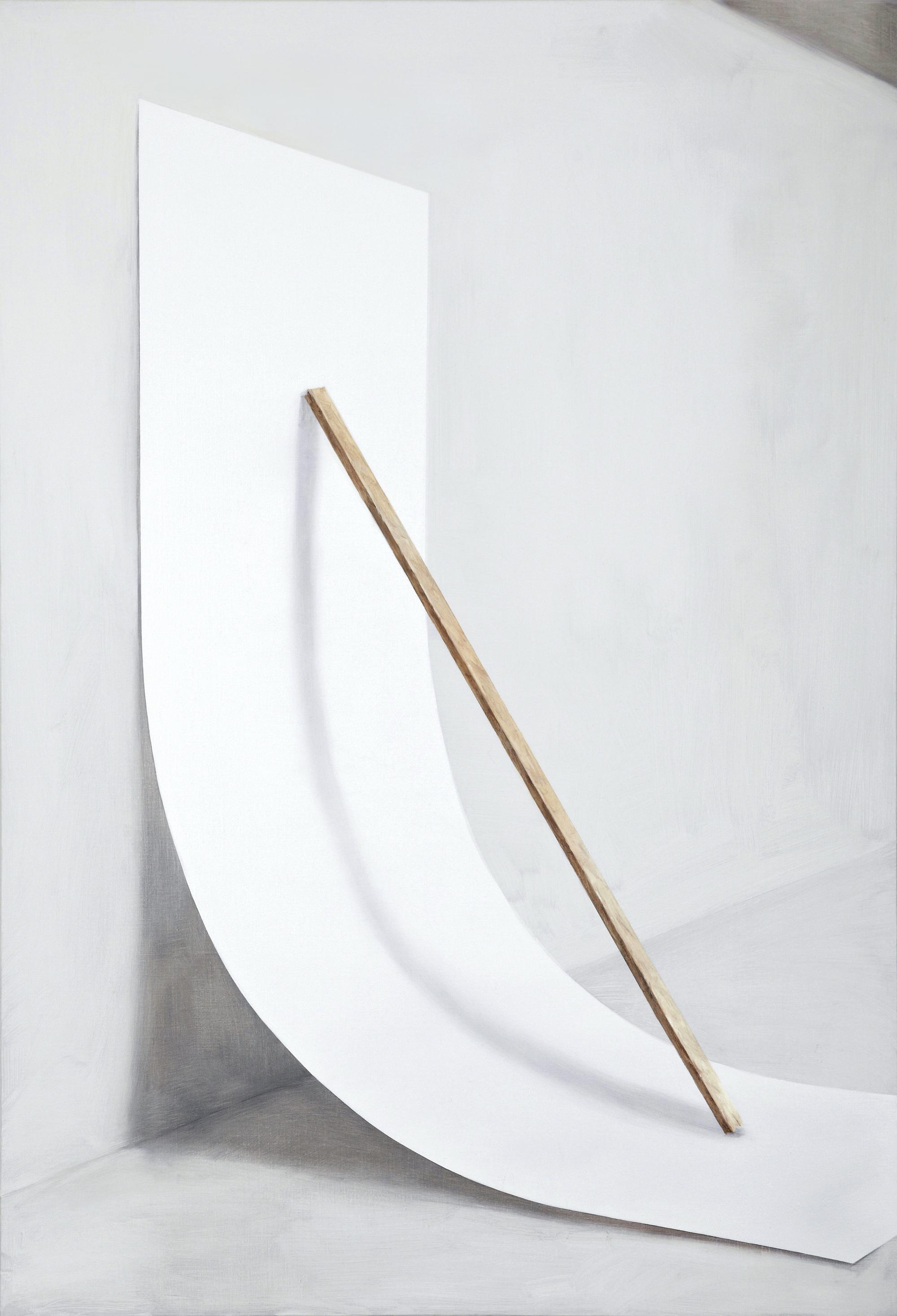
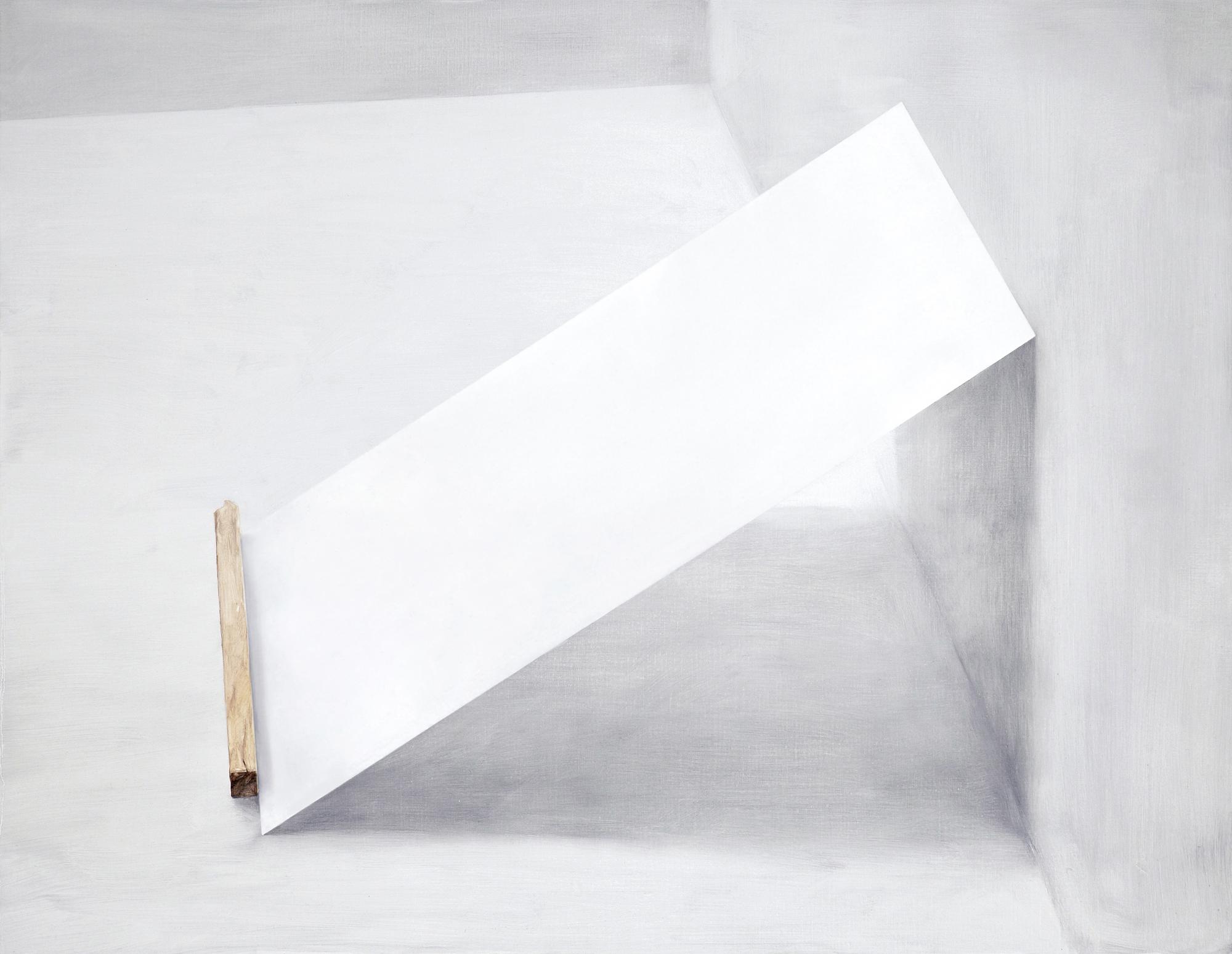
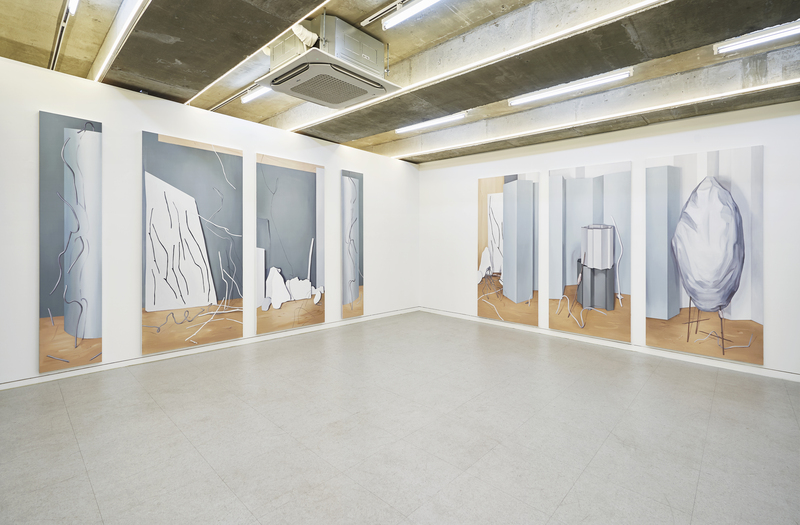
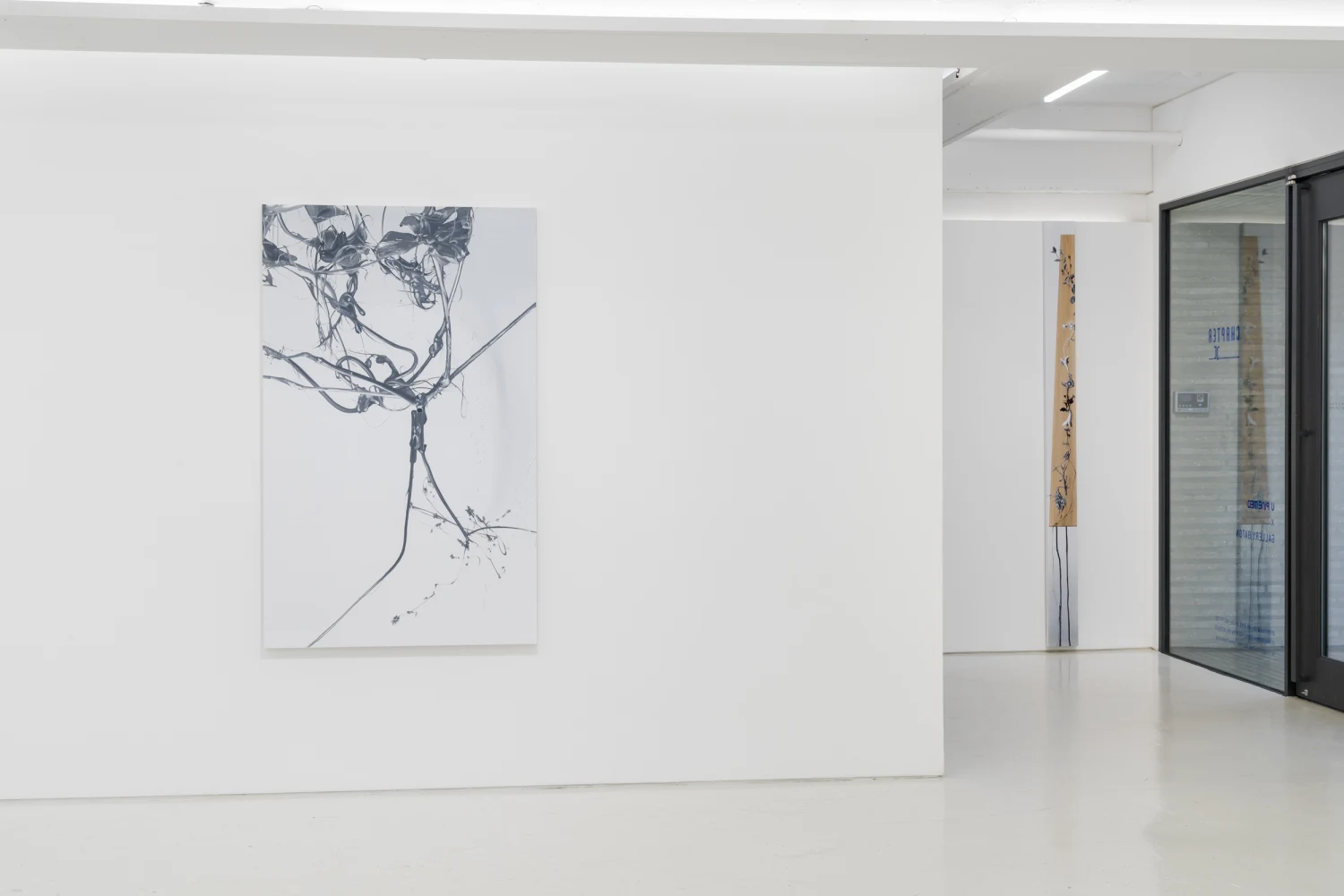
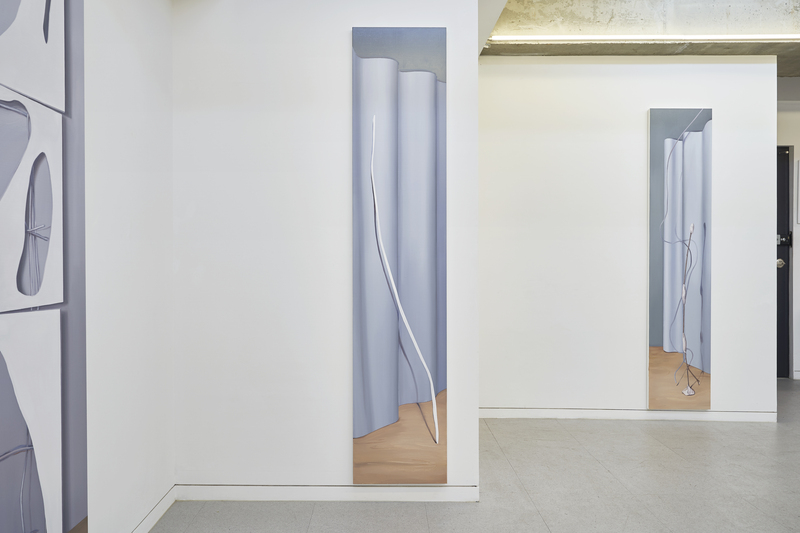
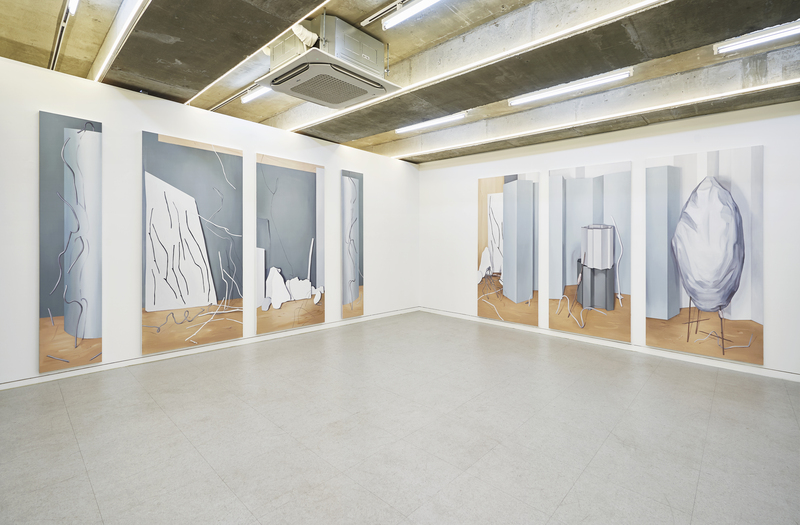
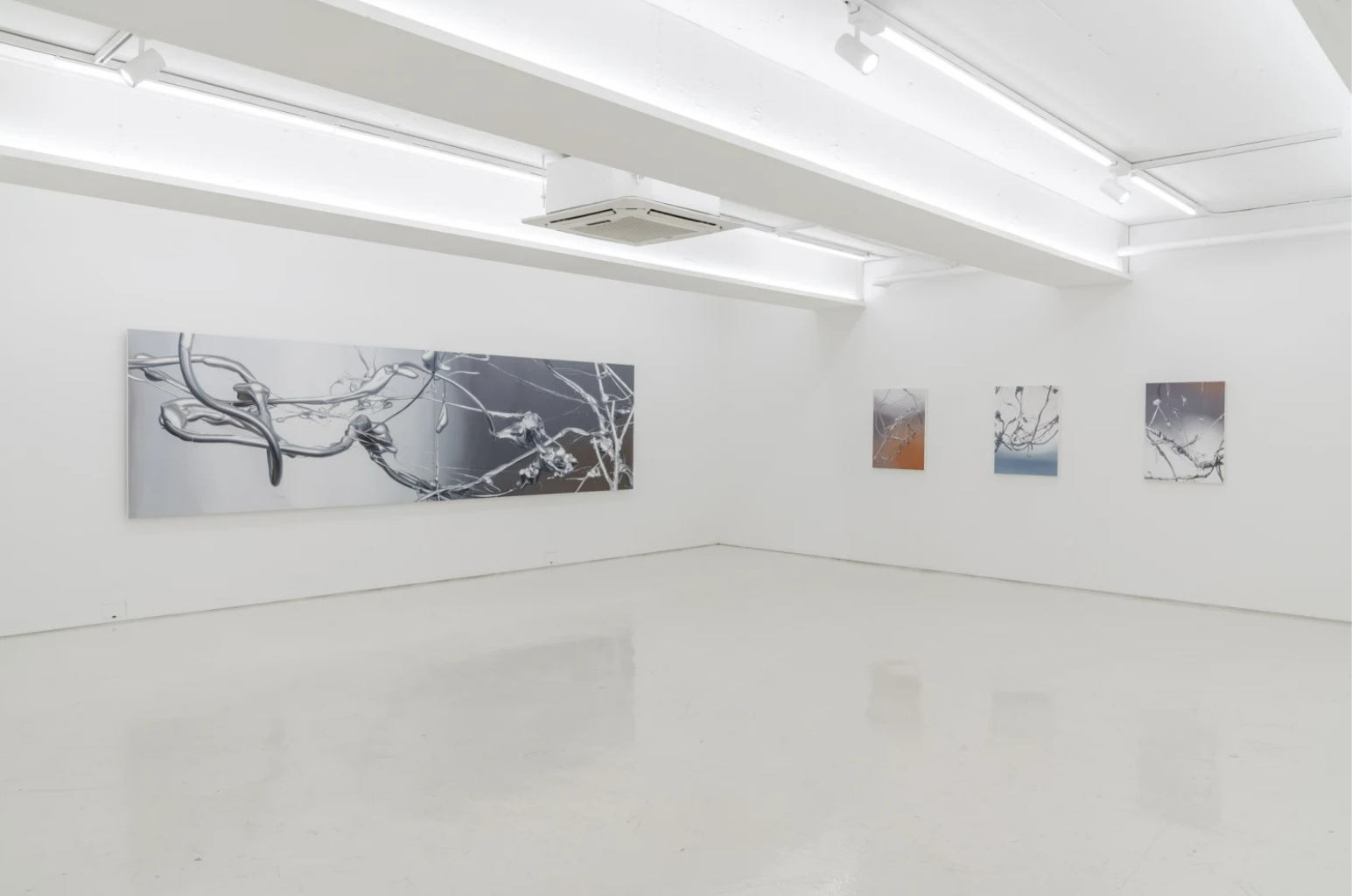
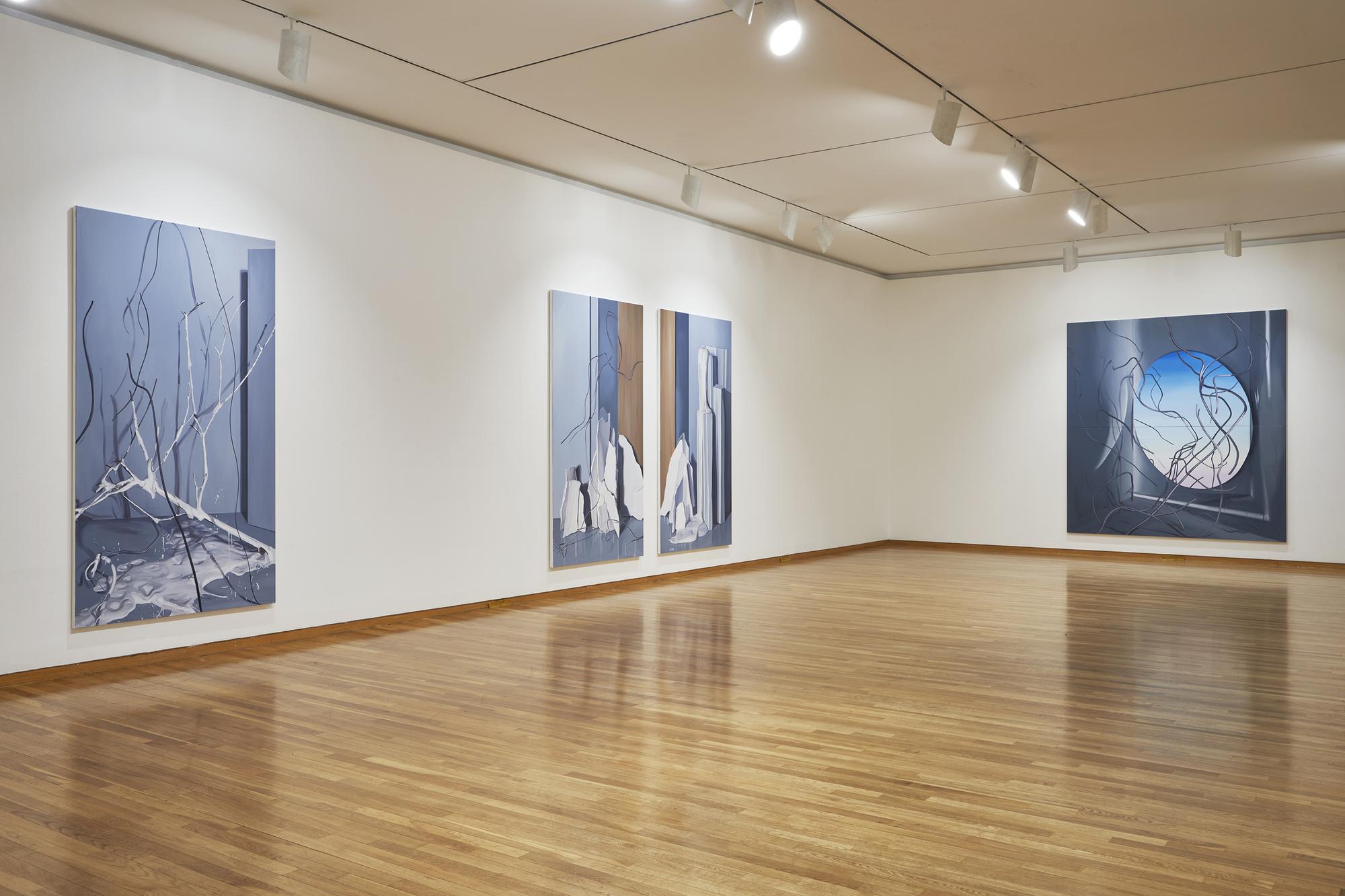
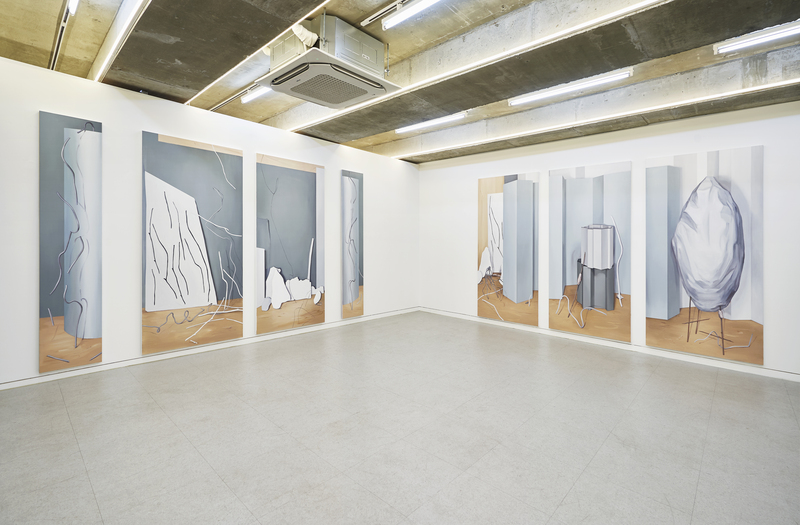
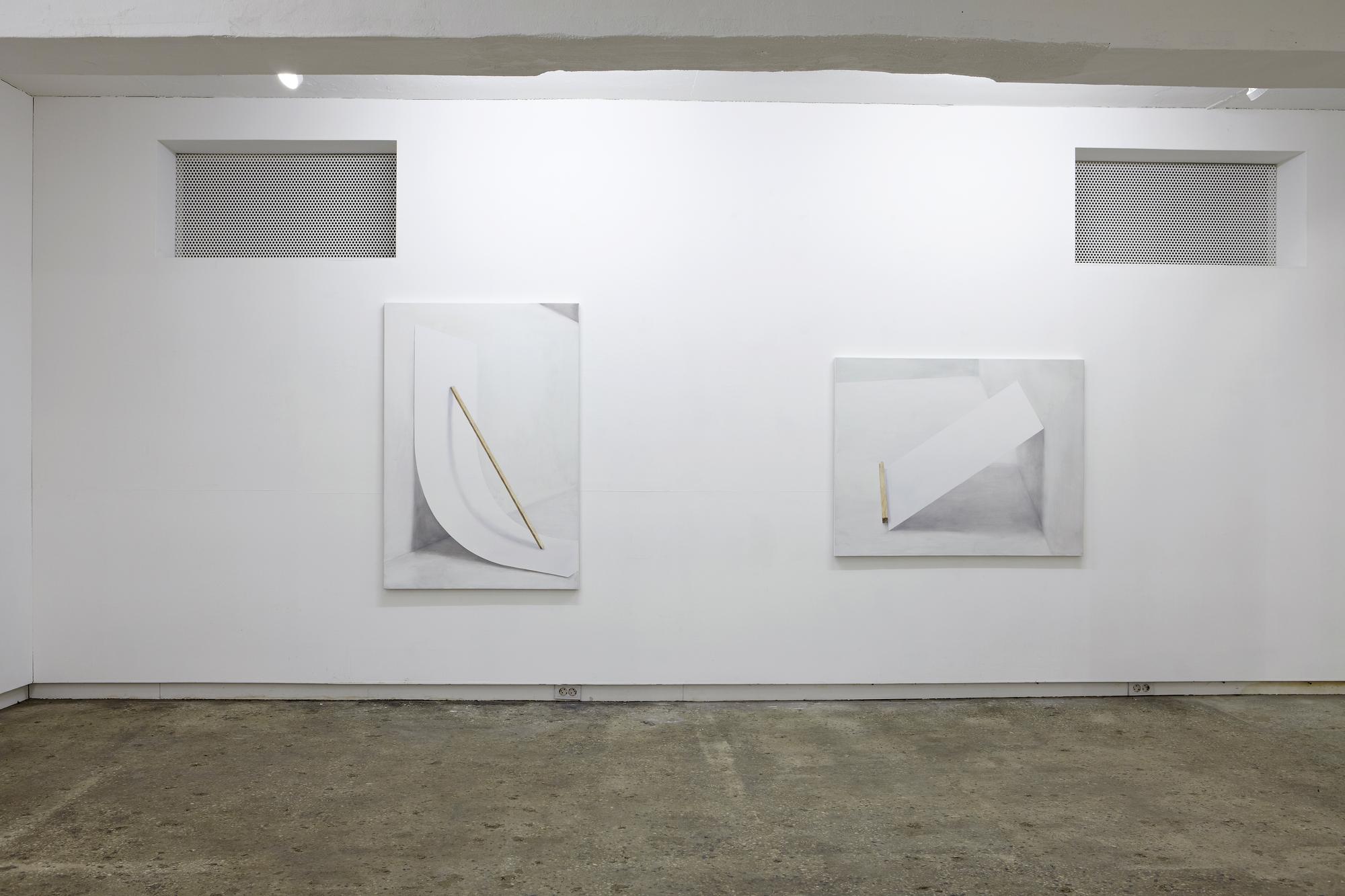
The rhythmic clusters in three or
four, in gray tone that’s brighter and more refined than 2 years ago, present
holes in planes, folded planes, wriggly lines and lumps (as if there is no such
thing as depth and weight). At times, they’re overlapped. And just like two
years ago, I never opened that door and entered the space, but I felt the
illusion of space as if I’m standing outside of the door, never entering into
the space. Should I refer to what I’m looking at as a still life with the sense
of distance of landscape, or a landscape with relationship to still life? After
all, distance and relationship have always conspired in one space without
supplementing or verifying anything of each other.
It
had been some time since I last saw Rho. At her solo exhibition at Space
Willing N Dealing, the artist shyly told me that she’s put on a ‘shadow play’.
On my way back home, I thought about what I’d seen at her show. Perhaps Rho was
painting ‘illusions of objects’, or things that are invisible because we
already saw them, or things that are visible because we haven’t seen them yet.
I began exploring the thin line that connects between Rho’s shy ‘shadow play’
and my mumbling ‘illusion of objects’. At the artist talk, Rho distinguished
‘Walking’ and ‘Aside’ in the exhibition title with a hyphen. Perhaps
‘shadow’ and ‘illusion’ are spaces of unknown that are different from each
other but can be connected with a hyphen, just like ‘Walking’ and ‘Aside’. Ah.
So another invisible line has been drawn.
The
objects in Rho’s scenes are unknown as to the origin of their shadows because
they all receive non-uniform source of light. Some objects don’t cast any
shadows and are thus questioned as to their three-dimensionality. If there was
gravity in the paintings, it seemed as if it would be behind the wall that I’m
looking at rather than the ground that I’m standing on, and if there was a
light, it seemed like it would lie within the objects as opposed to outside of
them. In Renaissance painting, illusion meant distortion of the senses and
anamorphosis implied illusion through the distortion of space. Even today, the
visual experience of painting doesn’t stagnate at the mere gesture of looking.
The sensation of looking is related to other senses of the body. From spatial
experience to intellect and emotions, we apply the comprehensive experience of
the entire body to see that as this, or this as that. The spacetime connoted in
the gesture of looking, which Rho stubbornly questions, inevitably reflects the
human-produced civilization and environment. If so, then why is Rho
transferring the site of visual experience from the 2-dimensional to the
3-dimensional, then again from 3-dimensional to 2-dimensional? What process of
thought is she trying to lay out in this series of appropriation?
The
French philosopher Henri Lefebvre (1901-1991) distinguished the seen and
seeing. He expressed the seen as ‘represented space’ and seeing as ‘space of
representation’. We stay in space that’s measured and composed by the society,
but we subjectively interpret and experience this space to repossess it.
Therefore, our senses are (unavoidably) alienated in between the space we
experience and the space we recognize, and finally through this isolation we
(laboriously) come to perceive this space.
The spaces directed by Rho are not
‘represented spaces’ that generate the symbolic index granted on objects by the
city, but a ‘space of representation’ where Rho, who lives in the city,
distinguishes the indexes that she perceives to recompose them into objects. The
spatial illusion I had to experience in 《Walking—Aside》, just as I did 2 years ago,
must come from the twisting of distance and relations created when such
‘representing’ objects are continuously overlaid and stacked upon the
‘represented’ space. I’m (fruitlessly) trying to narrow down the margin of
errors between what I have seen and what I am seeing, in search of a point of
unified space and life.
But the contradiction occurring from such error becomes
more and more abstract, and we can no longer depend on one sense. As is with
Rho’s title, I continue on again with one hyphen and infinite hyphens. I’m
drawing another line in order to understand a world that cannot be explained
anymore with a single sense. Perhaps we are repeatedly isolating and reuniting
ourselves, mixing
walking-aside-shadow-illusion-space-place-reproduction-thought-memory,
separating them then connecting them back together.
While
Rho has been questioning the forms of objects that compose the city in the last
few years, 《Walking—Aside》
invites us to think about how we perceive the world through
such forms, and what the relationship is between such objects and our life.
Lefebvre called such perceived space ‘spatial practice’, and asserted that only
when an individual is “stripped bare and kicked out of oneself” through such
isolation can he or she discover oneself through philosophical thoughts.
Another fragment of memory just dawned upon me at the end of these thoughts.
Henri Lefebvre’s book ‘Production of Space’ was on Rho’s desk, behind the
dark gray door. I should talk to her about that book one of these days.
Sincerely, Enna Bae