“They
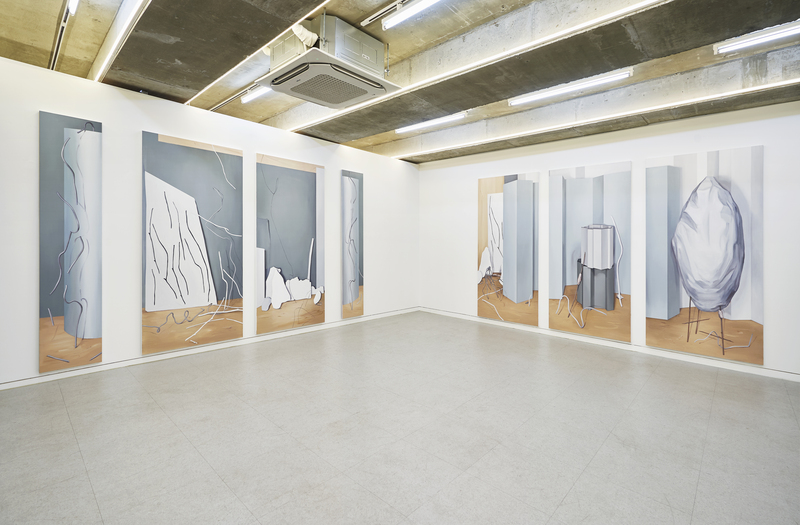
look like rocks.”[1]
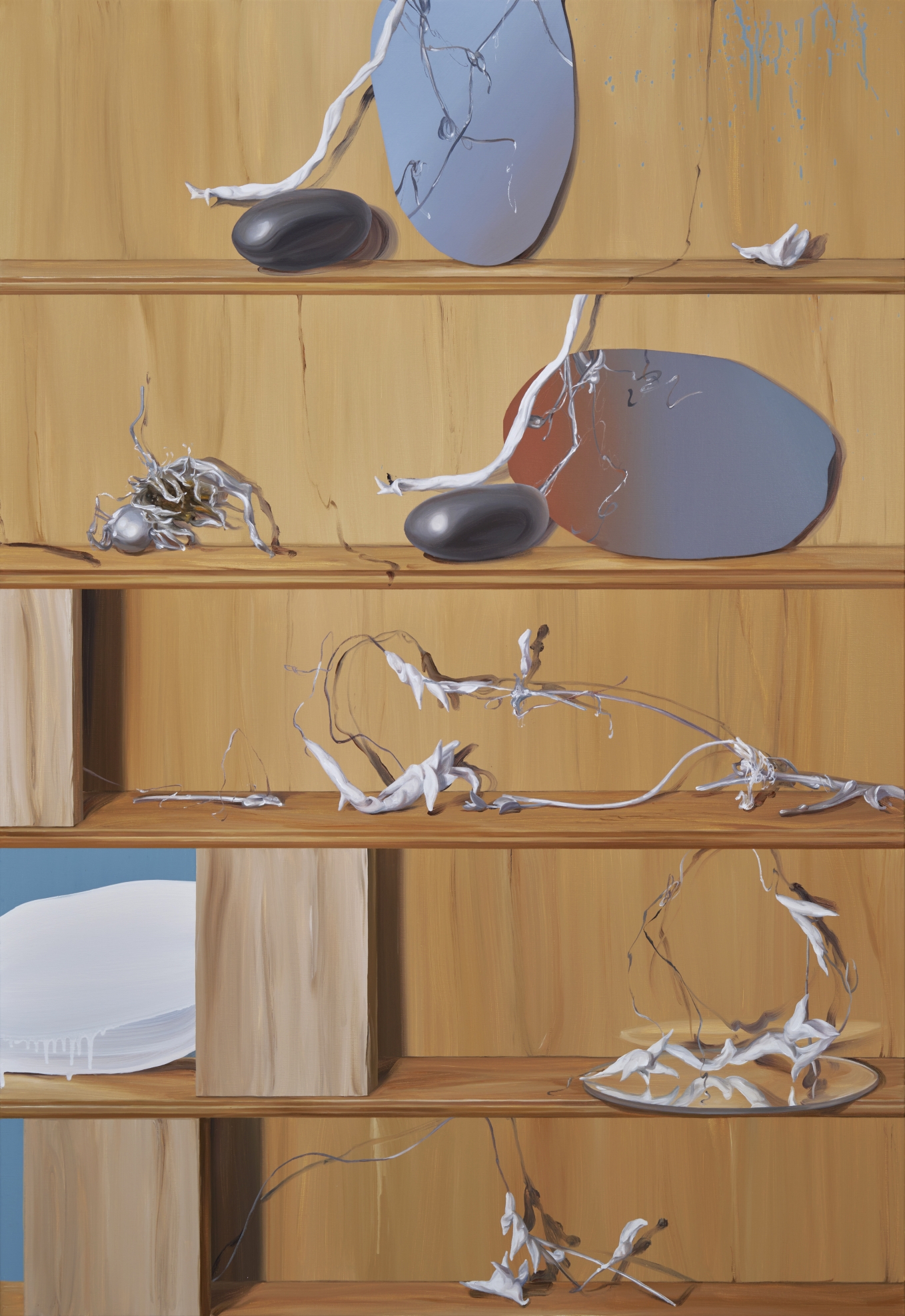
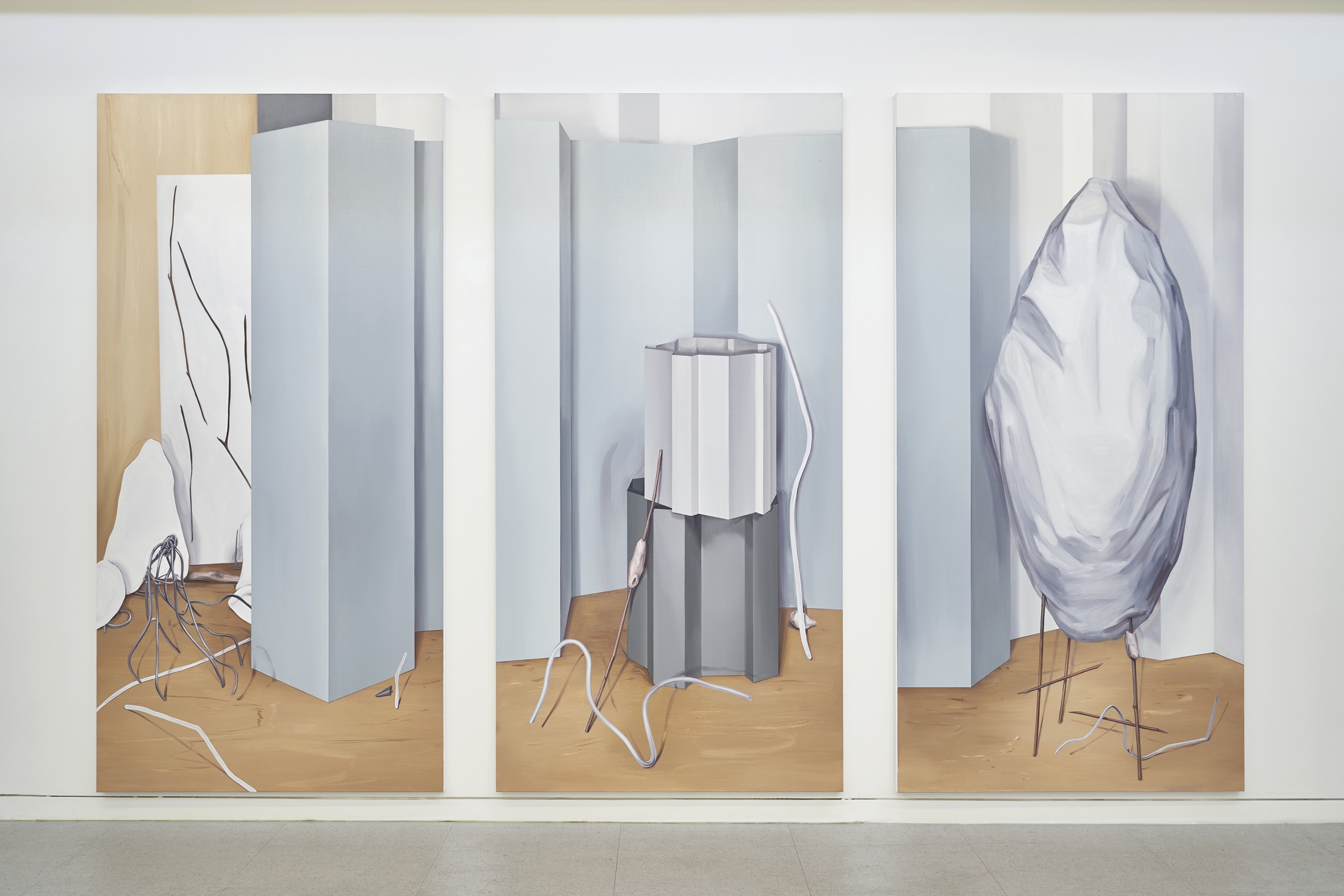
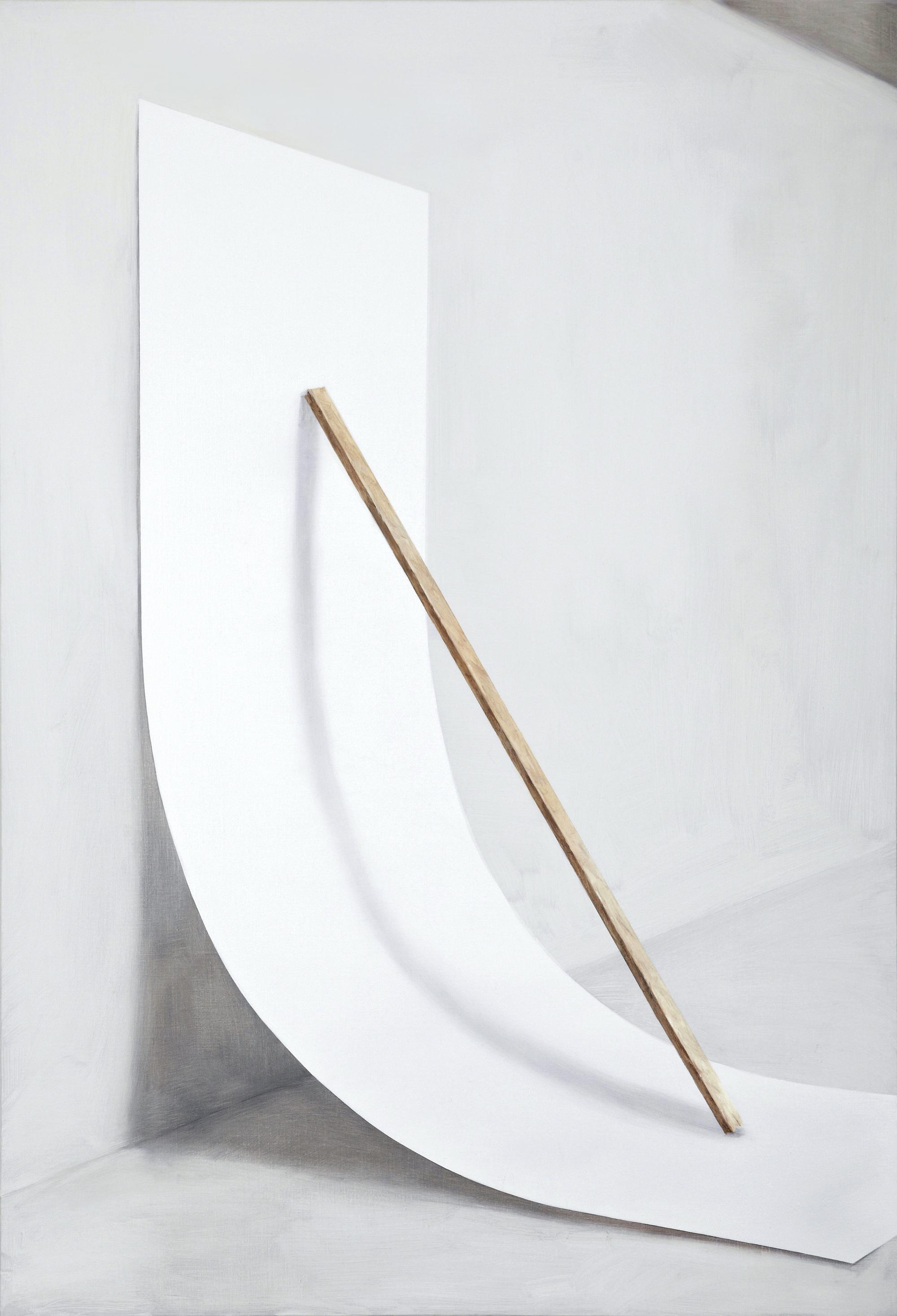
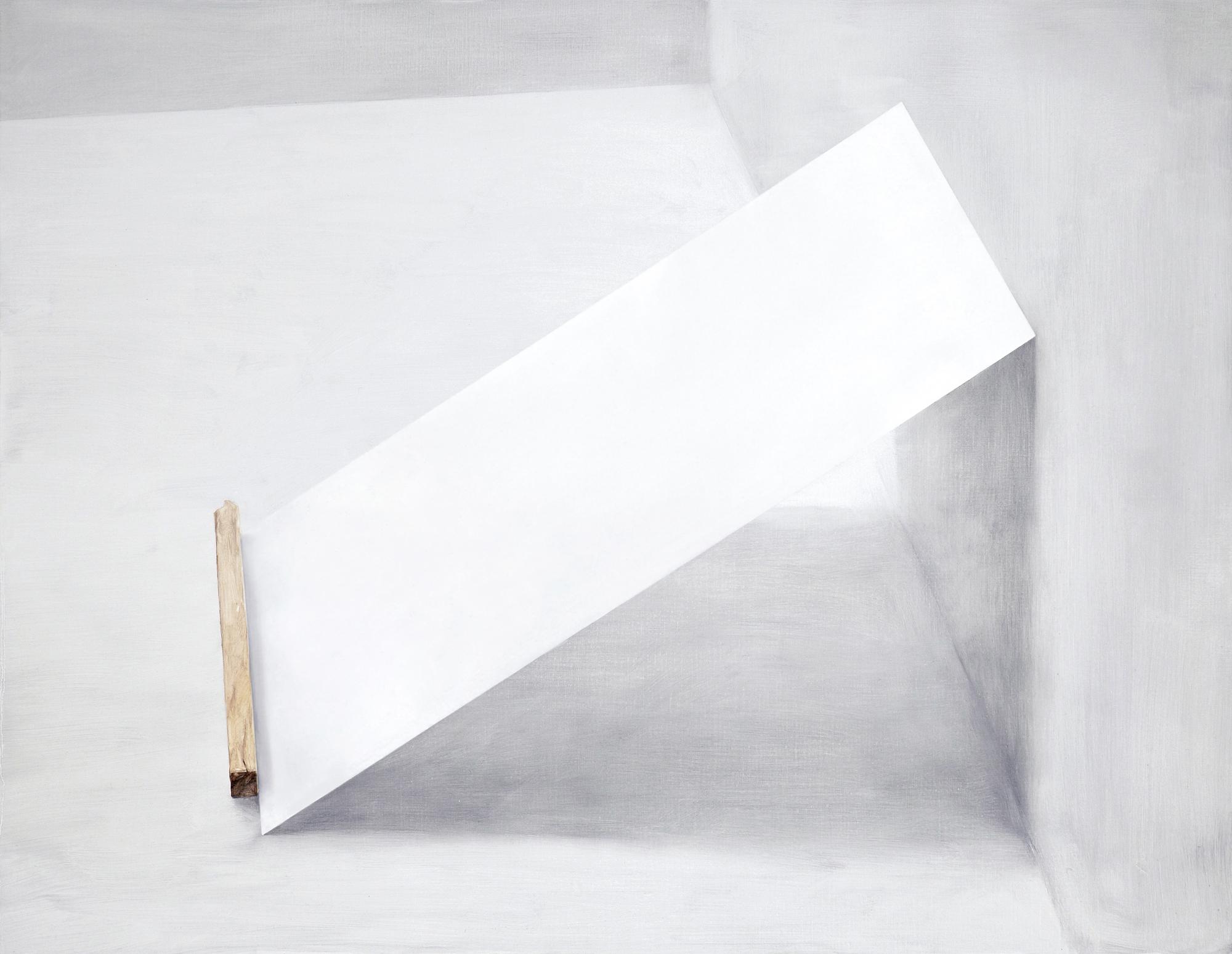
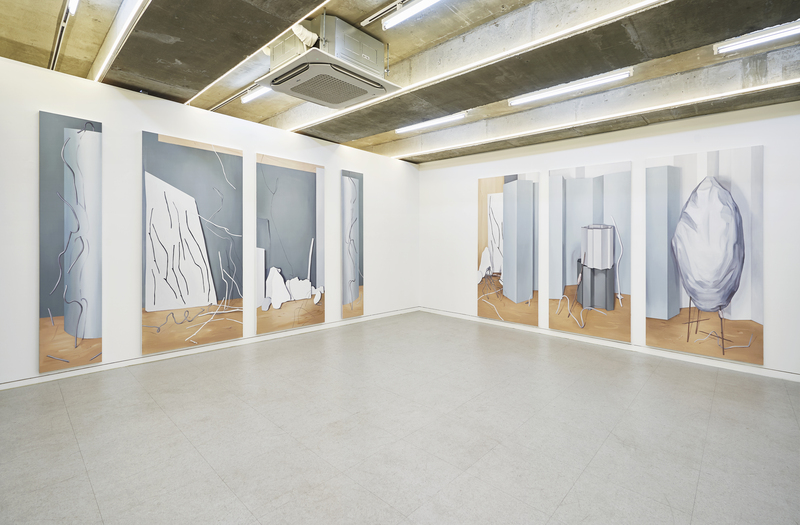
Flat lump, weighty circle, flat rectangle, crumpled without rules, standing
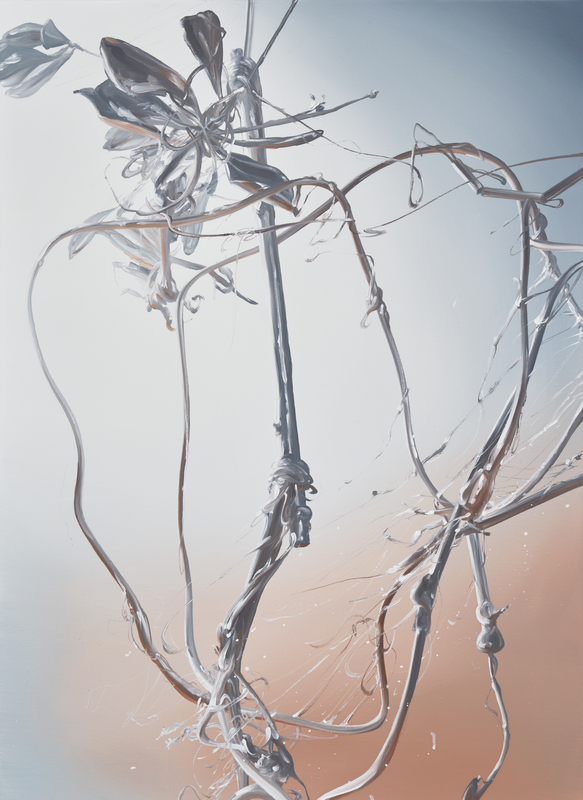
alone, suddenly destroyed. “They look like rocks. Like tree branches.” What
captures Rho Eunjoo’s attention in the city landscape are things that are used
up and discarded, or forms of things that are useless or eliminated. Things
like ‘long and blunt’ shapes of rocks, lines of ‘chaff-like’ broken tree
branches, ‘flatly folded’ architectural facades. Why is she so drawn to such
things that have nothing but their skin left? Perhaps an introduction to the
forms that Rho draws is the very first way of explaining the exhibition 《Walking—Aside》.
A
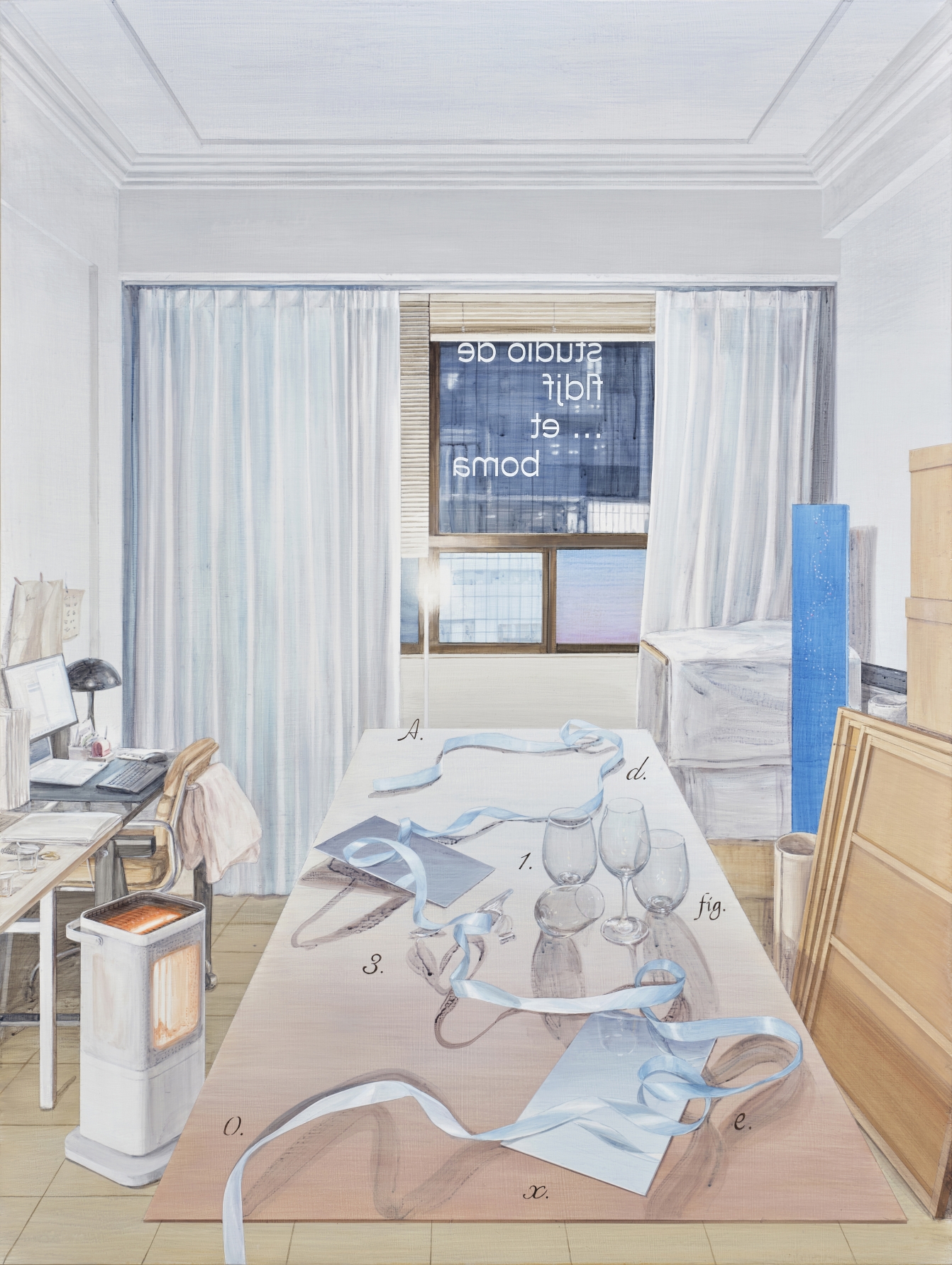
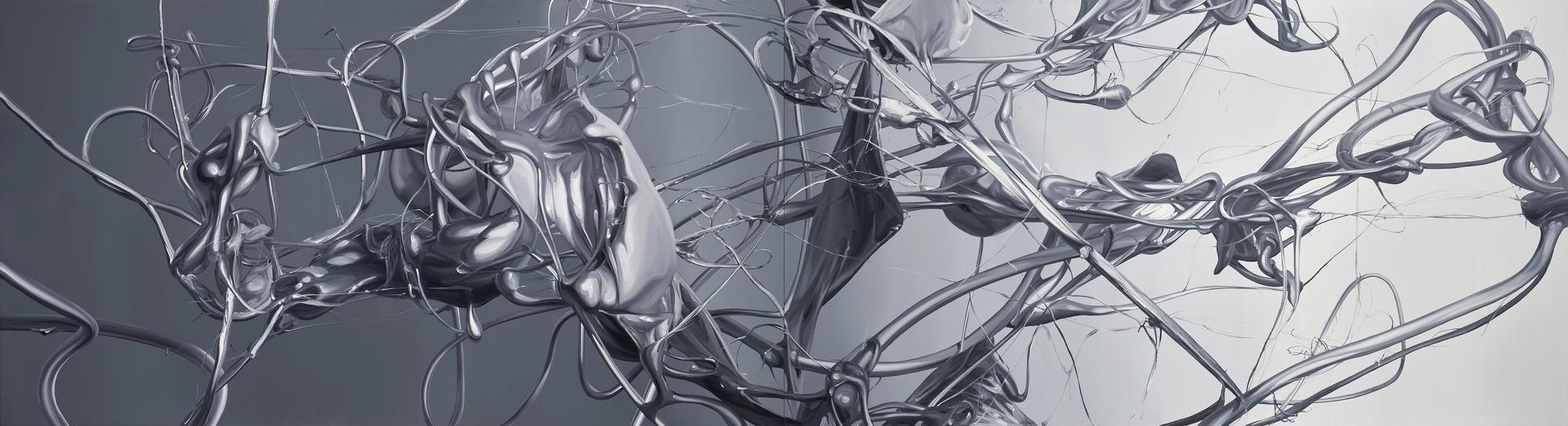
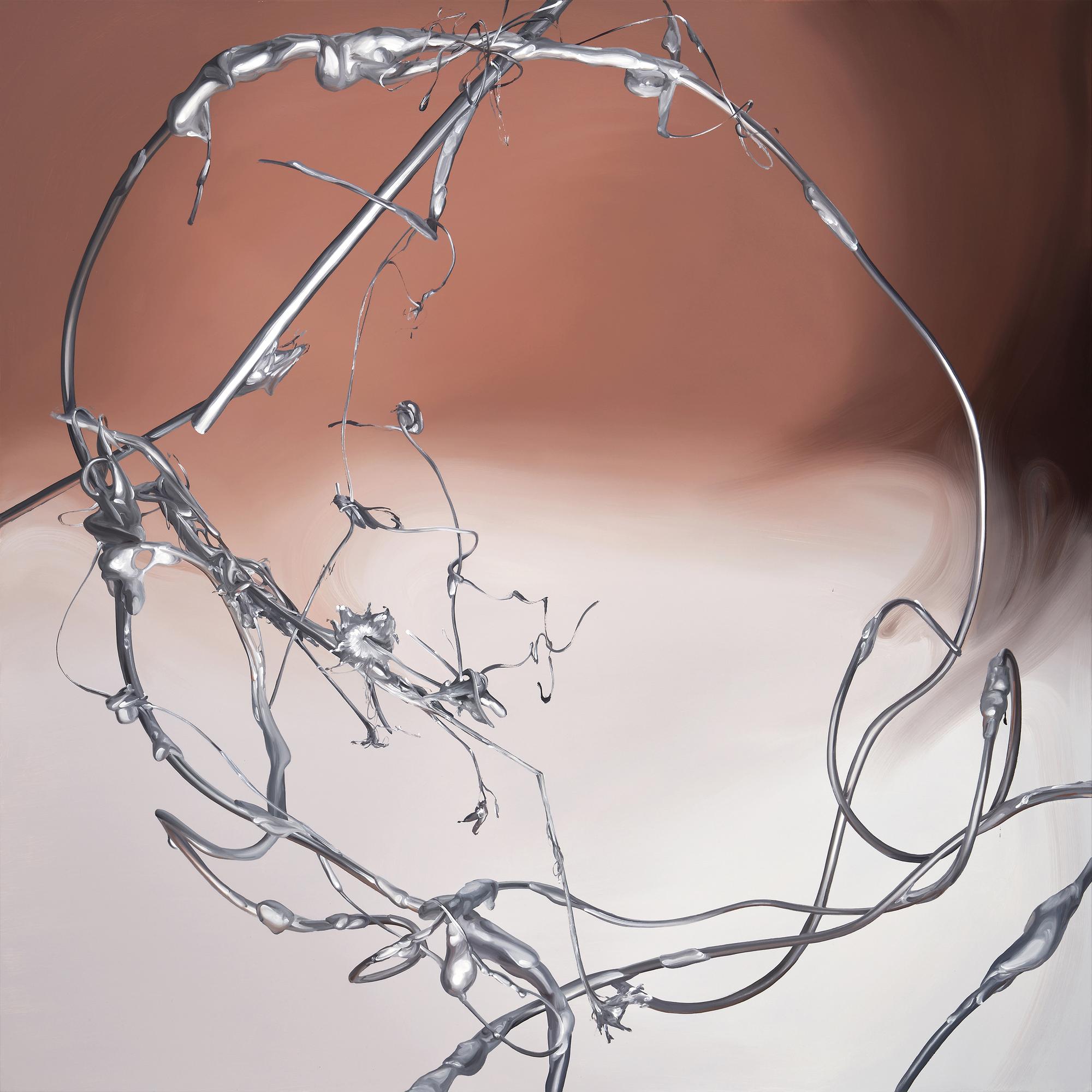
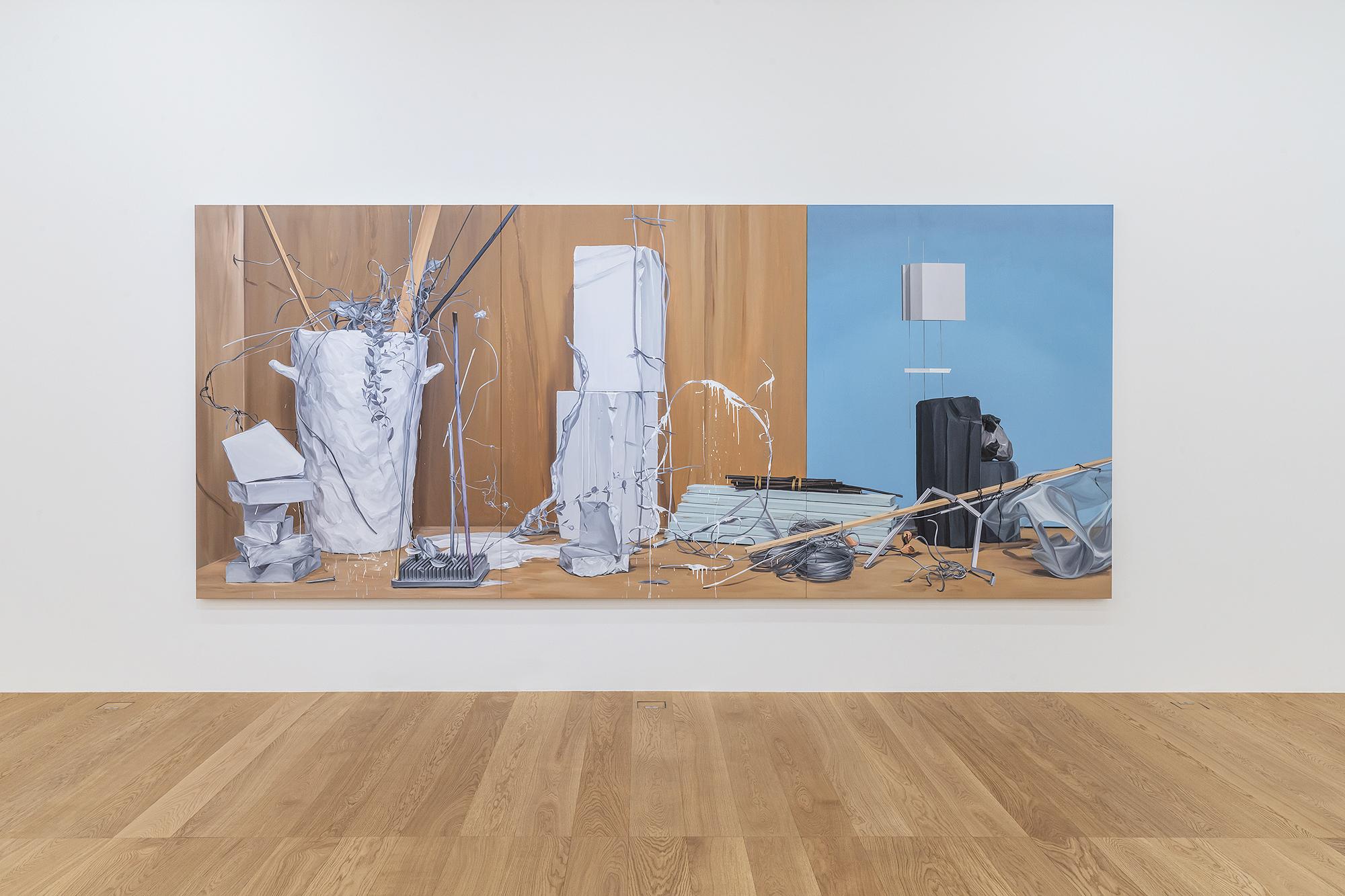
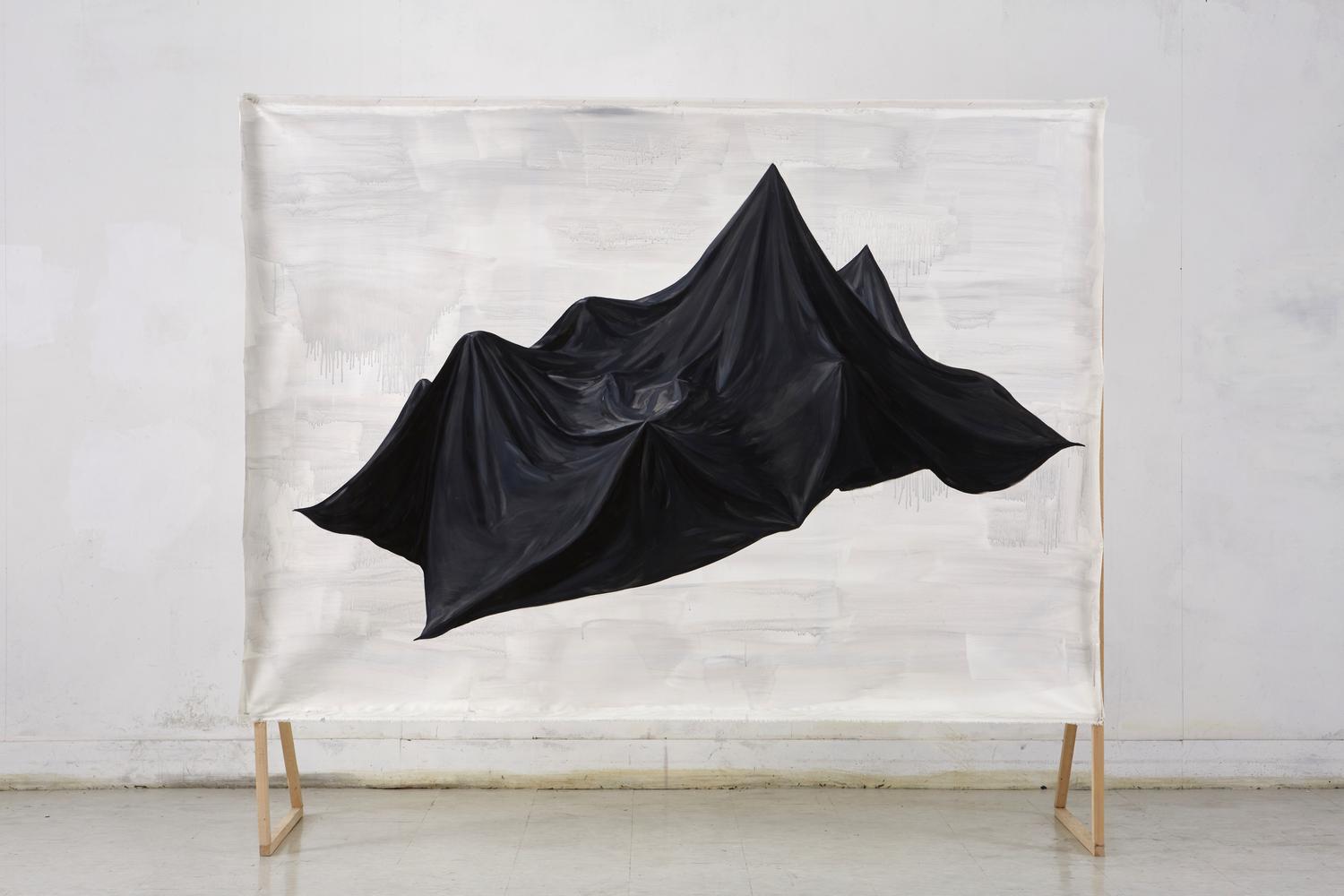
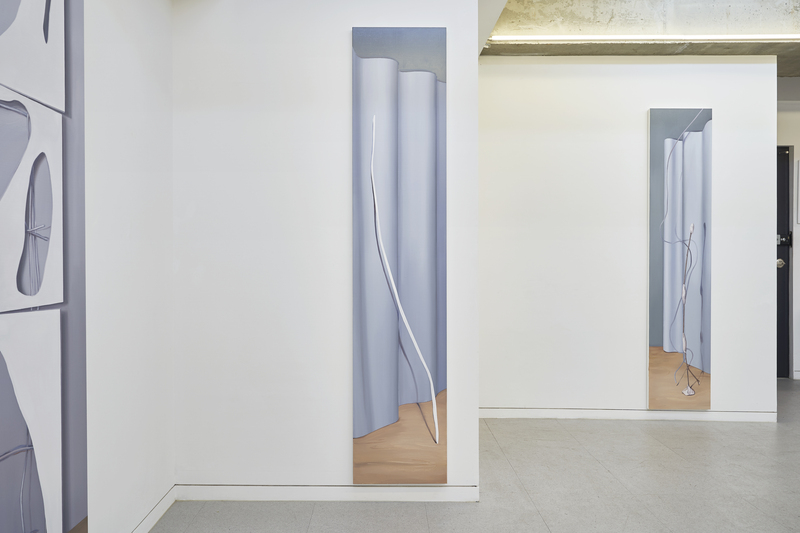
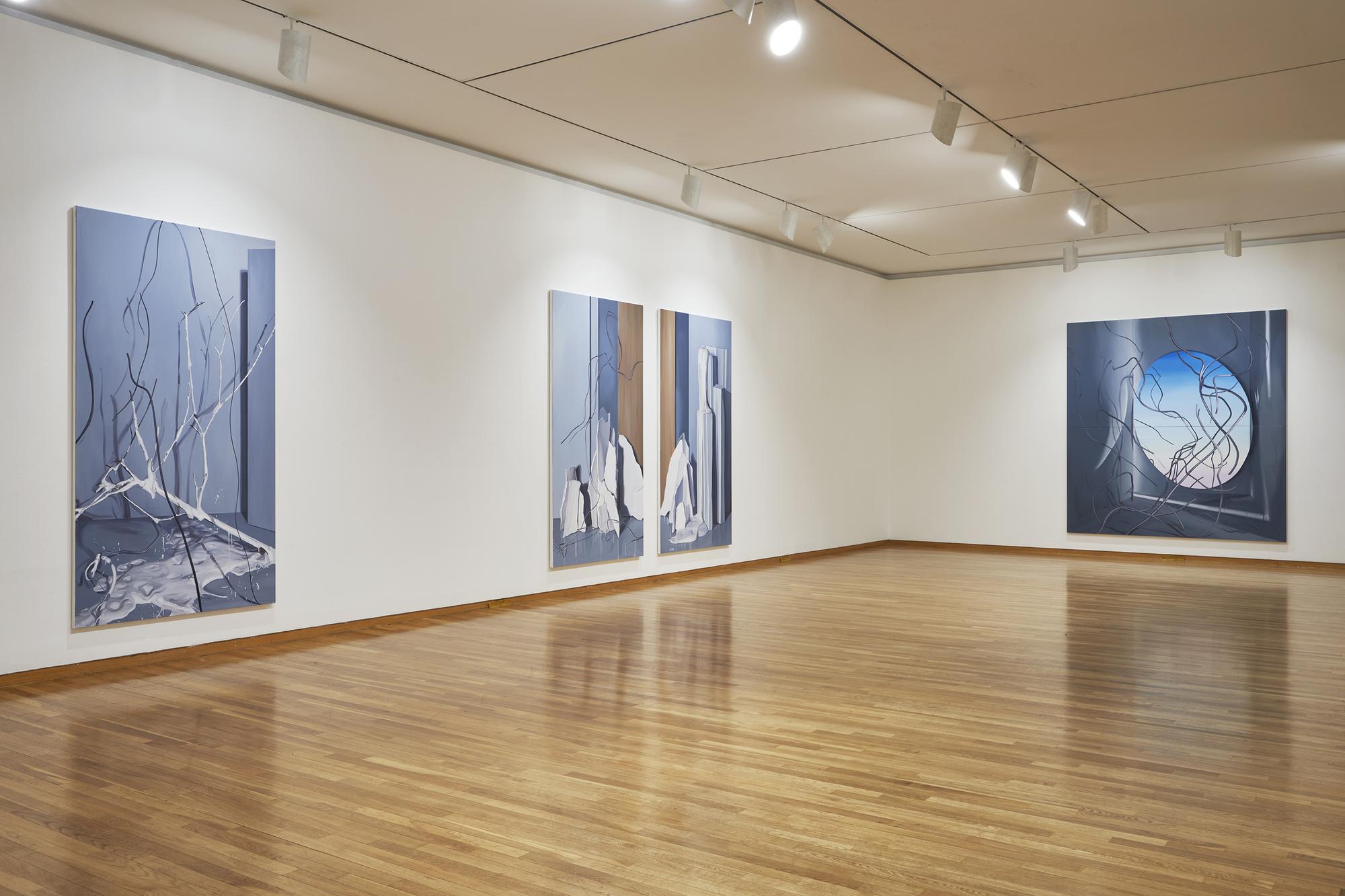
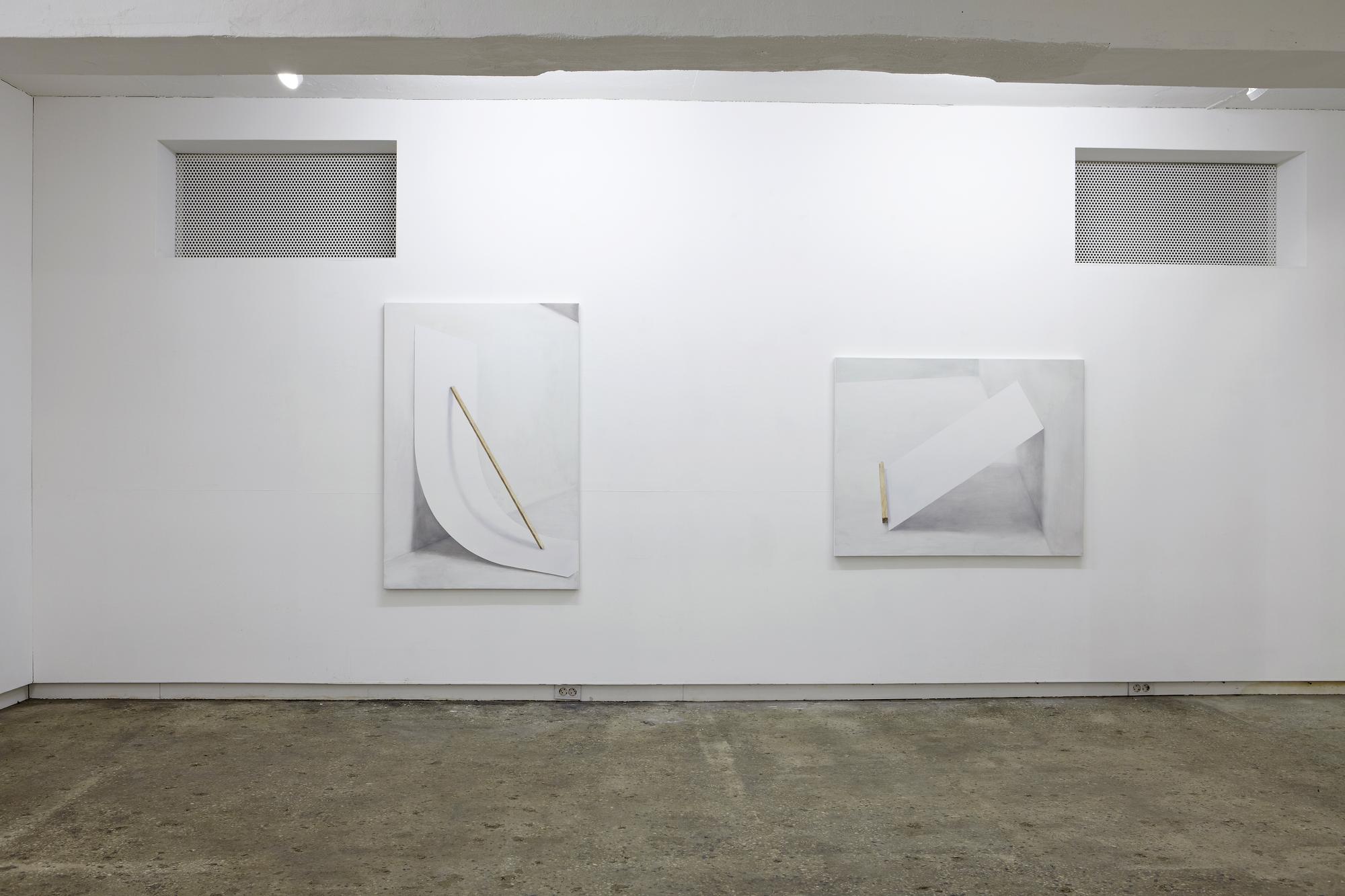
landscape at a glance or a still life, what sits atop the surface of Rho’s work is definitely as sculptural as it is painterly. If the antonym of
‘theatrical’ is ‘natural’, this situation composed by matters of impossible
scale is more or less theatrical. As is with traditional medium, Rho’s work
seems to remain a subject of contemplation and begin at the moment of the gaze,
it’s also tactile and marks the index beyond the surface. The index in the
work, with many inexplicable elements, demonstrates its incomprehensibility and
builds up tension in the viewer. Rho’s smooth and thin images, applies standard
tactics that are faithful only to reproduction with the element of the matière
unique to painting removed, producing intense and impossible landscape in the
most neutral grey tones.
Rho’s
interest in the form that captures our gaze goes through a process of a type of
pre-production before it’s officially implemented as a painting. The form is
drawn 2-dimensionally and modeled 3-dimensionally into small sculptural forms.
Once the form is then simulated as miniatures in space, the artist finally
picks up her brush. The process of going back and forth 2D and 3D and adjusting
scale and finding balance more or less requires attention to detail, and is
also a process that allows the intervention of chance elements such as gravity,
weight and wind.
It’s a moment of realizing that the most important purpose of
pre-production does not solely lie in realizing what there is in reality. On
the contrary, the artist goes on further and distorts the symbolic scale of
things and familiar rule of perspective, and downgrades their form. And she
creates an index that cannot and does not exist in this world, despite the fact
that it has been constructed through an infallible system of measurement. One might
say that it’s a scene that’s possible solely in a picture or on a stage.
“It’s
like a shadow puppet play”
If
making artwork is a process of materially manifesting and making visible the
artist’s senses and thoughts, Rho takes detours around a straight path, through
a process of ‘Walking’. It’s like taking a detour around the
‘phenomenon/situation intervention’ that comes from the state that’s invisible
to the eye. It’s constructed through engineered tools, modeled through
sculptural means, then the image is finally created with eliminated emotions,
through the most sensitive medium of the paint brush. And what’s left there is
the shell of form, which then soon leads to the analogy of the emotions felt by
the artist. This was perhaps an indirect (but perhaps the most intimate) way of
expressing the challenges the artist felt by the rapidly changing situations surrounding
her, and situations that were described through words like physical anxiety,
tension or condolence. The unsettling grey sentiment is projected on the view
of the things in the city and landscape, and the artist chose, as a way of
delivering such sentiment to others, drawings that eliminate as much sentiment
as possible.
Rho
brings together things that have no control of their own because they’re
overwhelming in their scale rather than in beauty, as well as things that are
discarded and isolated, from apartment buildings just before occupation, to
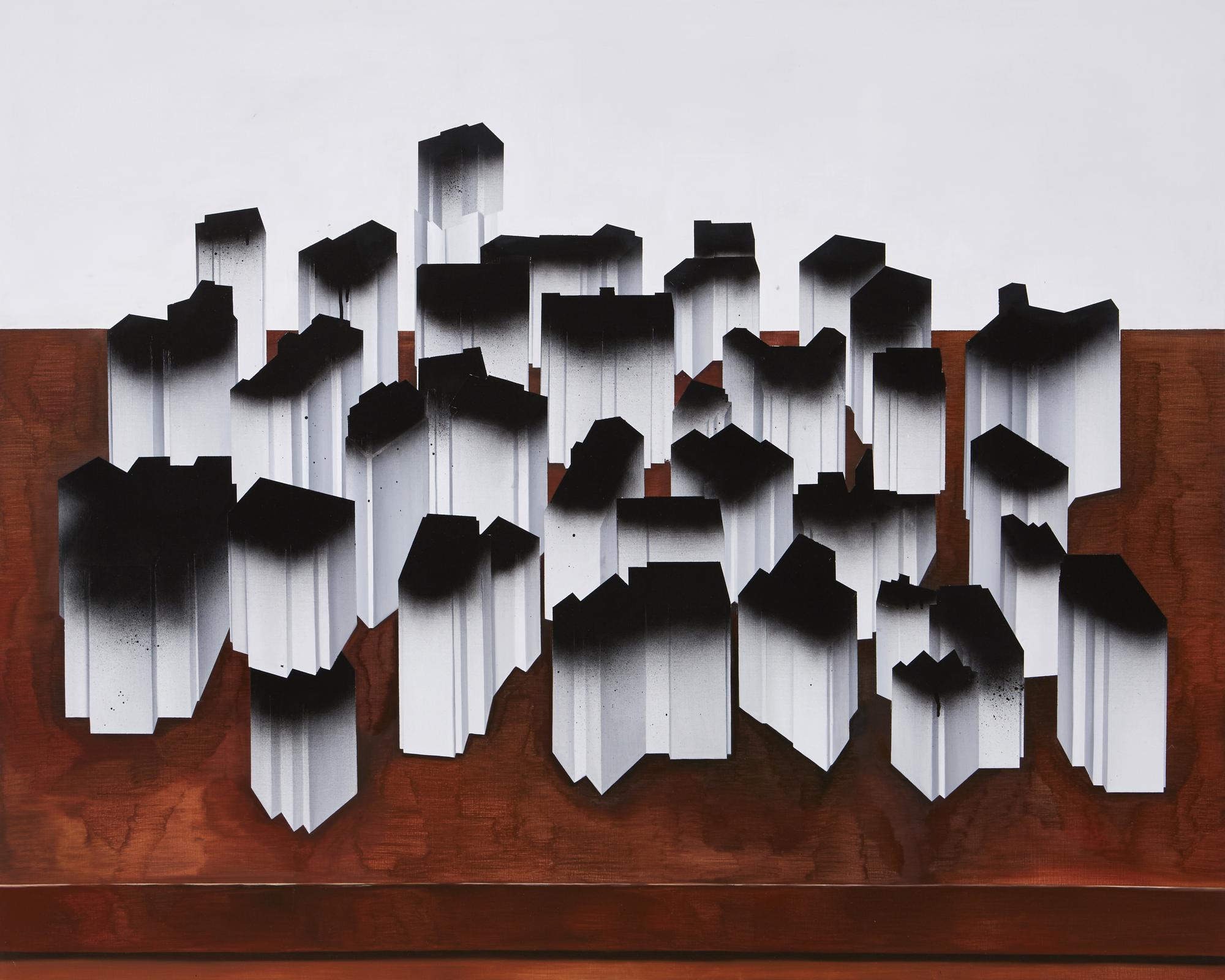
construction material, and broken tree branches and pencil lead. This way, Rho
reenacts the world, playing with scale. The matchbox-like buildings when the
city is seen from bird’s eye view, or their length is the very stage the artist
has set up, and the depth captured in the image. The main characters on that
stage are the still life of the city that would have melted, shattered and
vanished. It’s like a shadow play. And this is the two-sided world and the
‘Aside’ of the stage that Rho is showing in this exhibition.
“The second decision to illuminate the subject”
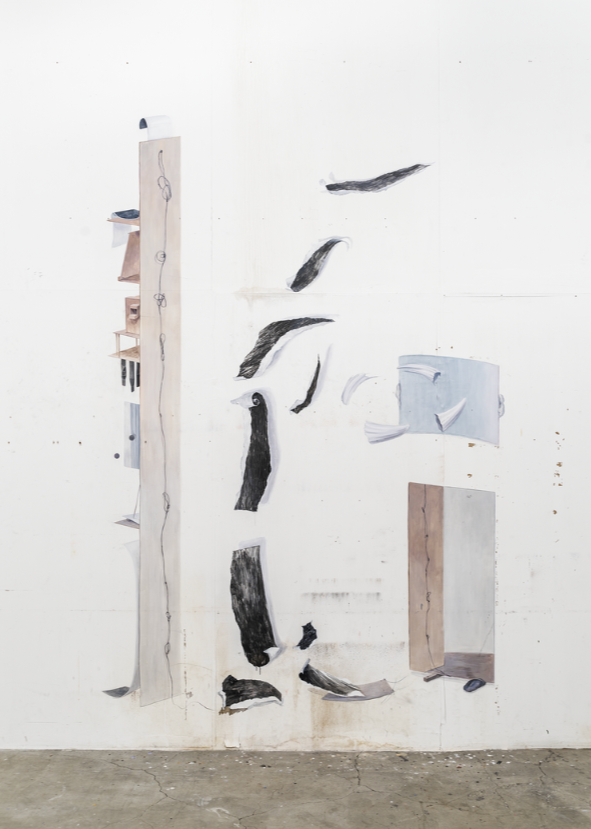
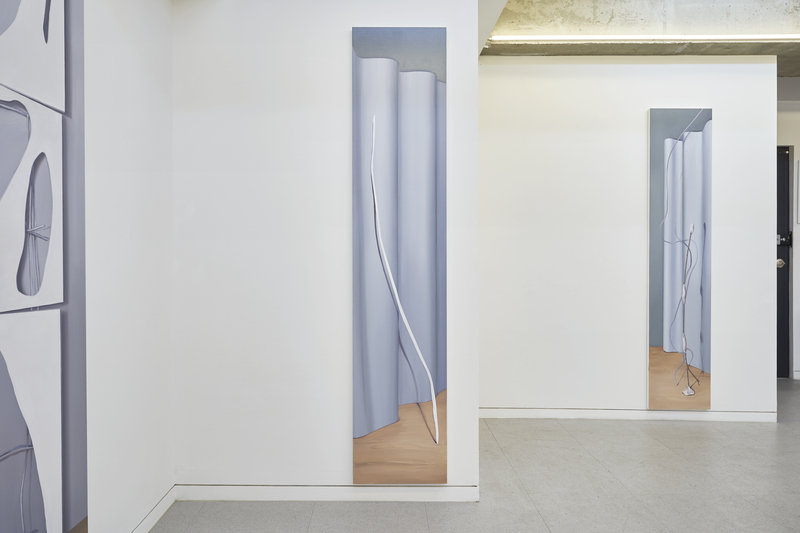
From the illusory space of infinite depth to the real surface of the canvas,
painting has expanded into a form that affects and is affected by its actual
environment. Now, painting is no longer recognized as a plane, and the
exhibition no longer stagnates at merely discussing images but expands to
offering the situation directed in its space, as well as conceptual and
material experiences. As an exploration into the expansion of painting, this
exhibition attempts to draw in space into the plane, rather than bringing
paintings into the physical space. If the images that are positioned at a
certain height in the exhibition space are seen as ‘windows’, they would
function as channels through which to observe the world that lies beyond them.
The floor and walls are drawn, appropriately separated from the main character,
as “the second decision to illuminate the subject”. They may not be the
background in the image but function as something close to it. Such floor and
walls successfully give the illusion of a ‘shallow depth’, but function more as
a stage that makes things (main character) stand out more than the space. The
mimesis in the shape of the rocks enlarged as much as a human figure, and the
shape of buildings diminished as low as to touch human foot, lies on the
surface of the works, while attempting to traverse here and there. The
three-sided and four-sided forms referenced in this exhibition are read as the
concept of expansion of a fixed frame called the canvas, and mediate as a
device that implies dynamic painting.
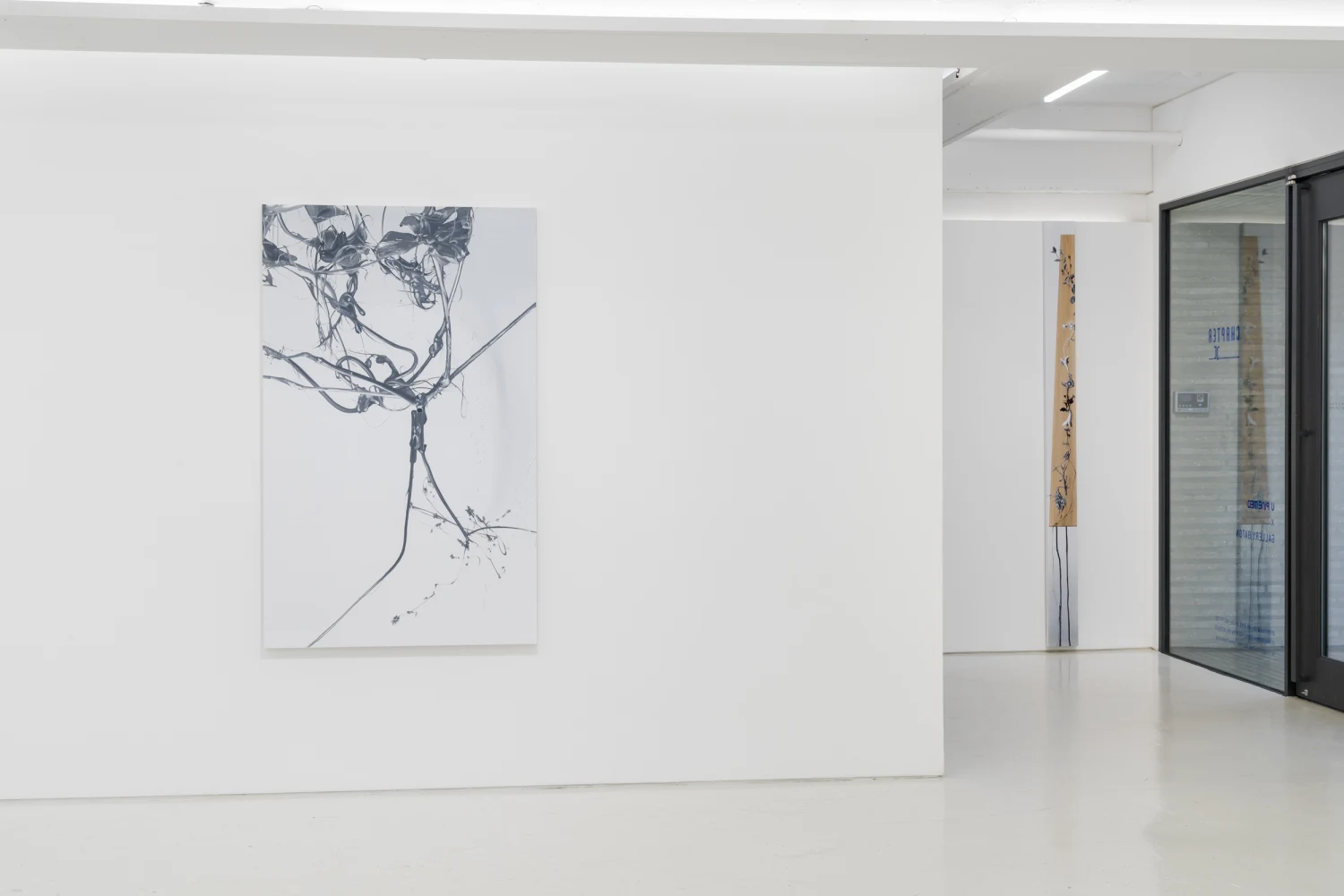
This exhibition, which presents works as
a series but also as independent works, stirs up experiences of tension and
balance in the audience, through things that grow immensely in size with steps
taken forward, along with the images of things they see when they turn
around. 《Walking—Aside》 completely exposes the isolated things that have clearly existed in
between the definite scenes. They are the urban landscapes that disappear and
appear suddenly without any knowledge, and the collective-drama of Rho’s
paintings of things.
Text by Jihyun Shin (Independent Curator)
[1] The subtitle of this text which explains the exhibition and
the artist’s work has been taken from the conversation between the writer and
the artist.