The
moments of being on edge or caught in anxiety frequently occur every day.
Although abruptly ignoring them may be the wisest thing to do, if you are brave
enough to hold and look into them, they turn out to be a valuable switch.
Because being aware of them can transform the matter(trouble) into another
matter(question). Rho Eunjoo makes an additional effort to go through multiple
phases of warming up before standing in front of a canvas. It is not only a
necessary procedure to be preoccupied with the targets of depiction but a step
to relive/observe her tense state of mind. Drawing, modelling, directing, and
shooting. Once the long course of searching clarifies inside and from a body
and she grabs the corner of it, it is time. Begin.
While
Rho planned 《Knot to Leaf》, she recalled garden-scape. Let us suppose that filling in a canvas
plane is analogous to turning unused land into a garden. Making the given land
with borders even at first, dividing it into sections and planting seedlings
depending on a composition scheme follow. The hands trim protrusive parts for
flawless finishing, and an assemblage of numerous intentions constantly adjust
themselves by a final design. They are compatible metaphors for a course of
painting.
In
her latest exhibition, Rho managed to represent the physical traits of objects
in images by employing a group of objects in disparate characters and textures,
a relative understanding of scales, movements of bodies and objects,
transparency and penetration. [1] For this time, the seeds
planted in her garden are withered flower stems, wires, threads and
melted-and-reshaped unknown materials that weave them together.
Rho
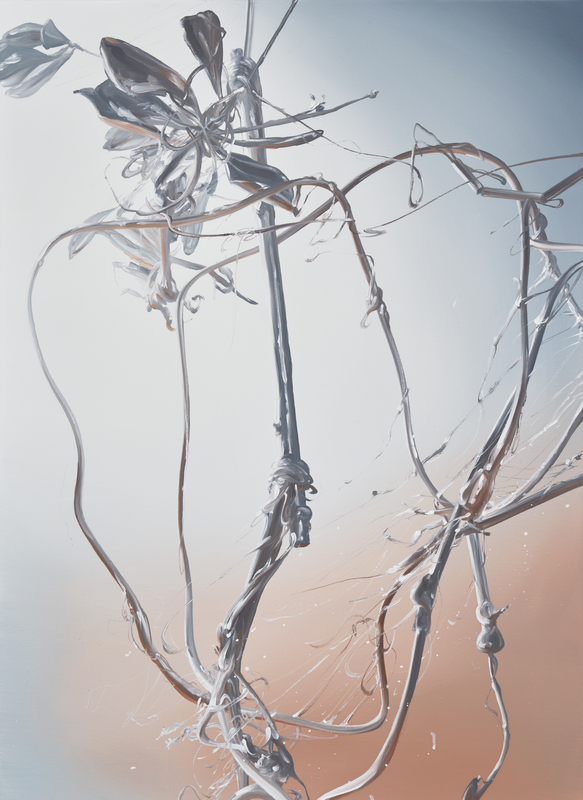
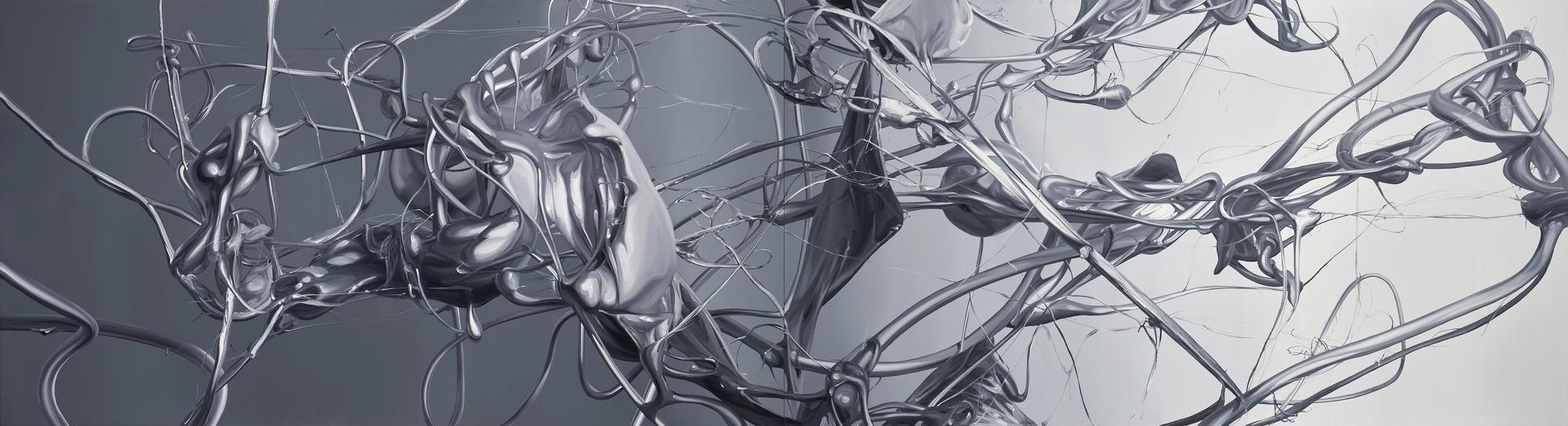
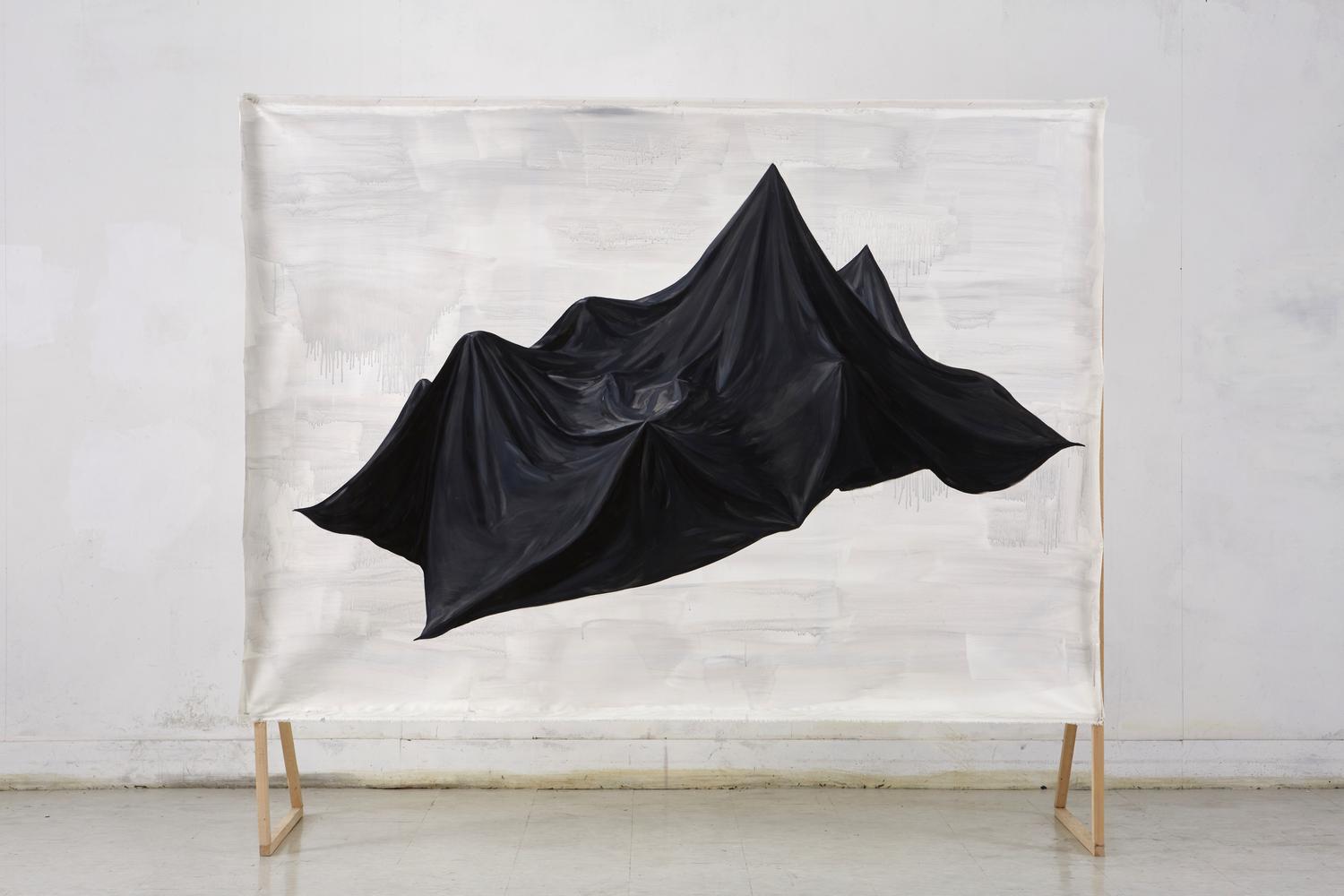
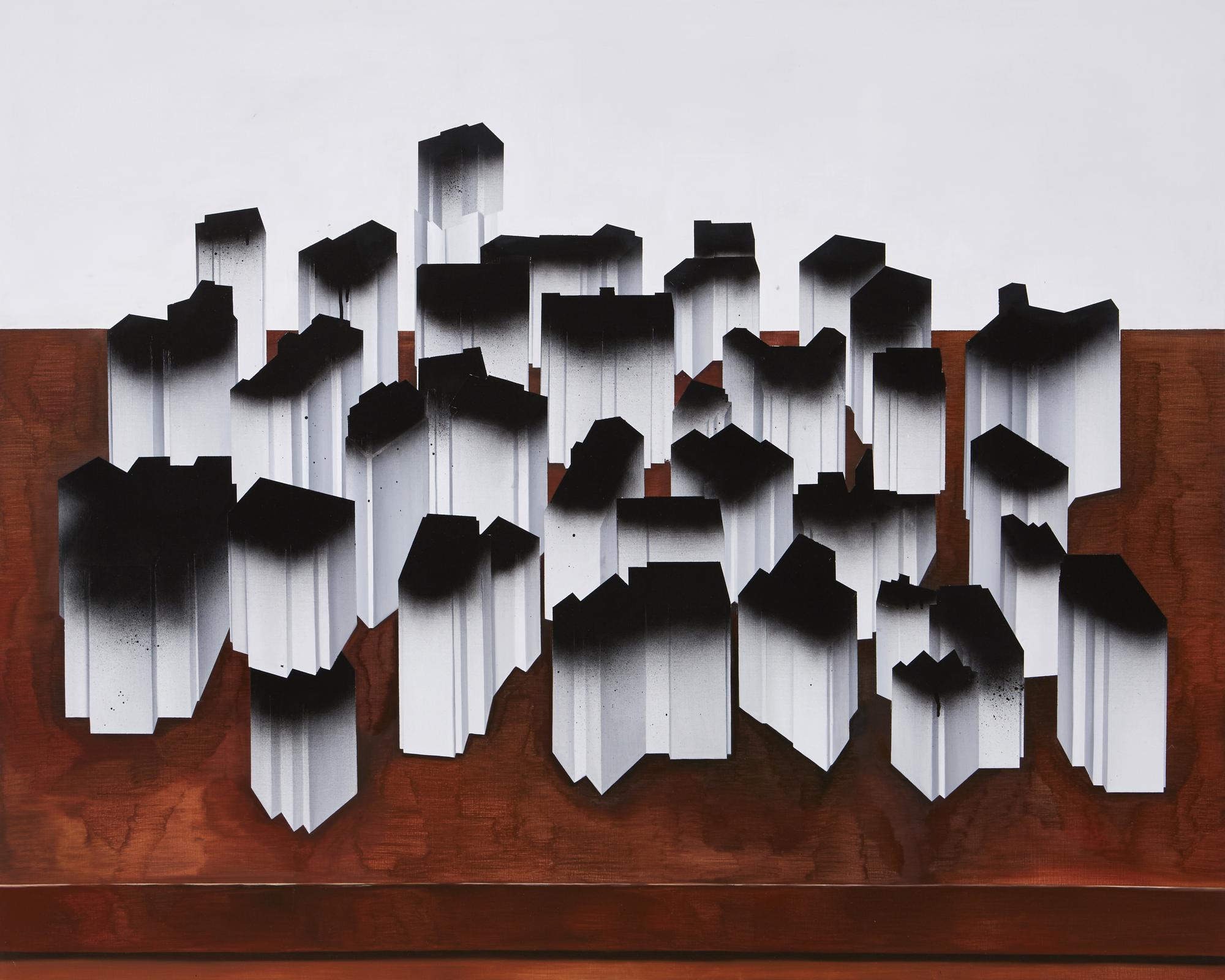
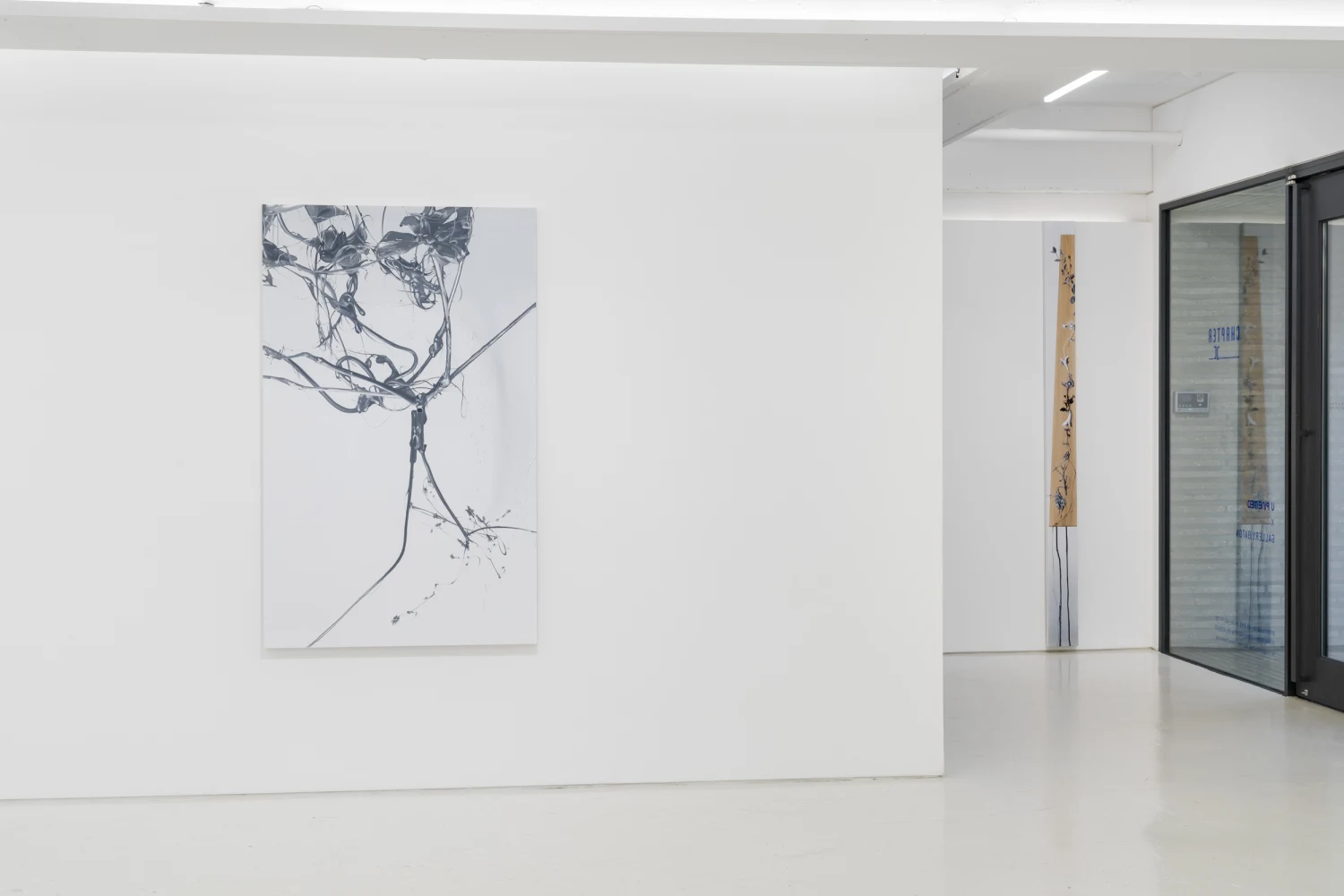
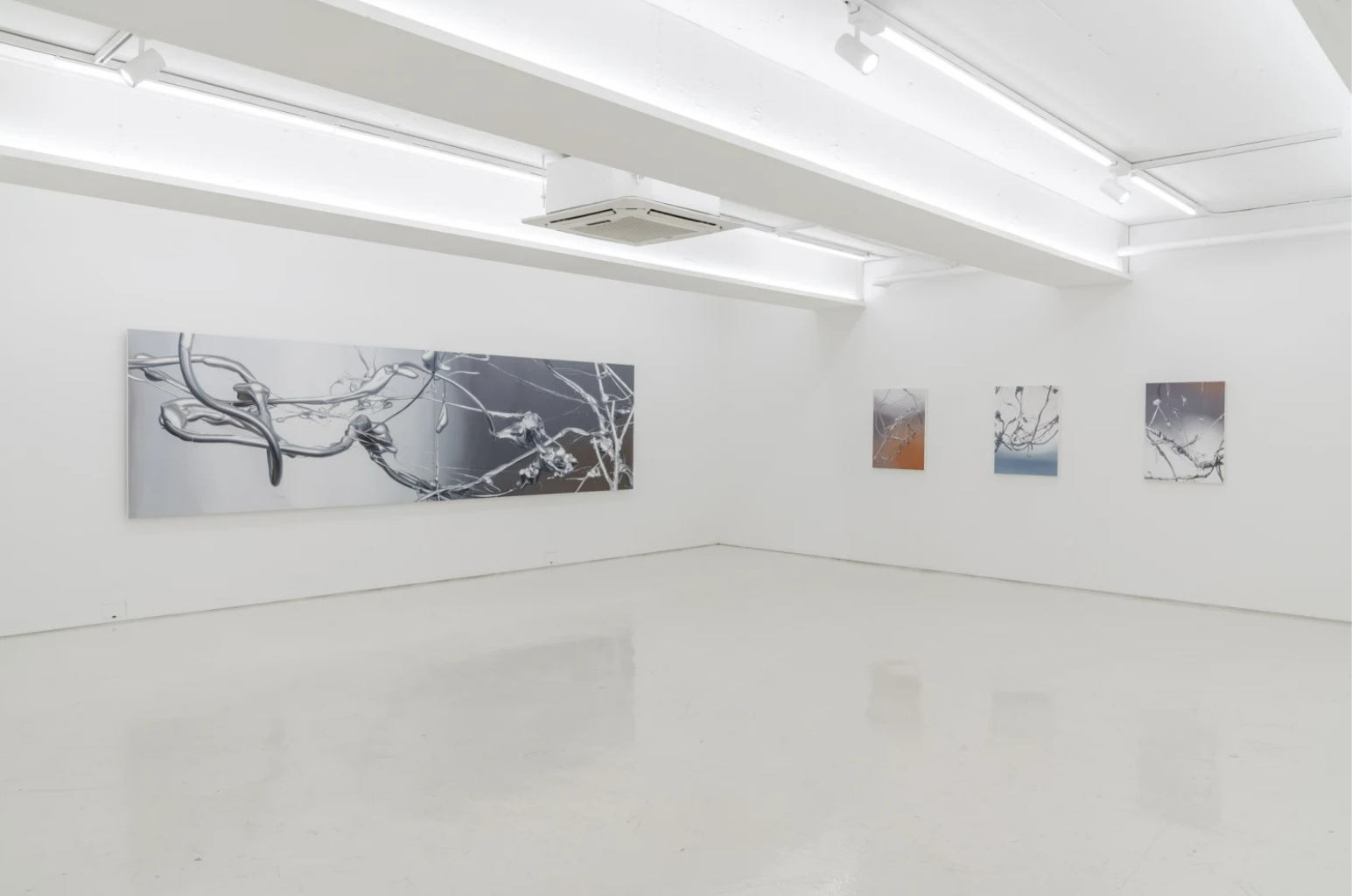
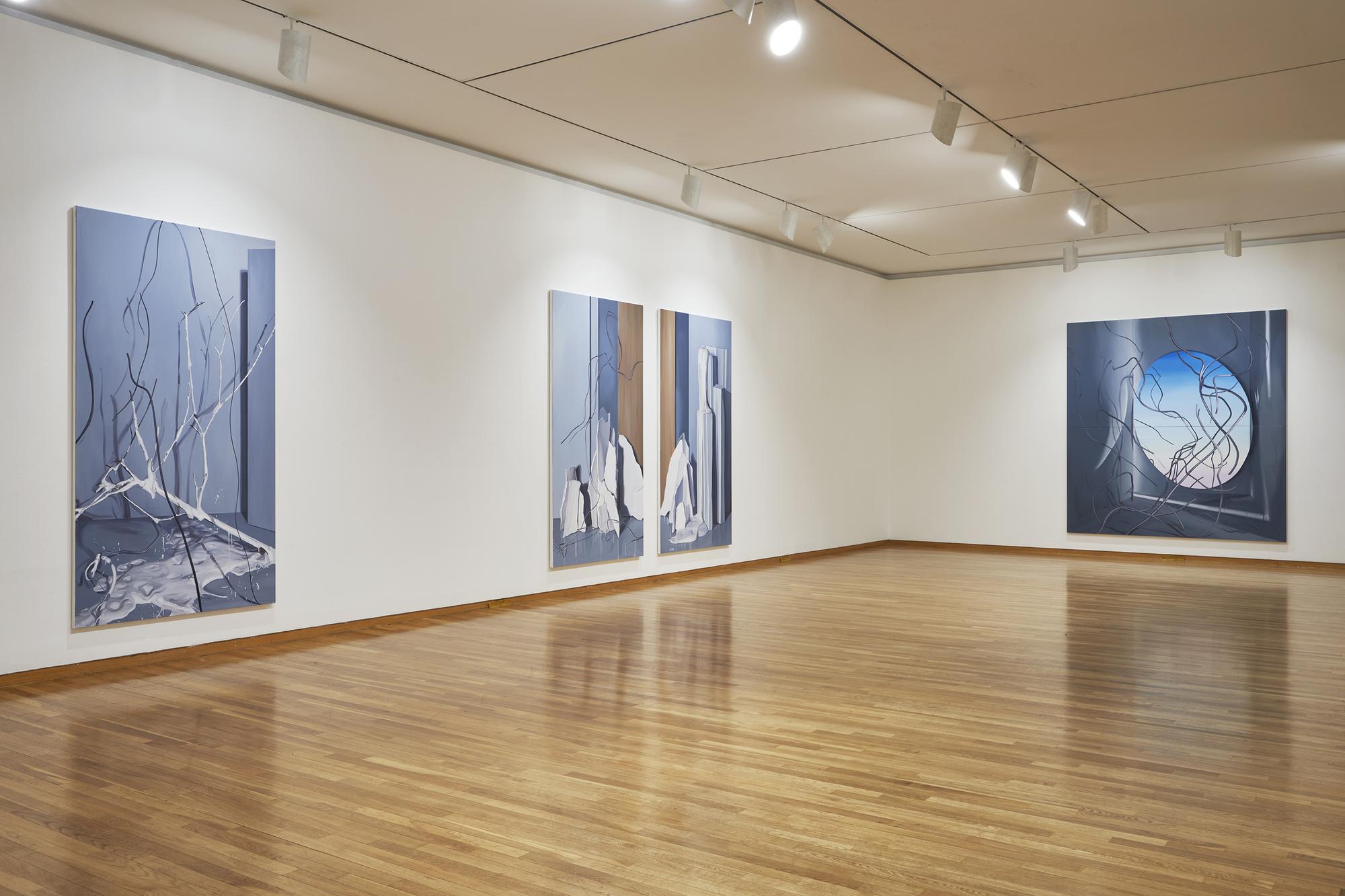
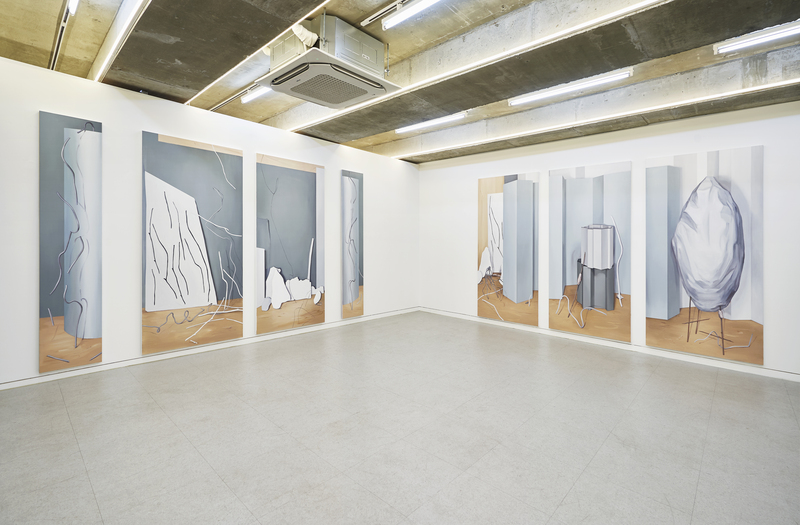
Eunjoo's garden conveys four themes. The size of Knots-Branch (2023),
occupying the entire front window of the exhibition space and its indoor walls,
overwhelms visitors, and Knots-Spot (2023) depicts
an enlarged landscape where diverse objects get entangled and deformed to be
dots and lines and eventually lumps. The sizes of Knots-Branch (2023)
and Knots-Spot (2023), occupying the entire front
window of the exhibition space and its indoor walls, overwhelm visitors. They
depict enlarged landscapes where diverse objects get entangled and deformed to
be dots and lines and eventually lumps. As a result, the visitors' gaze chasing
after the clinging shapes floating across the plane becomes busier than ever.
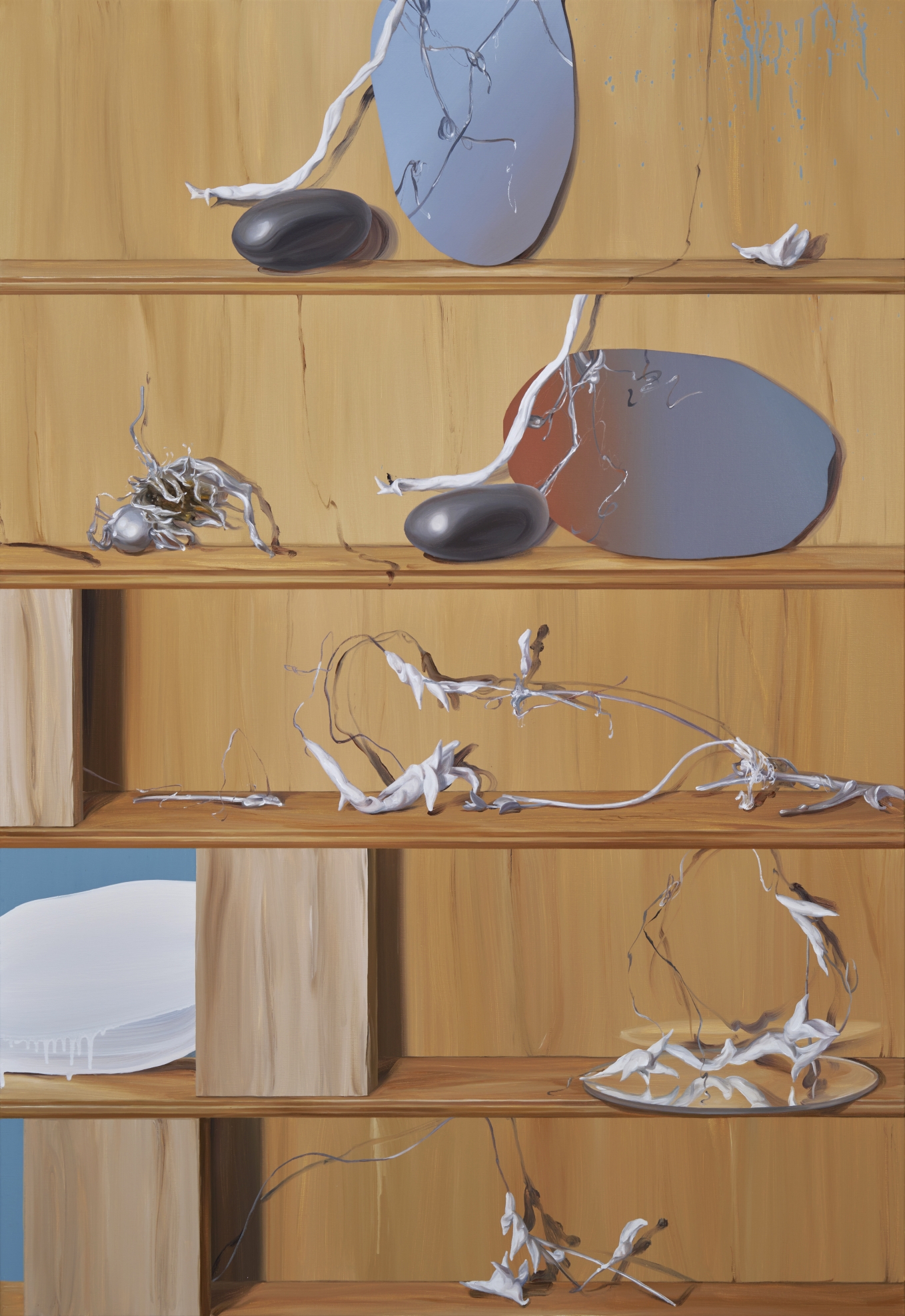
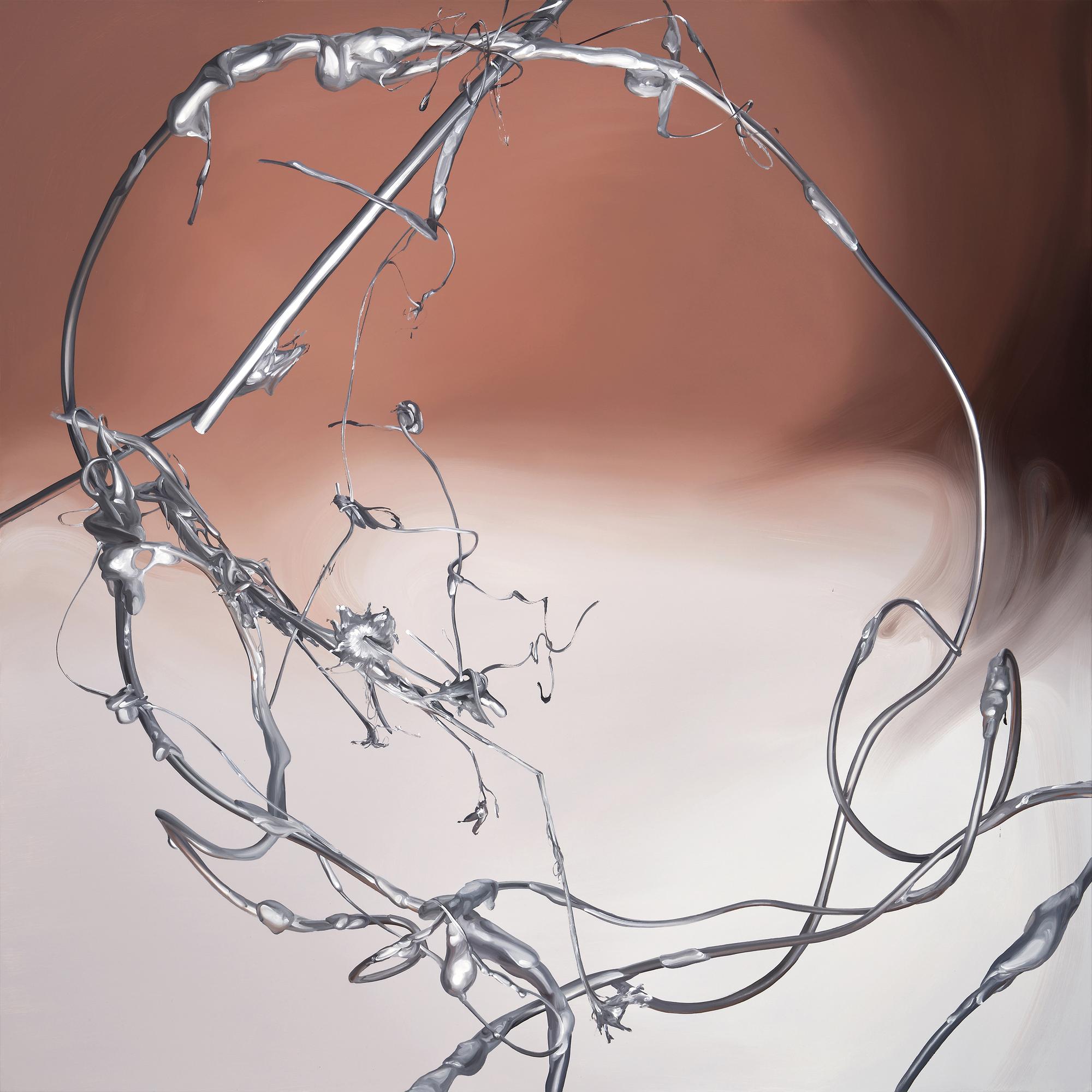
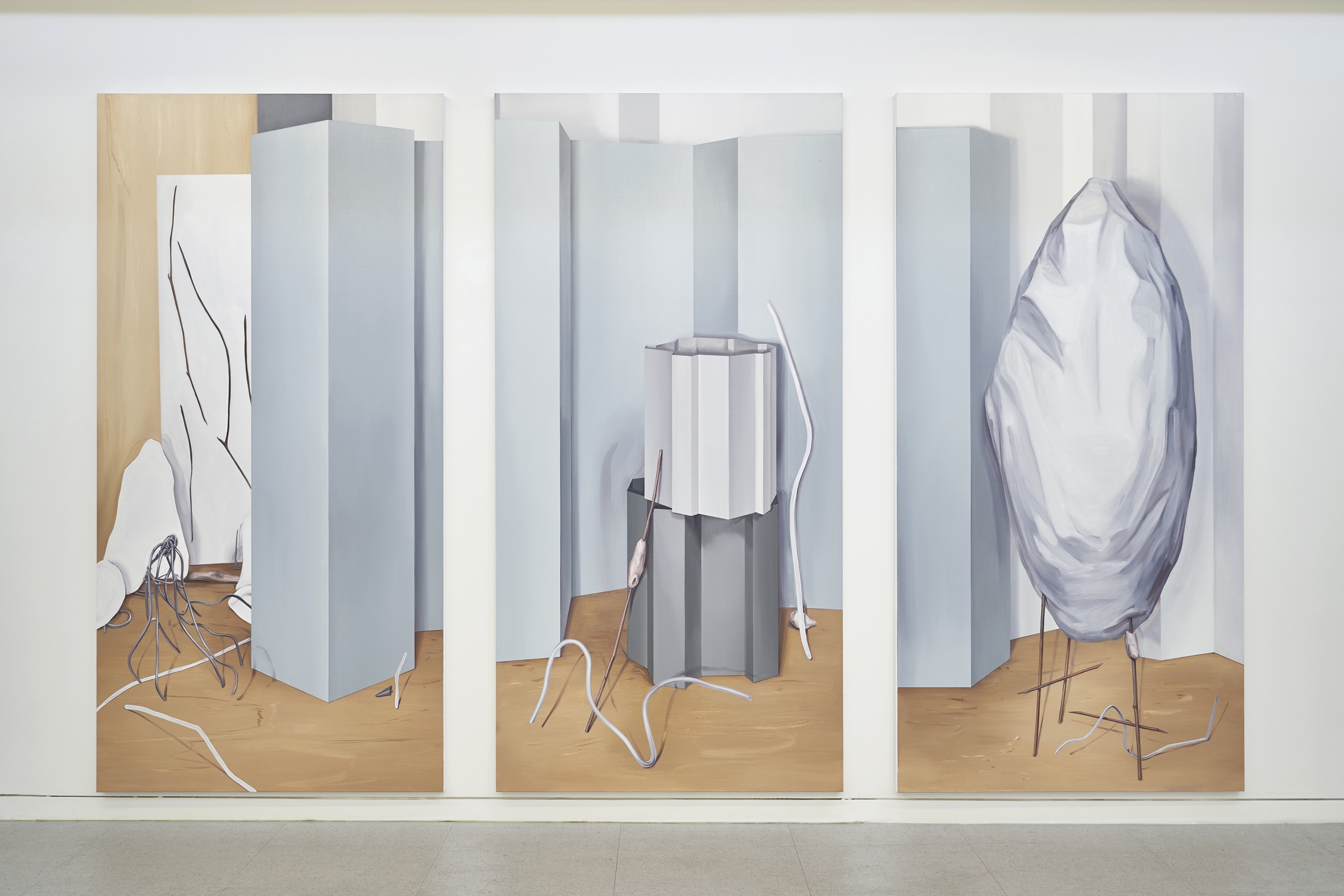
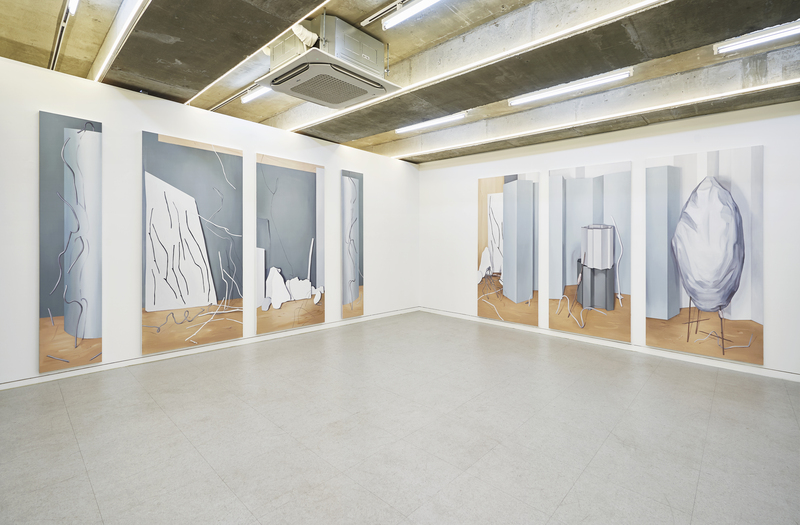
Secondly, the series of ‘Still Light’ (2023) contains more
identifiable lines and mass. At the rear of dried branches adhering to wires
and the bodies of spherical structures wrapped with fluid degenerated matter
like knots, the dusky colours of the backdrop seem to give billowing rhythms to
the described front figures. The particular temporality, when the soft
things are solidifying, the straightened things are declining, and the day is
breaking, is a crucial leitmotif penetrating her practice for a long time.
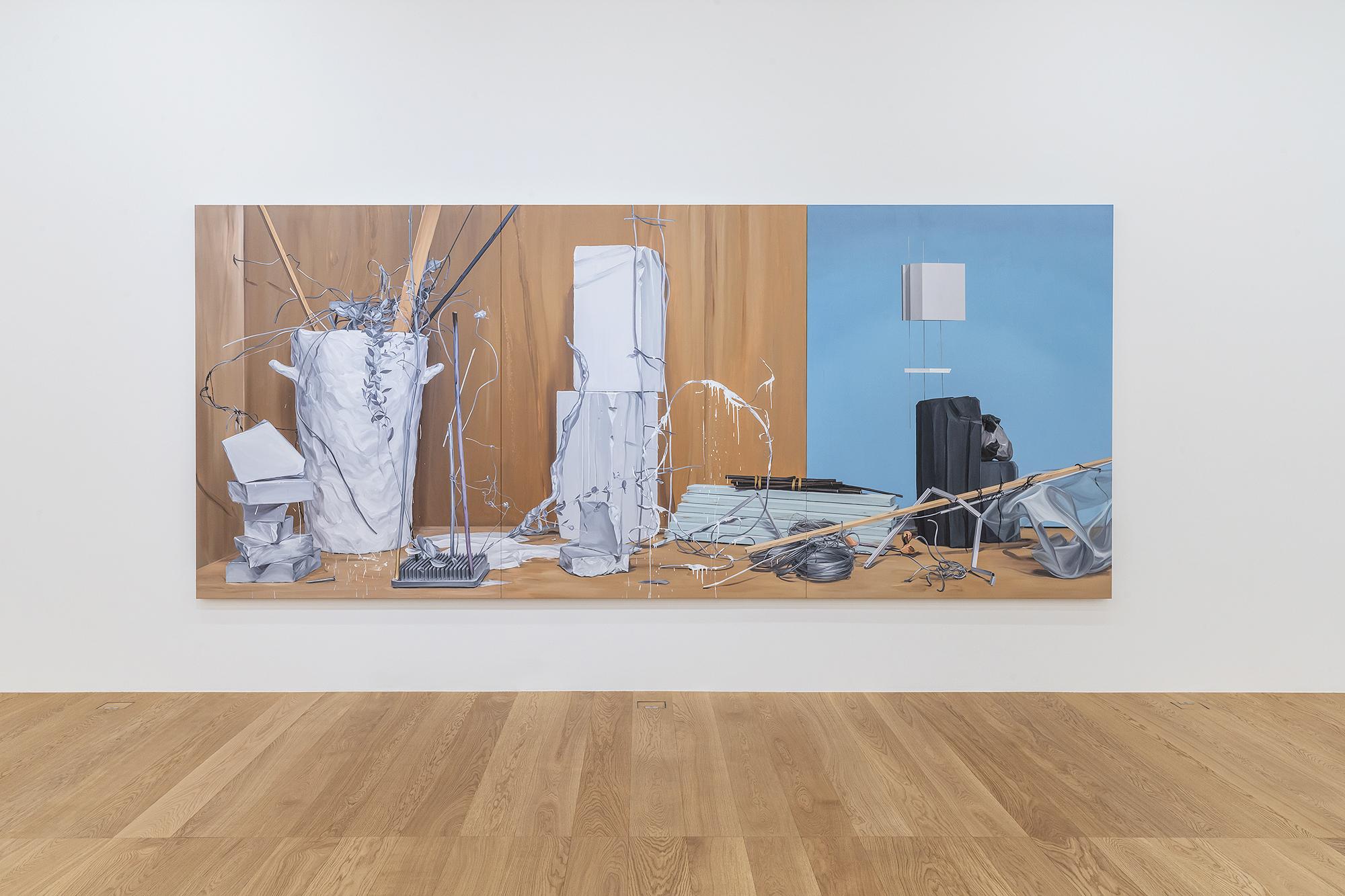
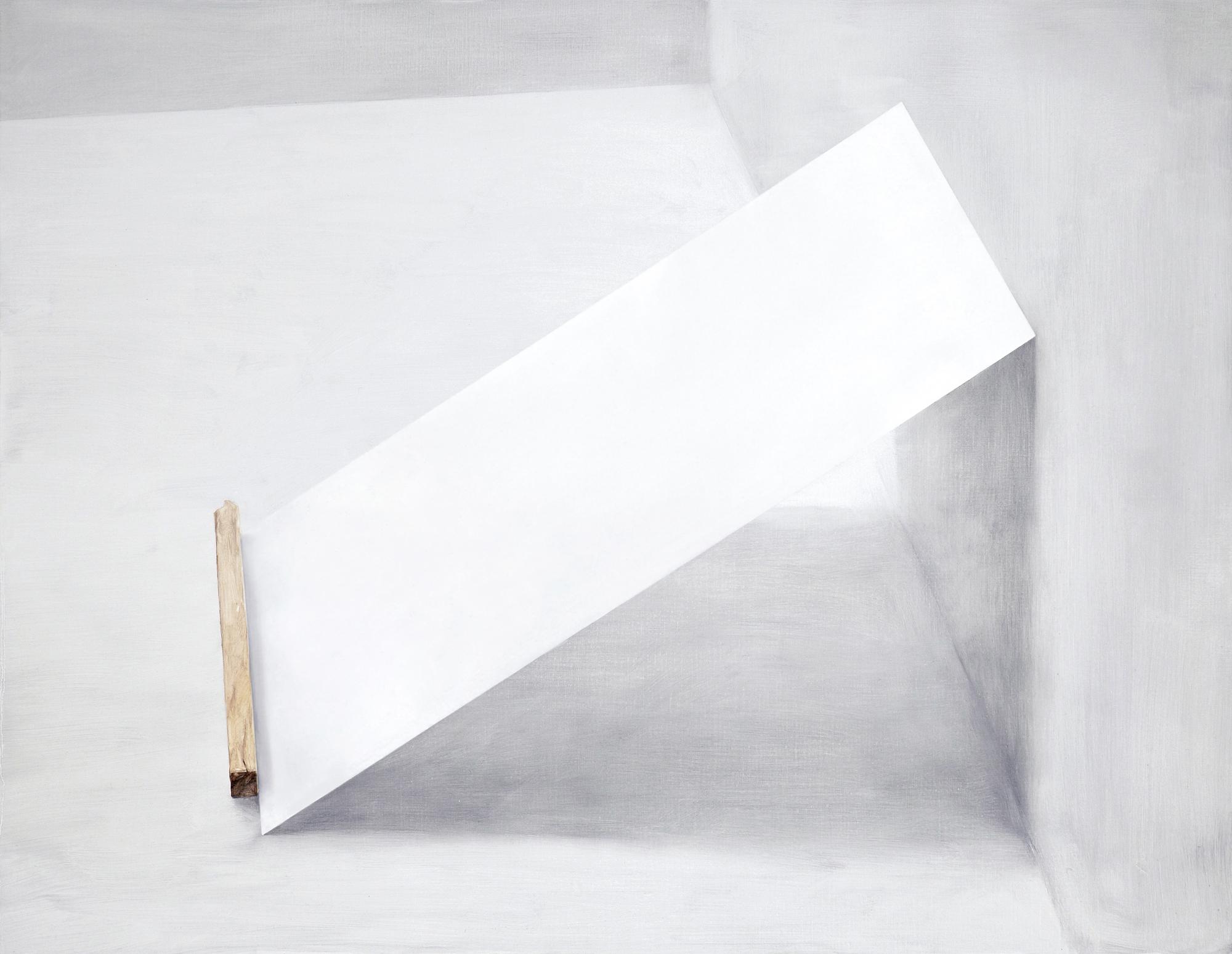
Objects of Rho Eunjoo used to be fastened to the ground as if they had been
posing on a stage. However, some factors that enabled us to guess the
background’s origin have disappeared in her new series.
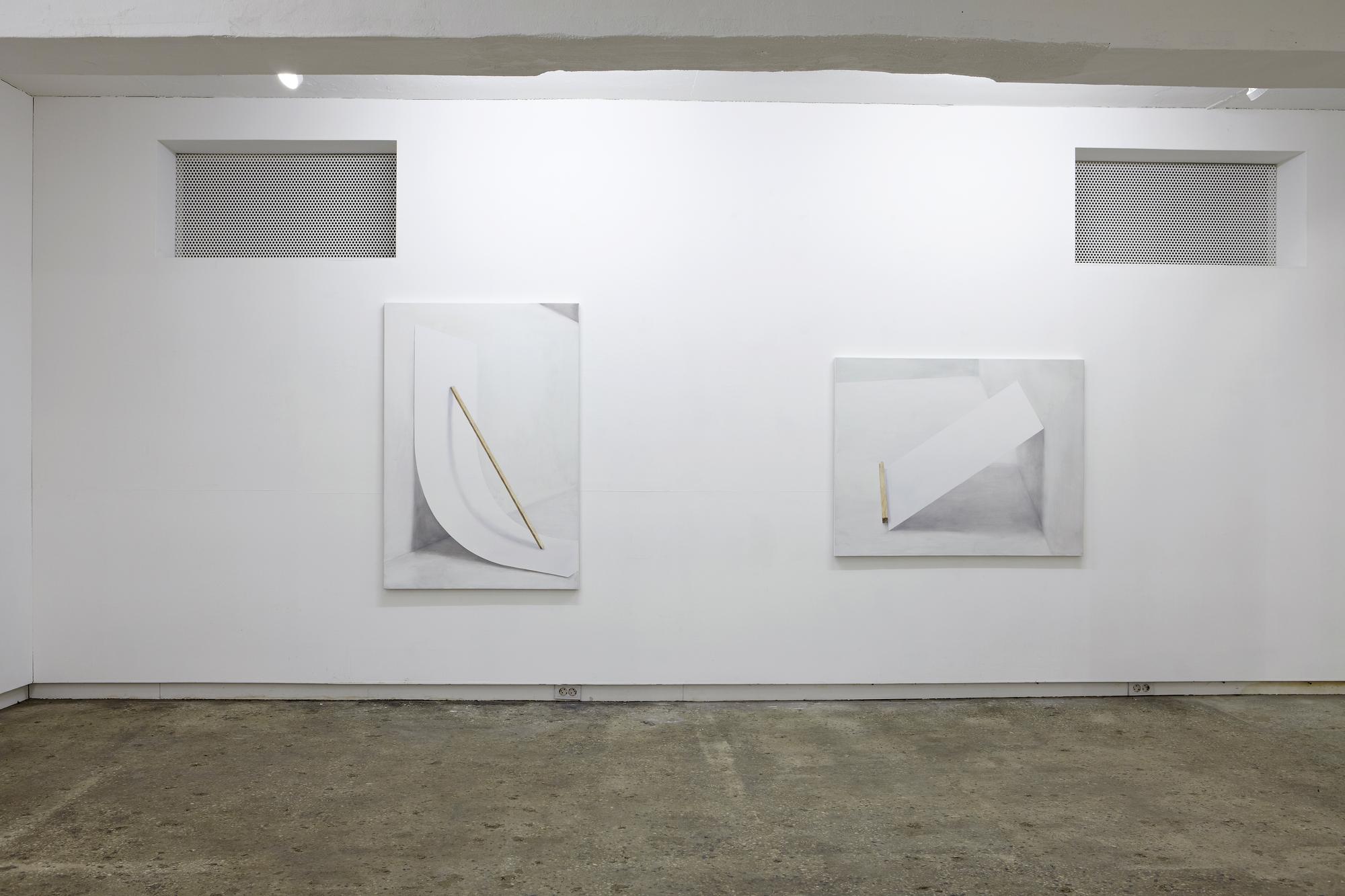
By removing the
shadows, which revealed the hierarchy between the objects in her prior
paintings, some of the scenes newly produced look like drifting in the
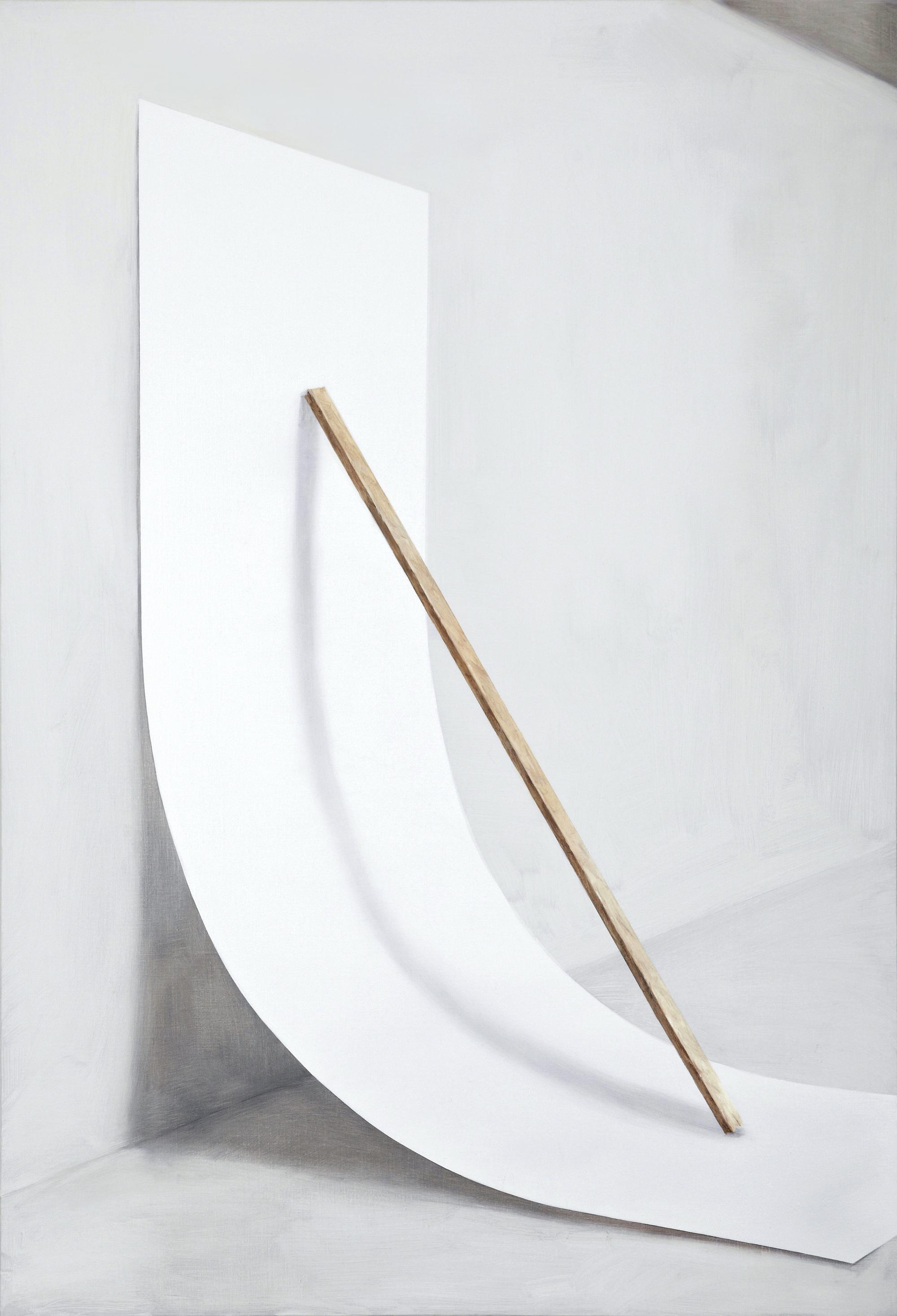
air. Still Shadow (2023) captures "the
instant when objects hide their bodies according to the directions of light in
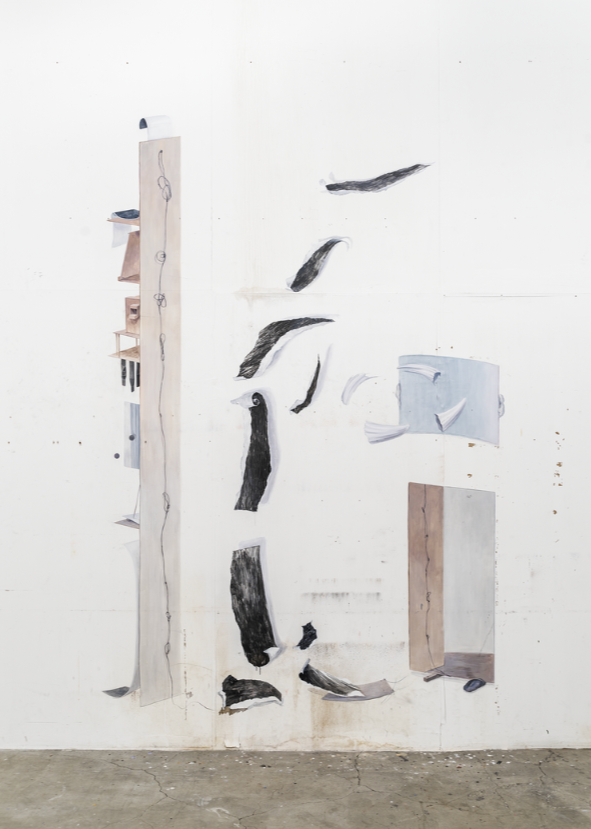
the dark as if they were shadows themselves." [2] Lastly, as an extensive outcome of
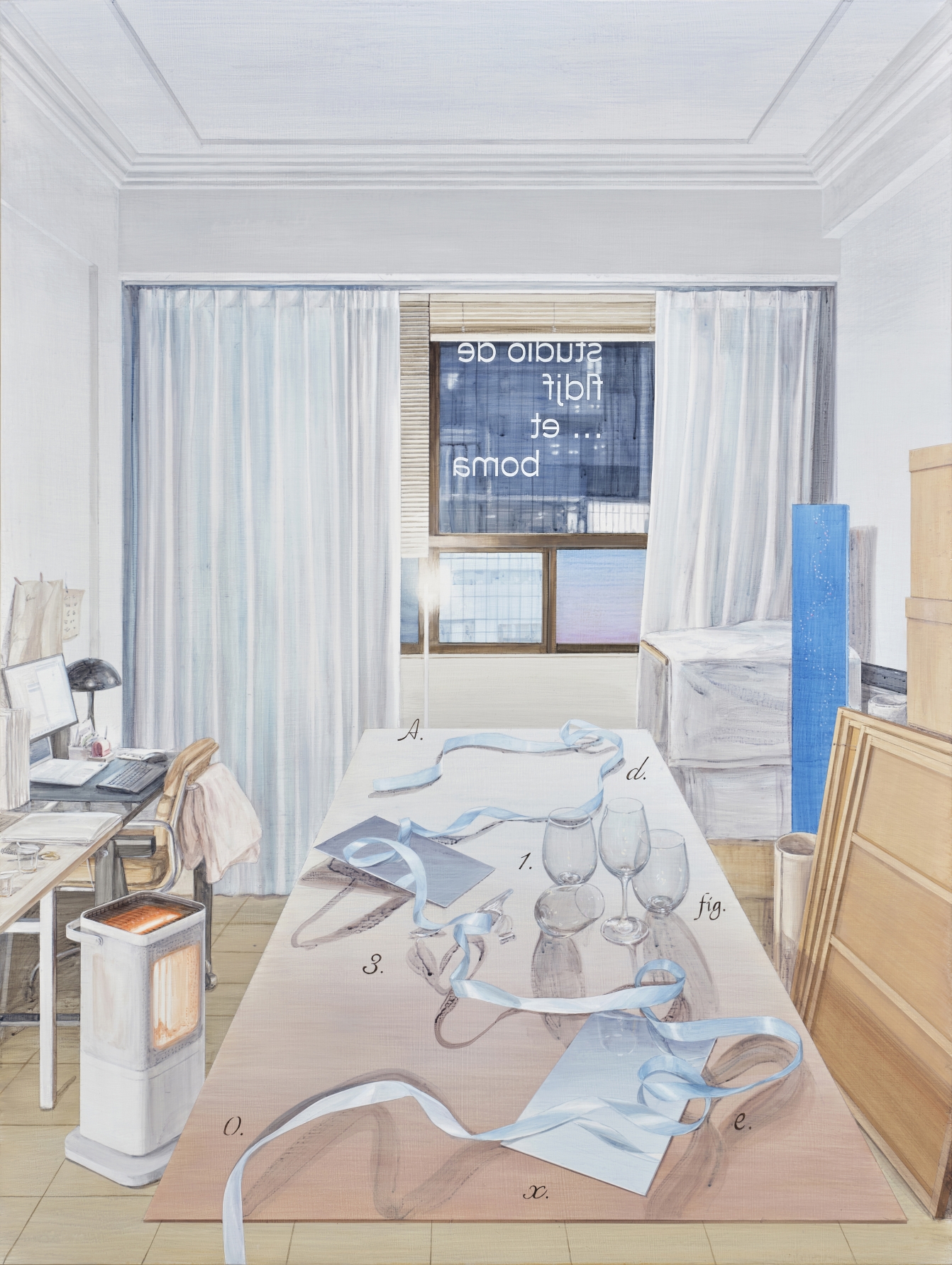
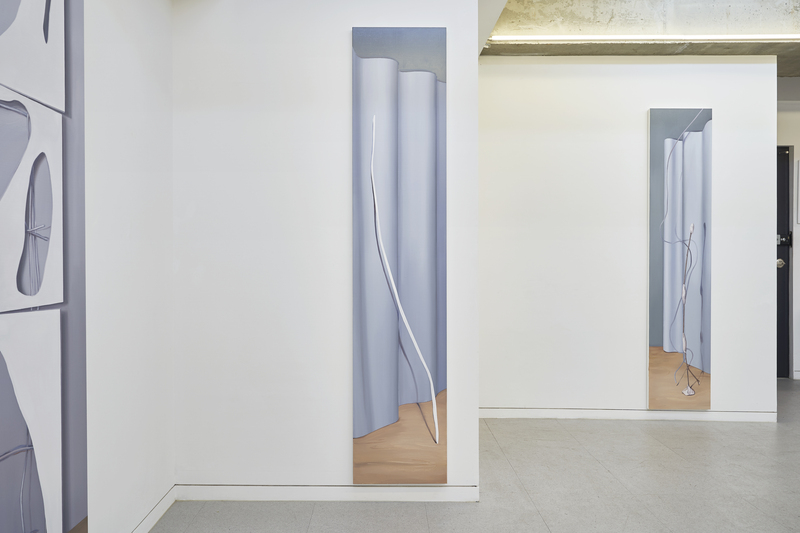
collaboration, ‘Long Arrangement-OC-2023’[3] establishes gardens on a canvas made from leftover sheets of
cloth. For Rho, collaboration means turning around the state of tension to be
positive. Difficulties and charms of collaborations often stem from the fact
that irreversible conditions are given by the other. In this context, how
remarkably coincidental is that a metaphor of a garden satisfies the situation
that urban gardens are generally approved to be built only in spare fields?
In
order to catch the most of the tactile experiences attained throughout the
warm-up phase, Rho takes pictures of the targets and revives them on the
canvas. The experiences include not only the physical features of the objects
sensitive to handle, as they are solid, stiff, squishy and easily bent, but
so-called motions such as the lapse of time, travels of light and glance and
subtle trembling of objects. As you follow after the figurations delivered by
the visual-haptic mechanism, you highly likely have an experience or delusion
in which ‘touching’ is possible through the eyes.
Nevertheless, is what our
haptic sensation tells us to be identical to what the artist experienced? Does
the garden that the artist painted contain only fragments of the specific time
locked in the photos taken by the artist? Naturally, the embodied sensual
experiences steadily become hazy, and some accidental aspects unconsciously
in-grow into their niches. The linguistic connotation engraves impure marks
even on ‘touches’ of viewers’ eyes; therefore, the verbal expressions—strings
of thread and dried trunks, entangled wires and fruits and knots and
leaves—leave a similar but fathomlessly broad spectrum of symbols to
individuals. Whenever what is seen overlays and scrapes along what is imagined,
coincidences and senses mingle.
Obviously, the photos gripped by a hand and the
paintings portraying them are far different. I dare to call what happens
between the two a kind of movement. The movement is closer to roaming in the
air rather than a bouncing motion as palpable as the comings and goings a ping
pong ball can create. Being the tiniest particles' movements that never fade
away, although they agglomerate and break easily, anxiety and tension transform
into bodily tremors and leave their ever-lasting traces by continuing to hold
and fall off. These tiniest specks of dust’s movements never fade away,
although they agglomerate and break easily. Similarly, anxiety and tension
transform into bodily tremors and leave their ever-lasting traces by continuing
to hold and fall off.
Gardening
is a race of thinning out. You win the game if you do not mistake regarding the
heterogeneous as dangerous stuff. Even in a garden well-fostered without
defects, it is impossible to protect it from coincidences changed every minute
by the low gust of wind, birds nesting on trees, insects creeping under the
blazing sun or an unexpected rain shower. Despite the consistency of
artificiality, the persistence of climbing plants does not frustrate and
eventually takes up a corner of it to make it their own. We are bound to
encounter the conclusion that the hint of doubt always remains in spite of the
firm foundation and that the coincidences are neither simply coincidental nor
occurring by chance.
Between this and that, or then and now, there are only
mirror images reflecting each other misinterpreted into coincidences. (The
trivial discovery that gardening (Jo-kyeong) is a homophone of a mirror in
Korean evokes a silly pleasure.) This exhibition of Rho Eunjoo unveils her
determined attempts to capture no coincidences but reflections and their
knotted motility, which suddenly invade the fence of overlaying intentions, in
other words, Rho Eunjoo's garden.
Text by Shin Jiyi (Independent Curator)
Translation Jung Su
[1] 『Faces, Lines
and Lumps of Dusk』: the critical review by Shin Jiyi
for 《Blue Window》, a solo exhibition by Rho Eunjoo in 2021.
[2] Artist’s Note
[3] OC Project: a collaboration with a fellow artist, Son
Jooyoung. The paintings of the project have narrow widths since they only reuse
leftover pieces of canvas fabric. For 〈Long Arrangement-OC-2023-1〉 and〈Long Arrangement-OC-2023-2〉, Rho used the
cloth left after producing the identical size of canvases for 〈Knots-Spot〉 and 〈Knots-Branch〉.