

Rho Eunjoo (b. 1988) has explored ambiguous states rather than the completed form of a subject—capturing moments of indeterminacy on the canvas. Through the process of observing a subject and translating it into an image, she focuses on how sensations are conveyed as the properties of the medium and materials undergo transformation.


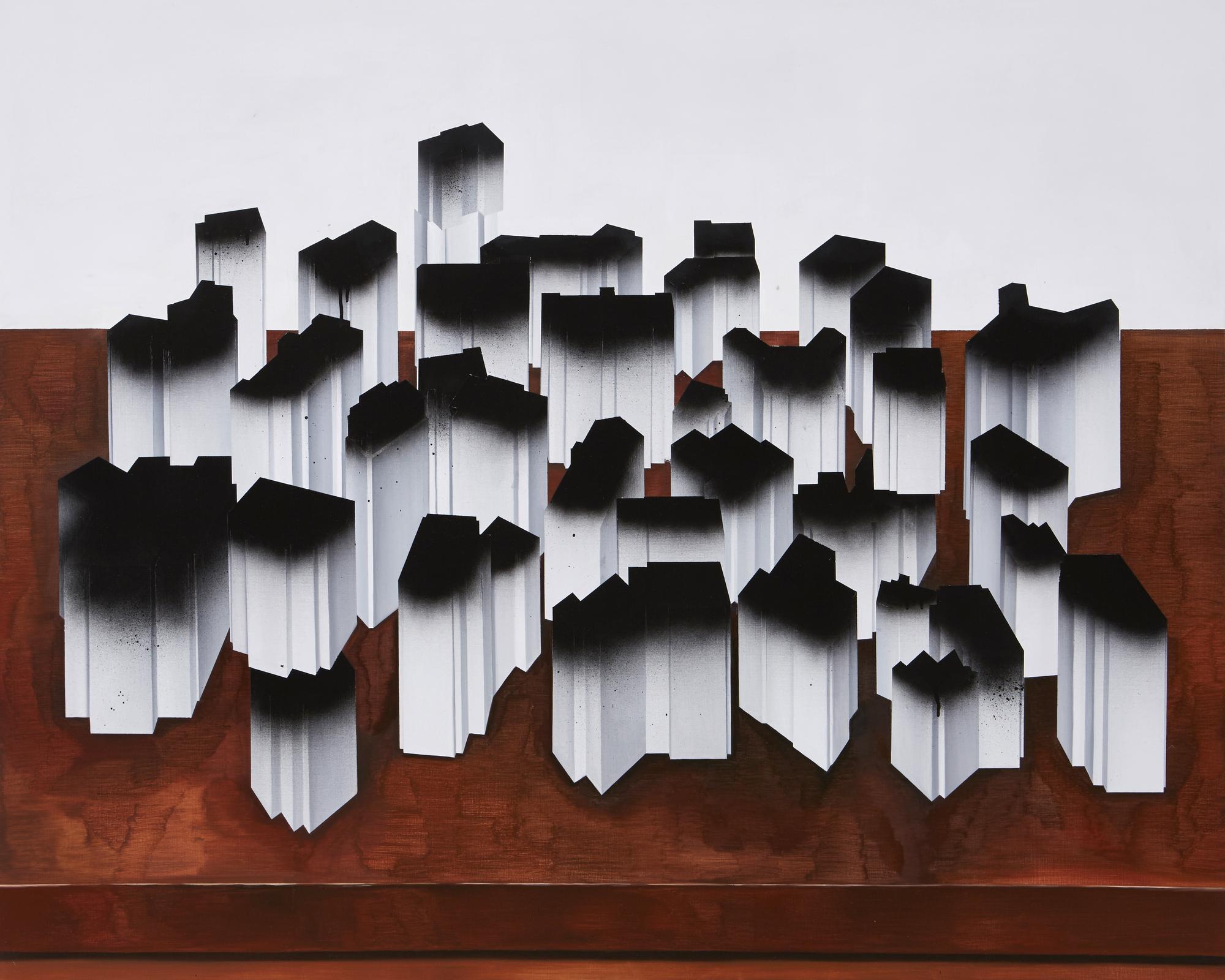
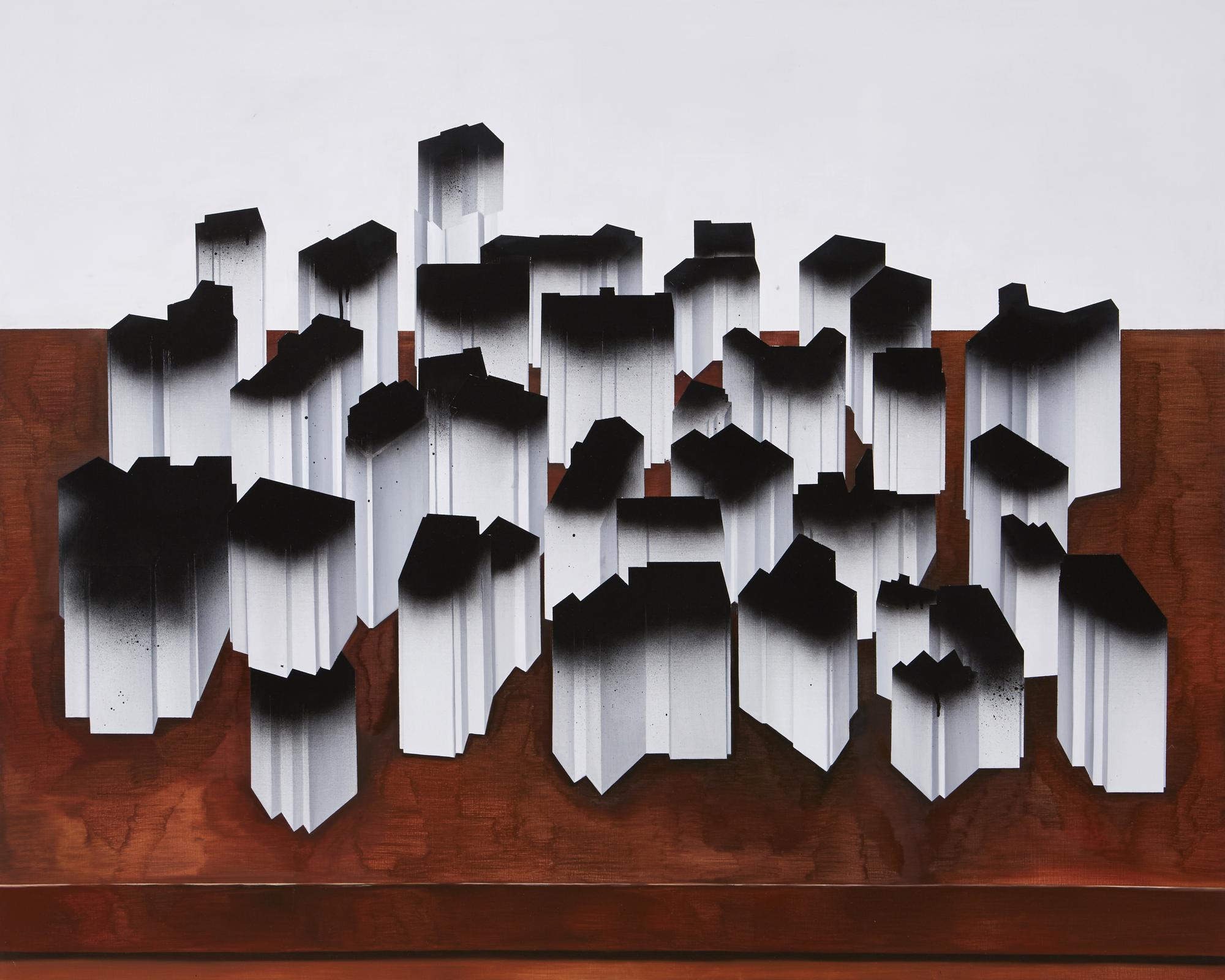
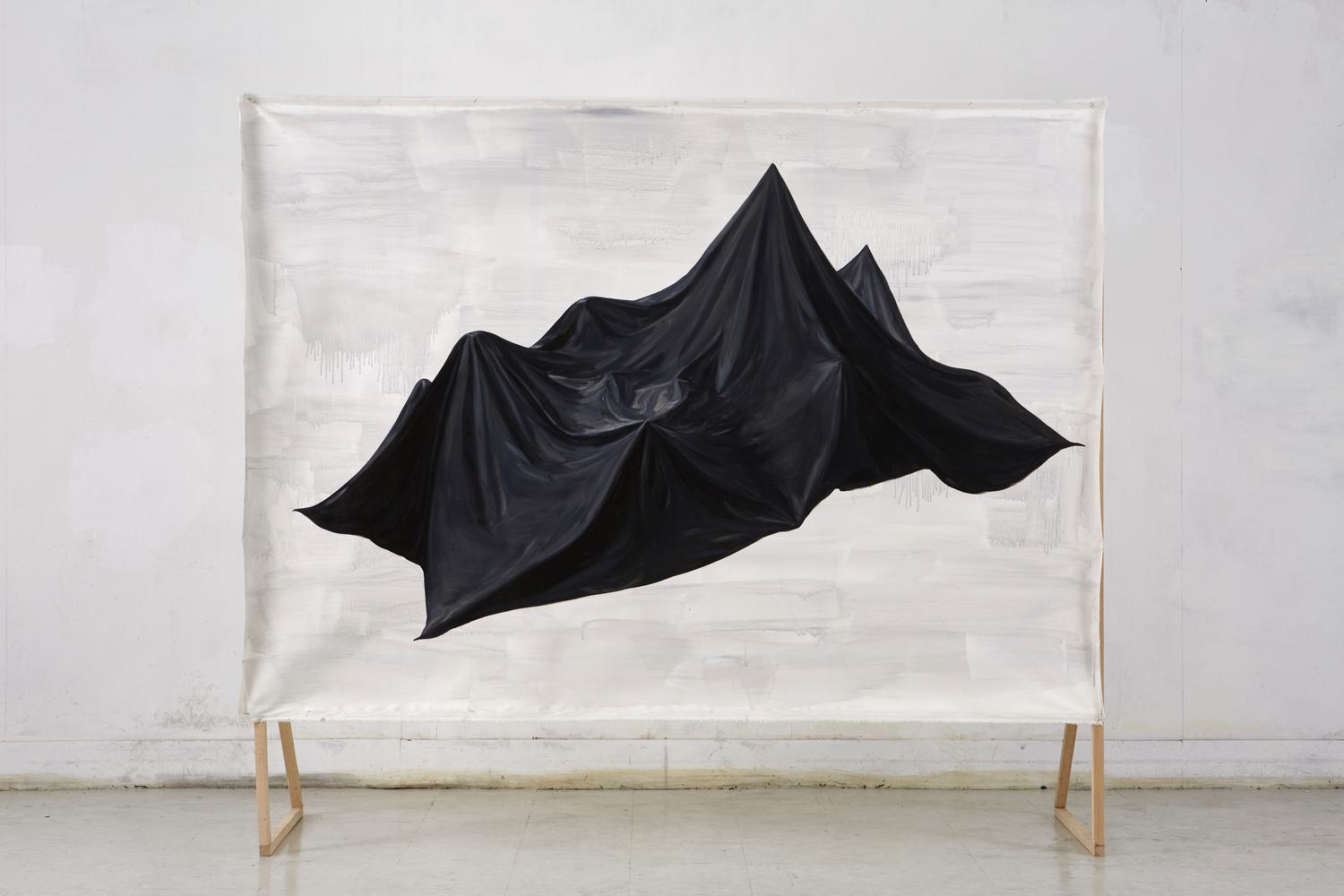
Rho Eunjoo, City Object 3, 2015, Oil on canvas, 160x210cm ©Rho Eunjoo

Rho Eunjoo has focused on construction sites as liminal zones—temporary spaces that form the foundation of the city yet are ultimately destined to disappear. Through multi-sensory modes of decomposition, she examines notions of form and space, seeking the underlying principles of composition and structure.


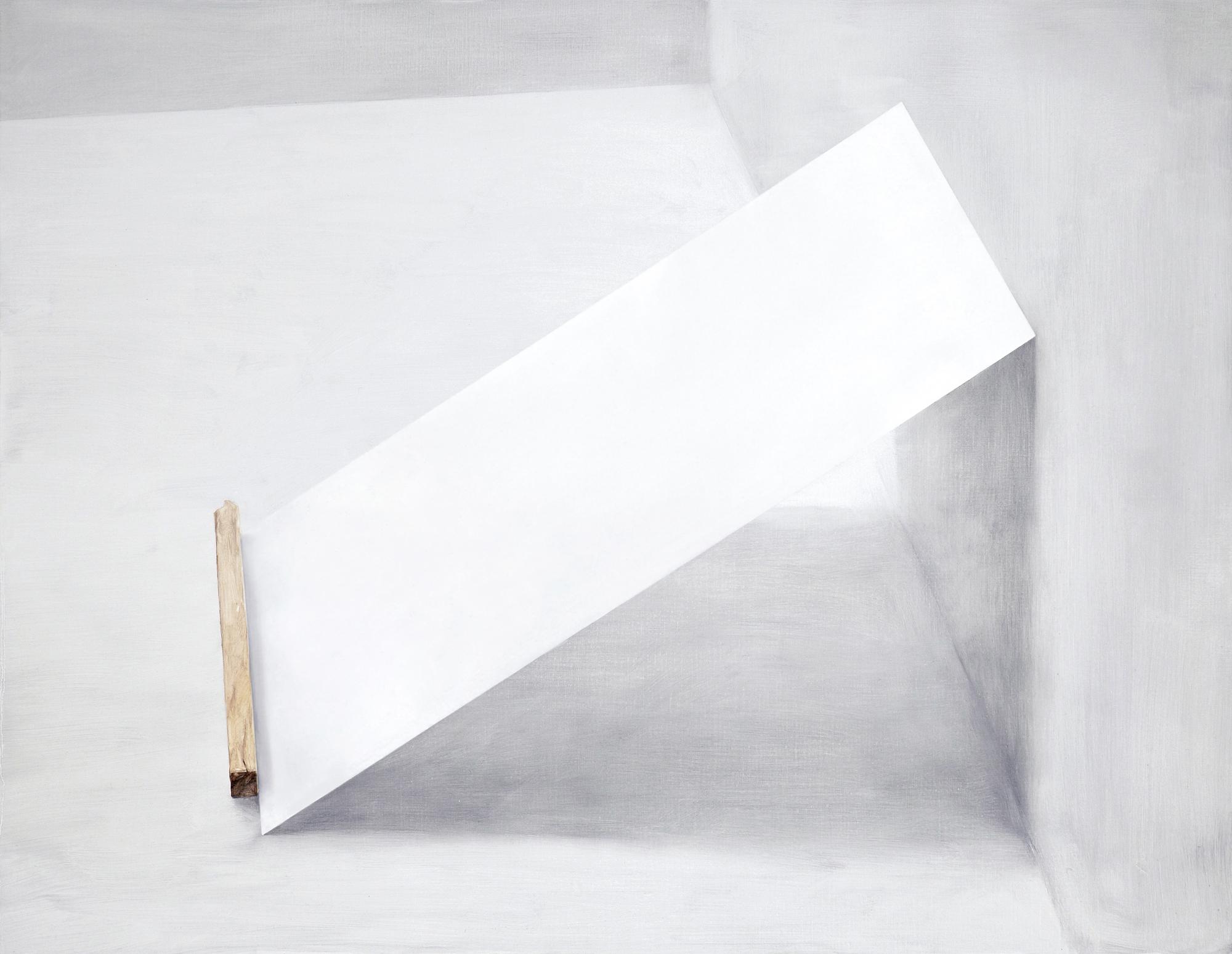
Rho Eunjoo, Landscape 2, 2015, Oil on canvas, 130.3x162.2cm ©Rho Eunjoo

Before beginning a painting, the artist creates miniature sculptures by first modeling objects in 3D. These sculptures are made from materials that can be easily handled and flexibly manipulated by hand. The reconfigured forms are then documented through photography and subsequently transferred onto the canvas.
 
Through the successive stages of drawing, modeling, and photographic documentation, the original subject is placed in a state of continual reinterpretation and transformation by both the medium and the artist.
 
In this sense, objects and space are not targets of concrete representation for the artist; rather, they become media that, through a process of newly recognizing their visual qualities and translating them into a planar perception, evoke thought and attitude in an abstract language.

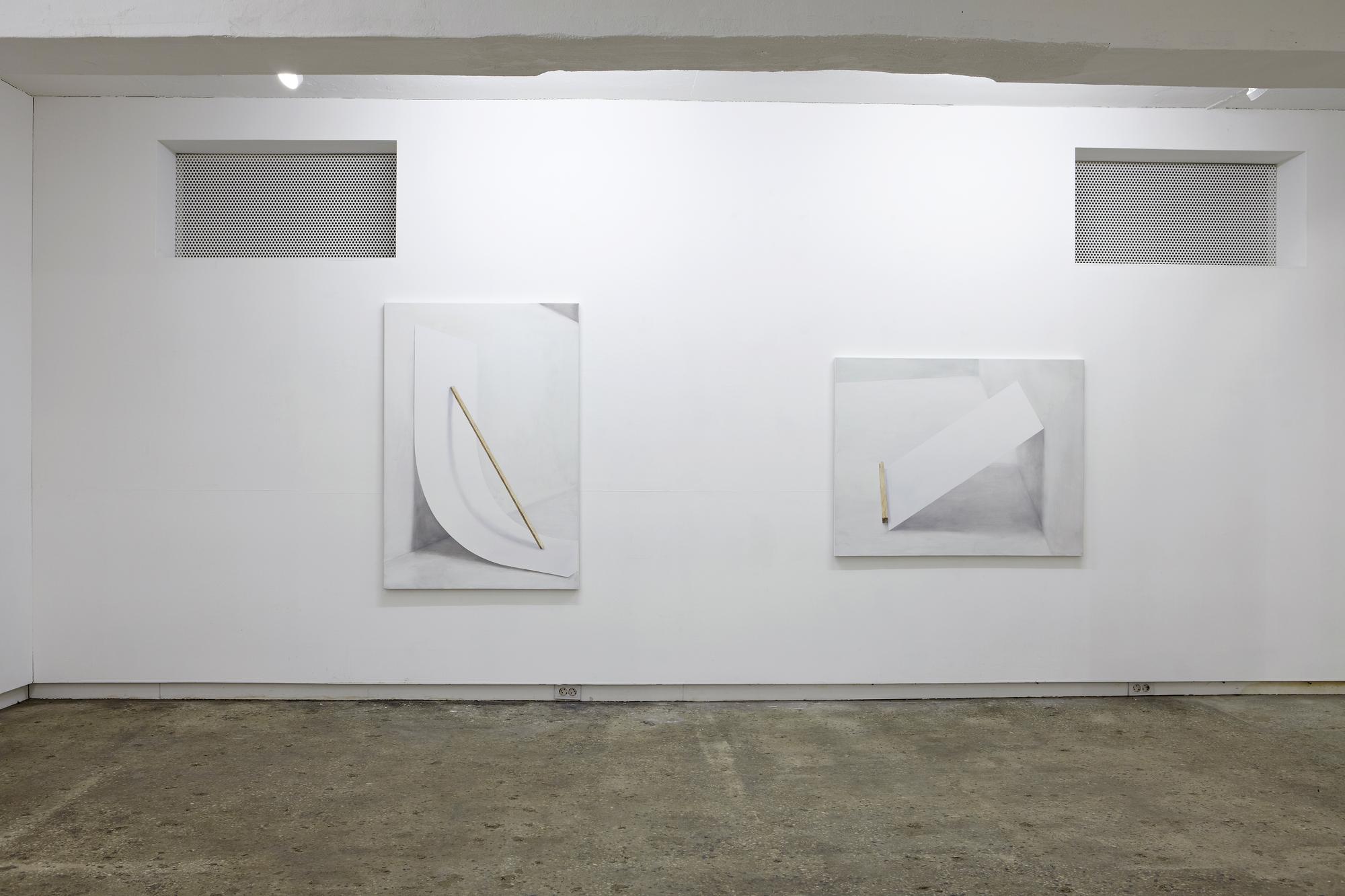
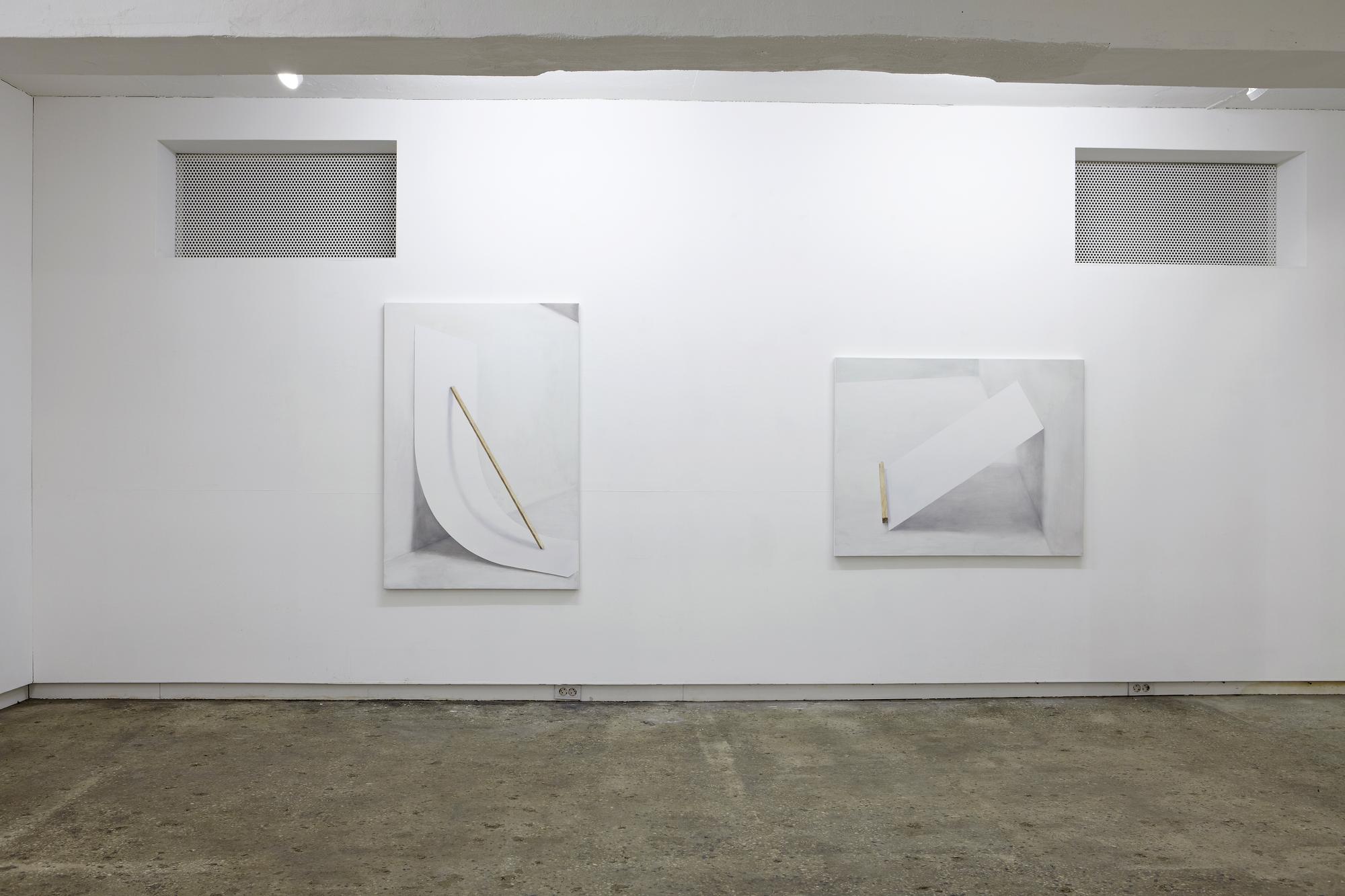
Installation view of 《Situation/leaning against》 (Space Wiling N Dealing, 2013) ©Rho Eunjoo

Rho Eunjoo’s first solo exhibition, 《Situation/Leaning Against》 (Space Willing N Dealing, 2013), presented paintings that reconstructed images using structures made from urban debris and forms that generated arbitrary boundaries.
 
Through these works, the artist sought to reveal the fragile and precarious conditions produced by the structures that surround everyday urban life. This body of work stemmed from her interest in the subtle forces and tensions that exist between boundaries, as well as the various actions and emotions—such as anxiety—that arise from them.

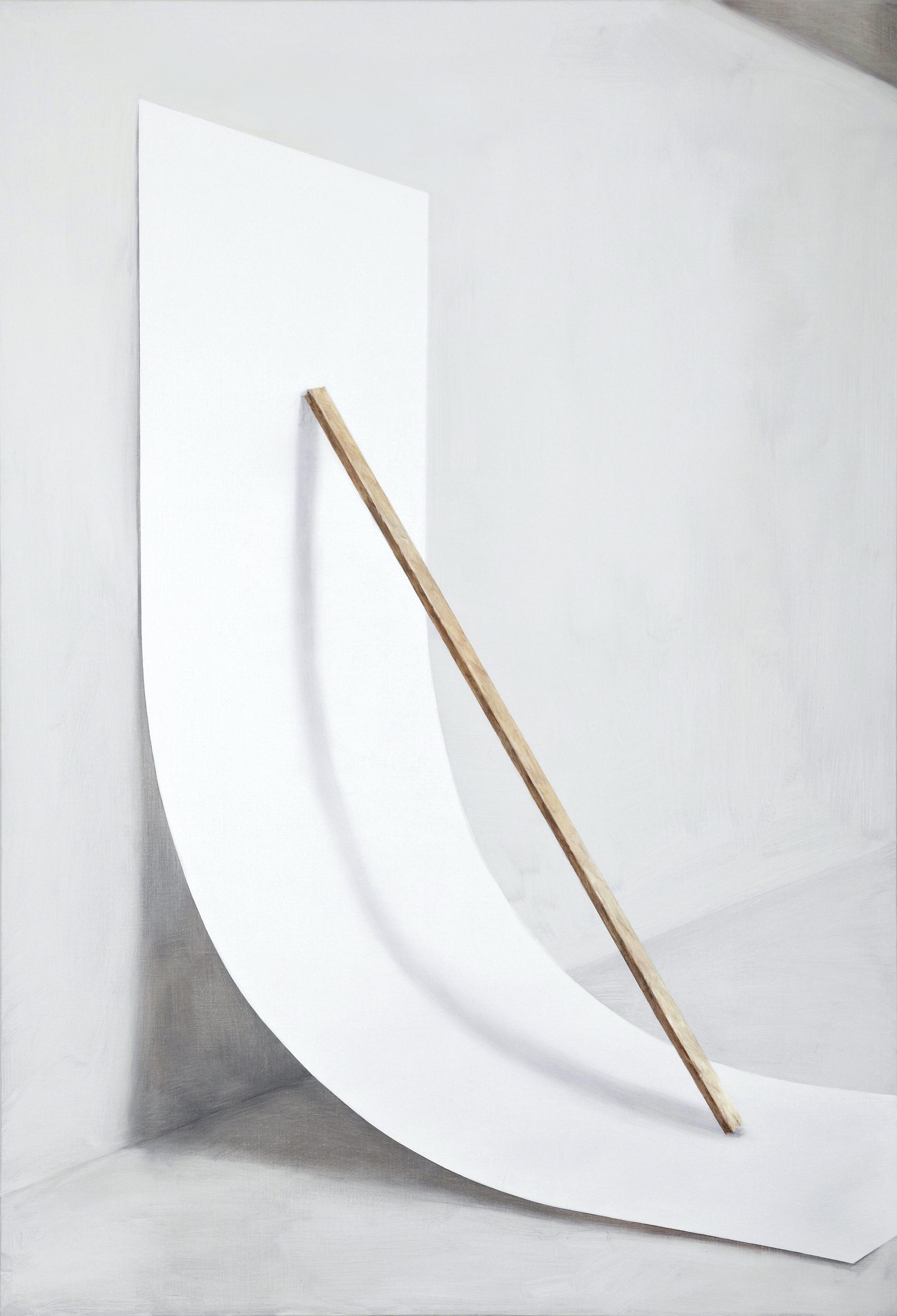
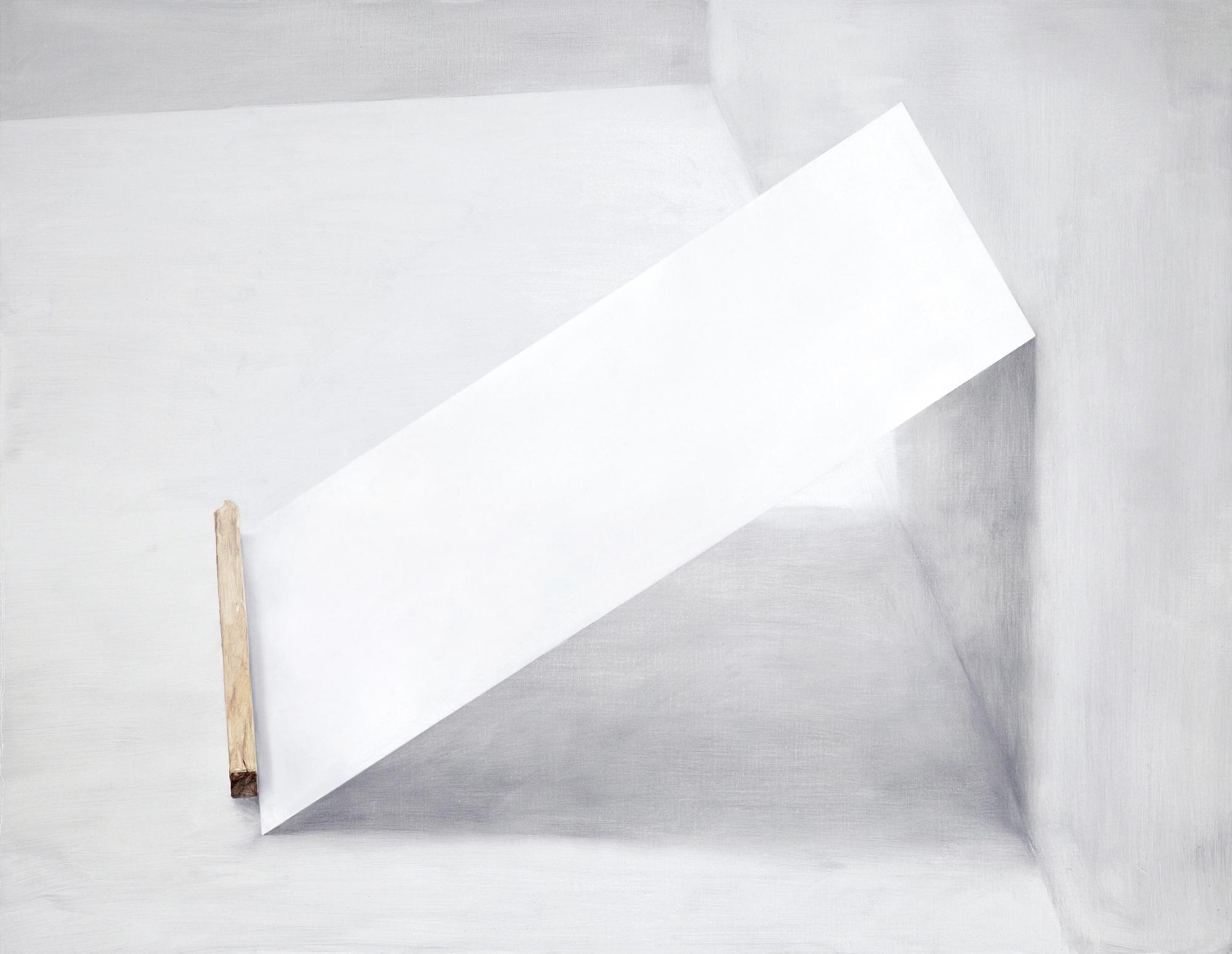
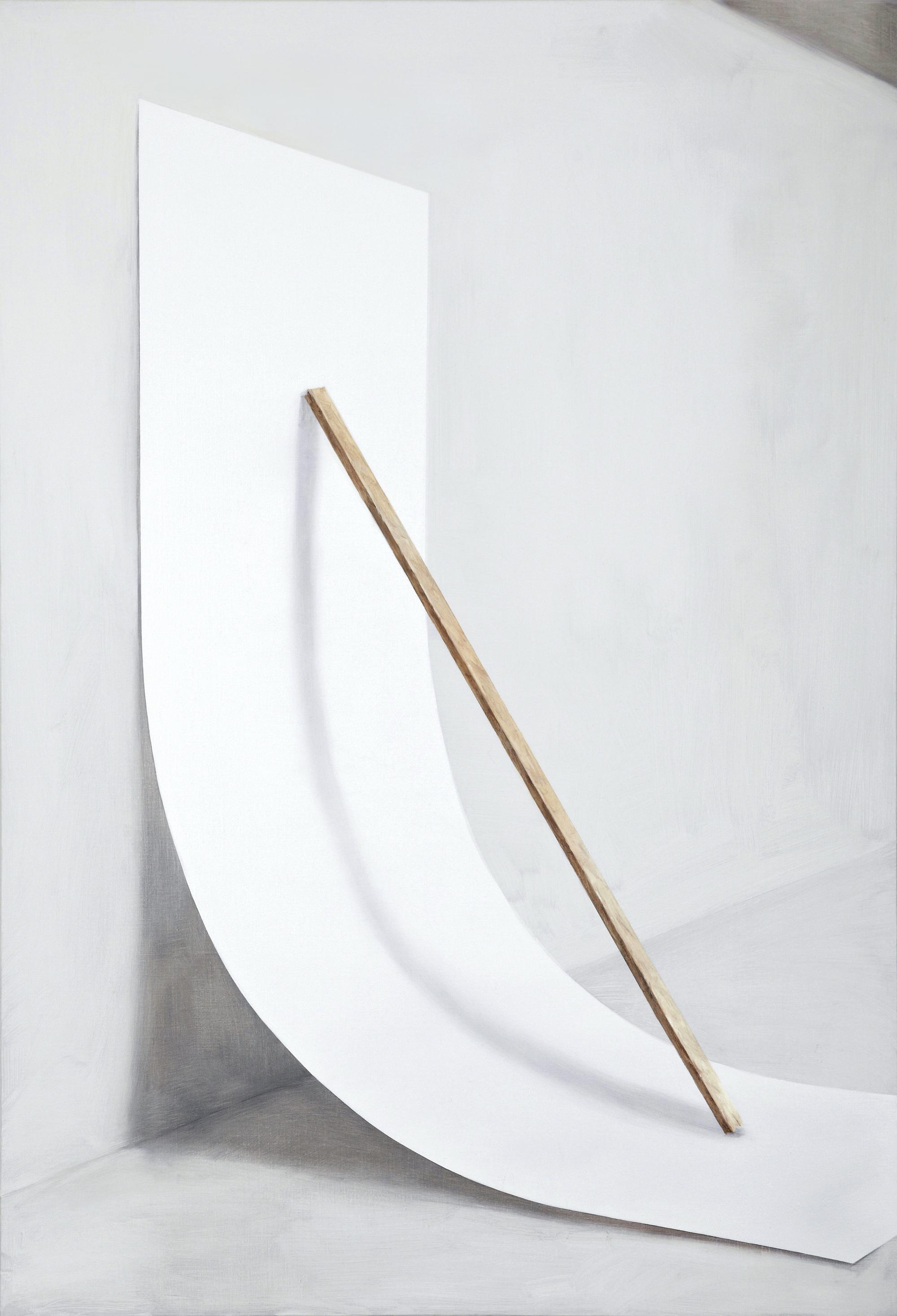
Rho Eunjoo, Leaning Against, 2013, Oil on canvas, 130.3x89.4cm ©Rho Eunjoo

Apartments, the everyday environments that sustain contemporary life, function for some as symbols of wealth and objects of investment—desirable assets bound up with capital and ownership. For Rho Eunjoo, however, the structures and situations surrounding apartments came to feel fleeting and impermanent.
 
Accordingly, the artist began to depict in painting architectural debris—masses of buildings that have lost their function and remain only as material, whether demolished, collapsed, or reduced to ruins—by referencing photographs reported in the media. After rendering architecture as a provisional state within the pictorial frame, she went on to create paper models of apartment buildings.


Rho Eunjoo, Leaning Against, 2013, Oil on canvas, 130.3x89.4cm ©Rho Eunjoo

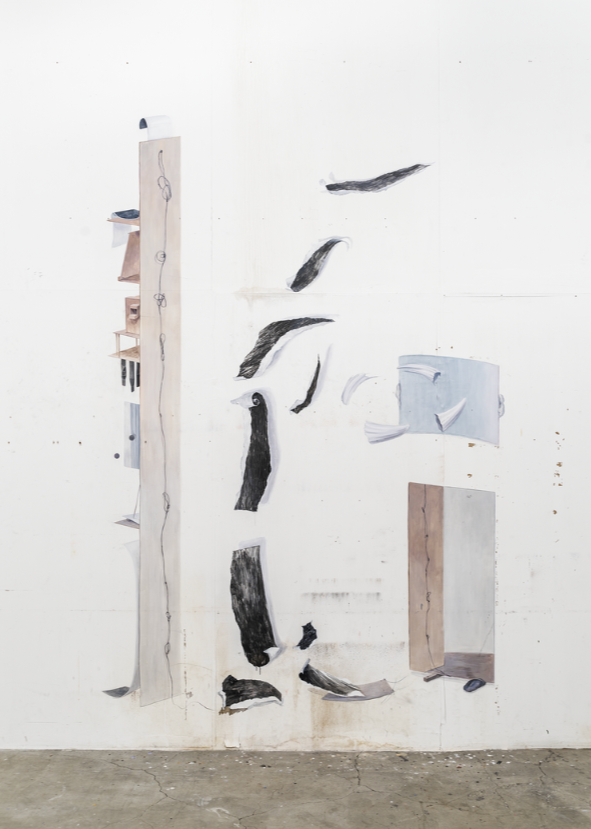
These were modeled as sculptural objects and then transferred once again onto the canvas. For instance, the artist might fold thin, fragile paper and stand it on a table, yet paint it so that it appears like a solid mass of plaster within the pictorial space. She also arranged objects found in her surroundings or made by hand—either individually or in multiples within a confined setting, such as the surface of a studio table—and rendered them as subjects in her paintings.
 
Such practices gradually expanded into an exploration of the relationship between the space produced by painting and real space, as well as between the flat surface and three-dimensional form.


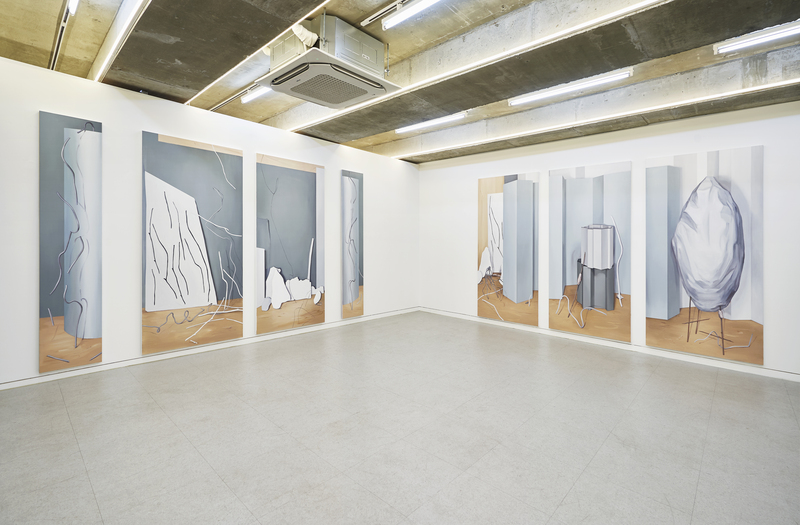
Installation view of 《Walking―Aside》 (Space Wiling N Dealing, 2019) ©Rho Eunjoo. Photo: Euirock Lee.

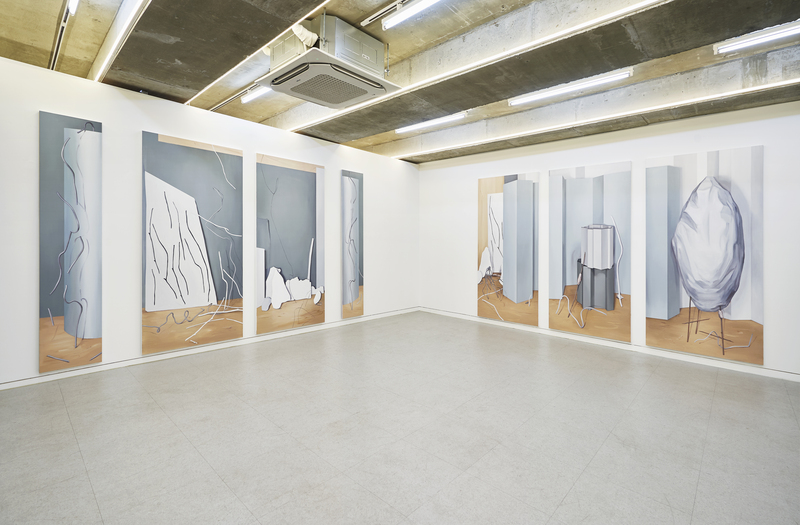
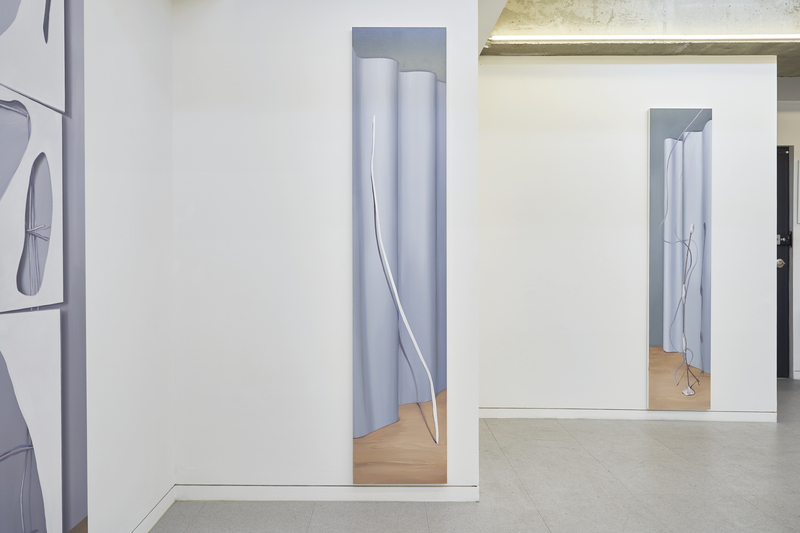
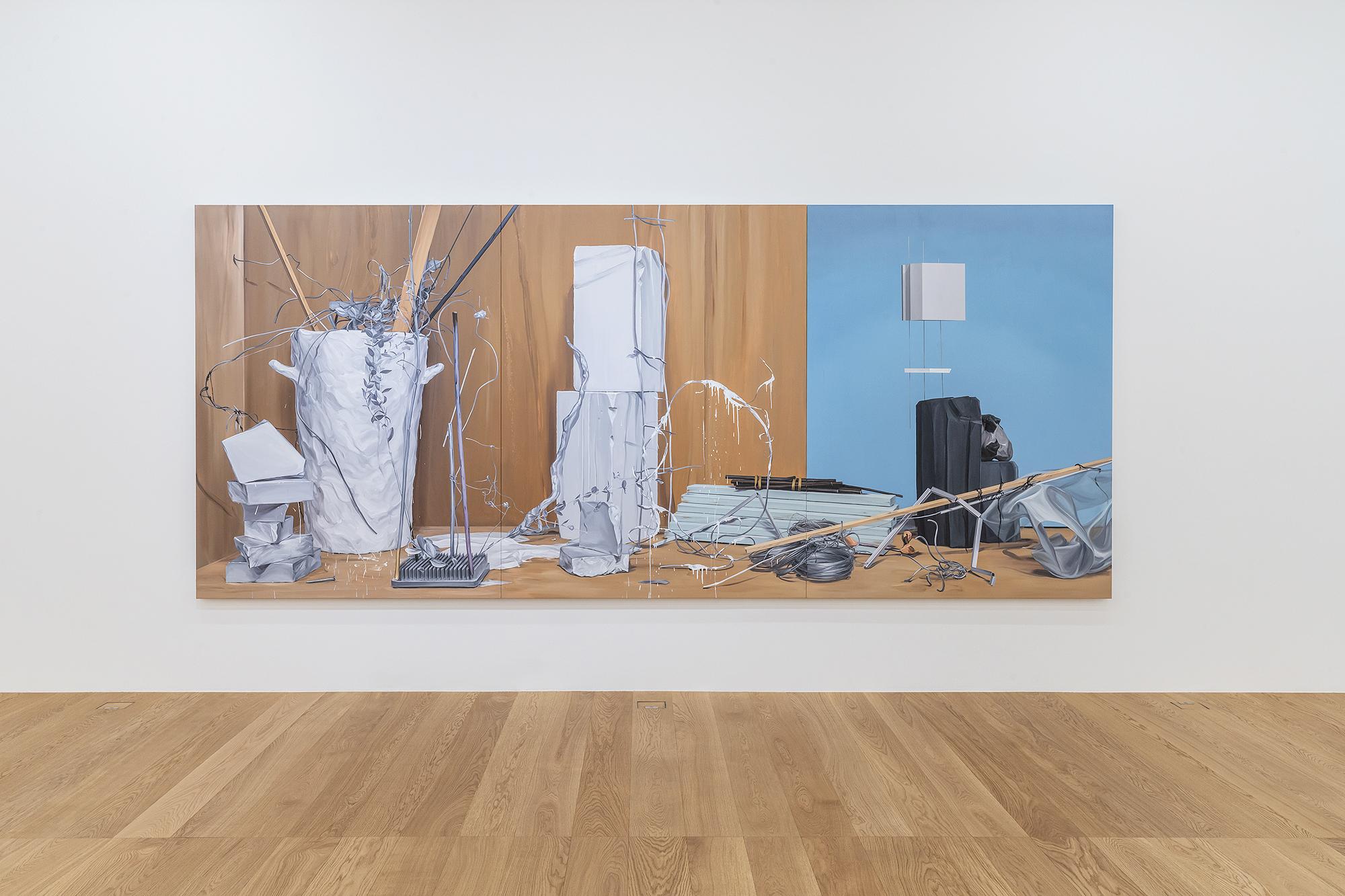
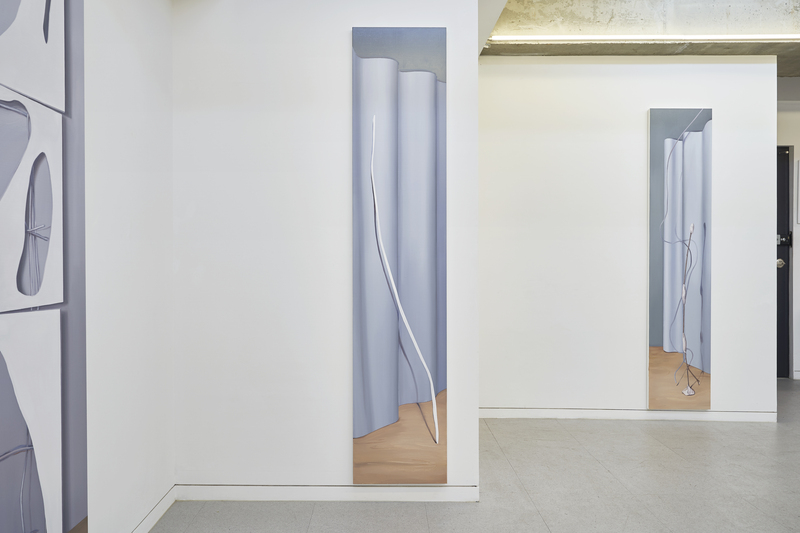
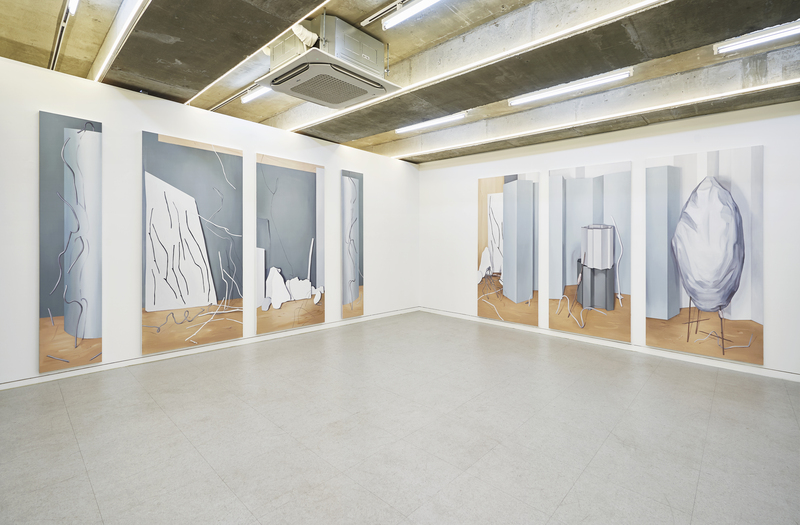
At her solo exhibition 《Walking―Aside》 (2019), held at Space Willing N Dealing, Rho Eunjoo conceived the canvas as a window of illusion and as a space with a shallow depth, presenting works in multipart formats such as three- and four-panel paintings.
 
To stage her subjects, Rho first modeled them as three-dimensional forms and arranged them in space to determine the composition, before transferring the results onto the picture plane. The resulting images were developed through a process of precisely measuring the dimensions of the exhibition space and simulating, within it, the relationships among image, space, and viewer.


Installation view of 《Walking―Aside》 (Space Wiling N Dealing, 2019) ©Rho Eunjoo. Photo: Euirock Lee.

In addition, as the scale of the canvas increased, the size of the original objects was correspondingly amplified, and the space depicted also assumed a depth equivalent to the width of the table on which the objects were placed.
 
Through this process, the pictorial field was staged like the narrow space of a theatrical set. The limited depth defined within the canvas then extended into the actual exhibition space, allowing viewers, as they moved through it, to simultaneously recall the space depicted in the painting and become aware of the surrounding physical environment.


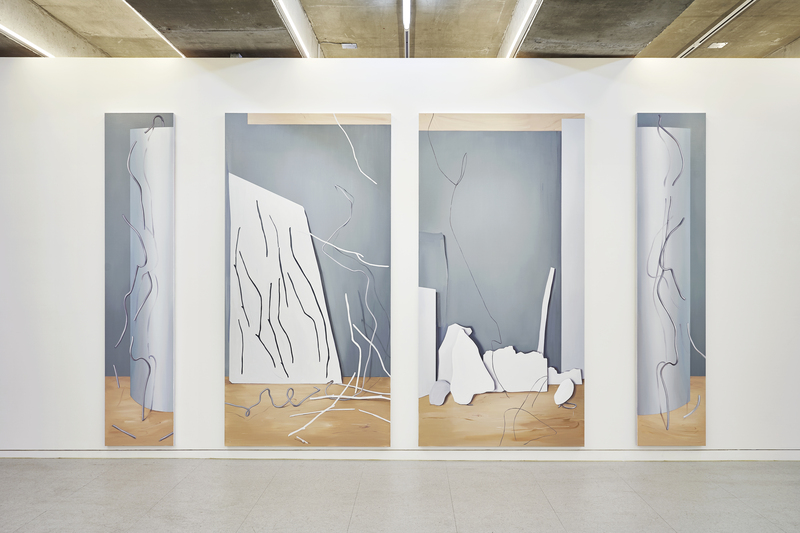
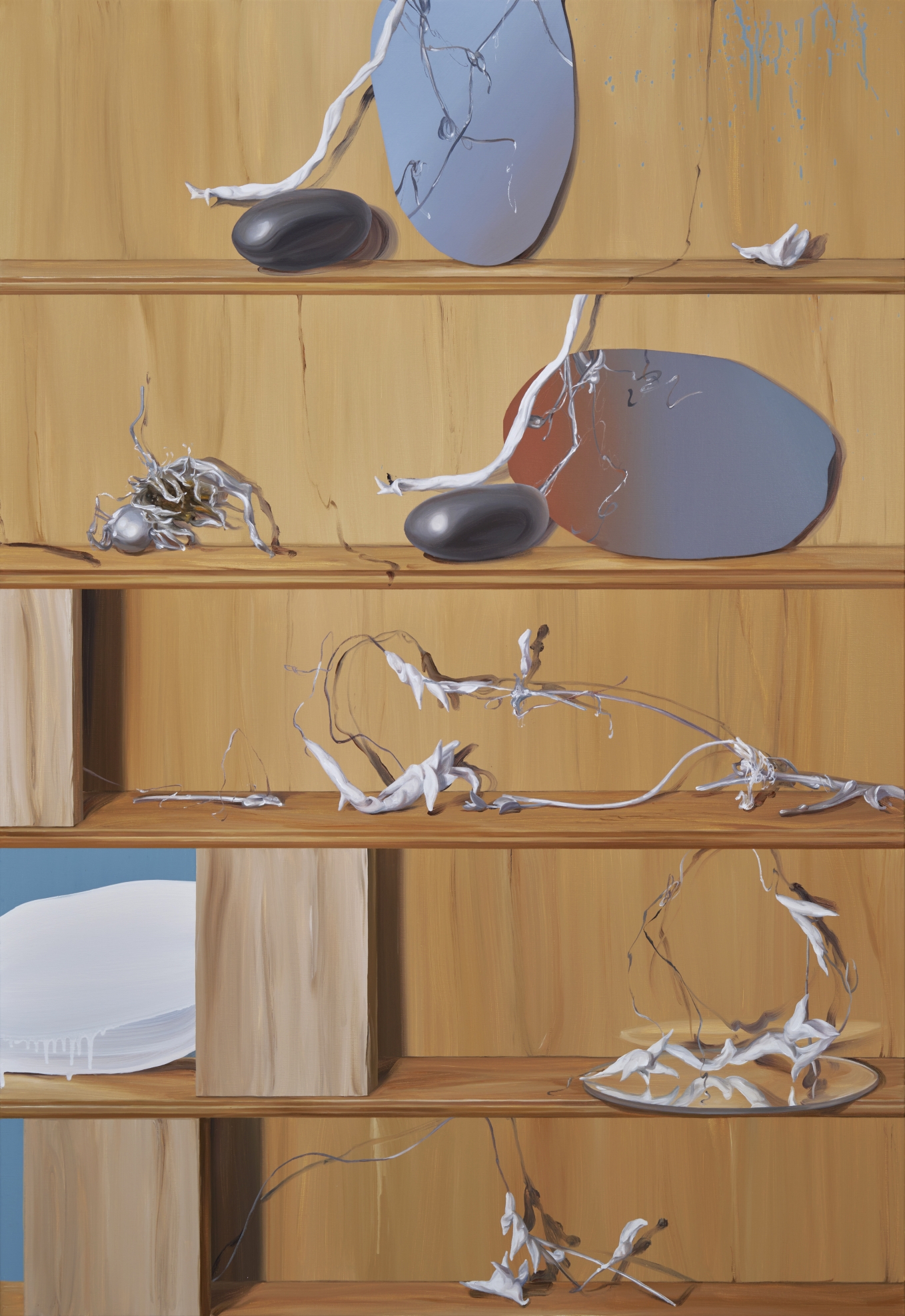
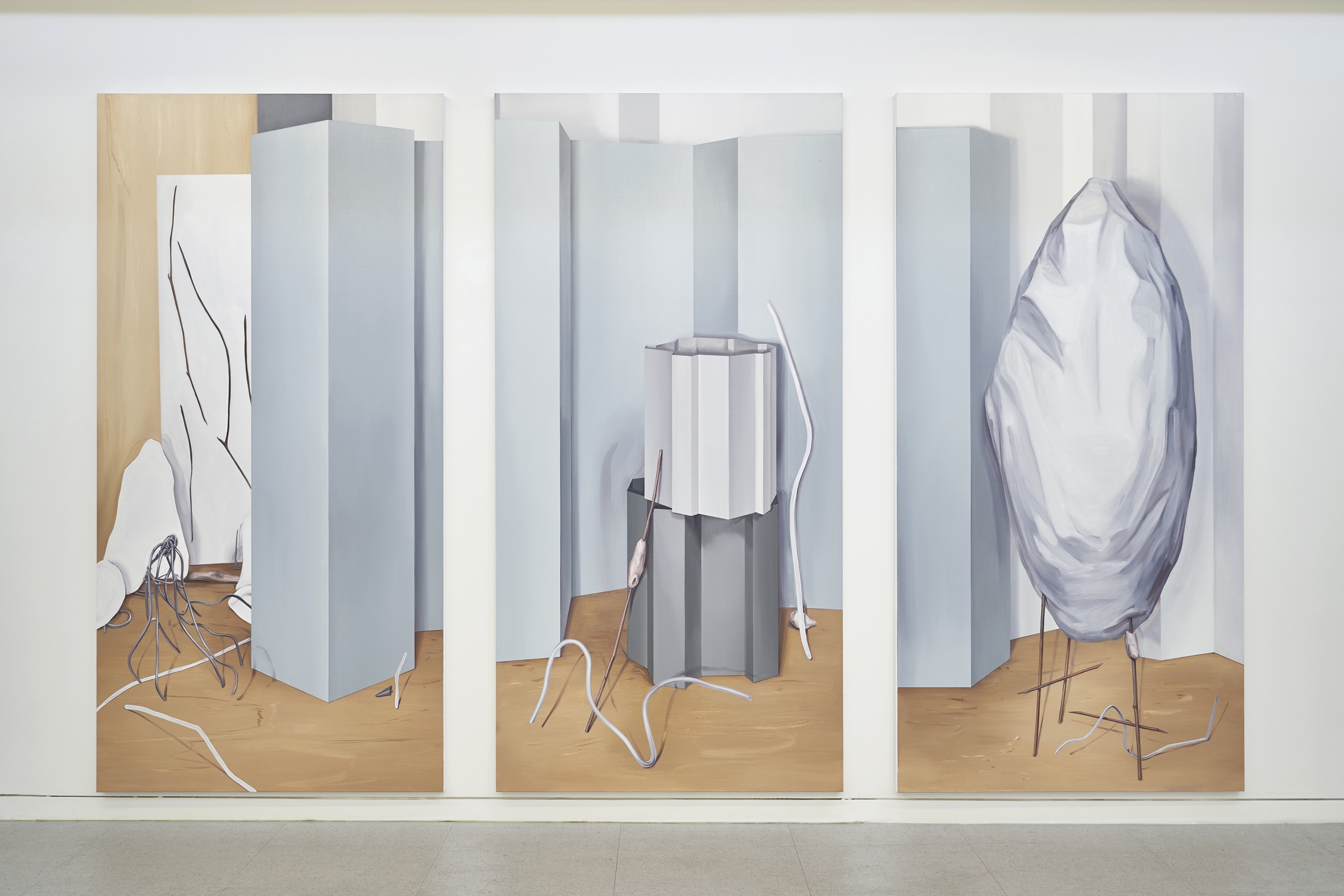
Rho Eunjoo, Wall and Stone, 2019, Oil on canvas, 193.9x97cm each ©Rho Eunjoo

In this sense, Rho Eunjoo’s method of painting from models resembles the processes through which paintings were made in the medieval and Renaissance periods. After becoming aware of this affinity, the artist began to study these two traditions in earnest.
 
For example, the ‘Wall and Stone’ series (2019), in which subjects are theatrically staged by dividing their roles into protagonists and supporting figures; Twilit Space (2020), where space is constructed with a shallow depth; and Portrait–Day (2021), which places a frame within the pictorial field, all reflect elements of painting from those historical periods.
 
The fact that these works function both as individual pieces and as parts of a larger context—sharing similar objects and spaces—also recalls a defining characteristic of classical painting, particularly works that convey narratives drawn from the Bible or mythology.


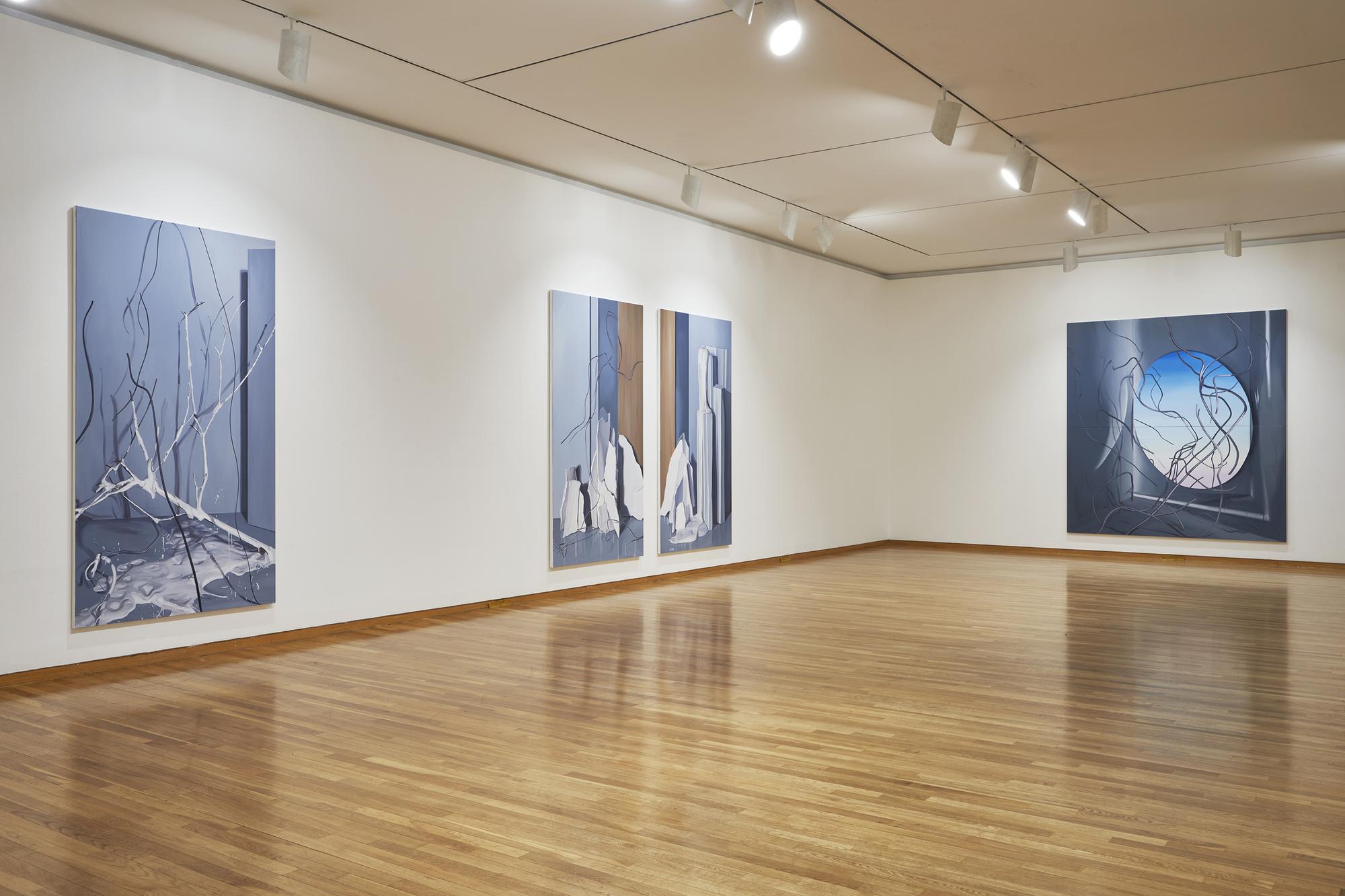
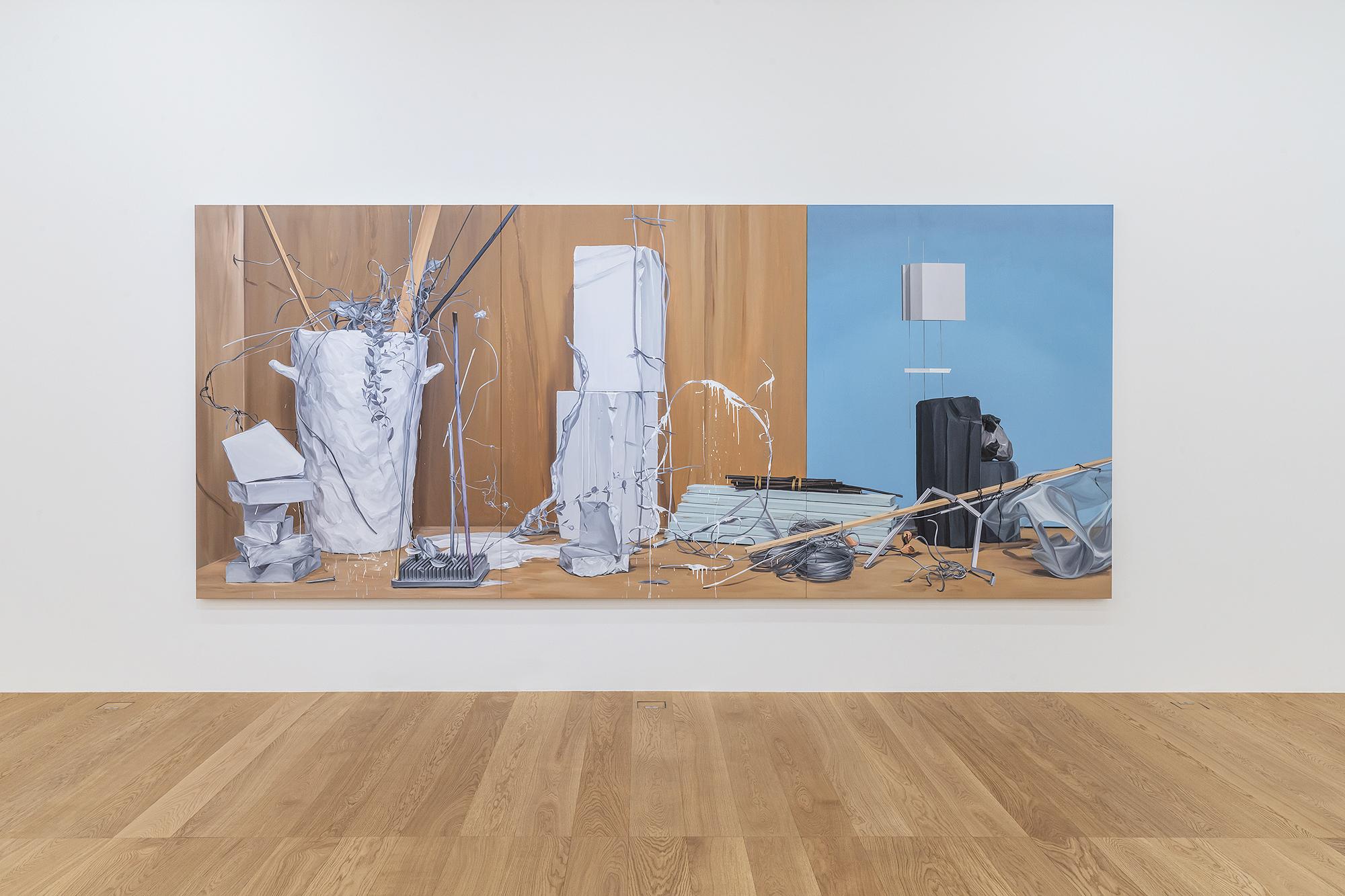
Installation view of 《Blue Window》 (Kumho Museum of Art, 2021) ©Rho Eunjoo. Photo: Euirock Lee.

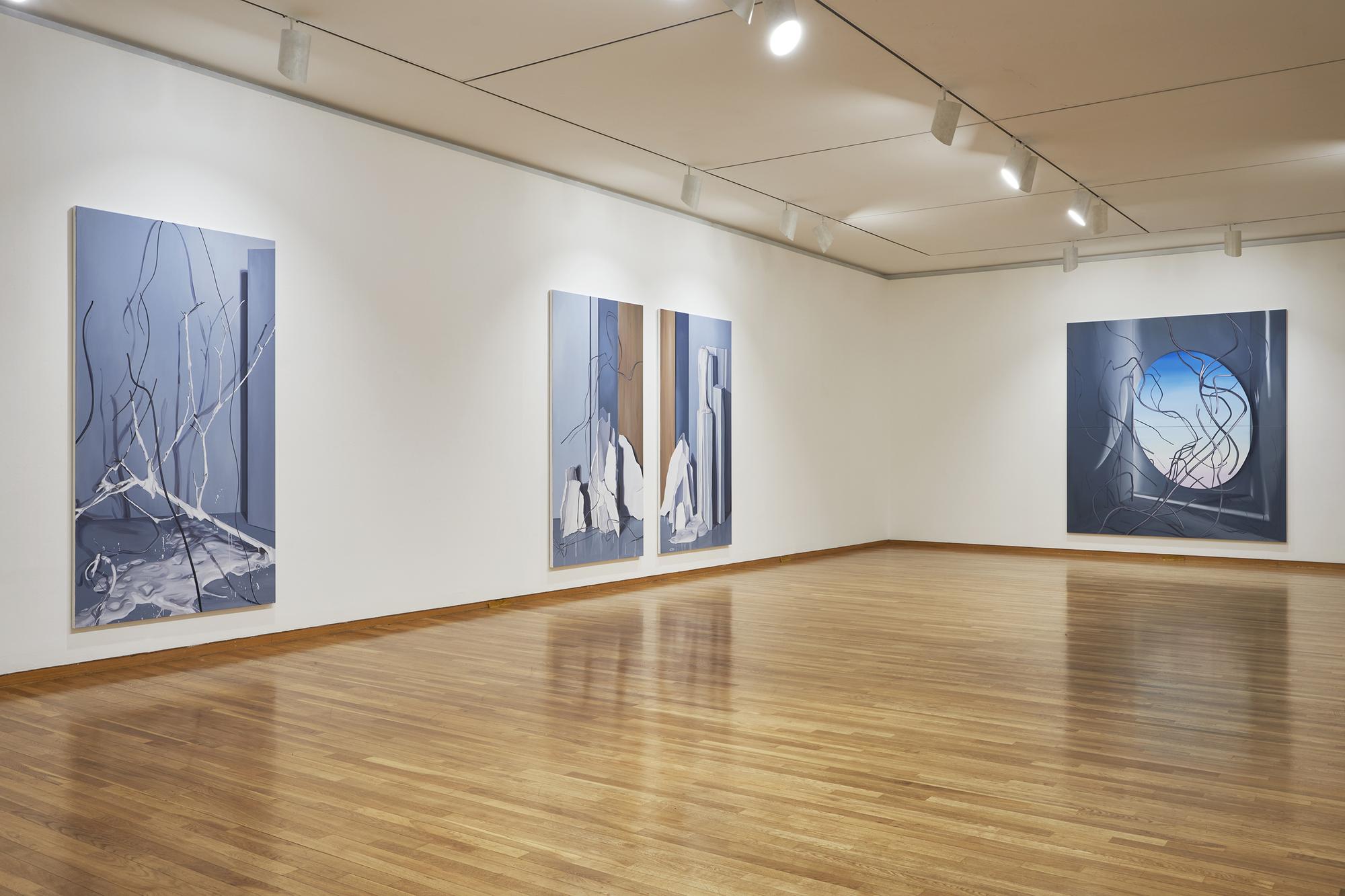
Along these lines, Rho’s solo exhibition 《Blue Window》 (2021), held at the Kumho Museum of Art, repeatedly featured the motifs of the “window” and “reflection,” offering a metaphorical articulation of long-standing debates on painting and representation.
 
Alongside windows and reflections—elements that frequently appeared in medieval and Renaissance painting—her works incorporate a wide range of object-models that evoke architectural structures and materials, discarded lines, fragments of stone, branches, and debris.
 
These objects, which appear temporary and incomplete, stand, lean, or float under different gravities, regardless of their original forms, functions, or purposes, and come to inhabit newly constructed situations and scenes.
 
Composed of such objects, her pictorial spaces stage subjects, situations, and scenes that seem as though they could exist anywhere, yet in fact exist nowhere, thereby expanding the viewer’s imaginative field.


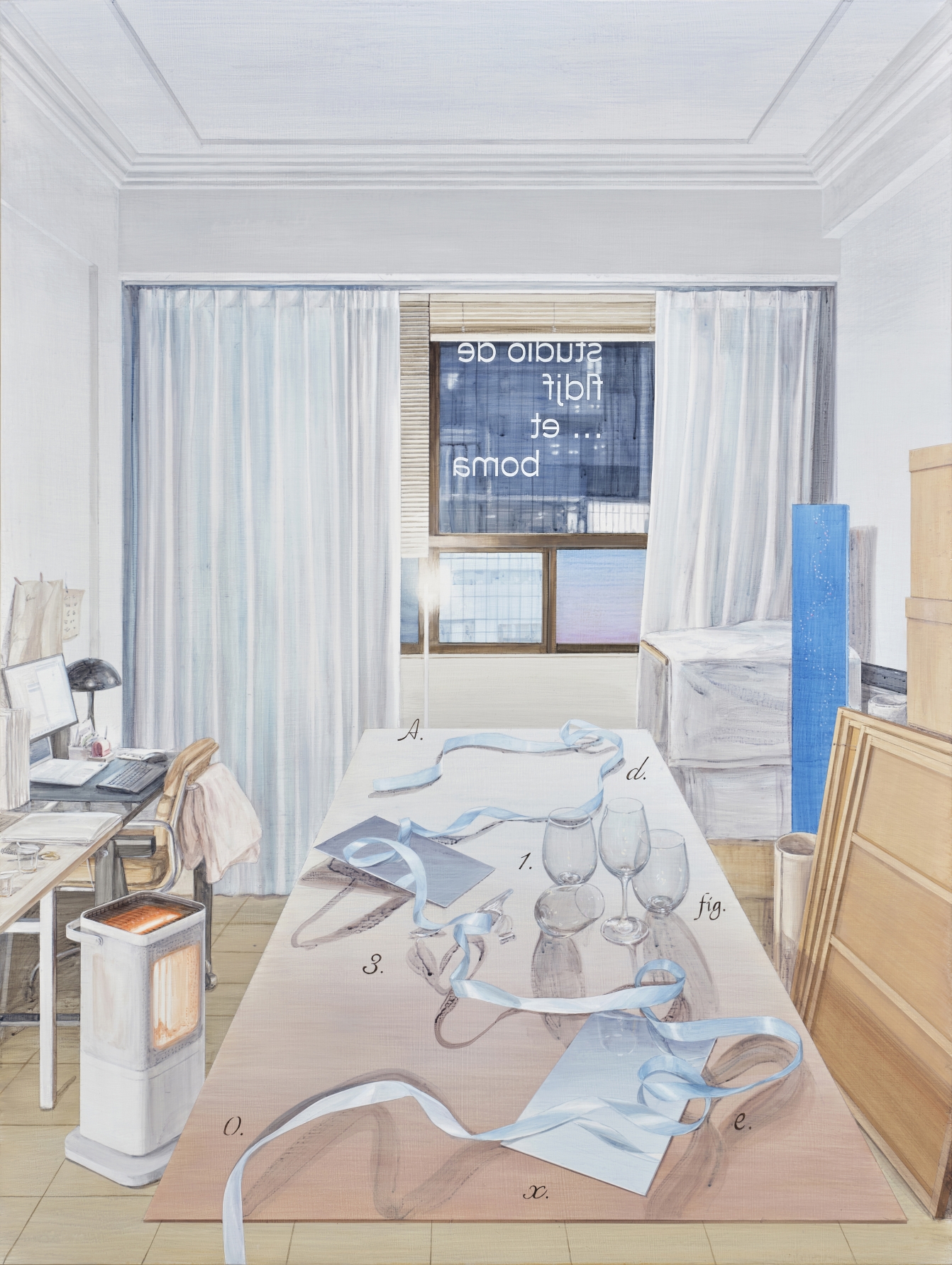
Rho Eunjoo, Objects, 2022, Oil on canvas, 193.9x150cm each (3 pieces) ©CYJ ART STUDIO / SONGEUN

Furthermore, the painting Objects (2022), presented at 《The 22nd SONGEUN Art Award Exhibition》 the following year, brings together fragments, shards, and parts of the objects that have appeared throughout Rho Eunjoo’s practice into a single scene. Depending on the viewer’s gaze, the work can be read either as a depiction of a table in the artist’s studio or as a scene seen beyond a window—an image of a place that seems to exist everywhere yet nowhere at once.


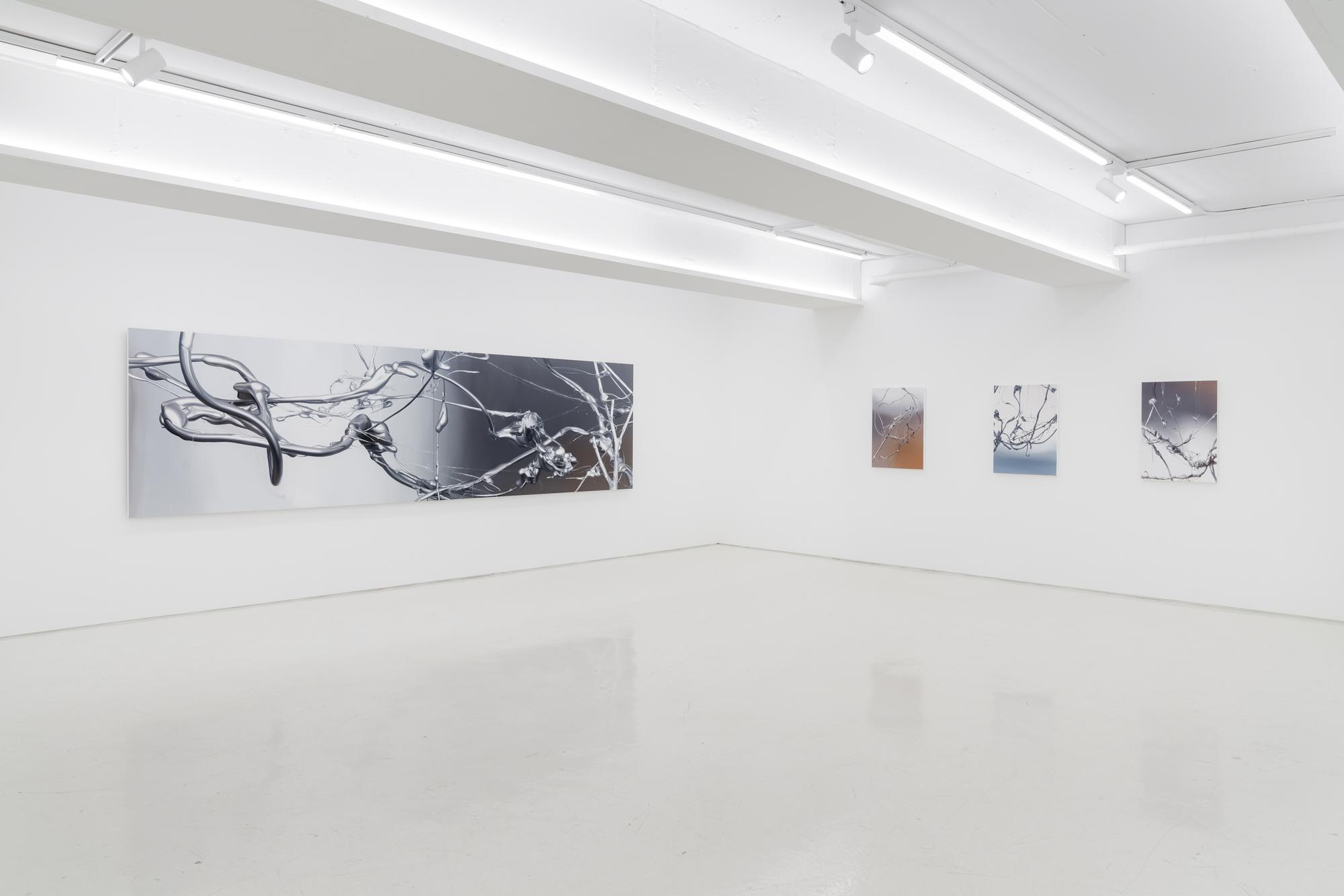
Installation view of 《Knot to Leaf》 (Chapter II, 2023) ©Chapter II. Photo: Jeon Byung Cheol.

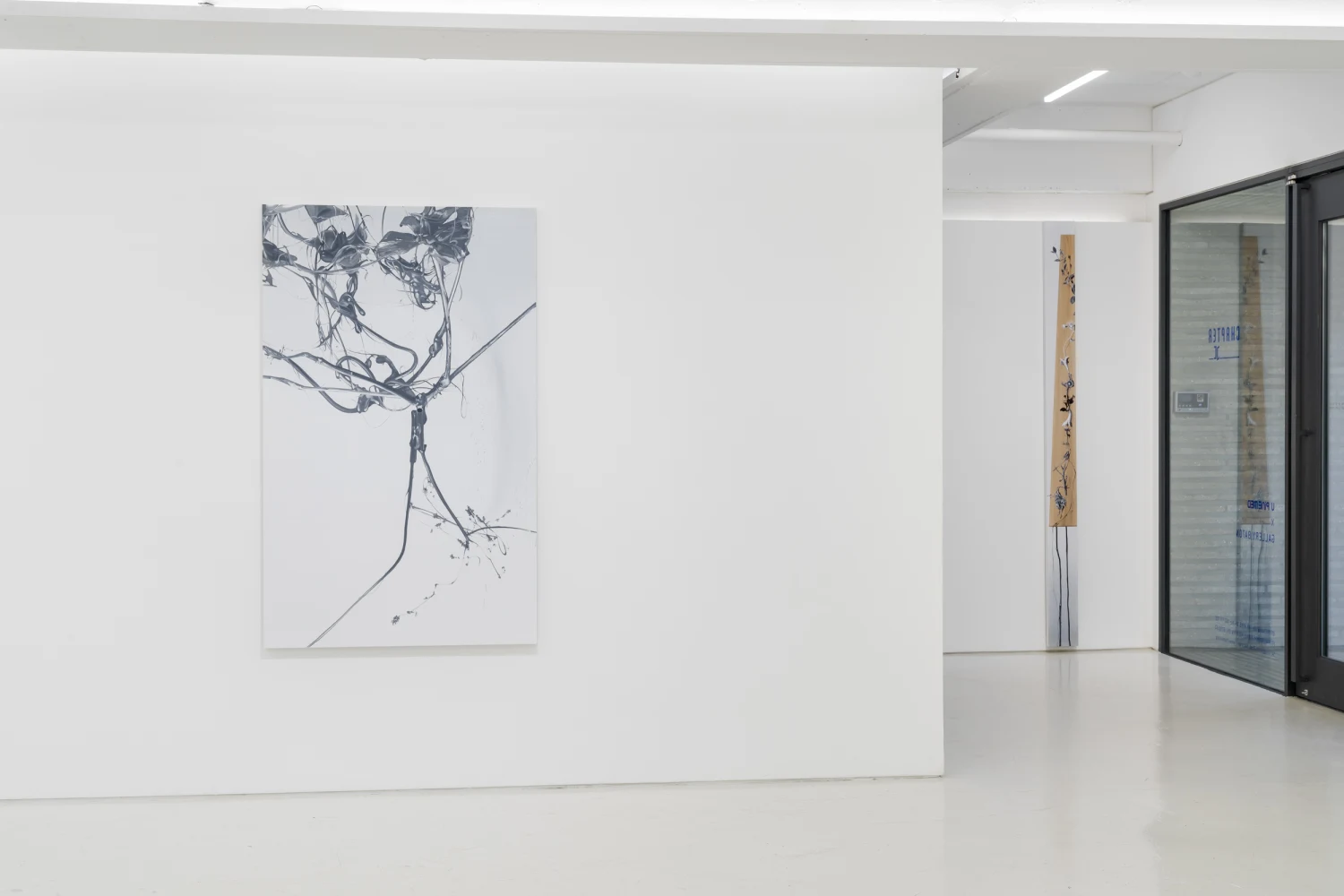
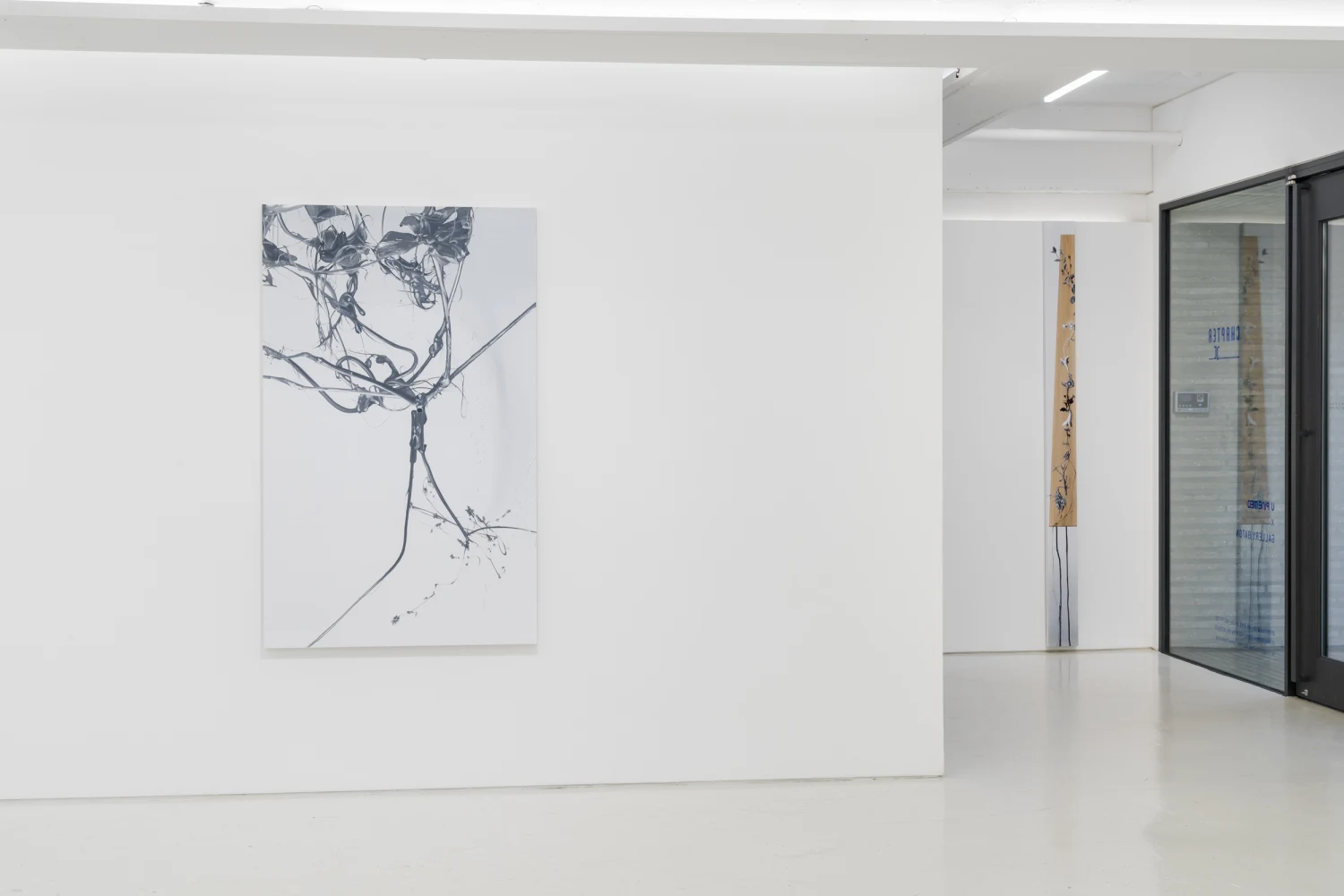
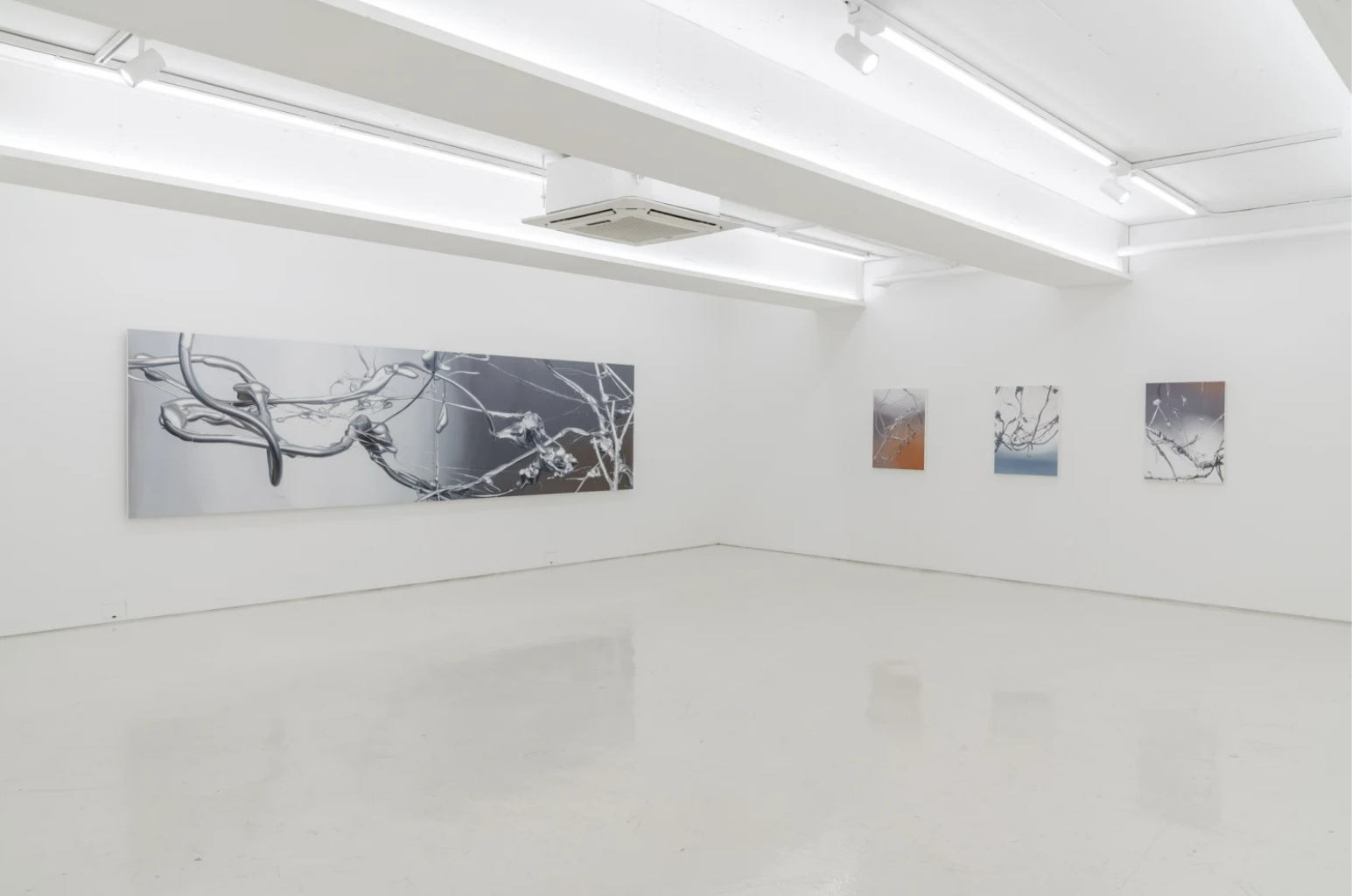
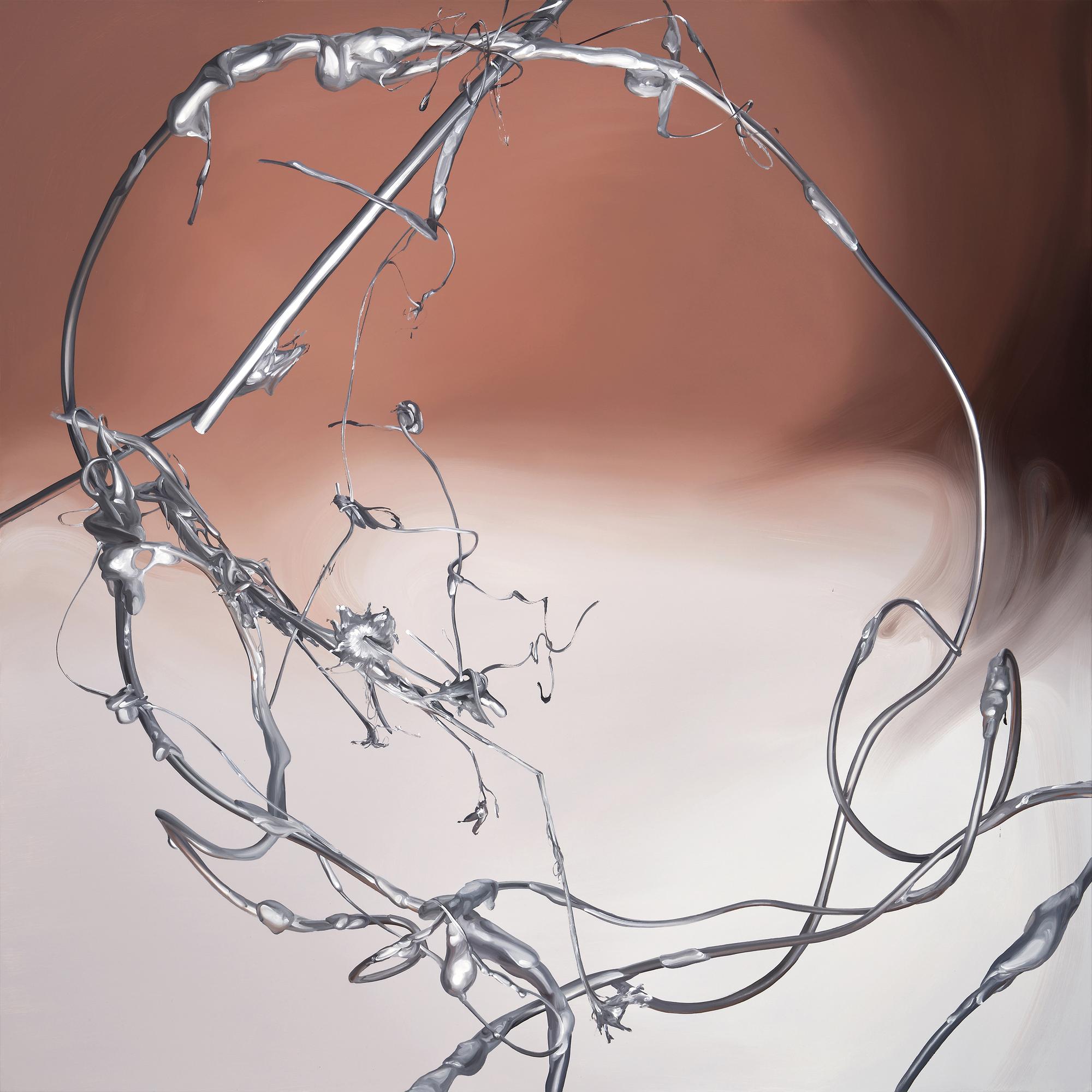
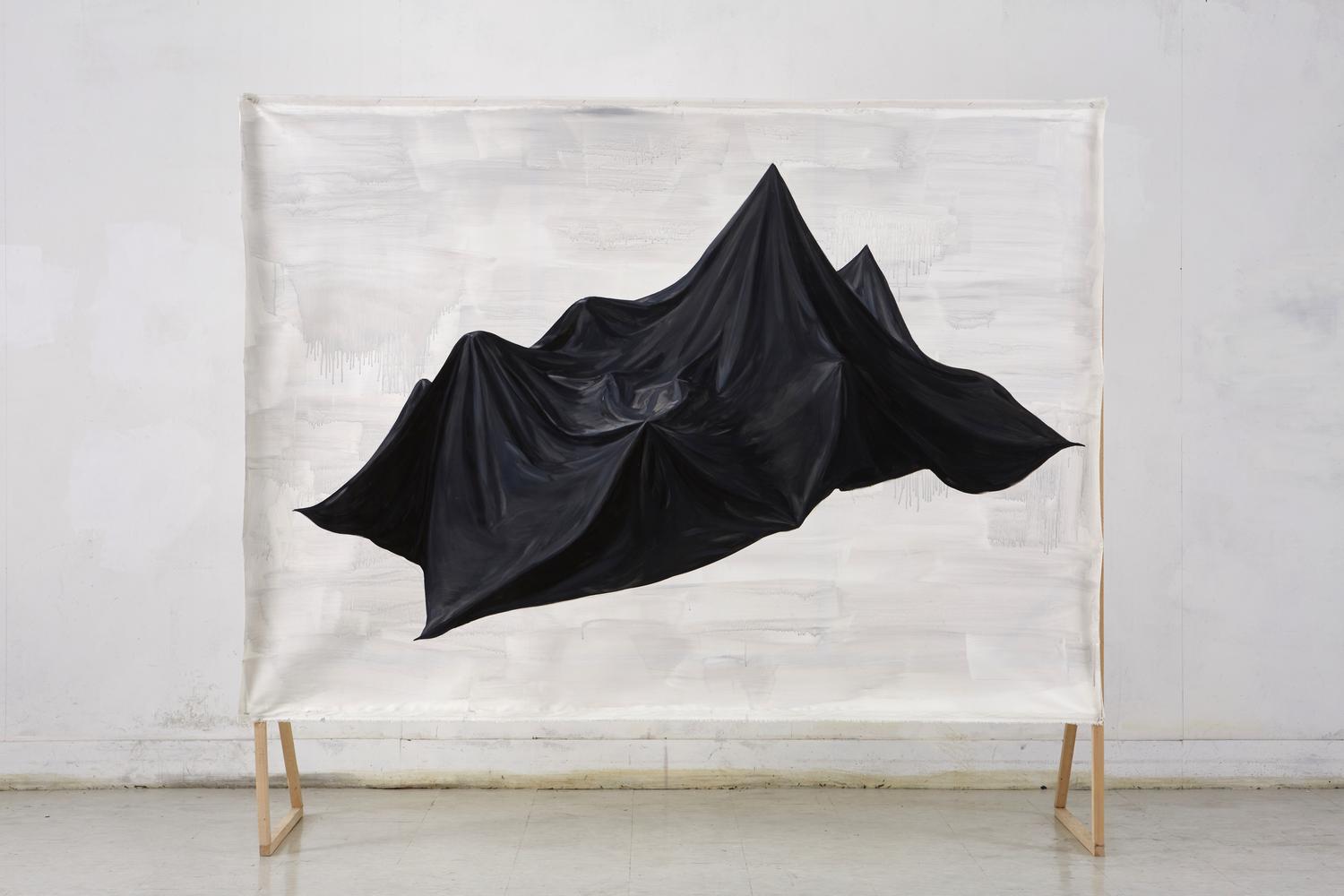
Meanwhile, the solo exhibition 《Knot to Leaf》 (2023), held at Chapter II, began by likening the process of filling a blank canvas to the act of cultivating a garden. In this exhibition, Rho Eunjoo populated her garden with withered flower stems, wire, and thread, treating the materials that melt and harden to bind them together as seedlings from which the garden takes shape.


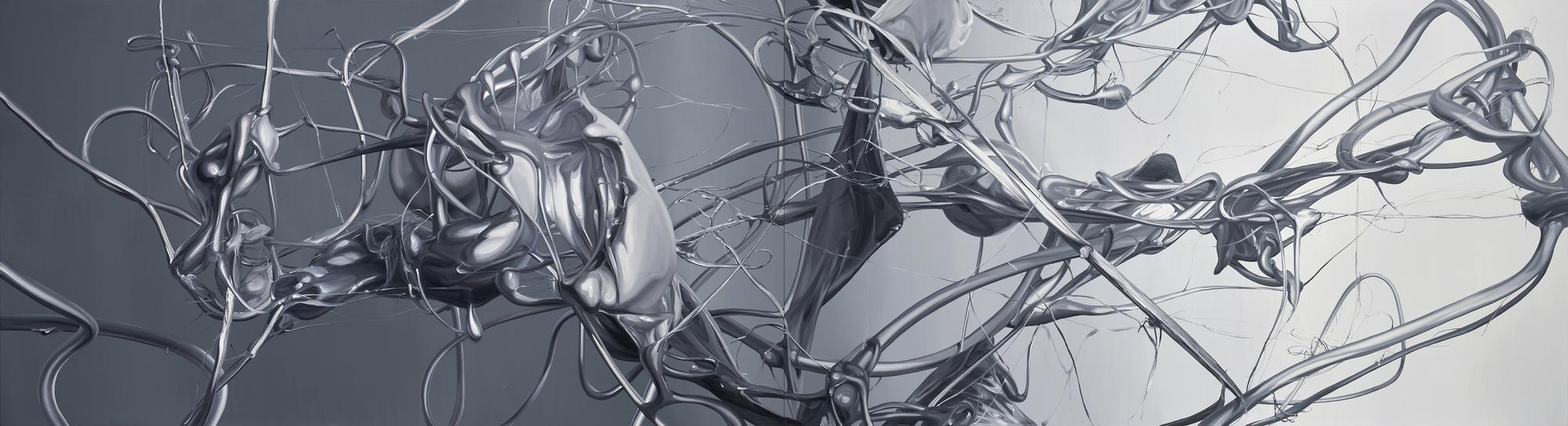
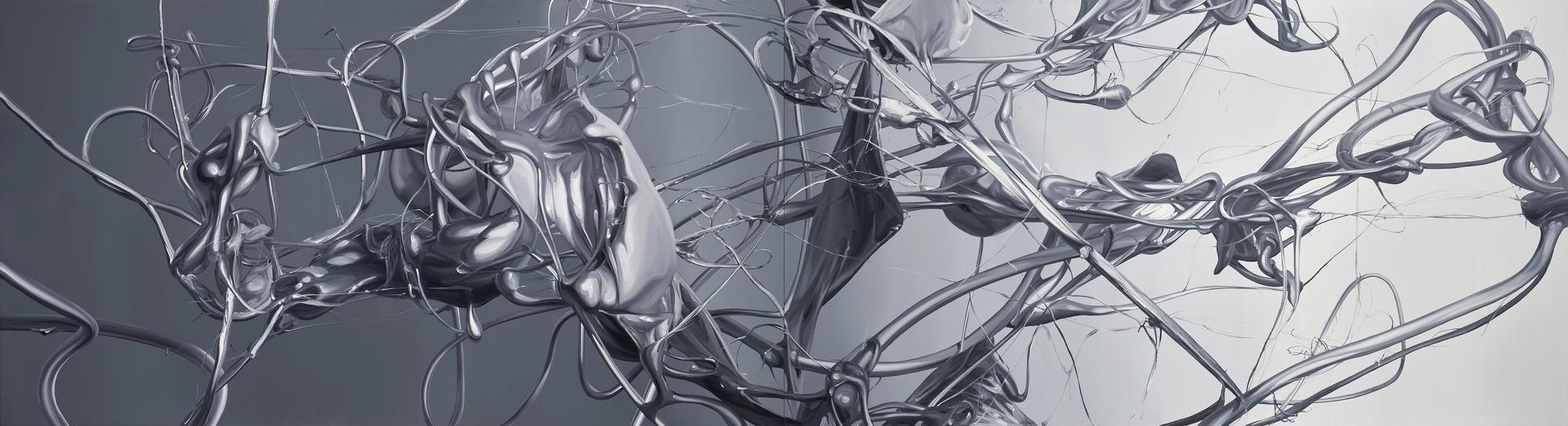
Rho Eunjoo, Knots-Spot, 2023, Oil on canvas, 120x220cm each (2 pieces) © Rho Eunjoo

Rho’s garden conveys four themes. The size of Knots-Branch (2023) and Knots-Spot (2023), occupying the entire front window of the exhibition space and its indoor walls, overwhelms visitors. They depict an enlarged landscape where diverse objects get entangled and deformed to be dots and lines and eventually lumps.


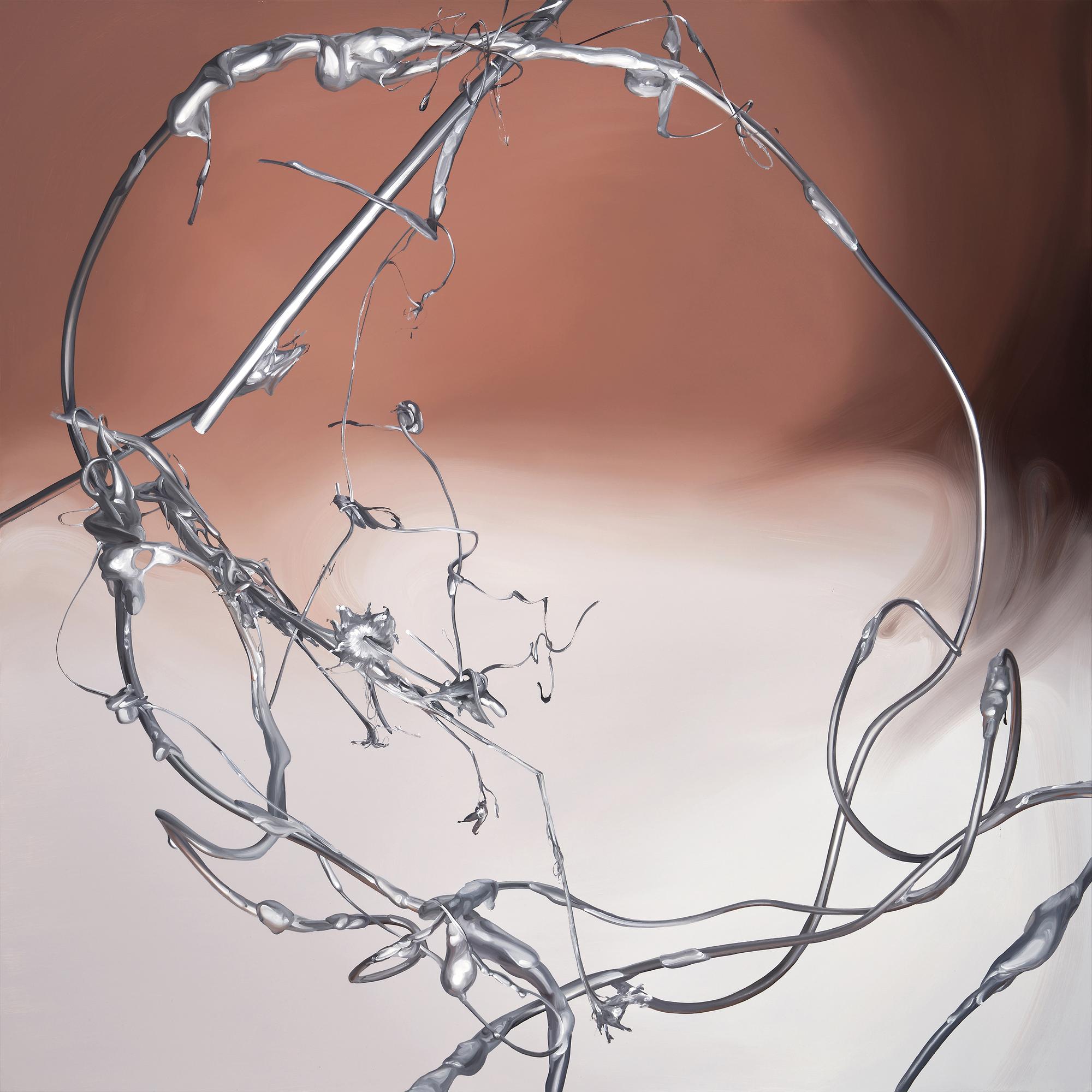
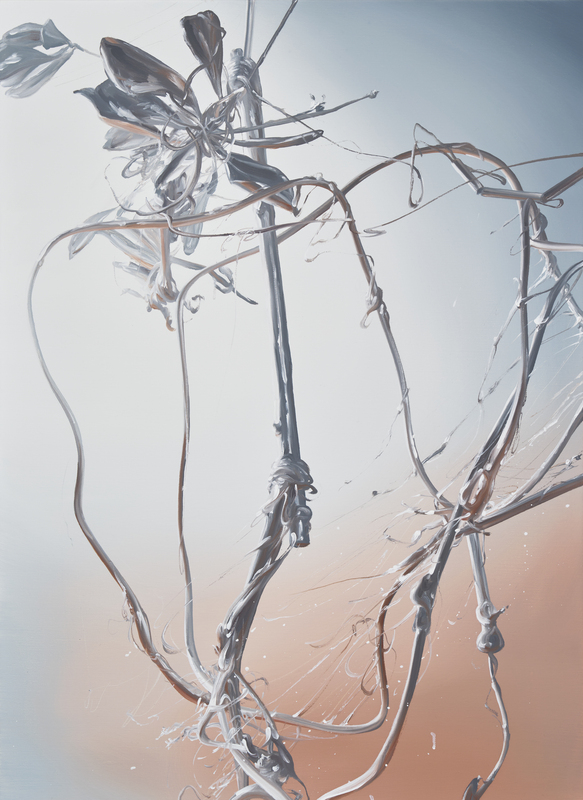
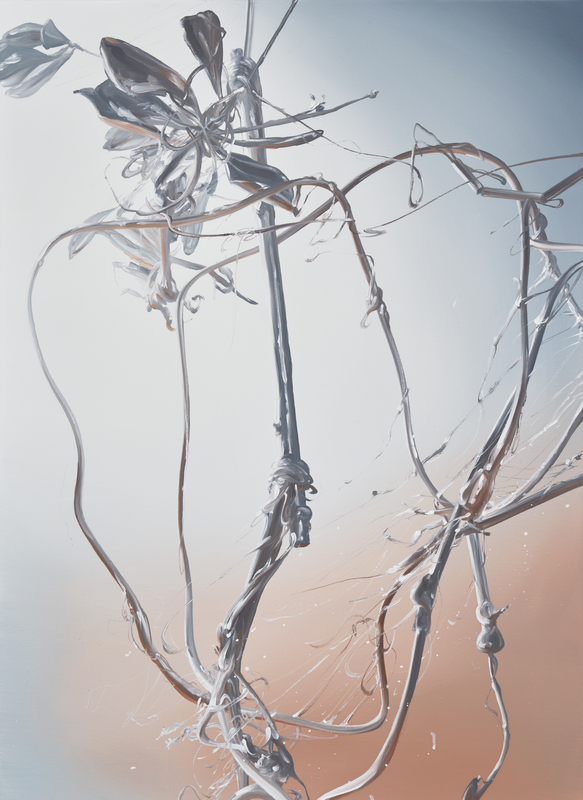
Rho Eunjoo, Still Light-Mars Orange, 2023, Oil on canvas, 150x150cm © Rho Eunjoo

Secondly, the series of ‘Still Light’ (2023) contains more identifiable lines and mass. At the rear of dried branches grafting onto wires and the bodies of spherical structures wrapped with fluid degenerated matter like knots, the dusky colors of the backdrop seem to give billowing rhythms to the described front figures. Alongside this, a sense of temporality runs through her paintings—the time in between when the soft hardens, the rigid gradually weakens, and dawn begins to break.
 
If Rho Eunjoo’s objects in earlier works appeared as though striking poses on a stage, in this exhibition the elements that allow spatial coherence are removed, and even the shadows that once revealed hierarchies among the objects are erased beyond them. As a result, the objects seem to float, as if suspended in midair.


Installation view of 《Knot to Leaf》 (Chapter II, 2023) ©Chapter II. Photo: Jeon Byung Cheol.

Lastly, the ‘Long Arrangement’ series—created in collaboration with artist Son Jooyoung—establishes gardens on a canvas made from leftover sheets of cloth. Formed from remnants of used cloth, the series echoes today’s urban gardens, which are often permitted only on leftover or marginal plots of land.
 
Through this body of work, Rho Eunjoo captures no coincidences but reflections and their knotted motility, which suddenly invade the fence of overlaying intentions, in other words, Rho's garden.


Rho Eunjoo, Still Light-Orange Wind 3, 2024, Oil on canvas, 172.7x53cm © Rho Eunjoo

In this way, Rho Eunjoo re-forms objects that move between reality and illusion by modeling actual objects or spaces and then translating them back onto the canvas. Through this process, she records and re-presents the tensions, movements, and sense of time inherent in elements easily found in our surroundings, creating new scenes and relationships that feel at once familiar and strange.

 “As the result of architecture, buildings remain in the city, but construction sites—the intermediate stage—easily disappear both from the real world and from memory. I wanted to transfer that fragile, temporary time onto painting and hold onto it.”     (Rho Eunjoo, Artist’s Note)


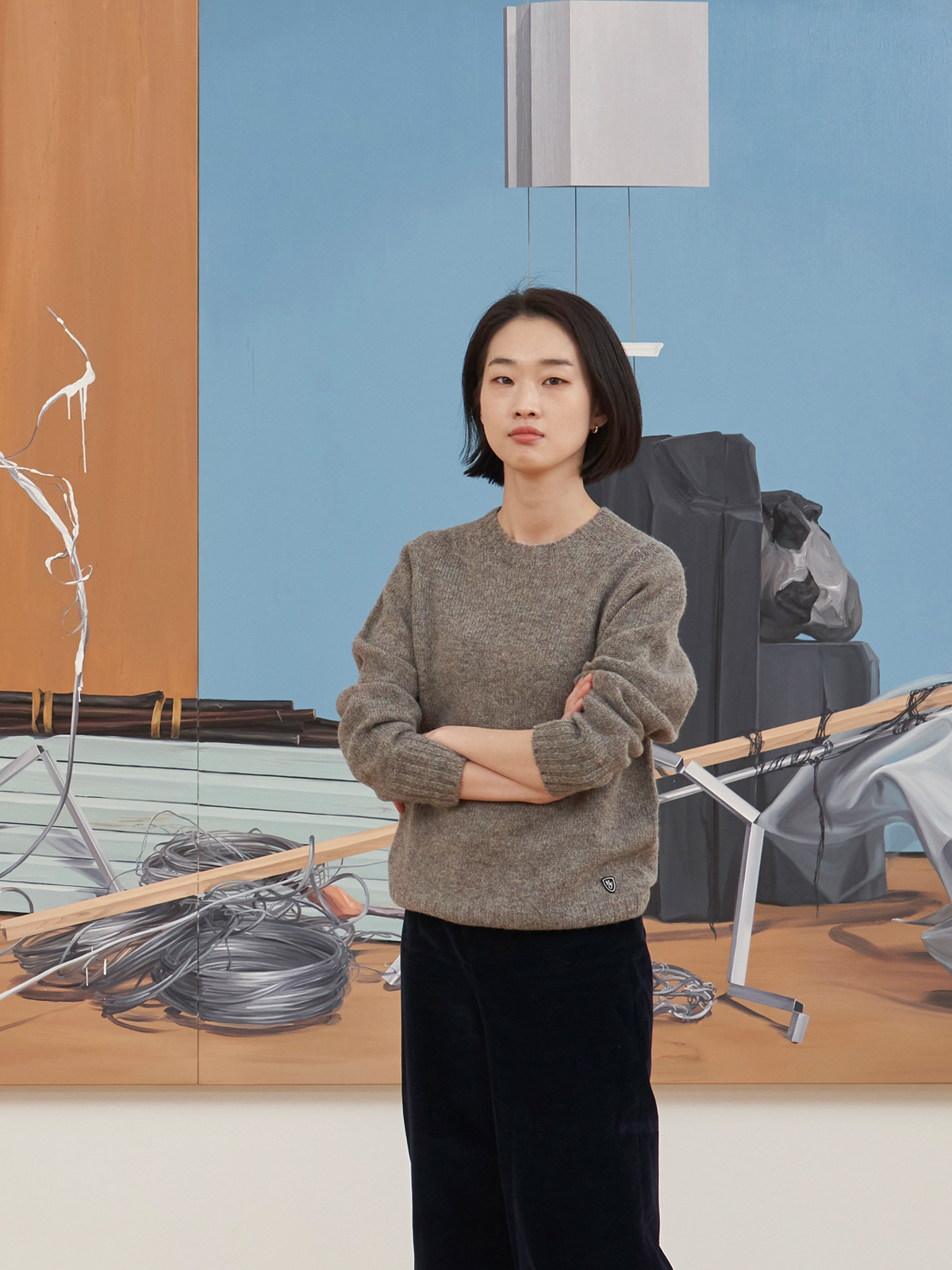
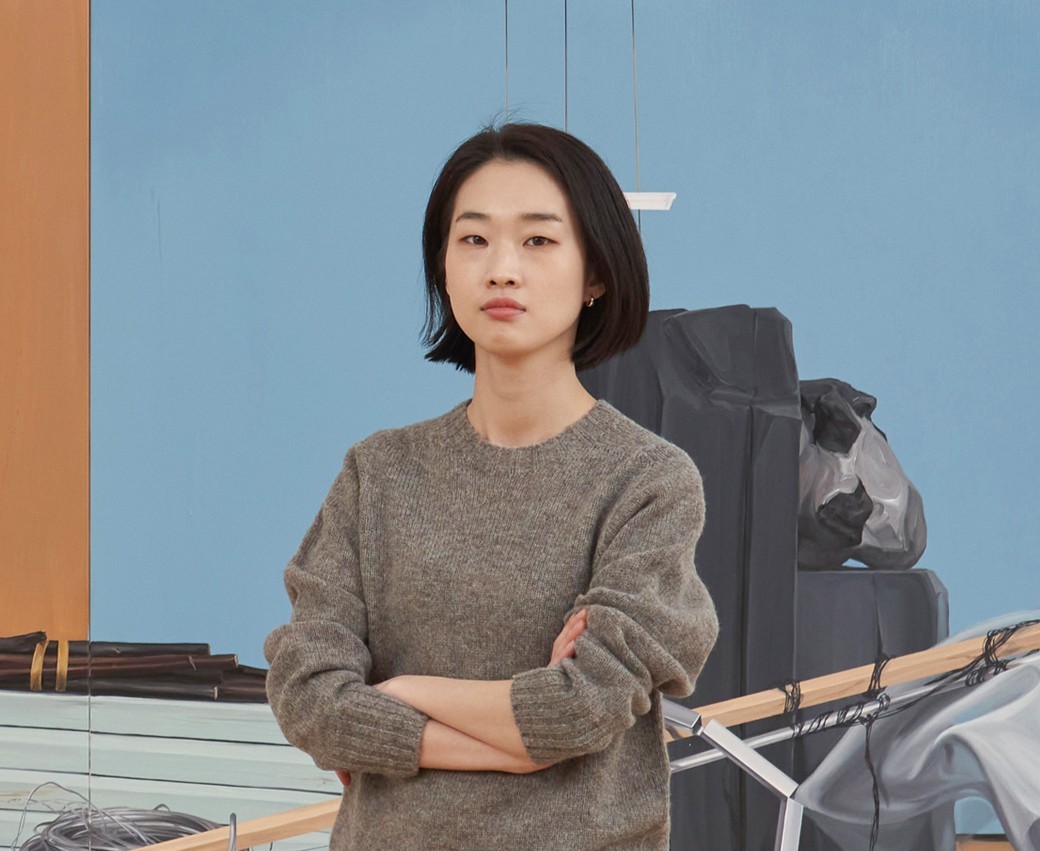
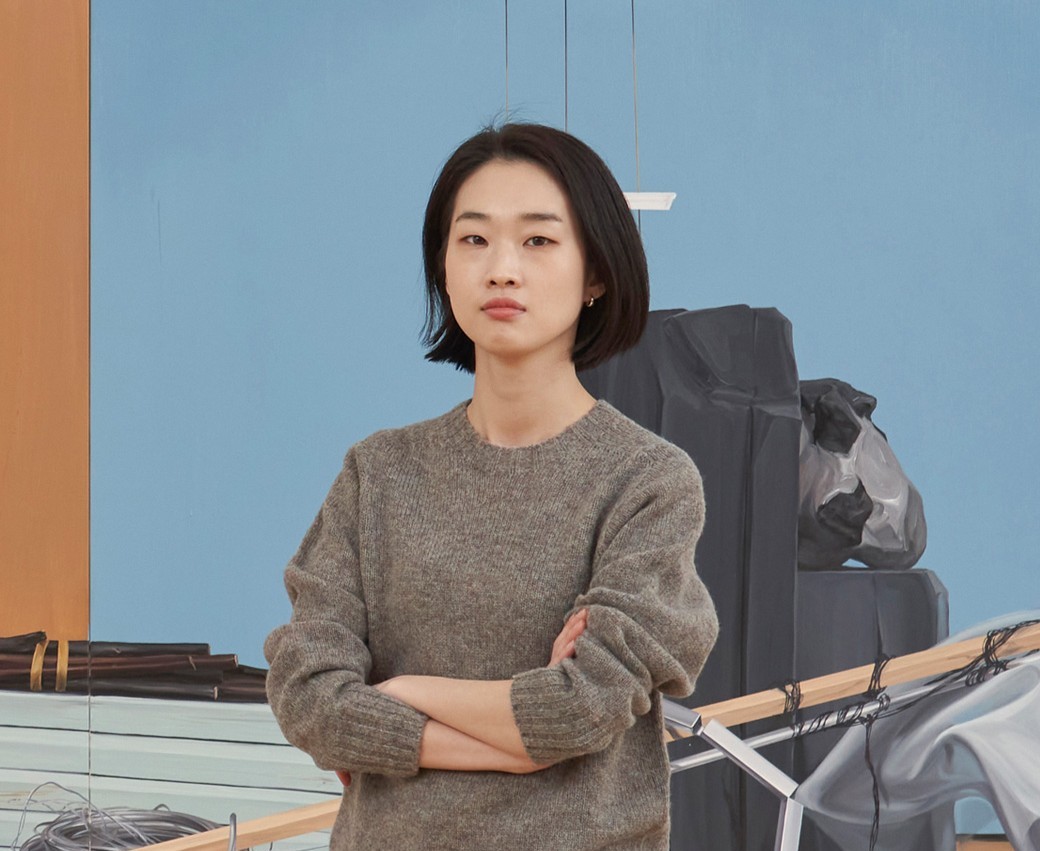
Artist Rho Eunjoo ©Gallery Baton

Rho Eunjoo received a BFA from Hongik University in Korea and MFA at Korea National University of Arts in Korea. Her solo exhibitions include 《Knot to Leaf》 (Chapter II, Seoul, 2023), 《Blue Window》 (Kumho Museum of Art, Seoul, 2021), and 《Walking—Aside》 (Space Willing N Dealing, Seoul, 2019).
 
She has also participated in numerous group exhibitions, including 《Minibus》 (ARKO Art Center, Seoul, 2025), 《遊物時間 A Thousand Ways to Objecthood》 (Yu-Hsiu Museum of Art, Nantou, Taiwan, 2025), 《SeMA Anthologia: Ten Enchanting Spells》 (Buk-Seoul Museum of Art, Seoul, 2023), 《The 22nd SONGEUN Art Award Exhibition》 (SONGEUN, Seoul, 2022), 《UNBOXING PROJECT: TODAY》 (Space Willing N Dealing, Seoul, 2022), and 《Dwindles to a Point and Vanishes》 (Art Sonje Center, Seoul, 2021).
 
In 2017, Rho Eunjoo was a resident artist at the SeMA Nanji Residency, Seoul Museum of Art. Her works are included in the collections of the MMCA Art Bank (National Museum of Modern and Contemporary Art, Korea) and the Wumin Art Center.
References