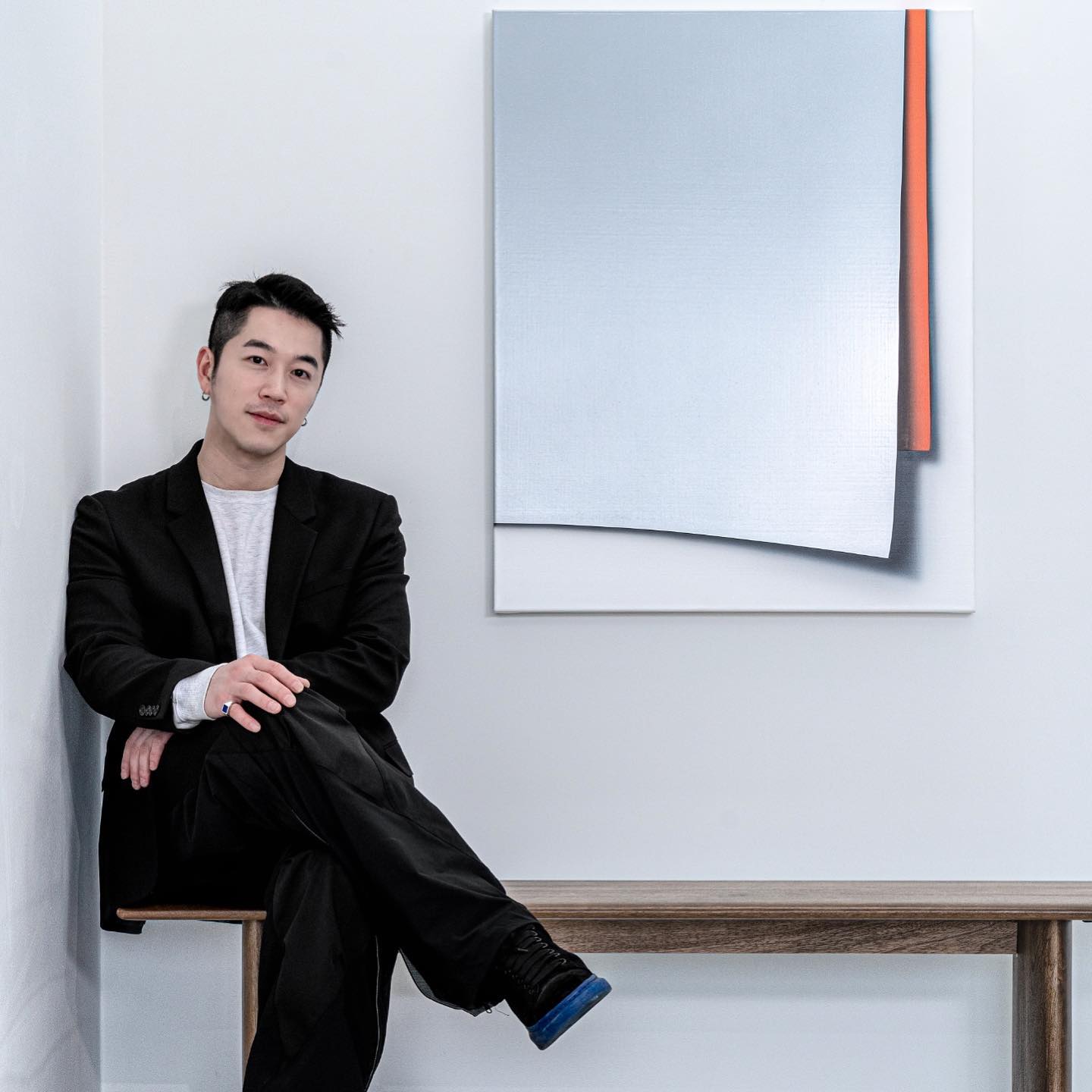
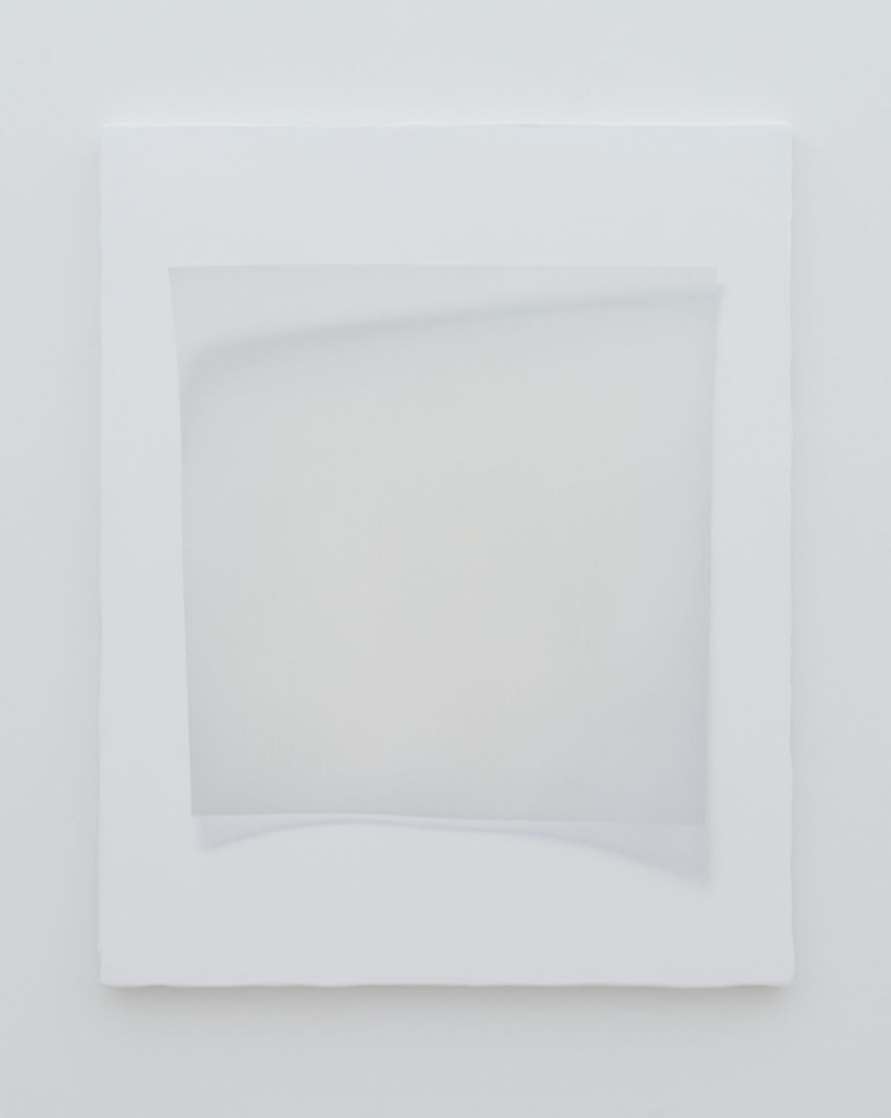
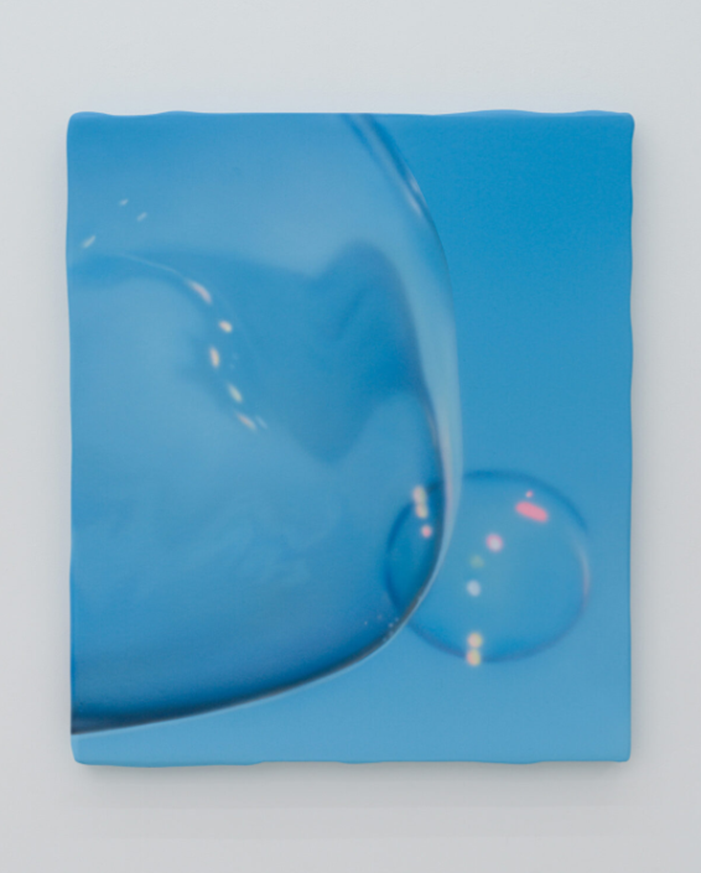
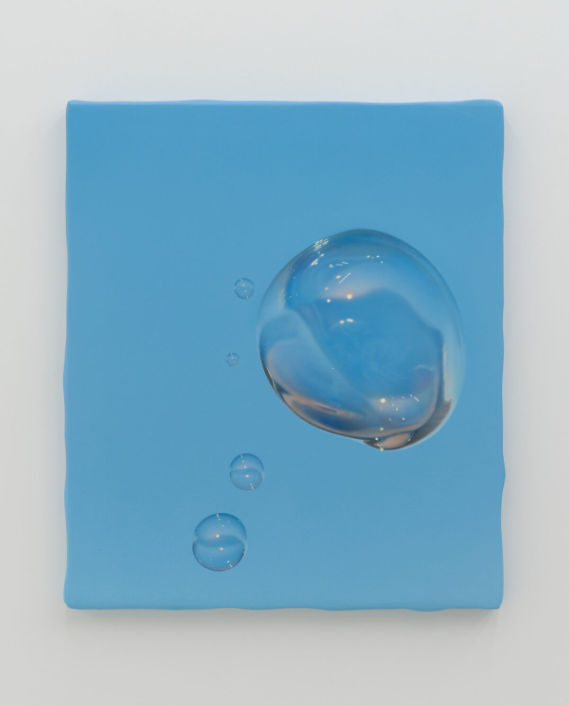
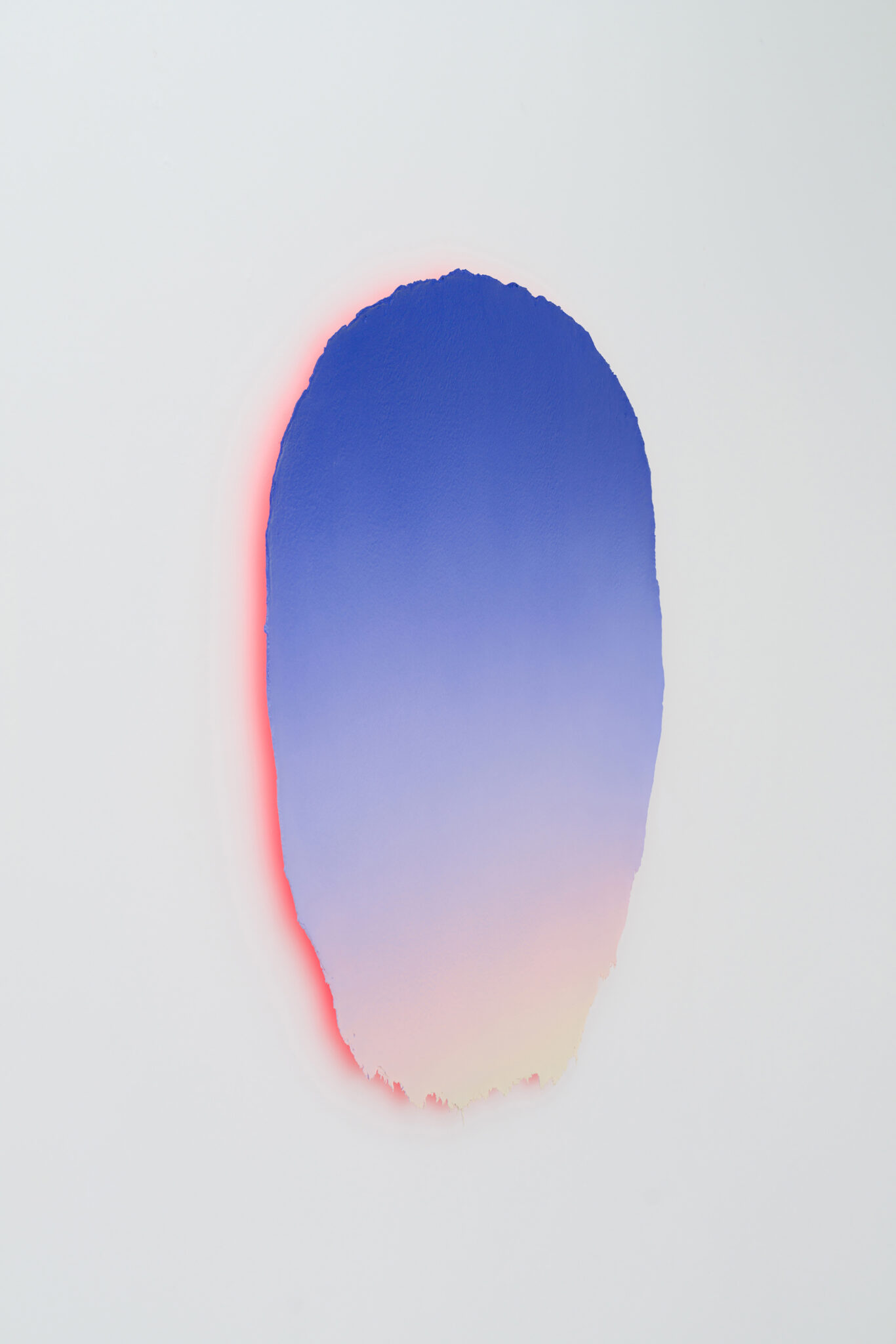
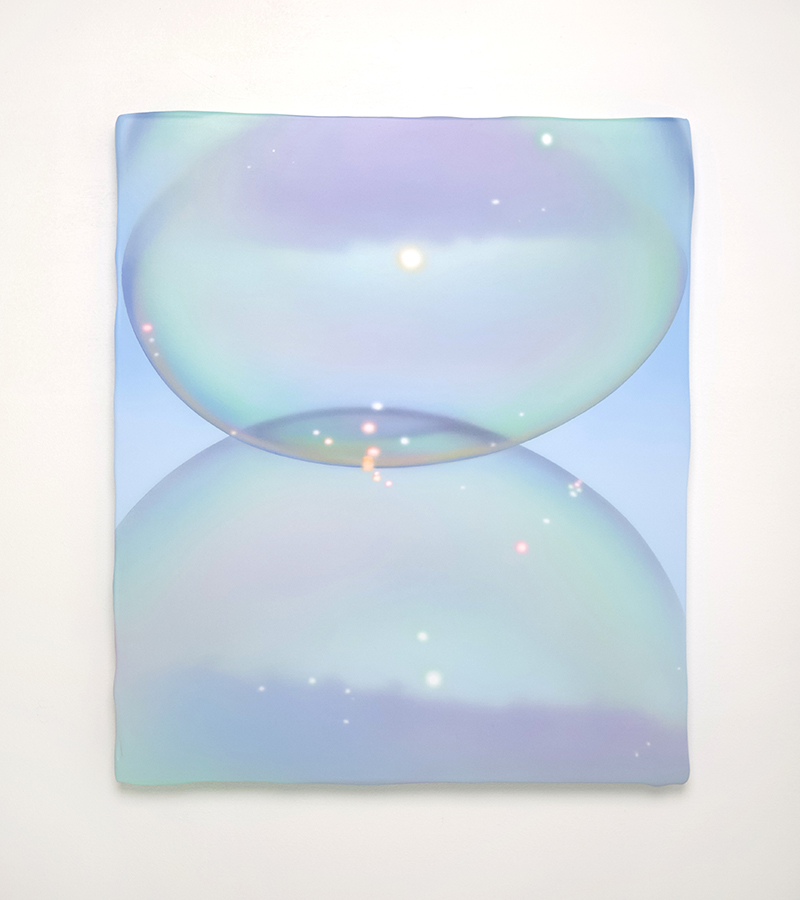
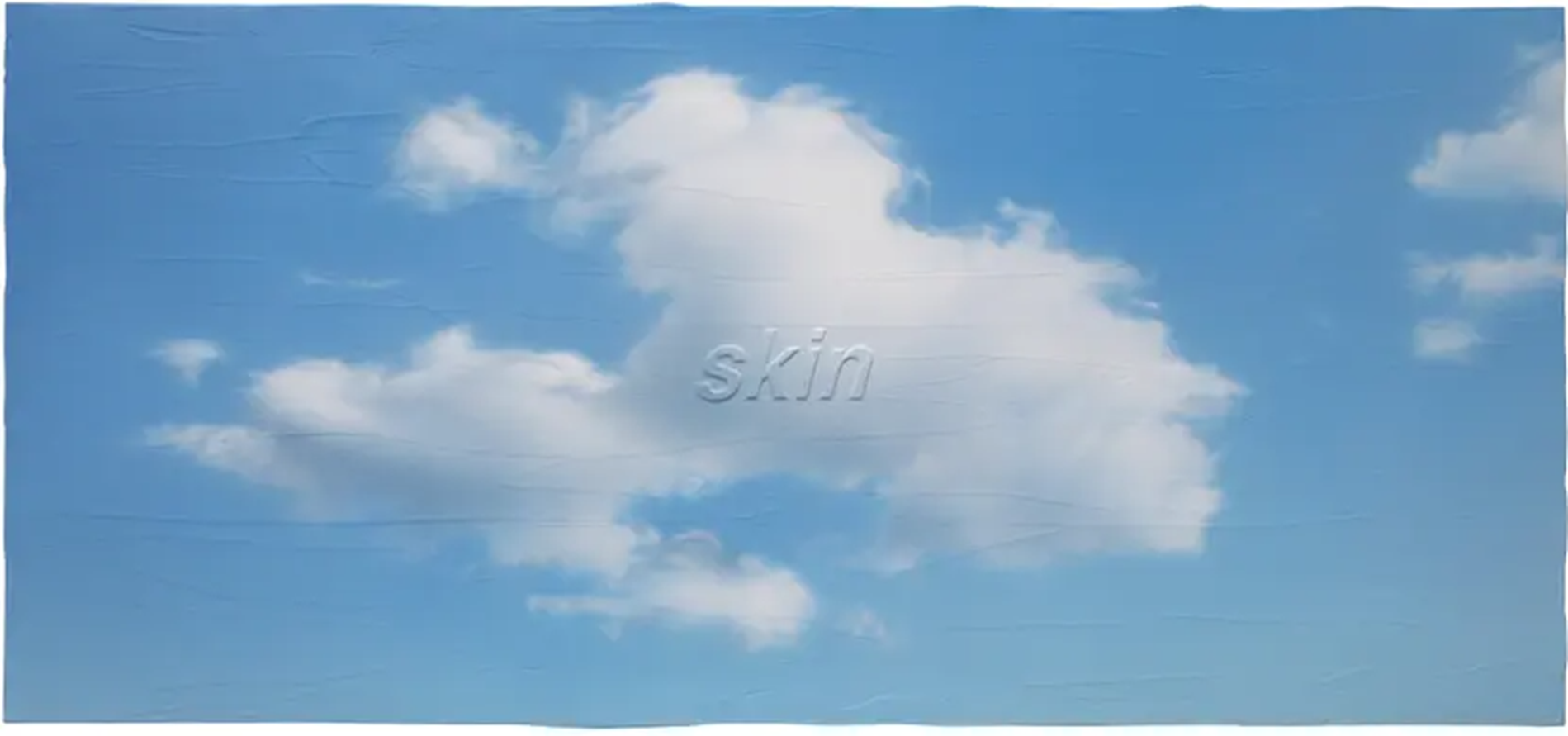
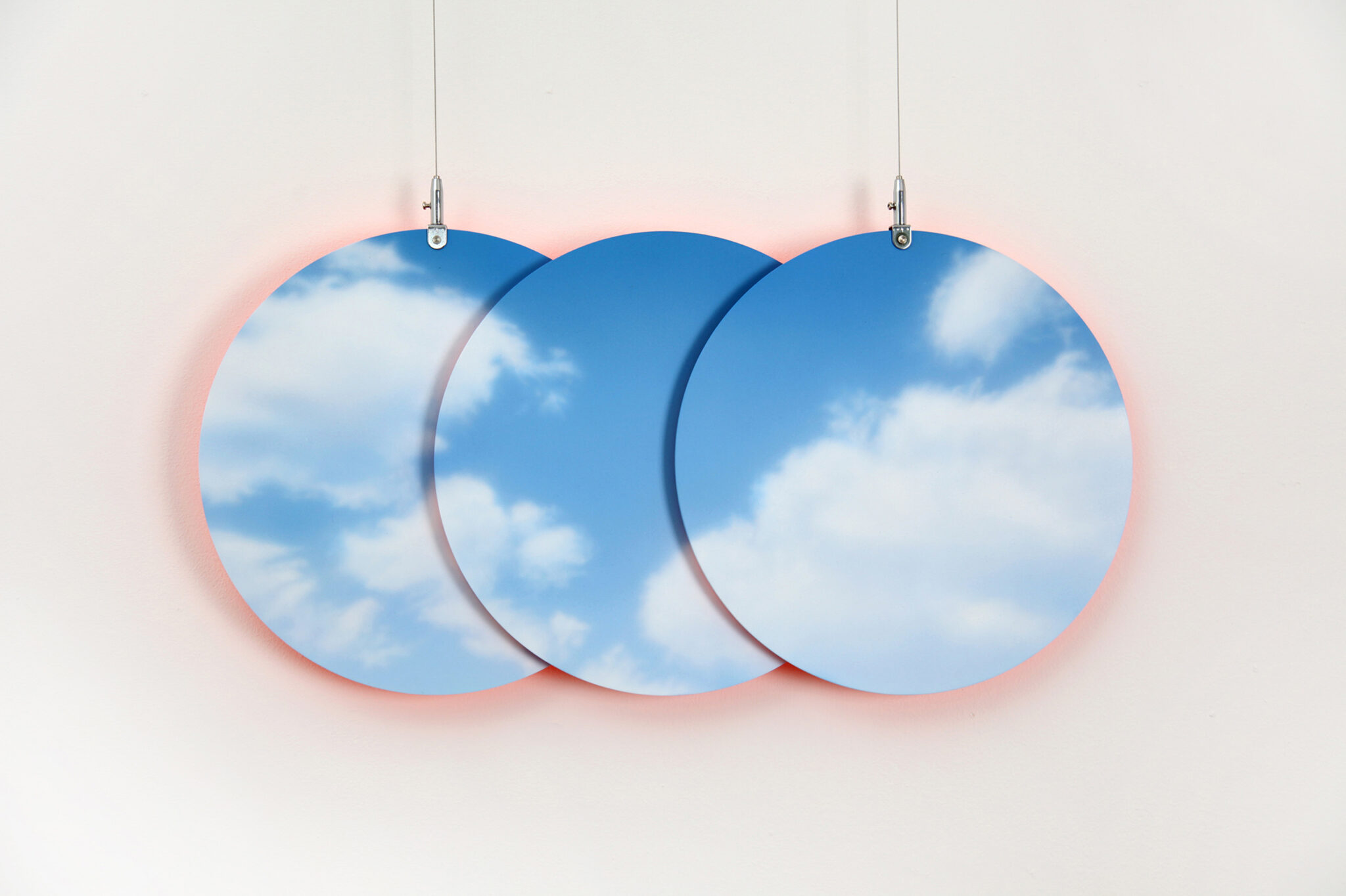
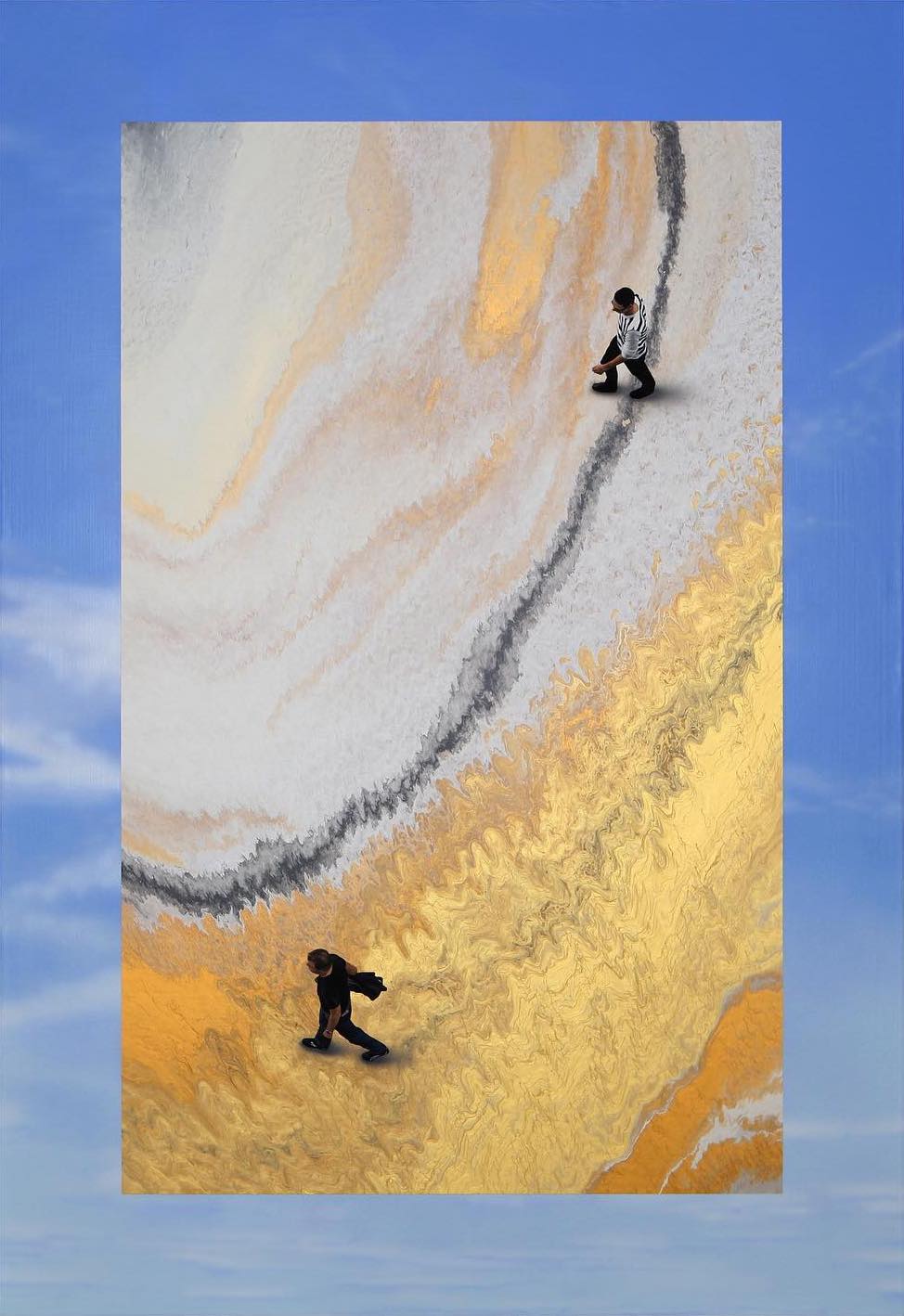
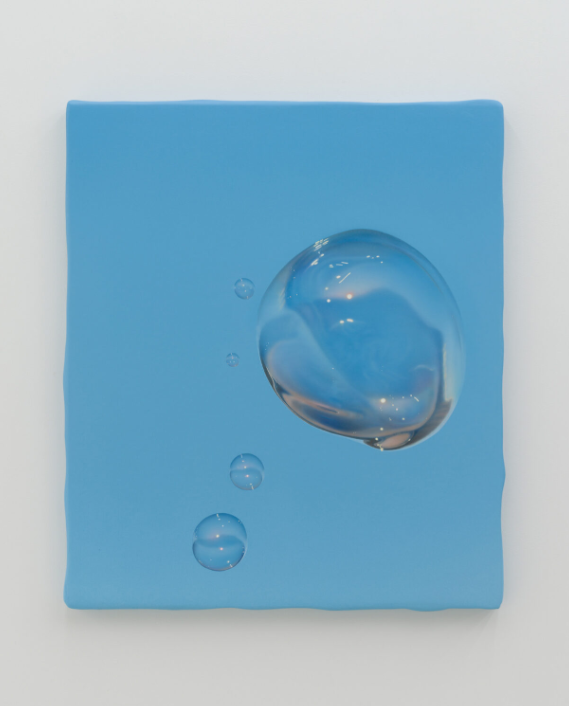
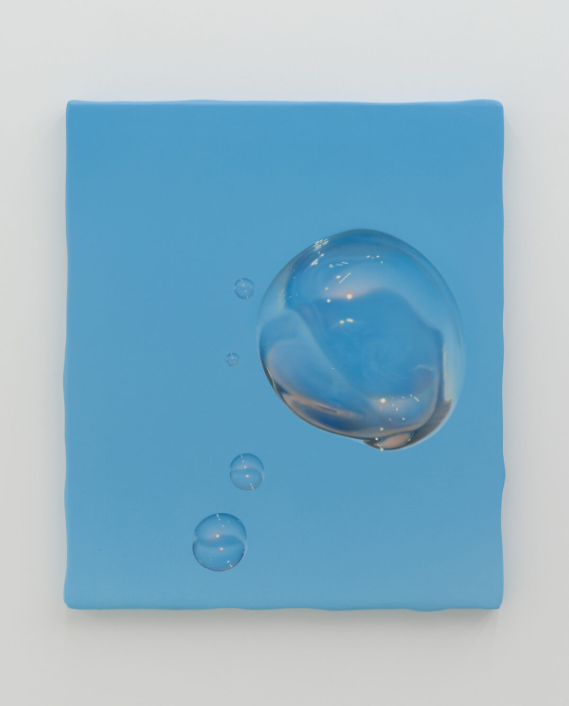
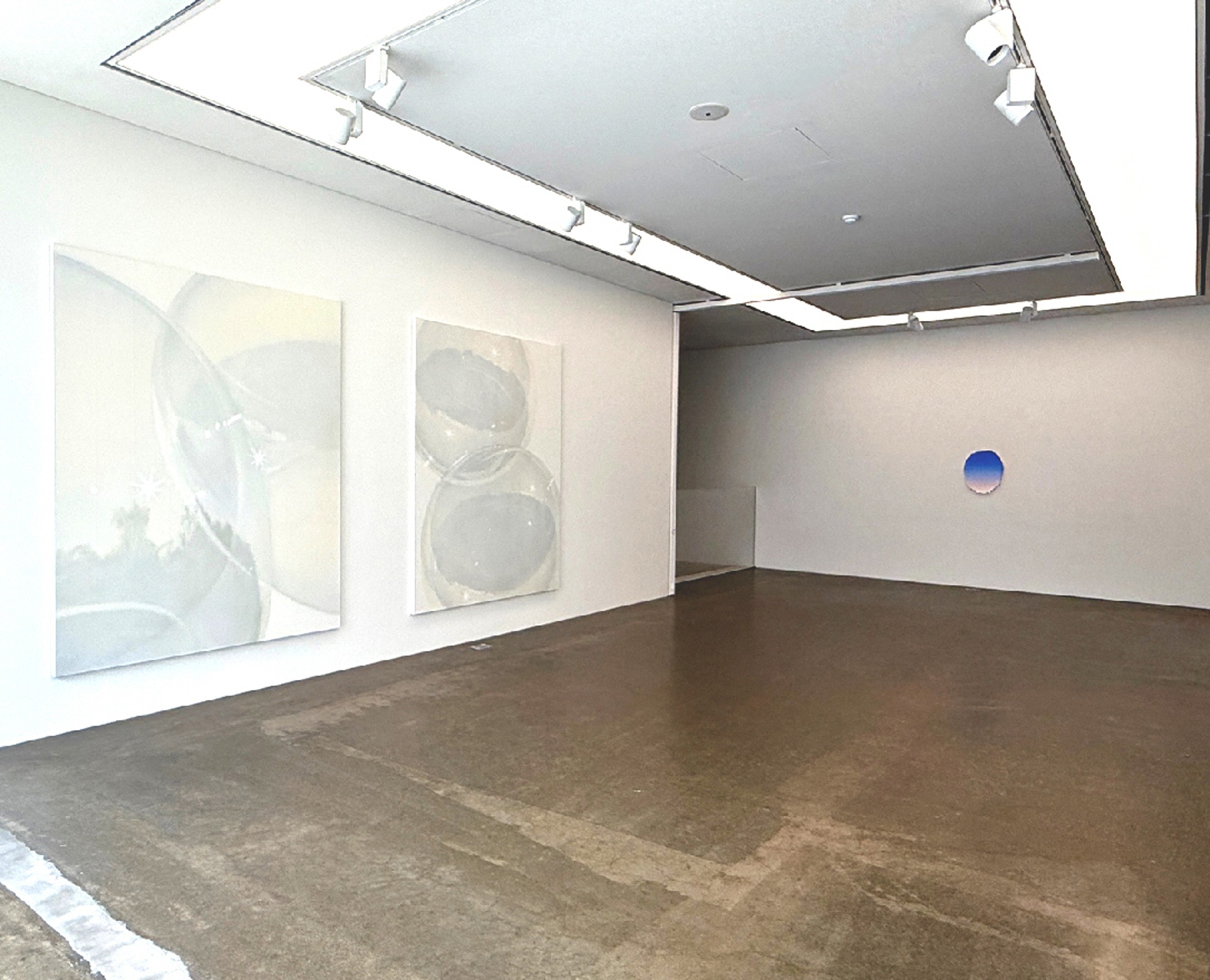
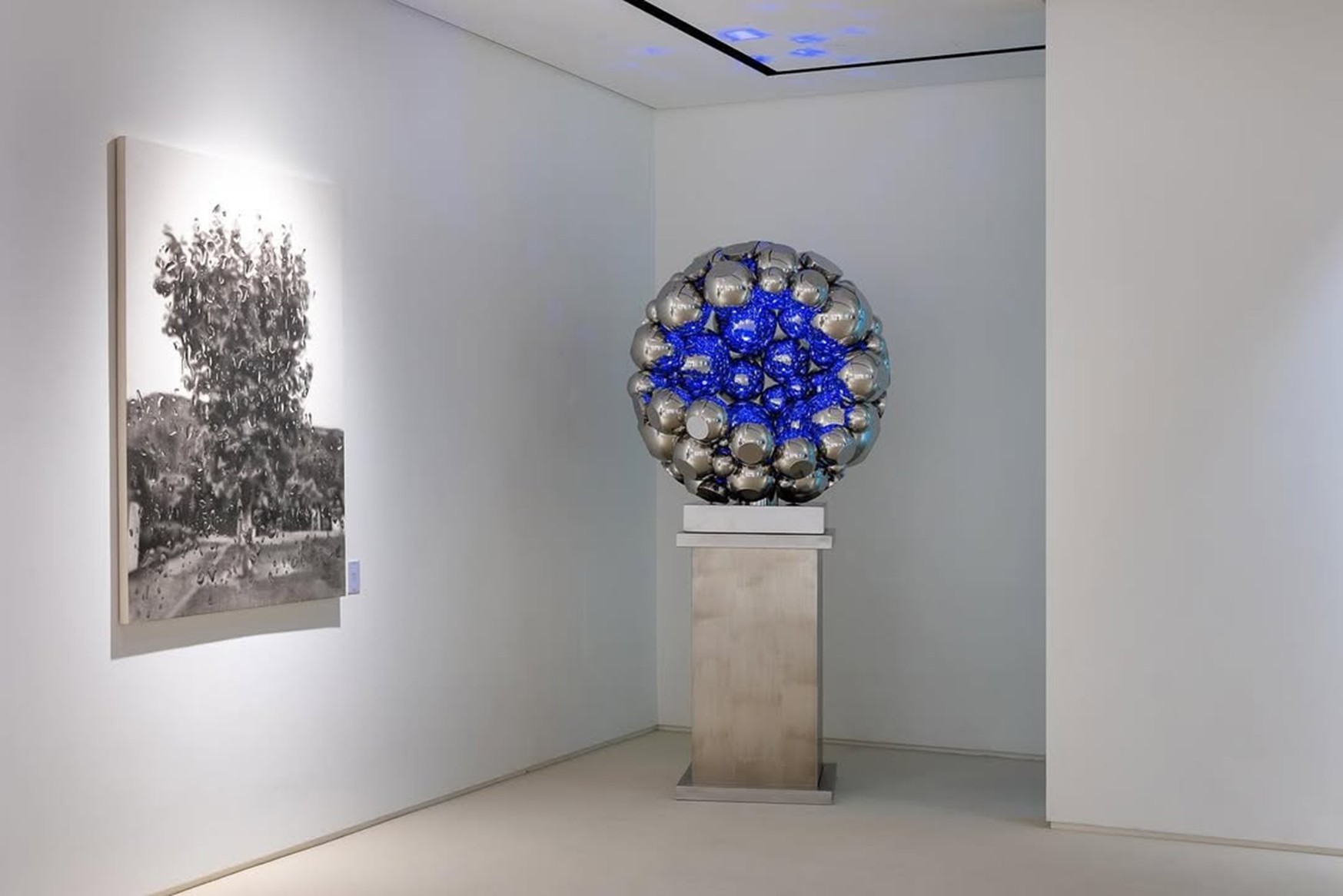
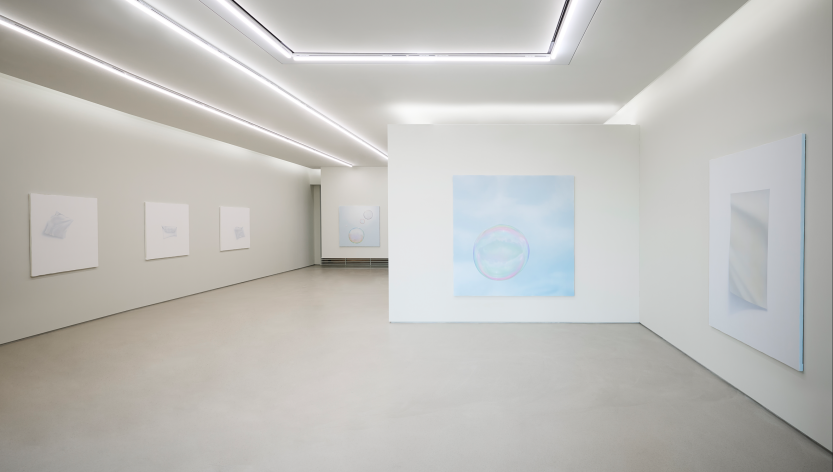
Transparent
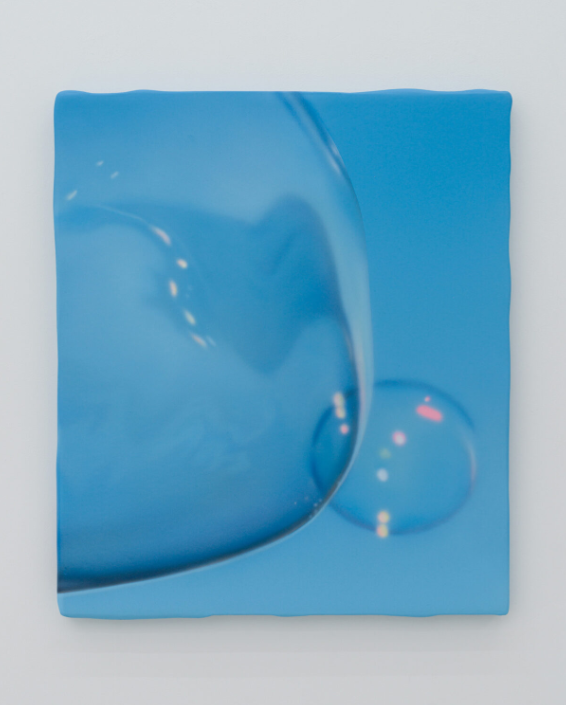
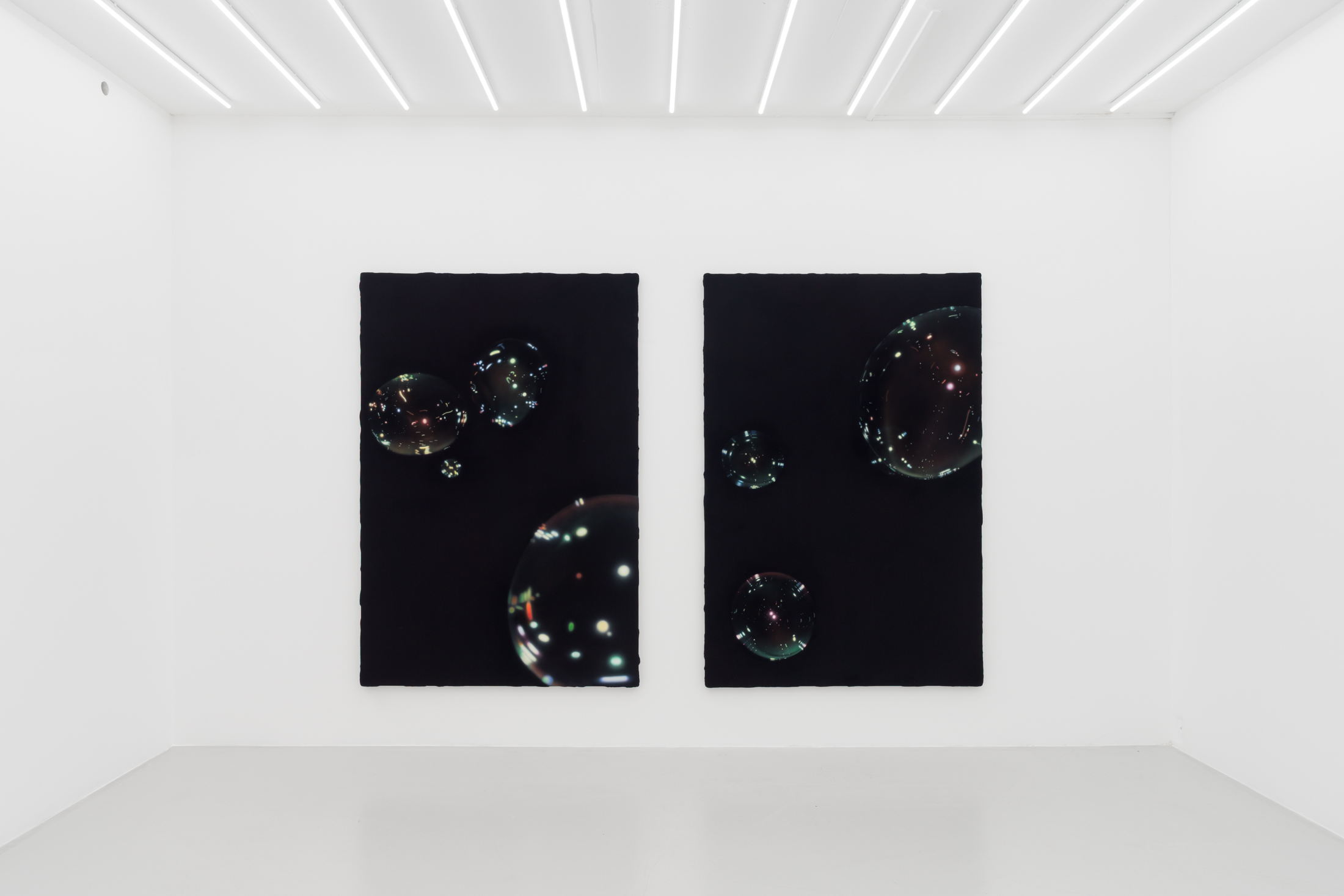
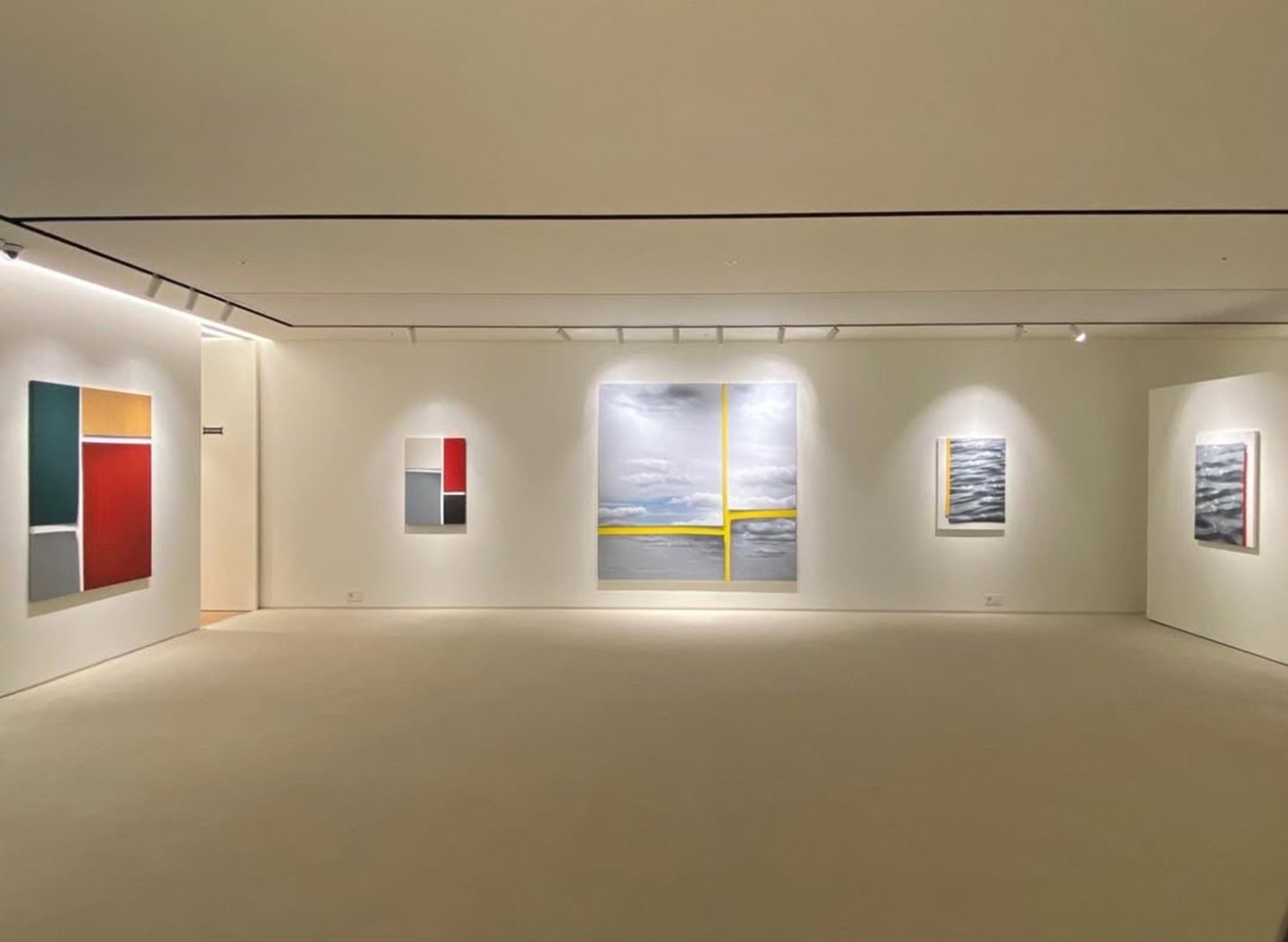
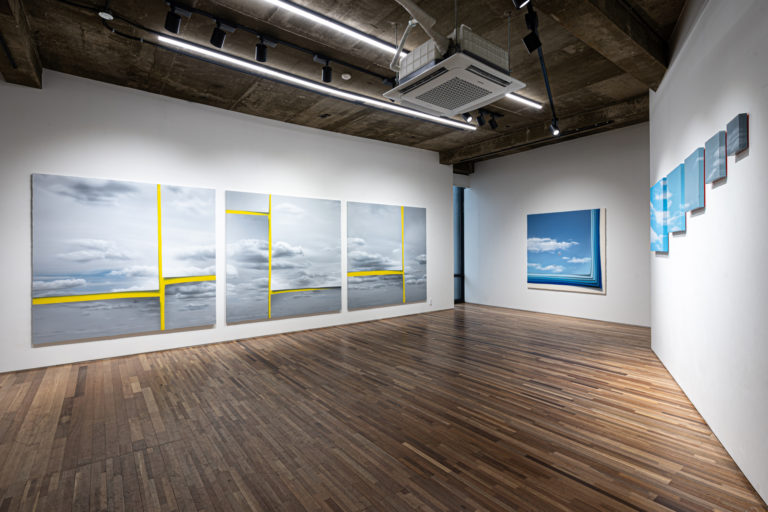
blue skies—sometimes tinged with sunset hues—are dotted with floating soap
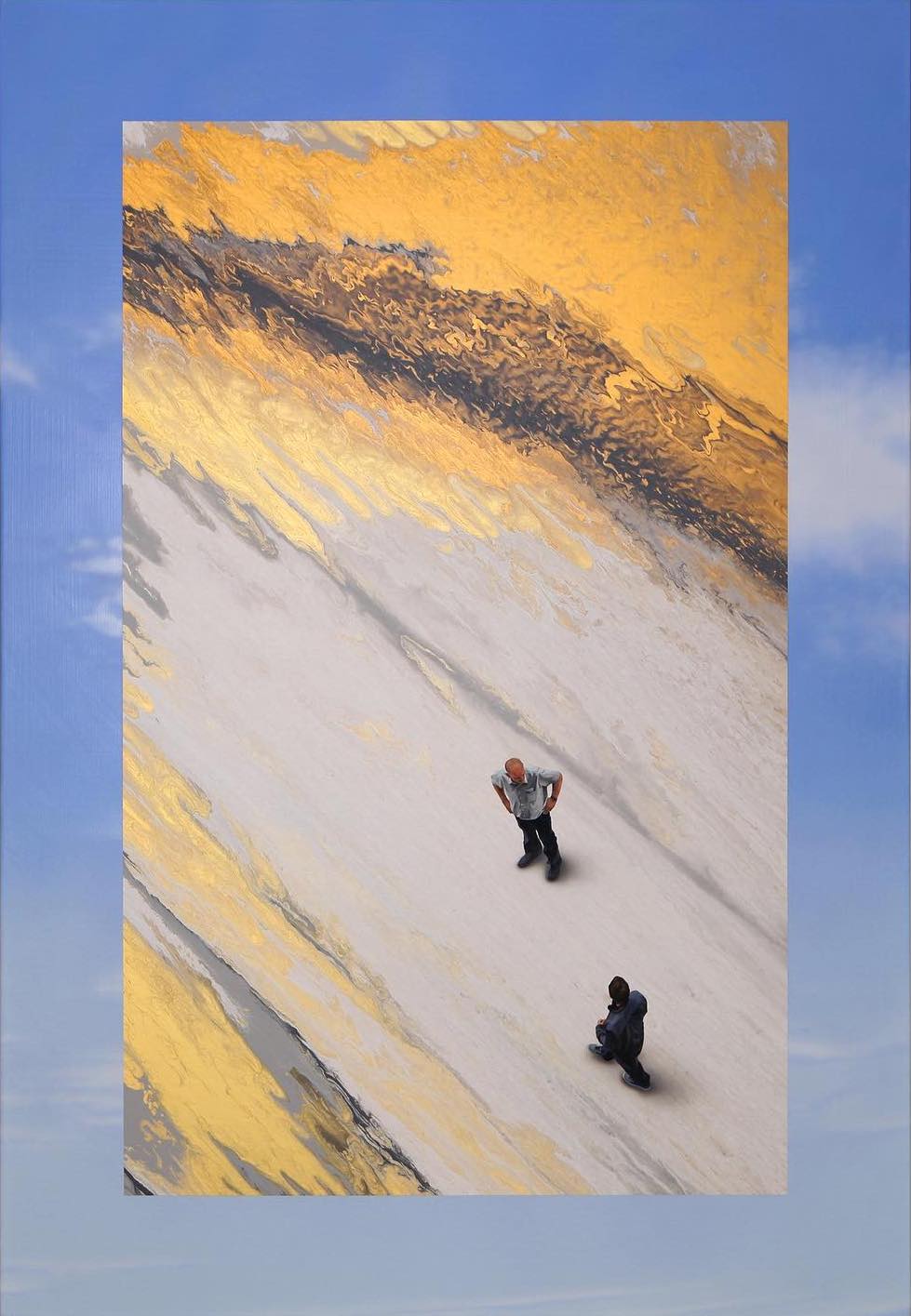
bubbles. Some paintings capture shimmering ripples on the surface of water, as
if teasing light itself. Is this a landscape painting somewhat different in
texture from conventional ones—one that renders what is almost like empty
space, or water surfaces, at full scale, drawing the viewer entirely into that
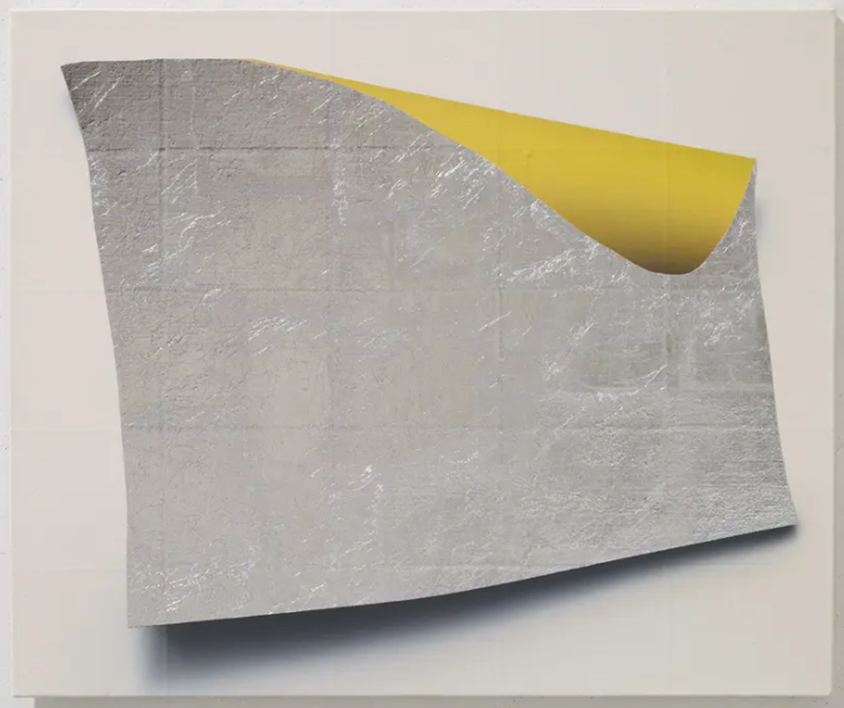
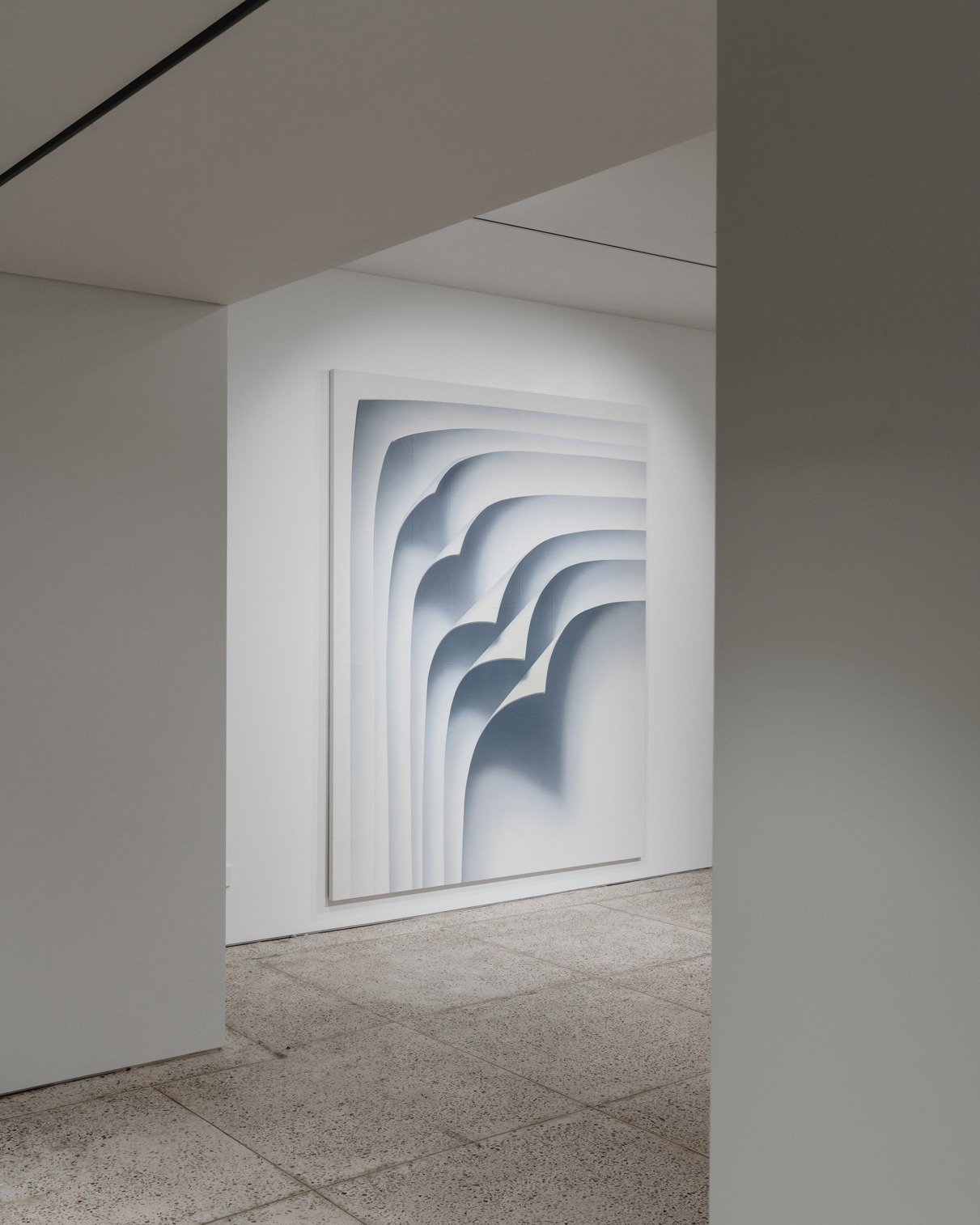
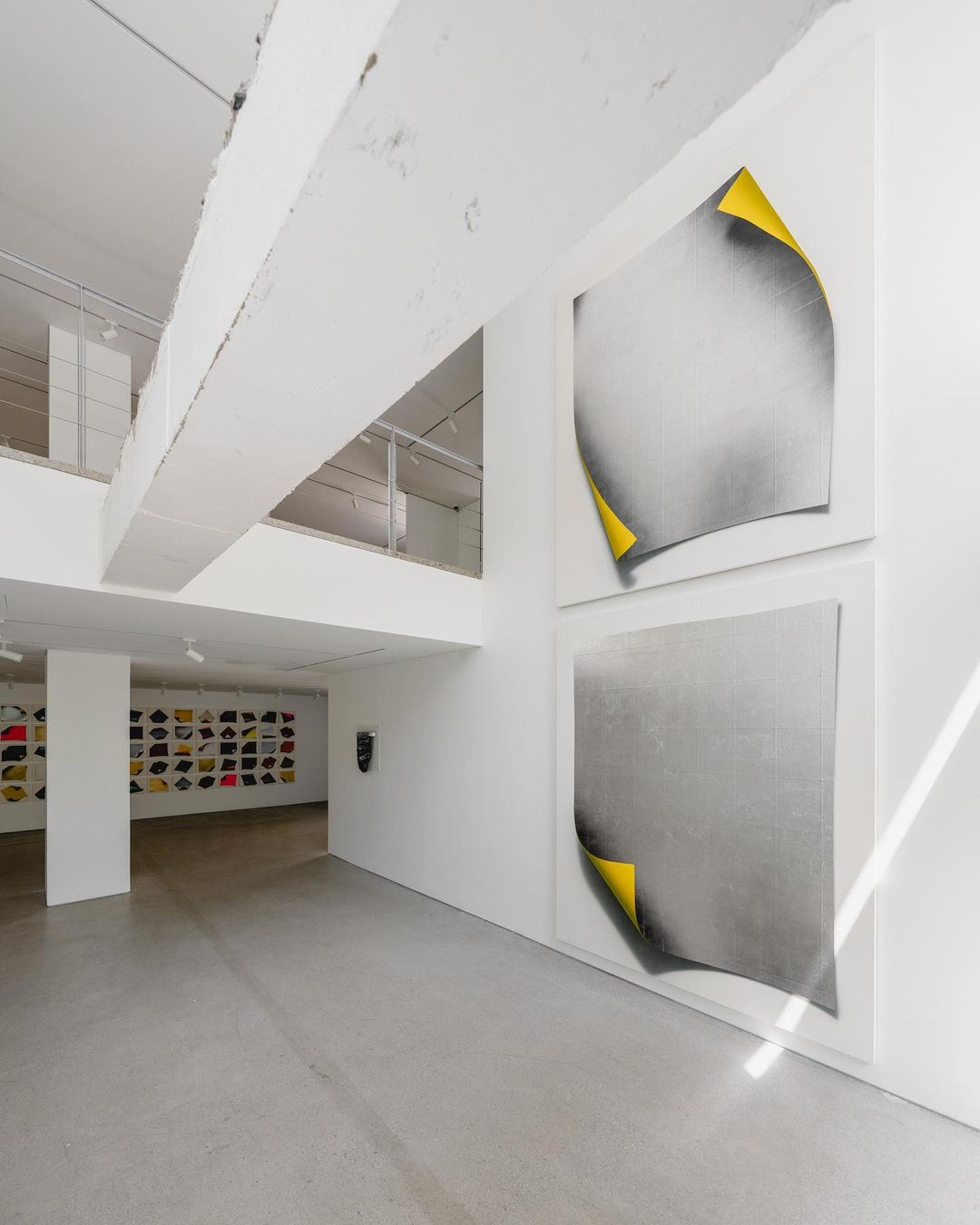
void, into that surface? Upon closer inspection, one corner of the image curls
inward. There is a shadow cast by the curled section. Along the side or lower
edge of the picture—cut as if by a knife—there remain blank areas that appear
unfinished. Is it an incomplete painting? A photograph? A printed sheet affixed
to the wall?
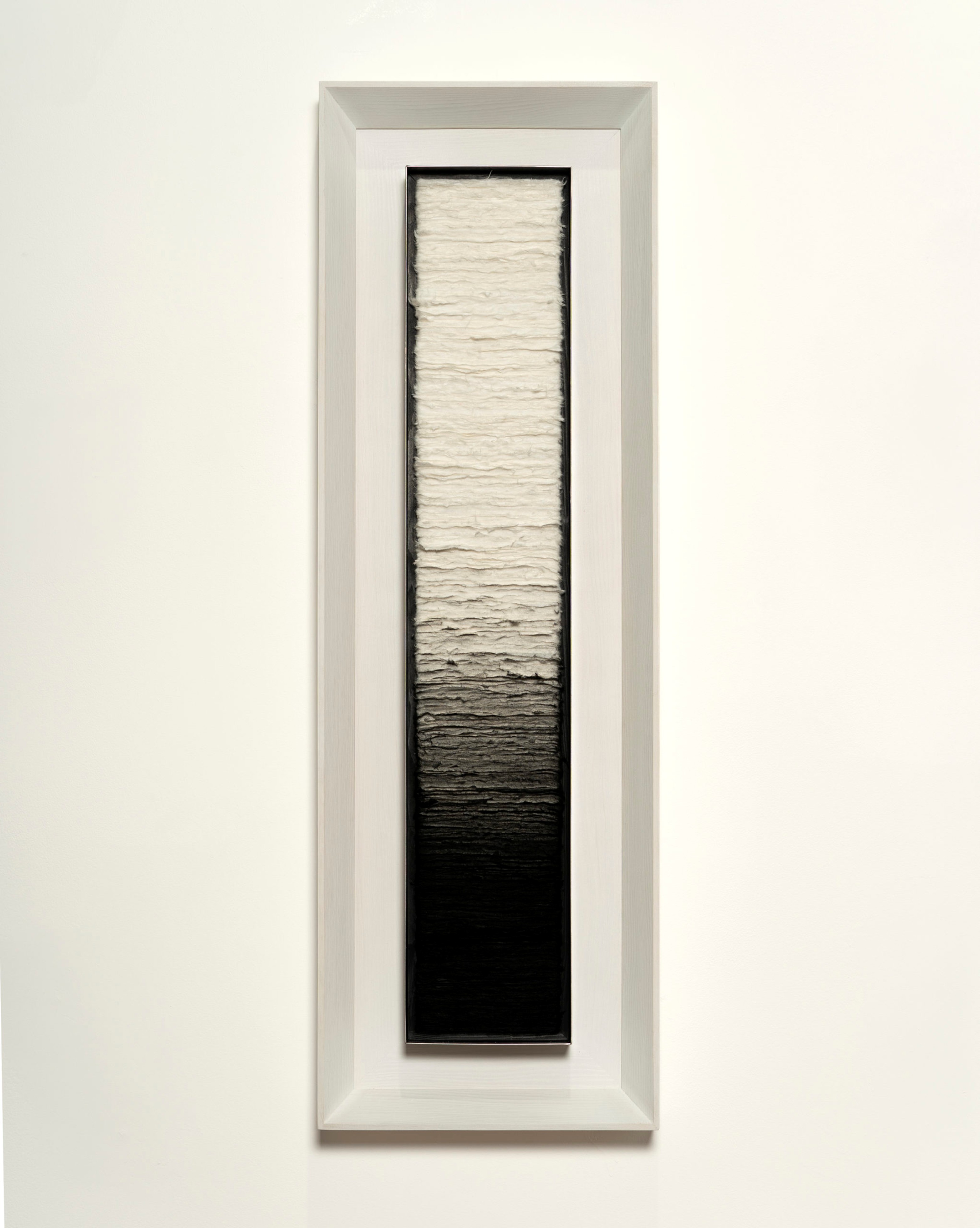
Looking
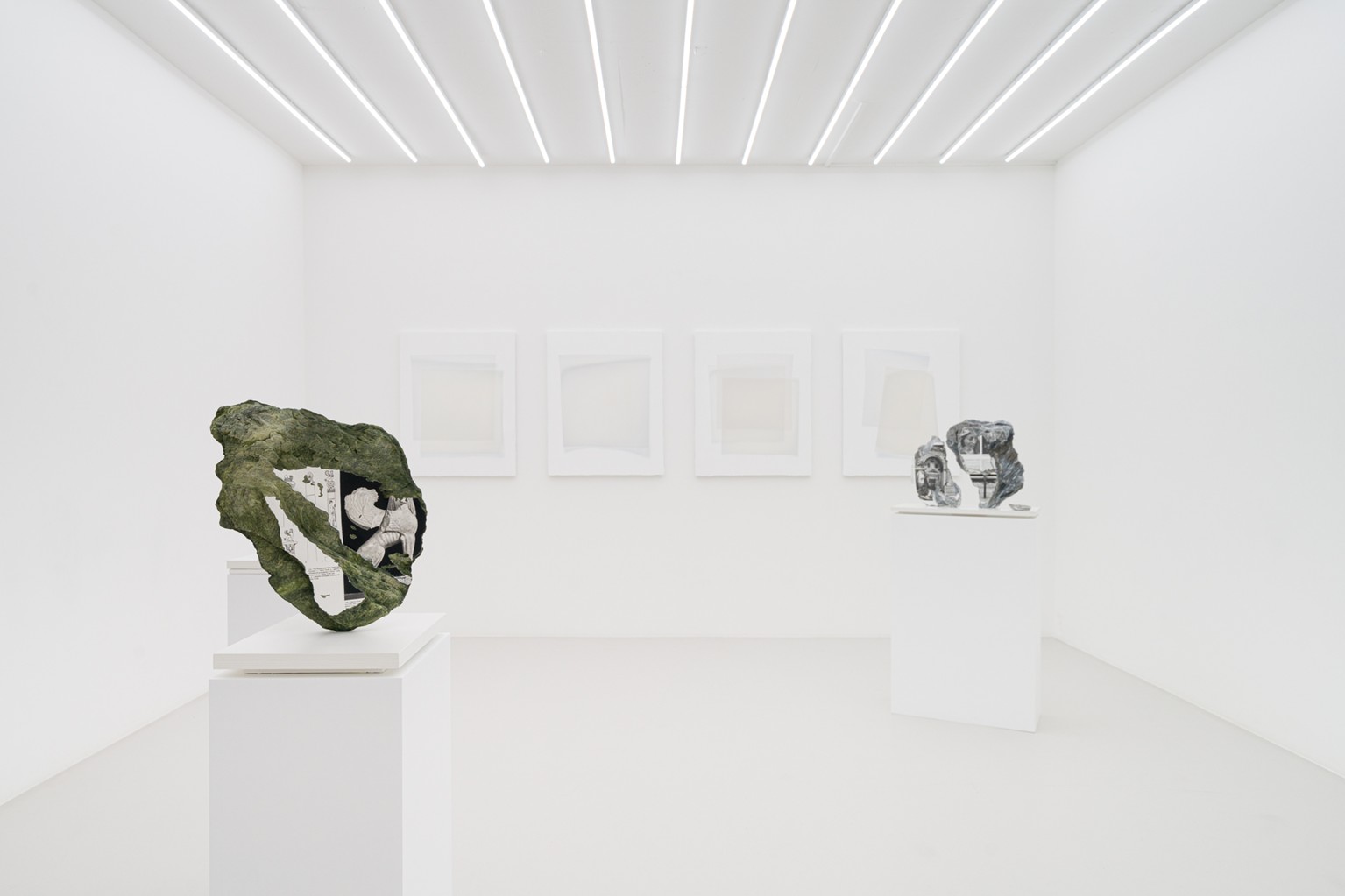
again, one notices that the background surface is constructed by joining
rectangular sheets of hanji cut to a uniform size. Where the sheets overlap, an
embossed relief emerges, and behind the printed image, fine surface
irregularities can be felt. Then is it an image printed atop hanji layered onto
a sheet? One cannot tell whether it is a painting, a photograph, a sheet, or a
printed image. Why, then, did the artist paint this unknowable image(?)
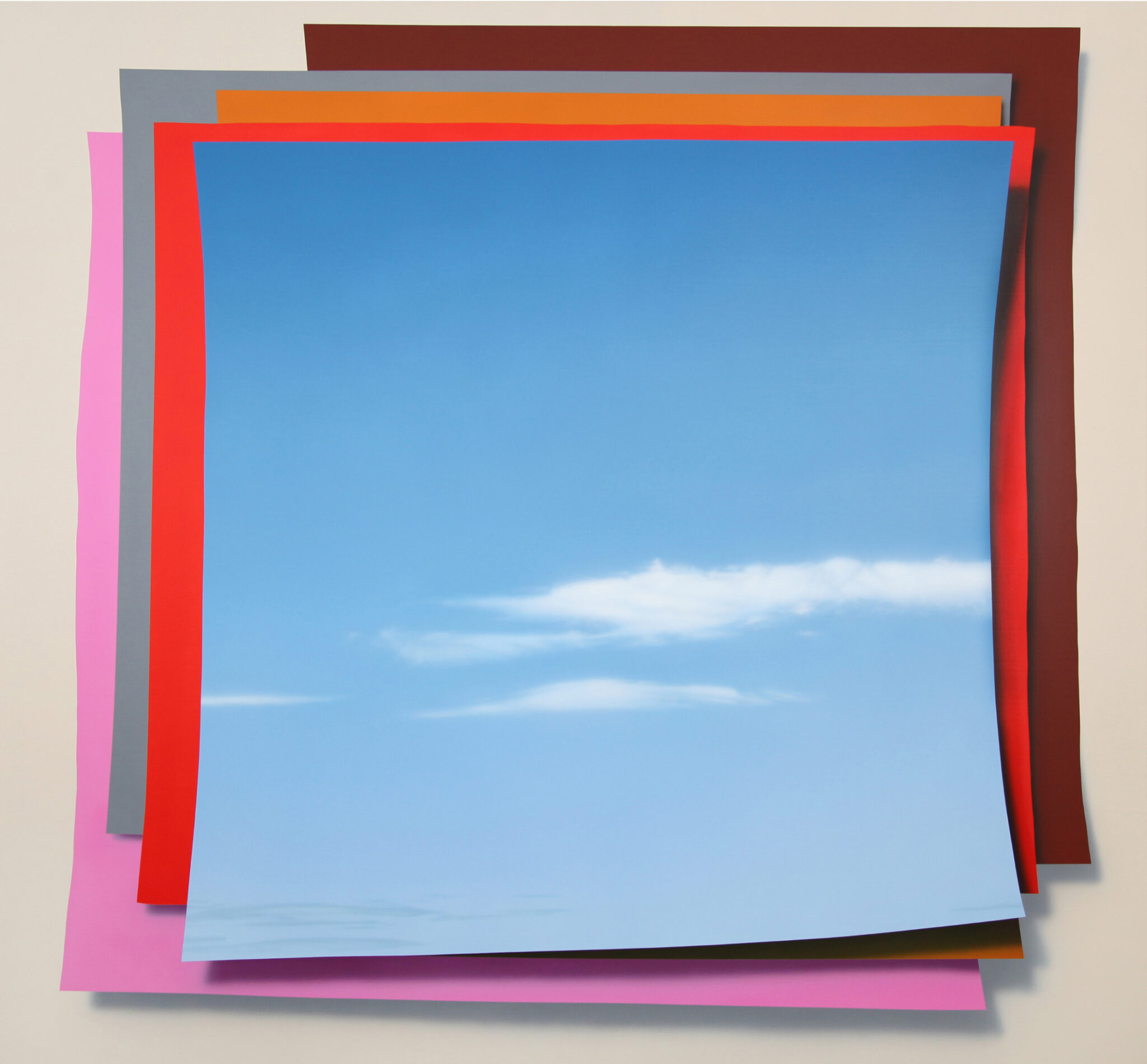
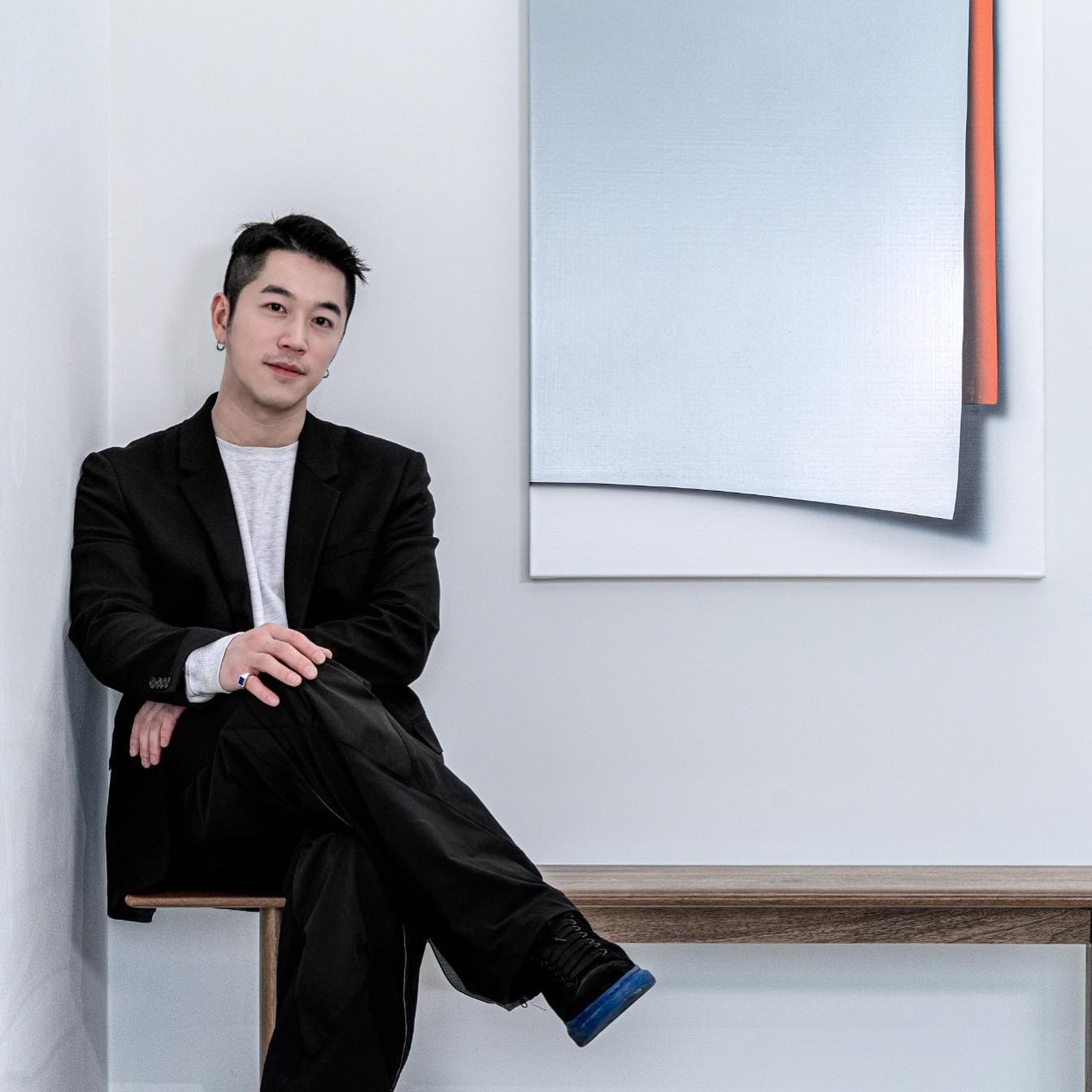
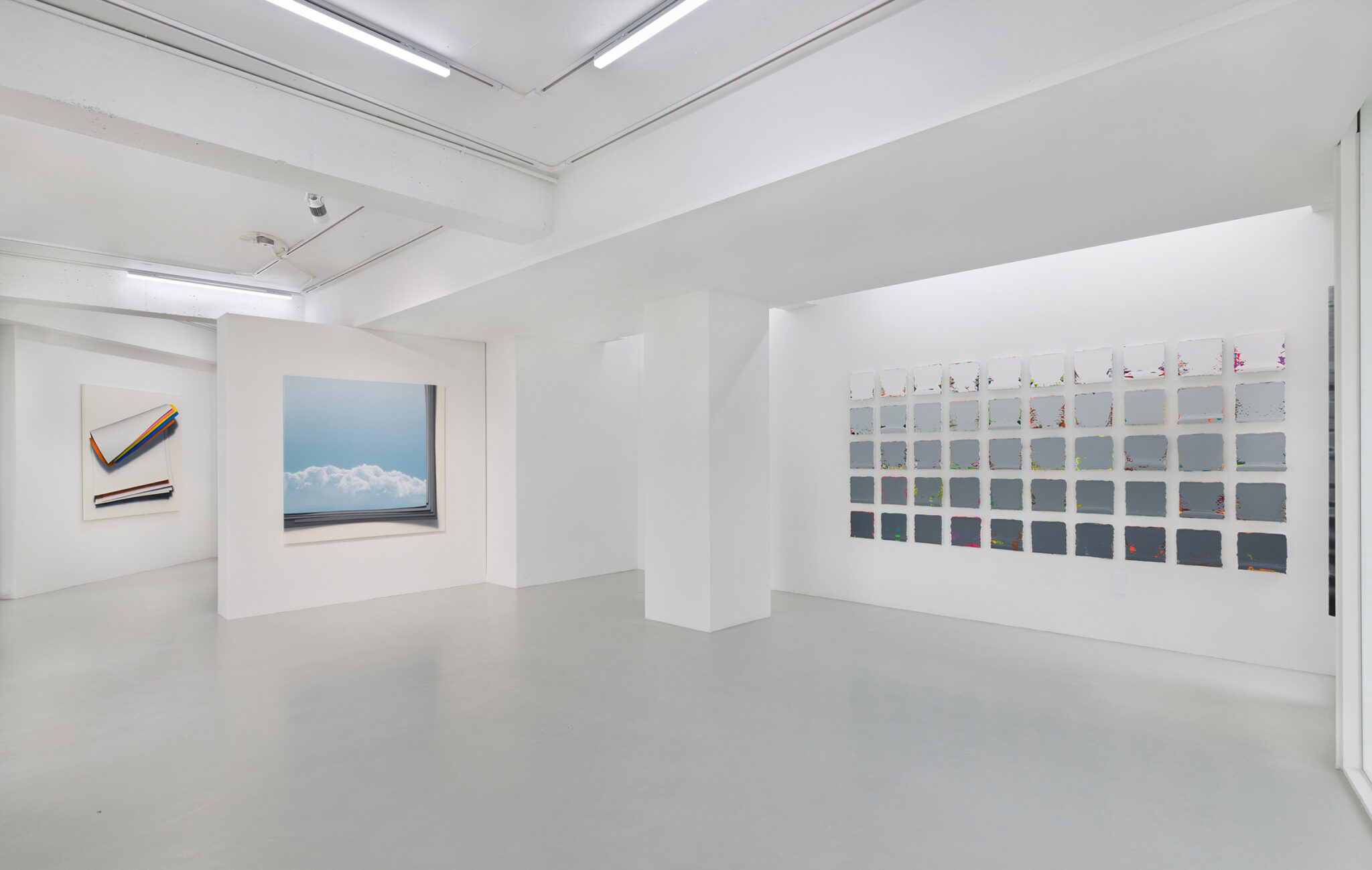
There
is also work in which colored sheets cut into rectangular forms are affixed to
the wall, naturally curling at the edges and casting shadows, with visible gaps
where the sheets lift away from the wall. Is this an installation that replaces
painting with objects? Conceptual art that foregrounds painterly flatness and
color fields? It is difficult to say. Although stated seriously, in truth there
are neither objects nor installations in the artist’s work. What appears to be
an object, an installation, or conceptual art all occurs solely within the
situation logic of the painting. Objects, installations, and conceptual art
alike unfold entirely within the representational logic of painting.
Borrowing
traditional and orthodox methodologies and grammars manifested through
representational painting, the artist proposes these various situation
logics—such as questions concerning the relationships, boundaries, and
differences between reality and represented images, or between reality and
illusion. In this sense, Seong Joon Hong fulfills the definition of art as a
technique of questioning: by asking what representational painting is, what
representation is, and what painting itself is. Asking the self through the
self, questioning painting through painting, questioning representation through
representation, and questioning critique through creation—this is the enactment
of conceptual art.
Maurice
Denis stated that a painting, before being a battle scene or a nude, is
essentially a flat surface covered with colors, that is, a color plane. Clement
Greenberg argued that the essence of painting lies in flatness and advocated
Color Field painting, where flatness and color planes converge. These
statements, originating from the modernist paradigm that questioned the essence
of painting, later prepared the ground for conceptual art (and minimalism),
which shifted the object of painting from a sensory to a logical and semantic
domain. Marcel Duchamp, through the readymade, and Andy Warhol, through
reproduced readymades, replaced painting altogether, dismantling the boundary
between art and object, and between art and everyday life—developments that
would later serve as the basis for Arthur Danto’s declaration of the end of
art. Though differing in nuance, all of these share a self-reflective inquiry
into what painting is and how it functions.
Into
this lineage, Seong Joon Hong proposes the notion of layers—of overlap. The
essence of painting is layering. Overlapping touches of blue and red generate
illusions that resemble skies, sunsets, rippling water surfaces, or glimmering
particles of light dancing upon water. Through such representational
images—images that only appear to be representational—the artist foregrounds
flatness, foregrounds layers of color planes built through color upon color,
and foregrounds the objectified form of overlapping touches. If the modernist
paradigm invoked flatness and color fields to question the essence of painting,
might it be said that Seong Joon Hong re-summons that essence through
layers—through overlap itself? Yet it remains unclear how layers differ from flatness
or color fields (setting aside readymades and reproduced readymades). Perhaps
it is precisely this lack of clarity that opens up the possibility for
unexpected directions to emerge.