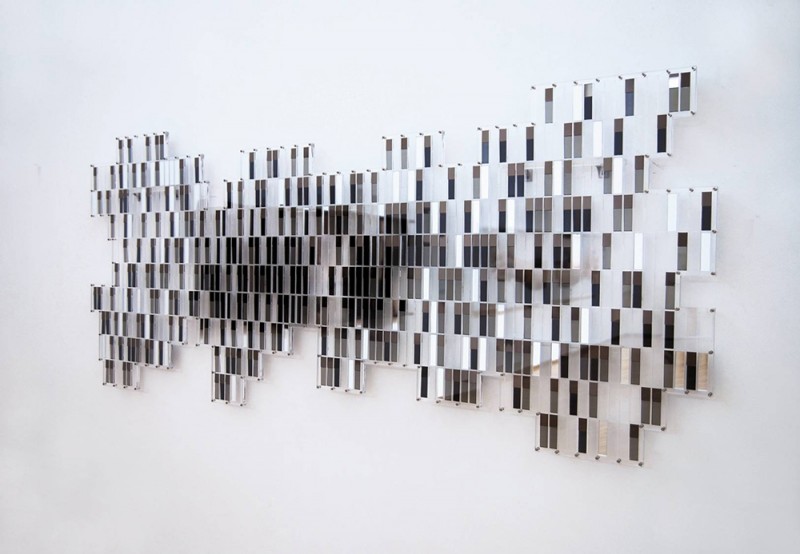
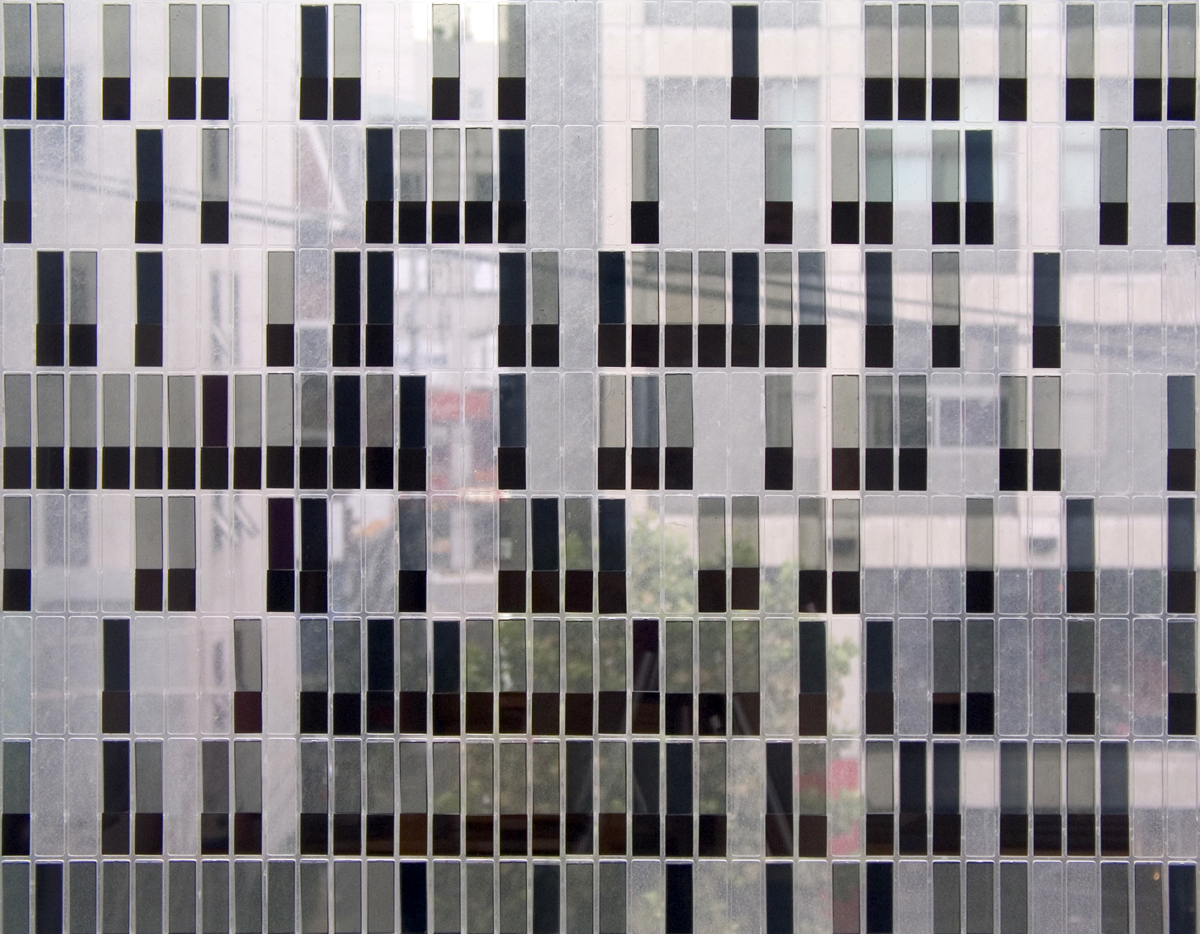
1. Rectangular LCD units about the size of
a fingertip repeatedly flicker by responding to light energy through their own
solar-collecting elements. Each unit blinks with a slight time lag whenever
light reaches it, and as this process continues, it produces abstract images
while simultaneously revealing a dynamic flow of vital energy through the
asynchronous flickering of each unit.
Composed of LCD units that signify
pixels—the basic unit of expression in the digital media era—the viewer
standing before the work experiences the unique sensibility of a new medium
through the reflection of their own image and the flickering of the units. When
it is dim and dark, the movement is gentle; when it is bright, the movement
becomes active. Thus, these units continuously generate abstract forms in a
random manner. At the same time, they resemble digital pixels. Furthermore, as
they respond to natural light, they also indicate an interaction with nature.
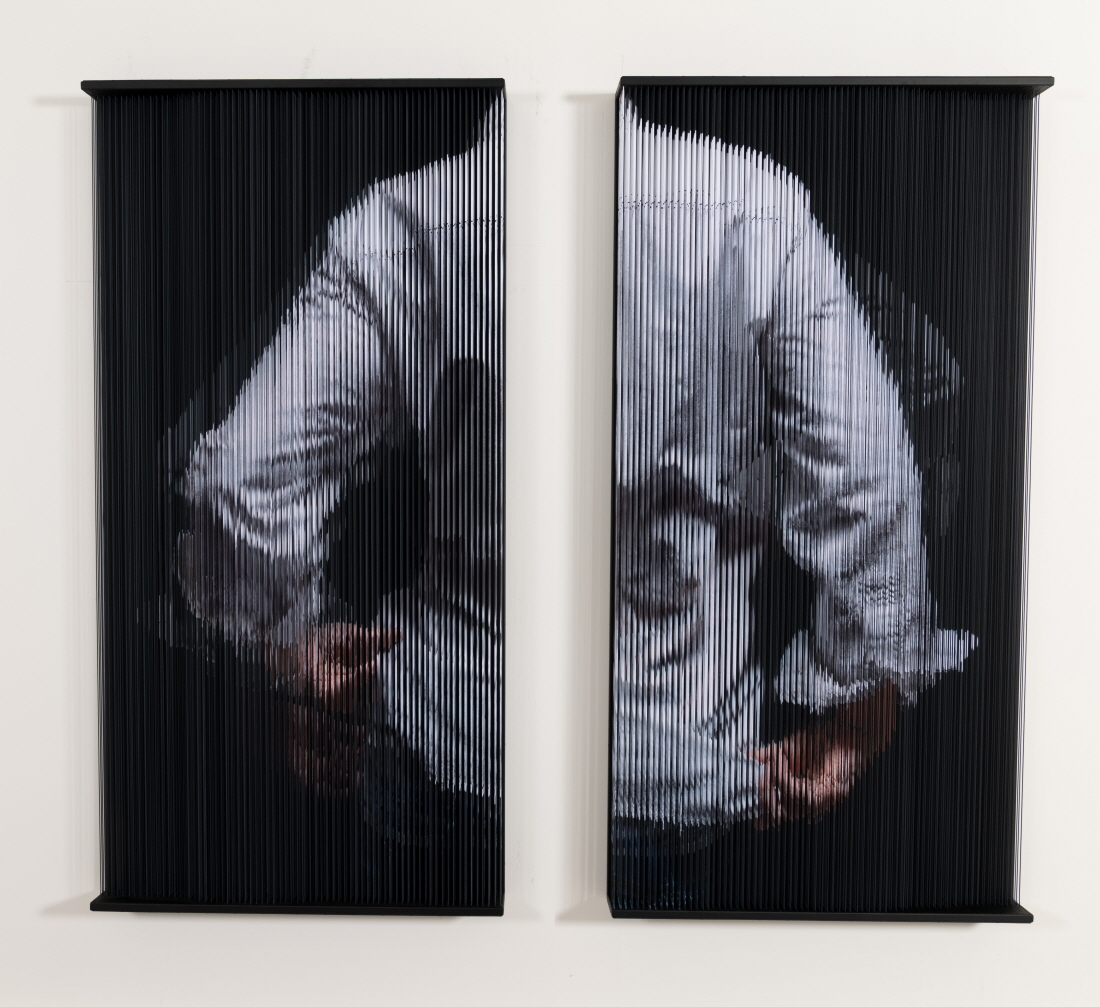
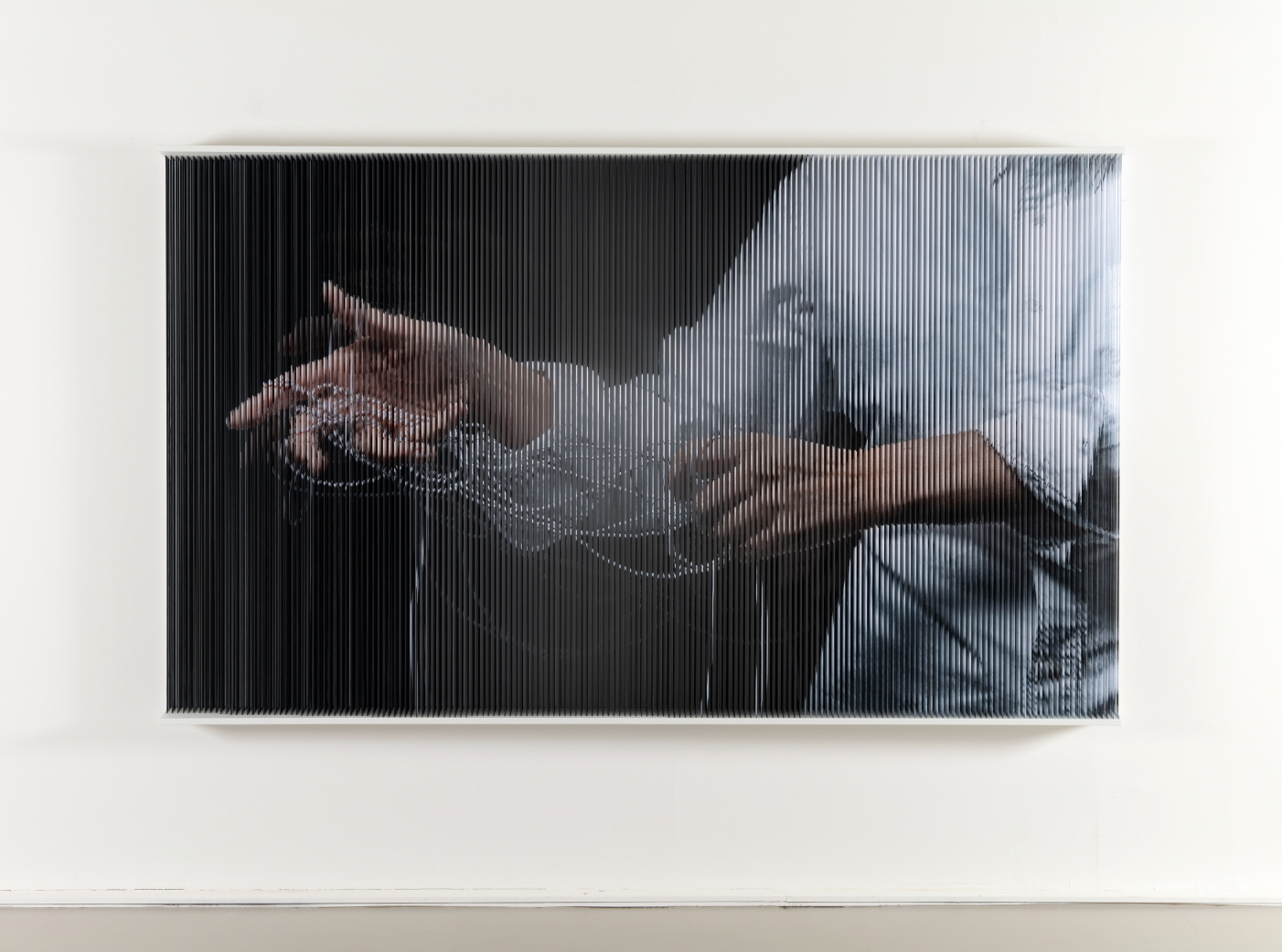
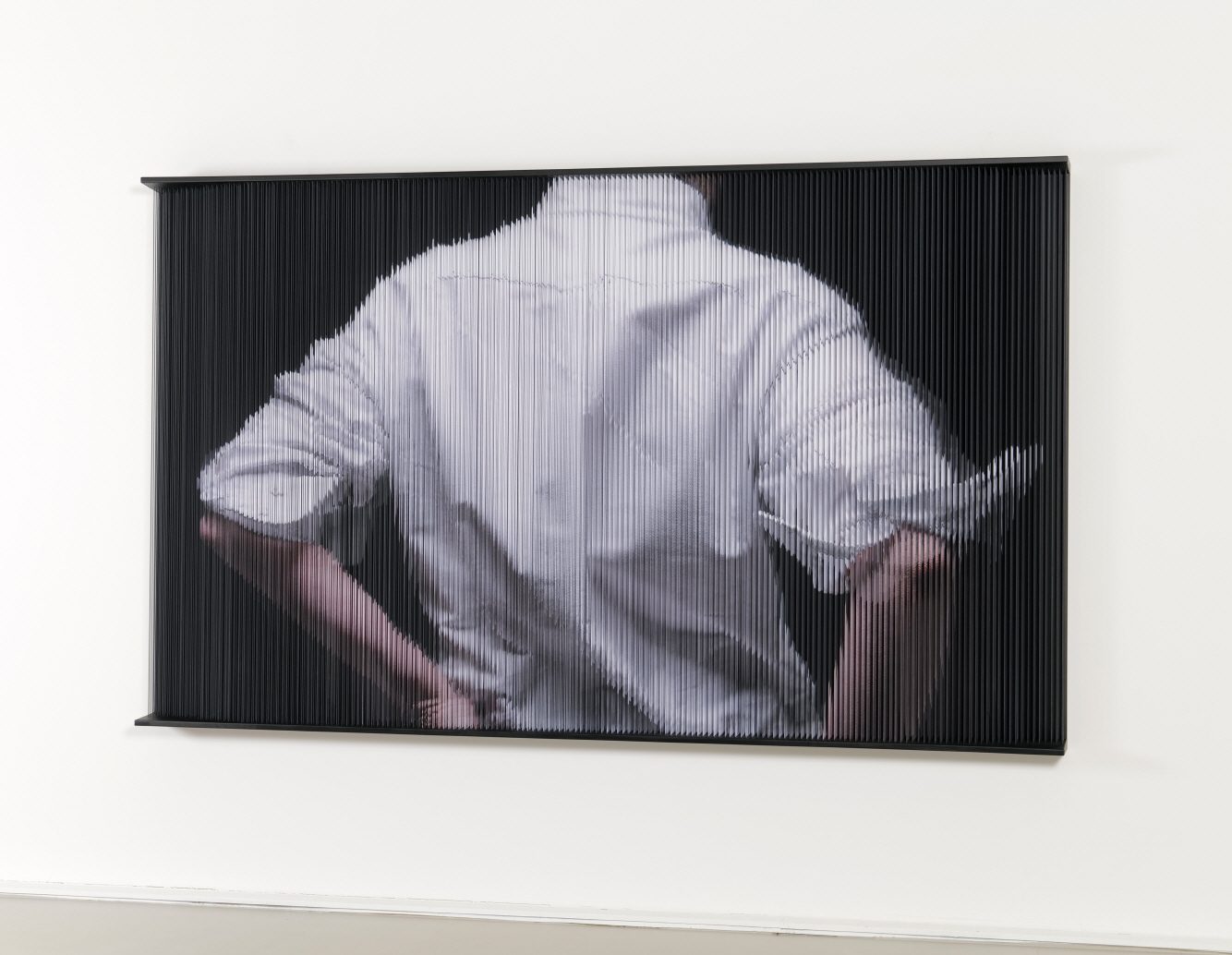
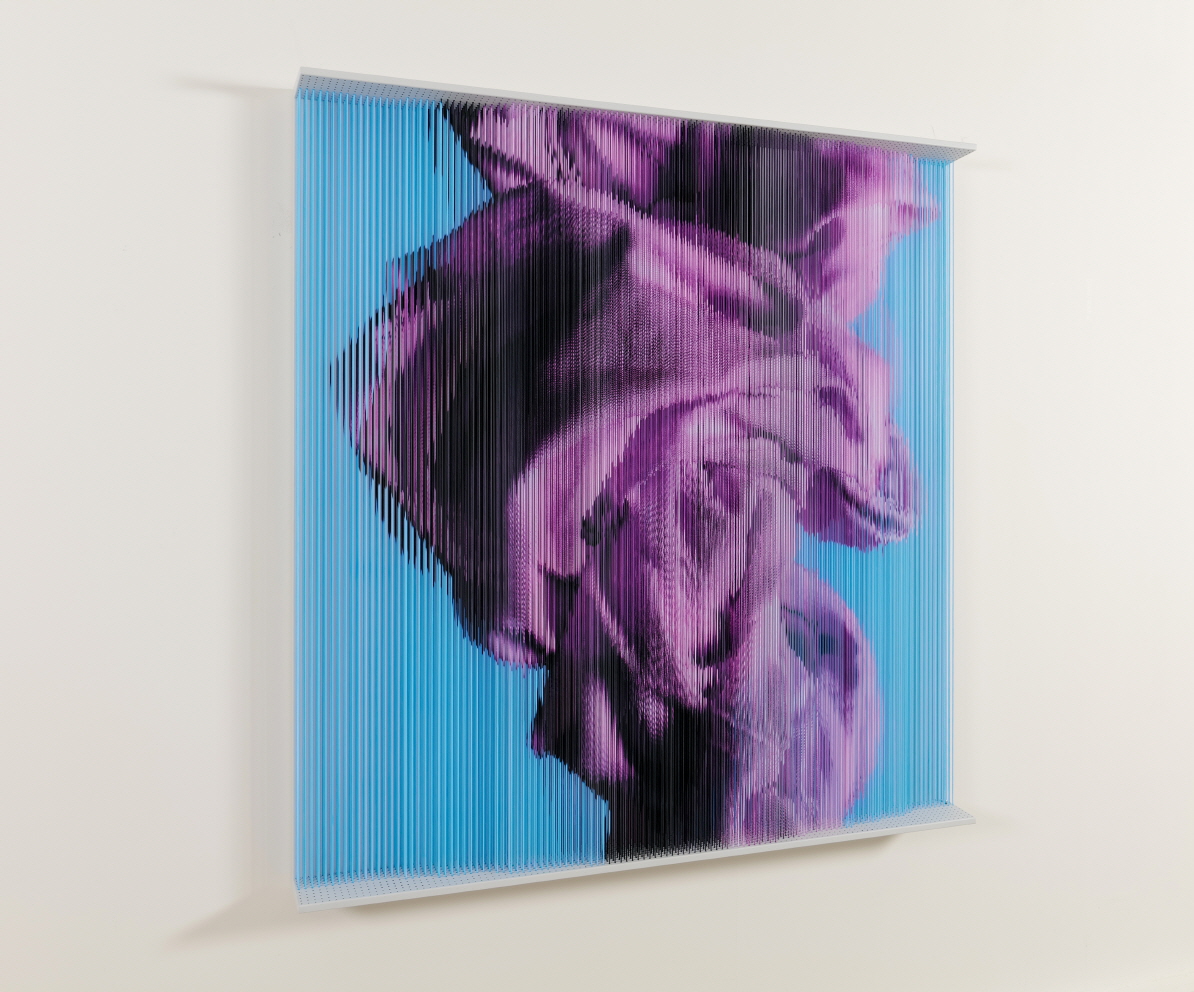
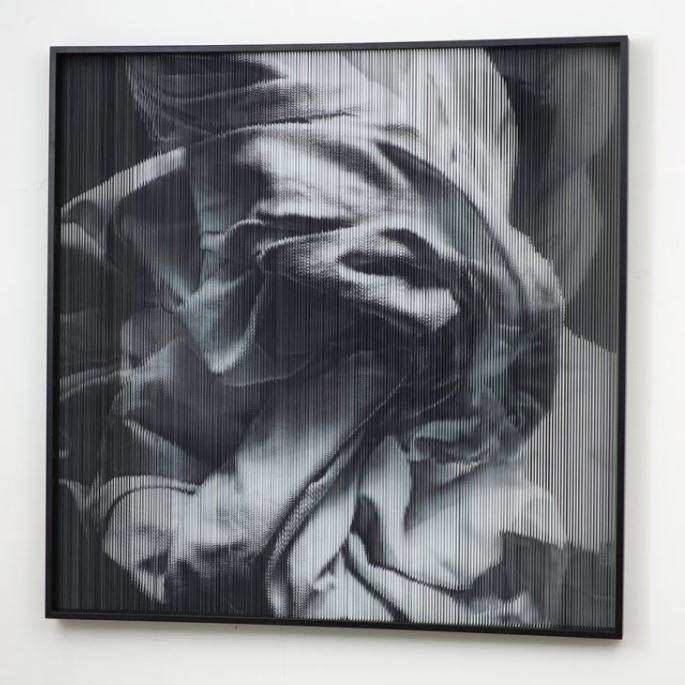
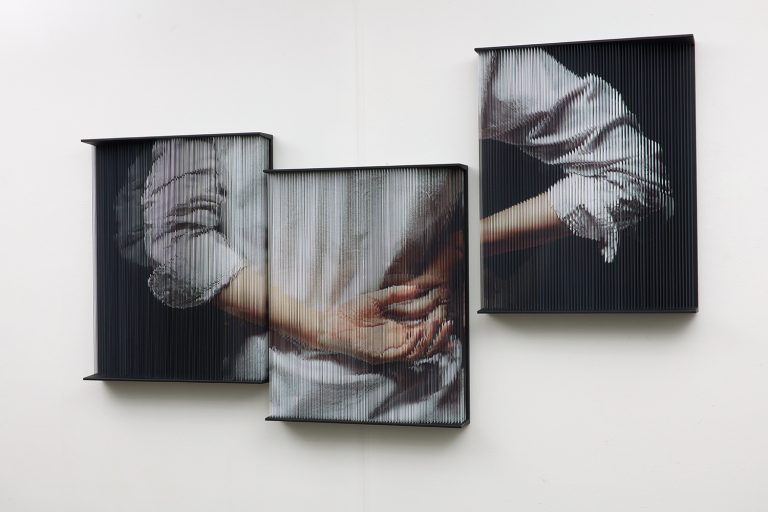
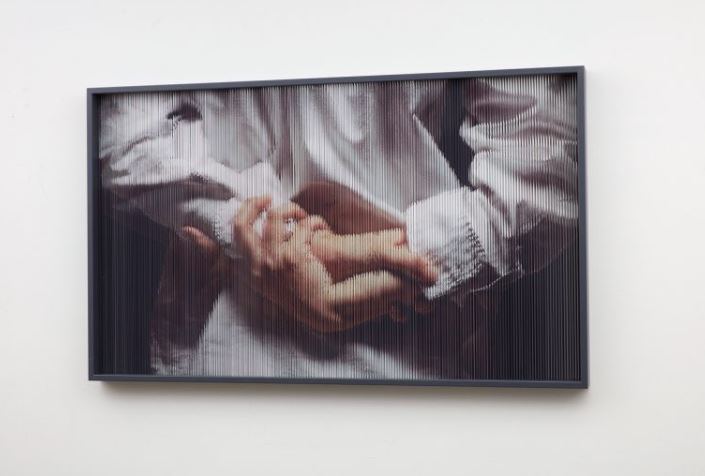
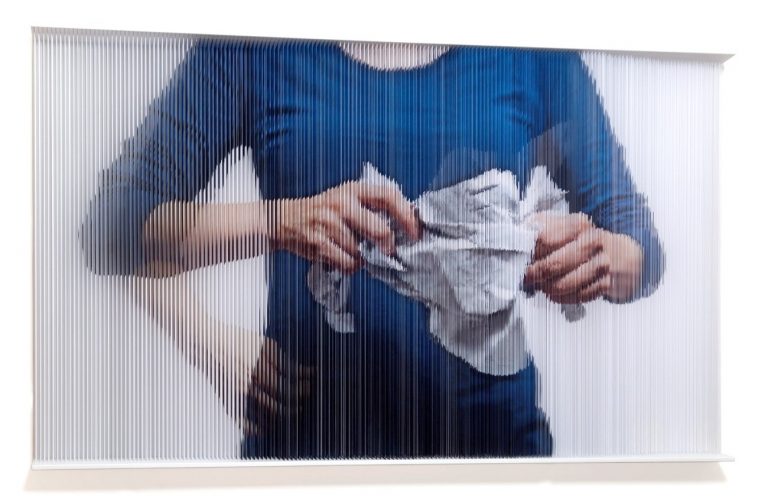
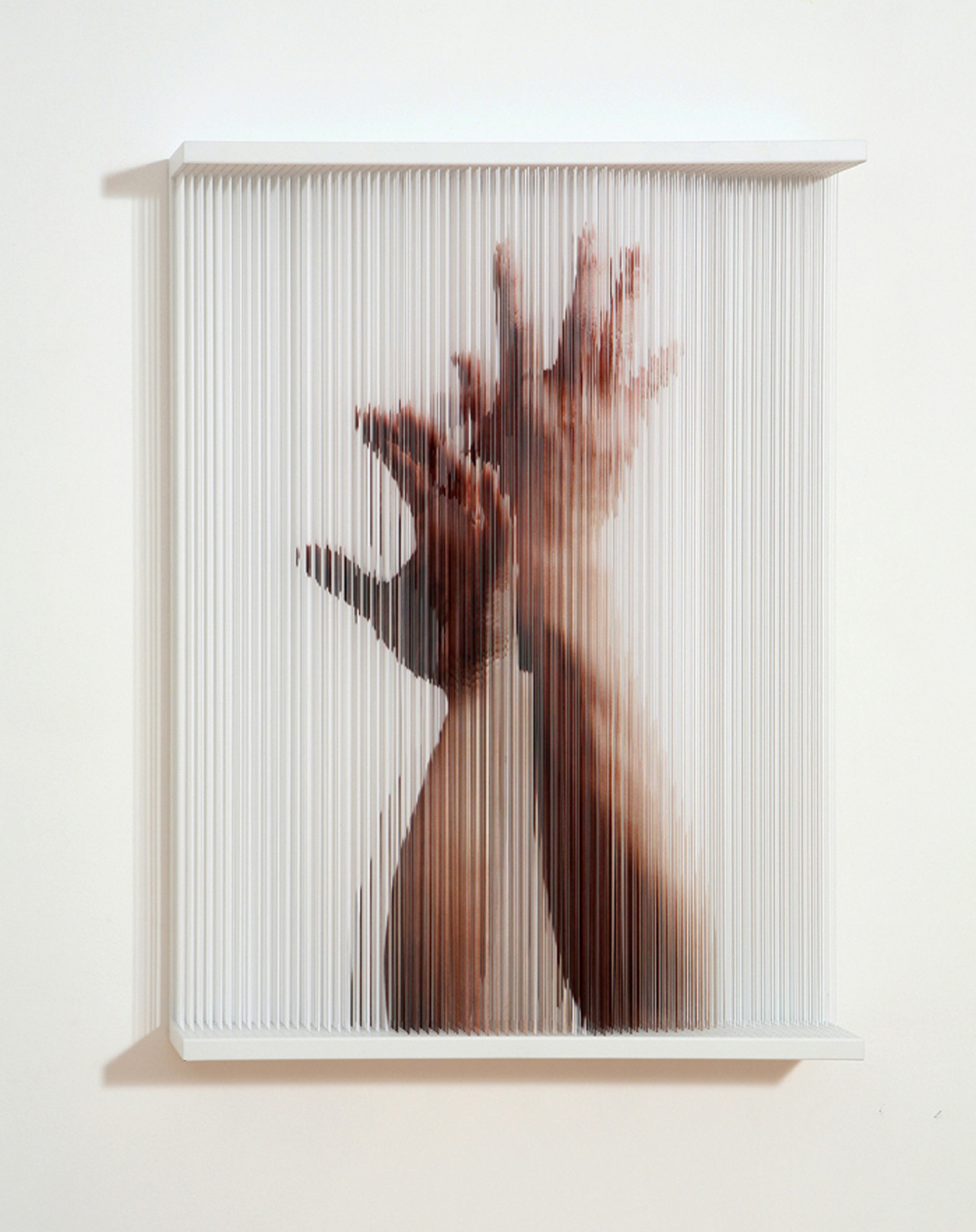
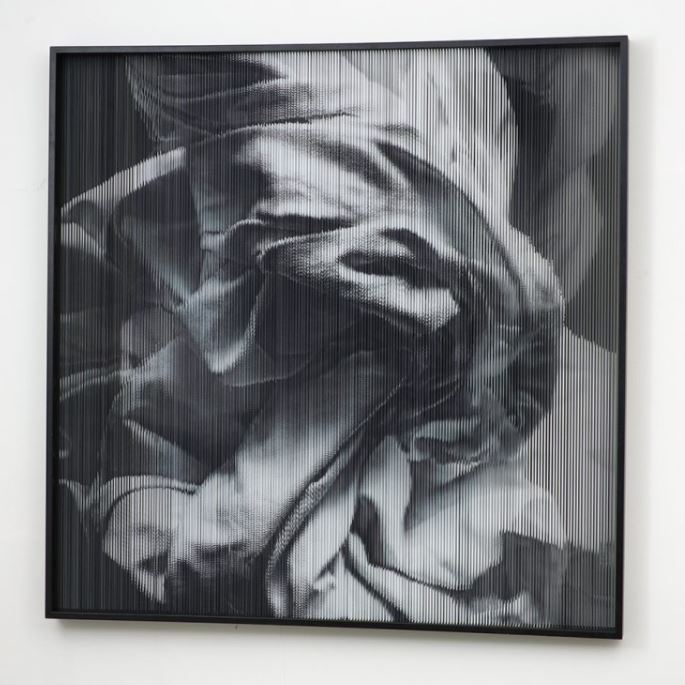
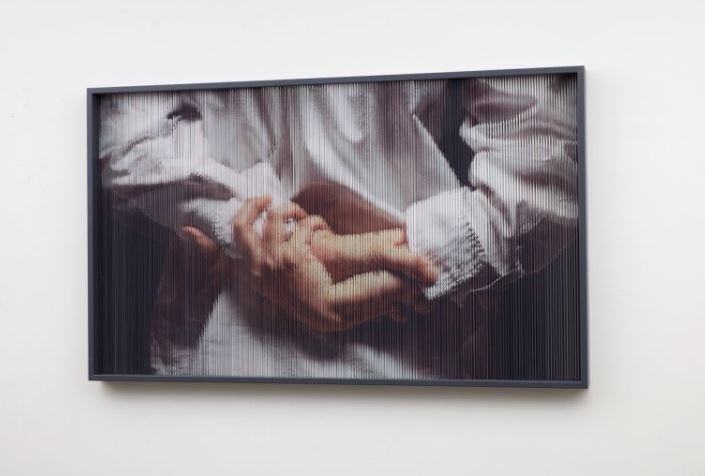
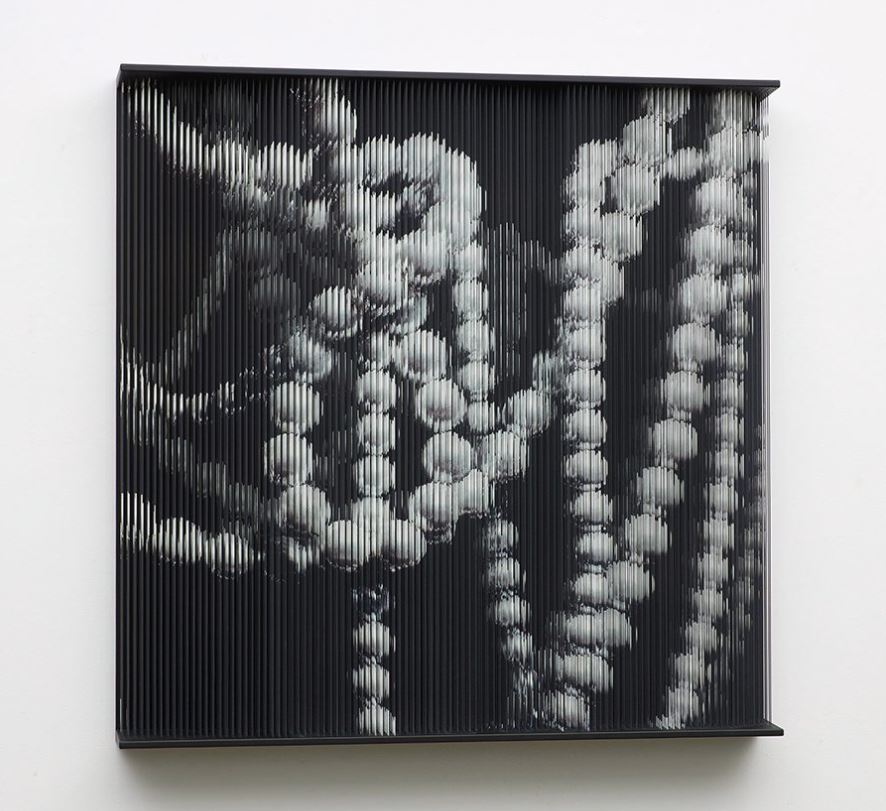
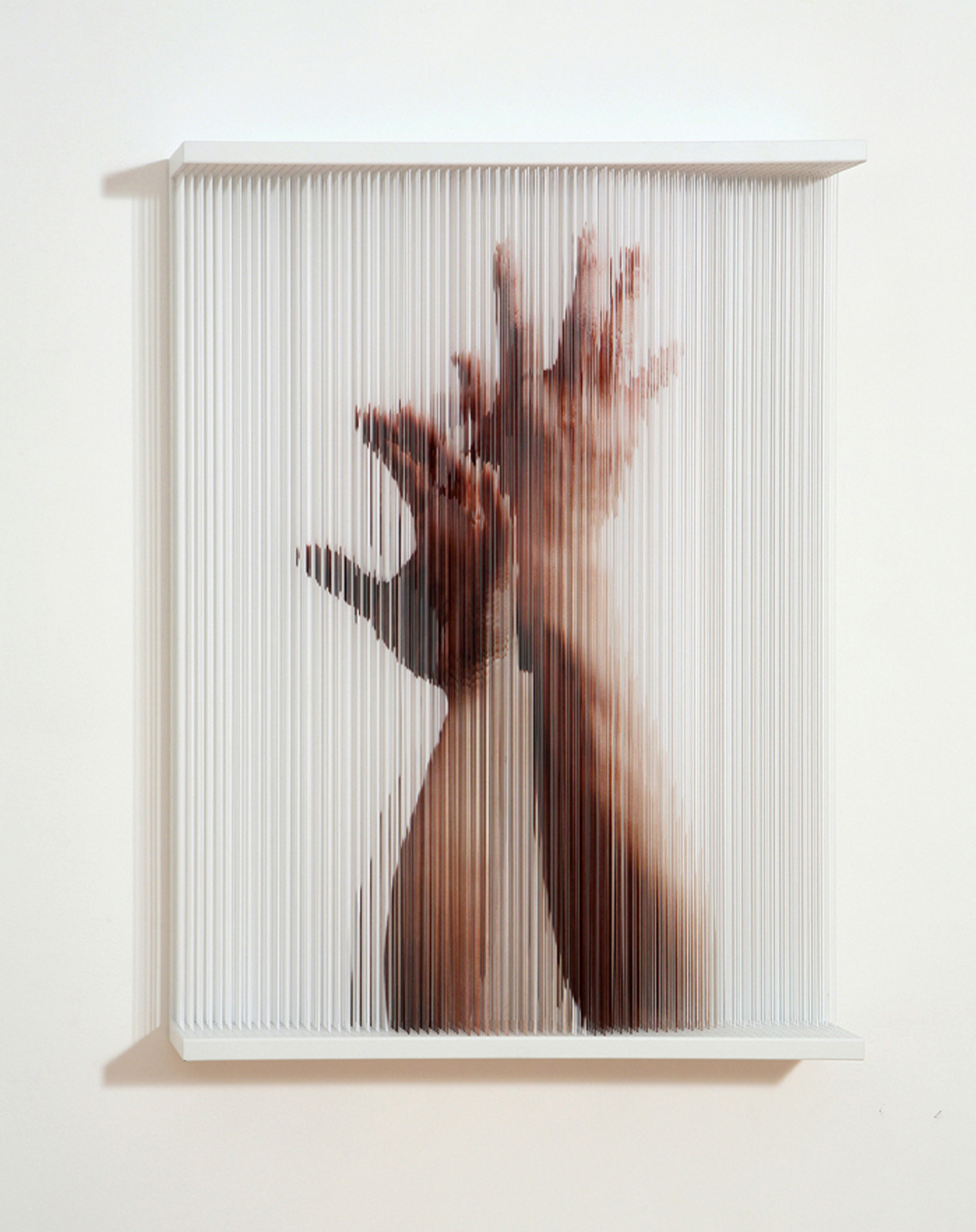
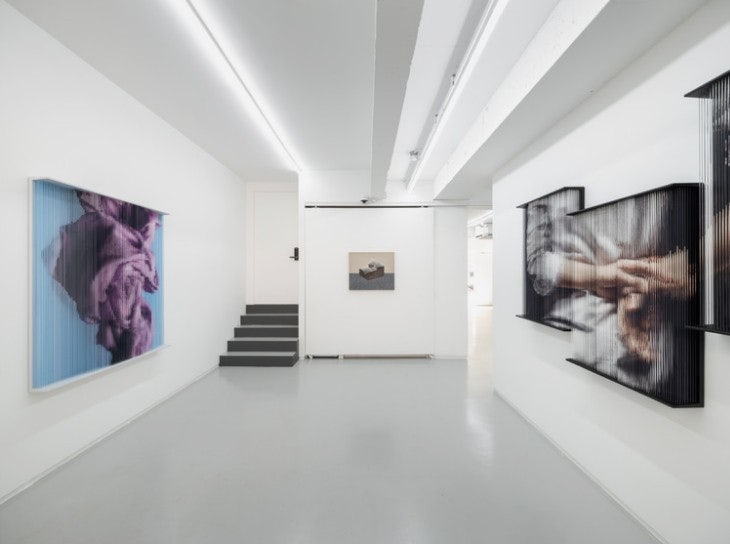
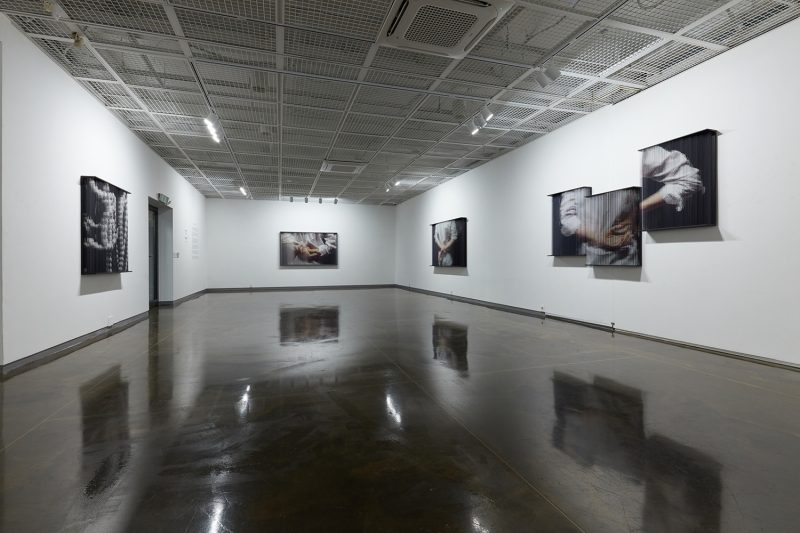
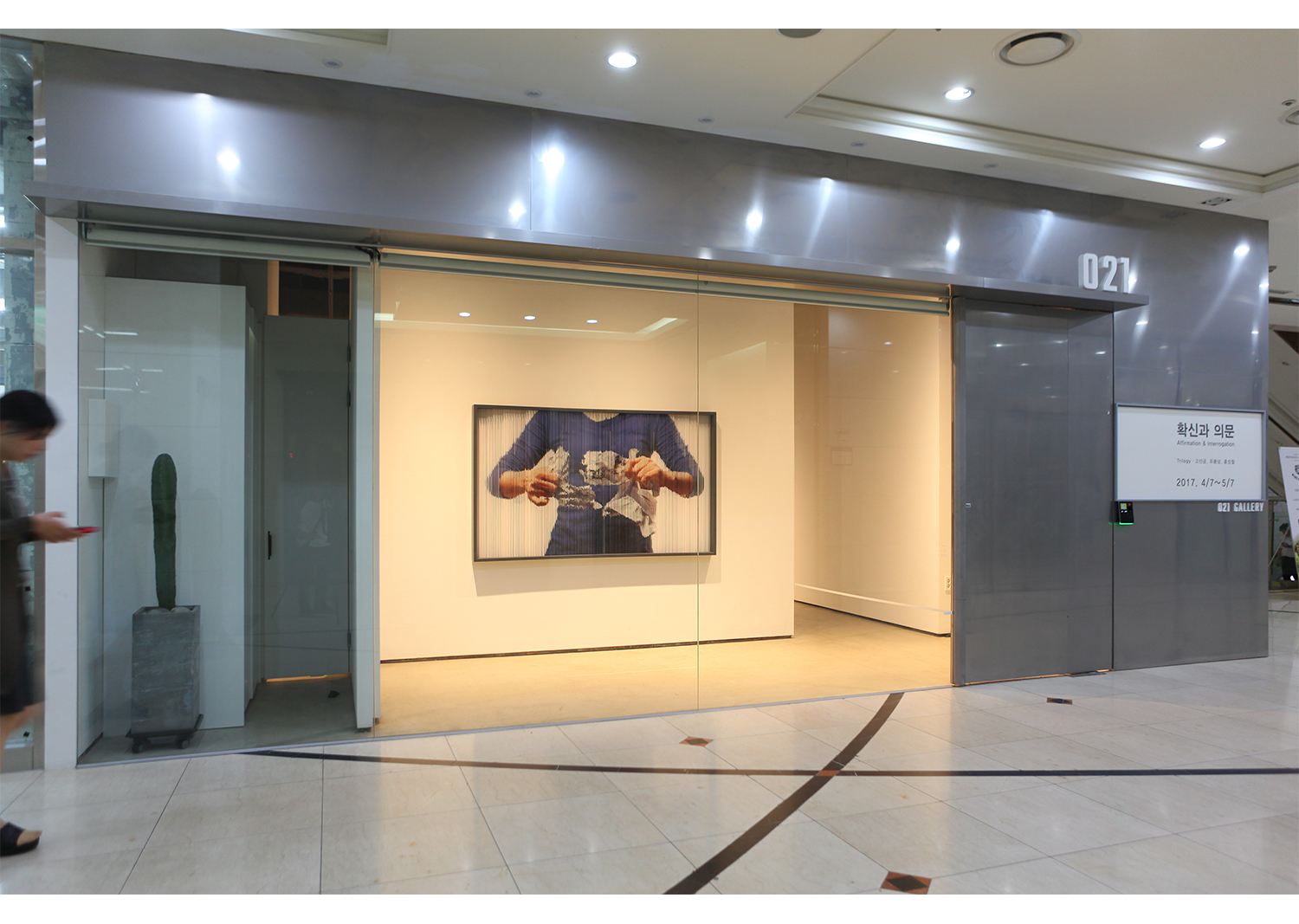
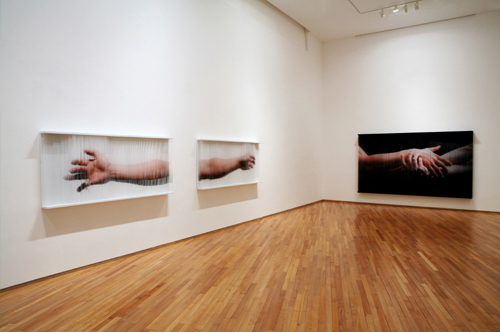
2. Strands with strong materiality (a kind
of rubber string) are arranged in a regular pattern, generating dynamic
wave-like illusions, and the images attached to each strand are perceived as
three-dimensional objects due to differences in depth. The intersection between
different images produces movement within the images themselves. They are
perceived as moving freely within space. As each image encounters others, it
transforms into multiple overlapping images, and the work never presents a
fixed image even for a single moment.
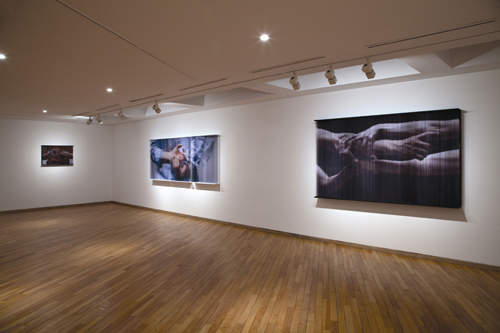
It stimulates the viewer’s perceptual
response to motion. At this moment, the drama of movement is completed by the
viewer. It reveals shifts in perspective as well as a coexistence of flatness
and three-dimensionality. The viewer standing before the work senses a strong
digital sensibility in this piece despite the absence of any electrical device.
At the same time, it raises the artist’s question about the medium of
photography. Photography captures a scene and presents it as a fixed image.
However, the artist photographs the body and fixes the printed image not on
photographic paper but on thin strands.
As a result, the image appears
differently depending on the movement of the viewer. The fragmented and
dismantled body conveys a strange nuance of being both present and absent at
the same time. It appears real yet dissolves into illusion, continuously
vanishing in fleeting moments. At the same time, it adds temporality and
three-dimensionality to the instantaneous and flat nature of photography, while
also introducing rhythm and motion. Hong Sungchul’s work produces a phenomenon
similar to lenticular works through the layers created by the threads, in which
the image changes depending on the viewer’s angle of vision. (Lenticular – works
by Yoon Youngseok, Park Sunghyun, Bae Joonsung)
By moving their own bodies, viewers must
experience the work creatively as if the body itself were in motion. Through
this movement, the viewer and the body share a single process of motion, a
single temporal dimension. It becomes body–thread–body. This is a situation in
which subject and object are interlocked through mutual intersection. It leads
us to realize anew that we are not objective observers of time separated from
ourselves, but that our very existence is already constituted by time.
It also demonstrates
an attempt to transform the problem of sculptural space—filled with form,
material, and objects—into a problem of sculptural time. This corresponds to
what may be called “becoming sculpture,” that is, sculpture in a constant state
of transformation. In other words, it is not sculpture as a material result,
but a space that contains material while also functioning as a mental field
that encapsulates time.
3. Thread, mirror, vibration of the eye,
and digital
Thread (糸)
– derived from the form of two vertically arranged skeins / mythological
context (Penelope, lifespan)
Escaping from the labyrinth, the canvas
itself is also a woven aggregation of threads formed by warp and weft.
Mirror – self-reflection, introspection,
and awareness of the subject
The mirror and thread are transformed into
living, perceiving entities.
The artist devises movement, sound, and
the resulting intriguing images to induce the viewer’s voluntary and active
participation. The audience is actively engaged. As one moves while viewing,
diverse images are revealed over the passage of time. By producing planar works
with patterns that change according to the viewing angle, the artist evokes the
work of Yaacov Agam (b. 1928), a pioneer of Op Art and Kinetic Art, whose
practice emphasized viewer participation and movement. His works, with
accordion-like protruding sides arranged with vivid colors, reveal geometric
shapes such as triangles and squares from one side, while presenting entirely
different forms from the front or the opposite side. These works generate
optical illusions (e.g., works by Kim Dongyu).
Kinetic artists raised the question of
“what is art.” They questioned vibration and potential color, demonstrating
that everything within a fixed image can stimulate the nervous system and that
there exists a dimension sustained through actual movement. This dimension of
duration approaches the unfolding of time as found in film and music, and such
inquiries of kinetic art prompt a reconsideration of the limits of visual art.
In fact, humans are deeply connected to vibration. Considering even spasms, it
would not be an exaggeration to say that the human body is constantly in
motion. Heartbeat, blood flow, digestive movements within the organs, the
activity of white blood cells against foreign substances, the metabolism of the
skin, hiccups, muscle spasms—continuous movement and convulsion are evidence of
life. Among these, the most representative is the trembling movement of the
eye.
The act of “seeing” can be divided into fixation and saccade. Fixation
refers to continuous looking, while saccade refers to the rapid movement
between fixations. Although fixation lasts only about 0.3 seconds,
micro-movements at intervals of 0.001 seconds continue even during this time.
This is precisely why vision cannot exist without vibration. This vibration
continuously stimulates the eye, preventing acquired visual information from
fading. Humans always require stimulation. The reason wandering gazes exist
lies in the power of categorization—the force that organizes objects or events
into comprehensible and perceptible states.
*Formally: threads, layered mirrors, and
optical illusion
*Conceptually: interaction (communication)
These elements organically combine to
construct a comprehensive network of meaning. Based on a unique visual play,
the work pursues interaction. Using unconventional materials rather than
typical digital media such as computers or cameras, it enables viewers to
experience a new form of interactive work situated between the digital and the
analog. The viewer standing before the work thus experiences a strong sense of
digital sensibility despite the absence of any electrical device.