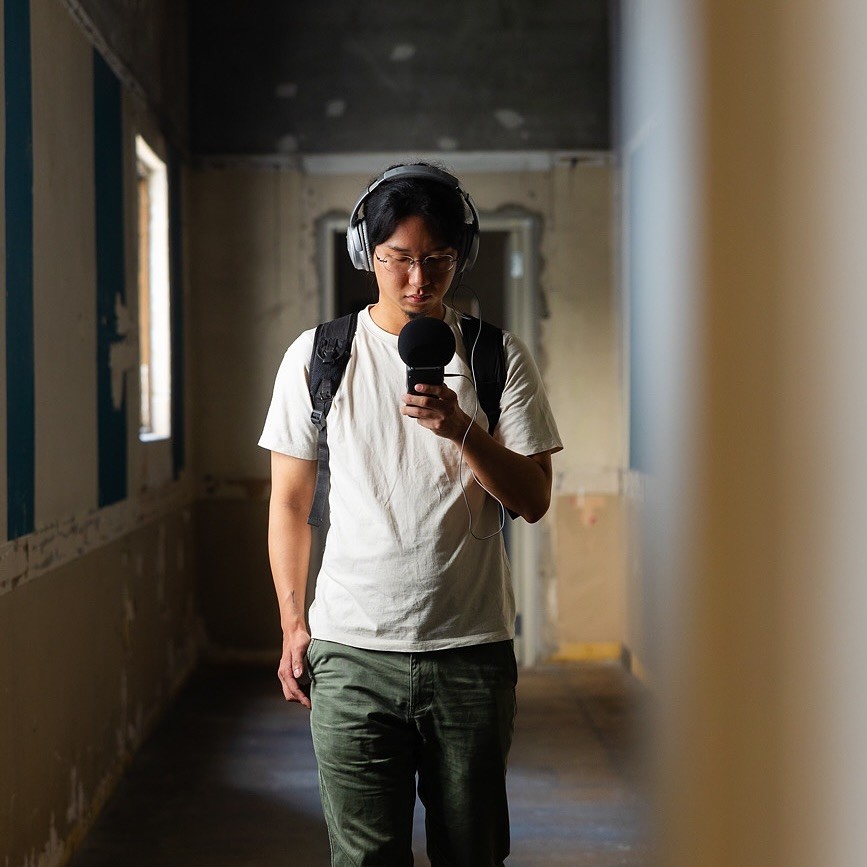
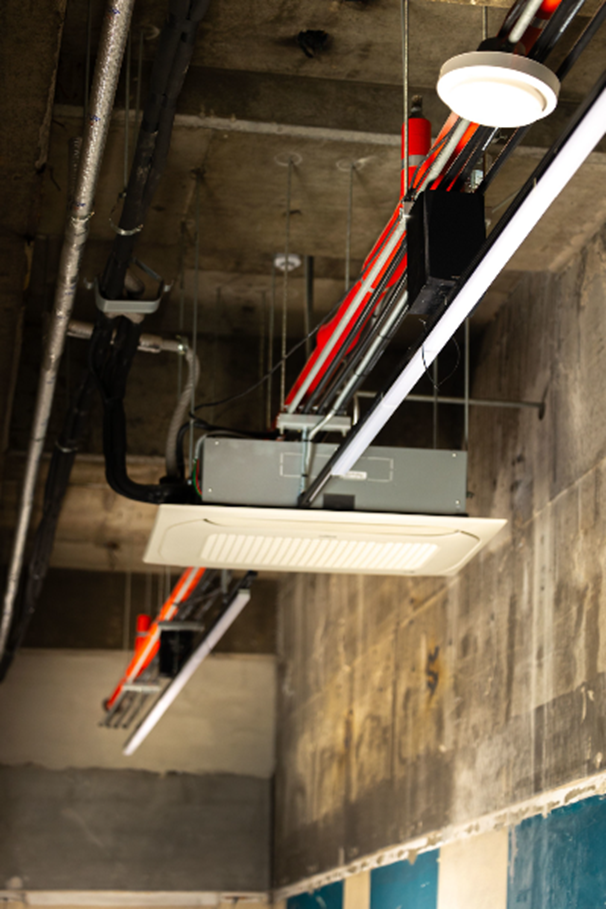
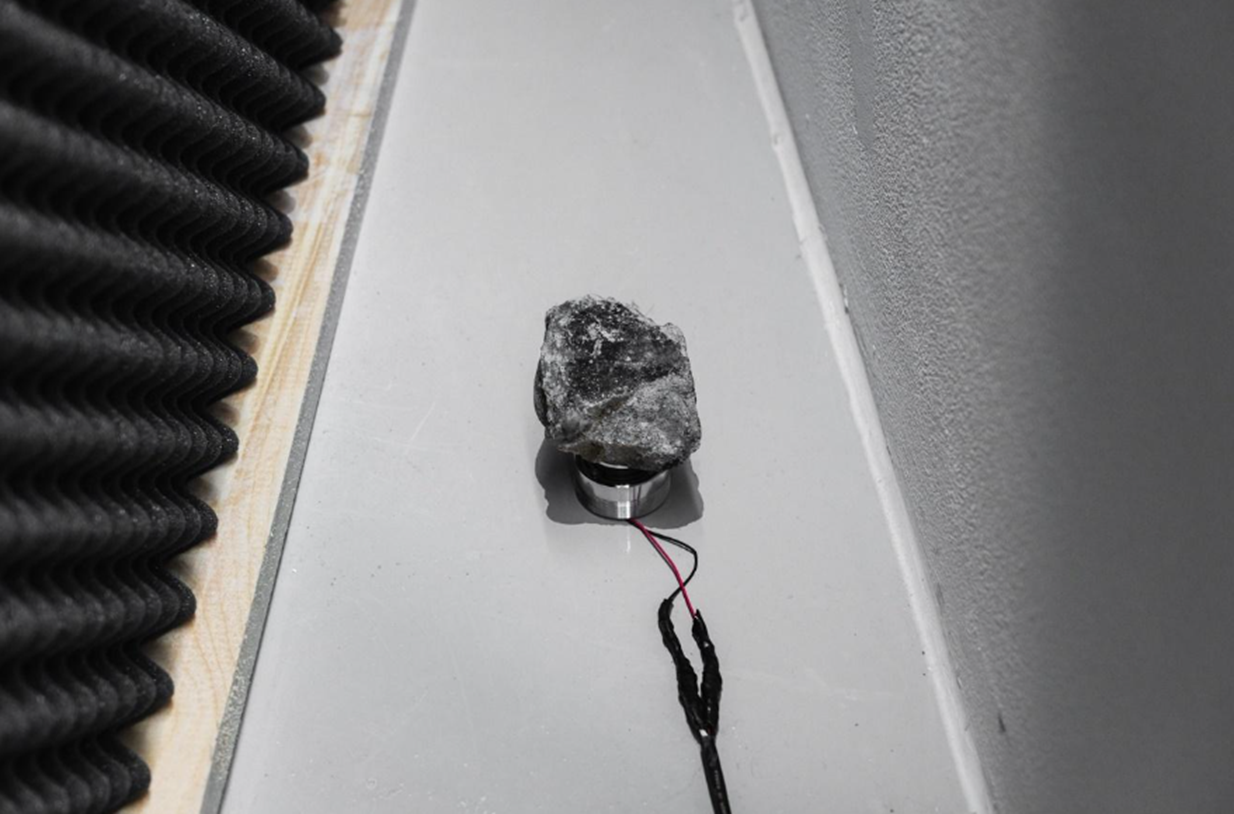
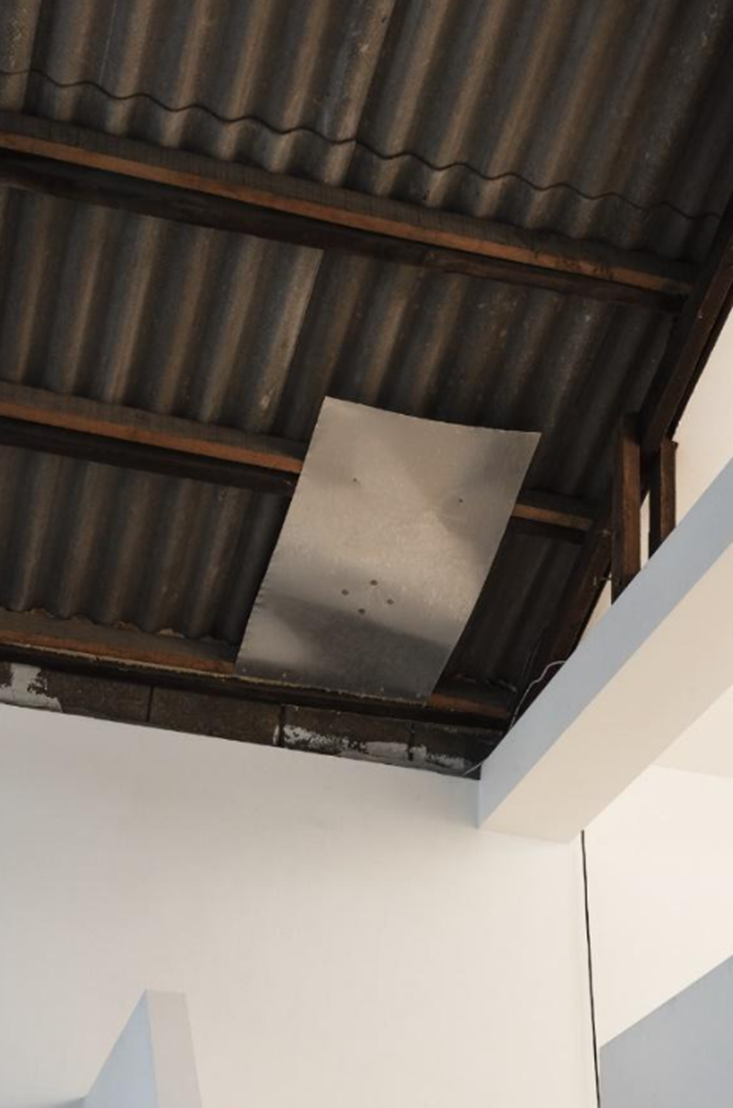
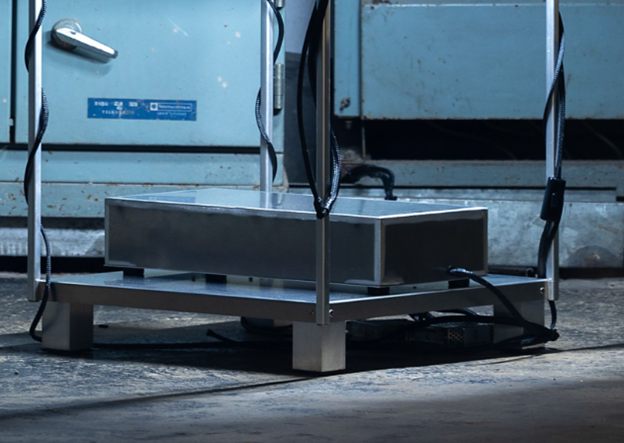
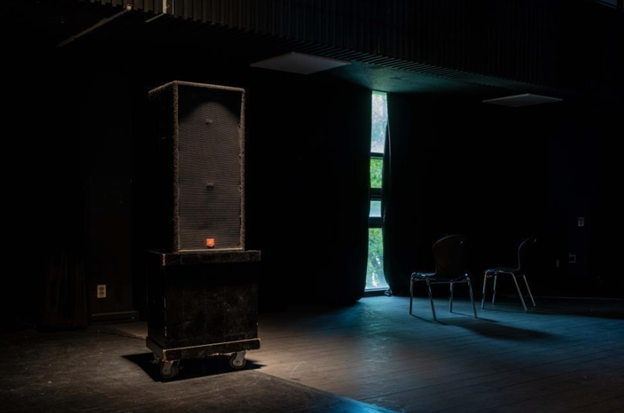
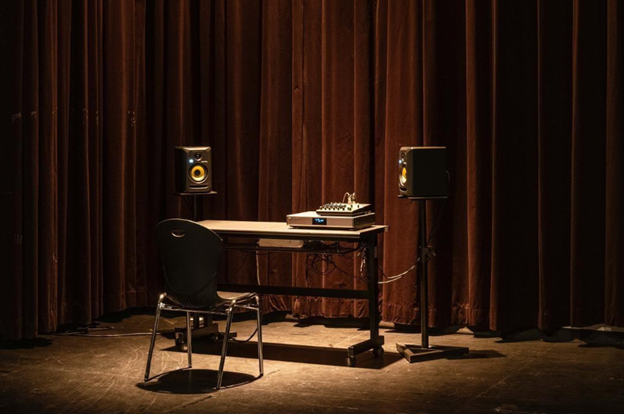
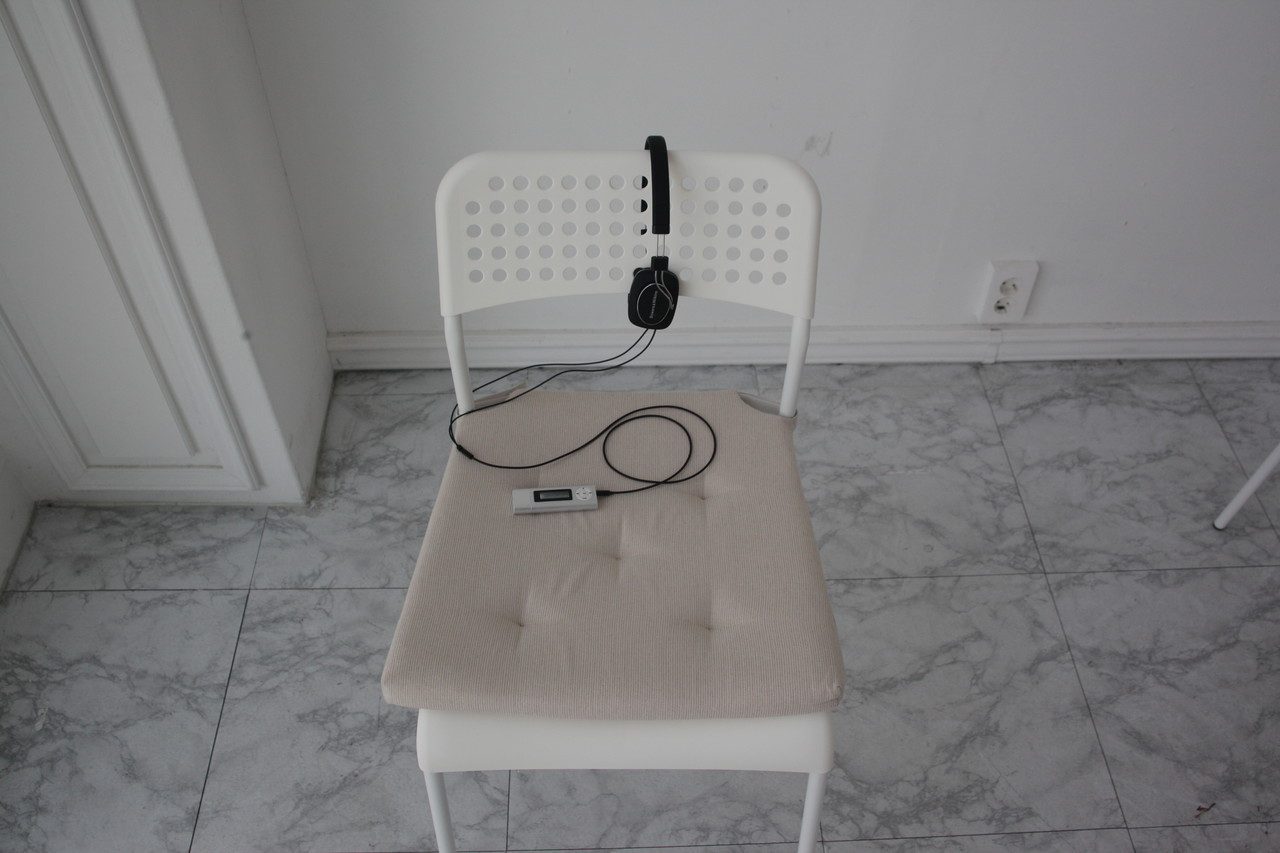
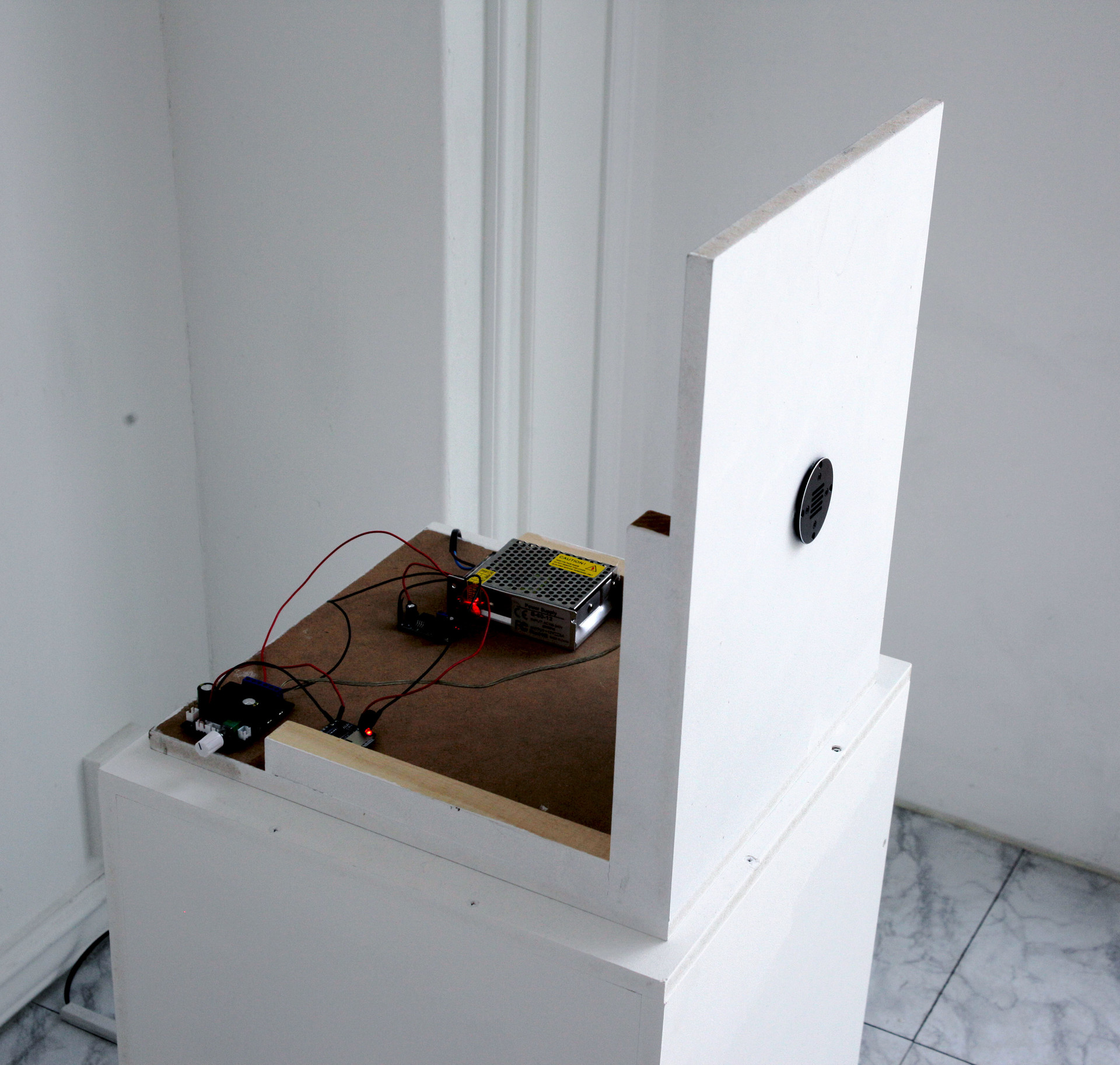
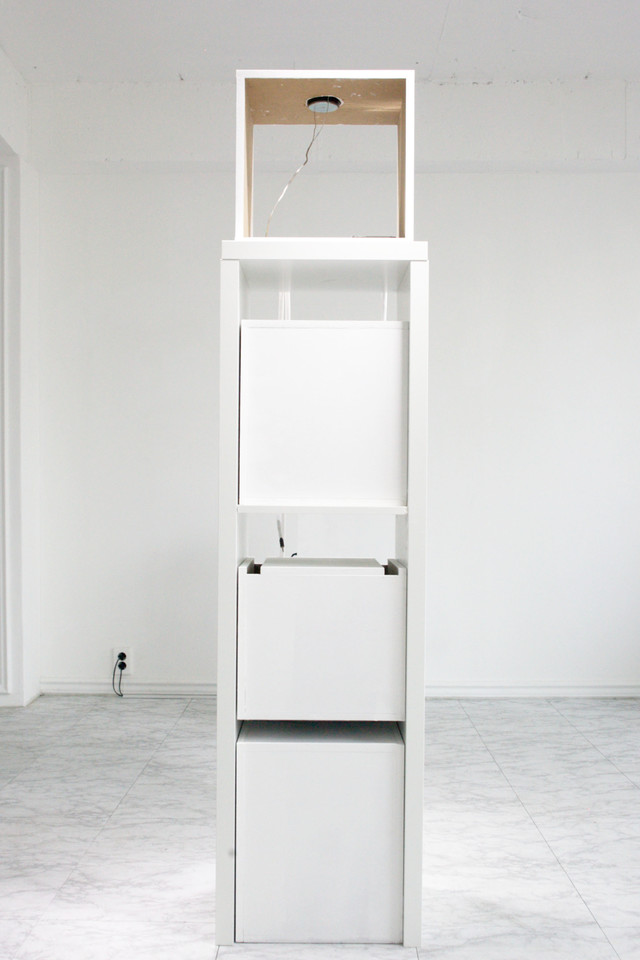
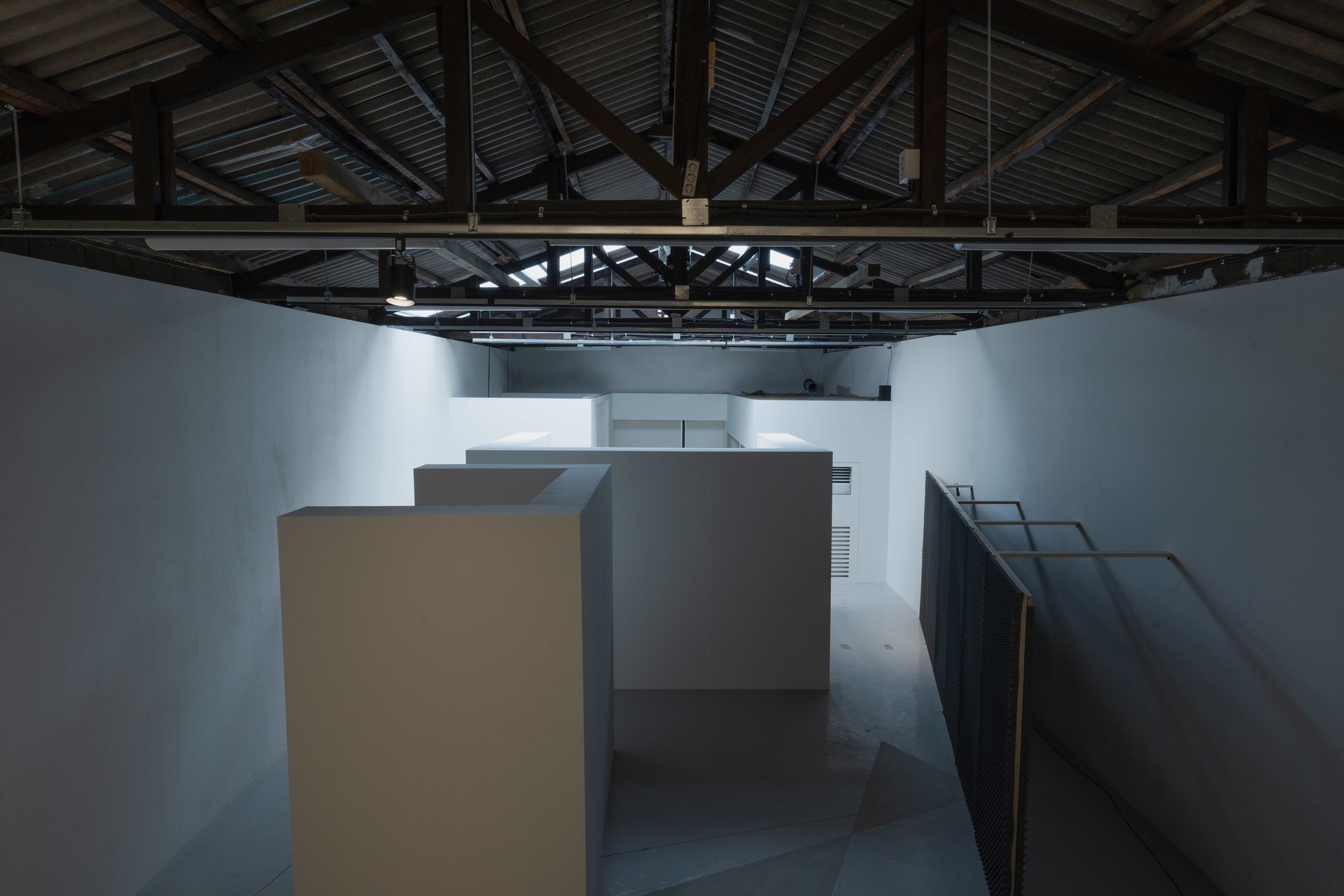
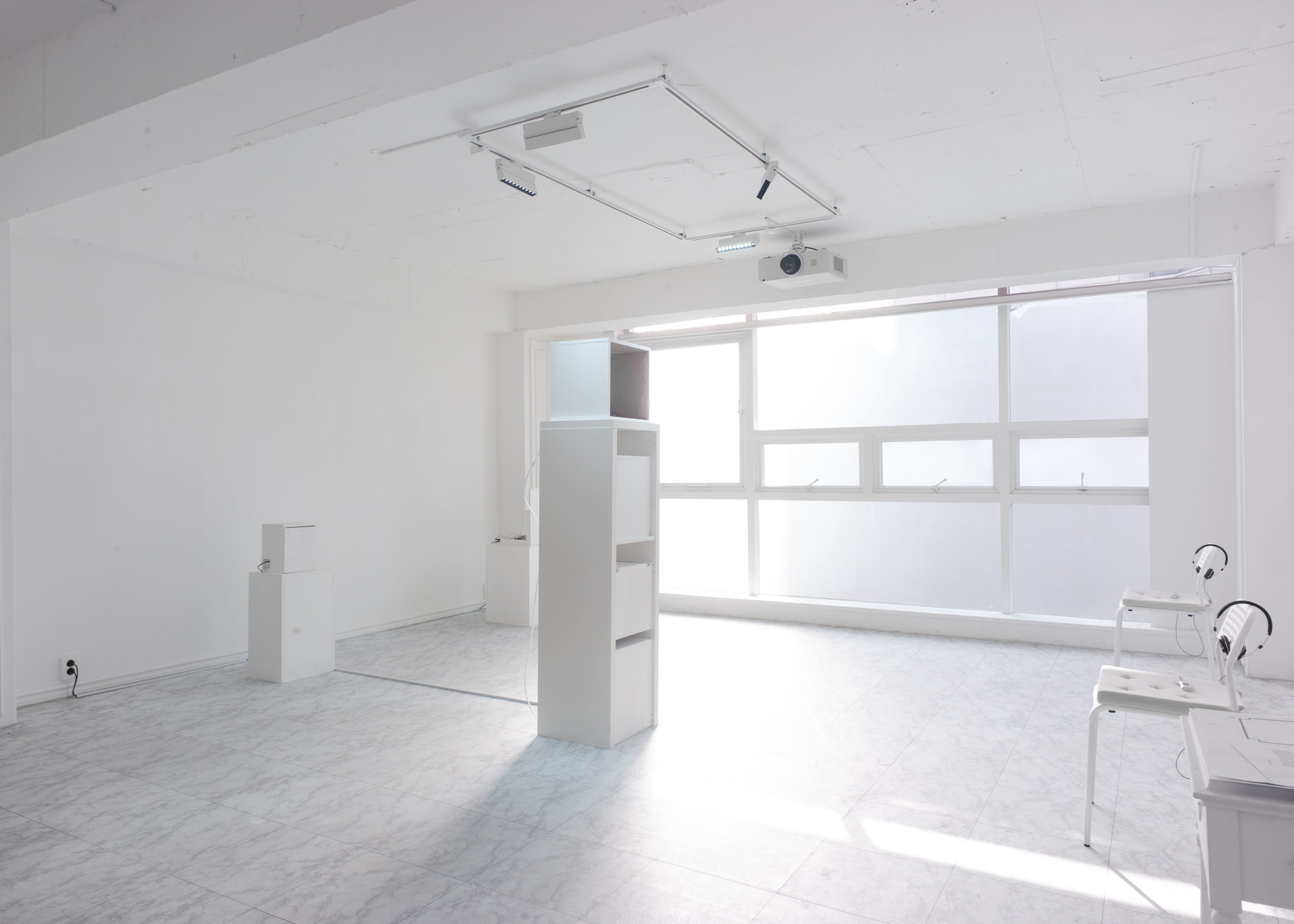
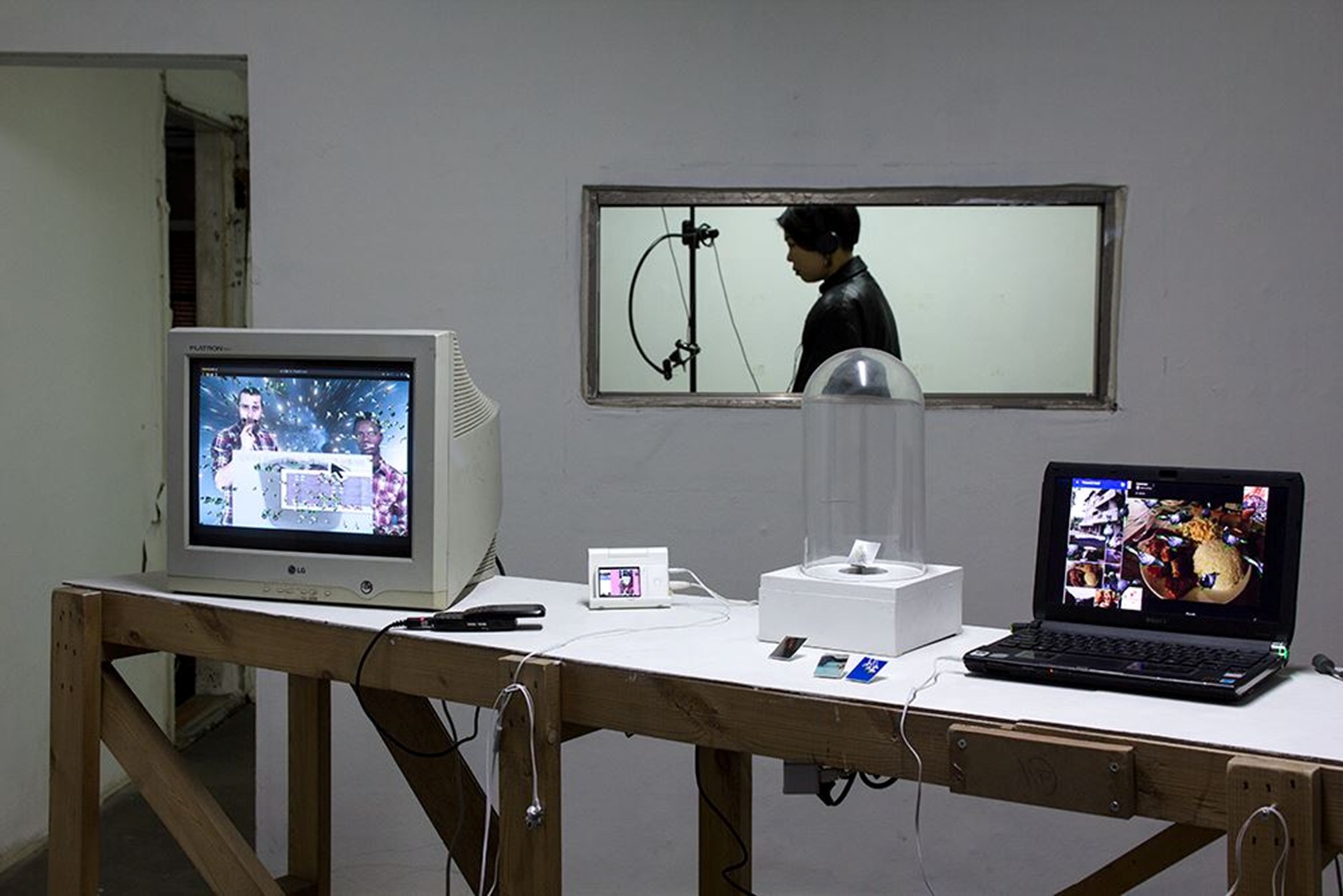
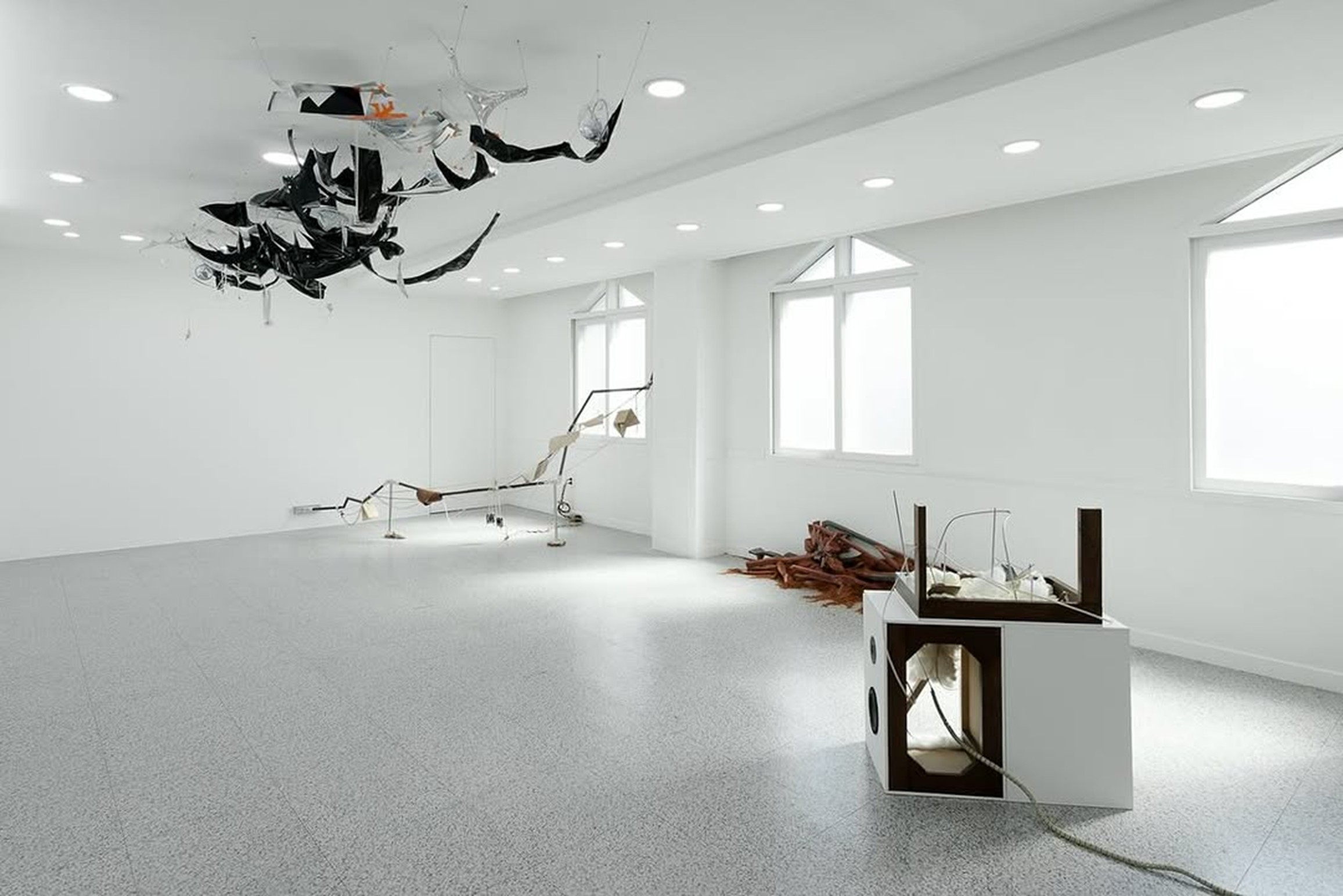
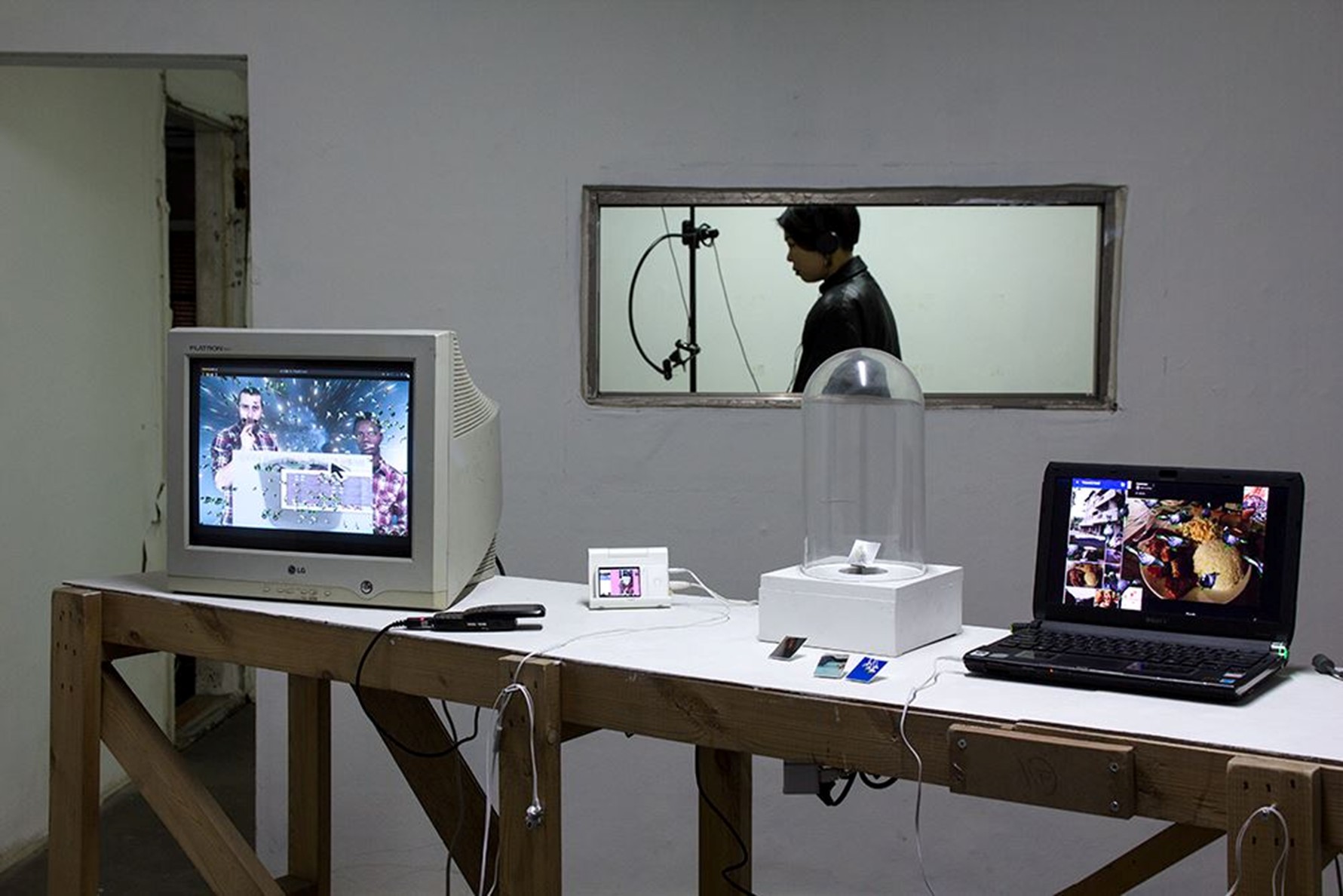
Installation view of 《Hovering》 ©2/W

Let us reconsider several constraints—such as a given space and arbitrary combinations. The space assigned here, 2/W, can ultimately be understood as a ruin. This ruin is derived not only from its shabby and roughly stripped physical exterior, but also from the complex entanglement of time traversed by certain forms of art once operated within this space (formerly “Common Center”).

At the present moment, the space bears the thin weight of these temporal layers in an ambiguous posture. It neither fully reproduces itself as a remnant of the recent past through complete superimposition, nor does it entirely bury that past beneath a denial, exposing only the texture of ruin. In order to make use of the given space, one cannot help but remain conscious of the transitional state in which “this place” continues indefinitely.

The ruin as it existed in 2015 was peculiarly free from wrestling with elapsed time. Many player–audiences ignited highly volatile moments in order to circulate the specific experiences they encountered, while newly emerged spaces occupying leased or idle sites did not bother to question what those places had once been, even as old ruins wedged into the city of Seoul.

As implied by the term “player,” the emergence of new spaces flattened the ruin even further, releasing its broken remnants from the domain of the past. Consequently, the constraints imposed by the space no longer functioned as texts of the past to be interpreted in relation to the present, but rather as a rulebook containing the premises of a game devised in the “here and now.” The ruin, having been flattened, thus culminated as a kind of playboard upon which such games could proceed.

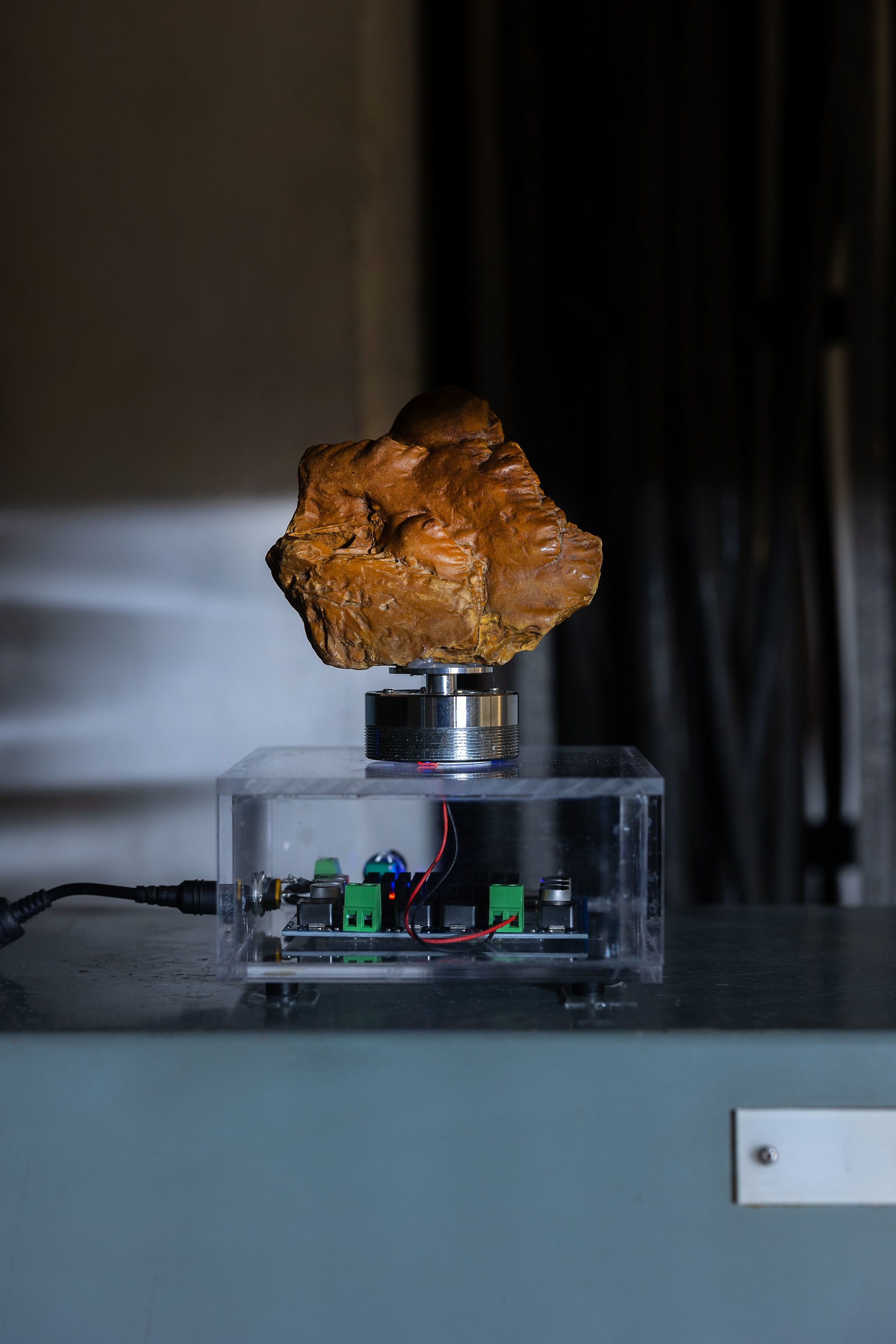
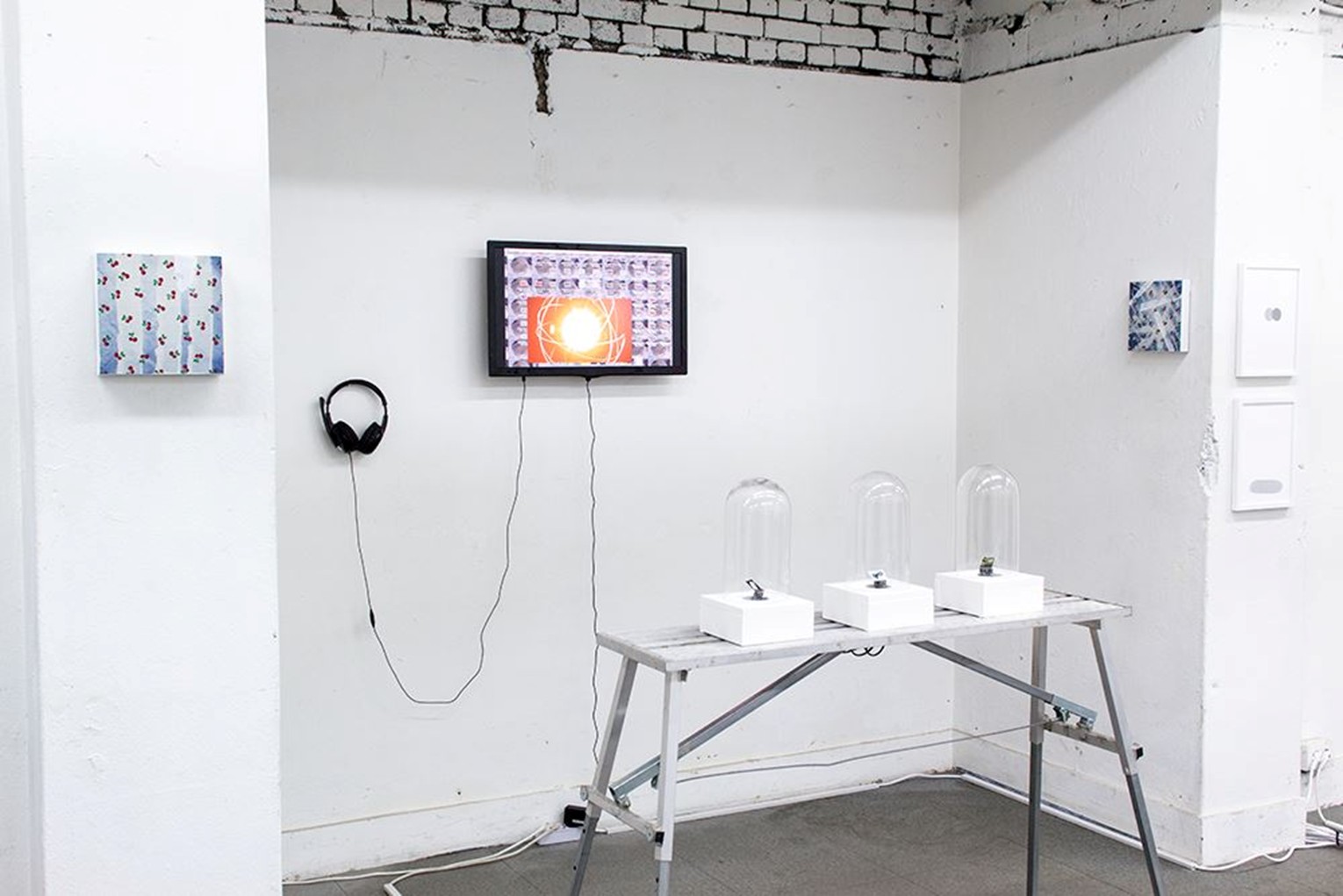
Installation view of 《Hovering》 ©2/W

Accordingly, the space given to 《Hovering》 can be described as both a physical ruin and a platform in which only the shell of deferred time remains, after the players have disappeared. In this “here,” what faintly flows like residual current is the inertia left behind by once-activated game rules, the relationships formed among players through those rules, a series of exhibitions and events that circulated rapidly as fragmentary image information (with or without Instagram Live broadcasts), and, above all, the processes by which these elements became compatible with the texture of ruin.

This is a space that broke down and deteriorated in a period far removed from the recent past of a “new space,” thereby becoming a ruin. Layered atop it is another sense of ruin, composed of times that have in fact evaporated but remain as debris from the perspective of those who were once players.

Metaphors such as ghost servers, expired platforms, or ruins atop ruins testify to the uncanny nature of the given space. The participating artists of 《Hovering》—Kim Dongyong, Kim Hyojae, Ryu Suyun, Jeon Yejin, Jung Wanho, Seo Minwoo, Oh Yeonjin, and Ji Hoin—temporarily occupy the space using only the residual currents idling within it, seeking relationships among themselves. Starting from different coordinates they have individually marked, they use their works as probes to sweep through scattered residual currents, marking zones where signals unexpectedly emerge, then loosely connecting these points to construct their own routes and frameworks. These paths intersect, overlap, and sometimes conflict. In other words, the artists explore the surface of an initialized map through their works, generating borderlands between works in the process, thereby re-partitioning or dismantling the grid of the space.

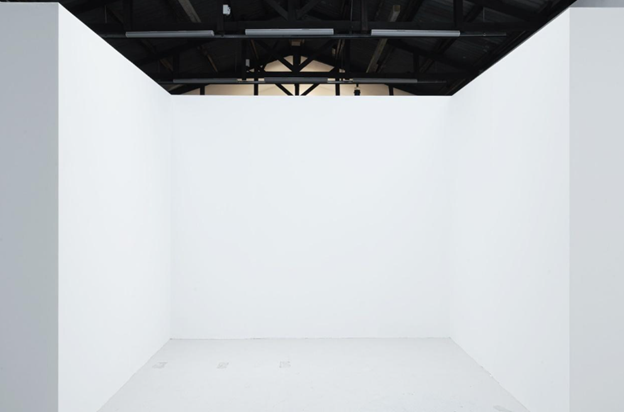
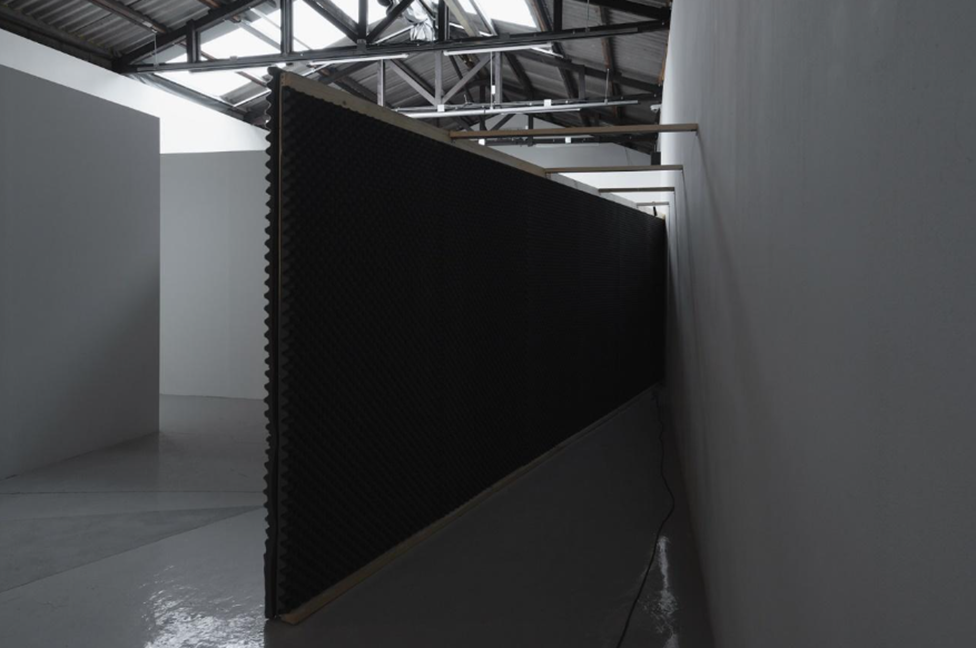
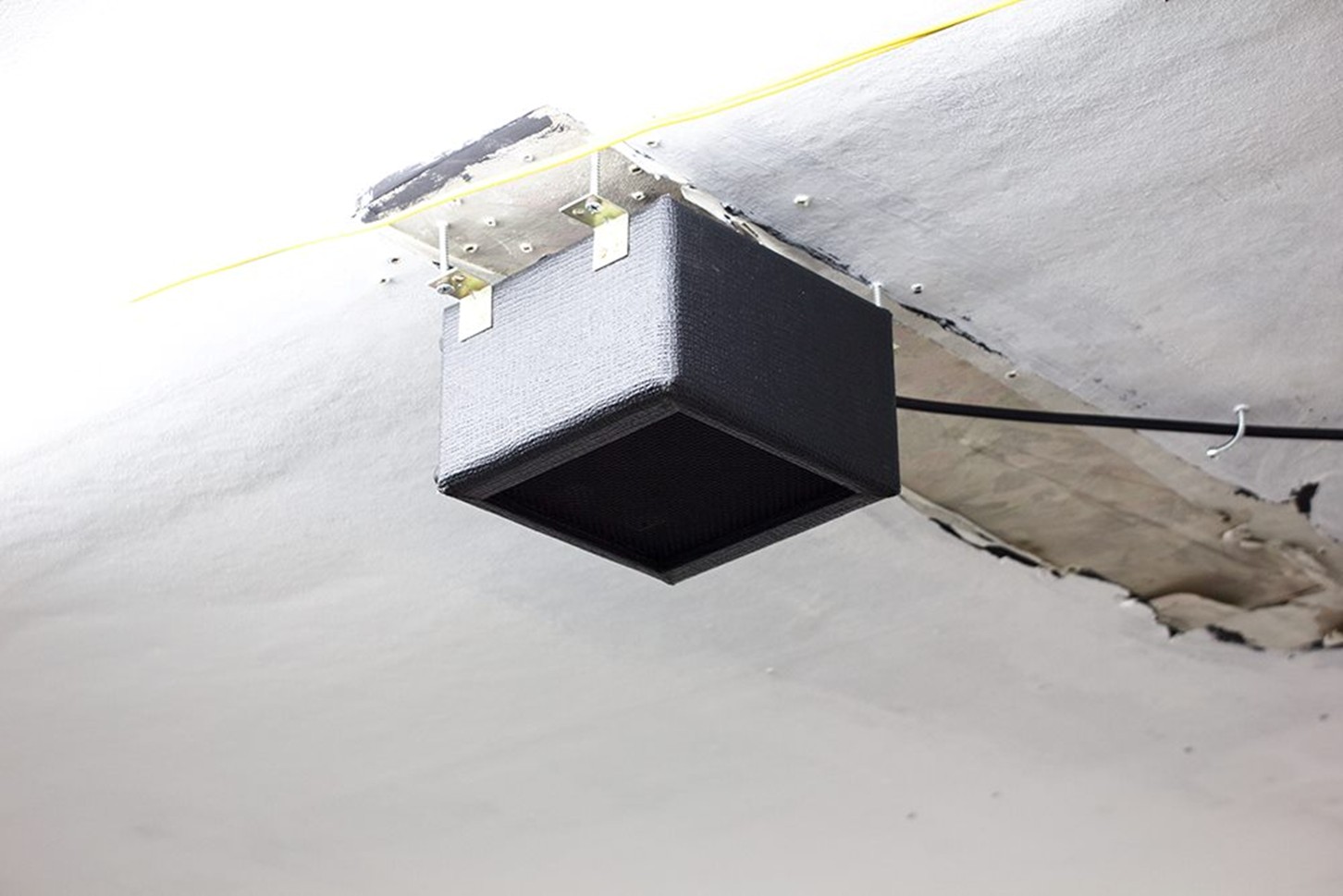
Installation view of 《Hovering》 ©2/W

Through such processes, is it possible to reactivate the still-flattened ruin—one bearing the ambiguous status inscribed by its recent past as a new space—as a playboard once again? This is not an attempt to gather debris and rebuild a shared platform. As is well known, time that has once been deferred cannot be sustained. Instead, what 《Hovering》 seeks to gauge is the presence of ghost players who have reconnected to a ghost server or remain without having fully logged out.

By traversing an already invalidated space once more, sensing the subtle gaps between layered ruins, and re-examining how this space once functioned—how its exposed textures, limited ranges, and unavoidable corners were temporarily repurposed as supports for artistic work—these ghost perspectives gradually begin to secure a degree of freedom untethered from former player identities, still in search of a place to settle.

Thus, the forementioned borderlands are also traces left by ghosts in specific zones, formed through simultaneous short-circuiting with residual currents. Such traces are scattered throughout this exhibition.

So now, what can we play? Can these borderlands and traces effectively hack a closed server, thereby expanding the freedom of ghost players? These are the questions that 《Hovering》 sets out to pose.
 

Text by Kwon Siwoo

References