One autumn, I visited the clock tower of a hospital where a family
member had once been admitted. The tower’s machinery took up three of the
building’s five floors. Its clock weight, wound every four days, descended
slowly to drive the rollers—a mechanism that required nearly ten meters of
space. Narrow, steep wooden stairs. A small attic door, so low you had to bend
your knees and bow your head to pass through.
Pulleys hanging from a ceiling so
high it seemed endless. A pendulum resting at the bottom. Light poured in
through the glass windows on all sides, almost blindingly bright, yet it was
the deep, dark silence of the motionless machine that pulled me in. The
disquieting stillness of the clock tower stayed with me. And it abruptly
resurfaced when I encountered Hosu Lee’s work.
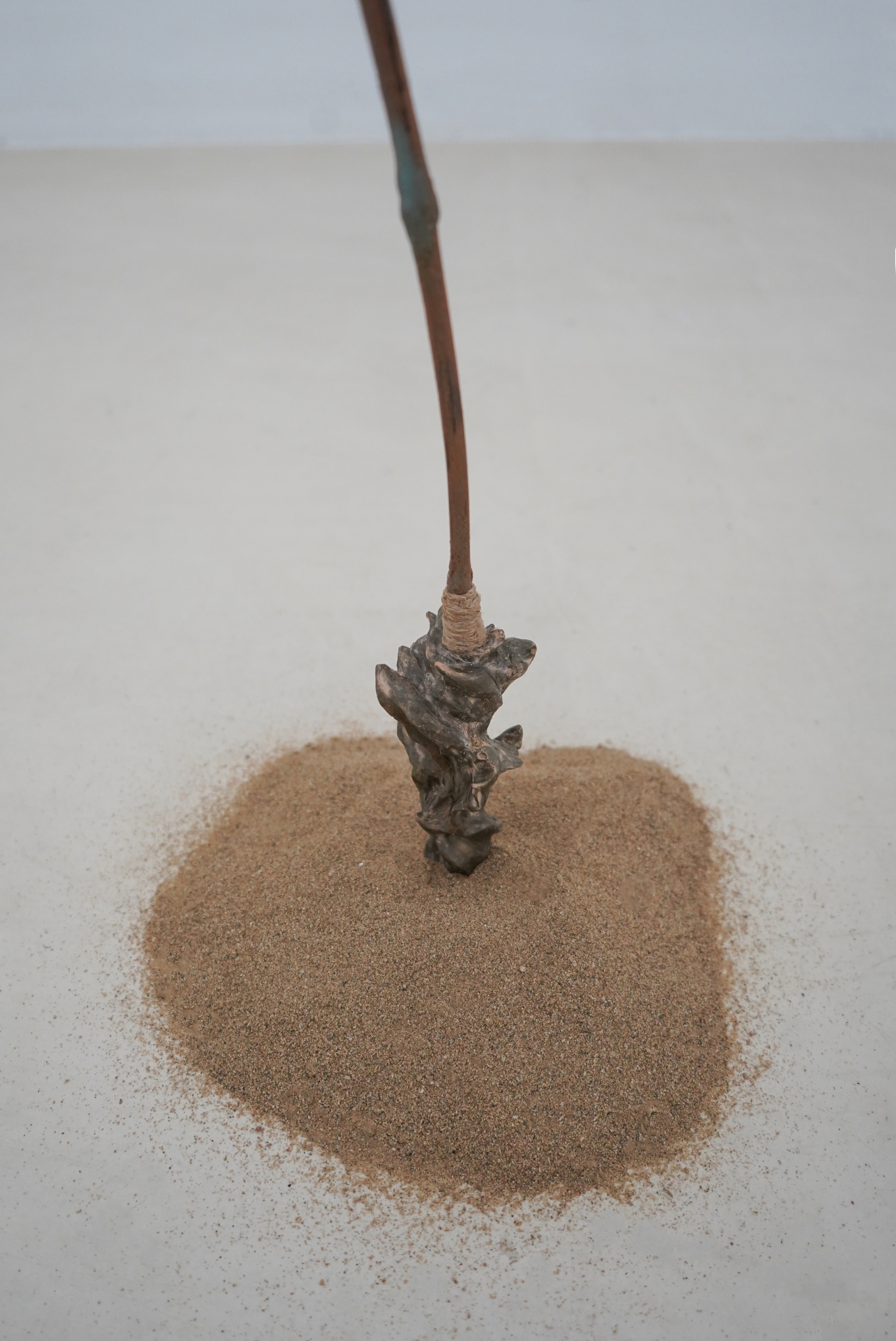
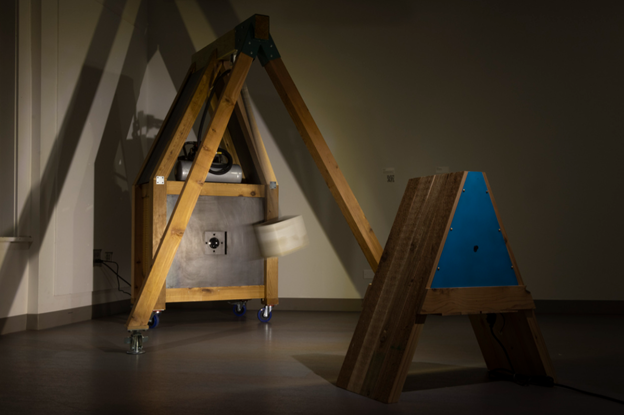
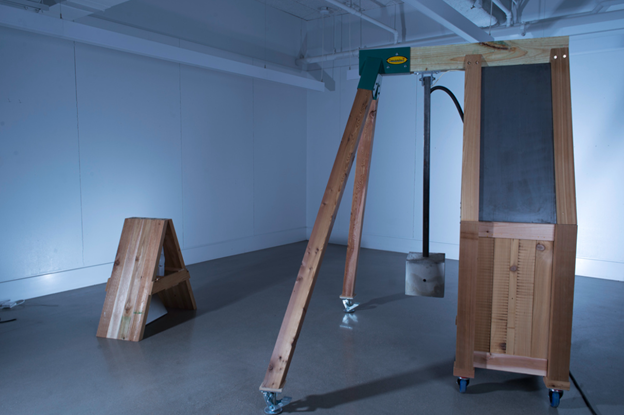
At the core of Lee’s practice is a pendulum, one that “longs to
move on its own.” In conversation, he shared that over the past eight years, he
has explored the pendulum’s material and form through his ‘Time Machine’
series—shaping it into concrete swings and stainless steel grandfather
clocks—at times combining them with sound and light-sensing systems to probe
the sculptural and the systematic. Like a heartbeat setting blood in motion,
his pendulum-driven structures seem to have generated their own temporality and
rhythm within the exhibition space. I wondered what had drawn him so deeply
into the world of the pendulum. But rather than offering a single answer, he
draws the viewer into its hypnotic motion, an experience of time in flux.
In his solo exhibition 《Time And
Machine》 at OCI Museum of Art, Lee
expands on this exploration, treating the exhibition space itself as a
sculptural body. If his previous shows allowed viewers to observe each work
from a distance, here, sculpture becomes a situation, drawing viewers in. The
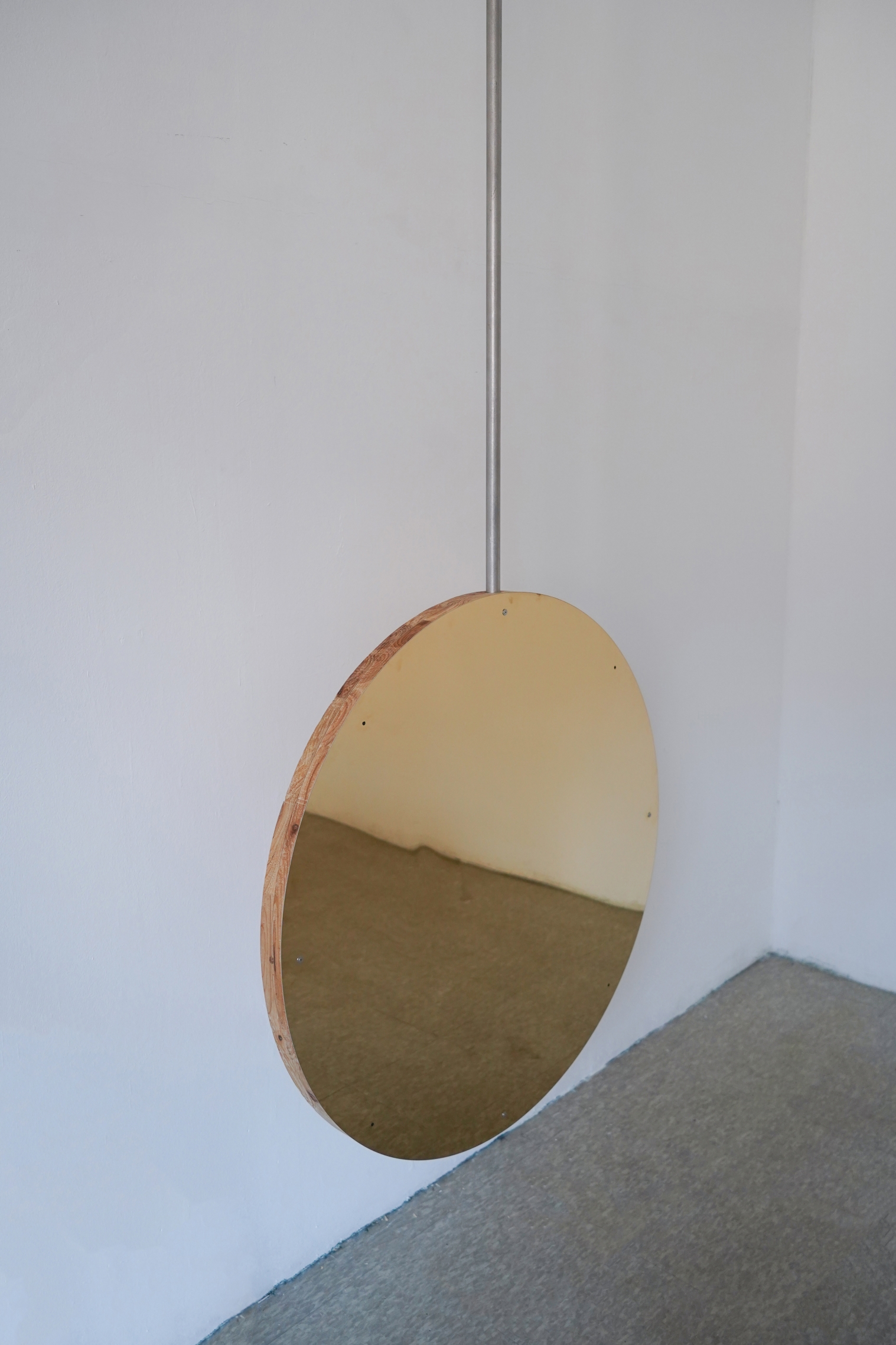
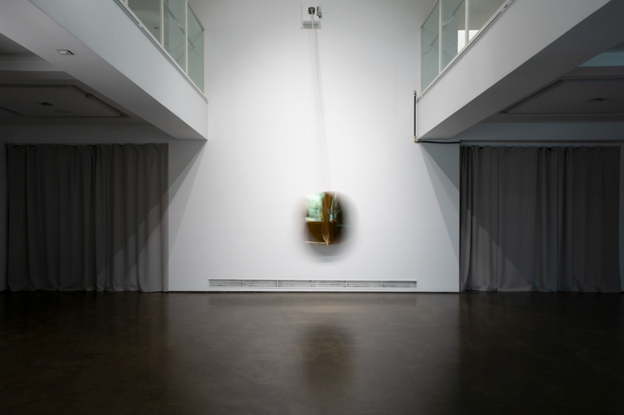
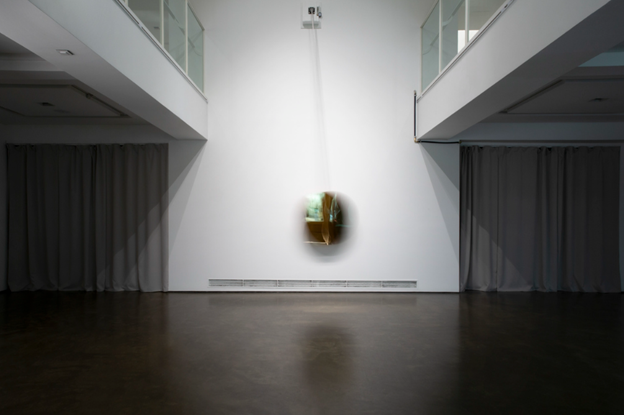
first encounter is with a massive pendulum, its large, round, reflective
stainless steel surface moving with deliberate grace. It mirrors us, but what
Lee wants us to see lies beyond the surface. Like Alice shrinking down, we step
past the clock face, beyond numbers and hands, into something deeper, darker.
The contrast between inside and outside unsettles us, enough that we might
slip. And then, we land.
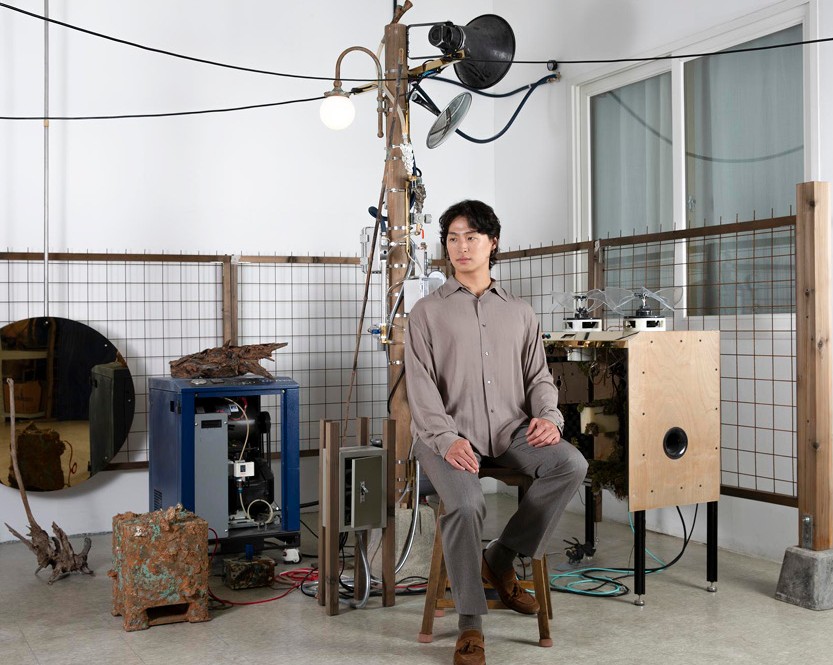
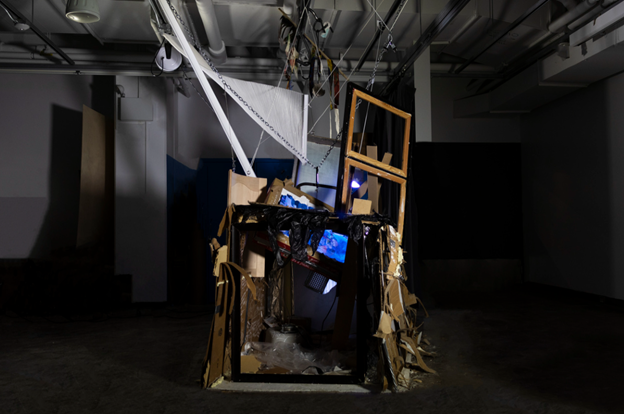
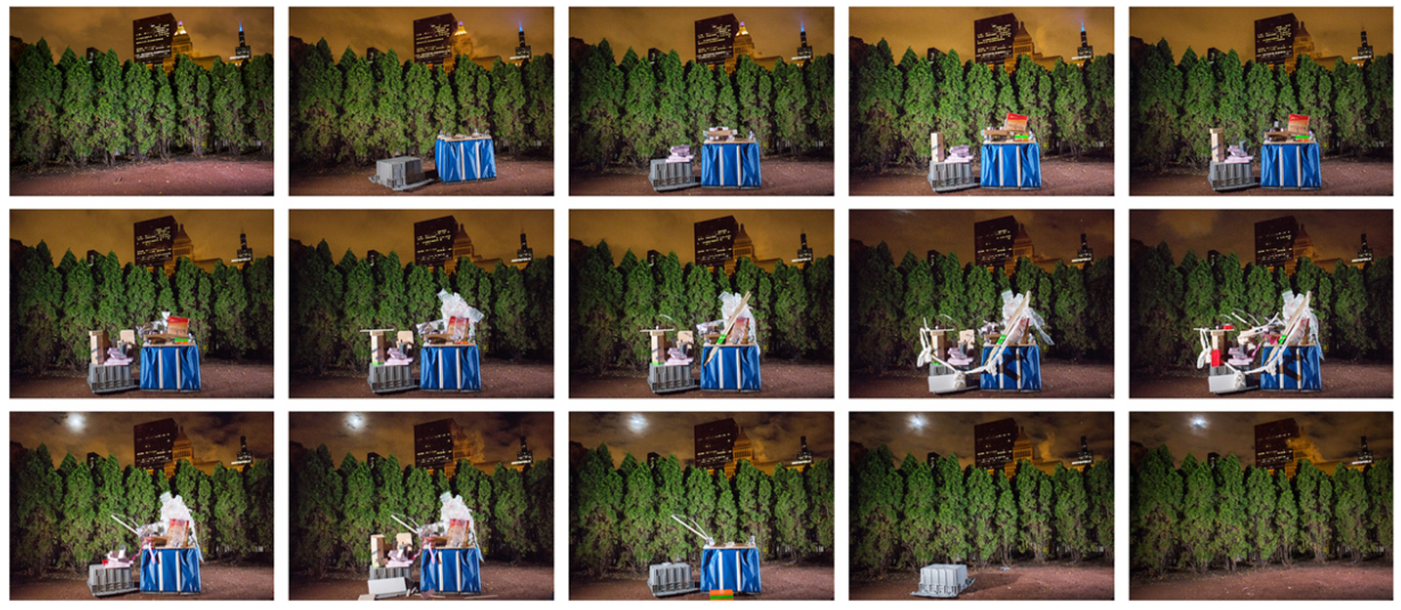
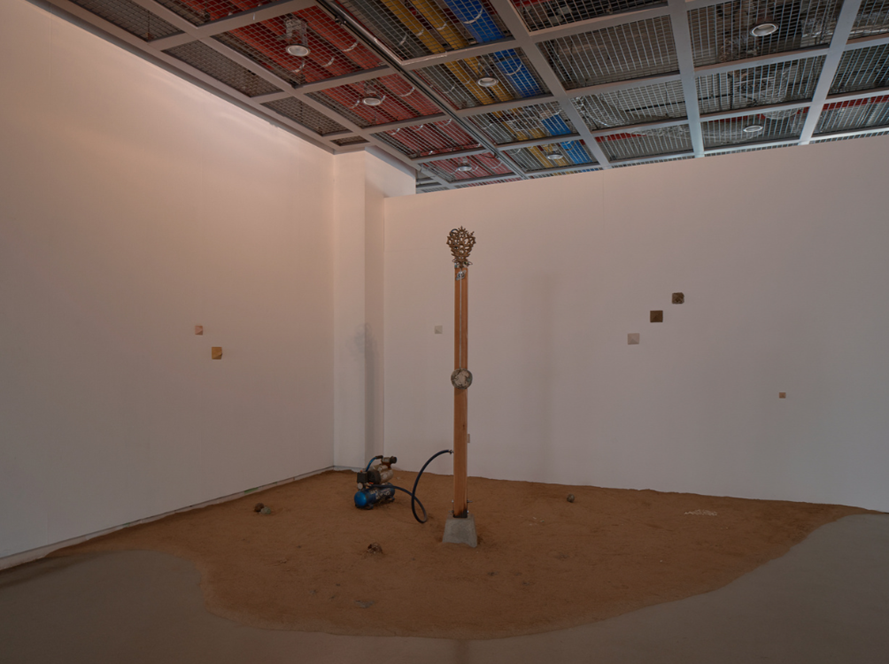
It is dark. And unexpectedly, we are outside—a landscape devoid of
people. Something has vanished, yet something else emerges in its absence—what
Jean-Luc Nancy called “the sudden appearance [...] of the one disappearing.” A
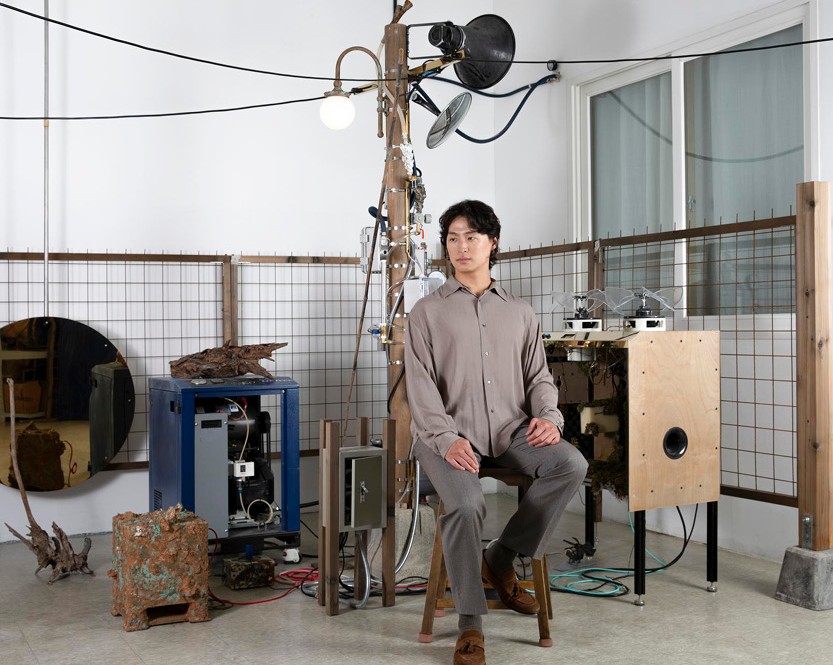
utility pole. An outdoor unit. A compressor. A storage container. A fence
enclosing them, barring entry. The scene isn’t dystopian in any contrived way;
if anything, it is so familiar, so ordinary that it feels like the present.
Beneath the polished surfaces, the unkempt machines run on, as if they were
always part of the natural world. It’s the eerie feeling of climbing a hill you
never knew had a path and looking down at your home, now strangely unfamiliar.
The outdoor unit suggests there is an inside somewhere, but we are left outside.
Perhaps these machines have something to do with the pendulum we saw earlier.
Still, we remain outside. The air is cold, barren. It is both a landscape of
someone’s inner world and an exterior scene glimpsed on the way home. The
machines hum, deep and steady, filling the silence where people once were.
As our eyes adjust to the darkness, a small video comes into view,
tucked beside the outdoor unit. A pine tree sways in the wind. A gaze lingers,
fixed upon it. In an era where electricity is both nature and the lifeblood of
machines, only the tree remains truly natural, the voice we hear the only human
one.
“...in the end, we all have to say goodbye to each other. And it’s
not just about people. It is about places and things as well. Everything fades
away, withers, and eventually disappears, never to return. In fact, the entire
world [...] [and] our universe will vanish into nothingness.”
A nihilist’s confession, it seems. But then, another voice:
“...nothing ever truly fades as it seems, and everything remains
just as it is. Changes are illusions…”
How do we reconcile these two opposing statements?
Edwidge Danticat, writing about literature that grapples with
death, observed that writers create stories of death to make sense of it. This
video, then, feels like both a pre-written obituary—whether for himself or the
planet—and a refusal to stop creating. Creation as a long detour, wrestling
with the meaning of time left, searching for hope in what fades. Perhaps this
is why Lee has spent years fixated on the motion of the pendulum. His past
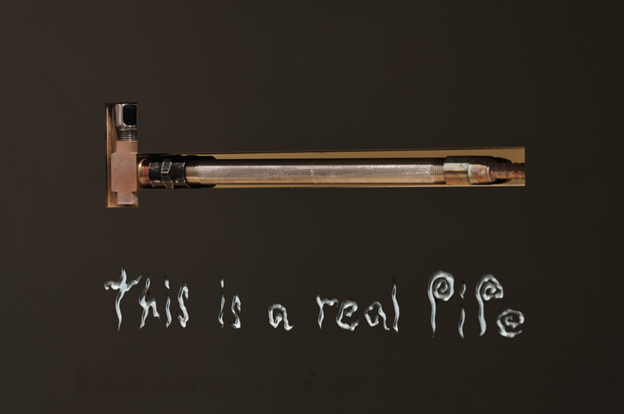
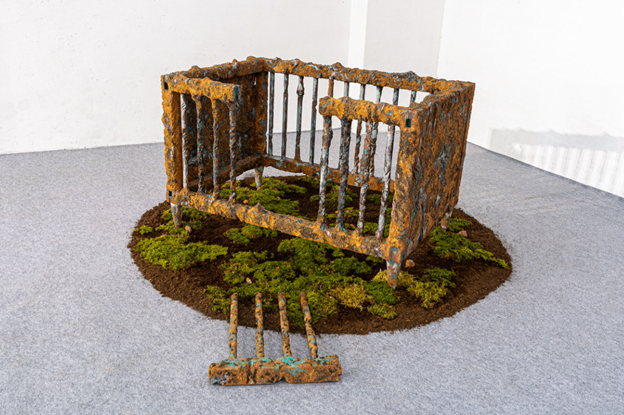
works have often incorporated text alongside sculpture—Manifestation,
a poem reassembled on a physical object, and Dream Manifesto,
inscribed on paint resembling rusted iron, both echo the voice in the video. A
body that vanishes, a body that remains. What changes, what holds.
The conjunction ‘And’ in the exhibition’s title, 《Time
And Machine》, invites us to linger on the
relationship between the two. To follow this thread on my own terms, I want to
bring in two seemingly unrelated things: yoga and music. In yoga, the body
moves from one asana to the next in continuous flow, each transition guided by
breath. A body becomes a desk, then a downward-facing dog, then a tree, then a
pigeon with an open chest, then a triangle.
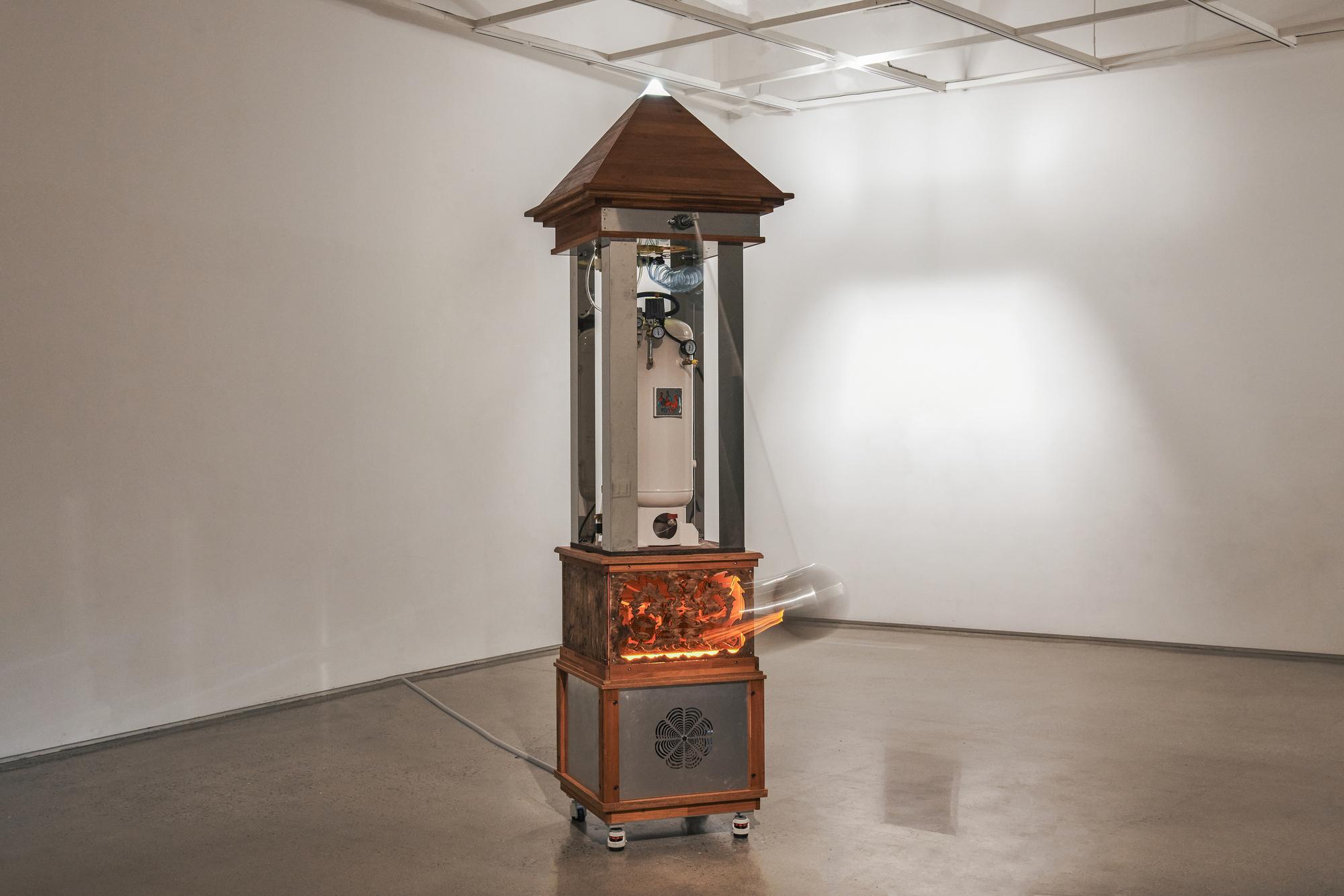
The movement of the machine we call
a body generates flow and energy. (Not to mention that Lee’s pendulums, too,
move by air pressure, as if the machine itself were inhaling and exhaling.) In
music, sound and time are not separate, nor does sound merely occupy time.
Instead, notes push and pull at one another, one setting off the next like
dominos, forming melody. Imagine the black, round notes on sheet music as
punctures through which a needle pulls a transparent thread. That thread weaves
through the holes, and what moves along it is what we call melody. The motion
of sound creates time, a flow.
The ecological theorist Timothy Morton introduces the term
‘hyperobjects’ to describe entities that exist beyond the scale of human time.
He writes that, in an ontological sense, the future of the future is beneath
the past. In other words, time is nonlinear, stratified, and experienced in
potential. If Time And Machine is futuristic in any way, it is in how Lee’s
pendulum never settles—forever oscillating between inside and outside, essence
and appearance, opening up an unfamiliar sense of time.
‘Time And Machine’
takes the two words that form “time machine” and splits them apart, wedging an
‘And’ in between. In doing so, Lee moves away from the idea of machines as
vessels that transport us through the past and future as fixed points. Instead,
he suggests that time and machine were never separate to begin with; it is the
machine’s motion itself that generates time—reshaping it, making us feel its
presence.
We each have a sense of the abyss we long to reach—we have already
seen it. That day, climbing the carpeted wooden stairs of the clock tower, I
was searching for the time my family drifted through. So, if you, too, have a
quiet longing for something deeper, I hope you step into 《Time
And Machine》 with that desire. Lee invites
us to descend further into the dark, to find that what we left behind is still
there, still moving. His pendulum breathes, and in its motion, it reflects us
back.
*This essay was written based on conversations with the artist
during the preparation of his solo exhibition, 《Time
And Machine》.