Within
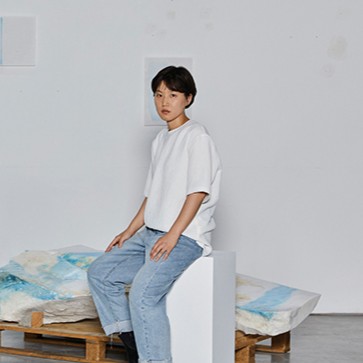
the space where artist Kwon Hyun Bhin works, time seems to stand still.
Sculptural actions that are carried out repeatedly within the constantly
changing flow of nature paradoxically cause time to settle. While meeting the
artist and observing the progression of her work, I found myself thinking more
than usual about the speed and flow of time. In her studio in Paju, which she
shares with her parents—both sculptors—the passage of light and the changing
seasons can be felt fully, with one’s entire body.
Throughout the space, chunks
and fragments of various kinds of stone are scattered about, resting there like
still lifes from a familiar everyday scene. Perhaps for the artist, stone had
long occupied a corner of her mind as a landscape that is “always there, yet
not there,” much like the rice fields and mountains visible through the studio
window. Her relationship with materials (in this case, stone) may have been
formed naturally from the very beginning.
The
materials the artist chooses—either excessively light (such as Styrofoam) or,
conversely, heavy like stone—might at first seem distant from the traces of
water, ice, clouds, wind, or the atmosphere of the sky that she seeks to
explore and reveal. Yet when one quietly observes natural phenomena, this
choice can also feel inevitable. Just as we cannot stop time from flowing, we
cannot fix the shapes and movements of clouds in the sky, nor can we halt the
flow of water. However, invisible moisture in the air can become ice, and
clusters of ice crystals can form clouds—moments in which forms or states come
into being.
Like
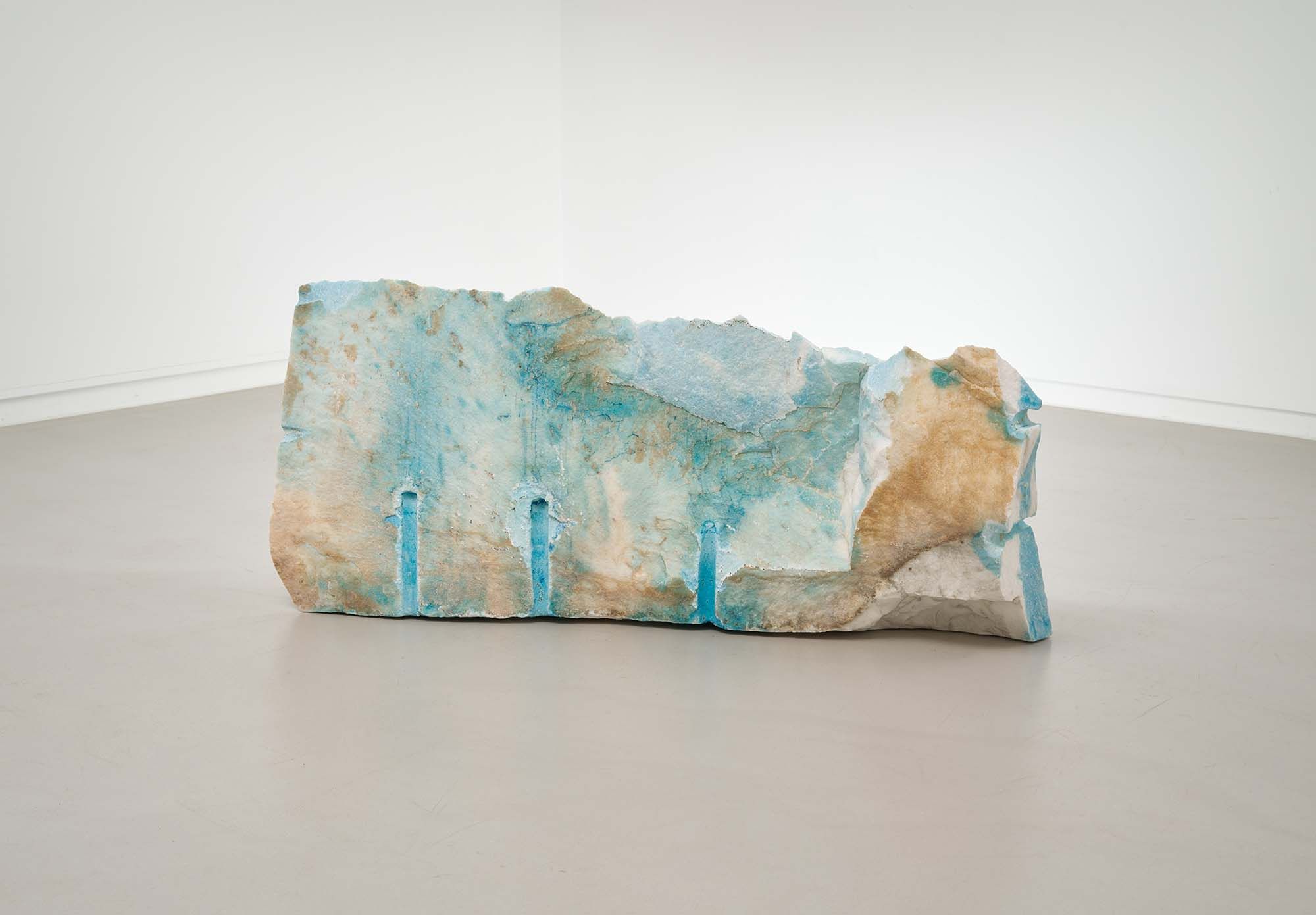
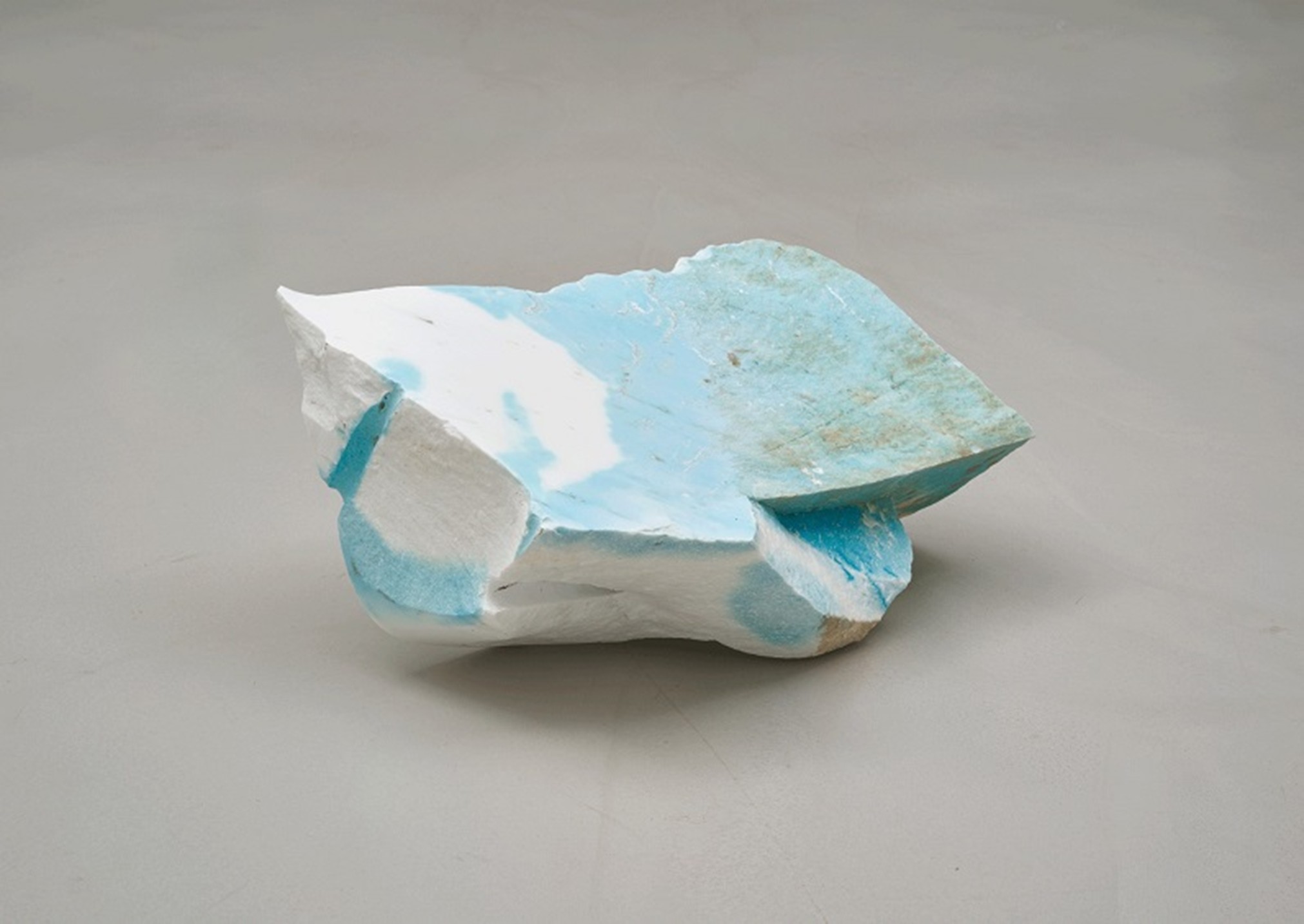
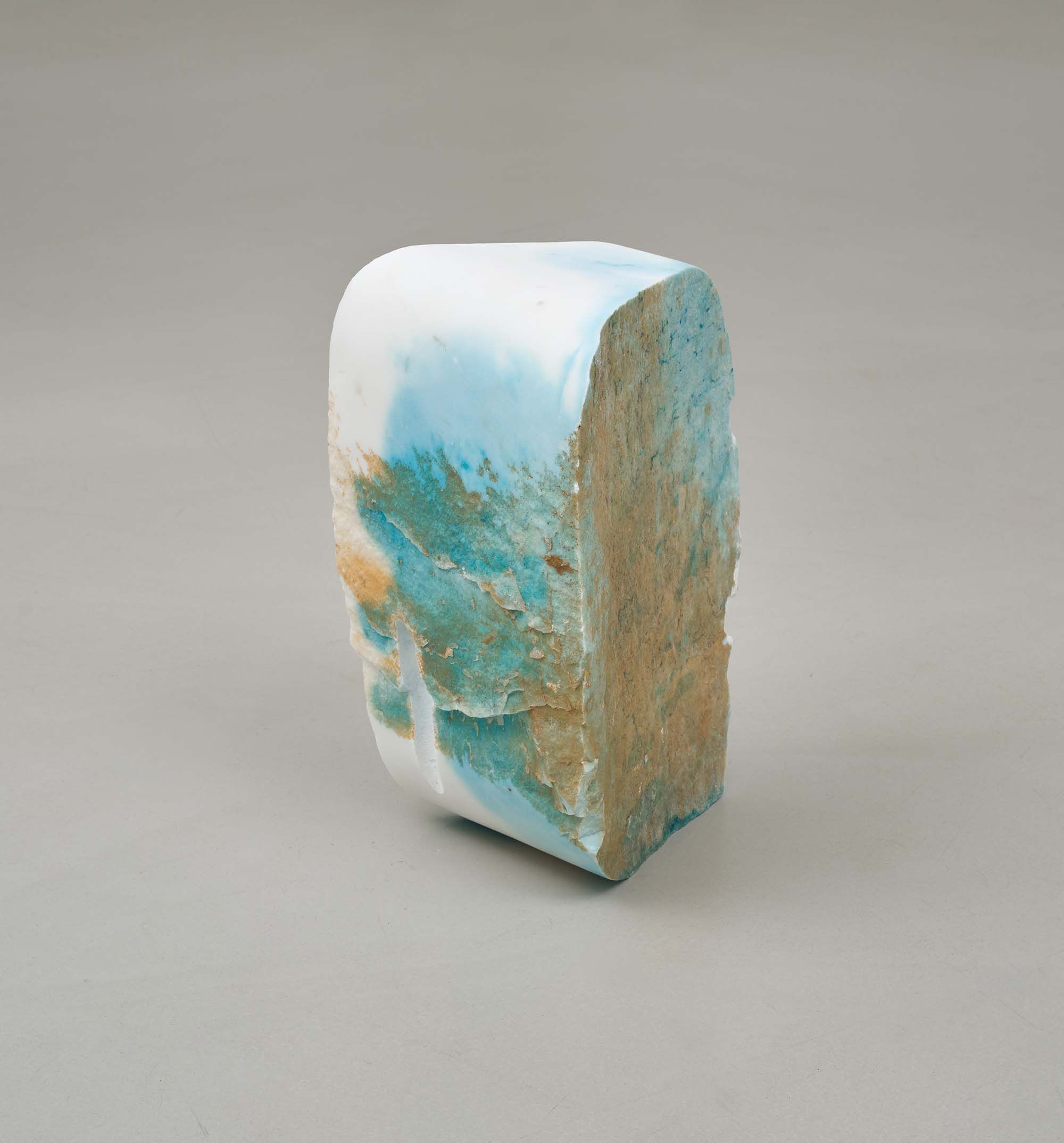
time made visible through the sand inside an hourglass, stones that have fallen
from the ground and clouds that have fallen from the sky became the marble
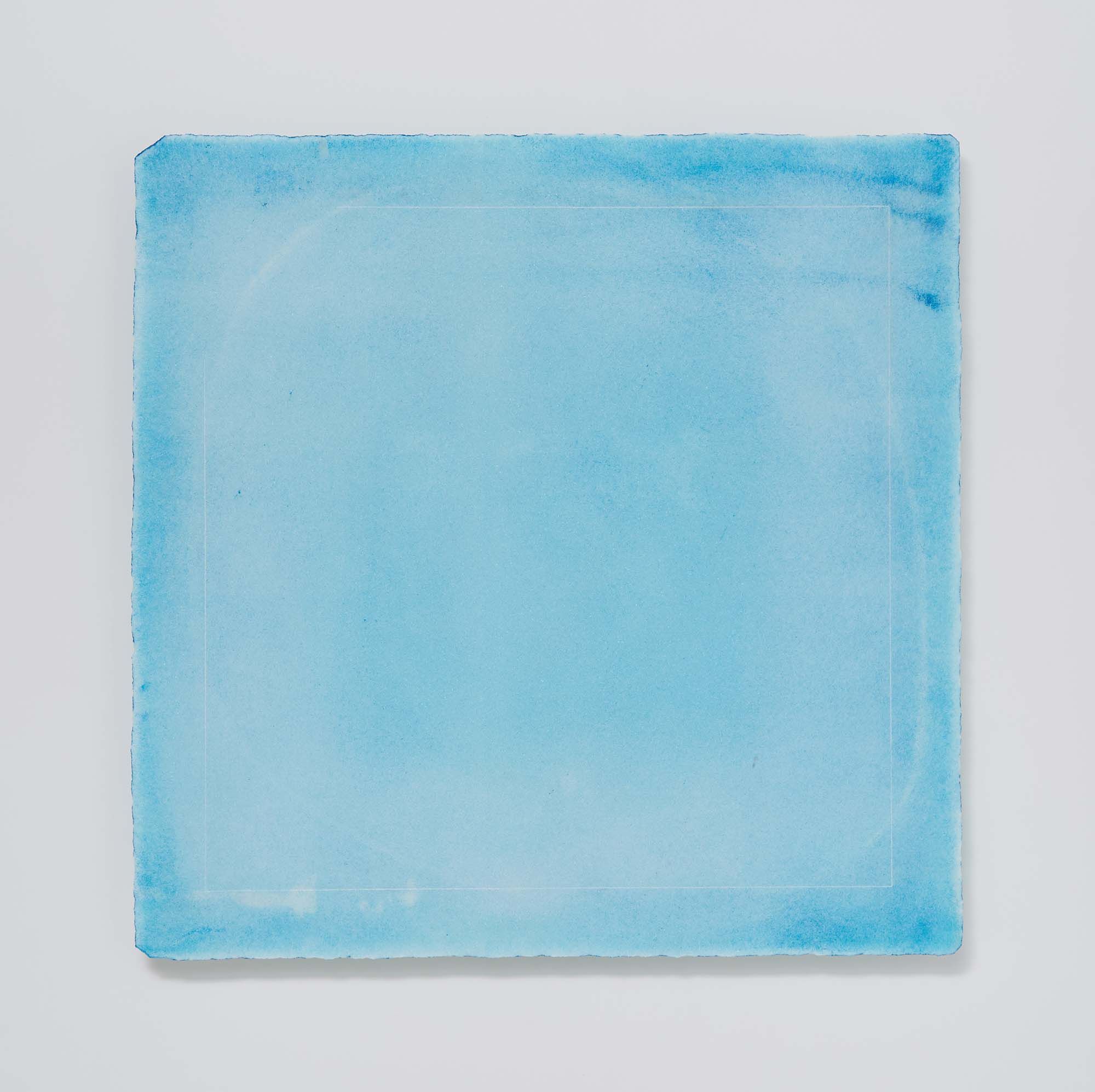
sculpture series ‘Cumulus humilis-fractus’. The phenomenon of water droplets
forming on the outside of a glass filled with ice—appearing as if they have
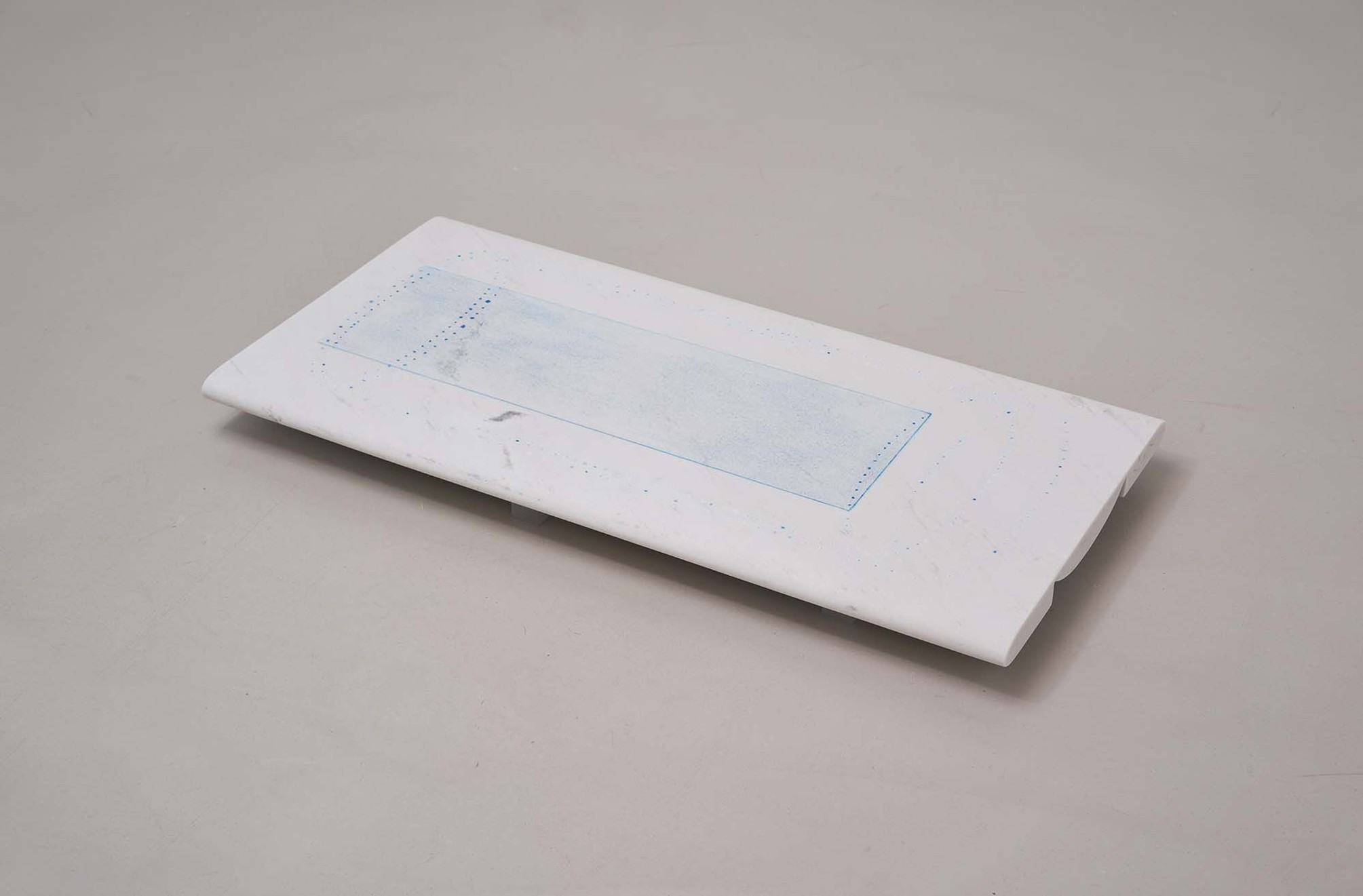
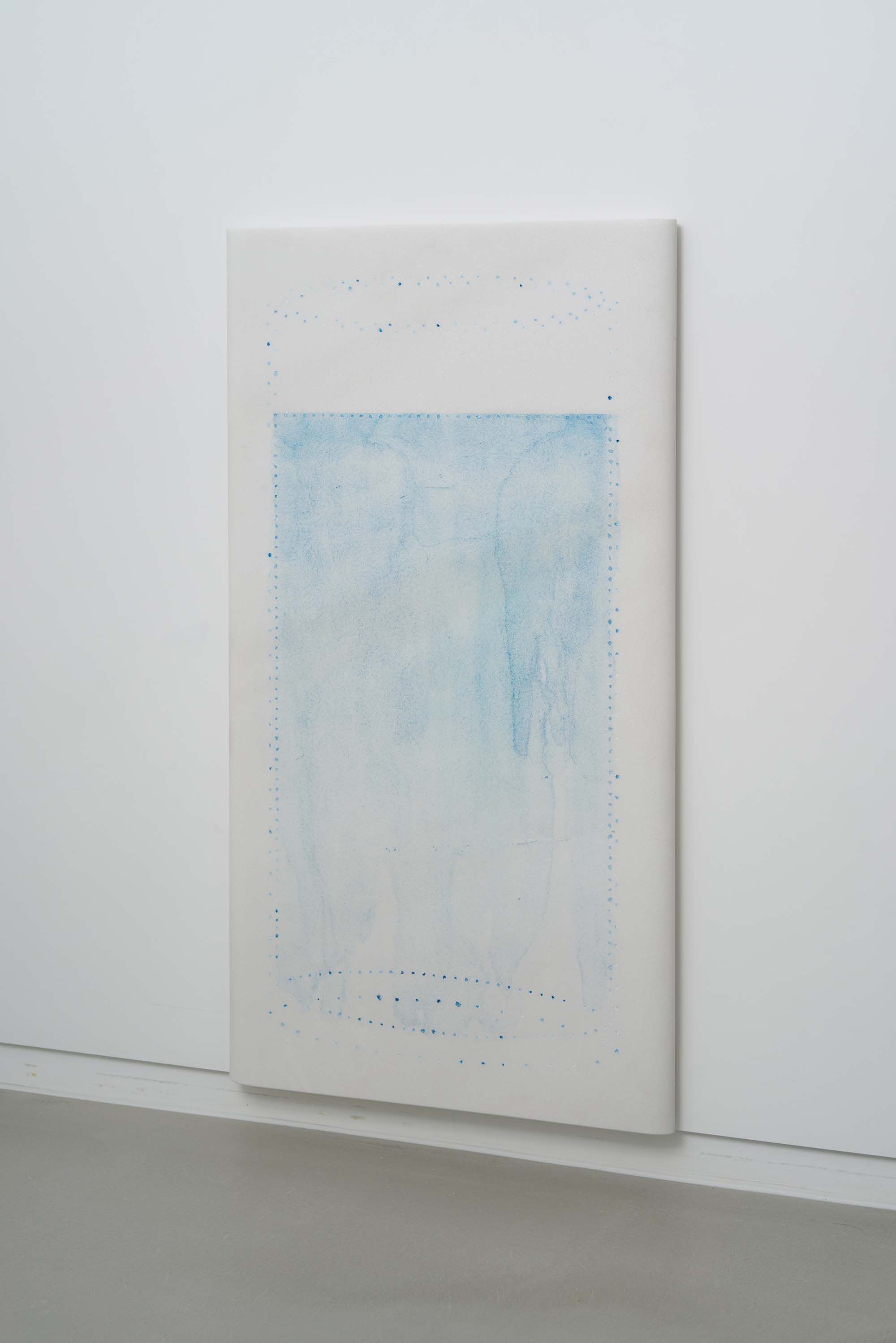
moved from the inside to the surface—gave rise to the works ‘Ice–Water–Cup and
Air’ (2021) and the ‘Humming Facades’ (2021) series on marble slabs.
These
series, presented in the exhibition 《HOURGLASS》(2021), trace their origins back
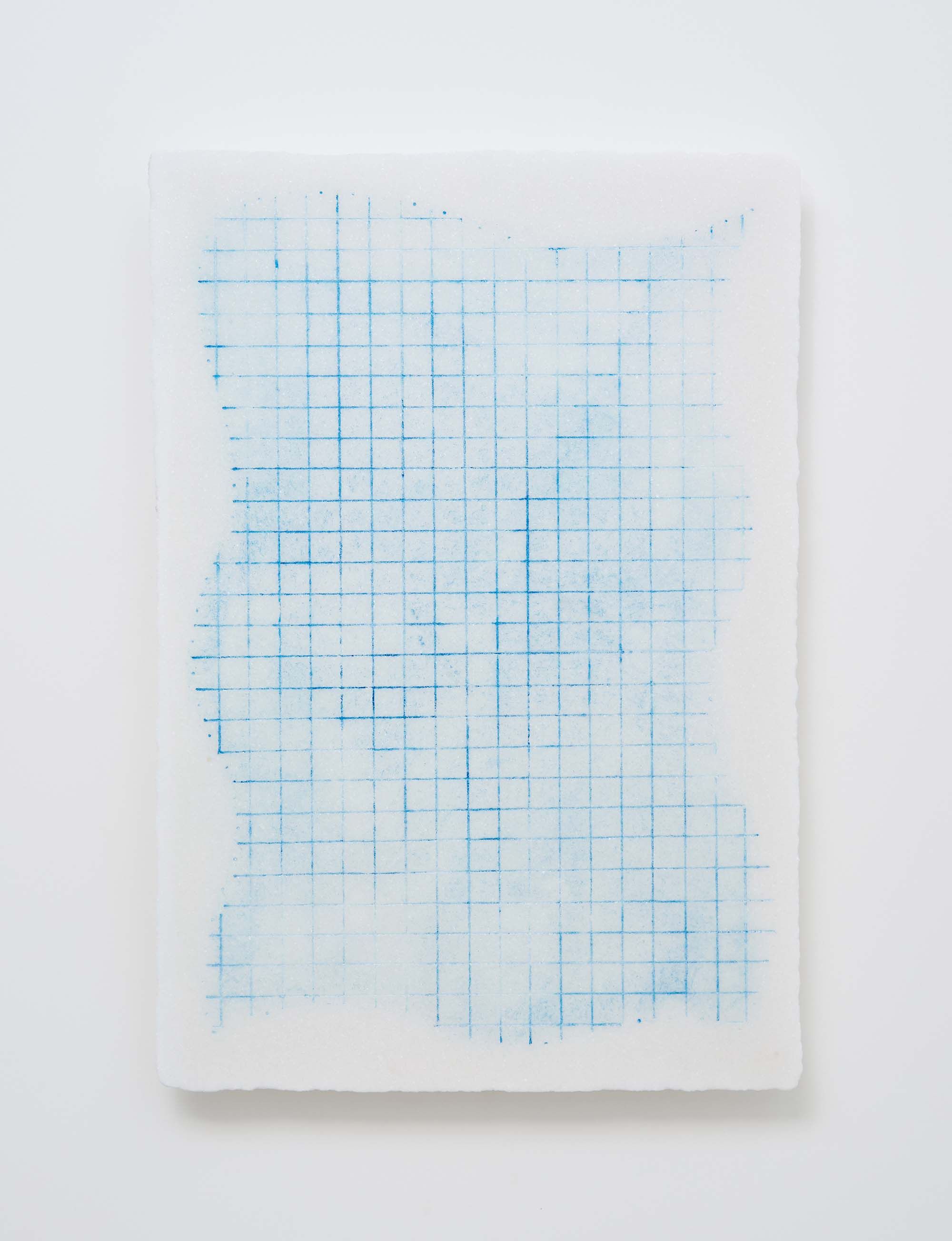
to Water Relief (2019), in which water-based
pigments were applied to white marble so that blue pigment seeped into the
stone as if it were being carved and chiseled. At that stage, rather than
focusing on cloud motifs, the artist seemed more concerned with exploring the
material of white marble itself and considering how to establish a relationship
with it.
By imagining a softened, liquefied form of carving—allowing pigment to
seep in rather than physically splitting the stone with a chisel—we glimpse the
artist’s attitude toward resisting a fixed understanding of material
properties. It also felt as though she was making a reckless yet courageous
declaration of her own in the face of the immense history and weight of stone,
which holds an unfathomably long span of natural time before which humans can
only feel helpless.
To be unable to predict the outcome of a fracture is to
relinquish a degree of control. In an era where tools such as software programs
or 3D printers could allow one to anticipate the final form of a work from the
outset, choosing instead to leave the process wide open to the anxiety of the
unknown feels distinctly unfamiliar today.
The
various choices of stone that Kwon Hyun Bhin has made over time, along with her
drawings that bear the character of rubbings, appear as part of a journey
leading to the ‘Cumulus humilis-fractus’, ‘Ice–Water–Cup and Air’ (2021), and
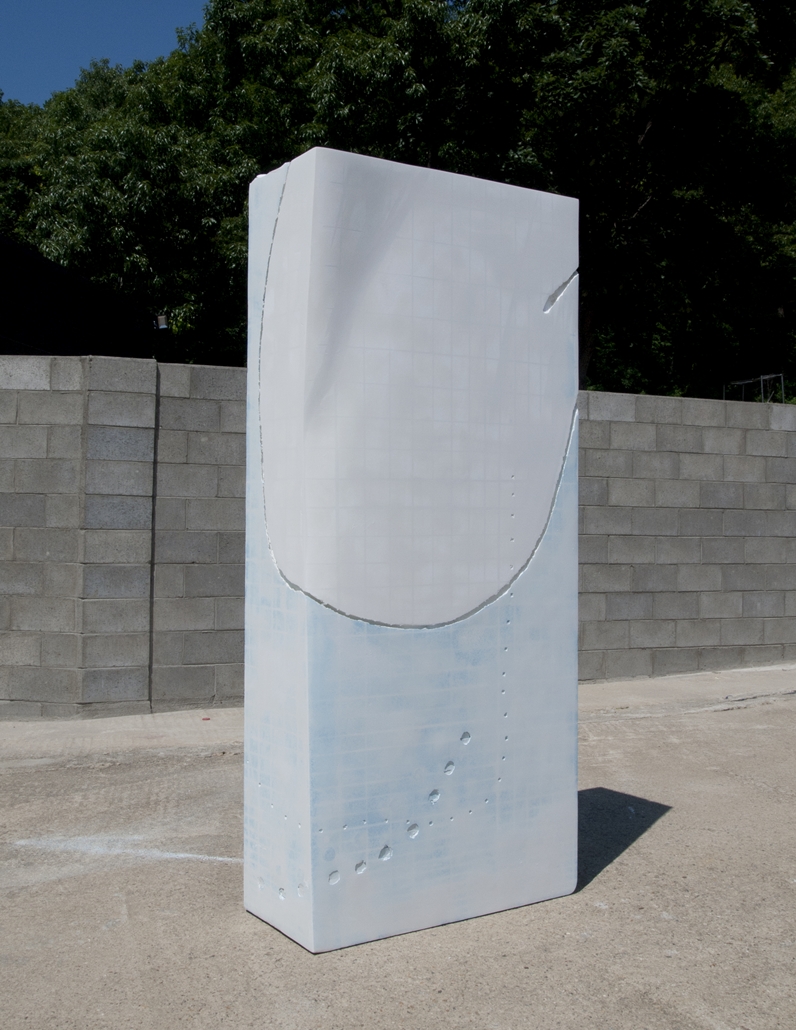
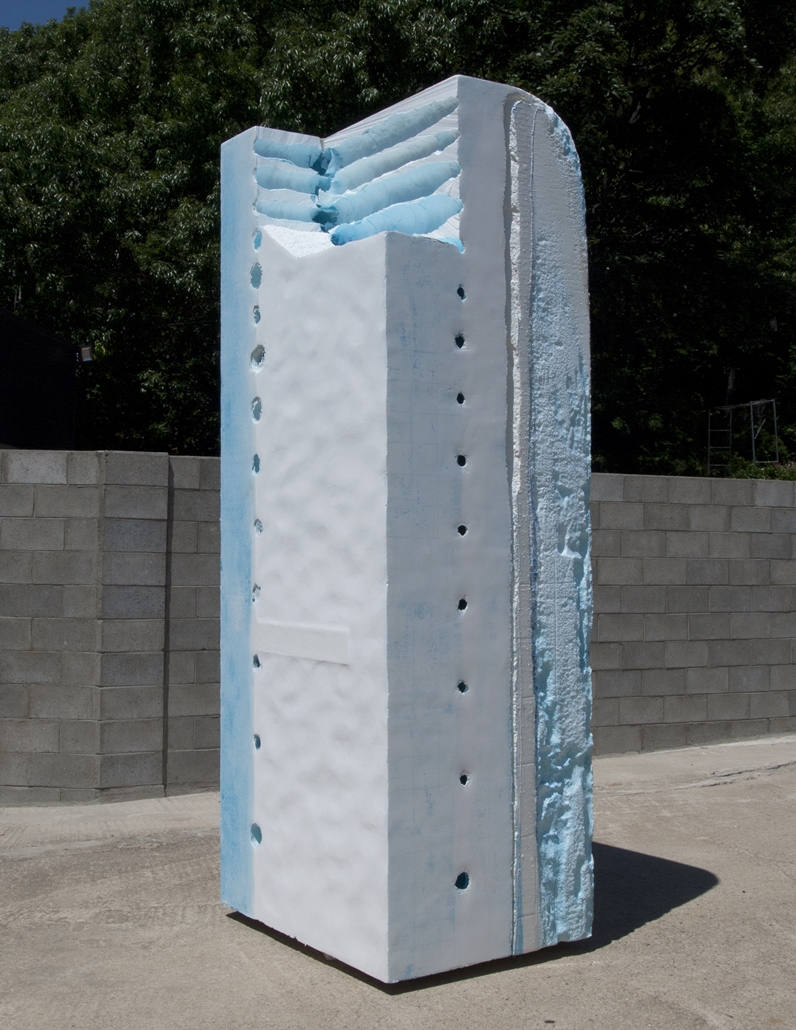
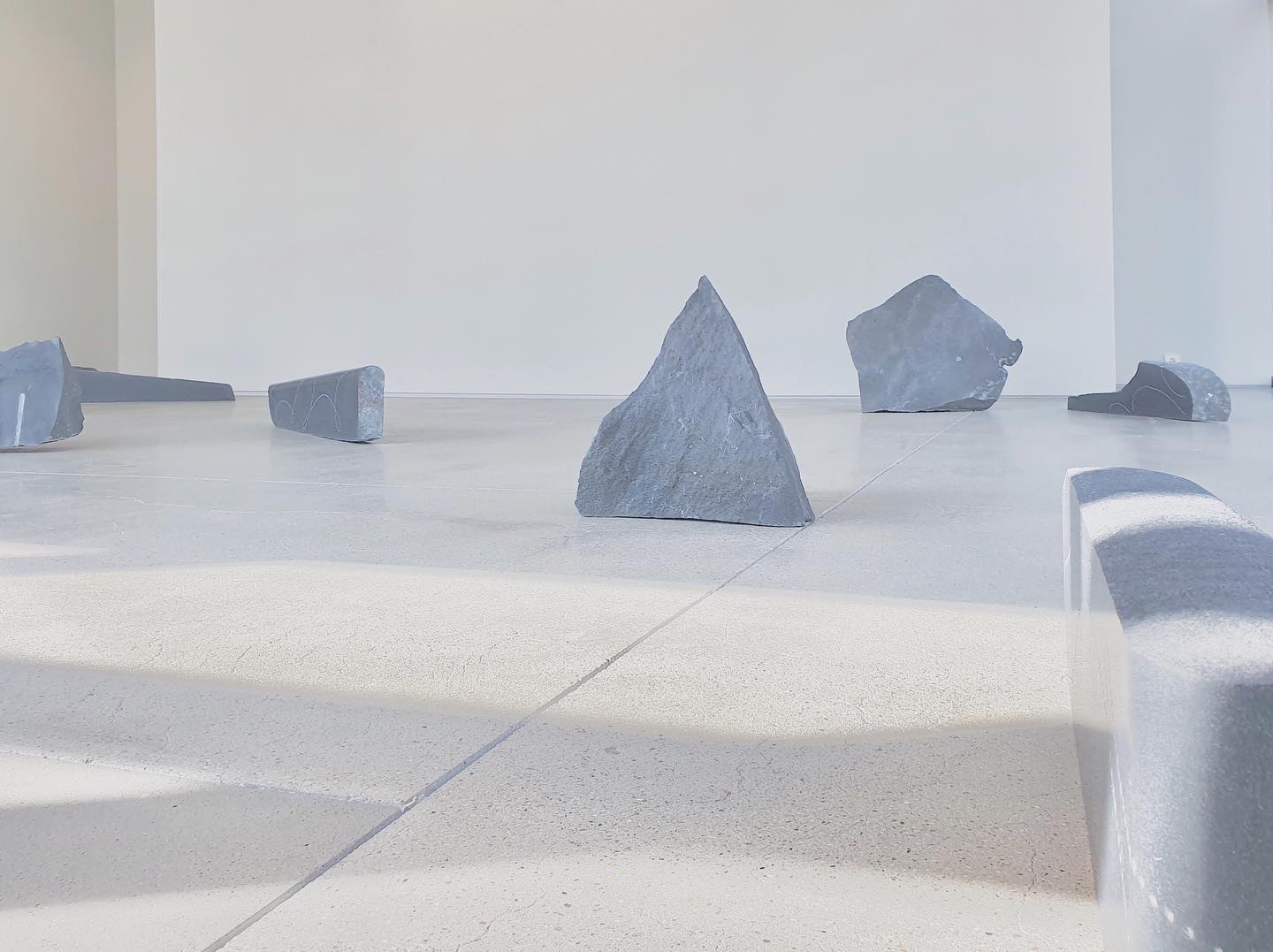
‘Humming Facades’ (2021) series. In 2019, she spent a period of time creating a
body of work by carving or chiseling marks such as holes and lines into the
surfaces of dark-colored stones like basalt or sandstone, rather than white
marble.
The inherent color, properties, and forms of the raw stone were laid
out broadly, like large-scale drawings responding to the shape of the space,
powerfully expressing themselves as they were. However, unlike the attempt
in Water Relief (2019), which sought to penetrate
and unsettle the materiality of stone itself, the artist’s traces on the
surface in these works remained more reliant on the original form and color of
the stone, resisting fusion like oil and water.
Basalt and sandstone, with
their strong inherent character and coloration, may not have easily allowed
space for intervention, making it difficult to find points of contact. Perhaps
this was a process of seeking modes of dialogue suited to the specific
character of each stone. In contrast, white marble—unlike basalt or sandstone—is
neutral and relatively receptive to external, heterogeneous elements, allowing
the artist’s intervention to proceed more fluidly. This quality is revealed in
the ‘Cumulus humilis-fractus’, ‘Ice–Water–Cup and Air’ (2021), and ‘Humming
Facades’ (2021) series presented in the exhibition 《HOURGLASS》(2021).
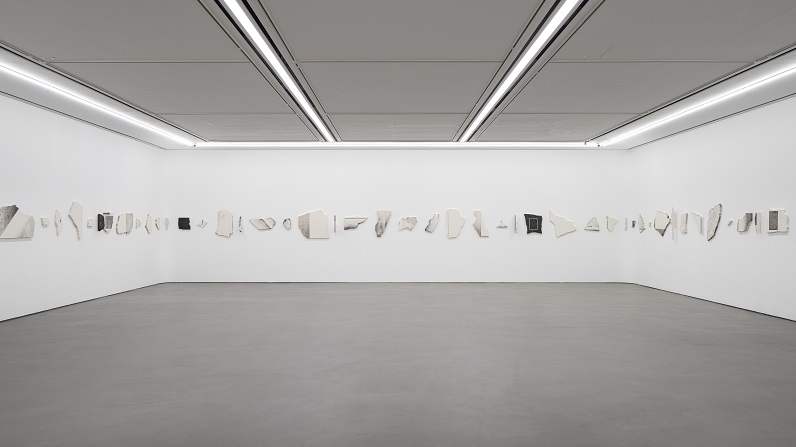
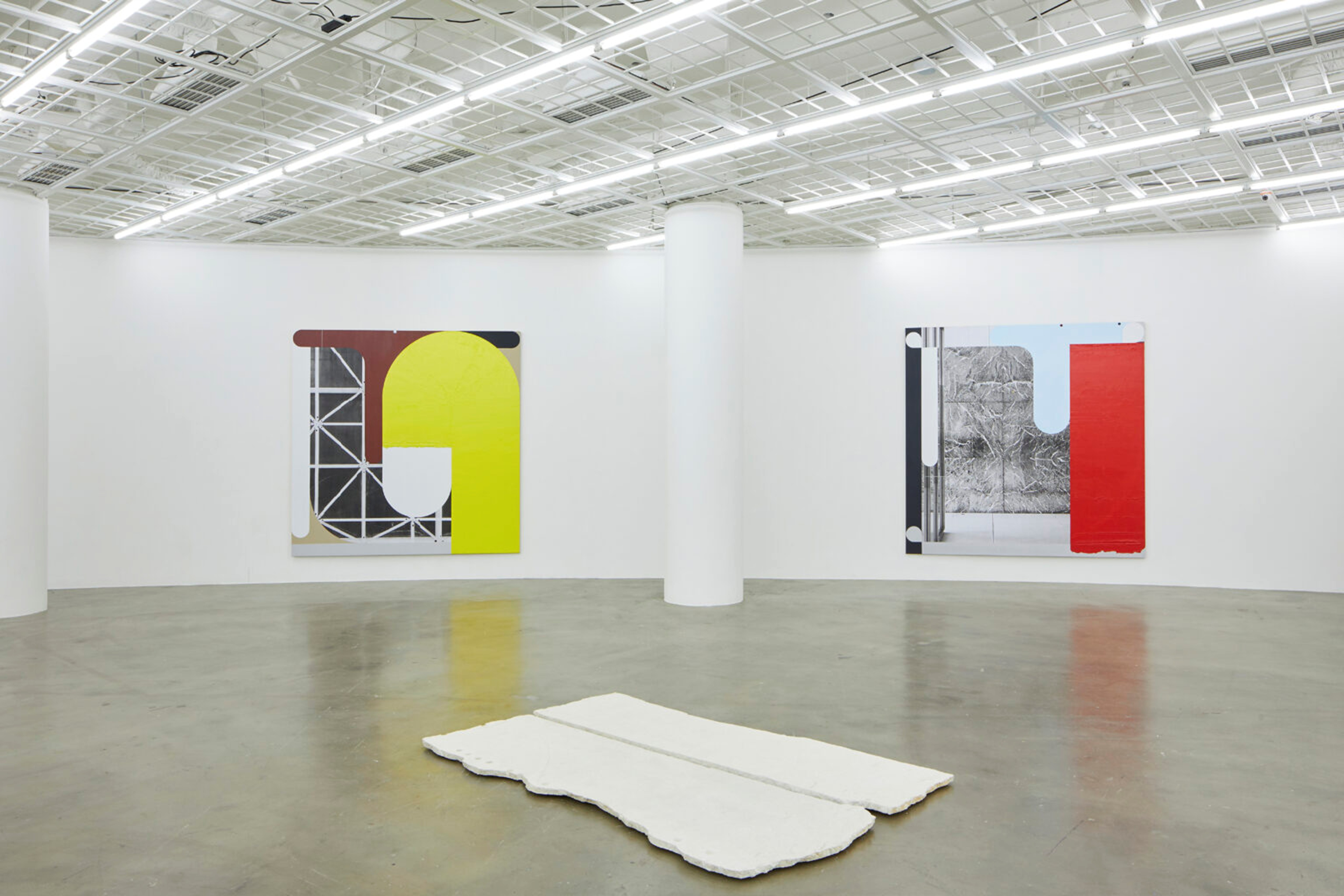
The
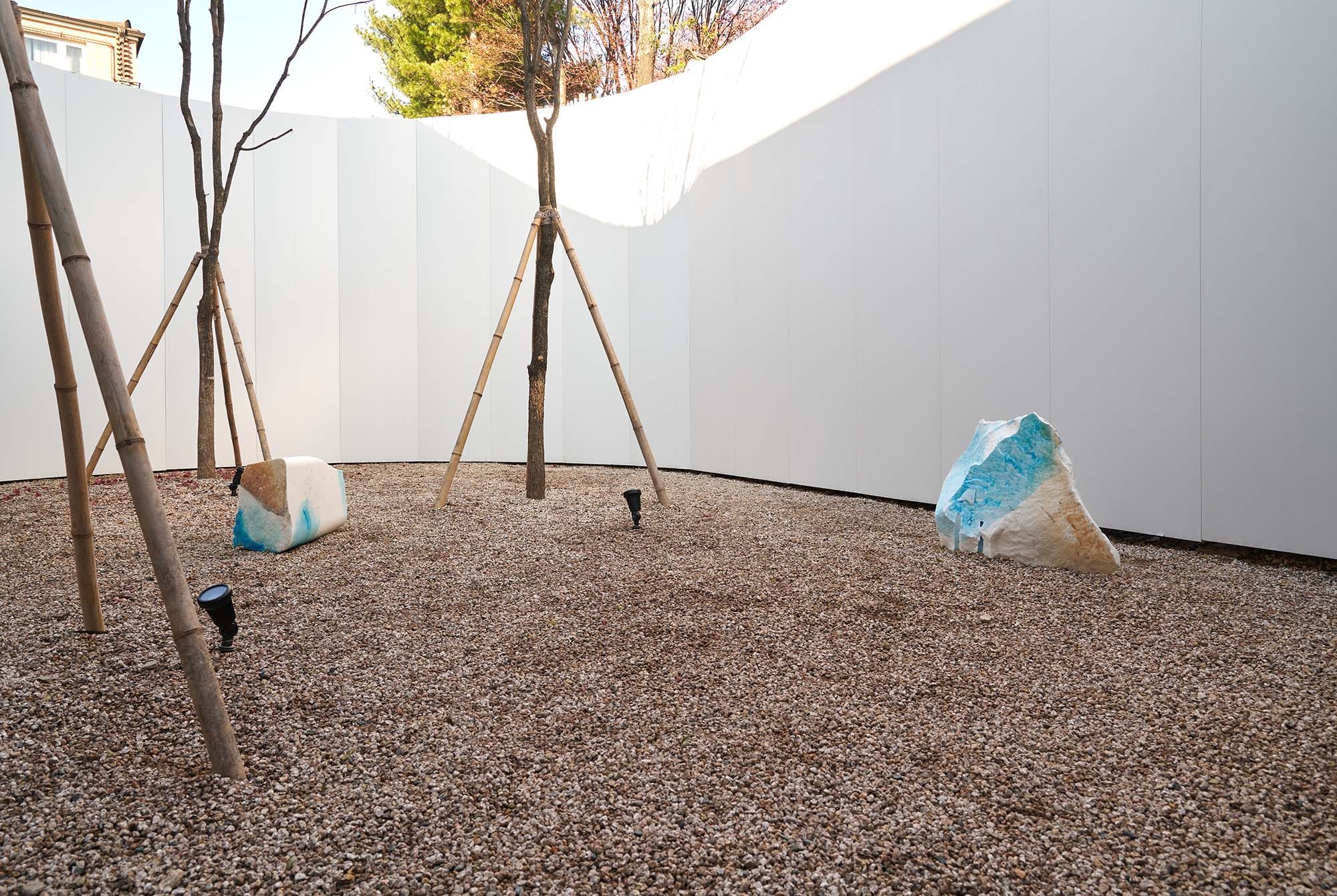
marble sculptures of the ‘Cumulus humilis-fractus’ series are scattered across
the gallery floor, forming shapes of fragmented clouds as if they had broken
away from a larger mass. These cloud fragments, resting on the ground and no
longer able to dissipate, hold both earth and sky within them. In addition to
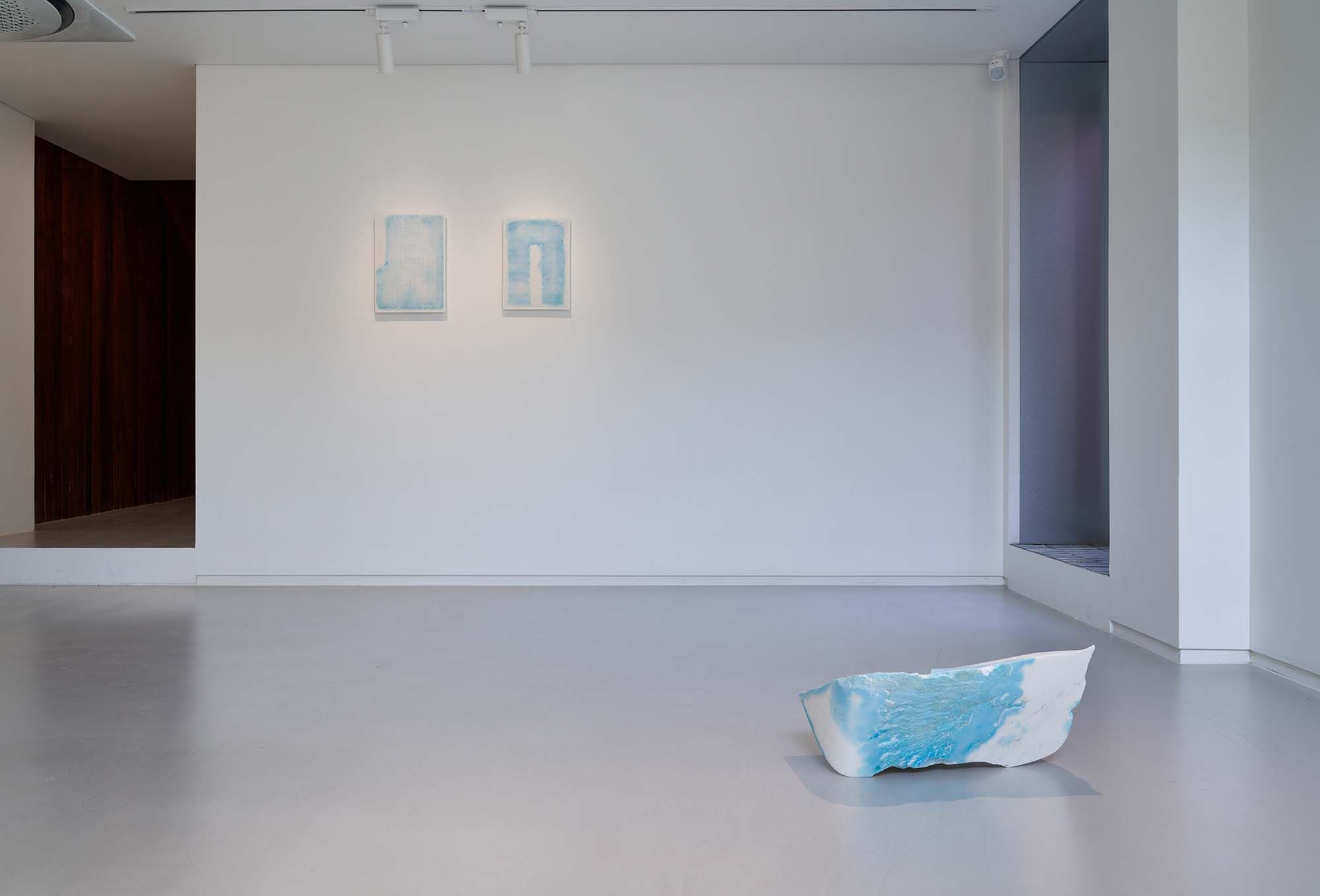
these sculptural clouds on the floor, the ‘Ice–Water–Cup and Air’ (2021) and
‘Humming Facades’ (2021) series, made using flat white marble slabs, may appear
planar in form but nonetheless encompass the space beyond the stone.
Thinking
that the transformation of ice melting into water inside a cup resembles the
way clouds disperse across the sky, the artist repeatedly carved dots, drew
lines, applied color, and erased it on marble slabs (‘Ice–Water–Cup and Air’
(2021) series). The resulting images do not resemble the form of any specific
object; rather, they are traces of contemplation on entities that cannot be
fixed, as well as a method for drawing the materiality of stone closer to
herself.
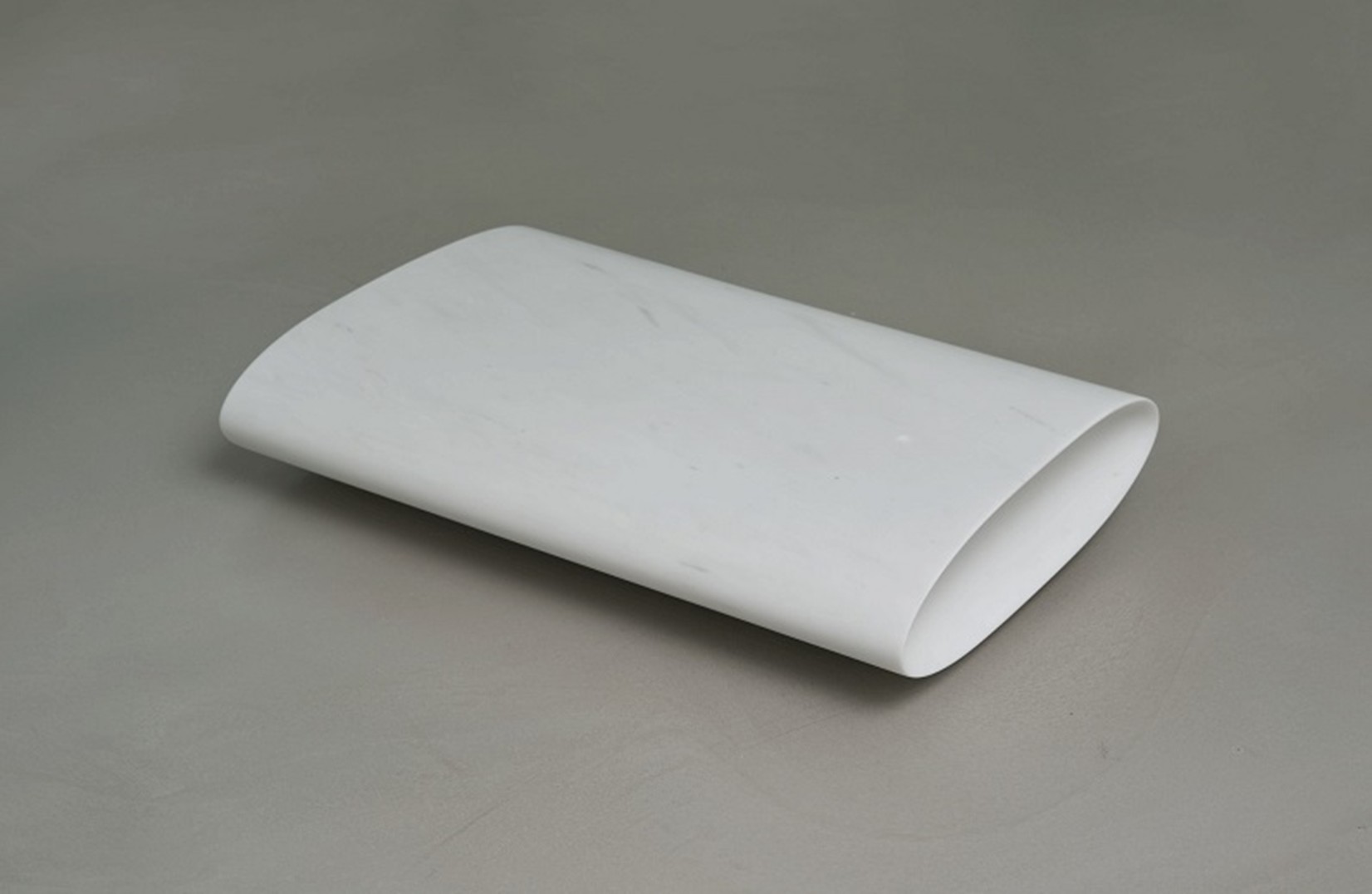
Although these works use flat marble slabs, they are clearly
three-dimensional objects with six sides—front and back, left and right, top
and bottom. The edges of this cuboid have been softened, while the top and
bottom retain minimal concavity, as if they could hold something. The thin stone
slabs maintain the bare minimum required to be three-dimensional, moving back
and forth across the boundary between plane and volume.
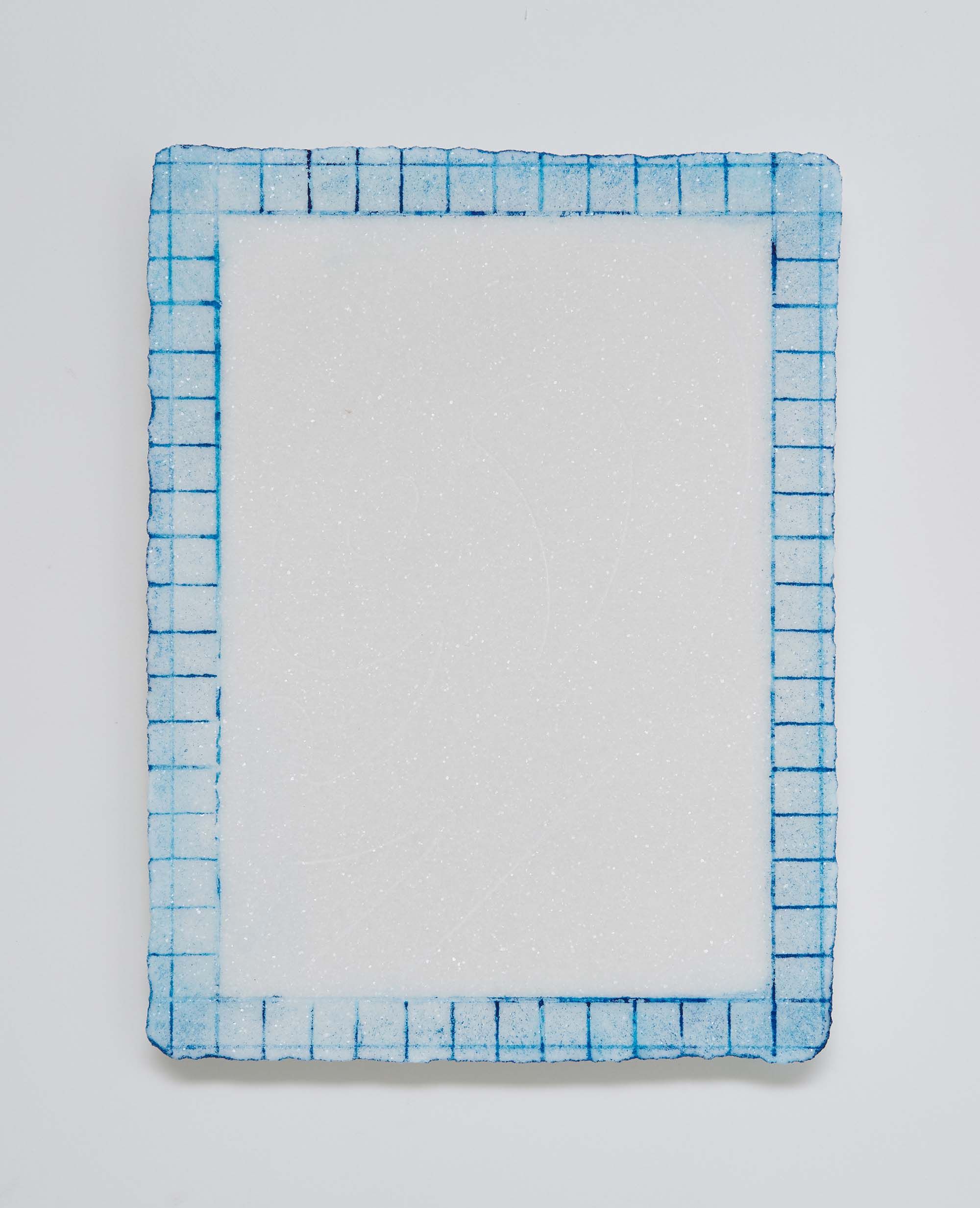
This continues in the
‘Humming Façade’ (2021) series, where the works begin to move away, little by
little, from metaphors of clouds, water, and ice. The surface of the stone is
ground ever thinner, and dots, lines, and color increasingly remain as traces
of the sculptural act itself. The artist’s domain within the stone gradually
expands, and she diligently grinds and grinds again—almost to the point where
the edges might crumble—repeatedly applying and erasing blue ink to further
inscribe her presence.
My
own fragmented flow of time spent thinking overlaps with the artist’s act of
breaking stone, repeating cycles of interruption and continuation. Writing
inevitably comes to resemble the attitude of the maker embedded in its subject.
After long periods of waiting, moments of abstract yet concrete realization
flash in and out, hovering just within reach amid the ambiguous atmosphere the
artist has created. While the artist moves stone, grinds its surface, and
strikes or breaks it to leave marks, external time continues to flow, yet her
time remains suspended. Only when she pauses her body and looks does the flow
of time finally synchronize into one.
Works
that hold nature within them continue to flow even after the artist’s hands
have left them. Because humans are inevitably left helpless within this
infinite continuity of time, confronting stone as a material becomes an act
that is both newly felt and unavoidably reckless. Countless attempts and
imaginings generated while moving toward something unattainable foster hope for
moments that feel as though they might be reached.
The
longer I spend looking at Kwon Hyun Bhin’s works over time, the more I find
myself wanting to observe, as slowly as possible, the subtle push and pull
created through the constant exchange of breath and gaze between the artist and
the stone. I also begin to imagine the works—whether as things being made or
things being viewed—aging and resonating together with us. In the end, perhaps
the artist, the viewer, and the works alike are all spending time somewhere
between creation and disappearance, with those two poles set at either end.