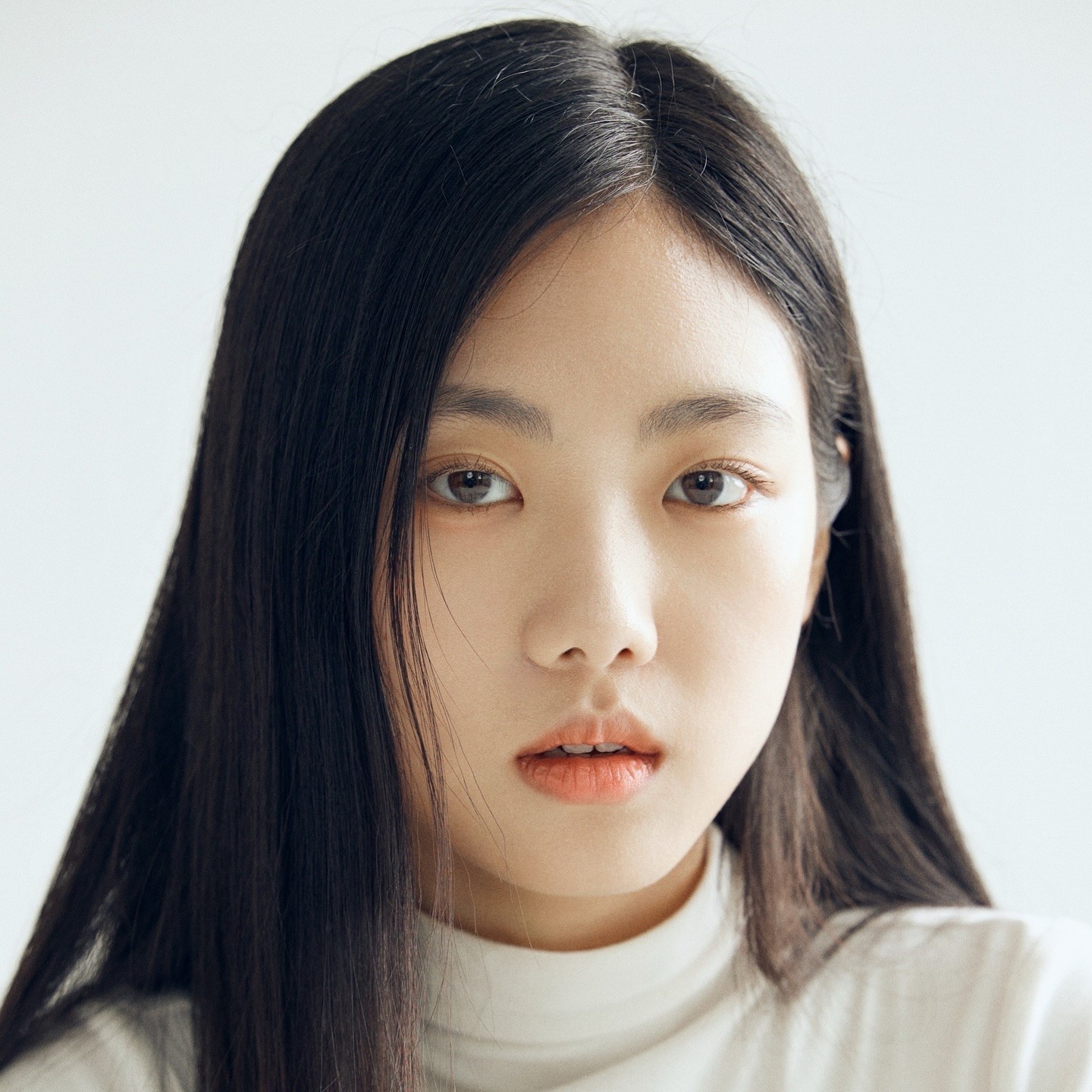
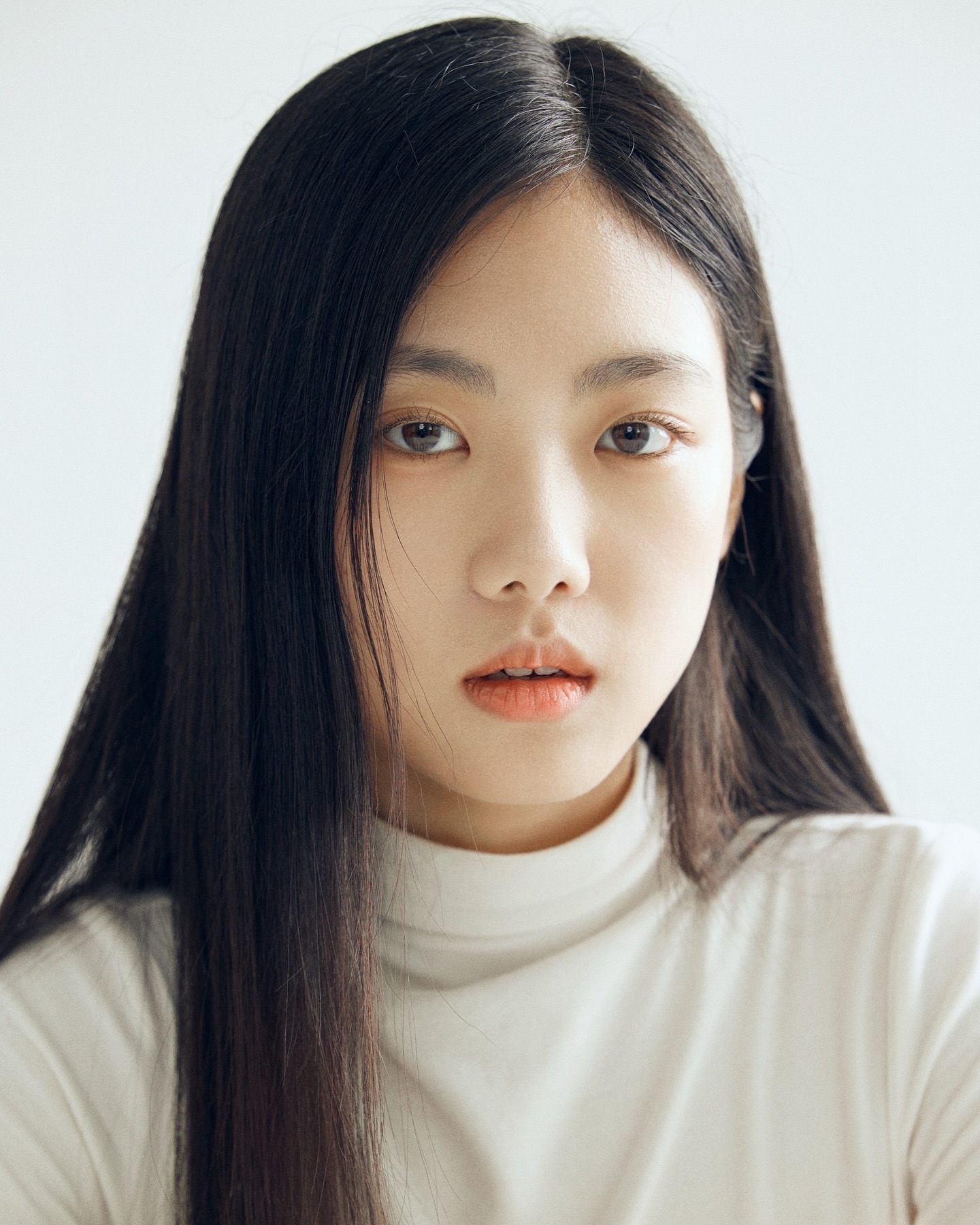
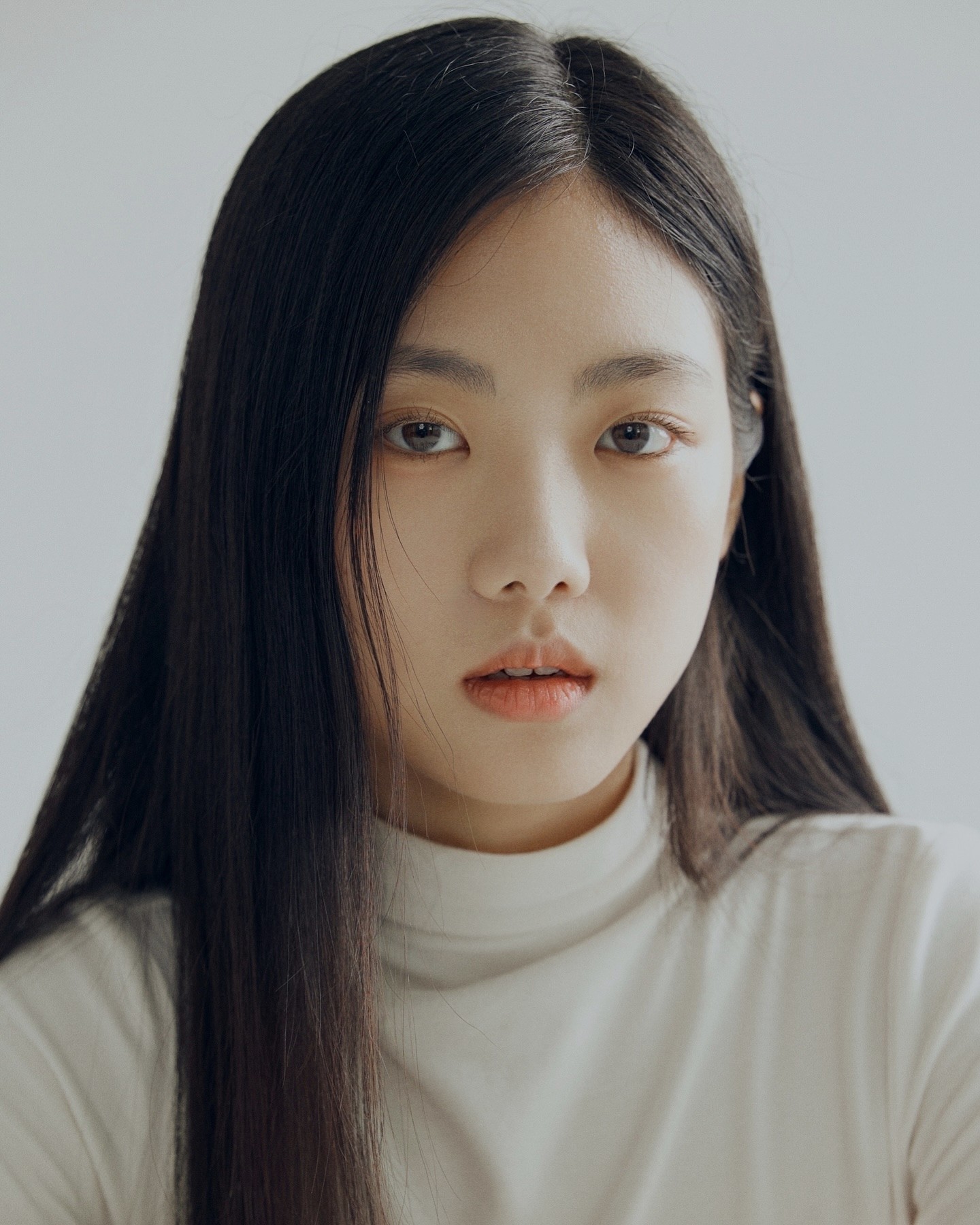
WONJEONG DEPARTMENT STORE graduated from the Department of Fine Arts at Korea National University of Arts. She currently lives and works in Seoul.
WONJEONG DEPARTMENT STORE (b. 1999)
explores desire for fantastical images and the ways these images connect the
body to the world, primarily through media installations and performance.
Drawing fleeting and unstable fantasies into the body and onto the screen, the
artist experiments with bodily sensations experienced both online and offline.

WONJEONG DEPARTMENT STORE began as a brand
created by artist Lee Wonjeong to offer performances to audiences in the form
of a service. Through this brand, the artist produces performance-based videos
and media installations, pursuing modes of practice that can be articulated
within contemporary media and technological environments.
What began as a one-off event has since
evolved into an ongoing brand project, continuing to operate and expand to the
present day.

WONJEONG DEPARTMENT STORE describes her
practice as “providing services or chasing fantasies.” In an attempt to grasp
fantasies—like reels or images that surface briefly only to vanish almost
immediately—the artist borrows from what is considered eternal: the realm of
“God.” This impulse is reflected in the works through the appropriation of
religious iconography and elements, such as angels and triptychs, as well as
through the incorporation of biblical passages as part of the soundscape.

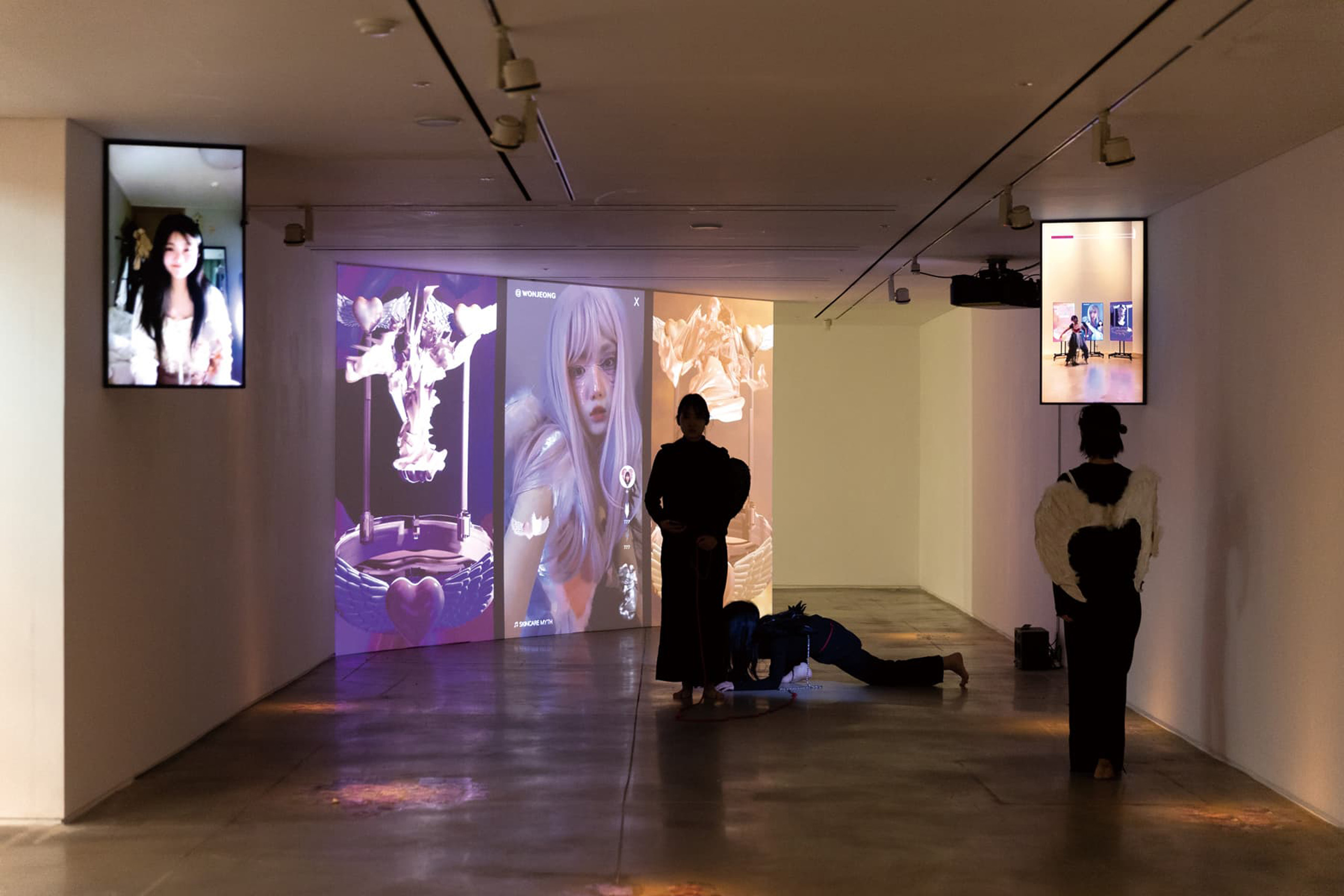
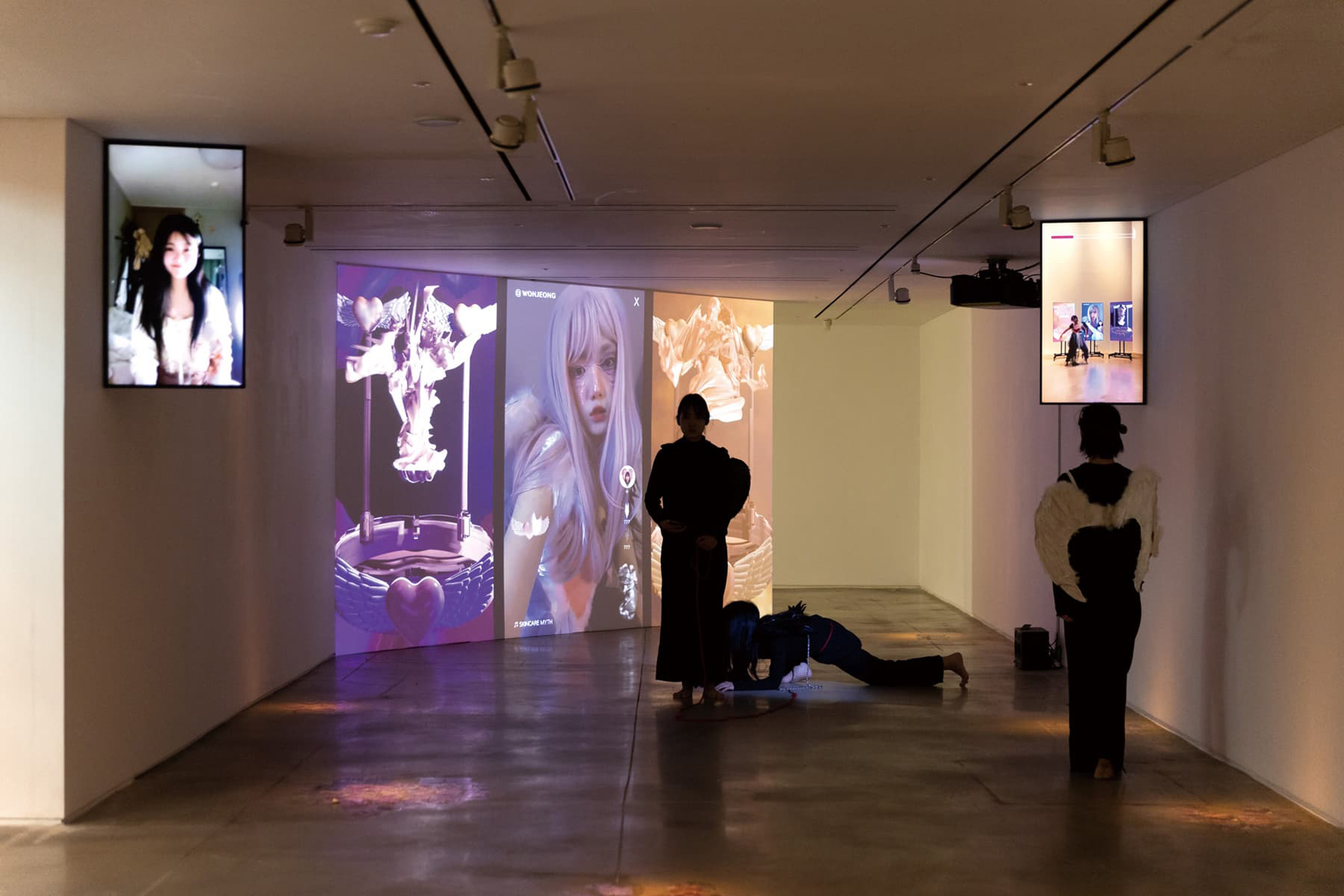
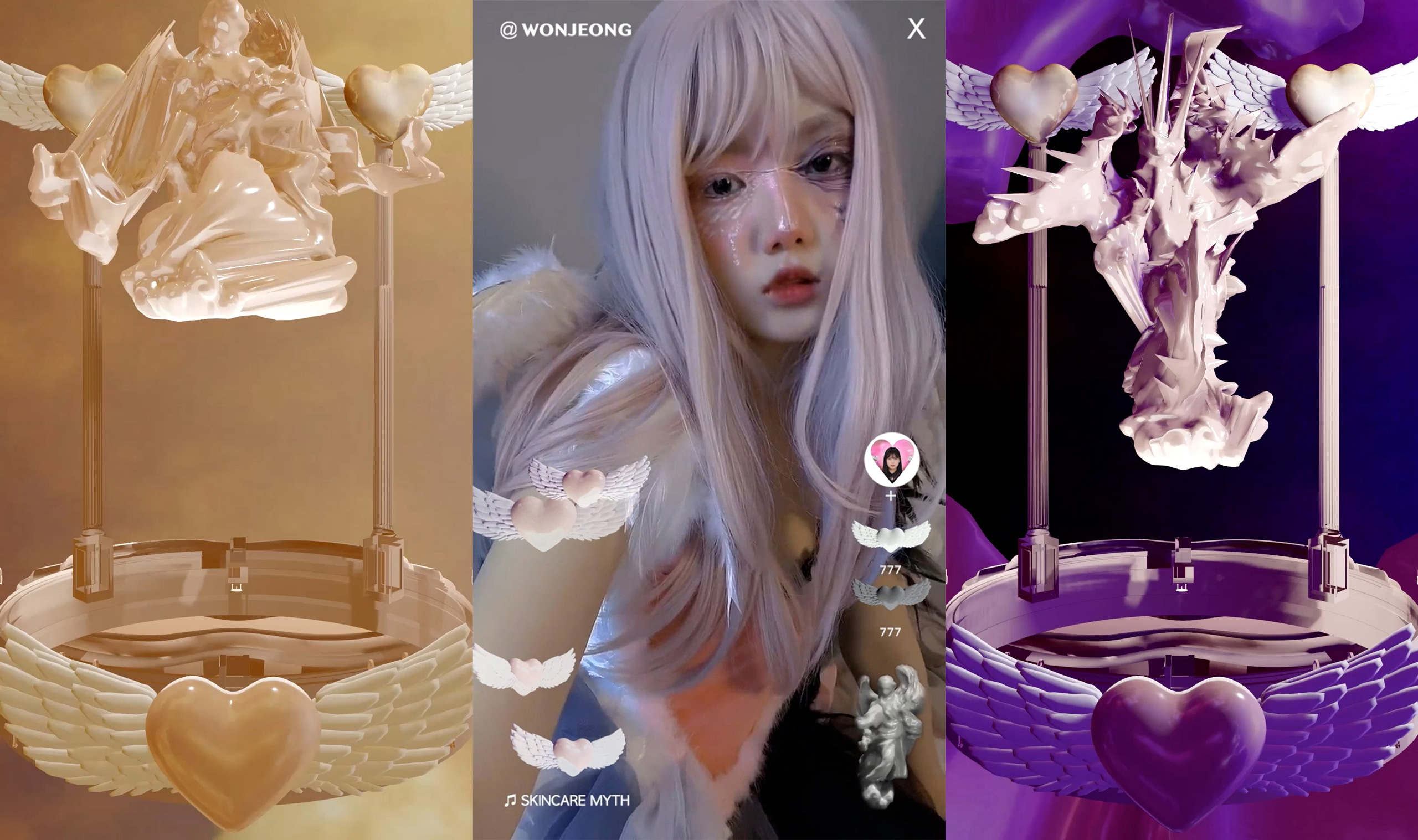
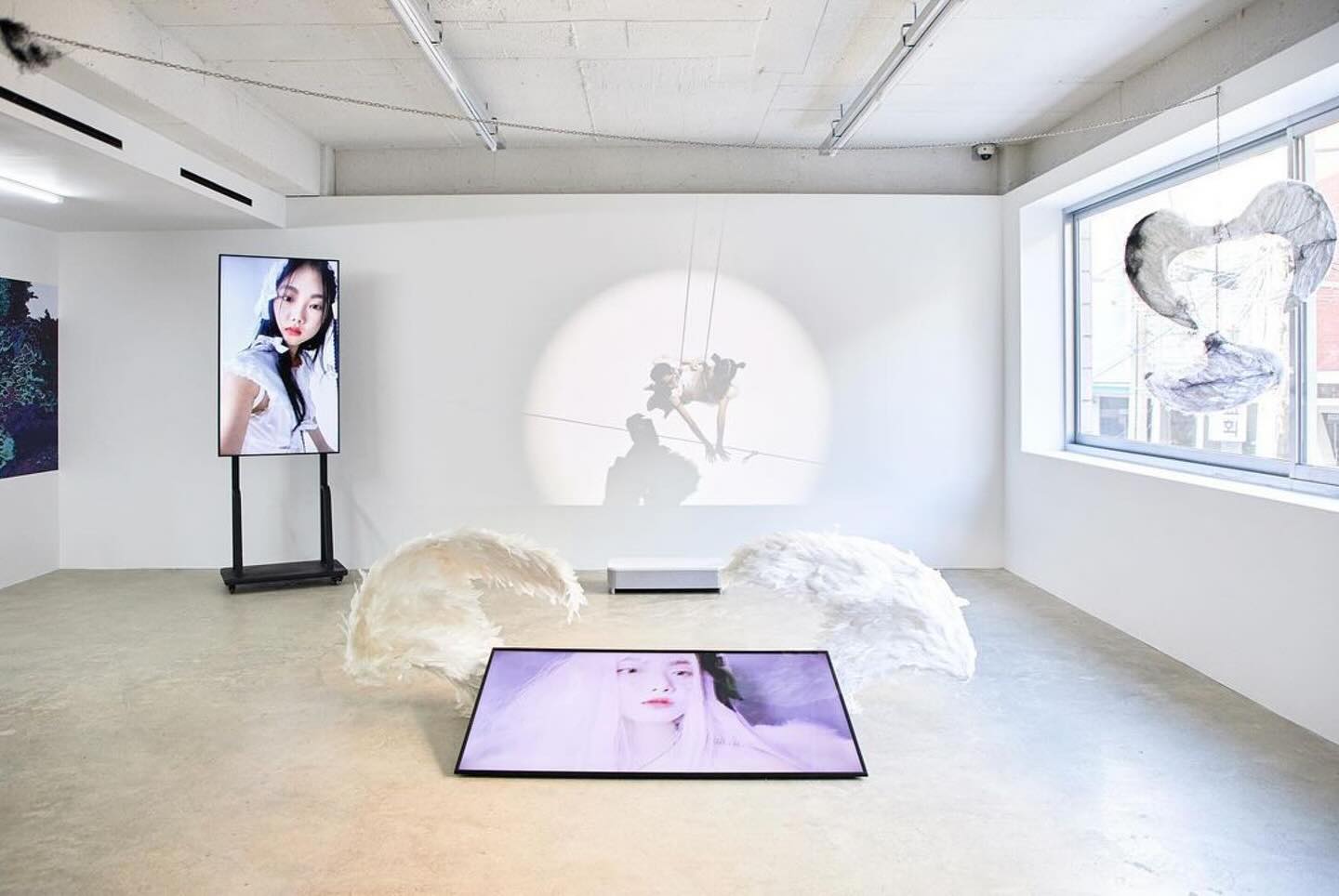
For example, through the work ઈSKINCARE
MYTHઉ (2022–2023), WONJEONG DEPARTMENT STORE constructs a myth
for the digital self through the character of a “woman who steals from God.”
This myth begins with a belief in finding one’s alter ego in a virtual body
online—such as on social media—and transforming into a virtual skin.
In this work, WONJEONG DEPARTMENT STORE
starts by examining the desire to record oneself as a “mad woman” found in past
novels and contemporary songs, then appropriates the language of religion to
sculpt the self into a service—packaged and presented like a commodity.

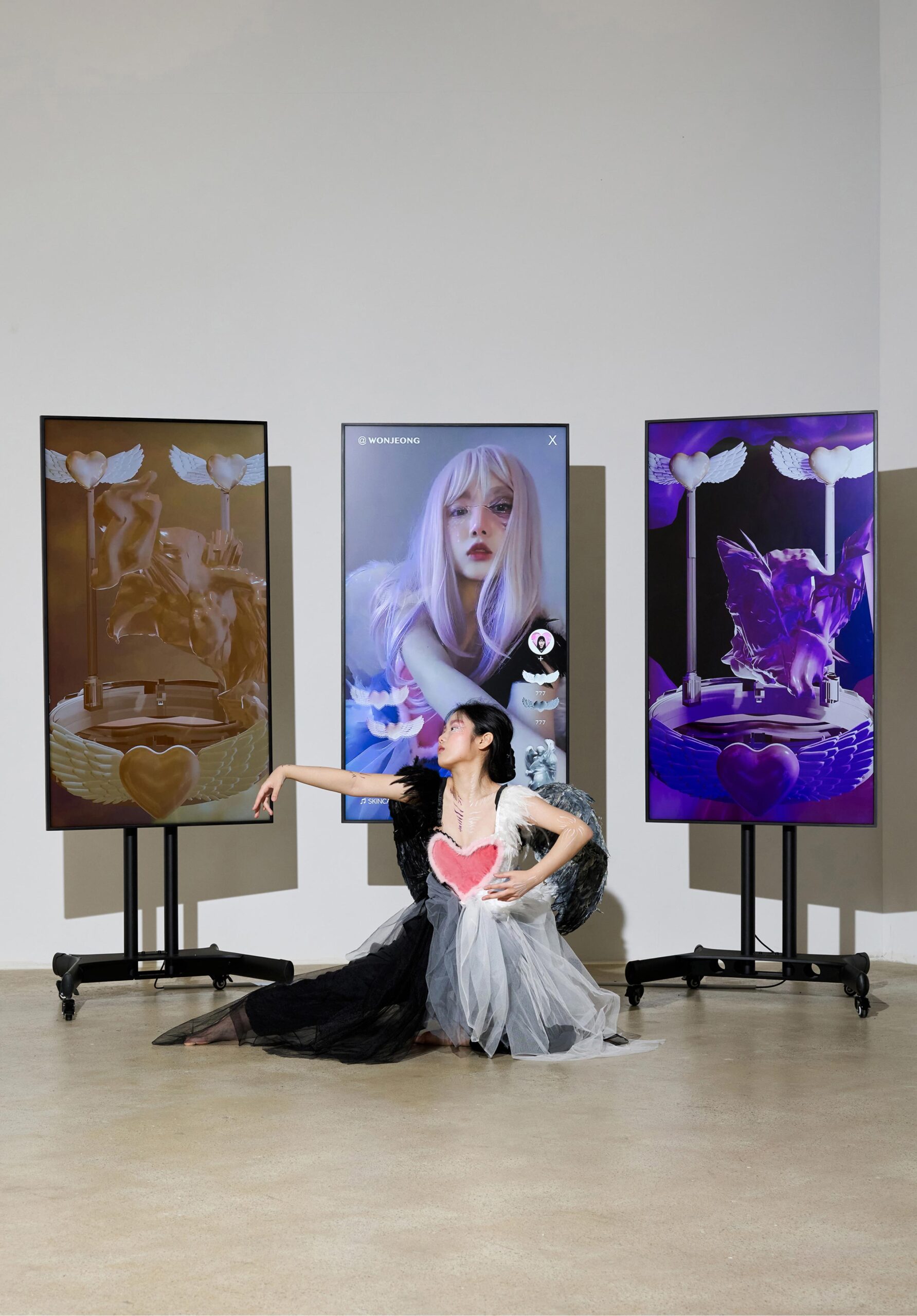
As a result, the project first took the
form of uploading selfies taken in the guise of an e-girl on social media, and
subsequently expanded into an offline exhibition that appropriated religious
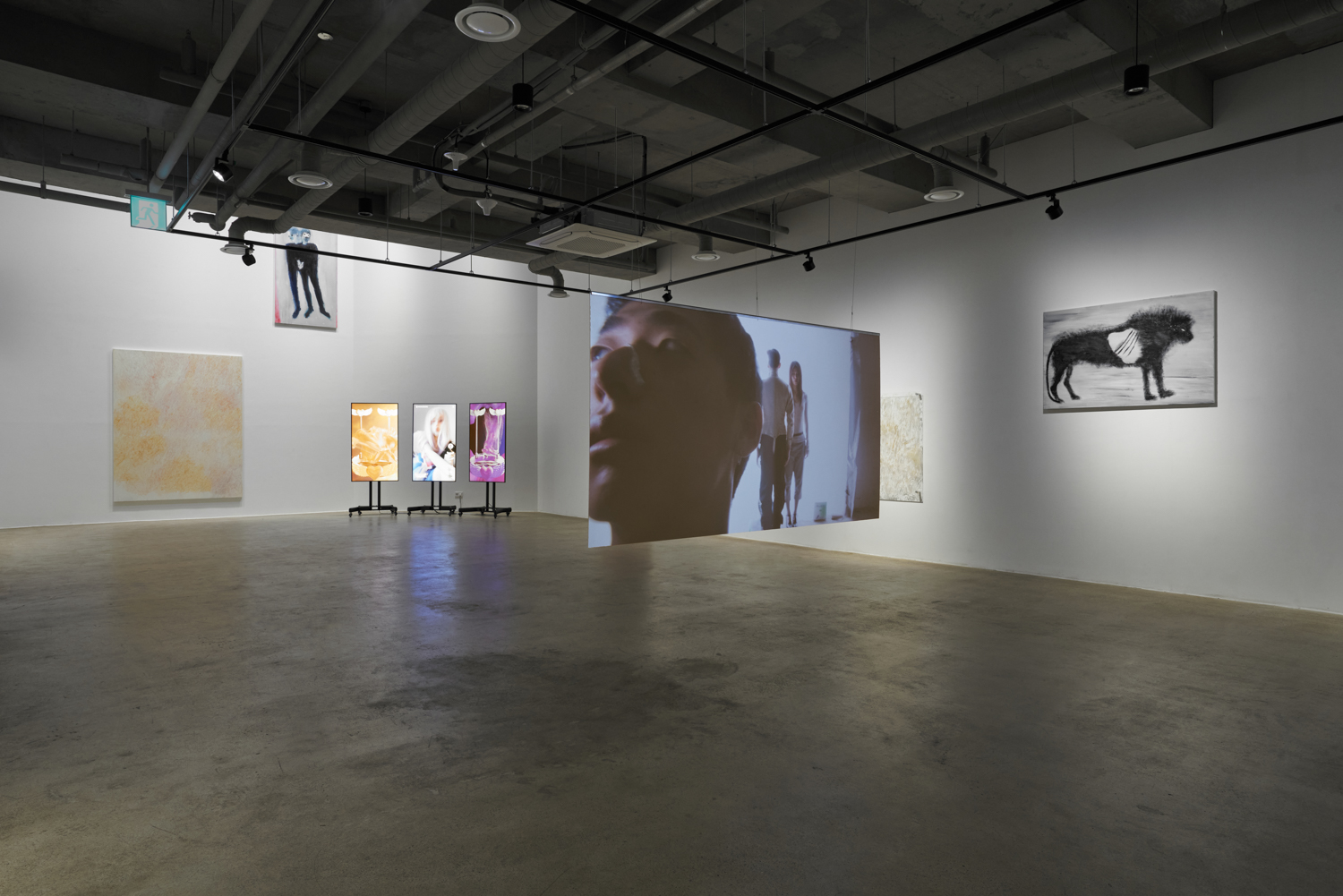
structures. In the exhibition, the artist installed three screens by borrowing
the triptych format found in Western medieval religious paintings. The central
screen displayed selfies, while the screens on either side presented virtual
images of angels and monstrous figures.

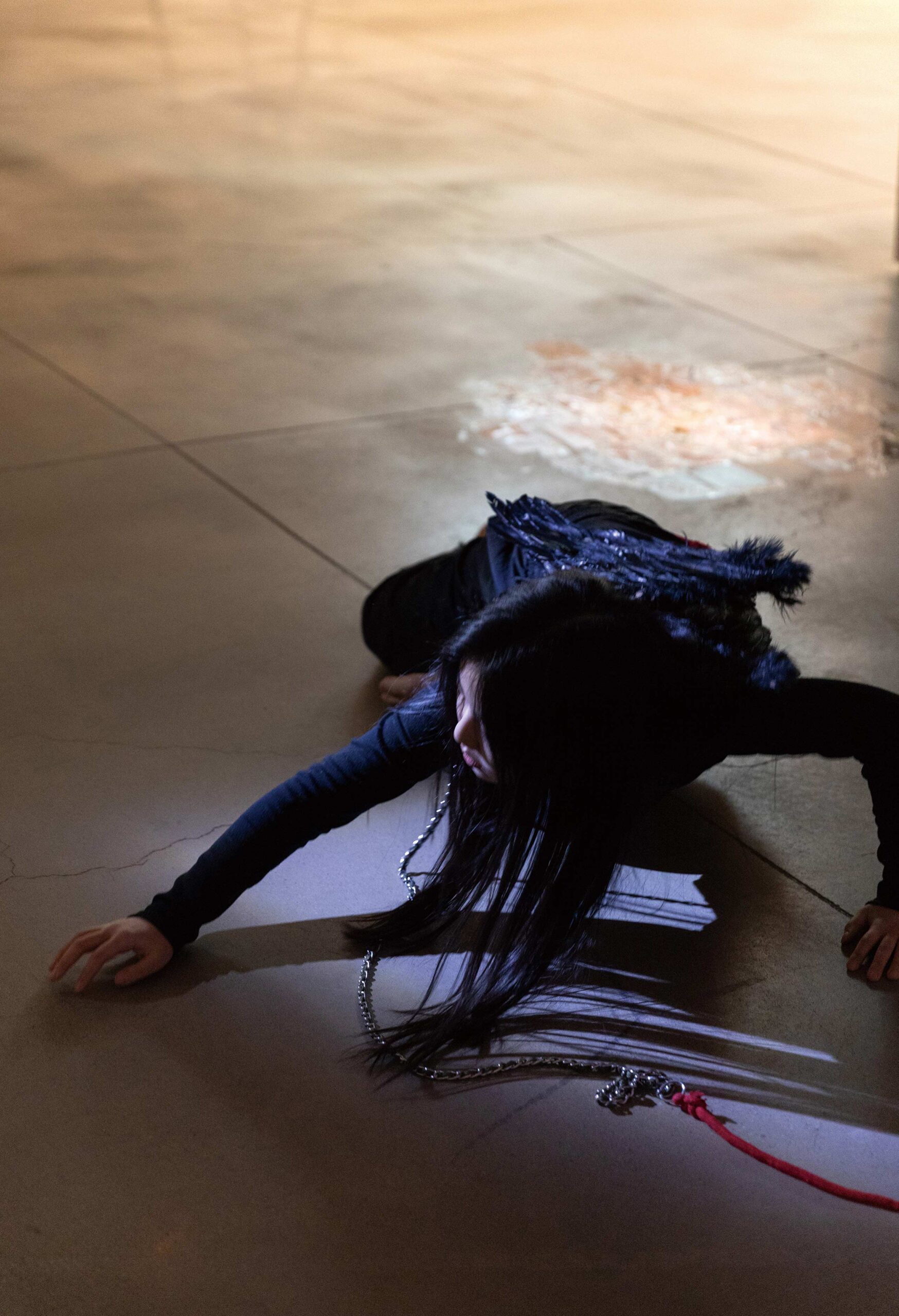
Beneath the screens, a performance unfolded
in which the performer—also the artist—danced to a soundscape where the
recitation of biblical passages intersected with classical music and
contemporary electronic beats. While the figure on the screen gazes outward,
beyond the camera, the figure dancing below directs her senses inward, toward
the interior of the body.
This scene is staged from the premise that
becoming a being who dances between monsters and angels constitutes salvation
within this myth. Through this, the artist constructs a self-romantic
atmosphere by offering herself as a sacrifice to the mythology she has created,
positioning the relationship between the body on the screen and the physical
body in real space.

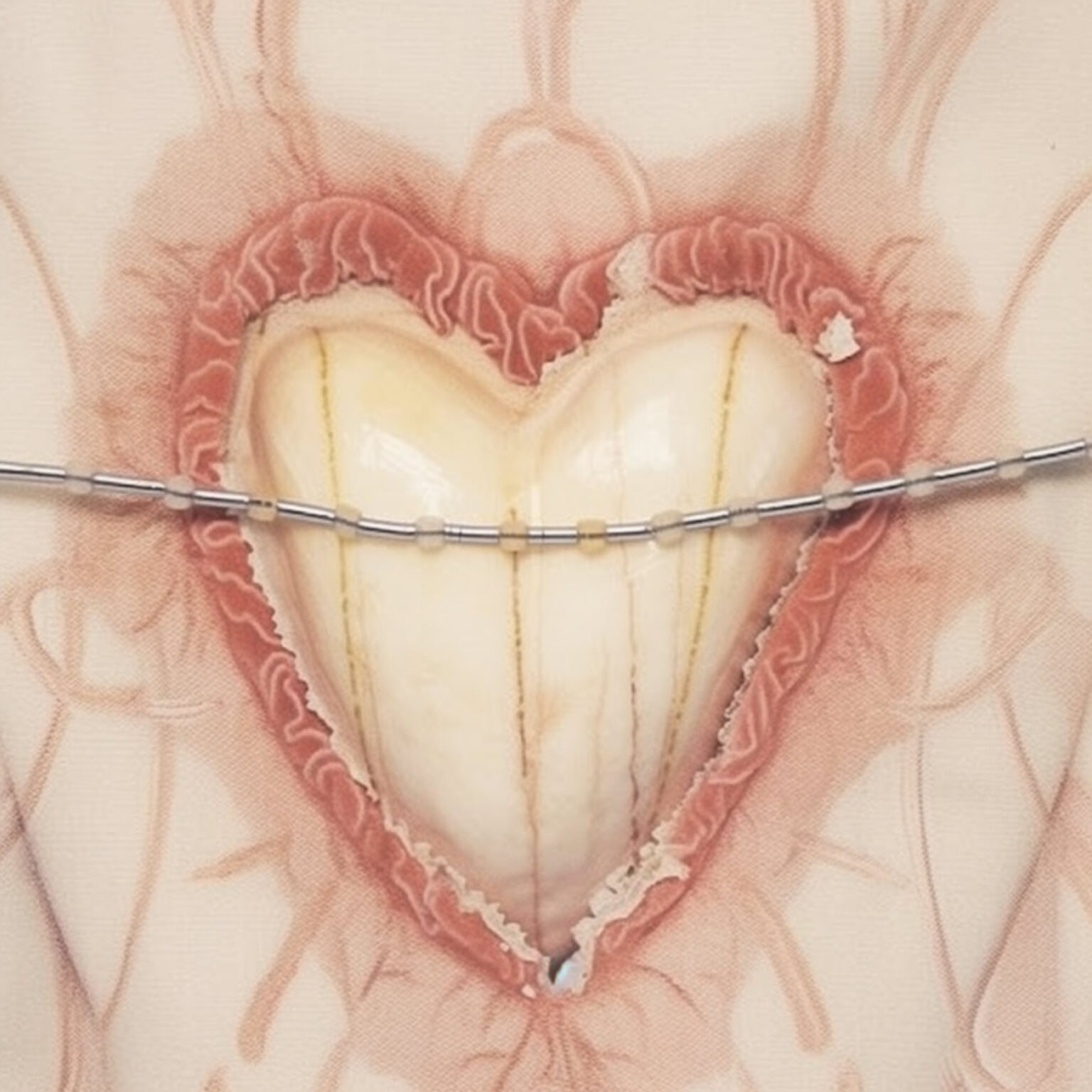
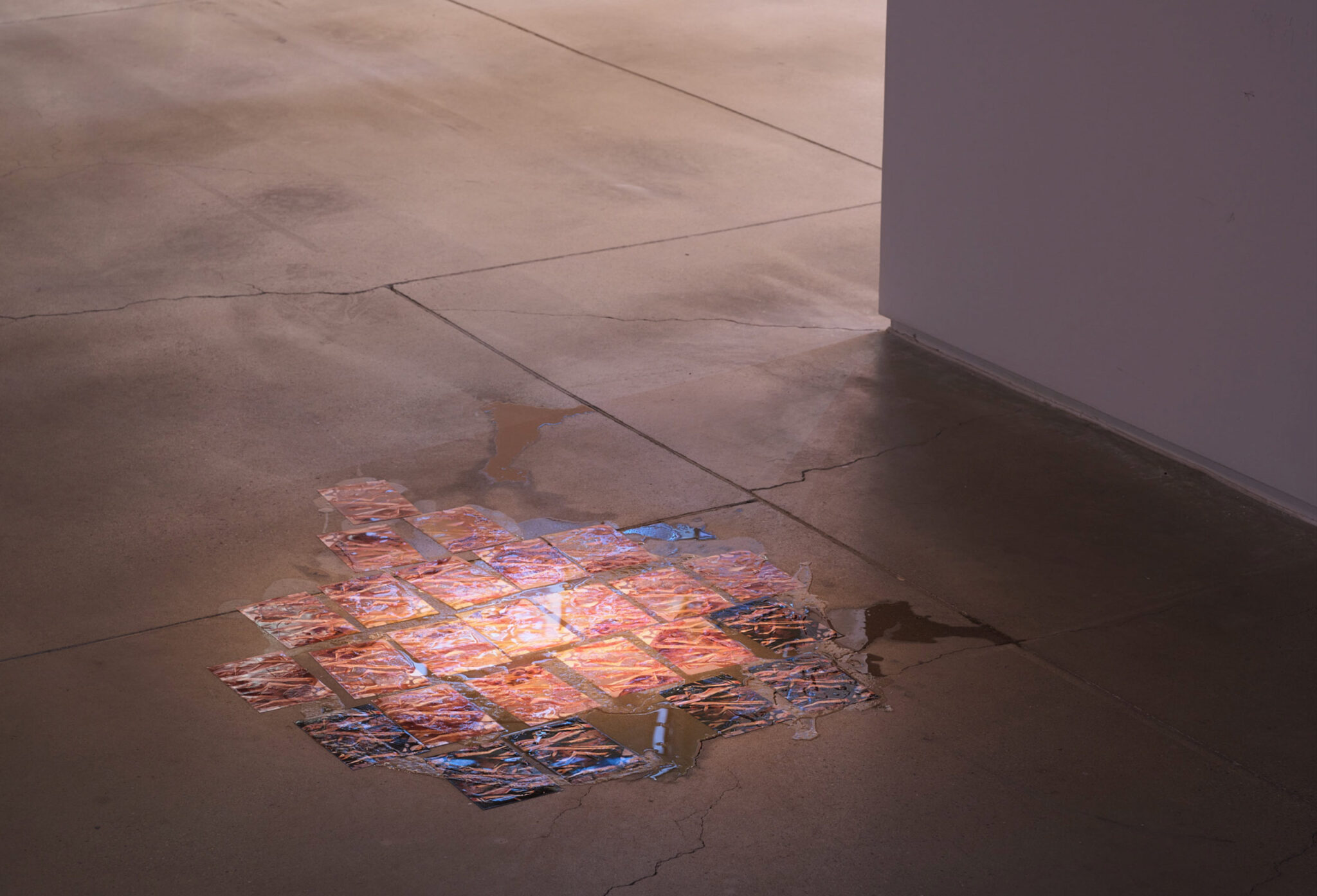
Thus, while in ઈSKINCARE
MYTHઉ the self clings to the thin boundary between the online
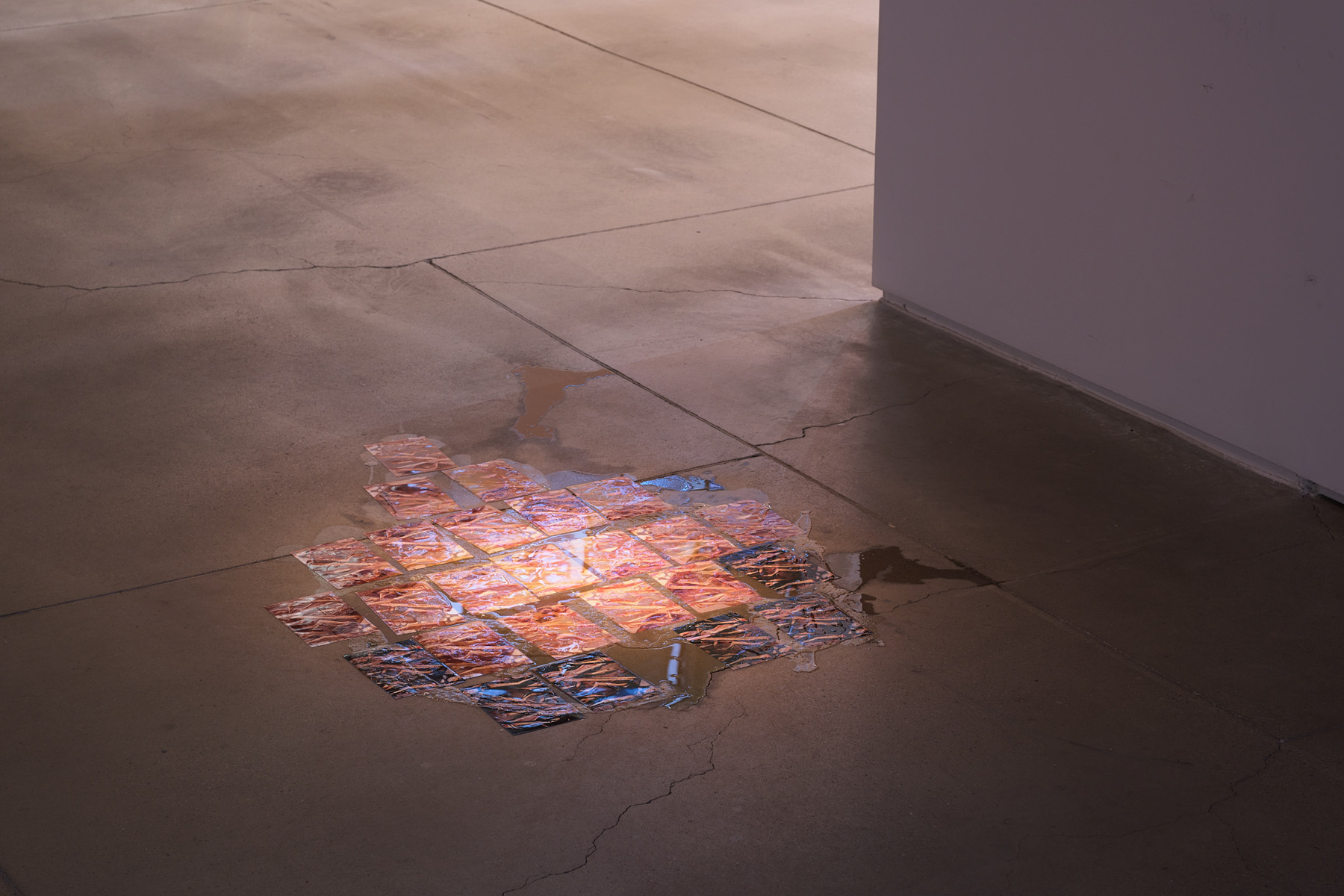
and offline realms like a layer of skin, Dropped Skin and Online Body
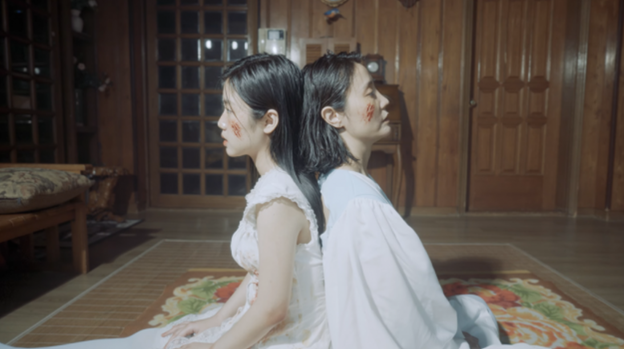
Fluid Letters (2022) presents traces of that existence as bodily
fluids and bloodstains that seem to have leaked beyond the screen and
solidified into material form.
In the exhibition 《The
Last Things Before The Last》 (HITE Collection, 2022),
WONJEONG DEPARTMENT STORE presented these works together, constructing a scene
in which skin, bodily fluids, bloodstains, and inflammation converge to
generate a single body. While the body on the screen exists as a visual entity,
smooth like skin, the actual body present in the exhibition space exists in
tactile and auditory states.
Through this juxtaposition, the artist
reveals that images in the digital realm and the physical body in real space
are not positioned as opposites but coexist like bone and flesh. At the same
time, the work evokes an awareness of the limitations of the physical body, as
well as sensations of desire and contact.

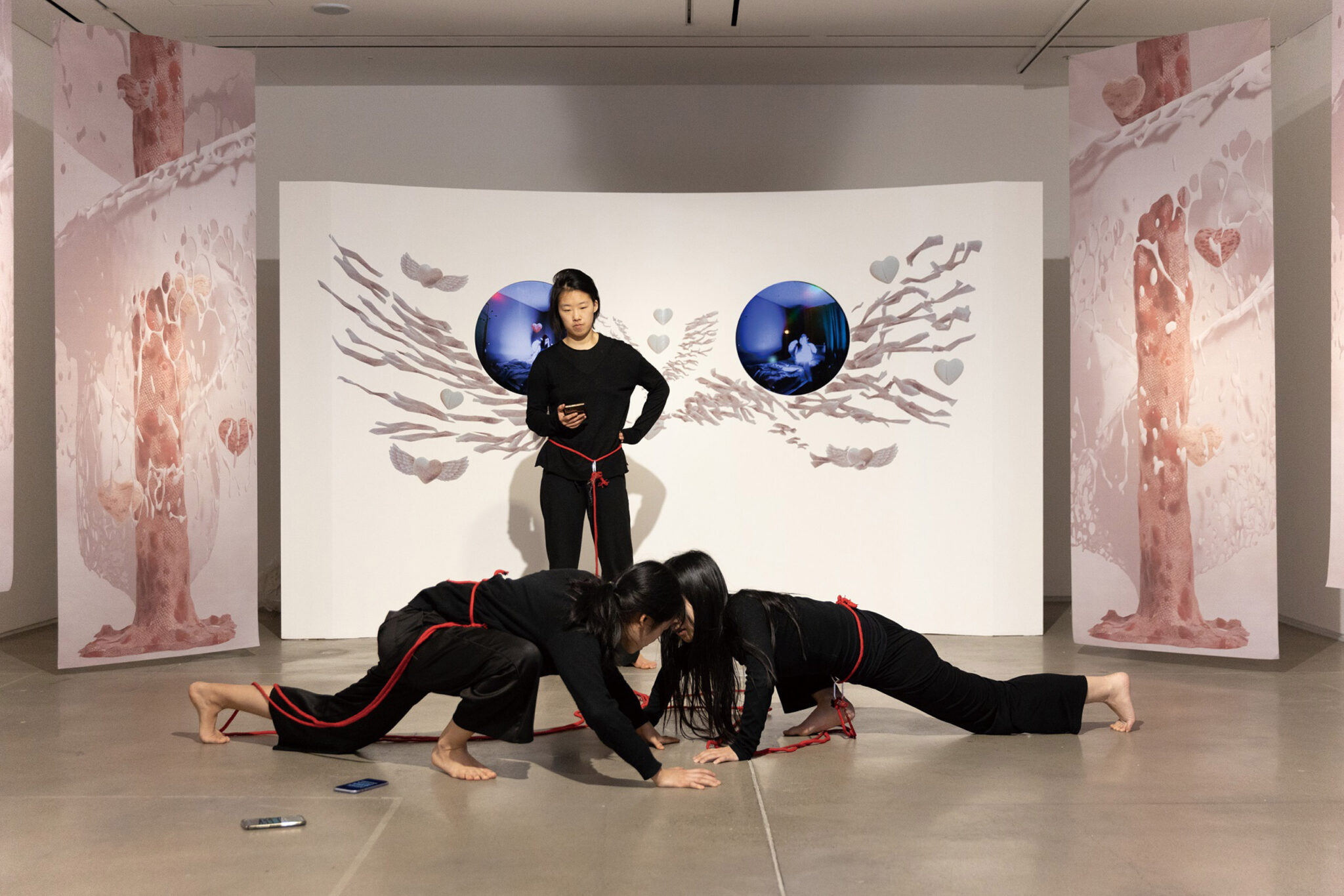
Alongside these works, the installation and
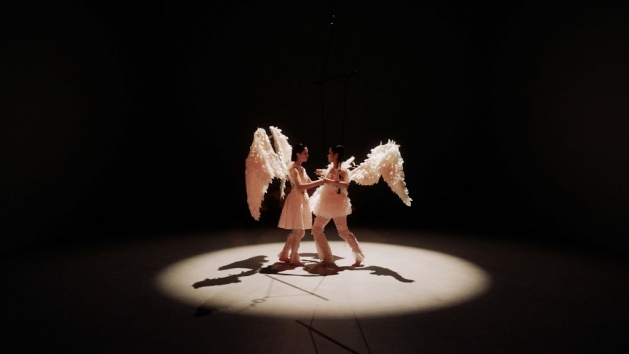
performance piece BED TRAINING presents a site inhabited by
a body composed of skin and bloodstains. Through two openings, it broadcasts
the impure fantasy of an angel above a bed, while stitching together skin and
bodily fluids to construct the body of an avatar.
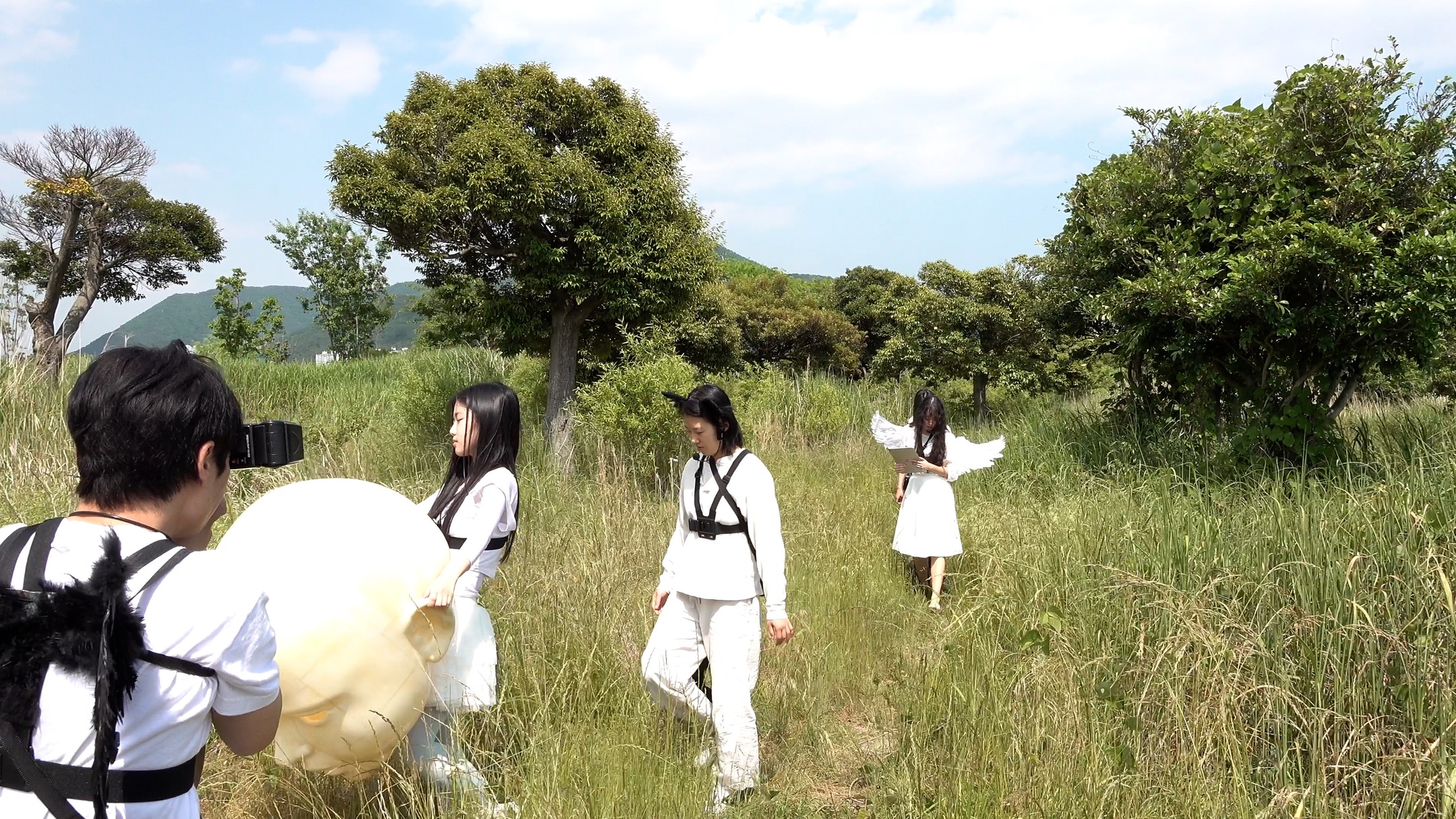
Within this space, three performers move
between sites of advertising and sites of birth, transferring and touching one
another’s desires. Further, guided by a script generated through interactions
with the conversational AI ChatGPT, they connect to a virtual date with the
father’s girlfriend. Embodying a baby–daughter–woman produced through this
dialogue, they move in a circle to cry, laugh, and moan.

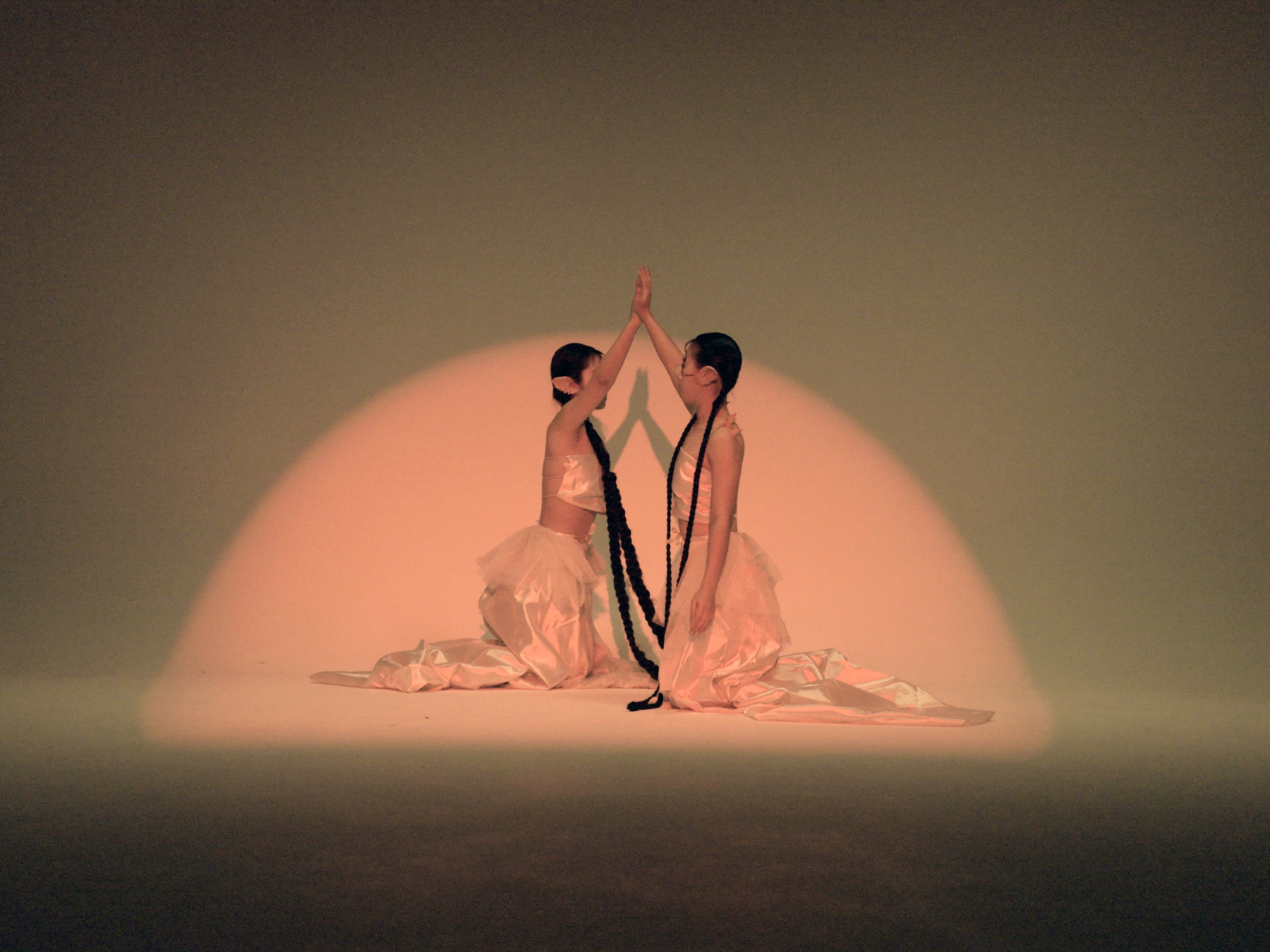
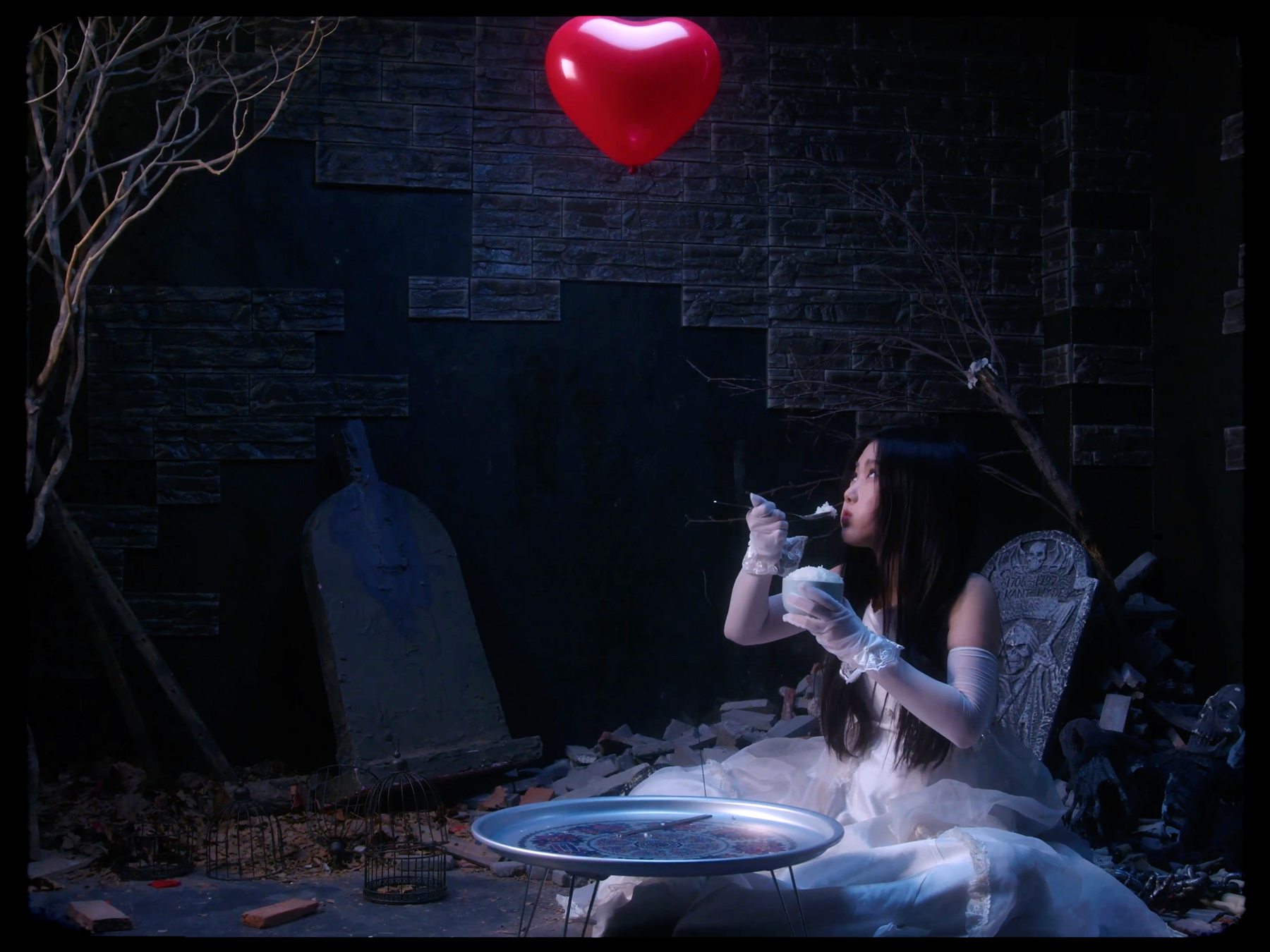
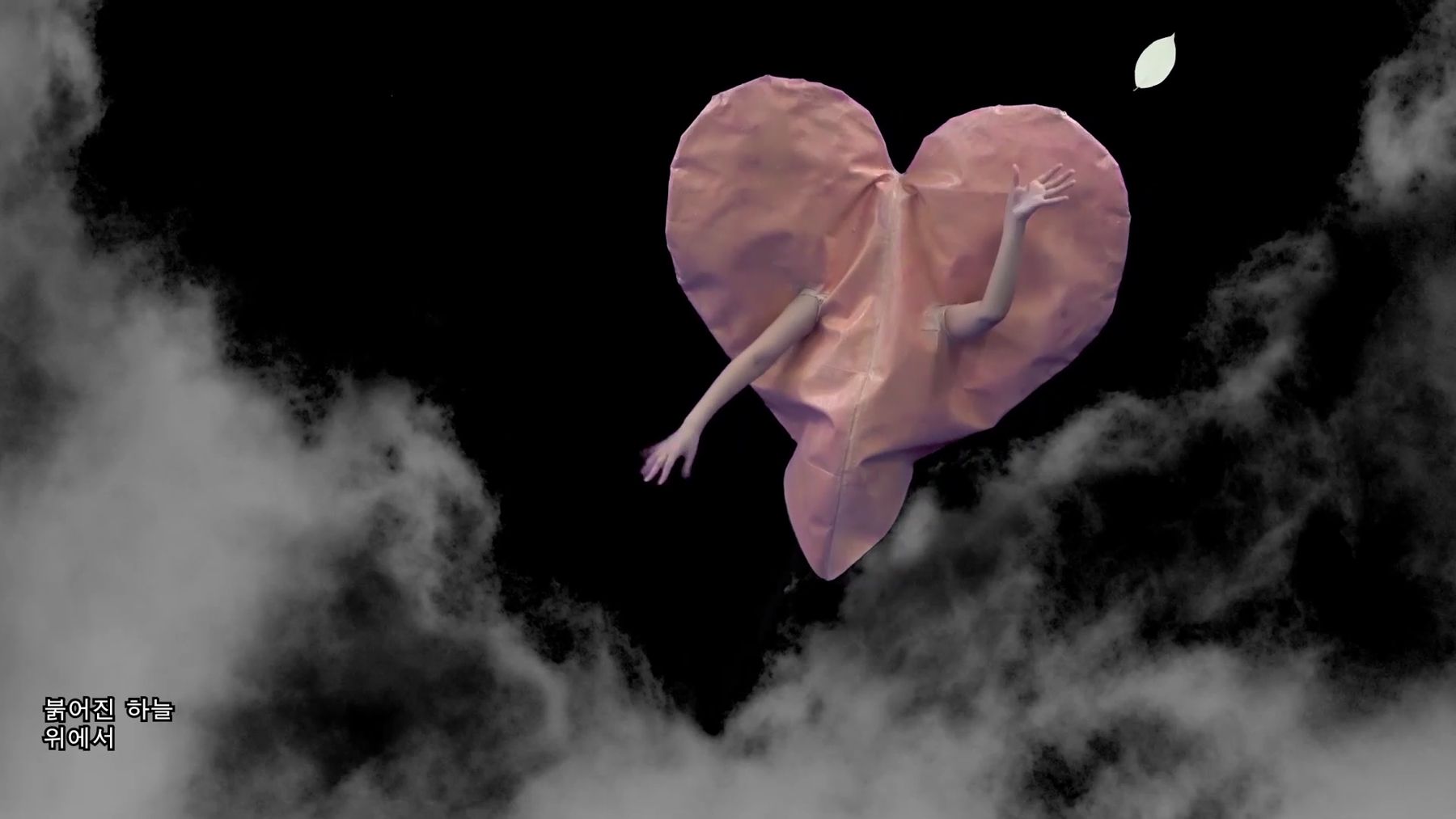
Meanwhile, Pure Hymn
(2023), released the following year, functions as a hymn to ઈSKINCARE
MYTHઉ, narrating a story about an inflammation that emerges at
the seat of God. Distributed online in the form of a music album and music
video, Pure Hymn is composed of bodily fluid sounds and
AI-generated audio.
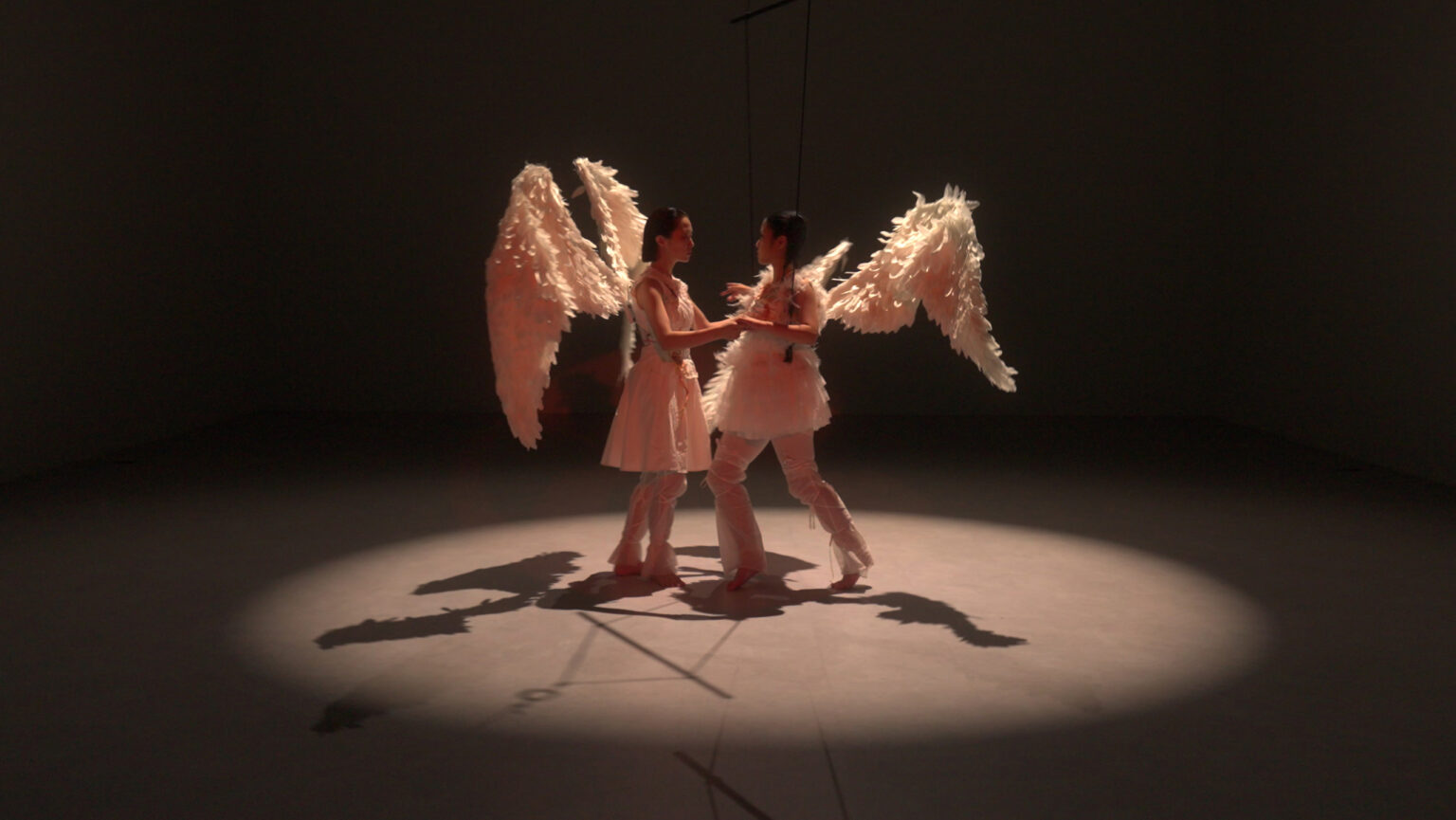
The work begins from the speculative idea
that, instead of conceiving Jesus Christ, an inflammation forms within the body
of the Virgin Mary. In this piece, the womb—traditionally understood as a
mythological site of life-giving conception—exists as a physical body where
inflammation appears and disappears. The video unfolds scenes of impure angels,
bearing base matter that has emerged within a sacred place, flying while
mutually depending on one another.

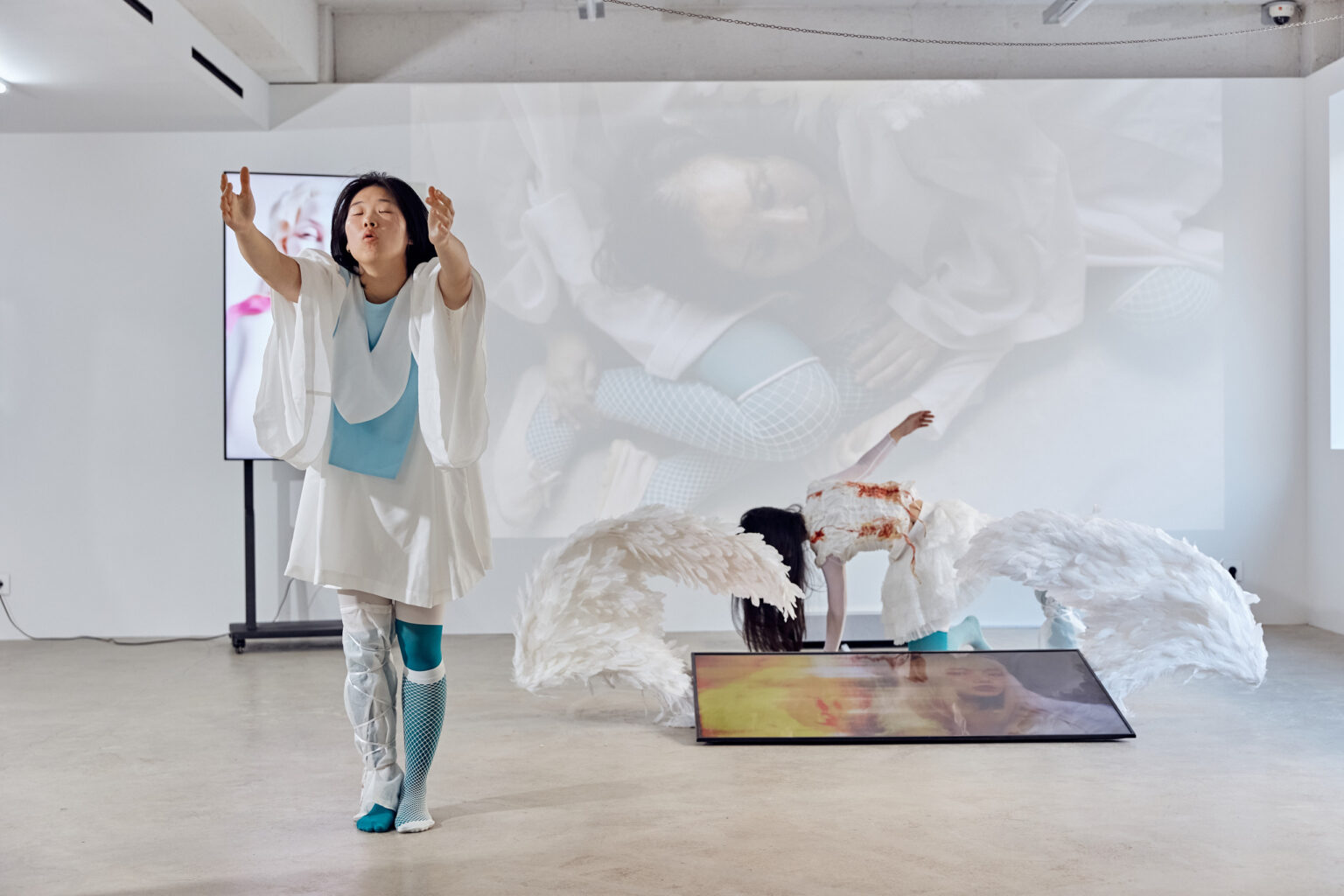
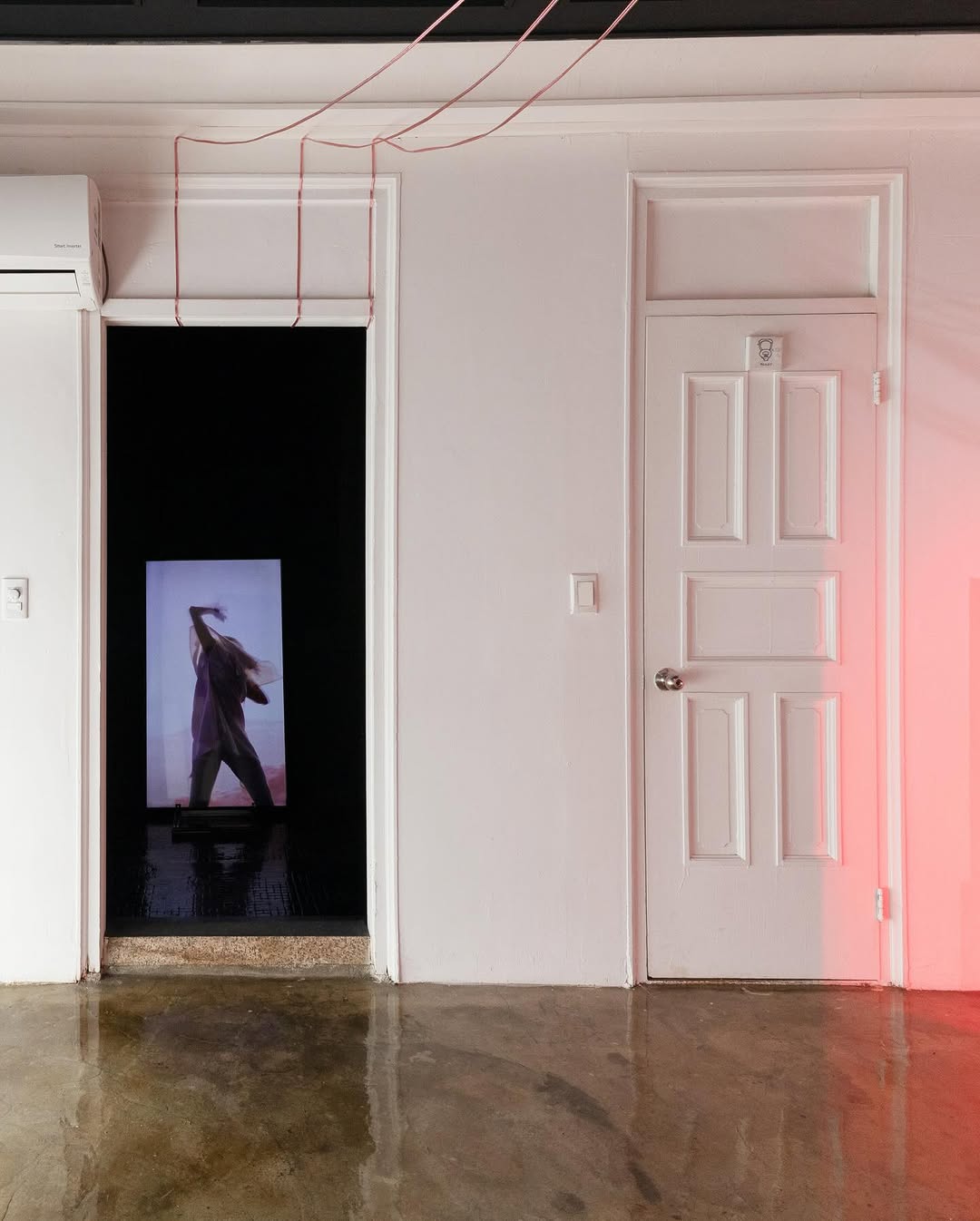
And in the group exhibition 《THE CHAMBER》 held at Caption Seoul in 2024, Pure
Hymn was softly screened onto the walls of the building—like a
folding screen or wallpaper—as part of the media installation Manger
for Inflammation (2024).
At the center of the floor, a manger
continuously generates, through AI processes, the body of an angel transforming
into inflammation. The angel shifts back and forth between a self-made-up
angelic body and a monstrous body becoming inflammation, undergoing repeated
metamorphosis between the two states.

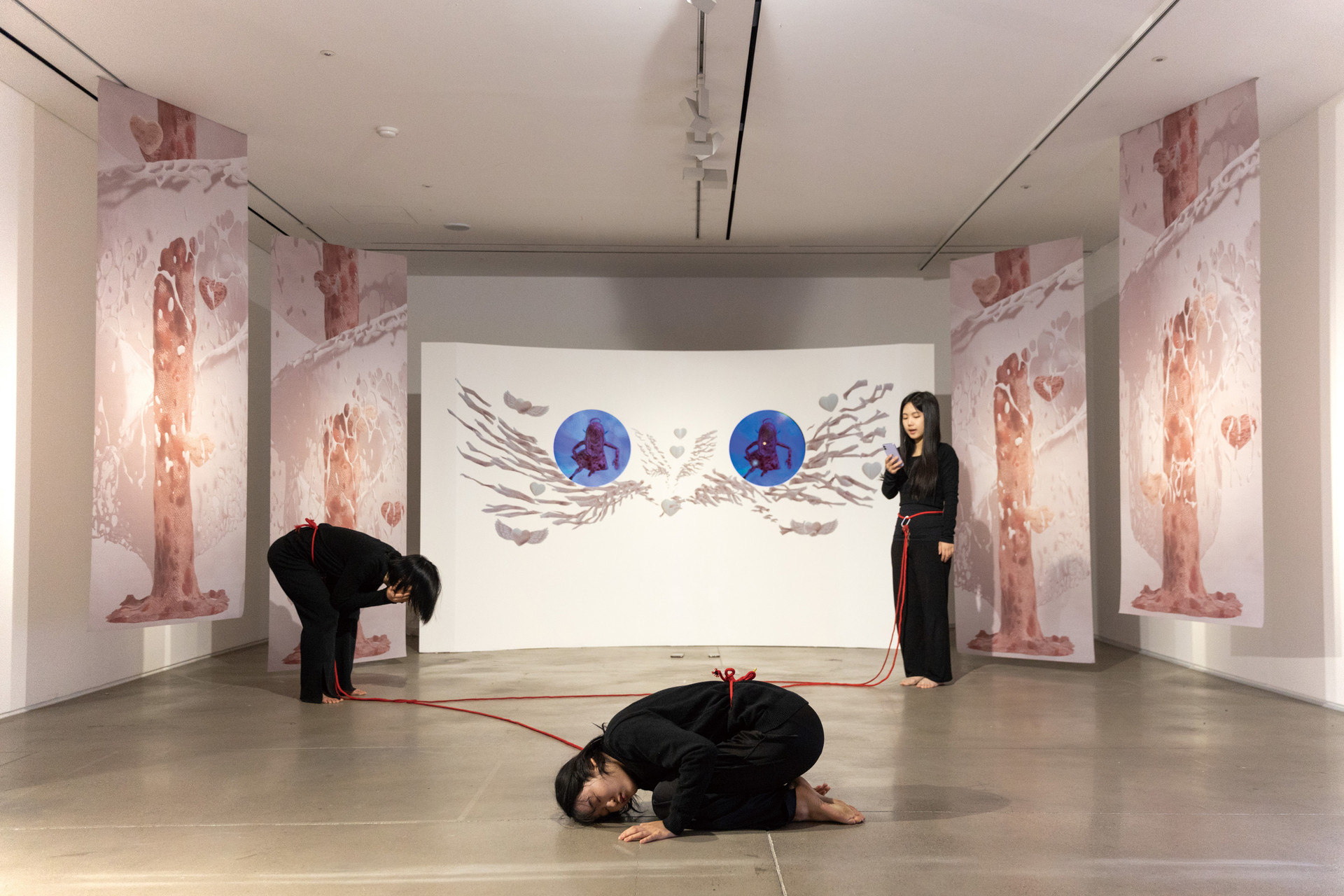
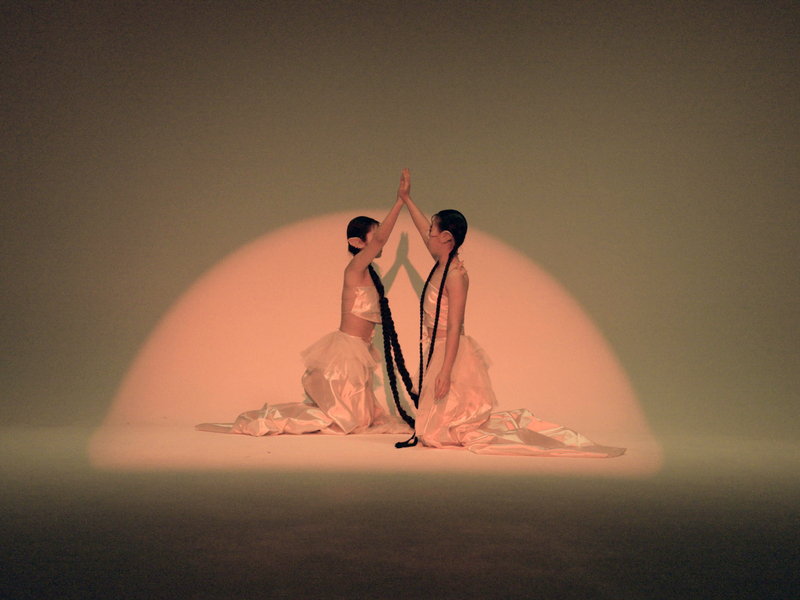
Meanwhile, ritual ropes made from
fragmented angelic bodies were tied around the surrounding space and columns.
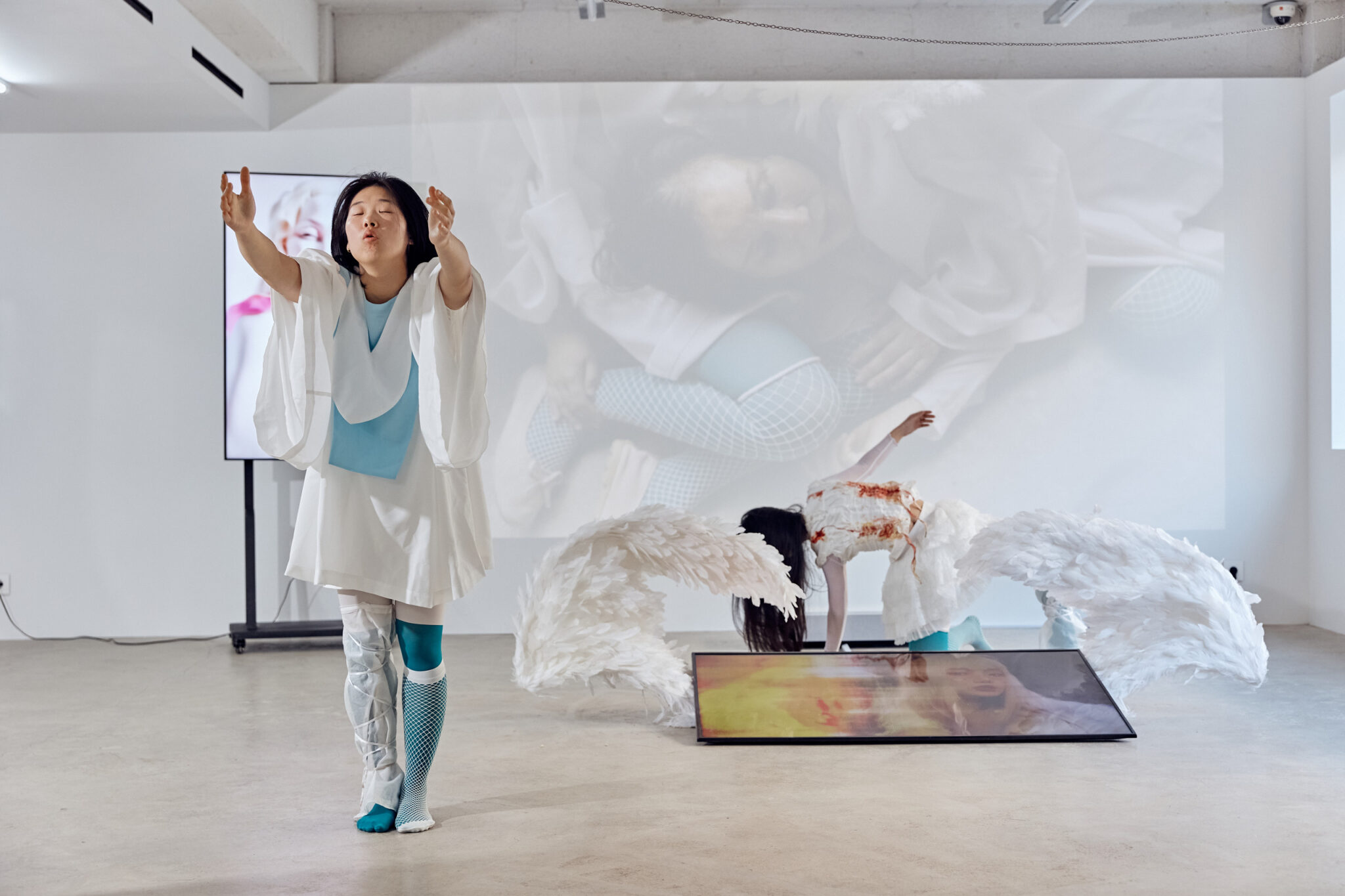
It was here that two bodies arriving to welcome inflammation appeared,
initiating the performance Worworworship (2024).
While the screened media bodies exist as
images enveloped in a dreamlike filter, the bodies in
Worworworship are physically present, moving with a focus on
monstrous, instinctual bodily energy and sound.

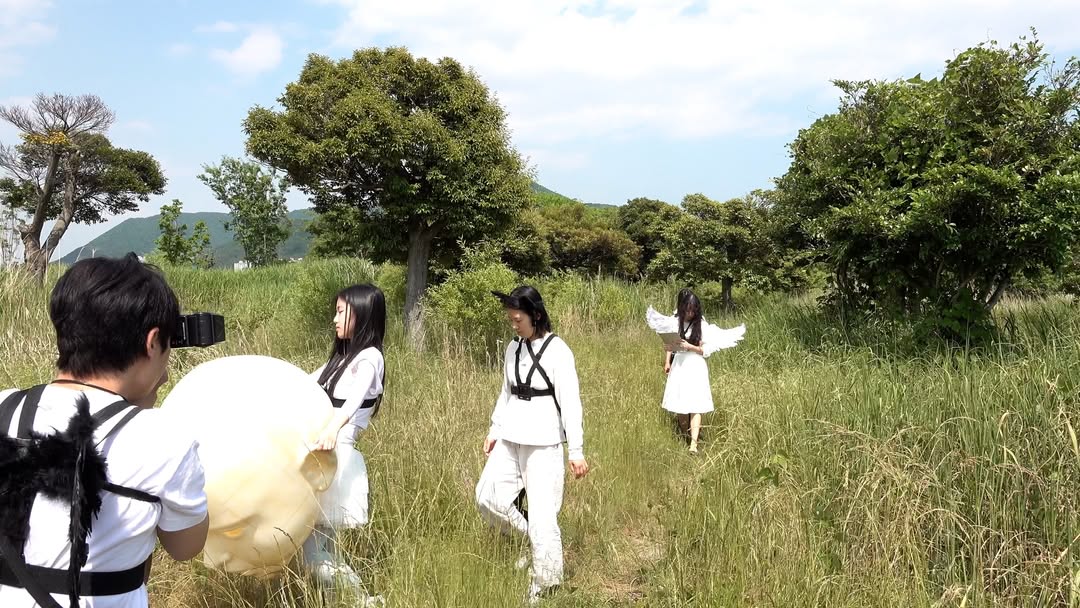
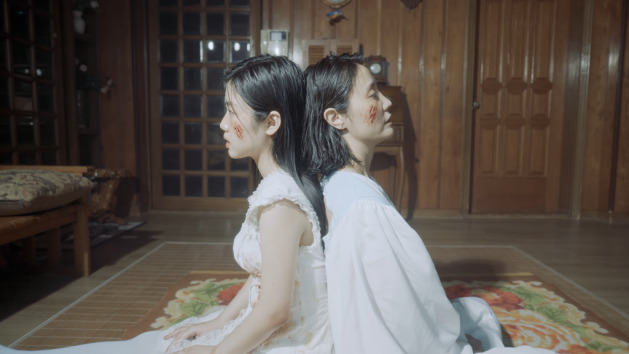
Another work released in the form of a
music video, AV.E-Maria (2024) tells the story of “E-Maria,”
a being that continuously transforms into ever-new bodies, created by
appropriating the religious figure of the Virgin Mary. Driven by an impulse to
connect hallucination with the body, E-Maria transforms by attaching new
elements to her body or deleting parts of it.
E-Maria also produces sound through the
voice of an artificial intelligence trained on nonverbal and bodily sounds,
while another unfamiliar body inhabiting the room shifts between angelic sounds
and monstrous noises.
Within E-Maria, the desire to escape the
domestic interior intersects with the desire to possess a transformed body
online. In AV.E-Maria, E-Maria appears wavering between
intense self-doubt and self-belief, embodying a state in which filthy desires
collide with fantasies of purifying the body as if receiving a divine baptism.

In this way, WONJEONG DEPARTMENT STORE
explores the body and mind positioned between the boundaries of the digital and
the offline through a range of sensory media. Rather than viewing images in the
digital realm and bodies in physical space as oppositional, the artist
understands them as interconnected, bringing the desires and fantasies
contained within the digital self into close contact with reality and the
flesh.
“The digital self is a self that can
transform by attaching new things to the body or deleting parts of it. I feel
that the desire to transform is connected to reality and closely bound to the
physical body. I think about the impulse and desire to connect the fantastical
images encountered through the digital self to the body.” (WONJEONG DEPARTMENT STORE, interview for 《THE CHAMBER》, Caption Seoul)

WONJEONG DEPARTMENT STORE graduated from
the Department of Fine Arts at Korea National University of Arts. Her solo
exhibitions include 《Deleted World: Dele’s Room》
(Rainbow Cube, Seoul, 2024) and 《HEARTIGURI
DEBUT SHOWCASE》 (ANOV, Seoul, 2020).
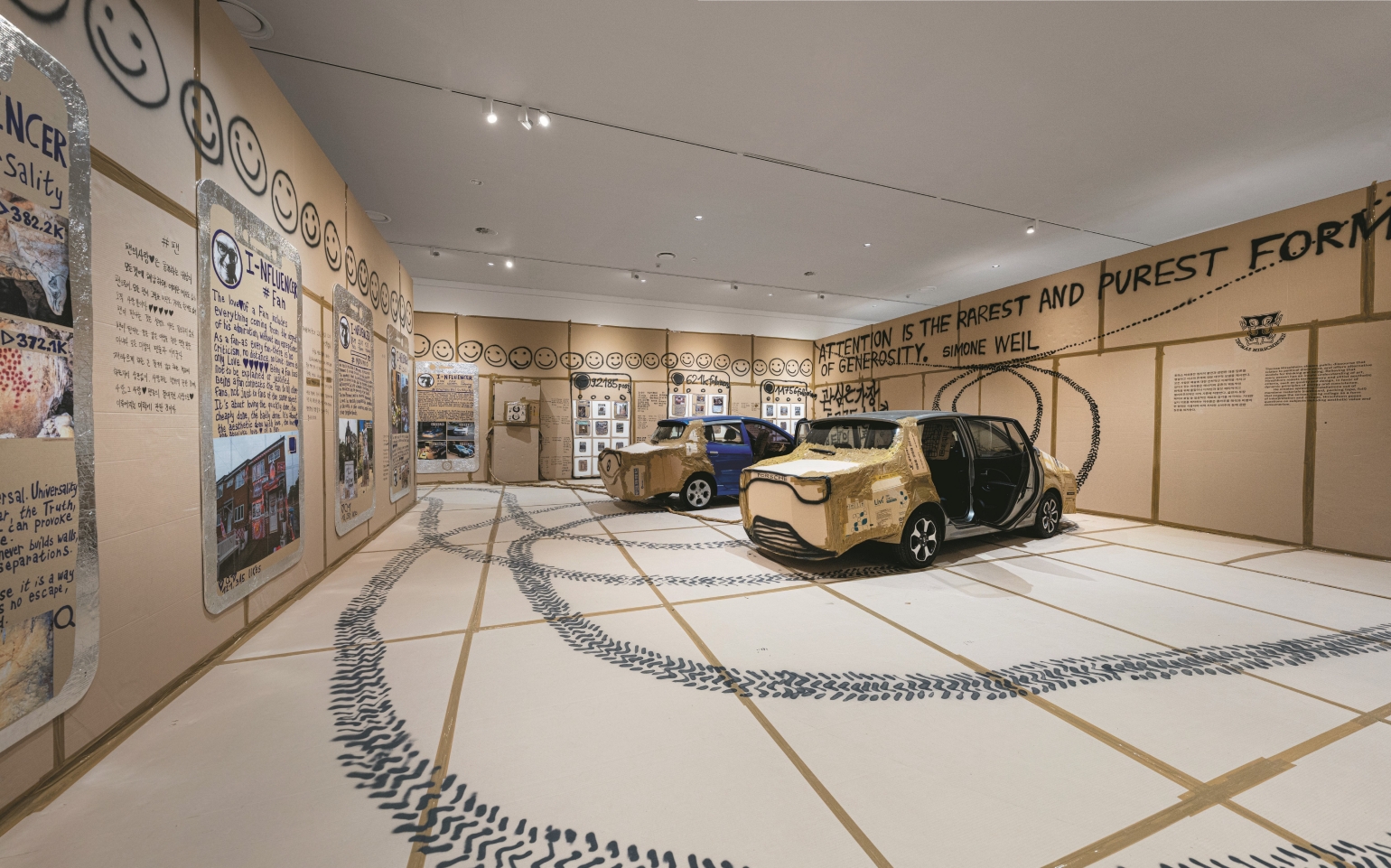
She have also participated in numerous
group exhibitions, including 《Masterful Attention
Seekers》 (Busan Museum of Contemporary Art, Busan,
2024), 《The Cave Is a Stage》
(Seoripul Gallery, Seoul, 2024), 《THE CHAMBER》 (Caption Seoul, Seoul, 2024), 《The Last
Things Before the Last》 (HITE Collection, Seoul, 2023),
and 《All Tomorrow’s Parties》
(Art Space 3, Seoul, 2022).
WONJEONG DEPARTMENT STORE gained attention
by participating as a presentation artist in The Preview Film at The Preview
Seoul 2025 and at 2025 ARKO DAY.