0. Preparatory Movement
Welcome
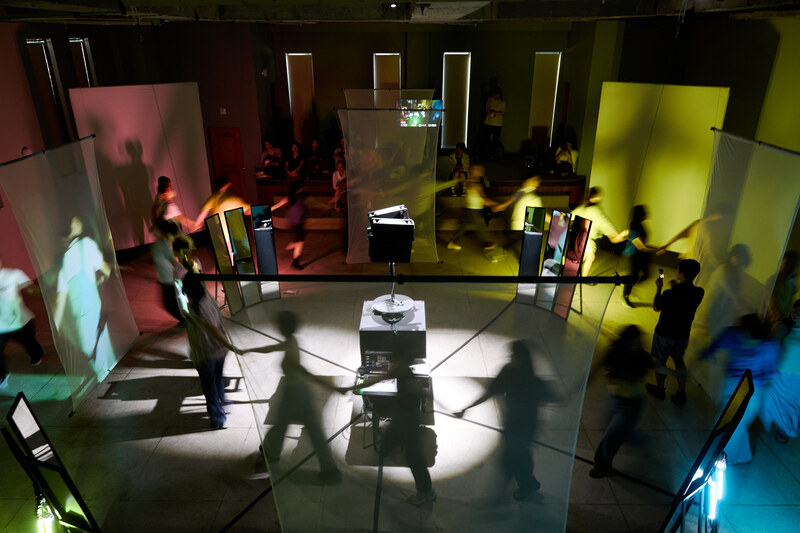
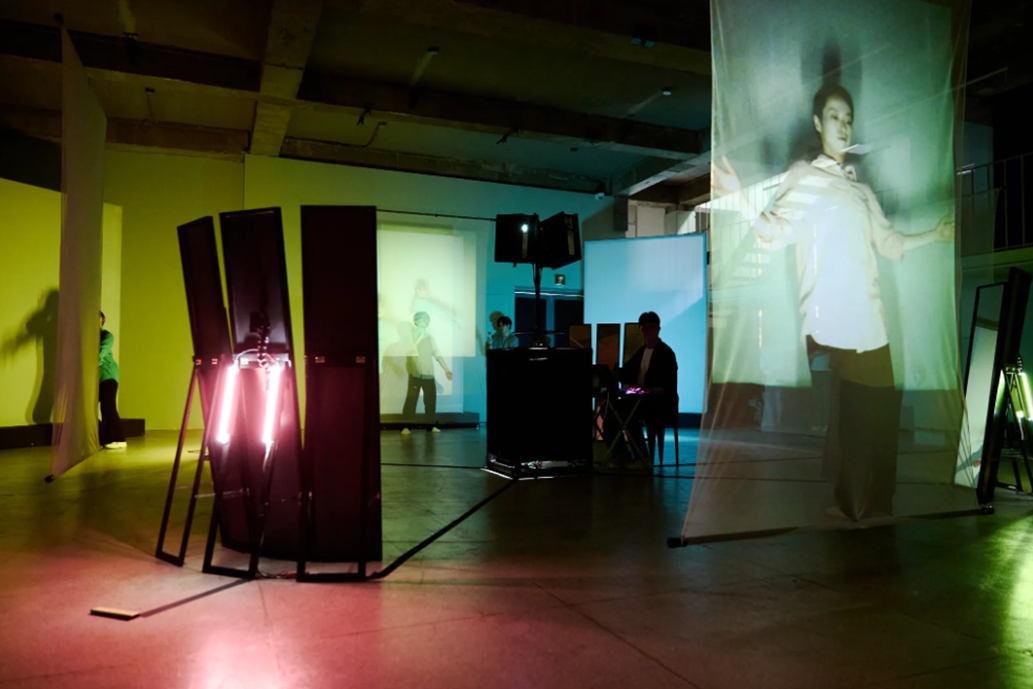
(歡迎) to this place. Please take a seat on the
chair at the center, or begin by exploring your surroundings. Do you see the
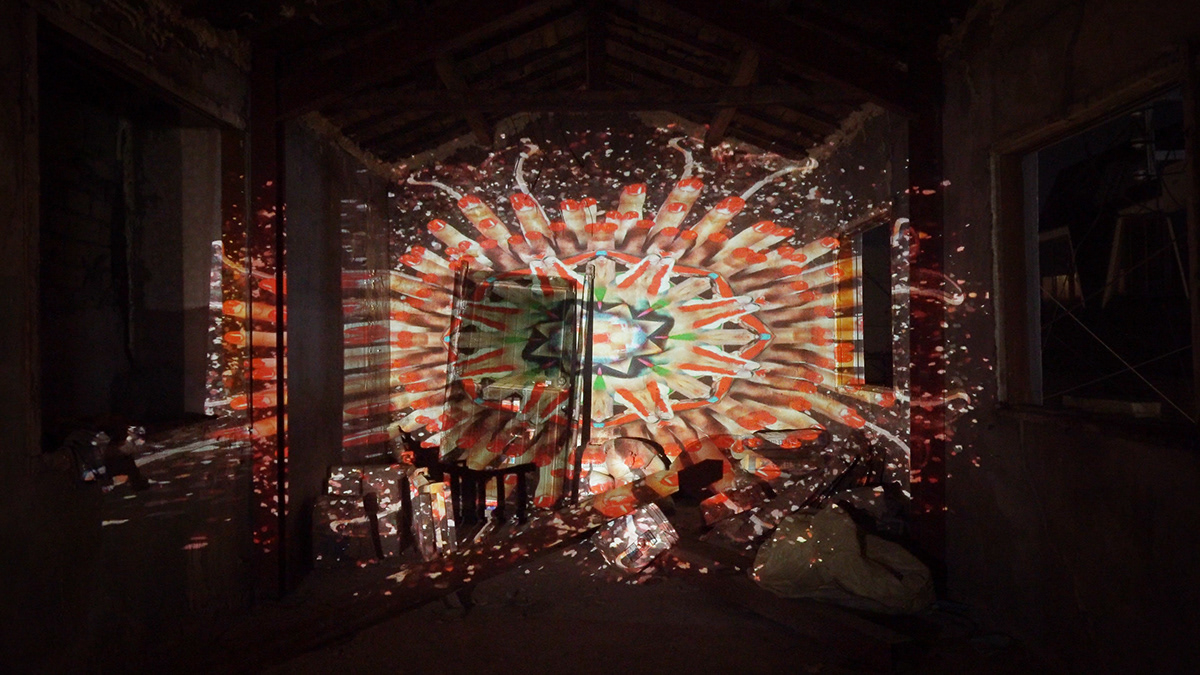
light in all four directions? The structures illuminate the space like
lighthouses. Let us set aside any tension and begin to move slowly. Along with
the rotating mechanical sound, shadows appear, and forms are projected onto
bodies. Those forms may be you—or they may not. Welcome to the apparition (幻影).
1. 접속 위에 놓인
접촉들
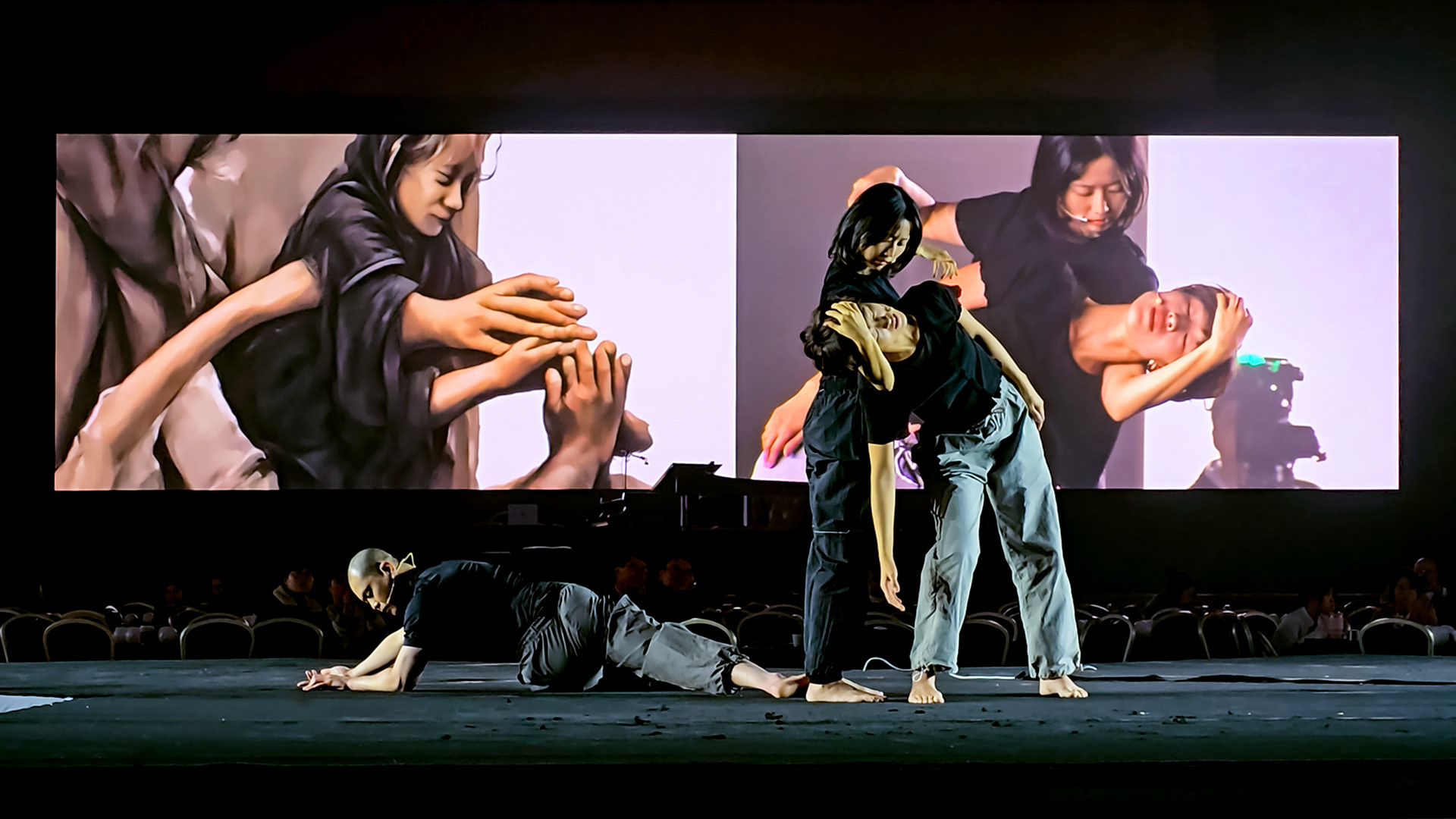
The
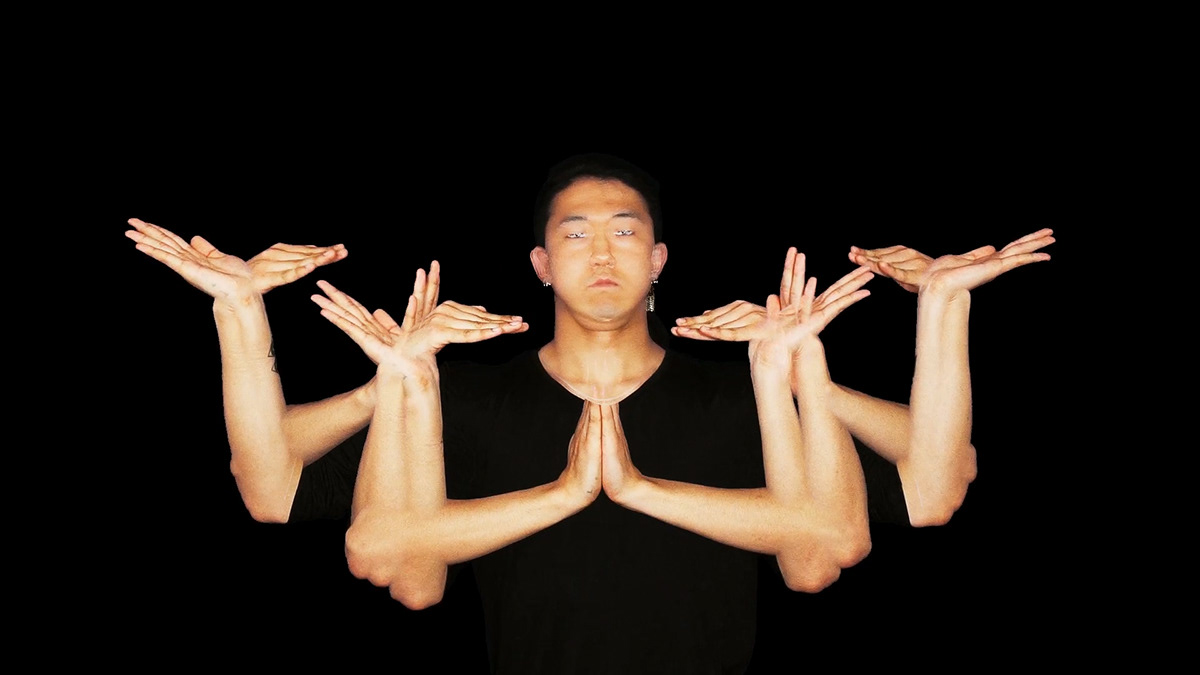
performers enter while exploring the space. Without clearly defined gestures,
they appear in their own rhythms, gazing at one another or drifting apart, at
times measuring their distance from the audience. At first, the gaze touches
the body and then withdraws; soon fingertips brush past and slip away. As
bodies draw closer and move apart, the space itself transforms. Here,
relationships are unexpectedly formed and dispersed. These relationships may
exist between body and body, or between body and apparition.
Individual
contacts become ways of perceiving and sensing the “other” through friction
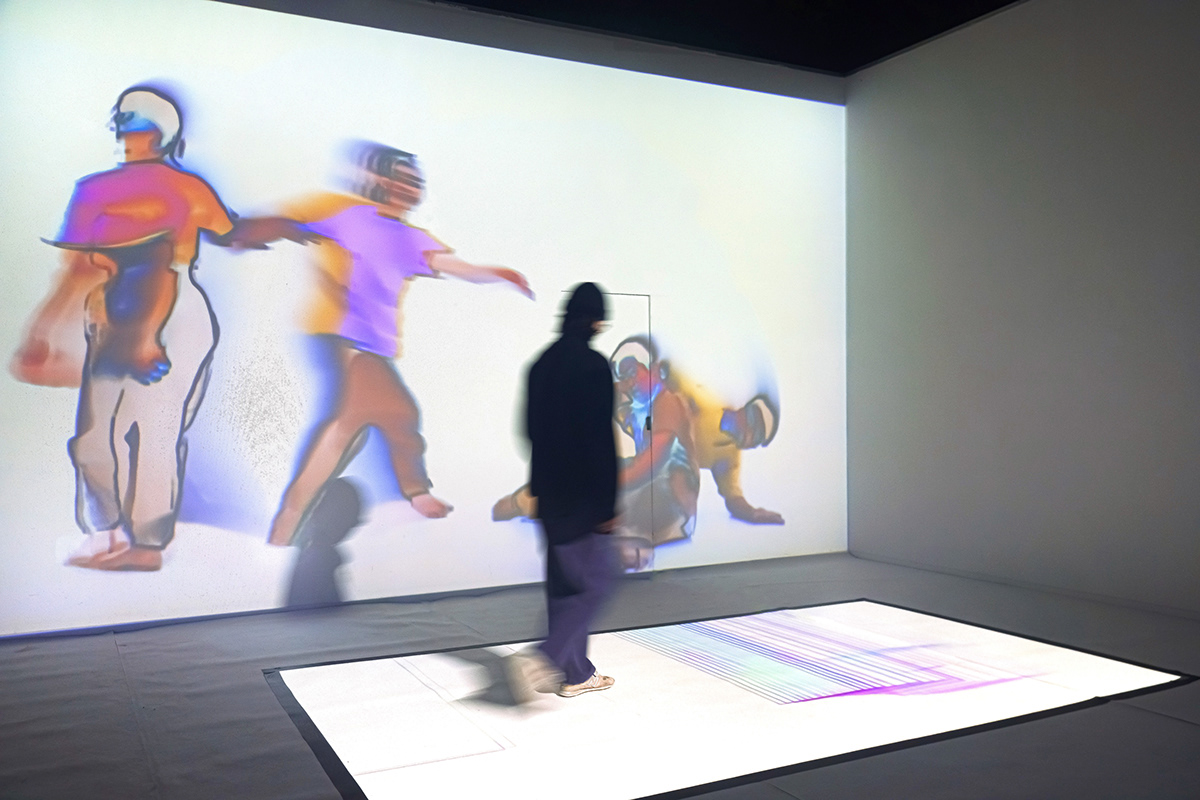
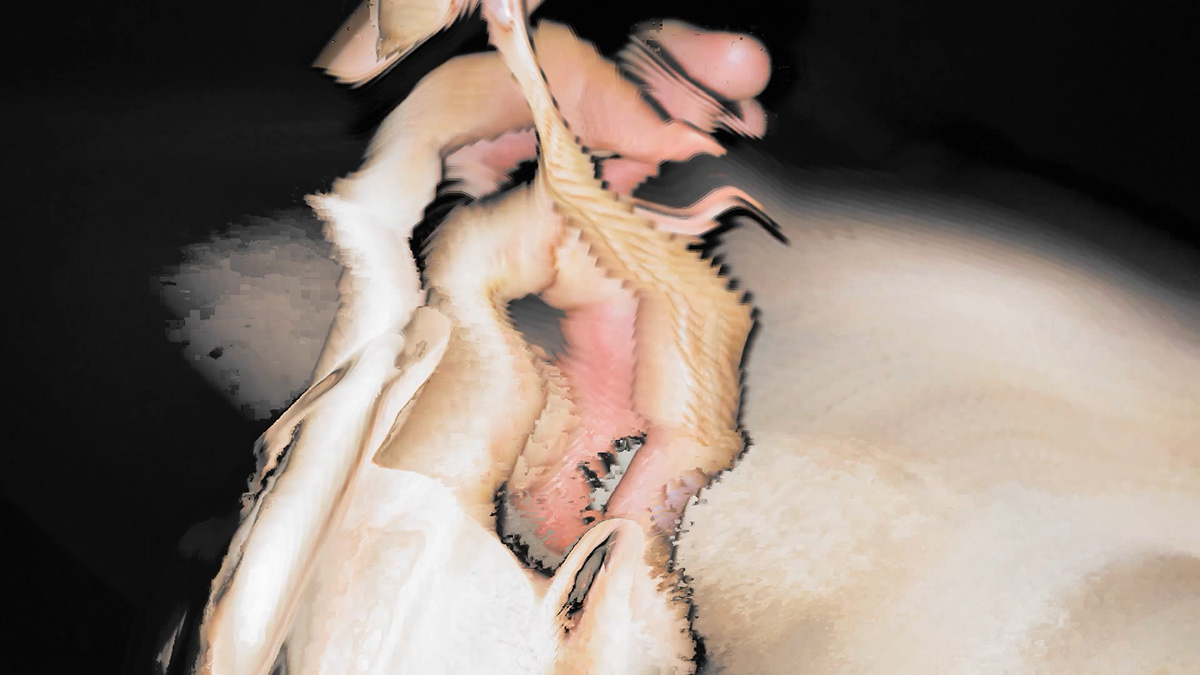
between bodies, gazes, gestures, and distances. Meanwhile, the light/images
emitted from the projector are distorted through slowed speeds and overlapping
frames, projecting “already-past gestures” onto bodies and generating another
time-space.
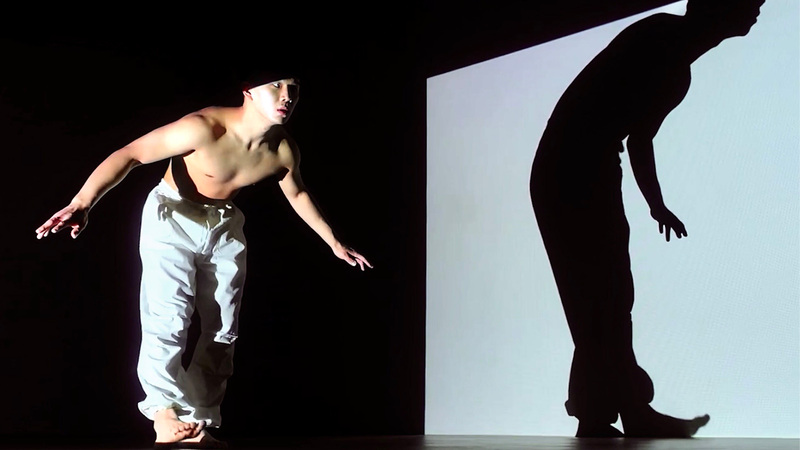
Images projected onto the body intersect with and deviate from both
past actions and movements occurring in the present. Just as misaligned contact
functions as a sensory point where one crosses into another’s time, the
situation of body/image intersecting with a delayed environment allows the body
of the here-and-now to connect with a body dancing in a different time.
Such
disturbances of perception are not merely visual confusion, but operations of
contact and connection that newly activate the viewer’s own construction of
reality. Performers and audience form relationships while suspending contact
and connection, slowly exploring how sensations of wandering through space
become delayed.
2. Connection without Contact, Bonds through
Misalignment
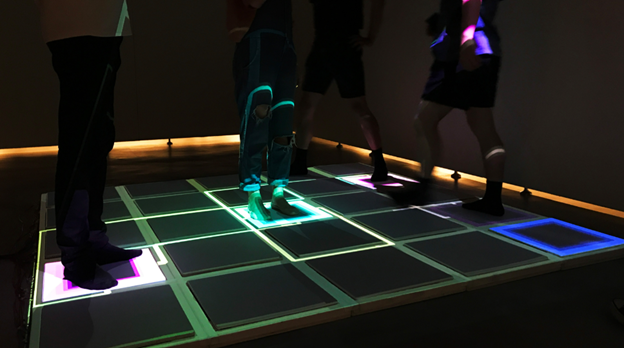
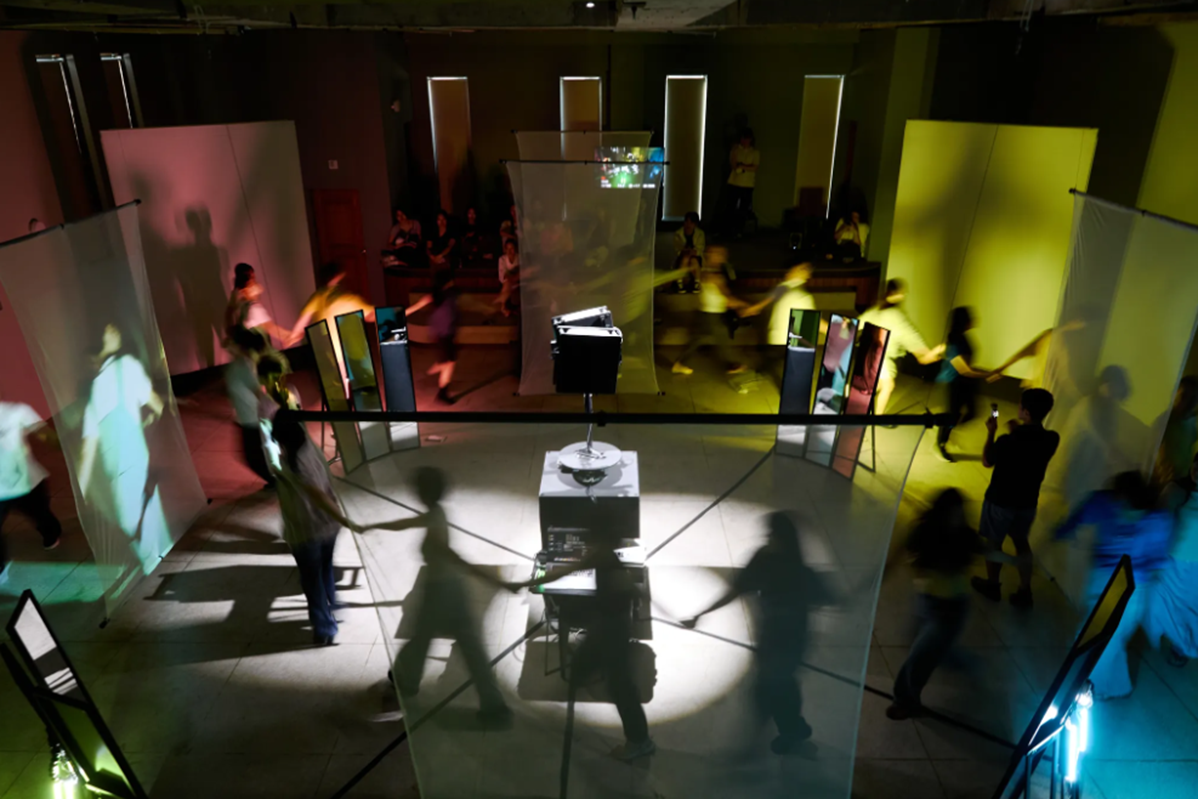
The
performance then borrows the forms of traditional games—ganggangsullae and
tag—to form collective solidarity through rhythms and misalignments generated
by group movement. With movements and choreography that are not perfectly
synchronized, the performers maintain different speeds and intervals. Centered
around the tagger (performer), the paths gradually tighten into spirals, and
the audience responds with quickened steps to the performers’ gestures and
bodily cues.
Although
collective rhythm is never perfectly aligned, individual differences do not
hinder connection; rather, they become the very conditions through which
togetherness is formed. Speed, interval, and direction shift from moment to
moment. While walking and running together, disparate beats coexist.
Unsynchronized rhythms function not as imperfections, but as modes that reveal
solidarity and contact through being-with.
Furthermore,
even as the audience participates, they sense connections forming and
dissolving, accepting states of deviation or misalignment within rhythm as they
are. Ultimately, communal rhythm emerges not through perfect synchronization,
but through a sensory condition in which mutual misalignments become connected.
3. Contemporary Anxiety, Suspended Suspense
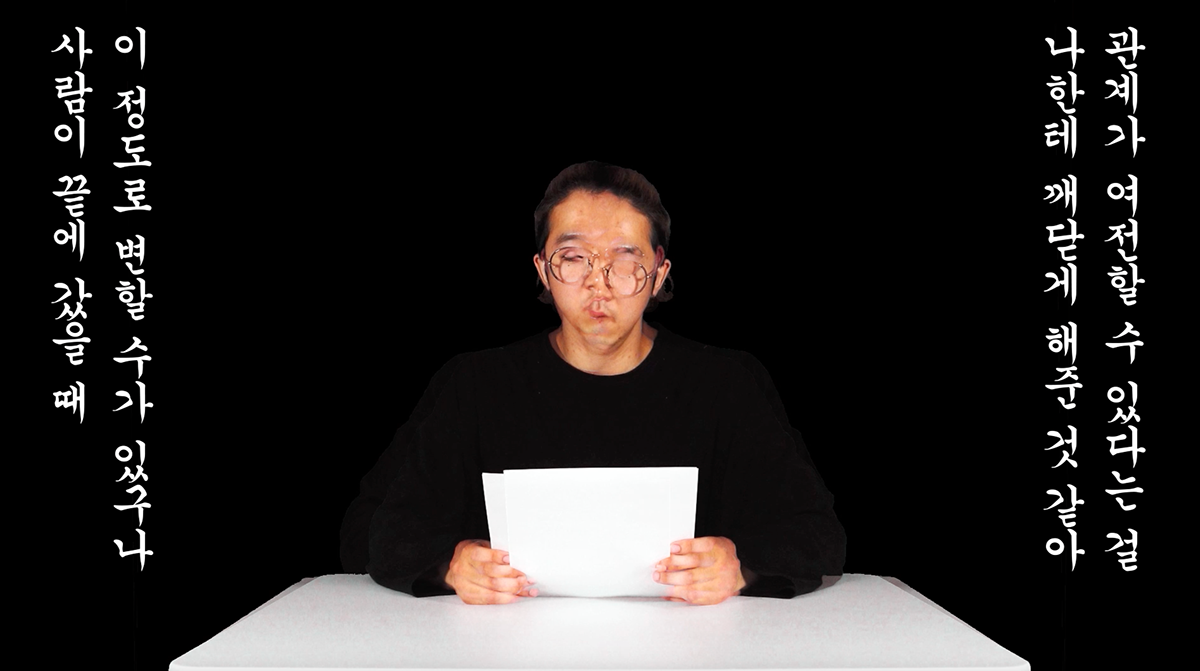
Daewon
Yun focuses on the state between “connection” and “contact.” This is not simply
a shift in media environments, but a proposition concerning changes in how we
sense and perceive the body today. As the expanded ubiquity of media
increasingly virtualizes physical bodily sensation, tendencies toward stitching
together reality intensify. In this process, ontological questions arise: how
should one define oneself within the boundary between reality and the virtual?
What kind of body is one that is mediated through screens? The artist reads
these questions as a sensory environment tied to contemporary anxiety.
Contemporary
anxiety is far removed from dramatic suspenseful events or clearly defined
crises. Rather, anxiety persists through gestures that do not touch, gazes that
do not respond. Connection becomes easier; contact grows distant. This
sensation—like a moment frozen just before something happens—may be called
“suspended suspense.” The moment of crisis has neither begun nor ended, and
this delayed, layered condition is precisely the symptom of anxiety we sense
today.
Joanna
Lowry has described projected images not merely as means of representation, but
as media that operate like “symptoms,” eliciting bodily sensation and
psychological response in viewers.* Yun’s performance confronts this suspended
tension—this delayed state of sensation—through the layering of physical
apparatuses.
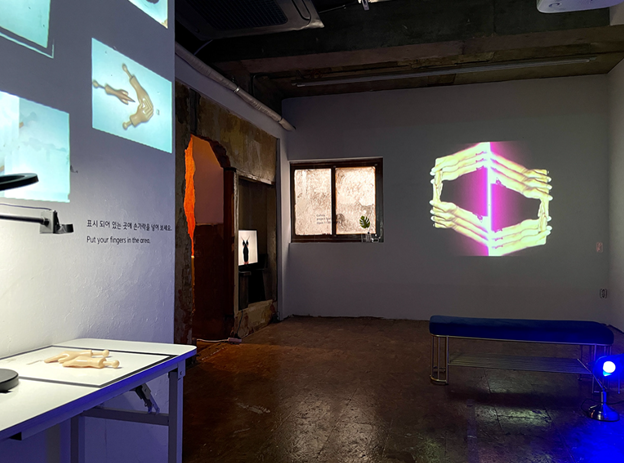
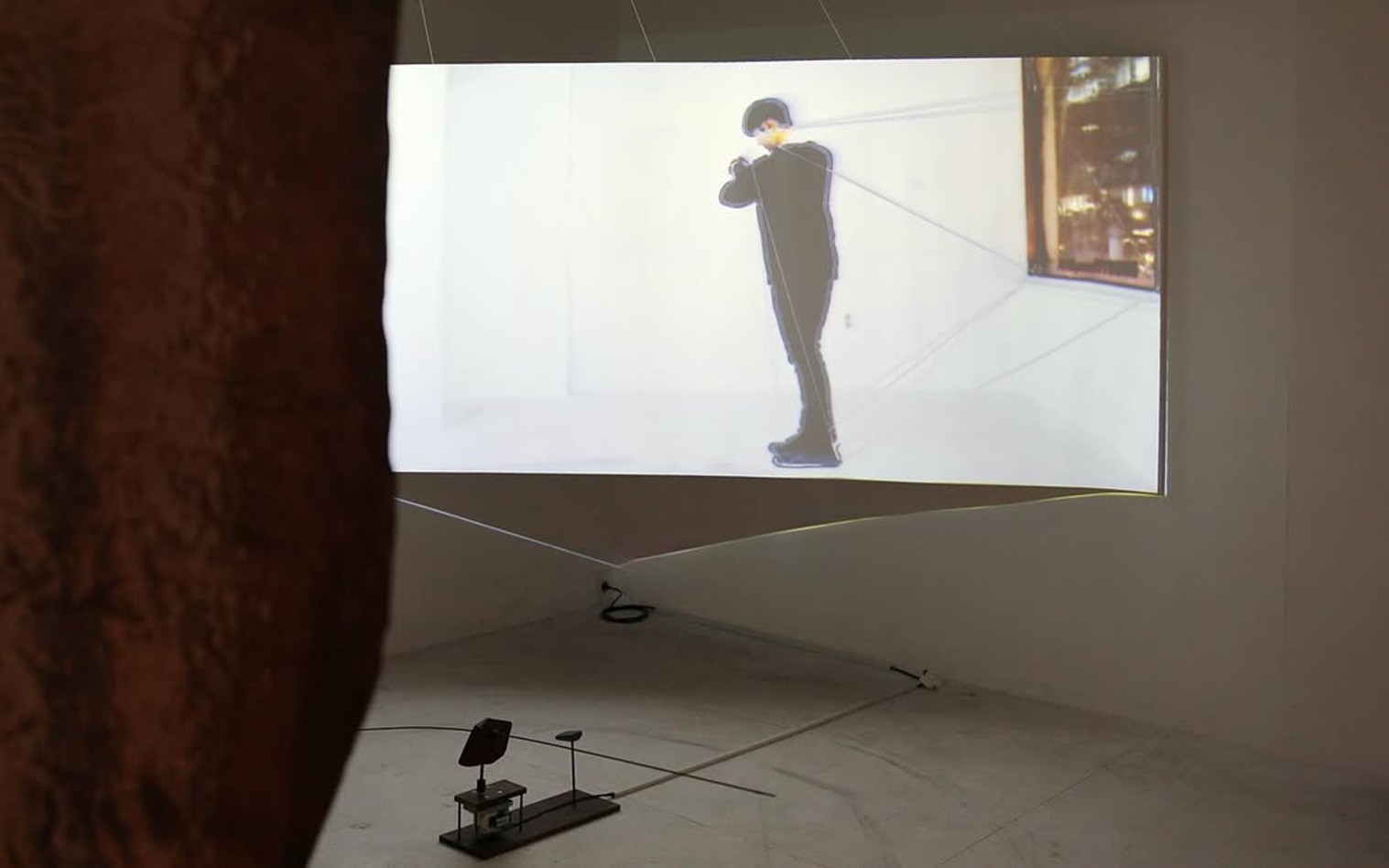
The rotating projection device disrupts the sequence of screen,
body, and image, placing the audience in a space where temporal centers
disappear. When images of the “already-past body” intersect with movements
unfolding before one’s eyes, the viewer can no longer be certain which reality
they are encountering.
This
structure generates a new relationship between projected images and actual
movement. It turns presentation into representation, and then attempts to
reverse that process. Experiencing subtle vibrations between rewound forms of
past time and movements of the present, the viewer reconstitutes that vibration
as both a form of anxiety and a symptom of sensation.
Within
this unstable sensory environment, “connection” returns to physical sensation.
The moment projector light touches the body, it functions like heat. That
warmth lingers on the skin as a sign of anxiety produced by sensory delay,
image overlap, and misalignment between the real and the virtual. Within this
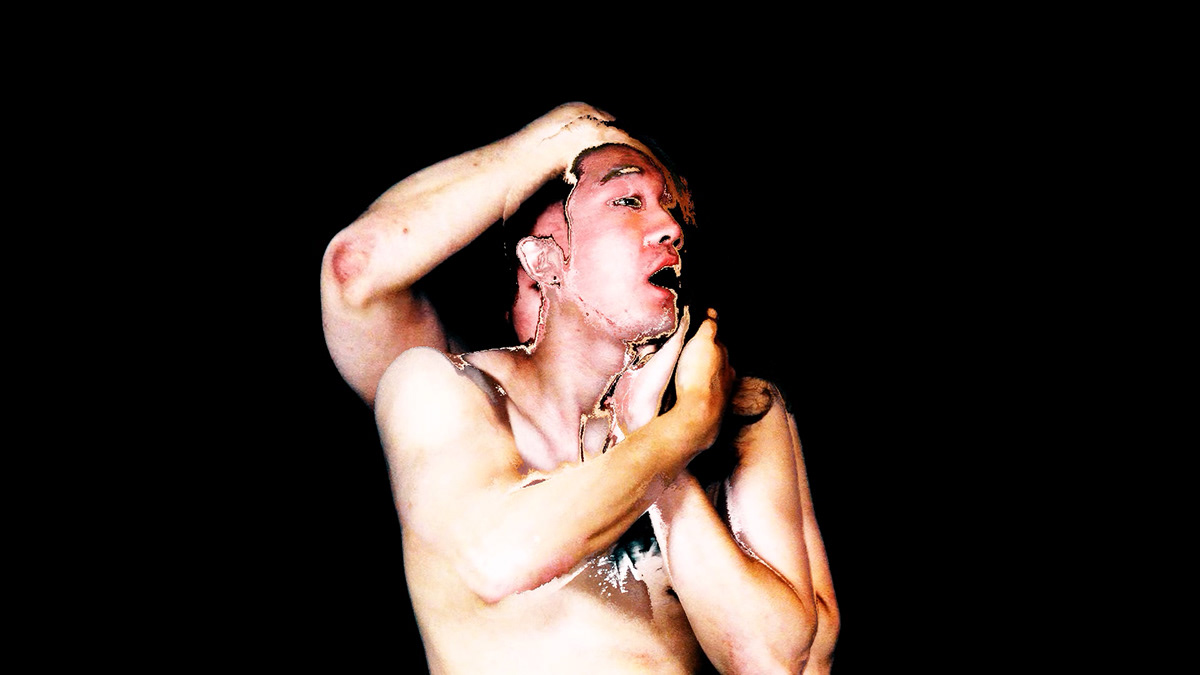
heat, subject and object are no longer fixed. The projected form illuminates me
while simultaneously gazing back at me; my body overlaps with another’s shadow
and becomes blurred.
The
moment of contact is not merely an act of touching, but a sensory situation
that suspends and inverts the boundary between self and other. Through this
inverted sensation, we perceive movement within the form of another, and within
the indistinct boundaries of the screen, we come to contact and connect with
ourselves.
*
Joanna Lowry, “Projecting Symptoms,” in Screen/Space: The Projected Image
in Contemporary Art, ed. Tamara Trodd (Manchester: Manchester University Press,
2011), 93–110.