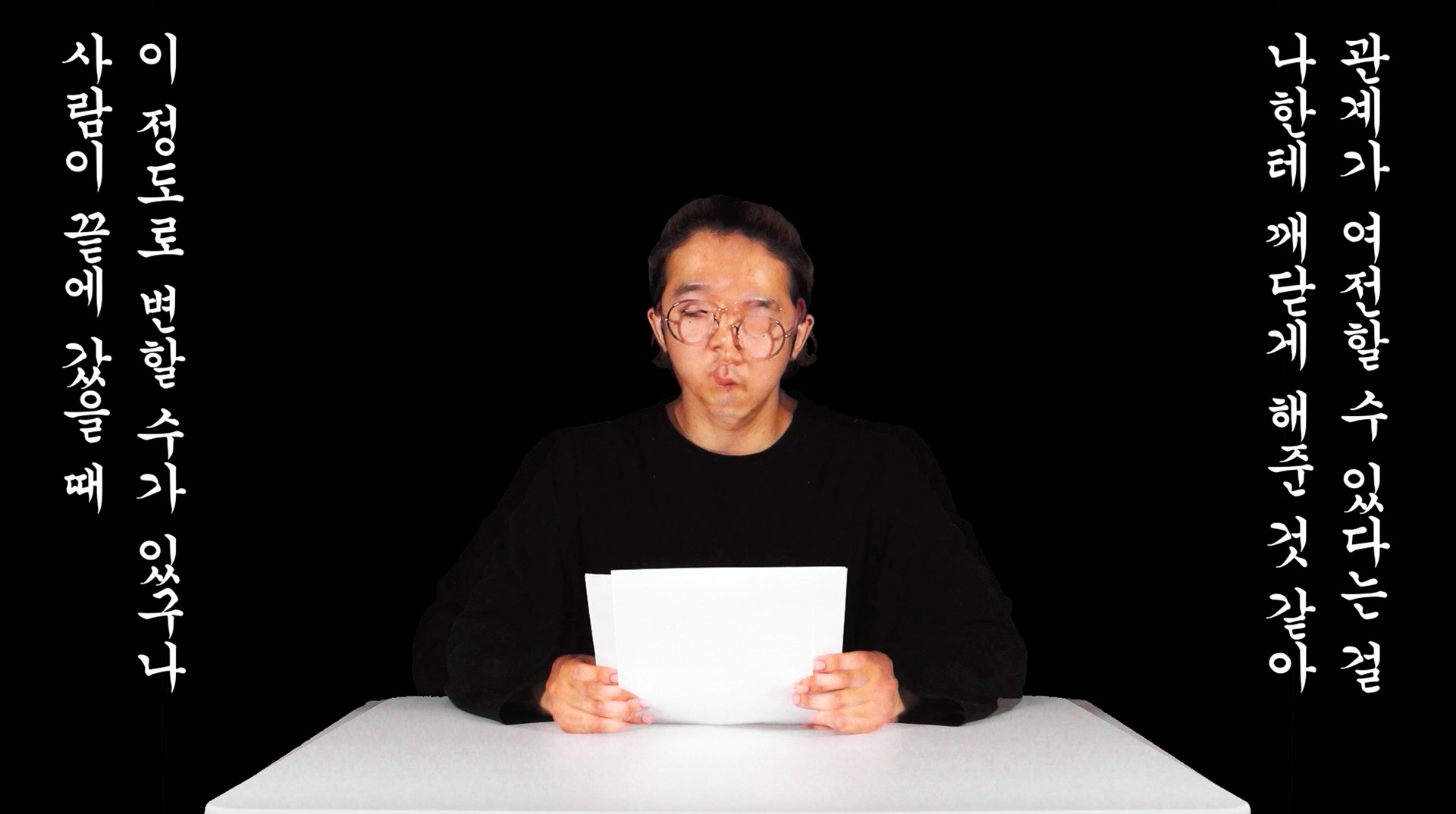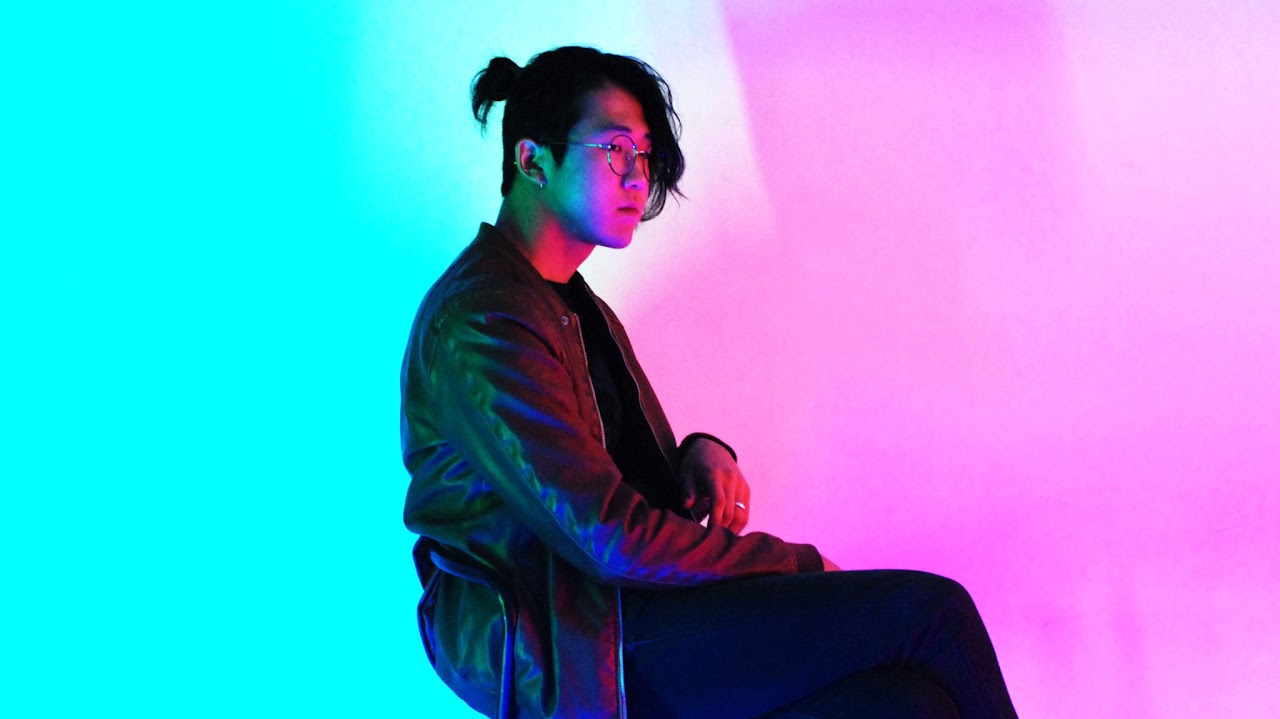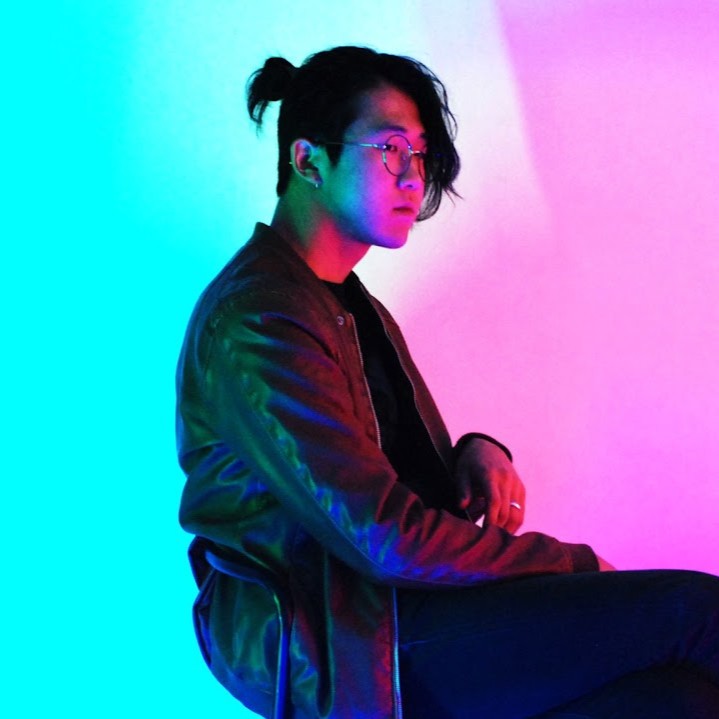


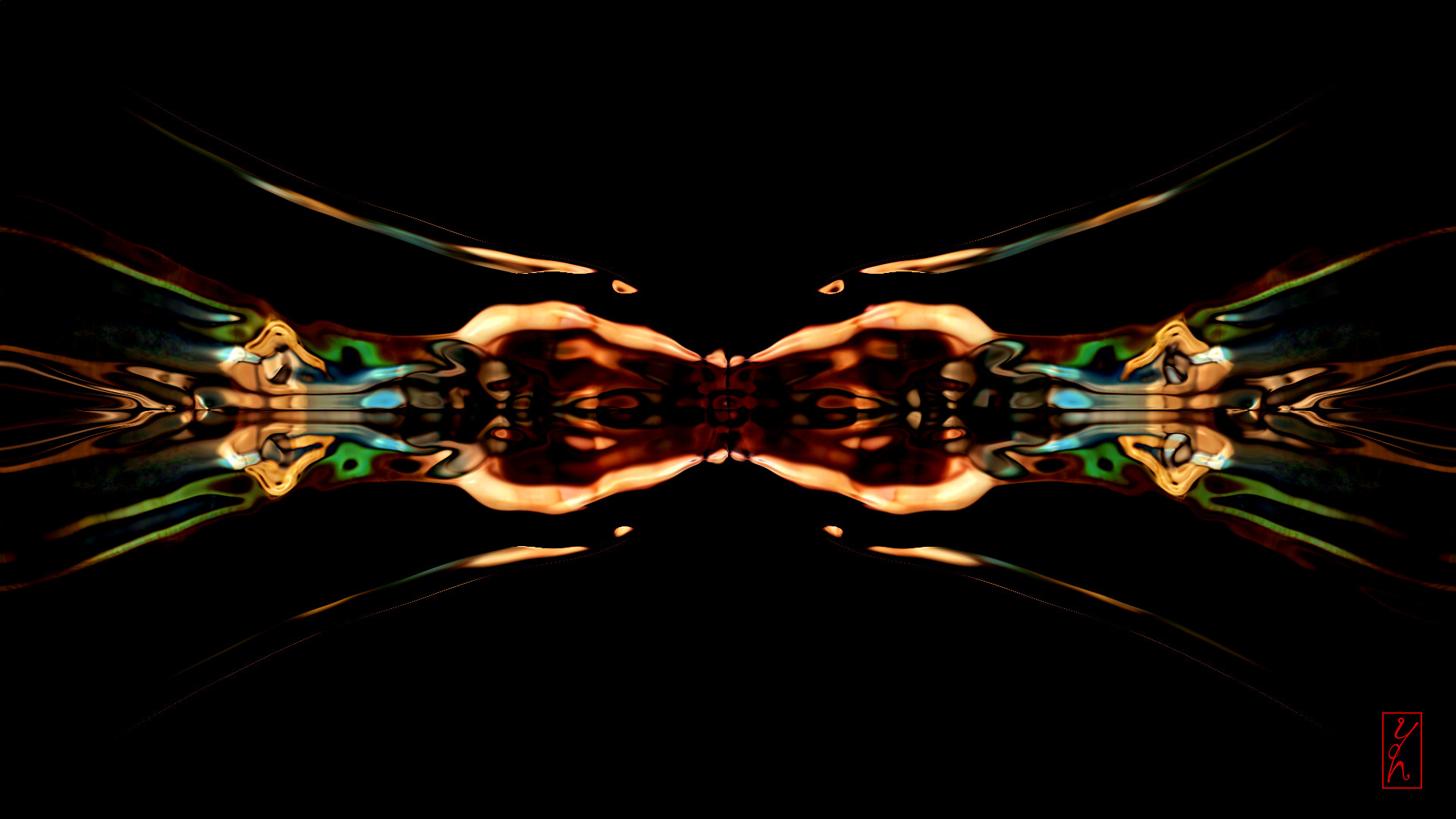
Daewon Yun earned a B.F.A. in Korean Painting from the College of Fine Arts at Kyunghee University and completed an M.F.A. in Sculpture at the same institution. He currently lives and works in Seoul.
Daewon Yun (b. 1993) explores how the
contemporary body is perceived and how it forms relationships by combining
performance with media technologies. Grounded in his interest in “dance” and
“action,” Yun has continuously examined shifting concepts of the body and
structures of sensation as they are transformed within media environments.
His practice primarily encompasses video,
interactive works, and performance, through which he translates contemporary
phenomena generated by digital media and their underlying emotions into
embodied images.

Today, virtual reality, social media, and
various online platforms enabled by digital media have made many things
possible, transforming our everyday lives in non-contact and non-physical ways.
This tendency was further intensified through the global experience of social
distancing during the pandemic.
Within this context of change, Daewon Yun
understands the “body” not as a fixed, singular entity, but as a variable
body—one that expands and transforms within virtual space.

From this perspective, the artist explores
the boundary between the physical body and the digital body, as well as the
shifting attitudes and modes of perception that emerge within it, asking:
“Through what do we sense and perceive today, and how do we form
relationships?”
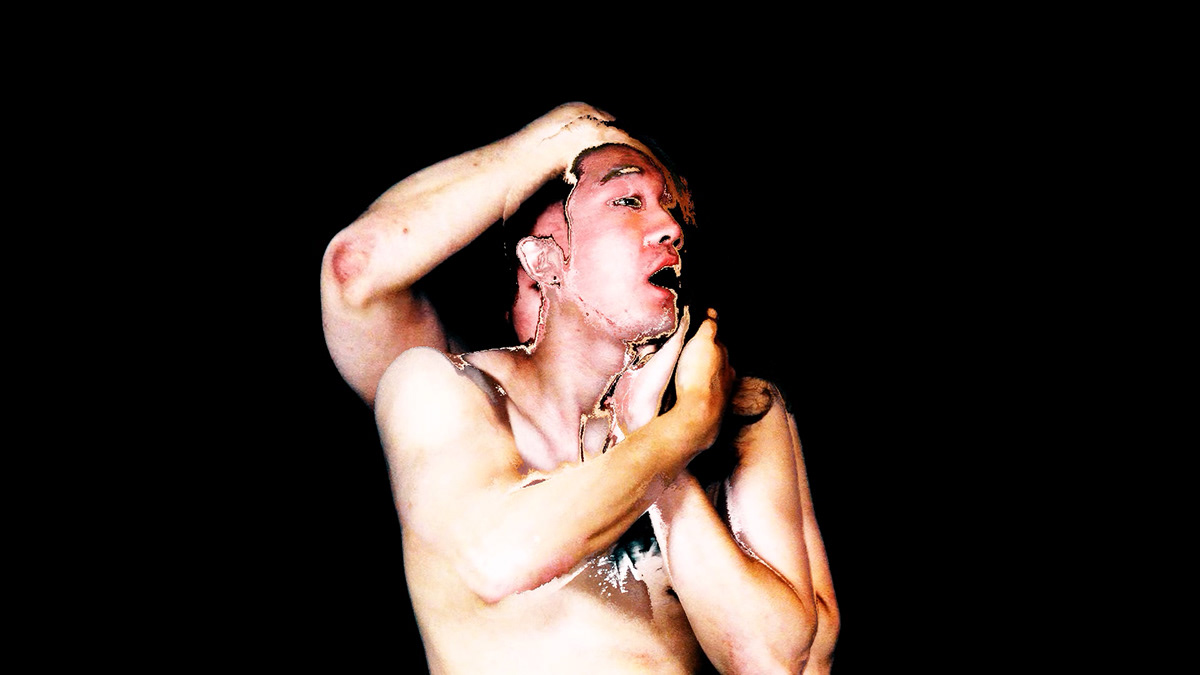
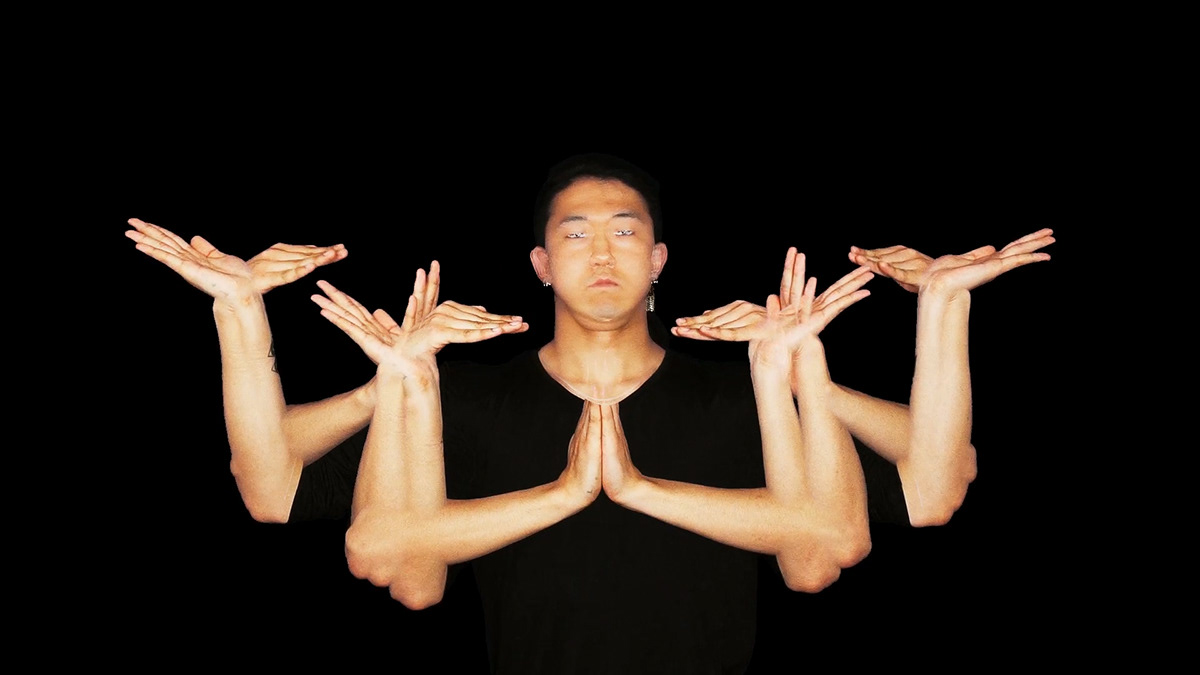
For example, in his early works, Daewon Yun
experimented with movements of the body transformed and expanded into “new
forms of corporeality” through the use of digital media. Once converted into
digital signals, his body is edited, fragmented, and recomposed in multiple
ways, reemerging as an unreal and surreal body that departs from the
conventional structure of the physical human form.

In this way, the artist began to dance by
fragmenting and reassembling his own body and gestures. The movements generated
by this expanded body were all imbued with a sense of the uncanny. The source
of this uncanniness lay not in an unfamiliar bodily form, but in the edited
gestures themselves.
The cause was the simultaneously familiar
and strange sensation produced by surreal movements that defy the laws of
physics—an effect that became another aura distinctive to Daewon Yun’s dance.

Daewon Yun then began a series of diverse
and eccentric investigations to locate this sense of the uncanny. He devised
his own rules, edited bodily gestures in various ways according to specific
criteria, and meticulously documented the process. Through this
experimentation, he discovered that his dance became increasingly uncanny when
movements were perfectly symmetrical, perfectly aligned, perfectly repeated
countless times, or executed at a perfectly uniform speed.
In other words, as human gestures were
placed onto numerically calculated coordinate values, a tension emerged between
the perfect and the imperfect—producing a peculiar harmony that intensified the
uncanny quality of his movement.

After this, Daewon Yun began the ‘Factum
Socies’ series, a body of work that imagines the gestures of future humanoids.
Rather than assuming a future in which humanoids dominate humanity or gain
superior power, the project departs from the premise that these beings instead
desire to become human.
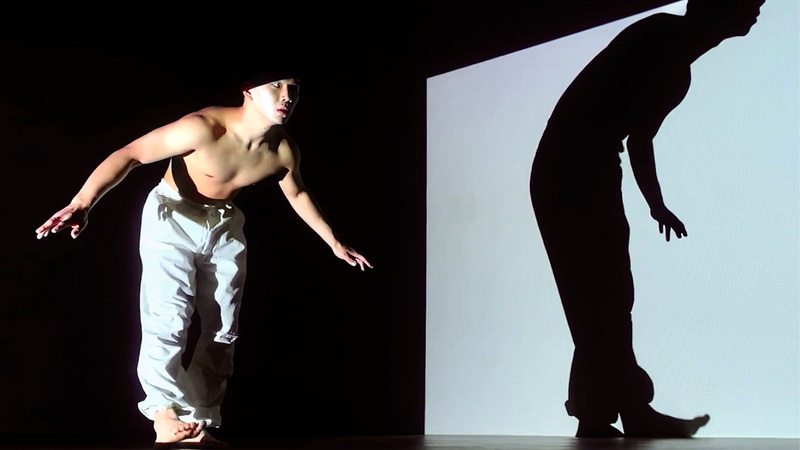
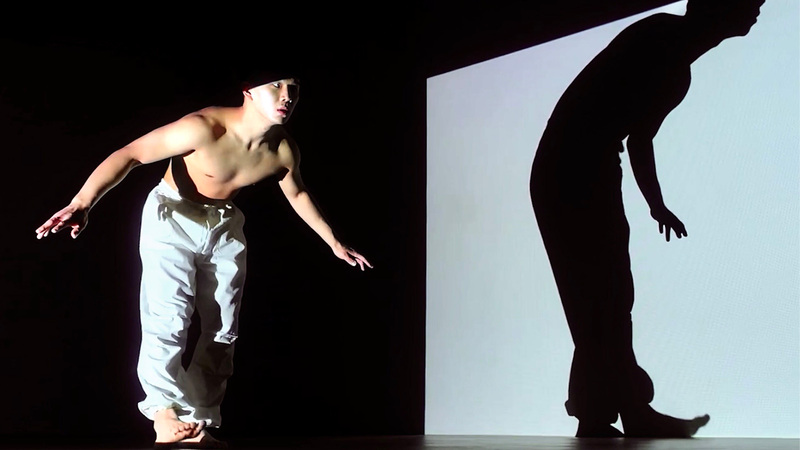
The first work in the series,
Birthday (2020), is a performance that depicts a humanoid
imitating and practicing human imperfection. Once powered on, the humanoid
reenacts the stages through which a newborn comes to recognize its hands and
feet, learns to crawl on all fours, and eventually takes its first steps in
bipedal walking.

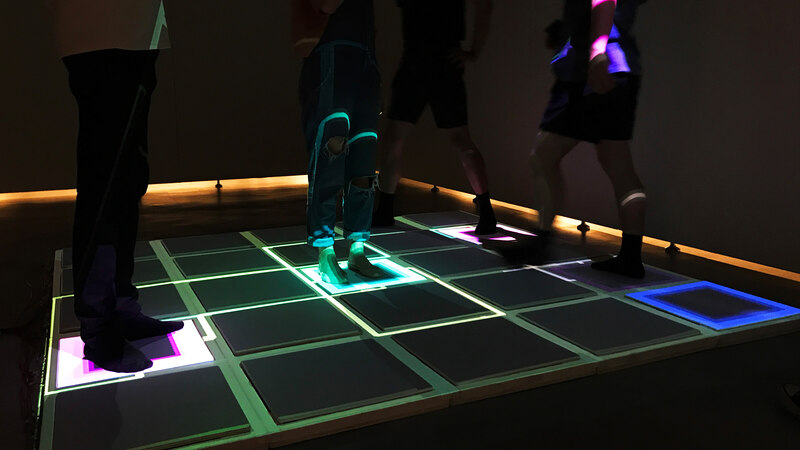
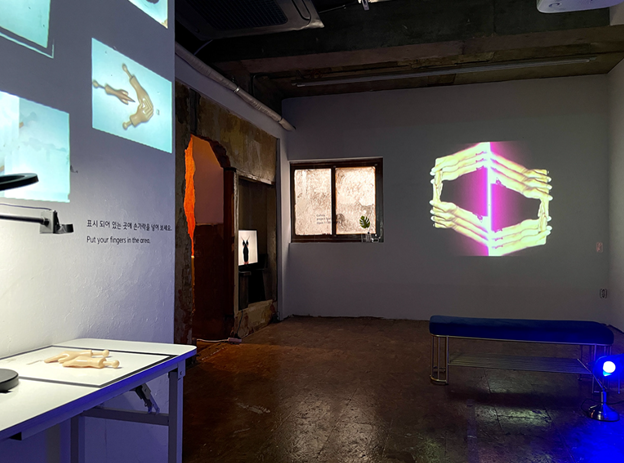
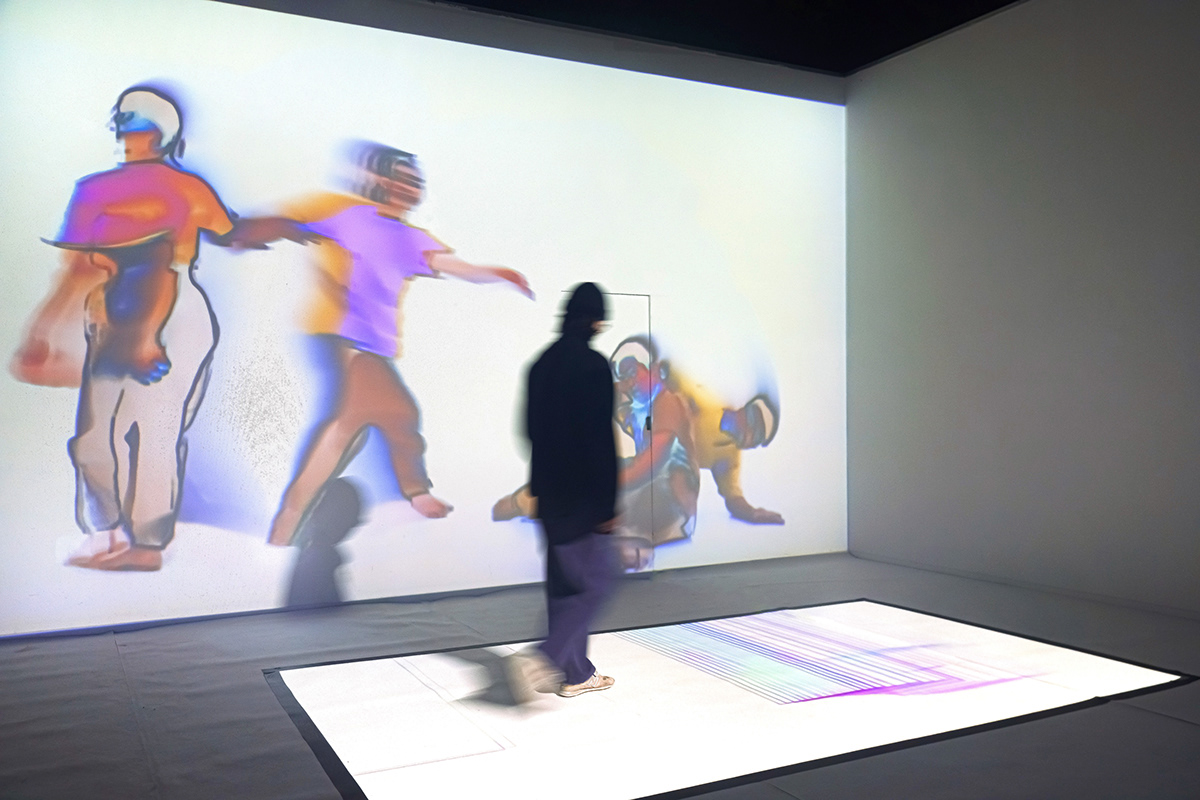
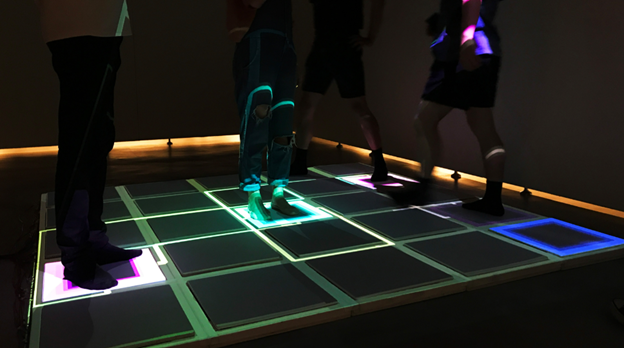
Meanwhile, in the media installation
Connection (2020), created the same year, Yun sought to
visualize the movement and speed of relationships formed within online
platforms in a physical space. Composed of 25 square floor panels, the work
activates when two or more visitors step onto it, triggering LED lights that
create a visual effect of mutual connection.
These light-based links continuously form
and dissolve. Yun understands this rhythm as the speed of relationships that
emerge online—easily and rapidly created, only to disperse just as quickly. By
translating the dynamics and tempo of online social connections into an
offline, spatial experience, the work invites reflection on the dense networks
of on- and offline relationships that connect us to countless others in
contemporary life.

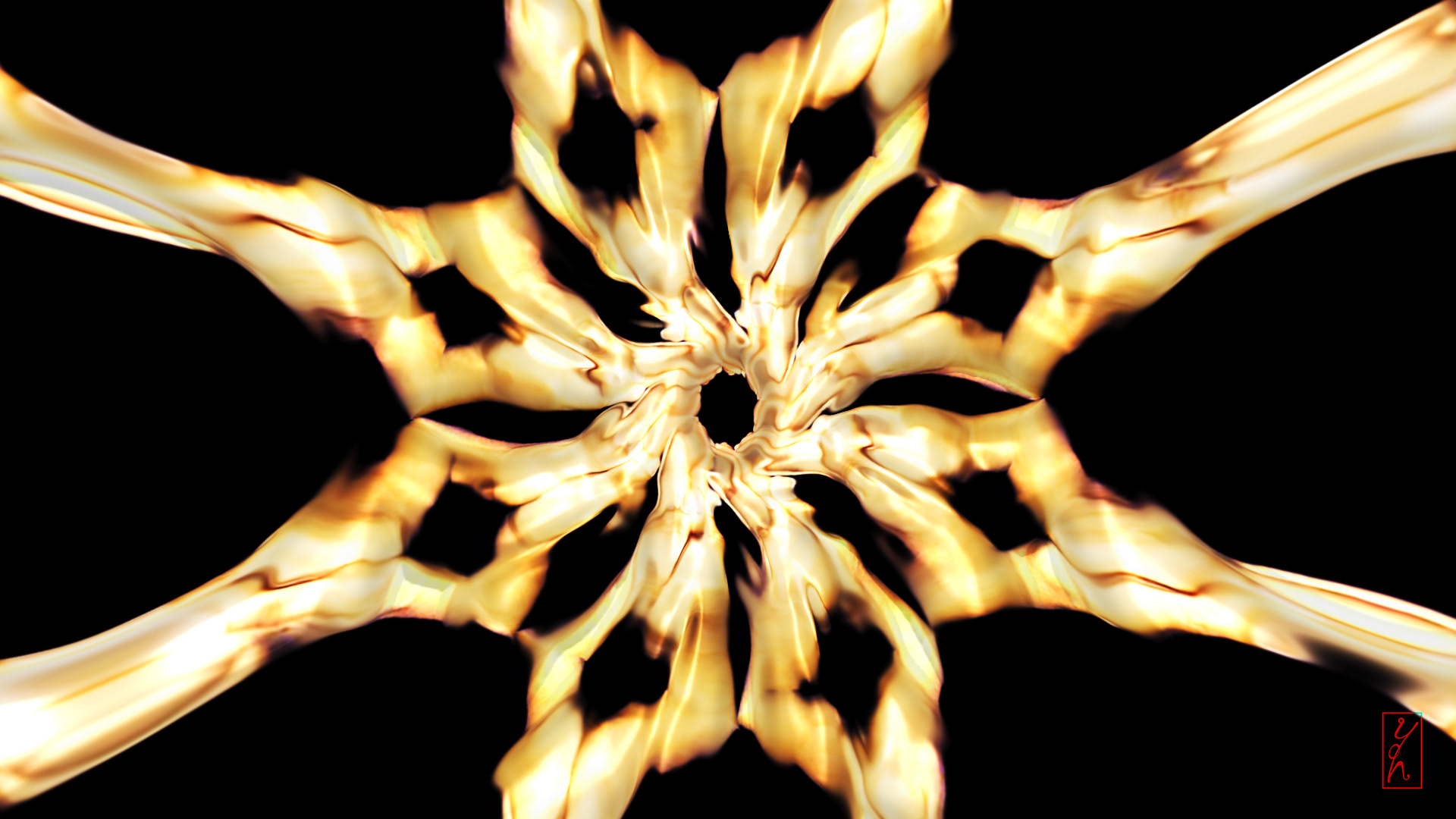
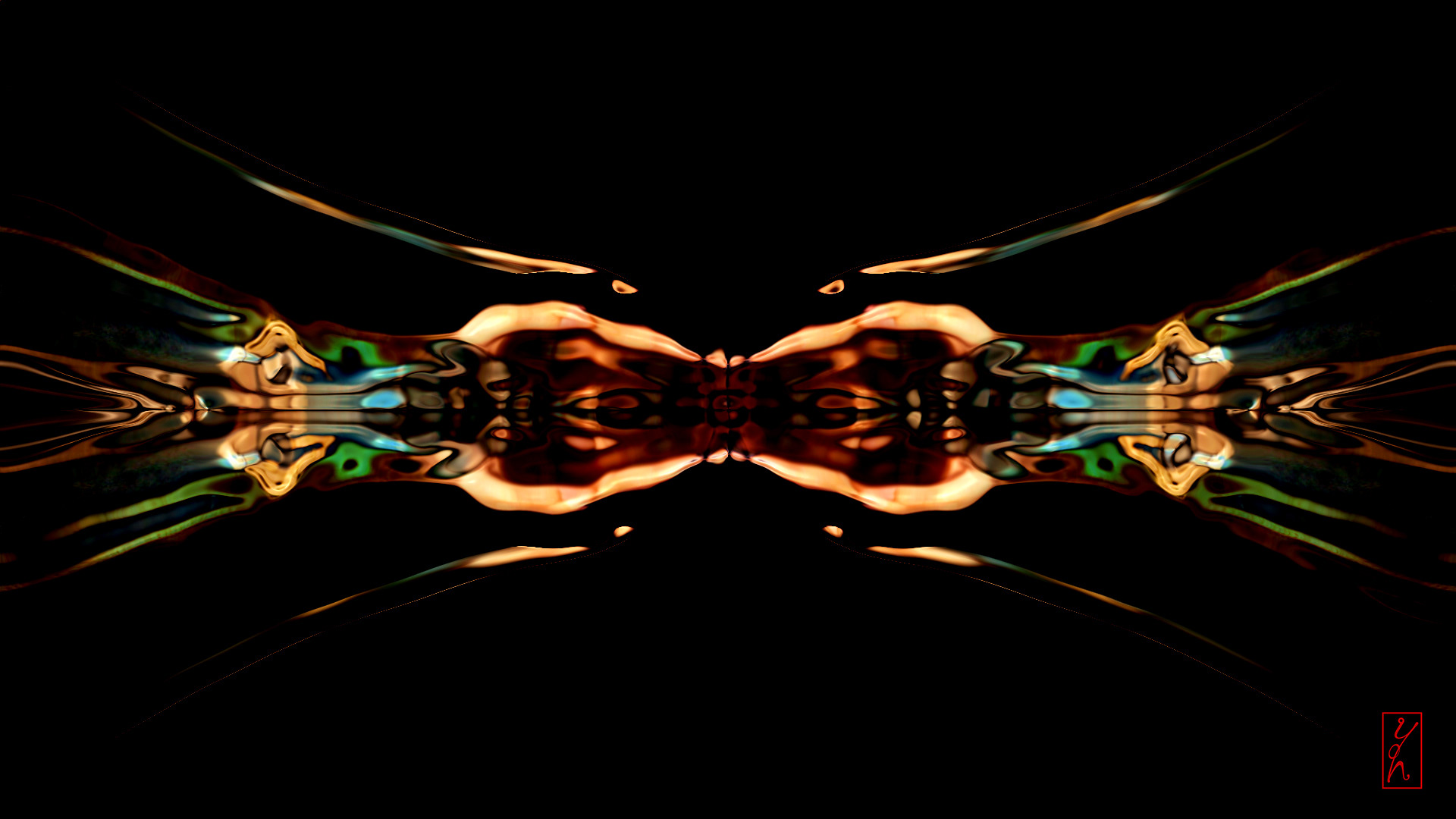
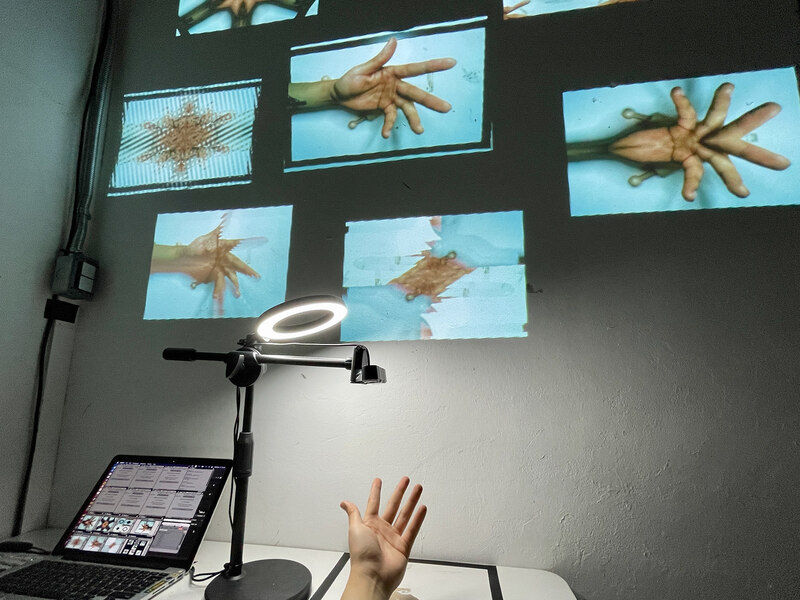
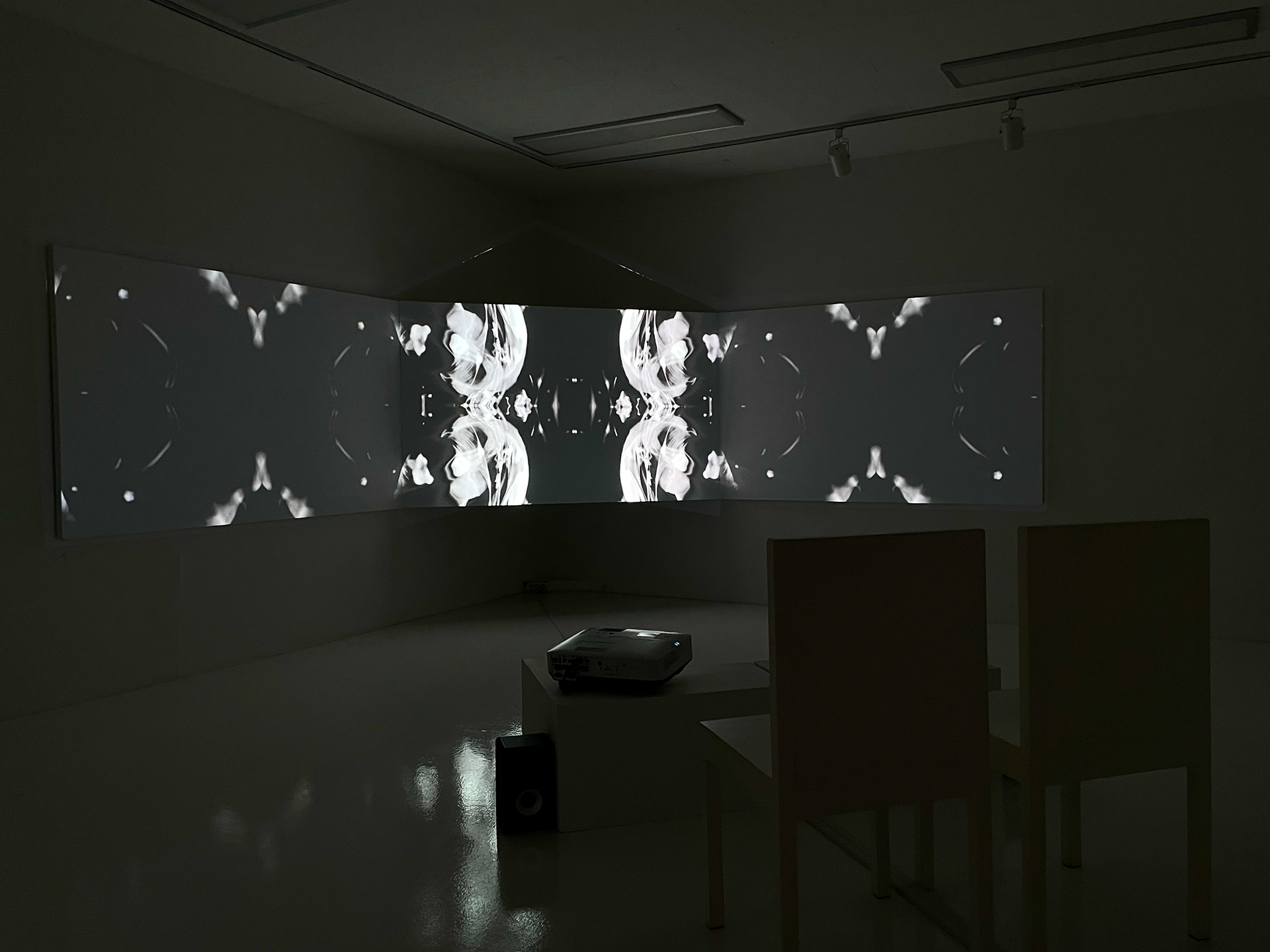
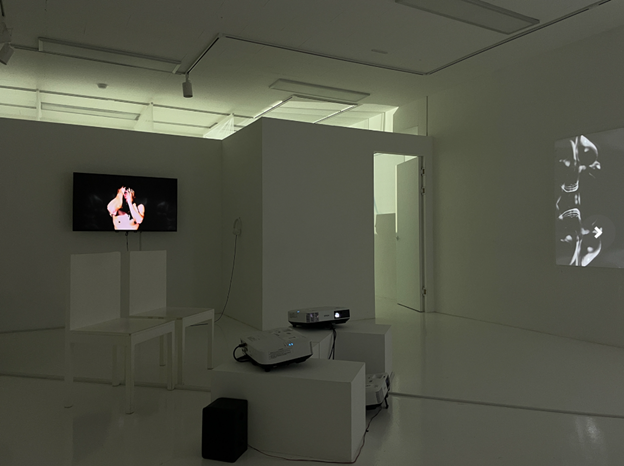
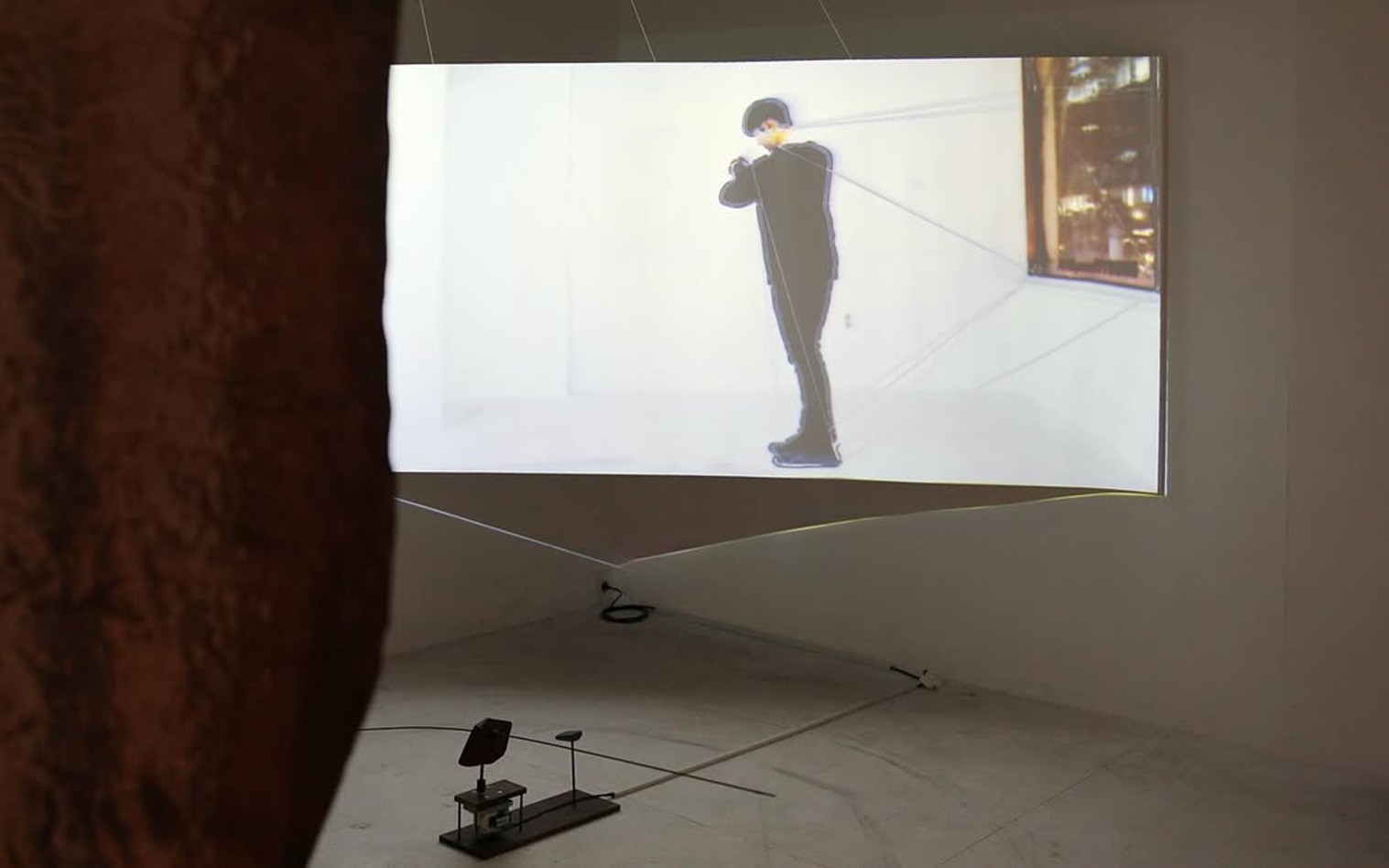
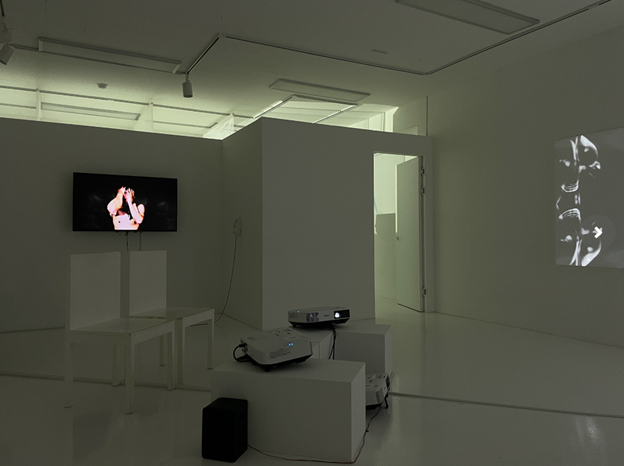
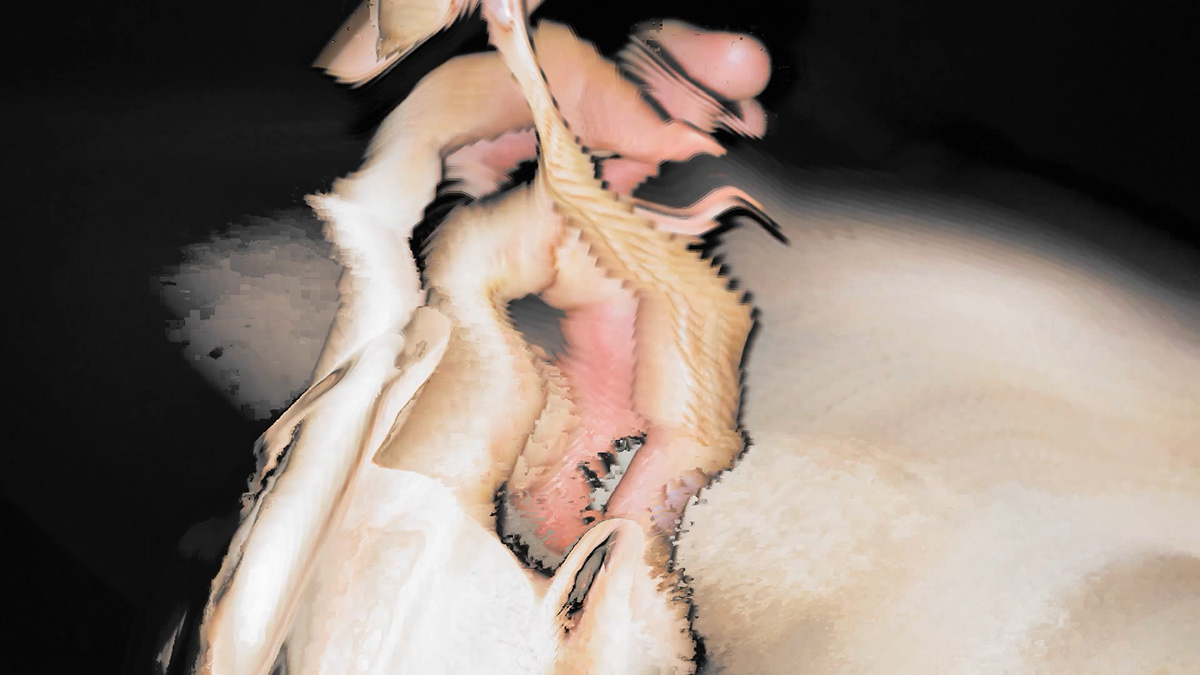
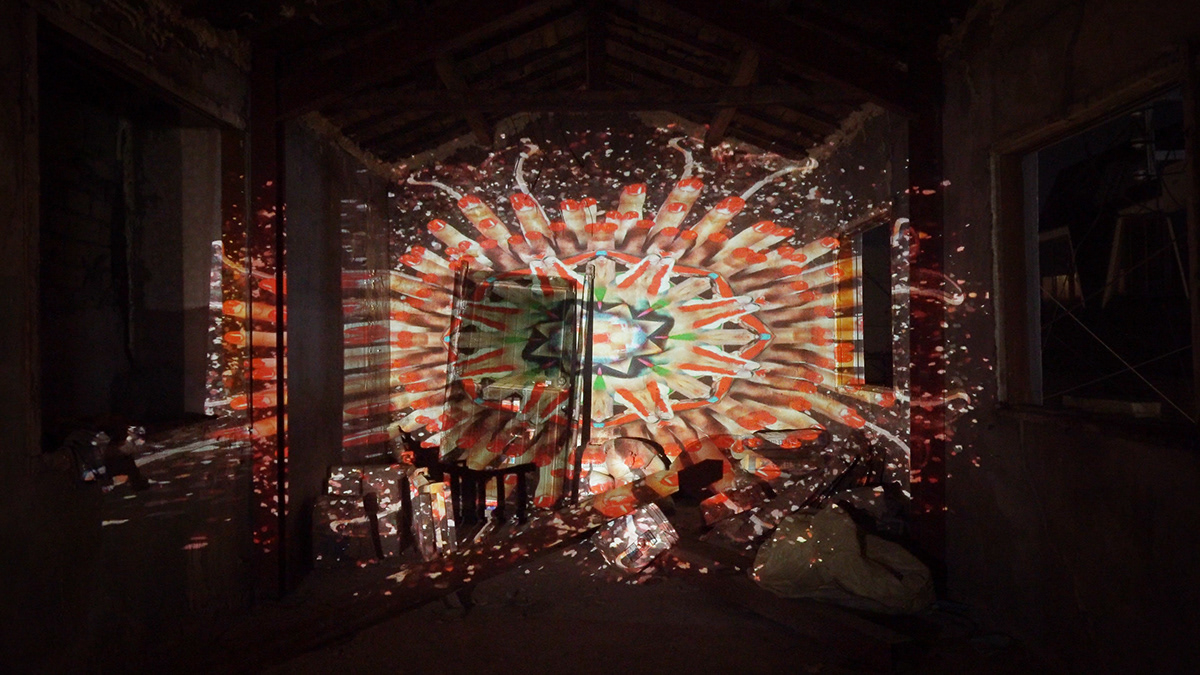
In his 2024 solo exhibition 《Quite Time》, Yun Daewon further expanded his
early investigations into bodily variation through digital editing. The works
presented in the exhibition fragment the artist’s own gestures in kaleidoscopic
ways or generate visual disorientation through feedback loops.
This approach reflects Yun’s deliberate use
of digital techniques to focus on gestures imbued with intention and form—such
as dance—and on bodies engaged in specific acts. Rather than aiming for mere
visual play or spectacle, these works emphasize a performative dimension.
Although Yun’s gestures in the works are
executed and repeated according to specific rules, the artist intentionally
overlays the trembling, unstable body produced in the course of performance
through the digital filter. In doing so, he amplifies both the body and its
gestures, rendering them more intense and pronounced.

This approach runs counter to traditional
performance practices or religious ritual acts, which seek to carry out
codified actions with precision by suppressing other sensory elements through
heightened concentration. Instead, Yun actively reveals the inner struggle and
the hidden underside of performative acts, as if uncovering another kind of
truth.
The anxiety, confusion, fragmented
afterimages, and traces that the artist expresses through his own body are
placed within the exhibition to create an extraordinary spatiotemporal
condition—a “Quiet Time”—for the viewer, opening up a space in which one can
reflect on intimate emotions that are rarely encountered in everyday life.

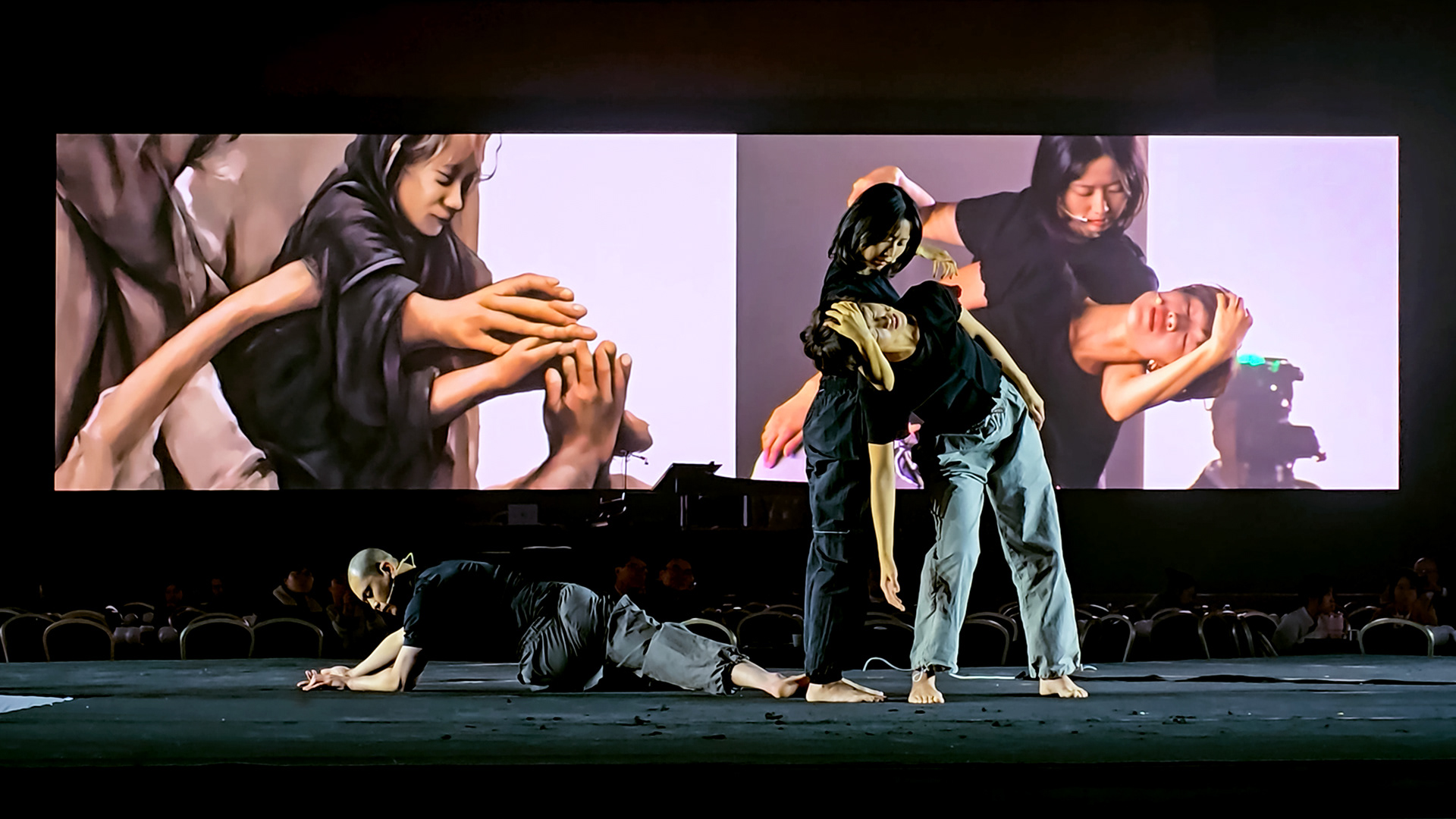
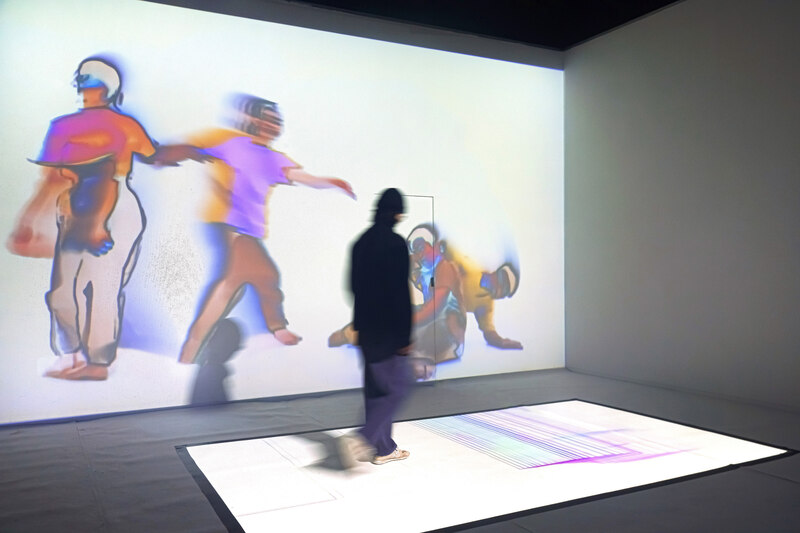
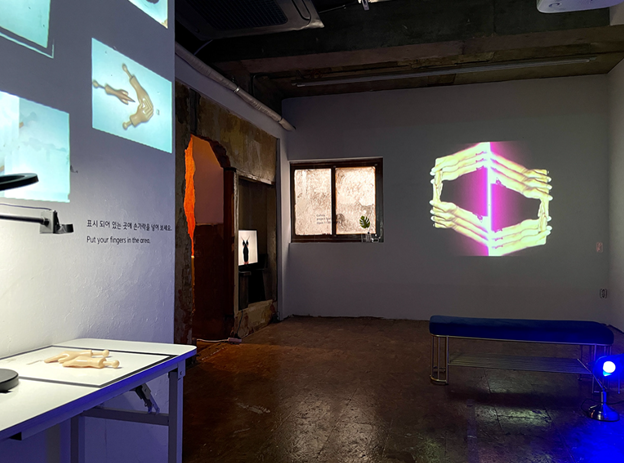
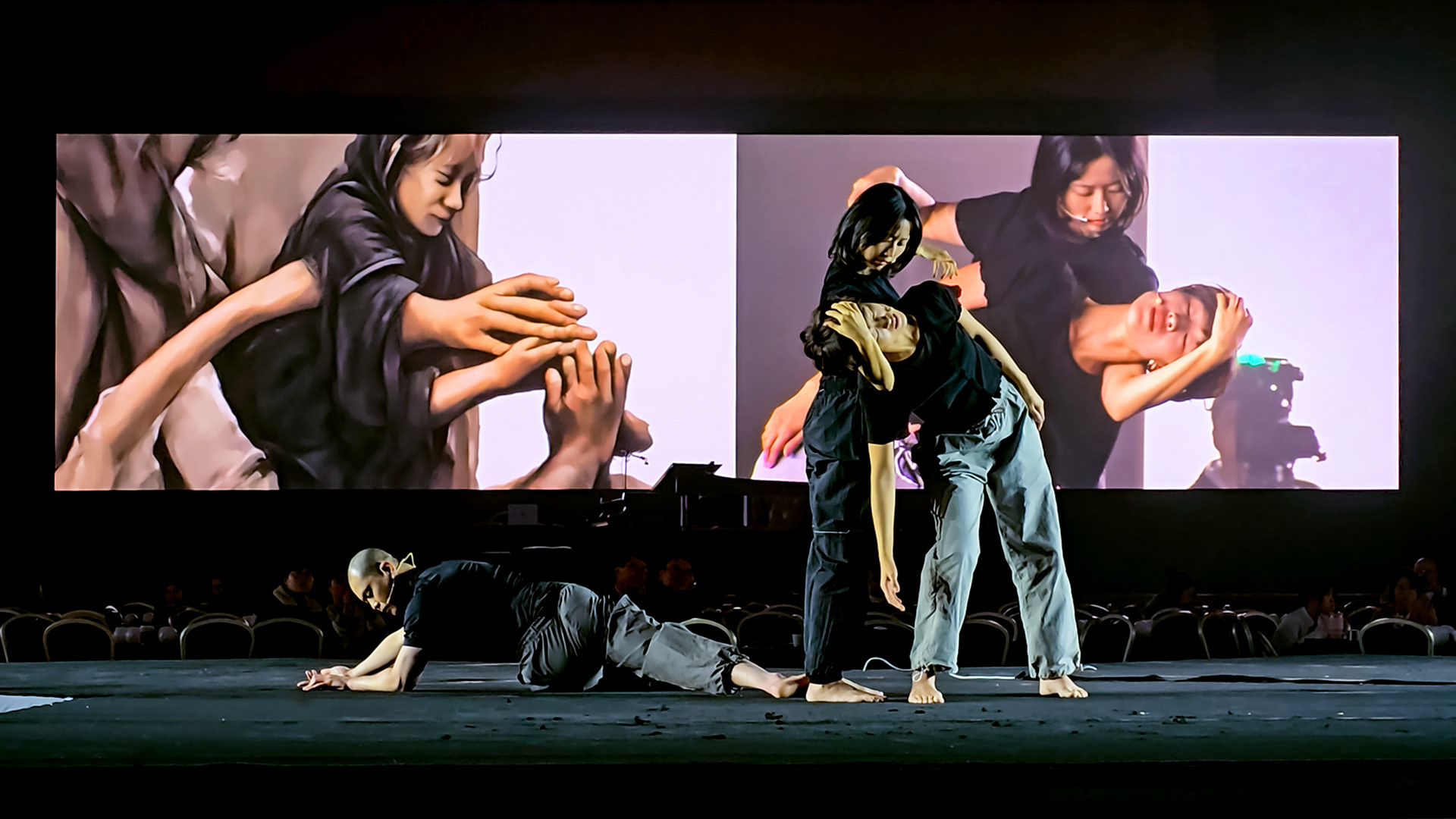
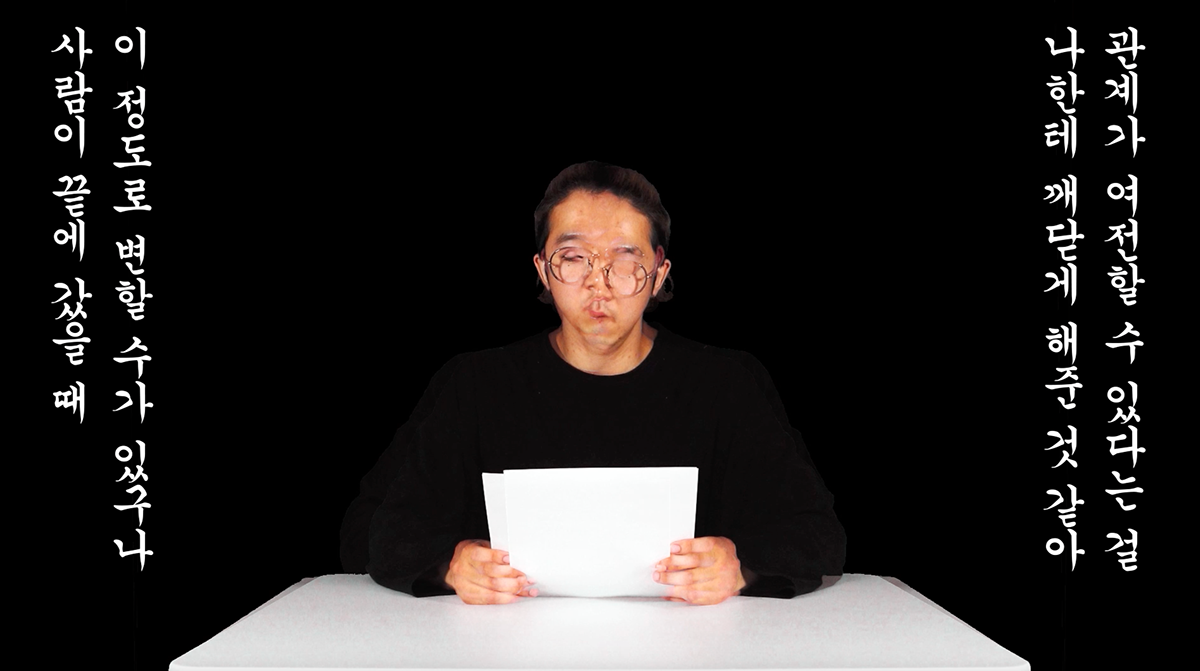
Meanwhile, in the same year, Yun presented
the work Tactile-Transmission (2024) as part of 《G·Artience 2024: Connecting Week》. Through
this piece, he sought to translate physical touch into poetic language and to
visualize it as images interpreted by AI. The performance Tactile-Transmission
begins when one dancer makes physical contact with another; the dancer who
receives the touch then articulates the sensation in poetic sentences.
For example, the warmth felt when holding
someone’s shoulder might be described as “like the soybean paste soup my mother
used to make in winter.” Such sentences are then input into an AI system; in
this process, the contextual nuances that humans intuitively understand
disappear and are instead transformed into images.
Through this procedure, the work juxtaposes
the differences in sensation and perception between humans and AI. In doing so,
it invites reflection on how contemporary digital media environments—including
artificial intelligence—are reshaping our senses and our bodies.

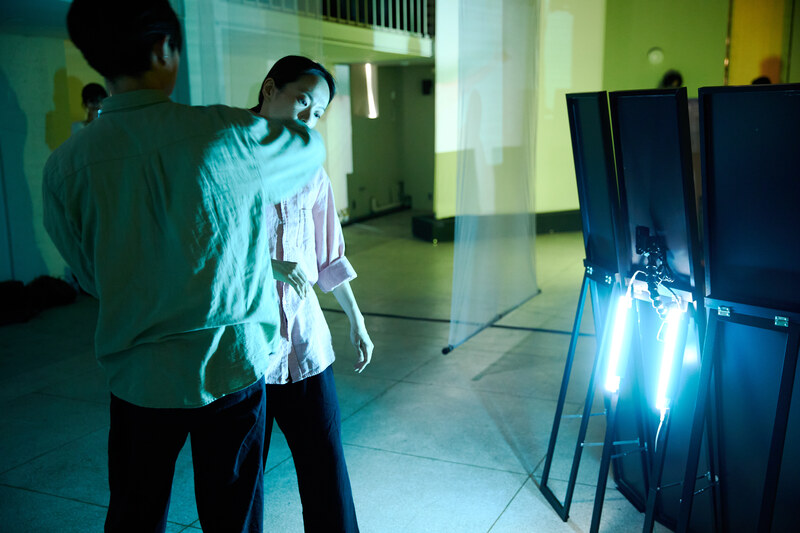
Furthermore, in the 2025 performance
Circle, Chase, Contact (2025), Daewon Yun focuses on the
state that lies between “connection” and “contact.” This inquiry does not
simply stem from changes in media environments, but from a deeper question
about a shift in how we sense, perceive, and understand the “body” today.
As the expanded ubiquity of media
increasingly virtualizes physical bodily sensations and forges ever more
intricate seams between reality and the virtual, ontological questions arise:
“How do we define ourselves within the boundary between the real and the
virtual?” and “What kind of body emerges when mediated through screens?” Yun
reads these questions as part of the contemporary sensory environment and
collective anxiety.

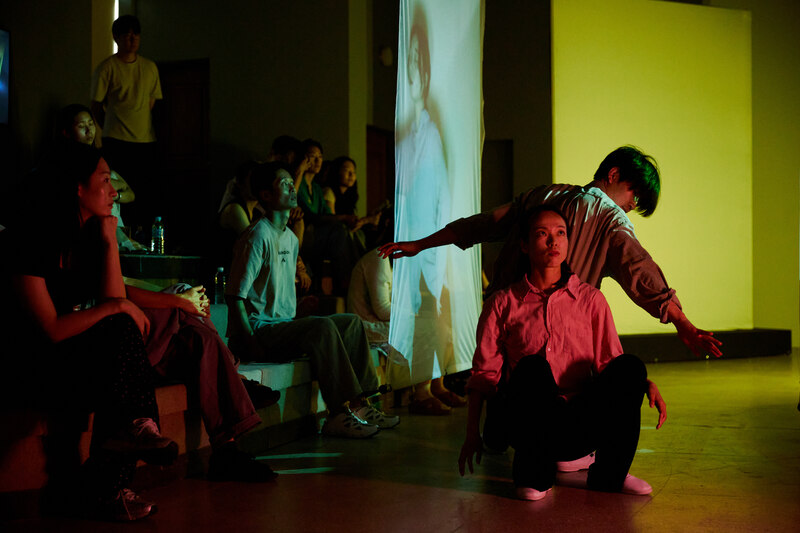
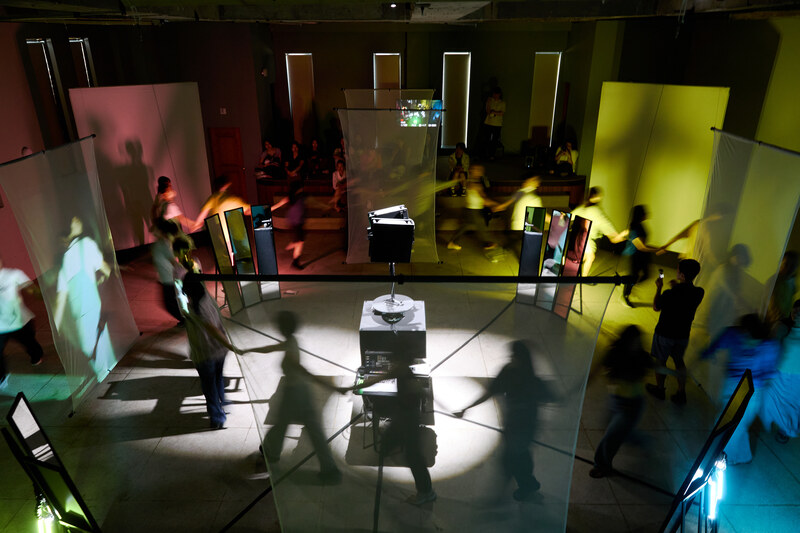
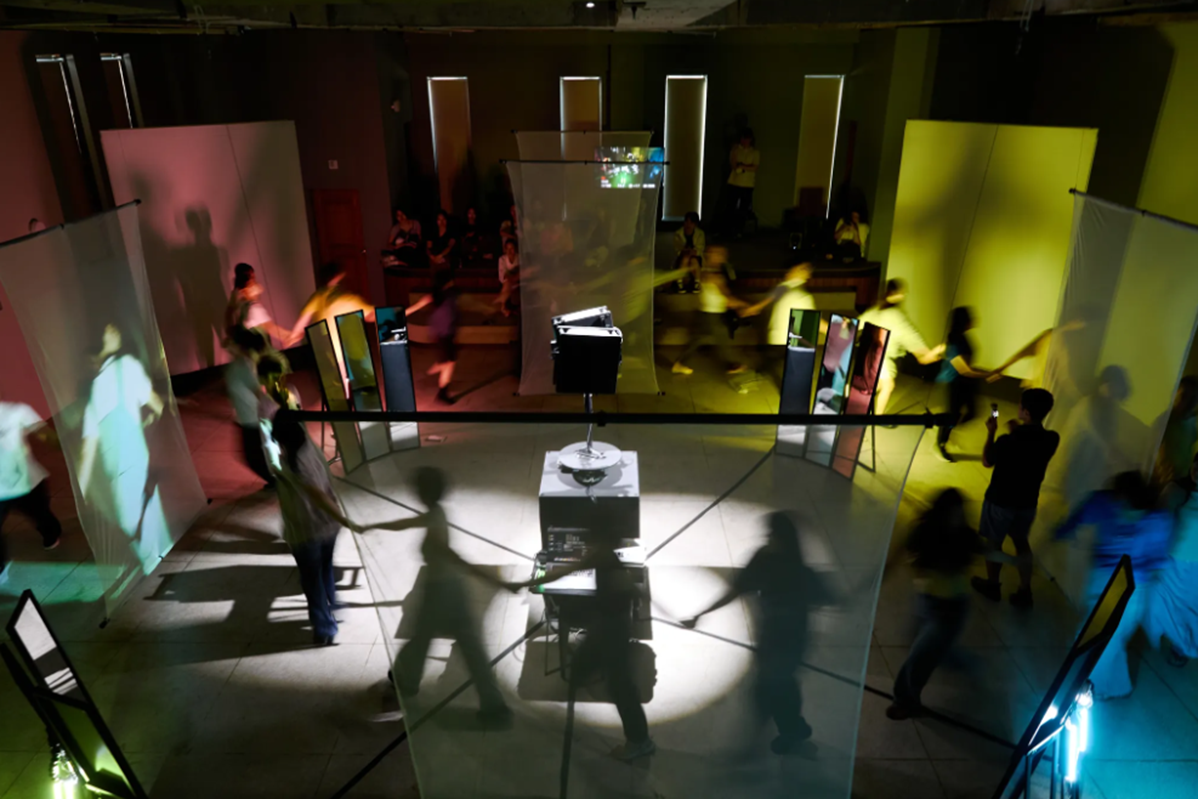
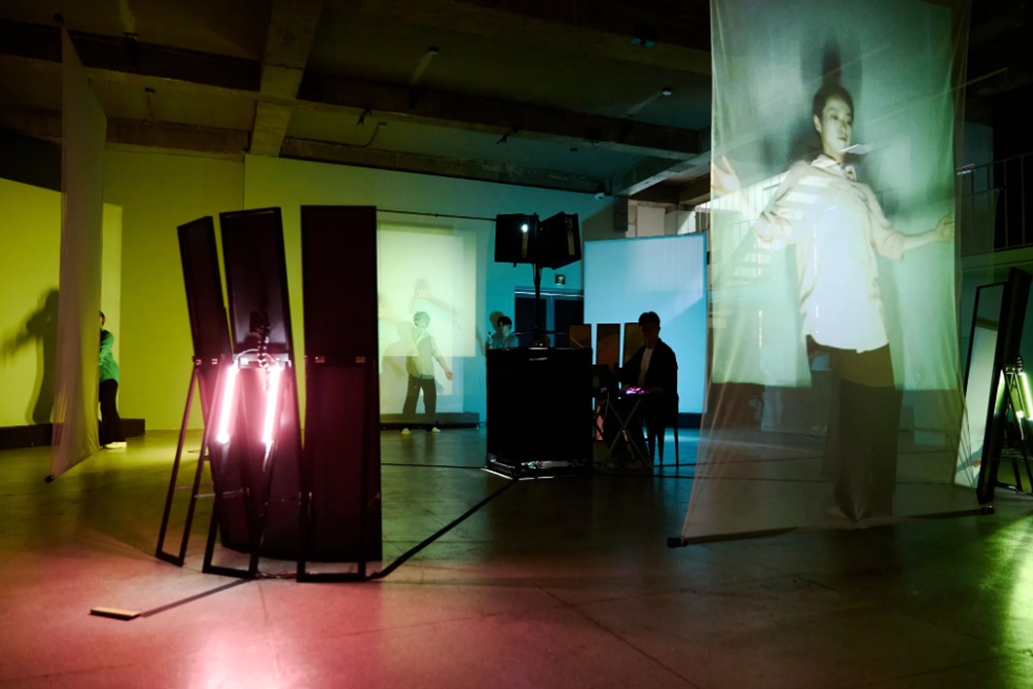
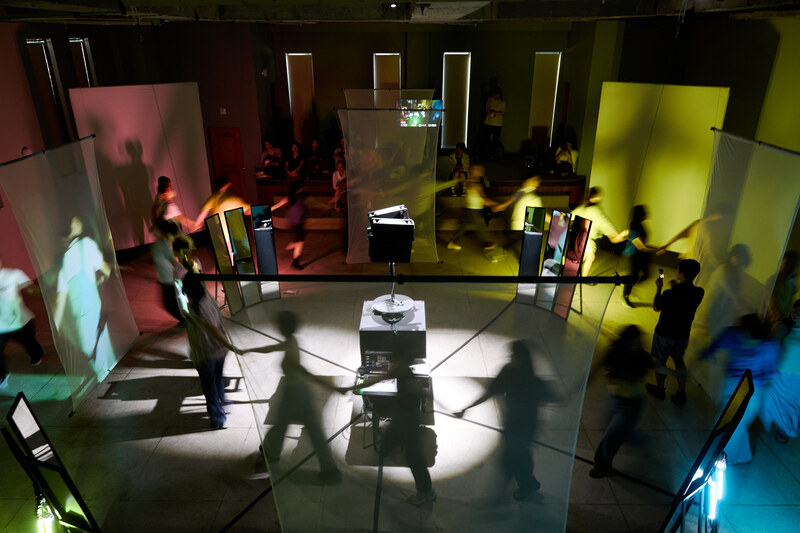
The performance Circle, Chase,
Contact experiments with “contact,” “connection,” and forms of
communality within this unstable sensory environment. The work unfolds in two
scenes, the first of which takes the children’s game of tag as its central
motif.
The performers move according to a rule in
which the shifting roles of chaser and chased are triggered by “touch.” Here,
individual moments of contact become a means of recognizing and sensing the
“other” through bodies meeting bodies, gazes, gestures, and perceptions of
distance.
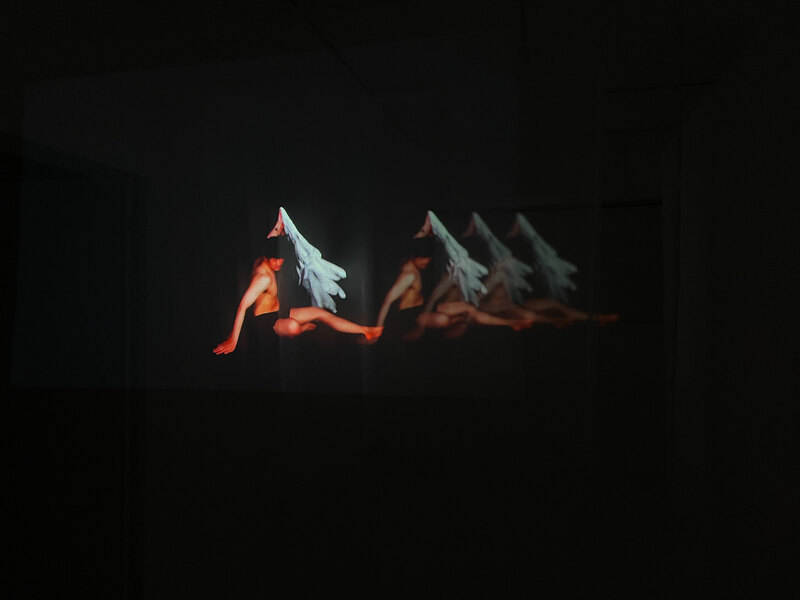
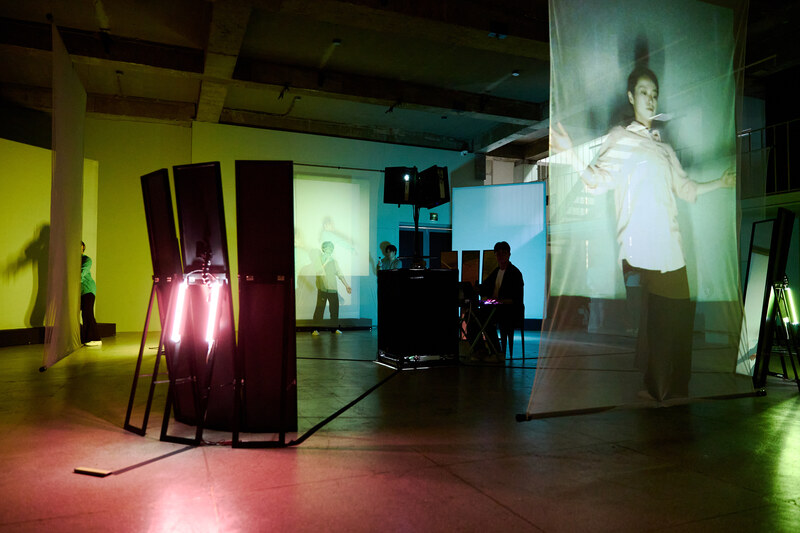
Meanwhile, the light and images projected
onto the space are distorted through slowed motion and overlapping frames.
These appear on the performers’ bodies as “gestures already passed,” projecting
past movements onto the present and generating another time–space altogether.

The images projected onto the bodies
intersect with and slip out of sync with past gestures and movements unfolding
in the present. Just as misaligned contact functions as a sensory point where
one crosses into another’s time, the body in the here-and-now connects, within
this condition of bodies and images intersecting a delayed environment, to a
dancing body that exists in a different temporality.
Such disruptions of perception are not
merely moments of visual confusion; they operate as acts of contact and
connection that newly activate the viewer’s own construction of reality.
Performers and audience members alike linger in the interval between contact
and connection, forming relationships while slowly exploring how the sensation
of moving through space becomes delayed and transformed.

Meanwhile, the second performance, which
appropriates Ganggangsullae, a traditional Korean folk dance, invites audience
participation to generate a sense of a temporarily formed community. By holding
hands and lightly walking in a single direction to draw a circle, participants
come together to form a fleeting moment of shared solidarity.
Although everyone remains connected and
moves in the same direction, different tempos coexist simultaneously. Rather
than signaling imperfection, these uncoordinated rhythms function as a way of
revealing the tactile nature of solidarity inherent in “being-together.”
Furthermore, even as they participate,
audience members sense the connections of contact and connection breaking and
reforming, and come to accept states of drifting out of rhythm or falling out
of sync as they are. Through this experience, the work allows participants to
realize that communal rhythm is not constituted by perfect synchronization, but
emerges from a sensory field in which each person’s misalignment becomes a
point of connection.

In this way, Daewon Yun’s practice has
consistently explored a range of physical and non-physical movements centered
on the body. Through this process, the artist engages with the rapidly changing
conditions of the digital age, modes of forming relationships within them, and
the bodily senses that respond to and are transformed by these environments.
Yun’s work ultimately poses ontological questions about our contemporary
attitudes toward the body and the ways in which we perceive and understand it
today.
”Through works in which ‘being together’
and ‘not being together’ coexist, I continue to contemplate the possibilities
of the body situated at the boundary between the real and the virtual.” (Daewon Yun, from the interview for 2025
ARKO DAY)

Daewon Yun earned a B.F.A. in Korean
Painting from the College of Fine Arts at Kyunghee University and completed an
M.F.A. in Sculpture at the same institution. His solo exhibitions include 《Circle, Chase, Contact》 (TINC, Seoul, 2025),
《Quite Time》 (GIMYE, Seoul,
2024), and 《4 and one-half, knuckle》 (Art Space Hanchigak, Pyeongtaek, 2021).
He has also participated in numerous group
exhibitions, including 《LOGBOOK : Layered Memorie》 (Pier Contemporary, Seoul, 2025), 《Resonant
Chamber》 (Art Space Hyeong, Seoul, 2025), 《G·Artience 2024: Connecting Week》 (DCC Grand
Ballroom, Daejeon, 2024), Gwangju Media Art Festival 2023 《Breathing Light》 (Gwangju Media Art
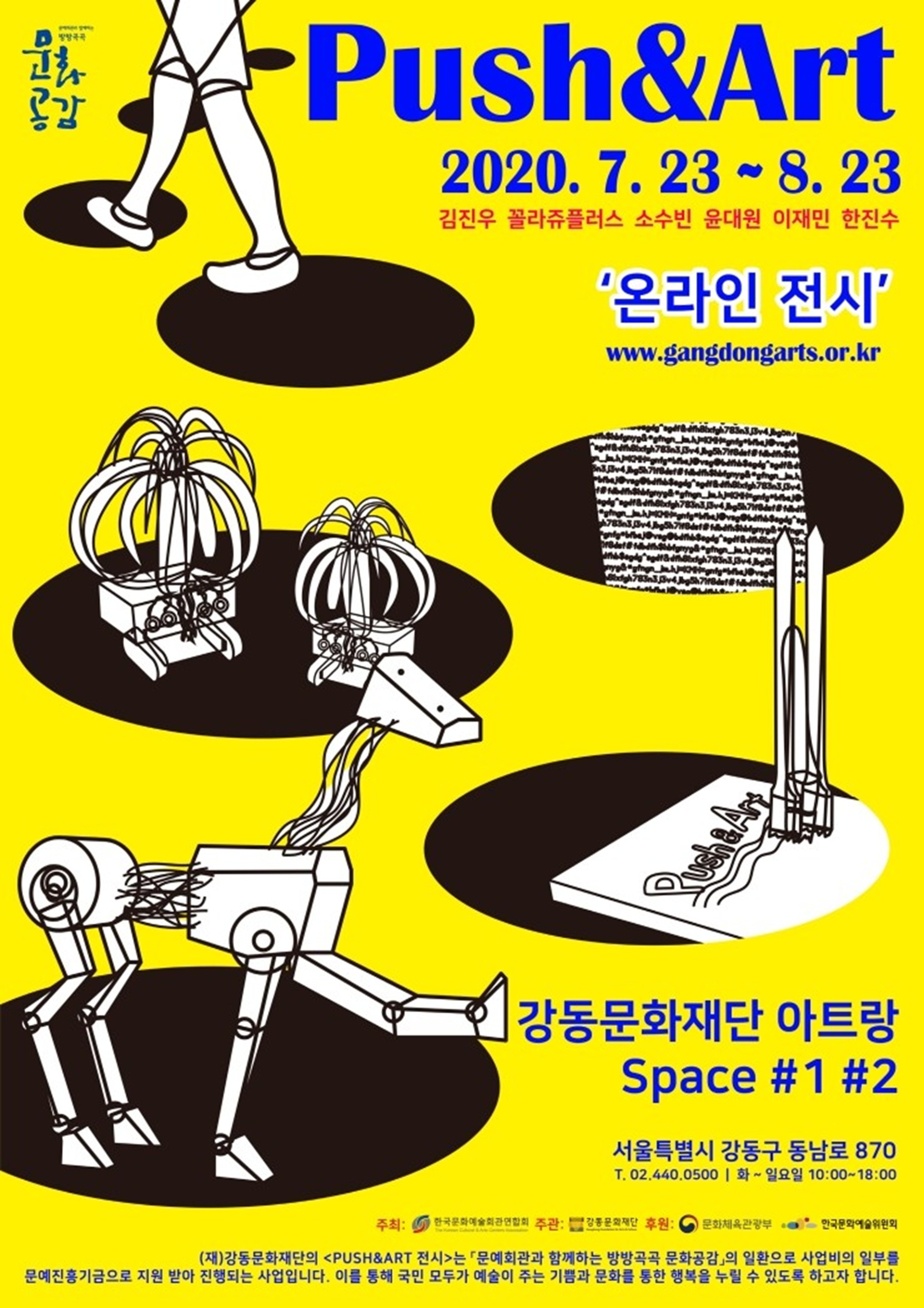
Platform, Gwangju, 2023), 《Self-Contradiction》 (PLACE MAK1, Seoul, 2021), and 《Push &
Art》 (Gangdong Arts Center, Seoul, 2020).
Yun gained recognition through his
participation in ‘2025 ARKO Day,’ and in 2018, he was selected as an artist for
the 20th Danwon Art Festival.