Exhibitions
《[Alert] Chewing water slowly is recommended》, 2020.12.05 – 2020.12.20, Post Territory Ujeongguk
November 24, 2020
Post Territory Ujeongguk
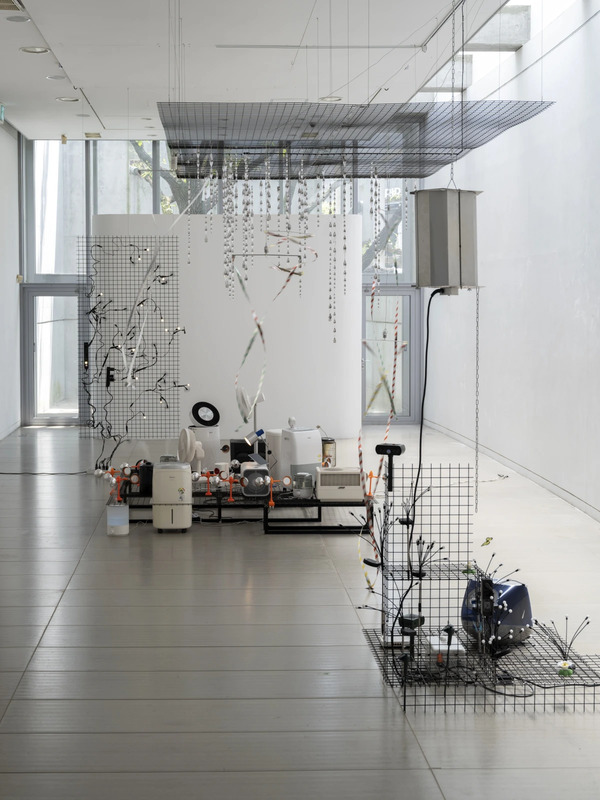
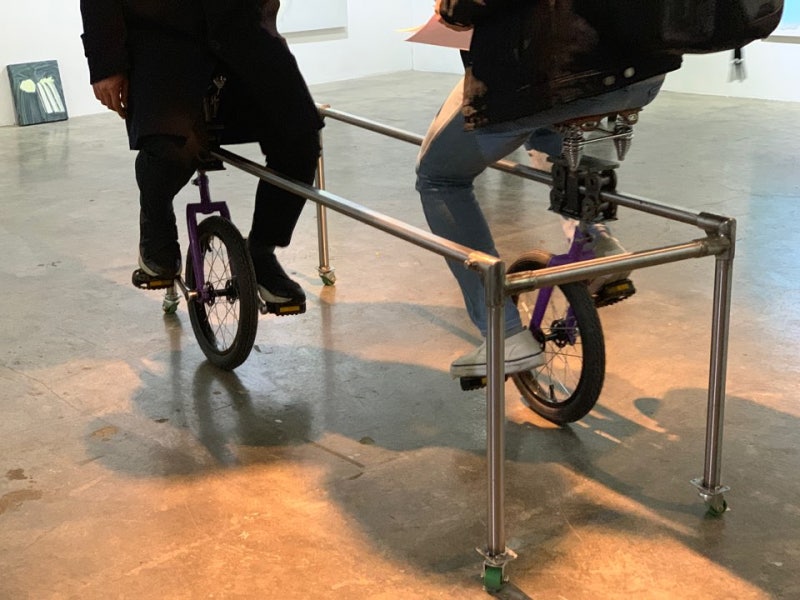
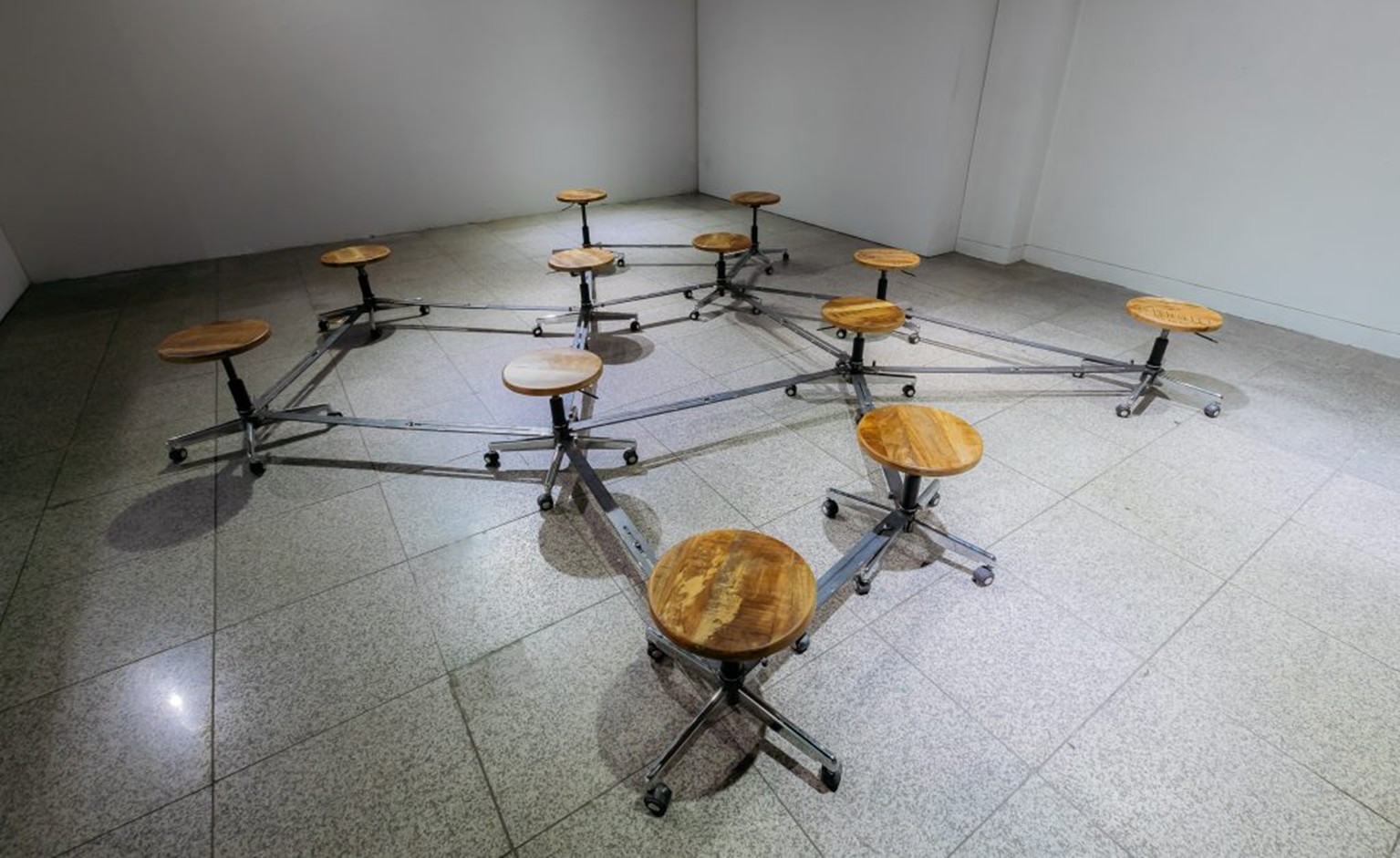
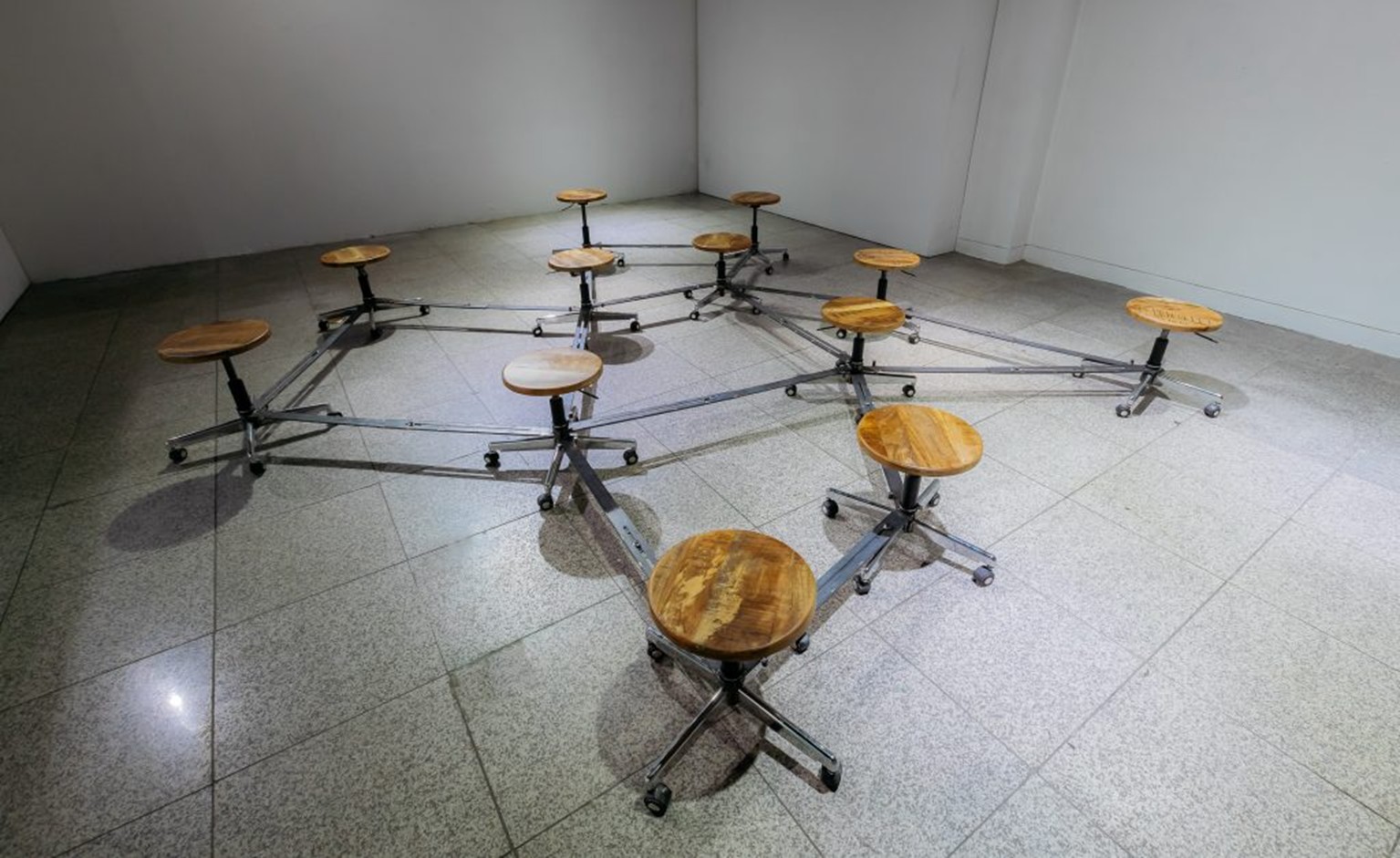 Cho Ho Young, From 60cm
to 120cm, 2017-2019, Connected 12 chairs, metal, Dimensions variable
©Post Territory Ujeongguk
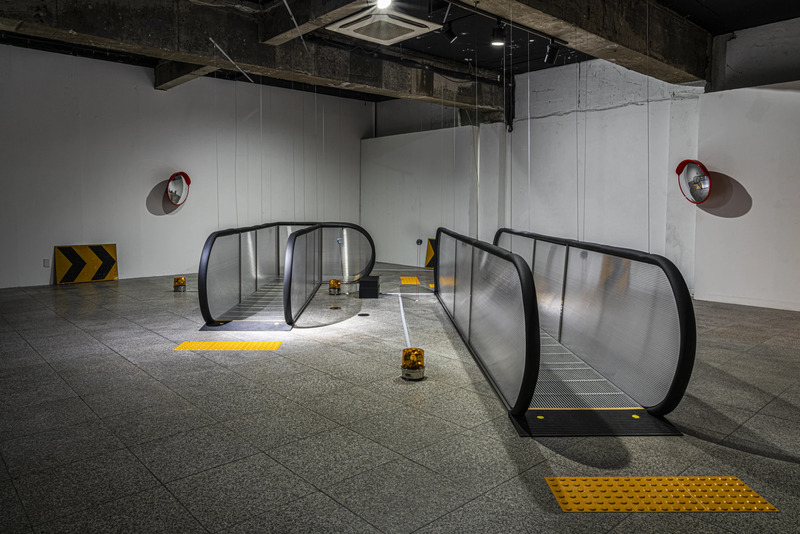
Cho Ho Young, From 60cm
to 120cm, 2017-2019, Connected 12 chairs, metal, Dimensions variable
©Post Territory Ujeongguk
Cho
Ho Young’s solo exhibition 《[Alert] Chewing
Water Slowly Is Recommended》 addresses how we perceive
our environment amid technological advancement. The exhibition is structured to
allow viewers to observe, at a slower rhythm, ordinary objects that have become
familiar under the guise of adaptation in the rapidly changing lives of
contemporary individuals.
Objects that are no longer considered special in
everyday life are examined by dividing them into three categories—entity,
sensation, and relationship—and unfolding their interrelations as processes of
exchanging movement.
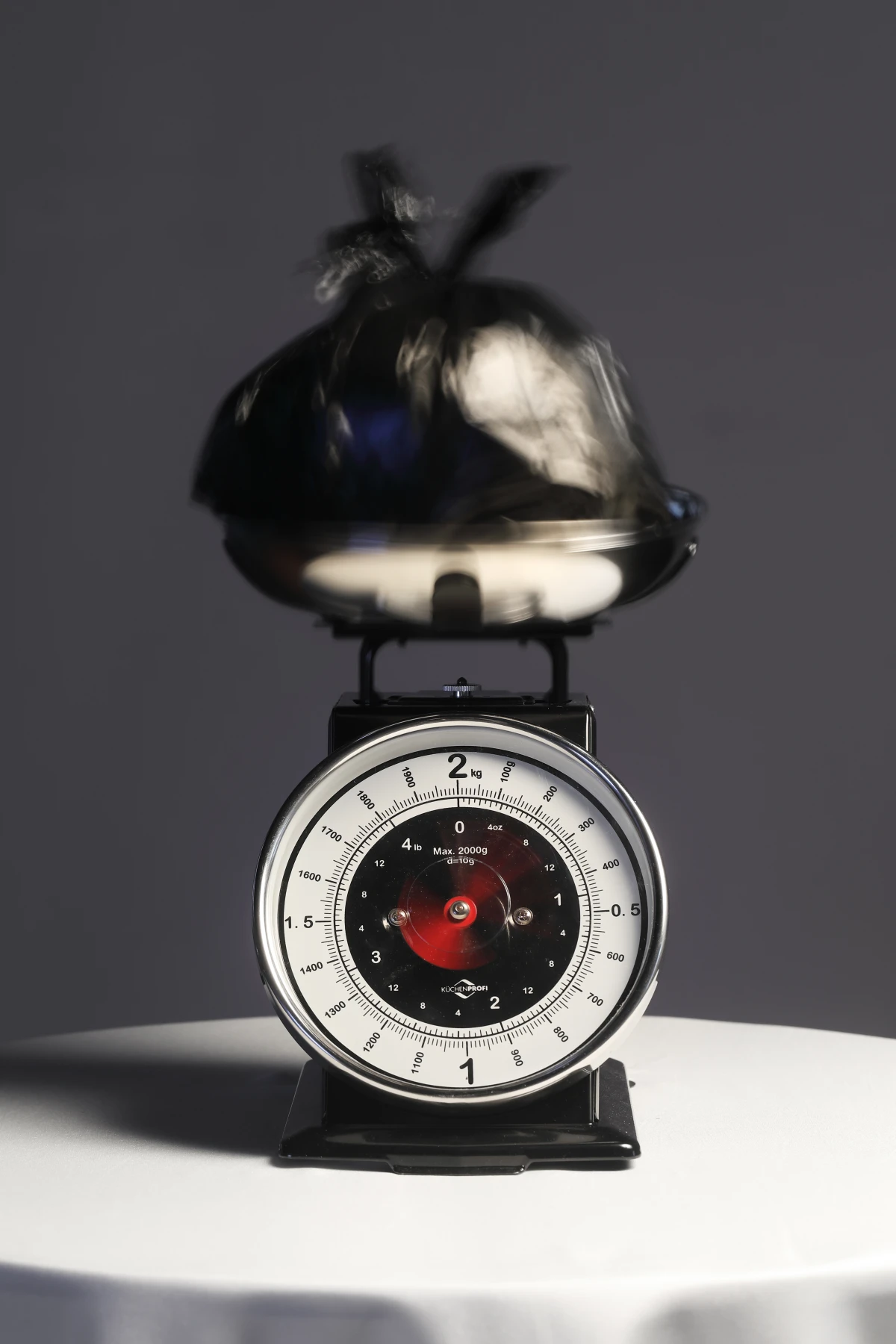
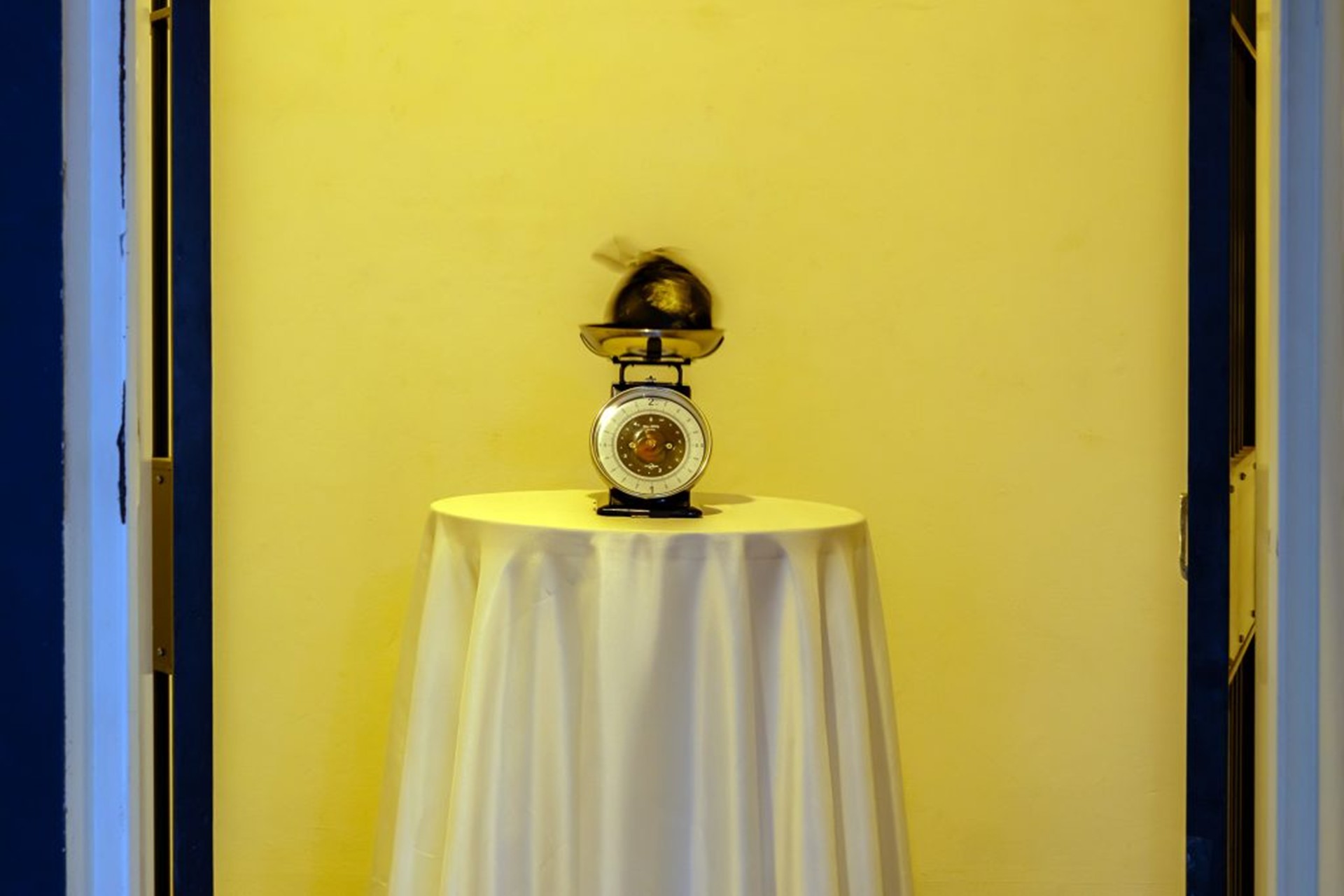 Cho Ho Young, The Weight
from youscale, 2020, Bouncing black plastic bag, 15x25x35cm ©Post
Territory Ujeongguk
Cho Ho Young, The Weight
from youscale, 2020, Bouncing black plastic bag, 15x25x35cm ©Post
Territory Ujeongguk
This
exhibition marks Cho Ho Young’s first solo show. It is composed of decisive
scenes that look back on works she had quietly cultivated beneath the surface
while offering a perspective on her future practice. Cho Ho Young has organized
her work around two perspectives: the relationships between objects, and the
sensory operations of the body that perceives those relationships.
In the
physical world, relationships between objects are determined by physical laws
that are always already at work between them, while relationships between
people are shaped by psychological distance. A closer look at the world of
objects reveals a tense standoff—a state just before movement occurs—between
seemingly static entities. Likewise, between people exists a sense of physical
distance that naturally expands or contracts according to psychological
proximity.
The
works in the exhibition visualize relationships between objects or people as
ongoing states in which positions and movements are continuously reset by
physical phenomena and psychological distance. There, too, is your sensing and
mis-sensing body, invited to experience the continuous states of objects
determined by the equilibrium of physical and psychological laws.
Through each
situation, viewers encounter the substance of sensation, become acutely aware
of the margins of error produced by misperception, and confront the states they
themselves enter when intervening in objects or situations governed by physical
laws and psychological distance.
In
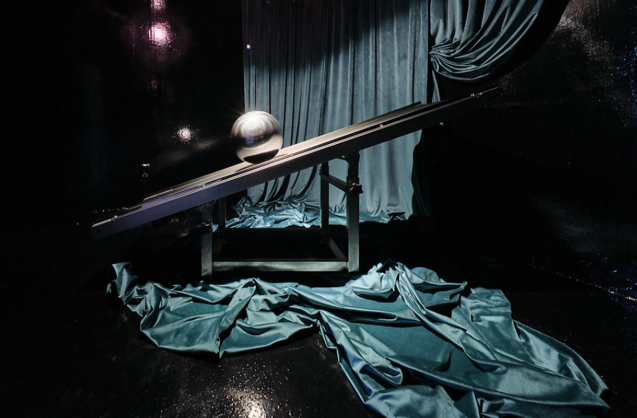
one corner of the exhibition space stands a scale supporting a trembling
object. The scale’s readings fluctuate, reflecting not only the object’s
precise mass but also the impacts and rebounds added to the scale’s plate by
the object’s movement. The numbers quantify a present moment that never becomes
fixed.
The exhibition space thus becomes a kind of contact zone—like the plate
of the scale itself—where one can confront even the margins of sensory error.
Sensation, too, continually wavers like the scale’s markings. At times, bodily
sensation differs from the object’s actual state, and this may be an illusion
or a relative truth. You are invited to enter and consider which side your own
sensation might align with.