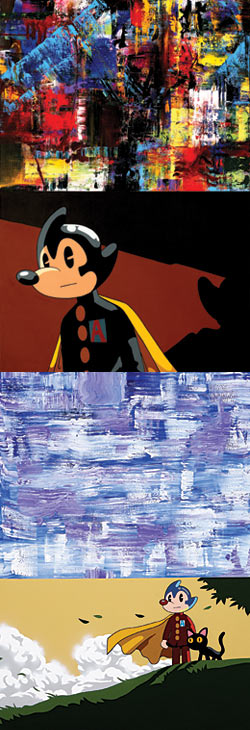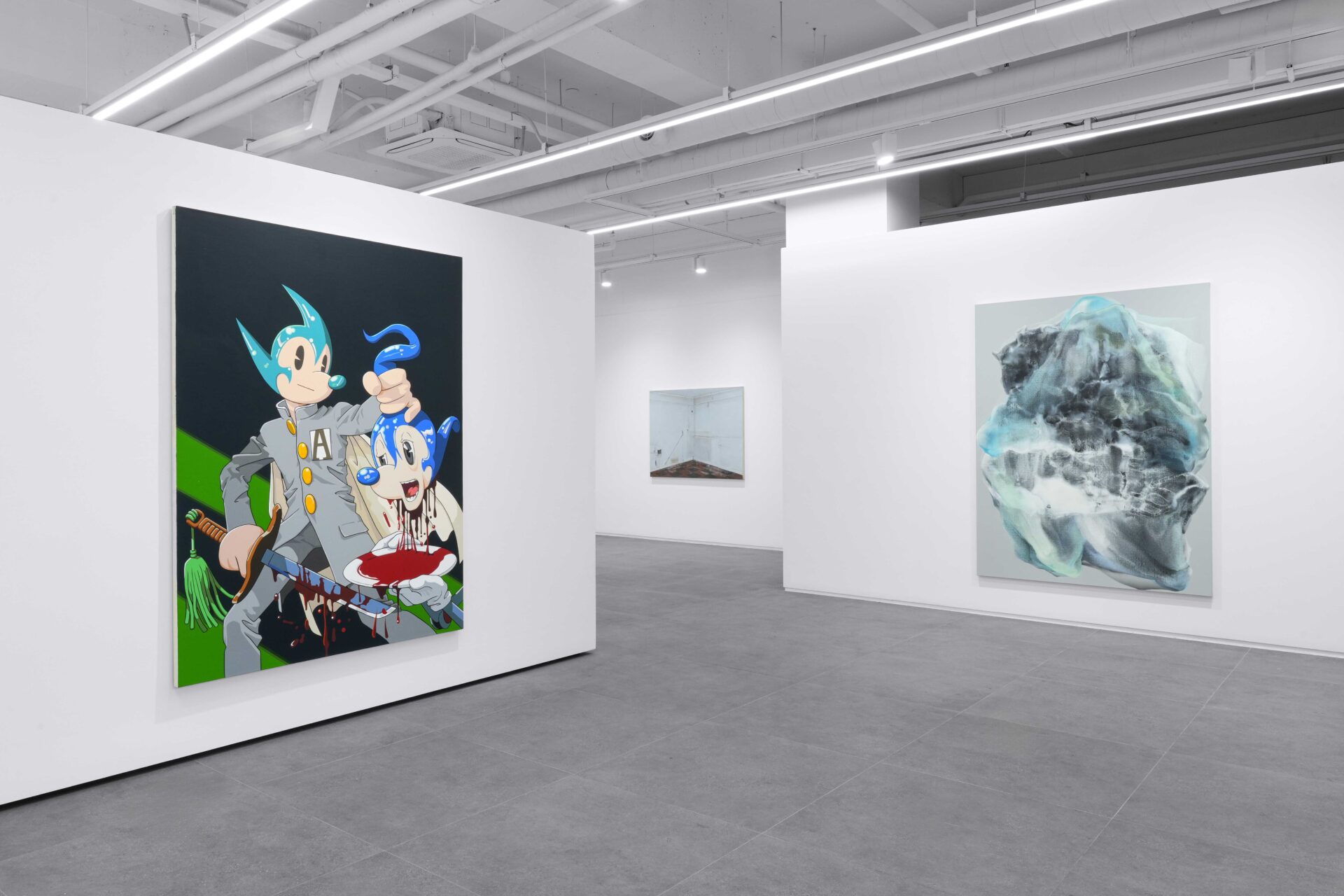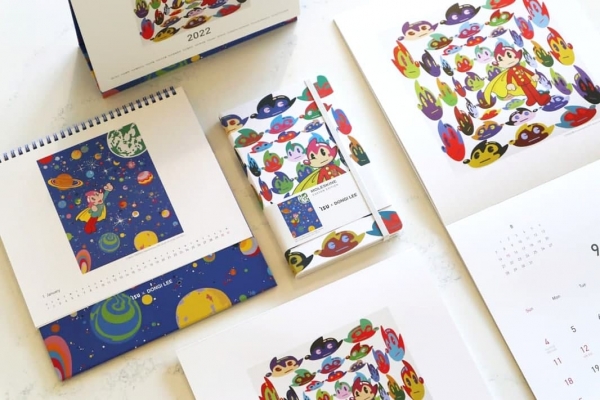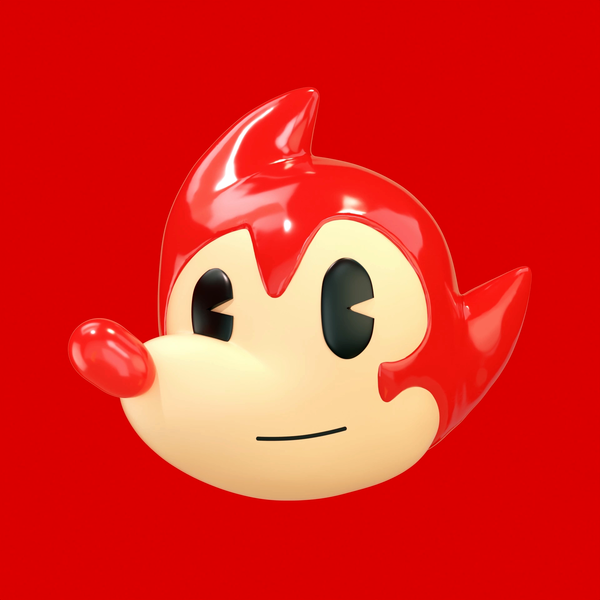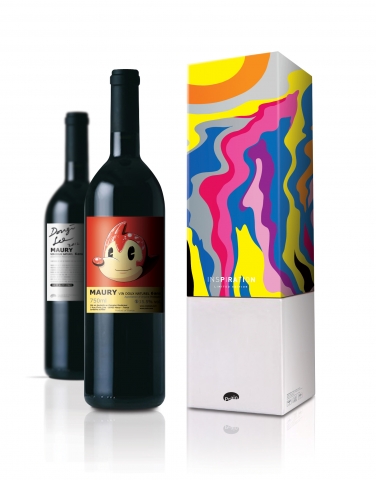

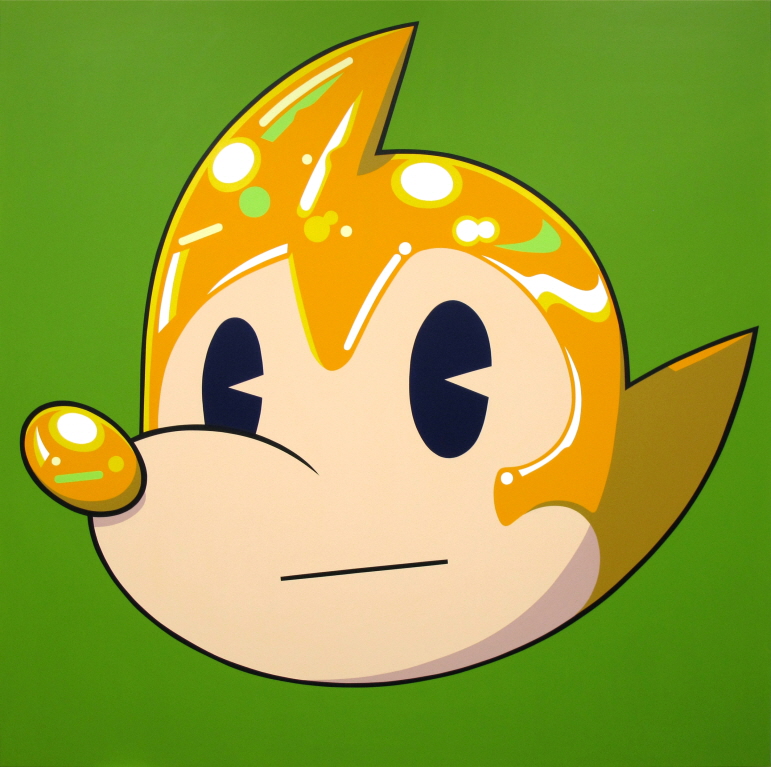
On a hill covered with brightly colored blooming flowers stands Atomaus. Though it resembles a cartoon character, its composed stance against the blue sky gives it a surprisingly serious presence. Judging by the school uniform it wears, Atomaus seems to belong to the same generation as Jang Dong-gun in Friend. The fluttering cape hints at the underlying tensions of friendship and betrayal that preoccupied the film’s protagonists.

Classic comic heroes such as Superman, Batman, and Golden Bat also appeared with their capes billowing in much the same way. In fact, the “friends” in the film Friend themselves would have grown up watching cartoons like Astro Boy, Tetsujin 28-go, Golden Bat, and Mazinger Z at the dinner table every evening, and Disney animations such as Mickey Mouse and Donald Duck on Sunday mornings until they grew tired of them.

Perhaps that film, which seemed so serious, was in fact a story of “grown-up boys” who, like comic book heroes, still longed to determine their hierarchy through conflict and confrontation.


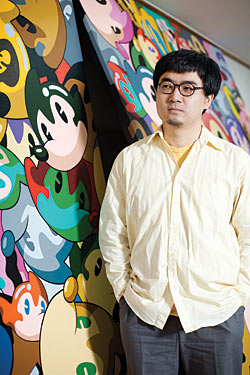
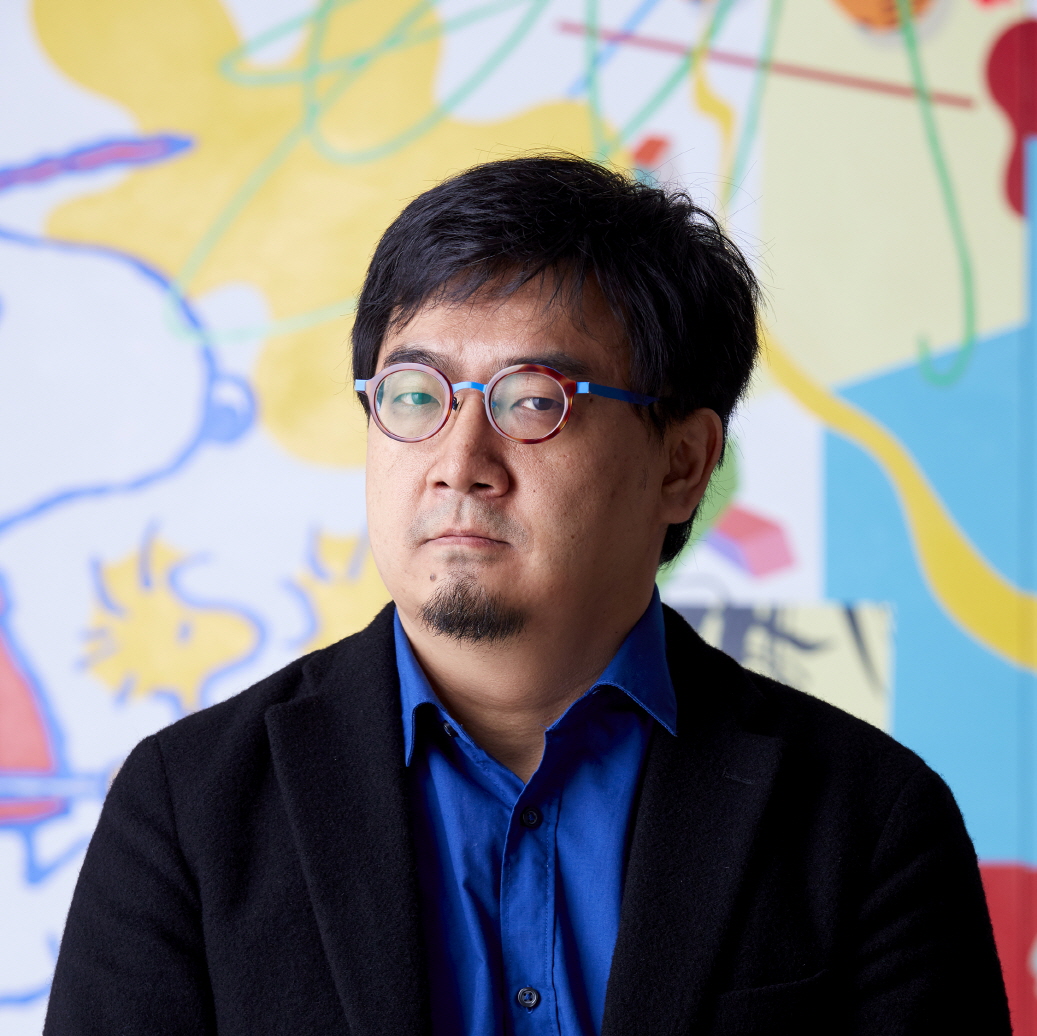
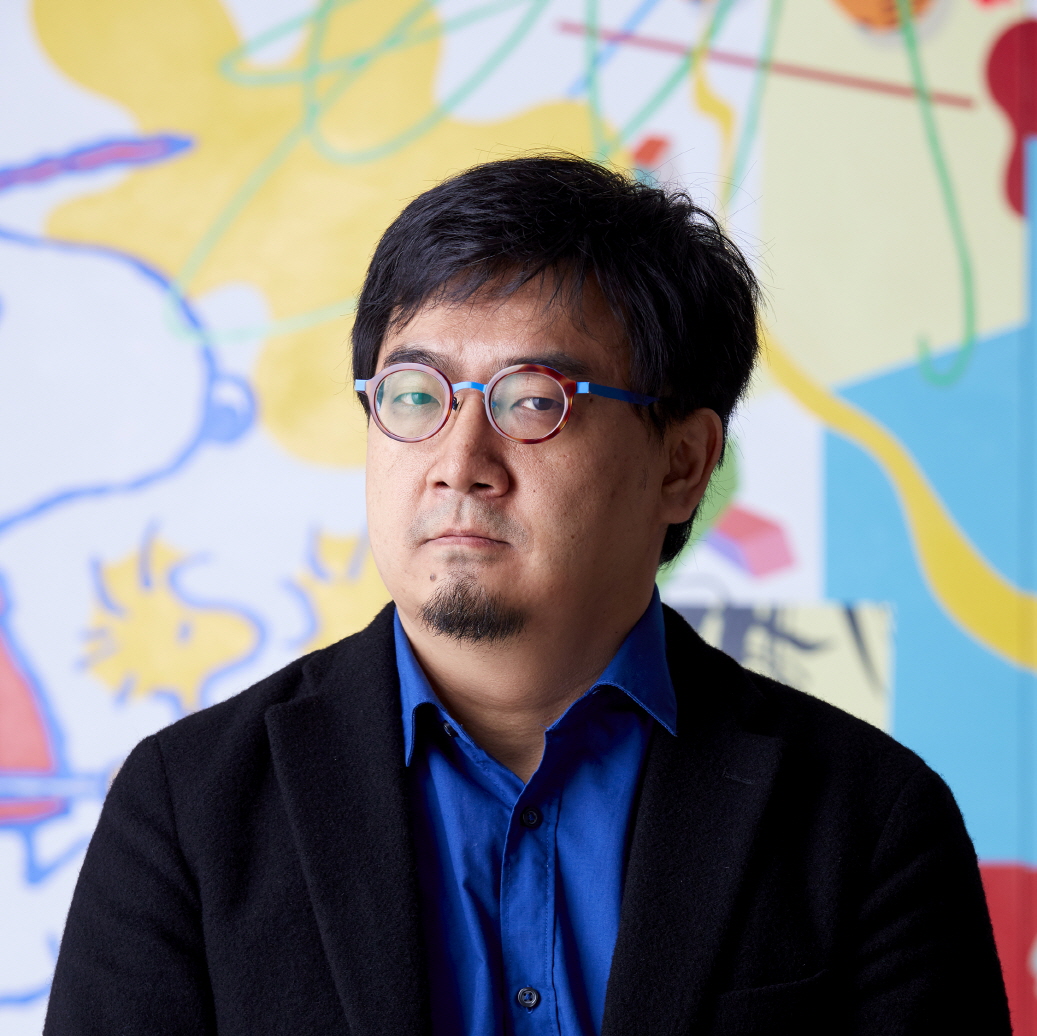
The Artist © Lee Donggi

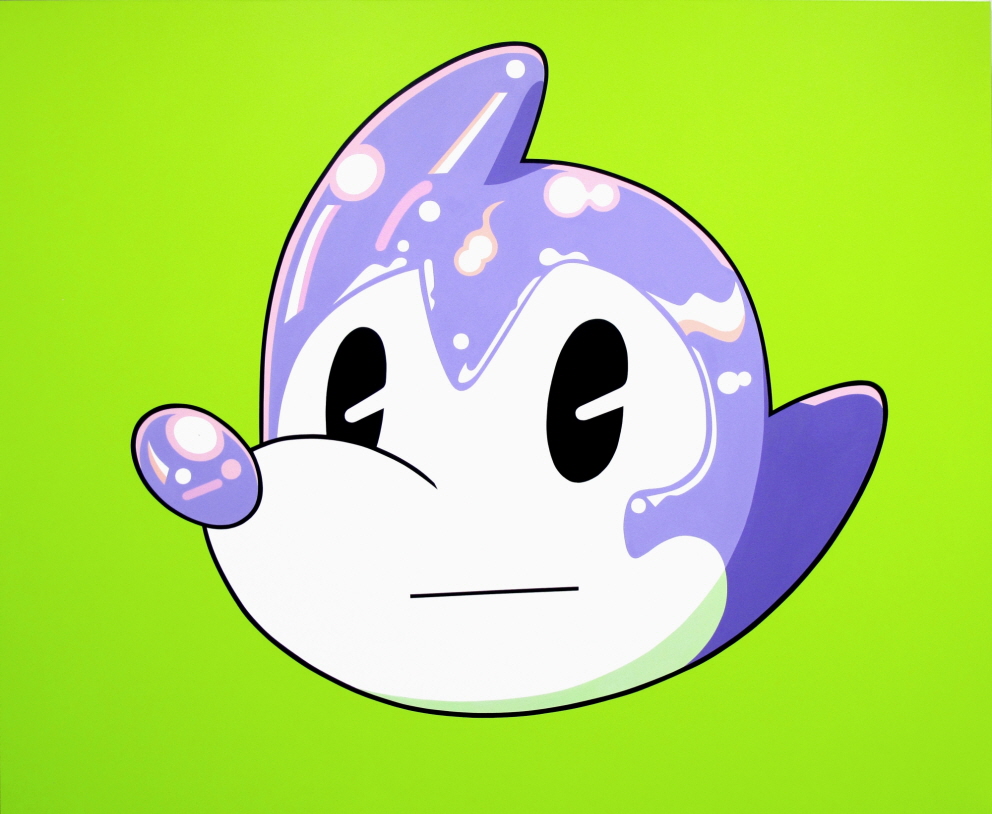
“Atomaus is an image that emerged naturally from within myself. It is the result of various influences—popular culture, fine art—blending together and taking visual form. These may seem like ordinary, insignificant aspects of everyday life, but to me, they were important.”
 
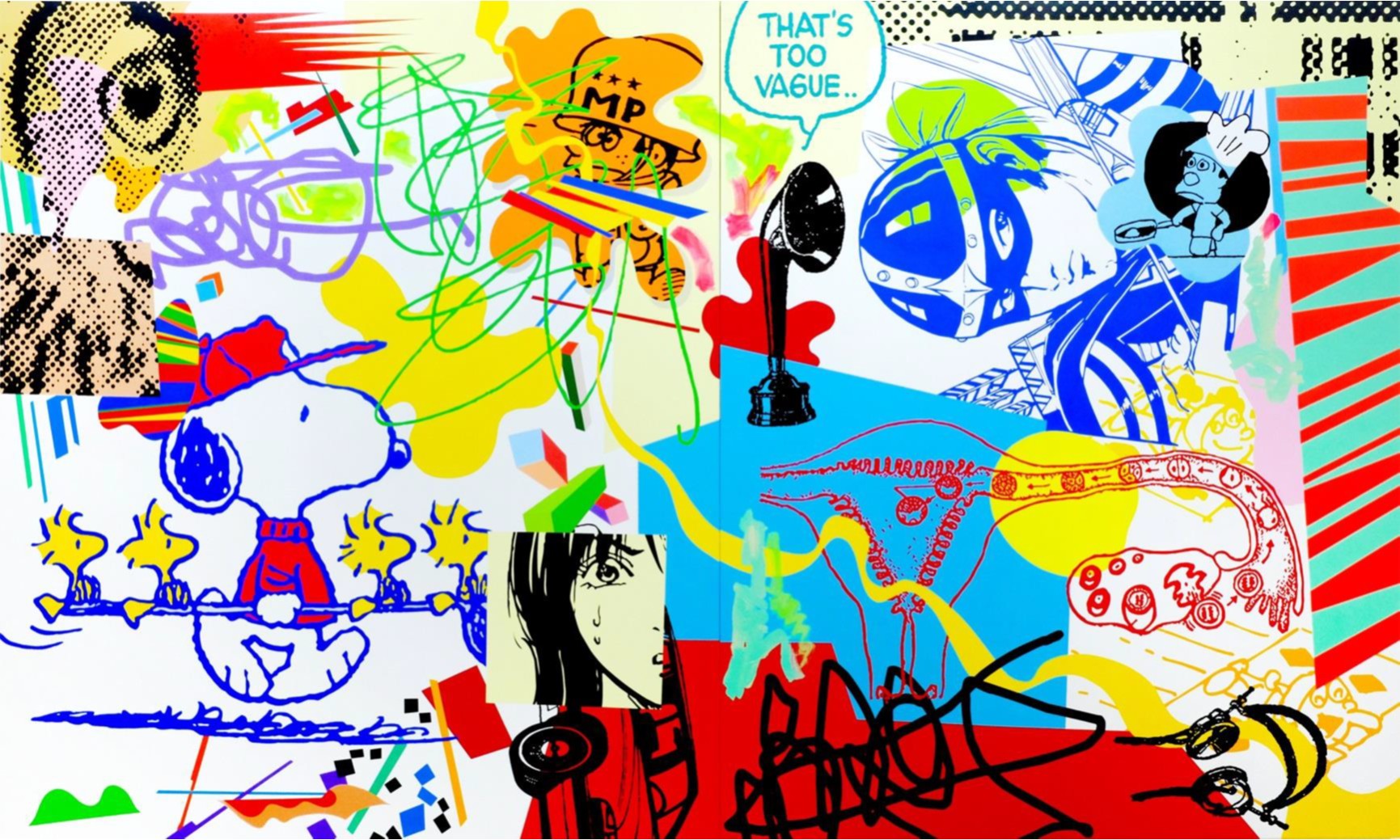
Pop Art is the genre that most candidly reveals the influence of popular culture embedded in our daily lives. Like a catchy pop song, it is characterized by familiar content and accessible forms. Emerging in the early 1960s, Pop Art reworked images commonly encountered in mass media—television, newspapers, film, and comics—and rose to prominence as a major movement in art history, producing iconic figures such as Andy Warhol and Roy Lichtenstein.

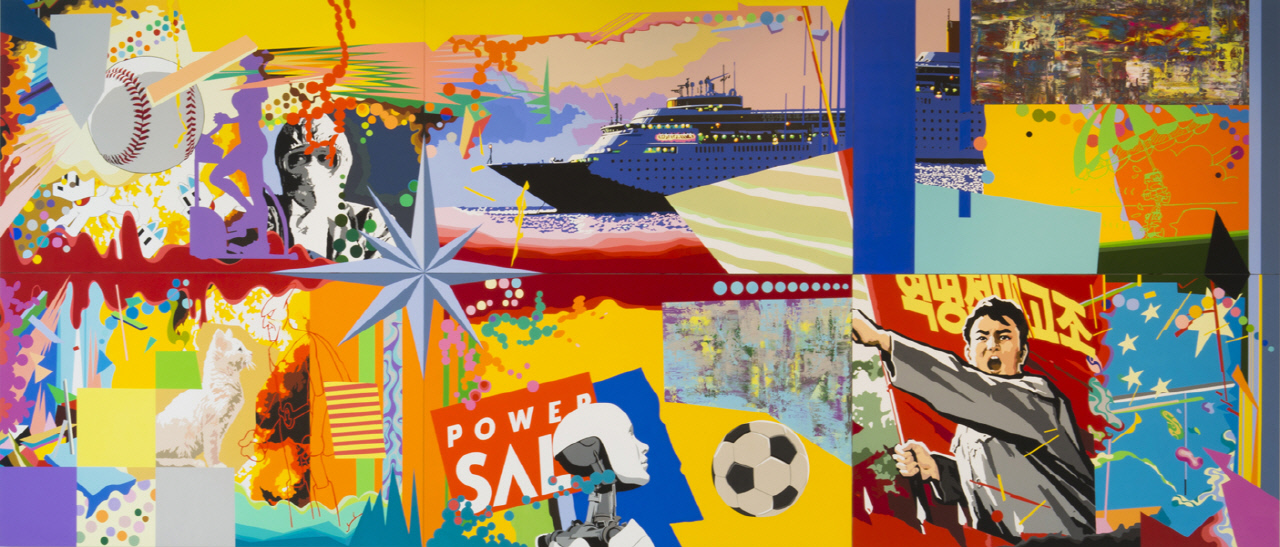
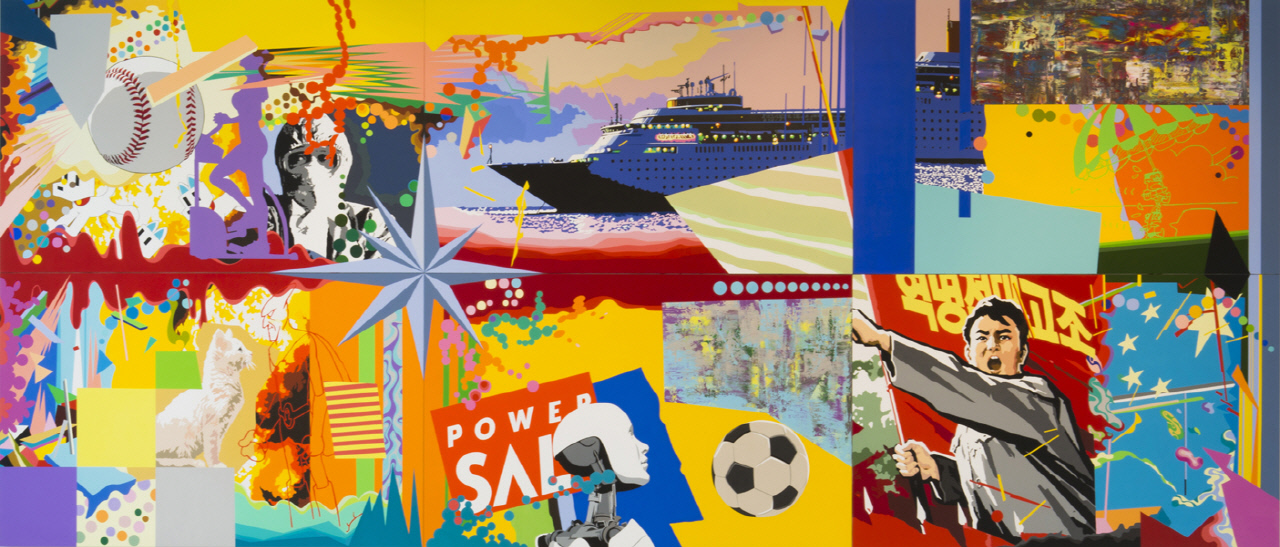
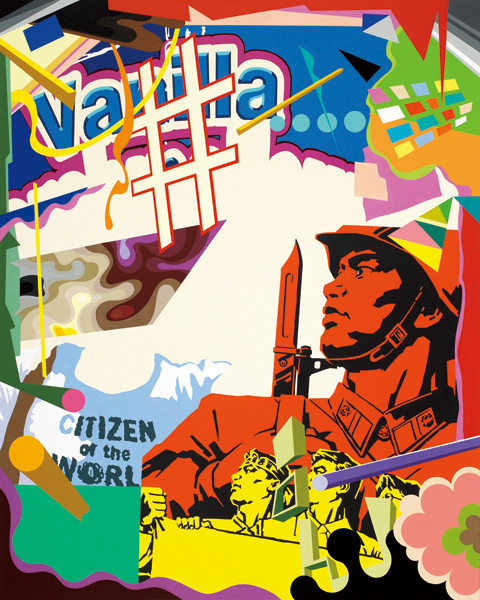
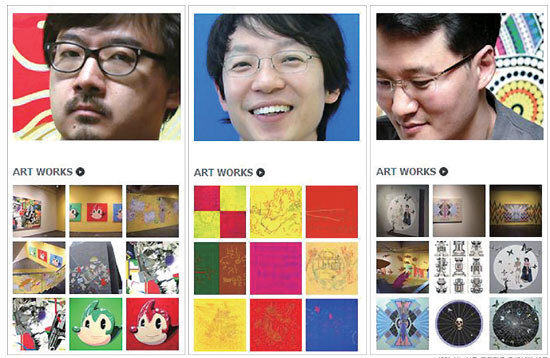
Unlike traditional art that feigns refinement while dismissing popular culture, Pop Art actively embraces it within the realm of high art, laying bare the memories and desires of the public. As the creator of Atomaus, Lee Donggi is a first-generation artist of Korean Pop Art. His paintings encapsulate the many layers of Korean popular culture.
 
At Lee Donggi’s solo exhibition at Ilmin Museum of Art in 2003, I encountered a work so astonishing that I wondered if he might be a genius. The paired works Modern Boy and Modern Girl reinterpret a type of satirical illustration originally serialized in the Chosun Ilbo in the 1920s by Ahn Seok-ju, rendered through a Pop Art sensibility. This illustration, included in Choi Myung-jik’s book Modern Boy Strolling Through Gyeongseong, is so concise and complete that it is hard to believe it dates back to the 1920s.

Dressed in bell-bottom pants, stylish sunglasses, and hats, modern boys stride confidently forward. Even in a time when the independence movement was the foremost national task, “luxury enthusiasts” roamed the streets of Gyeongseong, lined with collapsing thatched houses. It is an honest testimony of that era. The ability to extract this single frame—arguably the most perfect both in meaning and composition—demonstrates the strength of Lee Donggi’s artistic sensibility.


Lee Donggi, Modern Boy, 2000, Acrylic on canvas, 117 x 91 cm, Modern Girl, 2000, Acrylic on canvas, 117 x 91 cm © Lee Donggi

Crossing Figuration and Abstraction, Questioning the Direction of Art

However, as a first-generation Pop artist, Lee Donggi also experienced a period of misunderstanding that pioneers inevitably face. He first drew Atomaus in 1993, making Atomaus now fifteen years old. At first, there was little response, but it was not until the 2000s that his work began to receive serious attention.
 
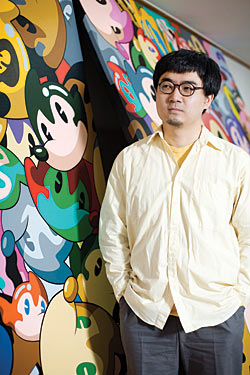
“At a time when there was no Pop Art boom, people said that Pop Art lacked depth and artistic value. When I first introduced Atomaus, they said it wasn’t art but just comics.” He speaks in a calm tone, wearing an expression reminiscent of the one often seen on Atomaus in his paintings. With his round head and even his unshaven beard appearing playful, he himself may well be a “grown-up boy.”

At one point, his Atomaus series was installed in the transfer corridor between Lines 2 and 3 at Euljiro 3-ga subway station. However, the works were eventually removed after someone scribbled “Draw it again” on them. It was a typical incident revealing the lack of understanding toward his work. Now, however, acquiring one of his works has become as difficult as picking a star from the sky.
 
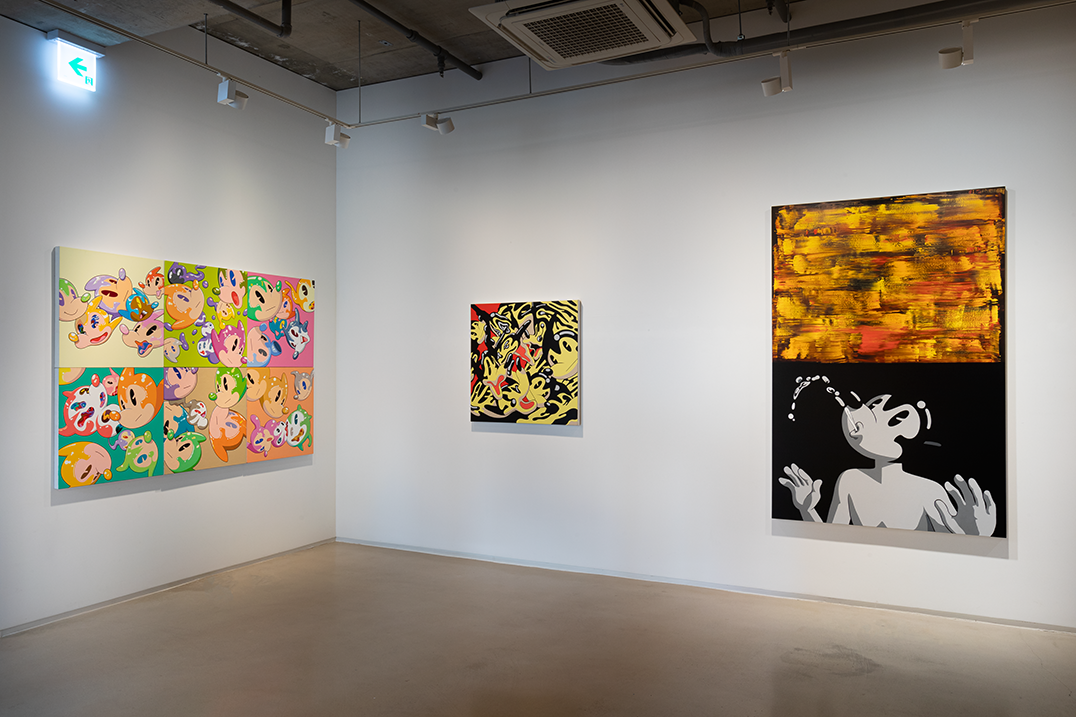
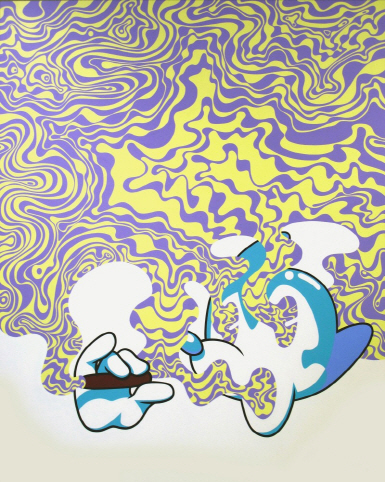
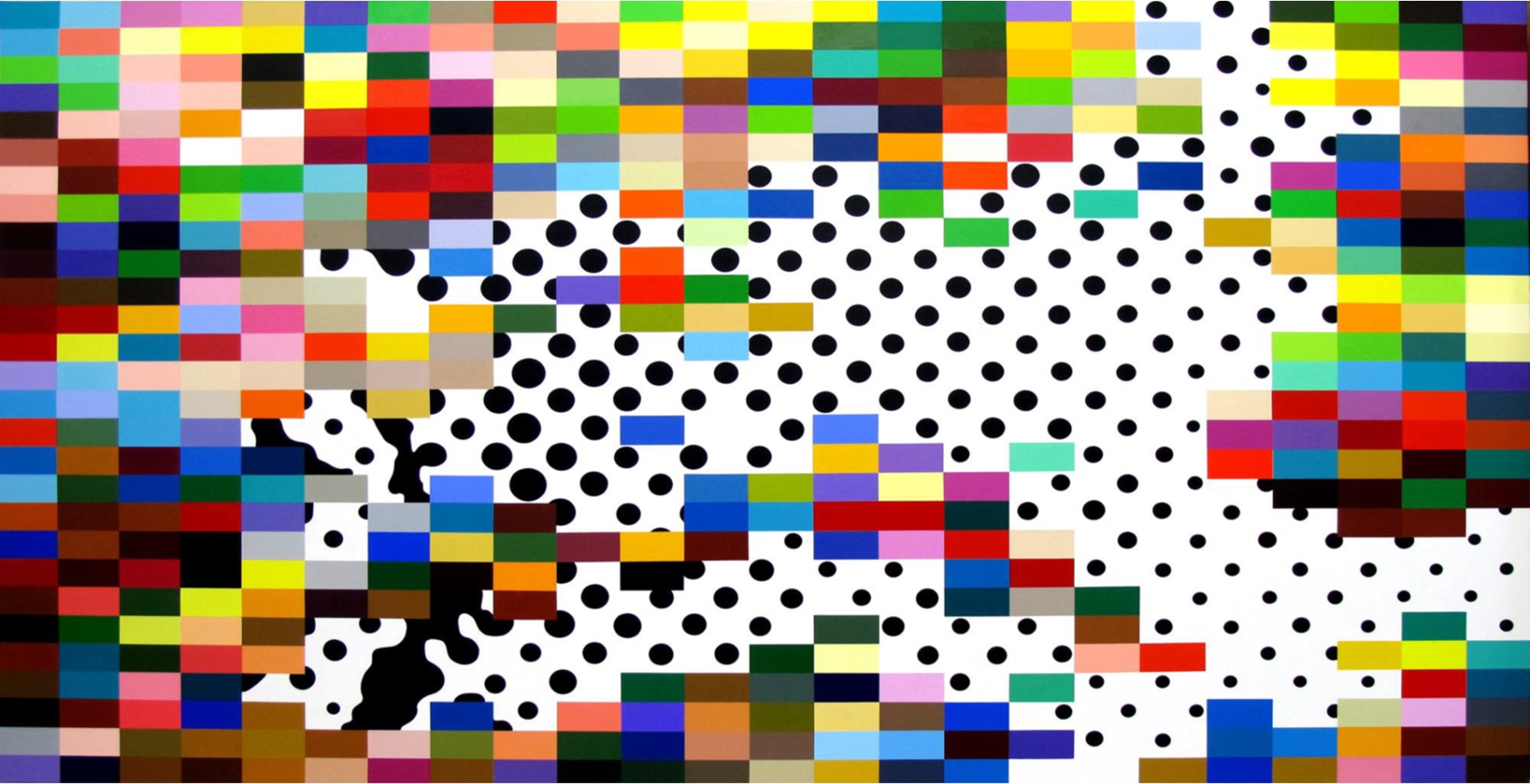
His recent solo exhibition at Gallery Two in Cheongdam-dong demonstrates that his practice has entered a new phase. The exhibition unfolds in a unique format over two months, divided into Part 1, ‘Double Vision’, and Part 2, ‘Bubble’. In the ‘Double Vision’ series, abstract forms reminiscent of Richter appear in the upper section, while Atomaus occupies the lower part, revealing Lee Donggi’s serious contemplation of contemporary art.

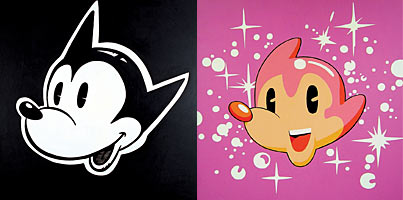
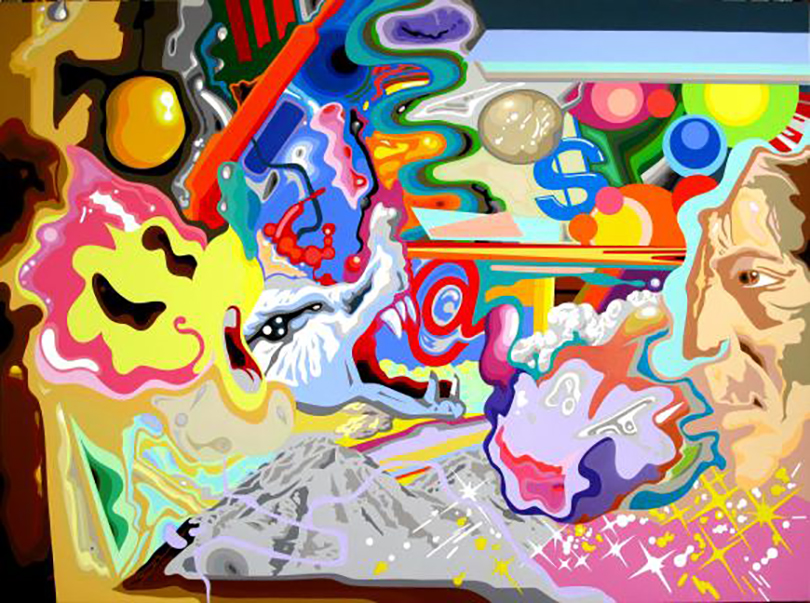
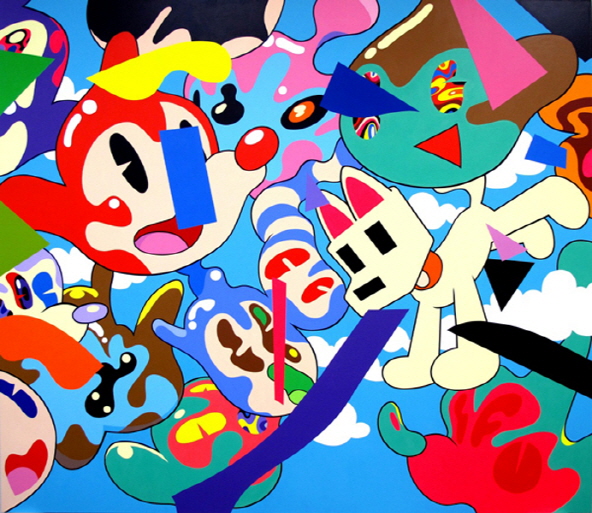
If earlier Atomaus works leaned toward figuration, aiming to represent reality, ‘Double Vision’ simultaneously expresses a pursuit of transcendence beyond reality through abstraction. In contrast, Part 2 returns to reality. The floating faces of Atomaus drift across the canvas like soap bubbles, colliding and dispersing outward like amplified voices shouted through a megaphone. These scenes vividly convey the excess of images in contemporary society.
 
This practice, which traverses the two major directions of contemporary art—figuration and abstraction—demonstrates his long-standing inquiry into the future of art. Masters of Korean contemporary abstract painting such as Park Seo-bo and Ha Chong-hyun were his teachers. Although he did not follow their path, abstraction remained for him like an unresolved task.

The image of Atomaus holding up the sky of abstraction while expelling water reinterprets a work by Bruce Nauman. Atomaus now performs not only popular culture but also the significant reality of contemporary art with its entire body.


Lee Donggi, Bubble, 2008, Acrylic on linen, 120 x 120 cm © Lee Donggi

“Through looking at a work, it is most important to imagine that this could be the direction in which art is heading. One must become an artist who presents the most convincing vision.”
 
Following last year’s exhibition in Beijing, a solo exhibition is scheduled in Japan this coming September. The trajectory of Atomaus is now directed toward the world.

References