In
this period when the ready-made cars come in galleries with the title of
artwork, Gwon made a supercar in bronze. Here, Gwon, an artist who had been
doing simple and light works as if he wanted to laugh at the heaviness of
sculpture, chose the most traditional way and conservative material that we
could think about in sculpture.
Along
with painting, sculpture has been the most important genre in eastern and
western arts. Even though they sometimes faced the crisis of being deprived of
their title of art, painting and sculpture were always in the center of
discourses in art switching the positions in the hierarchy. Even in the middle
of 20th century when the wall between different genres in art
was broken down, and fragmentary appropriation and mixed hybridization were
prevalent, there were artists who persisted in the traditional way of
sculpture. Even though it was not in the spotlight being pushed out by new
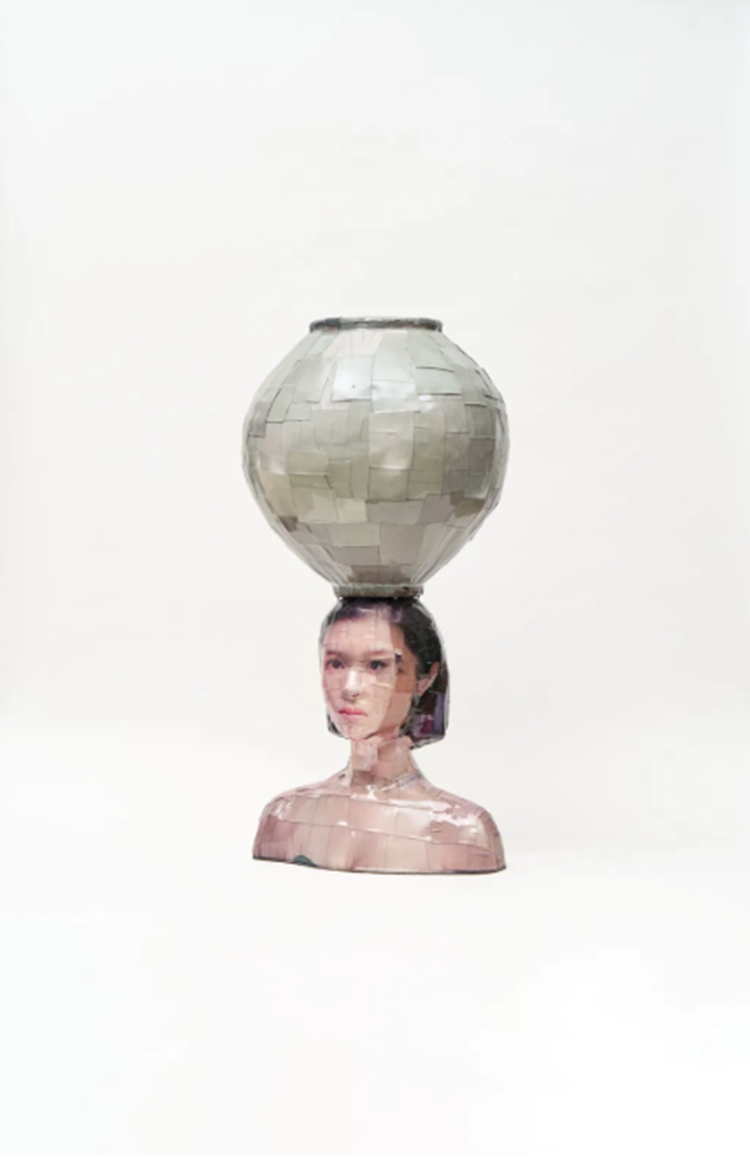
values of the period, the very ‘sculpture’ survived. Before Gwon Osang
presented ‘The Sculpture’ to the public, it was an open secret that he actually
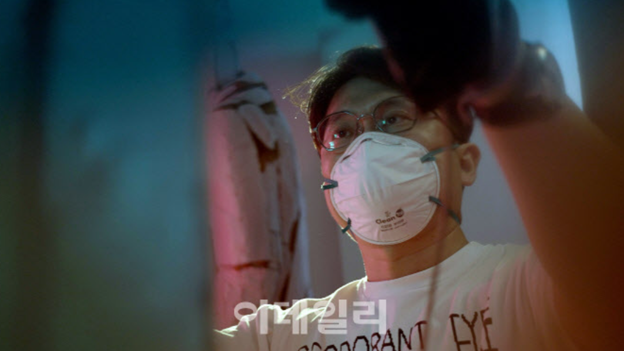
was one of the artists who succeeded to the traditional sculpture. In 1998,
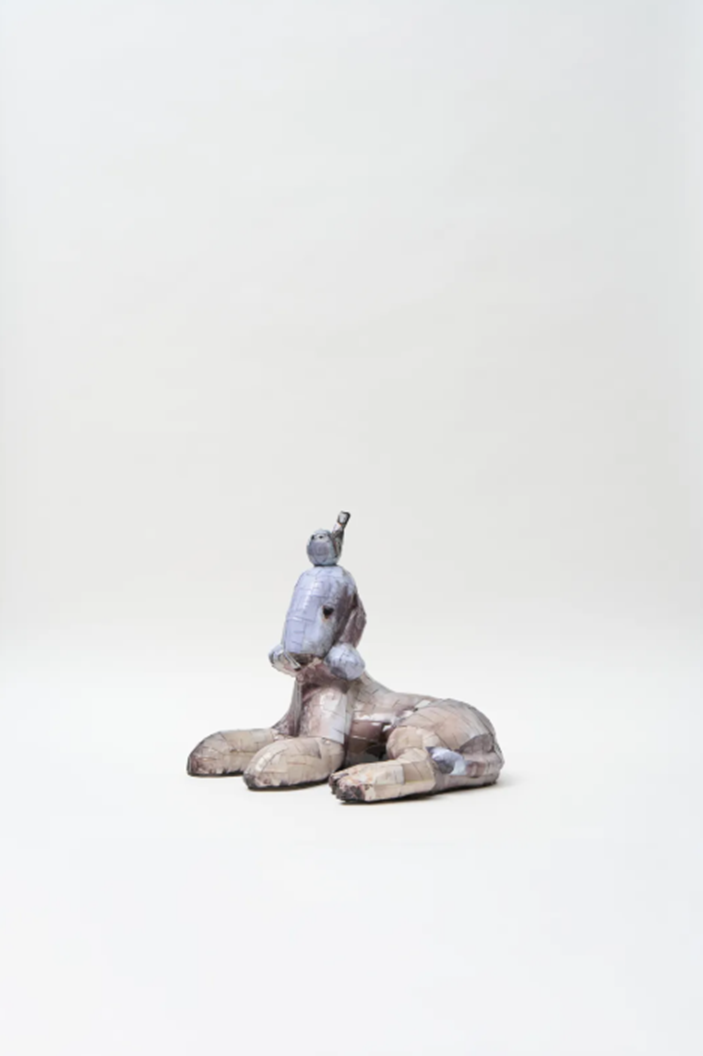
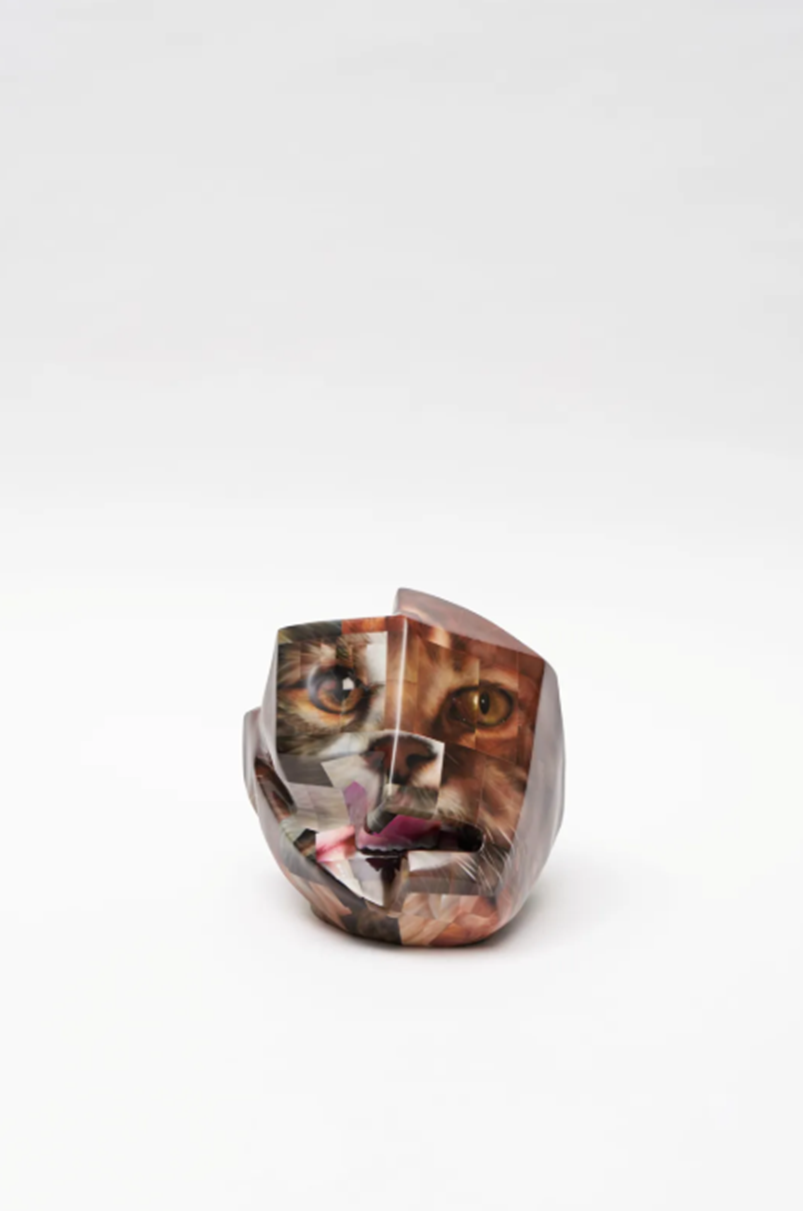
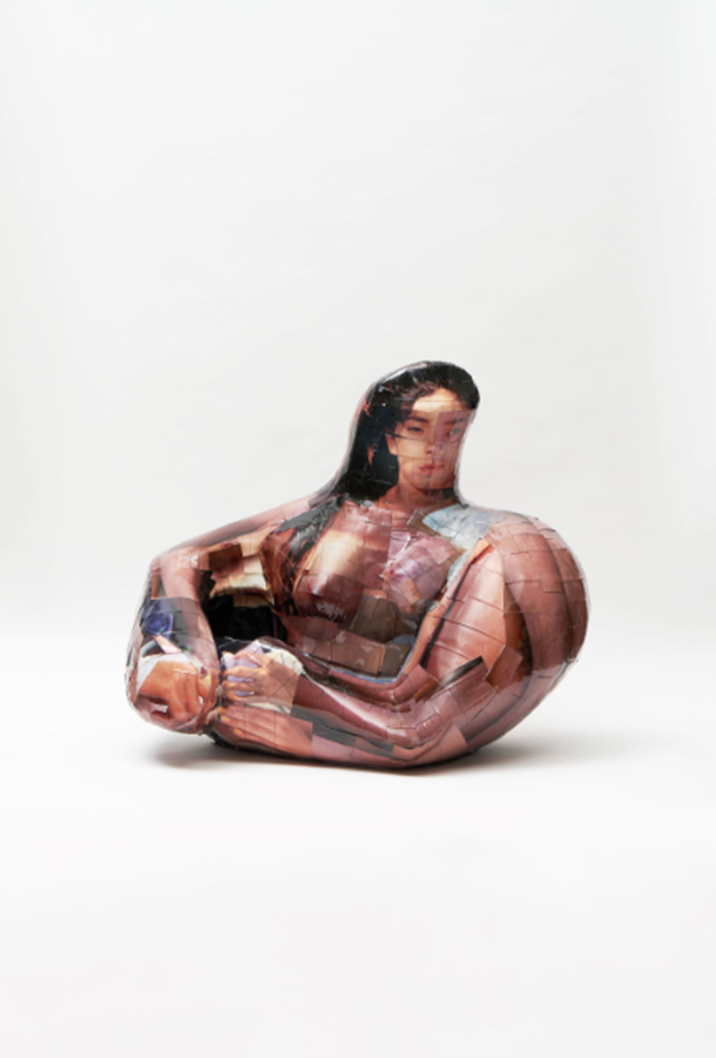
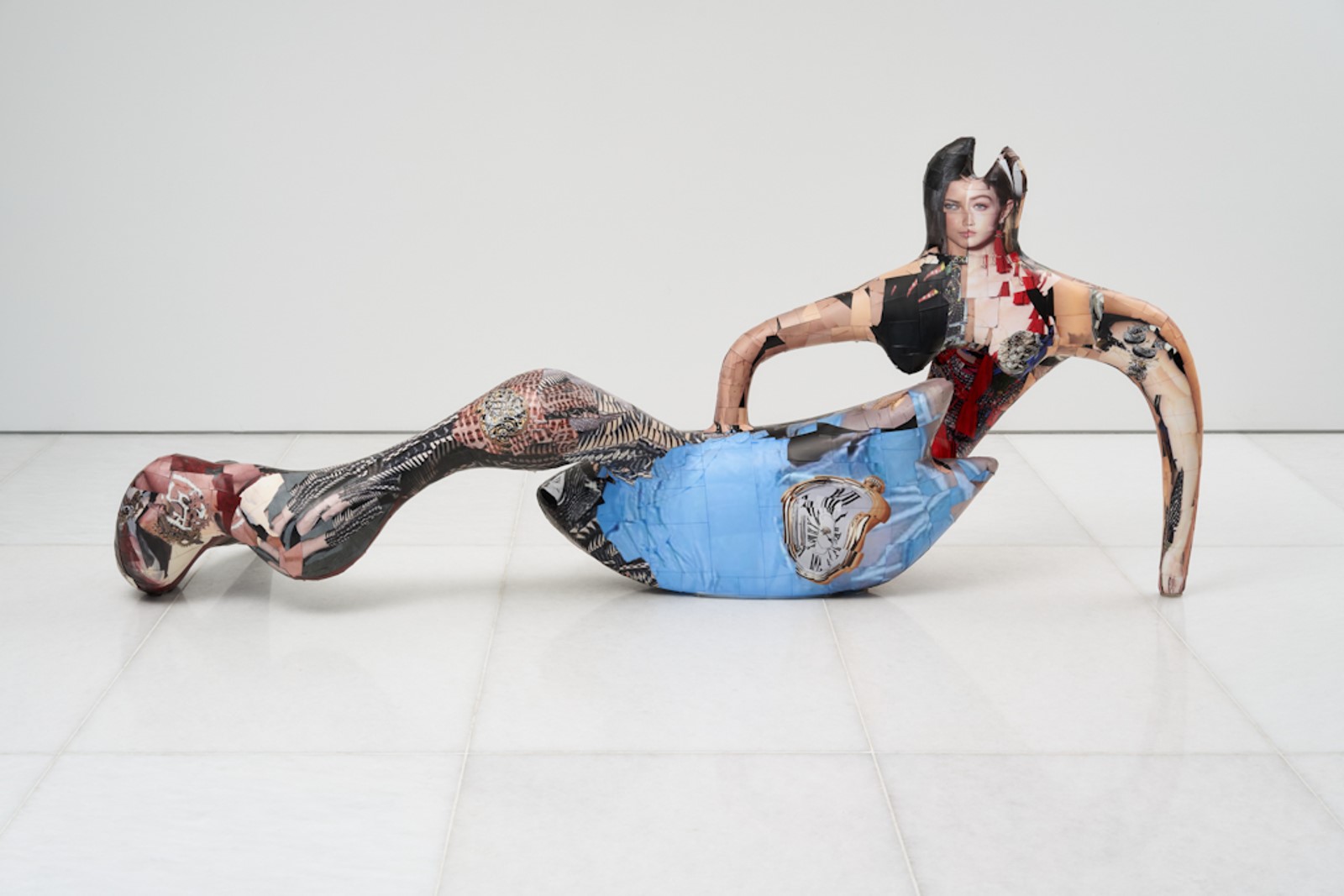
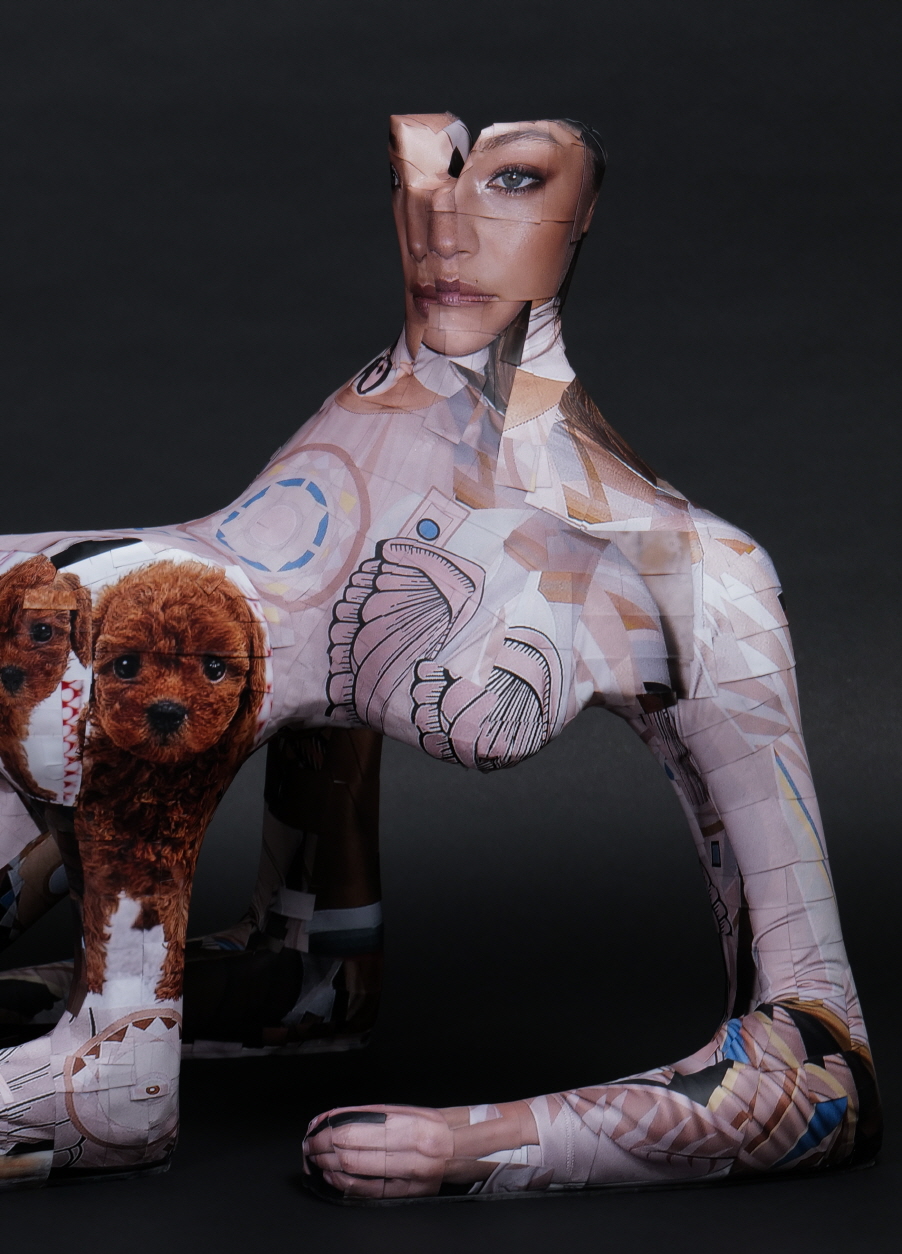
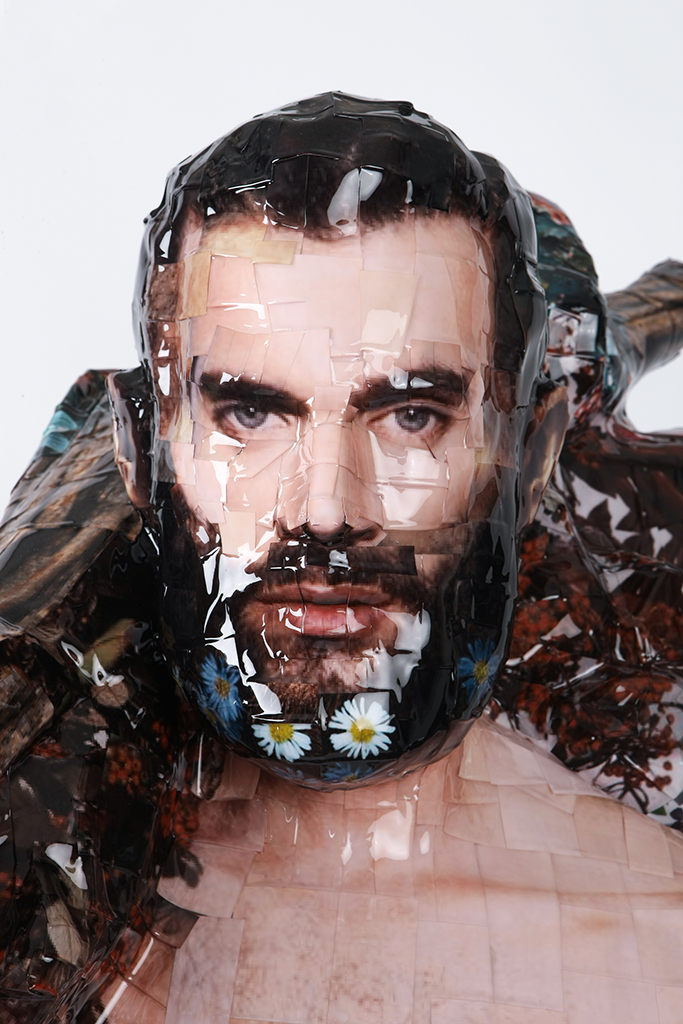
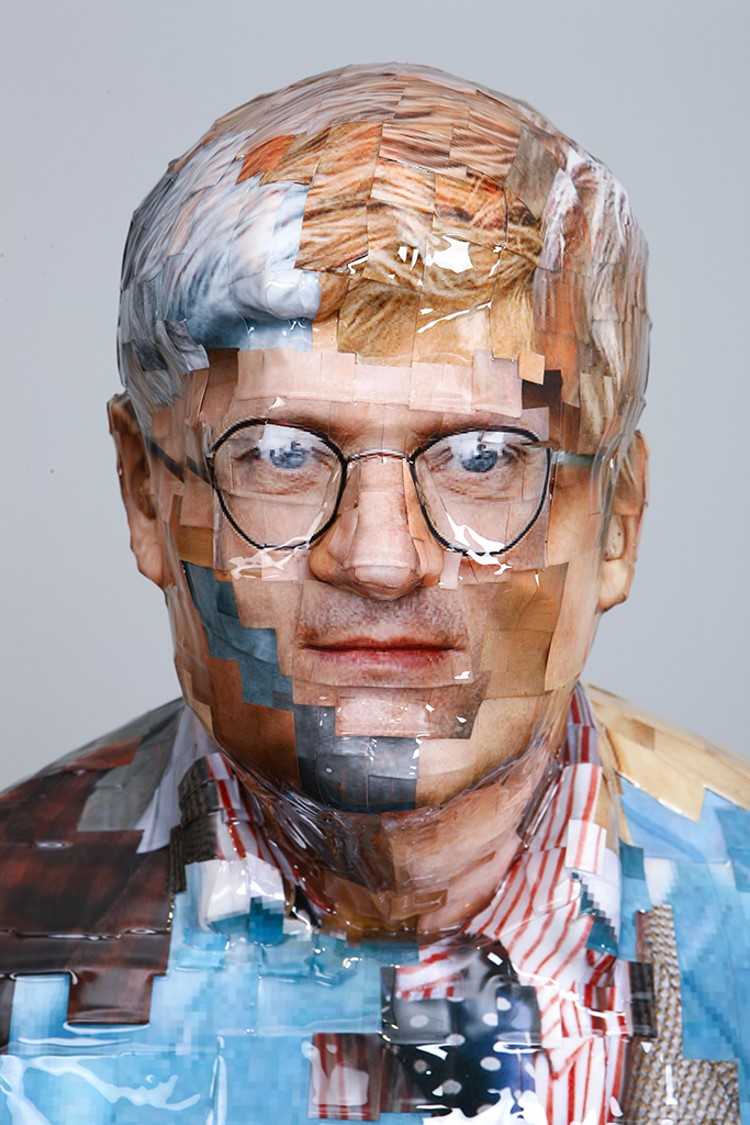
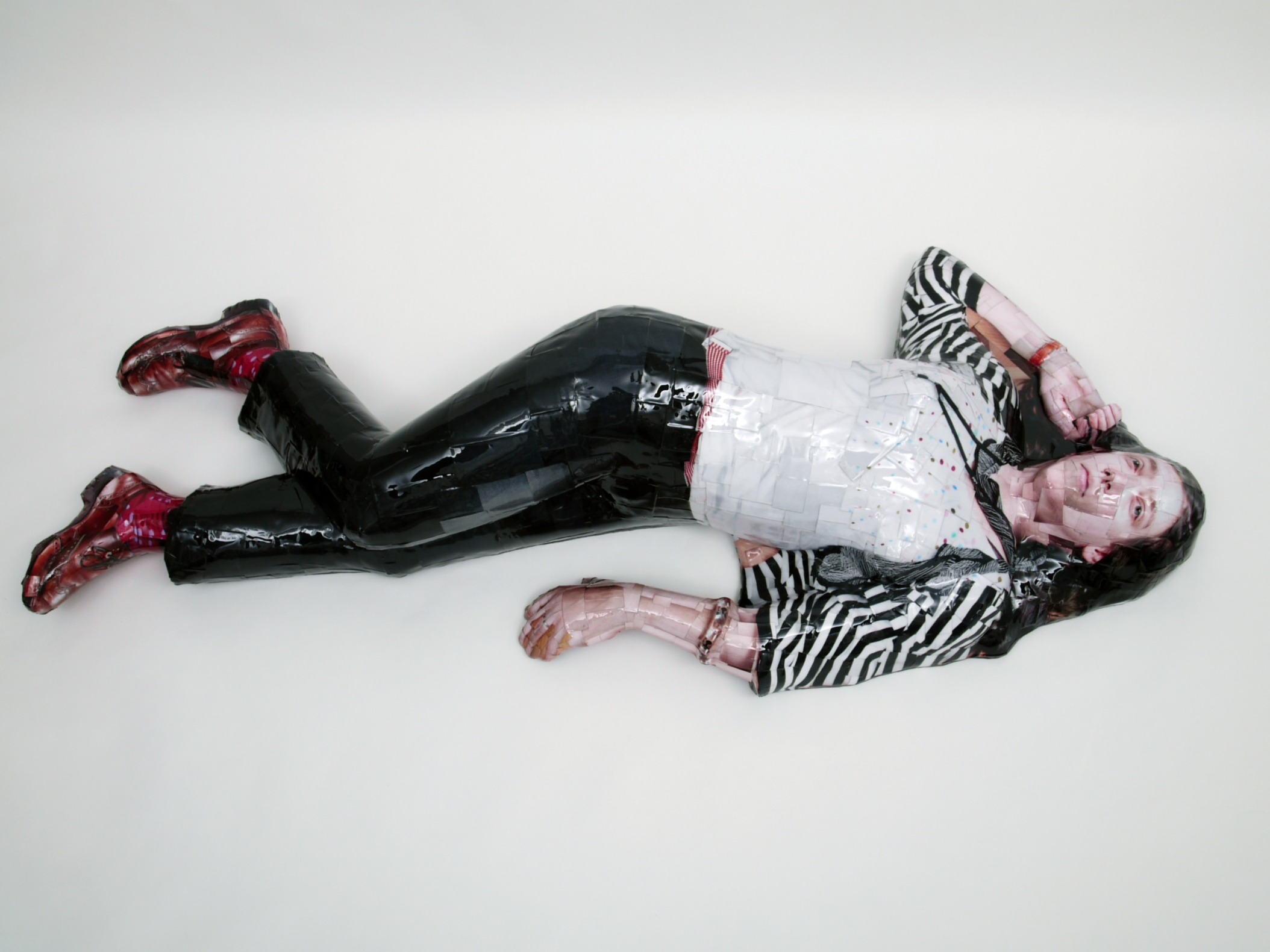
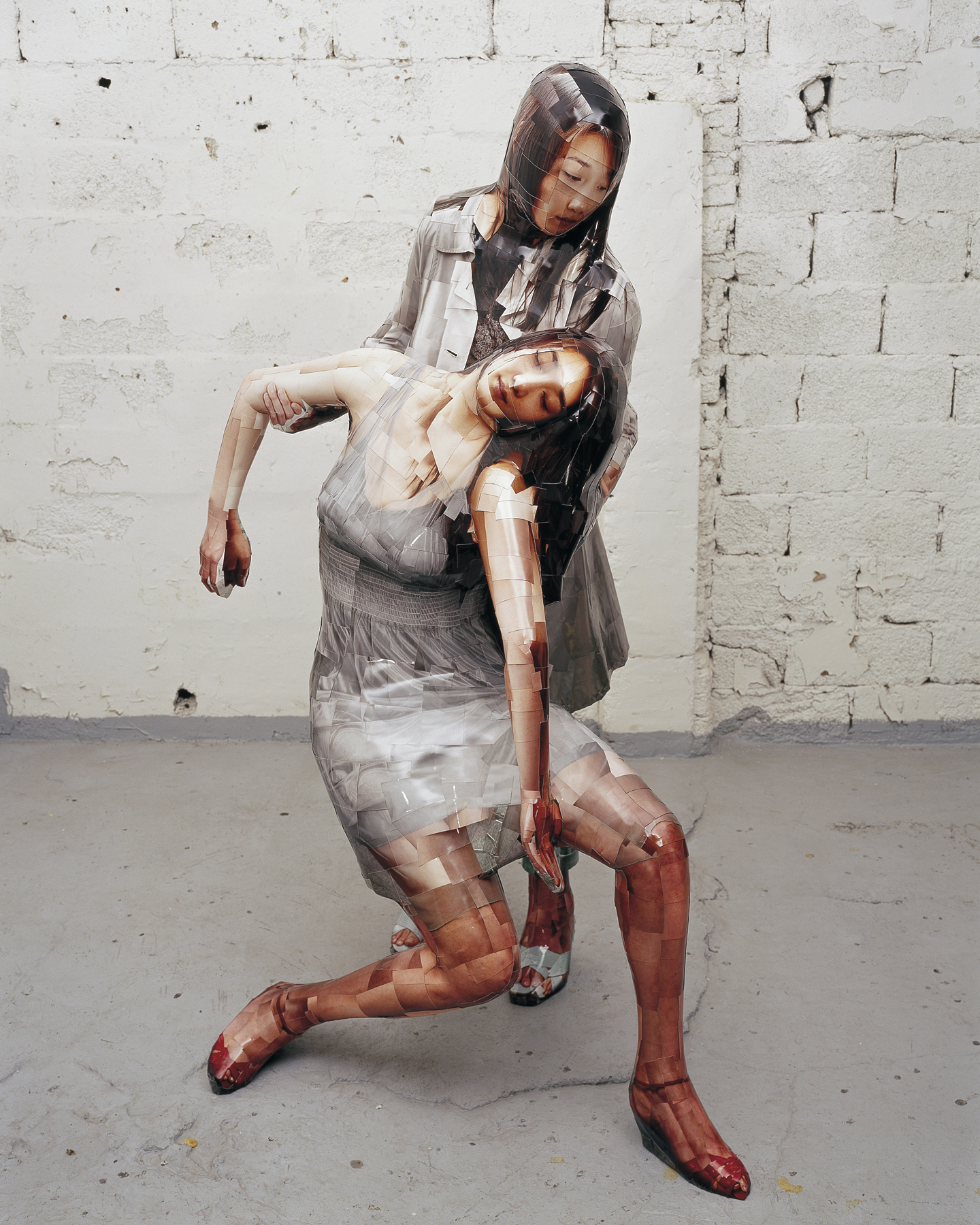
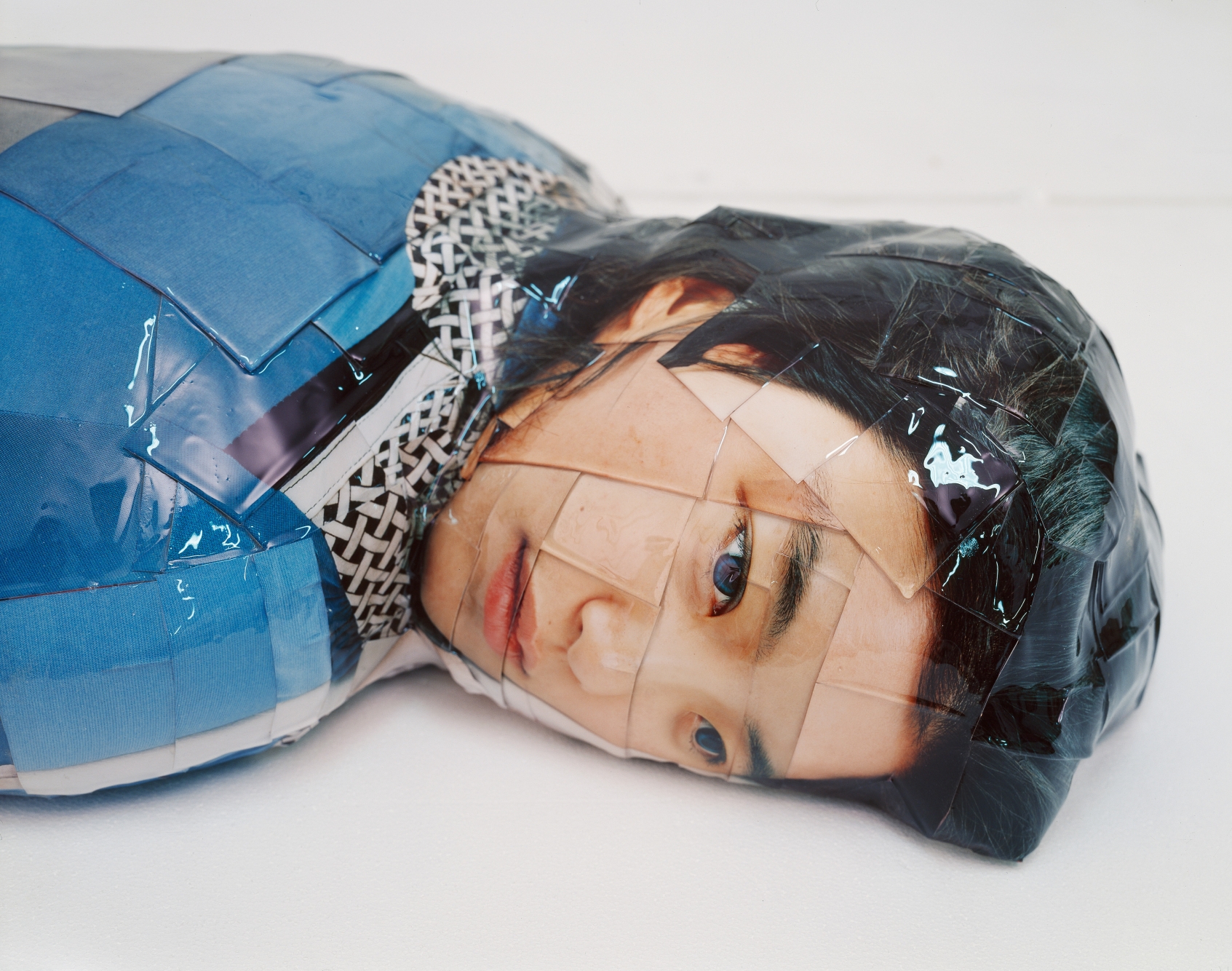
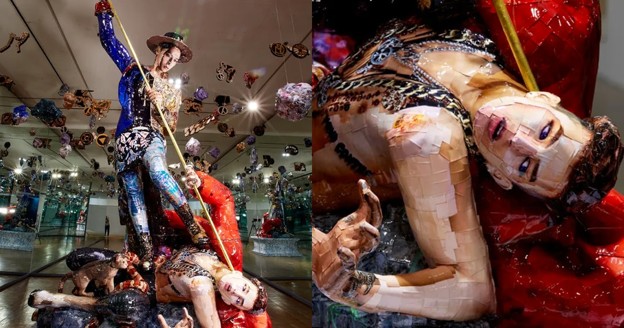
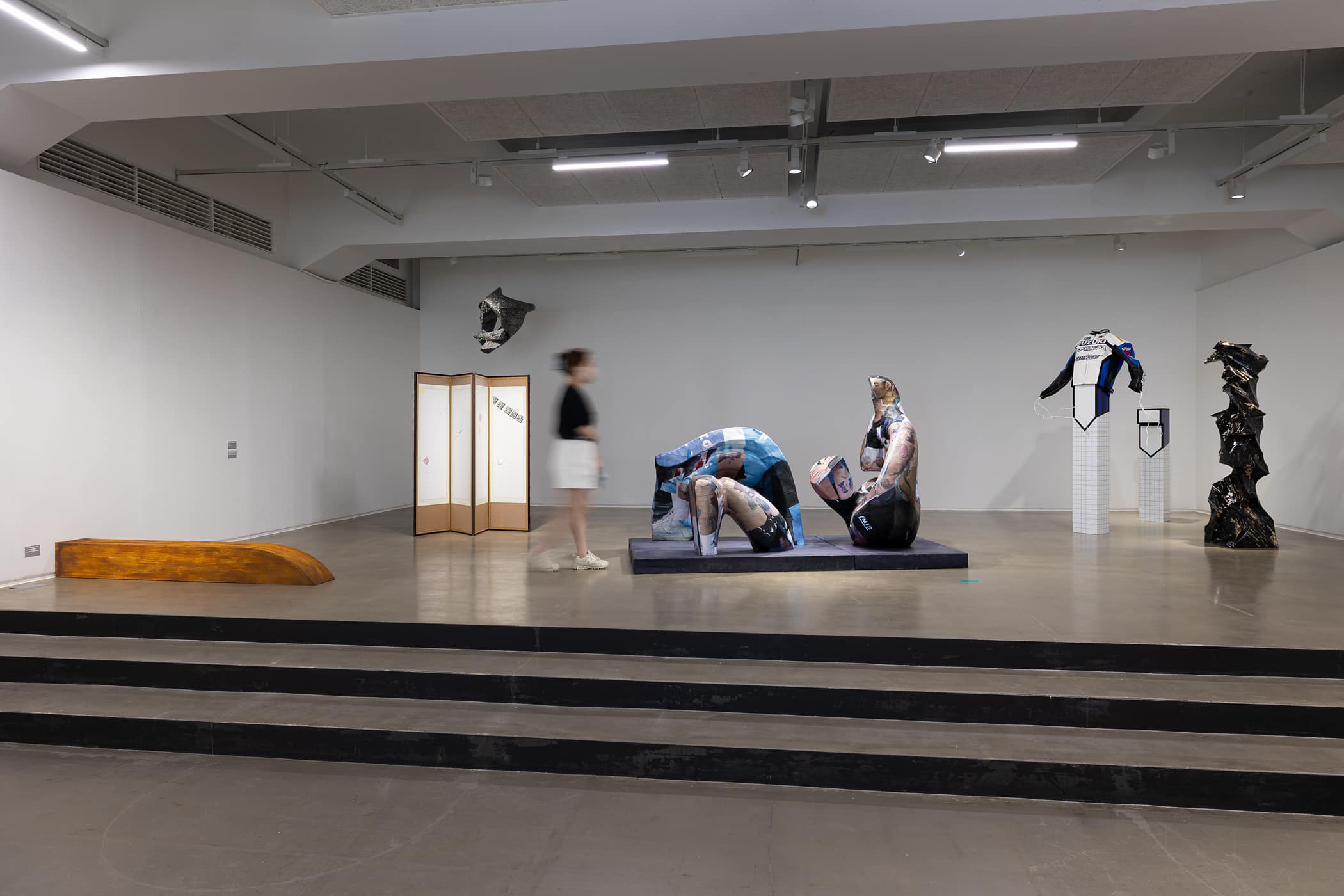
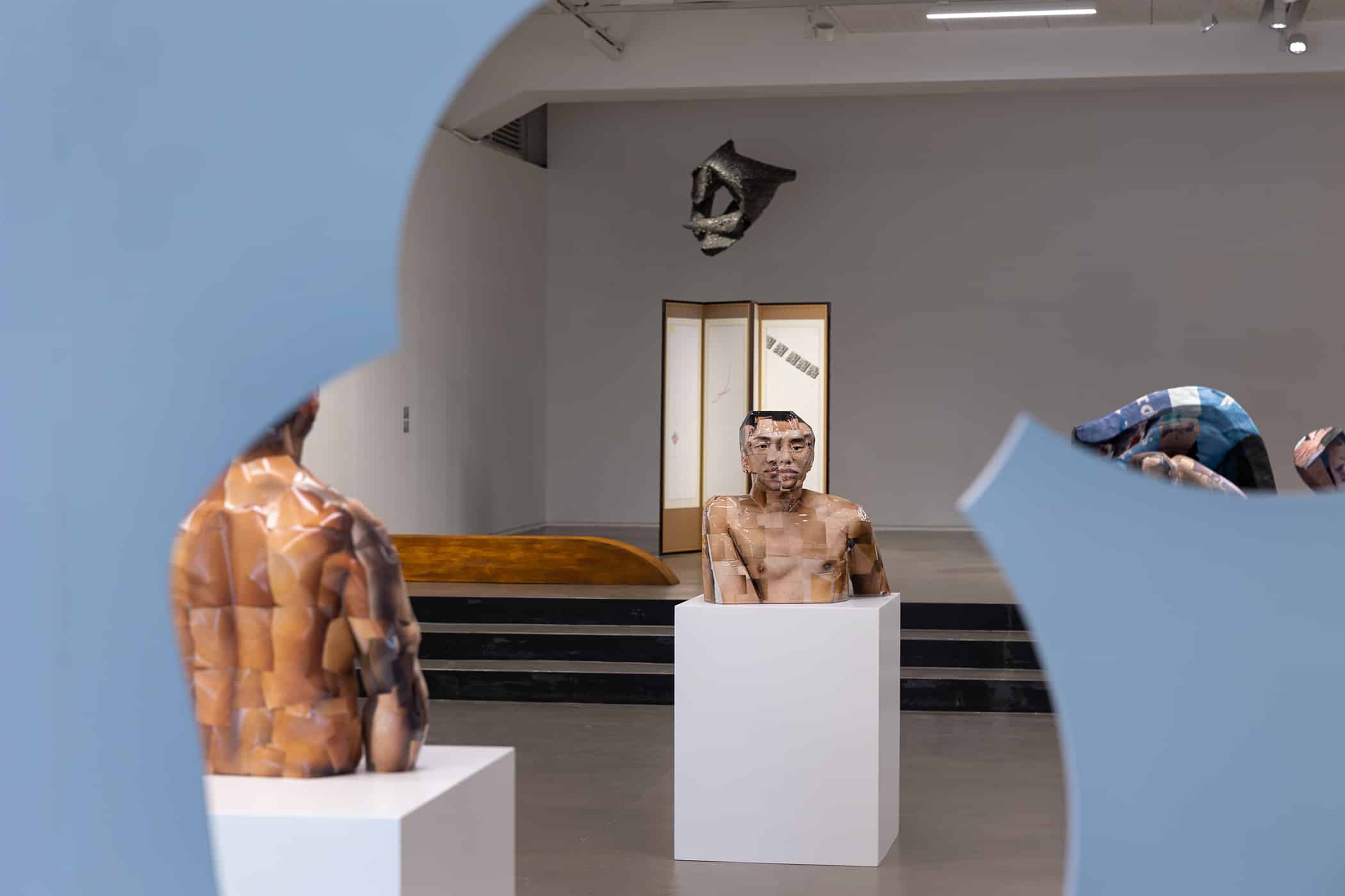
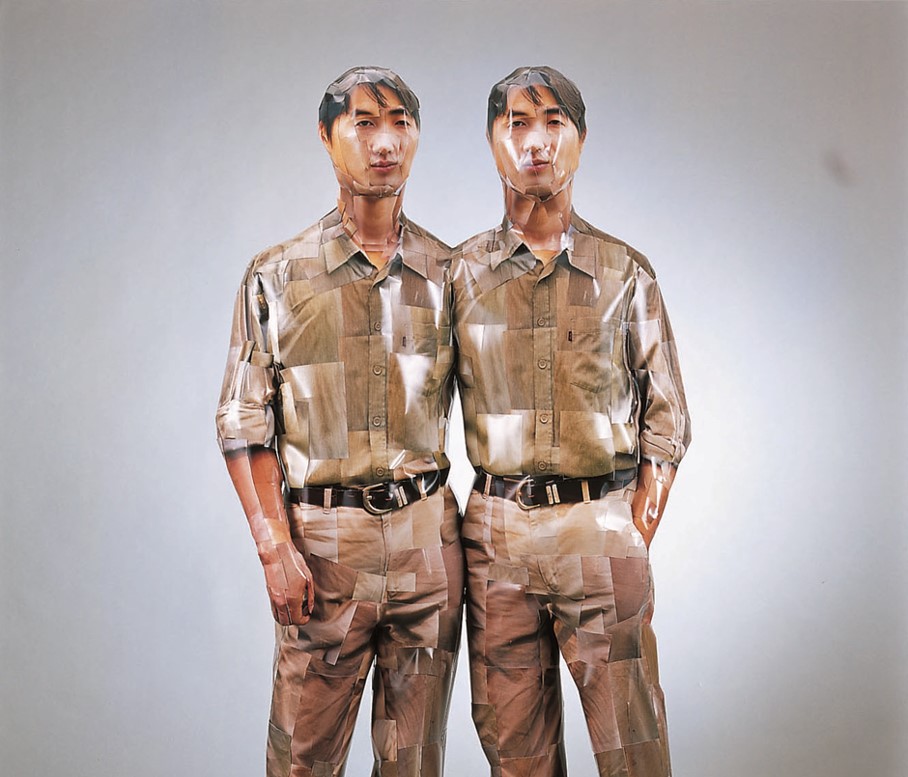
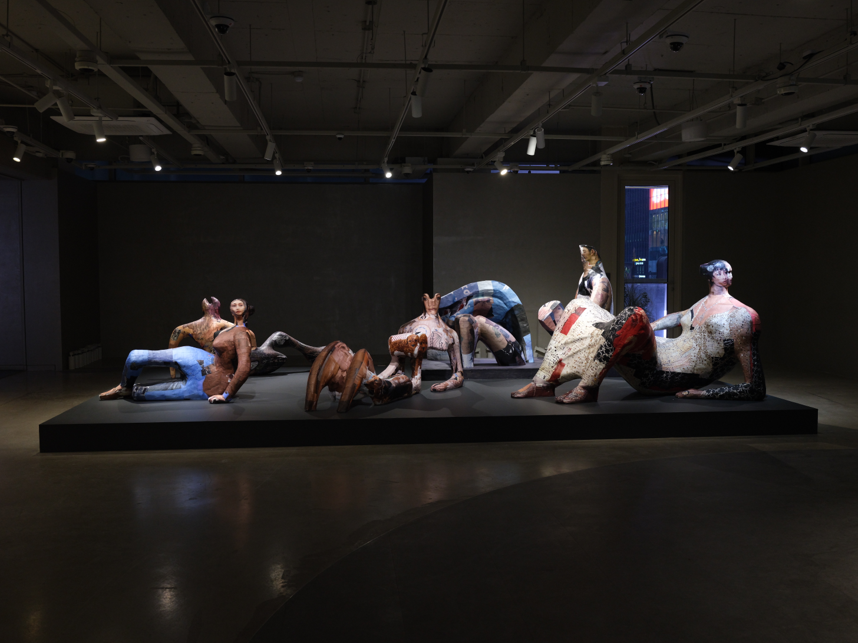
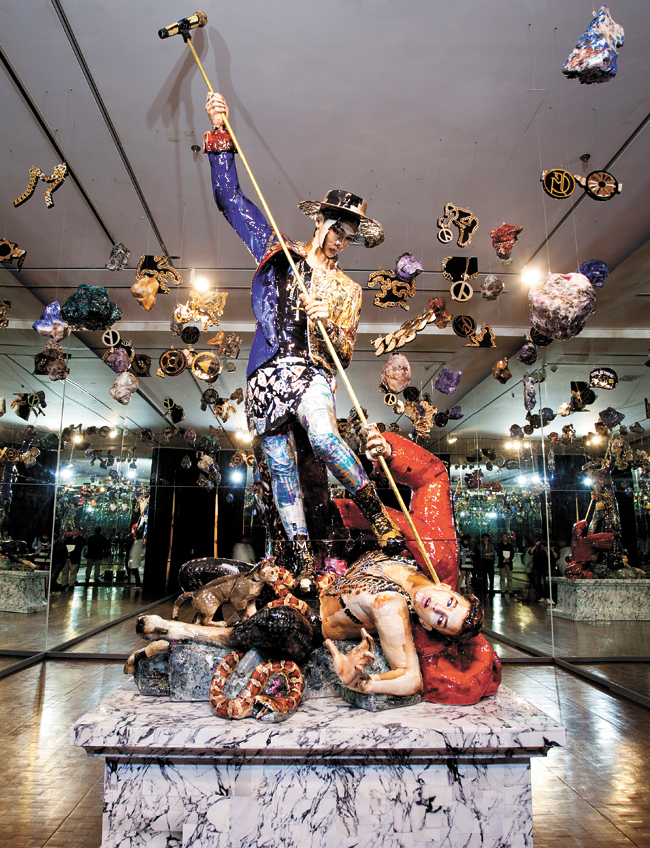
when Gwon Osang presented ‘Deodorant Type’ composing a human body with
photograph fragments, people thought that it was a contemporary artwork with
very sophisticated sensibilities. Even if Gwon announced that he had tried to
make a light ‘sculpture,’ ‘Deodorant Type’ seemed to go better with the label
of ‘three-dimensional work’ using photography, rather than with the
‘sculpture.’ And 5 years later, when he presented ‘The Flat’ putting
photographs in shinning diasec frames, people thought that Gwon was really
entering the way of ‘photographer.’ However, Gwon Osang still insisted that
‘The Flat’ was a sculpture. It really makes a perfect sculpture along with
‘Deodorant Type’ in his logic.
The
story of sculptor Gwon Osang and sculpture begins with the photography
sculpture. Gwon Osang was too frail to do the traditional sculpture, trimming
stones with chisel and burin, making original form with clay, and casting it in
bronze, and he also was too smart to do it in spite of all these hardships.
Instead of being suffocated by traditional materials and producing process of
sculpture, he searched for appropriate and modern materials which could be used
as substitutes. And finally, in photography, he found the link with sculpture
along with the contemporary visuality, and its fragmentary property.
From
Charle-Pierre Baudelaire’s modern eye to Jean Baudrillard’s simulacre,
photography is a medium which has been in the middle of the visual conception
ruling the modern city. It contains the will to texidermize a transient moment
into eternity, and separates image from reality. It was served as a tool to
change the episteme of period. If Gwon Osang’s ‘Deodorant Type’ satisfies the
obligations of contemporary art depending on the property of photography as a
signifier, it appropriates the possibility of transition into sculpture from
its reproduction mechanism. On the mechanism of photography and sculpture, he
said, “In sculpture, we make original forms and cast them in plaster, which is
just like the process of making negatives in film. Moreover, the way we set up
the plaster casts and re-make the original form is not different from the
printing process of photography. ” Here, he sharply points out that the
mechanism of every analog reproductions including photography, after all,
cannot choose but appropriate the system of ‘Original-Mold-Reproduction.’ A
different approach to the mimesis of photography and sculpture refutes the
criticism which insists that the way of representation in ‘Deodorant Type’ is
based on the reckless laziness of the sculptor. Admitting that the essential
purpose in the starting point of visual arts like sculpture, painting, and
photography is the mimesis of nature and object, we could say that it is
creative and natural to substitute sculptor’s representation with
photographer’s reproduction. Beyond the common areas in technique and meaning
between photography and sculpture, what Gwon Osang presented through ‘Deodorant
Type’ was the possibility of new sculpture keeping the pace with the times.
Pioneering
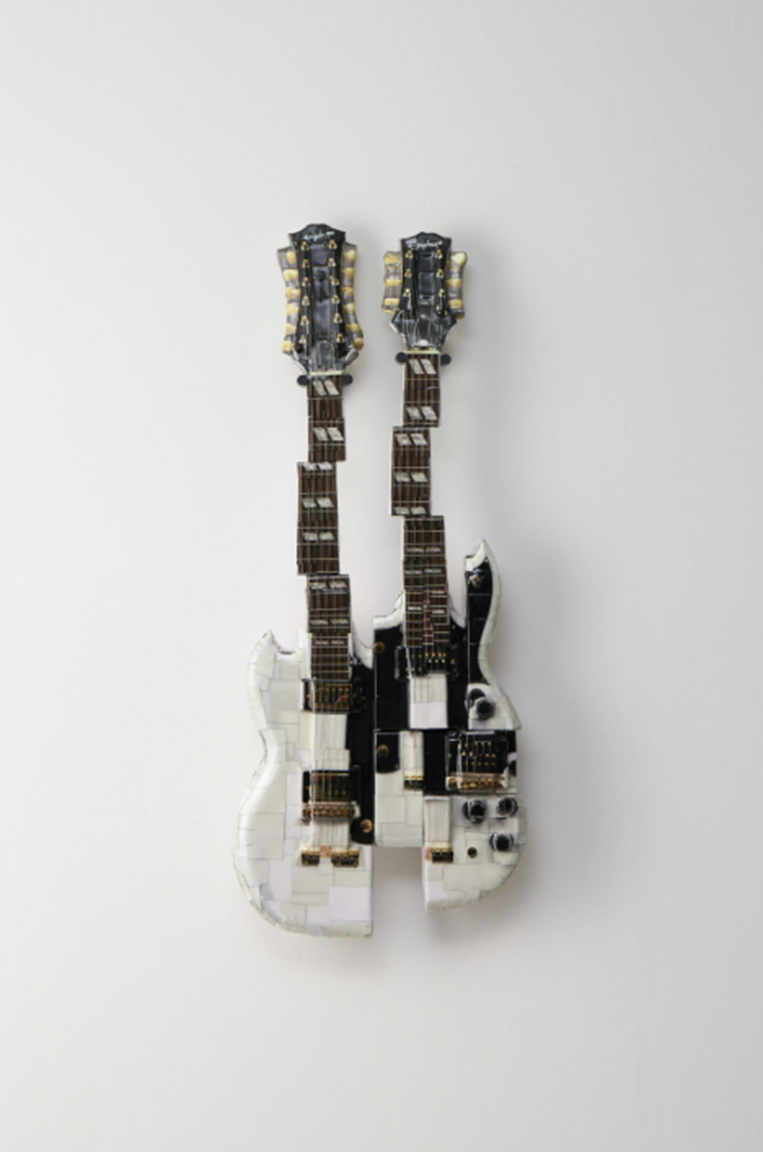
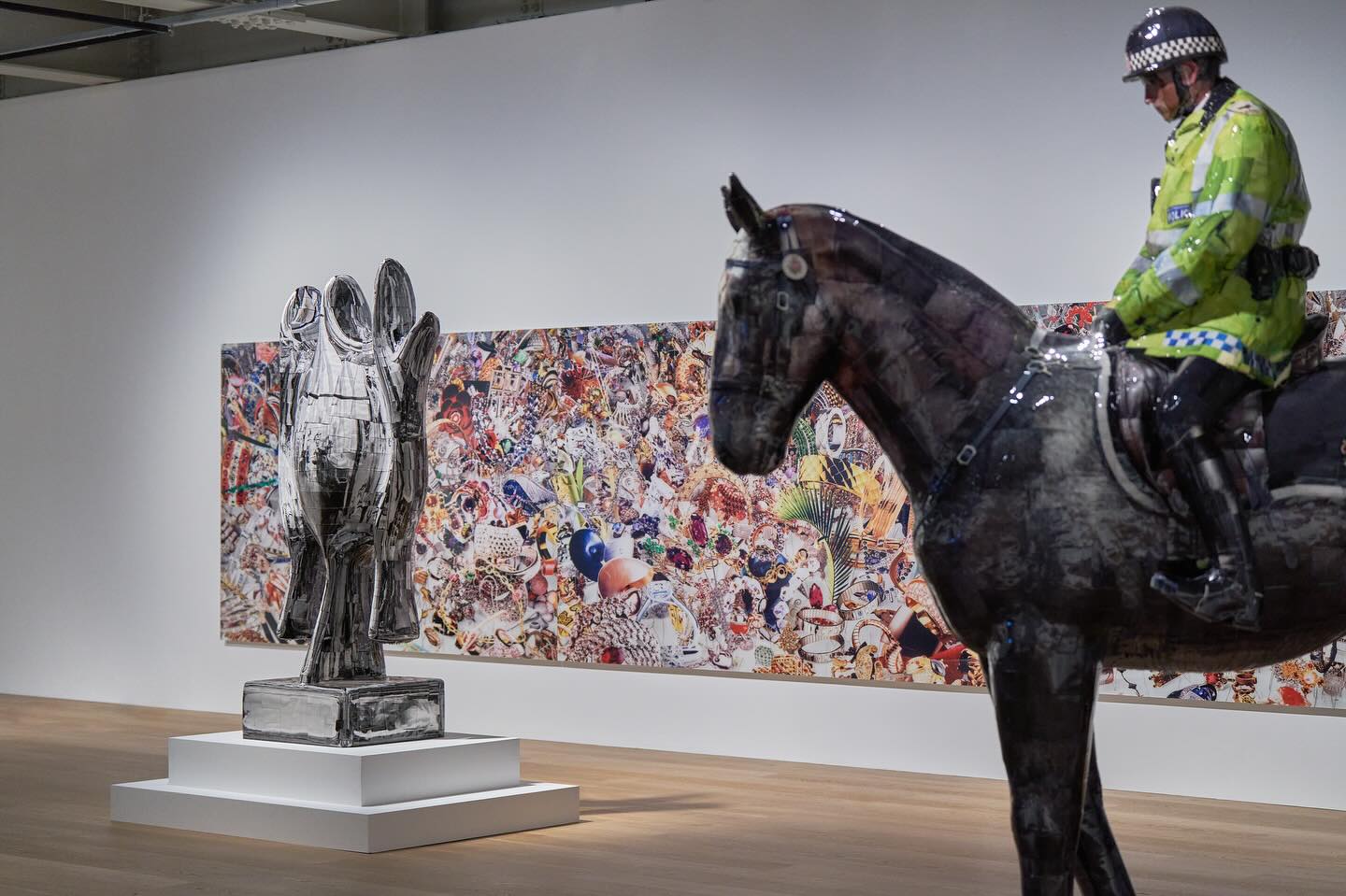
a genre of photography sculpture in ‘Deodorant Type,’ Gwon Osang challenges a
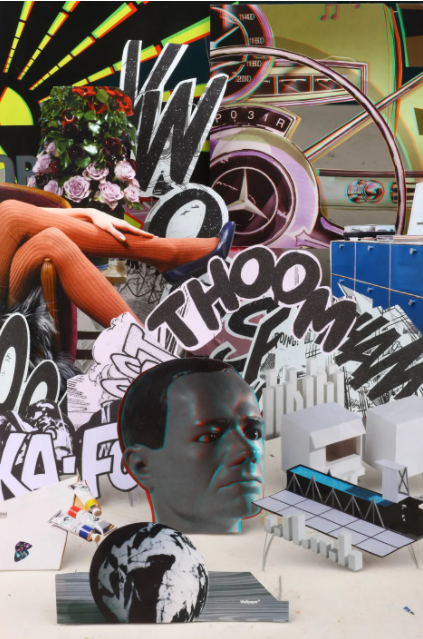
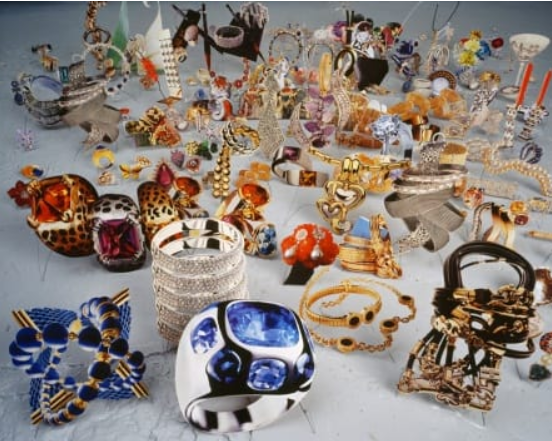
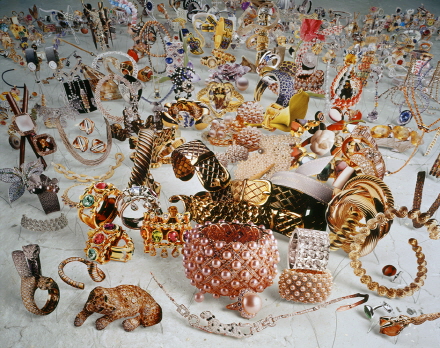
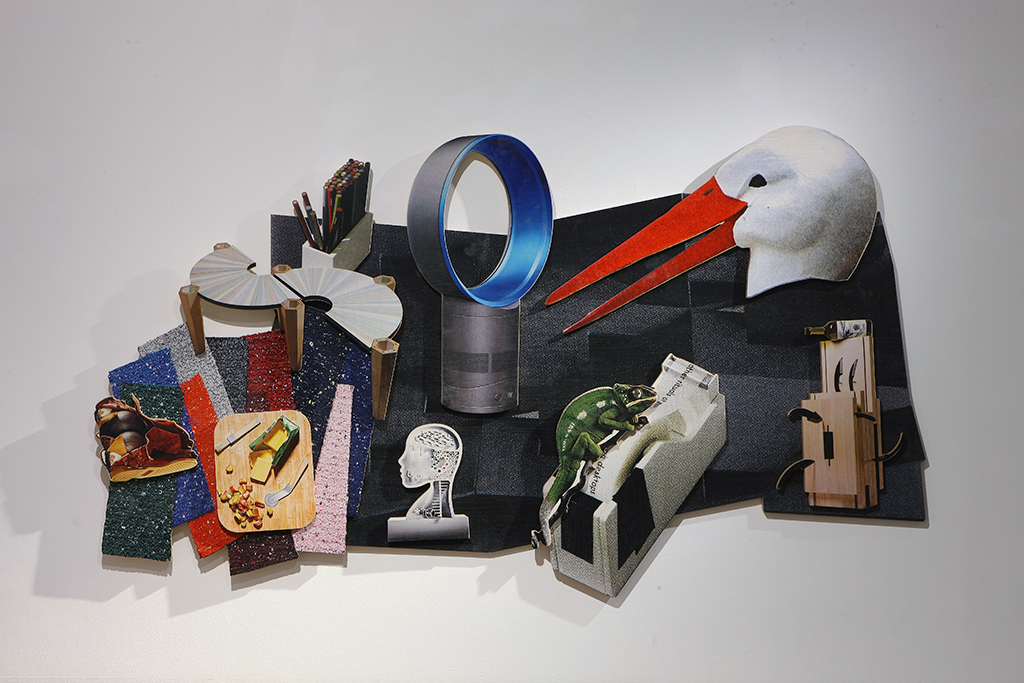
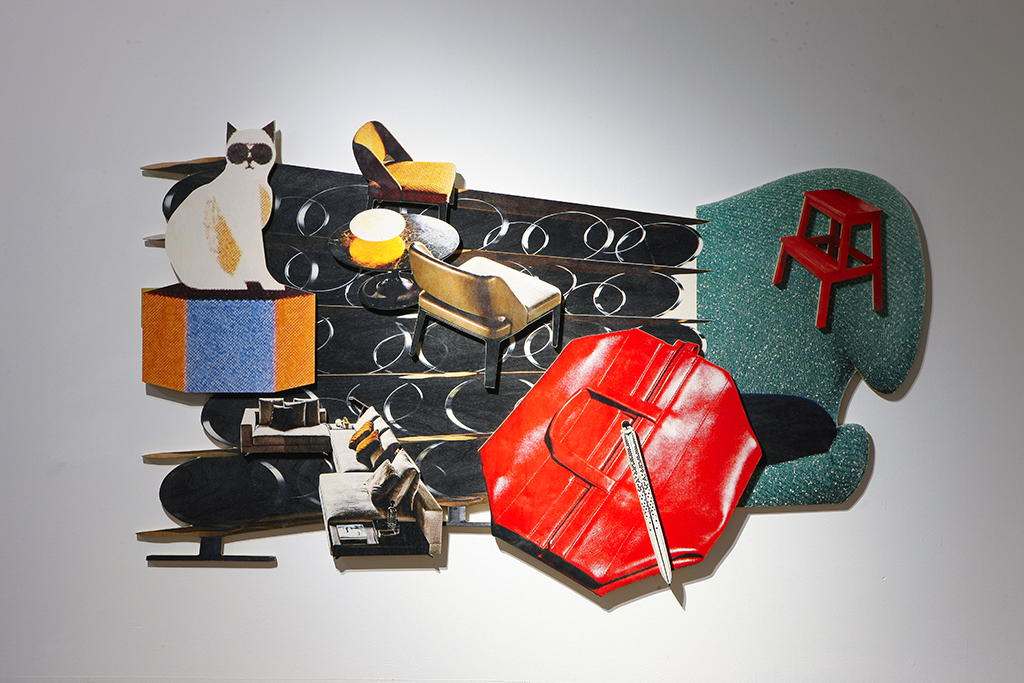
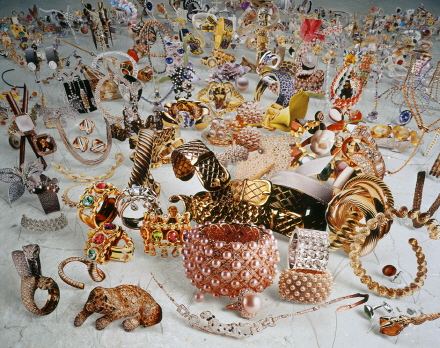
new one called still-life sculpture in ‘The Flat.’ Now, he calls the popular
items in magazine such as watches, jewelries, cosmetics, shoes, purses as
objects of sculpture. Considering the number of times these items are appearing
in magazines, they are the icons of today’s consumer culture. With these items,
Gwon Osang condenses the process of sculpture into the simplest one. While he
replaces the heaviness of sculpture with lightness, the volume and density with
fragility in photography sculpture, now in ‘The Flat,’ he replaces the
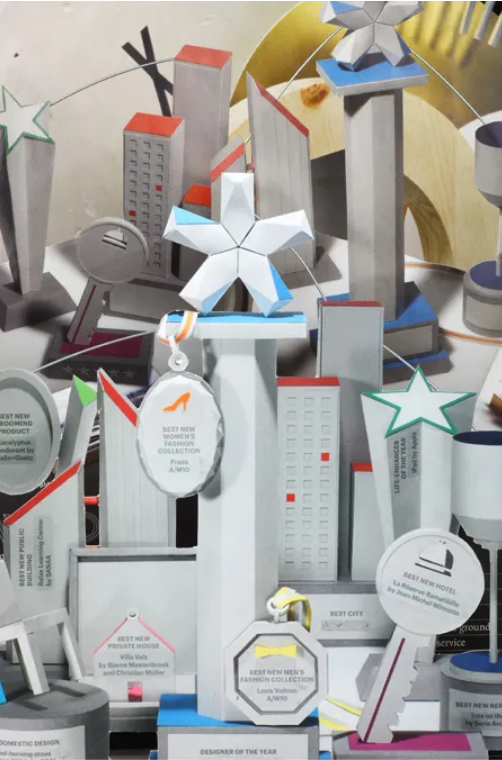
complexity in the process of sculpture with simplicity. Cutting out pictures
from magazines, and supporting them with iron wires from the back, Gwon Osang
puts flat sheets of paper in the three-dimensional spaces to stand alone and
grants them the status of sculpture.
Here,
the more interesting thing is that he ultimately shows us these simple
sculptures in the photo plane. He even insists that these final photos are also
‘sculptures,’ which requires more complicated logical reasoning about the
property of sculpture than in the case of ‘Deodorant Type’ where he tries to
put it into the area of sculpture. ‘Three-dimensionality,’ one of the most
important properties in sculpture, is based on the fact that objects that a
work tries to represent are three-dimensional. Even if each sculptures that
Gwon Osang called for ‘The Flat’ came in the three-dimensional spaces, they are
still flat in essence, and so spectators would see them in the right way only
when they could be in the front side. Human eyes, however, cannot see this
right front side because they also watch the sides and imagine the back
considering the spaces. On the other hand, camera lens, the single eye which
estimates spaces only with the size, can show us these flat sculptures the way
Gwon intended. In short, each sculpture could be seen as a perfect sculpture
the way artist wants to show us when it is framed by the camera, and then, it
could exist as a solid sculpture.
The
solid and shinning images of ‘The Flat’ which seem so vivid to our eyes are far
away from us covered by various layers of curtain. The objects that they denote
are mass produced industrial products whose originals are unknown. After these
products are photographed by camera, the films are developed and printed, mass
reproduced by magazine, and framed and casted in camera of the artist, then
they finally presented to us. However, as any other things of today, these
sculptures whose originals are unidentified appear before us more vividly than
the originals themselves, and even than the direct object in the magazine
advertisements. In ‘The Flat,’ Gwon Osang is doing an experiment with the
possibility of flat sculpture, and he completes the study on today’s images and
on the elements happening between them, beyond the relations between vision and
illusion, reality and image.
After
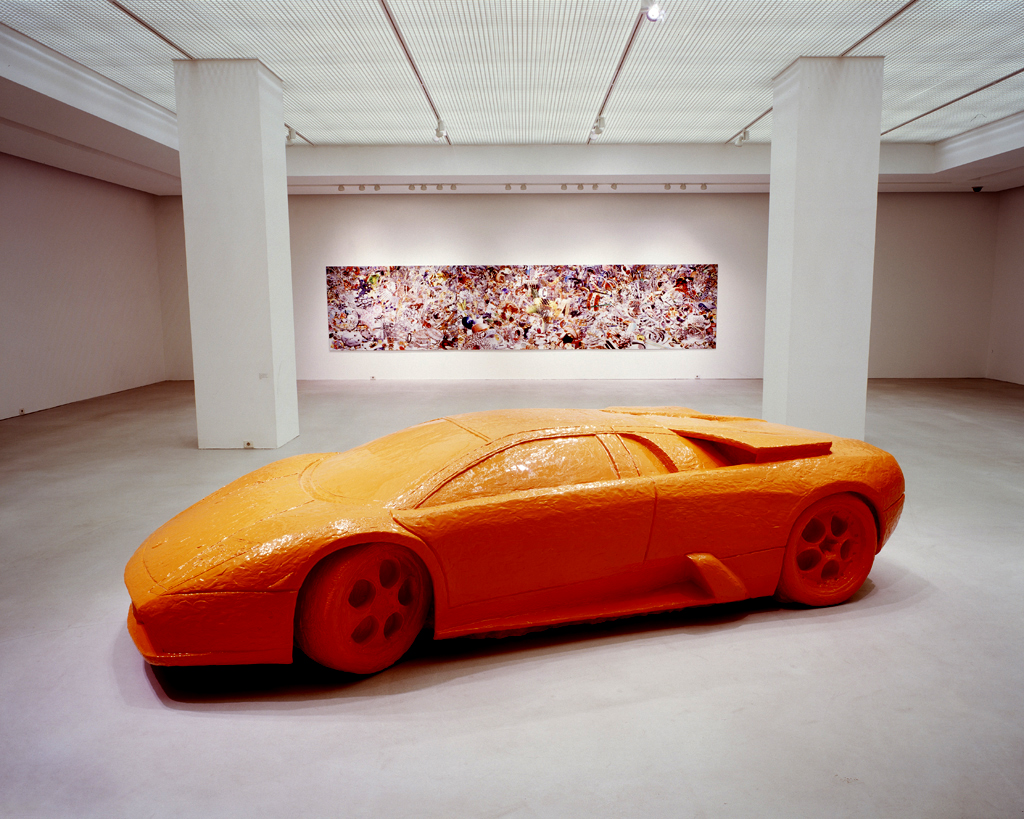
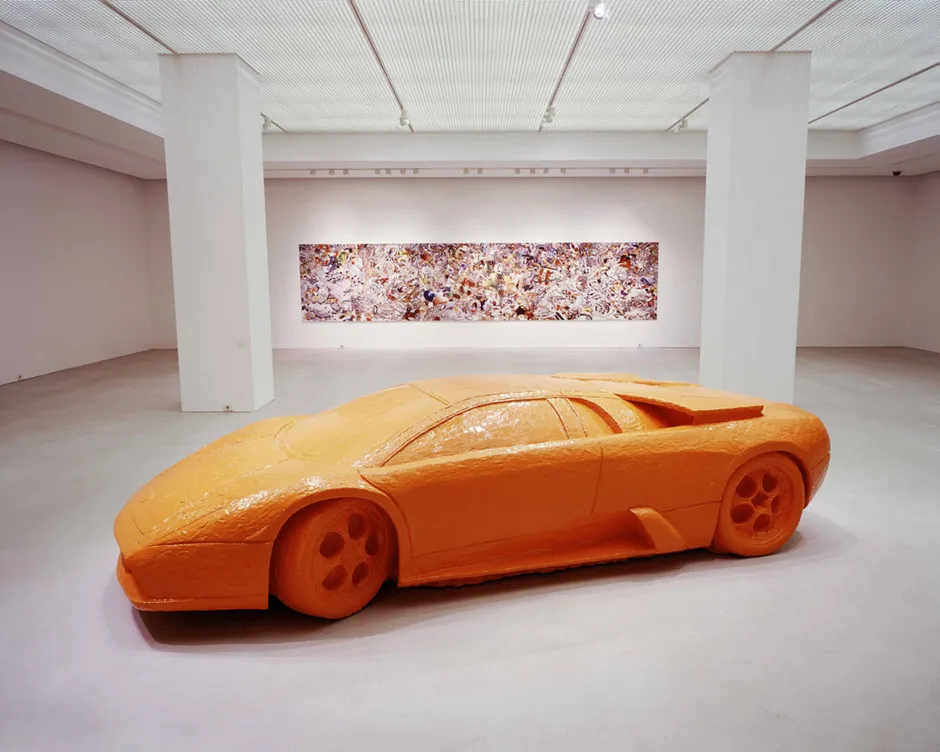
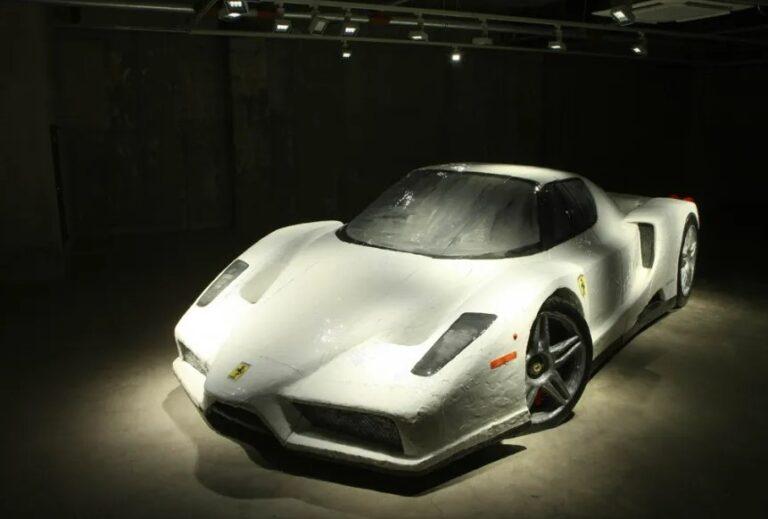
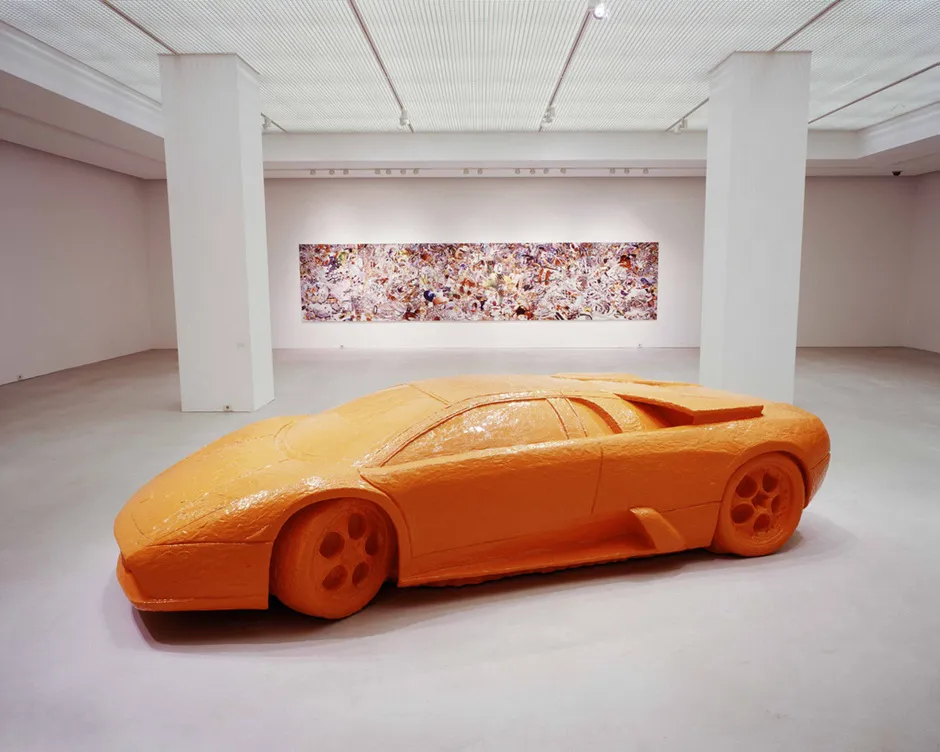
the photography sculpture and flat sculpture. In this period when the
ready-made cars come in galleries with the title of artwork, Gwon Osang made a
supercar in bronze. Here, Gwon, an artist who had been doing simple and light
works as if he wanted to laugh at the heaviness of sculpture, chose the most
traditional way and conservative material that we could think about in
sculpture. Even though he says that he wanted to show what is sculpture, in
front of this huge work, bronze cast of a supercar, ‘Murcielago,’ it is hard to
expect the deep impression we could get from Greek sculptures, ‘noble
simplicity and calm grandeur’ as J.J. Winckelmann said. However, from this
artist who goes better with the cold reason, and in this period of
fragmentation and mental dispersion, it might be nonsense to expect the
impressive and emotional work. In front of Gwon Osang’s new work covering a
large space around it thickly painted in dark orange, people would rather feel
overwhelmed and embarrassed than emotionally touched and impressed. This is
somewhat caused by the density contained in the work of the sculptor who keeps
studying on sculpture just like unique color developing effects made only by
painters who keep studying on painting, or by the visual shock that we could
have facing the sculpture sitting low and wide in a space for the first time.
However, the root cause of this embarrassment and overwhelmed feeling is mostly
in the more psychological part. This is a feeling close to the shivering we
could have when something we desire but never expect to happen in real appears
just in front of the eyes and the spirit of an age that we could feel when we
face a work of art which, in our thought, should be there.
On
‘The Sculpture,’ Gwon Osang said, “In fact, it simply ends with the fact that I
made a supercar in bronze.” However, through this short essay, I try to add to
his new series a word, “product of ceaseless study on the sculpture which can
fit in the new period.” Besides ‘The Sculpture,’ when I look at the new pieces
of ‘Deodorant Type,’ and ‘The Flat’ with which he is still working on, I can
see that they are denser and harder than ever and find myself stressing their
sculpture-ness. Maybe it is partially because I clear up the misunderstandings
about artist Gwon Osang’s identity. However more than this, it is because
Gwon’s study which started with having ceaseless questions on sculpture and
modernity through photography comes close to the answer to how today’s
sculpture could feel more sculptural being worthy of the name and deeply
impressive. From Gwon Osang’s works, I could feel the period of sculpture
arrives. As painting recently led the ‘triumph of painting’ by combining
traditional techniques and modern materials, Gwon Osang’s works combining the
most traditional techniques with the contemporary age step forward towards
that(triumph) of sculpture. Return of the sculpture just began.