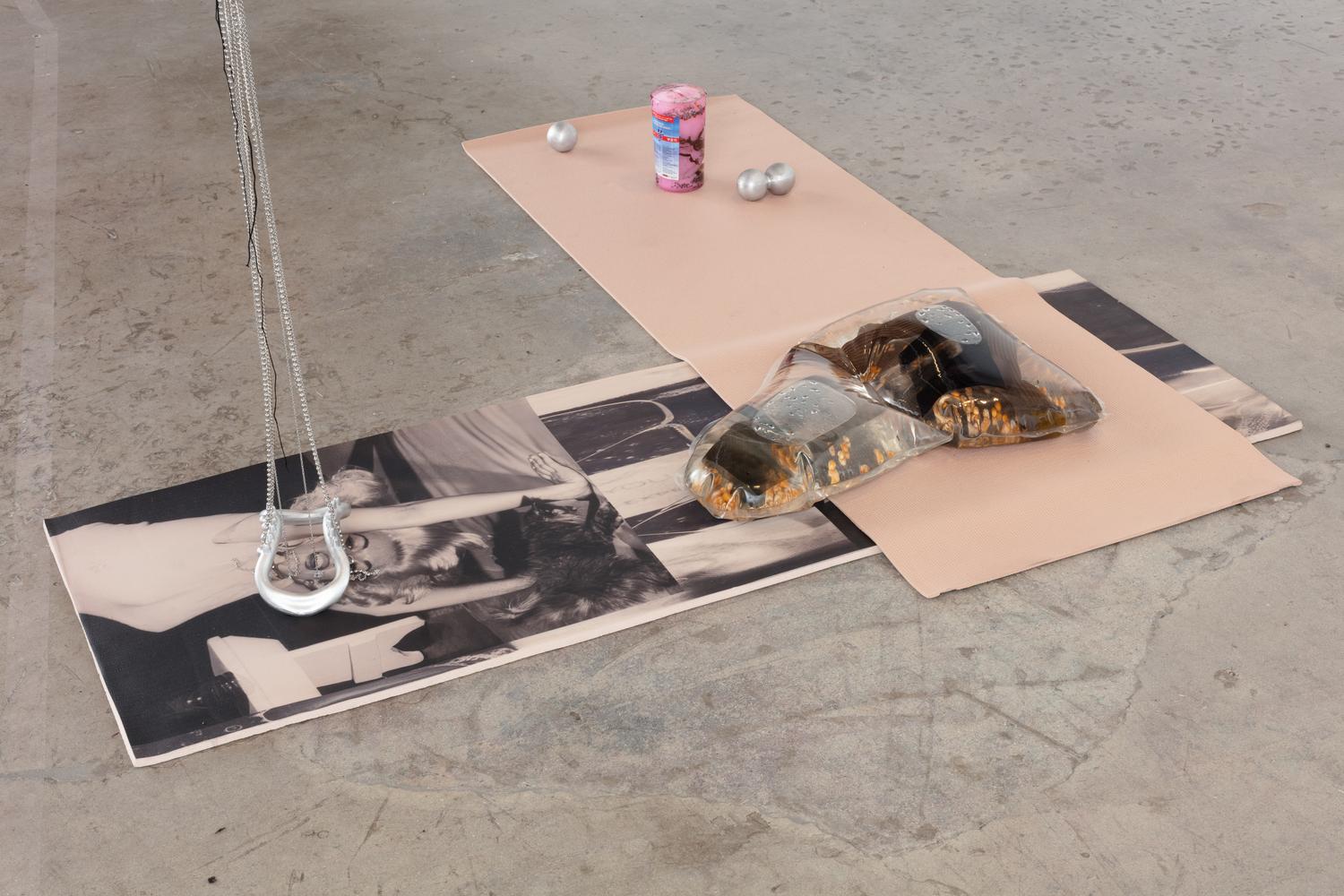
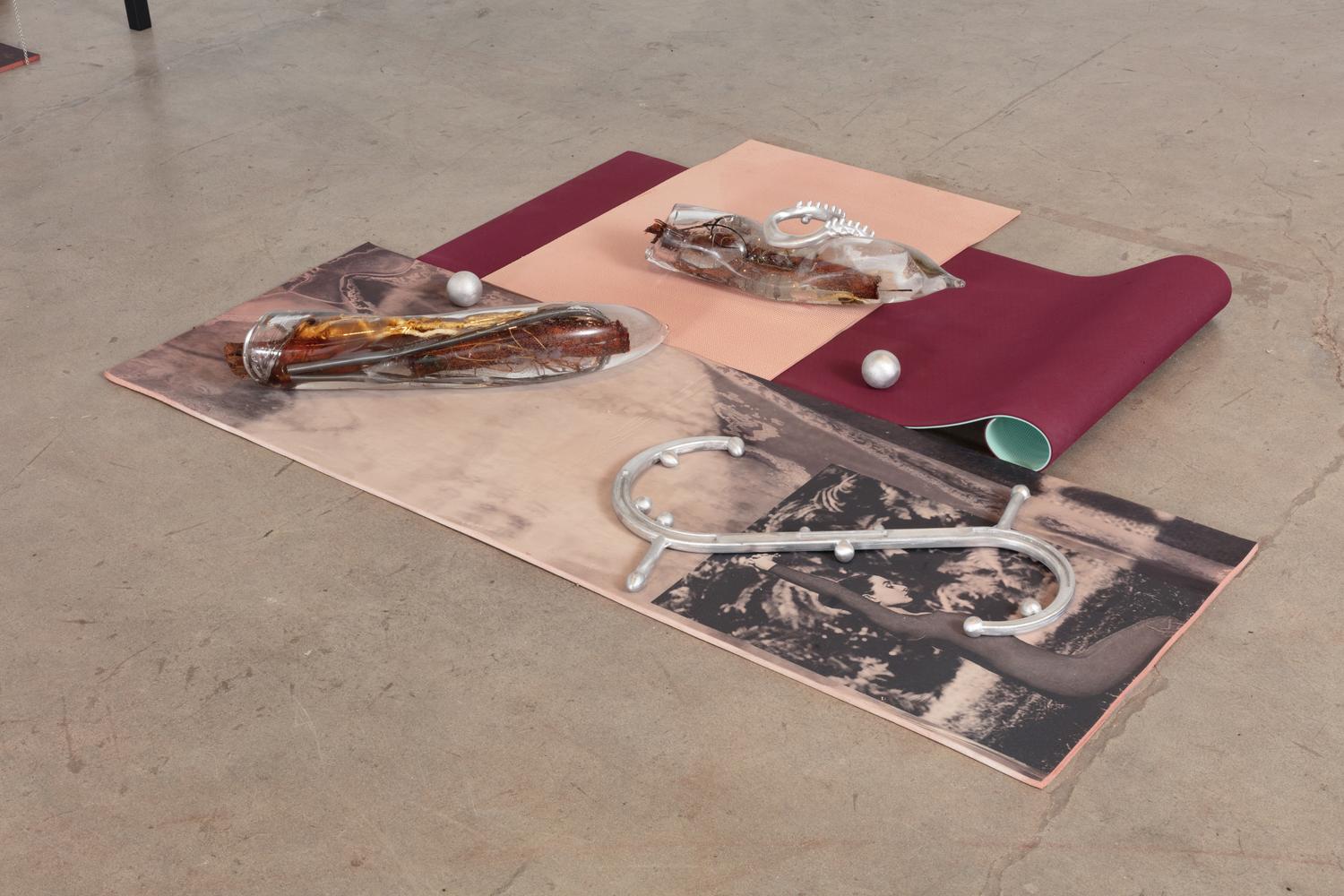
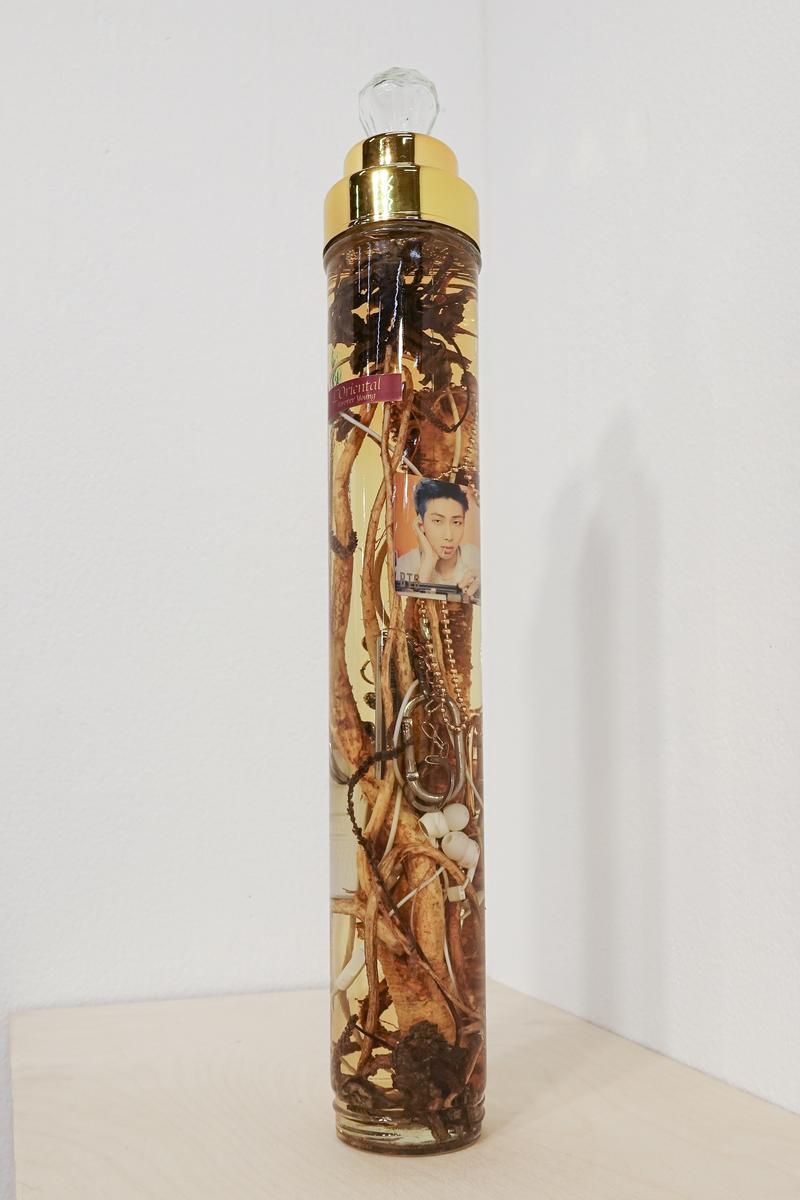
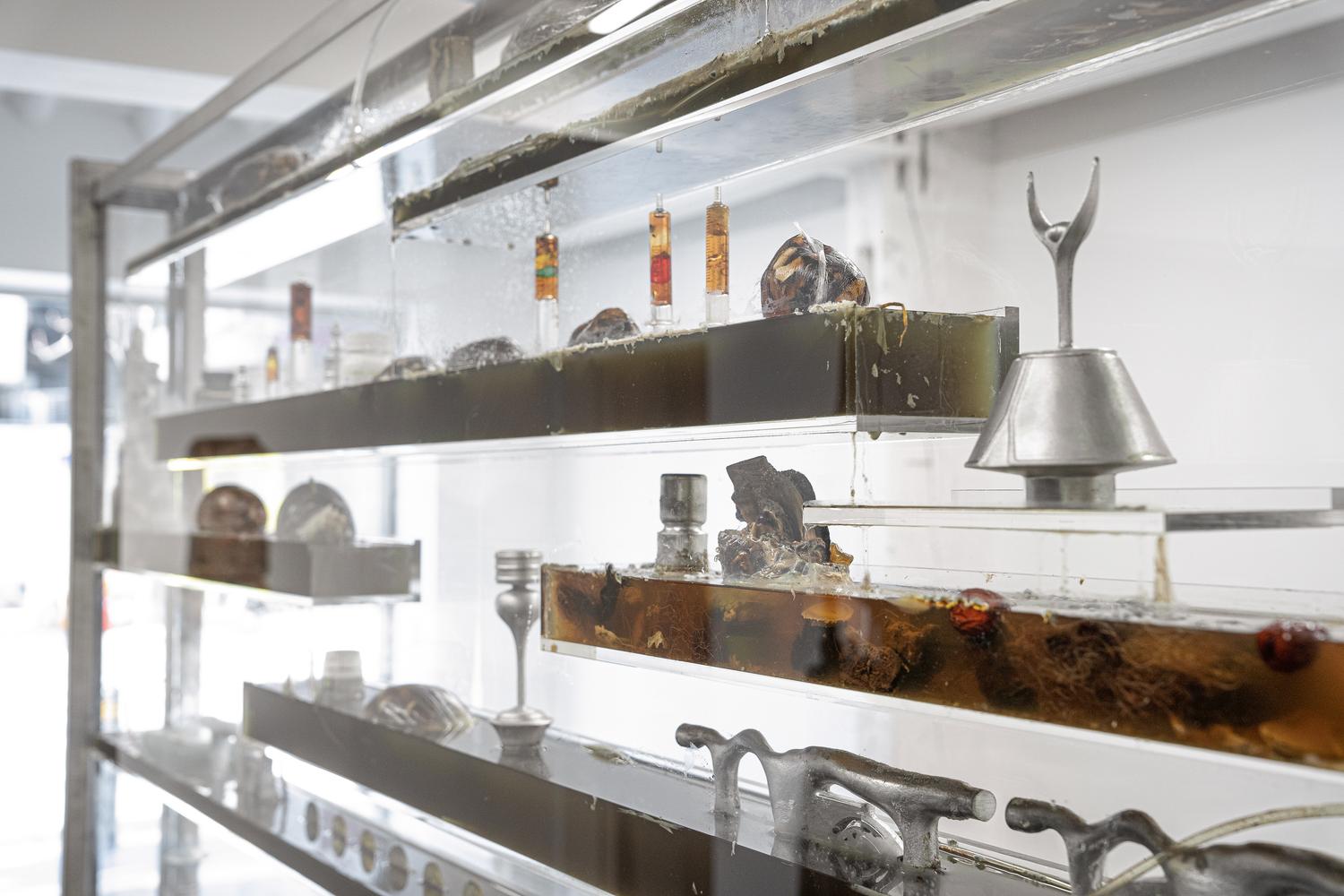
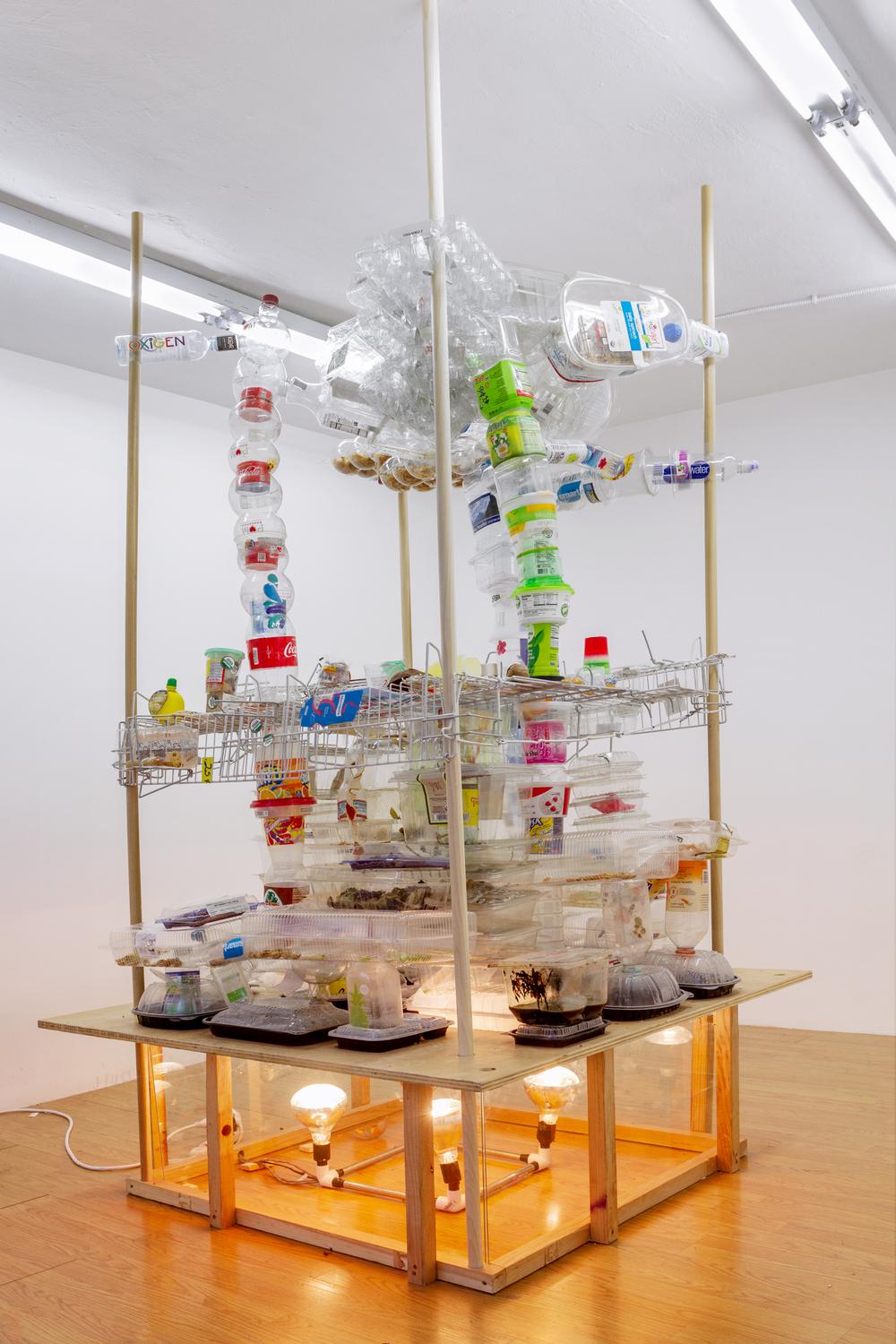
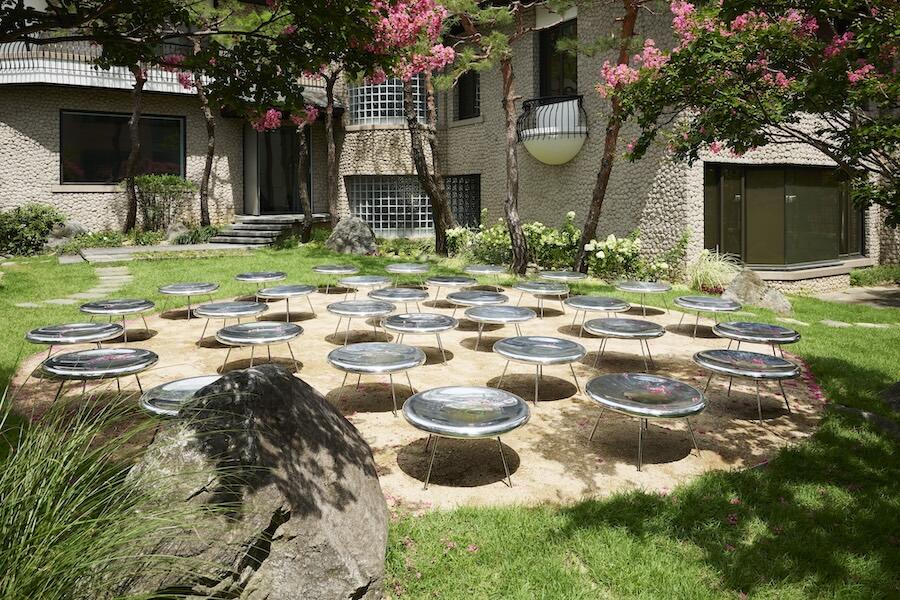
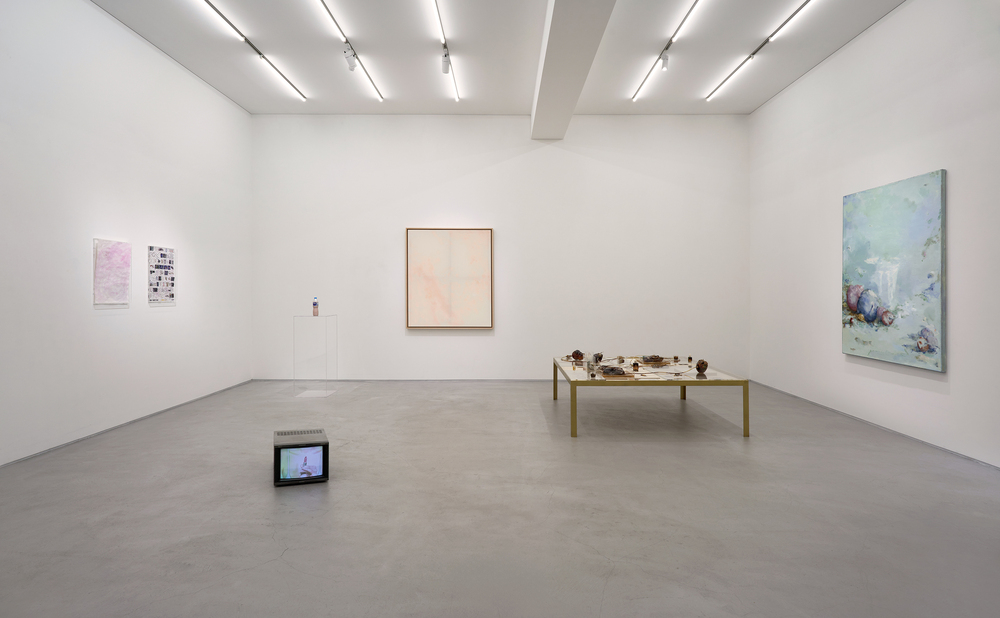
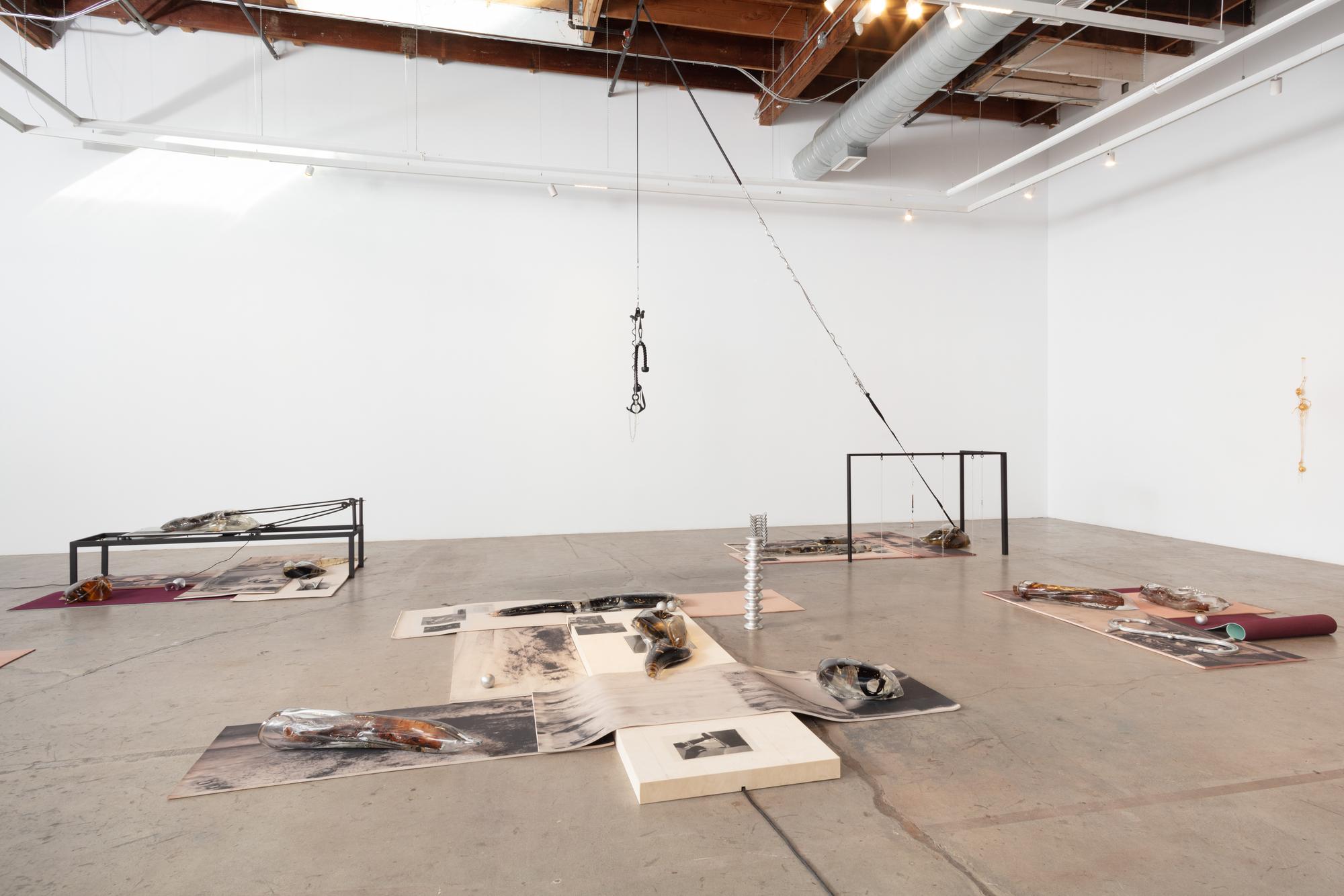
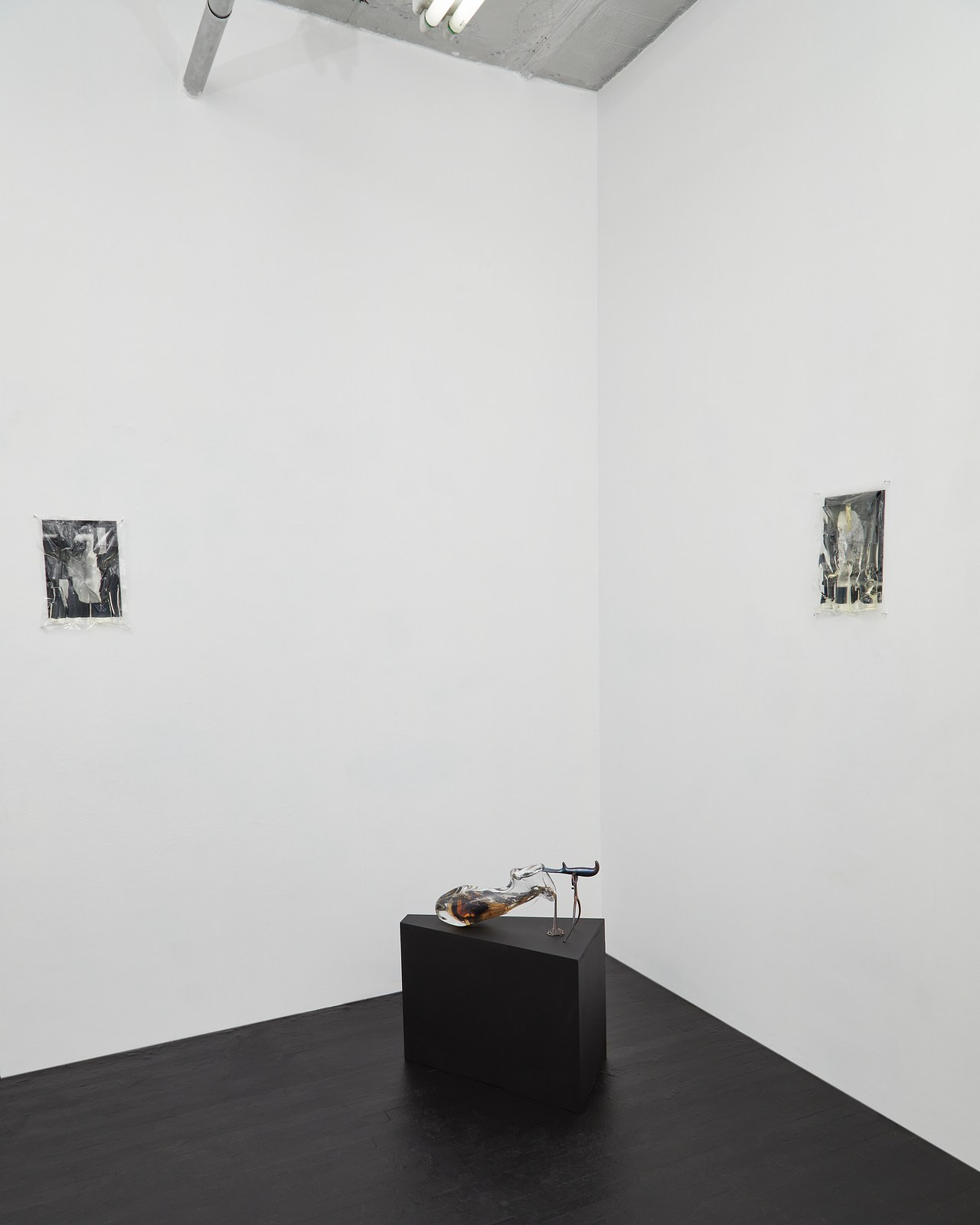
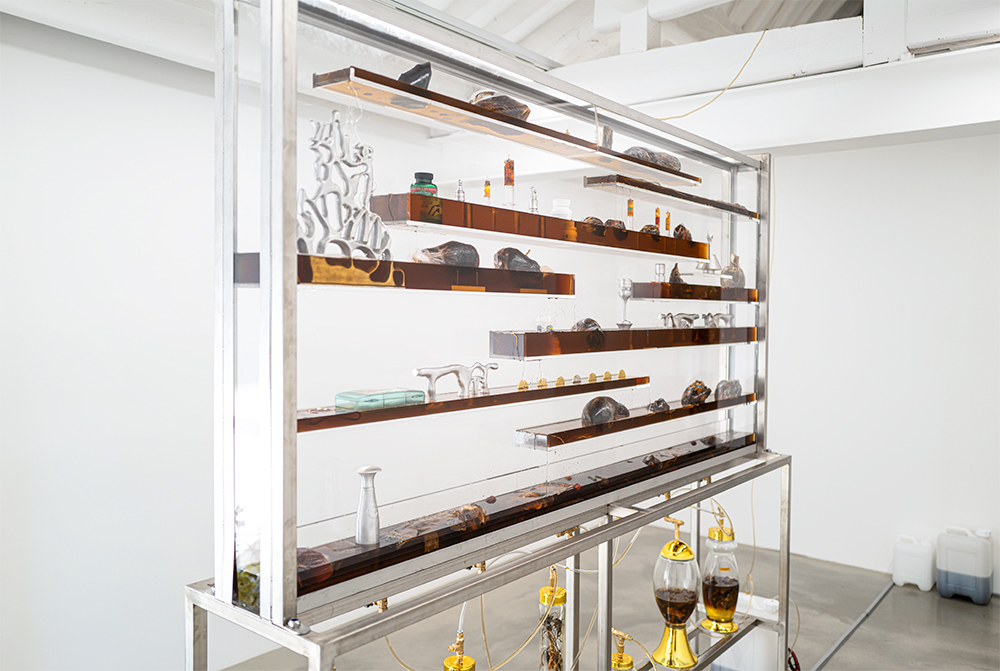
Installation view of 《The Oriental Sauce Factory》 (Gallery Shilla, 2022) ©Gallery Shilla

Gallery Shilla Seoul is holding a solo exhibition of artist Haena Yoo from 2022.11.19 to 2022.12.24.

Gallery Shilla, which has been operating for the past 30 years with an emphasis on “new sensory experiences” through contemporary art based on “visual stimulation”, intends to focus the next 30 years on “experiences based on convergence stimuli”. Therefore, 《The Oriental Sauce Factory》 by Haena Yoo, who develops personal narratives and social issues through “sight” and “smell”, is also an exhibition showing the direction of Gallery Shilla for the next 30 years.

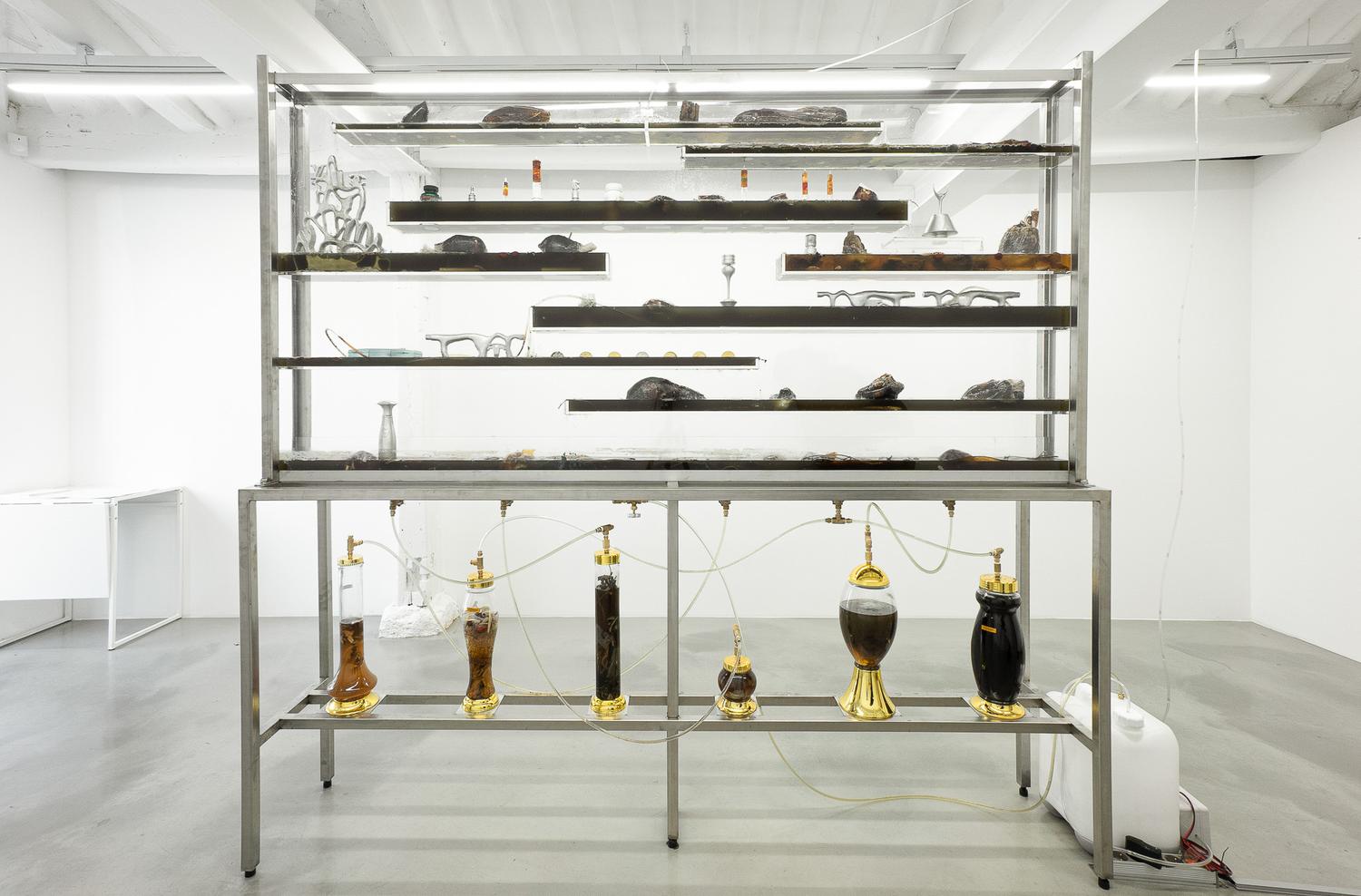
Haena Yoo, Injection Machine: Tu m’, 2022, Mixed media, Dimensions variable ©Haena Yoo

As an extension of the series previously shown at Murmurs in Los Angeles, 《The Oriental Sauce Factory》 expands Yoo’s ongoing exploration of scent, liquid, and fermentation.

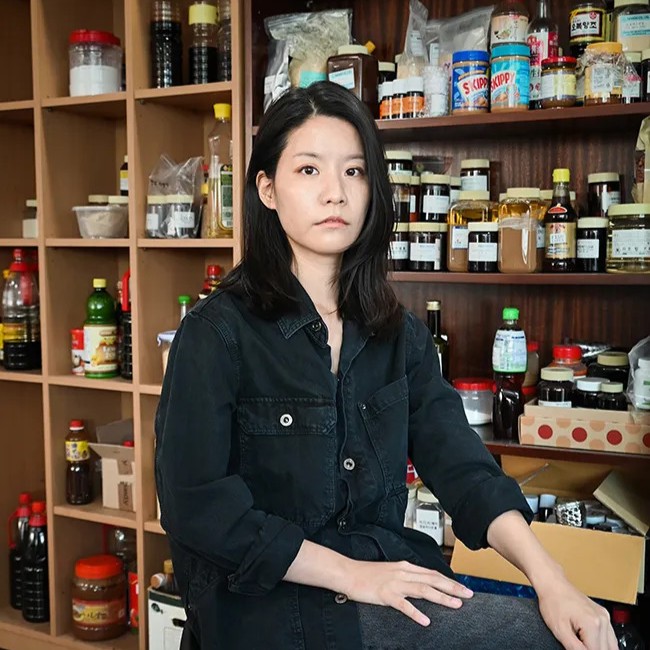
Yoo employs smell in her work as a sensory and primary mediating agent. Having witnessed the production process in her father’s soy sauce factory located in Eumseong, Chungcheongbuk-do, the artist experienced firsthand how scent can transform a particular place into a “completely different world.” Through the installation series The Oriental Sauce Factory, she materializes this phenomenon and invites viewers directly into that experience. (To realize this, the artist constructed an installation replicating a “liquid circulation and filtering system” modeled after factory operations.)

Drawing on the concept of bricolage, Yoo constructs her installations using various materials such as liquid, scent, video, sound, and sculpture. Here, liquid becomes both an entropy that investigates the structure of neoliberal markets and a commodity sold in bottled form. The salty, dark-brown sauce (soy sauce), imbued with the otherness of smell, undergoes a sequence of “consumption, extraction, and exploitation” as the factory system operates. Yoo depicts the tension found within a system of control and surveillance that governs this process.

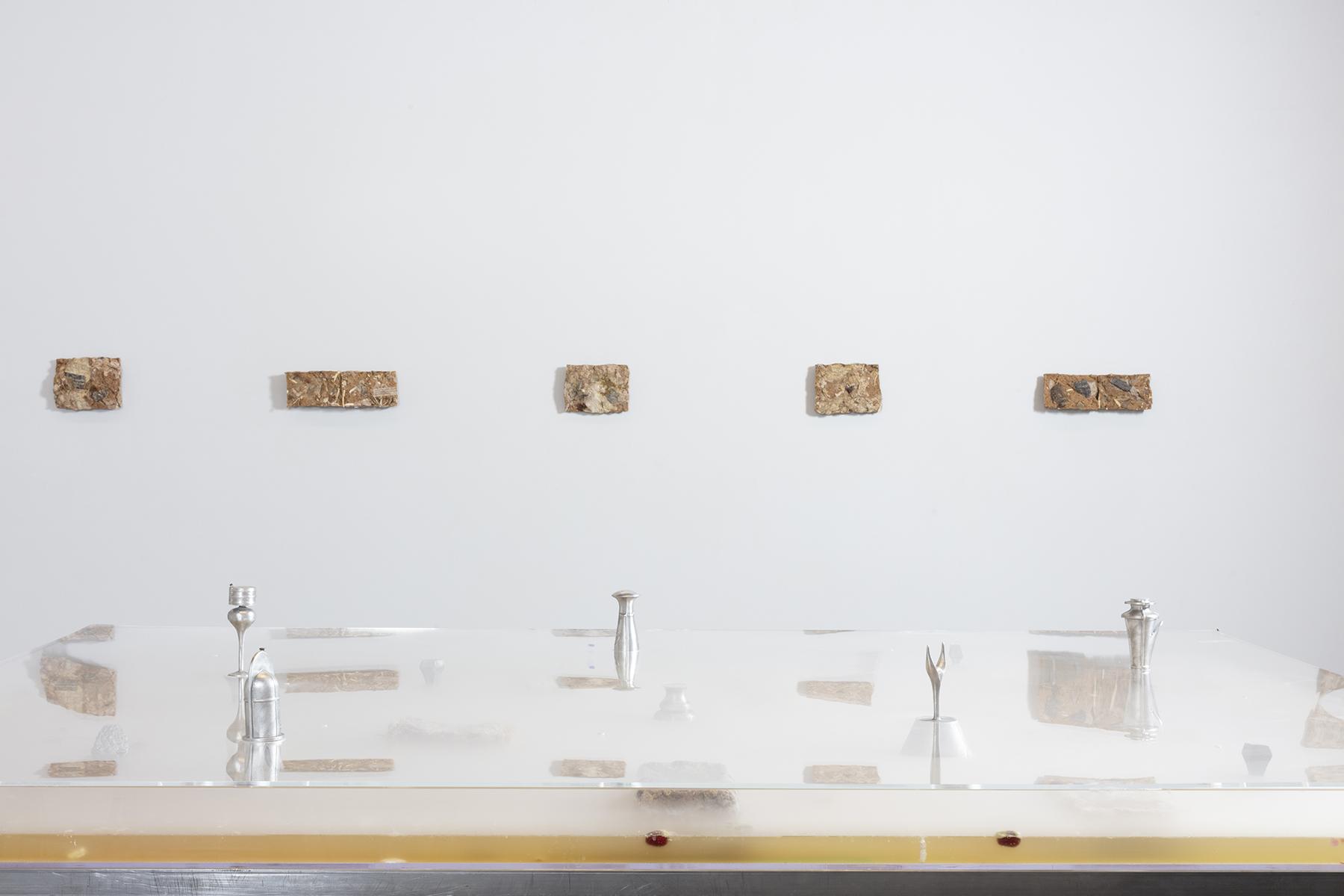
The work Meju (Dictee) (2022) presents the preliminary state of the sauce (soy sauce). It consists of hanji paper containing excerpts from ‘Dictee’ by Theresa Hak Kyung Cha, mixed together with medicinal herbs for the immune system and soybeans; molded by hand into the shape of meju to induce the growth of the fermentation mold. The narratives of suffering voiced by the women in ‘Dictee’—Yu Gwan-sun, Joan of Arc, Demeter and Persephone, Cha’s mother Hyungsoon Huo, and Theresa Hak Kyung Cha herself—become the very ingredients of this soy sauce.
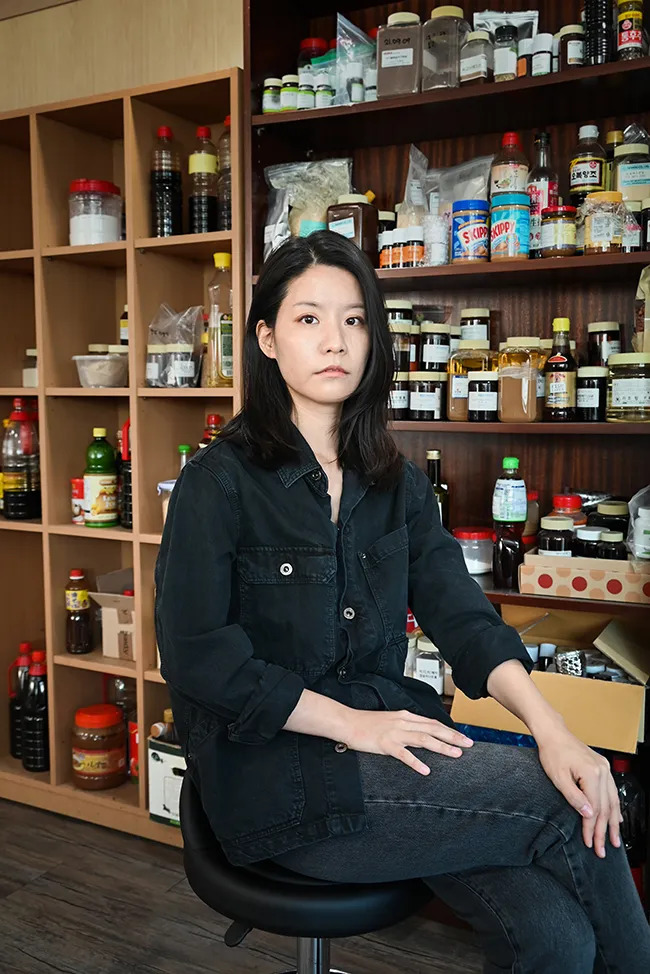
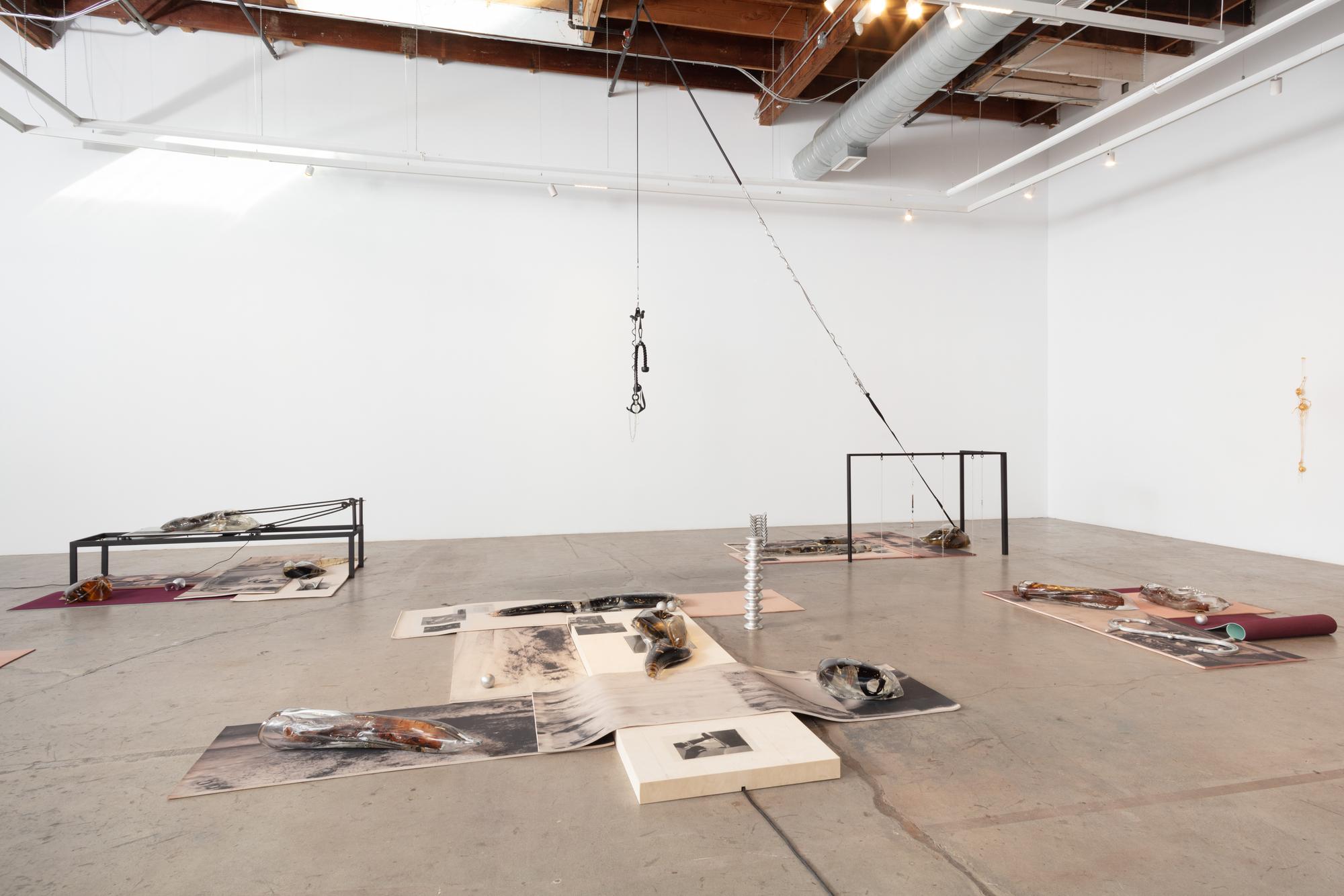
Installation view of 《The Oriental Sauce Factory》 (Gallery Shilla, 2022) ©Gallery Shilla

Whereas the previous iteration of this series centered on a “large fermentation apparatus” as its primary installation, the main installation at Gallery Shilla—Injection Machine: Tu m’ (2022)—embodies the next stage: a “circulation and filtration apparatus.”

The operational system of Yoo’s sauce factory combines the actual manual from her father’s soy sauce factory with the internal logic of Marcel Duchamp’s The Bride Stripped Bare by Her Bachelors, Even (1915–23), described as a “desire-motor.”

Meju, salt water, dried jujube, oregano oil, Tylenol, Advil, magnesium, easily accessible pharmaceutical products, and traditional medicinal herbs used in ssanghwa-tang all mix and dissolve into a single compound. This liquid flows like a waterfall through narrow, maze-like acrylic tanks, and the installation structure both contains and governs the sauce while simultaneously partitioning the gallery space.

Within this structure, the sauce (soy sauce) encounters or navigates around underwater obstacles such as wax sculptures connected to medical tubes, syringes, language fragments from ‘Dictee’, pill bottles, cryptocurrency, lottery tickets, aluminum pieces engraved with logos of multinational corporations, and aluminum figurines modeled after Duchamp’s “bachelor” drawings. These obstacles embody modes of consumption, yet appear threatening enough to potentially engulf and consume the viewers drawn to them.

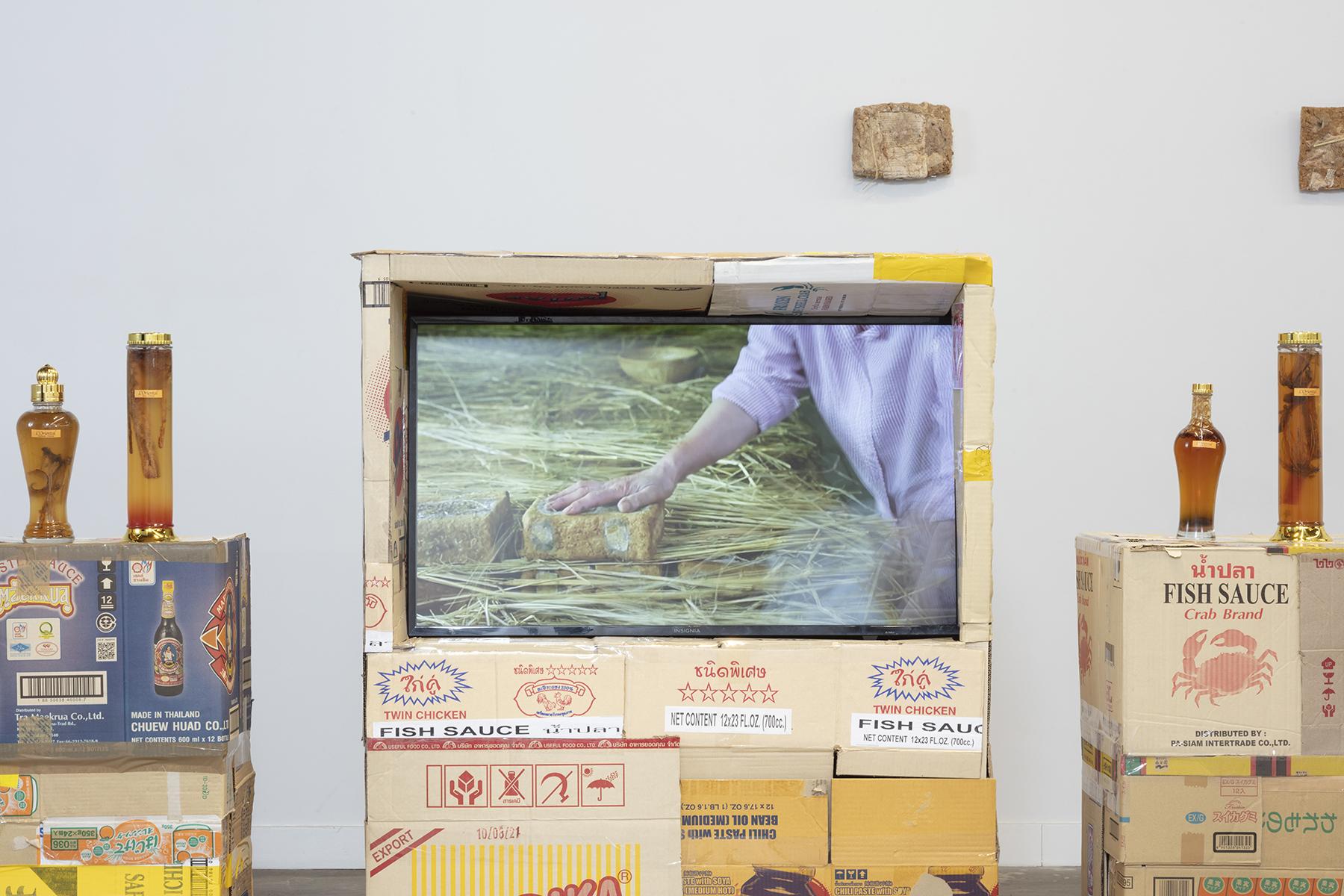
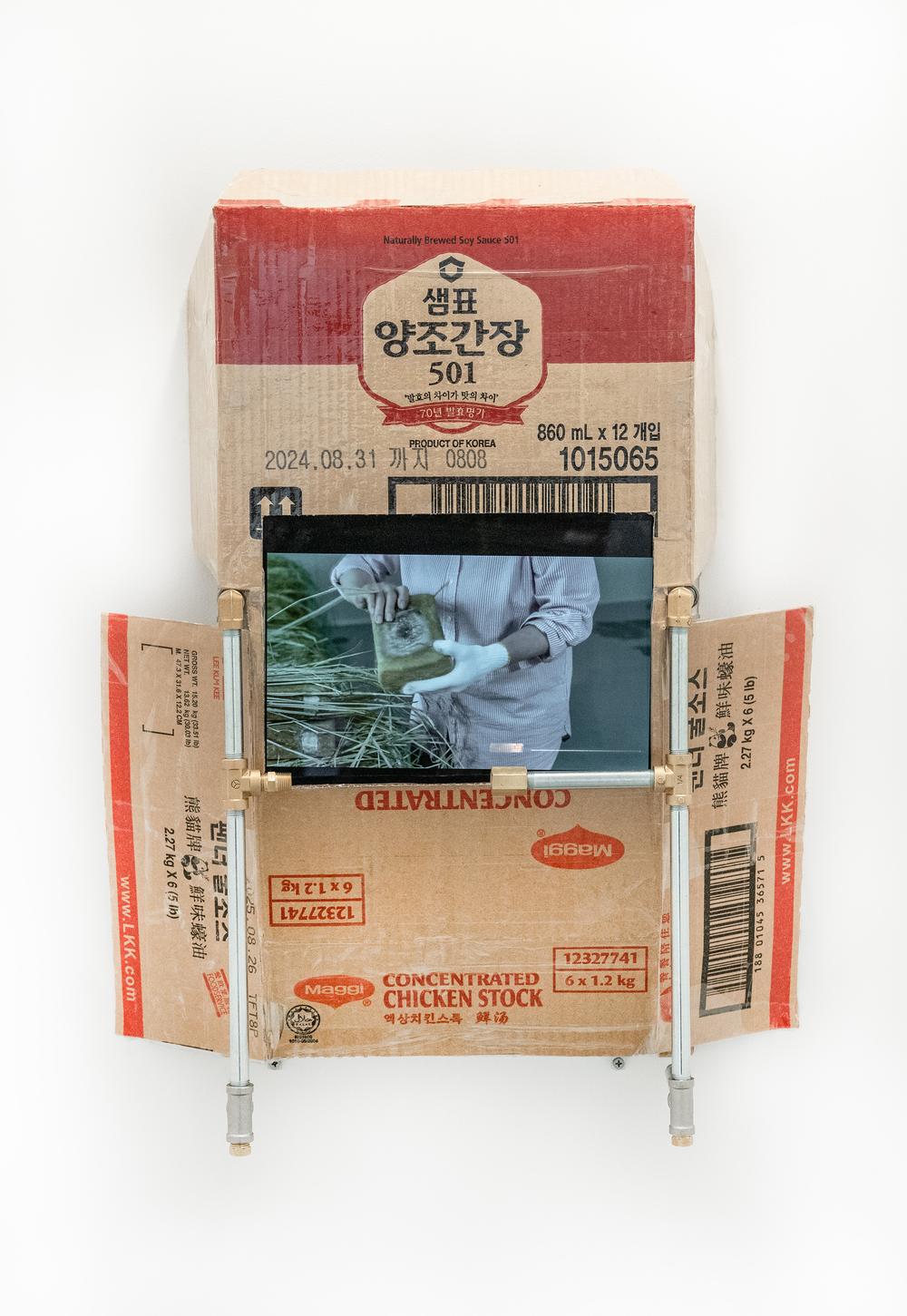
At the back of the gallery, Checkmate (2021) is installed as a standalone video work accompanied by cardboard boxes. The AI-generated narration explains the origin of the tea “Bai Hua”—which Queen Elizabeth II once referred to as an “Oriental Beauty”—and then shifts to scenes of female workers in a soy sauce factory filling and packaging bottles. At the stage where soy sauce bottles move along the conveyor belt, completing their filling and packaging, the sauce’s complex origins have already been diluted and diminished by branding and Orientalism. Yoo’s allegorical factory quietly exposes the violence of the market within a confined scale, as the intensifying scent gradually saturates the space over time.

Regardless of the attempt to contain the fundamental nature of sauce (soy sauce) within a vessel, the sauce permeates into the container, ferments, generates organic activity, and even corrodes the objects submerged inside. Efforts to suppress the sauce’s otherness and maintain compliance collide with the sauce’s innate entropic resistance, which pushes outward toward organic life. The dichotomy between mechanized production and spontaneous fermentation competes on the boundary of mutual dependence, generating a clash between desire and control. Ultimately, the artist expands this unpredictability through scent, sound, and bacterial growth.

References