“There
was a village where everyone had to close their eyes at birth. The villagers
were under the witch’s curse…”
That
was how stories by Noh Sangho (b. 1987) often began. They were shared
online alongside images painted with the clarity of watercolor. His delicately
arranged complementary colors harmonized with the narratives, and together the
texts and images spread like oral folklore through social media. Floating
across constantly updated feeds, some stories dissipated without an ending,
while others survived as fragments of scenes. Yet there was no need for
closure. Many people delighted in Noh’s daily uploads, and just when the
story’s conclusion seemed near, he would begin an entirely new one — as if to
remind us that this is how creativity circulates and dissolves in the
online realm.
The
opening sentence quoted above was also the title of his work exhibited at 《Young Korean Artists》 (National Museum
of Modern and Contemporary Art, 2014). The piece was installed inside a
“fairy-tale cart” fashioned from a discarded handcart once found near Hongdae.
In the dim interior, paintings depicting scenes from the story were displayed;
visitors could view only fragments of each scene by illuminating them with a
flashlight. Like overheard rumors or half-remembered songs, the work invited
each viewer to fill the narrative gaps with imagination. The more curious among
them would trace the story’s trail back to the artist’s online account.
#Art
After the Internet — Korea’s Post-Internet Generation
Internet-based
art first appeared in the mid-1990s under the name ‘Net Art’, referring to
artistic practices that utilized materials discovered online. Its essence lay
in the fact that the result was not mere imitation and that its originality
remained beyond dispute. Later, New York–based artist Marisa Olson (b.
1979) introduced the terms ‘Art after the Internet’ (2006)
and ‘Post-Internet Art’ (2008) to describe a broader range of
contemporary art grounded in online culture. Among its defining
voices, Artie Vierkant (b. 1987) explained that Post-Internet Art
occupies “a space between new media art, which emphasizes the materiality of
technological media, and conceptual art, which privileges immaterial ideas”
(2010).
In
Korea, attention to this “Post-Internet generation” began in the mid-2010s,
often referring to artists born in the 1980s. They were also central figures in
the “new alternative spaces” (sin-saeng gonggan) movement —
self-organized exhibition venues founded and operated by young artists. While
sharing a lineage with the earlier alternative spaces of the 1990s
that existed outside institutional systems, these new spaces distinguished
themselves by their focus on online activity. Their physical locations were
often tucked away in underused urban corners, accessible only through
smartphone maps, while their real sense of community and solidarity was
cultivated through social media networks.
What
makes this generation’s art distinctive is their dual experience of both analog
and digital environments. They learned about the world through printed books as
children, grew up with the spread of the internet in their teens, and came of
age with smartphones in their hands. Though trained in traditional techniques
such as painting, sculpture, and printmaking at art schools in Korea, they
simultaneously absorbed global artistic trends through online channels,
exploring new modes of expression. This generation is as nostalgic for analog
media as it is fluent in digital tools — and Noh Sangho is among them.
#The
Digital Nomad from the Analog World – Noh Sangho’s Hybrid Painting
The
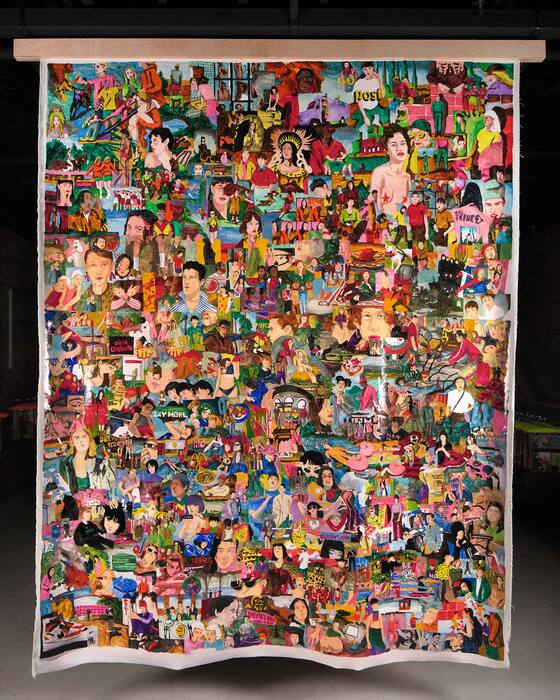
works Noh Sangho presented serially online were titled ‘Daily Fiction’
(2011–). What began as a daily habit of drawing one A4-sized image has grown into a vast
ongoing series numbering in the thousands. His subject matter never runs dry,
for his source material is the endless flow of information adrift on the
internet — fleeting news, low-resolution photographs, and ownerless stories
that appear and vanish.
Noh’s
paintings are hybrid canvases that travel between the digital and
analog worlds. Each work begins with the artist printing randomly collected digital images and
tracing them onto paper with carbon paper. Through the process of drawing, the
original images are reassembled into entirely new compositions. The completed
works are then scanned or photographed and re-uploaded online — digital
information reinterpreted by hand, transformed once again into digital form. In
other words, it is an artistic stance that employs digital tools yet refuses to
abandon the gestures of the hand. Noh is a digital nomad who still walks on
analog ground, translating the volatile nature of virtual space into a
physical, embodied experience.
Daily
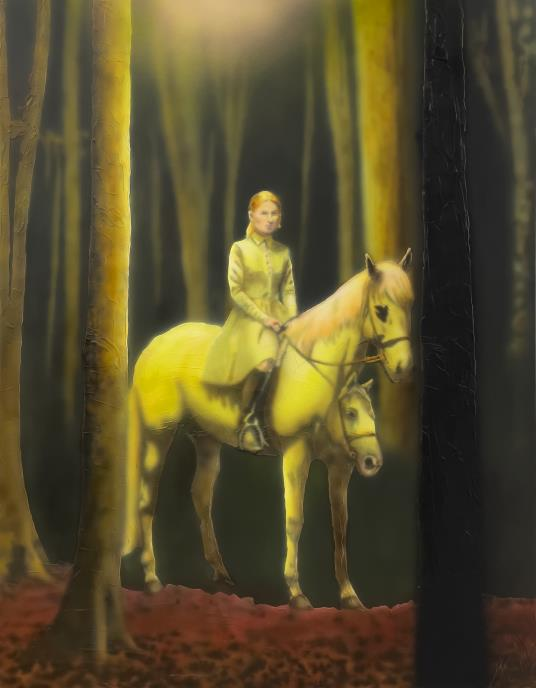
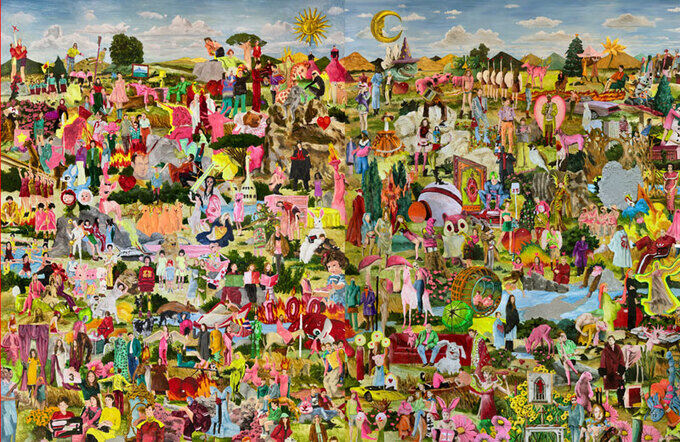
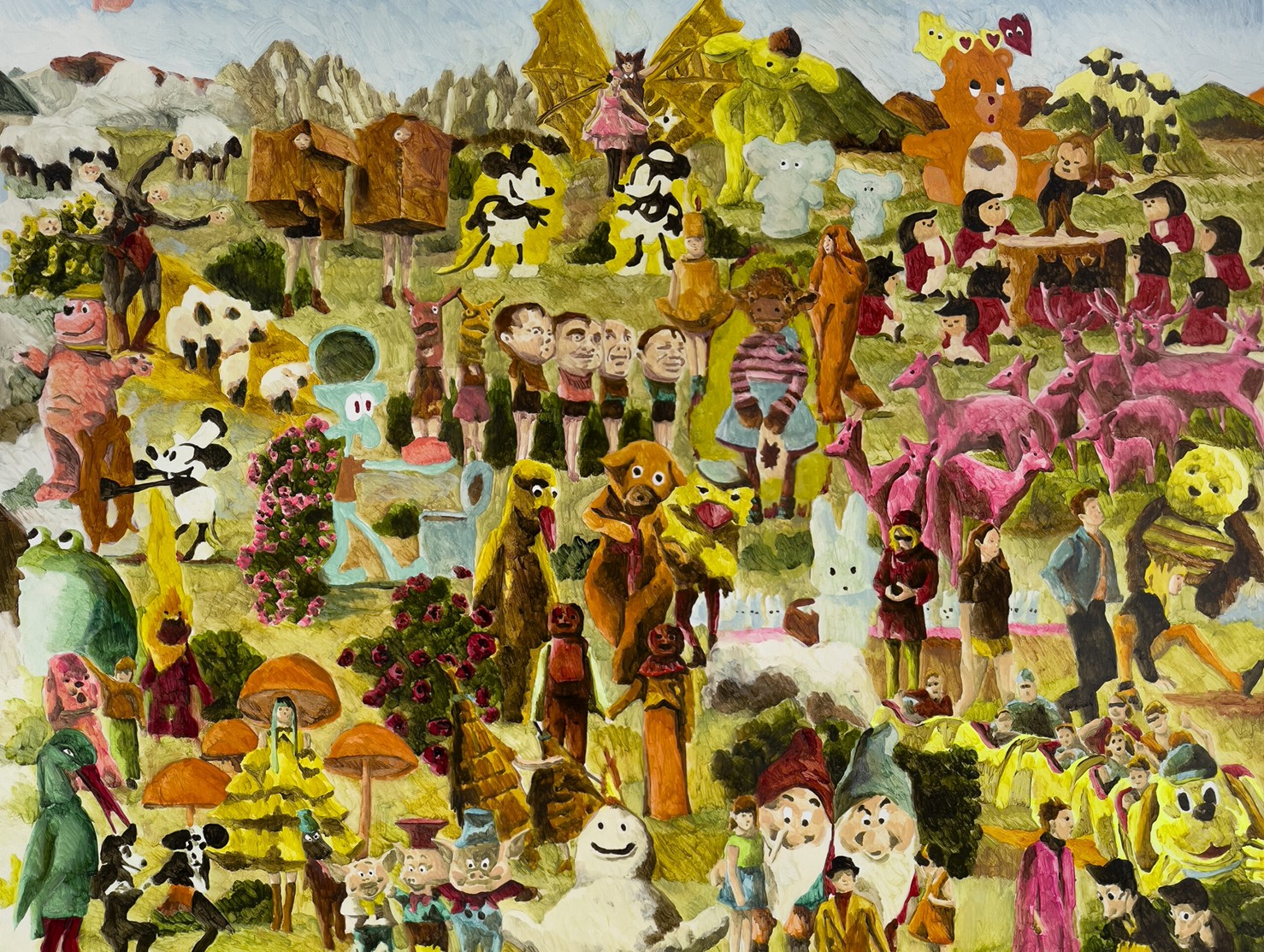
Fiction later evolved into a series of oil paintings titled ‘The
Great Chapbook’ (2016–). In these large-scale canvases, he densely arranges
countless images to form vast visual worlds reminiscent of digital clouds
brimming with data. The compositions evoke the overwhelming accumulation of
digital files, each image a fragment of a larger network.
After his solo exhibition of the same title that year, Noh stopped creating
stories in written form. Instead, he began to focus on exploring the ways
contemporary society consumes and interprets images — the very essence of his
practice.
#Sacred
Images Beyond Grasp – ‘Holy’
Noh
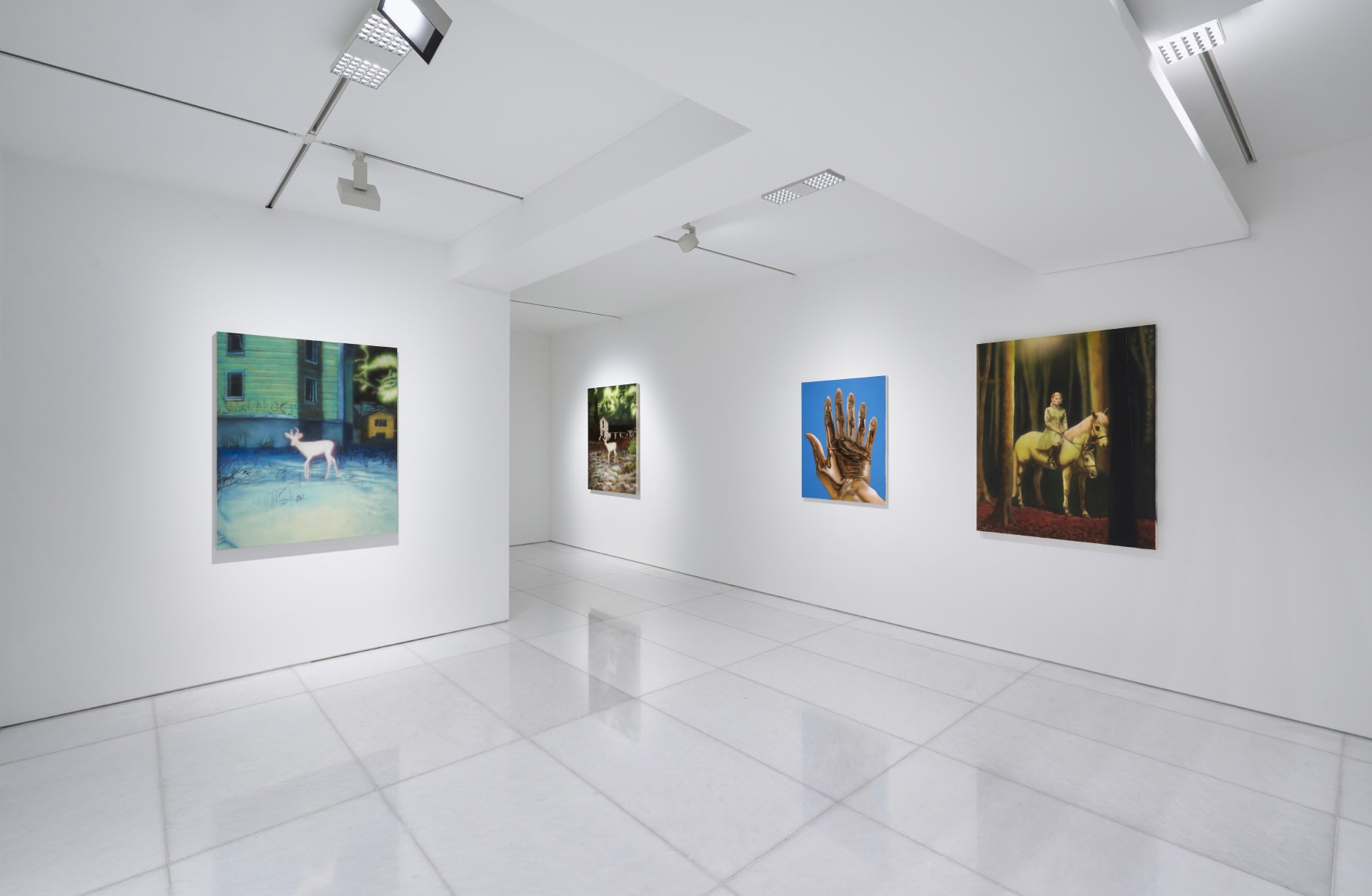
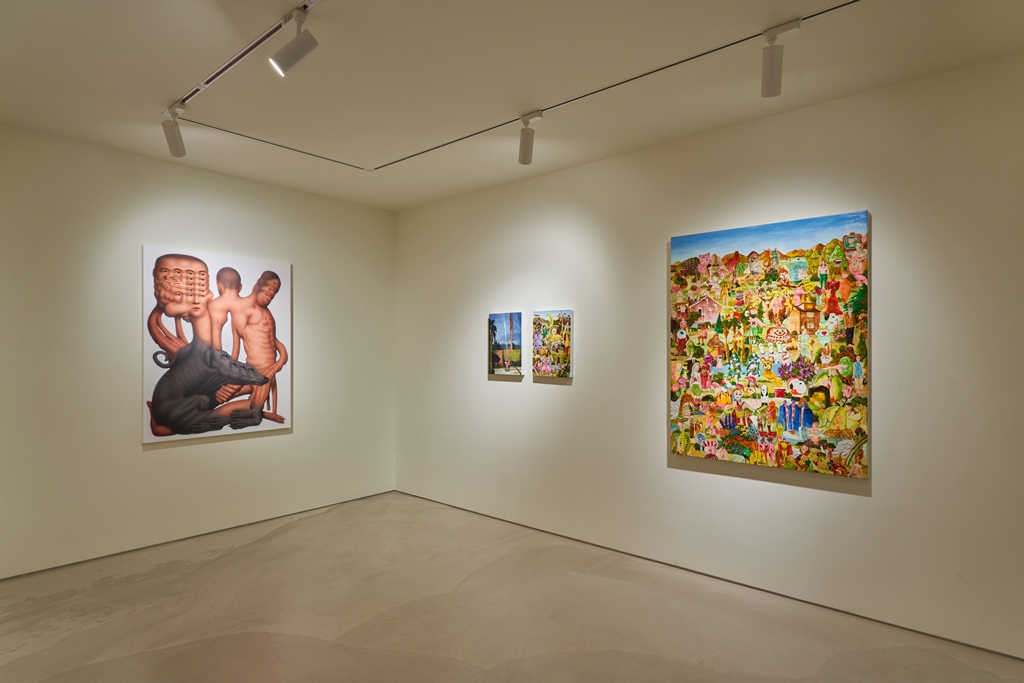
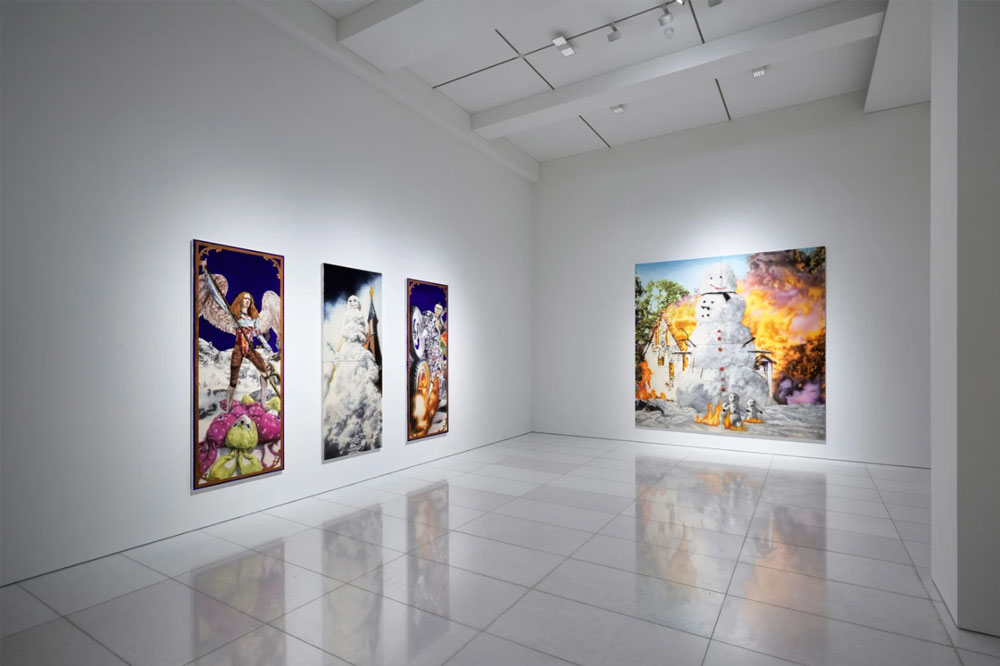
Sangho’s recent works are featured in the group exhibition 《Romantic Irony》, on view from February 1
at ARARIO Gallery Seoul. This is the institution’s inaugural exhibition
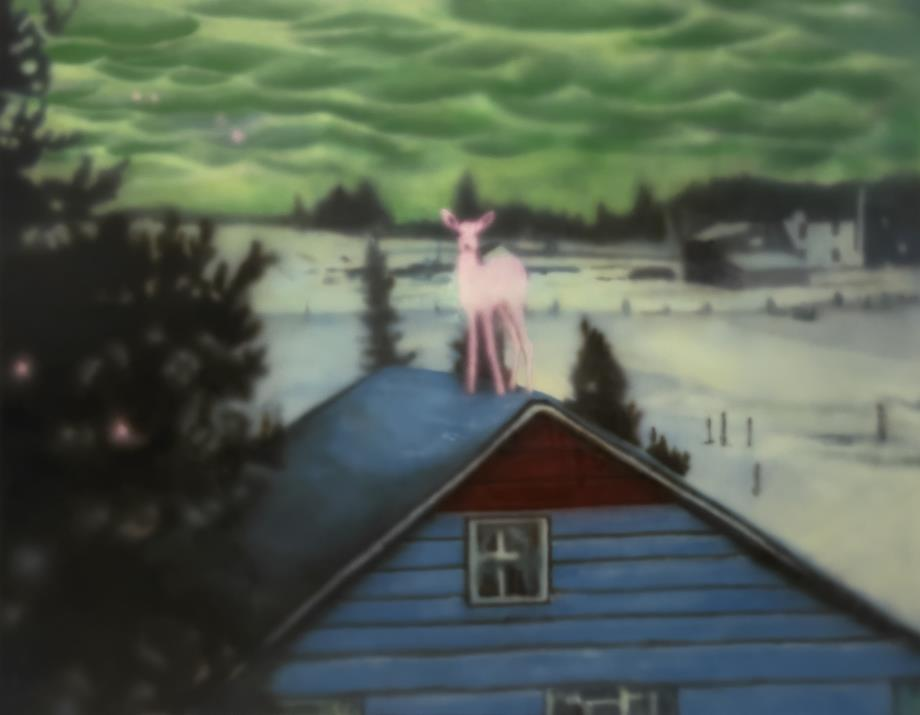
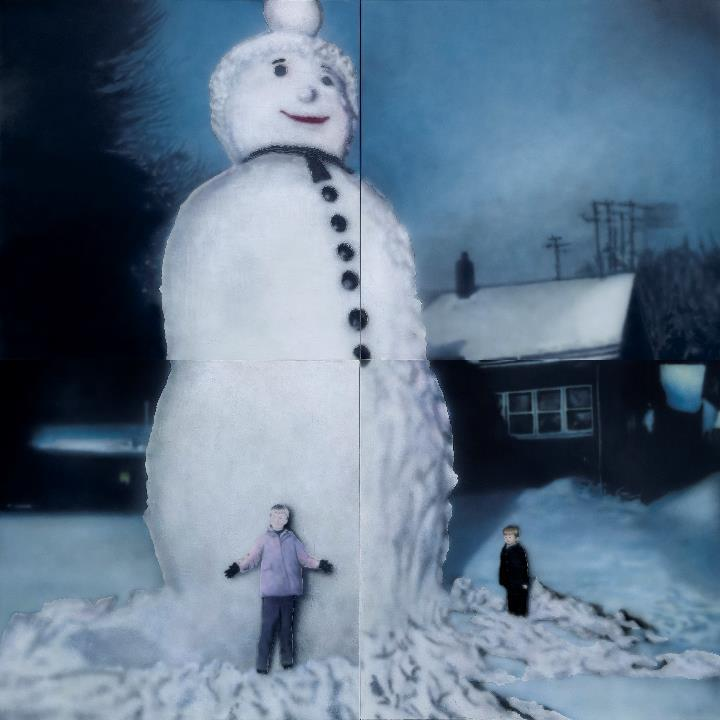
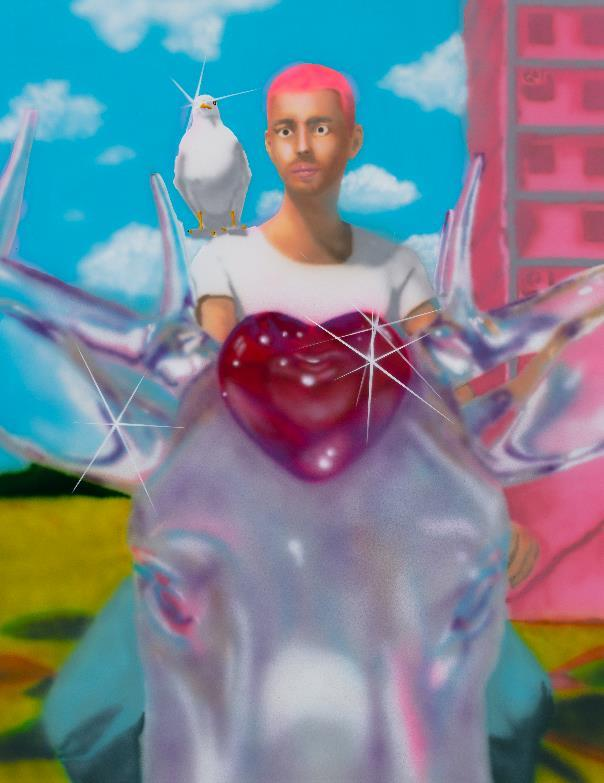
after relocating from Sogyeok-dong to Wonsŏ-dong. The works are all titled The
Great Chapbook 4 – Holy (2023).
The
artist imagined himself as a kind of medium — one who translates the ghosts of
the virtual world into the language of reality. He recalled the miraculous
events that seem to occur at the boundary between these two realms: digital
images generated through technical errors, and the accidental traces formed by
the hand. To give material form to the immaterial is, for Noh, akin to the
yearning of believers pursuing mysterious faith.
The
virtual aspires to become real, while reality sanctifies the virtual. As the digital world grows increasingly tactile, the physical world struggles
to maintain the smooth, flawless surfaces of the virtual. Noh has recently
turned to the airbrush, a tool that sprays pigment rather than applying it
with a brush, allowing him to hide the marks of the hand and achieve a sleek,
digital-like surface. Conversely, he sometimes layers heavy materials such as
special pigments and plaster to emphasize the tactile materiality of painting —
in deliberate contrast to the smoothness of screens.
The
largest work in the exhibition comprises two canvases placed side by side,
their surfaces filled with a profusion of diverse motifs. At the junction
between panels, slight misalignments create visual dissonance. As the artist
sought to expand the scale of his paintings while maintaining the daily rhythm
of his Daily Fiction practice, he divided each canvas into multiple
sections, devoting a single day to each. The result was a natural time lag —
shifts in expression, changes in thought — and Noh intentionally preserved
these differences by refusing to connect the seams seamlessly.
One
painting depicts a house with wide-open eyes, its imagery layered from
overlapping scenes of suburban streets and portrait photographs found online.
In the process of merging unrelated images, Noh’s subjective imagination
intervenes. In the lower-left corner, pink heart-shaped motifs are scattered
like fallen leaves — figures generated by artificial intelligence.
Specifically, they were digital forms produced by inputting a text prompt into
an AI program, which the artist then reproduced by hand. Another work features
a rabbit created in collaboration with AI, reflecting Noh’s personal way of
engaging with questions about authorship in the digital age.
Smoke
rising from a chimney wavers like a dazzling inflatable balloon once common in
street advertisements. Those dancing balloons, once ubiquitous, now feel
strangely nostalgic. Today’s advertisements generate greater profit through
YouTube channels, Instagram feeds, and the folds of online news articles —
leaving little reason for such balloons to dance anymore. Yet, it’s hard to
miss them. The world simply changes, as it always has.
Standing
at the threshold of the virtual-reality era, we seem as hesitant as we are full
of desire — as we have always been when facing the mysterious. Noh Sangho’s
paintings tell us: This is already the world we live in. And perhaps, they
gently whisper — So let us drift through it with all the strength we have.