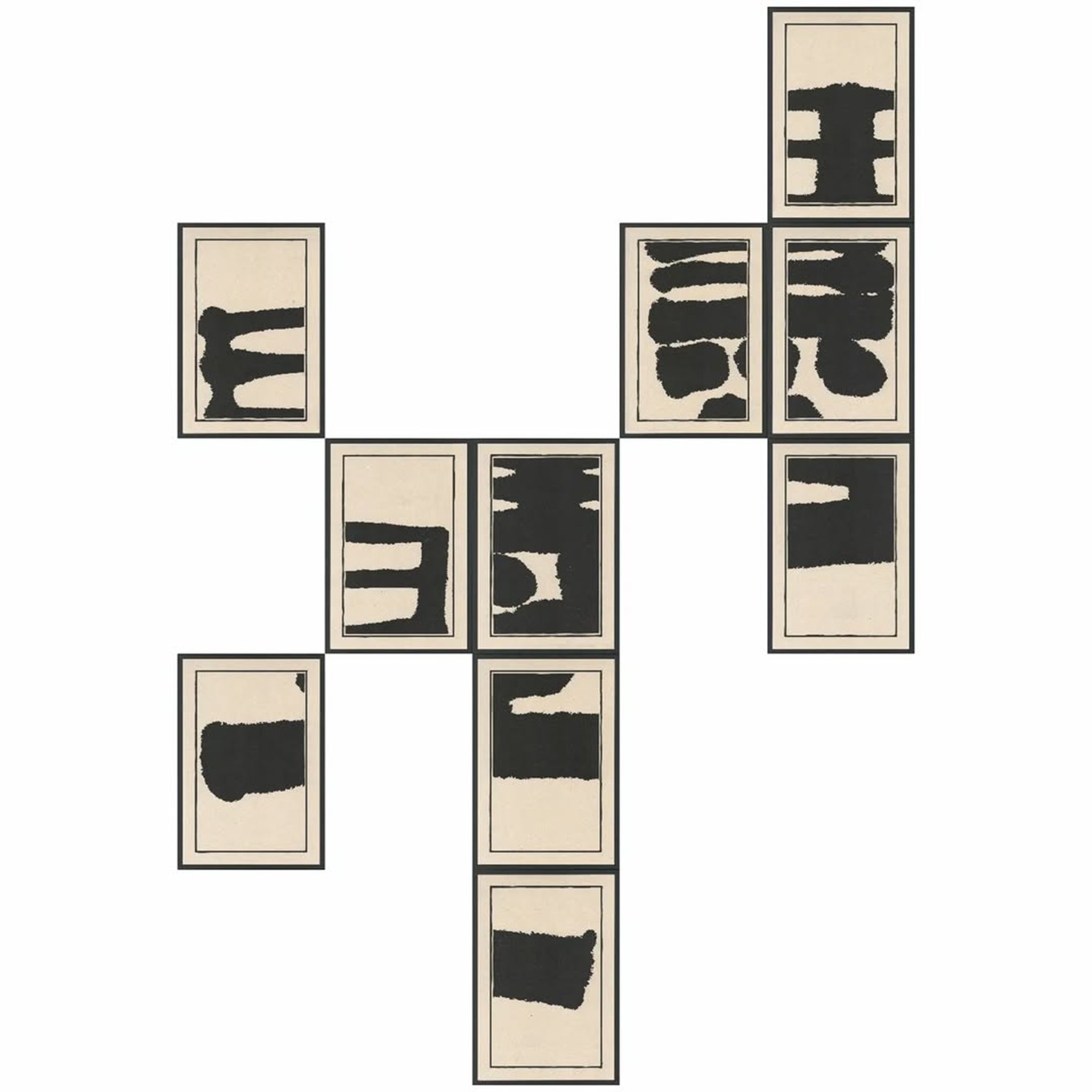
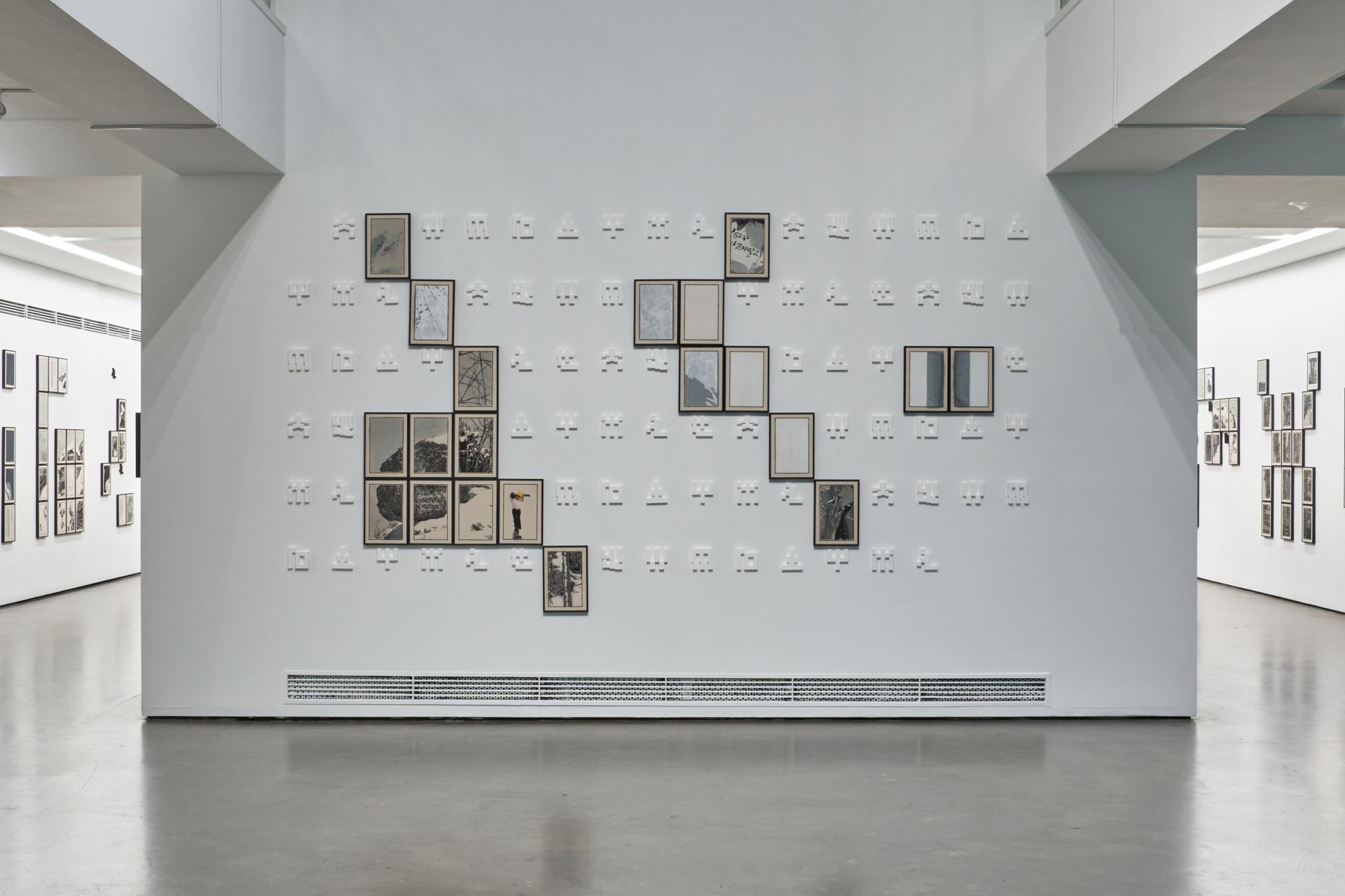
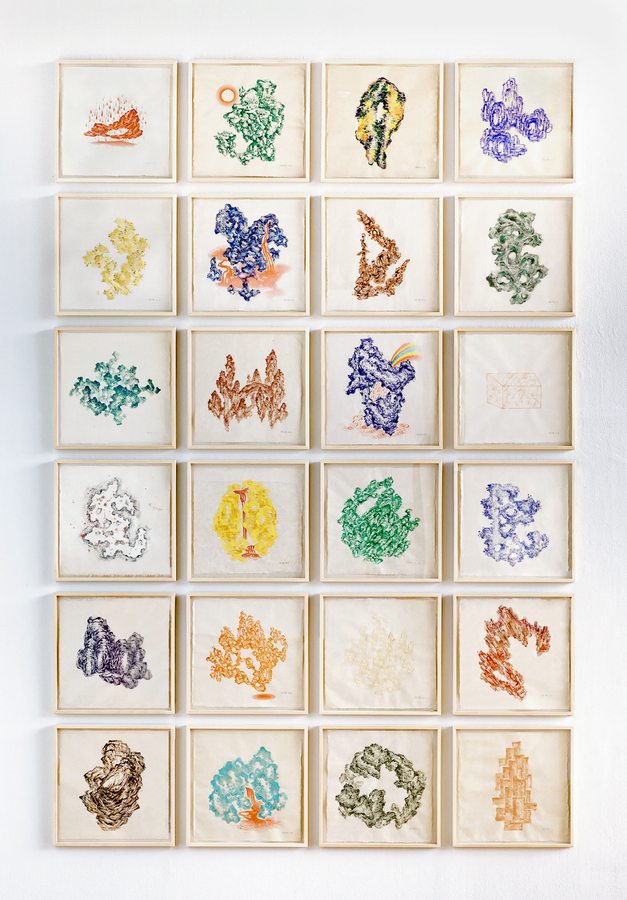
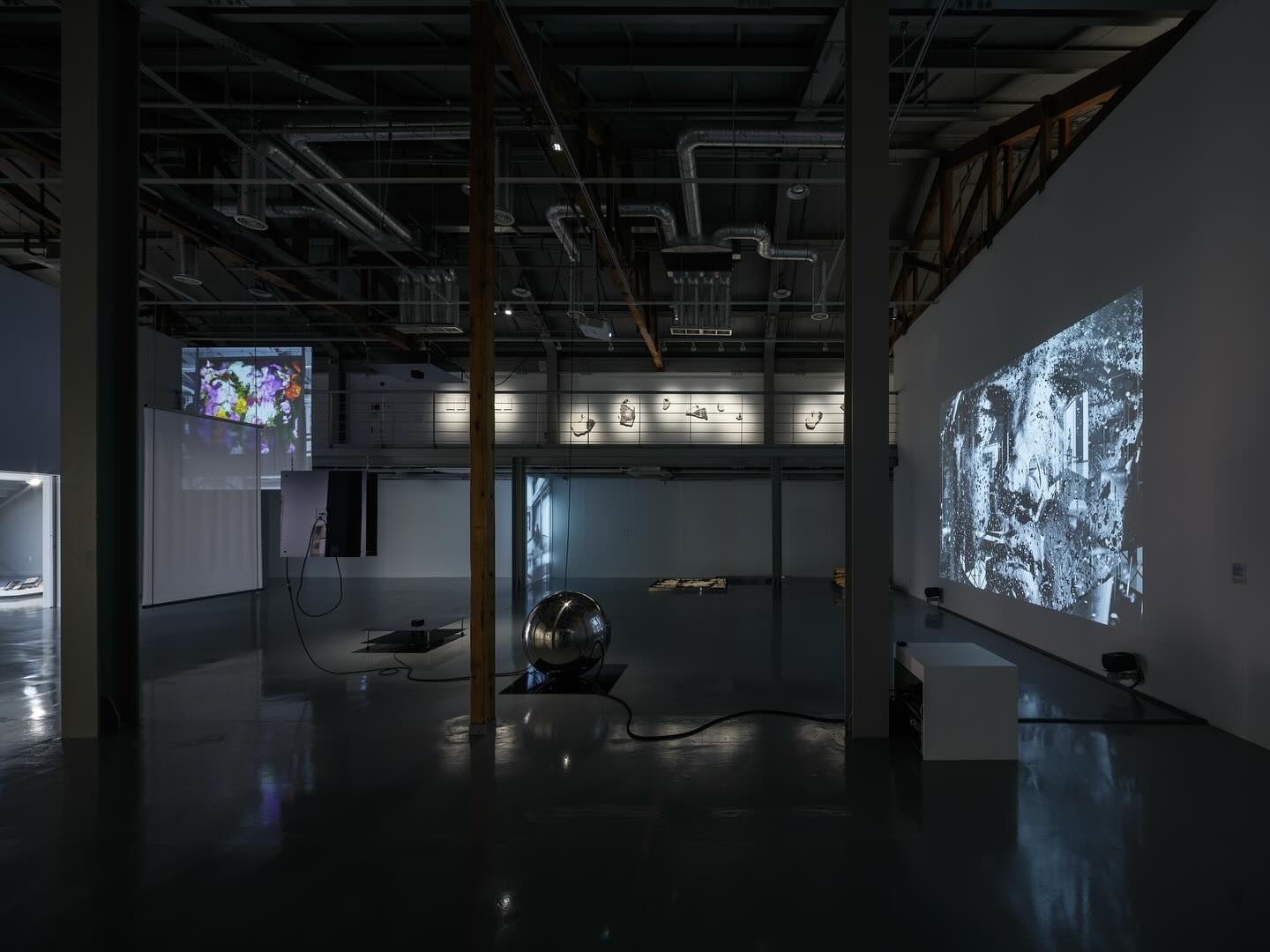
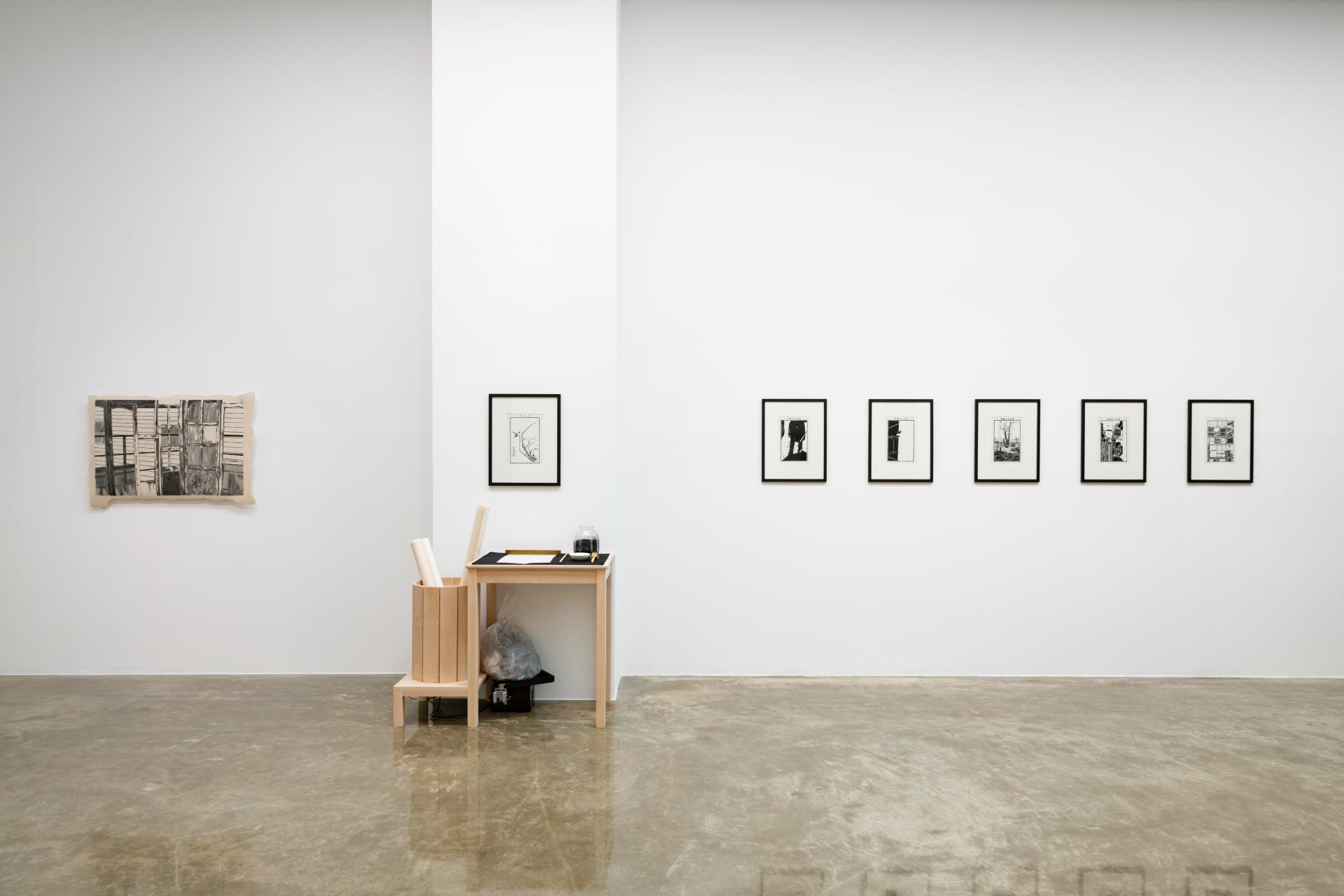
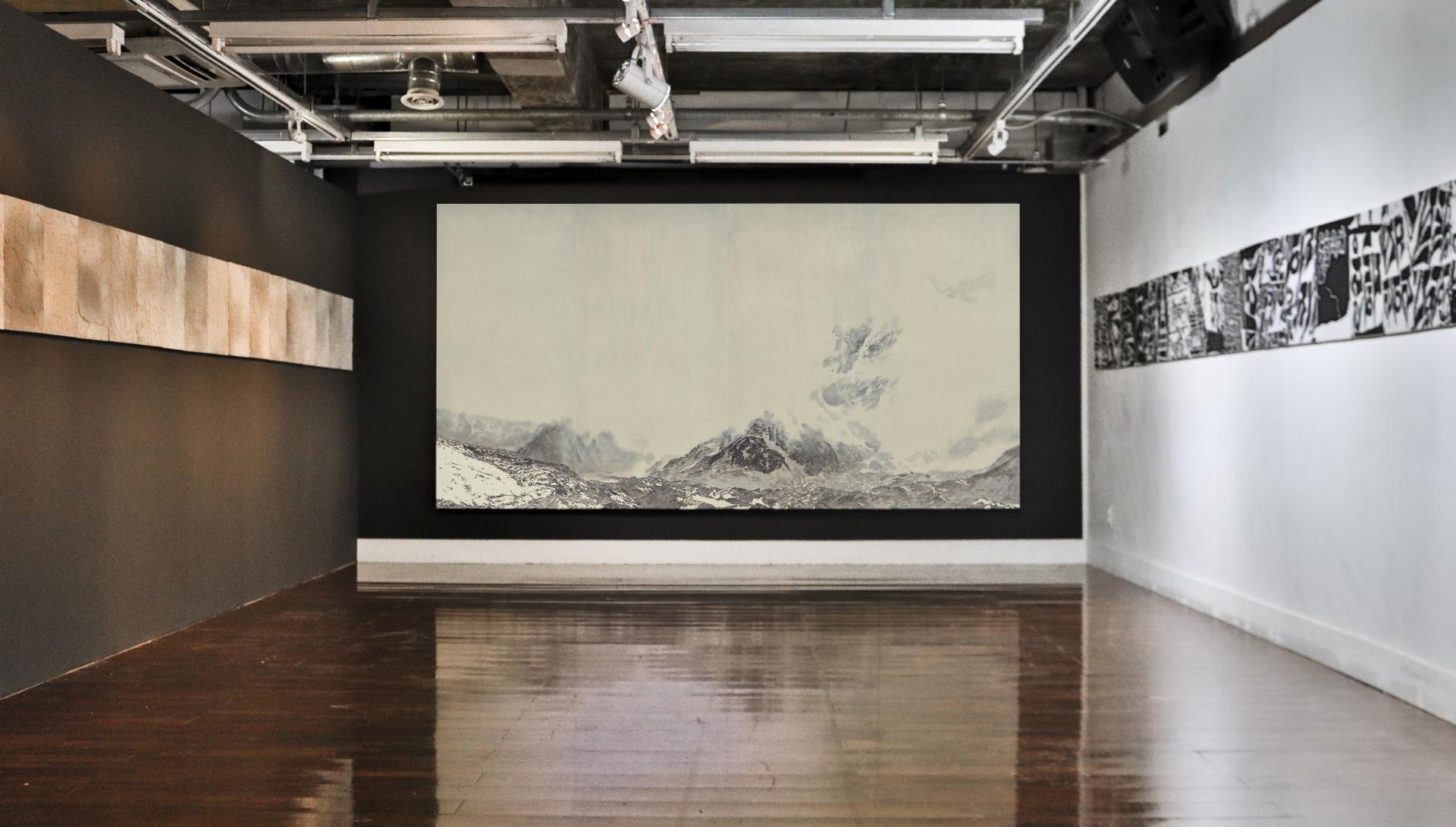
Installation view of 《Penetrating Stone》 (KSD Gallery, 2020) ©Hwang Kyumin

《Penetrating Stone》 highlights Hwang Kyumin’s ongoing painterly inquiry and philosophical reflection on scenes collected from everyday life. The exhibition title derives from the well-known phrase attributed to the late-Joseon scholar-artist Kim Jeong-hui (Chusa): “Ten inkstones were worn through, and a thousand brushes were worn down (磨穿十硏 禿盡千毫).”

Yet here the expression functions ironically—not to exalt diligence, but to mirror the blind adherence to established value systems that the artist seeks to question. In this sense, the Penetrated Inkstone series embodies an allegory of “reproduction,” reflecting Hwang’s autobiographical insight into his own experience within the institutional framework of “Oriental Painting.”

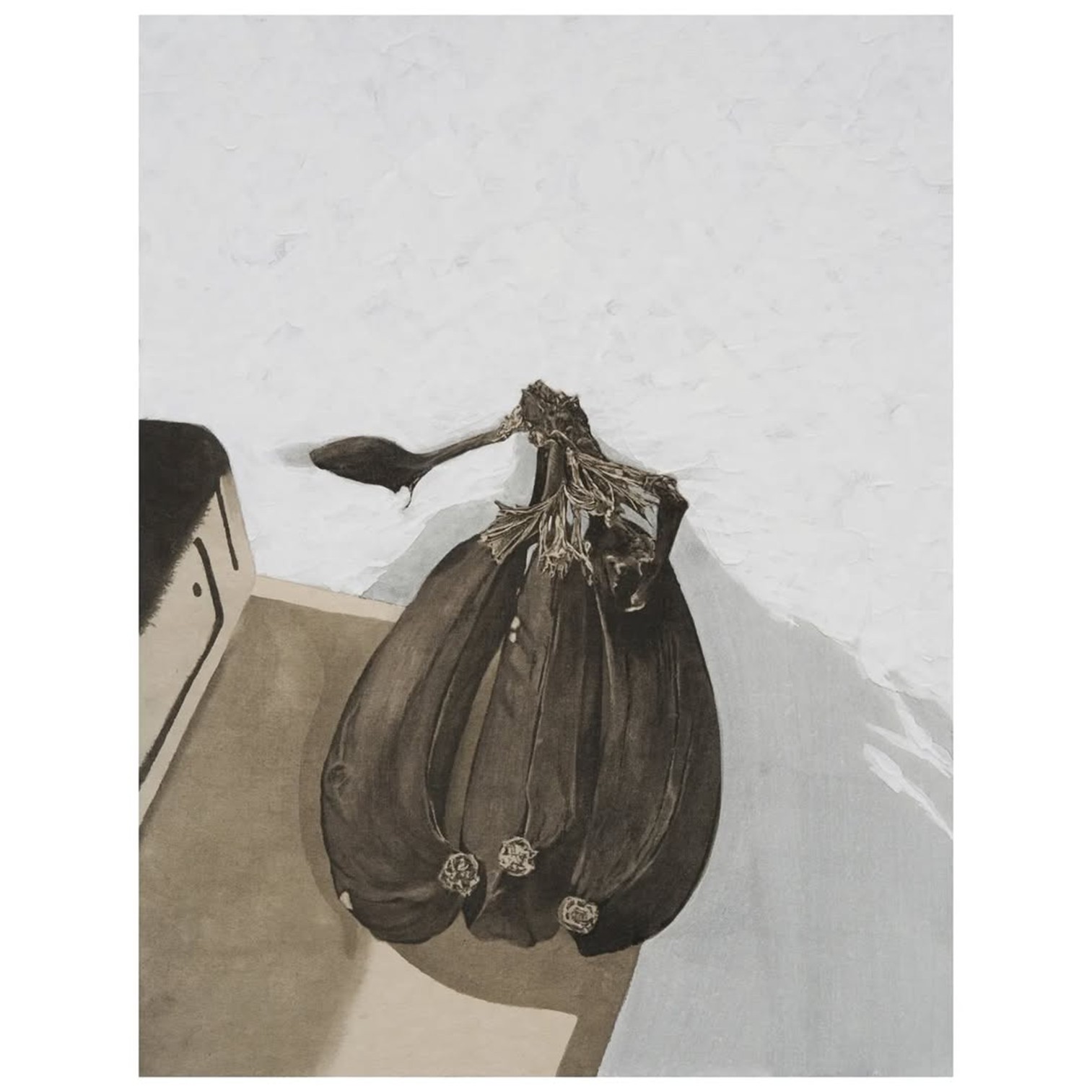
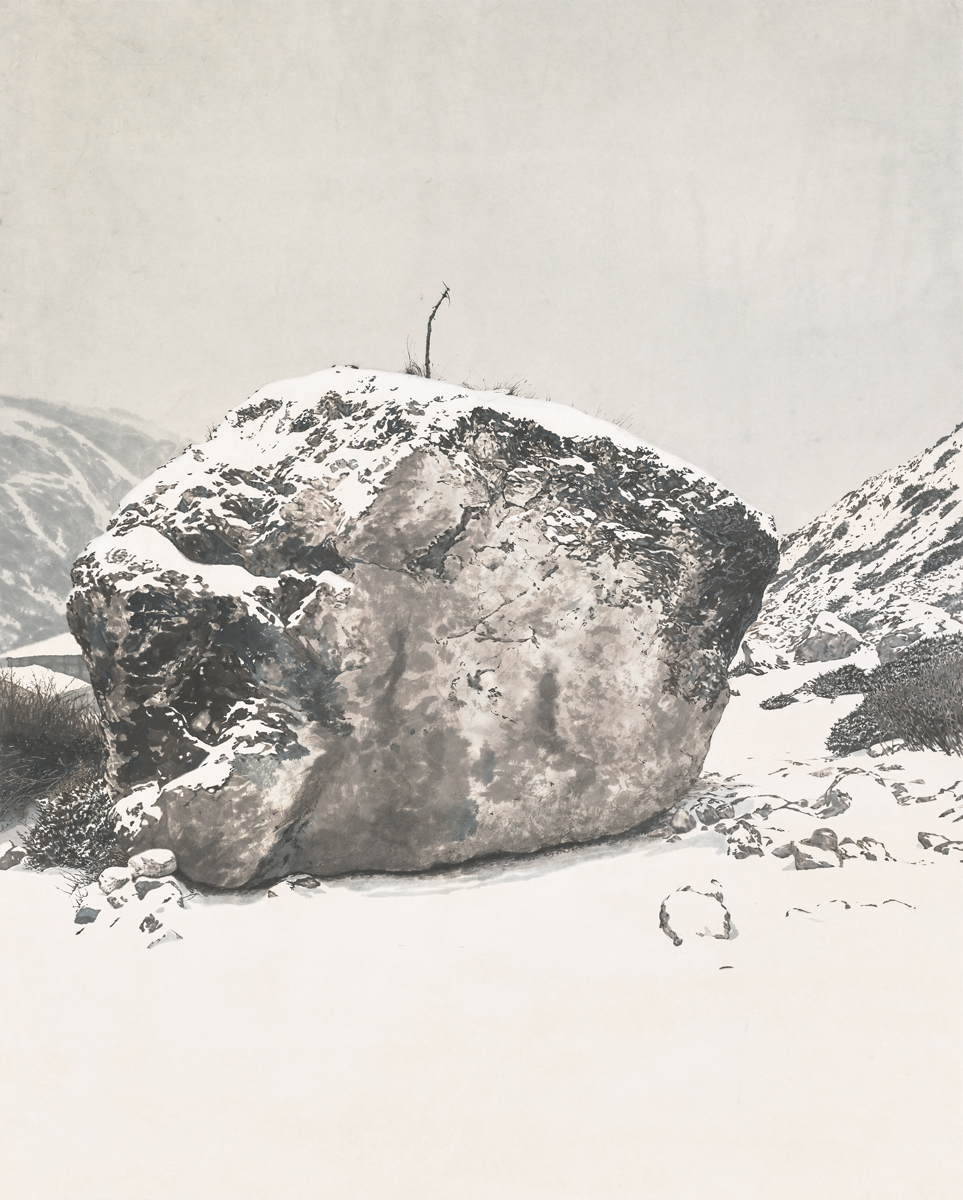
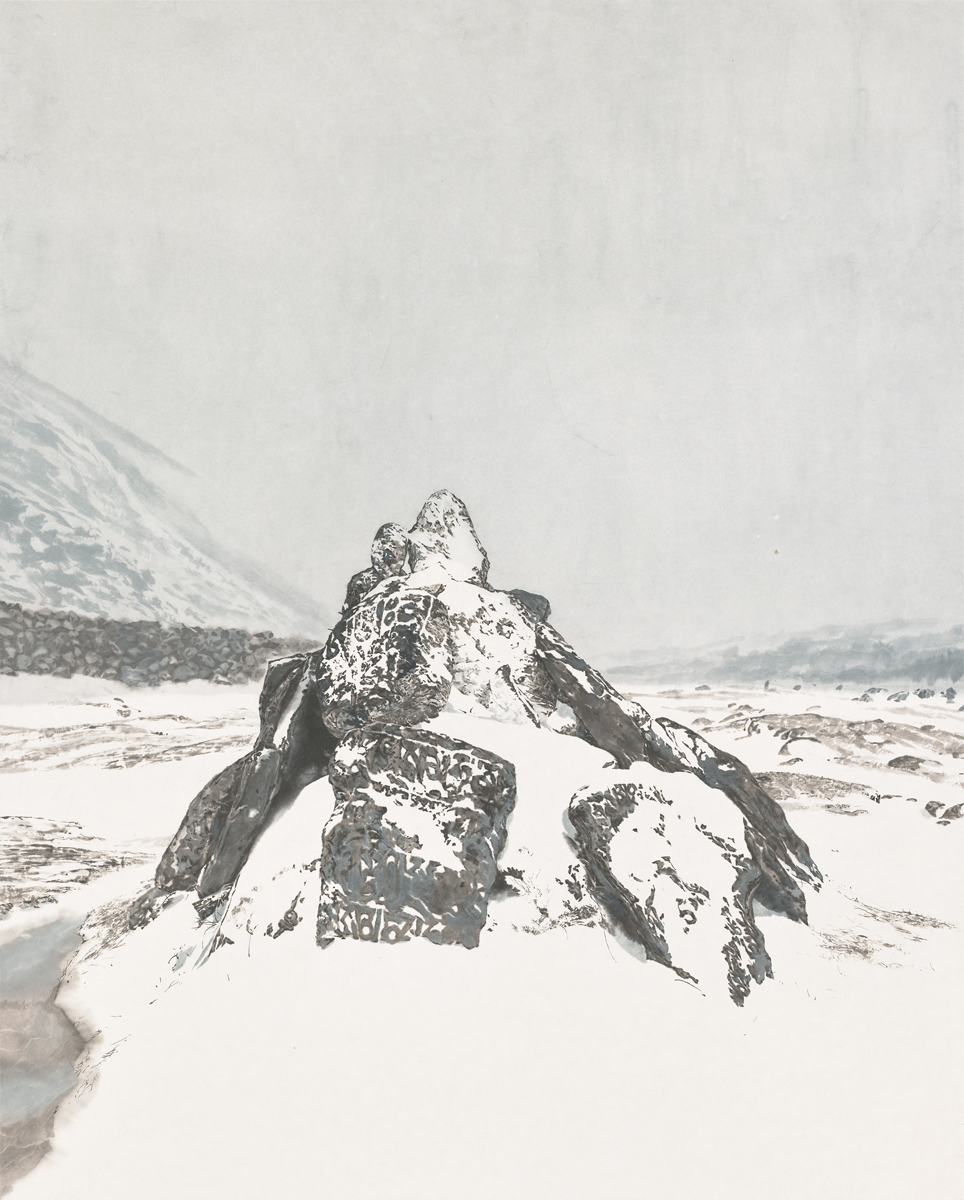
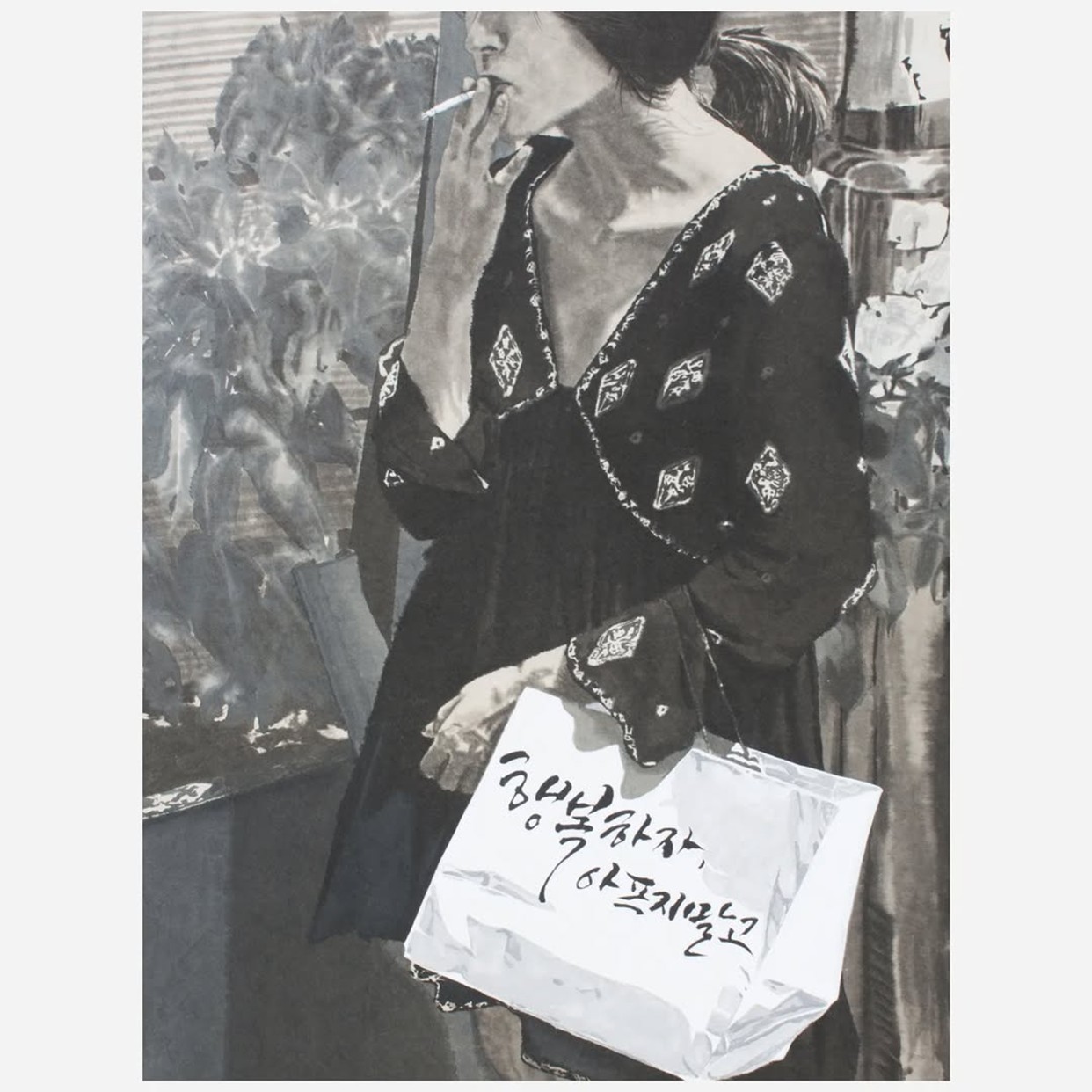
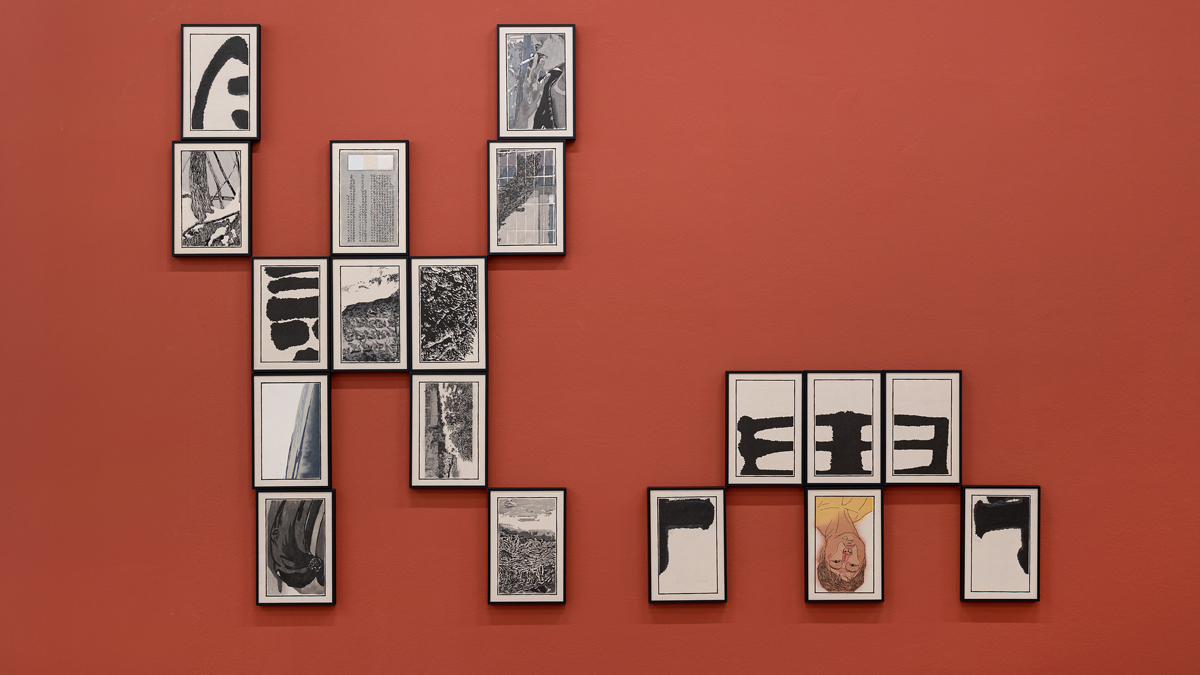
If painting is a record that organizes time, Hwang Kyumin’s ‘Penetrated Inkstone’ series may be divided into three forms of recording. Labeled First Work, Second Work, and Third Work according to a linear sequence, the series unfolds gradually. The First Work represents the period during which the artist transfers photographic images—collected from his own daily life and from those around him—into the medium of ink painting. His selection criteria for these photographs seem to rest on frames that allow imagined narratives or reveal chance formations of shape.

Having long experimented with the breath of the medium, he uses ink to render a wide range of tactile sensations, searching for a balance between the “photographic” and the “painterly.” The portions thickly covered with white pigment flatten into empty planes that function as backgrounds or voids. These, in contrast to the ink-rendered sections, repeatedly evoke both the materiality and the flatness of the painting board, dismantling any descriptive illusion. Thus the temporal flow of the work becomes detached from reality and remains only the time of painting itself.

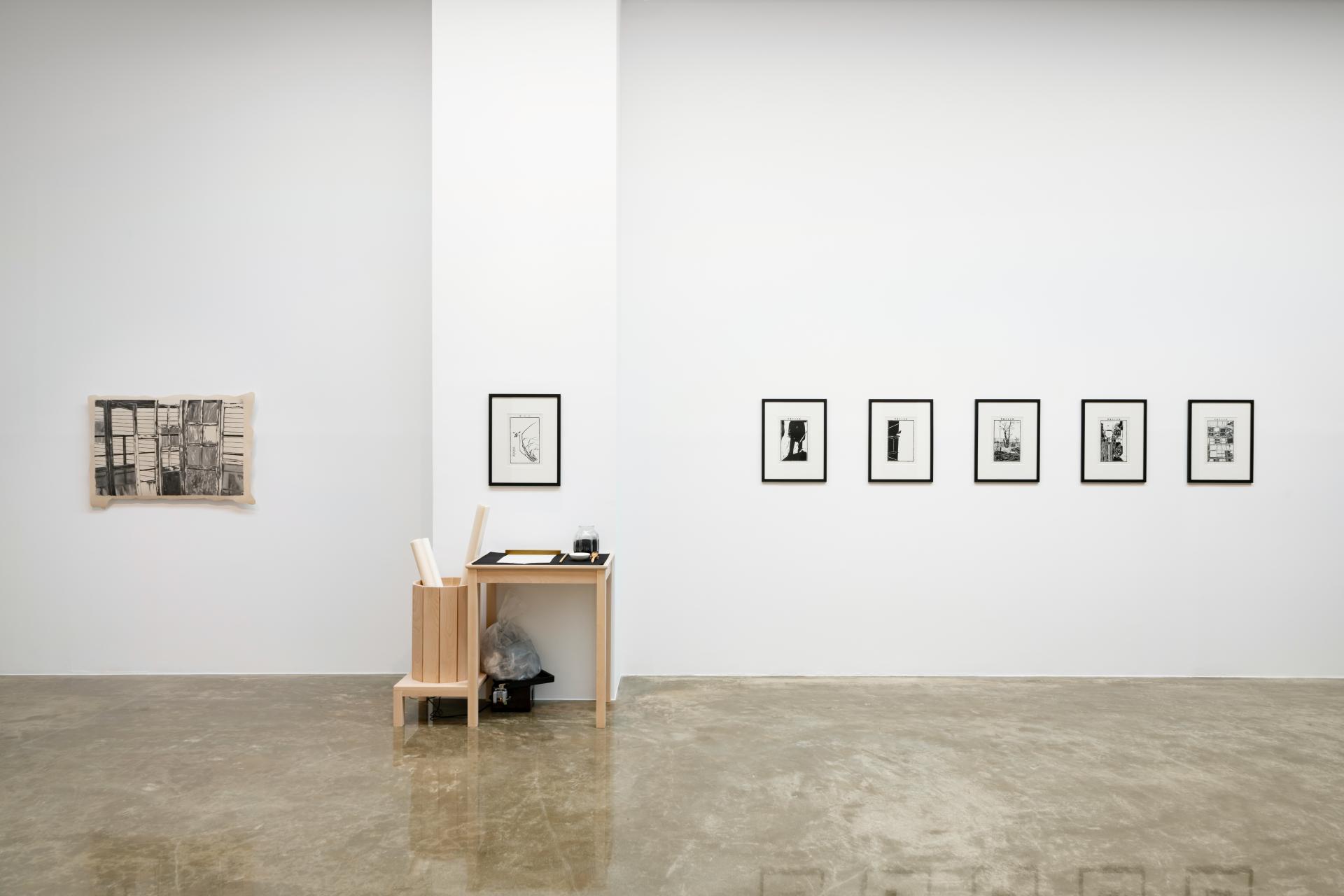
Installation view of 《Penetrating Stone》 (KSD Gallery, 2020) ©Hwang Kyumin

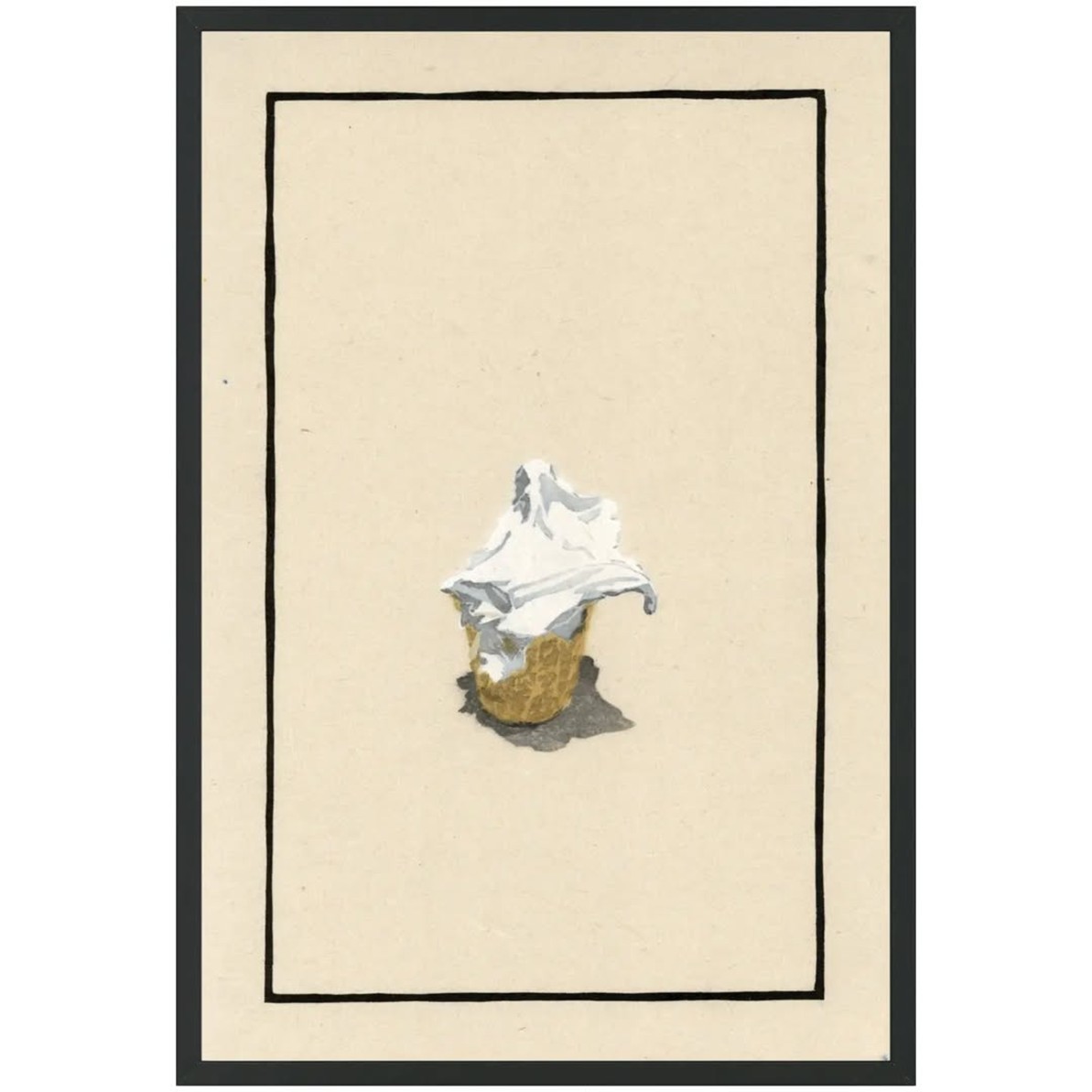
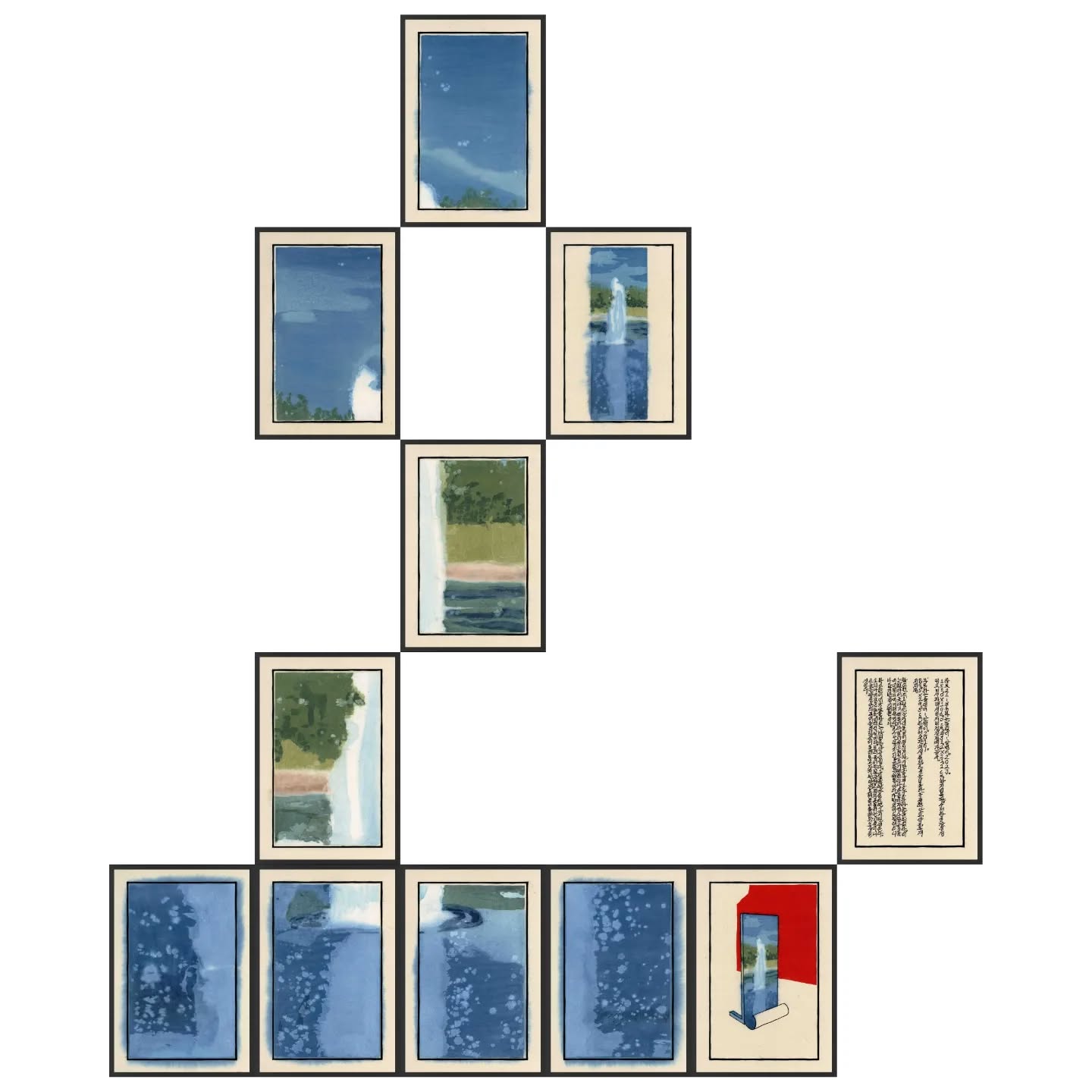
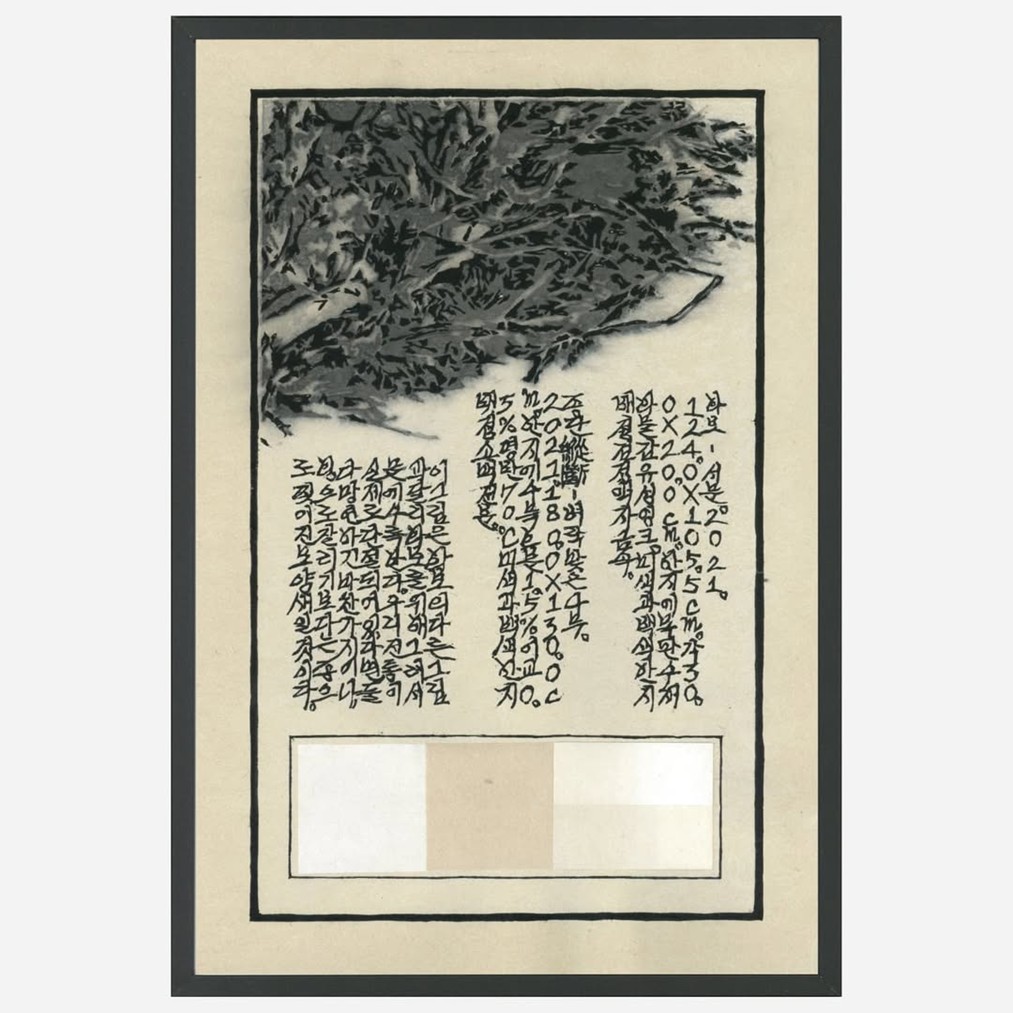
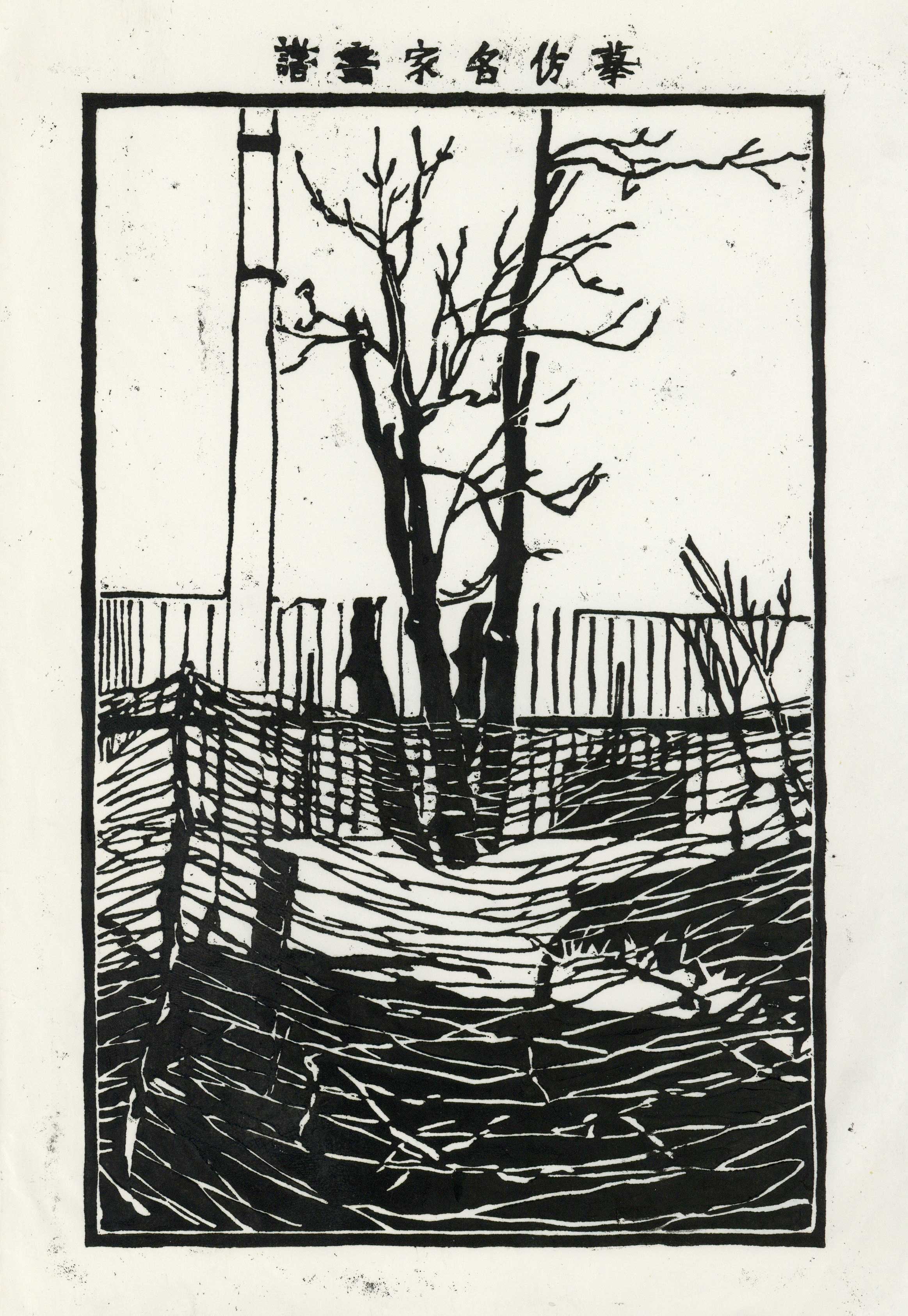
In the Second Work, Hwang Kyumin created a separate series of woodblock prints. Each print is about one-twentieth the size of the First Work and composed with its icon, border, and subtitle arranged concentrically from the center outward, recalling the format of the Manual of the Mustard Seed Garden Painting Treatise (芥子園畵譜) that he referenced. By borrowing the canonical form of this traditional painting manual—often regarded as a textbook of “Oriental Painting”—the Second Work functions as a parody that mythologizes the First Work and its author.

By appropriating the style of a painting manual published some 400 years earlier, the artist widens the temporal gap between the contemporary and the historical, inserting a fictive narrative. The act of elevating his own painting to the status of a classic continues into the Third Work. Just as the Second Work inherited the format of the old manuals, the continuum formed by the First through Third Works reflects upon the long history of imitation in traditional painting. Rather than affirming the conservative formalism embedded in academic pedagogy, Hwang’s approach more closely resembles a mirroring strategy that exposes the emphasis on stylistic conformity within such systems.

Regardless of whether the resulting image is authentic or not, the Second and Third Works clearly present the potential for transformation inherent in the First Work. The ‘Penetrated Inkstone’ series thus operates as a “pictorial continuum” linked by identical genetic information yet separated by time—multiple mediums overlapping under a single authorship. What does it mean when gradual variations occur among these related entities? And in what direction do these subtle shifts unfold?

Extending from those questions, one encounters a peculiar machine devised by the artist. This device grinds solidified ink—dried with glue—into powder upon a perforated iron plate. In place of the human act of grinding ink on a stone, the machine performs the task mechanically. The resulting ink particles differ from conventionally ground ink not only in scale but also in conceptual stance. The removal of manual effort signals a deliberate distance from the spiritual discipline that such traditional preparations imply.

As the artist’s note states, “The machine does not respond to changes occurring outside its operating system.” The mechanical process produces matter alone, omitting the mental dimension once inherent in the ritual of preparation. Using this powdered ink as pigment in the Third Work maintains the conceptual thread running through the series.

Unlike ‘The Manual of the Mustard Seed Garden’, which presupposed the style of older painting manuals as its original model and replicated them verbatim, Hwang Kyumin’s Second Work functions as another “original” directly connected to the artist’s own lived experience—the same author, but a different event. Whereas the First Work was a “copy” in the sense of re-presenting an existing image through painting, the Second Work introduces deliberate manipulations during the replication process.

The resulting images, which closely resemble reality, nonetheless reveal that memory continues to mediate the artist’s relationship with the image. Once regarded merely as a copy, the Second Work now, through the influx of memory, becomes more real than the First or even the original scene, attaining its own independent status as a distinct entity. The artist’s decision to limit his references in the Second Work solely to the Manual of the Mustard Seed Garden and to his previous work proves, in practice, self-contradictory.

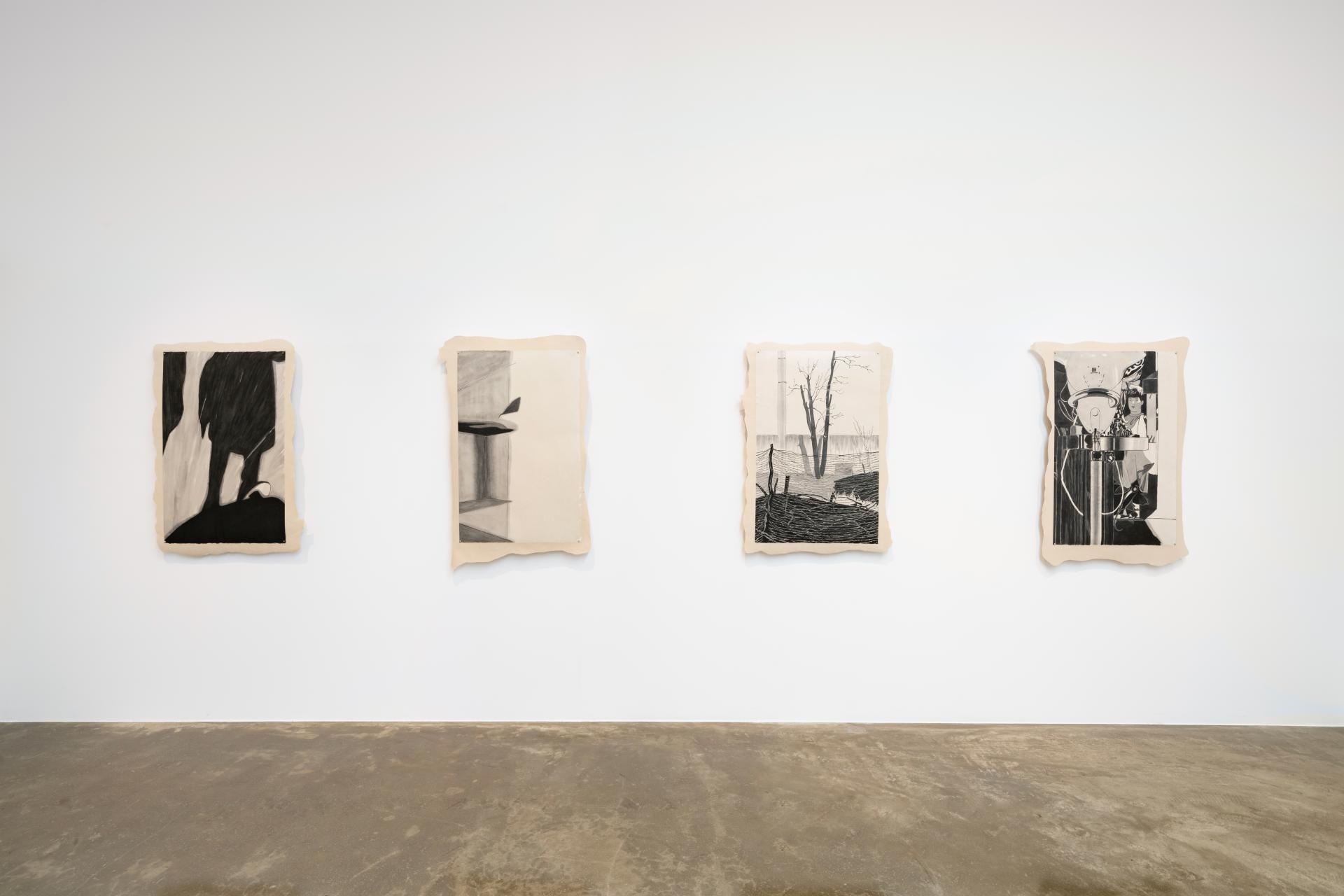
In the Third Work, the premise of “reproducing the First Work solely by referencing the Second Work” was logically consistent but conceptually paradoxical. For Hwang, this meant reenacting the First Work while consciously disregarding its direct experience—an act of replication through partial amnesia. He employed clumsier and more awkward brushstrokes, utilized the ink powder collected through his machine to induce rough and uneven washes, and carelessly trimmed the paper’s edges with a knife to simulate indifference. Yet, fragments of information lost in the Second Work were unexpectedly restored in this next iteration.

Just as the Second Work transformed aspects of the First into its own monochromatic system, the Third Work absorbed features of its predecessor. Could their return—“restored by willful negligence”—have been prevented? The evolution of media had already widened the fissures through which such returns occur. By now, the boundary between original and reproduction had dissolved. Each component of the Penetrated Inkstone series exists as a simulacrum, a self-contained world connected to, yet independent from, the real.

Through a deliberate departure from inherited genealogies, Hwang Kyumin lightens the burdens of tradition and creates space for something new to inhabit. Even if art, in its distant origin and eventual future, loops back into familiar recursions, what emerges within that loop is a renewed awareness—one that reconsiders the weight, labor, and persistence of making itself.


Baik Philkyun (Independent Curator)

References