The
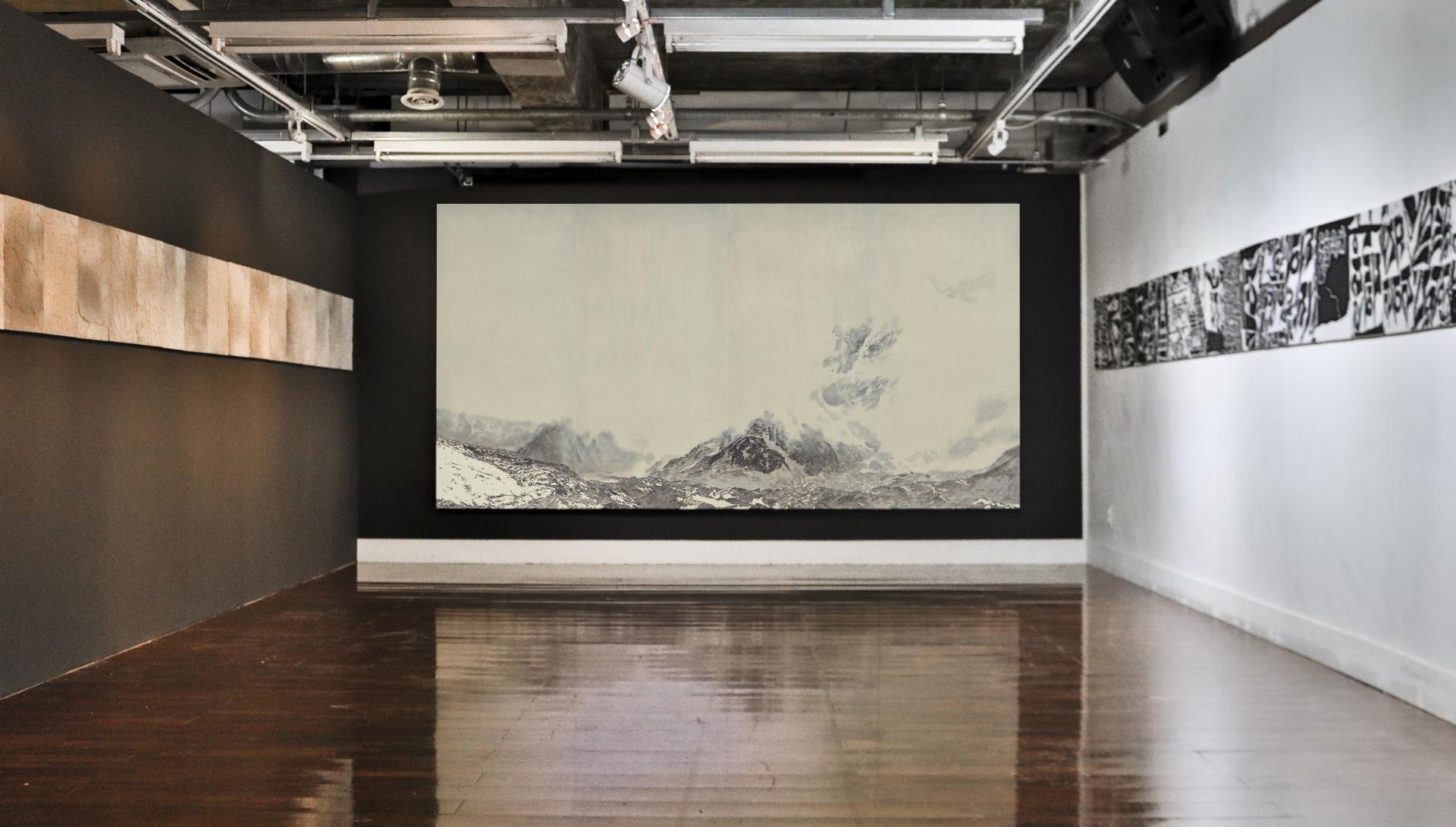
sound of ice peaks rustling over the apex of the Himalayas is called the voice
of God. Nobody knows what this voice wishes to convey, although it never ceases
to hit the eardrums of the determined climbers. The artist focuses on a short
mantra, established as a magical language under the religious capture of such
meaningless utterance. -
“The Power of Resonance Streaming out from the Language of Stones: From
Letter-abstract to Painting-abstract (written by Kim Nam-soo)
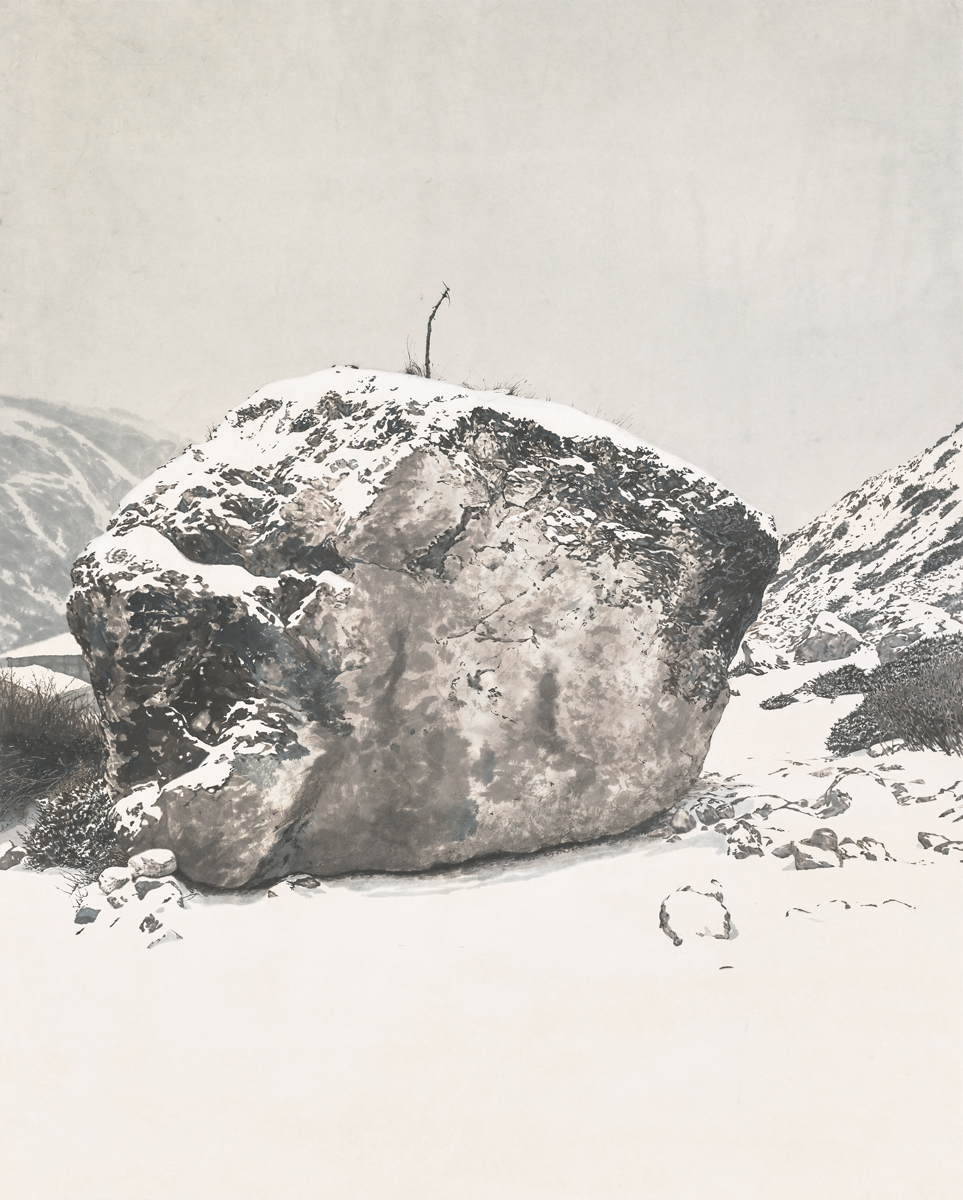
#1. “A ‘world of stone’ exists in the great nature, and animals already know
the ‘human’ in the abundant world. Now, the time has come for humans to
realize!”
Could there be an artist
or a work who receives inspiration in a spark of an instance and acts right
away? No. Not to take in, but hitherto readily in-taken, as if a propositional
clue exists? While reviewing Hwang Kyu-min’s portfolio (hereinafter referred to
as Hwang), I came up with an erratic imaginary that the key to unraveling the
artist’s (or the work’s) intention was “already” endowed in me. An antler of a
white deer struck like lightning, sprouted right on the forehead, and thereupon
exploded like a flash. Sure enough, in August 2019, his first solo show’s theme
(as well as the title) was 《Muh Emdap Inam Mo》.
In the
given foreword, “The Power of Resonance Streaming out from the Language of
Stones: From Letter-abstract to Painting-abstract (돌의 언어에서 흘러나오는 공명의 파워: 문자-추상에서 그림-추상까지),” choreography critic Kim Nam-soo has announced Hwang’s
commencement as a “self-recognizing great nature” by discovering Yoon
Byeong-yeol’s theorization of the “speaking stone” implicated in the paintings
depicting the Himalayan “stones.” But before, a remark is made on a quote from
the German philosopher Heinrich Rombach: “From the stone, man learns the
immutable (das Unveränderliche).
The stone over-puts (Über-Stellen) its
immutability in the place that transcends the mutable.”3) Another remark that
requires our attention on top of this is that “muh emdap inam mo” is an
inversion of the Tibetan Buddhist mantra “om maṇi padmé hūṃ (ॐ मणि पद्मे हूँ)” in Sanskrit. This mantra is a resonance of every
respective universe, creating a silent swirl around and throughout mirrors and
wells. What an exhibition–to whirl the paintings, space, and resonances within
those paintings altogether!
In April 2020, after less than a year from 《Muh Emdap Inam Mo》, Hwang held his second solo show under the name of 《Penetrating Stone》. However, the presented
thematic—a stone that seems to fathom the mind—was not that of the Himalayan
stones anymore. Surprisingly, what he had picked up instead was a “black
inkstone.” This thread of the inkstone is told to be conceived from Ch’usa Kim
Jeong-hui’s (추사 김정희 秋史 金正喜) saying–“칠십년 마천십연 독진천호 (七十年 磨穿十硏 禿盡千毫),”4) which means “during
seventy years, ten ink stones have worn out, and a thousand brushes have turned
stubby.”
If the stones in 《Muh Emdap Inam Mo》 were full of a presentiment on ripping open the “rear sky (뒷하늘
後天)” of the “mandate of heaven (바탈 性: 天命)” by a unified pulsation of sound-resonance; the stones in 《Penetrating Stone》 were a mere object, an
outdated institutional symbol of “동양화 oriental
painting”* waiting for its anachronic body to be deconstructed. The visceral
voice (육성 肉聲) of the stone’s mythological cosmogony
disintegrated like an illusion and left only a “penetrated stone” in the
absence of the utterance. This year’s show in the OCI museum stands conspicuous
on the continuum of these exhausted ink stones. I was speechless and numbed
since the stones refused to be connected. Impoverished eyes often blinked;
undone imaginaries whimpered in a subtle rhythm.
#2. “What the exhibition speaks of as a device of reverberating
machinery–leaking the mantra of an inverted mirror image–is that itself can
become a contemporary phenomenon of art that flows regardless of the finitude
of modernity.”5)
We shall let go of the 《Penetrating Stone》 from two years ago. Hwang and I had many meetings and shared our
unresolved thoughts. Rather than delving into his reason for constructing 《Hwang’s Manual of Eternal Classics》, the
stones of 2019 and 2020 arose in need of a rearrangement. One stone climbed on
top of another. Another rolled next to the other, subsequently walking away
from each other–ready to be cracked open. On one day of studio visits came a
moment of the stones breaking down, resembling the eruptive moment of my former
erratic imaginary.
After a while, the imploded space mutated into a complete
void. And at last, residues of implosion disintegrated into insignificant
molecules on the way back home. Rombach’s immutable stone shattered away. Not
to mention, the sacred stone was nowhere to be found. Because it was Hwang’s
fascination with the stone that fed the stems of associated critical texts, the
root of this text had to linger in hesitance on the very surface of the soil.
Moreover, since a work of institutional analysis-critique of oriental
painting’s pedagogy stood in the stone’s absence, what critique could perform
was only to follow the work’s embedded criticality. A mantra, an image, and a
letter commingled in the place of dispersed stones: a return to the
reverberating sound-resonance. Once again, we shall murmur om maṇi padmé hūṃ.
Yet still, both Hwang and I were lost in our way amid a foggy labyrinth.
Anonymous cracklings of unanswered questions–why two stones permeate each
other, inducing a break (simile); what kind of exchange in intentions takes
place to point out and fracture (metonymy)–bloomed by the concealed desire of
the antler (metaphor) that has grown during the past two years. Above all, the
work’s essential nature of “being” a critique was obstructing the path behind
an illusion presented by the paintings’ manifested materiality.
Nonetheless, we
should stay alert to recognize that Hwang is not only “exhibiting” his works in
the present show but also curating himself as a “curatorial event.” For this
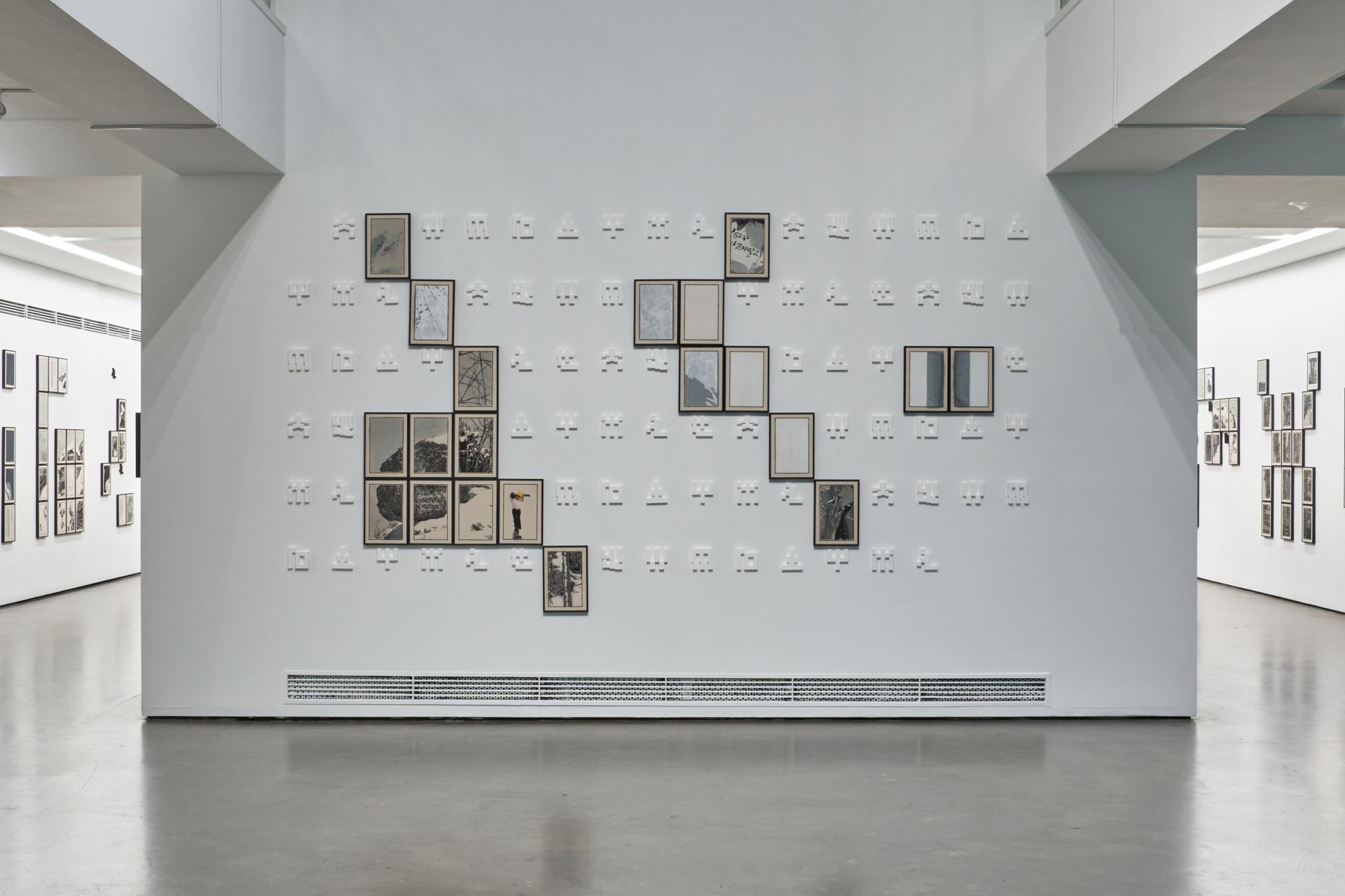
purpose, he has put exorbitant effort into set-production regarding the
intricate relationship between the paintings and the letters. He has
deconstructed every single painting–including the ones of 2019 and 2020–to meet
the ends of this “curated event.” Now here appears a key to unraveling this
show. A temple, it is, where 《Hwang’s Manual of Eternal Classics》 unfolds
itself.
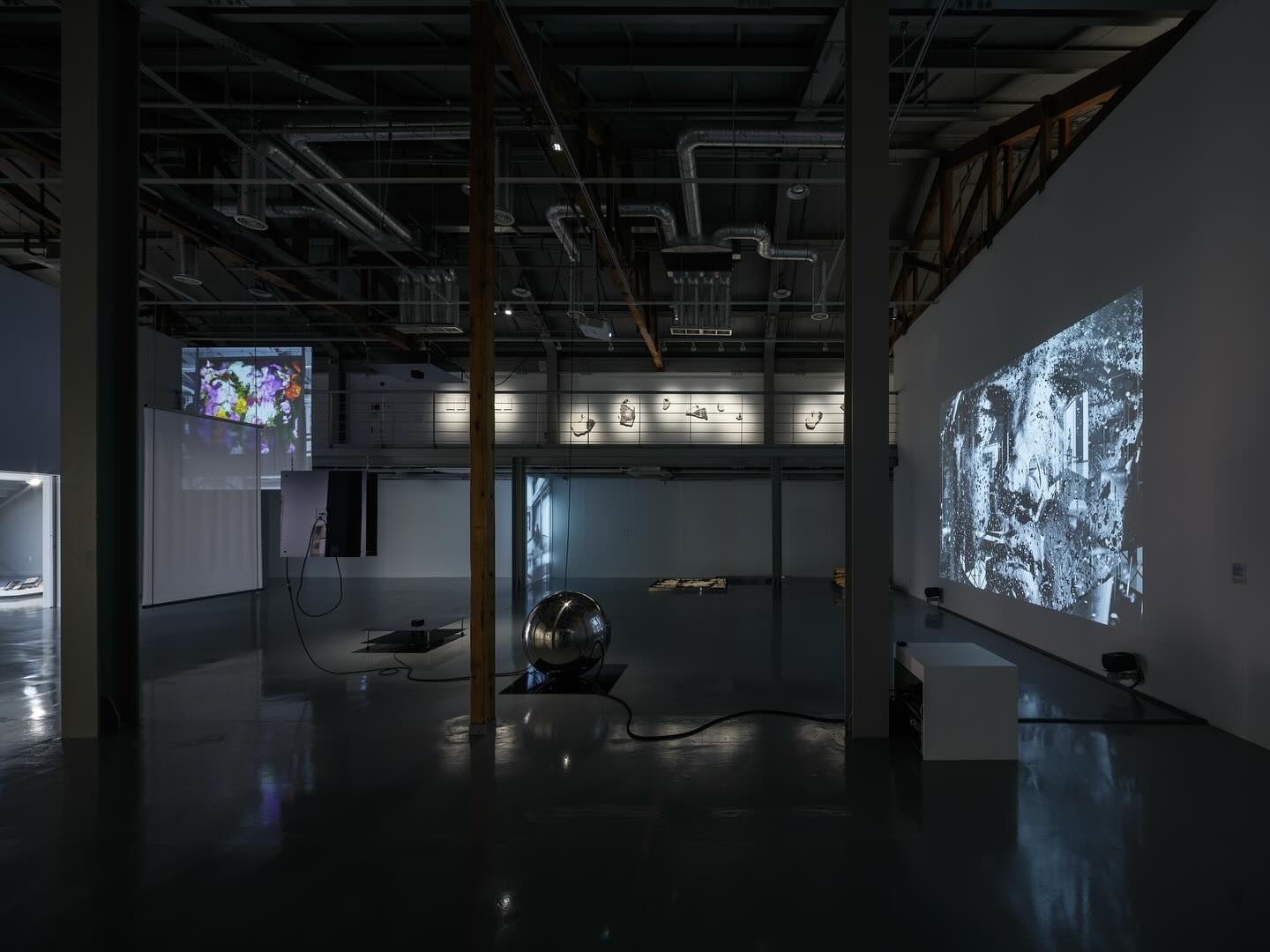
If the set-up of Seoul Art Space Seogyo (Muh Emdap Inam Mo) was analogous to a
passive experience–to take in the mantra, paintings, and letters as they
are–the present show, i.e., a “curated event,” arises “as” an experience–a
happening concomitant to the active reconstruction and restoration of the
viewers. It is a duration for the viewers to make their respective mantra/a
sacred book by intervening-reorganizing the paintings and letters. Hence, by
all means, 《Hwang’s Manual of Eternal Classics》 is an incident that makes the momentum of epiphany possible
throughout the duration.
Nevertheless, the starting point of this determination
still seems to lie in Seogyo. Not for the actual space of Seogyo, but because
he has summoned the past theme of 2019 once again. Yes, the mirror reflection
of “muh emdap inam mo” is looping/re-reflecting itself on the surface of a
well. While constructing this temple, Hwang asked tenacious questions about the
structures of paintings and letters since they shall demand a reconstruction
from the visitors; yet, the paintings and letters refuse a reduction to a
formal display.
If then, every painting and letter should serve as an index of
a fishing net of an imaginary. Every respective index must become a venerated
mantra and its self-sacred book. Hence, what we encounter here is indeed a
faithful event of a particular device–the reverberating machinery that bleeds a
mantra out.
#3. “It’s true that everything has its Personal Legend, but one day that
Personal Legend will be realized.”
A stone in an egg. It is the world, the holy spirits, and the universe’s
breath. Like Abraxas has flown out of the egg, a stone can only open a new
world through an autonomous breakthrough. For a long time, the persistent
inquiry of the alchemists was of a stone—the lapis philosophorum (the
philosopher’s stone). This stone redeems, becomes gold, enlightens, empties the
mind, and nurtures the nucleus. Hence, the alchemists’ destiny was to
scrutinize–meaning that the days grew deep in fostering the intelligence of
knowledge.
The west end of Eurasia turned obsessive over creating this
“non-existing stone,” while the east end practiced transforming an “existing
stone” into a sacred one by engraving texts on its surface. However, although
alchemy may produce gold, that golden stone is not the lapis philosophorum.
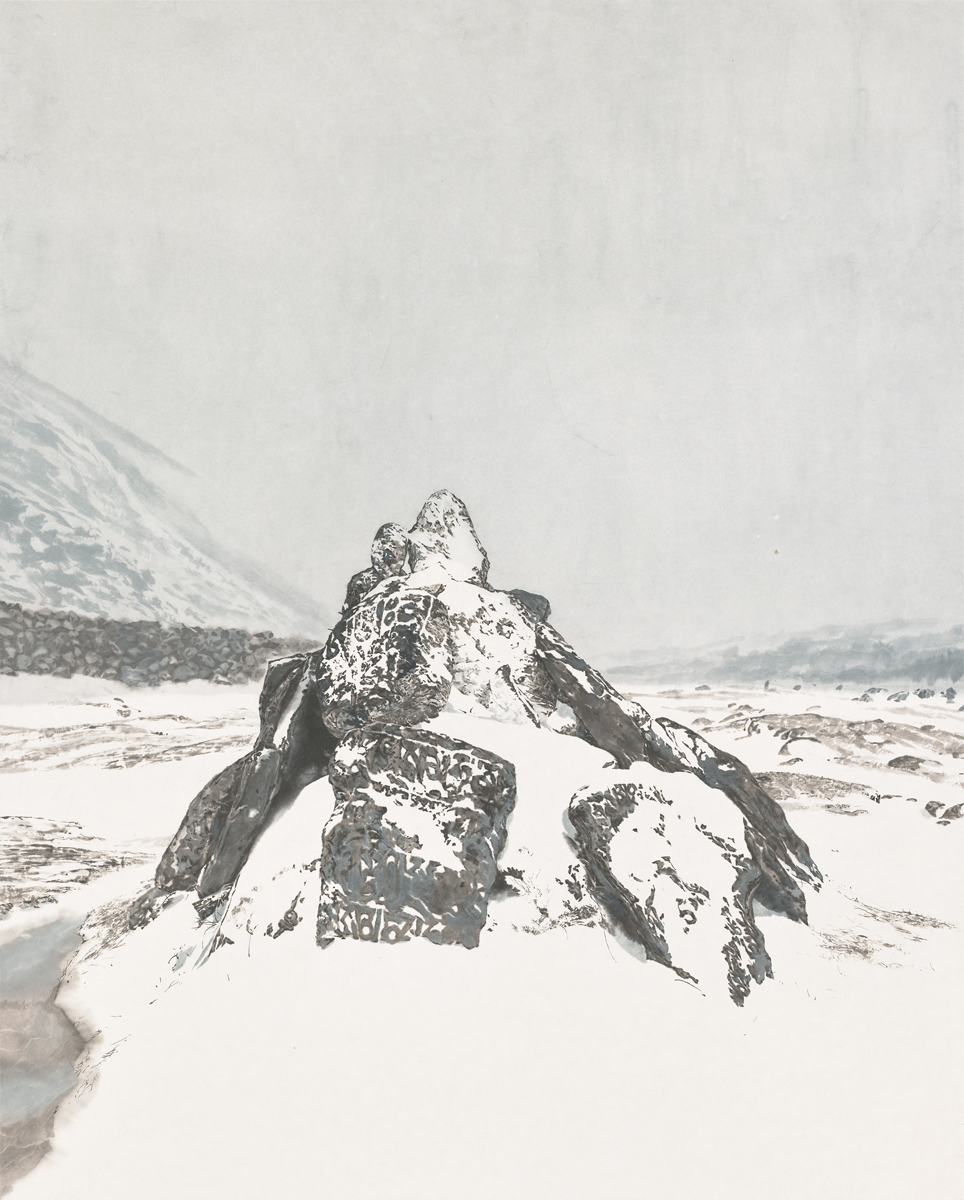
Yet, on the other hand, a stone inscribed with the uttering voice of
realization is sacred. Hwang has met those sacred stones that people in Nepal
respect. They walked anti-clockwise on the encounter of the revered stone and
prayed. In the morning, they petted the stone while murmuring “om maṇi padmé hūṃ,” a mantra that eases
the day ahead.
As seen above, the stone was not just a stone but a holy saying, a mantra, and
a sacred book. On it was bestowed the breath of Buddha. So yes, the stone is
prodigious mythology for those inhaling such exhaled aphorism. Why? Because the
stone is the axiom; because there resides only the venerated speech in the
stone’s dispersion; because the stone’s uttered vigor (숨돌 氣運) has ascended to redeem
those people every single day.
Choi Si-hyung (해월 최시형 海月 崔時亨) spoke of a novel
reverence–to serve the sky (경천 敬天), to serve the people
(경인 敬人), and to serve the 몬
mon** (경물 敬物). However, the sky and the people and the 몬 mon are not independent. The stone, the saying, and the people are
altogether one. The ink stone of Ch’usa has poured out myriads of paintings and
texts as its base wears out.
How many images and texts should there be for the
ink to erode the solidity of a stone? A stone–a trivial memory disk of every
minutia of the universe; an inkstone–an indifferent fountain that streams out
the black liquid. Yet, what this black liquid draws and writes lives longer
than a thousand years since there emerges a saying, i.e., the speaking breath (말숨), right in the place where the stone diffuses. Thus, this place of
diffusion and ascent is what 《Hwang’s Manual of Eternal
Classics》 signifies–a place where the stone has
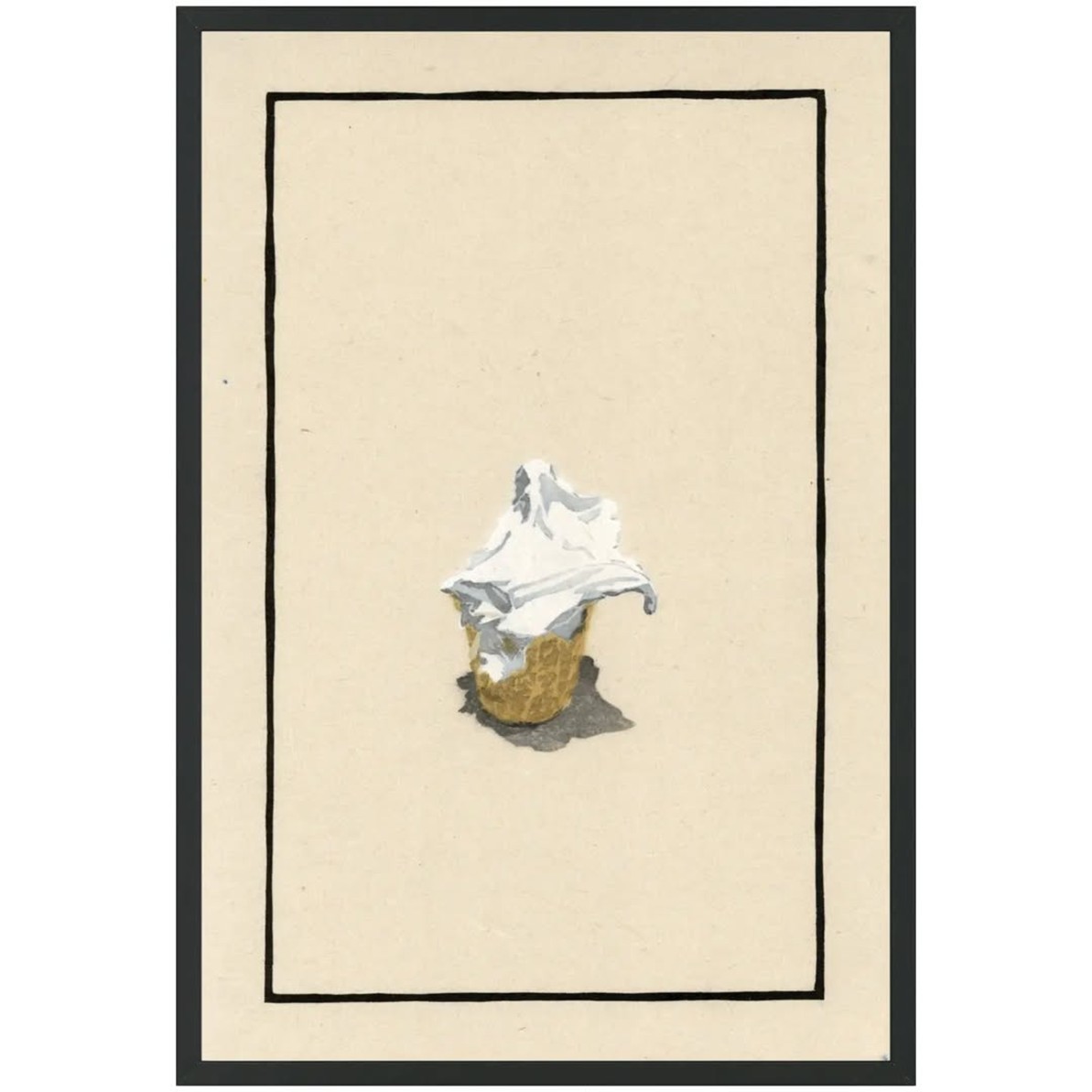
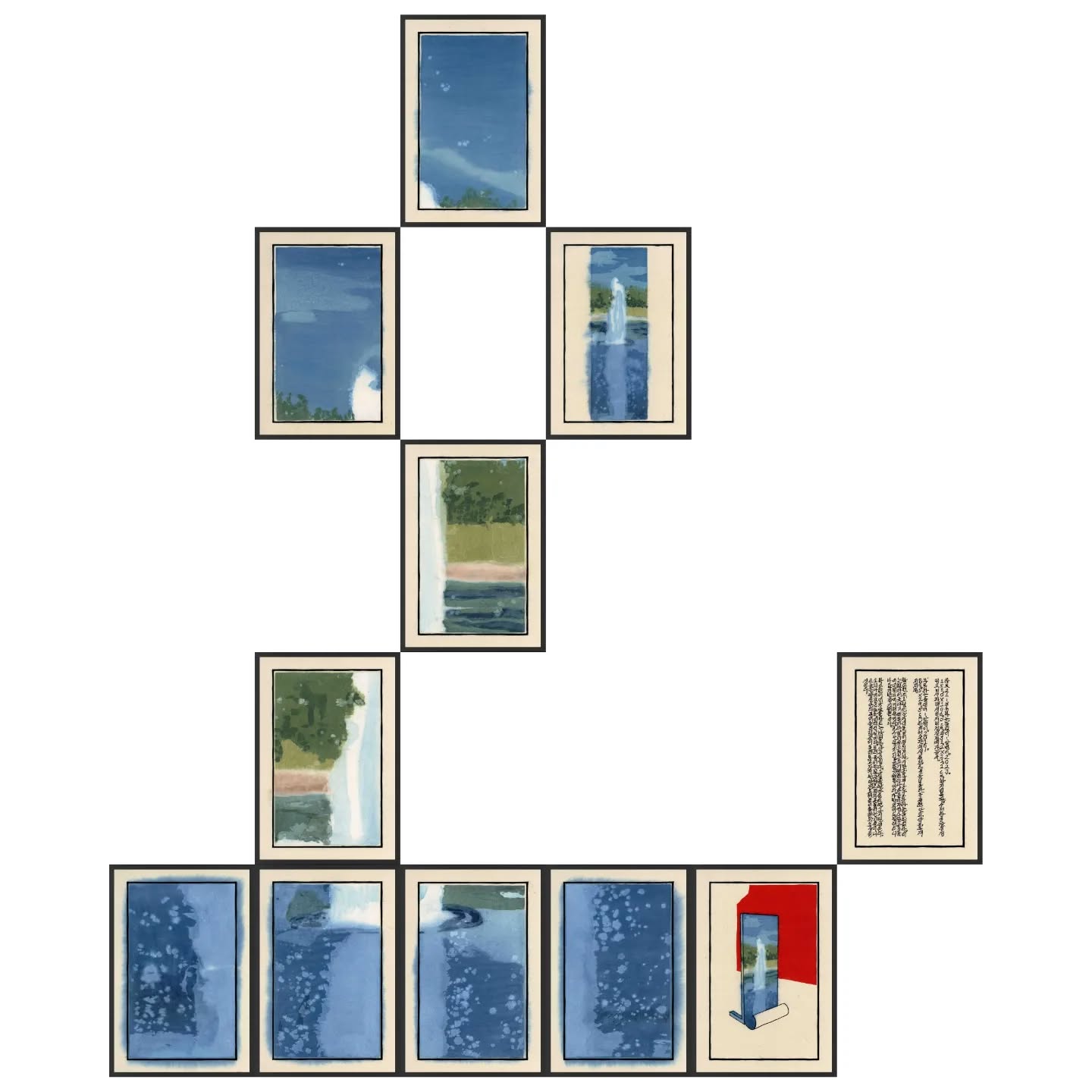
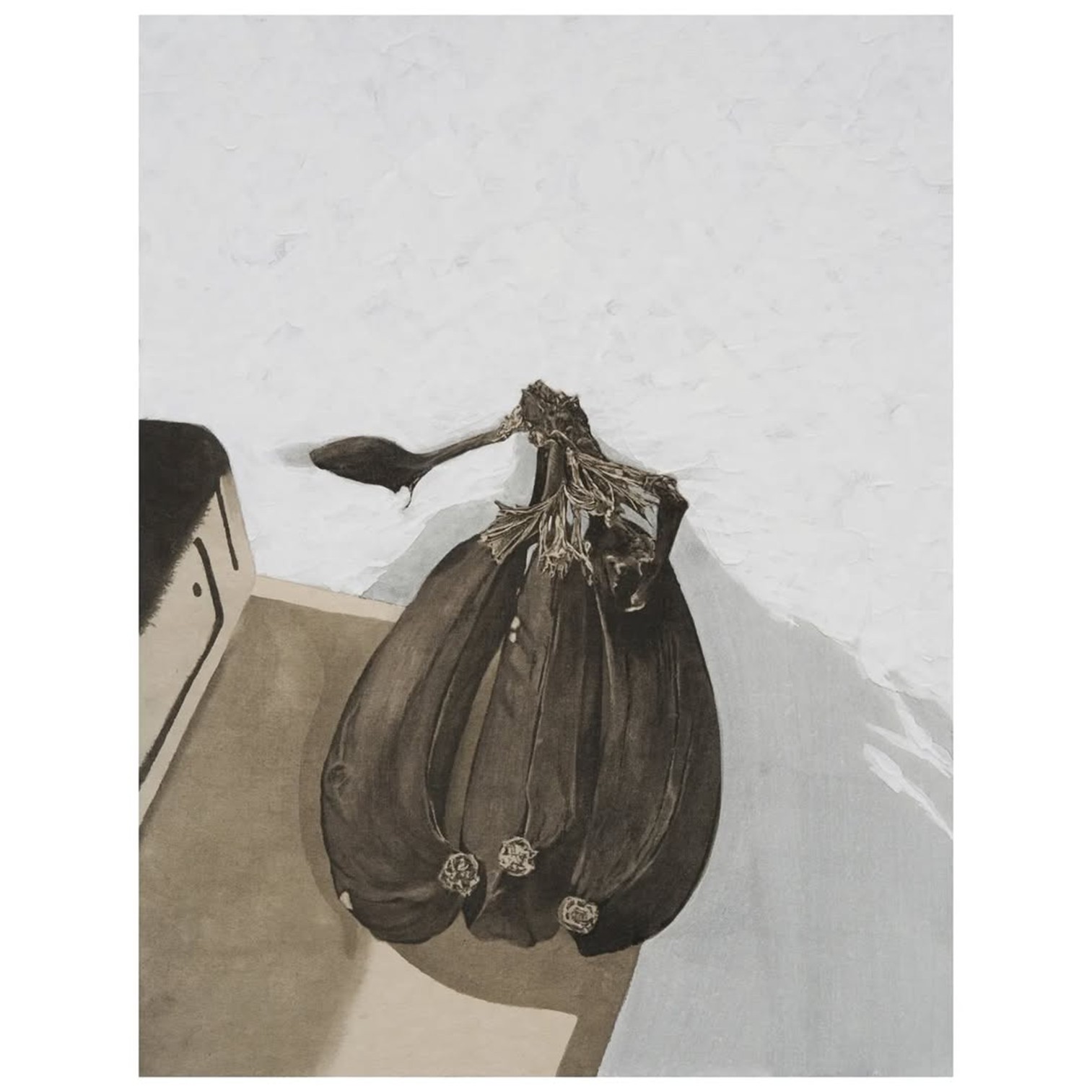
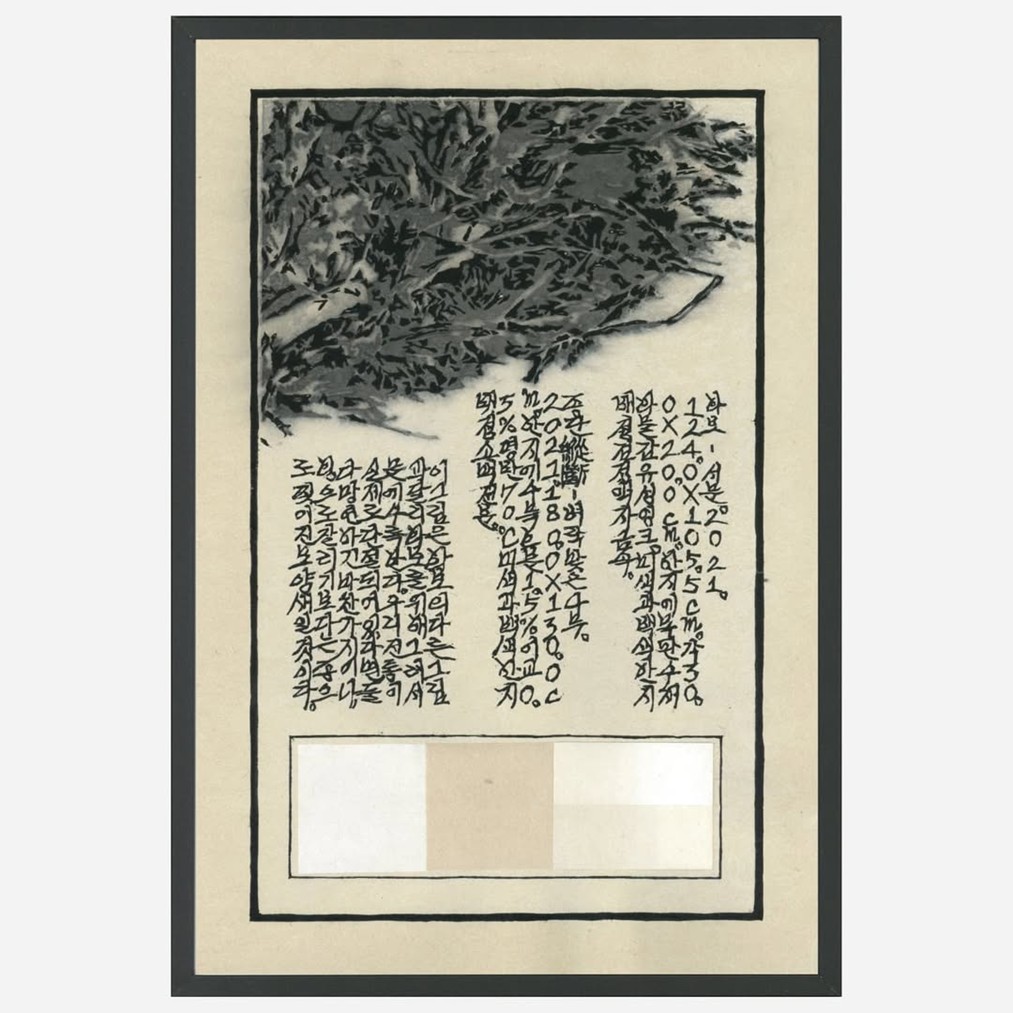
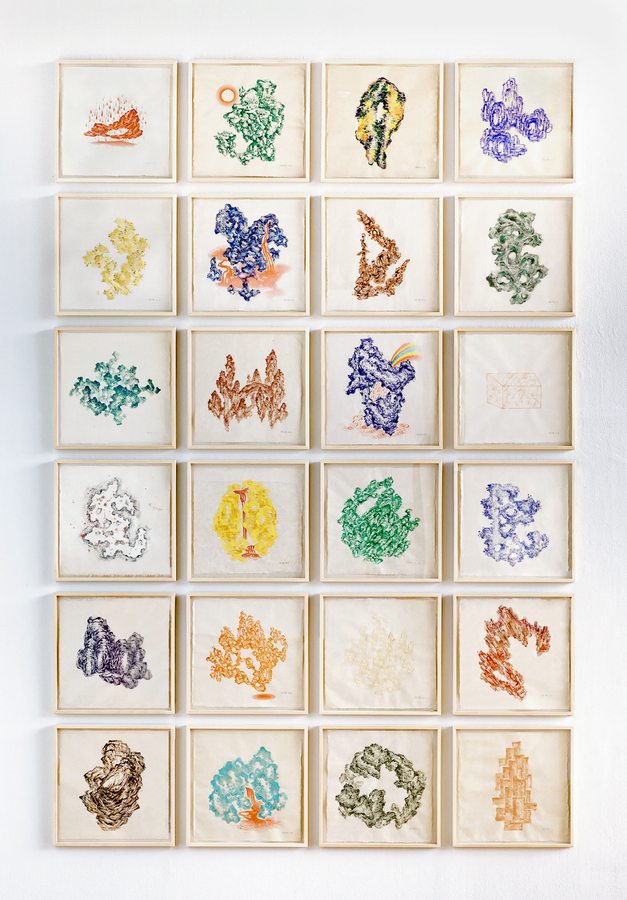
imploded. Here, the shredded ink stick of 2020 metamorphoses into an
innumerable amount of Classic Drawings.
An order of the symbolic emerges once
again. Within his practice, Hwang makes a constant analogy to the late
nineteenth-century Chosun dynasty best seller Painting Manual of the Mustard
Seed Garden (개자원화보 芥子園畫譜) alongside other classic
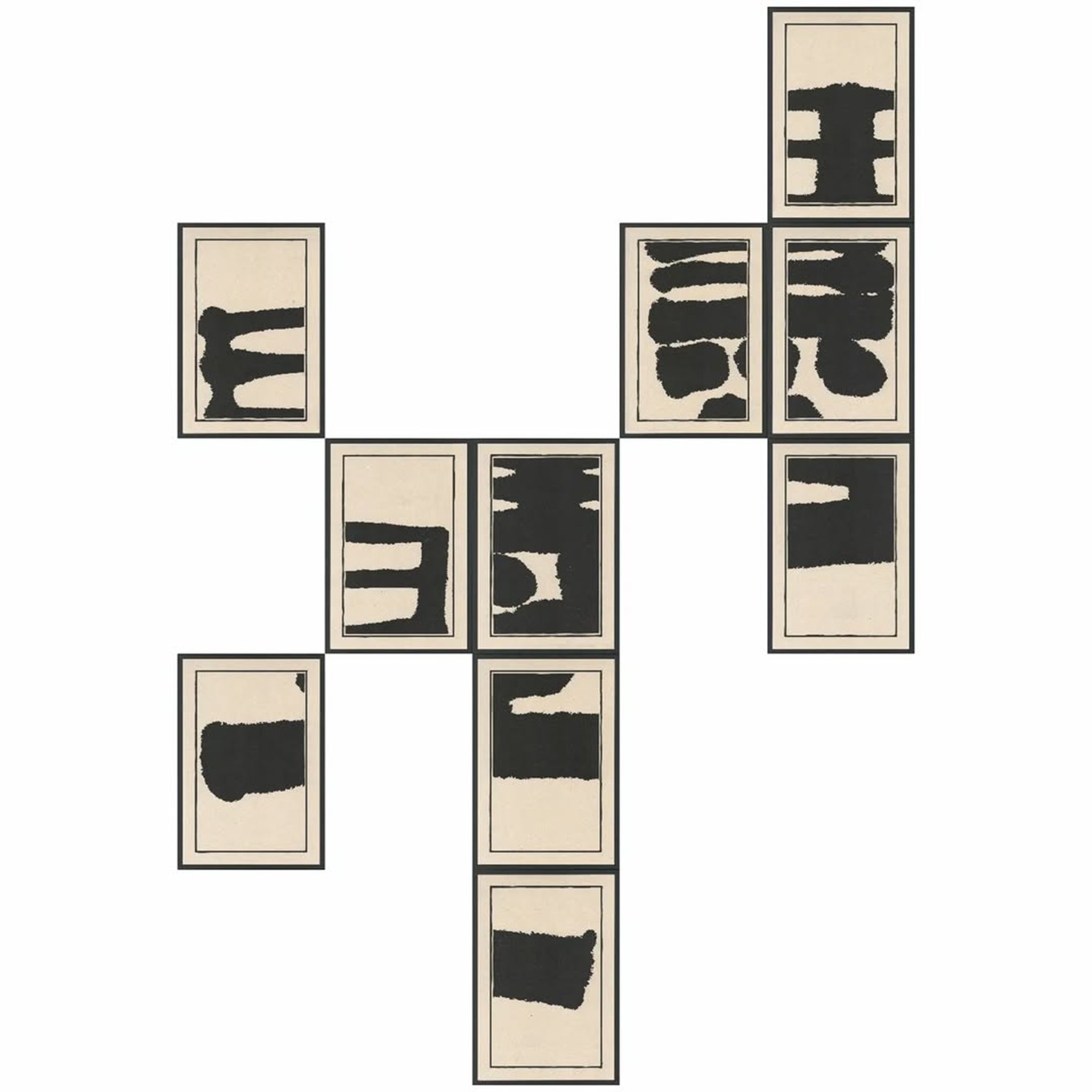
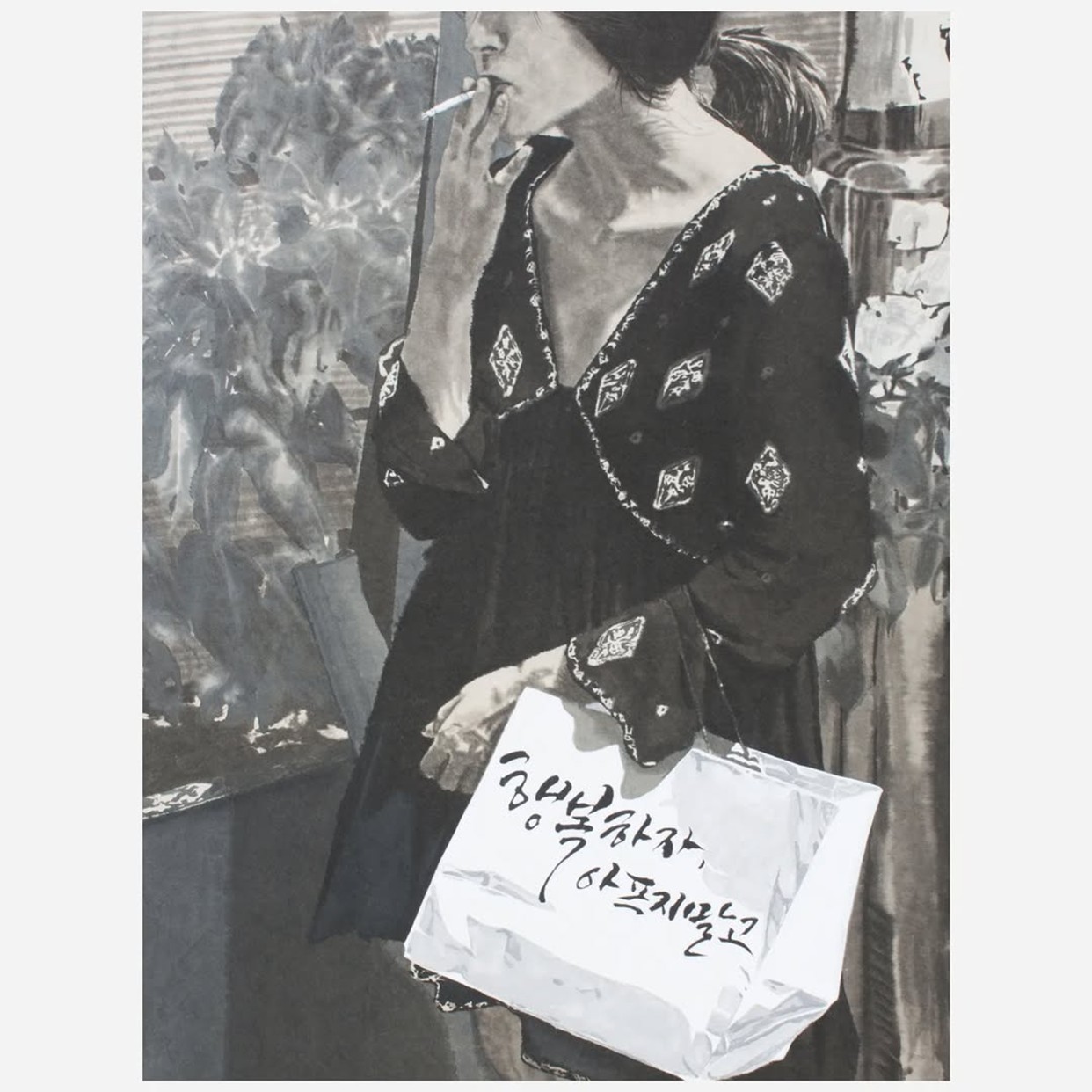
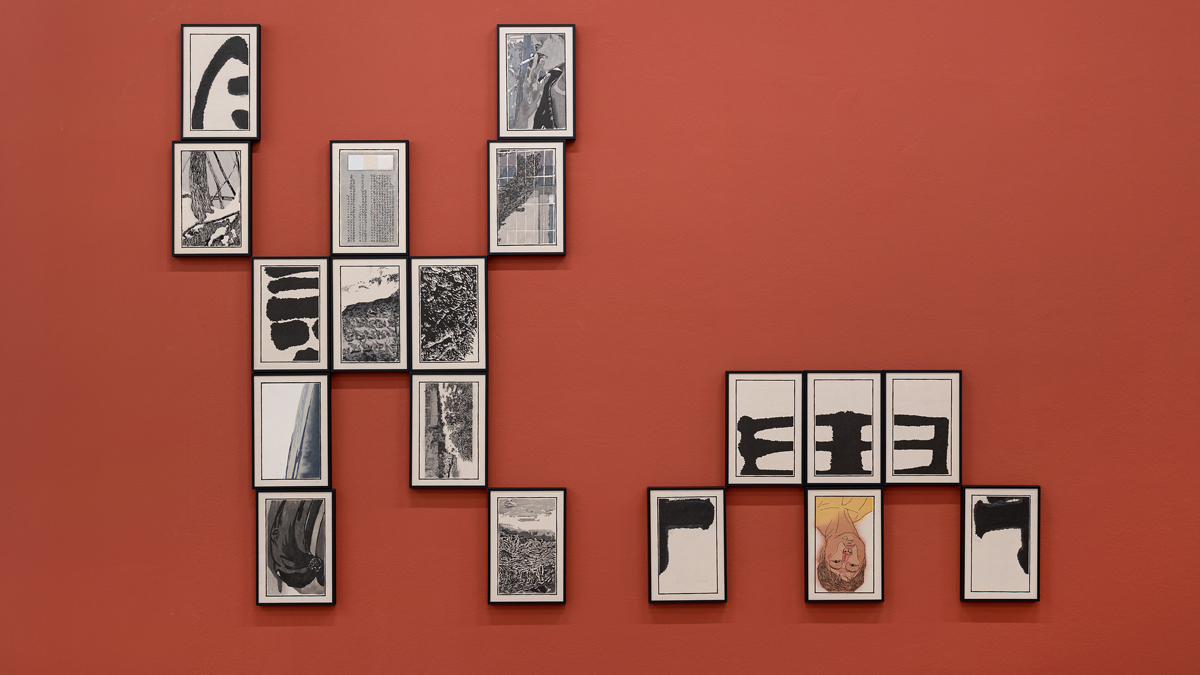
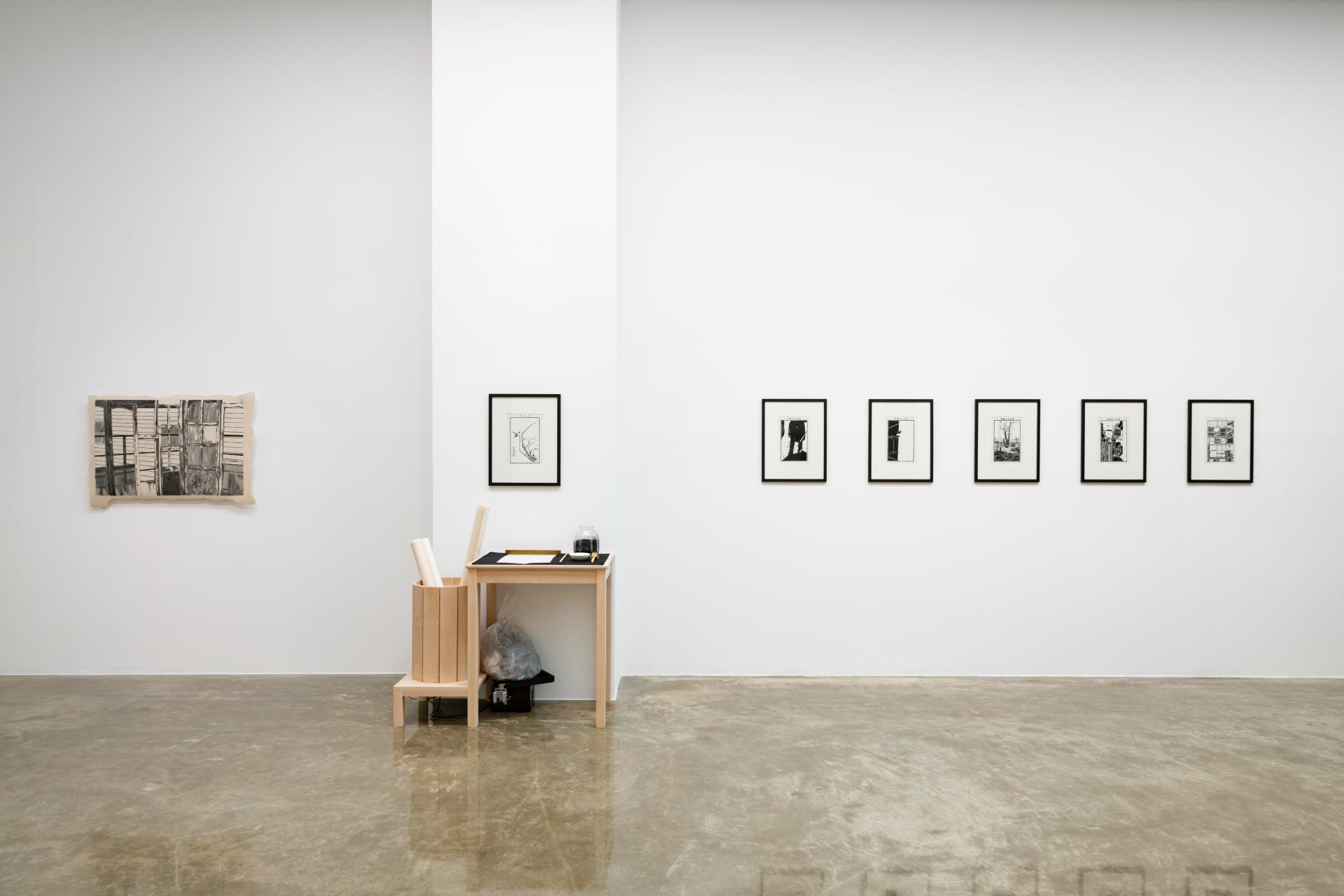
manuals and critiques of that epoch. Likewise, the mounts holding the Classic
Drawings on the walls represent a selection of ancient characters, e.g., sky (하늘
天), water (물 水), fire (불 火), rain (비 雨), stone (돌 石), soil (흙 土), grass (풀 艸), tree (나무 木), human (사람 人), text·drawing (글·그림 書·畵).
However, these characters belong to the
place where the stone has shattered, where the speaking breath unveils. Hence
affirmative, they are invisible. Concealed from our sight, they pull the
universe with the reverberations of sound. Furthermore, by upholding the
Classic Drawings, they create a polyphony of images and letters. No matter
whether it is “to tell a story,” “to draw with the outlines,” or even “to draw/paint
with the drawings/paintings” that Hwang makes the principle of his assembly,
participation from the visitors will come to dismantle the organized space. The
initial arrangement will therefore gain different colorations of sound as long
as subtle trembles culminate. It is the world to be as it is–the world itself
being as it is.
Here stands a temple which is also a copy of a giant book. Above the entrance,
are inscribed light (빛 色) and strength (힘 力). Only by earning them will we be able to realize and wander
inside. If not? Then the lion’s roar (사자후) awaits for
an unexpected startle. Hal (할 喝)!