Art
is incredibly progressive, but sometimes it can be too safe. Art often finds
itself in the gaps created by violence and threats. It's the border between
safety and insecurity. As the pressure of greater violence and threats
increases, and as the cracks grow wider, the position of art becomes safer.
However, at that moment, art loses its power. Conversely, when the gap narrows
and art is squeezed, it succumbs to pressure and collapses. Thinking about the
art placed in these gaps, I recall the book "Buffer Zone: Human-made
Landscapes" (2022) written by Haevan Lee. The book discusses the identity
that artists and artworks acquire in the midst of violence and war. Two points
in particular caught my attention.
In
October 2020, when Haevan Lee participated in the Bangkok Biennale, there were
ongoing pro-democracy protests in front of the Bangkok Art & Culture Center
(BACC) where the artist's work was exhibited. A Thai artist requested
solidarity from the participating artists, and they responded by issuing a
statement of support and opposition to violence called the "Statement of
Participating Artists." Through this statement, the participating artists,
including Haevan Lee, demanded progressive changes in Thai society.
However,
the artist's thoughts were divided between the intense protest scene outside
the art museum and the artworks inside. Haevan Lee wrote the following:
"Even in such a chaotic situation, the artwork itself is protected.
Throughout the wars in history, not only artworks but also the talents of
artists have been protected. Artworks on walls and pedestals are
untouchable." Art is both progressive and protected by walls and
pedestals. Art is safe.
The
story of the War Artist Group, a group of artists who record wars for the
government, as described by Haevan Lee, was also compelling. In 1972, during
the Vietnam War, the Ministry of Education and Culture, with the cooperation of
the Ministry of National Defense, dispatched ten artists as a War Artist Group
to Vietnam. Among them was Cheon Gyeong-ja, the only female painter. The works
of the War Artist Group were publicly displayed in the 《Vietnam War Records Exhibition》 (National
Museum of Modern and Contemporary Art, Korea) in December of the same year.
Cheon Gyeong-ja's work showed curiosity about unfamiliar landscapes rather than
the horrors of war. However, her uncle, who had fought in the war, killed
people and lost comrades on the battlefield. And as a result of the aftermath
of the war, he lived with a hearing aid in one ear for the rest of his life.
One person created beautiful art amidst the war, while another deeply
experienced the horrors of war. At the end of this narrative, Haevan Lee wrote
the following: "The paintings are beautiful, but tragedy lies beyond the
paintings." What is art?
Through
her work, Haevan Lee repeatedly questions the essence of art. She explores ways
to save art within the questions of "What is art?" and "What
does art show?" Her work may remind some viewers of the Korean division
situation by depicting the landscape of the DMZ (Demilitarized Zone) or
revealing the tension through the landscapes of other border areas.
Alternatively, one may interpret her work as presenting an ideal realm by
portraying shared spaces between opposing forces. However, her work is not only
a reflection on the specific place of the DMZ (or other border areas) but also
an attitude to rescue art. The artist seems to be seeking this path of rescue
in the "Buffer Zone" that connects the visible and invisible worlds,
the familiar and unfamiliar worlds. The Buffer Zone, as the artist described it
as "art's attitude towards life," is a space intertwined with the
artist's life.
Art
of Boundaries
Haevan
Lee, in her artistic practice, explores the concept of boundaries by observing
and documenting the realities of specific locations that reveal their local
contexts. Through various mediums such as painting, installation, video, and
performance, she expresses the complex experiences associated with these
places, combining social contexts and her own artistic sensibilities. Since
2013, Lee has also organized an artist collective called "DOPA" and
engaged in cross-border artistic exchanges and collaborations with artists,
spanning from Korea to Eurasia and Mexico. The notion of "boundaries"
holds great importance for Lee, as she navigates between mediums and transcends
physical and conceptual borders.
According
to Lee, boundaries can be both visible and invisible. Visible boundaries, like
fences or walls, are not merely concrete objects but also hold abstract
meanings. Concepts such as the "boundaries of thought" or the
"boundaries of life and death" demonstrate that boundaries can extend
beyond tangible objects, showcasing our cognitive ability to set boundaries in
abstract concepts. Lee emphasizes that even visible physical boundaries are not
simple, as they encompass deeper conceptual dimensions. In other words,
invisible boundaries inform our perception and judgment of visible boundaries.
The
concept of boundaries is intricately linked to the notion of
"trouble." Many individuals who perceive boundaries often desire a
smooth and harmonious existence, seeking to eliminate any troubles or conflicts
associated with boundaries. However, as scholar Donna Jeanne Haraway suggests
in her work "Staying with the Trouble," it is important to embrace
the complexities and uncertainties of troubled times. Learning to live and
navigate these troubling and chaotic periods together, where relationships
intertwine and mutual dependencies arise, challenges the simplistic notions of
having clear boundaries. Lee's artistic practice embodies this idea, blurring
the distinctions between having boundaries and being boundaryless.
In
summary, Haevan Lee's work can be defined as "the art of boundaries."
By crossing boundaries and revealing the multidimensionality of boundaries, her
art transcends physical and conceptual limitations. Lee's exploration of
boundaries highlights their inherent complexity, where conflicts persist
alongside the need for protection and the aspiration for their eventual
disappearance. Through her concept of the "buffer zone," Lee
symbolically represents the space between conflicting regions or ideas,
characterized by both geographical separation and the clash of diverse values.
The buffer zone is far from a simple location; it is a space where past,
present, and future converge, and where the instability of the external
environment is mitigated.
Artistic
Layers of the Buffer Zone
From
the series ‘DMZ Landscape’ in 2012 to the exhibition 《Buffer Zone》 (SAGA, December 2-31, 2021),
She has progressively expanded the concept of the buffer zone beyond the DMZ,
encompassing border areas between North Korea and China and other Eurasian
border regions. In 《Buffer Zone》, the artist describes the existence of the buffer zone through
three aspects: "neutrality," "conflict mitigation," and
"preservation." Derived from these aspects, five layers of the buffer
zone can be detected in the artist's work.
On the surface, the artwork presents
the buffer zone itself (DMZ, border areas between North Korea and China, and
other Eurasian border regions). Within its inner layers, there are
"lingering subjective memories" and spaces where "concealed
troubles emerge from a political perspective." At a deeper level, there
exist a "psychological space desiring neutrality" and a space where
"the essence of art is revealed." Consequently, Yee-haeban's work is
serene yet internally intense, beautiful yet threatening.
The
DMZ is the place that represents the buffer zone for the artist. Established as
a demilitarized zone between South and North Korea following the 1953 armistice
agreement, it is a space where military clashes are prohibited by the placement
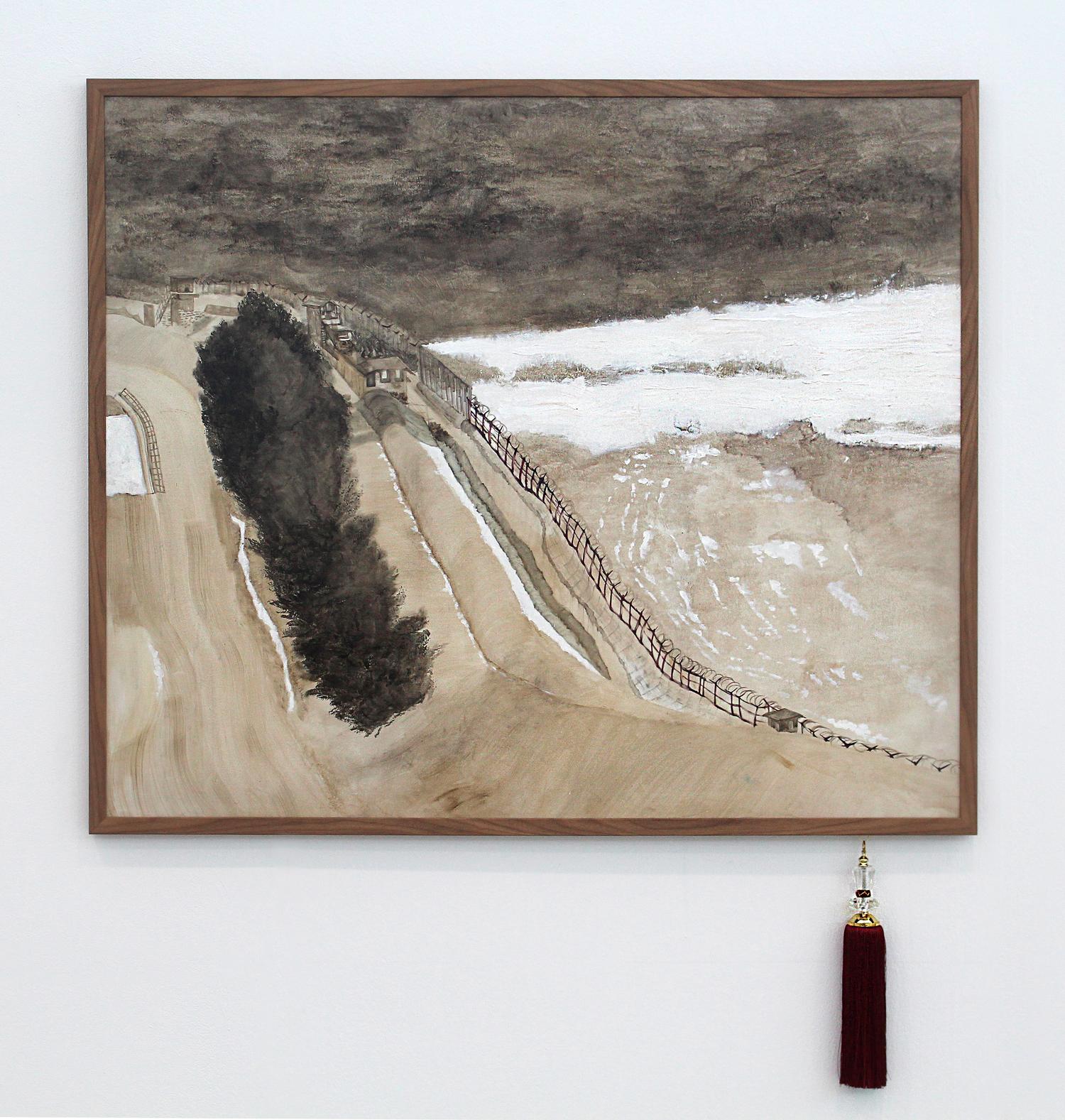
of troops and military facilities. Since 2012, she has been depicting the
landscapes of the DMZ through the series ‘DMZ Landscape’. Initially, the DMZ
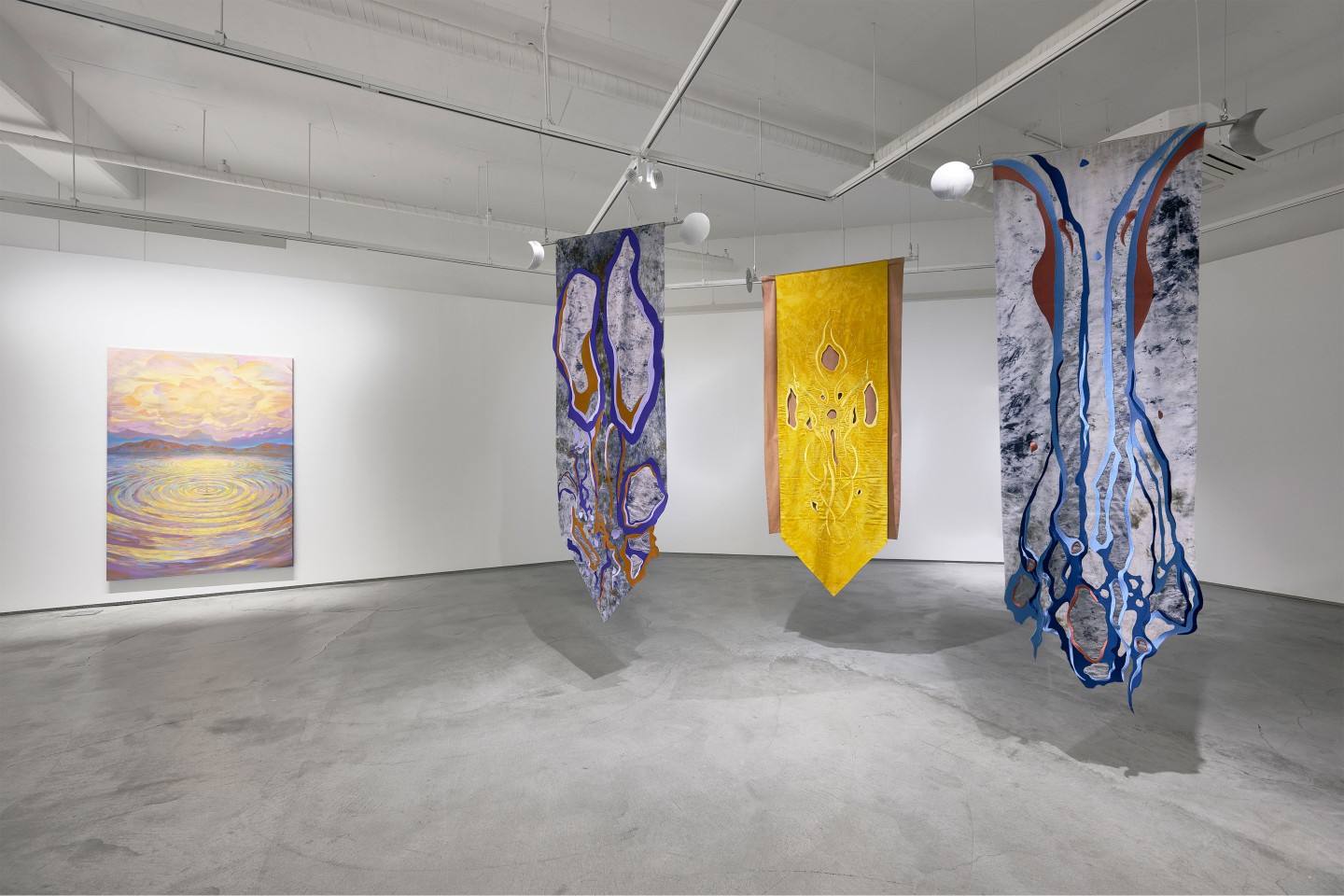
landscapes showed a lyrical aspect (e.g., To Mt. Geumgang by Train
(2012), Civilian Control Zone series (2012), Hakhak(2012)).
However, they gradually transformed into symbolic expressions (e.g., Jibteo(a
house site) (2013), Han Tan River and Two Bridges (2014))
and appeared in the form of objects (e.g., Goliaths (2018), Left-Right-South-North
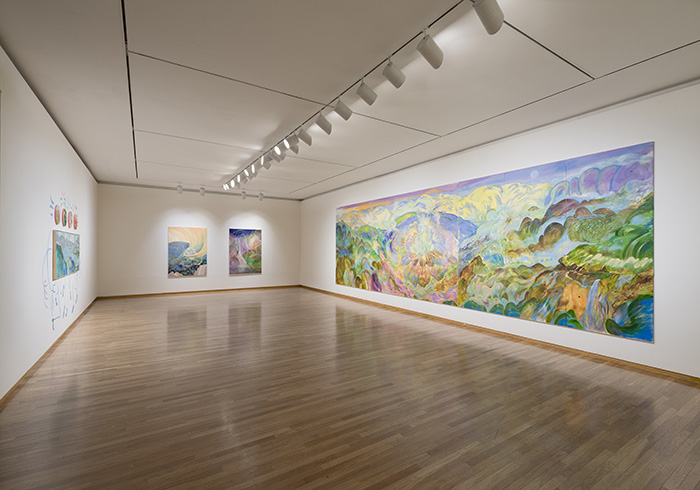
(2017)). In 2020, she presented mature works with refined expressiveness (Mt.
Geumgang (2020), Apnok River (2020), Apnok
River Shinuiju (2020), Mt. Geumgang 38°35'55.6"N
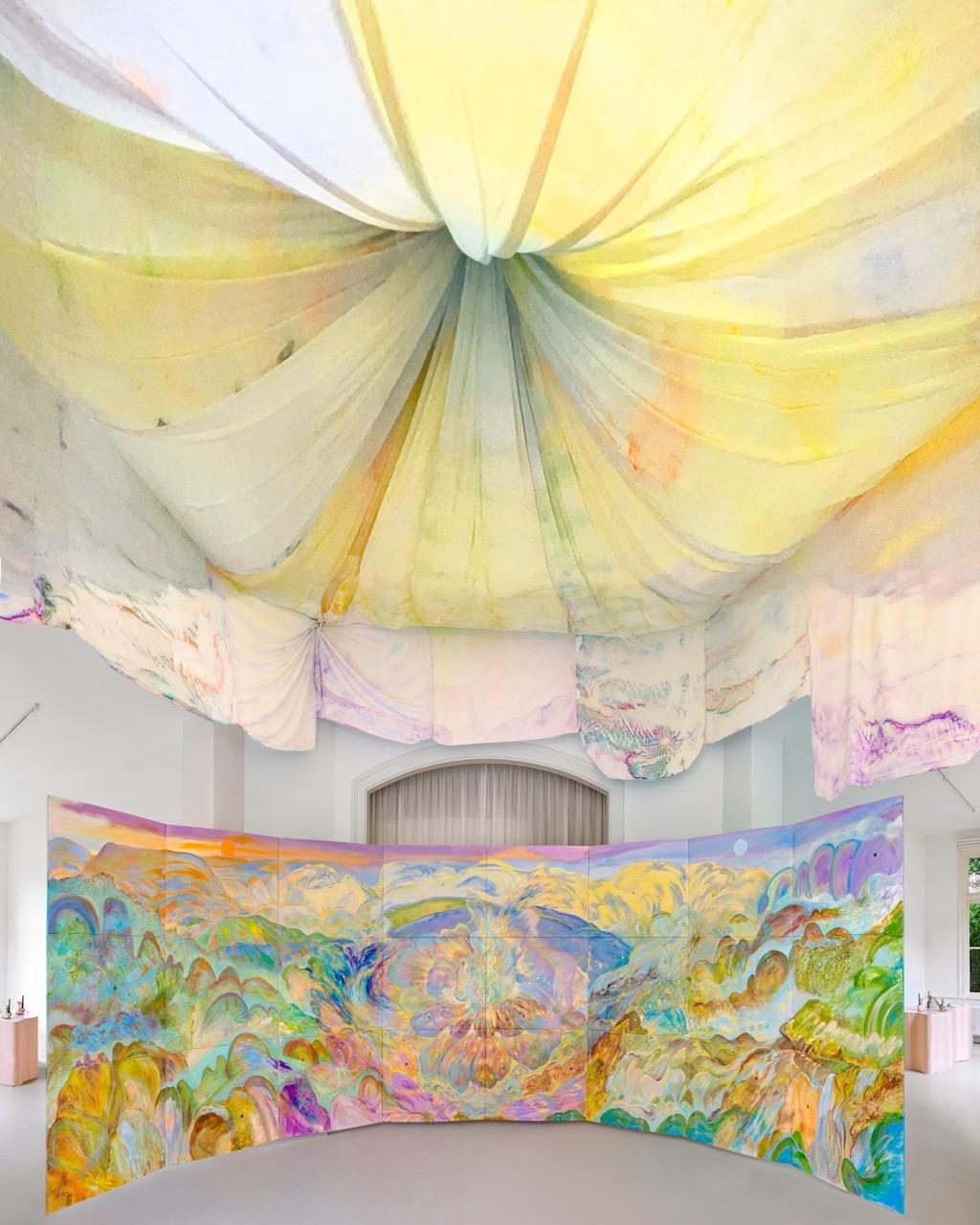
128°21'06.6"E series (2020)), and recently, they showcased
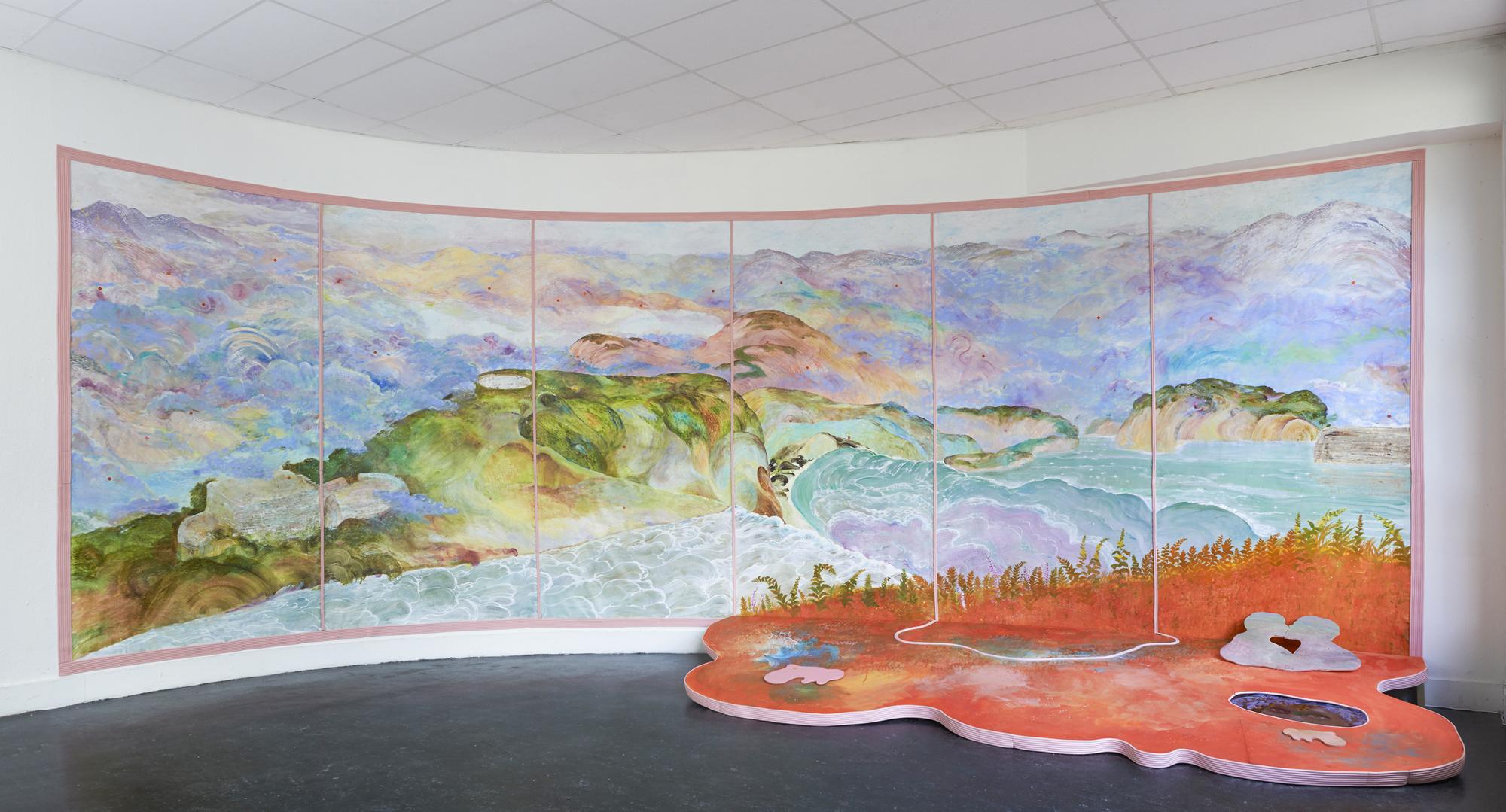
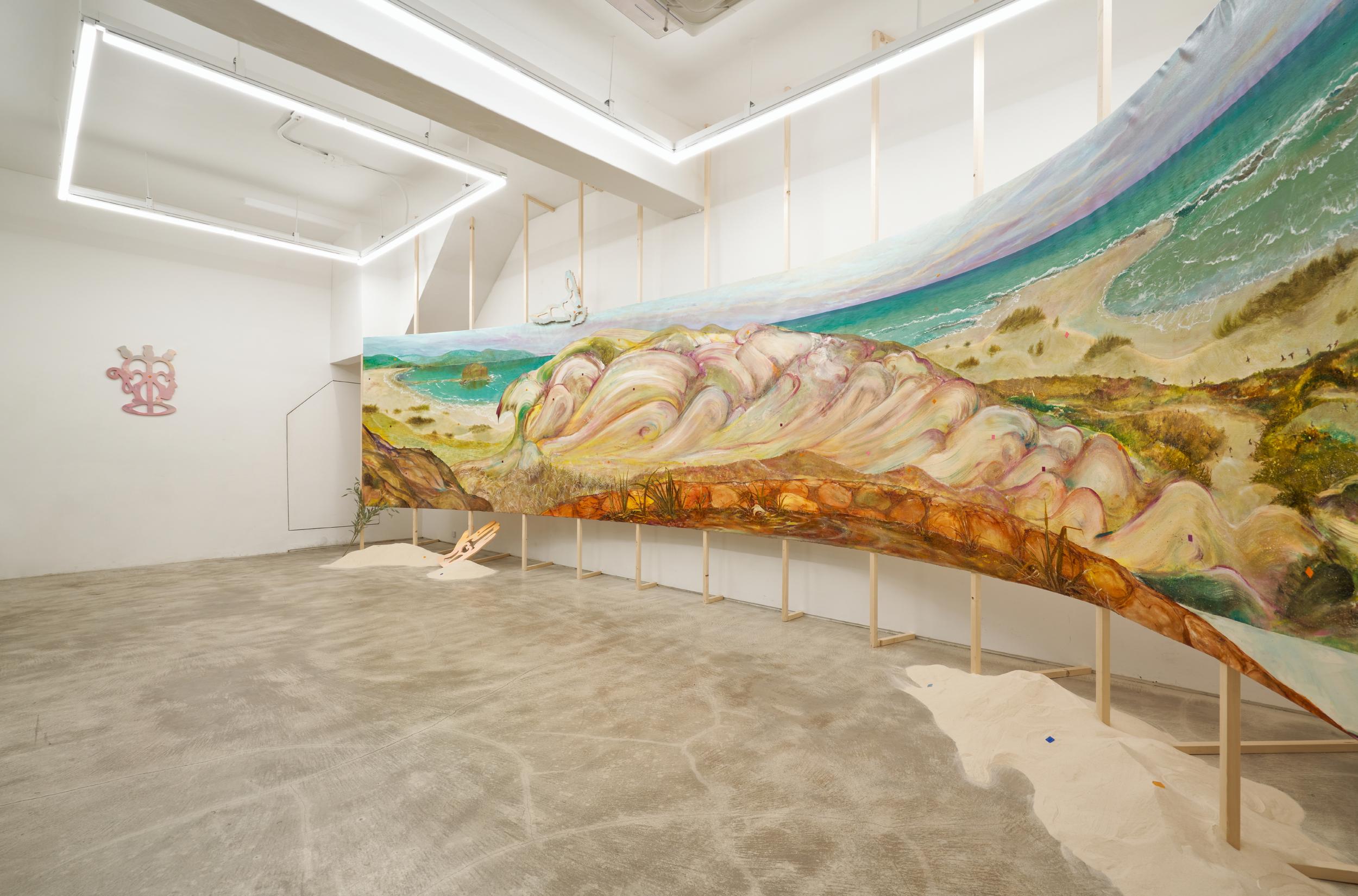
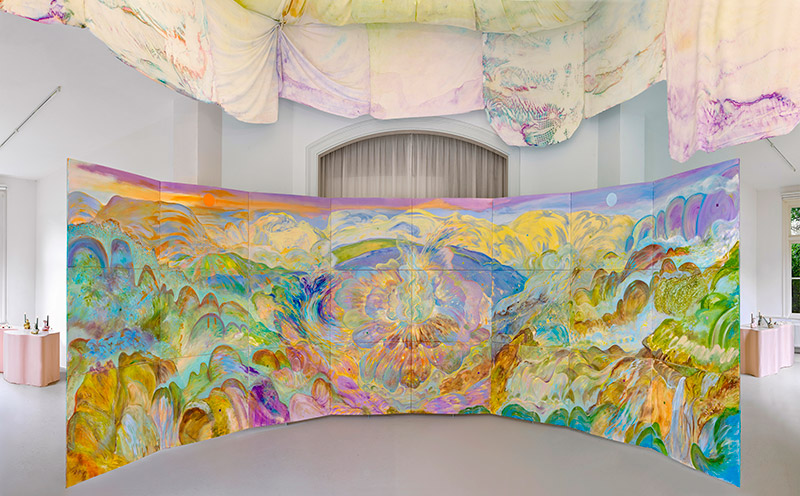
large-scale experimental works representing the buffer zone in panorama format
(Buffer Zone (2021), Welcome to the Buffer Zone
(2022)).
The
buffer zone is a space deeply entwined with the relationship between two
countries, and it is heavily regulated. As widely known, the DMZ is a place
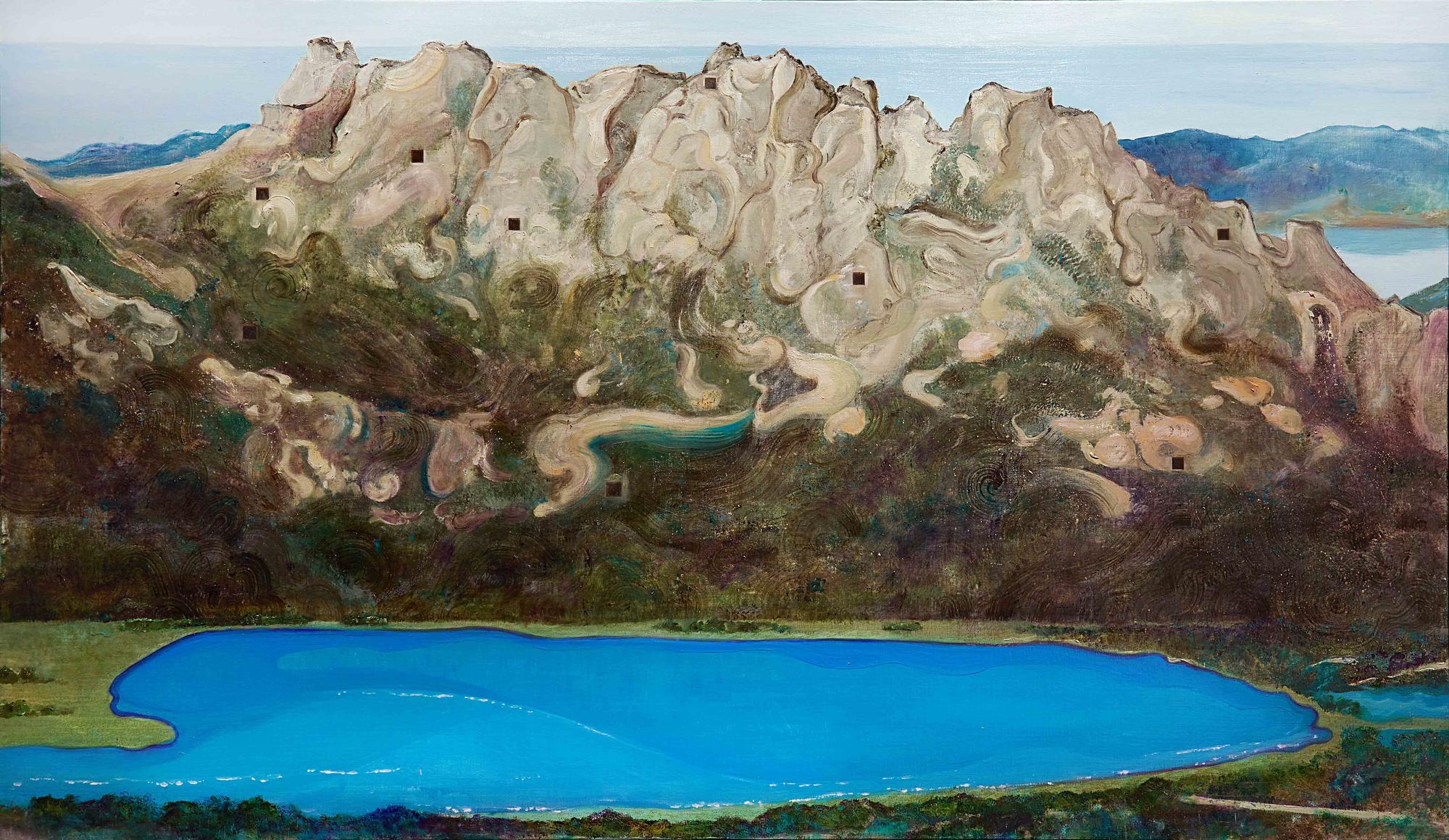
where photography is restricted or prohibited. The DMZ landscapes depicted by
the artist are the lingering subjective memories that remain after experiencing
the place. The landscapes the artist encountered become a conglomerate of
emotions within him, which, at some point (although not specific), manifest as
authentic images. As a result, the artist's paintings reveal emotionally mixed,
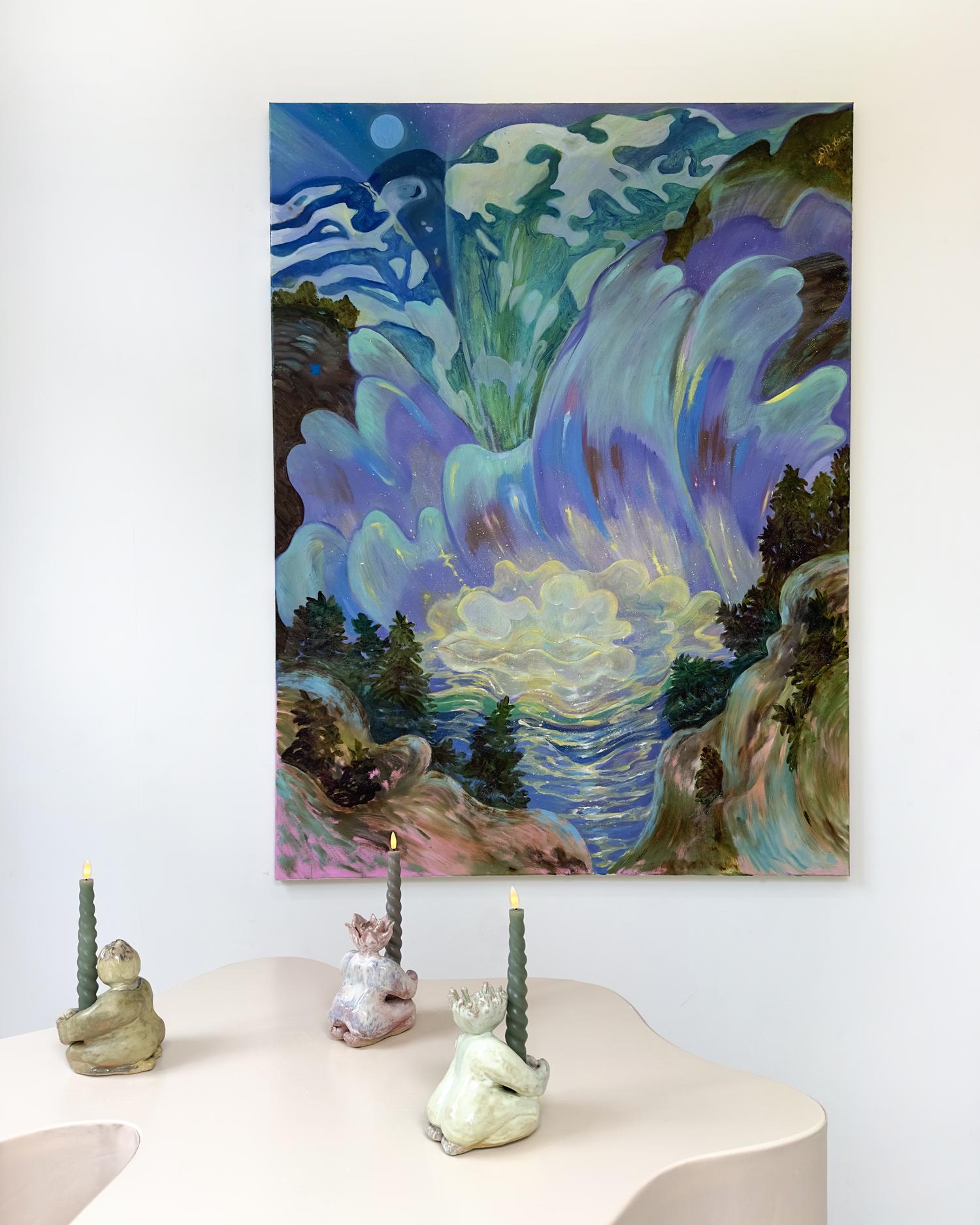
truthfully materialized landscapes that blend reality and abstraction.
What
captures attention in these landscapes are the geometric shapes of triangles
and squares. These artificial formations represent warning signs for landmines,
various military facility signs, bunkers created for war, and lines indicating
boundaries that should not be crossed. In this way, the buffer zone is a space
where concealed troubles sharply protrude from peaceful landscapes. It exudes
an imminent tension, yet the presence of thin triangle and square stickers
resembling warning signs, which are brightly attached throughout, doesn't
appear threatening at all, and there are no signs of existing conflicts.
Consequently, the troubles are concealed once again.
At
the depths of the buffer zone landscapes painted by Haevan Lee, there is a
psychological landscape that permeates, desiring to postpone or withhold
judgment in situations of choice. Despite the coexistence of danger and threat,
the tranquil and beautifully unfolded landscapes evoke a sense that these
landscapes are a "psychological buffer zone" yearning for neutrality.
The buffer zone serves to alleviate or prevent confusion while also fulfilling
a role of safety and preservation. On a psychological level, the buffer zone
can be seen as an attitude of life where the individual strives to maintain a
middle ground, not leaning towards either side, amidst the intense scenes of
life. Haevan Lee's landscapes can be seen as a psychological landscape with a
longing for tranquility at its core.
Furthermore,
the buffer zone depicted by Haevan Lee contains profound metaphors for the
essence of art. As mentioned earlier, the irony that exists between the intense
solidarity with the Thai pro-democracy protesters and the art that feels
excessively safe demonstrates the contradictory nature inherent in art. In
addition to this, "Buffer Zone" narrates various contradictory
aspects of art, as art resembles the properties of the buffer zone. Haevan Lee
attempts to approach the "essence of art" by depicting art as a
buffer zone. Duty-free zones are similar to buffer zones.
Therefore, the art
existing within the buffer zone recalls Hito Steyerl's concept of
"Duty-Free Art." Art within the buffer zone represents the art that
intersects with the current conflicts, surveillance, virtual worlds, and
corporate dominance—an art market that exists as a tax-free zone and falls
outside the jurisdiction of sovereignty, revealing an area beyond history and
sovereignty. It signifies both an object and a symbol, showcasing art that
should be preserved as a valuable part of human history and heritage. The
artwork painted by her is an exploration of the essence of art because it
guides us to contemplate the contradictory nature of art through the buffer
zone.
'In
a beautiful yet tragic society, I contemplate peace, joy, and happiness.'
The buffer zone is a "social respite and a state of drifting, experiencing
fluctuations of meaning due to its creative power." In the landscapes from
her, there exists taut tension and turbulence. However, it is serene and
tranquil. It is a landscape of conflict, of mitigation, and of preservation.
Rest and strength, fluctuations and drifting, float within that place. She
declares, "I contemplate peace, joy, and happiness in this beautiful yet
tragic society." In these words, I recall the buffer zone that has become
her attitude towards life. She ponders life and art in a place that is serene
yet intense, beautiful yet threatening.