

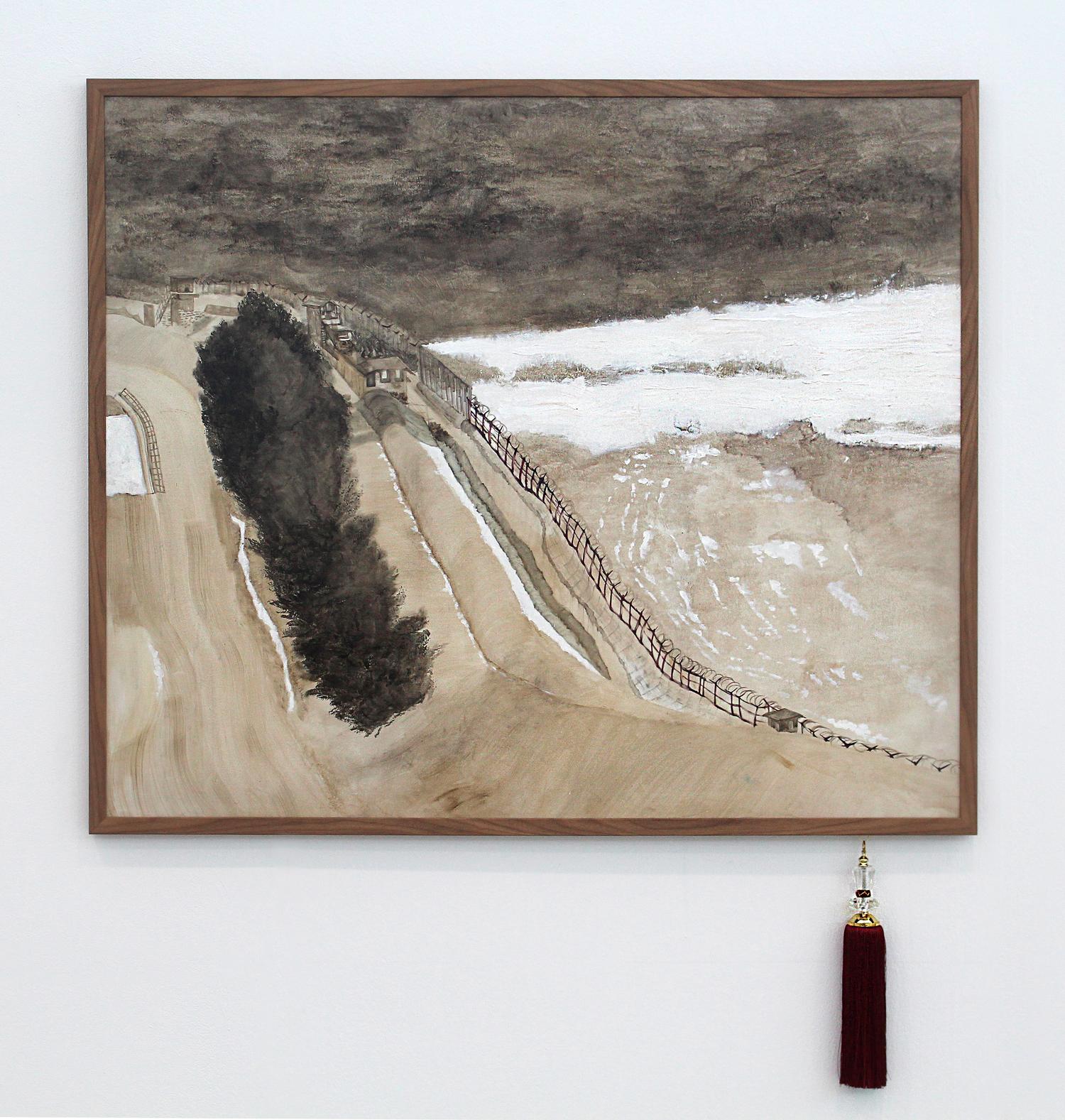
Haevan Lee (b. 1990), drawing from her upbringing near the Korean Demilitarized Zone (DMZ), has explored the structures of borders and their socio-cultural impact across various national boundary regions. To understand the complexities of border identities and ecological environments, she employs landscape painting, storytelling, and historical research, capturing the local context of specific sites through diverse mediums such as painting, installation, and video.


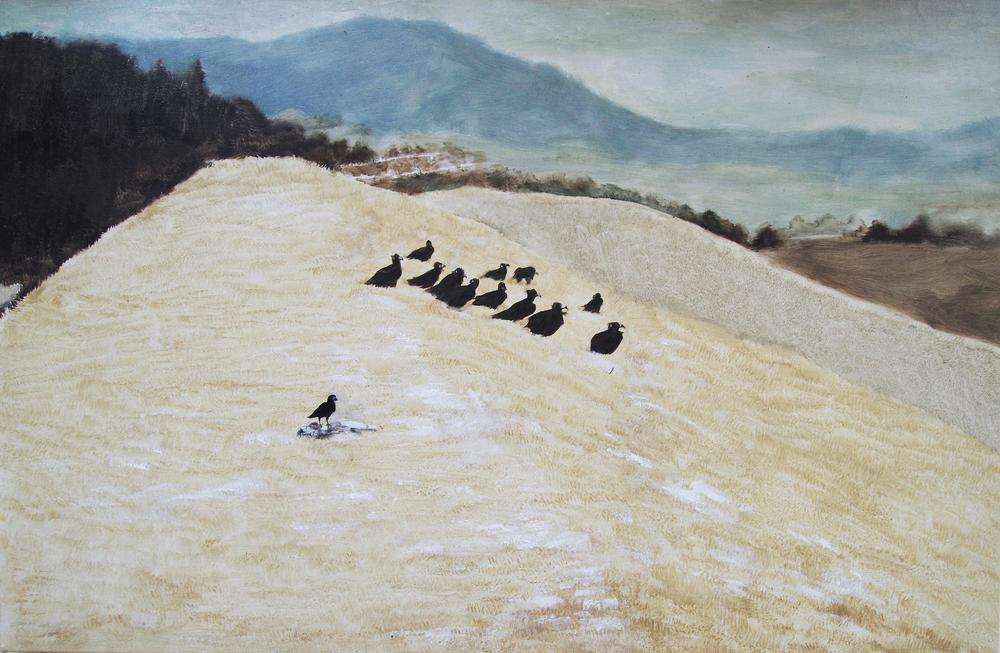
Haevan Lee, Civilian Control Line 2, 2012, Oil on canvas, 68x87cm ©Haevan Lee

Since 2012, Haevan Lee has been painting the landscapes of the DMZ. The DMZ, or Demilitarized Zone, was established between South and North Korea following the 1953 Korean War Armistice Agreement, designating an area where troops and military facilities are prohibited in order to prevent armed conflict. 

Her early DMZ landscapes carried a lyrical atmosphere, but over time her work shifted toward a more expressionistic and symbolic mode of representation, and eventually appeared in the form of objects as well.

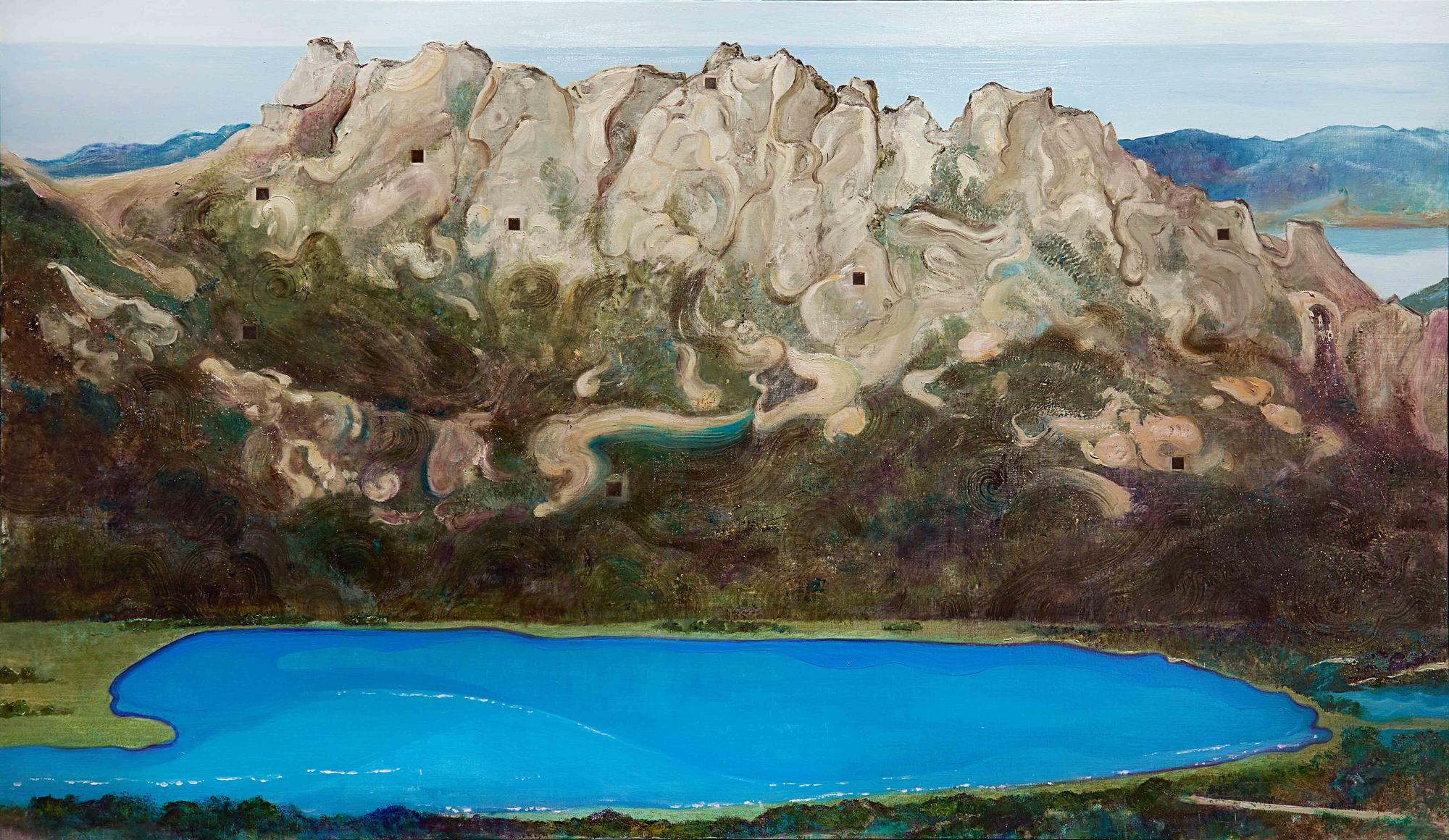
Haevan Lee, Mt.Geumgang from 707OP, 2019, Oil on canvas, 193.3x112.1cm ©Haevan Lee

The DMZ is a geopolitical site entangled in the interests of both nations, where photography is restricted or prohibited. As such, the landscapes that the artist paints of the DMZ are those of subjective memory, remaining after her direct experience of the place. In other words, the landscapes on canvas can be seen as images that embody what lingered within the artist’s inner self—her memories and emotions—in the form of feelings.
 
Regarding this, art critic Lev AAN explains, “The landscapes painted by Haevan Lee emerge as emotional and truthful materializations, where fact and abstraction are intertwined.”

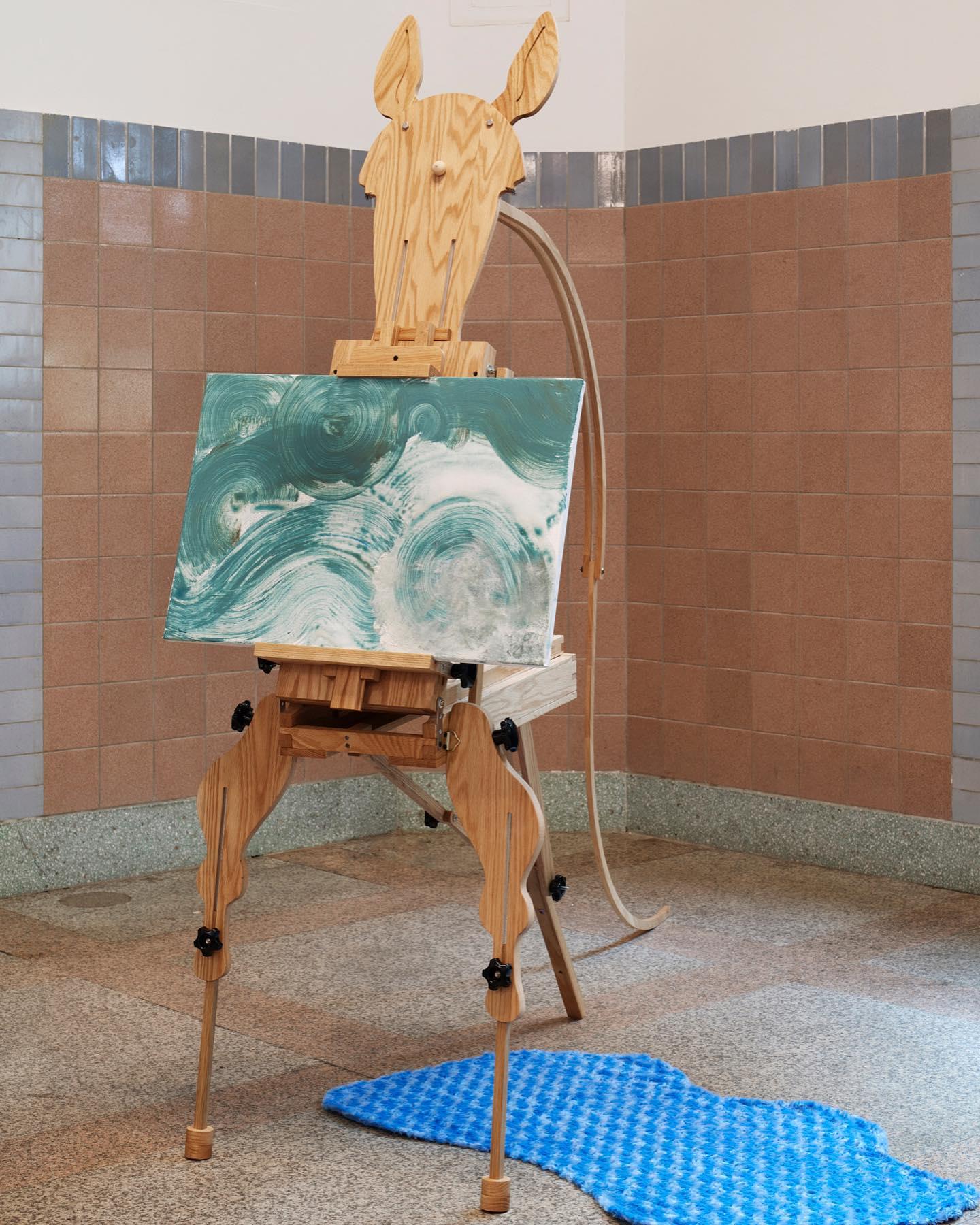
Haevan Lee, Goliaths, 2018, Acrylic on panel, steel pendulum, magnet, battery, Dimensions variable ©Haevan Lee

Her first solo exhibition, 《Goliaths, Tanks》 (Peace Culture Bunker Gallery, 2018), consisted of fictional texts and painterly works based on her record of a thudding sound she heard one night while working in her studio, a former anti-tank defense facility. 

Residing in a site once symbolic of confrontation and division, Lee layered the strata of landscapes she experienced onto painterly works framed like sculptural reliefs. Alongside this, she created a multimedia installation that interwove the repetitive ticking of a clock with the resonant movements of objects, conjuring the latent anxieties surrounding the Korean Peninsula after division, even amidst its present-day calm.

Installation view of 《A Statue Dreaming on River》 (Gallery Lux, 2020) ©Haevan Lee

In this way, Haevan Lee sought to move beyond a realistic depiction of restricted border landscapes, amplifying instead the subjective and psychological dimensions of her own experiences in those places. 

Her solo exhibition 《A Statue Dreaming on River》 (Gallery Lux, 2020) was set against the backdrop of Military Outpost 707 (707OP), which overlooks Mount Geumgang. In 2018, through an event organized by the Ministry of National Defense, Lee visited 707OP, located further north than the Unification Observatory in Goseong, Gangwon Province. There, a soldier used a large telescope to magnify the surrounding Mount Geumgang and projected the view onto a monitor.

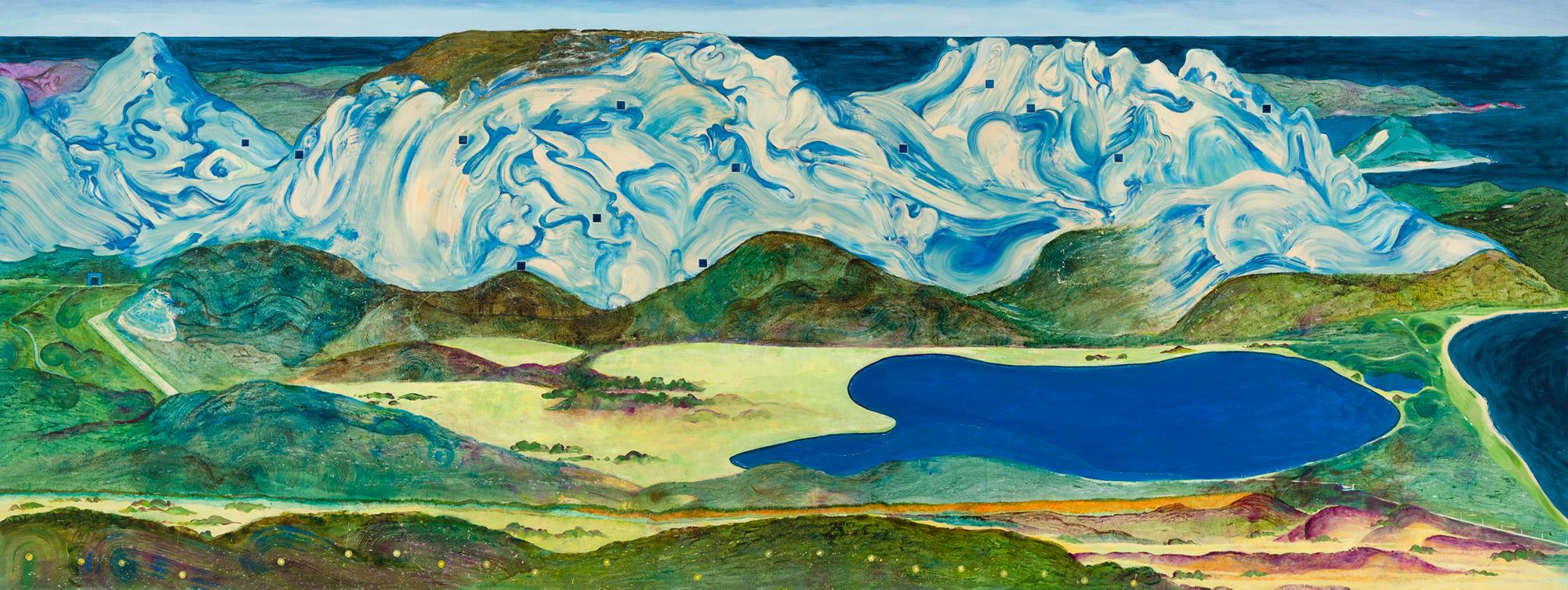
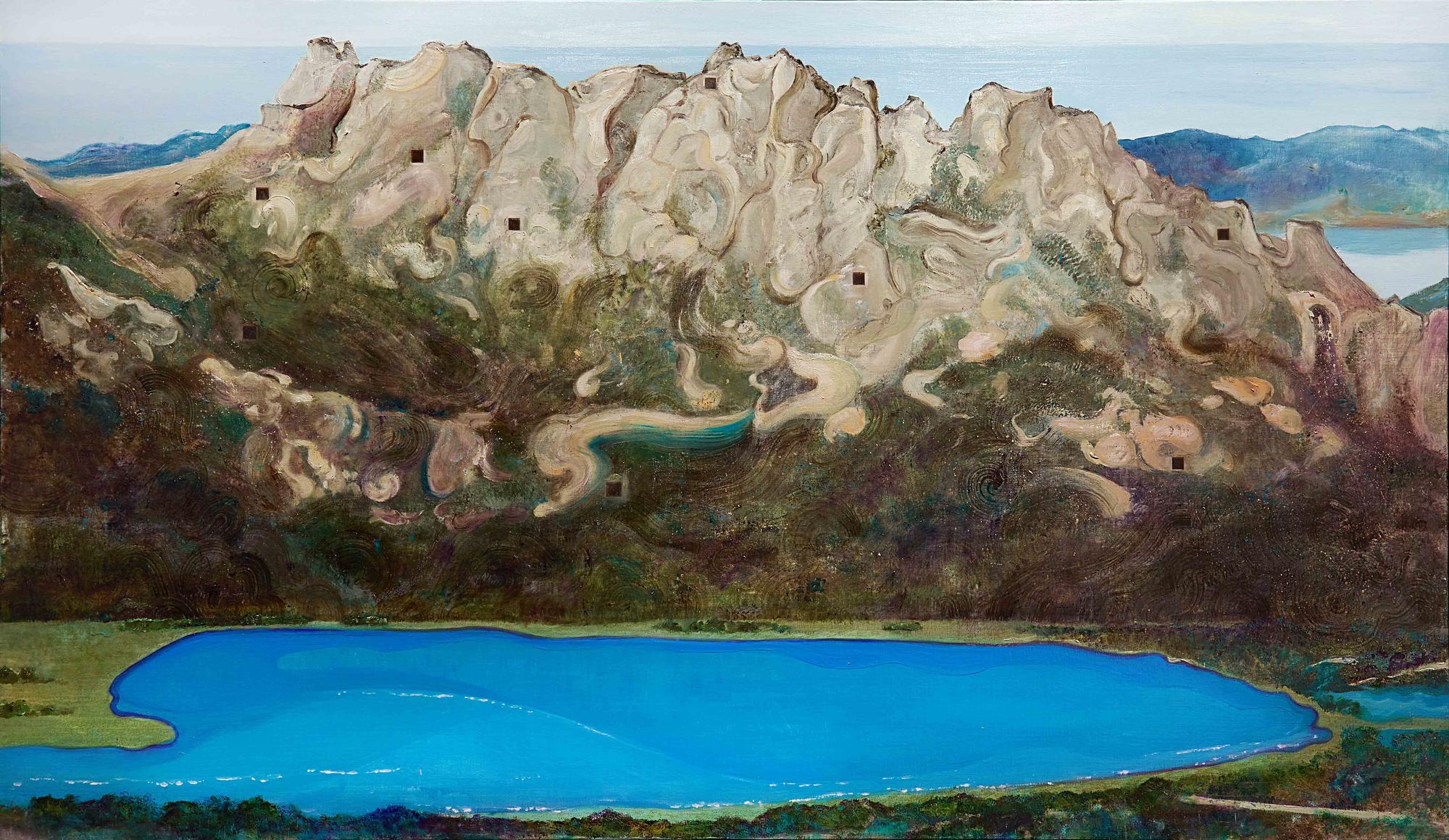
Haevan Lee, Mt. Geumgang 2020, Oil, acrylic on canvas, 141.5x375.5cm ©Haevan Lee

At that moment, Haevan Lee discovered dark holes—bunkers—embedded within the magnified North Korean landscape of Mount Geumgang. Confronted with the coexistence of bunkers, symbols of war and division, within a mountain long regarded as an emblem of unification and natural beauty, she sketched the ambivalent scenery on-site and later translated it into painting.

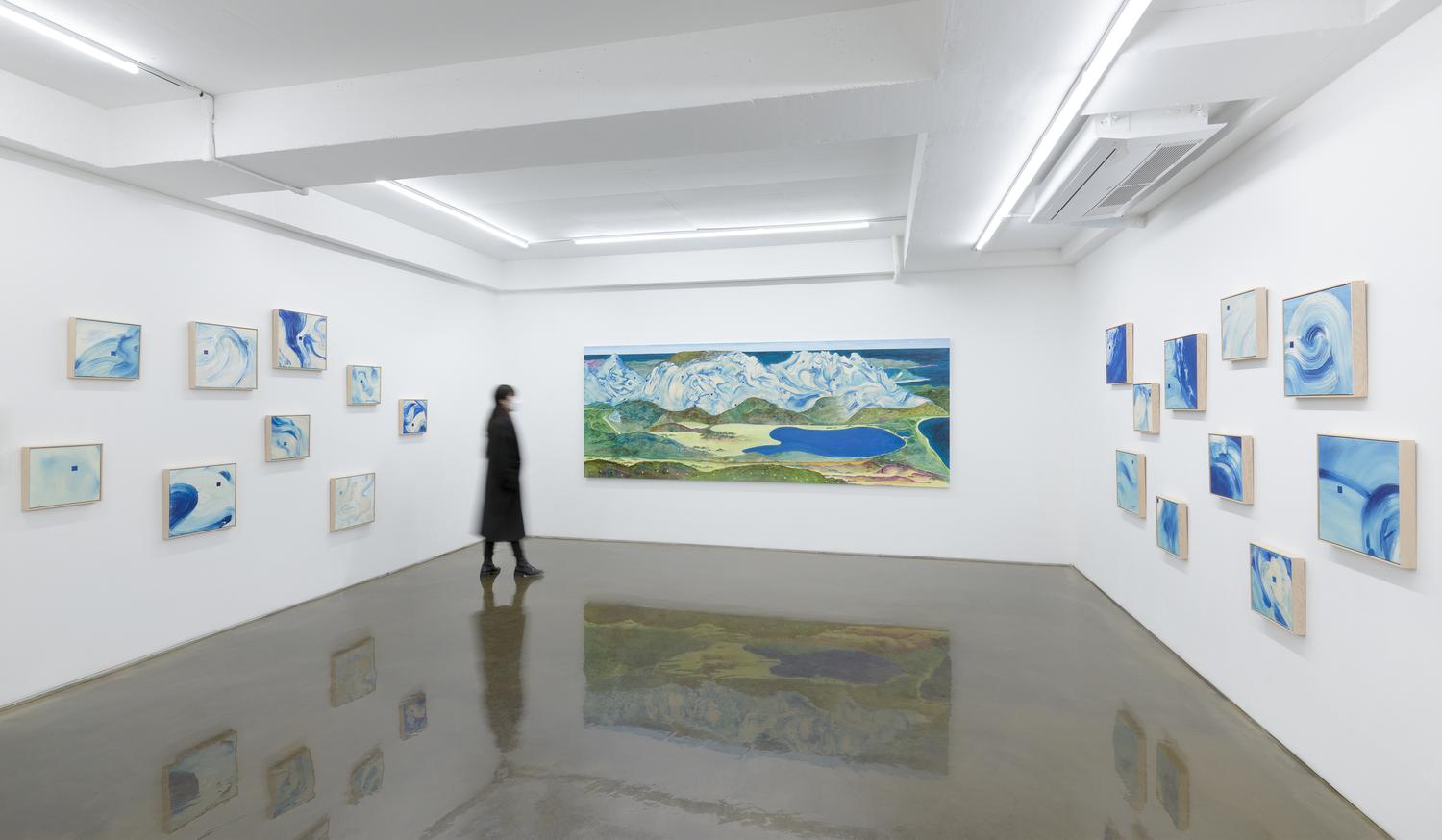
Installation view of 《A Statue Dreaming on River》 (Gallery Lux, 2020) ©Haevan Lee

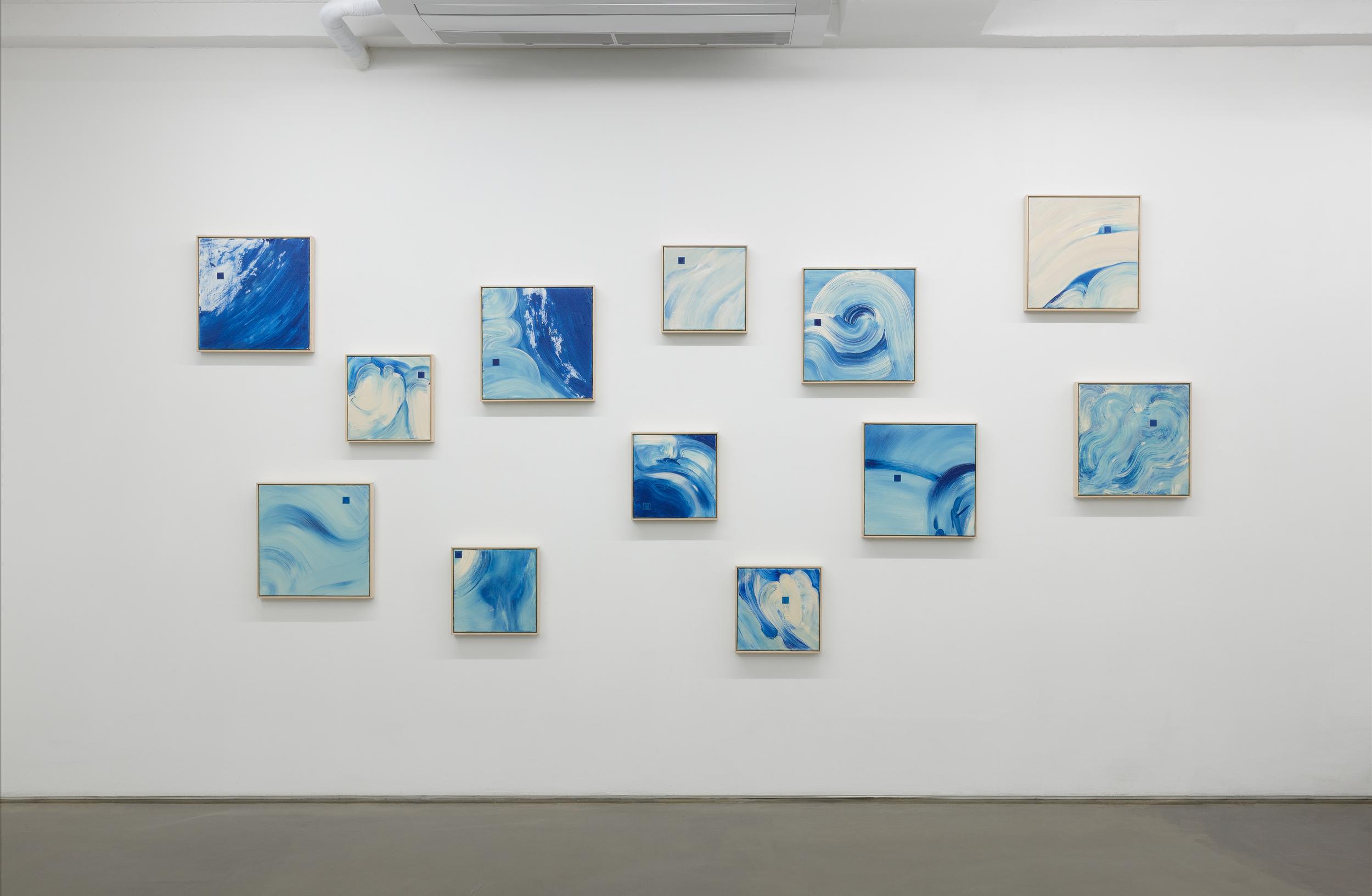
Surrounding the large-scale painting, which was created based on on-site drawings and memory, were smaller abstract works divided into fragments. These pieces reflected the artist’s attempt to capture the experience of viewing through the monitor and telescope, as well as the hazy landscape of memory. The dark squares embedded within the natural scenery reveal it as both the purest place untouched by human presence and, paradoxically, the most political of landscapes.

Installation view of 《Border_less.site》 (Culture Station Seoul 284, 2021) ©Haevan Lee

In 2021, the artist participated in the ‘Border_less.site’ project, conducting research and an exhibition in collaboration with other artists, architects, researchers, and curators. The exhibition 《Border_less.site》 originated from research across various fields—including sociology, cultural anthropology, and architectural history—focused on the Sinuiju-Dandong area, the border region between China and North Korea.

Installation view of 《Border_less.site》 (Culture Station Seoul 284, 2021) ©Haevan Lee

In 2019, the artist joined the team on a field trip to the border, carefully avoiding North Korean airspace and territory. Subsequently, Haevan Lee drew upon her past experiences of observing geopolitical borders—from looking at North Korea through tourist telescopes on a ferry flying the Chinese flag on the Amnok River to observing Mount Geumgang through a large military telescope at the DMZ Observatory in Goseong, Gangwon-do.  

She regarded these acts of border observation as analogous to the creative process of hiring nude models in the studio and sketching their forms through croquis. The landscapes of borders, created through Lee’s and others’ subjective gazes, were installed in the exhibition space, where they themselves became new objects of observation for the audience.

Haevan Lee, Buffet Zone, 2021, Oil, acrylic on canvas, 157x955.5cm ©Haevan Lee

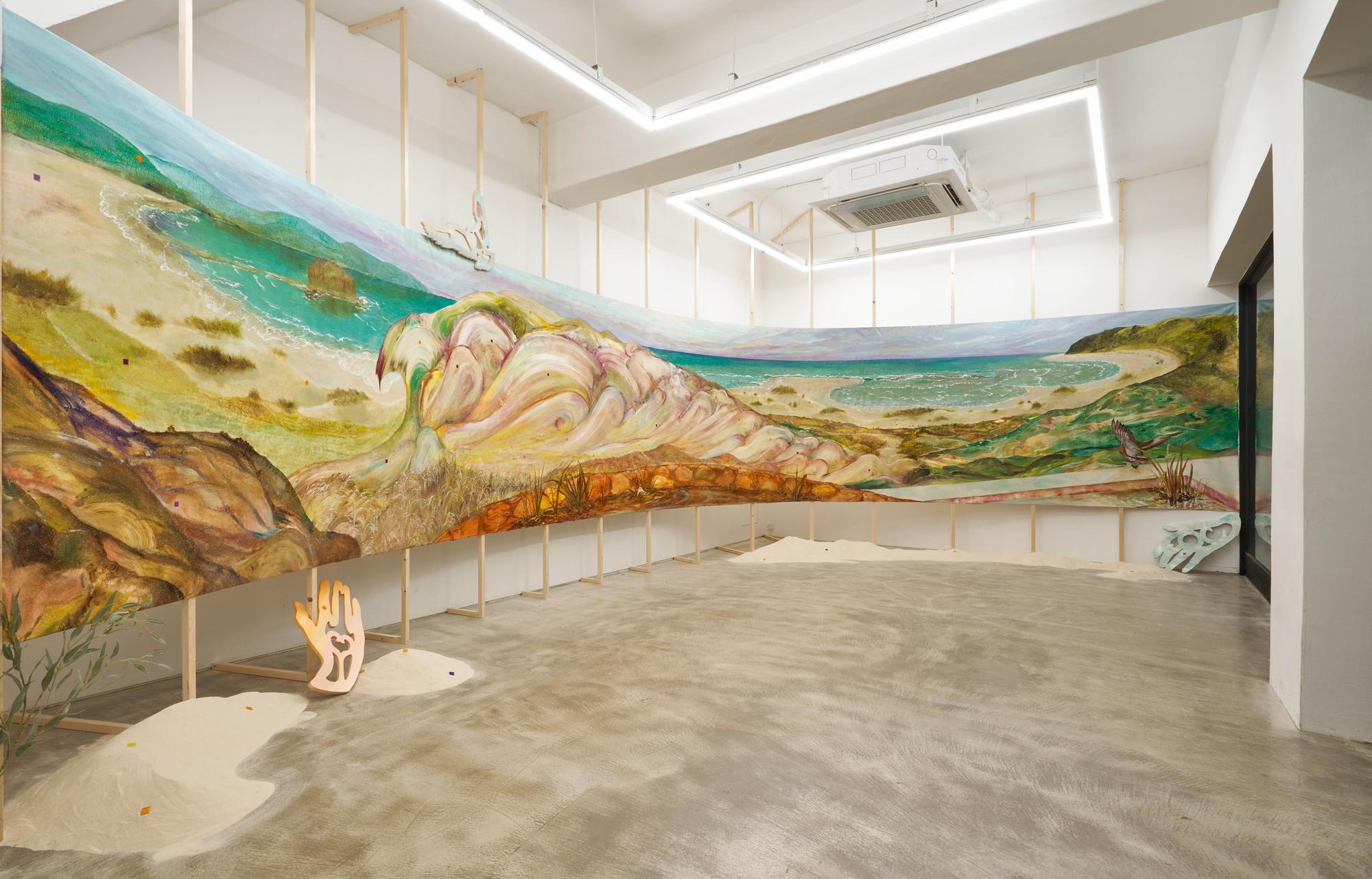
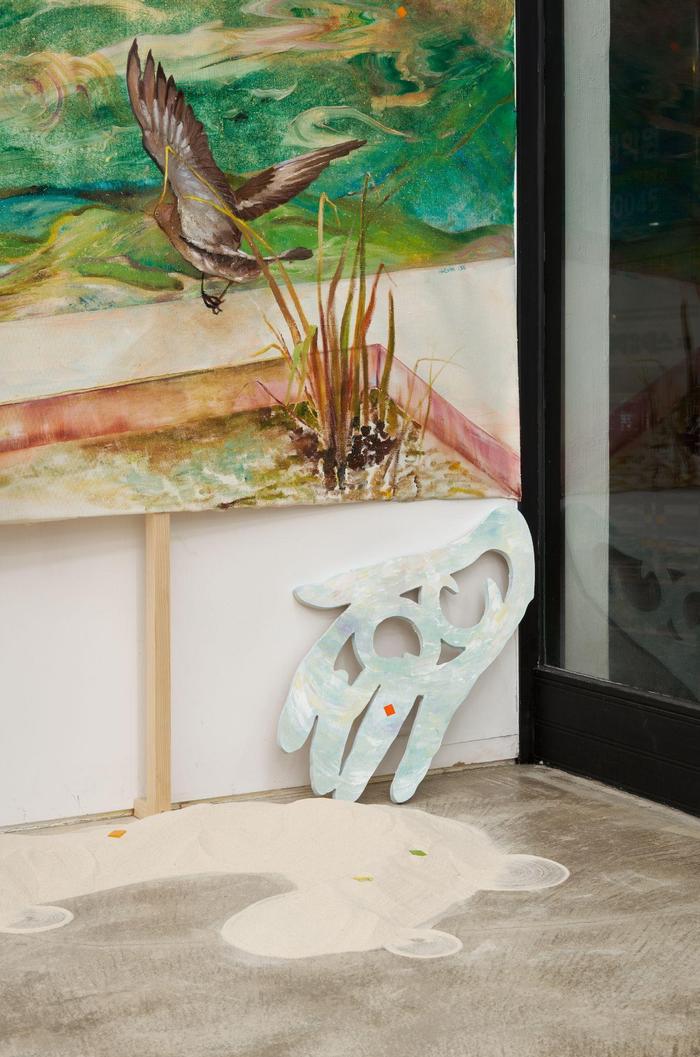
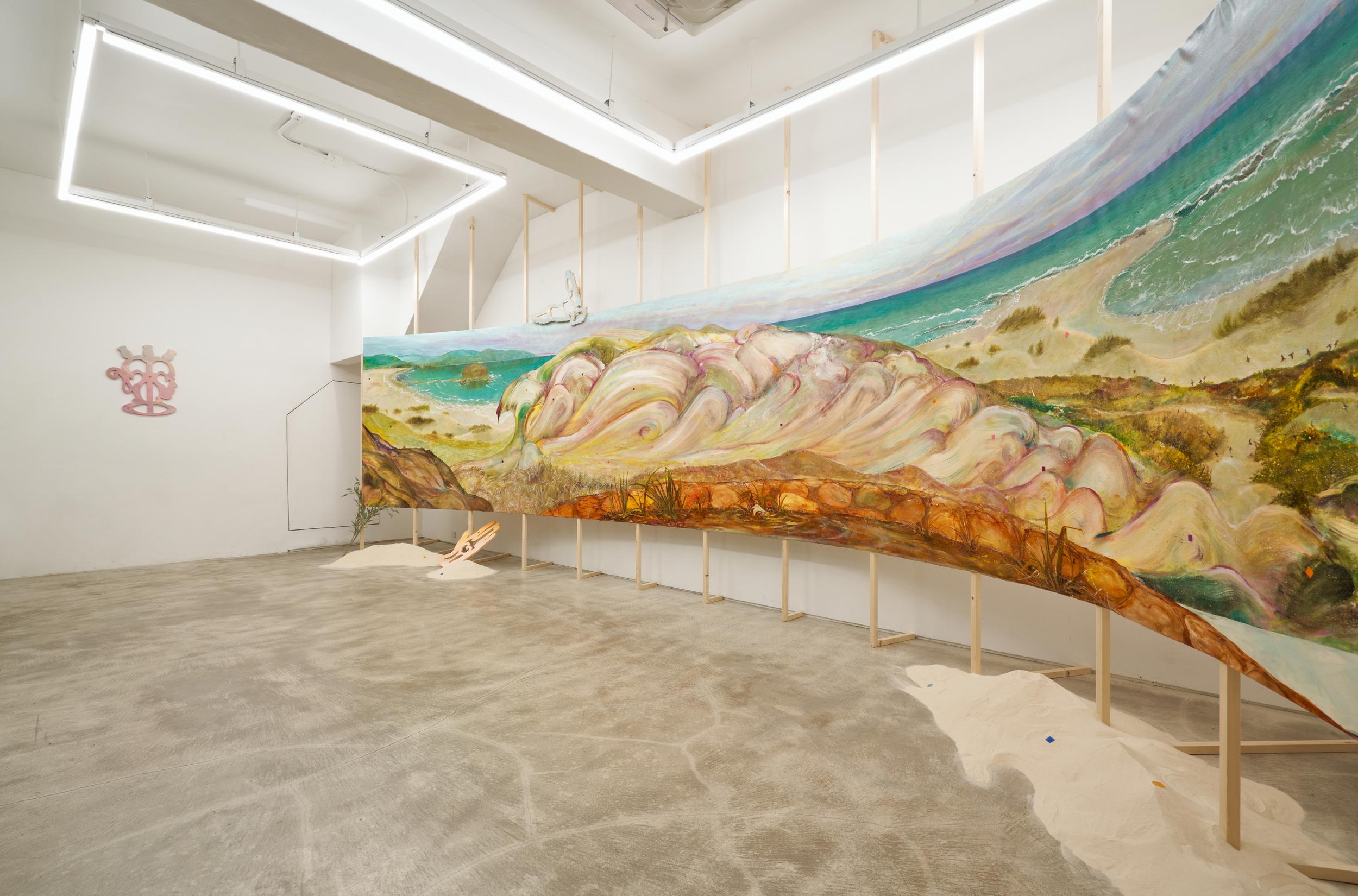
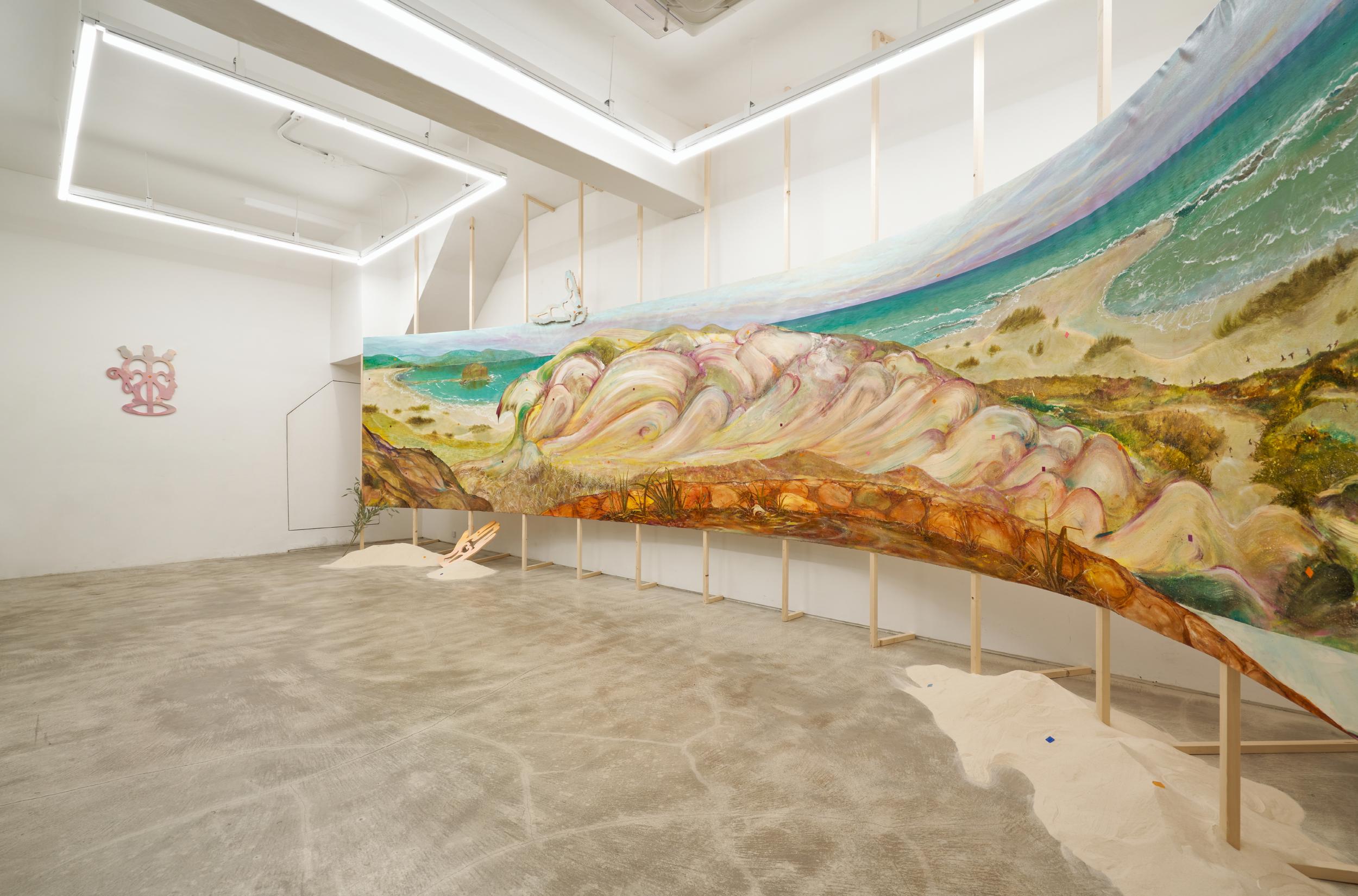
Subsequently, Haevan Lee began presenting large-scale experimental works depicting borderlands and buffer zones in a panoramic format. For example, her 2021 solo exhibition 《Buffer Zone》 at SAGA extended beyond depicting the physical buffer zones within a canvas: through expansive panoramic paintings and object installations that enveloped the space, Lee transformed the entire exhibition area itself into a buffer zone, extending the concept of the painted screen into the physical environment. 

Through this exhibition, Lee also began to expand her focus beyond the Korean DMZ to include the borderlands between North Korea and China, as well as other Eurasian border regions, exploring the multilayered concept of the “buffer zone.”


Installation view of 《Buffer Zone》 (SAGA, 2021) ©Haevan Lee

A buffer zone is both a space where opposing forces are mitigated and a neutral area belonging to neither side. At the same time, it is marked by thick boundaries and pervaded by underlying tension. 

Although largely inaccessible to humans, these zones have become habitats for diverse flora and fauna. Human forms are rare in such spaces, but artificial structures often appear. For example, brightly colored triangular and rectangular geometric objects mark areas where humans from different territories cannot pass—either zones planted with landmines or lines indicating boundaries that must not be crossed.


Installation view of 《Buffer Zone》 (SAGA, 2021) ©Haevan Lee

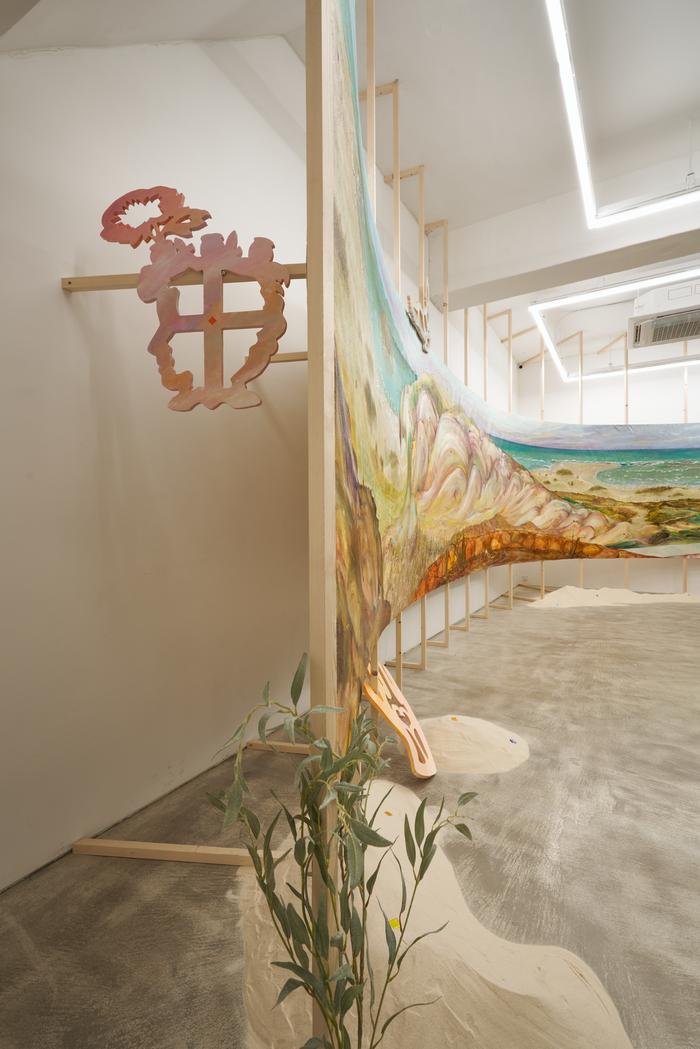
In the exhibition 《Buffer Zone》, Lee expanded her sensory landscapes of these buffer zones to encompass the entire gallery space. Unlike a traditional landscape painting that assumes a single viewpoint, her panoramas are composed by stitching together multiple perspectives, allowing the viewer’s position and vantage point to shape how the work is perceived.

Installation view of 《Buffer Zone》 (SAGA, 2021) ©Haevan Lee

Moreover, in 《Buffer Zone》, one could sense not only tension at the extremes along a single line, but also a rich array of relational forces. The boundaries humans establish toward one another, the line between the artificial and the natural, the divide between image and world, sometimes the gaps between differing viewpoints, and even the borders between distinct materials—Lee sought to convey the perception of these multilayered boundaries on an expanded spatial scale. 

Viewers could navigate the taut line of tension or, like the flora and fauna of nature, wander freely without heed to the divisions.


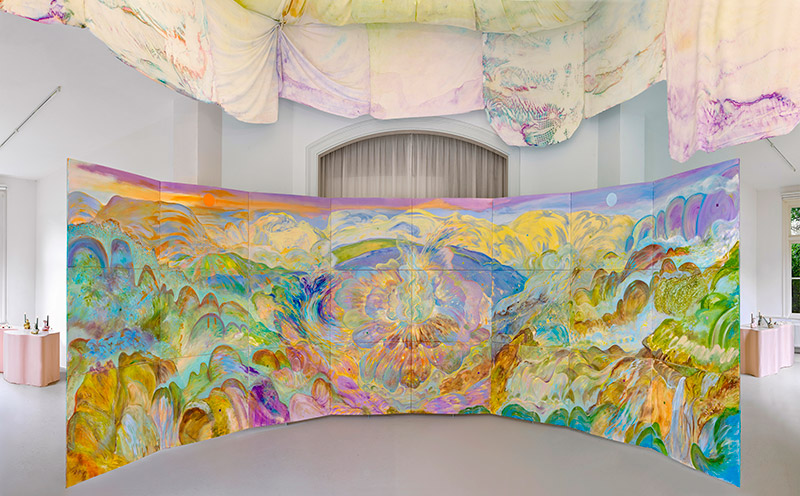
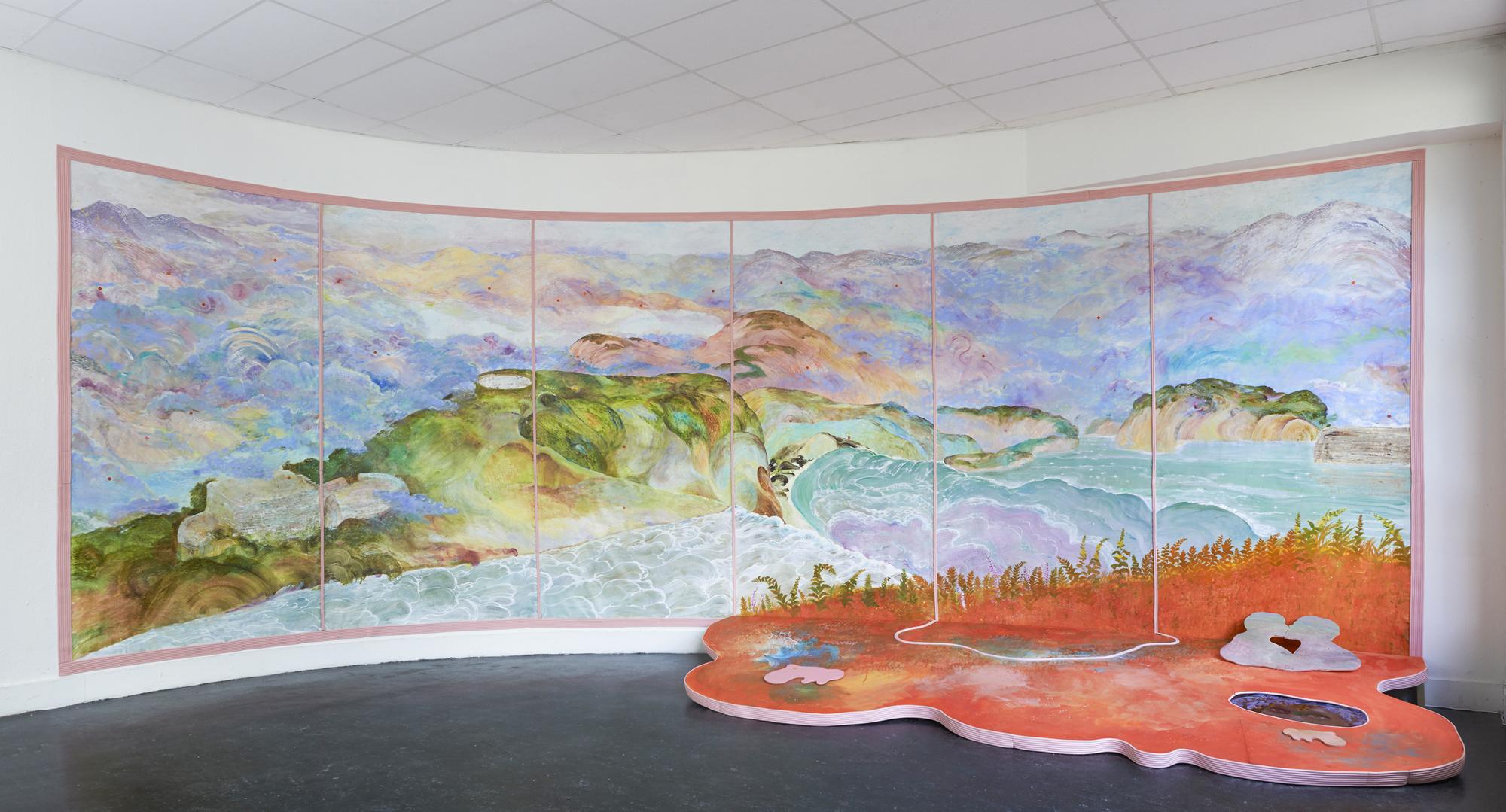
Haevan Lee, Battleground Group lll : Figments of melancholic soil, 2024, Oil, acrylic on canvas, 243x800cm ©Haevan Lee

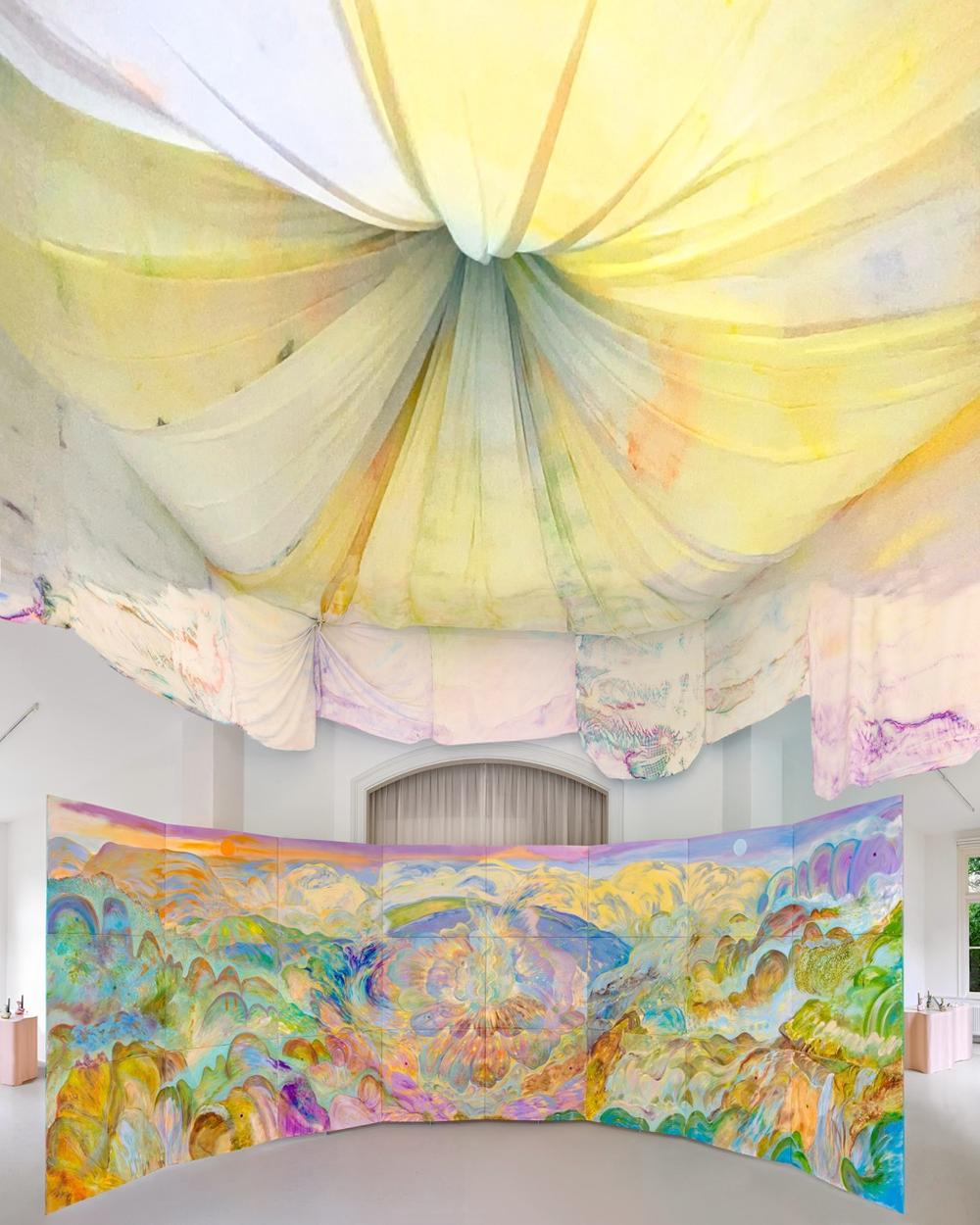
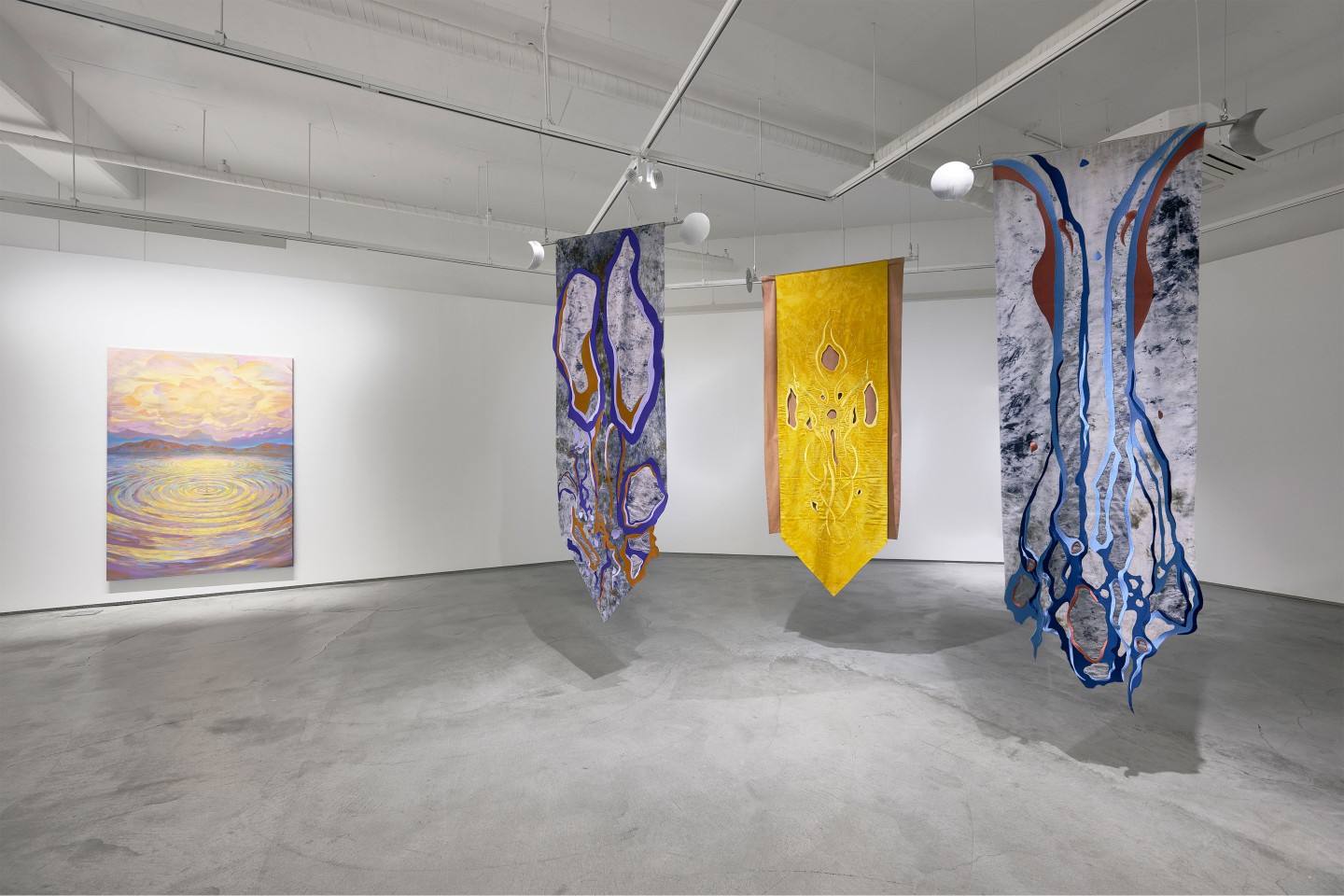
Meanwhile, in her 2024 solo exhibition 《Battleground》, held in Amsterdam and Seoul with a one-month interval, Haevan Lee examined how the structures of war connect to contemporary life. The exhibition extended the ominous implications of the battlefield, draping the space with visual devices imbued with an aesthetic rhetoric. 

Rather than depicting formal indicators of war, the exhibition comprised enormous curved paintings, coarse ceramics, and draped textiles that collectively encompassed the space. The images, shaped by imagination that distorts, exaggerates, and beautifies the subjects, did not portray the literal appearance of a specific battlefield but conveyed conceptual representations of border areas imbued with the atmosphere of conflict.

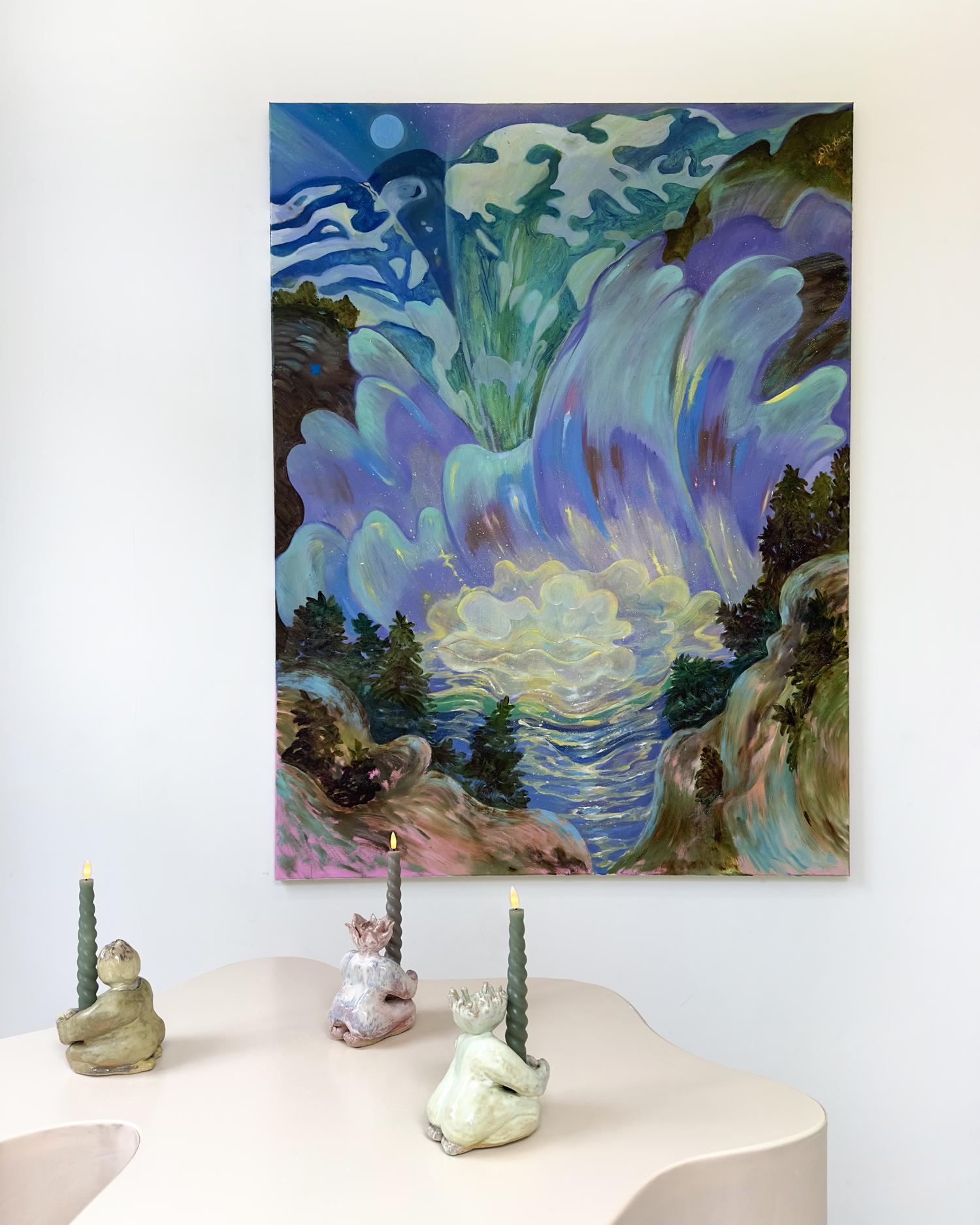
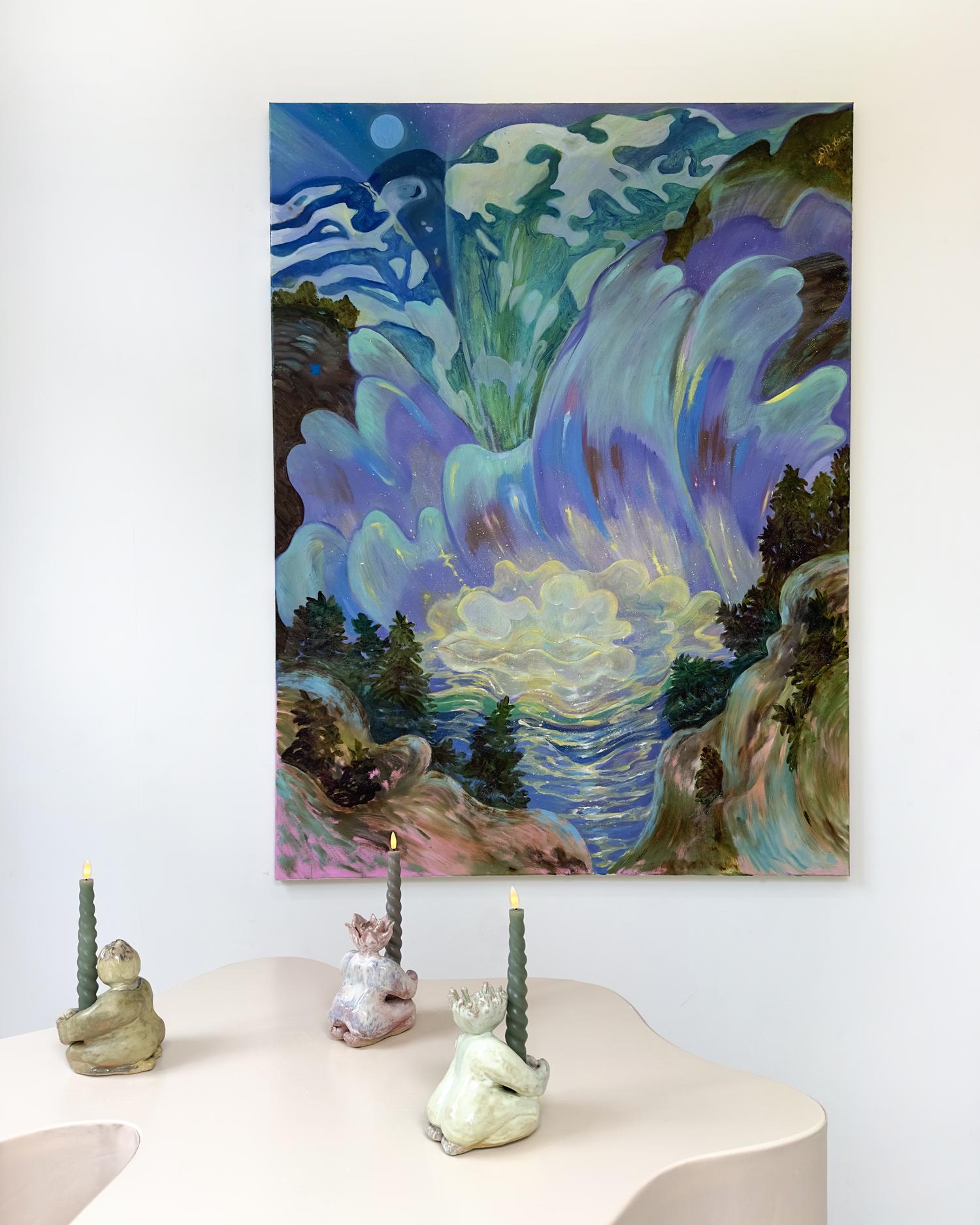
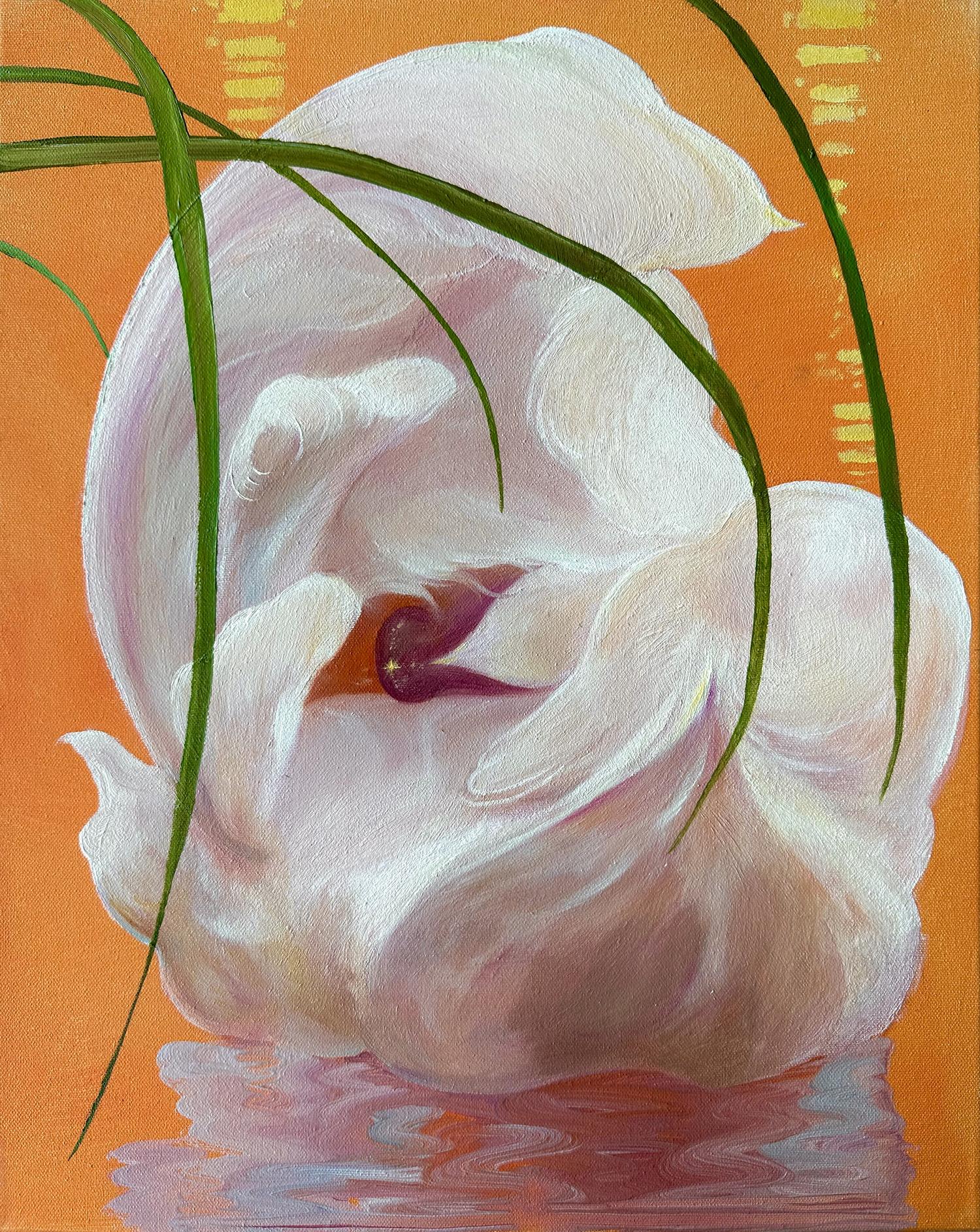
Haevan Lee, Battleground Group lll Nr.01: Oh dear, 2024, Oil, acrylic on canvas, 160x120cm ©Haevan Lee

The atmosphere of the exhibition was shaped by depictions evoking flowing natural landscapes. These resembled the qualities of a buffer zone—a region where fighting has temporarily ceased. A neutral state without armed exchange, a space where conflicts are mitigated and safety is ensured, sometimes entirely devoid of human-made structures, allowing the autonomous forms of nature to flourish—such places exist precisely because conflict is possible. 

Within the exhibition, scenes of flower-like explosions, sunset-like smoke, and mountain-like demilitarized zones—or their opposites—intertwined. In this way, 《Battleground》 manifested the paradox of the buffer zone: a place that embodies the beauty of landscapes established by nature itself while simultaneously activating the latent anxieties embedded in the human psyche.


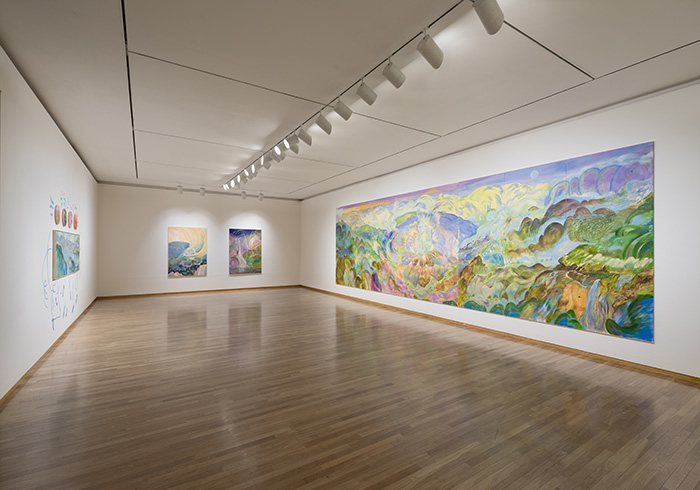
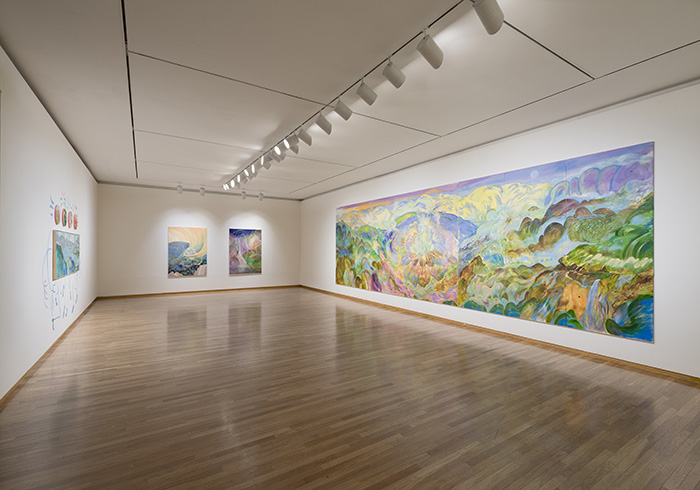
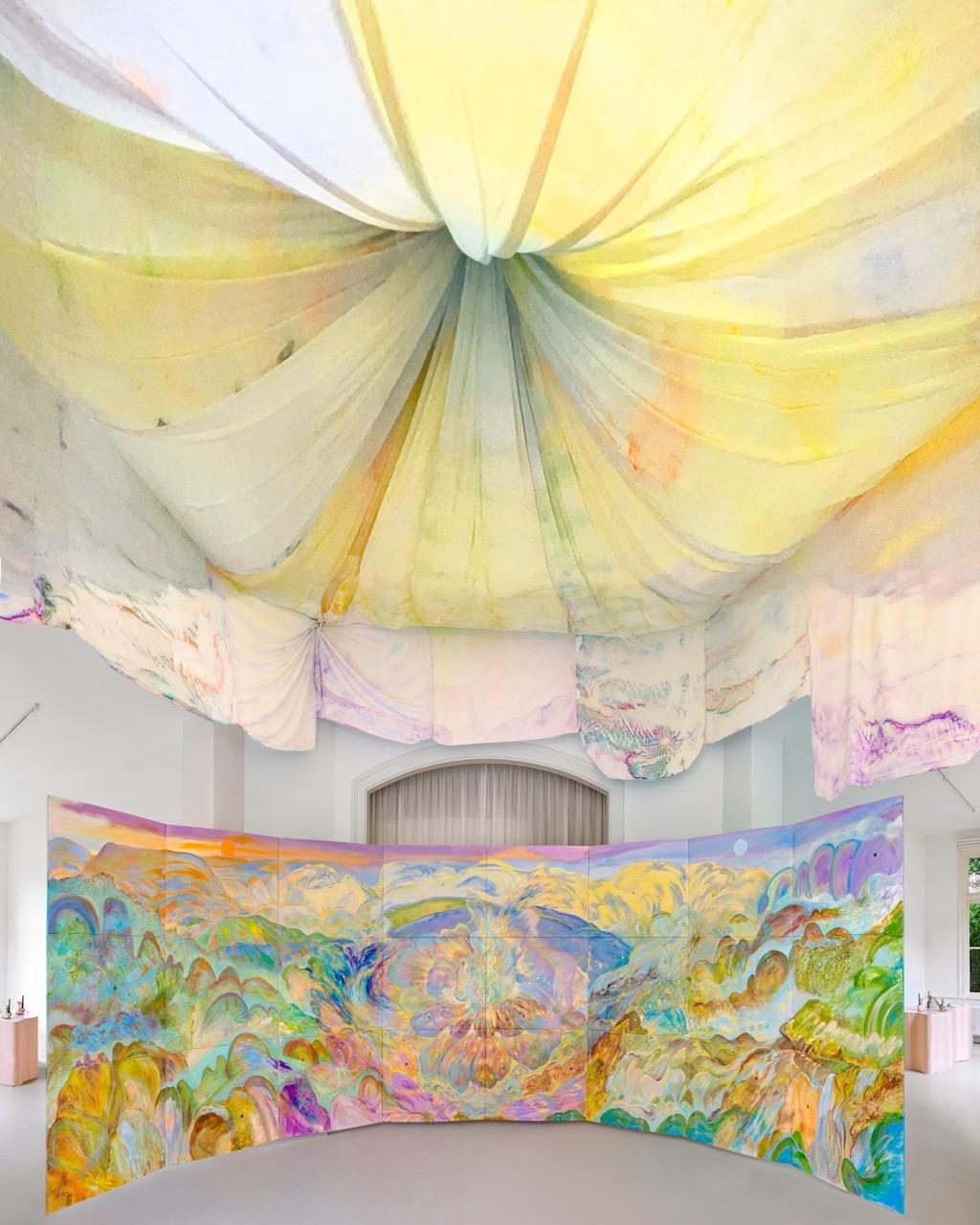
Installation view of 《Hidden Blooming》 (Kumho Museum of Art, 2025) ©Kumho Museum of Art

In 2025, at her solo exhibition 《Hidden Blooming》 at the Kumho Museum of Art, the artist presented a series of landscape paintings, murals, and object-based works centered around the color orange, symbolizing the “invisible boundaries” within the nature of the Demilitarized Zone (DMZ). 

Through these explosive images, she confronted chaos directly while, through metaphorical expression, depicting a psychological buffer zone—a desire for a calm neutrality even amid disorder.


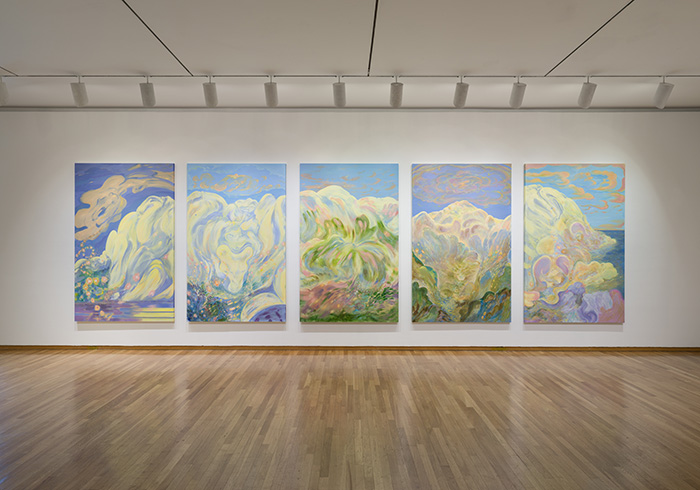
Installation view of 《Hidden Blooming》 (Kumho Museum of Art, 2025) ©Kumho Museum of Art

The tension of boundaries—though invisible, undeniably present—resides quietly in her paintings as a metaphorical expression, while the pervasive orange hue functions as a visual warning and a sign of these borders. Through this, the artist visualizes the dual and paradoxical nature of buffer zones that often go unnoticed, prompting viewers to reconsider their gaze and attitude toward boundary regions. 

In this way, Haevan Lee’s practice originates from her personal experience with the DMZ, a specific border area on the Korean Peninsula, and expands to encompass the broader concept of buffer zones, both physical and psychological. Her paintings, blending fact and abstraction, materialize and make visible the invisible boundaries within our reality, allowing viewers to perceive and contemplate the contradictions and tensions inherent in these spaces through an artistic lens.

 “For me, art is an attitude toward life, a way of connecting the visible and invisible worlds, the familiar and the unfamiliar, through a third eye. This third eye is my translation, perspective, attitude, and imagination.”    (Haevan Lee, Artist’s Note)

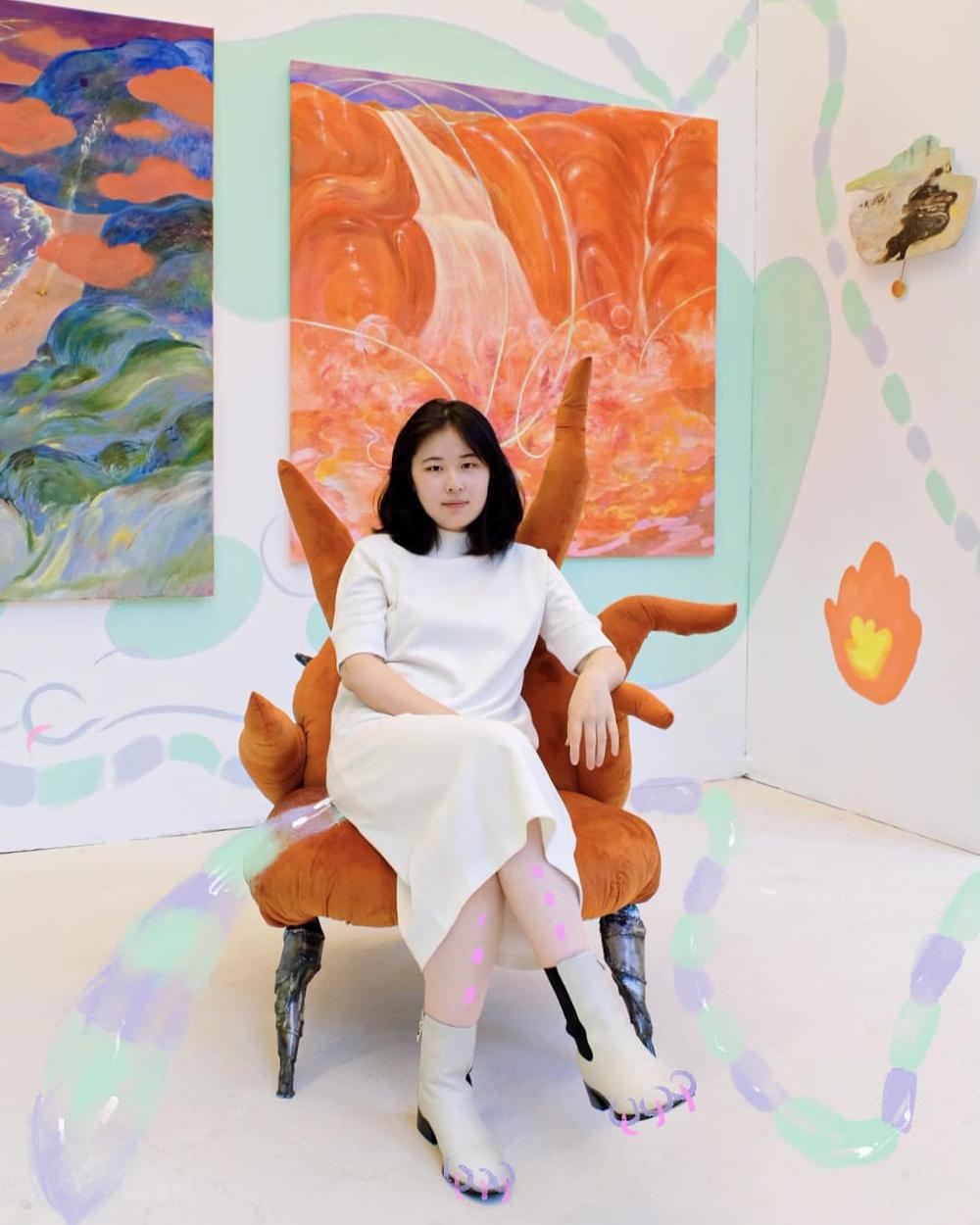
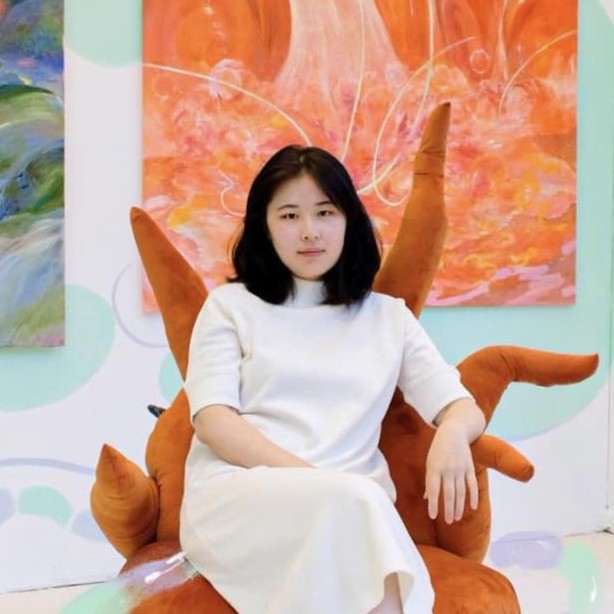
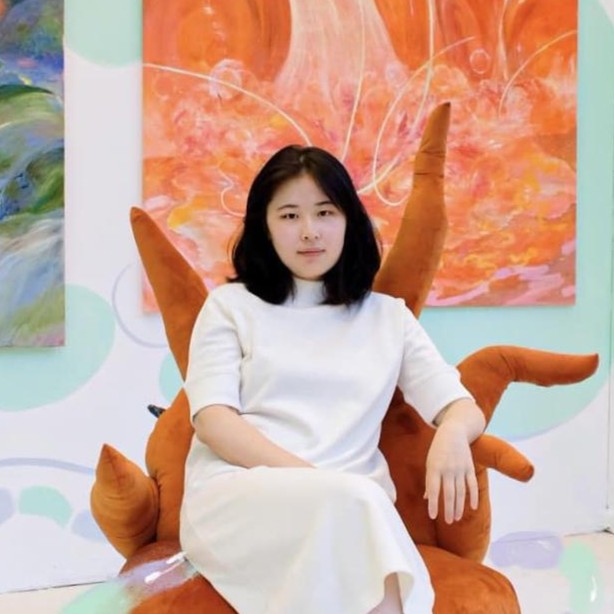
Artist Haevan Lee ©Haevan Lee. Photo: Zihan

Haevan Lee holds a BFA in Oriental Painting from Sungkyunkwan University and an MA in Artistic Research from the Royal Academy of Fine Arts in The Hague. Her solo exhibitions include 《Hidden Blooming》 (Kumho Museum of Art, Seoul, 2025), 《Battleground》 (Insa Art Space, Seoul; Bradwolff Projects, Amsterdam, 2024), 《A Statue Dreaming on River》 (Gallery Lux, Seoul, 2020), and more.
 
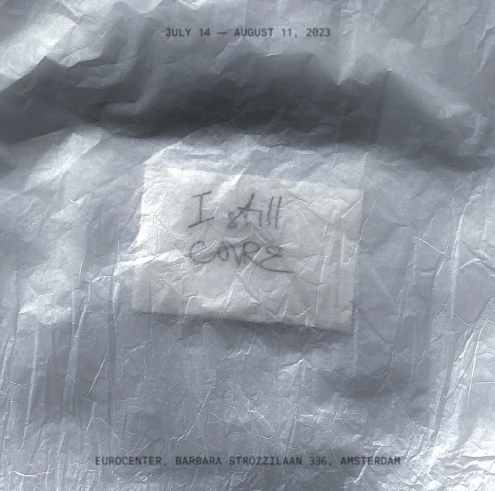
She has also participated in numerous group exhibitions, including 《The Mutable Line》 (G Gallery, Seoul, 2025), 《Soft Intimacies》 (Stroom Den Haag, Haag, the Netherlands, 2024), 《I Still Care》 (Eurocenter Amsterdam, Amsterdam, 2023), 《A scenic route to self》 (NEST, Haag, the Netherlands, 2022), 《Border_less.site》 (Culture Station Seoul 284, Seoul, 2021), Bangkok Art Biennale 《Escape route》(Bangkok Art and Culture Centre (BACC), Bangkok, 2020), and 《DMZ》 (Culture Station Seoul 284, Seoul, 2019).  

Haevan Lee was selected as the 22nd Kumho Young Artist and, in 2025, was chosen as a resident artist for the MMCA Residency Goyang, working between Seoul and The Hague.

References