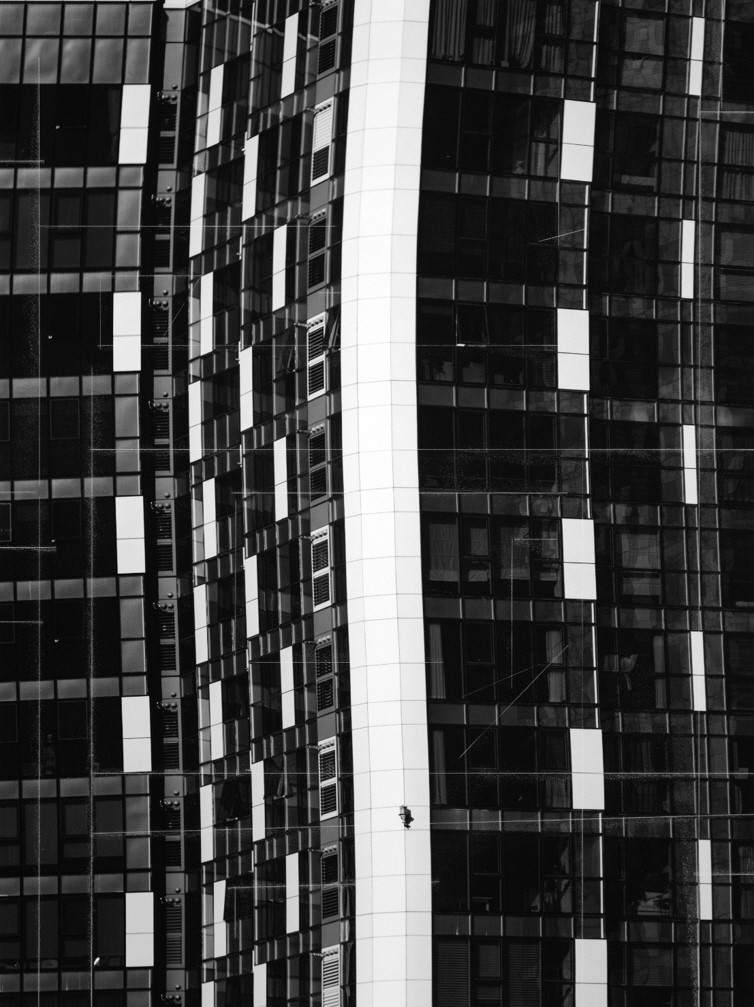
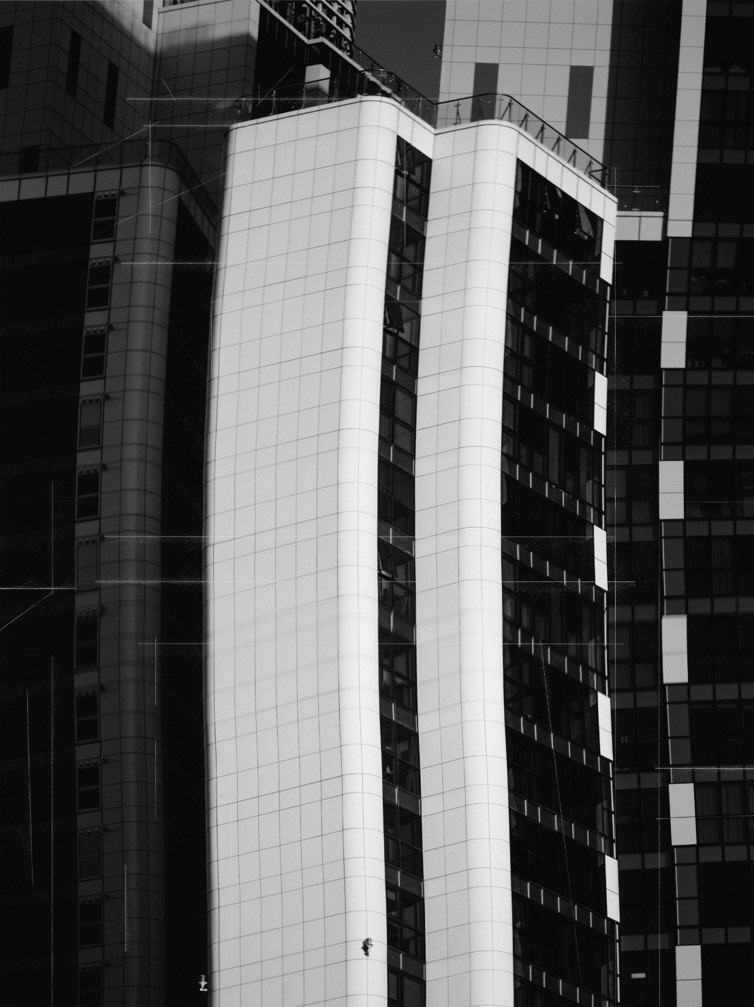
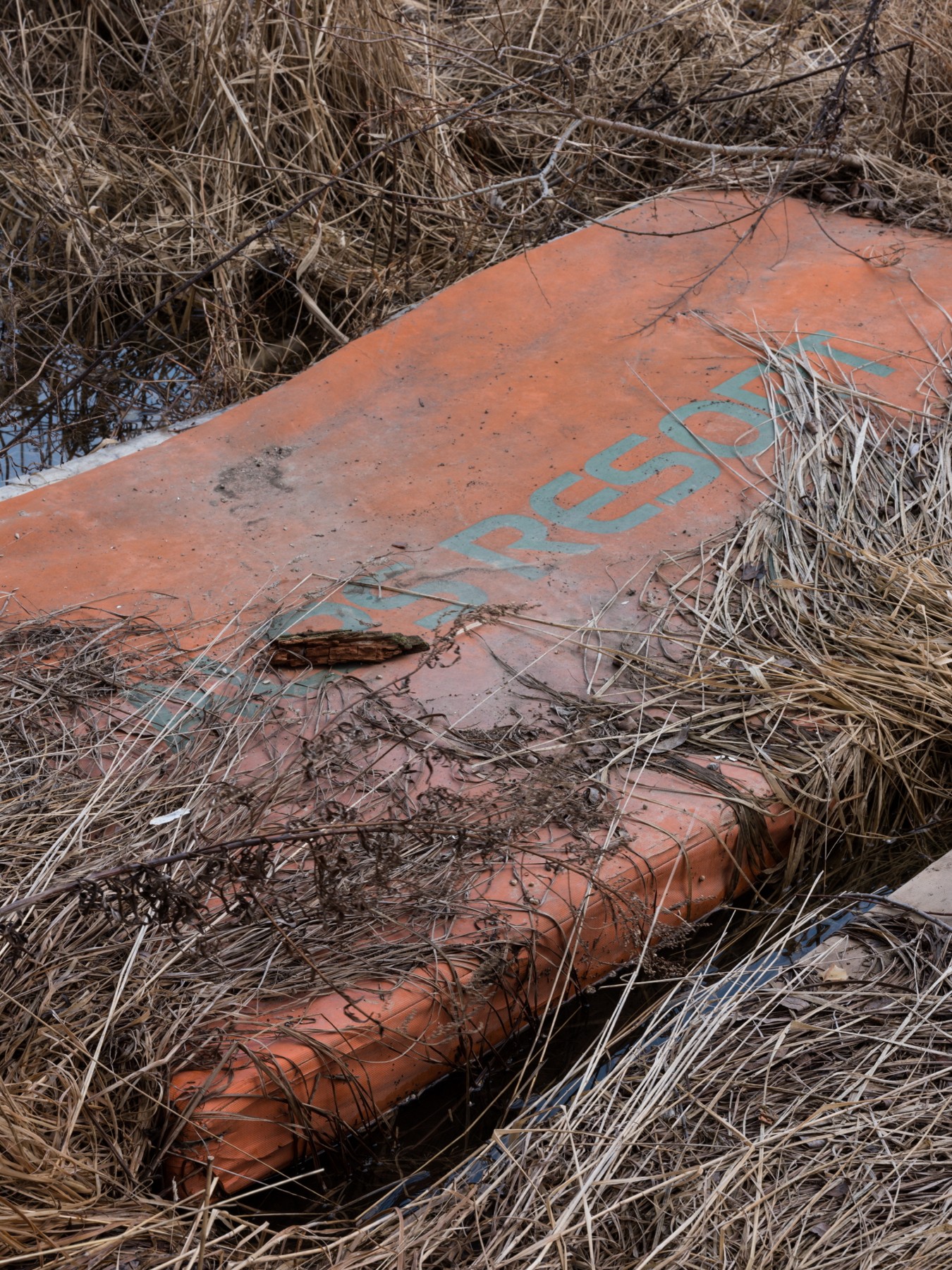
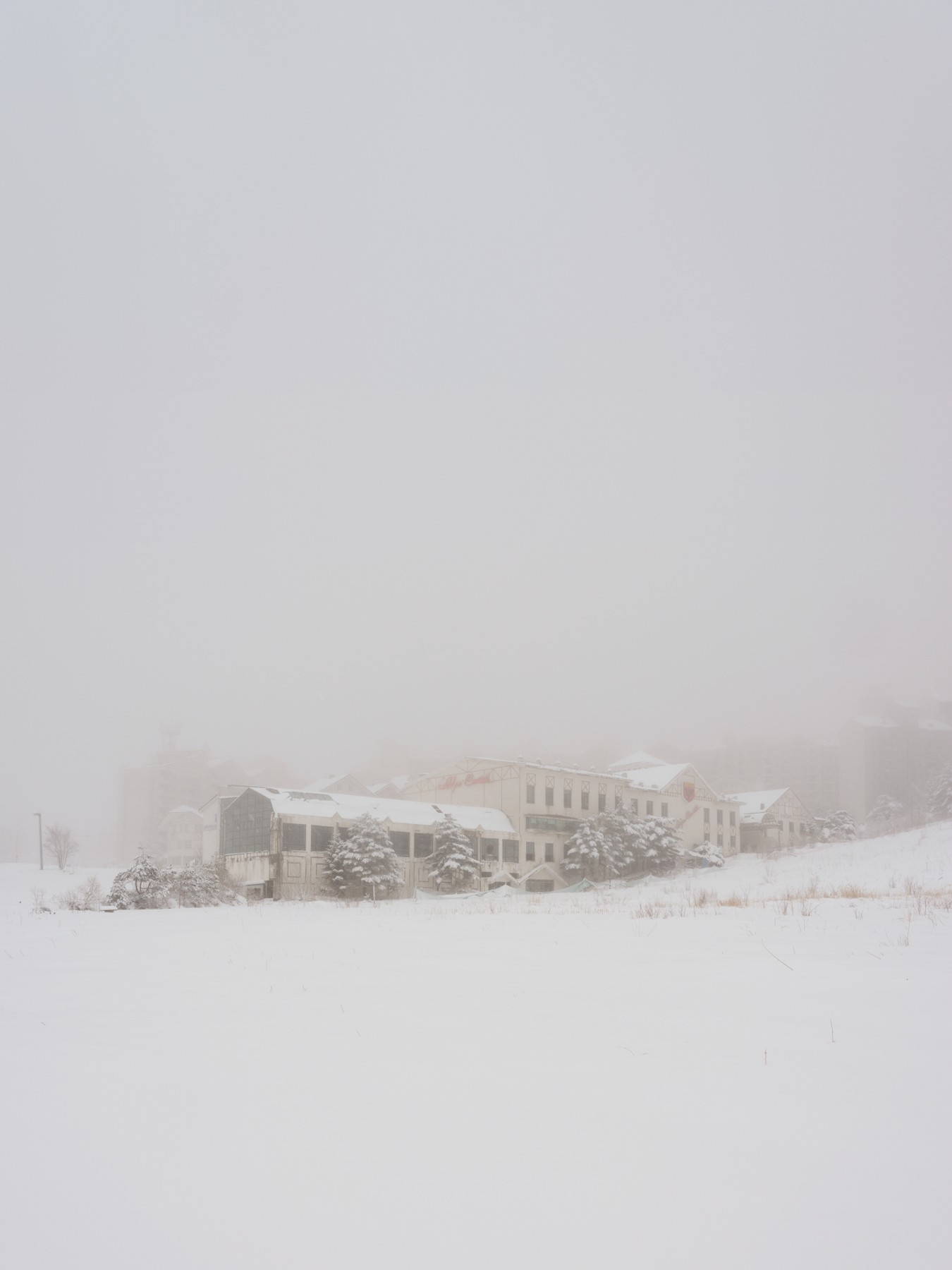
The vacant grounds one steps into—remnants of a once-massive resort—are overgrown with grass due to the rarity of human presence. Only the sudden footsteps of a visitor and the wary barking of dogs echo through the ruins. One lifts their head to gauge the scale of the site. Between mountain ridges that once served as ski slopes, a clock tower juts upward, signaling the suspended time of the resort. Using the tower’s frozen hands as a guidepost, pushing through the overgrown grass, we encounter strange layers of time.
Furniture and ski equipment inside the buildings, covered in dust like well-preserved mummies, seem to announce the belated arrival of guests. Collapsed ceilings, unable to withstand the emptiness, and walls that hold only traces of what once was, point to time that has already passed. Meanwhile, materials left as if construction could resume at any moment, relatively intact outer walls, and a recently repainted lift gleaming on its own seem to indicate a time yet to come. Within the ruins, we experience a peculiar photographic time-space in which the past is summoned into the present and a future remains suspended.
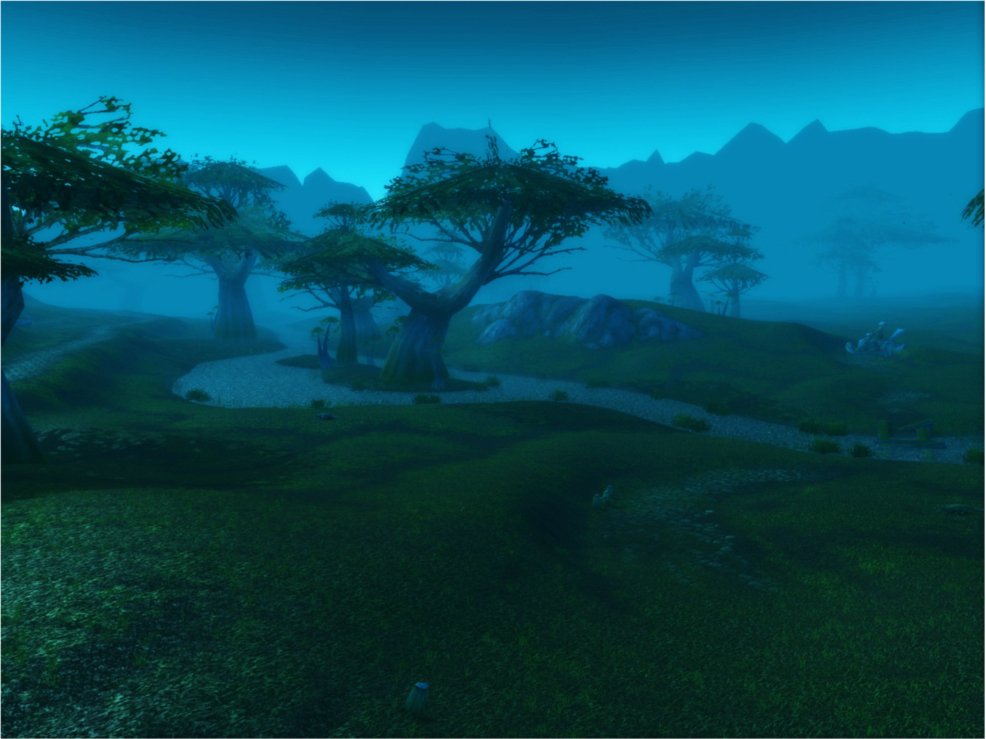
Yet these ruins have once again been recorded through the artist’s photographs. Just as the layered times encountered within the ruins overlap, photographs of the ruins further intensify our sense of confusion. In the exhibition space, the artist’s photographs of the resort intermingle with photographs discovered within the resort itself, producing a state of disorientation. Are photographs of ruins acts of summoning a past that calls forth an earlier past into the present, extending that invocation into the future? Or are they photographs of ruins that resemble photographs themselves—in other words, a “record of a record”?
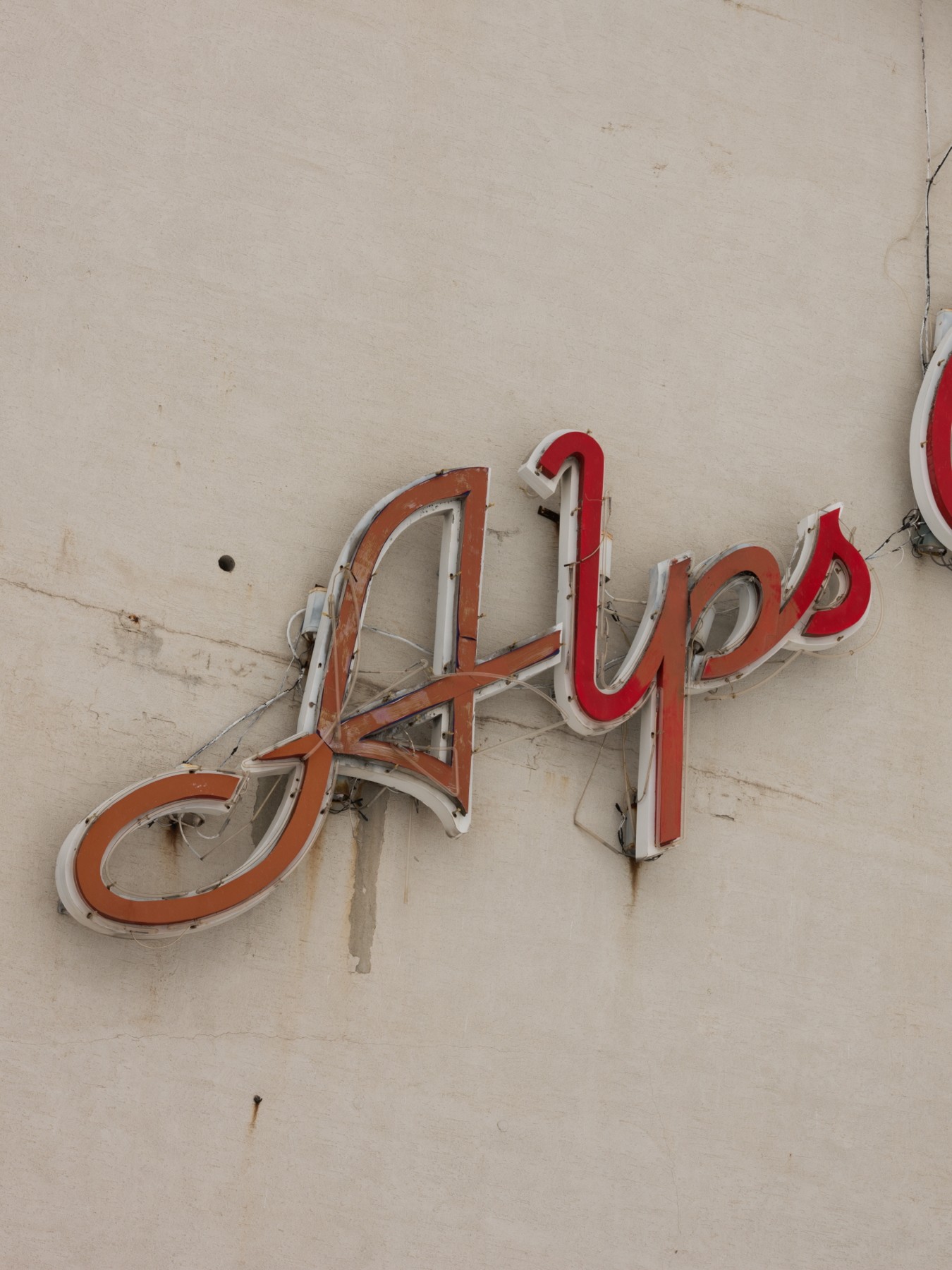
Just as the ruins called the artist back through his memories, we too may summon our own private pasts through these collapsing and collapsed images. For instance, one might recall having visited the Alps ski resort during its prosperous years, or evoke loosely connected memories of similar ski resorts from that period. Even without such memories, ruins evoke a sense of déjà vu—of a past that, though not personally experienced, was heard about, seen indirectly, or remains as a shared cultural symbol, a past that desires to become one’s own memory.
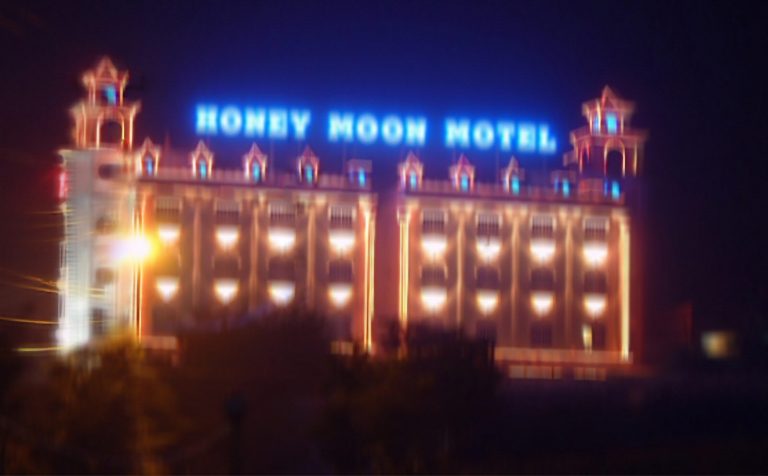
At the same time, however, the exotic name of the resort and the hybrid decorative façades of its buildings create a sense of distance that points toward divergent temporal directions. Among these directions is the imagined utopian future envisioned at the height of Korea’s economic peak in the late 1980s and early 1990s, when the “Alps Resort” underwent large-scale expansion. This “future,” after passing through the rupture of the IMF crisis, has returned as an aspirational horizon even in the present, often regarded as a period of stagnation.
Though not always under the specific name “Alps,” many domestic resorts still bear exotic, foreign-sounding prefixes, testifying to a lingering desire for that future imagined in the past. Ultimately, within the “Alps Resort” coexists a temporal condition in which an unfulfilled future of the past and a vaguely remembered yet still longed-for past of the future overlap—what may be called a “ruinous” time.
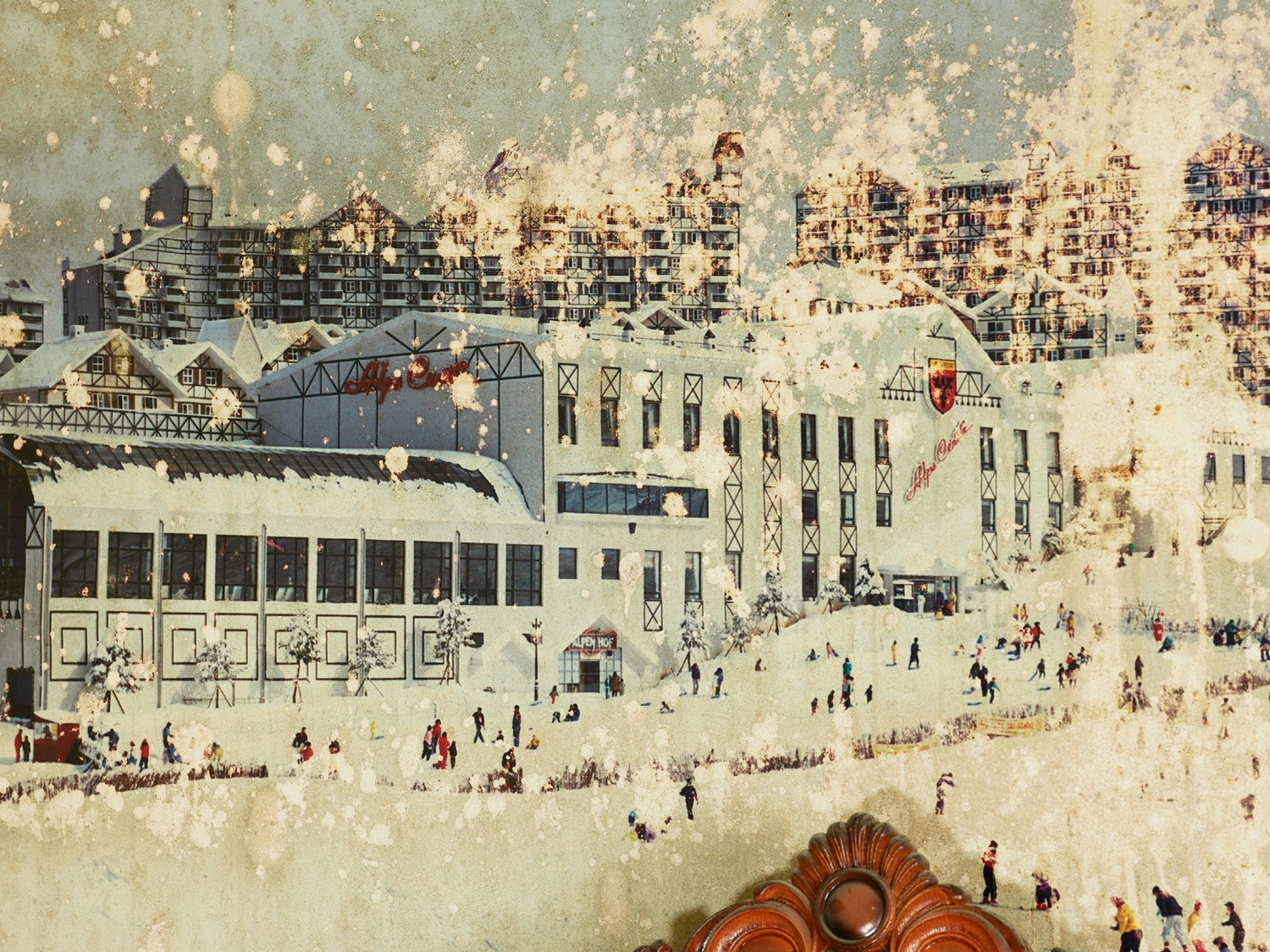
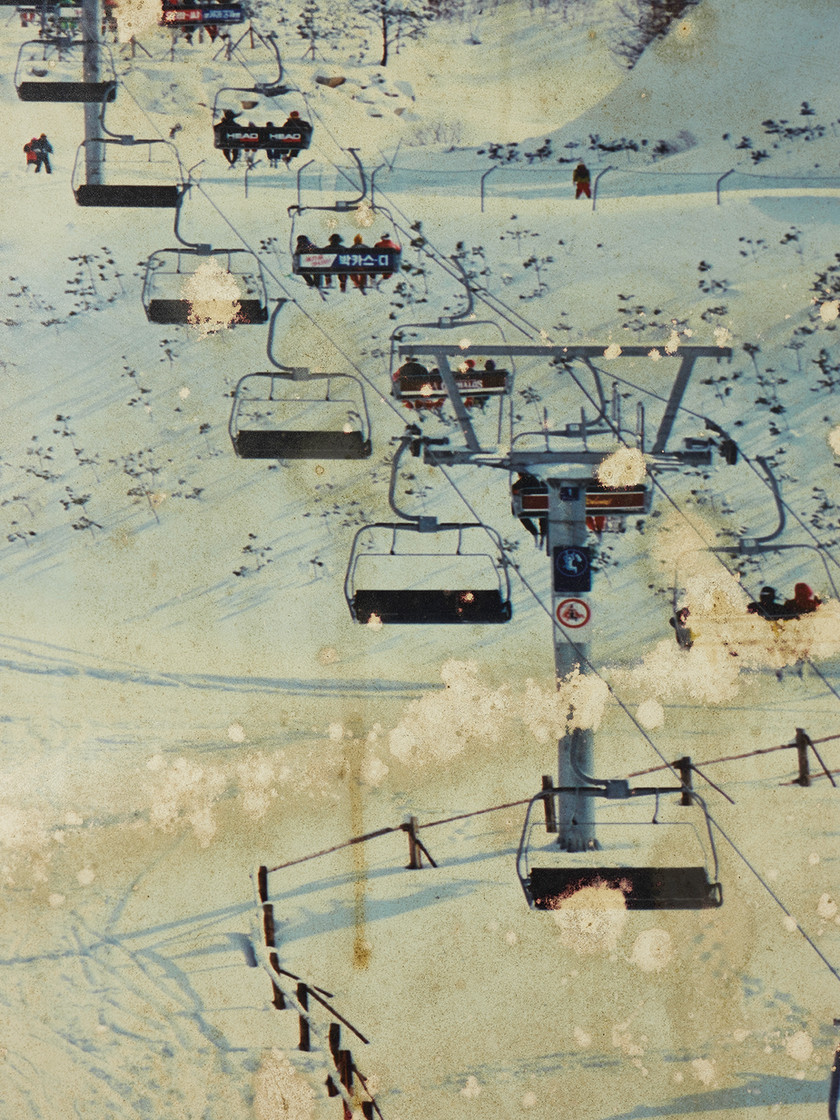
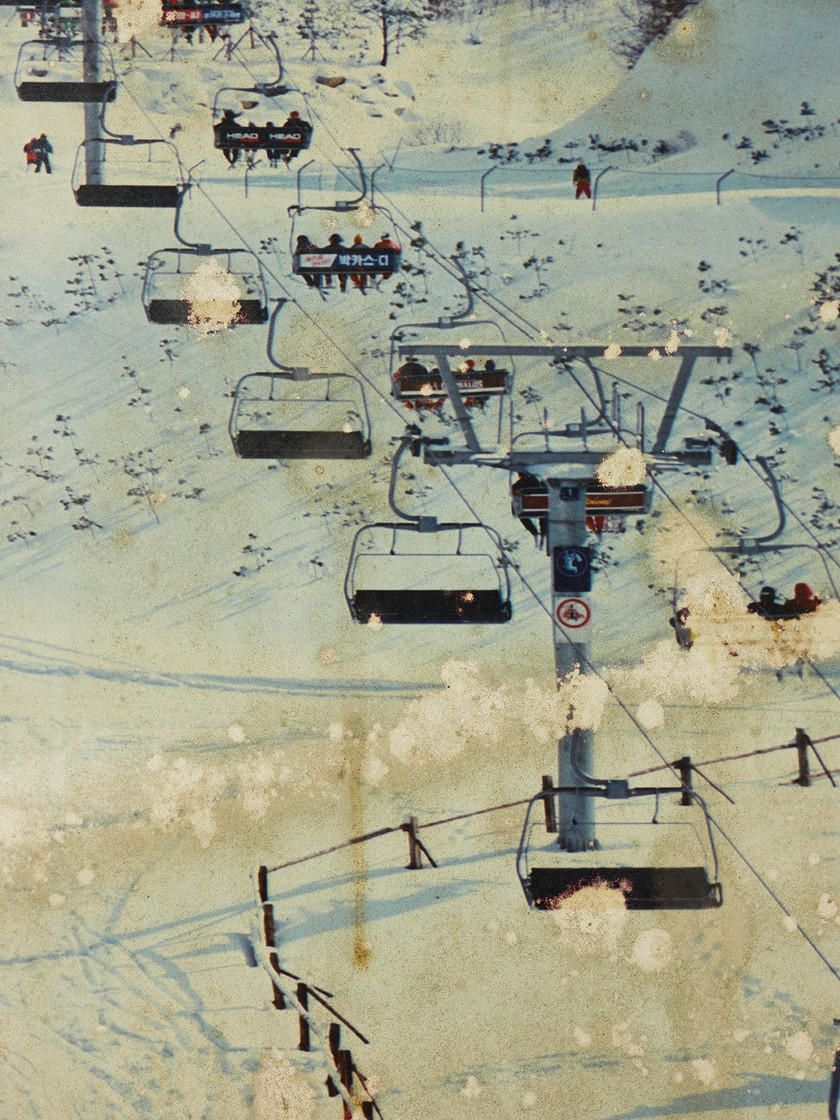
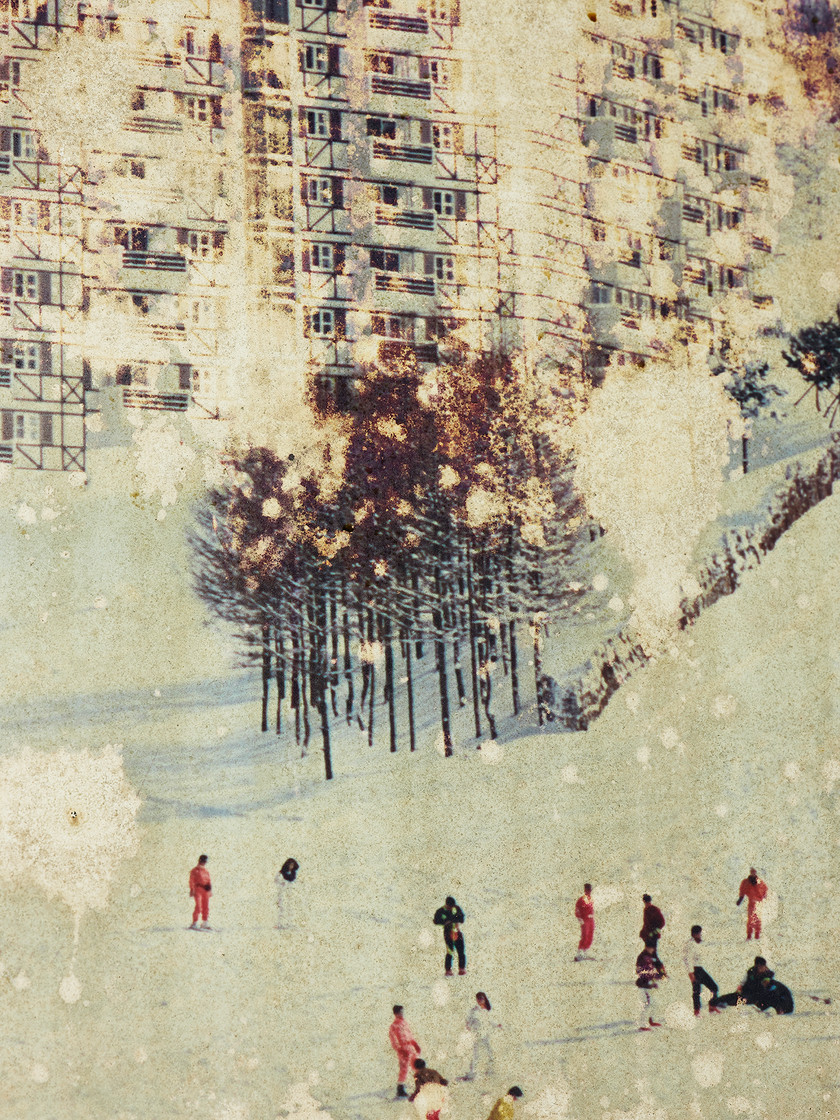
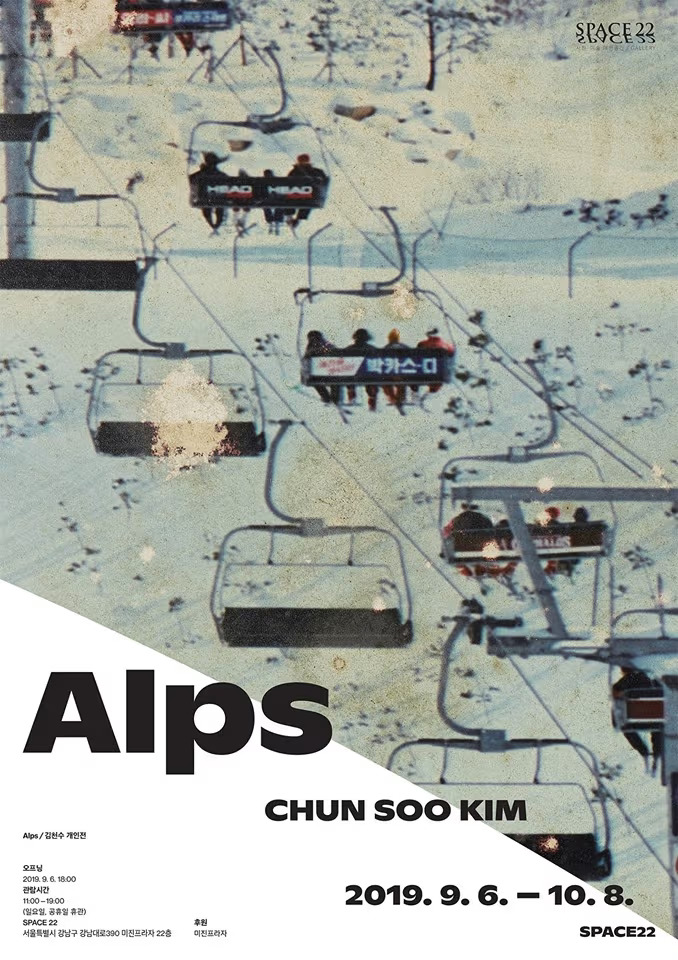
What, then, does it mean to photograph ruins, to capture these layered temporalities? Can photography precisely “fix” ruins within any one of the past, present, or future? The works themselves offer an answer. Among them, the most explicit examples are Alps #11, Alps #42, and Alps #49. The images in these works are fragments of a photograph embedded in the wall of the ski resort lobby, unfolding the prosperous era of the “Alps Resort,” which, over nearly fifty years, rose and fell as a ski destination before being reborn under the hands of a businessman. Considering the monumental scale of the wall it occupies, the photographic image was perhaps also a wish—that the prosperity of the ski resort would not be fleeting but endlessly extended.
Yet for visitors who have finally arrived at this imagined future, the photograph within the ruins offers only a faint glimmer of the past amid the resort’s overwhelming sense of decline. In contrast, the ruin within the photograph—rather than the photograph within the ruin—conveys to us a layered sense of time that is rewound, halted, or replayed. The white spots dominating the surface of the photograph may be traces of weathering or falling (or fallen) snow. The figures within the image are no longer there, yet they are visitors who have filled—or will fill—the now-suspended ski resort. The dazzling buildings are either decaying remnants with only window frames left or shelters that have been—or will soon be—completed to offer leisure.
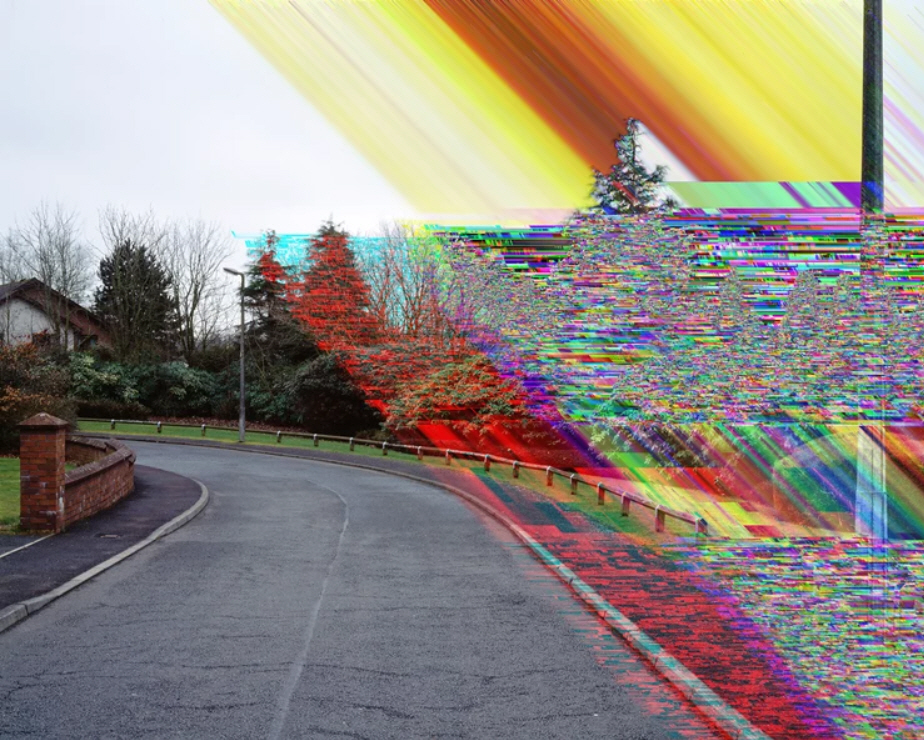
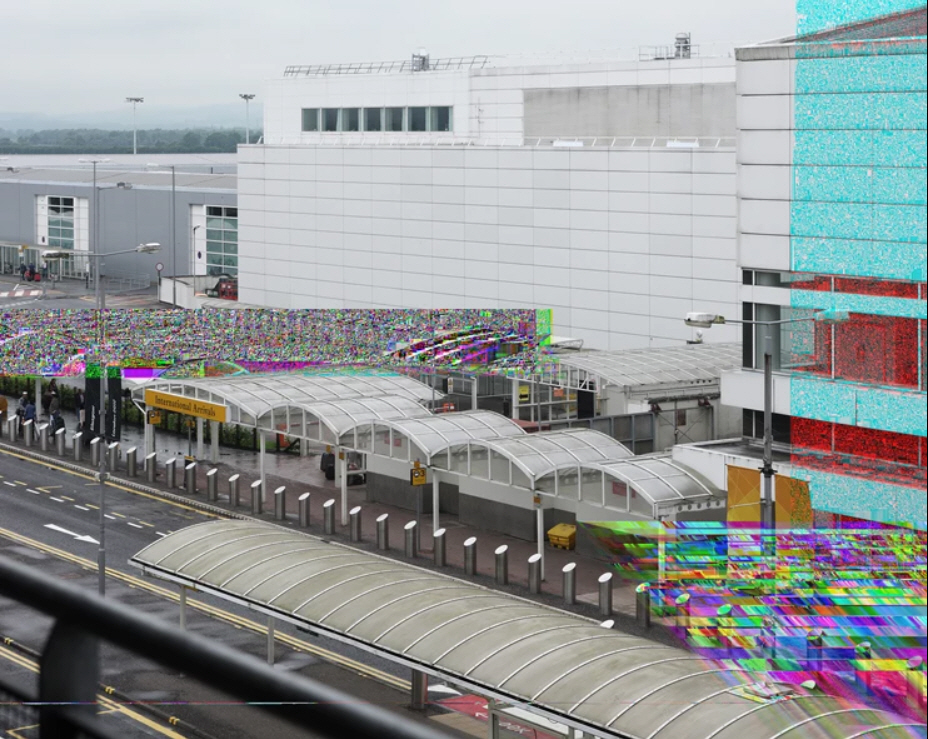
Ultimately, through photography, the tense of the “ruin” is revealed to be a mixture of then, now, and sometime in between. Thus, photographing ruins is not simply an act of fixing fragments of a specific time-space. Rather, photographs of ruins reveal that a “ruinous” temporality—one that cannot be precisely traced back to any singular tense or direction—has always been inscribed within photography itself. Just as the artist’s previous works have not merely represented the flaws of our society through accidental technological errors inherent in digital photography, but have instead pointed to how an “erroneous” society and its symptoms are inscribed within digital photographic practices.