The
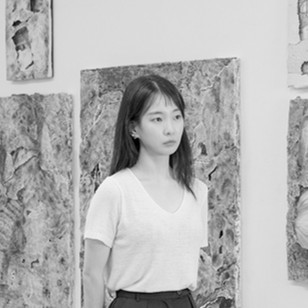
solo exhibition of Sungoo Im's 《A Flower Which
Can't Even Be Seen: Excavating Footprints》, aims to
explore the language and structure of Yi Sang's poem, "Cliff",
leaving behind traces of the drawings which cross boundaries of the two
dimensional and the three dimensional. The passage, "A flower which can't
even be seen", written without spaces between words on the last line of
the poem, "Cliff", suggests the potential of a flower which should
exist, though it is invisible.
The passage adds weight to the preceding line,
"An even unseen flower", highlighting the influence of the latter.
Meanwhile, the narrator who seems to move forward through the strength of its
existence, though with difficulty, wanders between life and death which is
conveyed by the structure of the poem. While chasing the narrator's actions
sensuously, Sungoo Im found that the artistic elements she was collecting and
following along were connected with the flower.
The artist-who has been
interested in the constitution of the scenes through recombining various
episodes contiguous with her life which remind her of the theme of disappearance-has
been dealing with what is virtually unseen and destined to vanish. The two men
share the same attitude through which they begin telling stories, summoning
those that face each other or that are intangible. The Yi Sang's flower and the
subjects in the Sungoo Im's drawings are the friends that are settled down in
oblivion, functioning as a main impetus for the two artists.
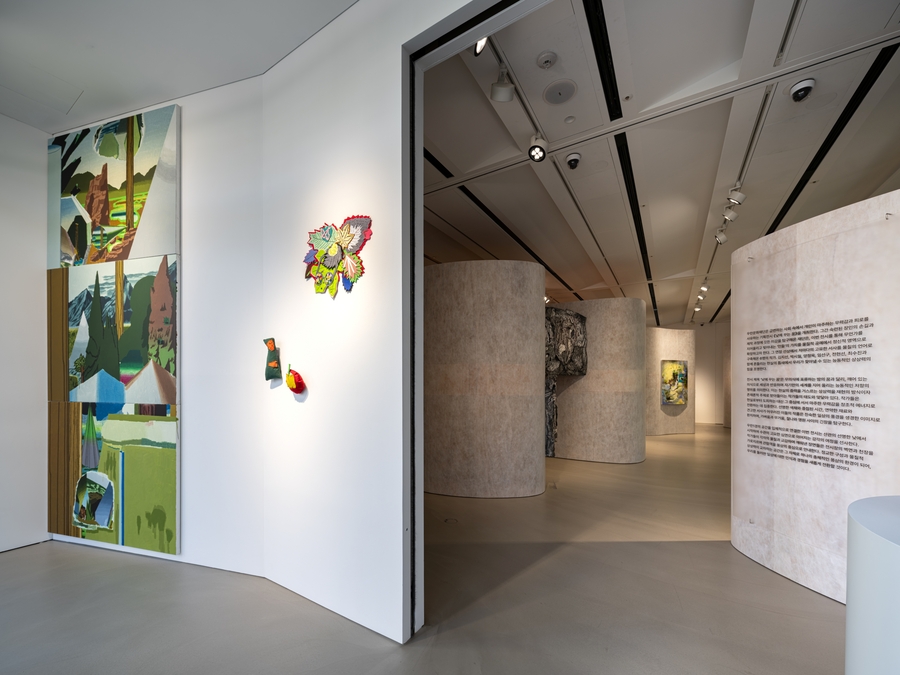
The
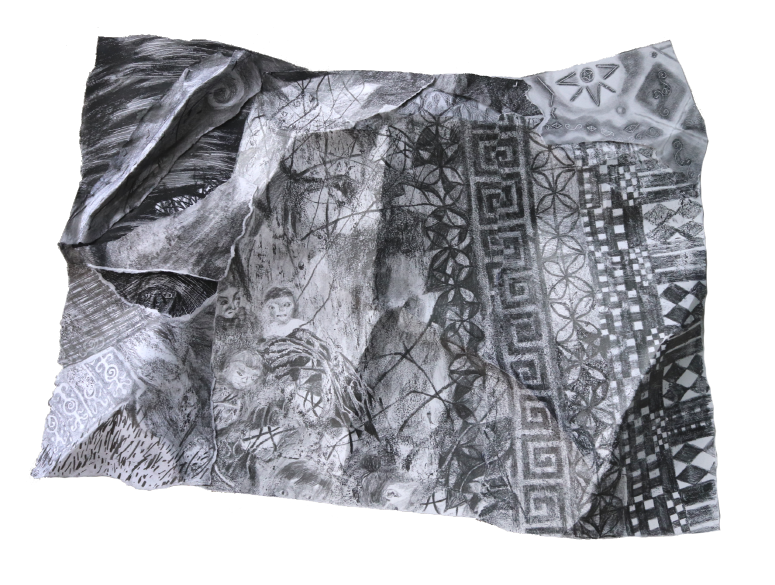
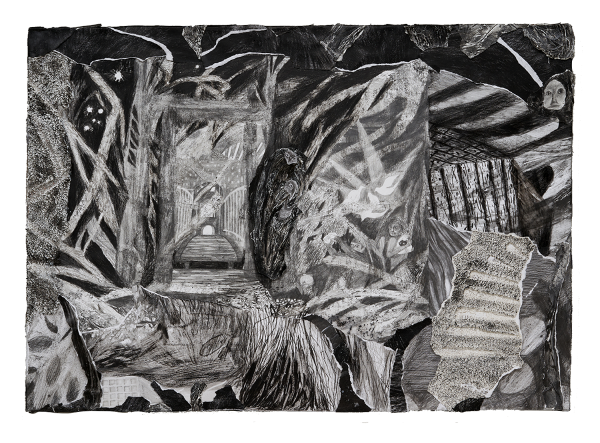
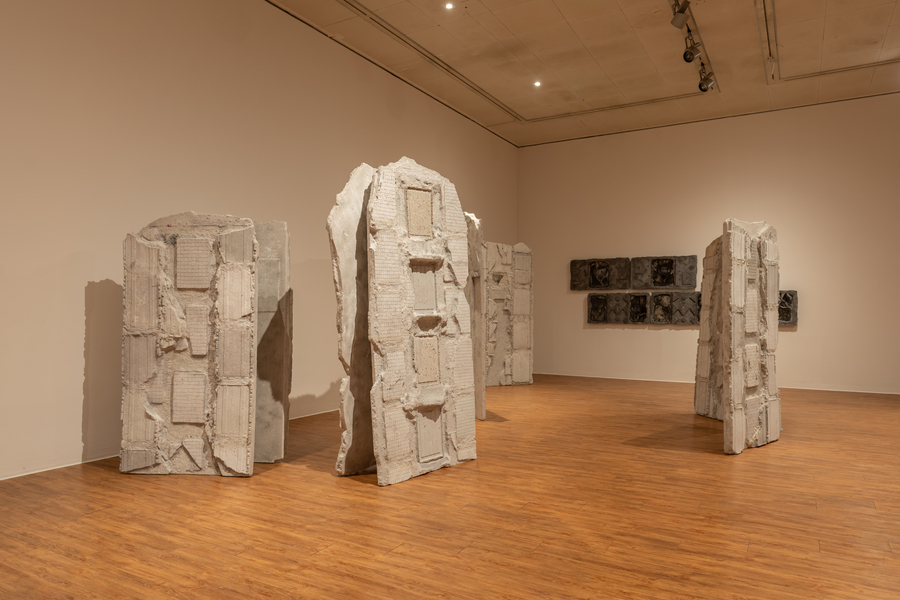
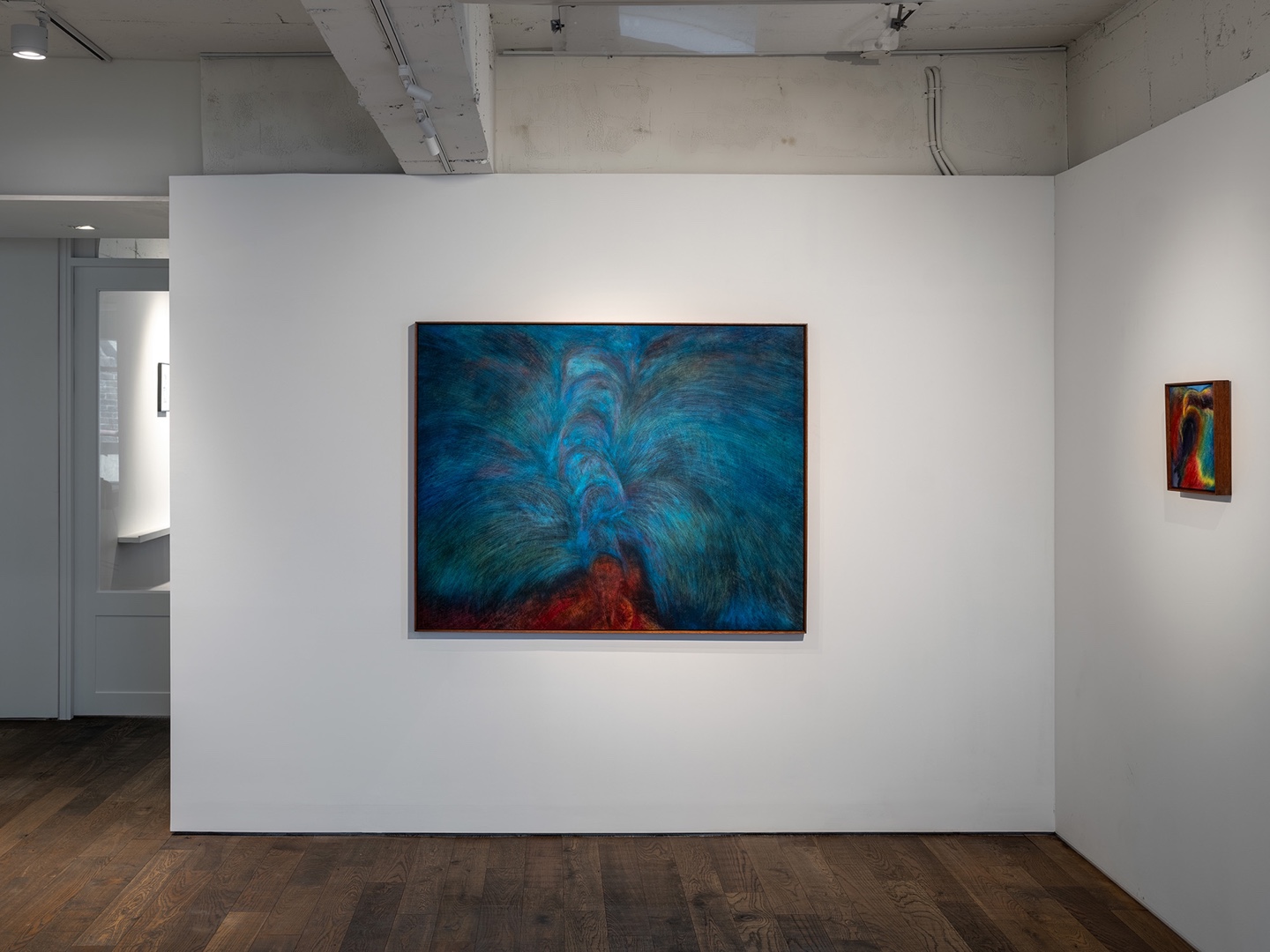
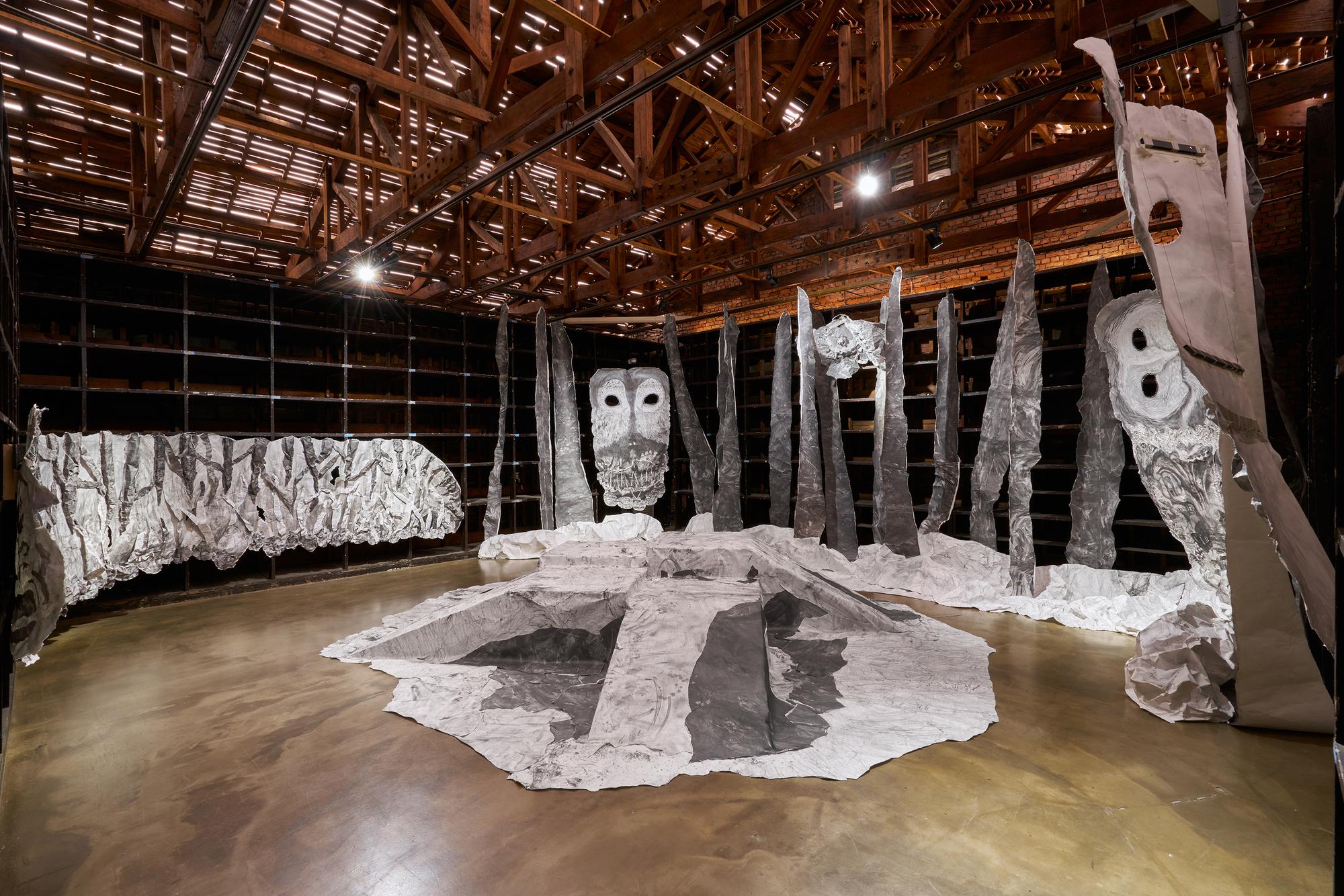
exhibition, held at a venue divided into two spaces, displays graphite drawings
and collage works of alternating form and non-form. The exhibition starts with
experiencing passing the space in which the recombined drawing fragments face
each other and communicate. The process in which drawings are deconstructed in
order to be reconnected creates regulations applying to both, sometimes leading
to what is spontaneous and irregular.
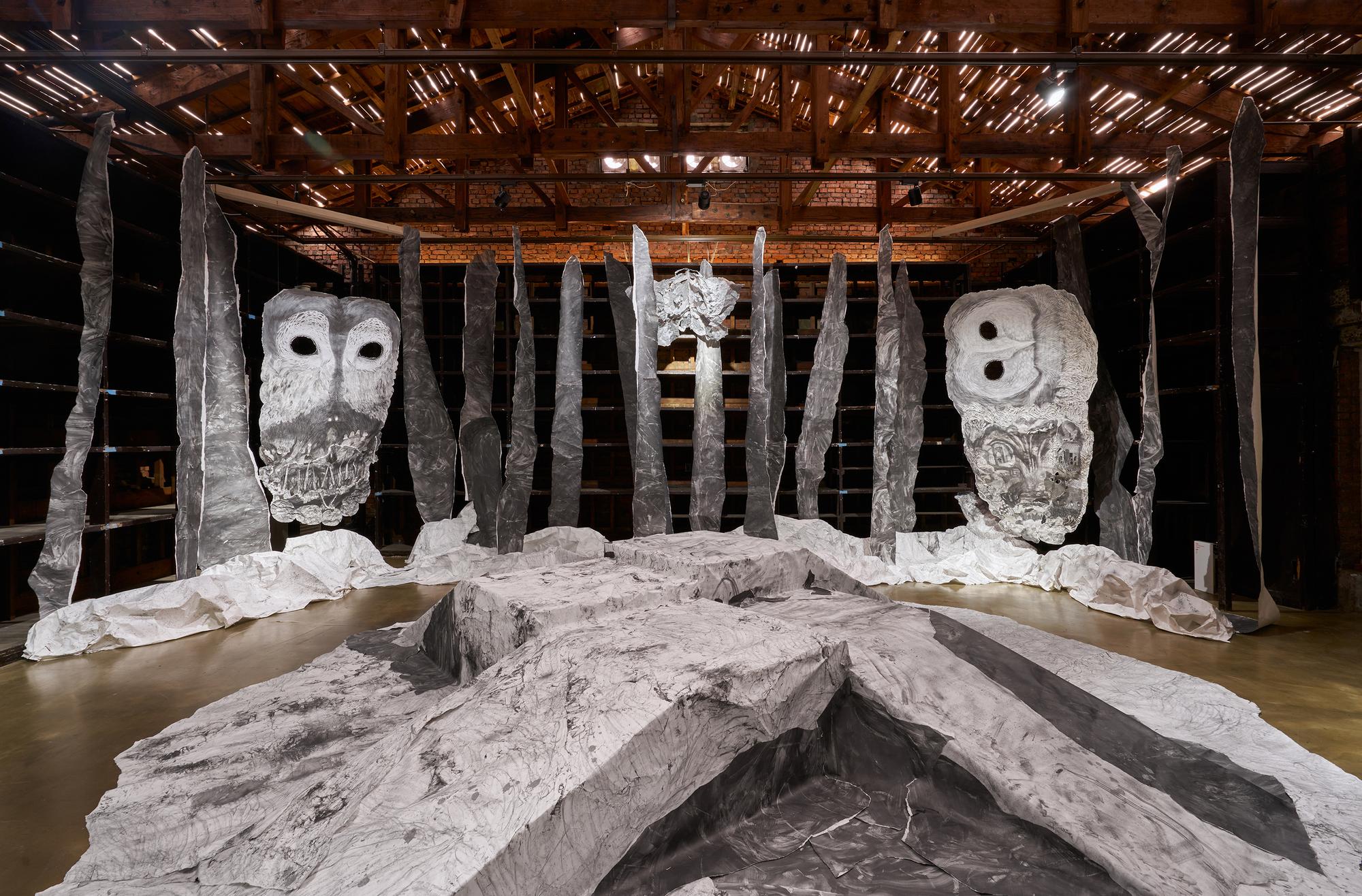
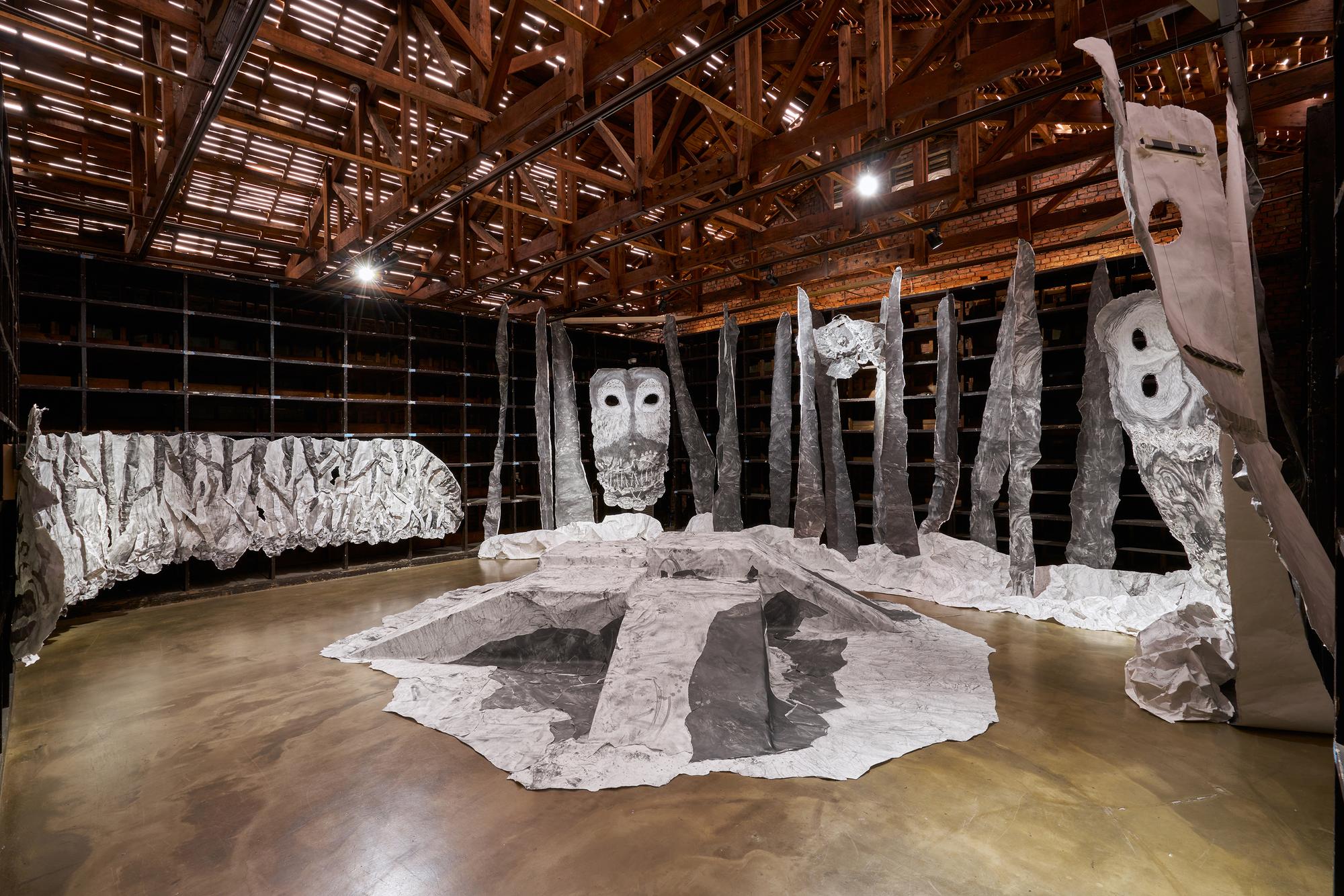
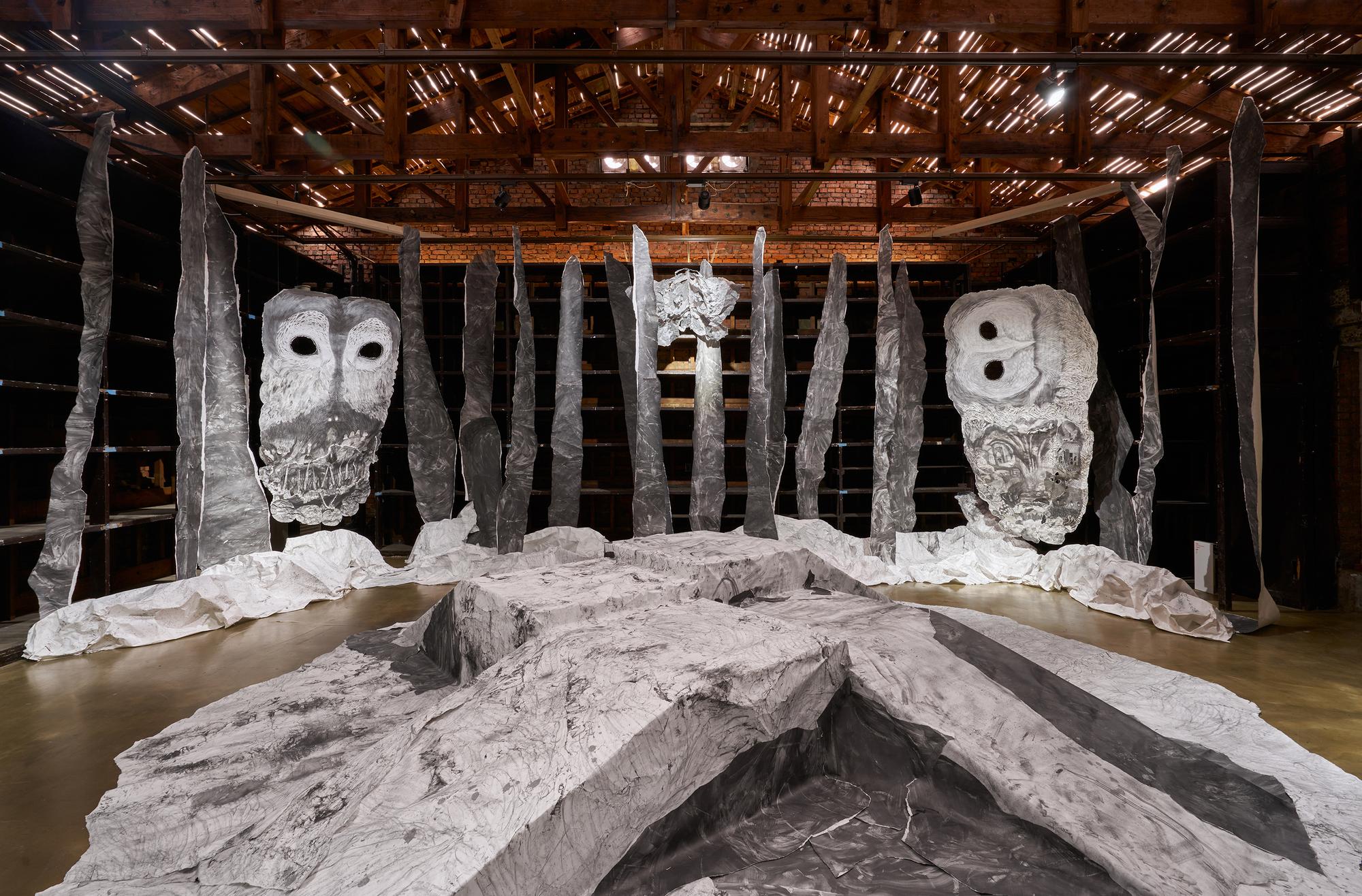
In the second exhibition room, visitors
are introduced to paper birds with spectacularly long feathers hanging as if
they are flying and numerous drawing fragments scattered around the floor. The
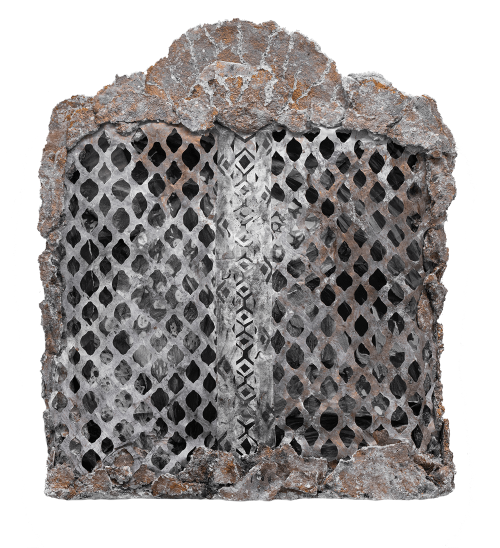
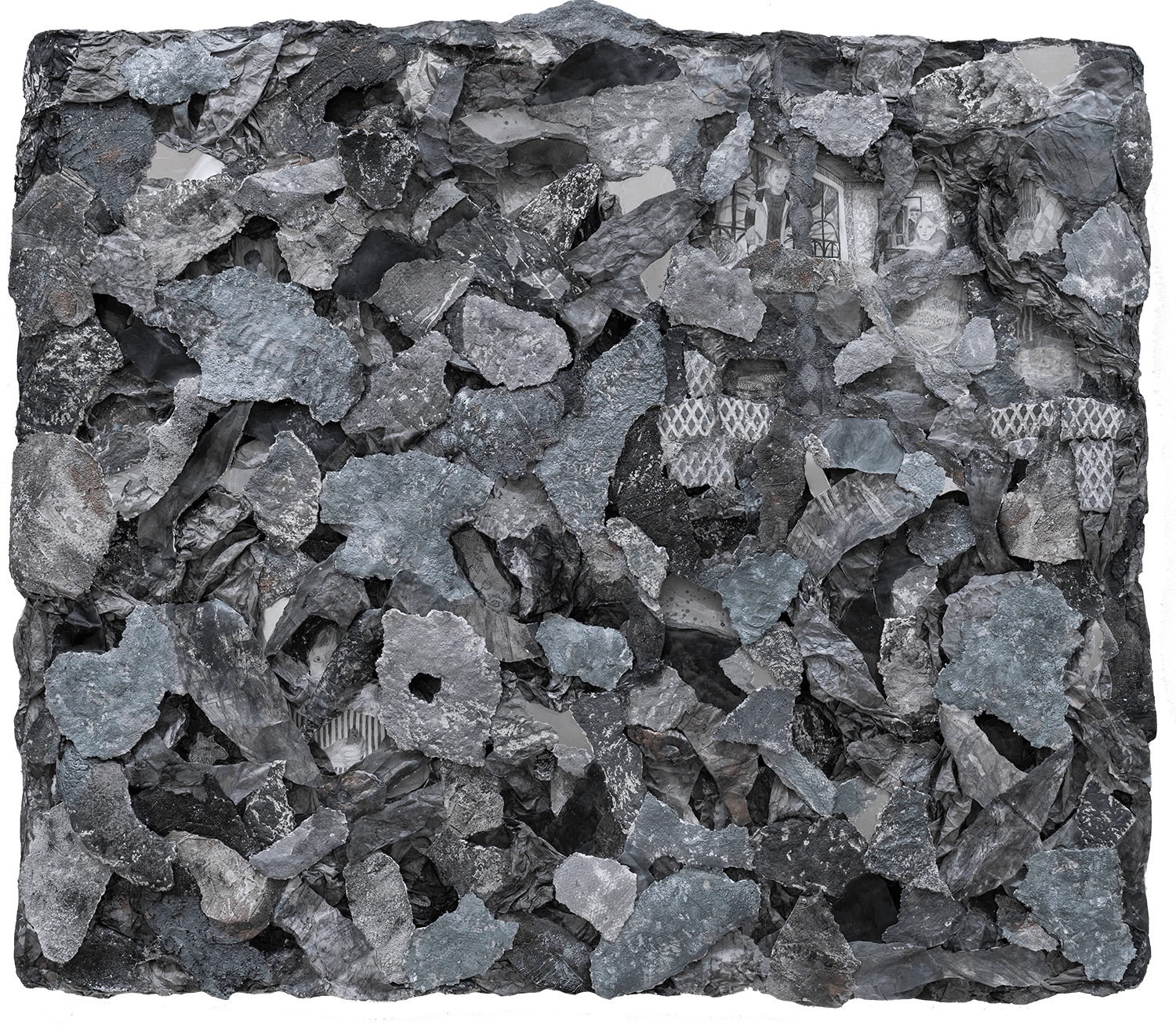
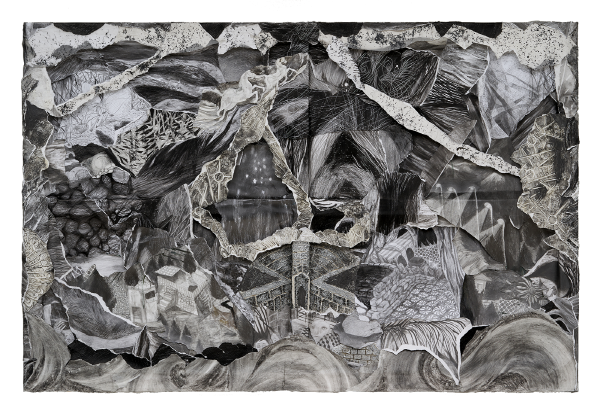
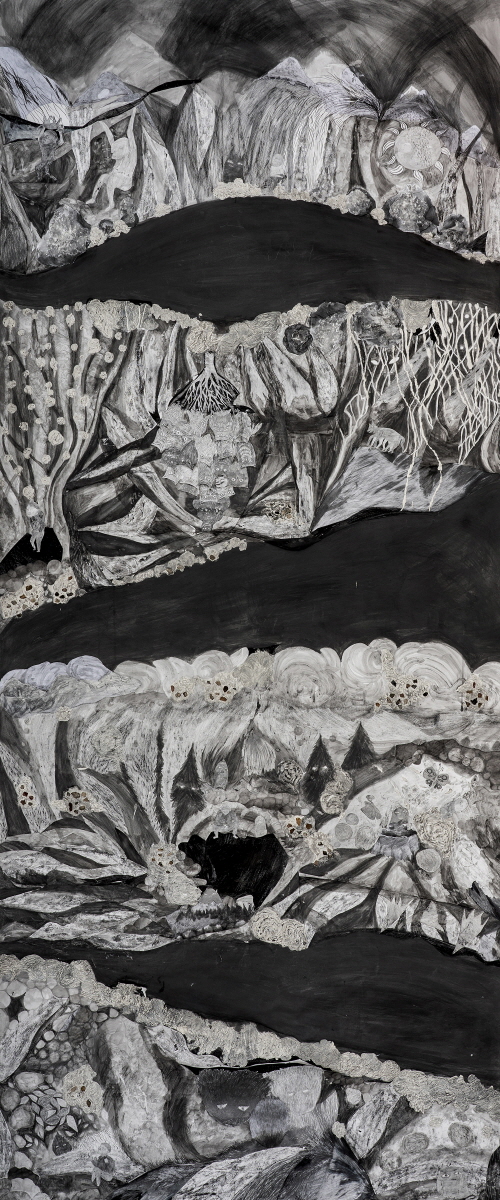
media used to support the graphite varies from paper to clay. The artist
created the foundation of her drawings like rugged mountains, choosing paper
which features different textures and thickness, and using the methods of
gluing torn paper pieces, and kneading and scraping clay lumps. The techniques
show the current status reached by the artist while experimenting with media
and ways of artistic expression, seeking a variety of expressions that guide,
or interrupt, the journey of graphite.
In his earlier works, Sungoo Im used
graphite, extremely light powder leaving its trace on paper only temporarily,
as a medium speaking for the variables of memories remaining in his inner
world. She has been expressing this concentration of memories by reflecting her
perceptions and reminiscence that tend to oscillate in images between clarity
and obscurity on the properties of graphite, using the scraping, painting,
impressing and engraving techniques.
In
the following works, the artist began to diversify the means to represent
memories, turning her attention from the quest for the expressive methods to
the properties of the media. She explored the art world of a new dimension by
focusing on the process of dissolving dry materials, mixing, for example,
graphite with water or enamel. These experiments have recently resulted in the
production of drawings featuring a variety in viscosity and particles.
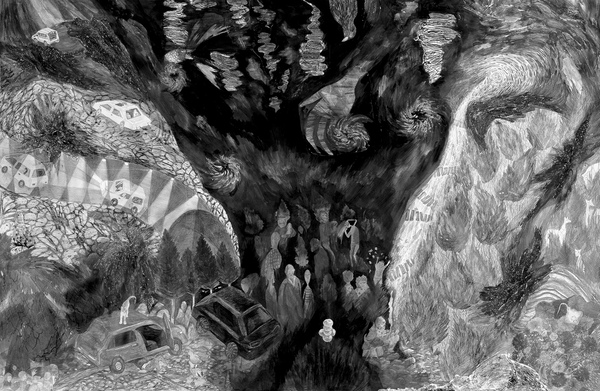
These
new works contain visual description of various memories that swiftly pass by
the periphery of the artist's life, such as those of strange rumors, exciting
experiences and insignificant episodes. The techniques used to change the
properties of graphite result in distortion on the surface of a work, dividing
time and space with the inflection point formed on the boundary between
materials. For the artist, the experiments have been unfamiliar, but joyful
experiences.
As we are all well aware of, memories move while lumped in
together, influencing each other, rather than standing alone. Considering that
the artist has been trying to recollect and make them into a work of taxidermy
whenever she faced the lumps of memories that came to her in an irregular
manner, she would have been pleased by the visual power created by the media.
Sungoo
Im's quest after artistic media expanded from graphite to paper. He explored
the fragmentation of memories by tearing a paper piece, applying physical force
to the aforementioned inflection point. She then created the rhythm of herwork
by combining the fragments extemporarily or deliberately based on the artist's
memories and perceptions. The fragments combined to form a canyon created a
rough terrain, attracting viewers to wander around it freely.
The artist guides
viewers to a landscape of memories that underwent a process of summoning,
recording, deconstruction and rearrangement, helping them retrieve old
memories. The variation Sungoo Im played with graphite and paper transcends the
limitations of drawing that develop from point to line and, finally, plane. The
direction of her works designed to highlight their flexibility and variability
in the wooden lattice space of the SeMA Storage presents what his drawings can
act on the other side of the formal order.
Yi Sang's poem performed its
artistic function by destroying form. As an artist, Sungoo Im follows the
precariousness and potential of her attitude to disintegrate and reorganize the
order of drawings. I expect the exhibition, 《A Flower Which Can't Even Be Seen: Excavating Footprints》, to illustrate to his viewers her quest after the material
foundation of drawing and to be a new inspiration for the artist herself.