When
most artists roam around Eulji-ro, where they often go to get work materials,
steel industrial goods are as common as twinkling lights. The sight of dozens
of reinforcing bars or iron pipes stacked in layers does not attract particular
attention unless it is for those who want to make something out of them. Why
did Hong Sejin take note of the repeated and intersecting lines of the thin and
pointed reinforcing bars and pipes in the middle of a complex of piles of wires
and various accessories?
She
is not unfamiliar with the cold, hard feeling. Since childhood, she has
received cochlear implant for hearing problems and also been wearing hearing
aids. She was able to replace her hearing aids once every 4-5 years, which has
improved in functionality with the advances in technology, but the devices are
still cumbersome and uncomfortable. Compared to glasses, hearing aids are not
only as unfamiliar to people as they are, but also requires charging of the
batteries twice a day for power. The existence of this device, which is both
near and far, that cannot be unconsciously forgotten in everyday life, has made
the artist think anew about the senses. To her, her works are a process of
finding a pictorial language as an object of the senses derived from her own
experiences.
Sound has many channels.
If
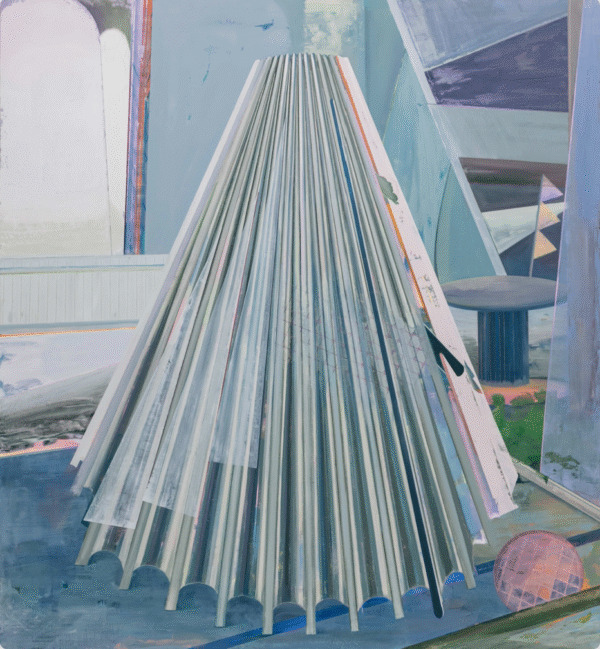
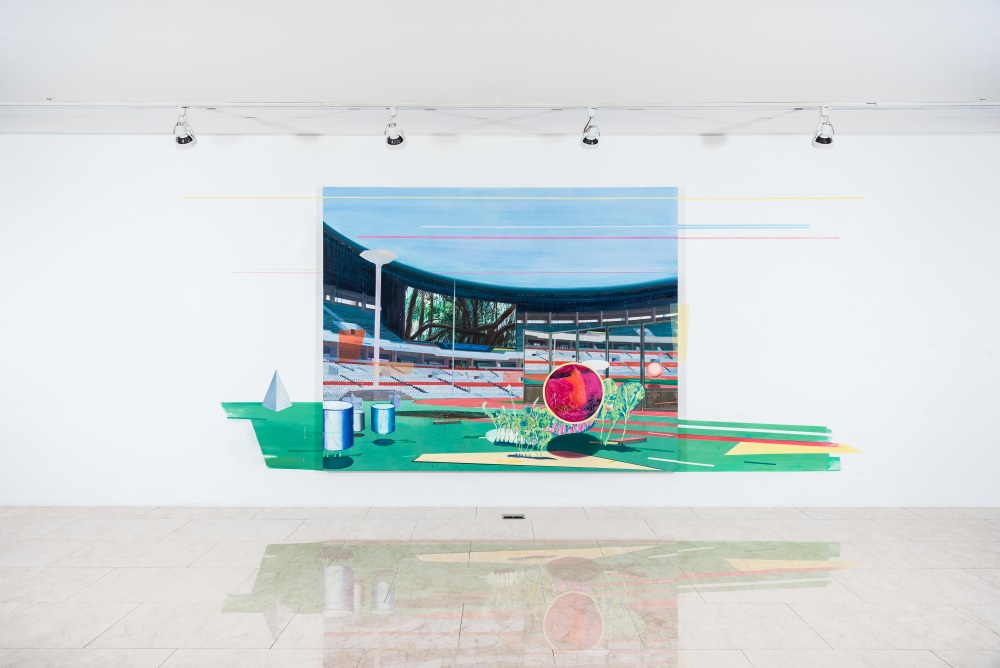
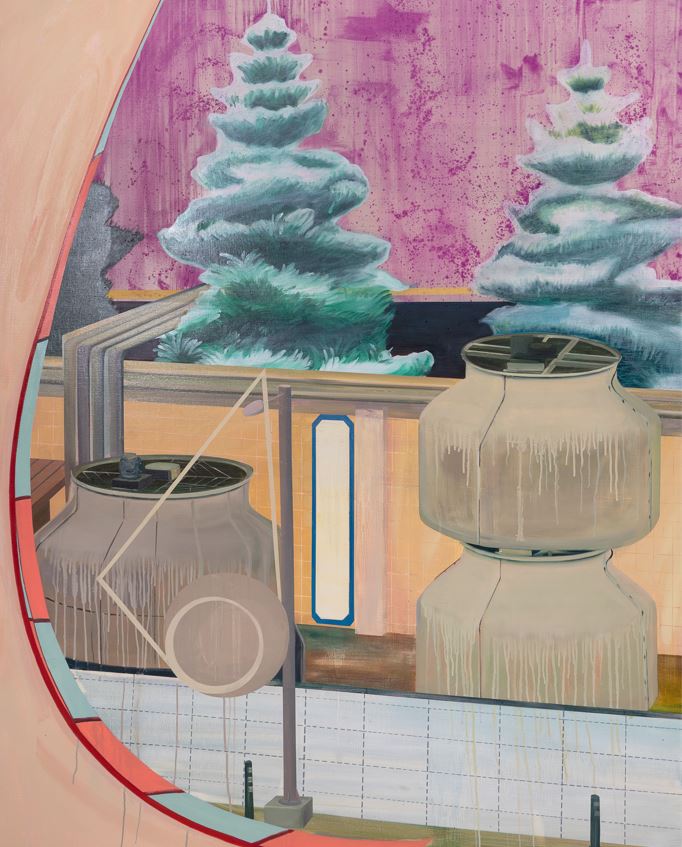
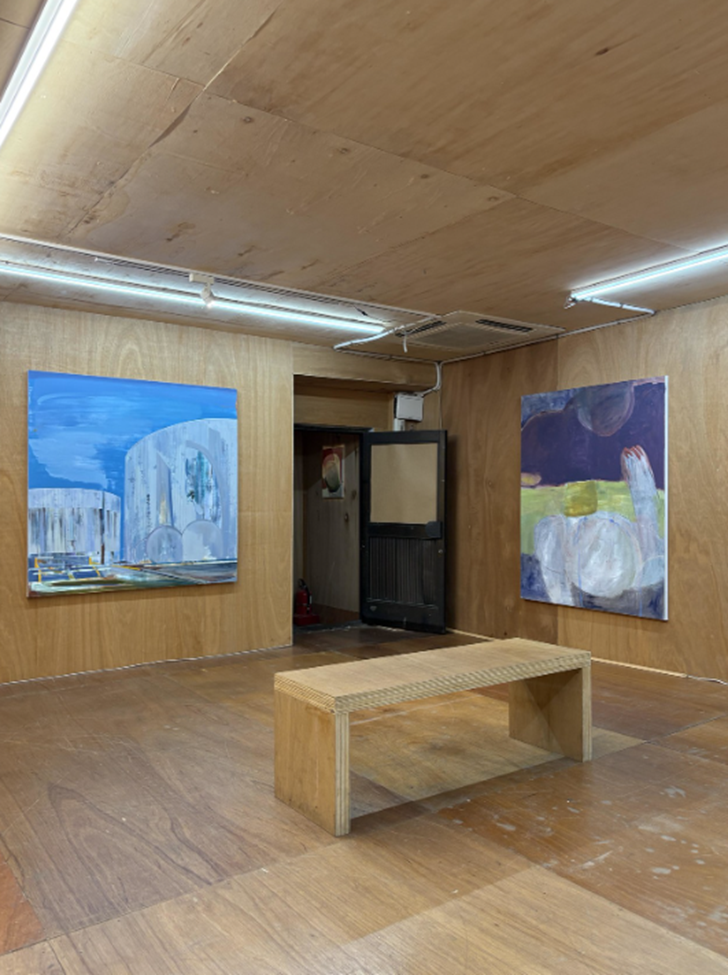
you look at the objects that frequently appear in the paintings first, rotating
objects such as fans and water tanks are initially noticeable. These devices
will stop without a sound when there is no power or water in the tank. This
reminds her of the sense of silence while replacing her hearing-aids’ battery.
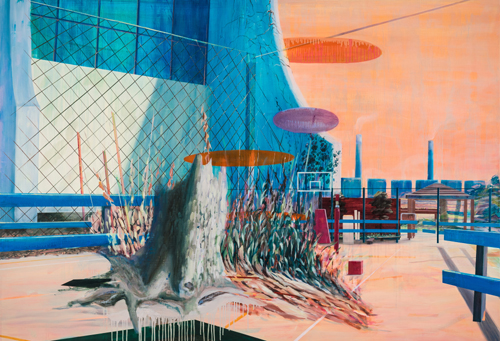
A basketball court and a grid floor are also frequently seen. These lines
indicate rules. Since she first understood the signs of prohibition and
permission indicated by traffic lights and crosswalks as a child, lines have
become a symbol of giving a temporary sense of stability to unstable objects in
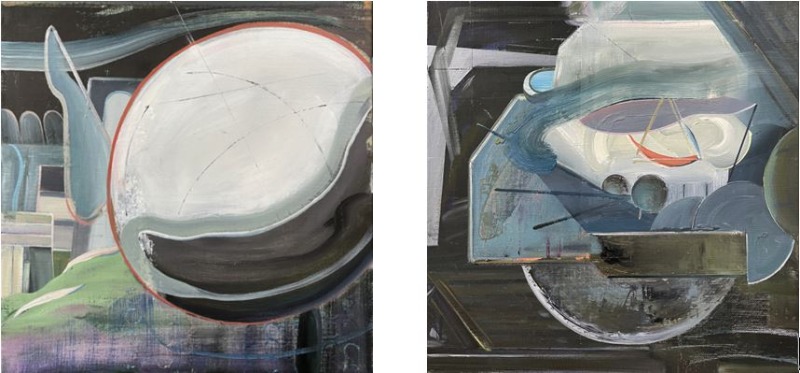
a chaotic and dangerous world. The white sphere that was initially introduced
by expanding beyond the canvas to the installation is said to be a metaphor for
her cochlear implant and hearing-aid. However, it is impossible and not
necessary to understand the background of the objects used for paintings or
installations one by one unless you read the description.
What
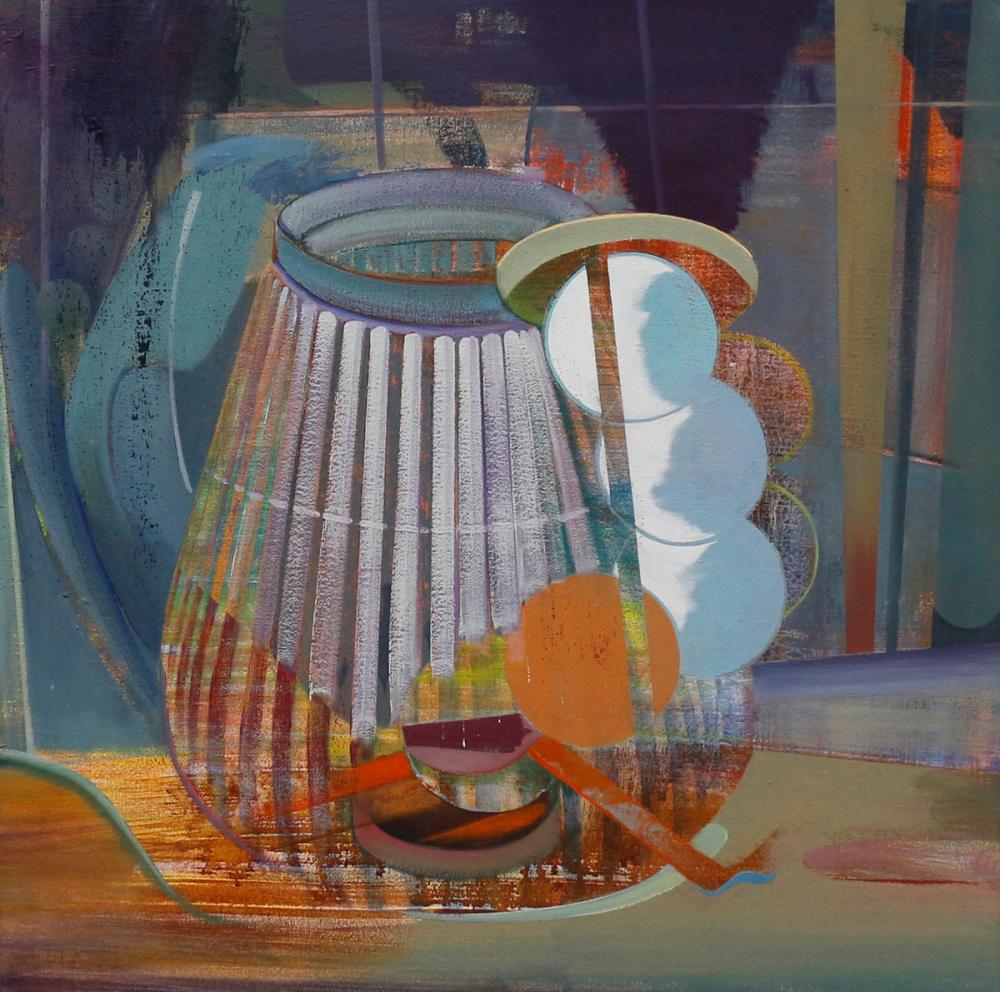
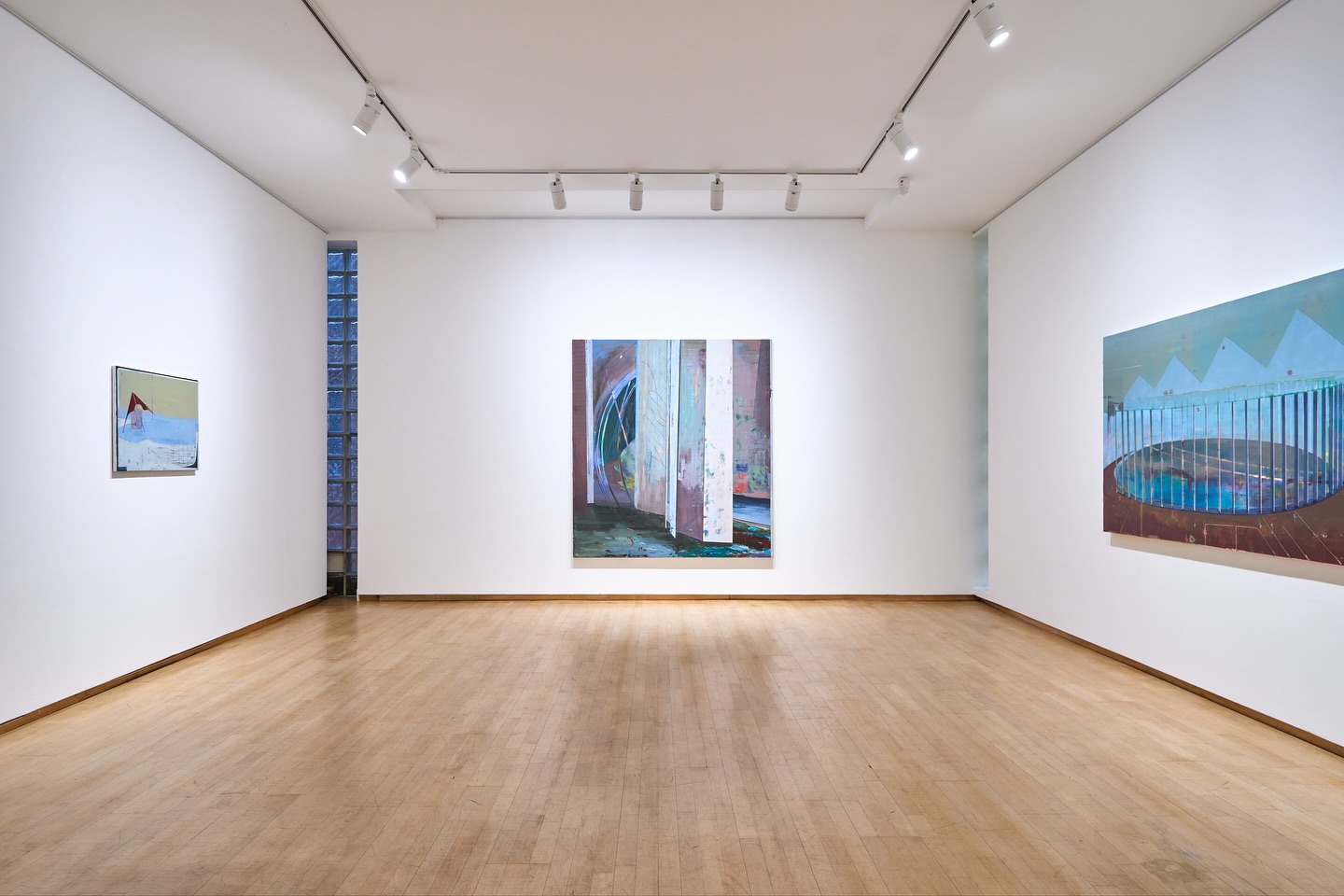
visually arouses interest in Sejin’s paintings is the fact that diverse and
disparate figures are harmonious in a single canvas and the spatiality which is
built with exquisite composition and texture rather than the delicate
descriptions or symbolic meanings of each object. After using hearing aids for
over 20 years, she said that she acquires new sounds and an upgraded sound
environment every time a new hearing aid is used, such as the mechanical noise
heard when using an older model hearing aid which disappears when replacing it
with a new model or the sounds in areas that were not well heard and are now
perceivable. In this way, while experiencing the development of hearing aid
technology through the years, the artist has realized that “sound has many
channels”. For humans with average hearing, sound comes mostly as a harmonious
whole. On the other hand, for she who has expanded and transformed her ears
using prosthetic devices, sound is perceived as information and material that
can be individually separated and manipulated.
If
you accept sound as a channel and the environment as a multi-channel landscape
with multiple senses as well as sound, you can understand the compositional
context of the complex and sometimes absurd screens that Sejin builds. She
selects a few of the photos she usually takes, puts them together with the
photos she’s cut while looking at a magazine or print, and composes the screen
by overlapping or cutting them. Leafy trees are planted inside a building with
a water tank leaning against it, a television is placed next to an indoor floor
with a steel bar leaning against a wall, and a circular window frame which is
blocking the outdoor scenery is repeated in several paintings. An unfamiliar
screen is thus created in which familiar objects are heterogeneously combined.
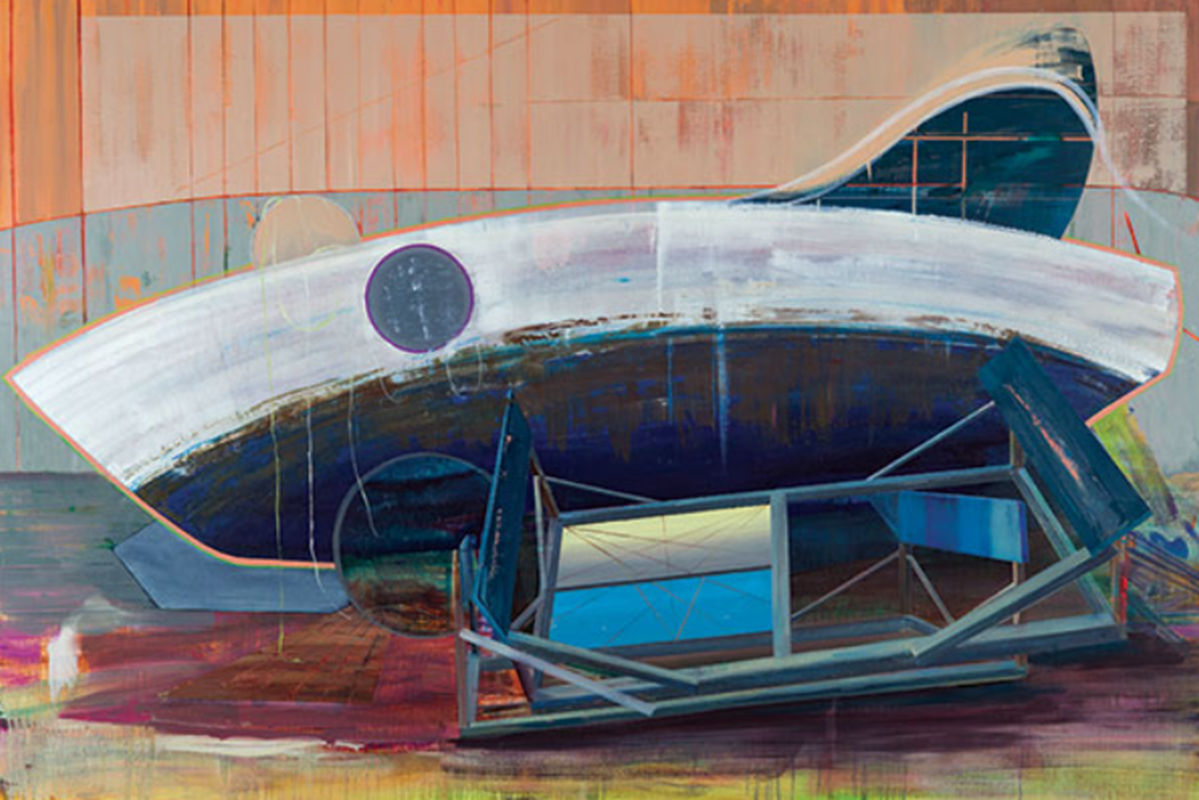
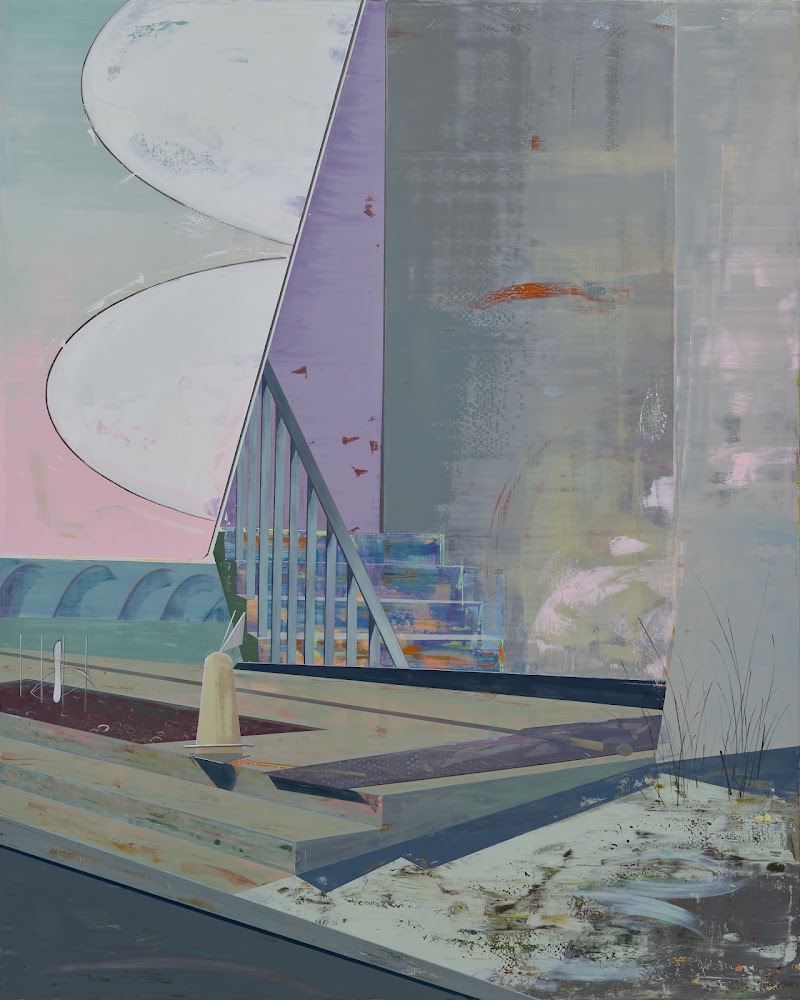
The texture of the details is different if you look closely. The paint is
either watery thin or thick and has multiple layers. It captures the separation
and harmony of various “channels” not only in shape but also in quality. So, in
such a very simple way, the artist approaches the visual language that can be
given to the cold and unfamiliar senses she has experienced.
When the shadows get longer
She
uses hearing aids, but she is not able to hear the greatest, so she says she
relies heavily on vision. For example, if the shadows in front of her become
longer while walking on the street late at night, she knows that a car is
approaching from behind and can avoid it. It is something everyone experiences,
but how intensely a shadow is imprinted when the vision is maximized varies
because the functions of sight and hearing are not equal. As a result, the
trembling, flickering, and movement of the light may be more special in her
works, not just in terms of sensitivity, but in terms of cognition and action.
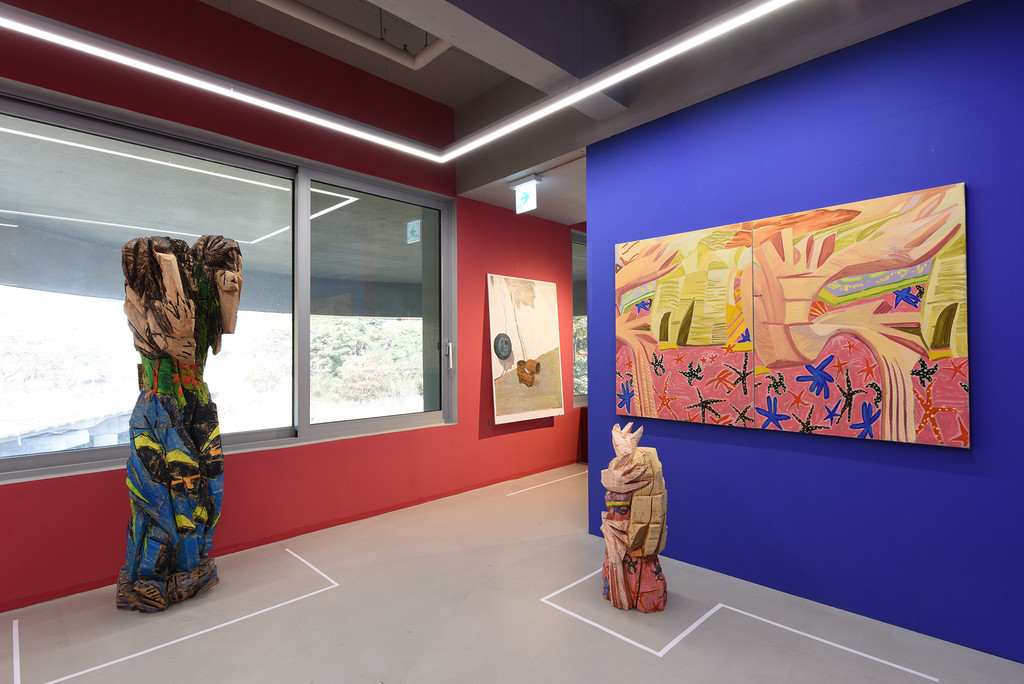
Such specialness is embodied through the shadow installation that is created by
shredding the films and illuminating them. She also recalls the pixels of
digital images with pieces of films, perhaps because rather than a single
finished image, she is more interested in the noisy collection of the
innumerable small fragments that compose them.
In
a book that has been talked about a lot recently, the novelist Choyeop Kim and
the lawyer Wonyoung Kim talked about each other’s disabilities, revealing that
they were cyborgs in that they were organisms combined with a machine, a
hearing aid and a wheelchair respectively.1 Their ‘A Cyborg
Manifesto’ naturally makes us think about Hong Sejin as well. Hyun Jung, who
wrote an early critique of Sejin’s works, quotes Donna Haraway’s ‘A Cyborg
Manifesto’, explaining that Sejin’s work leads to a ‘post-disability world’ by
comparing it to the concept of a ‘post-gender world’.2
Back to
the discussion of Haraway she states, “By the late twentieth century, our time,
a mythic time, we are all chimeras, theorized and fabricated hybrids of machine
and organism; in short, we are cyborgs. The cyborg is our ontology; it gives us
our politics.”3 In other words, the cyborg is not limited to
people with specific physical states or conditions, but is concerned with the
modern lives and politics of human beings in general. From this view, wouldn’t
it be possible to accept Sejin’s work as a universal perspective on the world,
that is, a perspective that embraces fragmented, contradictory, and confusing
things, without limiting them to those derived from her own specific uniqueness?
But
obviously, the individual human body demands the great respect for the
uniqueness of each individual’s own characteristics. This perception change
rather reminds us of the failure and impossibility of universal understanding.
At every moment, we can only realize one very tiny thing by bumping into the
language of an unfamiliar sense of an unfamiliar subject. In her works in which
her individual experiences are emphasized, there is a reversal of senses that
requires imagination along with the familiar languages. Now, over our
shoulders, someone approaches with a faint light, and the shadows in front of
us are growing longer. Even if we are looking around in the light and darkness
without knowing what has happened, the shadows continue to move. We can see the
painting while they grow longer and then shorter again.
1Choyeop Kim, Wonyoung Kim, 『Become A Cyborg』, Sakyejul, 2021.
2Hyun Jung, 「At The Boundary Between Seeing
and Hearing」, 2020.
3Donna Haraway, 「A Cyborg Manifesto」, 『Manifestly Haraway』, Translator Heesun Hwang, Chaeksesang, 2019 (2016), p.19.